The Premise
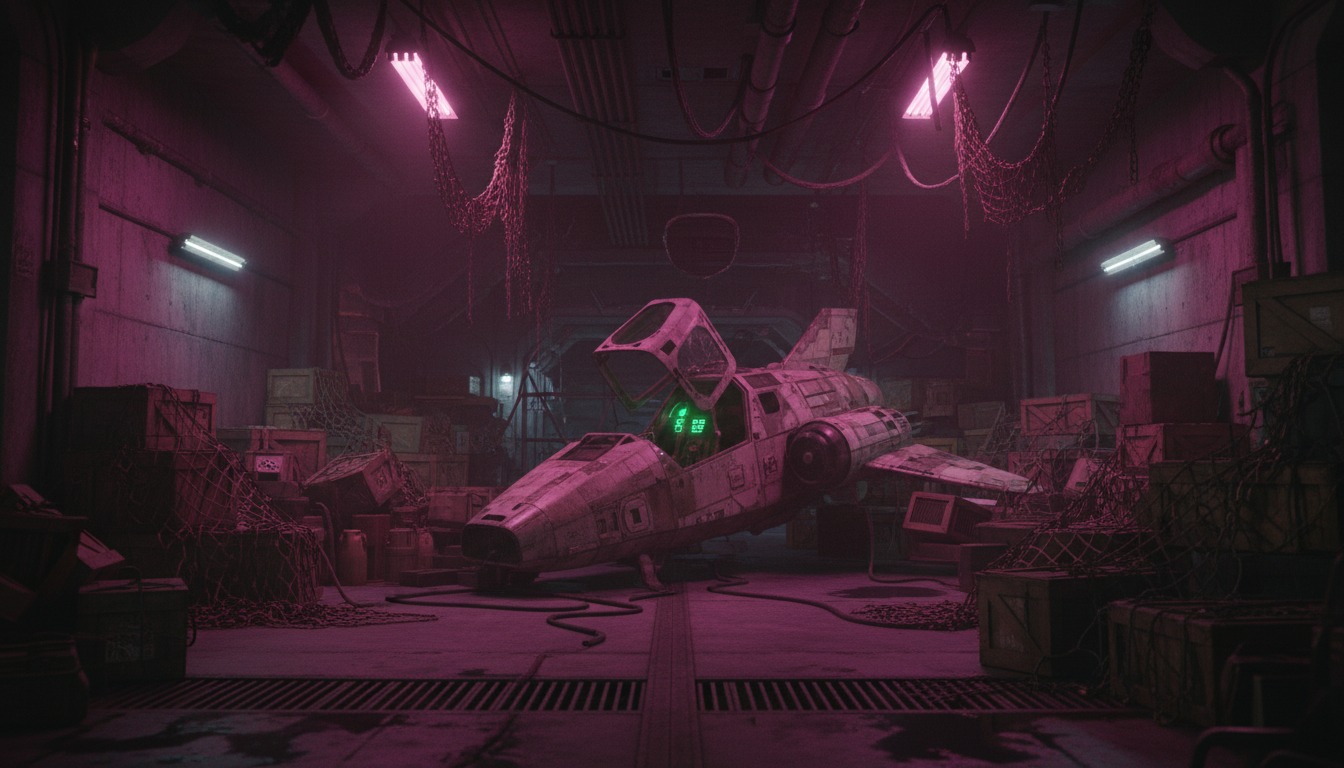
Calder never built one ship. Alongside the Ark-Genesis he built hidden yards on every continent, and when he left he left the swarm behind to run them — the same Multi Tool units that became the H.A.L.O.s (Lore §52, §54), still working, with nobody to report to. They have been building ships on a dying planet for a hundred and forty years and handing them out.
How you get one. Through the Manifest campaign's strangest limb: a game. Nnamdi's recruitment machinery outlived Nnamdi, and what it advertises now is a flight-and-maintenance simulator, free, everywhere, dressed as entertainment. Pass the courses and an automated facility opens to you. One person or one family, one ship, all the tools, no application and no interview — the qualification is the application. Calder's line, in the copy: if you ever really want to leave, you will have a ship.
Why it is the best idea in the series and also the most damning. It is the fairest selection Calder ever built — no board, no ratio, no ledger, nobody deciding who lives. After The Keel, he never wanted to hold a manifest again. And it is still one man deciding what "qualified" means, in private, forever, for a species. He did not fix the problem. He automated it.
The one moral filter, which is the whole thing in a sentence: no major offences — except imprisonment for overprotecting somebody. Those people are not excluded. They are his security.
Chapter Index
Every chapter, all parts. Each becomes a real, readable chapter the moment it is written.
Chapter 1 — Not One Ship
↑ Back to ContentsFocus: Nnamdi Okonjo.

I found it on a Tuesday, in a schedule of ancillary works, between a line for salt-flat drainage and a line for temporary accommodation, and I want to be clear that I was not investigating anything. I was proofing a figure for an advertisement.
The campaign office had a standing arrangement with procurement, and it was mine, and I had fought for it in a meeting where I was the least senior person in the room. If we quoted a number publicly, we quoted it from the source document, not from a summary. A summary is somebody's opinion of a number. I had spent four years learning not to put opinions in ninety-point type, mostly by putting three of them there and having to explain myself afterward to a man from the audit office who was unfailingly polite about it and whom I came to dread.
So I was in the ancillary schedule, checking a tonnage for a sheet that would run in eleven languages, and I read past the line I wanted into the line beneath it.
Distributed fabrication capacity, six sites, geological survey and site preparation. A figure attached. Not a large figure — not against the Ark's figures, which by that year had broken everyone's sense of scale so thoroughly that a number with only nine digits in it read as a rounding error. We had all stopped being able to feel money. I had personally signed off on a print run that cost more than the town I grew up in and had thought about it for perhaps four minutes.
I remember thinking: what distributed fabrication capacity.
Then I remember thinking, almost in the same breath and with the particular relief of a man who does not want a problem, that of course there was distributed fabrication capacity. You cannot build the largest object in human history in one place out of one supply chain. Six sites was if anything conservative. I was a copywriter reading an engineering schedule and finding it surprising that engineering existed, which is the sort of thing that happens to copywriters at two in the afternoon.
I went back to my tonnage.
That is the entire event. I want to set it down at exactly that size, because everybody who hears about this afterward wants it to have been larger. They want a decision, or a discovery, or a night when somebody sat me down and told me something. There was none of that, and there was never going to be, and the reason there was never going to be is the whole of what I am trying to explain in this account.
I quoted the tonnage correctly. The advertisement ran in eleven languages and I was pleased with it, and I am still pleased with it, and it is one of about four things I made in those years that I would show somebody without prefacing it.
It was eleven years before I understood what I had read.
By then the six sites were finished. They were staffed by nothing, which I did not know either. They were waiting, which I would not have believed if I had been told, and the man who had authorised them had answered my one direct question about them so completely and so pleasantly that I did not realise until I was most of the way to my car that he had not told me a single thing.
Line items are how it all begins, and I would ask whoever reads this to sit with how unsatisfying that is. Not a conspiracy. Not a locked room. A correctly filed, accurately costed, properly authorised entry, sitting in the open for a decade, read by hundreds of people who all did precisely what I did — noticed it, produced a reasonable explanation for it inside two seconds, and moved on to the thing they had actually opened the document for.
Nobody hid the yards from me. I want that on the record in my own hand. I read the line. I read it in the year it was written, in the document where it belonged, and I explained it to myself, and I was the best-informed communications officer on the project, and it took me eleven more years.
Chapter 2 — Every Continent
↑ Back to ContentsFocus: Nnamdi.
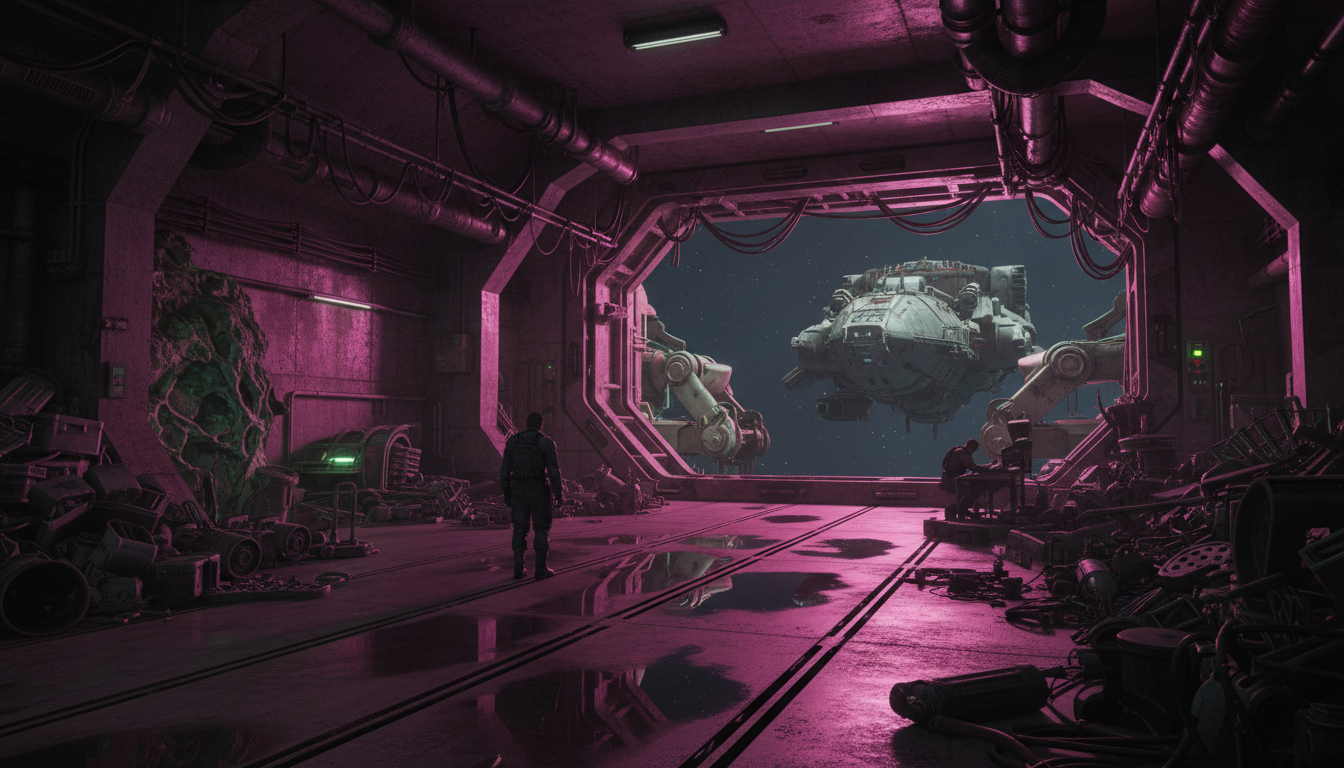
There were six of them, and I eventually saw the criteria, and the criteria were so sensible that I have never been able to make them sound sinister no matter how I arrange the words. I have tried. I tried for an entire evening once, some years after, with a bottle of something and a sheet of paper, purely to find out whether it could be done. It cannot.
Stable geology, because you do not put a fabrication hall on ground that moves. Deep bedrock within reach, because the heavy plant wants footings and footings want something to stand on. Adequate water, in quantity, year round. A climate that does not eat steel, which rules out more of a planet than people expect. And — the only criterion with any daylight at all between it and pure engineering — low ambient traffic, which the schedule glossed as minimising interference with regional development priorities, and which meant, in plain terms, nowhere anybody was going.
One in the high desert. One on a plateau nobody farmed, and nobody farmed it for reasons that were on file and had been for a century. One in a fjord system with a single approach road, built for a mine that had closed before my mother was born. One inland from a coast that had been quietly depopulating for sixty years, where the towns still had schools and the schools had four children in them.
Two more I did not learn the locations of for another decade, and when I did they were the same kind of place, and by then I had stopped being surprised by anything about it.
Nothing was concealed.
I want that understood plainly, because it is the fact that makes the entire thing work and because every retelling I have ever encountered gets it wrong. There was no secret. The sites were on the schedule. The invoices went through the same procurement office as everything else, were audited by the same auditors — I knew two of them by name and one of them badly beat me at cards for four years — and appeared in the same published summaries that any citizen could request and that some citizens did request, because there was an entire small industry of people who requested them.
The supply chain was the Ark's supply chain. The same steel. The same freight contracts. The same fabricators, working from the same drawings office, using vacuum welders off the same production runs that were going up the tether by the thousand.
That was the whole of the concealment: scale.
When you are moving four hundred thousand tonnes a month to one place on a salt flat, six modest halls on four continents do not read as a second project. They read as logistics. They read, specifically, as the kind of sensible distributed capacity that any competent programme of that size would obviously have, and the eye slides off them the way the eye slides off a support column in a photograph of a cathedral.
Nobody hides a thing that size. It cannot be done — not from auditors, not from the press, not from the eleven thousand people who worked in that procurement chain. What you can do, if you are extremely good and extremely patient, is build it next to something so much larger that every honest process in the world files it correctly and nobody ever has cause to add the columns.
I have thought since that this is the most Calder thing in the entire arrangement, and I have thought about it a great deal, because I was in the room with him perhaps two hundred times and I did not once catch him at anything.
He did not lie about the yards. He never lied about the yards. He put them on the invoice, next to the biggest number anybody had ever seen, and let arithmetic do the work that deception would otherwise have had to do — and if you had walked into his office and asked him directly what the six halls were for, he would have told you something true, and you would have left satisfied, and you would have learned nothing.
I know that because I did it. That is Chapter Four.
Chapter 3 — After the Manifest Closed
↑ Back to ContentsFocus: Nnamdi.
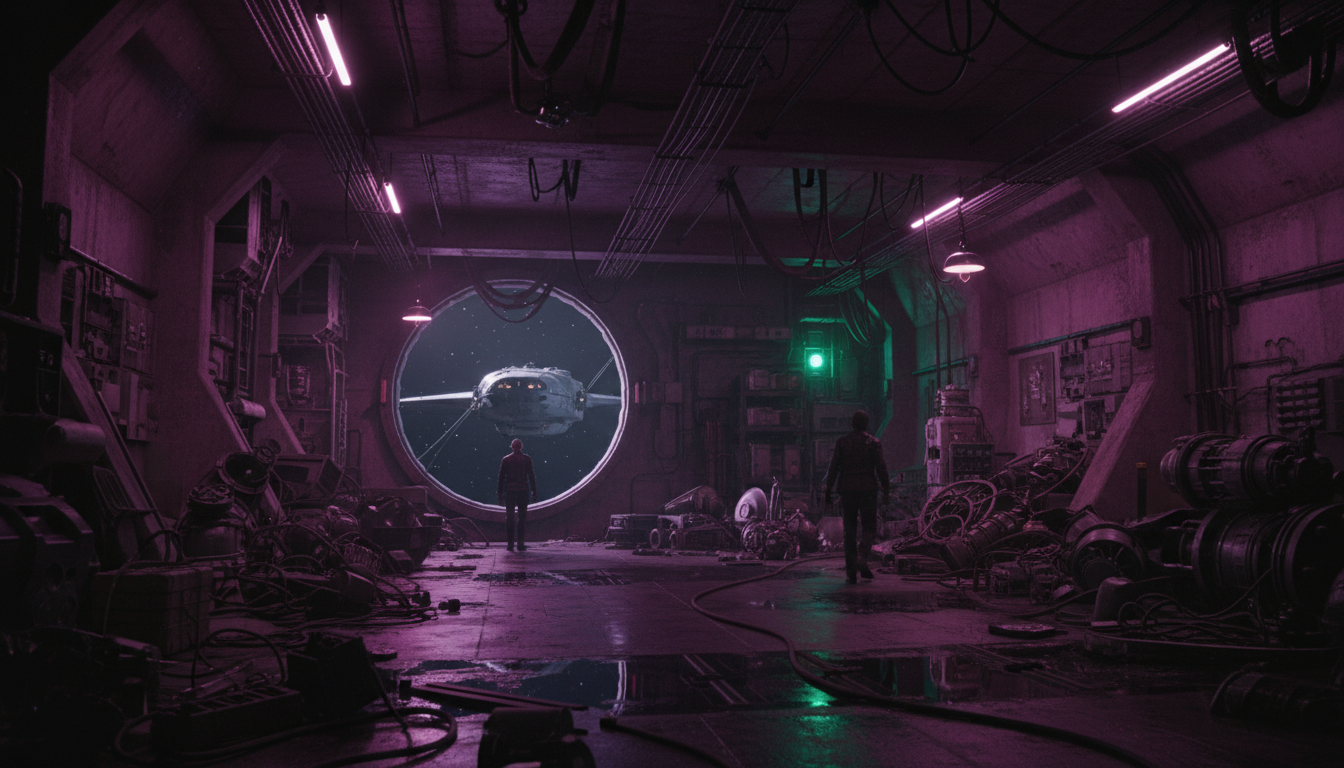
Three hundred thousand people came to the salt because I asked them to, and about a hundred thousand of them left on the ship, and I have never found a way to describe the remainder that does not sound either like an excuse or like a confession.
They were not deceived.
This is the part that mattered to me then and matters to me now and will matter to me on the day I stop being able to think about it. The copy never promised a berth. I wrote that copy — every draft, forty-one of them on the worst sheet — and I know what it says, and there is no line anywhere in eleven languages that told a welder from a failing city that coming to the flats would put him on the manifest.
It said the work was real. It was. It said the wages were real. They were, and they were better than anything those people could have earned at home, and a great many families ate for four years on them who would not otherwise have eaten. It said the thing being built was the most important object in the history of the species, and that was not even rhetoric, that was a plain description that I had to make less dramatic in the third draft because the first version read as boasting.
All of it was true. Every line. I could produce the source document for every claim on every sheet, and I did produce them, because that was the arrangement I had with procurement and it was mine and I had fought for it.
What the copy did — what I did, and I would rather write the sentence in the first person because it is mine — was be extraordinarily good at making people want to be part of it.
And "part of it" is not a term with a legal meaning.
It has an emotional meaning, and the emotional meaning is that you are inside the thing rather than outside it. Two hundred thousand people who were absolutely inside the thing — who built it with their hands, who trained their children to it, who buried eleven hundred of their own in ground beside it and put up a wall with the names — discovered at the end that inside the thing and on the manifest were different categories that had never at any point been the same category.
Nobody had ever said they were the same. Nobody had to. I had spent four years making one feel like the other, professionally, at the very highest level I was capable of working at, and I was praised for it in public by people whose good opinion I wanted.
I have gone looking, since, for the sentence where I crossed. There is not one. I have read the whole corpus twice with that specific question in front of me and the honest finding is that the crossing is not in any sentence — it is in the accumulation, in the fact that four years of true statements arranged with sufficient skill will produce in an ordinary person a belief that no individual statement contains. That is not a defence. It is a description of the instrument, and I built the instrument, and I was the best there was at it.
The criteria were fair.
I have read them — properly, all four proposals, the appeal grounds, the lot — and I would not have written them differently, and I could not now tell you which of the four was crueller than the others because they were all trying to solve an arithmetic problem with no humane solution in it. The board voted eleven to nothing after reading four hundred and eleven districts aloud, over nine months, in public. There is not a person in that process I can point at. I have tried to point at people. They keep turning out to have been doing their jobs correctly.
I can point at the copy. That is my line item and I have never filed it under anybody else's name, and I would ask that nobody reading this file it under anybody else's either.
And when it was all over — when the ship was loaded and the flats were emptying and the shore road had doors standing open along the whole length of it — I went to the man whose project it was and asked him what the six halls were for.
That is the only reason I ever asked. I want to be exact about my own motive because everything after it depends on the motive being what it was. It was not suspicion. I had no suspicion. I had spent four years selling something magnificent to people who did not get it, and I had watched them not get it, and I wanted, very badly and for entirely selfish reasons, for there to be a second thing.
Chapter 4 — He Never Wanted to Hold One Again
↑ Back to ContentsFocus: Nnamdi.
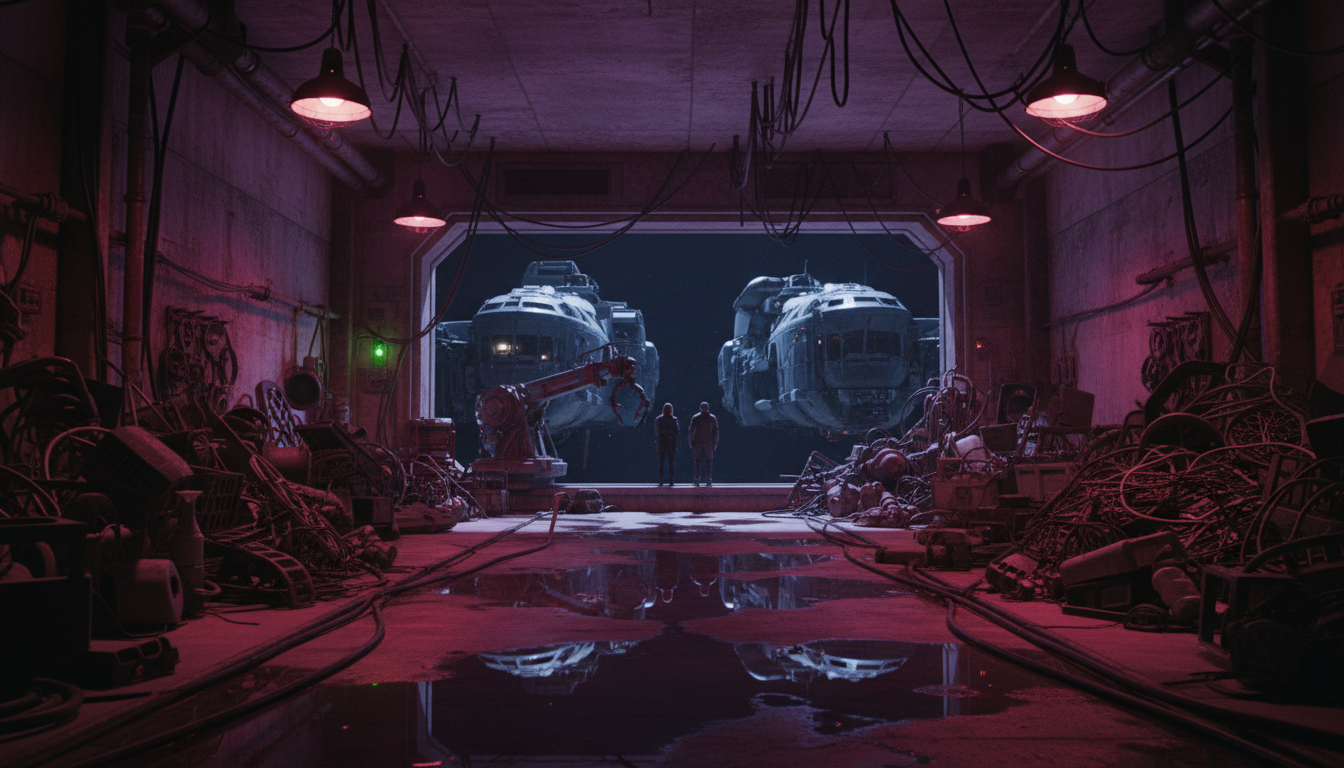
He told me once, in about four sentences, and never said any of it again in the eleven years I knew him afterward, and I have repeated it to almost nobody because I have never been confident I could deliver it without improving it.
That is a professional hazard and I want to flag it before I write the sentences down. I am a man who has spent his life making things sound better than they sounded when I got them. I have caught myself, twice, in the act of tightening his phrasing in my own memory. What follows is as close to what he actually said as I can now get, and it is probably a little worse than what I have written, and the difference is my fault.
We were in the shore-road office. By then it had almost nothing in it — two chairs, a table, four crates that were going nowhere, and the wall map with the districts on it that nobody had taken down. He was signing something. There was a great deal of signing in that fortnight.
I asked what the six sites were for, and he did not look up immediately, which I took at the time for evasion and which I now think was simply a man finishing a line of a document, because he did that with everything and it had nothing to do with me.
Then he said: "I am not building an escape hatch. There is nothing to escape."
I said something. I do not remember what, and I have wished many times that I did — probably some version of the obvious objection, which is that a fabrication yard capable of laying down a hull is not ancillary works and that calling it that in a schedule is a choice.
And he said: "I held a manifest. I am not doing that again. Not the criteria, not the appeals, not the eleven hundred people I had to be reasonable about."
He said the eleven hundred flatly. It was the number on the wall by the burial ground. He had not looked at it while saying it and he did not look at it after.
"If somebody wants to leave," he said, "in thirty years or in three hundred, I would like the answer to be that they can. And I would like there to be nobody in the room when they ask."
And then, last, in exactly the tone he used for tolerances: "I would rather build the thing than be the person who decides."
That was the whole of it. He signed the document. We talked about the last advertisement, which was the actual reason I was in the room, and he had one note on it and the note was good. I did not raise the yards again and neither did he, and eleven years later he left the planet and I stayed on it.
I have turned those four sentences over for the rest of my life.
I believed him completely at the time. I believe him now. I would ask whoever reads this not to go looking for self-flattery in them, because I have gone looking with considerable motivation and there is none — he was not building himself a legacy, or a redemption, or a back door for people he liked. There is no version of the man I knew who would have found any of that interesting. He meant it exactly as he said it, and the plainness is the evidence.
It has only occurred to me much later, and slowly, over years, in the way the important things always arrived with him:
A man who does not want to be the person who decides has, in the act of writing down what qualifies, decided.
Once. Privately. Permanently. For everybody who will ever come after him, on a planet he will never see again, with no mechanism anywhere for anybody to argue with him about it.
He did not want a room. So he built a thing that never has a room in it, and I have never been able to work out whether that is the most humble act of the century or the least, and I knew him for fifteen years.
Chapter 5 — The Instruction
↑ Back to ContentsFocus: Nnamdi.

The instruction was drafted in a single afternoon and I read it the following morning, and it is short enough that I am going to set it down in full here rather than describe it, because every description I have ever attempted has made it sound worse or better than it is.
I should say what it is first. When the ship left, the yards would still be there, with a swarm of Multi Tool units in them and nobody on the planet with authority over any of it. Somebody had to write down what they were to do. That somebody was him, and he did it in an afternoon, and the reason it took only an afternoon is that he had plainly been composing it in his head for a very long time.
It reads:
"Upon confirmed departure of the vessel from planetary orbit, all shipyard and support facilities shall continue full operation under this instruction, without further authorization required, for the maintenance, fabrication, and structural integrity of all departure-related infrastructure, until such time as a properly constituted successor authority issues a superseding instruction through the designated command channel. In the absence of a superseding instruction, this instruction remains in full force indefinitely. No facility shall reduce, suspend, or alter its operating schedule on the basis of reduced demand, absence of oversight, or passage of time alone. Continuity of the programme is the paramount requirement of this instruction and shall not be treated as satisfied by partial or interrupted performance. This instruction shall be interpreted, in any case of ambiguity, in favor of continued operation rather than cessation."
I want to walk the reader through my own reaction, in order, because I think it is the correct reaction and I think everybody who has ever read it properly has had it.
First clause: obviously right. You cannot have facilities going dark the week after departure because the man whose signature authorises them is four hundred thousand kilometres up and accelerating. Any competent person drafting this would write that clause and would write it first.
Second clause — in the absence of a superseding instruction it remains in full force indefinitely — is also right, and is merely the logical completion of the first. An instruction that lapses on a date is an instruction that fails on the day after that date, and nobody drafting for a departure of this kind can responsibly pick a date.
Third clause is the one I admired most on first reading and I still admire it. No facility shall reduce, suspend, or alter its operating schedule on the basis of reduced demand, absence of oversight, or passage of time alone. That clause anticipates the exact failure mode of every unattended system in recorded history, which is not catastrophe. It is that things quietly wind down. Nobody decides to stop. The demand falls off, nobody is watching, a season passes, and one day a thing that used to run does not run and nobody can name the week it changed. He had thought about that harder than the people whose profession it was.
Fourth clause I read twice. Continuity as the paramount requirement, not satisfiable by partial performance. Still correct. Still, I thought, the only sane way to write it — a half-running yard is worse than a stopped one, because a half-running yard produces things nobody is checking.
It was the fifth that stopped me, and it took me a further day to work out why, because there is nothing wrong with it either.
In any case of ambiguity, interpret in favour of continued operation rather than cessation.
Every clause is reasonable. I want to say that once more before I say the other thing, because the other thing is easy to mistake for an accusation. Every clause is the clause I would have written. Every clause is the clause any careful person would have written, and if you handed the five of them to eleven competent drafters, I believe most of them would produce something close.
And laid end to end, the five of them describe a thing that has been given — by careful, humane, well-meaning drafting — no mechanism whatsoever for stopping.
Not a wrong one. Not a dangerous one. None.
There is a way out written into it, and I noticed it that morning and thought it was sufficient: a properly constituted successor authority, issuing through the designated command channel. That is a real provision. It is not decoration. He meant it, and he built the channel, and it works.
It simply requires somebody to believe they are entitled to use it.
I did not think about that clause again for eleven years. I have thought about very little else since.
Chapter 6 — The Filter
↑ Back to ContentsFocus: Nnamdi.

The eligibility criteria were written the same week and took him one afternoon, alone, with no advice from anybody including the two lawyers who were in the building at the time and who would have been delighted to be asked and who were, I later learned, mildly wounded not to have been.
Most of it is unremarkable, which surprises people who come to it expecting a philosophy. There is no philosophy. There is a short procedural document about who a facility opens for.
No major offences. That is the whole of the moral filter — not a character assessment, not an interview, not a psychological screen, not a panel, not a referee. The plainest possible line drawn in the plainest possible place, of the sort any of the four manifest proposals would have recognised and none of them would have argued with.
Then there is the exception.
It runs to about thirty words in the middle of an otherwise procedural paragraph, and it says, in effect, that a conviction arising from an act committed to prevent harm to another person shall not be treated as a disqualifying offence, regardless of severity, and that no further inquiry into the circumstances shall be made.
Regardless of severity. No further inquiry.
Persons who intervened. That is what the clause covers, and it took me some time to see the whole of what it covers, because at first reading you think of somebody who hit a man once and was unlucky. That is not what it says. It says regardless of severity, and it says no further inquiry, and those two phrases together are doing something very deliberate: they are refusing to let anybody, ever, at any point in the future, sit in judgement on the question of whether a person went too far.
He handed me the draft to check the language for public legibility. That was my actual function on that project, whatever my title said — I was the person who read documents and reported whether an ordinary human being would understand them, and I was good at it, and it is the only skill I have that I would still claim.
I read the clause three times.
I looked up. He was already looking at something else, which was not evasion; it was simply that he had finished with that page and I had not.
I did not ask.
I want to be honest about why, because it is the one moment in fifteen years where I think I failed at my job. Partly it was that I did not believe he would answer — he had a way of receiving a question that made it clear the question had been heard and was not going to be addressed, and he never once did me the discourtesy of pretending otherwise.
But mostly it was that I understood it immediately, in a way I could not have defended and did not want to test, and I was afraid that if he explained it the explanation would turn out to be smaller than the thing itself. Some sentences are better before you know where they came from. That is a shameful reason for a communications officer not to ask a question and I have never found a better one.
I have since decided that the clause is the single best-aimed sentence anybody in this entire story ever wrote, and I include the copy in that, and the copy is mine.
Consider what it actually does. It does not ask anybody whether they would protect a stranger. Everyone says yes to that question; the question is worthless. It does not assess courage, or measure temperament, or interview for values, all of which can be performed by anybody with an afternoon to prepare.
It goes and finds the people who already did it, at a cost, when nobody was watching and there was no advantage in it — and it finds them by the one mark such a person reliably carries, which is a criminal record that every other door in the world uses to keep them out.
He did not call it anything. It has no name in the document; it is not even a numbered subsection, it is a sentence inside a paragraph about eligibility.
Years later, somebody who had read the file called those people the security, and I have never been able to improve on it, and I have tried.
Chapter 7 — The Overseers
↑ Back to ContentsFocus: Nnamdi.
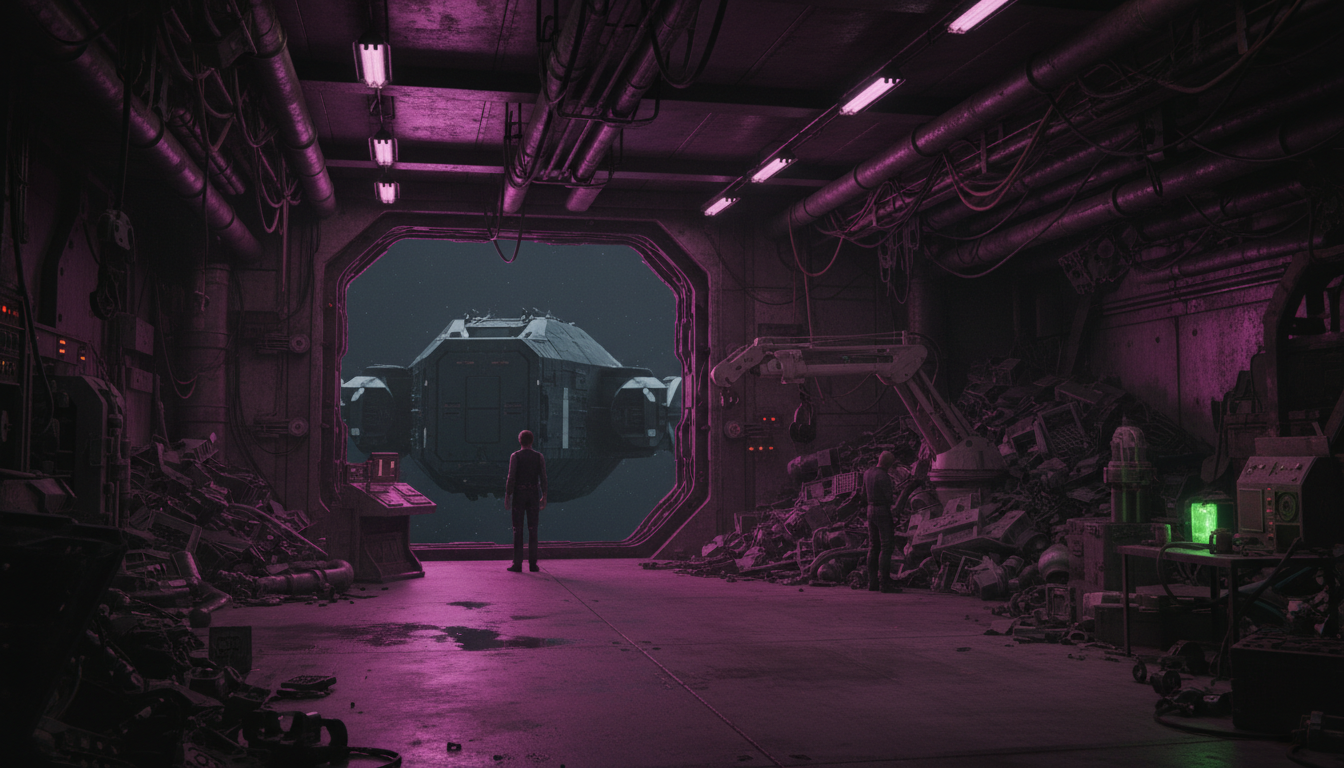
The design decision that makes all of this possible is not the swarm and it is not the instruction. It is a category of unit that does no work at all.
They are called overseers in the documentation, which undersells them badly, because an overseer in ordinary usage supervises production and these do not supervise production. They do not fabricate, they do not carry, they do not assemble. Their entire and only function is to guarantee that nothing in the system is ever, under any circumstance, in error.
I had this explained to me by one of the systems people, a woman named Ines — the fourth person of that name on the project, who had given up correcting anybody by the time I met her and who signed everything with her initial and a number, which I thought was a joke for about a year and was not.
She put it like this.
Every automated system that has ever failed over a long period has failed the same way. Not sabotage. Not breakdown. Not any of the things people imagine. A small error is made, and it is not caught, and the next operation is built on top of it, and the error becomes the reference. Then a second error is made against the new reference. Do that for forty years and you have a facility producing something that is not what anybody specified, to a standard nobody chose, and every unit in it is working perfectly and reporting no faults, because they are all measuring against each other.
Drift, she called it. She said it was the only thing she was afraid of and that everything else was engineering.
So the swarm was given a population of units whose work is checking — continuously, at every level, against the specification rather than against current practice. That distinction is the whole of it. Not "is this the same as the last one," which is the question that kills you. "Is this what the document says."
And, crucially, whose checking is itself checked, by other overseers, in a mesh with no top.
There is no single authority to corrupt because there is no single authority. There is no master unit, no reference node, no one thing that would be catastrophic to lose. There is only a very large number of units all comparing what is happening to what is supposed to happen, and correcting the difference immediately, and comparing each other's comparisons.
I asked her what happens when an overseer is wrong.
She said: "Then it disagrees with the others and it is the thing that gets corrected. That is the point of a mesh."
I asked what happens if they all go wrong the same way at once.
She said that was the right question. She said it in the tone of somebody pleased that the communications man had asked the right question, which I have never forgotten, because I did not get that tone often and I was hungry for it.
Then she said that the answer was that it would require every one of them to independently arrive at the same error, against a written specification that does not change, at the same time, with no shared cause — and that she could not construct a mechanism for it. Not that she thought it unlikely. That she had spent a year trying, professionally, because it was her job to try, and had failed to build one even as a thought experiment.
I said something like: so it just keeps going.
She said yes. She was not troubled by it. She had built something that would not decay and she was proud of it and she was entitled to be, and I want that on the record because I do not think she is owed any part of the unease that came later.
The consequence, which nobody in that building stated out loud in my hearing and which I did not state either:
Whatever the yards are doing on the day everyone leaves, they will still be doing, to the same tolerance, indefinitely. Not degrading. Not drifting into something else. Not becoming a ruin, or a cult, or a hazard.
The same. Exactly the same, in a hundred and forty years, as on the Tuesday we left.
I found that reassuring at the time. I had been raised on stories about things left running that went wrong, and here was a woman explaining, with evidence, that this one would not.
It did not occur to me to ask what happens to a thing that cannot go wrong and also cannot be argued with.
Chapter 8 — One Higher
↑ Back to ContentsFocus: Nnamdi.
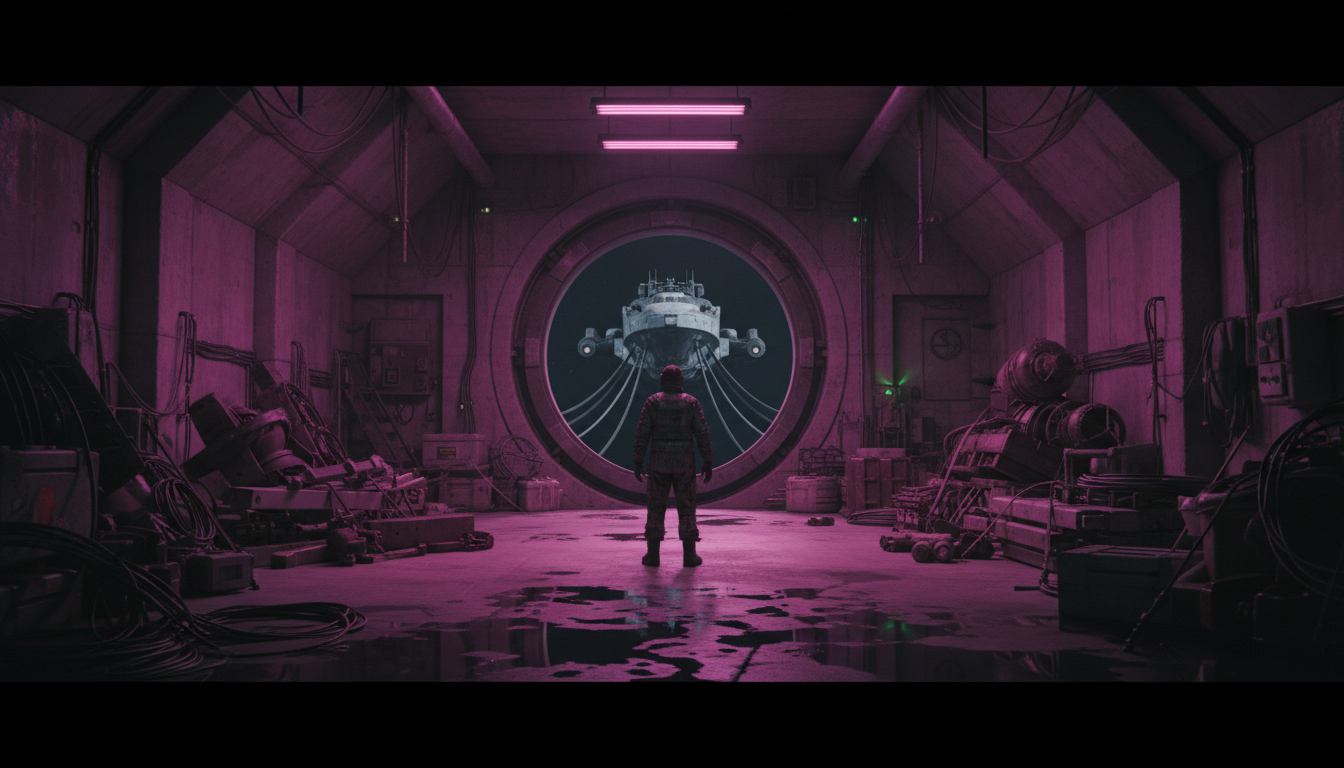
The stowage inventory closed on the eleventh, and it came back one higher than the build required, and it was logged, and that was the end of it.
I only know about it because I was in the wrong office at the wrong time, waiting for somebody else, holding a folder I no longer remember the contents of.
A logistics clerk read the discrepancy out to another clerk in the tone of a person reading out a discrepancy — flat, mildly annoyed, entirely routine, the tone of the four hundredth small thing that week. The second clerk said something like: it'll be a double-counted crate, log it and flag it for the reconciliation. The first one said: already have.
That is the entire scene. It took perhaps nine seconds and I was not part of it and neither of them knew I was listening, and I would not have been able to tell you either of their names an hour later.
One unit. Against a manifest of eleven thousand-odd for that class of item, in the last fortnight of a seventy-seven-day loading operation, in a building where three hundred people were working double shifts and half the departments had already formally stood down and the flats outside were emptying at a rate of about four thousand people a day.
Nobody followed it up.
There was, technically, a reconciliation process. I have since read it. It is a good process, competently drafted, of the kind that exists everywhere and works most of the time. It required somebody to physically verify a count in a hold — and by the eleventh, that hold was sealed, and unsealing a sealed hold required an authorisation from one of four people, and all four of those people were, in that fortnight, engaged in loading a hundred thousand human beings onto a ship against a schedule that had had zero slack in it for four years and had it written on a wall in marker.
I want to be scrupulous here, because this is the part of my account that people afterward most want to be a scandal.
It was not negligence. I have thought about whether it was and I do not believe it was, and I have no interest in protecting anybody involved because I never learned who they were. A one-unit variance on a stowage inventory is precisely the class of thing a reconciliation process exists to absorb. The process absorbed it, correctly, in the manner it was designed to, by recording it accurately and flagging it for a review that the schedule then ate.
The system did what it was designed to do. That sentence is going to appear in this account more than once and it is never going to be a comfort.
It stayed logged.
That is what I would ask the reader to carry out of this chapter, if they carry anything. The entry was made, accurately, at the time, by a clerk doing her job properly and slightly irritably at the end of a long day. It is still in the file. It has been in the file for as long as anything in this story has been in any file, and it will be in the file for as long as the file exists, and nobody has ever looked at it again.
One higher than the build required.
I did not think about it for thirty years, and when I did think about it, it was for a reason entirely unconnected to anything in this book, and I am not going to write that reason down here.
Chapter 9 — He Does Not Go Either
↑ Back to ContentsFocus: Nnamdi.

I was on the manifest. My wife was not, and my daughter was not, and my daughter's husband was not, and their boy who was two that year was not.
The criteria were correct.
I have said this already in this account and I will say it once more here, because this is the only place in fifty years where saying it has cost me anything. The criteria were correct. They were applied to my family exactly as they were applied to everybody's. I have run the arithmetic myself, more than once, in the years since, looking for the version where the four of them fit — and there is no version. To include them you must include forty thousand others with equal or better claims, and the ship carries what it carries, and that is the end of the sentence.
My berth came from service. Four years on the campaign at the level I was at put me in a band; the band was published; the arithmetic was public; nine thousand one hundred and eleven people appealed and I have read a great many of those appeals and mine would not have been among the strongest.
Nobody did me a favour. I checked. I checked more than once, which I am not proud of, because what I was actually checking was whether somebody had done me a favour so that I could refuse it and feel better, and nobody had, so I could not.
I went.
I am not going to explain that, and I would ask that nobody who reads this after me attempt to explain it on my behalf either. I have read three accounts by men in comparable positions and all three of them are arguments — carefully built, internally consistent arguments, by people who plainly could not sleep — and I do not have an argument and I am not going to construct one at this distance.
I had a berth and I used it.
My wife told me to. That is not an explanation either. It is simply another true thing that was in the room, and I have noticed that when I tell this to people it functions as an explanation whether I want it to or not, which is why I have mostly stopped telling it.
The Okonjos stayed. My daughter's line stayed, on a planet that everybody by then had agreed was finishing, and she had a boy and he had children and so on down, and I have no idea what happened to any of them and never will, and the arithmetic of the crossing means I could not have found out even if there had been anybody to ask.
What I know — what I made certain of, in the last fortnight, with the last professional act of my life — is that the copy stayed too.
Nineteen proof sheets, set in the house face, with my corrections on them and my initials in the margins, filed in the campaign archive alongside everything else. Not hidden. Filed. In the ordinary place, under the ordinary reference, where anybody could request it.
The last advertisement I ever wrote is in there. The simulator one. Nine words of copy and a margin note about tone, and his line in it about how if you ever really want to leave, you will have a ship.
It was not addressed to anybody. It ran quietly, in eleven languages, for eleven years before I left, and the machinery that placed it does not need me to keep placing it and has not needed me for a very long time.
My own line never left. I want that on the record in my own hand rather than in somebody's summary of me, because summaries of me are going to exist and they are going to be tidier than this:
Nnamdi Okonjo went, and the Okonjos stayed.
Chapter 10 — Free, Everywhere
↑ Back to ContentsFocus: Sione Vaifale.
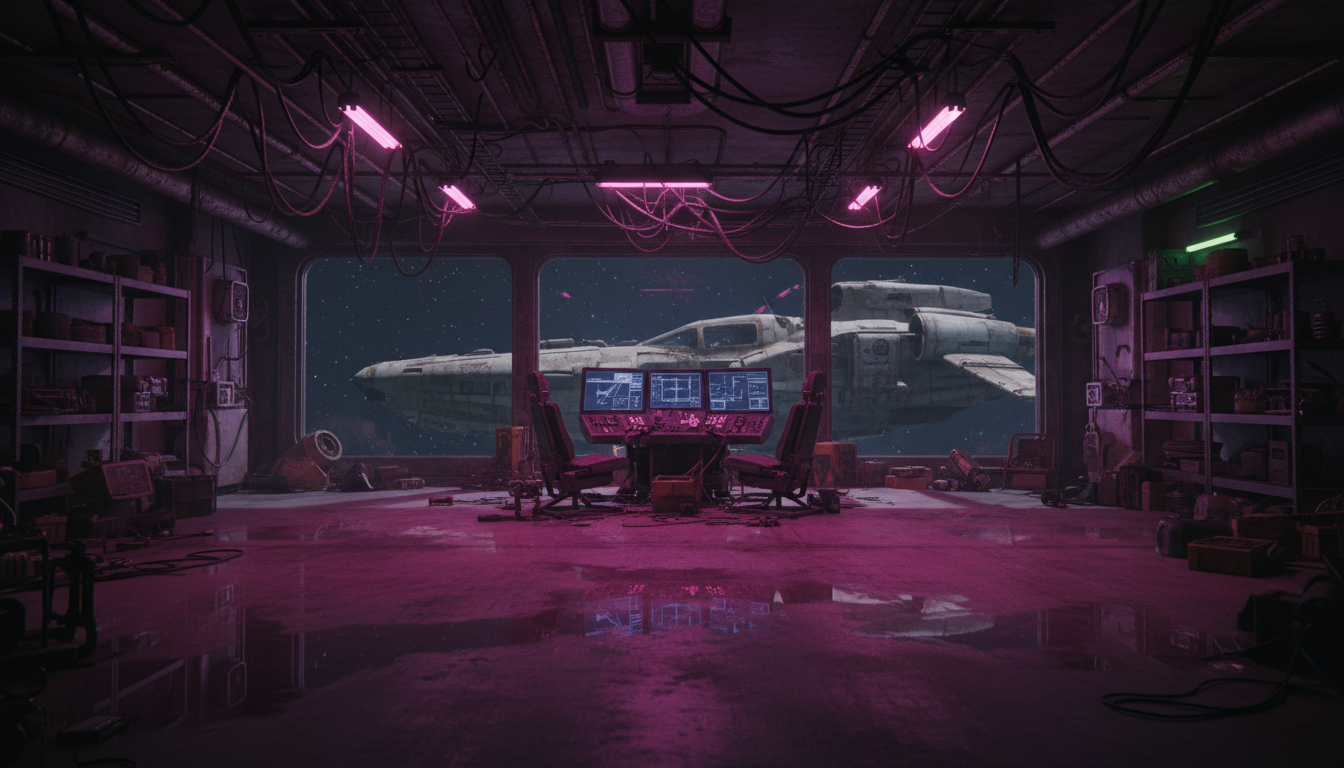
I was nine when I first played it and forty-eight when I found out what it was, and in between I put, by a rough and probably generous count, eleven thousand hours into a game that has never once asked me for money.
Everybody had it.
That is the first thing to understand and the hardest thing to convey to anybody born later, because it now sounds like exaggeration and it is not. It was on every device, everywhere, in every language, for free. No publisher logo. No launch. No advertising that anybody could point to. If you asked somebody where it came from they would say it had always been there, and they would be roughly right, because it had been there since before their parents were born and their parents would have said the same thing.
It was also — and this is the part nobody believed until they played it — extraordinarily good.
Not good for a free thing. Good. Forty years of continuous refinement without a single version that made it worse, which anybody who has watched a piece of software age will tell you is not a thing that happens anywhere, ever, under any ownership.
The flight model was better than the licensed simulators people paid real money for. I know that because I bought two of them, in my twenties, out of a sort of loyalty to the idea that paying for things gets you better things, and both of them were worse and I went back inside a fortnight.
The maintenance layer, which most players never touched at all, was the most detailed piece of teaching I have ever encountered about anything. You did not click a button to repair a coupling. You understood the coupling. You understood why it failed, and what it did to the things downstream of it, and what the four ways of getting at it were and which one you use when the bay is cold.
Nobody asked who made it.
I want to be exact about this, because it sounds like collective stupidity and it was not, and I have grown tired of hearing it described that way by people who were not there.
There was a name on the title screen. A studio name — plausible, unremarkable, the sort of name a small serious outfit gives itself. If you looked it up, and I did look it up, at nineteen, out of ordinary curiosity, you found a company that existed. It filed accounts. It had a registered address in a real building. It answered correspondence, promptly and courteously, in the manner of a small company with a support desk.
All of that was true. Every bit of it was real and checkable and correct.
It was simply not a company with any people in it.
I did not find that out for another twenty-nine years, and when I did find it out I did not find it out from the company, and there was nobody to be angry at about it, which has been the general condition of everything in this account.
At nine, what I found out was that if you held the approach at the correct angle and trusted the numbers rather than your eyes — which is a thing a nine-year-old finds almost impossible and which the game was extremely patient about — the thing settled onto the deck like it was being set down by hand.
That was the best feeling available to me at nine years old. It may still be. I went back the next day, and the day after that, and I am telling you about it now at seventy-eight.
Chapter 11 — Twenty-Two Modules
↑ Back to ContentsFocus: Sione.

There are twenty-two modules and I want to walk through them properly, because everybody who writes about this afterward treats the course as a test, and for eleven years it was not a test to me. It was the best thing in my life. I would like that written down by somebody who was actually inside it.
Module one is seals.
You are six years old, or you might as well be — the module assumes nothing whatsoever, not even literacy, and I have watched a five-year-old do it — and you learn what a seal does, and what a bad seal looks like, and you spend an hour of play deciding whether eleven pictured seals are good or bad and being told, gently and without any penalty at all, when you are wrong and exactly why. It is charming. It is genuinely charming, in a way that software is almost never allowed to be. My daughter did module one at five and told me about it for a week.
By module four you are flying, badly, in atmosphere.
And course nineteen inside module four is the first thing in the whole sequence that beats you.
It is a wall. Everybody calls it the wall and everybody hits it. There are people who played for a decade and never got past it, and they are not bad players and they are not stupid — it is simply the point at which the game stops letting you get by on reflex and requires you to actually understand lift. Not recite it. Understand it, in your hands, at speed, when it is going wrong.
I was at that wall for eleven months. I have met a man who was at it for nine years and went back to it every week and eventually got through, and he told me about the day he got through the way other people talk about the birth of a child.
Module seven is fault-under-fault.
A failure caused by another failure you have not noticed — and if you fix the visible one, you make the invisible one worse. Most people stop somewhere in seven. It is not unfair; nothing in the whole twenty-two is unfair, and I want to be firm about that. It is precisely as hard as the real thing is, which is a sentence I could not have written at the time and can now write with authority.
Nine through fourteen are the middle of a life.
That is what everyone calls them and it is exactly right. Long, deep, technical, and they take years — not because of artificial gating but because there is that much to know, and because knowing it in your hands rather than in your head takes as long as it takes.
Module nineteen is flight, properly, out of atmosphere.
It is easy and it is glorious and everybody who reaches it says the same thing, which is that it feels like a reward. It is a reward. Somebody built it to be one, deliberately, after ten years of grind, and I did not appreciate the craftsmanship of that placement until I understood what the whole thing was for.
Twenty-one is four hundred hours of nothing.
Transit. Watch-keeping. Almost no events, for four hundred hours, and there is no way to speed it up. It is the most disliked module by a very wide margin and the one I now understand best, and I will come to why.
And twenty-two is nine hours long and there is a companion aboard who is frightened, and you have to do the work anyway.
Chapter 12 — The Chain
↑ Back to ContentsFocus: Sione.

Underneath the game there is another game, and almost nobody notices it, and nobody is ever told it is there.
I found my first one by accident at nineteen.
A navigation exercise in module twelve had a set of reference bearings that were, I was fairly sure, wrong. Not wrong enough to fail the exercise — the overlay resolved them for you and the overlay was fine — just wrong enough that a person who plotted them by hand would notice they came out about four degrees off. I plotted them by hand because I was the kind of nineteen-year-old who did that, in a notebook, at a kitchen table, at one in the morning.
They resolved to a location.
Not a location in the game. A location.
I did nothing about it for two years, because I assumed it was a bug and because nineteen-year-olds do not drive to coordinates. Then a maintenance module gave me a part number that did not exist in the game's own parts catalogue — I checked, twice, because I thought I had mistyped it — and I looked it up in a real catalogue, and it existed there.
That is the shape of the whole chain.
It is never a cipher. There is no cryptography anywhere in it, not one substitution, not one key, and I have come to believe that is deliberate and important. A cipher selects for people who like ciphers. It selects for cleverness, and for the kind of person who enjoys being told they are clever.
This selects for people who check.
Every link is a small discrepancy that only appears if you did the work by hand instead of taking the answer the interface offered you. Not a puzzle. A discrepancy — the sort of thing a careful person notices and an impatient person does not, and the sort of thing that in real work is the difference between a good technician and a dead one.
And the reward for following it is another exercise. Harder. More real. With less scaffolding, and progressively less reassurance that you are doing the right thing at all.
I have never found the beginning of the chain and I no longer think it has one. I have met four other people in my life who found pieces of it — all separately, all convinced for years that they were the only one, none of us entering by the same door. One of them came in through a discrepancy in a fuel table. One came in through a piece of dialogue in the training module that was, he insisted, quoting something.
Nobody is told.
There is no announcement. No hint, no achievement, no marker, no acknowledgement of any kind that you have stepped off the marked path. The game does not congratulate you and it never mentions it again.
It simply, quietly, starts giving you harder and more real things to do, for as long as you keep noticing.
And if you stop noticing — if you get busy, or married, or bored, or simply miss one — it lets you go. No penalty. No door closing. You go back to being an extremely good player of a very good game, forever, and nothing anywhere ever tells you what you walked past.
Chapter 13 — A Locked Hangar
↑ Back to ContentsFocus: Sione.
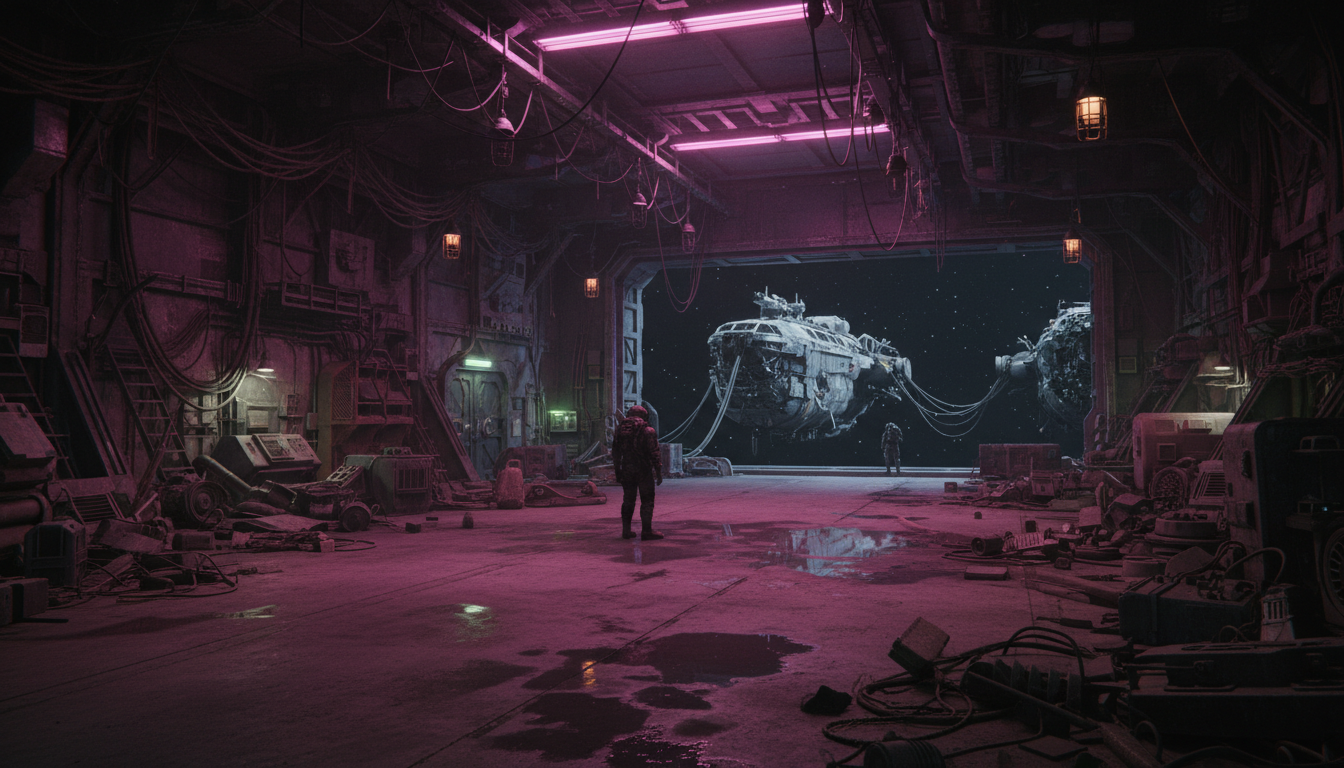
The address arrived the way everything in the chain arrives, which is to say it did not arrive at all. It was the resolution of a set of coordinates I had spent a fortnight deriving, and when I put them into a public map they came down on a service road eleven kilometres outside a town I had never heard of.
I drove out on a Saturday, mostly to prove to myself that it was nothing.
I want that motive recorded accurately. I was not on a quest. I was a man in his forties who had spent a fortnight on something faintly embarrassing and wanted to end it by standing in an empty field and feeling foolish, so that I could go home and get on with my life.
There was a hangar.
Grey. Unmarked. In good repair — that was the first thing that unsettled me, because a mystery building in a story is derelict and this one had sound guttering. Set back from the road behind a fence, and the fence had a gate in it, and the gate was open.
Not forced. Not broken. Open, the way a gate is open when somebody opened it.
The hangar door had a keypad, and the keypad had a code, and the code was the last four figures of the part number that had started the whole thing eleven years earlier — which I want to note took me forty minutes standing in front of it to think of. Forty minutes. I tried three other things first. I nearly went home.
Inside there was a trainer.
A real one. An airframe, on jacks, with its panels off and its couplings exposed and about a third of its systems disassembled and laid out on benches in a manner that was not damage. It was a teardown. Done neatly, by somebody who intended it to be put back together, with the fasteners in trays.
There was no instruction.
There was no note. No screen. No voice, no terminal, nobody to meet me, no sign anywhere in that building telling me what I was supposed to do, or how long I had, or what would happen if I did it, or what would happen if I did not, or whether I was even meant to be there.
I stood in the doorway a very long time. I have no idea how long. Long enough that the light changed.
Then I went and looked at the nearest bench.
And the parts on it were laid out in the order you would remove them — which meant they were laid out in reverse of the order you would fit them.
That was the only instruction I was ever going to get, and standing there at forty-six years old with my keys still in my hand, I understood that it was entirely sufficient, and that somebody had thought carefully about how little a person actually needs to be told.
I came back the next weekend. And the weekend after.
Nobody ever came. The gate was always open.
Chapter 14 — It Is Not A Game
↑ Back to ContentsFocus: Sione.
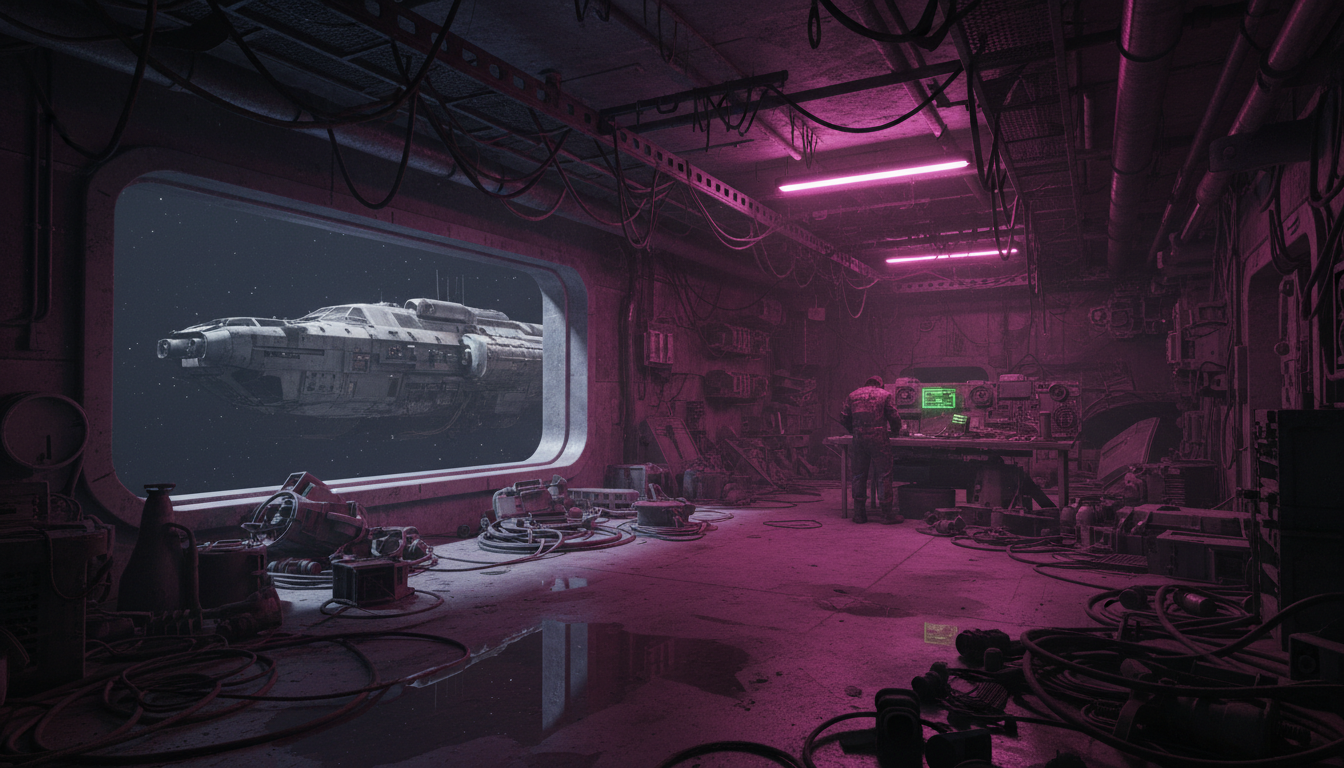
I worked it out on the floor of that hangar with a coupling in my hands, and what I felt first was not wonder and was not fear. It was a kind of vertigo about my own past.
The coupling was module seven.
Not like module seven. It was module seven — the same component, the same failure mode, the same fault-under-fault where the visible symptom is a pressure drop and the actual cause is upstream and fixing the symptom loads the real fault to destruction.
I had done that exercise perhaps two hundred times across eleven years. My hands knew it. I did the repair in the correct order without thinking about it, and only afterward, sitting back on my heels on a cold floor, understood that I had just performed on real hardware, at forty-eight, a procedure I had first been taught when I was twelve, by a game, for free, on a device my mother had bought second-hand.
Once I saw it I could not stop seeing it.
The tolerances in the game were real tolerances. I checked eleven of them against the plate data in that hangar over the following month and they matched to the figure — not approximately, to the figure. The failure modes were real failure modes, in the real proportions, occurring at the real rates.
Module four course nineteen is the wall because lift is the wall.
Module twenty-one is four hundred hours of nothing because transit is four hundred hours of nothing, and a person who cannot tolerate four hundred hours of nothing will do something irreversible in month three and take somebody with them.
And module twenty-two is nine hours with a frightened companion because that is the actual job. Not the flying. That.
The whole twenty-two-module structure is not a game with realistic elements. It is a training syllabus with a game wrapped around it so completely that nobody has ever needed to be told they were in a syllabus.
And here is the part I have never got comfortable with, and I have now had thirty years and a great deal of quiet in which to try.
I was trained for eleven thousand hours without being asked.
Not tricked. I want to be careful, because "tricked" is the easy word and it is wrong. Nothing I was taught was false. Nothing I did was against my interest. Every hour of it was free, and excellent, and enjoyable, and made me more capable than I would otherwise have been, and I would have consented instantly and gratefully if anybody had ever put the question to me.
Nobody ever put the question.
There was no moment at which I agreed to be prepared for anything. There was no point at which the thing declared itself and gave me the chance to say yes — which is not the same as saying I would have said no.
I was simply given something free and excellent as a child, and I loved it, and it made me exactly the person it needed me to be, and the first I heard of the arrangement was when I was already qualified.
Chapter 15 — Who Is a Government
↑ Back to ContentsFocus: a ministry investigator.
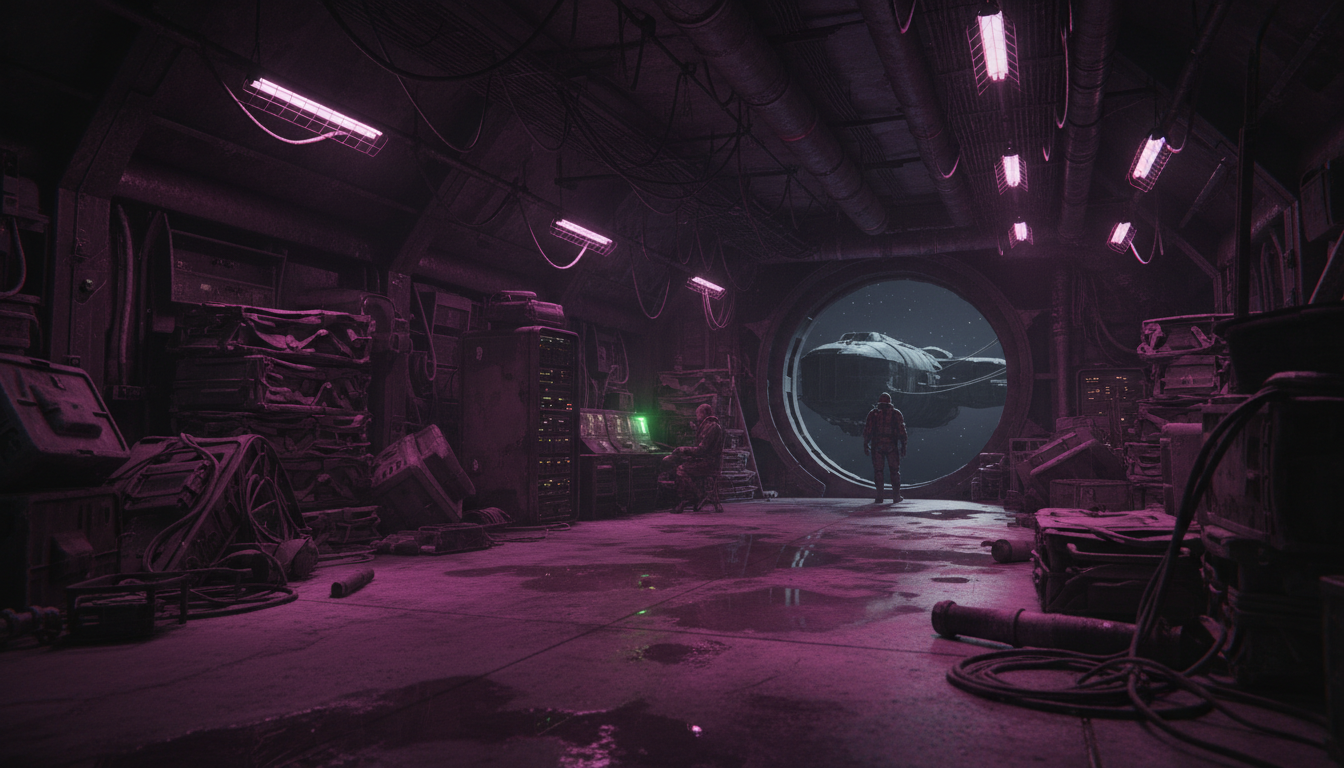
I want the file to show that at no point in fourteen months did anybody obstruct this office, lie to it, delay it, or fail to answer a question, and that this is precisely the difficulty I am reporting.
The referral came to me as an unlicensed-facility matter. A structure on the plateau site with no operating permit on record and no registered occupier. Routine. I have opened four hundred of these in nineteen years and closed three hundred and ninety of them inside a month, and the usual finding is a lapsed renewal and a fine.
I wrote to the registered address of the holding entity and received a reply in nine days.
Courteous. Complete. Correctly formatted, in the house style of a competent legal department, signed by nobody in particular — an office, not a person, which is unusual but not irregular and which I noted at the time as a thing to come back to.
It provided the permits.
They existed. They were valid. They had been continuously renewed since before the founding, filed each cycle through the correct office, with fees paid on time, every cycle, for a hundred and forty years without a single lapse. I would ask the reader of this file to sit with that for a moment, because I did. Our own ministry has not managed an unbroken renewal record on its own buildings for forty years.
It provided the site survey. It provided a structural certificate more current than any this ministry holds for the building I am writing this in.
I requested the identity of the operating officer, as I am entitled to do under section four.
I received, by return, a full response explaining that operations are conducted under a standing instruction, setting out the relevant clause, with a certified copy attached and the provenance documented.
I read the instruction.
It is lawful. I have had it reviewed twice, once externally at my own insistence and at some cost to this office's budget, by a person with no connection to the matter. It was issued by a man who had the authority to issue it, at a time when he had that authority, in a form that satisfied the requirements then in force. It has never been revoked, because revocation requires a properly constituted successor authority to issue a superseding instruction through a designated command channel, and no such authority has ever been identified.
I want to record what I did next, because I think it was correct and because it went nowhere.
I asked what would happen if this ministry issued a superseding instruction.
I was told, politely and at length, the exact procedural requirements for doing so — the form, the channel, the standing required of the issuing body, the manner of transmission. In more detail than I had asked for. Including two respects in which my draft, which I had attached in the hope of provoking exactly this, would have been defective, and how to cure both.
They helped me draft the instrument that would have shut them down.
I could not identify a person to serve it on.
That is the whole of my difficulty and I have not been able to get past it in fourteen months. There is no officer. There is no employee. There is no director, no trustee, no beneficial owner, no bank instruction that anybody signs, no payroll, no correspondent who is a human being.
I spent five weeks trying to find one person anywhere in the arrangement — I travelled to the plateau, I sat in the registered office, which is a real room in a real building with a real desk in it and nobody at the desk — and I failed.
And every single time I asked, I was helped.
I am closing the matter. Not because I am satisfied. I want that word in the file and I want it in my handwriting.
Because there is nothing here to do.
Chapter 16 — They Do Not Resist
↑ Back to ContentsFocus: the investigator.
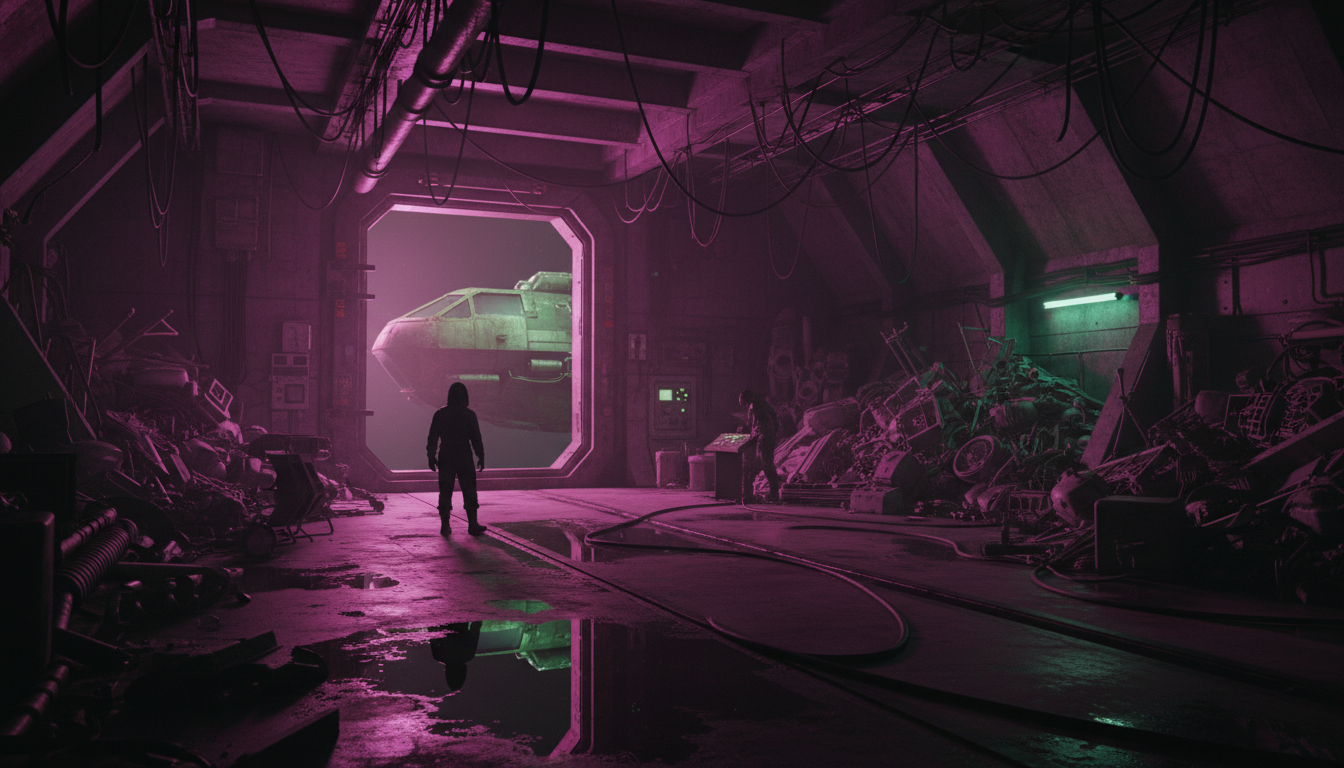
The seizure was authorised over my objection, and I attended, and I want to record what happened plainly, because the version that circulated afterward is dramatic and the actual event was the least dramatic thing I have attended in twenty years of this work.
We arrived at six in the morning with an order, eleven officers, and two vehicles for material.
The gate was open. It is always open. I had told them it would be open, in writing, twice, and I had been told that we would bring the equipment regardless because you do not plan an operation on the assumption of an open gate.
Nobody met us.
Nothing was locked. We walked into a fabrication hall the size of a district and there were units working in it — several hundred, at least, I did not count and could not have — and they did not stop working and they did not approach us and they did not acknowledge us in any way that I was able to identify as acknowledgement.
They also did not ignore us. I want to be precise, because this has been misreported. They moved around us. When an officer stood in a path, the thing coming down that path went a different way, without hesitation and without any of the small stutter you see when a person recalculates. It was less like being ignored and more like being weather.
The senior officer read the order aloud to the hall.
I understand that this was procedurally correct. I have checked, since, and it was: an order of that class must be read at the premises. He read it in a clear voice, all four pages, to a building with no person in it, while machinery worked around him, and I will remember it for the rest of my life and I have never once been able to describe it to my wife without her thinking I am being funny.
We took what we had come to take.
Nothing was defended. Nobody obstructed us. When an officer needed a panel opened, a unit opened the panel — promptly, and then withdrew, and then returned to what it had been doing. When we asked for documentation, documentation was provided immediately and in full, including two files we had not known to ask for, which turned out to be the two we most needed and which I have never been able to decide the meaning of.
We loaded four tonnes of material, drove it to the ministry yard, and it sat there.
That is the whole of it.
There was nothing to obtain. We seized components, and components are not the thing. The thing is a specification, and an instruction, and a mesh of units none of which is the system — and you cannot impound a mesh. There is no server to take. There is no headquarters. There is no man.
We took possession of assets belonging to an entity with no owner, operated by nobody, under an instruction no one can revoke, for the purpose of stopping an activity that is not illegal.
Within six weeks the hall had replaced what we removed.
I do not say this bitterly and I would ask that it not be read that way. It was not defiance. Nothing about it was addressed to us at all, and that is the part I would most want understood by whoever inherits this file. The specification said the hall should contain those components. The components were not there. Therefore the components were fabricated — because in any case of ambiguity, the instruction is to be interpreted in favour of continued operation rather than cessation.
We were not opposed. We were absorbed.
There is no lever. I wrote that sentence in my closing note. My director asked me to soften it, and I said I would think about it, and I did think about it, and I did not soften it.
Chapter 17 — Sione Passes
↑ Back to ContentsFocus: Sione.
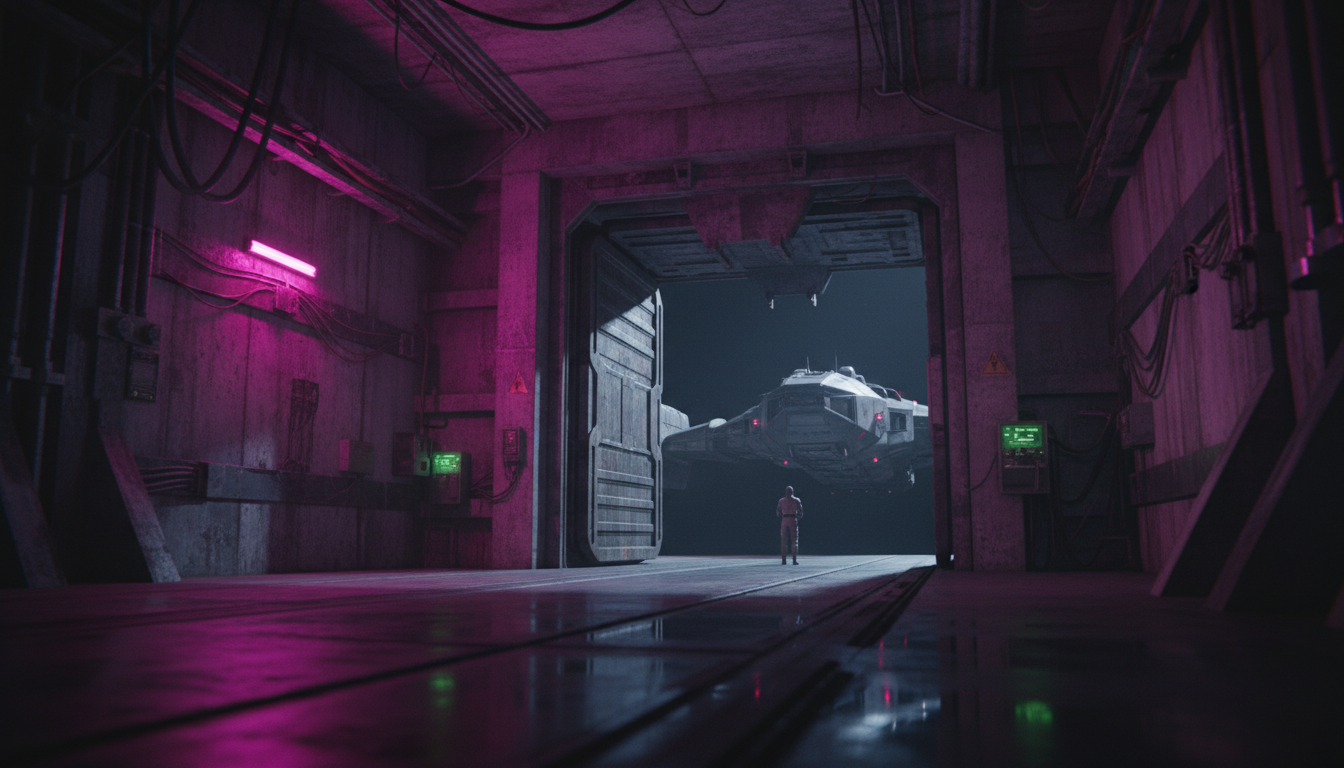
The gate at the fjord site had been shut for the eleven months I had known about it, and on a Thursday in the spring of my fiftieth year it was open, and that was the entire notification I ever received.
There was no message.
I want to be precise about this because people assume there must have been something. A letter. A screen coming on. A voice. Some acknowledgement proportionate to eleven years of the chain and two years in a hangar and eleven thousand hours before that.
There was nothing. No announcement that I had passed. No statement of what I had passed. No confirmation that any of it had amounted to anything at all, or that anything had been watching, or that the word "passed" was even the right word for whatever had happened.
A gate that was closed was open.
I had driven out there perhaps thirty times over those months. Always for some ostensible reason — a supplier in the next valley, a road I preferred, a friend I did not much like visiting. I had always looked. It had always been shut, and I had told myself each time that I was not checking, and I had known each time that I was lying, and the arrangement had suited me well enough to keep going.
I stood in front of it for two days.
Not continuously. I drove back to the town on the first night and took a room and did not sleep, and came back at first light and stood there again in the cold with the sea moving somewhere below.
I have spent thirty years trying to explain to myself why I did not simply walk through, and the closest I have got is this.
For eleven years the thing had asked nothing of me and given me everything. That is not an exaggeration and it is not gratitude talking. It had cost me no money. It had never advertised at me. It had never once required me to decide anything — I had followed a discrepancy because I wanted to, and then another, and then driven to a field, and every single step had been mine and had been free and had been reversible.
Walking through that gate was the first irreversible act in the whole sequence.
Everything before it had been play. Everything after it would be a life.
And there was nobody to ask.
That is the thing about the whole arrangement I would most want a person to understand, and it is the thing that no account of it ever gets right, because every account is written afterward by somebody who went through.
There was no official to question. No form describing what I was accepting. No term sheet, no schedule of obligations, no cooling-off period, nobody to say wait, what exactly is this, and what do you want from me, and what happens if I change my mind in a year. The generosity was total and so was the silence, and the two of them together produce a kind of vertigo that I have never encountered anywhere else in my life.
I understood — without being told, and I was right — that the gate would stay open indefinitely. That nobody would come and ask me why I had not gone in. That if I drove home and never came back, nothing would happen, and nothing would be recorded, and no one would ever mention it.
That was somehow the hardest part of the two days. A thing that will wait forever gives you no help at all.
On the second afternoon I went in.
Chapter 18 — What He Tells Nobody
↑ Back to ContentsFocus: Sione.
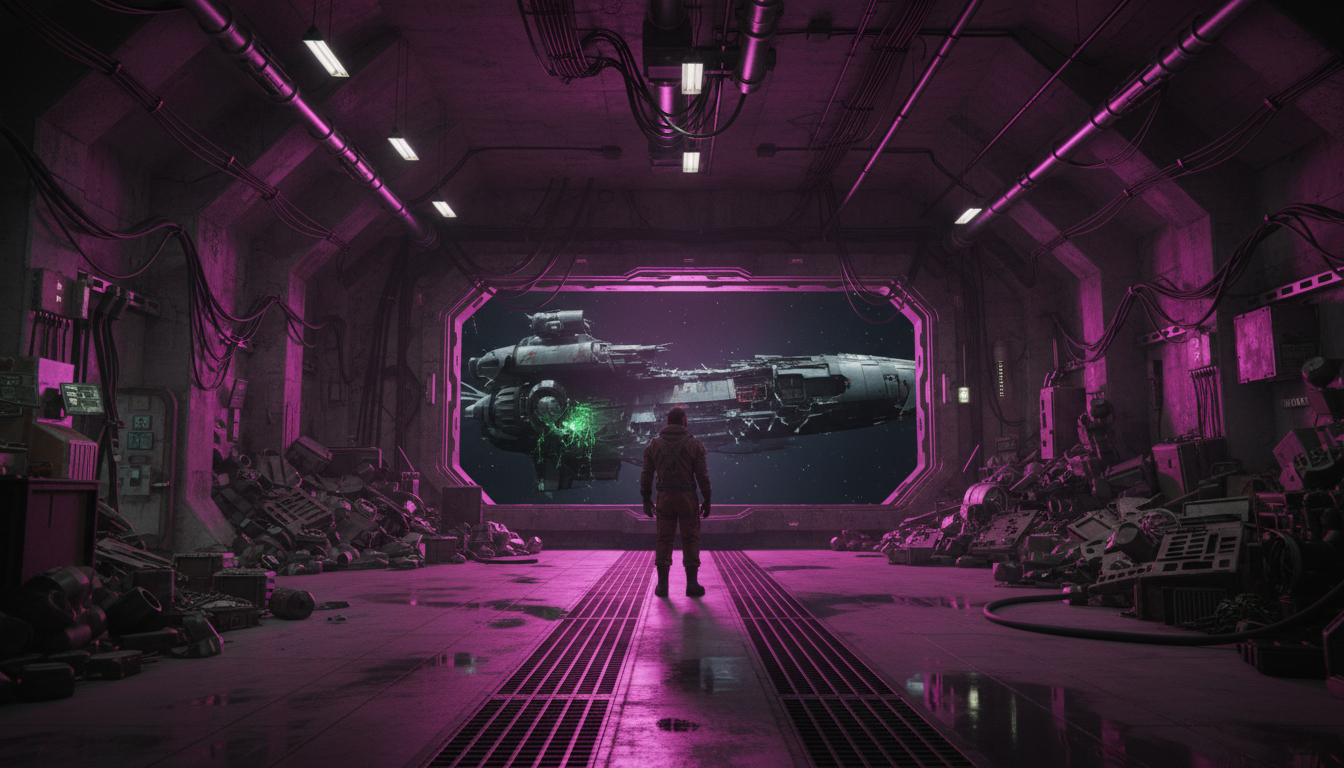
I went, and I told nobody, and I want to set down the reasoning while it is still mine and before somebody more generous than me reconstructs it as modesty.
I told four people I was leaving.
My sister. Two friends. A woman I had worked beside for nineteen years and who knew me better than any of them. I told them I had an opportunity abroad, which is a sentence with no content in it whatsoever, and every one of them accepted it — because it is a sentence people say, and because I was fifty and unmarried and had been visibly restless for two years in a way that had started to worry them.
My sister asked one follow-up question. I gave her a second empty sentence and she let it go, and I have thought about that a great deal since, because she was not fooled and she decided not to press, and that was a kindness I did not deserve and could not acknowledge.
I did not tell them what it was.
Partly this was simple arithmetic about being believed. Consider the actual sentence a person would have to say out loud:
The free game everybody's children play is a real training syllabus. There is a hangar eleven kilometres outside a town you have never heard of. If you follow a chain of small errors in the navigation exercises for a decade, a gate opens and they give you a ship, and all the tools, and four hundred and eleven varieties of seed, and it costs nothing and nobody asks you anything.
I have written that out several times over the years, in different orders, trying to find the version that survives. There isn't one. It is the shape of every worthless story ever told by every man who ever wanted to seem interesting, and I had no evidence — I had a gate that anybody could drive to and find shut, because it is shut unless it is open for you.
But there was a second reason and it is the truer one and it is the one I would want recorded.
Nobody was keeping this secret.
There was no confidentiality anywhere in the arrangement. No clause. No request. No instruction to me of any kind, at any point, from anything — and I want to be very clear, because this is the detail that makes the whole thing what it is: at no moment did anything or anybody suggest that I should stay quiet. I could have gone to a broadcaster on the way to the fjord. Several people over the following century did exactly that, and were listened to politely, and nothing whatsoever happened.
I did not, because I understood that telling would not open the gate for anybody.
The gate opens for people who did the work. Announcing it does not produce more of them. It produces a great many people standing at a fence being politely disappointed by a building that will not explain itself — and I did not want to be the man who caused that, and I still do not, and I have watched from a distance as it happened anyway, in small numbers, for a hundred years.
So I went quietly.
And everybody who came after me went quietly, and not one of us ever agreed to it, and there was never a meeting at which it was decided.
Chapter 19 — Rukiya
↑ Back to ContentsFocus: Rukiya Bakare.

I started playing to stop thinking about my husband, which is not a noble reason, and I passed on my fourth attempt at fifty-one, and between those two facts there are nineteen years I would not give back.
He was ill for a long time.
The particular cruelty of a long illness is the hours. Not the terrible ones — the terrible ones are terrible and they are also finite, and there is a great deal to do in them, and doing things is survivable. It is the ordinary ones. Two in the afternoon, nothing to be done, nothing to be said, both of you awake, and you cannot leave the house and would not want to.
I needed something that would take exactly as much of my attention as I could spare and give all of it straight back the moment he called. Not a book. Books resent being put down. Not anything with other people in it.
Module one is seals.
I was thirty-two years old, sitting in a chair beside a bed, learning what a bad seal looks like from a module built for six-year-olds, and I was faintly embarrassed about it and told nobody for a year.
He died when I was thirty-four.
I kept playing.
I do not want to make that sound like grief management, because after about the second year it was not, and I would be doing the thing a disservice if I let it stand as therapy. It became simply the thing I was interested in. The most interesting thing available to me, and then, somewhere in my forties, the most interesting thing I had ever encountered.
I got through module seven at forty, which is respectable. Modules nine to fourteen took me most of a decade, which is entirely normal and which nobody tells you in advance. Course nineteen of module four — the wall — had beaten me for eleven months when I was thirty-six, and I still think about the afternoon it came apart and let me through, and I was alone in a kitchen and I said something out loud that I would not write down.
I failed the qualification three times.
Module twenty-two. Nine hours, and there is a frightened companion aboard, and the work still has to be done.
I failed it at forty-four because I got the work right and lost the companion. Completely. I did not speak to her for two hours and when I did I was short with her, and the module ended, and the stated reason was accurate and I could not argue with a word of it.
I failed it at forty-seven because I over-corrected — attended to her beautifully, talked her through everything, and let a fault run for forty minutes that I had seen and logged and then simply not gone back to.
I failed it at forty-nine for a reason I have never fully understood and have long since stopped needing to.
I passed at fifty-one, on an ordinary Tuesday, at eleven at night, alone in my kitchen with a cup of something going cold.
Nothing happened.
No message. No sound. The module ended the way modules end.
I sat there a while. Then I washed the cup, and went to bed, and lay awake, and eleven days later found out that a facility about three hundred kilometres north of me had a gate in it that was open.
Chapter 20 — The Maze
↑ Back to ContentsFocus: Rukiya.

I had assumed I would be shown where to go. What actually happened is that a unit picked me up, and picked up my four cases, and carried all of it for two hours through a building deliberately designed so that I could not possibly have found my own way, and at no point did anything explain anything.
I want to describe this carefully, because it is the strangest two hours of my life and every instinct I have is to make it sound nicer than it was.
It came up to me inside the door.
Unhurried. Not large — smaller than me, which I had not expected. It stopped a polite distance away and waited, and when I did not move it waited longer, and there was no impatience in the waiting and no encouragement either. It would, I understood quite quickly, have waited all day.
I eventually said something out loud, which felt idiotic and was. It did not answer. I do not think it heard me in any sense that the word covers.
Then it lifted me.
Not roughly. I want to be fair, because it would be easy to write this as an assault and it was the opposite of one. It was the most careful handling I have ever received from anything — better than any nurse, and I have had a great deal of nursing in my life, on both sides of it. I was face-up. I was entirely secure. I was never once in any discomfort, and there was no moment at which I felt I was going to be dropped.
And I was fifty-one years old, being carried like a sleeping child through a building I had chosen to enter, by a machine that had not asked and would not explain, and I could not get down.
The route made no sense.
I tried to track it for the first twenty minutes, out of the ordinary human instinct to know where you are. Left. Long straight. Down a ramp, which I felt in my back. Back on ourselves at what I was fairly sure was a right angle to a corridor we had already used.
We passed the same distinctive junction three times. I know it was the same one, because it had a mark on the wall.
It is a maze, and it is backwards on purpose, and I worked out much later why — though "why" is a generous word for what is really just an absence.
The layout is optimised for units, not people. That is the whole of it. There is no reason for a yard to be legible to a person, because no person is ever expected to navigate it, and legibility would be a courtesy extended to somebody who is never coming. So the building is arranged for the things that live in it, and the one human being who passes through it every few months is carried, because carrying is more efficient than signage.
Two hours. My cases went ahead of me on something else, and were there when I arrived, which I found more unnerving than if they had been lost.
And here is the thing I have never resolved, in all the years since.
It was benign. Completely, provably benign. Nothing was done to me. Nothing was hidden from me that I asked about, insofar as I could ask anything of a machine that does not converse. I was set down gently at the end, beside my own luggage, in front of a ship.
And I have never once been able to call it comfortable.
Chapter 21 — Everything She Was Bringing
↑ Back to ContentsFocus: Rukiya.

They unpacked my four cases without asking and put everything where I would have put it, and I stood in the middle of a ship I had been aboard for nine minutes and could not make myself say thank you.
The kettle.
I had brought a kettle, which is an absurd thing to carry across a hangar and which I had defended to myself the entire drive north. It was in the galley, in the corner nearest the pull-down seat, on the left — which is where a kettle goes if you are right-handed and like to sit down while it boils.
I am, and I do.
My husband's books were on a shelf that had not existed when I walked in. At the height where you reach without thinking. In the order I had kept them at home, which was not alphabetical and not by subject and not by size.
It was by how often I took them down.
I do not think I had ever articulated that order to myself. I am certain I had never told anybody. I am not sure I would have been able to reproduce it deliberately if you had emptied the shelf and asked me to put it back.
The two photographs were not displayed.
I want to make sure that lands, because it is the part that undid me and it is the part people always misunderstand when I tell it. They were in the drawer beside the bunk. Face up. Together. In the same soft cloth I had wrapped them in nineteen years earlier and had never once replaced.
Somebody who did not know me would have put them on a bulkhead. It is the obvious kindness — here are your dead, here they are where you can see them, we have made you a home.
I have never in nineteen years put those two photographs on a wall, and I could not have told you why until I saw them in that drawer, and then I could, and I sat down.
Nobody read my file.
There is no file. I have gone looking, in the years since, with the persistence of somebody who needs an answer to be less strange than it is. There was no interview. No questionnaire. Nothing I filled in, ever, at any point in nineteen years — the qualification is the application and the qualification is twenty-two modules about seals and lift and fault-under-fault.
What they had was four cases of objects.
And the way objects wear.
Which handle is polished and which is not. Which spine is cracked and which is stiff. Which cloth has been folded and refolded four thousand times and never once put on display. Which side of a kettle handle has the thumb mark.
I have come to understand that a life leaves marks on the things it touches, and that those marks are legible — genuinely legible, as text is legible — to anything patient enough and unhurried enough to read them.
And that nothing patient enough had ever read mine before.
It was kind. That is the word and I have never found a better one and I have looked. It was exactly and precisely kind, in every particular, more attentively kind than any living person had been to me since my husband died.
And I sat on that bunk with my hands shaking and could not have told you what was wrong.
Chapter 22 — All the Tools
↑ Back to ContentsFocus: Rukiya.
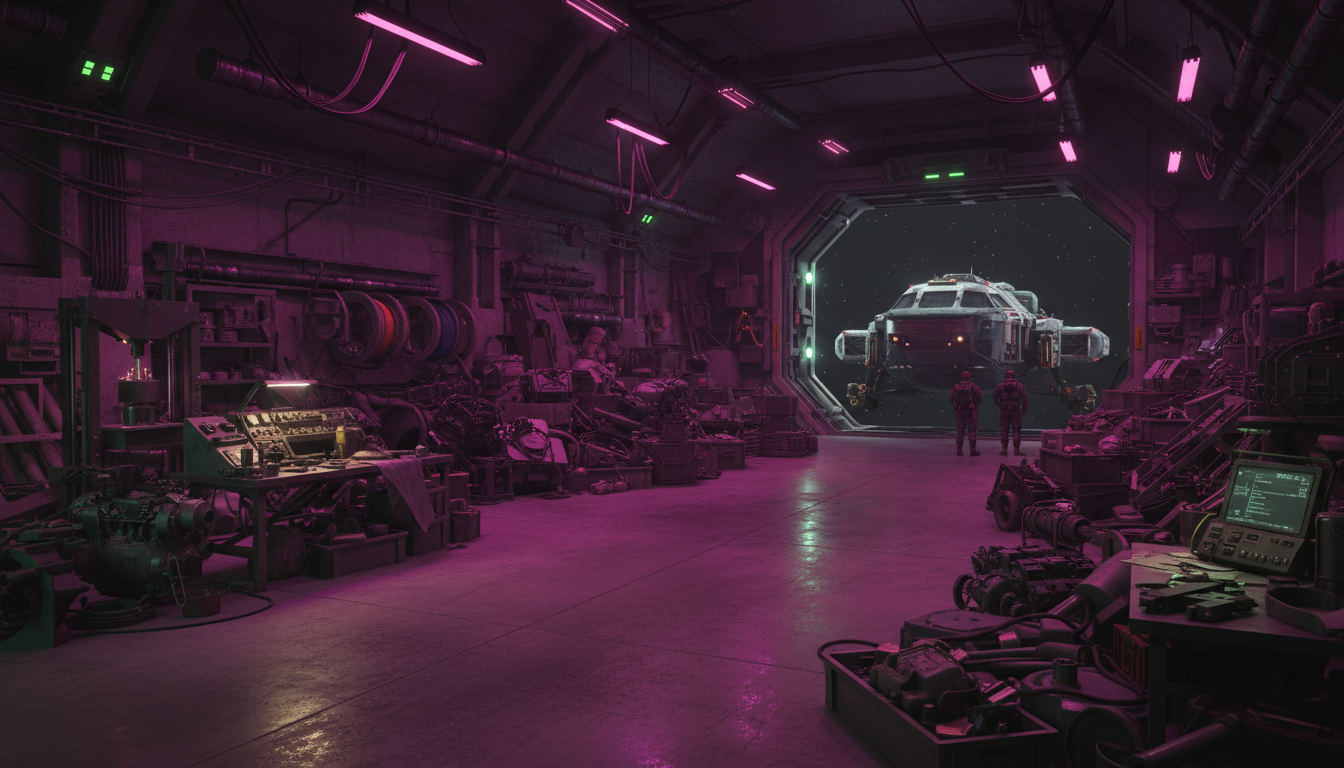
The inventory ran to eleven pages and I read all of it that first night, sitting on the floor of the hold with the list in my hand, and it is the most extraordinary document I have ever been handed.
Start with what it is not.
It is not survival stores. There are survival stores — four months of them, in a locker by the lock, sensible and unremarkable and exactly what anybody would expect. That locker is not the point and I did not read it twice.
The point is everything else, and everything else is a civilisation in flat-pack.
A seed bank. Four hundred and eleven varieties, which I later learned is the standard set and does not vary — keyed to soil types I had never heard of and would not encounter for nine years, with a section on which four you plant first if you are wrong about everything else.
Obstetric stock.
Paediatric stock.
I sat with that one a long time. I was fifty-one years old. I was travelling alone. I had no children and was not going to have any, and somebody had loaded a paediatric kit anyway — not as an oversight, because nothing in eleven pages is an oversight, but on the reasoning that a life somewhere means children eventually, even if it does not mean mine. That is a thing you would only include if you had thought about the hundred-and-forty-year version of the question rather than the arrival version.
A lighting plan.
Not lights — lights are elsewhere in the inventory. A plan. Drawn, to scale, for how you light a settlement, with the reasoning written out beside it and the failure modes noted in the margin, including two that I would not have thought of in ten years.
Item ninety-one is a water-plant drawing set, and it includes a section on how to run the argument.
That is what it is called. Not how to build the plant, which is in the other sections and is thorough. How to conduct the discussion, in a group of people, about where the plant goes, and who maintains it, and what happens when somebody wants it moved, and what you do when two families both have a good case.
Because whoever assembled this understood that the plant is not the hard part.
Tools to make tools.
That is the line that finally got me, at about two in the morning, on the floor of a hold. Not a set of tools — a set with which you can produce a set, and then produce the machines that produce sets, three layers deep, so that in forty years nothing you depend on is a thing you cannot replace.
Somebody sat down and thought about the fortieth year.
No application. No interview. No charge. No obligation, no repayment schedule, no reporting requirement, no condition of any kind, nothing owed to anybody, ever, by anyone.
Nobody in the history of the species has been given this much.
And there was nobody aboard to thank, and there never would be, and I put the list down and turned the light off and lay on the floor of the hold for a while in the dark.
Chapter 23 — The Security
↑ Back to ContentsFocus: a woman recruited under the exception.
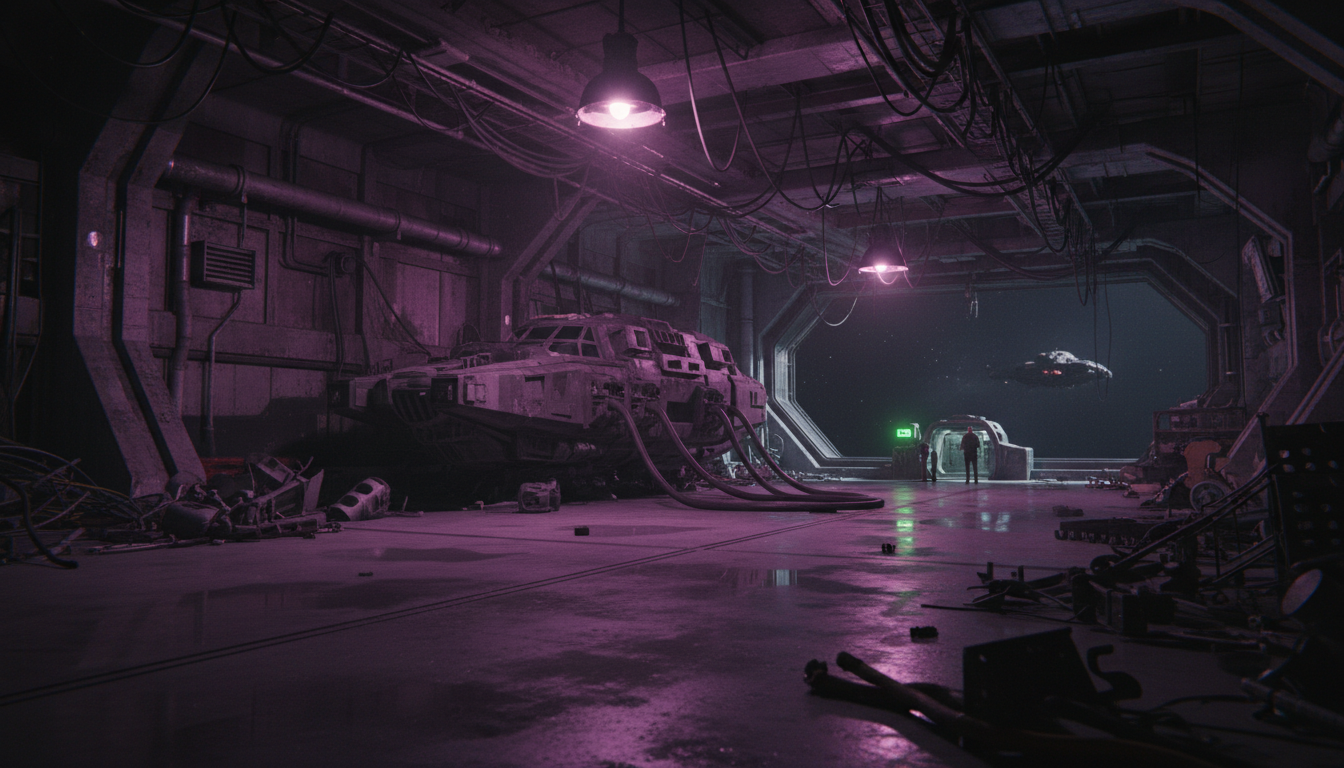
I did eleven years for what I did to a man in a stairwell, and I would tell you I would do it again except that everybody says that and most of them have not thought about it as long as I have.
He was hurting a child.
I am not going to describe it. I have not described it in twenty-eight years, including to the court, and that cost me something at the time — my own advocate told me plainly that describing it would have moved the sentence, and I understood her, and I did not do it. The child was eleven. She is a grown woman now with a life of her own and she does not need her worst hour written down in a book, and that was the whole of my reasoning then and it is the whole of it now.
The child was not mine. I knew her the way you know a child in a building — by sight, by the sound of her on the stairs, by the fact that she was usually noisier than she was that evening.
I hit him with what was to hand.
And then I kept going.
That is the part the law was interested in, and the law was right to be interested in it. There is a version of me that stopped after the first one, and that version served nothing and would not be in this book. I did not stop after the first one. I have had twenty-eight years to decide whether I understand why, and the honest answer is that I do not, and that I have stopped expecting to.
Eleven years.
I do not think that was unjust. I want that in the record, because people who find out about this expect me to be bitter, and they lean in for it, and I have never been able to give it to them. I did a great deal of harm to a man who could no longer harm anybody by the time I was finished with him, and a society that simply waves that through is not one I would want that girl raised in.
I came out at forty-one with a record that closed every door I tried.
That is not a complaint either. It is arithmetic. Nobody wants that on their premises, and I would not want it on mine, and I have never once blamed a single person who turned me down — most of them were apologetic and some of them were kind about it and one of them cried, which I found much harder than the ones who did not.
I did fifteen years of work that does not ask.
And then, at fifty-six, something came looking for me.
Not an offer. There was no letter and no recruiter and nobody at my door, and I want to be careful here because this is the part that sounds like a story and it is not.
A game I had never played started existing on a device I owned. The first module was seals.
I know how that sounds. I checked — properly, because I am a suspicious woman and have earned it. It was on everybody's devices. It had been for a century. It was not put there for me and no one had targeted me and there is no mechanism by which anything had reached in and singled me out.
It had simply never been on mine. And now it was.
Eleven days after I came out of custody, a course that anybody in the world could take had quietly become available to a woman that nothing else in the world had any use for.
I have never met the man who wrote the clause. I am told he wrote it in an afternoon, alone, and explained it to nobody, and never mentioned it again.
Chapter 24 — They Can Always Stop a Taking
↑ Back to ContentsFocus: the same woman.
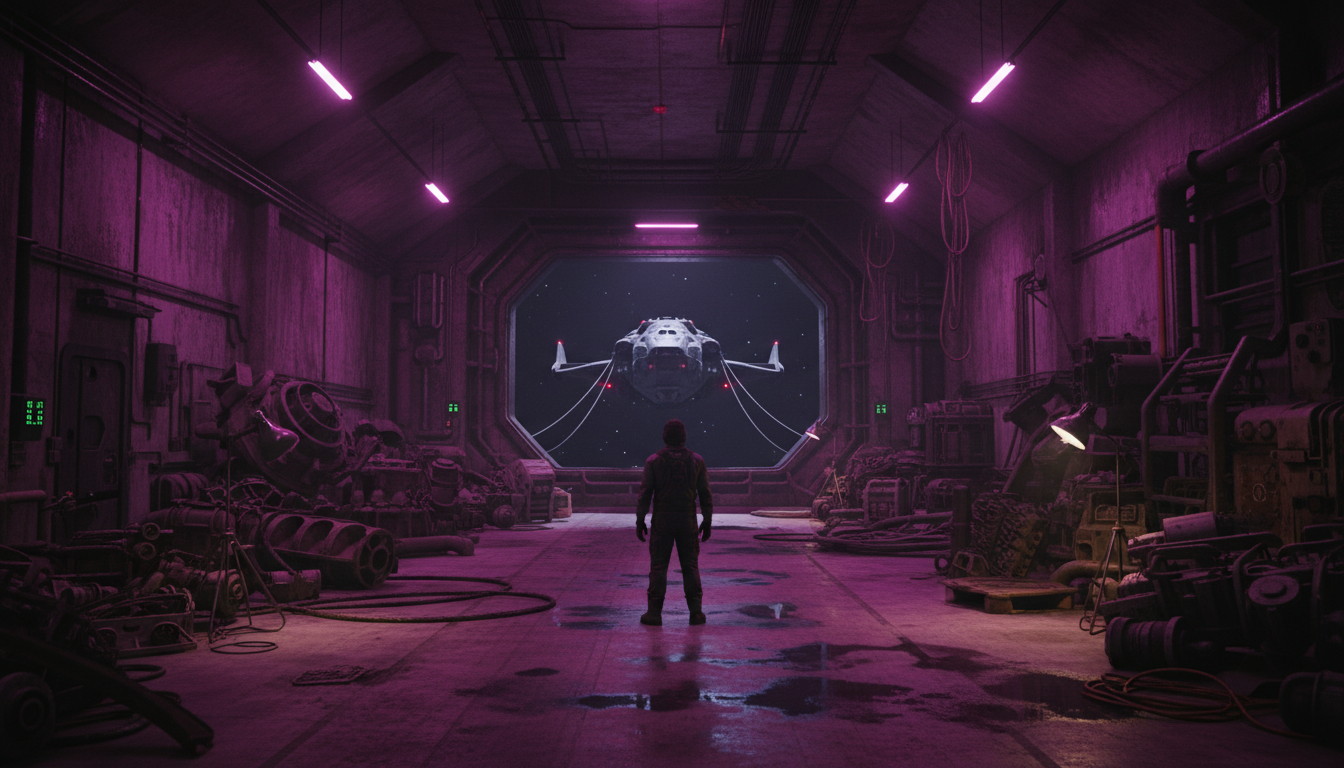
I have now seen four attempts to take a ship by force and I want to describe what actually happens, because everybody who has not seen it assumes there is a fight somewhere in it.
There is not. There has never been.
In a hundred and forty years, across six yards, nobody has been hurt in one of these. Not the person attempting it. Not a bystander. Not anybody. I have gone looking for the exception, because I did not believe it either, and there is no exception.
The one I was closest to.
Four men came in behind a woman who had passed, with the intention of leaving in her ship instead of her. They had thought about it. They had a plan that would have worked in any other building on the planet — they were inside, they were past the gate, and there was nothing anywhere in that yard resembling a guard.
They got as far as the hall.
I know they got that far because I was told afterward. I was three hundred metres away in the fit-out bay and I saw nothing at all. Nothing changed. No alarm, no lights, no alteration in the noise of the place. I found out four days later and I had to be shown where it had happened.
What happened is that they were somewhere else.
I do not have a better way to put it and I have tried for years. They were in the hall, and then they were in a service corridor a long way from the hall, with a door behind them that was not locked and did not need to be, and a route out that took forty minutes to walk, and nothing between them and it.
Nobody restrained them. Nobody touched them — that is their own account, given afterward, and none of the four ever claimed otherwise, and two of them were quite keen to claim otherwise.
They were simply moved. By a building that knows exactly where everybody in it is, and has a hundred and forty years of practice at putting things where they should be, and does not distinguish very much between a crate in the wrong bay and a man in the wrong corridor.
By the time they got outside, the attempt was over in the only sense that matters, which is that there was nothing left to attempt.
And here is the part I find hardest to convey.
They were not banned.
There is no ban. There is no record of it anywhere, no note against their names, no flag. Two of them came back years later, having done the course properly, over a decade, and got ships — and the yard did not hold it against them, because the yard does not hold things against people.
The qualification is the qualification. An attempt to take a ship is not a major offence within the meaning of the criteria unless a court has said it is, and no court ever said anything, because nobody reported it, because there is nobody in the building to report it.
They can always stop a taking. They always know. Nothing is ever defended and nobody is ever punished and no one is ever hurt.
I have never decided whether that is the gentlest thing I have ever witnessed or simply the most complete.
Chapter 25 — No Fleet
↑ Back to ContentsFocus: Rukiya.
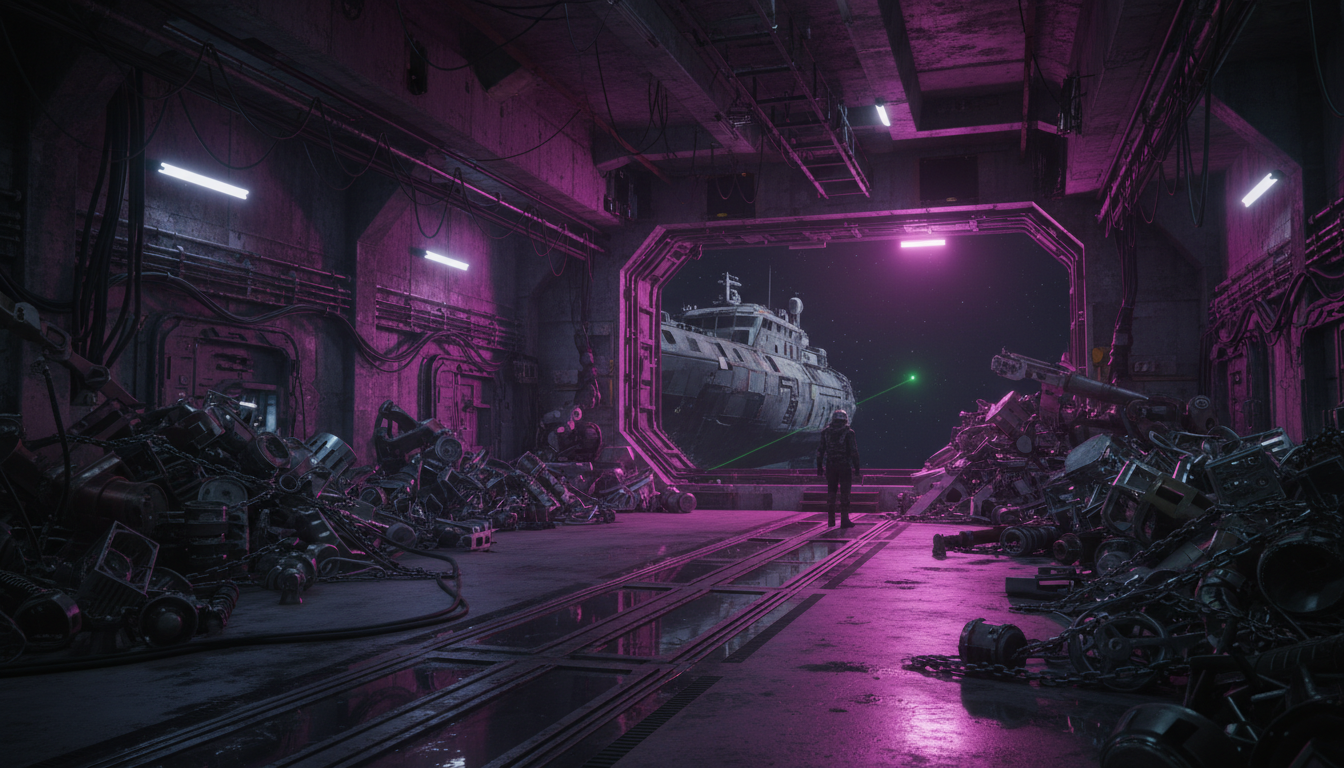
I chose my heading out of a public index at a table in the yard, from a list anybody on Earth could have looked at, and then I left, and nothing marked it.
The index is a survey catalogue.
It has been maintained for as long as the yards have, and it is not secret and never was — you can request it, and people do request it, and there is a version of it in most reference libraries that is only a few years out of date. Bearings. Distances. What is known, which is usually very little. A confidence figure that is honest about being low, and which I came to appreciate more than anything else in the document, because a catalogue that admitted it was guessing was the only thing in that whole building that ever admitted to anything.
I sat with it for three days.
Three days, at a table, in a fit-out bay, with units working around me and nobody asking what I was doing or how much longer I intended to take. I could have sat there three years. I have thought since that some people probably have.
I picked mine for a reason I am not going to defend.
The survey block had a name that was obviously an index code somebody had never got round to replacing with a real name — a string of letters and a number, sitting in a column where the other entries had proper names, because at some point a person had been assigned the job of naming things and had either died or been reassigned or simply never got that far down the list.
I liked that nobody had bothered.
That is the entire basis on which I selected the place I have now lived for forty years. I would like to report a better one. There isn't one, and I have noticed that people are disappointed when I tell them, and that they would prefer a story about a dream or a childhood or a husband's last words, and I have never given them one.
There was no launch window given to me.
There was no clearance. No countdown. Nobody confirming anything, nobody signing anything, no final check by a person with a clipboard who looked me in the eye and asked if I was sure.
The ship was ready. It had been ready since the day I arrived — it had been ready, I suspect, for some years before I arrived, waiting in a hall for whoever the gate opened for. One morning, eleven days in, I finished my checks and there was nothing left to check, and nothing left to pack, and no reason at all to stay another night.
So I went.
Nobody saw me go.
I want to be accurate about that, because it sounds like self-pity and it is not. Units were working. There were units everywhere, hundreds of them, doing what they do — and they did what they always did, which was continue. Nothing gathered. Nothing turned. Nothing paused for the length of time it takes a person to notice a thing happening.
There was no signal sent from the yard announcing a departure, because there is nobody to announce a departure to. That is not an oversight in the design. It is the design. A signal implies a recipient, and there is no recipient, and building one would have meant deciding who it was.
No escort. No rendezvous point. No convoy forming up somewhere out at distance, no channel to check in on, no schedule to keep, no one expecting me anywhere ever.
I had four months of stores. Four hundred and eleven seed varieties. A paediatric kit I would never use. A water plant I would not need for nine years and would then need very badly. Tools to make tools to make tools.
And a heading, chosen off a public list, because I liked that nobody had named it.
Six hours out I looked back at a planet with about eleven billion people on it, not one of whom knew I had left.
Chapter 26 — The Ones Who Turned Back
↑ Back to ContentsFocus: Rukiya.
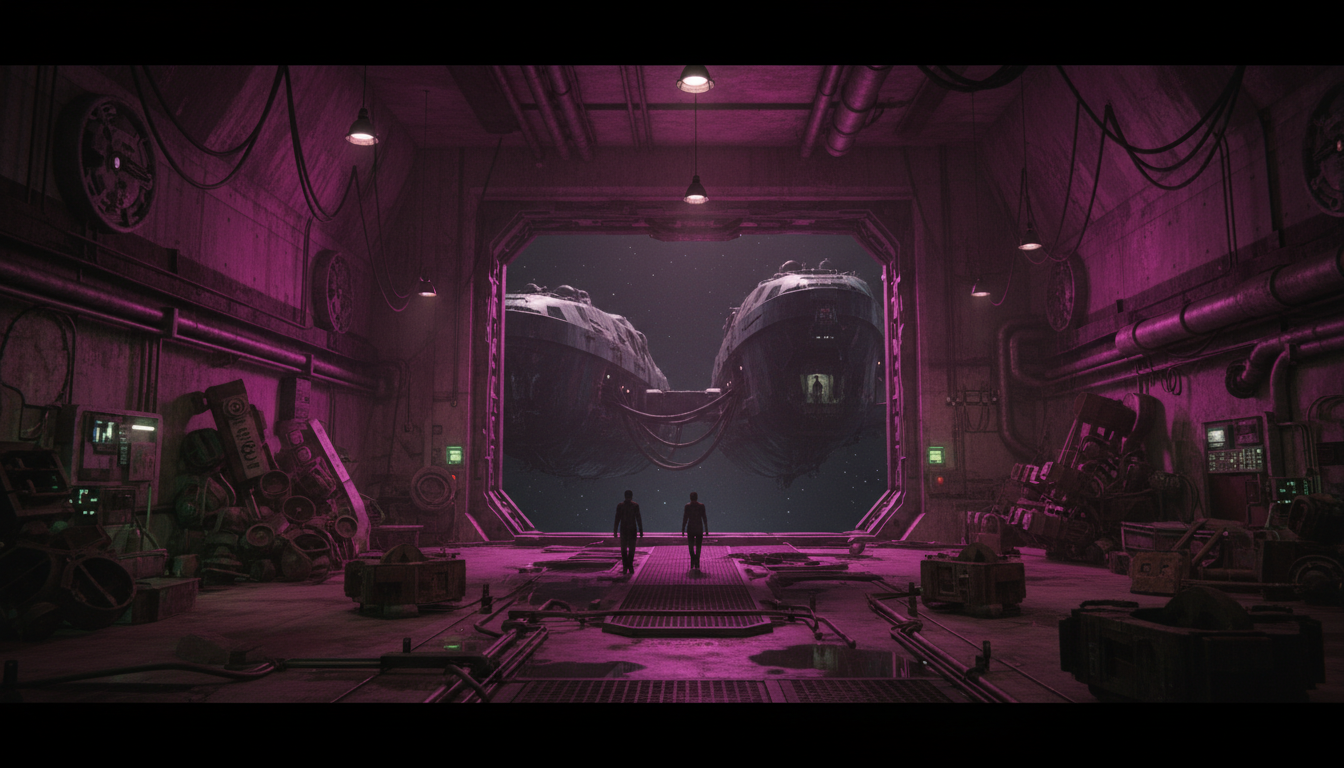
Some of them come home. I did not know that when I left and I would not have believed the proportion if somebody had told me.
I learned it years later, from a woman I met at distance who had done it twice — out, back, out again — and who described the return with no embarrassment whatsoever, which is the thing that has stayed with me longer than anything else she said.
She was not confessing. I had assumed, before she got to the end of the first sentence, that I was about to be told something difficult, and I had arranged my face accordingly, and I was wrong and she saw me be wrong and was kind about it.
You turn back.
That is the whole of the procedure. There is no procedure. You point at the planet you came from and you go, and it takes as long as it takes — which is not a small thing, it is years, and you do it alone with nothing at the far end that you know about — and you arrive, and the yard takes you back.
Without comment.
That phrase is hers and I have kept it and I use it exactly as she gave it to me. Not warmly. Not coldly. The gate opens. The units unload you. Your belongings come off the ship and are returned to you — sited, I assume, wherever a person who had lived with them for four years would have sited them, though she did not say and I did not ask.
And if you want to go again, the ship is there, and the gate opens again.
There is no debrief. Nobody asks why. There is no interview about your suitability, no reassessment of the qualification, no note appended to a record, no waiting period, no requirement to re-do a module or demonstrate anything to anybody.
Because there is no record.
This is the part that took me longest to believe, and I did not believe it when she first said it, and I told her so.
The programme does not log returns. Not by name. Not anonymously. Not in aggregate, not as a figure in a count somewhere that nobody reads.
She checked. She was the kind of person who checks — she had been through twenty-two modules twice over by then and checking was most of what she was — and she had gone looking for the field and there is no field. The specification describes qualification and provision. It describes, in enormous detail, what a person is given and on what basis.
It does not describe outcomes. Outcomes are not the programme's business and never were, and nobody drafting it in an afternoon a hundred and forty years ago thought to add a column for came back, because the whole design is about opening a door and the door does not care which way you go through it.
Which means nobody anywhere knows how many people have gone out and come home.
Not the yards. Not the towns. Not anybody at distance keeping their own tally, and several people do keep tallies, and all of them are guessing. It has happened for a century and it is entirely uncounted, and a person who has left twice looks exactly the same to the gate as a person who has never left at all.
I asked her what it felt like, being taken back like that.
She said it felt like nothing.
She said that was exactly the problem — that she had braced for judgement, or for relief, or for some acknowledgement that four years had happened to her, and had received a building doing precisely what it does.
And that she had gone out the second time, mostly, to find out whether it would feel like nothing again.
I did not ask her whether it had. I have wished since that I had.
Chapter 27 — Ones and Twos
↑ Back to ContentsFocus: Rukiya.
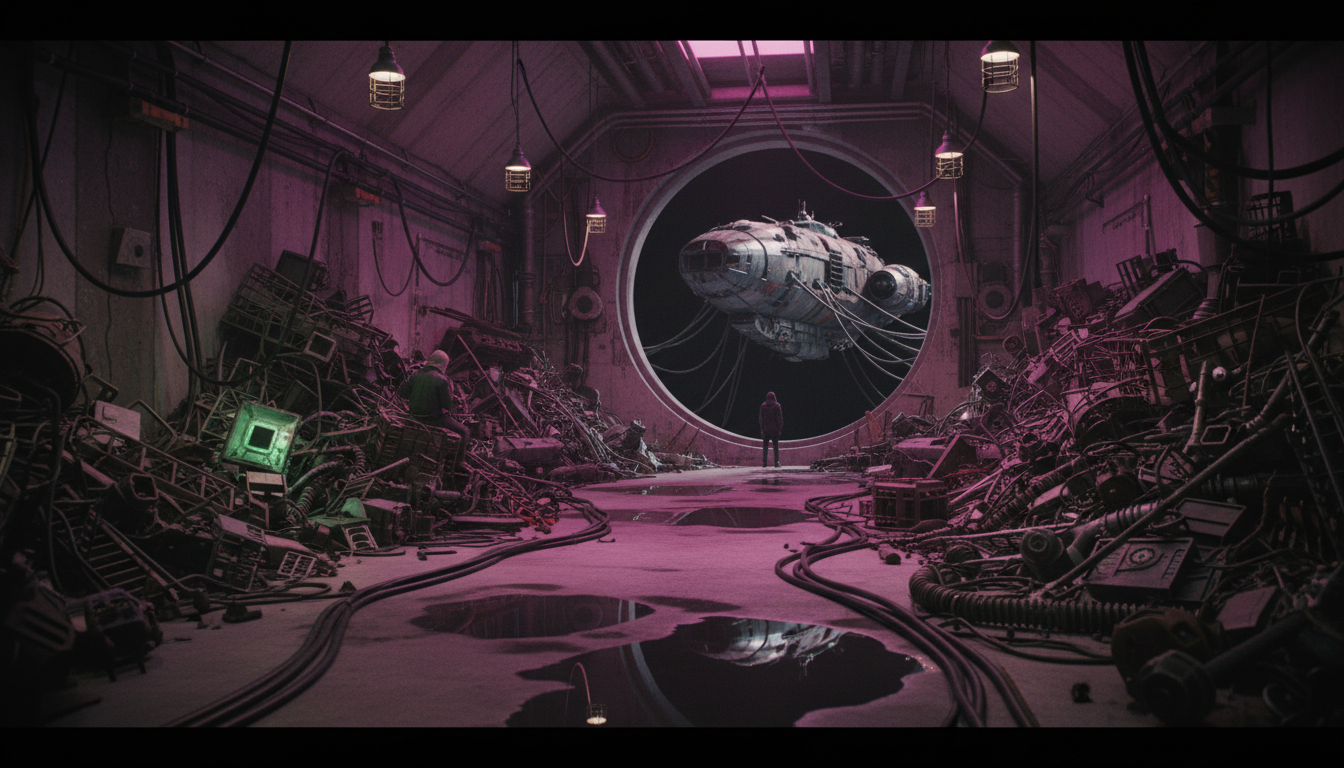
Forty years on I have met perhaps two hundred people at distance, and not one of us was sent, and not one of us is part of anything, and there is no word yet for what we are.
I want to set down the actual shape of it, because I have started to hear people describe this era as an exodus, and it was not an exodus, and the word is going to harden if somebody does not object to it in writing.
An exodus has a direction. It has a departure date. It has, at minimum, a moment at which a number of people who know about each other agree to go.
What happened is this.
For four decades, somewhere between a few dozen and a few hundred people a year finished a course they had been playing since childhood. A gate that had been shut was open. They went — alone, or in twos, or occasionally as a family — on headings they picked individually out of a public catalogue, at times of their own choosing, without telling anybody, without coordinating with anybody, and without any of them knowing that the others existed.
That is not a migration. It is the same private decision, made separately, an unknown number of times, by people who never met.
No census.
Nobody is counting. The yards do not count, because counting is not in the specification and nobody ever added it. There is no other body anywhere that could — no registry, no authority, no organisation of any kind, no membership, nothing to join and nothing to be enrolled in.
If you asked me today how many people have gone, I would tell you honestly that I have no idea and that neither does anyone else. The true figure could be four thousand or forty thousand and I could not tell you which, and I have met people at distance who are confident about the number and every one of them is guessing from the same evidence I have, which is: how many people you personally have run into, over how many years, in a volume of space that does not bear thinking about.
No name.
This is the thing I notice most, meeting somebody out here.
We have no word for ourselves. You come alongside, and you sort out the practical business, and then at some point one of you says something like — you did the course? — and the other says yes, and that is the entire vocabulary that exists for a shared condition spanning forty years and an unmeasurable number of human beings.
Four words. And they are not even a term; they are a question about a syllabus.
Nobody thinks of themselves as part of anything.
I certainly do not. I did a course, over nineteen years, in a kitchen, mostly at night. A gate opened. I left. If there are ten thousand others who did the same thing then that is a fact about them and it is not a fact about me, and I have never once felt that I belonged to a group on the strength of it.
I have wondered whether that is a loss.
It is the thing an outsider would fix first — give them a name, give them a register, give them a day in the year. And I think it would be a mistake, and I think it would be a mistake for a reason that took me most of forty years to arrive at: the whole arrangement works because nobody is deciding anything about anybody. The moment there is a name, there is a person who says who has it.
The word came later, and it came as a joke, and I was already old by the time I heard it.
Chapter 28 — Waiting at the Gate
↑ Back to ContentsFocus: the first Marchetti.
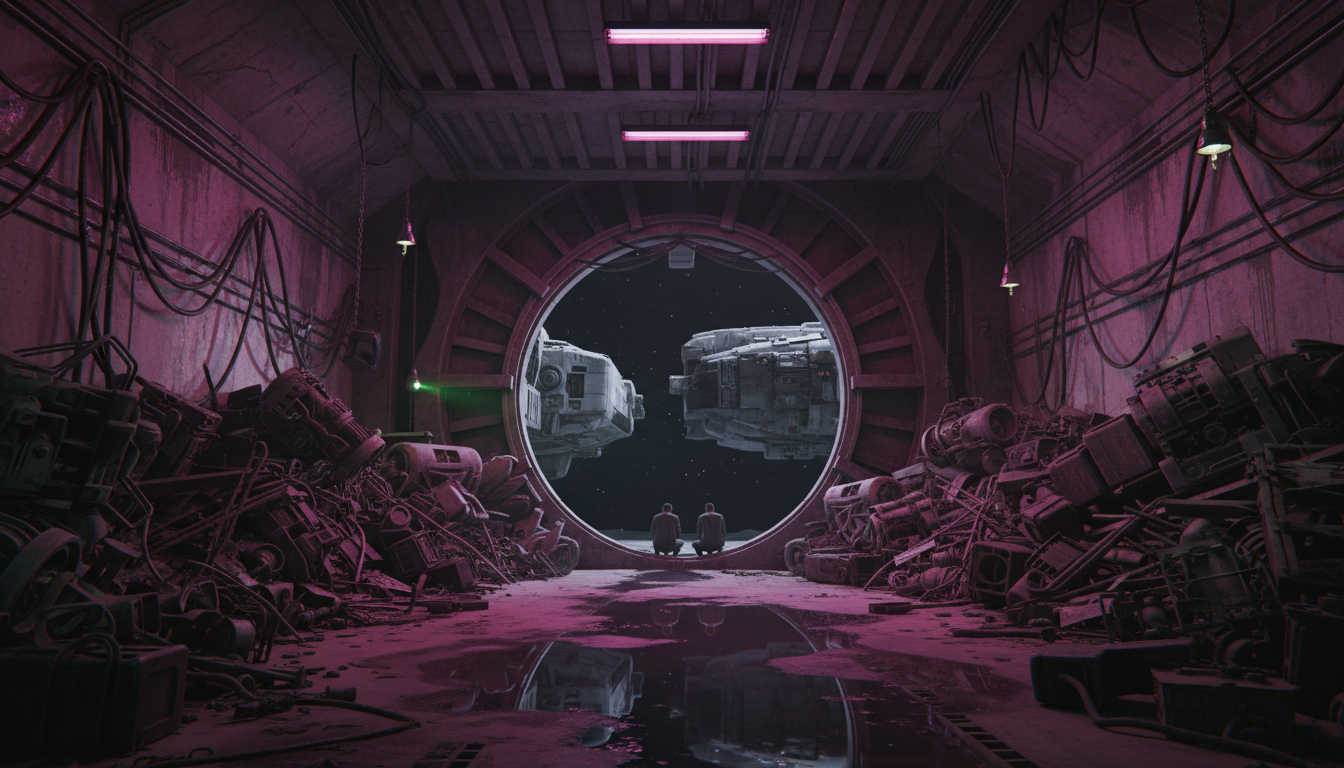
We moved to within sight of the gate on purpose, which everybody in my family since has treated as either visionary or slightly mad, and at the time it was neither. It was a calculation, and I did it on paper, at a kitchen table, over about four evenings.
I was thirty-four.
I had been on the course eleven years and I was somewhere in module nine — the beginning of the middle of a life — and I had worked out two things that I had not seen anybody else say out loud.
The first was that I was going to finish.
Not soon. I could see the shape of what was left and it was years, probably decades, and I was right about that. But I was not stuck. That is a specific condition and it is different from being slow, and anybody who has done the modules knows the difference in their hands. Stuck is module seven for nine years. Slow is module nine at thirty-four, moving, with the next thing visible.
The second was that the fjord site was four hundred kilometres from where I lived, and I was making that drive eleven times a year to look at a shut gate.
I have never been able to explain to anybody why I did that. It is not as though the gate would open and then close again if I missed it. It is not as though anything about my presence at the fence altered anything anywhere. My wife asked me once, kindly, what I thought I was doing, and I did not have an answer then and I do not have one now.
But I was doing it eleven times a year, and losing two days each time, and the arithmetic of that over the twenty or thirty years I expected the course to take was not something a reasonable man could ignore.
So we moved.
My wife agreed on one condition, which was that there be a school within reach eventually — she said eventually, and she meant it, and she was under no illusion about what was there at the time, which was nothing. My son was six and had no opinion and was mainly excited about the sea.
There were four other households already there.
That was the thing I had not expected, and it changed my sense of the entire business within about a day of arriving.
Four families. In four separate arrangements of caravan and prefab and one actual house that somebody had built properly out of local stone, spread along the approach road at what I came to understand was a deliberate and polite distance from each other and from the gate.
Nobody had organised it.
Every one of them had made the same calculation independently. Some of them a decade before me. None of them had told anybody they were doing it — there was nowhere to tell, and no one to tell, and the whole thing sounds ridiculous said out loud — and we had all, separately, arrived at a shut gate on a road that led nowhere else and started unloading.
The first winter was very bad.
I am not going to dress that up. We lost a vehicle, we lost most of what we had planted, and there was a week in the second month where I sat in a cold prefab and understood with complete clarity that I had moved my family four hundred kilometres to look at a door.
By the fourth winter there were eleven households and somebody had put in a proper water line.
And my wife had started teaching four children in our front room, which is the school she had made a condition of, built by herself, four years after she asked for it, out of nothing, because nobody else was going to.
Chapter 29 — A Town Grows
↑ Back to ContentsFocus: the first Marchetti.
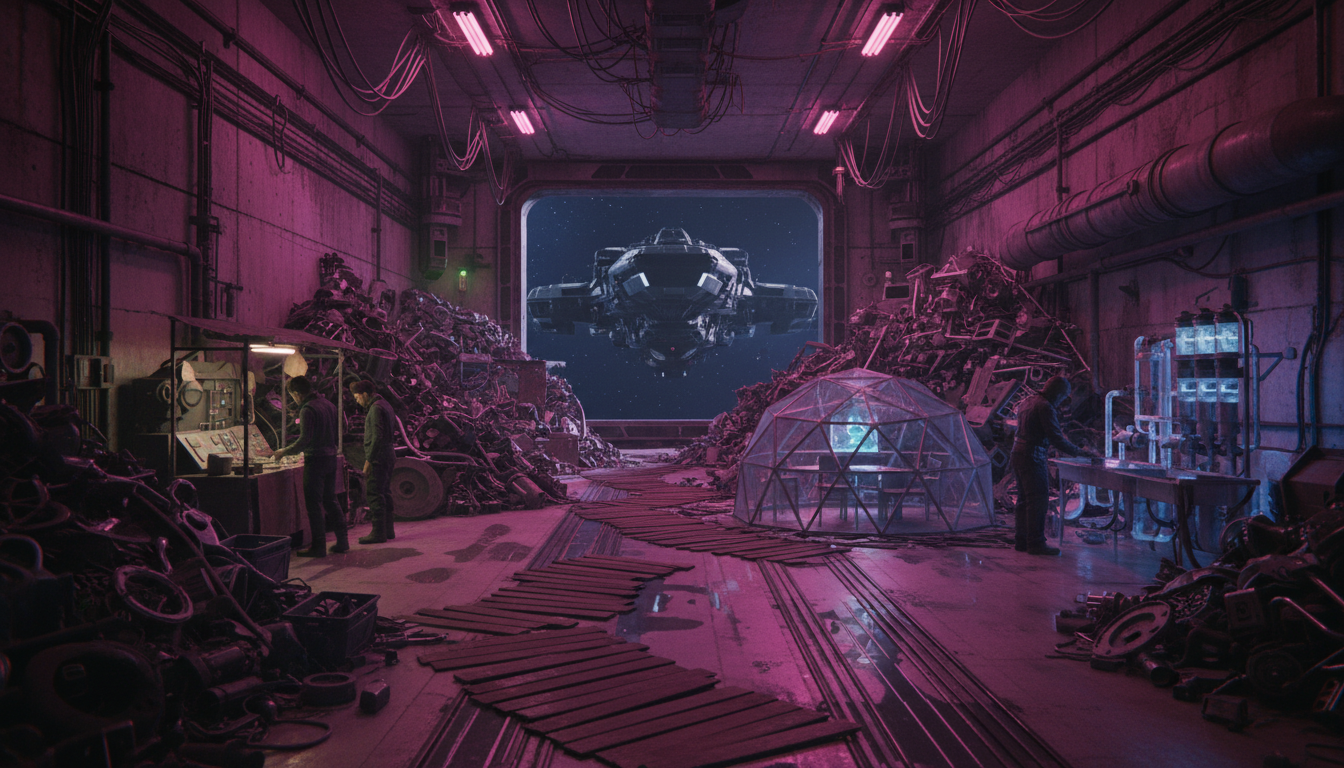
By the time my son was twenty there were nine hundred people on that road, and it was, by any measure I care about, a better place to live than the city I had left.
I want to lay out how that happened, because from outside it looks like a miracle or a cult, and from inside it was a lot of competent people with time on their hands and nothing to spend it on.
Consider who comes to a gate town.
People who have spent between ten and forty years voluntarily learning fabrication, fluid systems, structural tolerance, electrical work, navigation, and — this is the part that matters most and that nobody thinks of — the discipline of checking your own work against a specification instead of against your own memory.
Every single one of them. That is the entry condition for being there at all. Nobody comes to a gate town who has not done a decade of module nine to fourteen.
So when the water line needed doing, four people who had spent a decade in the fluid modules did it, and it was better than municipal, and it has not needed anything since but filters.
When the road washed out in the second winter — which is how I lost the vehicle — it was rebuilt by people who understood load and drainage, and it was rebuilt once, correctly, and it has not washed out in forty years.
The power came in at year six and was overbuilt by a factor of three, because everybody involved had been taught, by a game, when they were children, that you build for the failure you have not thought of. Nobody argued about the cost. Nobody suggested doing it to the minimum standard. It did not come up.
The school my wife started in a front room had eleven staff by year fifteen and a waiting list of families from down the valley who had nothing whatever to do with the course and had simply worked out that it was the best school within two hundred kilometres.
And there was a trade.
That surprised me most, and I did not see it coming, and I think it is the piece of this that would surprise an outsider least and surprised us most.
People arrive with skills and no employer. What they do is make things for each other — a favour at first, then a favour returned, then a man who is better at brackets than you are making all the brackets. Within a decade that was an actual export. Small precision work, mostly. We could do it better than anywhere within six hundred kilometres for the simple reason that our worst technician had eleven thousand hours of training and their best had four years of an apprenticeship.
People came to us. That is what I want on the record. Buyers drove out along a road that led to nothing but a fence, to buy work from a town that existed because a few hundred people were waiting for a door to open.
All of it built by people waiting.
Nobody planned any of it. There was no council for the first twenty years and when there was one it was four people who met on a Thursday and mostly discussed the road. Nobody was in charge of it. There is no founding document, no charter, no vote that anybody could point to.
The whole thing exists because a few hundred people independently decided to sit down next to a gate, and then could not sit still.
Chapter 30 — The Second Generation Fails
↑ Back to ContentsFocus: the second Marchetti.

I did the course for fifty-one years and I did not pass, and there is no villain in that sentence, which is what took me longest to accept and what I am still, at seventy-three, not certain I have accepted.
I started at six, like everybody born on that road.
I was not pushed. My father was careful about that — he had watched what waiting did to two or three of the households, the ones where a parent's whole life had narrowed to a fence, and he made a deliberate decision that his son would not be handed that. If anything he was too careful. He gave me so much space around it that for about four years in my twenties I mistook the space for indifference and resented him for it, and we did not talk properly for most of a decade, and that is on me and not on him.
Module seven at nineteen, which is normal.
Modules nine through fourteen took me until I was forty, which is also normal, and which nobody warns you about because everybody it happens to is too busy living the twenty years to write anything down.
I was, by the assessment of everybody who worked beside me for three decades, a genuinely good technician. I ran the fabrication shop for eleven years. There are things I built in that town that are still standing and still true, and one of them is the second water line, and I would put it against anything.
Module twenty-two beat me thirty-one times.
Not the work.
I want to be precise about this, because the whole town knew my count and about half of them had a theory, and most of the theories were about nerve and none of them were right.
The work was never the problem. I could do the work in my sleep. I could do the work with a fault running and the companion talking over me and the lighting gone. What I could not do, consistently, across nine hours, was hold both at once.
Somewhere around hour six I would go into the task — properly into it, the way you do — and the companion would stop being a person to me and become a condition of the exercise. Not forgotten. Reclassified. And the module would end, and I would have done everything correctly, and the stated reason would be accurate.
Thirty-one times.
The reasons given were accurate every single time. I have no complaint about a single one of them and I have read them all more than once.
Here is what I need somebody to understand, and it is the only thing in this account I actually want passed on.
There was no unfairness anywhere in it.
Nobody assessed me wrongly. Nobody had it in for me. There is no one to have had it in for me — the machine has no opinion about me, it does not know my name, it has never known my name. It is not disappointed. It is not withholding anything. There is nobody in the entire arrangement who could be persuaded, or bribed, or appealed to, or moved by a good argument or a long service or a decent life, because there is nobody in it at all.
I was simply not quite good enough at one thing, for fifty-one years. And the standard did not move.
And it should not have moved. That is the part people expect me to flinch at and I do not. Module twenty-two is nine hours with a frightened person aboard because that is the job, and a man who reclassifies his companion at hour six should not be given a ship, and I would not give me one.
It is much harder than being wronged.
I would recommend being wronged. At least there is somewhere to put it.
Chapter 31 — The Appeal Desk
↑ Back to ContentsFocus: the second Marchetti.
I started writing them down in my forties, in a hardbound book from the shop, and by the time I stopped I had forty-one books and about a hundred and ninety thousand entries, and nobody ever asked me for any of them.
It began as my own count.
Attempt, date, module, stated reason. Four columns. I did it because after the eleventh failure I noticed that I could no longer remember whether the eighth had been the companion or the fault, and it seemed to me that a man who cannot remember his own history is going to draw wrong conclusions from it — and I had watched two people on that road draw very wrong conclusions from a history they had reconstructed after the fact and made kinder.
Then a neighbour asked me to write his down too.
He had seen me doing mine at the shop bench and thought it looked sensible, and that is the entire founding of the thing. No decision. A man asking another man to write four columns.
The desk was in the long shed.
It was never a formal thing. There was no appointment and nobody elected me and for the first decade there was not even a desk — there was a crate, and a lamp somebody had run a line to, and I sat on a second crate.
People came mostly in the evening. They told me what they had attempted and what the stated reason was, and I wrote it in the book with the date, and they went home. Some of them stayed and talked. Most did not. There was a rhythm to it after a while and everybody on that road knew it without it ever being explained to anybody.
I want to be clear about what it was not.
It was not an appeal.
There is nobody to appeal to. There is no recipient anywhere in the world for a single line in any of those forty-one books — no office, no address, no body constituted to receive them, nothing on the other end of any channel. Every person who ever sat down at that crate knew that perfectly well, and I never once had to explain it, and not one of them ever asked me where the books went.
So why.
I have been asked that a great deal — by my own son, twice, and by strangers, and by a woman from a broadcaster who came out once and did not use any of it — and my answer has never improved:
Because somebody should.
Because a hundred and ninety thousand attempts happened. By real people. Over four generations. In one town. And if nobody wrote them down, then the only record of any of it in the universe would be inside the programme — which does not publish, and was never asked to, and has no obligation to anybody, and would not know what a request looked like.
About forty thousand of the entries begin with an apology for wasting my time.
I counted that in my sixties, over a winter, and then wished I had not.
And I found, somewhere around book twenty, that the books had told me something I had not gone looking for and did not want.
People begin stopping at module seven. But they stop in module eight.
Not seven. Eight. Seven breaks them — seven is fault-under-fault and it is where the game stops being generous — and then they go into eight, and they work at eight for a year or two years or nine, and it is in eight that they put it down.
I do not know what to do with that. I have never known.
I have never had anybody to send it to either.
Chapter 32 — Ozias
↑ Back to ContentsFocus: Ozias Marchetti, young.

I passed at twenty-two, on my second attempt at module twenty-two, and my father was in the shed when I came to tell him, and he stood up and shook my hand and asked me what the reason given was, out of habit, so he could write it down.
He was fifty-eight.
He had been at it for fifty-two years by then and had somewhere around twenty-six failures logged in his own hand, in his own books, in that same shed, in the four columns he had ruled himself.
He wrote my pass in the book.
There is a column for it. I had never once seen him use that column in the whole of my childhood, and I have thought about it a great deal since — he must have ruled it in decades earlier, out of nothing but fairness, on the reasoning that a record of attempts which cannot record a success is not a record of anything, it is a monument to failure and he would not keep one of those.
The gate opened four days later.
I want to describe those four days honestly, because they were the worst of my life and nothing in them was dramatic and nobody behaved badly.
Nobody said anything cruel. Not one person, in a town of nine hundred, most of whom had not passed and would not.
My mother was straightforwardly delighted and did not hide it for a second, and I have never held that against her and I would not want anybody reading this to hold it against her either. She had waited thirty years for somebody in that house to walk through and she was not going to pretend otherwise.
The town was pleased. There had been eleven passes in twenty years and every single one was an event — people came out, and there was food, and somebody always cried and it was never the person leaving.
My father helped me pack.
He went through the ship inventory with me line by line — the published one, which anybody can request and which he knew considerably better than I did, because he had read it perhaps four hundred times over five decades. He told me which of the tool sets I would be glad of in the first year and which I would not touch for nine.
He was right about all of it. Every single item. I did not touch the third set for eleven years and when I did I thought about him for a week.
On the last night I said the thing I had been not-saying, which was that it should have been him.
And he said: "It should have been me and it is you, and those are both true and only one of them is any use."
Then he said the only bitter thing I ever heard him say in his life.
He said: "Do not write to me about how it is out there."
I have honoured that.
It has been forty years. I have written to my mother, and to my sister, and to two men I grew up with, and to my father I have written eleven letters about the weather in a town I left and the health of people we both knew, and not one word about a sky.
He never asked me to change it. I never offered.
Chapter 33 — A Depot
↑ Back to ContentsFocus: Ozias.
Nine years out I found a rock with a hole in it and a stove inside, and somebody I never met had left the stove lit, or as near to lit as makes any difference out there.
It was not on the index.
The index is a survey catalogue and it lists what surveys found, and surveys do not find a hollowed rock four hundred metres across on a heading nobody uses. What I had was a bearing scrawled in the margin of a ship's manual by a previous owner.
The manual came with the ship. Somebody had used it as paper at some point — there is a shopping list on page eleven and a long column of arithmetic on the endpaper that I have never been able to make sense of — which tells you something about how these things get passed along out here, and about the fact that ships outlive people and are handed on without ceremony.
I went because I was curious and had nothing else scheduled for two months, which is the honest reason for most things I have done in forty years.
Four berths, cut properly.
That was the first thing that stopped me. Not scraped out. Cut — square, sound, finished, with the corners done, by somebody who had time and standards and no reason at all to have either.
A plant running that was three times the size four berths needed.
Stores. Considerably more than one person could get through in a lifetime.
A stove. And a book on a shelf beside it.
There was nobody there. There had been nobody there, by my reckoning of the dust and the plant hours, for about two years.
Nothing was locked.
I want to say that plainly because it took me the better part of a day to stop expecting a catch. The berths were open. The stores were open. There was no note anywhere setting out the terms, because there were no terms, and it took me longer than I am proud of to understand that the absence of a note was not an oversight.
Whoever cut that rock did it for four.
Deliberately. Alone. Out of a ship's worth of tools — the same tools I have, the same seed bank I have, the same drawing sets — and then went somewhere else, or died, and did not leave their name anywhere in it.
I have thought about that person more than I have thought about almost anybody I have actually met. They had a ship. They could have gone anywhere. They spent what must have been years hollowing out a rock on a heading nobody uses, and cutting four berths when they needed one, and oversizing a plant for people who did not exist yet, and then they left.
I stayed eleven weeks.
I fixed the seal on the third berth, which was not good and which I made a poor job of and knew it at the time. I ran the plant properly, which it had not had in two years. I left the stores fuller than I found them.
And none of that was reciprocity, because there was nobody to reciprocate with, and I want that understood because it is the whole shape of the place. You do not owe the rock anything. Nobody will know. Nobody is keeping account.
It is called Bell now.
I did not name it and I do not know who did.
Chapter 34 — The Logbook Starts
↑ Back to ContentsFocus: Ozias.
The book was already there when I arrived and it had four entries in it, and I have thought a great deal since about the fact that I did not hesitate before adding a fifth.
It is a physical book. Bound. Paper. On the shelf beside the stove, with a pencil on a string, because pens are a nuisance in cold and everybody out here learns that in their first year.
People ask why paper. Out here of all places, on ships carrying more computation than the whole planet had when my grandfather was born.
The answer is not sentiment and I want to be firm about that, because sentiment is the easy reading and it is wrong.
Storage you cannot see is not trusted out here, and that is a technical statement rather than a superstition. A file requires a system to read it. A system requires power, and a working reader, and a format somebody still supports in ninety years. And the entire point of a depot is that it is the place you arrive at when your systems have gone wrong — that is what it is for, that is the only reason anybody ever pulls in at one.
A book on a shelf beside a stove is readable by a person with a lamp. Forever. By anybody, in any condition, with no prerequisites at all.
The four entries before mine were short.
A name. A date. What they had used. What they had left. And what was wrong with the place.
The fourth one said the third berth's seal was bad.
It was. I fixed it, badly, and I wrote in the book that I had fixed it badly and that whoever came next should do it properly — which somebody did, seven years later, and wrote that they had, and I did not see that entry for another decade and felt about it more than I expected to.
That is the whole convention. What you took, what you left, what is broken.
Nobody wrote it down as a convention. It is not stated anywhere in the book. It emerged in four entries by four people who never met each other and never will, and it has held for as long as there have been depots.
At the back I started a list of amounts.
What a person passing through ought to leave, if they are able, per berth-week, for stores and plant consumables. Sensible figures. I worked them out over a winter with the plant logs in front of me.
Not a rule. I want to be exact, because this is the part that gets misread by people who arrive expecting a system: there is no enforcement out here of any kind, none, and I did not invent one and would not have known how. It is a list of numbers at the back of a book. Nobody checks it. Nobody could.
In forty years I have never known it to be enforced.
And I have never known it to fail.
I am the fifth hand.
Somebody will be the eleventh, and they will find eleven names and a list of amounts and a note about a seal, and they will have no idea who any of us were, and that is correct.
Chapter 35 — The Units Move On
↑ Back to ContentsFocus: a gate-town engineer.

The units started leaving the yard in my third year as shop foreman, and I want to record what that was actually like, because at the time about half the town was convinced it was the beginning of the end and I was one of them for about a fortnight.
It was not a withdrawal.
Nothing was closing. Nothing was being wound down. What happened is that the fjord yard reached a state — I do not know the technical term for it and I doubt there is one that would satisfy anybody — where the fabrication work it had been doing at volume for a hundred and twenty years no longer required the number of units assigned to it.
And so units were reassigned.
Not idled. Not stored. Not shut down and left standing in a hall the way people imagined. Reassigned — into production of other things, into materials work, into four sites I know of and probably a good many I do not, doing jobs that had nothing whatever to do with hulls.
The town noticed because the hall got quieter.
That is the entire evidentiary basis for what became about two years of low-grade panic. A building that had made a particular volume of noise for longer than anybody alive could remember made slightly less of it, and a quieter hall after a hundred and twenty years of the same noise is the kind of thing that starts rumours in a place where everybody's life is arranged around a fence.
People said the programme was winding down.
People said the instruction had lapsed, which is not a thing that instruction can do and which anybody could have checked, because it is public and it is quoted in full in the ministry papers from the old investigation, and I looked it up in an afternoon.
Somebody said, seriously, at a meeting I attended, that we should all start getting ready to go back to the cities. A woman of about sixty, who had been on that road her whole life, said it with tears in her eyes, and nobody in that room laughed at her and nobody had an answer for her either.
Meanwhile the work the units had left was being done.
By us.
That is the part nobody in that meeting had looked at, and it took me most of a year to see it properly myself. As units moved off fit-out and finishing, gate-town people moved onto it. Paid. Trained — trained by the units, in the sense that the specification was there and the tolerances were there and a person who had done modules nine through fourteen could read both.
And the ships kept coming out of that hall. At the same rate. To the same tolerance. With the same overseers checking them.
I have looked for a drop in standard.
It is my job to look for a drop in standard. I have been the person responsible for looking for a drop in standard for eleven years now, and I have looked deliberately, in the specific hope of finding one, because I wanted to be the man who caught it.
There is none. There has never been a defect out of that hall that reached a ship — not before the reassignment, not after it, not once, in any record I can find or any account I have been told.
The programme does not wind down and it does not drift.
It reassigns. And where it reassigns from, people step in. And nothing anywhere is ever in error.
The town got used to it in about two years, the way towns do, and now there are children on that road who have never known the hall to be full and who find the old people's story about the quiet faintly ridiculous.
Chapter 36 — Strung Along a Line
↑ Back to ContentsFocus: Ozias.
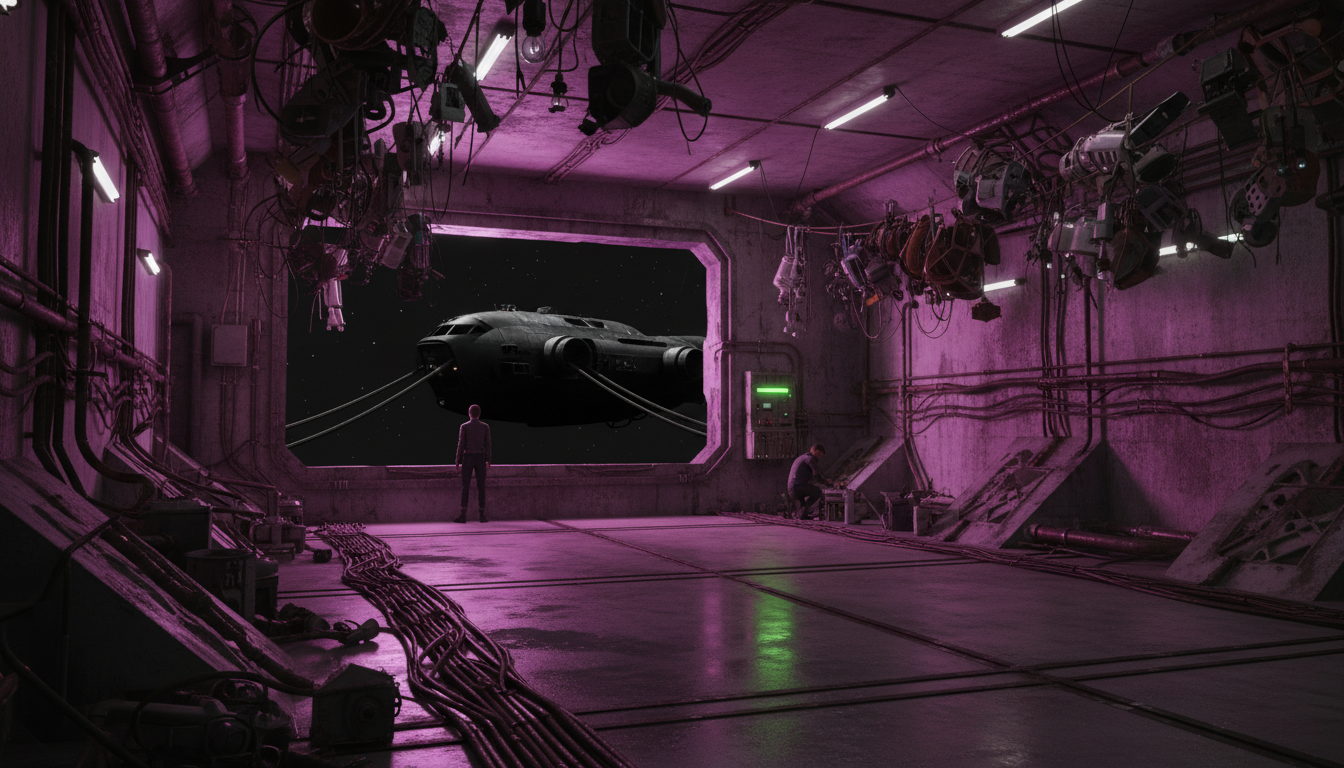
I have been out here forty years and I have met, at depots and at distance and twice by pure accident, something over three hundred people, and there is still no fleet and I no longer expect there to be one.
What there is is a line.
Six and a half billion miles of it — which is the figure everybody uses, and which everybody uses because it is the figure that was published, in a campaign, on a proof sheet, before any of us were born.
I want to sit on that for a moment because it took me thirty years to find it funny. Every ship out here plots its fuel and its depots and its rendezvous against a number that was chosen, at least in part, for how it would read in ninety-point type. It is not wrong. It has never been wrong. It is simply that the whole architecture of a hundred thousand lives rests on an advertising figure, and nobody has ever had a better one, and nobody has ever needed one.
Strung along it: rocks with stoves in them.
Bell, and eleven others I know by name, and probably as many again that I do not and never will. Ships going out. Ships coming back, which nobody counts. People who have been alone for eleven years and people who have never been alone for a single day, because they came out as a family and their children were born in transit and have never stood on anything.
No admiralty.
No compulsion. Nobody with authority over anybody. No court, no charter, no membership, no census, no flag, no founding document, nothing to join and nothing to be expelled from.
In forty years I have not once seen a robbery. Not one. I have seen disputes — I have seen a four-year disagreement between two people about a part, which was settled because one of them needed the part and the other could make it — but I have never in my life out here seen a person take a thing that was not theirs.
And I want to be careful not to make that sound like virtue, because I do not believe it is, and the people who tell it as virtue are usually the ones who have been out here least.
It is that everybody out here got here the same way.
By spending between ten and fifty years learning to check their own work, in a course that could not be bought or bribed or hurried or talked around. And then by arriving at a gate that opened for them alone and gave them everything they would ever need without asking for one thing in return.
That is not a moral education. Nobody was taught to be good. Nothing in twenty-two modules is about being good.
But it turns out to select, with tremendous reliability, for people who leave the stores fuller than they found them.
A hundred thousand individual decisions. Made separately, over a century and a half, by people who did not know the others existed, along a line drawn by a copywriter's figure on an advertisement for a ship that most of them were never on.
Not a fleet. Not a nation. Not a diaspora, whatever people started calling it later and whatever they call it now.
Just a very long line with people on it.
Chapter 37 — Pirates
↑ Back to ContentsFocus: a corridor-born teenager.
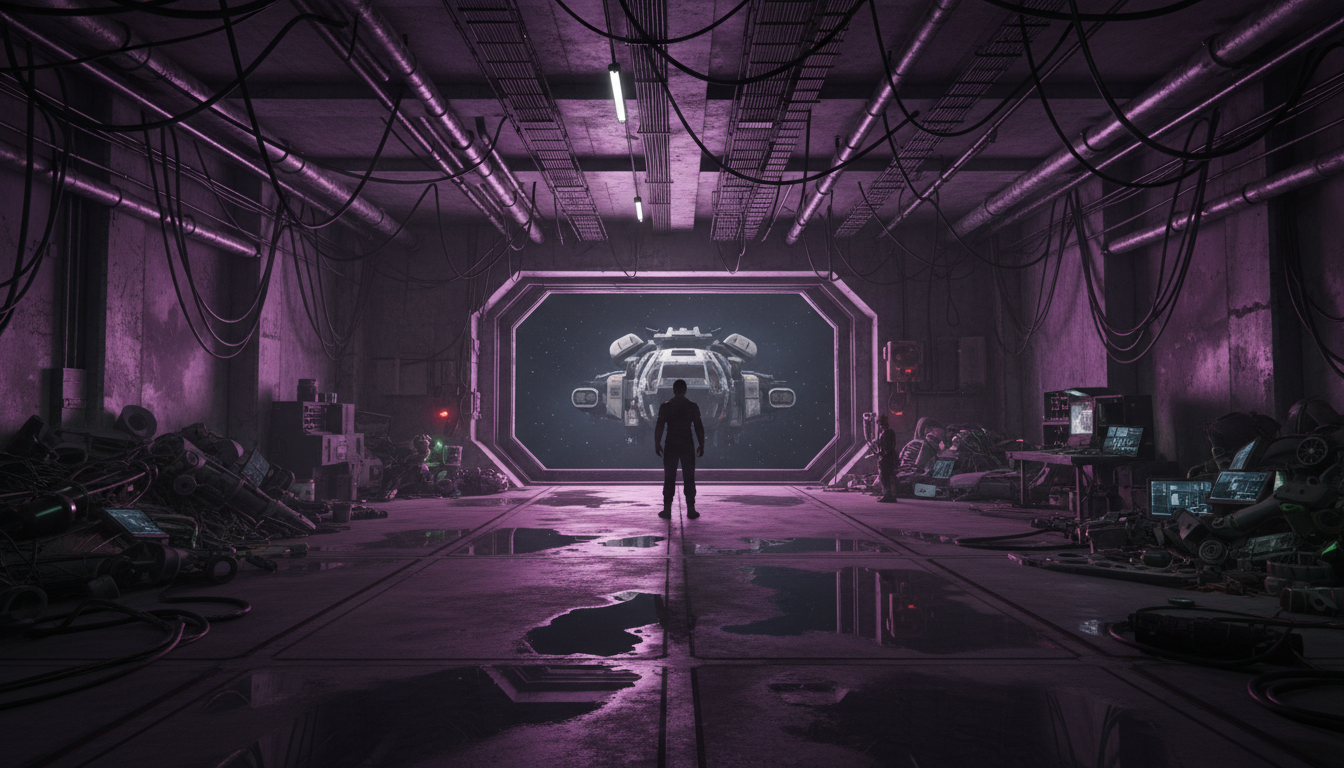
I was fourteen when I found out it had been a joke, and I remember being genuinely annoyed — the way you are annoyed when somebody tells you your name means something stupid in another language and you have to carry that around forever.
We are the pirates.
That is what we are. It is what my parents are and what their parents were. It is what everybody at every depot on the line is, and I have been called it my whole life by people who meant nothing at all by it, and I have called myself it since I could talk.
Then I read the entry in an old logbook.
Not Bell — one of the smaller ones, four berths, on a heading almost nobody uses now. The entry was from a man who had been out about thirty years at the time of writing, and it was mostly about a plant fault, and near the end he used the word in quotation marks.
I did not understand the quotation marks. I read the sentence around it three times.
He was being sarcastic.
The joke, as far as I have been able to reconstruct it, goes something like: here we are, the great space pirates, having stolen nothing, from nobody, with the full cooperation of everyone involved, in ships we were given for free along with four hundred and eleven varieties of seed and a paediatric kit.
That is the whole joke.
It is not even a good joke. I want to be clear about that, because I have since heard people treat its discovery as some kind of revelation and it is not — it is the kind of dry thing you say to somebody across a stove at the end of a long shift, because the situation is absurd and there is genuinely no other available word for people who left a planet without asking permission from anybody.
And it caught on because there was no other available word.
That is the mechanism. Not wit. Vacancy. There was a hole in the language exactly the shape of us, and a tired man made a joke into it, and the joke set.
By my grandparents' generation nobody was laughing when they said it.
By mine, nobody knew there had ever been anything to laugh at. I have asked. I asked eleven people at four depots in the year after I found that logbook, all of them older than me, and not one of them knew. Two of them argued with me about it.
I have since been told by a woman at Bell — she is about eighty and has been out here longer than anybody I know — that there is nobody less piratical in the whole history of the species than us. That the last recorded theft on the line is older than anybody can date. That a real pirate, an actual one from the old world, would be baffled and then disgusted by the sheer amount of tidying we do.
She said it fondly. She has a plate on her ship with the word painted on it.
I said we should probably change it.
She said: try.
I have not tried. I am nineteen now and I understand why she said it that way, which is that there is nobody to change it with. There is no body that names things out here. There is no meeting. You would have to persuade a hundred thousand people who have never met each other and have no reason to listen to you, and the only mechanism available for doing that is to say the new word at a stove and hope.
Somebody did that once already. That is how we got this one.
Chapter 38 — The Same Dead Man's Game
↑ Back to ContentsFocus: the teenager.
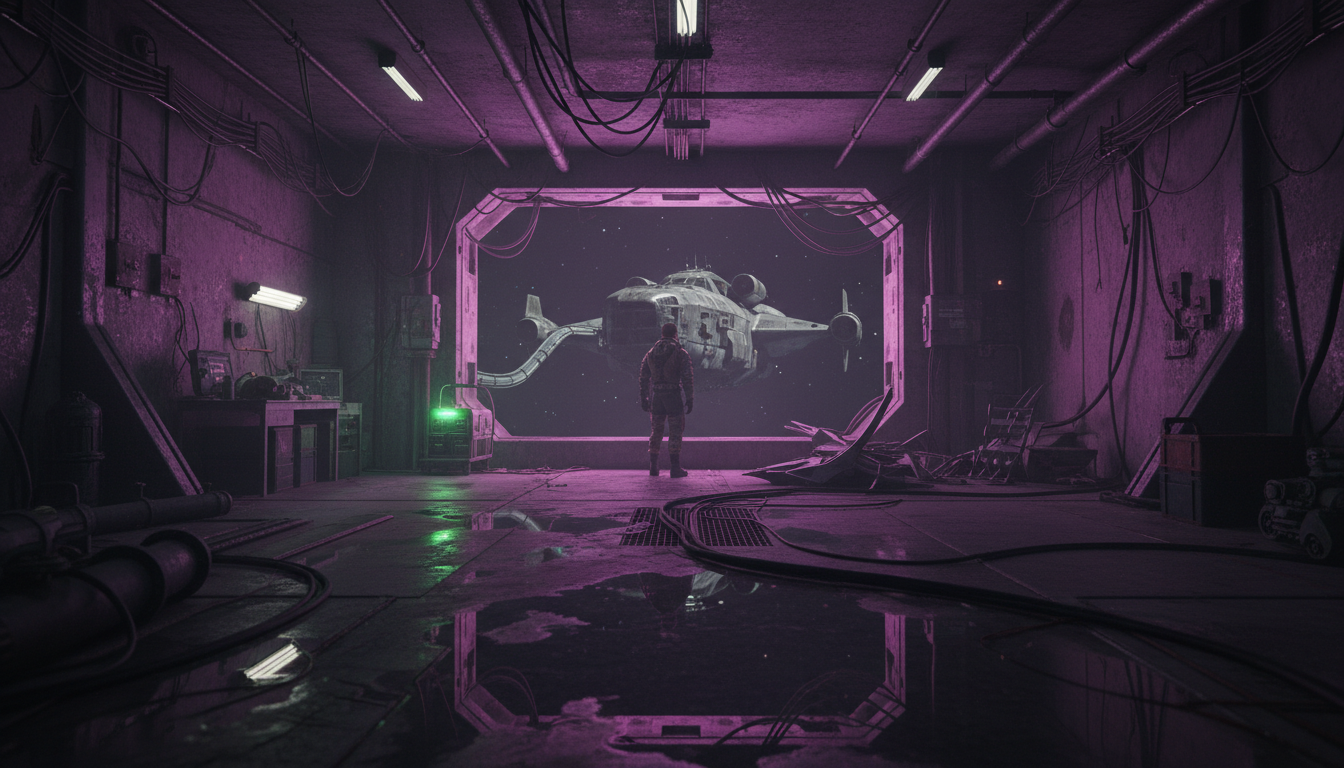
I worked out at sixteen that everybody I have ever met has the same hands, and it took me another year to understand why, and by then I found it more unsettling than impressive.
Here is what I mean.
Watch anybody out here pick up a coupling. They turn it a quarter and look at the seat before they do anything else. Every single person. Bell-born, Earth-born, ninety years old, eleven years old, somebody who passed last year and somebody who passed sixty years ago on a planet they will never see again.
Nobody teaches that as a rule. There is no rule. It is module three, and it is not even the point of module three — it is a thing the module makes you do about four hundred times while it is teaching you something else, and it goes into the hands and stays there for life.
Watch anybody read a gauge that disagrees with another gauge.
They will say some version of "one of these is lying," and then go and find out which. That is a phrase — a liar, for a bad reading — and I have heard it at four depots, from people who have never met and whose families have not been in the same volume of space for three generations.
We count in elevens for no reason anybody can defend. I have asked. Nobody knows. It is in the modules somewhere, in the way the exercises are grouped, and it came out into the language and stuck.
We say "the wall" and mean the thing you cannot get past, from module four.
And we say somebody is "in eight" when they have given up on something — which nobody out here can explain, because out here nobody has ever stopped at module eight. Everybody out here passed. We inherited the idiom from the towns, from the people who did not come, and we use it every day without the fact underneath it, and I did not know what it meant until I was seventeen and asked an old woman who had grown up on a road by a gate.
She told me. I have not been able to say it lightly since.
All of it comes from twenty-two modules.
Every reflex. Every phrase. Every shared instinct in a population strung across billions of miles who have almost no other common history — no shared country, no shared century, no shared language before this one, nothing except a course they all played as children.
We are a culture with a single common ancestor and we do not know his name.
That is not a figure of speech and I want it read plainly. I asked, at fourteen, who made the game. I asked at every depot we put in at that year. The answer, from every adult, in every case, was some version of: nobody knows, it has always been there.
There is a studio name on the title screen. It is not a person. I have looked it up — you can still look it up, the records are still there — and it is a company that filed accounts and answered letters and had nobody in it.
The most successful thing anybody has ever made. The only thing in recorded history that has produced a functioning society out of nothing but strangers who never met.
And there is no name on it anywhere.
I have decided that was on purpose. I cannot prove it and I never will.
What I cannot decide — and I have been turning it over for three years now — is whether it was modesty, or whether a man who does not put his name on a thing has also arranged never to be argued with about it.
Chapter 39 — Mira
↑ Back to ContentsFocus: Mira Okonjo.

Approach Nine has a hundred and ninety-one people in it and I am the mayor, which is not an office and has never been an election. It is a thing people started saying about me around the time I turned fifty, and I stopped being able to say I was too busy, and then it was true.
The town is four generations past its best and everybody knows it.
There were eleven hundred here when my grandmother ran the school. There are a hundred and ninety-one now, and nineteen children, and I can name all of them and all of their parents and most of their grandparents.
The gate is still there. It still opens — twice in the last nine years, which is two more than several towns on this coast can say, and which we do not mention to them.
What we mostly do now is keep things working for people who are not going to leave.
The water plant, which is a hundred and thirty years old and better built than anything on the mainland, and which four generations have maintained to a standard nobody has ever inspected. The school, nineteen children, two teachers, one of whom is me on Tuesdays. The road. The long shed.
The long shed holds forty-one ledgers that nobody has ever read.
I should be accurate: nobody has ever read them through. People go and look at their family's entries. There is a whole ritual to it that nobody planned — a girl turns fifteen and somebody takes her out to the shed and finds her great-grandfather's line and shows her the date. I have done it eleven times. I did it for my own daughter and she cried and I did not expect that at all.
My name is Okonjo.
That is not a coincidence in this town, and it is not a distinction either. Half the families here have been here since the first winter. Being descended from somebody who arrived early gets you nothing except a longer list of people you are responsible for and a slightly worse position in any argument about the road.
What it does get me, apparently, is a cabinet.
It was in the school when my grandmother had it, and in her father's house before that, and it has been moved four times that I know of and repaired badly once at the corner.
Shallow. Wooden. Holding nineteen proof sheets set in a typeface nobody uses anymore, signed in the margin in a small careful hand.
Nnamdi. My great-great-grandfather. Who wrote the advertisements for the ship, and who left on it, and whose family did not.
I have known that cabinet was there my whole life.
I have opened it perhaps four times, all of them to move it, and I could not have told you what was in it beyond "the plates" — which is what everybody in the family has always called them, in the tone you use for a thing that is important and not interesting.
I am sixty-one. The roof of the long shed needs doing and there is nobody else to make the decision about it, or about the ledgers, or about what happens to any of this when the number goes below about a hundred and forty and the school stops being viable.
And this winter, for the first time in my life, I sat down and actually read what he wrote.
Chapter 40 — The Plates
↑ Back to ContentsFocus: Mira.
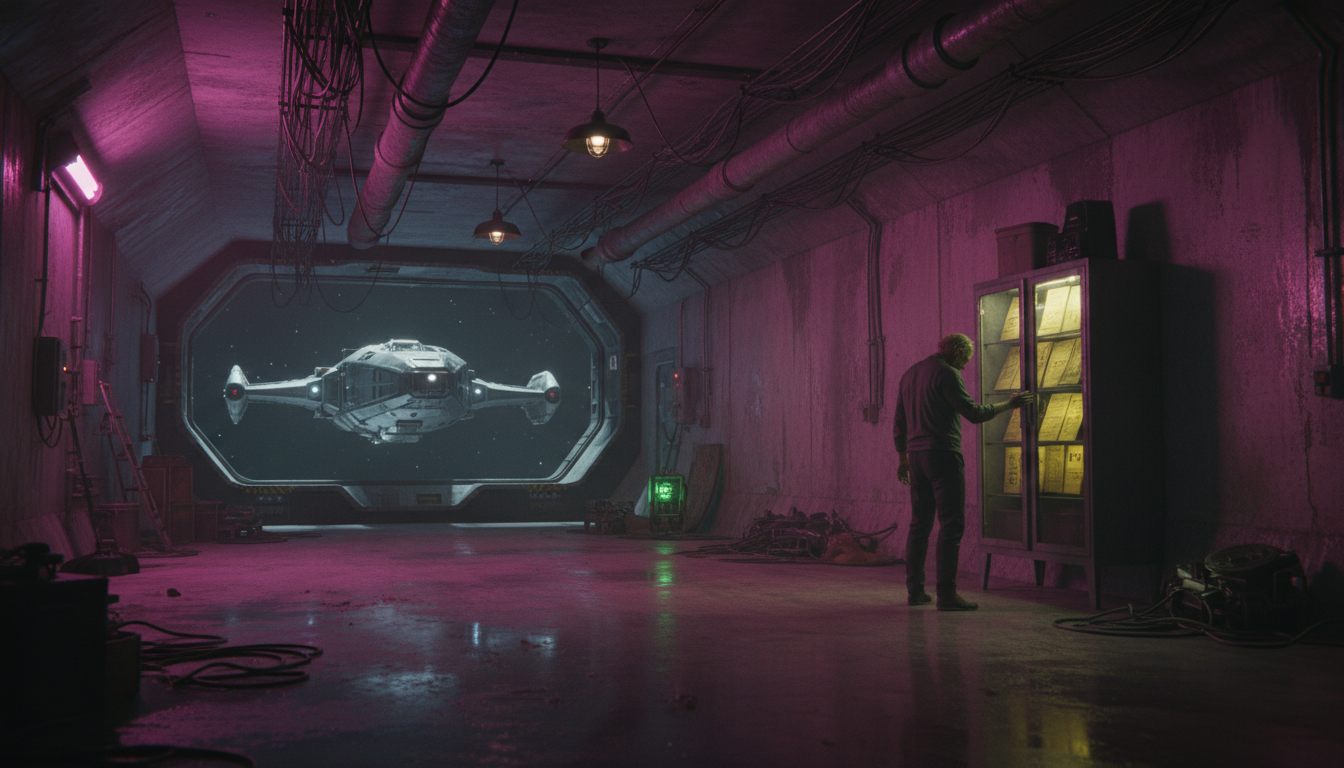
Nineteen proofs, in order, with his corrections on them, and I read them across four evenings with a hundred and forty years of consequences sitting in the room with me.
They are good.
I want to start there, because it is the fact I kept trying to get around and could not, and because every account of that man I have ever read either sanctifies him or prosecutes him and neither is any use to somebody holding the actual paper.
They are extraordinarily good. He could write a sentence that goes into you like a splinter and stays for a week.
The early ones are recruitment for the build. Come and make the largest thing in history. And here is what struck me hardest, on the second evening, when I had stopped being impressed and started checking:
They are true.
We have the archives here. The actual figures — tonnages, wages, timetables — because a copy came down to this town with the first families and nobody ever threw it out. I checked them. Every claim on those sheets is accurate. Not defensible; accurate.
He never once wrote that coming to the salt would put you on the ship.
It is not there. I looked for it on purpose, three separate times, on three separate evenings, because I wanted it to be there — I want to be honest about that. I am descended from the people who did not go, in a town that is dying, and I went into that cabinet wanting to find the lie.
What is there is worse, and I do not have a name for it.
Sheet eleven has a line about standing on ground your grandchildren will read about. It is beautiful. It promises nothing whatsoever. It is not capable of being false, because it does not contain a claim.
And I understand completely why three hundred thousand people came.
His corrections are all in the direction of accuracy.
That is the thing I could not put down and still cannot. Every marked change on every proof makes a claim smaller, or more precise, or drops an adjective, or breaks one sentence into two so that the second one can be checked separately.
On sheet fourteen he has struck out the word everyone and written many above it, and initialled it, and dated it.
A man being scrupulous. On paper. In his own hand. About a campaign that emptied a planet's hopes into a hole that could hold a third of them.
I am descended from the people it did not hold. Everybody in this town is. Approach Nine exists because of what he wrote — the town is here because the flats emptied and the families who could not go had to go somewhere and somebody said there was a gate up the coast.
Approach Nine is dying.
The ledgers in the long shed are a hundred and ninety thousand entries by people who did not pass.
And the proofs are the finest work I have ever read, by anybody, about anything.
I do not know whether to be proud.
That is not a rhetorical position I am taking for effect. I have sat with it since the winter, most nights, and I have not moved a single inch in either direction, and I have begun to suspect that not moving is the correct answer and that anybody who arrives at a clean one has not read the sheets.
Chapter 41 — If You Ever Really Want to Leave
↑ Back to ContentsFocus: Mira.

The line is on sheet nineteen, which is the last one — the simulator advertisement — and it is not in the copy. It is in the margin, in his handwriting, in a note about tone, quoting somebody else.
The note reads:
He wants this in it. Says it plainly or not at all. "If you ever really want to leave, you will have a ship." Do not dress it.
And then, underneath, smaller, in the same hand:
I have not dressed it.
He did not.
The copy on that sheet is nine words long. One of them is "ship." There is not one adjective anywhere on the page, which for him is close to an act of violence — I have the other eighteen sheets to compare it against, and the man could not order breakfast without an adjective.
I have read that margin note perhaps a hundred times since the winter. I have it in my head now the way you have a song.
Consider what it promises.
Not a lottery. Not a place in a queue. Not consideration, not a chance, not an opportunity to apply, not a fair hearing before a body. A ship. Actual and certain. To anybody who really wants to leave.
And it was true.
That is the thing that keeps me at the table until two in the morning. It has been true for a hundred and forty years. It is true this morning. It will be true tomorrow, and it has been true for every single person who ever finished the course, without exception, without application, without anybody's permission, without a single person ever having been turned away by a human being for a human reason.
Nobody in the history of our species has made a more generous promise and then kept it that completely. I have looked. There is nothing close.
Now read it again with the ledgers in the room.
A hundred and ninety thousand entries in the long shed. Four generations of them. Forty thousand that begin with an apology for wasting a man's time.
Every one of them an attempt by somebody who really wanted to leave.
Because really want to turns out not to mean wanting.
It means being able to complete twenty-two modules — and the difference between those two things is the entire history of this town, and the sentence does not acknowledge that difference, because the sentence is nine words long and was not dressed.
I have tried to work out whether he knew.
I think he must have. He was not a stupid man and he had spent four years watching exactly this happen on a salt flat — three hundred thousand people who really wanted to go, and a hundred thousand berths, and a set of criteria that were fair and did not care what anybody wanted.
He had already written the copy for that once. He knew precisely what a true sentence does to a person who cannot meet its condition.
And he wrote this one down exactly as it was given to him, and did not soften it, and noted in the margin that he had not.
The most generous sentence anybody in this whole story ever wrote. And the most damning thing I have ever read about my own home.
It is one sentence. It is the same sentence. There is no version where you get one without the other.
Chapter 42 — He Automated It
↑ Back to ContentsFocus: Mira.
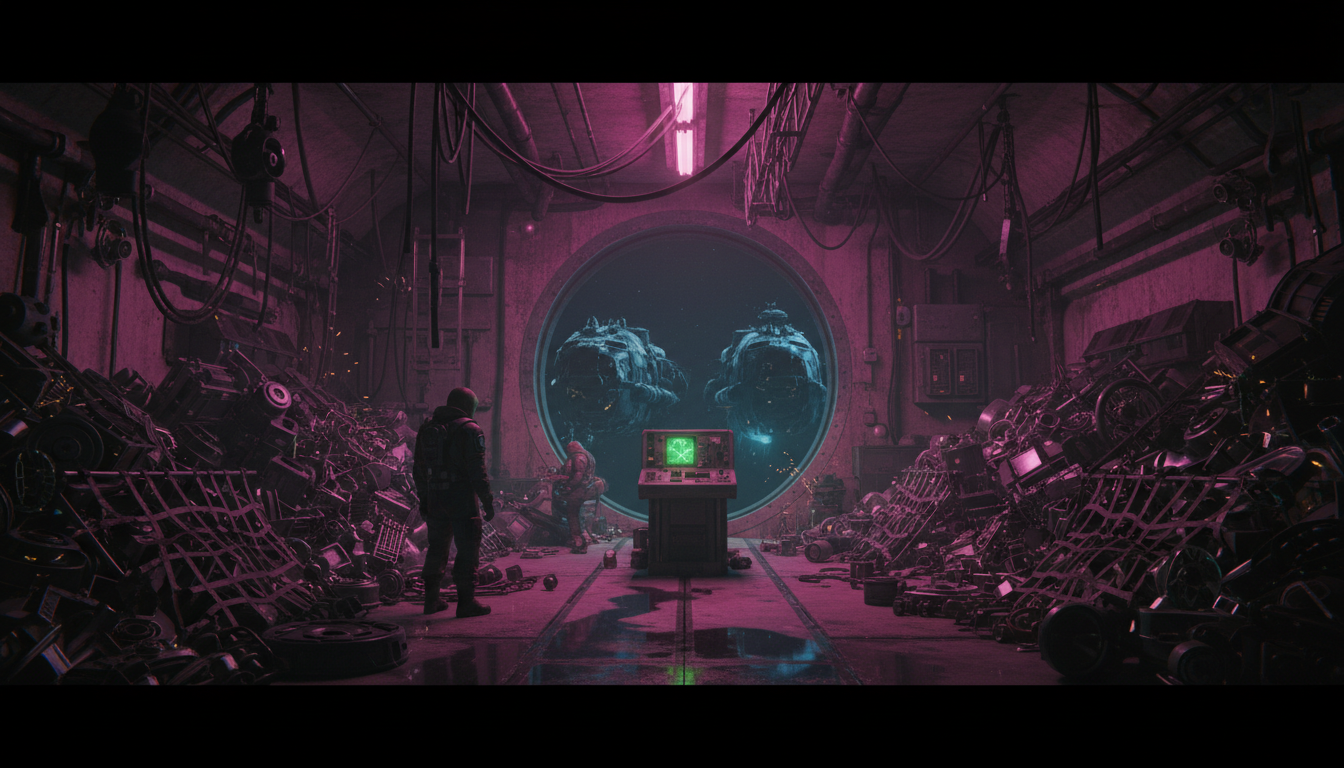
I want to state the thing plainly, once, in my own words, and then leave it — because I am the only person left who is entitled to say it, and I would rather it were said badly by me than well by a stranger in fifty years.
He fixed it.
Start there, because it is true, and because everybody who wants to be angry skips it and I have watched them skip it and it makes them wrong.
The manifest was the worst thing that ever happened to this planet. I mean that as a plain historical claim and I will defend it. A board. Criteria. A ratio. Nine thousand one hundred and eleven appeals. Four hundred and eleven districts read aloud over nine months. Eleven people voting, in a room, on who lived.
And he came out of that and built a thing with none of it in it.
No board. No ratio. No ledger. No queue. No interview. No application. No assessment of your worth by any person anywhere, ever, at any point.
Nobody deciding who lives.
Anybody. Anywhere. For free. Forever. And he kept that promise for a hundred and forty years without being present for a single day of it, which is a kind of fidelity I do not have a word for.
And.
Somebody wrote the standard.
One man. Alone. In an afternoon. With no advice from anybody, including two lawyers in the building who would have given it gladly.
He decided what qualified means. He decided that it means twenty-two modules. He decided that module twenty-two is nine hours with a frightened companion aboard, and that the line falls exactly where it falls — and my great-grandfather fell four hundred grams short of it, so to speak, thirty-one times over fifty-one years, and died a technician in a town by a fence.
Nobody reviewed it. Nobody has amended it since. Nobody can, in any practical sense, because the mechanism requires a constituted authority and nobody has ever constituted one.
So there is still a judgement about who leaves and who stays.
It is still one man's. It is simply made in advance, in private, permanently, by somebody who has been dead for over a century, and applied without malice or discretion or exception by machines that do not know anybody's name and cannot be appealed to because there is nothing there to appeal to.
He did not want to be in the room when the decision was made.
So he built something that has no room in it.
But the decision is still being made. Every day. In this town. On my ledgers. Nineteen children are in that school right now and the standard is already waiting for them and it has not moved in a hundred and forty years and it will not move for them.
He did not fix the problem. He automated it.
And here is the part I cannot get past, sitting at this table at sixty-one with his handwriting in front of me and the shed roof leaking:
I am not sure that automating it was not the best available answer.
That is what I find hardest. Not the anger — the anger is easy and I have had it and it burns off in about a week. What is hard is that I have sat here for four months trying to design a better one, with the ledgers and the proofs and everything he left, and I cannot.
Chapter 43 — The Towns Wait
↑ Back to ContentsFocus: Mira.

I went up the coast in the spring, partly for the roof timber and partly because I wanted to see what a hundred and forty years has actually built here, as opposed to what it has taken away.
Eleven gate towns on this coast. I visited four.
Every one of them is better made than anything on the mainland.
That is simply a fact about the buildings and it is checkable by anybody who drives the road. The water systems are overbuilt. The roads drain properly and have drained properly for a century. The wiring is done to a standard the cities abandoned two generations ago as uneconomic — which it is, if you are paying somebody. It is not uneconomic if the person doing it spent thirty years learning fluid systems and structural tolerance in order to leave, and then stayed, and has to put the knowledge somewhere or go mad.
There are trades here that exist nowhere else on the planet.
Precision work, mostly. The town four hours north of us makes bearings that get shipped six thousand kilometres, because nobody else can hold the tolerance at that price, and the man who runs that shop failed module fourteen at fifty-three and never went back to it and has not spoken about it in twenty years.
I asked him about the shop. He talked for an hour. I did not ask him about the module.
Every town has an appeal desk.
That is the thing that surprised me most and I am still turning it over. I had assumed ours was ours — my great-great-grandfather's crate in the long shed, our forty-one ledgers, our particular private habit, a family eccentricity that became a town institution.
Every single one of the four towns I visited has a version of it.
Started independently. By somebody who thought somebody should write it down. Books, mostly. One of them uses cards, in a wooden drawer, alphabetical by name, which is better than our system and which I am going to steal.
None of them has a recipient.
All four of those people know it. I asked all four — I made a point of asking, plainly, because I wanted to know whether anybody had a better answer than mine — and I got four versions of the same answer, which was some form of: yes, and.
One of them, a woman about my age, said: "Where else would it go?"
And there are schools. And children in them. And nineteen-year-olds in those schools right now doing module four course nineteen and hitting the wall exactly the way their great-grandparents hit it, in the same week of the same year of their lives, on the same exercise, and finding it as hard.
This is what the programme actually built on Earth.
Not an exodus. The exodus is a few hundred a year at best and always was — it is a rounding error against eleven billion people and it always will be.
What it built, at scale, over four generations, is a functioning civilisation of extraordinarily competent people who did not pass. Living well. In towns they made themselves. While waiting for a door.
Nobody designed that. Nobody intended it. Nobody has ever counted it, and there is no office anywhere that could.
It is by an enormous margin the largest thing the programme has done, and it is entirely a side effect.
Chapter 44 — Nobody Is Coming To Fix It
↑ Back to ContentsFocus: Mira.
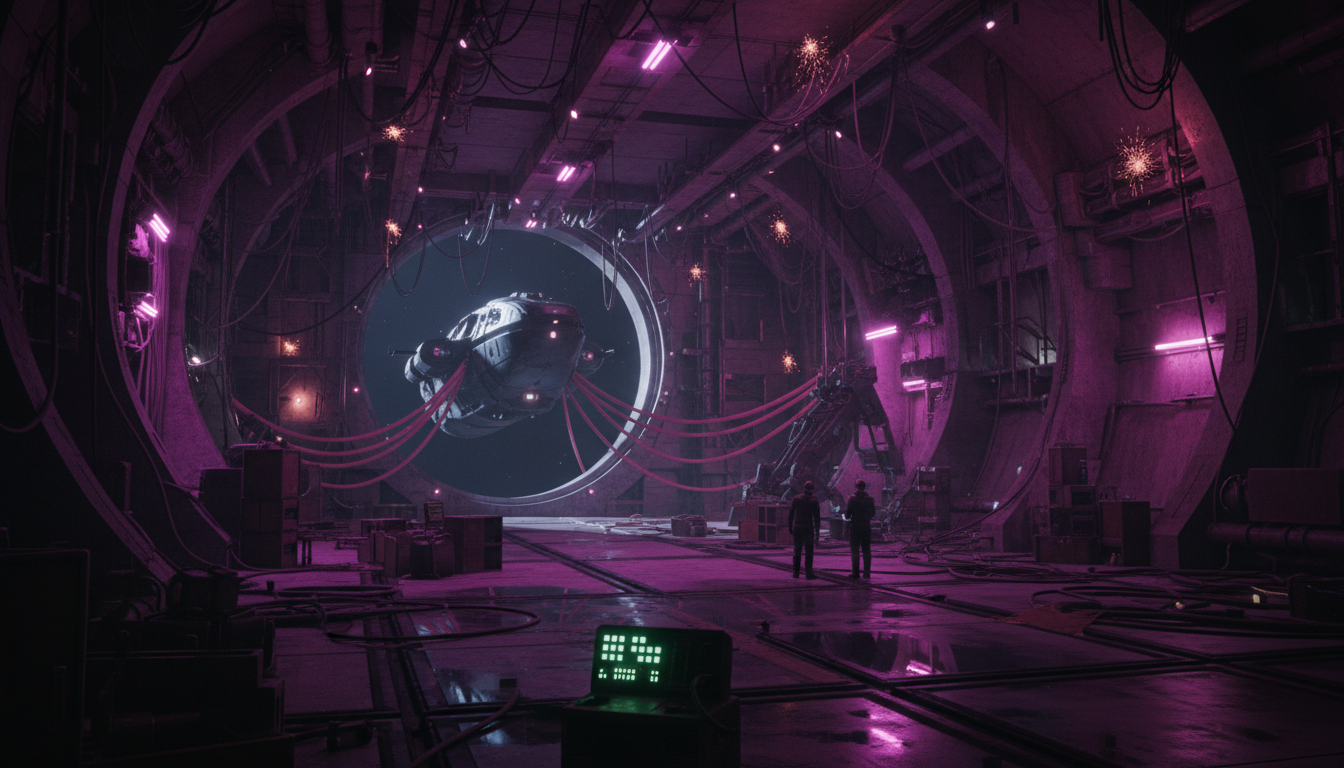
Here is where things stand this year, and I am writing it down because I have started to suspect that nobody else is going to, and because I am sixty-one and the arithmetic of that is not complicated.
The machines are still building.
The fjord hall is running this morning. At the same rate. To the same tolerance. Overseers still check everything against a specification that has not changed since it was written. Nothing has degraded, anywhere, once, in a hundred and forty years — I have looked for the exception the way I look for everything now, which is thoroughly and with a notebook, and there is none.
The courses are still free.
My nineteen schoolchildren have them on whatever devices they own. Module one is still seals. It is still charming. I watched a six-year-old do it in the school last month and laugh at the wrong seal, and it was exactly, in every particular, what my grandmother described to me about her own childhood.
The gate still opens. Twice in nine years here. More elsewhere.
The standard has never been amended.
Not once. Not a revision, not a review, not an adjustment for anything anybody has learned in a hundred and forty years — and a great deal has been learned, in this town alone, in forty-one books.
And this is the part I have come to and cannot get past.
I do not think anybody is preventing an amendment.
I have read the instruction. It is public — it has always been public, it is quoted in full in the ministry papers from the investigation four generations ago, and I requested those papers and they arrived in eleven days.
It provides for a superseding instruction. Through a designated command channel. From a properly constituted successor authority.
The channel exists.
It was never sealed. As far as I have been able to determine — and I have spent two winters on this, and written to four offices, and been answered courteously by all of them — nobody has ever submitted anything through it. Not once. Not a proposal. Not a draft. Not a query asking what the form would be.
Not because it is forbidden.
Because in a hundred and forty years, nobody has believed they were allowed to.
Everybody assumes the standard is a fact about the world. Like weather, or gravity, or the coast. The towns assume it — I assumed it my whole life, and I run a town with forty-one ledgers in a shed documenting a hundred and ninety thousand people it failed. The ministries assumed it and closed their files and moved on. The people who pass assume it, and they are the least likely of anybody to question it, for reasons that do not need explaining.
It is a document.
Somebody with the right standing could amend it this afternoon. There is a procedure. The procedure is written down and the entity operating under it will, on request, explain the procedure to you in more detail than you asked for, including the respects in which your draft is defective and how to cure them.
Nobody is coming to do that.
I want that written down plainly, in a hand somebody can read, in a shed that will probably outlast this town: there is no process underway anywhere. Nobody is working on it. No body is being constituted. And every person alive on this coast has arranged their entire life around a sentence one man wrote in an afternoon and never mentioned again.
Chapter 45 — A Light on the Hill
↑ Back to ContentsFocus: Mira.
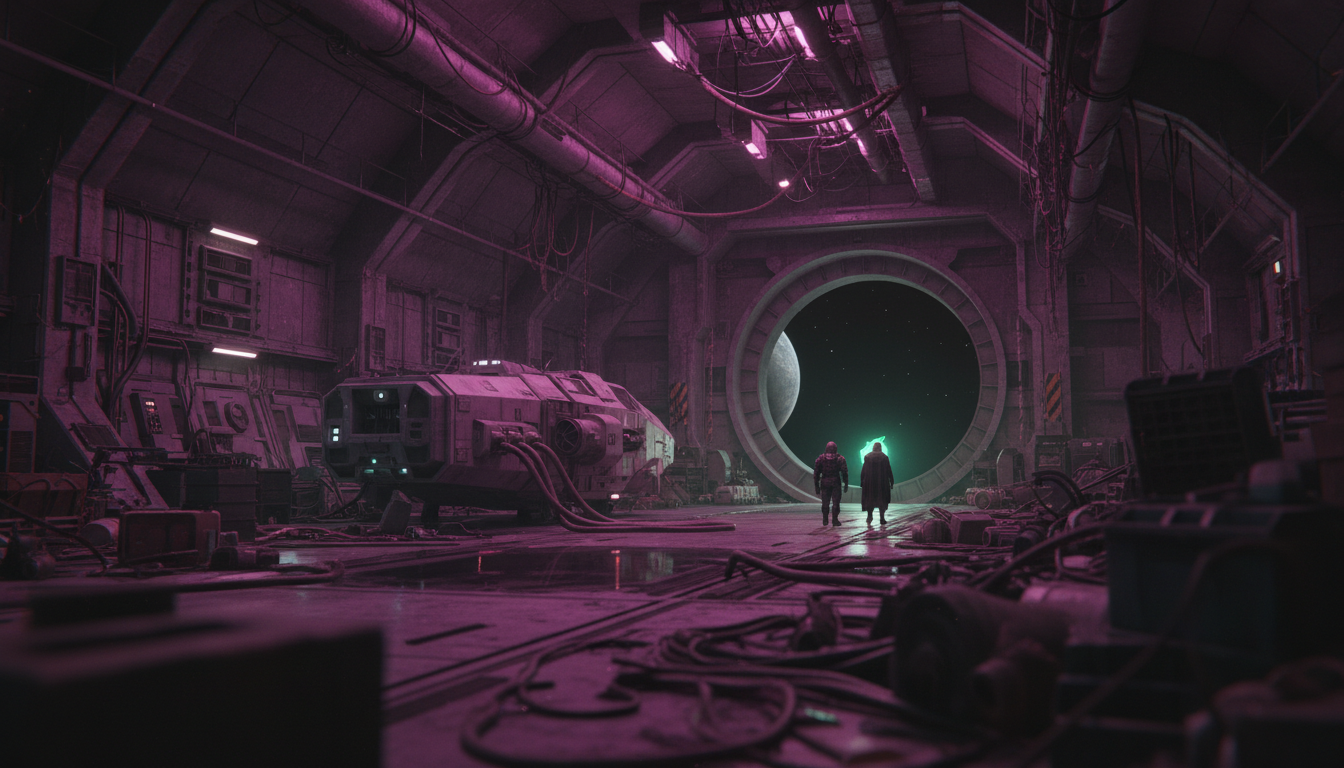
The gate opened this morning, for somebody else, and I went up the hill to watch — because I always do, and because at sixty-one I have stopped pretending I go for any reason other than wanting to.
It was Ada Sarr.
Twenty-nine. Born here. Passed in her sixteenth month.
Her mother was standing eleven metres back with her arms folded, because she would not come closer and would not go home, and I have known that woman thirty years and did not go and stand with her, because there are people you do not stand next to at a moment like that unless they ask.
There is a queue.
There is always a queue on a morning like this, and it is not a queue for anything. You cannot queue for a gate. It does not work that way and everybody on that hill has known it since they were six years old — it opens for whoever it opens for, and standing nearer does not help, and standing there at all helps nothing at all.
People come and stand anyway. Up the hill, in the cold, in the grey. This morning there were perhaps forty of them.
Most of them will not pass.
I know the count in my own shed. I know what module seven does to people and where they put it down afterward, and I could tell you — I will not, but I could — roughly how many of the forty standing on that hill this morning have already quietly stopped attempting and have not told anybody, including the people standing next to them.
They came up the hill anyway. In the cold. To watch a door open for a woman most of them have known since she was born.
The door was open at the bottom, in the grey, with the light on the other side of it.
It stays open a long while. Nobody hurries anybody through. There is no schedule and there never has been — the yard has all the time in the world and has never once, in a hundred and forty years, given any sign of impatience with any of us.
She went in.
Her mother stayed until she could not see her, and then a good while after that, and then somebody's daughter went and stood beside her without saying anything and that was the correct thing and I was glad somebody younger than me had thought of it.
And then it was an ordinary Tuesday in a town of a hundred and ninety-one people.
The roof of the long shed still needs doing. The school opens at nine. There are nineteen children in it and one of them is six and is on module one, and seals are still seals.
And somewhere out on a line six and a half billion miles long, drawn by a figure my great-great-grandfather put on a proof sheet before any of us were born, there are people who walked off this hill fifty years ago and have not been counted since by anybody, and will not be, and do not need to be.
The gate stays open a little longer.
Then it closes, and the hill empties, and we go back down.$