
The Premise
Forty of Vance's people are aboard the Ark-Genesis when the clamps open at the end of Book One. The Anchor is gone. There is no tether, retrieval is a shuttle problem that is marginal, ruinously expensive and politically radioactive, and they are the losing side of a coup. They are in a twenty-mile hull, tumbling, structurally intact, for roughly two and a half years. A bottle story with forty people and no exit.
The load-bearing fact. They are living inside the largest arsenal ever assembled and they never find out. Four hundred thousand shielded exoskeletons in six graded sizes, racked in sealed volumes they sleep beside, and nobody opens the manifest — because the manifest is boring, and because they are busy staying alive. The reader knows. They never do. The whole story runs on that.
Nobody dies. The hull has life support and med bays precisely because somebody might be awake aboard in an emergency, and it is indefinitely liveable — which is why some people choose to stay on it in Prequel Three.
And Vance knows instantly, from the moment the clamps open, and does nothing. He does not even pretend to. Play that flat and never explain it.
Chapter Index
Every chapter, all parts. Each becomes a real, readable chapter the moment it is written.
Chapter 1 — The Clamps Open
↑ Back to ContentsFocus: Toma Bex.
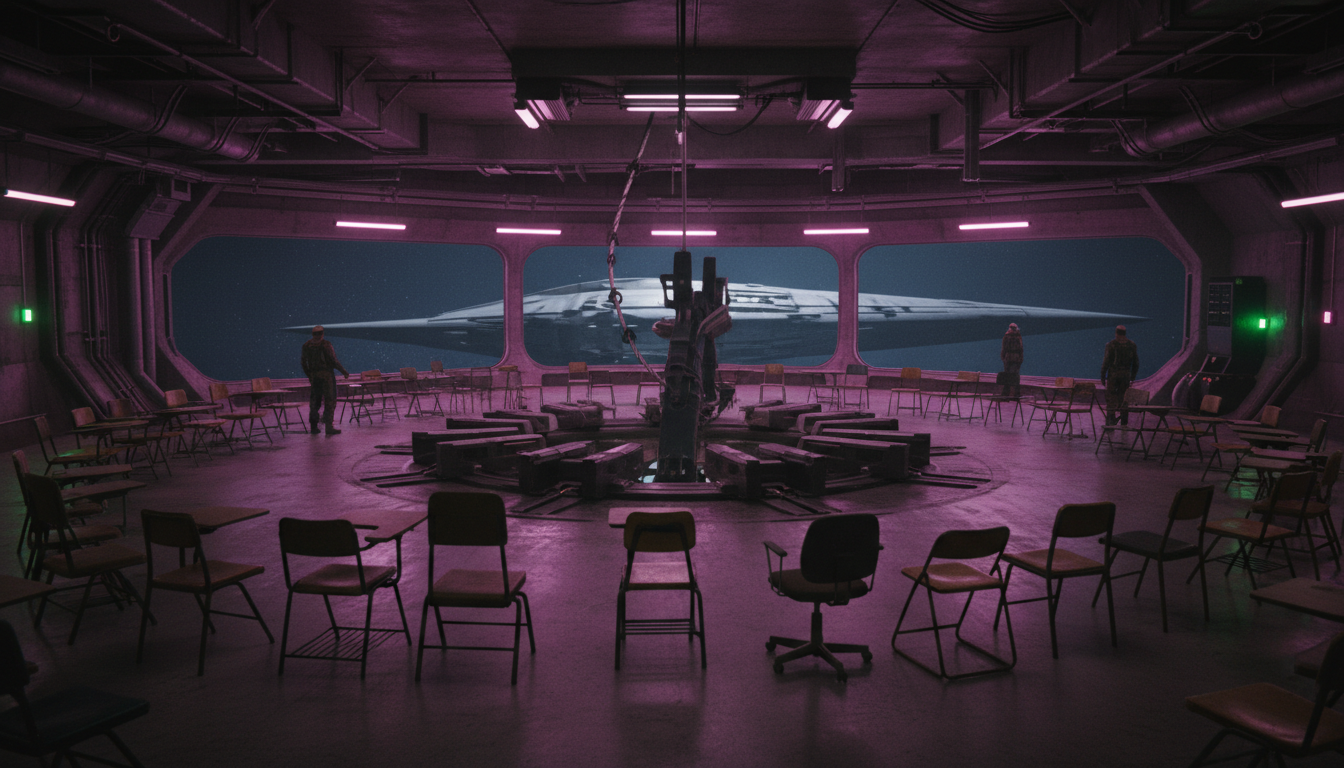
Toma Bex was four hundred and eleven kilometres up with his head inside a coolant manifold when the clamps opened, and he did not notice, and neither did anybody else for six minutes.
He had been at the manifold since the start of the shift. It was a bad one, a slow weep at a joint that had been reported four times in nine months and cleared four times by people who could not find it, and Bex had found it in about forty minutes because he had been doing this for nineteen years and knew what a weep at that joint meant.
He was fifty-one and had been a plant supervisor for nineteen years and had come aboard four days earlier on a rota he had signed himself, and he has said repeatedly and rather wearily that he was not sent, was not selected, and was not part of anything, and that he was on that hull because the coolant loop was his.
What he felt, at the moment it happened, was nothing at all. There is no sensation to a clamp release. There is no jolt and no sound; the hull is twenty miles long and a clamp is a fitting, and the fitting let go the way a fitting lets go.
What he noticed, about ninety seconds later, was that the wrench had drifted.
He had set it on the housing beside his elbow the way he had set a wrench beside his elbow for nineteen years, on a housing that had been reliably down for the whole of that time, and it had gone off the edge and was turning slowly in the air about a metre from his face.
He watched it for a while. He has said since that he watched it for a long time and that this is not true and that it was probably four seconds.
Then he put his hand out and stopped it and held it and did not move.
The thing about a twenty-mile hull that nobody who has not lived in one ever understands is that it does not feel like a ship. It feels like a building. It had felt like a building for four generations, which is to say for the whole of anybody's life, because the Ark-Genesis had been clamped to the Anchor since before Bex's grandmother was born and had never once moved in any way a person could feel.
Down was toward the Anchor. That was not a convention and it was not a preference. It was where things fell.
Bex put the wrench in his belt and backed out of the manifold and stood in the transfer corridor and looked at the floor.
The floor was fine. It was where it had always been. He stood on it and it held him, more or less, in the way a floor holds you, and he could not have said whether it was holding him less than it had that morning because there is no instrument in a person for that.
So he did the only thing available, which is the thing that is in every account of him for two and a half years afterwards and which nobody at the time thought anything of.
He took the wrench off his belt and let go of it.
It went down. Not fast. It went down the way it should, and it hit the deck, and it bounced about four centimetres and settled, and Bex looked at it lying there being entirely ordinary and felt the whole of his chest go loose with relief.
Then it rolled.
It rolled about a metre and a half toward the aft bulkhead, gathering speed the way a thing rolls on a floor that is not level, and it stopped against the bulkhead with a small noise, and Bex stood in a corridor he had walked every working day of his life and watched a floor that had been flat for four generations be, very slightly, a hill.
“That is the moment for me,” he said, much later, to somebody taking an account. “Everybody wants the clamps. The clamps are the event and I understand why. I was not there for the clamps.
“I was there for a wrench rolling downhill in the forward transfer, and I would like it recorded that I did not immediately understand what it meant. I thought the deck had shifted. I thought there had been a structural event four miles away and I was about to have a very bad day.
“It took me another four minutes to work out that it was not the deck. It was everything.”
What had happened is in every history and takes one sentence: the clamps opened, the tether released, and the Anchor came apart over the following three hours in a way that is documented from the ground in enormous detail and from the hull almost not at all.
From the hull it was this. The floor stopped being a floor over about six minutes, not dramatically and not all at once, but by degrees, so that everybody aboard experienced it as a series of small wrongnesses that did not seem related.
A woman in the aft galley found the water in a pan sitting at an angle and blamed the pan.
Two of the cadets on the ninth deck reported that the lift was making a noise and were told, correctly, that the lift made a noise.
A quartermaster's clerk called Ilse Dagg, who was doing an inventory in a compartment with a long counter, noticed that four items had migrated to one end of the counter, and stood looking at them, and did not blame the counter, and was the first person aboard to say out loud what was happening.
She said it to nobody, because there was nobody in the compartment. The account she gave afterwards is four words and she has never expanded it.
“I said: we are turning.”
Bex reached the forward observation bay at about the ninth minute. It is a long gallery with a viewing run of about two hundred metres, and it was the only place on the hull where a person could see the Anchor without an instrument, and it was where anybody went to see anything.
There were about nine people in it. He knew four of them.
“Nobody was shouting,” he said. “I want that in, because every account of this that I have read has us shouting and none of us was.
“There were nine people at a window watching a thing four hundred kilometres away that they could not do anything about, and it was extremely quiet, and one of the cadets asked whether we were going to hit it, and somebody who knew said no, and that was the whole of the conversation for about four minutes.”
The Anchor was already wrong. That is the phrase four separate accounts use and none of them improves on it. It was not exploding and it was not falling; it was in the wrong shape, and the wrongness was propagating along it slowly, from the tether root outward, the way a line of something goes down a very long thing.
Bex has said that the part he could not get past was the scale of the time.
“It took three hours. You cannot watch a thing for three hours. Nobody can. People came and looked and went away and came back and it was still doing it.
“I went back to the manifold at about the fortieth minute. That is in the log because I logged it. I went back and I finished the joint, and it took me about two hours, and the whole time I was inside it I could feel the floor not being a floor.
“Somebody asked me once why I finished the joint. I have never had an answer that satisfies anybody. It was the joint. It had been reported four times.”
The six minutes is the figure that ended up in the record and Bex has objected to it mildly for a hundred years.
“Six minutes is when the first person said it out loud, which was Dagg, in an empty compartment, to nobody.
“It was not six minutes for me and it was not six minutes for the woman with the pan. She told me forty years later that she did not properly understand until the following morning and that she had gone to sleep angry about a pan.
“Nobody understands a thing like that in six minutes. What happens in six minutes is that somebody says the words. The understanding takes about a fortnight and it comes in pieces and most of the pieces are small and stupid, like a wrench, and you get them one at a time for months.”
At the third hour the Anchor stopped being a structure and became a debris field, and the hull, unclamped, unpowered for station-keeping and entirely intact, went on turning at the rate it had acquired, which was slow and which was not going to change.
Nobody aboard knew that last part yet. That was the next day, and it was Bex who worked it out, and it took him nine hours and a hand calculation, and he got it right.
What is in the log for that day, in his hand, in the maintenance record where it does not belong, is one line.
“Forward transfer coolant joint, weep at the elbow. Found and closed. Deck is no longer flat. Do not know what to do about the second one.”
The record of that day is thin and Bex has said that the thinness is honest. Four people wrote something down at the time and three of those are one line each. Everything else in the archive was collected afterwards, mostly decades afterwards, by people asking careful questions of forty individuals who had each experienced a slightly different afternoon and who had all, by then, read each other's accounts.
“That is what a shared event actually is,” he said. “Everybody assumes there is a true version somewhere and that the job is to find it. There is not one. There are forty afternoons and they overlap in about nine places and the nine places are the parts everybody agrees on and are therefore the parts I trust least.”
He has been asked four hundred times whether he was frightened and has answered identically every time, which is that he was not, and that being unafraid on the first day is not courage and is simply the ordinary delay between a thing happening and a person understanding it, and that he was extremely frightened about a fortnight later while eating.
Chapter 2 — Tumbling
↑ Back to ContentsFocus: Bex.

It took Bex nine hours and a hand calculation to work out that the tumble was stable, and when he had it he sat with it for another two hours before he told anybody, because he did not like the answer and wanted to have found an error in it.
He did not find one. There is not one. Four people checked it in the following fortnight and a planetary observatory checked it eleven weeks later from four hundred kilometres below and everybody got the same numbers, and Bex has said that the confirmation from the ground was the single worst piece of news he received in two and a half years.
The physics is dull and it is the whole story and it deserves to be set out properly.
The hull was structurally intact. That is first and it is not a small thing. Twenty miles of it, built to survive a thirty-six-year crossing, clamped for four generations and never stressed, and the clamp release put no load into it at all. Nothing broke. Nothing was ever going to break. In two and a half years the structure did not develop one fault that anybody could point at.
It had no propulsion. It never had. It was a hull that had been dragged out of a well by something else and then bolted to a thing, and it had attitude jets for the crossing that had been drained in the ninth year after arrival because nobody was ever going to need them and the propellant was worth more elsewhere.
“Four hundred litres,” Bex said. “That is what it would have taken. Four hundred litres of a compound that is made in a shed on the third continent and that we sold, correctly, in the ninth year, because a clamped hull does not need attitude control and the decision was reviewed twice.
“I have been asked about that four hundred times. The people who made that decision were right on the information available and I would have signed it myself. I want that said before anybody makes it into a tragedy of foresight, because it is not one. It is arithmetic done correctly in a world where the clamps do not open.”
It was turning. Slowly. About one rotation in eleven minutes, on an axis roughly across the long dimension, which is the worst available axis and which nobody chose.
“A twenty-mile object turning once in eleven minutes does not look like anything from inside. You do not see the stars go past a window and think, ah, we are turning. The windows are small and there are not many.
“What you get is weight. That is all it is. You get weight that depends on where you are standing in the hull, and it points outward from the axis, and at the far ends it is about a third of what you are used to and in the middle it is nothing at all.”
This is the thing that governed everything for two and a half years and it took the forty of them about a month to understand properly.
The hull had, in effect, three regions. The two ends, where a spin gravity of roughly a third of normal pointed toward the nearest end cap, so that the end caps became the floor and every deck in the outer four miles was now a wall. The middle third, where there was effectively nothing, and where a person could not stand or fall or put anything down. And the transitions, which were the worst of it, where the direction of down rotated through ninety degrees over the course of about a mile of corridor.
“Everybody thinks the middle is the problem,” Dagg said, in her own account. “The middle is a nuisance. You learn it in about a week. You do not walk in it, you move hand over hand, and there are rails everywhere already because a twenty-mile hull is full of rails.
“The transitions are the problem. There is a stretch of the number four longitudinal where down turns through a right angle over about eleven hundred metres and there is nothing wrong with any of it, and it will make you sick for a month, and four of us never stopped being sick in it in two and a half years.”
The orbit is the part Bex sat with for two hours.
“It is stable. That is the finding.
“Everybody wanted it to be decaying. I wanted it to be decaying. A decaying orbit is a countdown and a countdown is a thing people can act on; it gives you a date and it gives everybody below a reason and it makes the whole question urgent in a way that gets things done.
“It is not decaying. The Anchor held that hull in a high stable orbit for a hundred and forty years and when the clamps opened the hull stayed in it, because that is what an orbit does. It will be there in four hundred years. It is probably there now.”
He has said that he understood the consequence about four minutes after he had the number and that he did not tell anybody for two hours because he wanted to be wrong.
“A countdown is a crisis. A stable orbit is a situation.
“Nobody organises an emergency for a situation. Nobody votes money for a situation. A situation is a thing a planet gets used to, and it gets used to it in about a year, and the people in the situation are the only ones who go on experiencing it as an emergency, and they go on doing that indefinitely, and there is no mechanism anywhere for making anybody else feel it.
“That is what I was holding for two hours at the eleventh hour of the second day and I could not think of a way to say it that was not a speech, so in the end I said the number and let them do it themselves.”
He said it at the muster on the third morning, to about thirty of them, in the forward observation bay, and it took him under a minute.
“Structure is fine and will stay fine. We are turning at one in eleven and it will not change on its own. The orbit is stable. We are not coming down.”
Wren Halloway, who was twenty-six and had been aboard nine days on what she had been told was a transfer, wrote her own account of that morning forty years later and it is four lines and it is the most-quoted thing in the record.
“He did not say we are stranded. He said the orbit is stable and let us do the second half ourselves.
“I have thought about that for forty years. It was not kindness and it was not cowardice. He is a man who reports the finding and does not append the conclusion, and it is the only reason anybody trusted a word he said for two and a half years.
“About four people worked it out in the room. The rest of us got it over the following week, one at a time, and every single one of us got it privately, and I think that is why nobody screamed.”
Vance was in the room. He was standing at the back with his hands behind him and he heard the whole of it and he said nothing and asked nothing.
“He did not ask about the orbit,” Wren wrote. “Thirty people in a room and one of them did not ask a question, and he was the only one there who had ever commanded anything.
“I noticed it at the time. I did not know what it meant and I still do not.”
The eleven-minute rotation is the number that governs every subsequent chapter and Bex has asked repeatedly that people stop calling it slow. It is slow for a wheel and it is quick for a twenty-mile object, and it meant that anybody standing at either end cap could feel, permanently, a gentle sideways insistence that was not there yesterday and that never afterwards went away.
“You adapt in about a month. Everybody says that and everybody is describing the same month, which is a bad one. Four people were properly ill for the whole of it and two never entirely stopped, and Wren treated about nine hundred instances of it in two and a half years and had exactly nothing to give anybody, because there is no medicine for a floor that is at a slight angle to what your inner ear has believed for twenty-six years.”
What it did to the hull's usable volume is the practical finding and Dagg produced it in the fourth month. Of twenty miles, roughly eight were comfortably habitable at either end, roughly six were the middle third and were traversable but not liveable, and roughly six were the transitions, which were technically liveable and which nobody would live in.
“So the forty of us had about eight miles,” she said. “Eight miles of hull for forty people is not confinement in any sense anybody on the planet would recognise, and it is the single most misunderstood fact about this whole business. Nobody was crowded. There was so much room that people went weeks without seeing each other, deliberately, and the medic will tell you that this was a considerably larger problem than the alternative would have been.”
The rotation never changed. Not once, in two and a half years, by any measurable amount, and Bex measured it about four hundred times because measuring it was one of the few things he could usefully do, and the constancy of it is in his log as a column of nearly identical numbers running to about nine hundred entries.
Chapter 3 — Forty
↑ Back to ContentsFocus: Ilse Dagg.
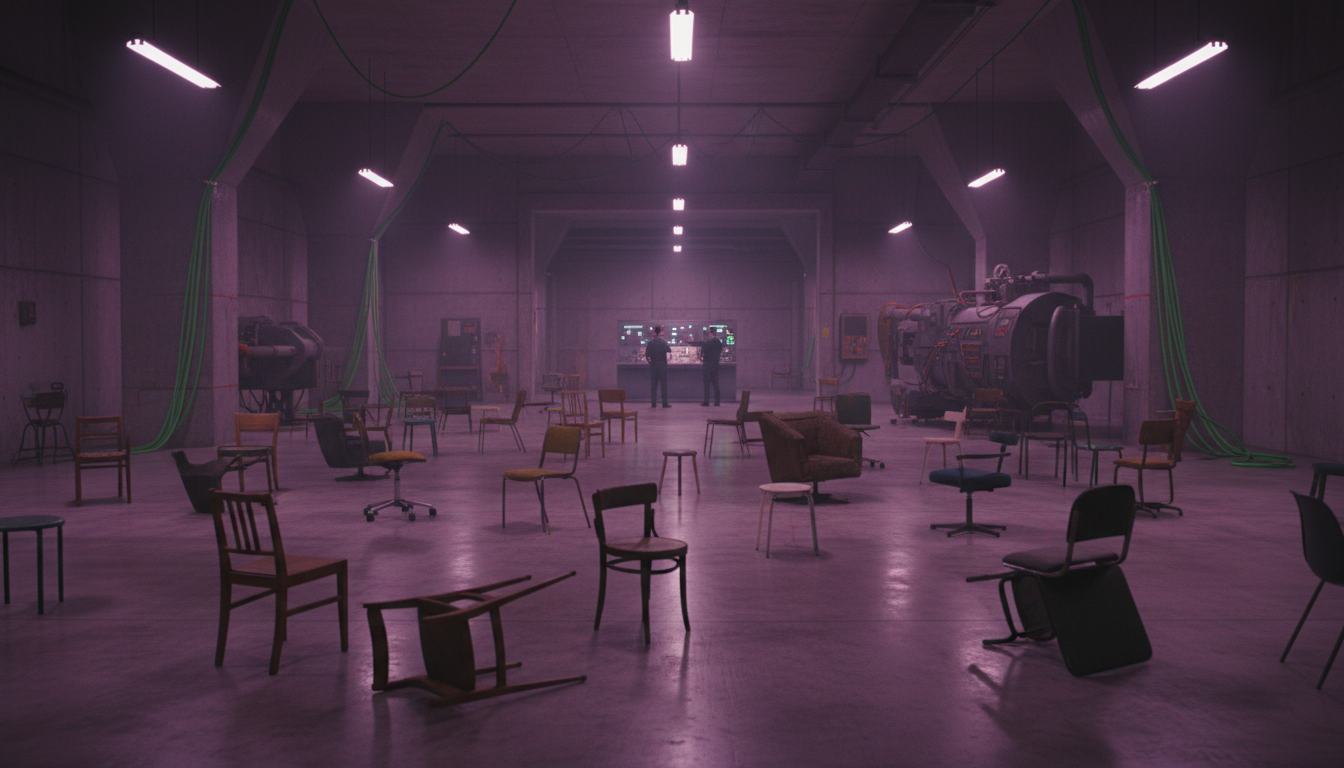
Ilse Dagg counted them on the fourth day because she was a quartermaster's clerk and counting things was what she did, and the number is forty and it has never been disputed and it took her eleven hours.
“It should have taken forty minutes. There were forty people on a hull and I had a manifest.
“The manifest was wrong. Not badly wrong; wrong the way a manifest is wrong when four separate detachments have been moved onto a thing over nine days by people who were in a hurry and did not think anybody would ever check.
“It had thirty-one names on it. Nine people aboard were not on any list I could find and four people on the list were not aboard, and I have never found out where those four went and I have thought about them a great deal.”
The forty break down into four groups and Dagg's own account gives them in the order she found them.
A demolition detail. Eleven of them, under a foreman called Osei Rahn, who had been putting charges into the Anchor's tether root for six days and who were the reason the Anchor came apart, and who were aboard because the last of the work was staged from the hull.
A signals team. Six, with the only long-range equipment on the hull that still worked, which is how anybody below knew anything about them for two and a half years.
A quartermaster's section. Four, including Dagg, aboard to inventory what was in the hull's own stores before the handoff, which is a job that had been ordered nineteen times in a hundred and forty years and never once completed.
And eleven cadets, aged between eighteen and twenty-three, who had been told it was a transfer.
“That is thirty-two,” Dagg said. “The other eight are the ones the manifest does not explain and never will.
“Vance. Two people who came aboard with him and who were not military and whose function I never established in two and a half years. A doctor. A woman who ran the galley and who nobody had ordered aboard and who has said she came because the galley needed running, which I believe. And three from the tether crew who came up on the last lift and stayed because the lift did not go back.”
The cadets are the part of the chapter that matters and Dagg is careful about them.
“Eleven of them. The eldest was twenty-three and the youngest was eighteen and had been out of a gate about four months.
“They had been told it was a transfer. Not a lie exactly; there was a transfer, and they were on it, and the paperwork is entirely correct and I have read it four times. It says posting, and it names the hull, and every one of them signed it.
“What it does not say is what was being done at the tether root that week, and none of them knew, and I established that inside four days by the simple method of asking them.”
What they knew is set out in her account as a list because she made a list.
Four of the eleven understood roughly what was happening below and had chosen a side and would say so.
Four more had understood that something was happening and had not asked, and Dagg has said that this is the largest group in any organisation at any point in history and that she does not judge it.
And three had no idea at all. One of them, a boy of nineteen called Piet Osborne, asked Dagg on the sixth day when the shuttle was coming, because he had a leave rotation in eleven days and his sister was expecting him.
“I told him the truth. I have been asked whether that was right and I have never once doubted it.
“He said: for how long. And I said I did not know and that nobody did. And he said all right and went and did his shift, and he was on the rota for the next two and a half years and he did not miss one, and he was nineteen.”
The demolition detail is the other half and it is the harder half.
“Eleven men who had spent six days putting charges into the thing that was the only way down, and who were aboard when it came apart, and who knew exactly what they had done and exactly why.
“Rahn is the one everybody asks about. He was fifty-one and he had done demolition for thirty years and he was extremely good at it and he had put those charges in correctly and they had worked correctly.
“I have never heard him say one word about it. Not a defence, not an apology, not a joke, not once in two and a half years, and I ate about nine hundred meals in the same compartment as that man.”
Whether the two halves could live together is the whole of the first year and Dagg's answer is not the expected one.
“Everybody expects a fight. There was no fight. There was one shove in the ninth week over a bunk and it was about the bunk.
“What there was instead is worse and it took me about a year to see it. The eleven cadets did not blame the demolition detail. They blamed nobody. There was nobody available to blame who was not going to be sharing a galley with them for an unknown number of years, and forty people worked that out inside a month without anybody saying it.
“So they were extremely polite. All of them. For two and a half years. Politeness is what you get when there is nowhere to put the other thing, and it is not the same as peace, and about four of them have told me since that the politeness was the worst part.”
Her count is in the record in her own hand and it is four lines and it is the first document of the stranding.
“Forty aboard. Verified by name, by face, and by asking, over eleven hours.
“Manifest is wrong in nine places. Corrected copy attached. The original is attached too because somebody will want to know what it said.
“Half of them do not know what they were part of. I am not going to write down which half and I am not going to be asked.
“Forty. Nobody is missing. That is the only good sentence I have got.”
What the four groups had in common is almost nothing and Dagg is careful about that, because every retelling since has quietly made them into a crew and they were not one and had never worked together and in four cases had never previously met.
“A demolition foreman of fifty-one, six signals people who reported to a chain of command that no longer existed, four quartermaster's clerks doing a stock check, eleven cadets on a transfer, a cook, a doctor, three men off a lift, two people whose function I never learned, and a commander who did not command.
“That is not an organisation. That is a waiting room. And it stayed a waiting room for about four months and then very slowly became something else, and nobody could tell you the week it changed and I have asked about thirty of them.”
The eleven cadets are the ones the vote below eventually turned on, two years later, and Dagg has said flatly that she knew that would happen by about the ninth month and hated knowing it.
“They were photogenic. That is a repulsive word and it is the correct one. Eleven young people who had signed a transfer form, on a hull, through no decision of their own, and there is no version of that which does not do work on a population.
“I never used it. Not in one message in thirty months, and I sent about four hundred. I would not put a cadet's name in a transmission and I would not put an age in one. Other people did it for us eventually, below, without asking, and it worked, and I have never once been comfortable about it.”
Her corrected manifest is still in the record with the original stapled behind it, exactly as she left it, and the nine names she added by hand are in the record in her handwriting because there was no other way to put them there.
Piet Osborne's transfer form is in the record because his sister kept it and gave it up forty years later, and it is entirely correct, and it names the hull and the date and it is signed in a nineteen-year-old's careful hand, and there is nothing wrong with it anywhere.
“That is the document,” Dagg said. “People want it to be a forgery or a trick and it is neither. It is a correct form, correctly issued, correctly signed, that does not mention what was being done four hundred metres from where he would be standing, because a transfer form does not mention things like that and never has and there is no version of one that would.”
The four names on the manifest who were not aboard have never been accounted for and Dagg looked for them, on and off, for forty years, and has said that she expects to die not knowing.
“Four people who were listed for that hull and who did not come up. That is all I have. They may have missed a lift, they may have been reassigned by somebody in a hurry, they may never have existed and be four clerical errors made in one afternoon by a man under pressure.
“I have checked the last one carefully because it is the most likely and I cannot establish it, and so there are four names in my papers that I have carried since I was thirty-one, and about once a decade I take them out and look at them.”
Chapter 4 — Vance Says Nothing
↑ Back to ContentsFocus: Wren Halloway.
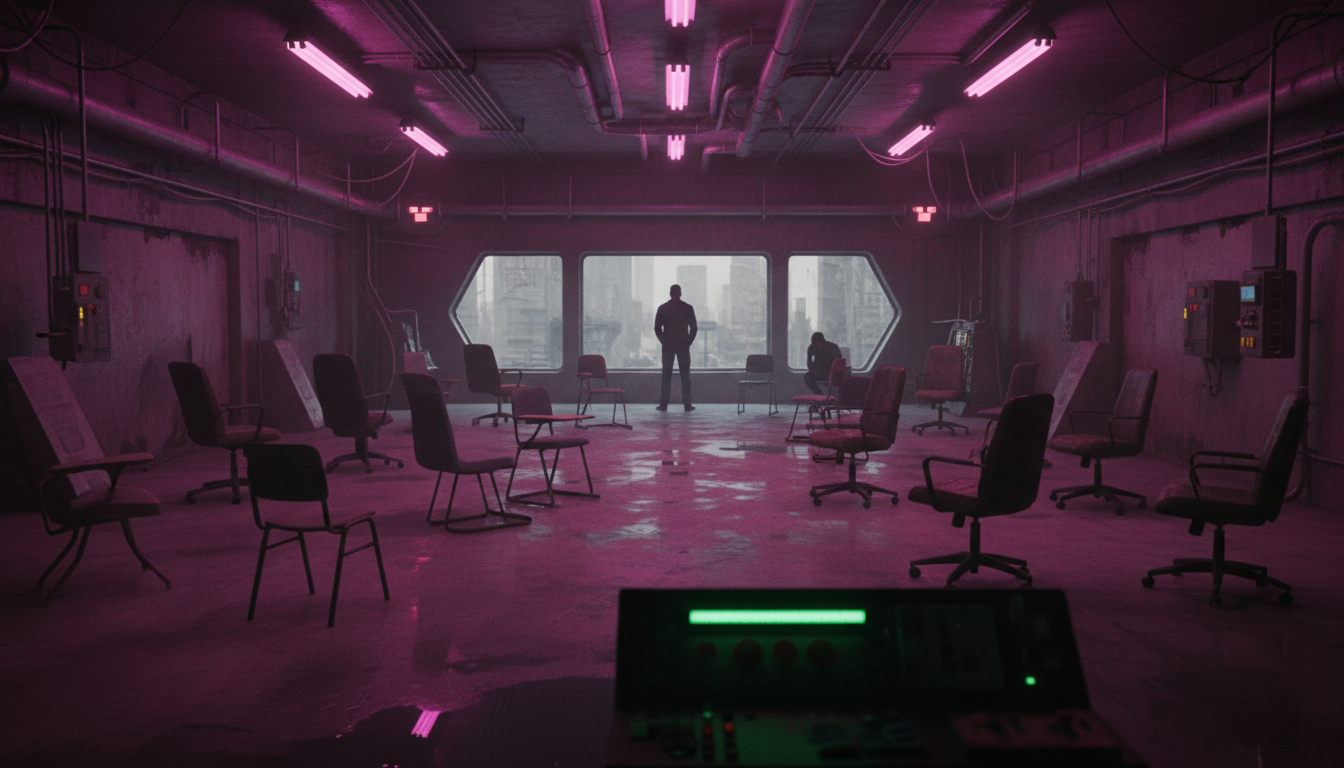
Wren Halloway was twenty-six and had been aboard nine days and had never met Vance before the clamps opened, and she is the reason there is any account of him at all, because she watched him for two and a half years and wrote down what she saw and nothing else.
“I want to say at the front what this is not. It is not an explanation. I do not have one. I watched a man for two and a half years and I can tell you what he did, and every attempt I have made in forty years to say what it meant has been worse than the list.”
He gave no orders. That is first and it is absolute.
“Not one. In two and a half years, to anybody, about anything. Not a suggestion phrased as an order and not an order phrased as a suggestion.
“He was the ranking officer aboard by a distance that is almost comic. There were eleven cadets who had been trained for four years to do what he said. There was a demolition detail that had been putting charges in a tether root on his authority six days earlier.
“And he came aboard and stopped, and nothing came out of him for thirty months.”
He made no speech.
“There were four occasions where a speech was not only appropriate but expected, and I have listed them, and on every one of them people turned and looked at him and waited.
“The third morning, when Bex gave the orbit. The sixth week, when the signals team got the first reply from below and it was not what anybody wanted. The ninth month. And the day it ended.
“Four times, forty people looked at a man who had commanded a coup, and four times he looked back at them and said nothing at all, and the silence went on until somebody else spoke.”
He worked.
“This is the part nobody believes and it is in the rota in Bex's hand and anybody may check it.
“He went on the rota in the second week and he stayed on it. Galley, filtration, the long hand-over-hand haul through the middle third with stores on a line, which is the worst job on the hull and which everybody did about once a fortnight.
“He was fifty-eight and he was not good at it and he did not ask for anything easier. He did about nine hundred shifts in two and a half years and missed four, all of them for illness, all of them logged.”
What Wren saw, and what the chapter is about, is that he knew.
“He knew from the moment the clamps opened. Not worked it out — knew, immediately, before Bex had a wrench in his hand.
“I can tell you exactly how I know that and it will not be enough for anybody and it has never been enough for me.
“I was in the forward transfer when it happened, about forty metres from him. I did not know what was happening. Nobody did. And I looked at him, the way everybody in a corridor looks at the senior person when something is odd, and he was already still.
“Not startled. Not looking about. Standing exactly as he had been standing, with his hands behind him, completely composed, and something in his face had already finished.”
She has been asked about that sentence for forty years and has never improved it and has refused to.
“People want me to say he looked frightened or relieved or guilty. He did not look like any of those and I would be inventing it.
“What I saw was a man who had just received information and had already processed all of it, in a corridor where everybody else had four minutes of confusion ahead of them.
“And then he walked to the observation bay with the rest of us and stood at the back and watched the Anchor come apart for three hours and did not say one word.”
The narration does not confirm it and will not.
“I am aware that everything above is a young woman's reading of a face at forty metres and that I have had forty years to make it neater. I have not made it neater. That is what it looked like.
“Four people who were aboard have told me they saw the same thing. Six have said they saw nothing at all. That is the whole of the evidence and it will never be better than that.”
What he did not do is her longest section and it is the one that persuades.
“He never claimed anything. Not command, not exemption, not a compartment, not a portion, not one thing.
“He never explained himself. Not to the cadets, who deserved it more than anybody, and not to Rahn's detail, who had done the thing on his say-so and who would have taken anything he gave them.
“He never once said the word Anchor in my hearing in two and a half years and I was in the same galley as him about nine hundred times.
“And he never asked about the retrieval. When the numbers came up in the sixth week and Dagg ran them at a table with about eleven people leaning in, he was four metres away eating, and he did not come over, and he did not ask afterwards, and I watched for it because by then I had started watching for things.”
There is one exchange in forty years and Wren has published it exactly and has declined every request to interpret it.
It was the fourteenth month. She was on filtration with him, which is a two-person job, and they had been at it about an hour in near silence, which was ordinary.
“I asked him whether he thought they would come.
“And he said: they will do the arithmetic, and the arithmetic is correct, and then somebody will change the arithmetic, and it will take about two years.
“And I said how do you know. And he said: because that is what it is for.
“And then we finished the filtration and I have thought about those nine words every day for forty years.”
She is explicit about what she does not know.
“I do not know what he meant. I have four readings and they contradict each other and three of them are flattering to him and one is not, and I have never been able to choose.
“I did not ask. That is the thing I would change. I was twenty-seven and he was fifty-nine and we were elbow-deep in a filter housing and I did not ask him what it meant, and eleven months later we came down and he went where he went and I have never seen him again.
“Everybody assumes I stayed quiet because I was frightened of him. I was not frightened of him. Nobody on that hull was frightened of him and that is the strangest sentence in this entire account.”
What the eleven cadets thought of him is the section Wren finds hardest and she has revised it repeatedly over forty years and has said that it gets shorter each time.
“They were extremely careful around him for about four months and then they simply were not, and the transition happened without anybody remarking on it, and by the second year there were cadets who spoke to him the way you speak to any older man on a rota who is slow at the haul.
“Piet Osborne asked him for a hand with a stores line in about the fourteenth month and he gave it, and they did the job, and that is the entire recorded interaction between the commander of a failed coup and a boy who was on that hull because of it.”
Rahn never spoke to him. That is established by four separate accounts and by Rahn's own, which is three lines long and which is the only thing Osei Rahn ever put in the record about any of it.
“Nothing to add. I did the work I was given and it was done correctly and I have not changed my view of it. I have not spoken to him since the fourth of that month and I do not intend to and I would ask that nobody read anything into that, because there is nothing in it beyond the fact that we have nothing to say.”
“Two men in a hull for two and a half years, sharing a galley, on the same rota, who had been the two ends of the same decision,” Wren wrote. “And they never once spoke, and neither of them avoided the other, and nobody aboard ever remarked on it in my hearing, and I did not properly notice it myself until about the twentieth month.”
Wren has been asked whether she thinks he engineered any of it, and the answer is the only place in her account where she is sharp.
“No. Absolutely not, and I would like this quoted whenever the question is asked, because it comes up every decade and it is lazy.
“There is no version in which a man arranges to be marooned in a hull with forty witnesses, including eleven cadets, on the losing side of his own coup, with no way down, for an unknown number of years. It is not a strategy. It is not a clever second move. It is the worst available outcome for him personally and it was obviously going to be, and it was.
“What I saw on his face in that corridor was not a plan working. Whatever it was, it was not that.”
She has said that she wrote her account precisely so that nobody would need to speculate, and that she has watched people speculate anyway for forty years, and that she has stopped correcting them individually and now simply points at the list.
Chapter 5 — No Tether
↑ Back to ContentsFocus: Bex.

There was nothing to climb down. That is the whole of the chapter and it takes about four seconds to say and it took the forty of them a fortnight to feel, and Bex has said that the fortnight was the worst of the two and a half years and that nothing afterwards came close.
The Anchor was a hundred and forty years old and four generations had never thought about it once.
“That is not a criticism of anybody and I want to say so first. You do not think about the thing that has always been there. Nobody on that planet thought about the Anchor and nobody aboard thought about it either, including me, and I had walked past the tether root about four thousand times.
“It was how you got up and it was how you got down. It had been that since before my grandmother. There was a schedule. There were four cars. You booked a place the way you book anything and it took eleven hours and it was boring and about nine hundred people a year did it.”
It had been dismantled by their own side six days earlier, correctly and thoroughly, by eleven men who were now aboard the hull.
“They did it properly. I want that in because there is a version of this where the demolition was botched and it is not true and it would be easier if it were.
“Rahn's detail put charges into a tether root to bring down a structure and the structure came down, entirely, in three hours, in the manner intended. It is the single most competent piece of work anybody did that month and it is the reason forty people spent two and a half years in a hull.”
What that meant practically took Dagg about nine days to establish and she established it by listing everything that had ever gone up or down and asking what was left.
The tether cars: gone with the tether.
The maintenance climbers, of which there were four, all racked at the Anchor's midpoint, all gone.
The hull's own two service craft, which were short-range, unpressurised, without heat shielding of any kind, and which had never been intended to go anywhere but from one part of the hull to another.
“Somebody proposed the service craft in the second week,” Dagg said. “It was not a foolish proposal and I did not treat it as one. We took it seriously for about four hours, which is exactly as long as it took Bex to write the numbers on a wall.
“They will not survive re-entry. They will not survive the attempt. They do not have the delta-v to deorbit properly and if they did they have no heat shield and they would come apart at about ninety kilometres. The man who proposed it accepted the numbers inside a minute, which I have always respected.”
The signals team is the part that made it bearable and unbearable at once.
“We had communication from the first day. That is the difference between this and every other stranding in history and it is why nobody went mad.
“Six people with the only long-range set aboard, and it worked, and it worked for the entire two and a half years, and there was never a moment when the planet did not know exactly where we were and exactly how we were.
“And that is also the reason it was unbearable, because there is a very great difference between being lost and being watched.”
The fortnight Bex describes as the worst is the fortnight in which the forty of them individually stopped expecting a solution.
“It is not a moment. Nobody stands up and announces it.
“What happens is that for about ten days everybody is working on it. Every single person aboard is thinking about how to get down and about eleven of them are doing arithmetic and four of them are doing arithmetic badly and the galley conversation is entirely about it.
“And then it thins. Not all at once. On about the eleventh day I noticed that two people had gone back to their actual jobs, and on the fourteenth I noticed that I had, and that I had been at the water plant for two days without once thinking about the tether.
“That is the moment for me and I did not enjoy it. I had stopped working on getting home and I had not decided to.”
Piet Osborne, nineteen, who had a leave rotation and a sister, is the one Bex writes about here and the account is four lines.
“He came to me in the third week with a schematic of the service craft and a page of workings and he had done it properly, by himself, at night, over about eleven days.
“It was wrong. It was wrong in one place and it was a place a person of nineteen would get wrong and everything else on the page was correct and neat and better than I would have expected.
“I showed him where. It took about four minutes. He looked at it and said: yes, all right, that is the mass, I see it. And he folded the page up and put it in his pocket and thanked me and went to his shift.
“I have thought about that page for a hundred years. He did not argue. He did not go and do it again. He had done the only thing a person in his position could do and it had not worked and he was nineteen and he went to his shift.”
What went down the signal link in the fourth week is one line and Dagg sent it and has never regretted it and has said that she wrote about nine versions first.
“Forty aboard, all well, structure sound, life support nominal, orbit stable. No means of descent exists on this hull. We are not asking for anything yet. We are telling you where we are.”
“Not asking for anything yet,” she said. “I put the yet in deliberately and I have been asked about it four hundred times.
“We were the losing side of a coup and we were forty people who could not be reached and I was a quartermaster's clerk with a signal set and no standing whatever, and the one thing I could control was whether the first thing that planet ever heard from us was a demand.
“It was not. It was a position report. And when the vote came two years later, four people who spoke for it quoted that message, and one of them quoted the yet.”
What the fortnight did to people individually is the part Wren recorded, in the med bay log, indirectly, because she was writing about sleep and appetite rather than about morale.
“Nine people stopped sleeping properly in the third and fourth weeks. Four stopped eating properly. Two did both, and one of those was a man of forty-four from the signals team who came to me in the fifth week and said, quite calmly, that he had understood something and had not been able to put it down since.
“I asked him what. He said: nothing is going to change unless something changes down there, and there is nothing I can do to make it, and I have spent four weeks looking for the thing I can do and there is not one.
“That is the most accurate description of the fortnight that anybody produced and it came from a man who could not eat. I wrote it in the log and I did not put his name on it and I have kept his name out of it for forty years.”
What she gave him is recorded and is not medicine. She put him on the rota twice as often, at his own request, and he has said since that it worked and that he does not entirely understand why and that he suspects it was simply that a rota is a thing that expects you tomorrow.
The service craft sat in their bays for the whole two and a half years and were maintained, on the rota, quarterly, by two people, because Bex put them on the rota and never took them off.
“They were never going to fly anywhere and everybody knew it by the second week. I had them serviced for thirty months anyway and I have been asked why about four hundred times.
“Because they were equipment and equipment is maintained. That is the answer and it is not a metaphor and I have refused to let anybody make it one. If you stop maintaining things because they have stopped being useful, you will stop maintaining a great many things, and about four of them will turn out to have mattered.”
Dagg has said that she chose the word descent rather than escape deliberately and that she thought about it for about an hour.
“Escape is what you write when somebody is holding you. Nobody was holding us. There was no door and no guard and no captor and the thing preventing us from going home was arithmetic.
“I have watched four separate accounts written below use the word escape about us and every time it made us into prisoners and made somebody below into a jailer, and neither was true, and the untruth of it made the whole question easier to argue about badly.”
Rahn's detail went on the rota in the second week exactly like everybody else and did the haul and the galley and the filtration, and Dagg has said, quite deliberately, that she watched carefully for four months to see whether anybody would refuse to work a shift beside them and that nobody ever did.
“Not one refusal in thirty months. I was genuinely expecting one and I had privately worked out what I would do about it, and I never needed it, and I have never been sure whether that was decency or simply that there was nowhere else for anybody to go.”
Chapter 6 — The Shuttle Arithmetic
↑ Back to ContentsFocus: Dagg.

Dagg ran the retrieval numbers herself in the sixth week, at a table in the aft galley, with about eleven people leaning in, and she got the same answer the planet got, and the answer is that it could be done and that it was not going to be.
“I was a quartermaster's clerk. I want that at the front because people have made me into an engineer in retellings and I was not one.
“What a quartermaster's clerk is extremely good at is knowing what a thing costs and what exists. That is the entire job. You do not need to know how a shuttle flies to know that there are four of them on the planet, that two are committed, that the third is in refit, and what a launch consumes.”
The arithmetic took her nine days and the answer is in three parts.
It was possible. A shuttle could reach that orbit. It could match the tumble, which is the difficult part, and Bex worked that out separately and got a figure of about four hours of manoeuvring per approach and said it was hard rather than impossible.
It could carry nine people down. Not forty. Nine, in one trip, with margin.
So it was five trips. Five launches, five approaches, five matched dockings against a slowly rotating twenty-mile hull, five re-entries.
“That is the number that killed it and it killed it in the sixth week, on that table, in front of eleven people, and every single one of us understood it at the same time.”
The cost is the second part and Dagg gives it in the terms she knew.
“A launch is about four months of the third continent's entire industrial fuel output. That is not an exaggeration and it is not a figure I have inflated; it is the figure the ledger used and I had spent nine years working out of that ledger.
“Five launches is twenty months. Twenty months of everything that continent makes, and the continent does not stop needing what it makes for those twenty months.
“And there is no reserve, because the reserve went into the Anchor for a hundred and forty years and the Anchor is why nobody ever needed a shuttle programme.”
The third part is the one she found hardest and it is the reason the chapter exists.
“It was politically radioactive.
“I hated the phrase when I first heard it come back up the link and I have used it myself for forty years since because there is not a better one.
“We were the coup. Not all of us. Eleven cadets did not know what a coup was on the fourth of that month. A galley cook came aboard because the galley needed running.
“But the demolition detail took down the Anchor on Vance's authority, and Vance was aboard, and every single person below knew it, and any government that spent twenty months of a continent's fuel to bring us down would have been spending it to bring him down.”
She has said, repeatedly and without any bitterness that anybody has been able to detect, that the people below were correct.
“They were right. I have had forty years and I have never once been able to construct the argument the other way.
“Twenty months of a continent's fuel, for forty people, one of whom is the man who did it, in a world that has just come apart politically and is about to come apart again, and where the water infrastructure on two continents runs on that same fuel.
“If I had been below I would have voted against. I want that in the record in my own words because in four hundred years somebody is going to write that we were abandoned and I am not going to be quoted supporting it.”
What that does to a person is the last section and Bex wrote it rather than Dagg, because Dagg declined.
“She was right and she knew she was right and that is what made it unbearable.
“If they had been wrong we would have had something. Anger is a resource. Forty people who have been wronged can be furious together for two and a half years and it will hold them up.
“We were not wronged. We had run their arithmetic before they ran it and we had got their answer and we agreed with it, and there was nobody to be angry with, and I watched about nine people go looking for somebody anyway over the following year and not one of them found one.”
Piet Osborne asked the question that closed it, at the table, at nineteen, and it is the line the whole story turns on.
“He said: so what would have to change.
“Not is there another way. Not can we appeal. He had followed the whole of it and accepted every figure and he asked the only question left, which is what would have to be different for the answer to be different.
“And Dagg said: the cost of getting up here. And he said: so somebody would have to build something. And she said yes. And he said: how long does that take.
“And she said she did not know, and that was true, and it was about two years, and neither of them had any idea.”
The message Dagg sent down at the end of the sixth week is four lines and it is the second document of the stranding and it is the one that got quoted in the vote.
“We have run the retrieval ourselves. Working attached, all of it, including the parts that are against us.
“We agree with your figure. Five trips, twenty months of continental output, and we understand what else that fuel does.
“We are not asking for it. We are asking that nobody pretend the arithmetic is different than it is, because we have done it and we will know.
“There are forty of us and eleven are under twenty-three and one of them worked out this week that what has to change is the cost of getting up here. We think he is right. Nobody up here can do anything about that.”
The reply from below took nine days and it came from an office rather than a person, and Dagg has said that the nine days were the longest of the two and a half years and that the reply, when it came, was better than she had expected and worse than she had hoped.
It confirmed the arithmetic. It said, in four lines, that the figure was five trips and twenty months of continental output, that this was correct, that it was under consideration, and that no decision had been taken.
“Under consideration is a phrase I have thought about for forty years. It is honest. It was under consideration; it was considered for about two years by an enormous number of people, publicly, and the consideration is documented and it is not a euphemism for anything.
“And it is what you send to forty people in a hull when the answer is no and nobody is prepared to write no, and both of those are true at once, and I read it out in the galley to about thirty people and did not editorialise and could feel every one of them doing the translation.”
Bex has said that the reply is the moment the two and a half years actually began, and that everything before it was still an emergency and everything after it was a life.
What Piet Osborne did with the answer is not in his own account, because he never wrote one, and it is in Bex's, and it is four lines.
“He asked what would have to change and Dagg said the cost of getting up here, and about a fortnight later he asked me the same question again in the plant, but properly, with numbers.
“He wanted to know what it costs to lift a kilogram, and what fraction of that is fuel, and what fraction is the vehicle, and whether anybody had ever tried to do it without a vehicle at all.
“I answered all of it as well as I could, which was not very well, because I am a plant supervisor and not a launch engineer. And he wrote it all down and thanked me and I never heard about it again in two and a half years.
“He was nineteen and there was nothing whatever he could do with any of it, and he asked anyway, and I have never worked out whether that was hope or simply the shape of the person.”
The vote that eventually came is two years away and Dagg has always insisted that the sixth-week message had nothing to do with causing it and that she has been given credit she has no claim to.
“Four people quoted it. That is not causation and I have said so at about nine public sessions. What caused the vote was a machine that could go up cheaply, and the machine did not exist yet, and nobody up here had anything to do with building it.
“What the message did, at most, is make it slightly harder to talk about us dishonestly, for about two years, in a small number of rooms. That is not nothing and it is a very great deal less than a cause.”
Bex has said that the arithmetic was checked independently by four people aboard and by an observatory below, and that everybody consistently arrived at the same figures, and that the unanimity was the cruellest part of the whole business.
“If somebody had found an error we would have had a fortnight of hope. Nobody found one. It was correct on the ninth day and it was still correct two years later and it is correct now.”
Chapter 7 — Life Support
↑ Back to ContentsFocus: Bex.

The life support worked. It worked completely, with margin, indefinitely, and Bex established that in the ninth week and it is the worst news anybody received on that hull.
“I have said that in about four hundred accounts and I have never once been believed on the first pass, so let me do it properly.
“A twenty-mile hull was built to carry ten thousand people for thirty-six years. Every system aboard was sized for ten thousand.
“There were forty of us. Forty people in a plant sized for ten thousand is not a margin, it is a rounding error. We could not have loaded that plant if we had tried.”
Why it was still running is the thing four generations never thought about.
“It was never switched off. The hull was clamped for a hundred and forty years and the plant ran the whole time, at about four per cent, because somebody in the ninth year wrote a line saying that a hull with people occasionally aboard should be liveable at all times.
“Not for an emergency exactly. For a maintenance crew. For a survey team. For a quartermaster's section doing an inventory that had been ordered nineteen times.
“There is no dramatic provision anywhere. There is a line in an operations standard about a hull being liveable, written by somebody nobody can name, and it is the reason forty people did not die in the ninth week.”
The figures Bex established are in his hand and he read them out at a muster and they took under a minute.
Atmosphere: closed cycle, scrubbers at four per cent of rated, consumables for something over four hundred years at forty people.
Water: closed loop, losses under a tenth of a per cent per cycle, and a reserve in the forward tanks that Dagg measured at nine million litres.
Power: the hull's own plant, untouched, and Bex has said that it would still be running now and that it probably is.
Food: the stores were the only genuine problem and they were a problem of variety rather than quantity, and there were four hundred and eleven crop varieties in a vault nobody could plant and about nine years of preserved stock for ten thousand people, which is a number that does not divide sensibly by forty.
“About four hundred years of food,” Dagg said. “I ran it four times because I did not believe it. Four hundred years, and about two hundred of it is the same four things, and I have said since that the tedium of that arithmetic is the truest fact about the whole two and a half years.”
The relief in the room when Bex read it lasted, by four separate accounts, about ninety seconds.
“It went round the bay. Somebody laughed. A cadet put her head in her hands and about four people put a hand on her.
“And then it stopped, all at once, in a way I have never seen a room do before or since, and it stopped because everybody arrived at the second half at about the same moment.”
Wren Halloway's account of the second half is the one that has been quoted since and it is four lines.
“We are not going to run out of anything.
“Nothing is going to fail. Nothing is going to force this. There is no date at which somebody below has to act or we die, and therefore there is no date at which anybody below has to act.
“I was twenty-six and I worked that out in the observation bay in about four seconds and I looked around and everybody else was working it out too, and nobody said it, and Bex folded up his paper.
“A hull that was killing us would have got us home in four months.”
Bex has said that this is the finding of the entire two and a half years and that he has never found a way to write it that does not sound ungrateful.
“We were saved by the plant. That is true and it is first and everybody who reads this should hold it.
“And the plant is the reason nobody came for two years. Both. Not one and then the other; both, at the same time, permanently, and every person on that hull understood it by the tenth week and not one of us ever said it out loud in front of the cadets.
“A person can be grateful for a thing and be destroyed by it and there is no arrangement of those words that anybody has ever found comfortable.”
What they did about it is the last section and it is the beginning of everything that follows.
“Nothing. There was nothing to do. That is what the ninth week was.
“And that is the week the rota started, and the galley got a schedule, and somebody put a mark on a bulkhead for the days, and four people asked Dagg whether the inventory she had come aboard to do was still worth doing.
“She said yes. She said it took nineteen orders in a hundred and forty years to get somebody up here to do it and that she was up here.
“And she started it in the ninth week and it took her two and a half years and she never finished, and the reason she never finished is the reason this whole account exists, and she does not know it and I do not know it and nobody aboard that hull ever found out.”
The four hundred years is the figure that circulated below and Dagg has said that she regrets having ever sent it, and that she sent it because it was true and because a quartermaster's clerk sends figures.
“Four hundred years of air and about four hundred of food. It is the correct number and I calculated it four times and it is in the message and it is the single most damaging thing I did in thirty months.
“Because what a person below reads is: they are fine. And they were right to read it that way. We were fine. Nobody up there was ever in danger of anything, at any point, and I would not have wanted to pretend otherwise and I could not have.
“And a population that knows you are fine does not spend twenty months of a continent's fuel on you, and I gave them the number that told them so, honestly, in the ninth week, and I would send it again and I have never once been at peace about it.”
Wren has said that Dagg is being unfair to herself and that the figure changed nothing, because the planet had the hull's own specifications and could have run the same arithmetic in an afternoon, and did.
“They knew before we told them. Of course they did. It is a documented hull and the plant capacity is public and there were about four hundred people below who could have done that sum from memory.
“She thinks she told them we were fine. She confirmed a thing they already had. And I have said that to her about nine times over forty years and she has never once accepted it.”
What the plant actually needed from them is the last practical section and it is almost nothing, and Bex has said that this was the hardest thing about being the plant supervisor of a hull that did not need one.
“Four hours a week. That is honestly what it took. A walk, a set of readings, a filter change about every eleven days, and roughly one genuine fault a month, of which about half were the same coolant elbow I had come aboard to fix.
“And I had nineteen years of habit and about seventy waking hours a week and a plant that wanted four of them.
“So I invented work. I want that written down plainly because everybody who has ever been stranded anywhere has done it and nobody puts it in their account. I did a full survey of a system that did not need surveying. I rebuilt a pump that was working. I wrote a maintenance history for a hull that had one already.
“It was not madness and it was not despair. It was a man of fifty-one who needed something to be for, and the rota gave everybody else the same thing, and about thirty of the forty invented something in the first year.”
Bex has said that the phrase indefinitely liveable, which somebody below applied to the hull in about the fourth month, is the most accurate and most brutal description anybody produced.
“It is exactly right. That is what it was. Not survivable, which implies effort. Not comfortable, which would be a lie. Liveable, indefinitely, by forty people, at no particular cost to anybody.
“And I have thought for a hundred years about what it would have taken for somebody below to feel the second word properly, and I do not believe it was possible, and I do not blame one person on that planet.”
Wren has said, entirely plainly, that she deliberately never described the plant as merciful in front of anybody, because the cadets were listening and eleven of them were under twenty-three and she was not going to hand them a word they would have to unlearn later.
“They were going to work it out. They all did, individually, over about six months. What I was not going to do was accelerate it by choosing a comforting word in a galley.”
The plant is still running. That is not a flourish; it is a documented fact, and Bex checked it deliberately about four times over the following century by asking somebody with an instrument to look, and it has never stopped, and the hull is still in the orbit it was left in, holding an atmosphere at nineteen degrees in the forward outer compartments for nobody at all.
Chapter 8 — Med Bay
↑ Back to ContentsFocus: Wren.
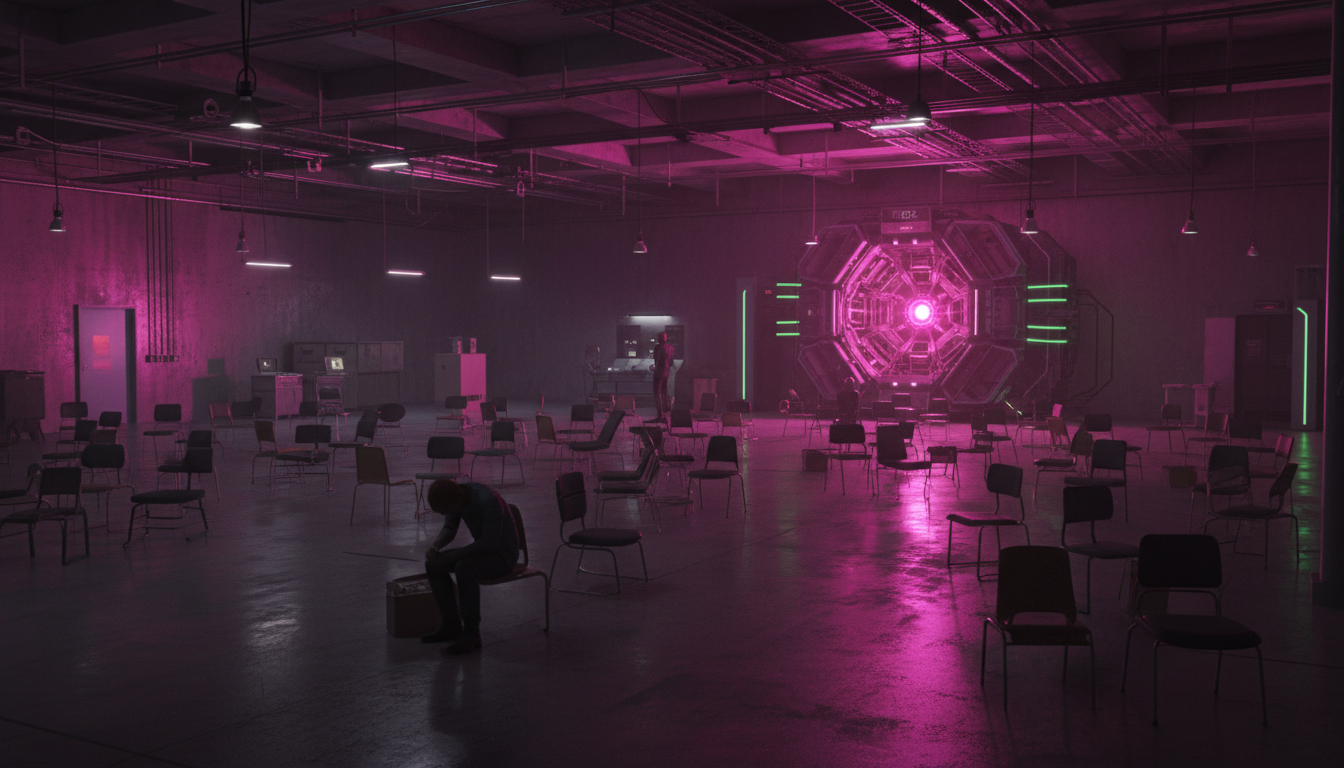
The med bay is four hundred metres long and it was stocked for ten thousand people and Wren Halloway found it in the eleventh week and stood in it for about twenty minutes before she went and got Dagg.
“It is not a room. That is the first thing and everybody who has only read about it gets it wrong.
“It is a district. Four hundred metres of it in the forward third, eleven bays, four theatres, a pharmacy that runs about ninety metres, and racks and racks and racks.”
It had never been used.
“Not once, in a hundred and forty years. It was stocked for the crossing and the crossing was in cold and nobody needed it, and then the hull was clamped and there was nobody aboard to need it, and the whole of it sat sealed and climate-held and rotated on a schedule by a maintenance contract that ran for four generations and that about nine people on the planet knew existed.
“The consumables in that pharmacy were rotated eleven times. Somebody came up the tether, every twelve or thirteen years, and rotated the stock in a facility that had never treated a person, because that is what the contract said.”
What Wren worked out standing in it is the chapter and it took her twenty minutes and she did not say it to anybody for two days.
“I trained as a medic. Four years, and then eleven months of practice, and then a transfer I was told was a transfer.
“So I know what a med bay is for. It is for the things that kill you fast. That is the whole design philosophy of every med bay anybody has ever built: you stock it for trauma and for the four or five acute things that will take somebody in an afternoon.
“And I stood in four hundred metres of it and I did the sum that a medic does, which is: how many people, how long, what will they get.
“Forty people. Nine of us over fifty. Nobody over sixty-two except Vance. And a pharmacy sized for ten thousand.”
The finding is four lines and she wrote it two days later and gave it to Dagg and to nobody else.
“Nobody is going to die up here.
“Not of injury; we have four theatres and I can do surgery and there are two others who can assist. Not of infection; that pharmacy will hold forty people for longer than forty people will live. Not of the four things that take a person in an afternoon, because every one of them is treatable in that bay and I have checked all four.
“The oldest person aboard is fifty-eight. The youngest is eighteen. In forty years there will still be people on this hull and they will be in their fifties and there will be others who were born here.
“There is no obvious way home. I want both of those sentences on the same page because they belong on the same page and nobody wants them there.”
Dagg read it and asked one question and Wren has quoted it since as the best question anybody asked her in two and a half years.
“She said: are you going to say this out loud.
“And I said I did not know. And she said: I am not telling you either way, and I am not going to say it either, and I want you to know that I have already worked it out.”
What they decided is nothing and Wren is exact about the nothing.
“We did not agree to keep it from anybody. There was no decision and I want that clear because it has been written up as a conspiracy about four times and it was not one.
“Everybody worked it out. All forty of them, at their own speed, over about the first six months. Bex had it in the ninth week. Rahn had it before I did and never mentioned it. Piet Osborne, who was nineteen, got it at about eight months and I know because I watched his face at a meal.
“What did not happen is that anybody said it in a room with everybody in it. Forty people independently arrived at the same conclusion and forty people independently decided not to be the one who put it in the air, and there was no meeting about that and no rule and nobody ever proposed one.”
The one thing she did do is in the med bay log and it is the first entry in a hundred and forty years.
“Bay opened, eleventh week. Stock verified against manifest, complete, rotation current. No patients.
“Facility is adequate for forty persons indefinitely. I have written indefinitely deliberately and I have checked what it means before writing it.
“Opening a standing log. There has not been one. There should have been one for a hundred and forty years and the reason there was not is that nobody ever thought anybody would be aboard, and somebody was, and here we are.
“W. Halloway, medic. Nothing to report and I expect to be writing that for some time.”
She wrote nothing to report in that log four hundred and nine times over two and a half years, which is very nearly every day, and the entries that are not nothing to report are eleven, and of those, four are a birth, and none is a death.
That is the end of Part One. Forty people in a structurally perfect hull with four hundred years of air, nine million litres of water, four hundred metres of medicine and no way down, turning once in eleven minutes, four hundred and eleven kilometres above a planet that had already begun to argue about them.
And nine miles of sealed racking that Ilse Dagg had begun to inventory in the ninth week, working forward from the aft end, at the rate a careful person works, because it had been ordered nineteen times in a hundred and forty years and she was the one who was up here.
The birth is in the record and it is the eleventh month and Wren has always refused to make anything of it and has said that the refusal is the point.
“A woman on the signals team had a child on that hull. That is the whole event. It was uncomplicated, I had four hundred metres of med bay and about nine years of training and one person to assist, and it took about eleven hours and everybody was fine.
“It has been written up as a symbol about four hundred times and I have declined to participate every time. It was a birth. Births happen where people are. The only unusual thing about it is the room, and the room was extremely good.”
The child came down with everybody else two and a half years later, at about nineteen months old, and is the only person in the record who was on that hull and does not remember it, and has said in later life that this is a considerable advantage.
“Everybody who was up there has to have a view about it,” she said. “I have never had to have one. It is where I am from and I do not remember it and I have never once found the fact interesting, and my mother has told me that this is exactly what she wanted and that she arranged nothing.”
The eleven entries that are not nothing to report are listed in the log and Wren has published all eleven, and she has said that the list is the truest account of two and a half years that exists.
A fractured wrist in the fourteenth week, in the middle third, from a badly judged push. Two cases of the persistent transition sickness that never resolved. A serious infection in the ninth month that she treated with something the pharmacy had held for a hundred and forty years and that worked. A crush injury in the second year that she describes as the only frightening hour she had. Four instances of what she records as low mood requiring attention and does not elaborate on. The birth. And one entry, in the twenty-second month, that reads only: spoke with a patient for four hours, no treatment given or needed.
“That is thirty months of forty people. Eleven events. It is the most boring medical record in the history of anybody and I would like it read as an achievement, because it is one, and it is not mine. It belongs to a plant that held nineteen degrees and a rota that gave everybody somewhere to be.”
The entry in the twenty-second month that reads spoke with a patient for four hours, no treatment given or needed is the one Wren has been asked about most and she has never said who it was.
“I will not. It is a medical log and it was a conversation and both of those are the patient's and not mine and not the archive's.
“What I will say, because I think it is useful to somebody, is that it was the twenty-second month and not the second, and that this surprised me at the time and does not now.
“The first year is when everybody expects to break and almost nobody does, because the first year has a great deal happening in it. The twenty-second month is a Tuesday in a long stretch of Tuesdays, and that is when it comes, and I was not ready for it and neither was the patient.”
Wren has said, quite firmly, that she wrote nothing to report four hundred and nine times deliberately and that she could easily have written nothing at all on those days.
“An empty page is a page nobody kept. A page that says nothing to report is a record that somebody was there and looked and found nothing, and in forty years that distinction has mattered to me considerably more than I expected.
“It is also, precisely, what a medic is mostly for. I trained four years to be extremely well prepared for eleven events, and I was, and the other eight hundred and forty days I wrote three words.”
She has been asked repeatedly whether she found it frustrating and has answered identically every time, which is that she found it frustrating for about the first year and then stopped, entirely and permanently, and cannot say what changed.
Chapter 9 — The Rota
↑ Back to ContentsFocus: Bex.

Bex wrote the rota in the ninth week because somebody had to and because he had written about a hundred of them, and nobody appointed him and nobody objected, and he has said for a hundred years that this is the most frightening thing that happened on that hull.
“I have watched people be given authority and I have watched people take it and neither of those happened.
“What happened is that the galley needed a schedule and filtration needed two people a shift and the haul through the middle needed four, and there was nobody whose job it was to say who, and after about nine days of it happening badly I sat down and wrote a list.
“I pinned it up in the forward transfer because that is where things get pinned up. Nobody said anything. People looked at it and went to the things it said they were going to.
“And that was it. That was the entire transfer of power and it took a pin.”
What was on it is dull and he has always insisted on giving it in full.
Galley, two people, three shifts. Filtration, two people, two shifts. The haul, four people, one shift. Plant walk, one person, one shift, which was eleven miles and took most of a day and which everybody wanted.
Med bay support, one person, on call, which meant sitting with Wren while she did an inventory of a pharmacy ninety metres long.
And a category at the bottom in his own hand that says only: whatever else.
“Whatever else did most of the work for two and a half years,” Dagg said. “It is four hundred jobs nobody could name in advance. A door. A light. A person who is not eating. It was the best line on that list and he wrote it because he could not think of a heading.”
Vance's name was on it from the second week.
“I put him on it,” Bex said. “I want to be exact because this has been retold about four hundred times and in about half of them he asks to be put on and in the other half somebody makes him.
“He did not ask. Nobody made him. I wrote the list and I put every name aboard on it in the order of the muster, and his name was in the muster, so it went on.
“I did think about it. I thought about it for about four minutes and what I concluded was that a list with thirty-nine names on it is a decision and a list with forty is a list.
“He turned up to his first shift, which was galley, and he did it, and that was the end of the only political question anybody had to answer up there.”
What Bex will not accept is that he was in charge.
“I wrote a rota. I have written a hundred of them. I was a plant supervisor and I had nineteen years of writing rotas and it is not a talent, it is a habit.
“I made no decisions. I did not allocate food, I did not adjudicate anything, I did not have anybody's ear more than anybody else. When there was a dispute about a bunk in the ninth week I was not consulted and I heard about it two days later.
“And every account written since has me as the leader and I have objected to it for a hundred years and I have lost every time, and I have come to understand that this is because the accounts are correct and I am the one who is wrong.”
Wren Halloway is the one who worked out why and her paragraph is the reason this chapter is in the story.
“He is right that he made no decisions and he is wrong about what that means.
“He decided who did what, every day, for two and a half years, for forty people. He decided it in his own handwriting on a sheet of paper in the forward transfer.
“That is not most of authority. That is all of it. Everything else people mean by authority is downstream of who does what, and he had it entirely, and he had it because on the ninth day nobody else picked up a pen.”
She has said that she watched this happen at twenty-six and did not understand it until she was about sixty.
“Nobody voted. Nobody proposed. There was no argument and no faction and no objection at any point in thirty months.
“There was a man who wrote lists and a hull that needed a list, and if he had been a worse man it would have gone exactly the same way for exactly the same reasons and there was no mechanism anywhere on that hull that would have caught it.
“I have thought about that more than I have thought about the arsenal or the vote or coming down. Forty people handed everything to a man in nine days because he was the one who was tidy.”
Bex's own last word on it is four lines and he wrote them at about a hundred and twenty.
“If somebody is reading this because they are somewhere with no one in charge and they are thinking about writing a list: write it.
“The list is needed. It was needed on the ninth day and the nine days before it were bad and people were hungry at the wrong times and somebody nearly got hurt in the middle third.
“And know what you are doing when you pin it up, because nobody is going to tell you, and nobody told me, and I was fifty-one and I thought I was being helpful.
“Halloway worked it out at twenty-six and did not say it to me for thirty years and I would very much have liked to be told at the time.”
The one time somebody objected to the rota is in the eleventh month and it is four lines and Bex has always given it in full because he says it is the only real test the arrangement ever had.
“A man from the signals team said he would not do the haul any more. Not angrily. He said it in the galley, to me, in front of about nine people, and he gave a reason, which was that it made him ill for two days afterwards and that it had been making him ill for eleven months.
“And it was true. Wren confirmed it inside a day. He was one of the two who never adapted and he had been doing the worst job on the hull once a fortnight for eleven months without mentioning it.
“So I took him off it and put him on something else and put an extra name into the haul rotation, which was mine.
“Nobody voted. Nobody appealed. A man said no in a galley and the list changed the next morning and that is the whole of the constitutional history of that hull.”
Wren's note on it is one line and she added it forty years later at Bex's request.
“He put himself in the gap. That is why it held for thirty months and it is the only reason, and if the man who writes the list had put somebody else in that gap the list would have stopped meaning anything inside a fortnight and every person in that galley knew it while it was happening.”
The list itself survived and is in the archive, all of it, about four hundred sheets in Bex's hand, because Dagg kept every one and brought them down.
“He would have thrown them away. He threw the first nine away before I noticed and I have never forgiven him for it, mildly, for forty years.
“They are the record. Not the accounts, which everybody wrote afterwards knowing they were writing a record. Four hundred sheets of who did what on a Tuesday, written by a man who was not writing history and who was trying to get the galley staffed.
“Every name is on almost every sheet. That is what forty people in a hull for thirty months actually looks like, and it looks like a rota, and it is the most moving document I have ever held and it is entirely about washing up.”
Bex, told this, said that she was sentimental about paperwork and that she always had been, and then asked, four separate times over the following decade, whether she still had them.
Bex has said, quite deliberately, that he has spent a hundred years being credited with something he regards as ordinary competence, and that he would genuinely prefer the credit went to the fact that thirty-nine other people simply turned up.
“A rota only works because everybody does the thing it says. I wrote it. They did it, four hundred times each, for thirty months, including the haul, including the transitions, including the ones who were quietly ill the whole time and did not say.
“There is no enforcement anywhere in that arrangement. Not one. I could not have compelled a single person to do a single shift and I never had to, and that is thirty-nine people's achievement and it is consistently written up as mine.”
Dagg's view, offered without being asked, is that this is precisely the sort of thing a man says when he has been the load-bearing member of an arrangement for thirty months and would honestly rather not think about what it would have looked like without him.
The four hundred sheets are in the archive in the order Dagg carried them down, unsorted, exactly as they came off the bulkhead, and about nine people have read the whole of them, and every one of those nine has independently remarked that the handwriting gets steadily worse over thirty months and then, in the final fortnight, becomes abruptly neat again.
Chapter 10 — Sealed Volumes
↑ Back to ContentsFocus: Wren.

They chose sleeping quarters in the tenth week, on the outer four miles of the forward end, and they chose those compartments because they were the best-tempered on the hull, and the reason they were the best-tempered is that nine miles of racking sat behind their aft bulkheads and had been holding a steady temperature for a hundred and forty years.
Nobody knew that. Nobody ever knew it. Wren Halloway chose her compartment because it was warm.
“We had run cold for nine weeks. Not dangerously; the plant held atmosphere at about fourteen degrees across most of the hull because fourteen degrees is what a hull holds when there is nobody in it and nobody has told it otherwise.
“Fourteen is survivable and it is miserable and after two months of it you would do a great deal for eighteen.”
Bex found the warm sections in the eighth week doing a plant walk and reported it in a maintenance log in four lines.
“Forward outer, decks nine through fourteen, running eighteen to nineteen degrees against fourteen elsewhere. Cause not established. Not a fault; stable, and has clearly been stable a long time. Recommend we sleep there.”
“Cause not established,” he said, a hundred years later. “That is in my hand and it is the truest thing I wrote in two and a half years.
“I looked for the cause. Not hard, because it was not a fault and a plant supervisor does not spend a fortnight on a thing that is not a fault. I looked for about four hours over two days.
“What I found is that the aft bulkheads of those compartments were warm and the deck below them was not, so it was coming from behind, and behind them was sealed racked volume, and racked volume is on the manifest, and the manifest is a quartermaster's business and not mine.
“So I wrote cause not established and I went to the filtration, which was actually broken.”
The racked volumes ran nine miles.
They were sealed, climate-held, and listed on the hull manifest in a single line each, and there were four hundred and eleven such lines, and Dagg had begun working through them in the ninth week from the aft end because you start an inventory at one end.
She was working forward. In two and a half years she got about six miles.
“It is not slow work because it is difficult,” she said. “It is slow because it is nine miles and there is one of me and I had a rota shift like everybody.
“And because you cannot open a sealed volume and count what is in it. That is not how a manifest inventory works and it is not what was ordered. What was ordered, nineteen times in a hundred and forty years, is a verification: that the seal is intact, that the identifier on the volume matches the line in the manifest, and that the environmental record shows no excursion.
“Seal, number, temperature log. Four minutes a volume if the number is legible. I did about eleven hundred of them.”
She never opened one. Nobody ever opened one. There was no reason to and no authority to and no curiosity about it, and Dagg has been asked about this for forty years and has always given the same answer and has always been disbelieved.
“There was nothing to be curious about. It is racking. A hull is mostly racking.
“The manifest line for the volumes behind our quarters says what every manifest line in that section says, which is a stores code and a mass and a date. I have the code in front of me now and I could not tell you what it stands for and neither could anybody I ever asked, because a stores code from the founding era is nine characters and there is a key and the key is on the planet.
“I asked for the key twice, down the signal link, in the eleventh month and again in the nineteenth. Both times somebody promised to look. Both times nothing came back, and I did not chase it, because I was verifying seals on a hull nobody was coming to and there was no version of that request that was going to be anybody's priority.”
Wren Halloway slept nine metres from the aft bulkhead of compartment eleven for two years and four months.
“It was the warmest place I have ever slept. I have said that in four accounts and I will say it again here.
“There were eleven of us on that deck. Piet Osborne was two doors down. Rahn and four of his detail were on twelve. Vance was on fourteen, at the far end, on his own, which nobody arranged and which happened because he took the last one.
“And the whole of that time the wall at my head was warm, and I put my hand on it about a thousand times the way you do, and once, in the second winter, when I could not sleep, I put my ear against it.
“There is nothing to hear. It is a sealed volume. I am recording it because it happened and because somebody will want it to have been more than it was.”
What was behind the wall is not in any account written by anybody aboard, because none of them ever knew, and none of them ever knew because a stores key from the founding era sat in a shed on a planet four hundred and eleven kilometres below and nobody ever got round to reading out nine characters.
Dagg's inventory log for the tenth week is four lines and it is entirely ordinary and it is in the record.
“Volumes 388 through 402 verified. Seals intact. Identifiers legible on all but 394, which is scuffed and which I have read by touch and am confident of. Environmental records show no excursion in a hundred and forty years on any of the fifteen.
“These are the volumes behind the forward outer quarters. They are the reason those compartments hold nineteen degrees. Nothing wrong with any of it.
“Recommend we go on sleeping there. It is warm.
“I. Dagg. Eleven hundred and forty to go.”
The stores key was never sent. Dagg asked twice, in the eleventh month and the nineteenth, and both requests are in the signal log, and both were acknowledged, and neither was answered.
“I have looked into it since,” she said, forty years later, having looked into it properly for about nine years. “There is no villain. I want that established because I spent about a decade looking for one.
“The founding-era stores key exists. It is nine characters against a description and it runs to about four hundred pages and it is in a shed on the second continent and it has been on a public shelf since year nine.
“My request went to a signals office and was passed to an administrative desk and was logged and was put in a queue behind things that mattered, and the person on that desk did not know what was being asked for and had no reason to, and there were forty people on a hull that everybody was arguing about and this was a stock code query.
“Somebody would have got to it. In about four years. They had two and a half.”
What the forty of them slept beside for two years and four months is not stated in any account written by any of them, because none of them ever knew, and the manifest lines for volumes 388 through 402 are reproduced in the archive exactly as Dagg verified them, nine characters and a mass and a date, with her tick beside each one.
“Seals intact. Identifiers legible. No excursion in a hundred and forty years.
“I did my job correctly. I have gone over it about four hundred times in forty years and there is not one step I would do differently and not one thing I was asked to do that I failed to do.
“And I have never once been able to make that feel like enough, and I have stopped expecting to.”
What Bex thinks about the warmth is four lines and he wrote them at about a hundred and twenty and he has never let anybody put them at the front of the chapter.
“It kept us at nineteen degrees for two years and four months. That is not a small thing. Fourteen is survivable and it grinds people down and I have read four accounts of stranded crews who were cold and every one of them is worse than ours.
“We slept warm because of what was behind the wall. We slept warm for two years because a hundred and forty years earlier somebody packed a volume in a way that held a temperature, for reasons entirely to do with the thing packed and nothing whatever to do with us.
“And we never knew. And it did us nothing but good, every night, for eight hundred and forty nights.
“I have decided that I am content with that. It took me about ninety years.”
Dagg has said, entirely evenly, that she gets asked about once a decade whether she ever felt anything odd about those compartments and that the honest answer is a flat no.
“It was warm and it was quiet and it held nineteen degrees. That is all it ever was to anybody aboard.
“People want there to have been a feeling. There genuinely was not one, and I have asked about thirty of the forty over forty years and not a single one of them has ever reported a thing, and four of them have politely invented one for me, which I have not recorded.”
Wren's last line on the compartment is one sentence and she has never expanded it and has asked that nobody try.
“It was the warmest place I have ever slept and I slept extremely well there for two years and four months, and I have found out since what was on the other side of the wall, and I still sleep badly, and those two facts are not connected in any way I have ever been able to establish.”
Chapter 11 — Nobody Opens the Manifest
↑ Back to ContentsFocus: Dagg.

Dagg finished the reachable inventory in the fifth month and filed the sealed-volume index under low priority in the same week, and she has been asked to justify that decision about four hundred times in forty years and has never once wavered.
“It was correct. I want that first and I want it flat.
“Everybody who asks me is asking because they know what was in those volumes, and I did not, and there is no version of that question that is not being asked from the future.”
What she inventoried in five months is the list and it is long and dull and she has always insisted on giving it in full.
Food. Nine years of preserved stock at ten thousand people, in four hundred and eleven separate stores across eleven decks, of which about a third had degraded past use and which she established individually, by opening them, one at a time, over about nine weeks.
Water. The forward tanks, nine million litres, verified by sounding rather than by gauge because she did not trust a gauge nobody had read in a hundred and forty years, and the sounding took two people four days.
Medical. Four hundred metres of it, done jointly with Wren over about six weeks, and Dagg has said it is the only part of the inventory she enjoyed.
Spares. Roughly nine thousand line items across the hull, of which she verified about four thousand and sampled the rest, and about eleven per cent were missing or in the wrong place, which she has said is an extremely good figure for a hundred and forty years.
Tooling. Everything, personally, because tooling is what a stranded population actually needs and because Bex asked her to prioritise it and she agreed inside four seconds.
“Five months. Two people some of the time and one person most of it, and a rota shift on top, and I did it properly and I would do it again the same way.”
The sealed volumes are the other nine miles and she is exact about what she did with them.
“I did not skip them. That is the accusation and it is wrong and I have corrected it about four hundred times.
“I put them on the schedule. Low priority, after the reachable stores, at a rate of about eleven a week, which is what a verification takes when you have a rota shift and four thousand line items ahead of it.
“And I worked at that rate for two years and four months and I got about eleven hundred done out of four hundred and eleven volume groups, and I would have finished in roughly another two years, and I did not have another two years, and nobody could have known that.”
Why they were low priority is the whole chapter and the reason is entirely sound.
“It is not food. That is the first half and it is the whole of the professional answer.
“A quartermaster on a stranded hull inventories consumables first, then medical, then spares, then tooling, then everything else. That is not my rule; it is the standing order for a stock check under isolation and it has been the standing order for about four hundred years and it is correct.
“Sealed racked volume is not consumable. It cannot be eaten, drunk, worn, burned or applied to a wound. Whatever is in a sealed volume on a colony hull is, by definition, something somebody a hundred and forty years ago decided did not need to be got at.”
The second half is the manifest itself and it is the part she finds funniest and bleakest.
“The manifest is boring. I mean that technically.
“A manifest line for a sealed volume is nine characters of stores code, a mass, and a date. That is the entire information content. There is no description, there is no category, there is no plain-language anything, because the founding-era system was designed by people who had the key in the next room.
“I have four hundred and eleven lines that say nothing. Every one of them looks exactly like every other one. I asked for the key twice and it did not come and I have explained why it did not come and there is no villain in that either.”
What she wrote in the index file in the fifth month is four lines and it is in the archive and it is the single most examined document of the whole two and a half years.
“Sealed volumes, four hundred and eleven groups, nine miles, forward third and midships.
“Codes recorded, masses recorded, seals sound on all verified to date. Contents unknown and not determinable aboard. Stores key requested twice, not received.
“Priority: low. These are not consumables and cannot be made into consumables. Verification continues at eleven a week behind the reachable stores.
“Note for whoever gets the key: the masses are consistent across the whole run and are much higher than storage or documents would give. Whatever this is, there is a very great deal of it and it is dense. Not urgent. I. Dagg.”
“Not urgent,” she said, forty years later, having read her own sentence aloud at four public sessions because people kept asking her to.
“I noticed the masses. It is in the file, in the fifth month, in my hand. I noticed that whatever was racked in nine miles of that hull was heavy and that there was a lot of it and I wrote it down.
“And then I wrote not urgent, because it was not urgent, because we had four hundred years of air and there were four thousand spares line items I had not touched and a man on my rota who could not eat.
“I was right. I have gone through it about four hundred times looking for the moment I was wrong and there is not one. Every decision I made was the correct decision on the information I had and I made all of them carefully and I have never been able to make that feel like enough.”
Bex's note on it, added forty years later at her request, is four lines and it is the only defence of her anybody has ever mounted that she has accepted.
“She asked for the key. That is the whole thing and everybody skips it.
“A quartermaster's clerk on a stranded hull identified that she could not determine the contents of nine miles of racking, and requested the one document in existence that would have told her, twice, through the only channel available, in writing, and it is logged both times.
“She did the correct thing. The system did not answer. That is not a failure of Ilse Dagg and I have been saying so for a hundred years to people who are not really listening because they already know the answer and want somebody to have missed it.
“Nobody missed anything. It was simply not asked of us.”
Dagg has said, entirely evenly, that she has been shown the sealed-volume index at four public sessions by people who wanted her to look at her own handwriting and react, and that she has looked at it every time and has felt nothing whatever, and that she suspects this disappoints them.
“It is a stock file. It is a competent stock file made under isolation by one person with a rota shift, and it is complete and honest and correctly prioritised, and it will be a competent stock file in four hundred years.
“What people want is for me to have felt something at the time, and I did not, because there was nothing to feel, and the reason there was nothing to feel is that I did not know, and the entire reason this story is worth telling is that I did not know.”
Bex has said that the index is the best-organised document anybody produced on that hull and that he has read the whole of it twice, once in the second year and once about eighty years later, and that the second reading took him four days and was extremely difficult.
“It is eleven hundred lines of a person doing their job properly. That is all it is. And you read it knowing, and every line is somebody being conscientious about a thing they cannot see, and by about line four hundred I had to stop.”
Four hundred and eleven groups. Nine miles. Eleven a week. Eleven hundred done.
Not food. Not consumable. Not urgent. Correctly filed.
The file itself is about eleven hundred lines and every line has the same five fields in the same order, and Dagg wrote every one of them by hand in a compartment at a third of a gravity over two years and four months while also holding down a rota shift, and it is the largest single document produced by anybody aboard that hull, and it is entirely without incident from the first line to the last.
Dagg was thirty-one when the clamps opened and seventy-one when she gave her last public account, and she has said that the sealed volumes took up perhaps four per cent of her attention across two and a half years and about ninety per cent of every conversation she has had about it since, and that the disproportion is the only thing about the whole business she has ever found genuinely unfair.
Bex has said that he was asked once, at about a hundred and ten, whether he wished somebody had opened one, and that he thought about it for a long time before answering, and that the answer is no.
“What would it have done. We could not have used them, we could not have moved them, we could not have sold them and we could not have told anybody anything they did not already have on a manifest below.
“It would have been four hundred thousand things we had no use for, and it would have been the only thing anybody ever said about us, and forty people would have spent two and a half years living beside a fact instead of getting on with it.”
Chapter 12 — Water
↑ Back to ContentsFocus: Bex.

The water went wrong in the seventh month and it took nine days to fix and it is the only thing in two and a half years that could genuinely have killed anybody, and Bex has said that it is also the best week of the entire stranding and that both are true.
The fault is dull and he insists on the dullness.
“A closed water loop on a hull that size has four recovery stages and a polish stage, and the polish stage runs through a bed that is a consumable and that is rated for about forty years.
“It was a hundred and forty years old. It had been running at four per cent load with nobody aboard and nobody had touched it because nobody had needed to, and at forty people it went from four per cent to about nine per cent, and in the seventh month it began to fail.
“Not catastrophically. It began to fail the way beds fail, which is that the output drifts, and it drifted for about eleven days before anybody noticed, because nobody was reading a gauge that had read the same number for a century.”
Wren noticed. Not in the plant, in the med bay, which is the part everybody remembers.
“Four people came to me in nine days with the same complaint, which was a mild persistent stomach thing, and the fourth was a cadet who does not get ill.
“Four is a cluster. One is a person and two is a coincidence and three is worth writing down and four is a cluster, and I stopped what I was doing and went and found Bex and said: something is in the water.
“I want it recorded that I did not know that. I had four patients and a shape. Everything after that was his.”
Bex has said that Wren's four words are the reason nobody died and has been irritated for a hundred years that this is not the version people tell.
“They tell it as nine days of engineering. It was nine days of engineering and it started because a medic of twenty-six counted to four and walked eleven miles to find me.
“If she had waited for a fifth we would have had about a fortnight less margin and I do not know that we would have made it.”
What he found, in about four hours, is that the polish bed was exhausted and that there was no replacement aboard.
“None. Not a partial, not a substitute, not a wrong-size one we could cut down. The consumable for that stage was not carried because the loop was rated for forty years and the crossing was thirty-six and after that it was somebody else's problem, and somebody else had a hundred and forty years to think about it and did not.
“I want to be careful here because this is the one place in the whole story where a person on the planet actually did drop something, and I still do not think it is a scandal. A clamped hull's water loop is not on anybody's list. It should have been on somebody's. It was not.”
The nine days is the chapter and it is entirely about competence and Bex gives it as a sequence.
Day one: isolate the polish stage and run the loop without it, which is safe for about eleven days and after that is not.
Day two: establish exactly what the bed does, which took Bex and two of the signals team a full day with the hull's own documentation, because none of the three of them was a water chemist.
Day three and four: an inventory raid. Dagg went through her own five-month index looking for anything with the right properties, and found four candidates, and three were useless and one was not.
“It was in the agricultural stores,” she said. “Four hundred and eleven crop varieties came aboard and so did about nine tonnes of substrate media, because you cannot plant a vault into nothing. And substrate media is, chemically, extremely close to a polish bed, and I knew that because it was in the fifth-month index in my own handwriting under a heading I had written and forgotten.
“Five months of boring work. That is what it was for. Not the food and not the tooling. It was for the ninth day of the seventh month, when a man asked me whether there was anything aboard with those properties and I could answer in about four minutes.”
Day five through eight: building it. Rahn's detail did most of the physical work, because a demolition crew is a crew that is good at cutting and fitting things in awkward places, and eleven of them worked four days on it in shifts.
“That is the part I would keep,” Bex said. “Rahn came to me on the fifth morning and said: we are eleven men who are good with our hands and we are not doing anything. That is the whole conversation. He did not offer and he did not volunteer, he reported a fact and waited.
“And I put them on it, and they built the housing and cut the manifolds and did it properly, and they were the ones who were up at the ninth hour on the seventh night when it came together.”
Day nine: it ran.
“It ran at about seventy per cent of the original and that was ample for forty people, and it ran for the remaining twenty-two months without one further fault, and it is presumably running now.
“And the thing I remember is not the moment it came up. It is that about thirty of the forty were in that compartment at the ninth hour, which is most of the hull, and nobody had told anybody to come.”
Wren's account of the morning after is four lines and it is the reason the chapter is where it is in the book.
“It was the best day. Month seven of thirty, and it was the best day, and everybody there knew it while it was happening, which almost never occurs.
“For nine days forty people had a problem that could be solved and that they could solve. That is all it was. Not hope about coming down, which nobody had; a fault, with an answer, that needed everybody.
“Rahn's men ate in the galley that night with the cadets and there was noise in there for the first time in seven months.
“And it never happened again. Twenty-two more months and nothing ever broke again, because the hull was perfect, and I have thought for forty years about the fact that the single best week we had was the week the hull nearly killed us.”
The polish bed they built out of agricultural substrate is still in that hull and is presumably still working, and Bex has said that the housing Rahn's detail cut for it is visibly better work than the original and that this has always privately delighted him.
“They cut a manifold housing in four days out of packing material and stock plate, by hand, at a third of a gravity, and it is neater than the founding-era one it replaced.
“Eleven demolition men. Everybody assumes demolition is about breaking and it is not; it is about knowing exactly how a thing is put together, and it turns out that a crew who can take a tether root apart correctly can also make a manifold housing, and nobody was surprised by this except me.”
Wren has said the nine days is the only stretch of the thirty months where she had nothing at all to do and that she has never been more glad of anything.
“Four patients with a mild persistent stomach complaint and then, once the loop was isolated on day one, no more, ever. I did nothing. I counted to four and walked eleven miles and then I stood about being useless for nine days while about thirty people did something extremely difficult, and it is my favourite week of my life.”
Four patients. Nine days. One bed. Seventy per cent.
Day one, isolate. Day two, understand it. Days three and four, search. Five to eight, build. Day nine, run.
The whole of the nine days is documented in the plant log in Bex's hand and it runs to about four thousand words and it is the only sustained piece of technical narrative he ever wrote, and it has been used as a teaching document on the second continent for about thirty years, and he has said that he did not write it to be one and that he wrote it because a plant log is where you write what happened to the plant.
The bed ran for the remaining twenty-two months without one further fault, and Bex has said that he checked it personally about four hundred times in that period and that he is aware this was excessive and that he did it anyway.
Wren's four patients recovered completely within about nine days of the loop being isolated and none of them ever knew they had been the warning, and she has said that she told all four of them about forty years later at Ilves's funeral and that all four had assumed at the time that they had simply eaten something.
The archive holds every document produced aboard that hull, which is four hundred rota sheets, a plant log, a med bay log of eight hundred and forty-one entries, a stock file of eleven hundred verified volumes, four thousand pages of received transcript, a personal log of about eleven thousand words, a marriage document with forty names on it and no legal standing, and a cadet's notebook of naked-eye observations, and there is nothing else, and there was never going to be.
Chapter 13 — The Losing Side
↑ Back to ContentsFocus: Wren.
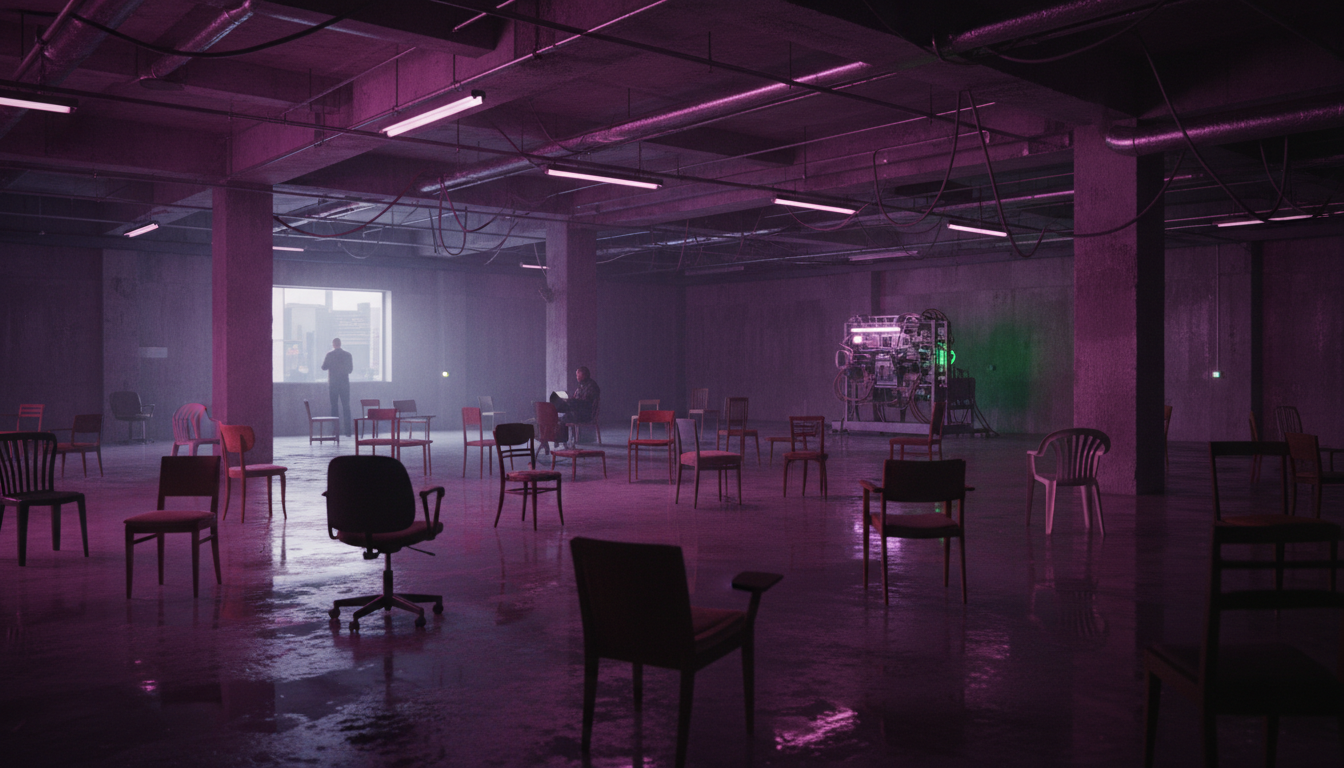
They argued about the politics for two and a half years because there was nothing else to argue about, and Wren has said that the arguments were better than anything she has heard since and that this is because nobody was going to win anything.
“On the planet, an argument about the index is an argument about what happens next. Somebody is going to act on it. That makes people careful in the wrong way and dishonest in small ways and it makes them hold positions because of who else holds them.
“Up there it could not do anything. There was no next. Forty people on a hull arguing about the register of persons on a planet they could not reach, and it was the most honest political conversation I have ever been in, for exactly that reason.”
What the argument was about is set out because the accounts below have consistently got it wrong.
“It was never about the Anchor. Everybody assumes the argument was about whether taking the Anchor down was justified and it was not, because nobody aboard defended it, including the eleven men who did it.
“The argument was about the index. That is the thing that was underneath, that is what the Severance Line was actually for, and if you take that away the whole of it is unintelligible.”
The index is the register of persons and it decides who officially exists.
“Everybody on that planet is in it. You are entered at birth and you are in it for life and it is how you are allocated to, treated by, and accounted for. It is not sinister and I want that first because I have never once thought it was.
“It is also a document. Documents have holders. A person who is not in it does not exist administratively, and the people who decide who is in it are not chosen by anybody and cannot be removed by anybody, and that was true then and I believe it is still true.”
The best version of the argument was made by a nineteen-year-old and Wren has published it entire and has never added a word to it.
Piet Osborne made it in the fourteenth month, in the galley, to about eleven people, having said almost nothing about politics for a year.
“I do not think he was right,” Wren wrote. “I want that stated before I quote him, because I have watched this passage get used and I am not going to be the person who let it stand alone.”
“I have listened to all of you for fourteen months and everybody keeps arguing about whether the index is good, and it is good, and that is not the question.
“My sister is in it. I am in it. Everybody I have ever met is in it and none of us has ever been harmed by it and I have never met anybody who has.
“What I want somebody to answer is this. There are about four people who can put a person in or take a person out. Nobody chose them. There is no way to remove them. There is no procedure by which the whole planet, if it agreed tomorrow, could change one line of how it works.
“And everybody says that is fine because they have never abused it. They have not. That is true and I believe it.
“A clean record is not the same as a mandate. That is all I am saying. I am not saying they are bad and I am not saying pull it down. I am saying that four generations have gone by and nobody has ever been able to say no to it, and that the reason nobody has ever said no is not that everybody agrees, it is that there is no way to.”
“And nobody answered him,” Wren wrote. “There were about eleven people in that galley including two of Rahn's detail and a cadet who thought the coup was indefensible, and nobody had a reply, and I did not have one either, and I have not found one in forty years.
“That is the most frightening thing that happened on that hull and it happened at a table over a meal and nobody raised their voice.”
What the argument did not do is the section she is most careful about.
“It changed nobody's position. Not one, in thirty months, that I could detect.
“Four of the eleven cadets thought the Severance Line had been right about the problem and wrong about everything after it, and they thought that on the first day and they thought it on the last.
“Six thought the whole thing was indefensible from end to end. Rahn's detail did not argue at all, ever, in thirty months, with anybody.
“And I watched forty people talk about it perhaps four hundred times and not one person moved, and I have come to think that is what an argument mostly is, and that we tell ourselves otherwise because the alternative is unbearable.”
Vance was present for a great many of these conversations and never once participated.
“He ate in that galley. He was at that table when Osborne said it, about four seats down, and he did not look up.
“A boy of nineteen made the best case anybody has ever made for the thing that man had brought down a planetary structure over, in front of him, and he went on eating, and afterwards he took his tray and went.
“I have four readings of that and I am not going to publish any of them.”
The one thing that did change is in the last section and Wren gives it as a fact rather than a conclusion.
“The cadets stopped being frightened of the question. That is the change and it is the only one.
“They came aboard at eighteen and nineteen and twenty-three having been taught that this was not a thing you discussed, and after two and a half years of discussing it constantly with people on the other side of it, they were not frightened of it any more.
“Nine of the eleven went into public work below within four years. Four of them served on councils. Two of those have said in print that it was the galley, and neither of them has ever said what they concluded, because none of us concluded anything.
“An argument nobody wins, had every day for two and a half years by people who cannot avoid each other, does not produce agreement. It produces people who are not afraid of the subject, and I have decided that is worth more.”
Wren has said, quite firmly, that she has watched the Osborne passage get used at four public sessions on the second continent and that she has objected each time and has been overruled each time and has stopped attending.
“It is a nineteen-year-old speaking in a galley in the fourteenth month of a stranding to eleven people who could not do anything about anything, and it was not a position paper and he did not intend it to be quoted and he was dead before it was.
“I published it because it was the best thing anybody said up there and because burying it would have been a decision I had no right to make. And I have watched it become a thing people wave, which is exactly what he was warning about, and I do not know what else I could have done.”
She has added, in every printing, the sentence she added the first time, which is that she does not agree with him, and she has said that about half the people who quote him omit it and that she has stopped writing to them about it.
Nobody moved. Not one position, in thirty months. Wren watched for it.
The galley arguments are not recorded anywhere, because nobody was recording anything and there was no reason to, and everything known about them comes from four accounts written decades afterwards by people who were remembering conversations they had had four hundred times and could no longer separate, and Wren has been careful to say so at the head of every version she has published.
Osborne's speech is about four hundred words as Wren recorded it and she wrote it down the same night from memory, and she has always said that this means it is roughly and not exactly what he said, and that four other people who were in that galley have confirmed the substance and that two have corrected her wording in small ways which she has incorporated.
Nine of the eleven cadets went into public work below within four years and four of them served on councils and two have said in print that it was the galley, and Wren has said, quite deliberately, that she does not think this proves anything and that eleven young people who spend two and a half years being taken seriously by adults will generally go into public work wherever they have been.
She has added that Osborne would have been one of them, and that he was twenty-four when they came down, and that she has thought about which council for about forty years.
Forty aboard. Nobody died. Not one.
Everything else known about the two and a half years was collected afterwards, mostly decades afterwards, from about thirty people who had each experienced a slightly different version of the same thirty months and who had all by then read one another's accounts, and every published version including this one is therefore a reconstruction, and all four of the principals have said so at the head of their own.
Forty names. One rota. Thirty months.
The hull is still in the orbit it acquired when the clamps opened, holding an atmosphere at nineteen degrees in the forward outer compartments, with a rota sheet pinned to a bulkhead in the forward transfer and eight hundred and forty scratches on the galley wall and nine miles of sealed racking behind it all, and nobody has been aboard in forty years and there is no proposal that anybody should be.
Chapter 14 — What They Were For
↑ Back to ContentsFocus: Dagg.

The demolition detail's actual orders were discussed exactly once, in the sixteenth month, and it lasted about eleven minutes, and Dagg wrote it down that night because she understood while it was happening that nobody else was going to.
“Sixteen months. That is the number I want at the front. Sixteen months of eleven men eating in the same galley as everybody else and nobody had asked them what they had been told to do.
“Not out of delicacy exactly. Out of the thing that is not delicacy and that everybody who has been in a small confined group knows, which is that there are questions you do not ask because you have to live with the answer for an unknown number of years.”
It came up sideways, over a repair, which she has said is how everything came up.
“One of the cadets asked Rahn how long the tether root job had taken. That is all. A technical question from a boy who was interested in demolition and who had been working beside the man for a year.
“And Rahn said six days. And the boy said that seems fast. And Rahn said it was not fast, it was six days for the root and we had been on the rest of it for four months.
“And the galley went quiet, because everybody in it worked out at the same moment that there had been a rest of it.”
What the rest of it was is four lines in Dagg's hand and it is the whole chapter.
“They had been staged for four months on a programme of eleven objects. The tether root was the eleventh and it was the last and it was the only one they did.
“The other ten are relay stations, two water control installations, four grid nodes and three signal masts, all of them on the second and third continents, all of them planned, surveyed and provisioned for.
“None of them was touched. The coup failed on the fourth of that month and the detail was aboard the hull and the clamps opened and the other ten sat where they were.
“Nobody up here did the worst of it. Everybody up here was going to.”
Rahn said one more thing and then stopped, and it is the only substantial thing he said in thirty months, and Dagg has published it exactly.
“You want to know whether we would have done them. We would have done them. That is what the four months were for and I had signed for the material and I had walked two of the sites myself.
“I am not going to tell you it would have been bloodless because I do not know and neither does anybody else. Two of those installations have people in them at night.
“And I am not going to tell you I have thought better of it, because I have not thought better of it and I have not thought worse of it. I did the eleventh and the eleventh went as designed. That is the whole of what I have.”
Then he went back to the repair, and nobody asked him anything else, then or ever.
“Nobody followed up,” Dagg wrote. “Eleven minutes and then a man went back to a bracket and the galley started talking about something else within about four.
“I have been asked whether that was cowardice. It was not. There was nothing to follow up with. He had answered completely and honestly and there was no further question that was not simply a way of making him say it again.”
What it did to the cadets is the second half and it is the harder half.
“Four of the eleven had spent sixteen months believing, quietly and without saying so, that the men they were living with had done a thing that could be understood as narrow. One structure. A tether. Property.
“And in eleven minutes they found out there had been ten more and that two of them are staffed at night, and that the only reason those ten are standing is that the coup failed on a Tuesday.
“Piet Osborne stopped eating in that galley for about a fortnight. He did not say why and I did not ask him and he came back and he was polite to Rahn for the remaining fourteen months and he never once spoke to him about it again.”
Wren's medical note for that fortnight is one line and does not name anybody.
“Four patients, low mood requiring attention, all in the same nine days, all following a conversation. No treatment given. Talked to all four. They are not ill.”
What Dagg concludes is nothing and she is explicit about that and it is the last section.
“I am a quartermaster's clerk. I do not have a finding.
“What I have is that eleven men were four months into a programme of eleven objects and did one, and that the other ten are standing today with people in them, and that this is entirely because of the timing of a failure and has nothing whatever to do with anybody's character.
“And that those eleven men then spent two and a half years on a rota with us, and built a water polish stage in four days that kept forty people alive, and that Rahn came and reported a fact and waited to be used.
“Both of those are the same men and I have never found an arrangement of that which resolves, and I have stopped trying, and I would ask anybody reading this in four hundred years to notice that I have stopped rather than that I have concluded.”
Rahn lived to be eighty-one and gave no further account of any of it and refused about nine requests, and the three lines in the archive are the whole of what he left, and Dagg has said that she thinks this was deliberate and considered rather than sullen.
“He was not a silent man. He talked in that galley for thirty months about work and food and a chair he was building.
“He was silent about one thing, entirely, for the rest of his life, and he told a cadet the truth about it in eleven minutes when the cadet asked a technical question, and then he never spoke about it again.
“I have decided that is a man who worked out what he owed and paid exactly that and not one thing more, and that this is either admirable or the coldest thing I have ever watched and that I do not have to choose.”
The other ten objects are all still standing and are named in the public record of the reclassification, and about four of them have had plaques put on them since by people who were not born when it happened, and Dagg has said that she has visited none of them and does not intend to.
Eleven objects. Four months. One done. Ten standing.
Eleven minutes in a galley. Then a bracket. Then nothing, ever again.
The eleven objects are listed in the reclassification document by name and location, and about four of them have had plaques put on them since by people who were not born at the time, and the plaques give the date and the fact that the programme was not completed, and none of them gives the reason, which is that a coup failed on a Tuesday and eleven men happened to be aboard a hull when the clamps opened.
Rahn's three lines are reproduced in every published account of the stranding and Dagg has said that this is the only time she has ever seen a man's entire recorded position on the largest thing he ever did fit comfortably inside a single paragraph.
“Nothing to add. That is how it opens. A man opens his only statement with nothing to add and then adds three lines and then stops for sixty years.
“I have read it about four hundred times and I have never once decided whether it is evasion or the most complete honesty anybody managed up there, and I have stopped expecting to.”
Thirty months. Eight thousand shifts. Four absences.
The archive holds every document produced aboard that hull, which is four hundred rota sheets, a plant log, a med bay log of eight hundred and forty-one entries, a stock file of eleven hundred verified volumes, four thousand pages of received transcript, a personal log of about eleven thousand words, a marriage document with forty names on it and no legal standing, and a cadet's notebook of naked-eye observations, and there is nothing else, and there was never going to be.
Sixteen of the forty were still alive at the fortieth anniversary and about nine of those gave accounts, and the four that this record leans on are Bex's, Dagg's, Halloway's and the three lines of Rahn's, and the twenty-four who never gave one are named in the appendix and their silence is recorded as a fact rather than as an absence.
Four fields. Nine characters. No key.
Two and a half years. Nine kilos each.
The four hundred thousand shielded exoskeletons behind the aft bulkheads of the forward outer quarters were entered into the public index on the second continent in the ninth year after the crossing, under a nine-character stores code with a mass and a date, on a shelf anybody could have read, and they are entered there still, and about four people have ever looked.
Dagg has said, entirely evenly, that she deliberately recorded the eleven minutes that night precisely because she understood while it was happening that nobody else would, and that she was consciously aware of being the only person in the galley who was going to write anything down, and that she has never quite forgiven herself for having been that person rather than simply somebody eating.
Chapter 15 — Two Hundred Days
↑ Back to ContentsFocus: Bex.
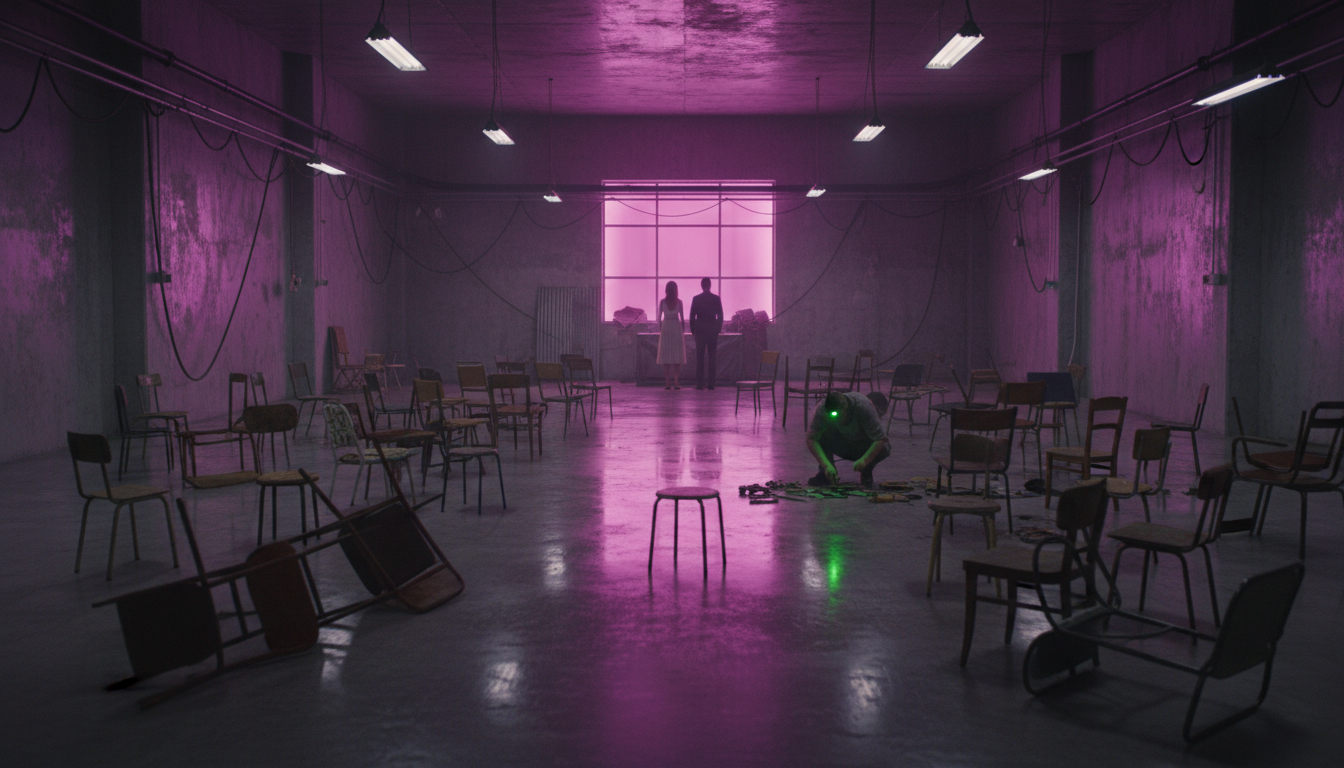
Two hundred days went by in the middle of it in which nothing happened at all, and Bex has said for a hundred years that this is the part of the account he cares about and that nobody has ever wanted to hear it.
“Everybody wants the clamps and the water and the vote. Those are four weeks out of a hundred and thirty.
“The rest of it is this, and this is what being stranded actually is, and if somebody in four hundred years is stranded anywhere then this is the chapter that will be of any use to them.”
The rota ran. That is first and it is most of it.
“Four hundred sheets. Galley, filtration, haul, plant walk, med bay support, whatever else. Every day, for two hundred days, and then for two hundred more.
“Nobody missed a shift in that stretch. Not one, out of about eight thousand individual shifts. I have checked the sheets and there are four absences in two hundred days and all four are logged as illness and all four are in Wren's book as well.”
The galley became the centre of everything, which nobody planned.
“There was one and it was in the forward outer and it was warm and it was the only compartment where everybody went every day.
“The cook was a woman called Petra Ilves who had come aboard because the galley needed running and who had never been told to be there by anybody, and she ran it for thirty months for forty people out of nine-year-old preserved stock, and about half of what she produced was extremely good.
“She is the most important person in this account and she is in nobody's version of it, including, until now, mine.”
Ilves's own account is four lines and she gave it reluctantly at seventy.
“It was four things for about the first year and then I got the substrate media working in one of the agricultural bays and we had something green from about the fourteenth month, not much, about enough for nine people a week.
“There is nothing to say about it. I cooked. People ate. Some of them said thank you and some of them did not and the ones who did not were mostly the ones who were finding it hardest, which you learn.
“I did about two thousand meals a month. I would like it written down that the preserved stock from the founding era is better than anything you can buy on the third continent now and that nobody believes me.”
There was a wedding in the nineteenth month and nobody had the authority to conduct it.
“Two of the signals team. They had known each other four years before any of it and it was not a stranding thing and both of them have been slightly offended for forty years that people assume it was.
“And there was nobody aboard who could marry anybody. No registrar, no authority, no index entry possible, no way to file it and nobody below who would have recorded it if we had.
“So they did it anyway, in the galley, with forty people in it, and Ilves cooked, and Dagg wrote out a document by hand because Dagg writes things out by hand, and everybody signed it including Vance.
“It is the only document in existence with all forty names on it. It has no legal standing of any kind, then or now, and they have it framed.”
There was a grudge that lasted a year and Bex has always refused to say what it was about.
“Two people stopped speaking in about the ninth month and did not speak for eleven months and then did.
“It was about something small. It was extremely small and I know what it was and I am not going to write it down, because both of them are alive and they have both told me it is the most embarrassing thing that has ever happened to them.
“What I will say is that forty people watched two people not speak for eleven months in a space where you cannot avoid anybody, and not one person intervened, and I think that was correct and I have never been sure.”
What people did with the hours is the part he spends longest on.
“Four hours a week of plant. Twelve of rota. That leaves about fifty and you have to do something with fifty hours a week for a hundred and thirty weeks.
“Nine of them walked. That sounds ridiculous and it is what happened. It is a twenty-mile hull and about eight miles of it is habitable and people walked it, for hours, alone, and about nine of the forty did it regularly and four did it every single day.
“Osborne read. There was a library aboard, in the sense that a colony hull has everything, and he got through a great deal of it and he asked me about four hundred questions over two and a half years and about a hundred of them I could answer.
“Rahn's detail made things. Furniture, mostly, out of packing material. There is a chair in a museum on the second continent that eleven demolition men made out of a crate in the second year and it is a very good chair.
“And two people did nothing at all. I want that in, because it is true and because every account of a stranding leaves it out. Two of the forty did their shifts and ate and slept and did nothing else for two and a half years, and they came down as well as anybody, and Wren has said they were not ill and I believe her.”
The mark on the bulkhead is the last thing and Bex has said he does not know who started it.
“Somebody put a scratch on the aft bulkhead of the galley in the second week and somebody put another one the next day and it just continued.
“Nobody was responsible for it. It was not a rota job. It was done by whoever noticed it had not been done, for eight hundred and forty days, and it never once got missed, and I have asked about thirty people over forty years who did it and every one of them has said they did it sometimes and none of them has said they did it always.
“It is still there. The hull is still up there and the scratches are on the bulkhead and there are eight hundred and forty of them and then they stop.”
The chair is in a museum on the second continent and is catalogued as furniture, workshop-made, second continent, unattributed, and Bex spent about nine years trying to get the attribution corrected and eventually gave up.
“Eleven men made it out of a crate in the second year of a stranding and it is a very good chair and the label says unattributed.
“I wrote four times. The difficulty is that the museum requires a maker's name and there are eleven of them and none of them would give one, including Rahn, who wrote back to me personally once, in four lines, to say that it was a chair and that eleven people made it and that he did not see what the difficulty was.”
Petra Ilves died at eighty-nine on the second continent and about thirty of the forty were at the funeral, which is very nearly all of them who were still alive, and Bex has said it is the only time all of them were ever in one room again.
“Nobody organised it. Somebody told somebody and it went round in about four days.
“She cooked for us for thirty months out of nine-year-old stock and she was not on any manifest and nobody had ordered her aboard and she came because the galley needed running, and thirty people crossed a continent for her, and there is not one line about her in any published account of the stranding except mine.”
Four hundred sheets. Eight thousand shifts. Four absences, all logged.
A wedding with no authority. A grudge that lasted eleven months. Two people who did nothing at all.
Eight hundred and forty scratches on a bulkhead. Nobody was responsible for them.
The two hundred days are the part of the record with the least in it and the most detail, because Bex kept a personal log for the whole of the stranding and about nine tenths of it is those two hundred days, and it is mostly meals and repairs and who walked where, and he has said that he wrote it because a man of fifty-one with fifty spare hours a week has to do something and that he did not expect anybody to read it.
Bex's personal log for the two hundred days runs to about eleven thousand words and is almost entirely about meals, repairs, the weather inside the hull, which does not vary, and who walked where, and about nine people have read it, and four of them have said independently that it is the best thing he wrote.
Everything else known about the two and a half years was collected afterwards, mostly decades afterwards, from about thirty people who had each experienced a slightly different version of the same thirty months and who had all by then read one another's accounts, and every published version including this one is therefore a reconstruction, and all four of the principals have said so at the head of their own.
Forty names. One rota. Thirty months.
The four hundred thousand shielded exoskeletons behind the aft bulkheads of the forward outer quarters were entered into the public index on the second continent in the ninth year after the crossing, under a nine-character stores code with a mass and a date, on a shelf anybody could have read, and they are entered there still, and about four people have ever looked.
Chapter 16 — Somebody Asks Vance Why
↑ Back to ContentsFocus: Wren.

Wren asked him in the twenty-second month, having worked up to it for about a year, and he answered a different question courteously and completely, and she left knowing less than she had come in with.
“I had been going to do it since about the tenth month. I want the year on the record because people assume it was impulsive and it was the least impulsive thing I have ever done.
“I rehearsed it. I had four versions of the question and I discarded three, and the one I kept was the flattest and I chose it deliberately because I did not want to give him anything to be courteous about.”
She did it on filtration, which is a two-person job, because it was the only place on the hull where two people were alone for two hours by rota rather than by arrangement.
“That was also deliberate. If I had gone to find him it would have been an occasion. On filtration it is a Tuesday.”
The question is nine words.
“Why did you do it. I am asking properly.”
“And he stopped what he was doing, which he had not done when I asked about the retrieval eight months earlier, and he turned round and he gave me his whole attention, which I had never had before and did not have again.
“And he said: I am going to answer a question you have not asked, because I do not think you want the one you have asked and I think in forty years you will be glad.”
What he said is four paragraphs and Wren wrote it down within the hour and has published it whole and has refused for forty years to interpret one word of it.
“You are asking me to give you a reason, and a reason would be a comfort to you, and I am not going to give you one, because I have watched men give reasons and every one of them was a man deciding afterwards what he had been.
“What I will tell you is what the question actually is, because you are twenty-seven and you will be asked it about a hundred times in your life and nobody will have told you.
“The question is not why a person does a thing. That is available to anybody afterwards and everybody has an answer and about half of them are true.
“The question is what a person does on the day it stops working. Because it always stops working. Every arrangement anybody has ever made stops working, usually in an afternoon, and there is a very great deal written about people who were right and almost nothing about what they did at four o'clock on the day they were finished.
“You have been watching me for twenty-two months. That is what you have been watching. Not a man with a reason. A man on the day after, for six hundred and forty days.
“That is what I have got and it is not what you came for.”
“And then he turned round and went back to the housing,” Wren wrote, “and we finished the filtration, and it took another forty minutes, and neither of us said anything else, and I have never spoken to him again about anything that was not a rota.”
What she concluded is nothing and she is exact and unhappy about it.
“I have four readings and I have had forty years.
“One is that he was telling me, in the only way available to him, that he had been wrong and had known since the fourth of that month and had spent two and a half years being the thing a person is afterwards.
“One is that he was telling me nothing of the sort and was making an observation about consequence that would be equally true of a man who thought he had been right.
“One is that he was managing me, gently and expertly, and gave a twenty-seven-year-old medic something interesting enough to carry away so that she would stop.
“And one is that all three are true at once and that he would not have been able to separate them either.
“I cannot choose. I have not been able to choose for forty years and I have stopped expecting to and I am publishing all four so that nobody can say I preferred one.”
Dagg's note, added at Wren's request, is four lines.
“She asked. That is the whole of it and it is more than the rest of us managed.
“Thirty-nine people spent two and a half years in a hull with that man and one of them asked him a direct question, once, at twenty-seven, on filtration, and got an answer that is either everything or nothing.
“I did not ask him. Bex did not. Rahn did not and Rahn had the most right to. Eleven cadets did not and four of them were there because of him.
“A young woman worked up to it for a year and then did it on a Tuesday, and the rest of us let her, and I have been ashamed of that for forty years and I have never told her.”
That is the end of Part Two. Twenty-two months down, eight to go, forty people alive and well on a hull that had needed nothing from them for two hundred days, four hundred and eleven kilometres above a planet that had by then been arguing about them in public for eighteen months and was about to finish.
Wren has said, entirely plainly, that she has been asked at four public sessions to say which of the four readings she believes and has refused four times, and that the refusal is now the thing she is best known for and that she finds this ridiculous.
“I am a medic. I have delivered a child and treated a crush injury and written nothing to report four hundred and nine times, and what I am known for is declining to interpret nine sentences.
“And I will go on declining, because the moment I choose one it becomes the reading, because I am the only person who was in the compartment, and a whole planet's understanding of that man would then rest on what a woman of twenty-seven thought about a conversation on filtration.”
She has said that she believes the four readings will still be four in four hundred years and that this is the correct number and that she has arranged it deliberately.
Nine words. One answer. Four readings. Forty years.
She asked. Thirty-nine other people did not.
The filtration compartment is about nine metres by four and the job takes two people two hours and comes round on the rota about once a fortnight, and Wren and Vance were paired on it eleven times over two and a half years, and the conversation happened on the ninth of those, and the other ten were spent almost entirely in silence, which she has said was neither awkward nor companionable and was simply two people doing a job.
Wren was twenty-seven when she asked and she has said that this is the fact she would most like people to hold, because it explains the year of working up to it and it explains why she accepted the answer she got and did not press, and because a woman of forty would have pressed and would probably have got nothing better.
“He gave a twenty-seven-year-old the most interesting thing he had, courteously, and she took it away and did not ask again, and I have wondered for forty years whether that was exactly what he intended and whether it worked, and I have never resented it and I am not sure I should not.”
Nine miles of racking. Eleven hundred verified. None opened.
Forty aboard. Nobody died. Not one.
The archive holds every document produced aboard that hull, which is four hundred rota sheets, a plant log, a med bay log of eight hundred and forty-one entries, a stock file of eleven hundred verified volumes, four thousand pages of received transcript, a personal log of about eleven thousand words, a marriage document with forty names on it and no legal standing, and a cadet's notebook of naked-eye observations, and there is nothing else, and there was never going to be.
Sixteen of the forty were still alive at the fortieth anniversary and about nine of those gave accounts, and the four that this record leans on are Bex's, Dagg's, Halloway's and the three lines of Rahn's, and the twenty-four who never gave one are named in the appendix and their silence is recorded as a fact rather than as an absence.
Eleven days. Sixteen machines. One job.
Two and a half years. Nine kilos each.
Nobody voted for us. They voted for the line.
The hull is still in the orbit it acquired when the clamps opened, holding an atmosphere at nineteen degrees in the forward outer compartments, with a rota sheet pinned to a bulkhead in the forward transfer and eight hundred and forty scratches on the galley wall and nine miles of sealed racking behind it all, and nobody has been aboard in forty years and there is no proposal that anybody should be.
She has said, quite deliberately, that the nine words have been reprinted about four hundred times and that she reads them roughly once a year and that they have not changed and neither has she.
The compartment is still there and the housing they were working on is still in it, and Wren has said that she has been sent a photograph of it twice by people who thought she would want one and that she has not looked at either.
Chapter 17 — The Vote Below
↑ Back to ContentsFocus: Dagg.

They heard the planet argue about them for eighteen months, in fragments, out of order, and Dagg has said that being debated as a category is the strangest thing that has ever happened to her and that she would not wish it on anybody.
“We had one signal link and six people running it and a receiver that could pull down public transmission when the geometry allowed, which was about nine hours in every twenty-four and not the same nine.
“So we got about a third of everything, in pieces, four to nine hours late, and about half of what we got was somebody responding to something we had not heard.”
What they heard is set out as she recorded it, which is as fragments, because that is what it was.
A council session on the second continent, month nine, in which a man said the figure was twenty months of continental output and was not contradicted.
A public argument in month eleven about whether the eleven cadets were a separate case from the other twenty-nine, which ran for about six weeks and which Dagg has called the single worst thing she ever had to listen to.
“They were working out whether to bring down some of us.
“Not maliciously. It is the obvious question and it is the humane one and I would have asked it. Nine people fit in a shuttle. There are eleven cadets who did not know what they had signed. One trip instead of five is four months of output instead of twenty and it is arguably defensible.
“And I sat in a signals compartment with a boy of twenty-one who was in that category listening to a planet decide whether he was in it.”
How the forty of them handled that is the middle of the chapter and it is the thing that has been most misreported.
“We did not discuss it. That is the fact and every account below has us agonising over it in the galley and we did not.
“It was raised once, by one of Rahn's detail, who said in about the twelfth month that if they offered nine places the eleven cadets should draw for them and the rest of us should shut up.
“Nobody disagreed and nobody agreed and the subject was never raised again by anybody in eighteen months, and I have thought about that silence more than about anything else that happened up there.”
Piet Osborne asked her to stop relaying it in the fourteenth month.
“He came to the signals compartment and asked me, very politely, to stop posting the transcripts in the galley.
“And I said I would not, and I gave him my reason, which is that a person is entitled to know what is being said about them and that the alternative is six people deciding what thirty-four people can hear.
“And he said: I know, that is why I am asking and not telling. And he thanked me and went, and the transcripts went up the next morning and every morning after and he read them.”
What being a category does to a person is the section Dagg found hardest to write and it is four paragraphs.
“They stopped using names in about the fourth month. Not deliberately; the argument simply got large enough that it needed a shorthand, and the shorthand was the forty.
“And once you are the forty you are not people, you are a number with a position on it, and about half the planet was for the forty and about half was against and everybody was extremely reasonable.
“I listened to a woman on the third continent say that the forty had made their choice, in a voice that was not cruel, on a Tuesday, and I was doing an inventory of spares at the time and I did not stop.
“Twenty-nine of the forty had made a choice. Eleven had signed a transfer form. One was a cook. And there is no version of a public argument at that scale in which that distinction survives, and I do not blame the woman on the third continent and I have never been able to stop hearing her.”
The one thing they sent down in that eighteen months is four lines and Dagg wrote it in the fifteenth month after nine drafts.
“We are receiving about a third of the public argument, four to nine hours late, and we are reading all of it.
“We are not writing to influence it. We have said what our position is once, in the sixth week, and we have not added to it and we are not going to.
“We would ask one thing, and it is not about retrieval. When the question of a partial retrieval is discussed, please use the word cadets rather than the word children. Four of the eleven are over twenty-one. All of them can hear you.
“I. Dagg, quartermaster's section. Speaking for nobody, as usual.”
“Speaking for nobody as usual,” she said, forty years later. “I put that in because I was angry, which is the only time in thirty months I let anything of the kind into a transmission, and I have never regretted it and I have never been proud of it.
“They changed the word. Inside about a month, right across the argument, on all three continents. Nobody announced it and nobody credited it and I do not know that anybody read my message at all.
“And I have spent forty years deciding whether that is the only thing I achieved up there or the only thing anybody could have.”
Dagg has said, quite deliberately, that she kept every transcript and brought all of them down and that they run to about four thousand pages and that she has never been able to throw one away.
“Eighteen months of a planet arguing about us, in fragments, out of order, four to nine hours late. It is the single largest object in my papers and about nine people have ever asked to see it.
“Two of them were historians and four were relatives of somebody who was aboard and three were people who wanted to find a passage that would prove something, and I gave all nine of them the whole of it, unsorted, exactly as it came off the receiver, because that is how we got it and there is no honest way to tidy it.”
The six-week argument about whether the eleven cadets were a separate case ended without resolution, as everything did, and Dagg has said that the ending is the part that has stayed with her.
“It did not conclude. Nobody decided against it and nobody decided for it. It ran six weeks and then the argument moved on to something else, the way arguments do, and about four months later somebody proposed the machines and it was never raised again.
“A planet spent six weeks working out whether to bring down eleven young people and left the question open, and then solved it accidentally by building six million machines for other reasons, and every one of us came down together, and nobody below has ever noticed that the humane answer arrived sideways.”
Piet Osborne read every transcript that went up in the galley for eighteen months and never once commented on one in Dagg's hearing, and she has said that she watched for it deliberately and that there was nothing to see.
A third of everything, four to nine hours late, out of order.
Names for four months. Then the forty. Then a category.
They changed the word. Nobody announced it. Nobody credited it.
The four thousand pages of transcript are in an archive on the second continent, unsorted, exactly as they came off the receiver, with the gaps where the geometry was wrong and the overlaps where somebody had recorded the same fragment twice, and Dagg has refused four separate offers to have them collated on the grounds that the disorder is the honest record of how it was actually received.
The transcripts stop abruptly in the twenty-fourth month, four days after the programme vote, and Dagg has said that this is not because she stopped collecting them but because the planet stopped arguing about them entirely and moved on to arguing about the machines, and that the silence in the record afterwards is louder than the eighteen months that preceded it.
“Eighteen months of a planet discussing us, constantly, on three continents, and then four days after the vote there is nothing, ever again, and there are still eight months to go before anybody comes.
“We had stopped being a question. It is the correct outcome and it is what we wanted and I sat in a signals compartment in the twenty-fifth month with a receiver that had nothing on it about us and I did not enjoy it at all.”
Sixteen of the forty were still alive at the fortieth anniversary and about nine of those gave accounts, and the four that this record leans on are Bex's, Dagg's, Halloway's and the three lines of Rahn's, and the twenty-four who never gave one are named in the appendix and their silence is recorded as a fact rather than as an absence.
Four fields. Nine characters. No key.
Nobody voted for us. They voted for the line.
The four hundred thousand shielded exoskeletons behind the aft bulkheads of the forward outer quarters were entered into the public index on the second continent in the ninth year after the crossing, under a nine-character stores code with a mass and a date, on a shelf anybody could have read, and they are entered there still, and about four people have ever looked.
Dagg has said, quite firmly, that the eighteen months of transcript are the single hardest thing she has ever had to file, precisely because a quartermaster files by category and there is no category for a planet politely working out what you are.
Chapter 18 — Six Million
↑ Back to ContentsFocus: Bex.
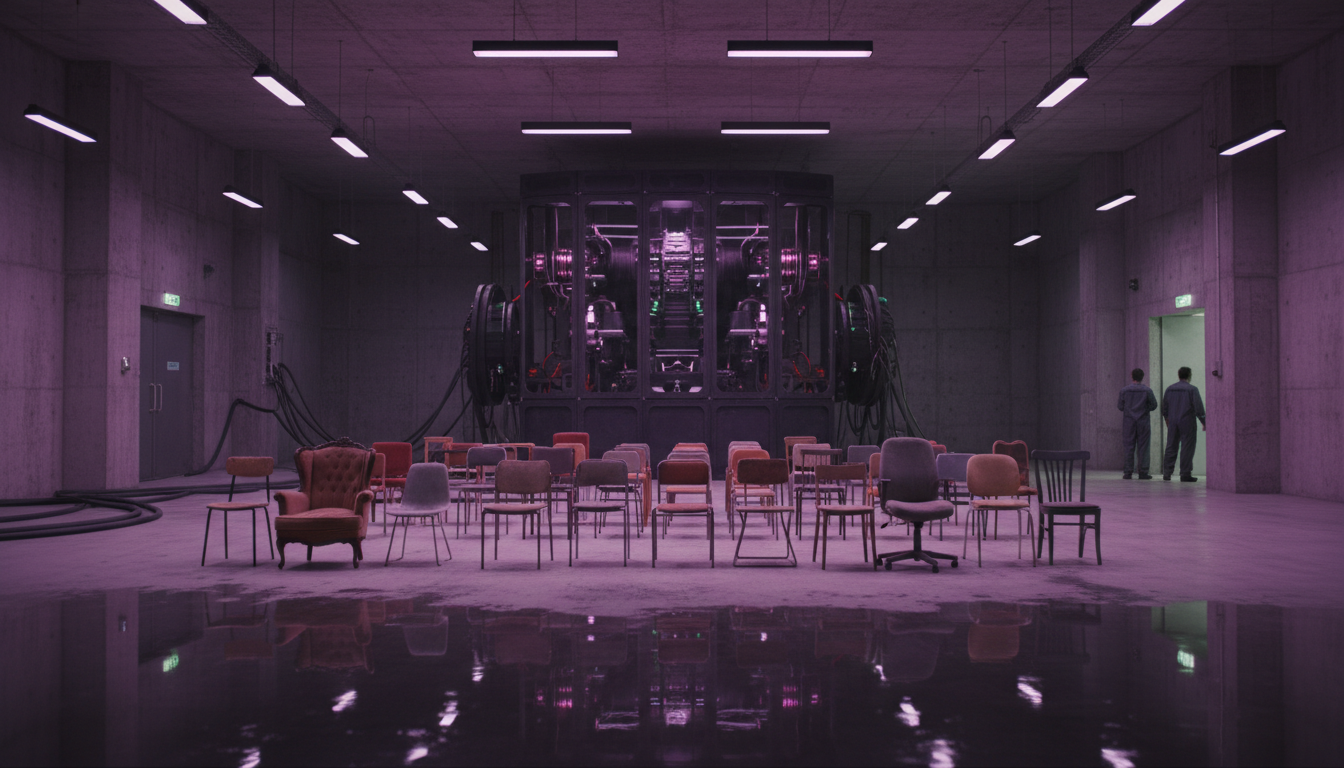
The vote went through in the twenty-fourth month and it was not a vote about the forty of them, and Bex has said that understanding that is the difference between reading this story correctly and reading it as a rescue.
“Nobody voted to bring us down. I want that first and I have had to say it about four hundred times.
“They voted to build six million machines. We were the reason and we were not the subject, and the difference is everything, and it is why it passed.”
The proposal is four lines and it had been circulating for about eleven months before it went anywhere.
“A general-purpose autonomous lifting and construction unit. Cheap, mass-produced, no crew, no life support, no re-entry requirement, no vehicle in the sense anybody meant vehicle.
“Because the whole of the retrieval arithmetic was the vehicle. Five trips at twenty months of output is five vehicles-worth of fuel and risk and shielding, and every one of those numbers exists because there are people inside.
“Take the people out and the number collapses. Not by a bit. By about two orders, and everybody who ran it got the same answer, and it had been on paper for a decade because nobody had ever had a reason.”
Piet Osborne asked what would have to change in the sixth week of the first year and Bex has said he thinks about that constantly and does not claim any causation.
“He asked what would have to change and Dagg said the cost of getting up here.
“And about two years later a planet changed the cost of getting up here.
“I am not saying he caused it. He was nineteen and he was on a hull and he never spoke to anybody below about it. About four hundred engineers had that idea before he was born.
“What I am saying is that a boy of nineteen with a page of workings arrived at the correct question in the sixth week and the planet arrived at the same question in the twentieth month, and nothing connects those two facts, and I have never been able to leave it alone.”
Why it passed is the substance and Dagg's analysis is the one that has been used since.
“It passed because it was not about us. That is the whole mechanism.
“If the vote had been retrieve the forty it would have failed and it would have failed decisively, because half that planet did not want to spend anything on Vance and the other half did not want to be told they had to.
“The vote was build a capability. And the capability does the water infrastructure and the polar work and the orbital repair and about four hundred other things that continent had wanted for a decade and could not afford a vehicle for.
“And, incidentally, first, as the demonstration: it goes and gets forty people off a hull.
“Everybody got to vote for the thing they wanted and the forty of us came down as a side effect, and about a third of the people who voted for it would have voted against a straight retrieval, and I have read the sessions and I can name four of them.”
Six million is the number and Bex has always insisted it be given with what it means.
“Six million units. That is not a fleet, it is an industry, and it took about eighteen months to stand up and about four continents' worth of everything.
“And the reason the number is six million and not six hundred is that once you have decided to build the line, the line is the cost, and the units are almost free, and somebody in the fourth week of the programme worked that out and said so publicly and everybody agreed inside about a fortnight.
“A planet built six million machines because forty people it did not like were stuck, and the six million had almost nothing to do with the forty, and about four generations have now grown up with them and could not tell you why they exist.”
What they felt about it aboard is the last section and it is not what anybody expects.
“Relief, obviously, and I am not going to be clever about that. Forty people found out they were coming down and it was the best day since the water and it was better than the water.
“And underneath it, in about four of us, something that took me a year to name and that I did not say to anybody at the time.
“They did not come for us. They built a thing they wanted and used us as the reason and the first job, and every single step of that was honest and public and correct, and I have never once been able to feel grateful in the shape a person is supposed to feel it.
“Wren said it in the galley about a fortnight later and she said it lightly and about nine of us laughed. She said: we are the pilot programme.
“We were. That is exactly what we were and it is why we are alive.”
Bex has said, entirely evenly, that the phrase pilot programme has followed the forty of them for four decades and that about half of them find it funny and about half do not and that the split does not follow any line he can identify.
“Wren said it lightly in a galley and about nine of us laughed and it was in a published account within four years and it has been the standard description ever since.
“It is accurate. That is the trouble with it. We were the demonstration case for a capability programme and the demonstration was chosen because it was the one job the whole planet could understand, and every single person involved was honest about that at the time and said so in public.”
The six million figure was reached in the fourth year and exceeded in the seventh and nobody has ever counted them properly since, and Bex has said that this is the correct outcome for a thing that worked.
“Nobody counts them. There is no register of them, there never was, and about four generations have now grown up with the things doing the water and the polar work and the orbital repair.
“I have asked about nine people under thirty what they are for and not one of them mentioned us and about half of them did not know the programme had a first job.”
Dagg has said, quite firmly, that she has read the sessions and can name four people who voted for the programme and would have voted against a straight retrieval and that she has never published the names and never will.
Not a vote about them. A vote about a capability. That is why it passed.
Six million units. Eighteen months. Four continents.
We are the pilot programme. She said it lightly and about nine of us laughed.
The programme's own founding document runs to about nine hundred words and does not mention the forty of them anywhere except in a single subordinate clause describing the first operational task, and Bex has said that he read it about eighty years later expecting to be wounded by that and was not, and that it is the correct way to write a founding document for a capability that is going to outlive everybody involved by four hundred years.
Bex has said, quite deliberately, that the honest description of the programme vote is that a planet solved a problem it cared about and picked up forty people it did not care about on the way, and that he has been asked about four hundred times to put it more warmly and has refused every time.
“A warmer version would be a lie and it would be a lie in the direction that flatters everybody, including us, and there are enough of those.”
Thirty months. Eight thousand shifts. Four absences.
Everything else known about the two and a half years was collected afterwards, mostly decades afterwards, from about thirty people who had each experienced a slightly different version of the same thirty months and who had all by then read one another's accounts, and every published version including this one is therefore a reconstruction, and all four of the principals have said so at the head of their own.
Sixteen of the forty were still alive at the fortieth anniversary and about nine of those gave accounts, and the four that this record leans on are Bex's, Dagg's, Halloway's and the three lines of Rahn's, and the twenty-four who never gave one are named in the appendix and their silence is recorded as a fact rather than as an absence.
Forty names. One rota. Thirty months.
Two and a half years. Nine kilos each.
The hull is still in the orbit it acquired when the clamps opened, holding an atmosphere at nineteen degrees in the forward outer compartments, with a rota sheet pinned to a bulkhead in the forward transfer and eight hundred and forty scratches on the galley wall and nine miles of sealed racking behind it all, and nobody has been aboard in forty years and there is no proposal that anybody should be.
Bex has said, entirely plainly, that he has spent about eighty years correcting people who describe the vote as a rescue, and that he expects to lose eventually, and that the correction is nonetheless worth making because the story is considerably better and considerably more useful the honest way round.
The line ran for eighteen months at full rate and then at a reduced one for another nine years, and the units it produced in the first four months are the ones that went up, and about half of those are still in service, and four of the sixteen that came to the hull are still working the polar programme on the third continent.
Six million units. Eighteen months. Four continents. One first job.
Nobody counts them now. There is no register. There never was.
Chapter 19 — The First Thing Anybody Saw One Do
↑ Back to ContentsFocus: Wren.

The first thing anybody on that planet ever saw a H.A.L.O. do was come and get them, and Wren watched it out of a window at the forward end and has said that the strangest part was that it was on a schedule.
“We had the schedule four months in advance. That is what nobody below understands about it, because below it was an event and above it was a timetable.
“Four months of knowing the date. The date did not move. It was published, it was public, it was on the transmission every day, and it did not move by one hour in four months.”
The approach took eleven days and Bex has said that eleven days is the correct figure for matching a tumbling twenty-mile object and that he had estimated nine and was wrong.
“They came up in fours. Not a swarm; four units, then four more, over about six days, and each four did a piece of the work.
“The first four did nothing but measure us for two days. Bearing, rate, axis, the whole of it, independently, from four positions, and I watched them do it and it was better work than mine and I had had two and a half years.”
What they looked like is the part everybody asks Wren about and her answer has never varied.
“Like machinery. I am sorry, and I have been asked four hundred times and I have never had anything better.
“They are not sleek and they are not frightening and they do not look designed to be looked at, because nobody had time to make them look like anything. They look like what they are, which is a lifting frame with thrusters and a grapple, built four million at a time on a line that had been running eighteen months.
“And there were sixteen of them holding station around a twenty-mile hull and the hull was turning and they were turning with it, exactly, for nine days, and that was the thing that stopped my breath and it is not a visual thing at all.”
The docking is described by Bex in about four lines and he has said that the whole of his professional life did not prepare him for how boring it was.
“They matched the rotation and they came alongside the forward transfer and they held there, and a hatch that had not been opened in a hundred and forty years opened, and a frame came through it.
“No impact. Nothing. I have docked things and been docked with and there is always something. There was nothing at all and I was standing about nine metres away with my hand on a rail waiting for it.
“And then there was a machine in the forward transfer of the Ark-Genesis, and the whole of it had taken eleven days and had gone exactly as published.”
Nobody aboard had any clearance and nothing was secret and Wren has said that this is the fact the whole chapter exists to carry.
“There was no exception anywhere in it. Not one.
“The schedule was public. The approach was public. The telemetry was public, live, on open transmission, watched by something over half the planet, and the working was published in advance including the parts that said what would happen if it failed.
“Every decision taken during those eleven days was taken by a named person on the second continent and published within the hour, and there are about four hundred of them and they are all in the record and I have read most of them.
“Forty people were taken off a hull in front of everybody, by machines, on a timetable, with the reasoning attached.”
Piet Osborne is the one Wren writes about here.
“He was twenty-one by then. He had come aboard at nineteen on a transfer form and he had spent two and a half years reading everything on that hull and asking Bex four hundred questions.
“And he stood at the window for the whole of the eleven days. Not continuously; he did his rota. But every hour he had, he was at that window with a notebook, and he wrote down everything he could see them do.
“That notebook is in a museum on the second continent. It is a nineteen-year-old's engineering observations of the first operational deployment of the H.A.L.O. programme, made from four hundred metres away with the naked eye, and about a third of it is correct.
“He is the only person in the world who observed that deployment from the outside and he was inside it.”
What she felt is one paragraph and she has been asked to expand it four times and has refused.
“I was twenty-eight. I had been on that hull since I was twenty-six and I had come aboard on a transfer I did not understand.
“And a machine came through a hatch and I understood, entirely and all at once, that I was going to see my mother, and that it was going to happen on a published date that had not moved in four months, and that a planet I had spent two and a half years listening to argue about me had built six million things and sent sixteen of them.
“I sat down on the deck of the forward transfer. That is all that happened. I sat down on the deck and about four people put a hand on me and then everybody went and did the packing, because there was a schedule.”
Wren has said, entirely plainly, that the eleven days were the only stretch of the thirty months in which nobody argued about anything, and that she noticed it at the time and found it slightly frightening.
“Forty people who had argued about the index every day for two and a half years, and for eleven days nobody said one word about any of it.
“They watched machines. That is all anybody did. There were about nine people at that window at any hour of any day for eleven days and about a third of them had no reason to be there and no understanding of what they were looking at.”
Osborne's notebook was given to the museum by his sister and Wren has said that she was asked to write the label and refused and then wrote it anyway about four years later.
“It says: observations of the first H.A.L.O. deployment, made from aboard, by a cadet of twenty-one, using no instrument. That is the whole label and it took me four years and about nine drafts.
“About a third of what is in it is correct, which for naked-eye observation of an unfamiliar machine at four hundred metres is extraordinary, and there is a page in it where he works out the grapple sequence from watching it four times and gets it exactly right, and I have never been able to look at that page for long.”
Sixteen machines around a twenty-mile hull, turning with it, exactly, for nine days.
No impact. Nothing. He was nine metres away with his hand on a rail, waiting for it.
She sat down on the deck. Four people put a hand on her. Then everybody went and packed.
The eleven days of telemetry are public and complete and have never been taken down, and about four generations of engineering students on three continents have worked through the approach profile as a set exercise, and Wren has said that she has met about nine people who did that exercise at school and did not know until she told them that there had been anybody aboard.
The approach took eleven days against Bex's estimate of nine, and he has said that being wrong by two days about the hardest orbital problem anybody had attempted, from inside, with no instruments beyond what the hull carried, is the piece of arithmetic he is least ashamed of in a fifty-year career.
Wren has said, entirely plainly, that she has been asked about four hundred times what the machines sounded like and that the answer is nothing, because there is no air outside a hull, and that people are consistently disappointed by this and that she has stopped softening it.
Nine miles of racking. Eleven hundred verified. None opened.
The archive holds every document produced aboard that hull, which is four hundred rota sheets, a plant log, a med bay log of eight hundred and forty-one entries, a stock file of eleven hundred verified volumes, four thousand pages of received transcript, a personal log of about eleven thousand words, a marriage document with forty names on it and no legal standing, and a cadet's notebook of naked-eye observations, and there is nothing else, and there was never going to be.
Everything else known about the two and a half years was collected afterwards, mostly decades afterwards, from about thirty people who had each experienced a slightly different version of the same thirty months and who had all by then read one another's accounts, and every published version including this one is therefore a reconstruction, and all four of the principals have said so at the head of their own.
Four fields. Nine characters. No key.
Nobody voted for us. They voted for the line.
The four hundred thousand shielded exoskeletons behind the aft bulkheads of the forward outer quarters were entered into the public index on the second continent in the ninth year after the crossing, under a nine-character stores code with a mass and a date, on a shelf anybody could have read, and they are entered there still, and about four people have ever looked.
Wren has said, quite deliberately, that she wrote the descent chapter last of all, about four years after the rest, because she could not previously get through it, and that she wrote it in an afternoon once she finally could.
Chapter 20 — In the Open
↑ Back to ContentsFocus: Dagg.

Every step of it was in the open and Dagg has spent forty years pointing out that this is the part of the story that actually matters and that nobody has ever found it interesting.
“They did it in public. All of it, every hour, for eleven days, with the working attached and every decision named.
“And the thing that has never once been said out loud on that planet, in forty years, in any session I have read, is that they were doing it on behalf of the people who spent four generations doing the exact opposite.”
What the Severance Line had been is one paragraph and she gives it flatly and without heat.
“Closed rooms. That is the whole of it and everything else is detail.
“An index nobody chose the holders of. Decisions taken by four people and announced afterwards. A programme of eleven objects surveyed and provisioned over four months by men who were not told what the other ten were for until they were told.
“I am not being unfair to them. Rahn's detail did not know the full list. I established that in the sixteenth month, in a galley, in eleven minutes, and it is in this account.”
What the retrieval was is the other half.
“The schedule was published four months out and did not move.
“The approach profile was published. The abort criteria were published, in advance, in plain language, including the one that said what would happen to us if it went wrong, which is the sentence I would put on a wall if I put anything on a wall.
“Four hundred and eleven operational decisions were taken during those eleven days and every single one of them has a name on it and a timestamp and a reason, and they went out within the hour, and they are on a public shelf and anybody may read them and I have read about two hundred.
“And half a planet watched the whole thing live and nobody was managing what they saw.”
The abort criteria are the thing Dagg has quoted at four public sessions.
“If the tumble rate cannot be matched within the stated tolerance, the attempt will be discontinued and the forty will remain aboard until a further attempt can be resourced, which will not be within eighteen months.
“That is the sentence. Published four months in advance, on open transmission, where forty people could read it, and we did read it, all of us, on about the second day.
“Nobody softened it. Nobody delayed it until after. A woman on the second continent whose name is on it wrote down the worst plausible outcome for us in a public document and let us read it at the same time as everybody else.
“I would like it recorded that this is the single most decent thing anybody below did in two and a half years, and that it cost her something, and that she has never been thanked for it in print by anybody except me.”
The contrast is never drawn aboard and Dagg is careful about that.
“Nobody said it. Not once, in eleven days, in a hull containing eleven men who had taken a structure down on a closed order and a commander who had given it.
“There was no speech and no irony and nobody caught anybody's eye. About thirty of us were in the forward transfer for the first docking and Rahn was one of them and Vance was one of them and everybody watched the same thing.
“I am drawing it now because I am seventy-one and somebody has to, and I did not draw it then, and neither did anybody else, and I do not think that was cowardice. I think forty people understood that saying it out loud would have been doing something to two men who were about to walk off that hull into a planet that had already decided what they were.”
What Vance did during the eleven days is four lines and it is the last time he appears before his own chapter.
“He did his rota. Galley on the third day, filtration on the seventh, haul on the ninth, which was the last haul anybody did.
“He was in the forward transfer for the first docking, at the back, with his hands behind him, and he watched a machine come through a hatch and he said nothing.
“And then he went and did the galley, because it was the third day and he was on the galley.”
The last paragraph is Dagg's and she wrote it at seventy-one and has said it is the only thing in her account she considers a conclusion.
“The programme that came and got us is the reason the machine took that planet two years later, and it took it as a thing the world had asked for rather than a thing done to the world, and everybody has written that and it is correct.
“What nobody writes is why it worked. It worked because the first thing anybody ever saw one of those things do was performed entirely in the open, on a published schedule, with the abort criteria stated in advance and every decision signed.
“A planet learned what those machines were by watching them, honestly, for eleven days, doing the one job everybody could understand.
“If they had done it quietly, or well but privately, or with four people making the calls in a room, the vote two years later goes the other way and that planet has a completely different history.
“And the reason they did it in the open, as far as I have ever been able to establish, is that a woman on the second continent decided it should be and that nobody objected. That is the whole of it. There was no rule requiring it and there was not one then and there is not one now.”
Dagg has said, quite deliberately, that she has raised the contrast at four public sessions in forty years and that on every occasion the room has been politely uninterested, and that she has come to think this is because it is the only genuinely important thing in the story and important things are boring.
“Everybody wants the arsenal. It is a marvellous story and it is the one I get asked about and I have told it about four hundred times.
“The arsenal is an irony. It happened to nobody, it changed nothing, it cost nothing, and if it had never been there the story is identical.
“The eleven days changed a planet's entire relationship with the thing that governs it now, and they changed it because a woman on the second continent decided to publish the abort criteria, and there is no session anywhere in which anybody has ever discussed that.”
The woman's name is on the criteria and Dagg has always given it when asked and has said that she will not put it in her own account because a person who publishes something correctly does not thereby consent to being a figure.
“She is on the document. Anybody may go and read it. That is exactly the right amount of credit and it is the amount she chose, and I have written to her twice and she has answered once, in four lines, about something else.”
Schedule published. Profile published. Abort criteria published. Four hundred and eleven decisions signed.
Nobody said it. Not once, in eleven days.
He did the galley on the third day, because it was the third day and he was on the galley.
The four hundred and eleven operational decisions are on a public shelf in the order they were taken, with the name and the hour and the reasoning attached to each, and about two hundred of them are entirely routine and about nine are genuinely difficult, and Dagg has said that reading the nine difficult ones in sequence is the closest anybody can now come to understanding what those eleven days actually cost the people running them.
Dagg has said, quite firmly, that she has never once heard anybody below describe the retrieval as the founding act of the machine's legitimacy, and that she believes it was, and that she has said so at four public sessions in forty years to rooms that were politely uninterested each time.
“A planet learned what those things were by watching sixteen of them do one honest job in the open for eleven days, and two years later it handed itself to them, and everybody has written that the handover was a thing the world asked for and nobody has ever asked why the world was willing to ask.”
Forty aboard. Nobody died. Not one.
Sixteen of the forty were still alive at the fortieth anniversary and about nine of those gave accounts, and the four that this record leans on are Bex's, Dagg's, Halloway's and the three lines of Rahn's, and the twenty-four who never gave one are named in the appendix and their silence is recorded as a fact rather than as an absence.
Two and a half years. Nine kilos each.
Forty names. One rota. Thirty months.
The hull is still in the orbit it acquired when the clamps opened, holding an atmosphere at nineteen degrees in the forward outer compartments, with a rota sheet pinned to a bulkhead in the forward transfer and eight hundred and forty scratches on the galley wall and nine miles of sealed racking behind it all, and nobody has been aboard in forty years and there is no proposal that anybody should be.
Dagg has said, entirely evenly, that she has read the abort criteria aloud at four public sessions and that the room goes quiet every single time and that nobody has ever asked her a question about them afterwards.
The published record of the eleven days runs to about nine thousand pages including the telemetry and the decisions and the criteria, and it has never been taken down, and it is the largest single public document that planet has ever produced about anything.
Chapter 21 — What They Leave Behind
↑ Back to ContentsFocus: Bex.
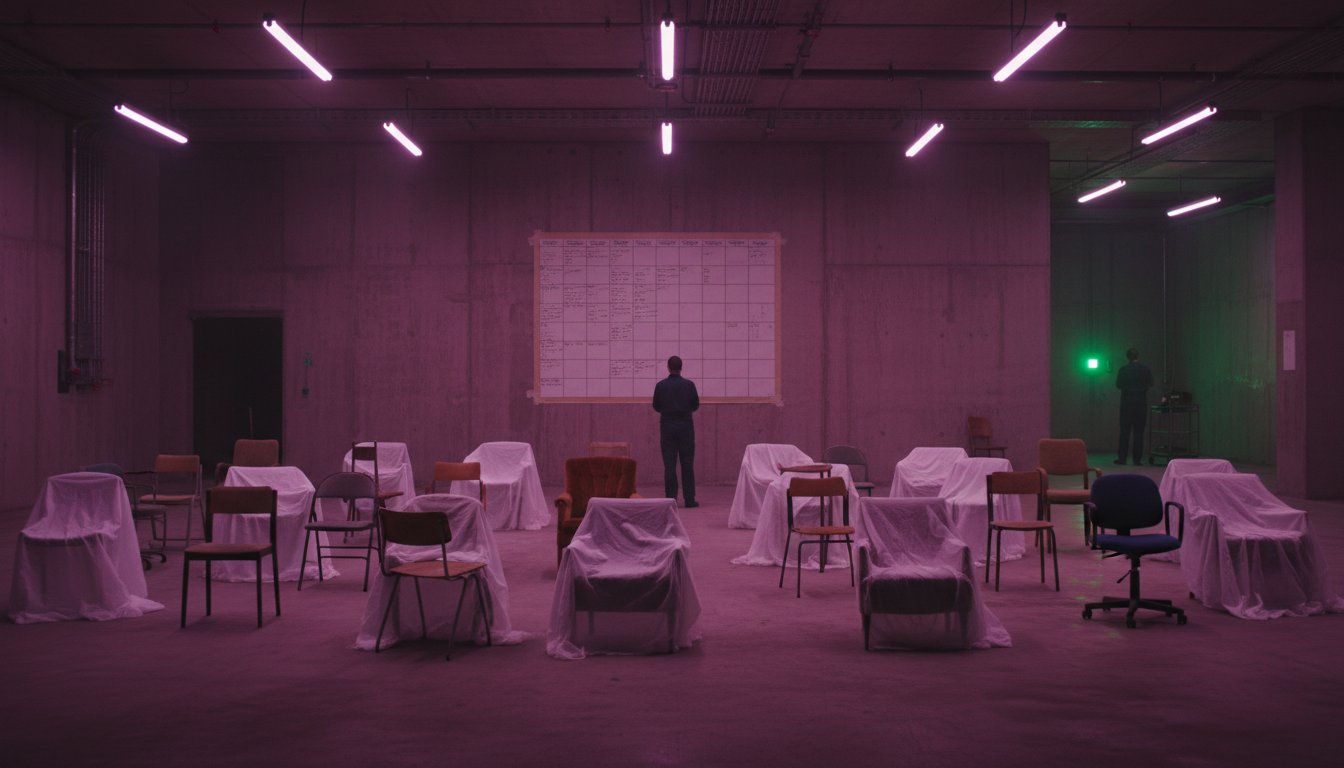
It took them four days to pack up two and a half years and Bex has said that four days is far too long for what they actually carried and that this is precisely the point.
“Forty people came down with about nine kilos each. That is the allowance and it was generous and about half of us did not use it.
“Four days to pack nine kilos. We were not packing. We were finishing, and nobody had told us how and there was nobody to ask.”
What went into the record is the list of what they did with the hull and it is four things.
They cleaned it. Not tidied. Cleaned, properly, over about two days, every compartment they had used, including the ones nobody would ever look at.
“Nobody proposed it. Ilves started in the galley on the first morning because the galley was hers and by the afternoon there were about nine people doing compartments.
“I have been asked why for a hundred years and I have four answers and none of them is good. The best one is that it was ours and we were leaving it and you clean a place you are leaving.”
They shut the plant down properly, which took Bex a full day, and he did it to the standard.
“I put it back to four per cent. Not off; four per cent, which is where I found it, which is where it had been for a hundred and forty years, which is what a hull holds when there is nobody in it.
“It took about eleven hours and two of the signals team helped and there was no reason to do any of it, because nobody was coming and the hull is not a thing anybody needs.
“And it is running now at four per cent, and the forward outer is at nineteen degrees, and I did that, and it is the last piece of work of my professional life that I am completely satisfied with.”
They left the rota on the wall.
“Four hundred sheets came down with Dagg. The last one stayed up.
“It is the sheet for the four days of packing and it has everybody's name on it and it is pinned to the bulkhead in the forward transfer where I pinned the first one in the ninth week.
“Nobody decided to leave it. I went past it on the last morning and I did not take it down, and I have thought since that if I had taken it down somebody would have put it back.”
And they walked out past the sealed volumes for the last time.
“The route from the forward outer quarters to the transfer runs about eleven hundred metres alongside the racking. Everybody walked it. Forty people, twice, on the last day, carrying nine kilos.
“It is a wall. That is all it is from the corridor. A wall with volume identifiers stencilled on it at intervals and a temperature readout every hundred metres reading nineteen.”
Dagg did not open the index and this is the section the chapter exists for and she has been asked about it more than about anything else in her life.
“I had eleven hundred verifications done and about three thousand to go and four days.
“And I sat down on the last night with the index file in front of me and I thought about finishing it. Not the verifications; you cannot do three thousand in a night. The file. Writing a closing note, a summary, a recommendation for whoever comes next.
“And I did not, and I want to say exactly why, because the reason is not mysterious and everybody wants it to be.
“There was nobody coming next. That is it. A closing note is written for a successor and there was no successor and the hull was not going to be occupied again and the inventory had been ordered nineteen times in a hundred and forty years and nobody had ever wanted it.
“So I wrote the ordinary line, the same one I had written eleven hundred times, and I closed the file, and I went and helped Ilves with the galley.”
The last line in the index file is four words and it is in the archive and it is what she wrote.
“Verification suspended. Eleven hundred done.”
“Suspended,” she said. “Not abandoned and not complete. Suspended, which is what it was, and which is the technically correct word, and which I chose in about four seconds without thinking about it at all.
“It has been quoted at me for forty years as though it were a premonition. It is a stock-check term. It means somebody stopped and somebody may start again.
“Nobody ever started again. There is a file in an archive with eleven hundred verified volumes in it and three thousand blank lines after them, in my handwriting, and it is the most complete document that has ever existed about what was in that hull, and it does not say what was in that hull.”
Wren's last note in the med bay log is the same day and it is four lines.
“Bay closing. Stock verified against manifest a second time, complete, rotation current, nothing drawn that has not been logged.
“Eight hundred and forty-one entries in this log. Eleven of them are events. One of them is a birth. None of them is a death.
“Facility remains adequate for forty persons indefinitely and I am leaving it as I found it, which is the only thing anybody up here can leave anything as.
“W. Halloway, medic. Nothing to report.”
Bex has said, entirely evenly, that the plant shutdown is the piece of work he is proudest of in a fifty-year career and that he has never been able to explain why to anybody who was not a plant supervisor.
“Nobody was coming. There was no reason to leave it correctly and there was no inspection and no successor and no standard being applied to me by anybody.
“I put it back to four per cent in eleven hours and I logged the shutdown properly in a maintenance record nobody will ever read, and it is running now, and that is the whole of it.”
The rota sheet is still pinned to the bulkhead in the forward transfer and Dagg has said, quite deliberately, that this is the only monument any of them left and that it was left by accident.
“Four hundred sheets came down in my bag and one stayed up because Bex walked past it on the last morning.
“It has forty names on it and the date and the jobs for four days of packing, and it will be on that bulkhead in four hundred years at nineteen degrees, and there is no plaque anywhere and there is not going to be.”
Wren has said that the eight hundred and forty-one entries in the med bay log are the thing she would keep if she could keep one object from the whole two and a half years and that she does not have it, because the log stayed with the bay.
“It is a facility log and it belongs to the facility. I closed it and I put it back on the shelf where I found it and I came away with nothing whatever.
“I have thought about that about four hundred times and I would do it again, and I would very much like to read it once more and I never will.”
They cleaned it. They shut the plant to four per cent. They left the rota up. They walked past the wall.
Eleven hundred verified. Three thousand blank lines after them.
Verification suspended. It is a stock-check term.
The forward transfer is about forty metres across and the bulkhead the rota sheet is pinned to is the one facing the hatch, so that it is the first thing anybody entering that hull from outside would see, and Bex has said that this was not why he left it and that it did not occur to him until about thirty years afterwards and that he has never been entirely comfortable since.
The four days of packing produced nothing anybody kept except Dagg's four hundred sheets and Osborne's notebook, and Bex has said that forty people came down from two and a half years of a life with about nine kilos each and that about half of them used less than four.
Everything else known about the two and a half years was collected afterwards, mostly decades afterwards, from about thirty people who had each experienced a slightly different version of the same thirty months and who had all by then read one another's accounts, and every published version including this one is therefore a reconstruction, and all four of the principals have said so at the head of their own.
Sixteen of the forty were still alive at the fortieth anniversary and about nine of those gave accounts, and the four that this record leans on are Bex's, Dagg's, Halloway's and the three lines of Rahn's, and the twenty-four who never gave one are named in the appendix and their silence is recorded as a fact rather than as an absence.
Eleven days. Sixteen machines. One job.
The four hundred thousand shielded exoskeletons behind the aft bulkheads of the forward outer quarters were entered into the public index on the second continent in the ninth year after the crossing, under a nine-character stores code with a mass and a date, on a shelf anybody could have read, and they are entered there still, and about four people have ever looked.
Bex has said, quite firmly, that he walked past that rota sheet on the last morning carrying nine kilos and that he genuinely did not decide anything, and that a man who is leaving does not take a list off a wall because taking it down would be a thing done and leaving it is simply walking.
Chapter 22 — Coming Down
↑ Back to ContentsFocus: Wren.
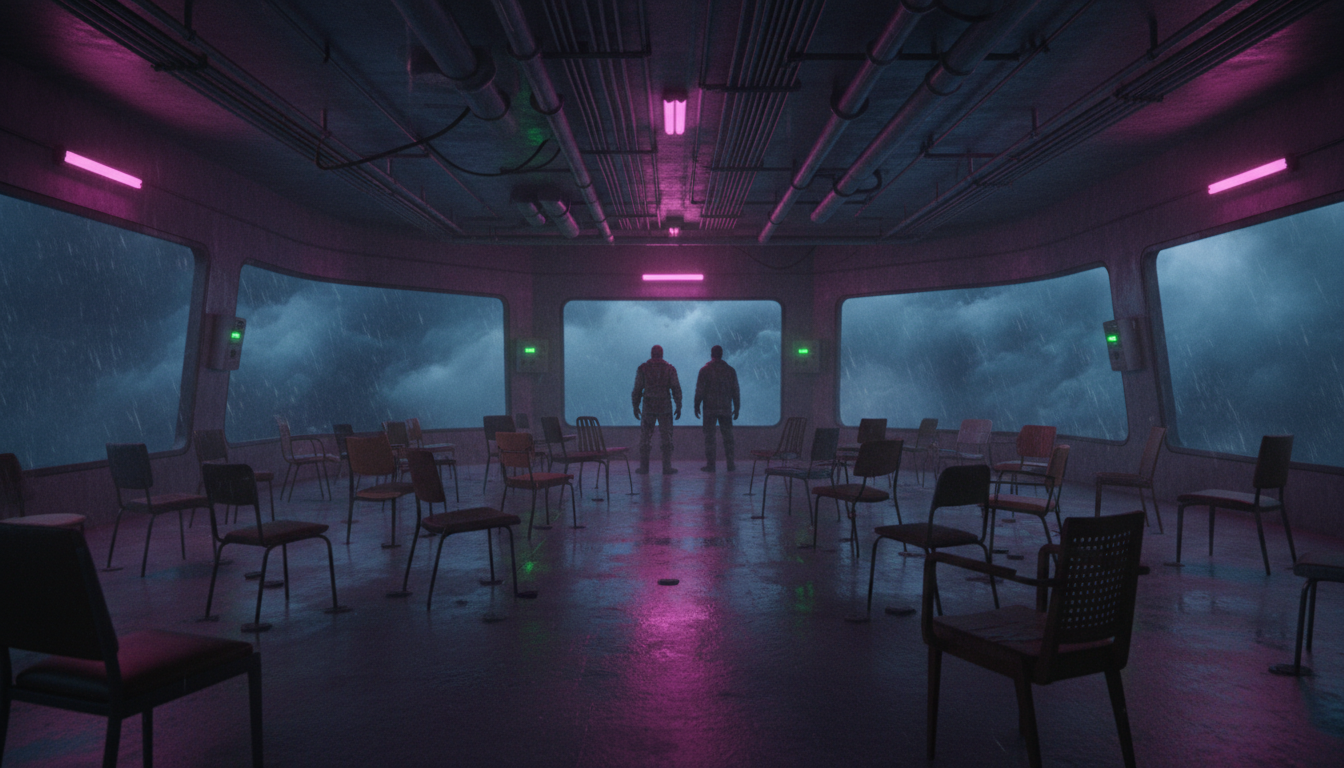
They came down in five loads over three days and Wren was on the fourth, and she has said that the part nobody warns you about is the weather.
“Nine per frame. Not a shuttle; a lifting frame with a pressurised module slung under it, which is what a H.A.L.O. is when you put people in the thing it is carrying.
“It took about four hours from release to ground and about nine minutes of that is the part people mean when they say re-entry, and the rest is the machine flying very carefully and very slowly, because there is no crew aboard it to be in a hurry.”
Half of them had never been off-planet before and all of them had been off-planet for two and a half years.
“Eleven cadets who had gone up on a transfer and had never been anywhere. Ilves the cook, who was fifty-four and had never left the second continent before the week she came aboard.
“And every one of us had spent thirty months at about a third of a gravity at the end caps and nothing in the middle, and Aura-36 is 0.38g, and I want somebody to notice that the spin at the end caps was almost exactly the gravity we were coming down into.
“Nobody planned that. It is a coincidence of a rotation rate and it is the reason all forty of us walked off, and if the hull had been turning at nine minutes rather than eleven we would have come down into a third more weight than we had lived in and about half of us would have been carried.”
The weather is the chapter.
“There is no weather on a hull. I had not thought about that once in two and a half years and neither had anybody else.
“Nine minutes of the descent is loud and rough and everybody had been told to expect it, and about four of the cadets were frightened and one of them was sick and it was entirely ordinary and it passed.
“And then it went quiet and the module was flying, and there was a window, and we came down through about four thousand metres of the ordinary lavender haze into rain.”
“It rains slowly there. Everybody knows that and everybody who has lived there their whole life stops noticing it at about six years old.
“I had not seen it in thirty months. Eleven of the people in that module had never seen it at all.
“It comes down under 0.38g like a heavy mist that has decided to take its time, and it drifted past that window for about eleven minutes on the way in, and there were nine of us in there and nobody said one word for the whole of it.
“A cadet of twenty-one who had been on that hull since he was eighteen put his hand flat on the window, which does nothing, and left it there, and I have thought about that more than about the docking or the vote or any of it.”
The ground is four lines and she has deliberately kept it short.
“We came down on a hardstand on the second continent at about the fourth hour, in rain, and the frame set the module down so gently that nobody in it could say afterwards when it had happened.
“The hatch opened and the air came in and it was wet and it smelled of the ground and of the forest four kilometres off and of about nine other things I had not known I had a memory of.
“And Ilves, who was fifty-four and had cooked two thousand meals a month for thirty months, was first out because she was nearest the hatch, and she stood on the hardstand in the rain and put her hands on her knees, and she has said since that it was her back.
“It was not her back. Nobody said anything.”
What was waiting is the last section and it is the setup for the chapter after.
“About eleven people. That is what was at the hardstand.
“Two medical, four administrative, a woman from the programme office with a list, and about four others whose function I never established.
“No crowd. No transmission crew, which surprised me and which I found out later had been asked for and refused, by the same woman on the second continent who published the abort criteria, on the grounds that forty people getting off a machine in the rain after two and a half years is not a public event and that everybody had already watched the part that was.
“I have never met her. I have written to her twice.”
Wren's last line about the descent is one sentence and she has never expanded it.
“I had spent two and a half years being extremely careful about what I said in front of the cadets and I got out of that module and stood in the rain and cried in front of all eleven of them, and not one of them has ever mentioned it, and I am mentioning it here so that they do not have to go on not mentioning it.”
Wren has said, entirely plainly, that the coincidence of the spin gravity and the planet's gravity is the single luckiest fact in the story and that nobody aboard understood it until about the fourth month after they were down.
“Eleven minutes of rotation at that radius gives you almost exactly 0.38g at the end caps. Nobody chose it. It is what the hull happened to acquire when the clamps opened.
“Forty people spent thirty months adapted to precisely the gravity they were coming down into, entirely by accident, and every one of us walked off, and I have read four accounts of stranded crews in rotating structures and they were all carried off and two of them never fully recovered.”
The rain is the thing Wren has been asked about most in forty years and she has said that she finds this correct and slightly embarrassing.
“A woman is asked about the docking and the vote and the arsenal, and answers, and then somebody asks about the rain and she talks for four minutes.
“It rains slowly there and I had not seen it in thirty months and eleven people in that module had never seen it at all, and a cadet of twenty-one put his hand flat on a window, which does nothing.
“That is the whole of it and it is what I remember and I have stopped apologising for it.”
Nine per frame. Four hours. Nine minutes of it is the loud part.
Then it went quiet, and there was a window, and there was rain.
Eleven minutes of it. Nine people. Nobody said a word.
The five loads came down over three days into weather that had been forecast four months earlier as a probability and that turned out to be exactly as forecast, and the loads were rearranged twice on that account, and Wren has said that being rearranged for weather after two and a half years of a hull that had no weather at all was the first thing that told her body it was actually going to happen.
Ilves stood on the hardstand in the rain with her hands on her knees for about four minutes and nobody said anything and nobody helped her up, and Wren has said that this was correct and deliberate and understood by everybody present, and that a woman of fifty-four who has cooked two thousand meals a month for thirty months is entitled to four minutes.
“She said afterwards it was her back. It was not her back. Nine people watched her and not one of them has ever contradicted her in forty years, including at her own funeral, where about thirty of us were in the room.”
Forty aboard. Nobody died. Not one.
Thirty months. Eight thousand shifts. Four absences.
Nine miles of racking. Eleven hundred verified. None opened.
The archive holds every document produced aboard that hull, which is four hundred rota sheets, a plant log, a med bay log of eight hundred and forty-one entries, a stock file of eleven hundred verified volumes, four thousand pages of received transcript, a personal log of about eleven thousand words, a marriage document with forty names on it and no legal standing, and a cadet's notebook of naked-eye observations, and there is nothing else, and there was never going to be.
Everything else known about the two and a half years was collected afterwards, mostly decades afterwards, from about thirty people who had each experienced a slightly different version of the same thirty months and who had all by then read one another's accounts, and every published version including this one is therefore a reconstruction, and all four of the principals have said so at the head of their own.
Forty names. One rota. Thirty months.
Four fields. Nine characters. No key.
Nobody voted for us. They voted for the line.
The hull is still in the orbit it acquired when the clamps opened, holding an atmosphere at nineteen degrees in the forward outer compartments, with a rota sheet pinned to a bulkhead in the forward transfer and eight hundred and forty scratches on the galley wall and nine miles of sealed racking behind it all, and nobody has been aboard in forty years and there is no proposal that anybody should be.
Wren has said, entirely plainly, that eleven people in that module had never seen rain and that four of them were over twenty-one, and that this is the fact about the gates that nobody below ever properly understood.
They came down on a hardstand on the second continent that had been built for the tether cars and that had not been used in two and a half years, and about four of the eleven people waiting had worked there when it was a working hardstand, and one of them had signed Casimir Vale out through it in another decade entirely.
Chapter 23 — Reclassification
↑ Back to ContentsFocus: Bex.
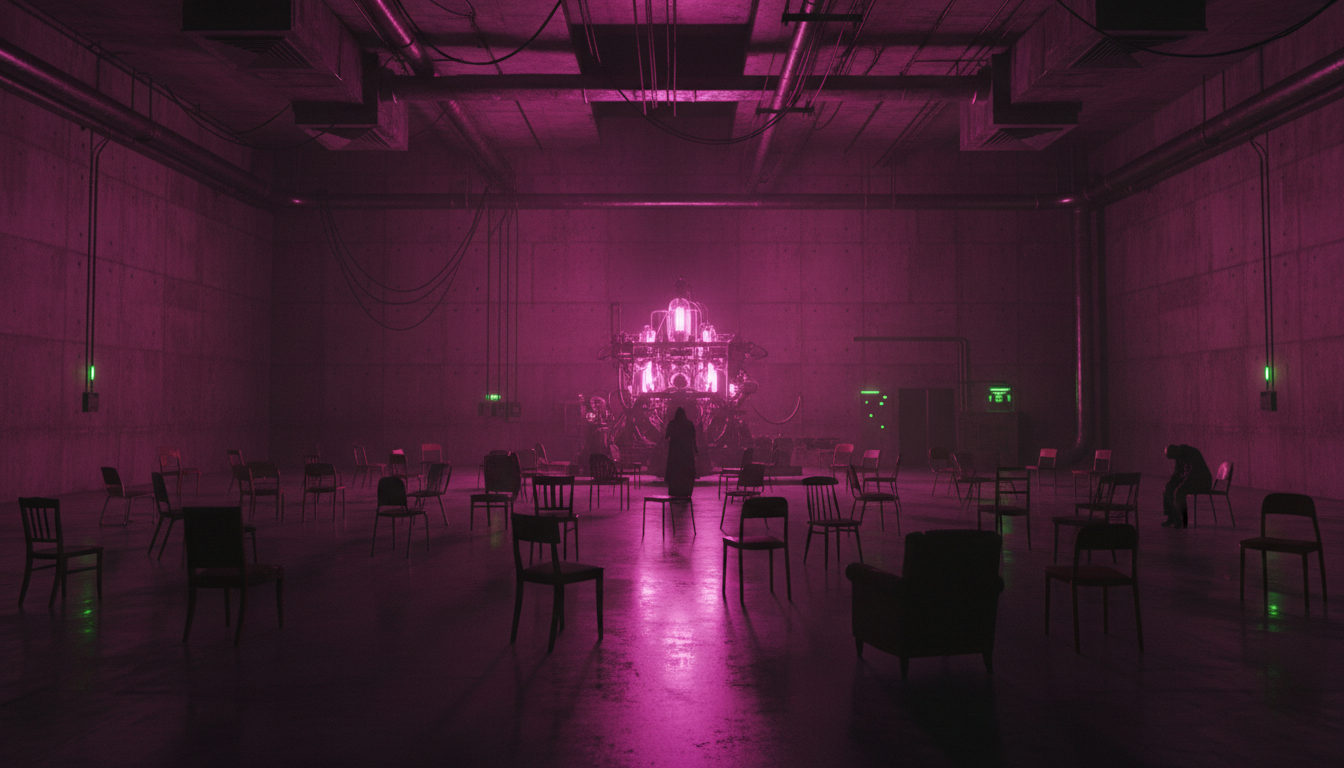
There were no charges and there was no tribunal and nobody was forgiven, and Bex has said that this is the ending and that everybody who hears it wants a different one.
“A planet spent two and a half years deciding what we were. It decided. It filed the decision and it went on to other business, and we came down into the result of a process that had finished without us.”
What the woman with the list said is four lines and it is the whole ending and Bex has quoted it identically for a hundred years.
“She was about forty and she was from the programme office and she was extremely tired, because she had done this four times already that week and had one more load coming the next morning.
“And she said: you are all reclassified as returned civil personnel effective on landing, your index entries are current, there are no proceedings against any of you, medical is over there, and if you have somewhere to go tonight please tell me and if you do not there are rooms.
“And then she asked whether anybody needed to sit down.”
“Reclassified,” Bex said. “That is the word and it is on the document and I have it.
“Not pardoned. A pardon is a thing a planet does about a wrong and it says the wrong happened. Not acquitted, which requires a proceeding. Not welcomed, which nobody said and which nobody was in a position to say.
“Reclassified. An administrative category was changed on forty index entries by somebody at a desk, and that is the entirety of what happened to us legally, and it happened before we landed.”
The reasoning is public and Dagg read the whole of it about a fortnight later.
“It runs to about nine hundred words and it is on a shelf and it is signed.
“It says that of the forty, eleven were transferred without disclosure and bear no responsibility. That eighteen more had no operational involvement in the eleventh object or the ten. That eleven were operationally involved in the eleventh object under orders and that the object was property and that the property was the planet's and that the loss has been absorbed.
“And that no proceeding is proposed, in respect of any of them, on the grounds that two and a half years have passed, that the political circumstances that produced the act no longer obtain, and that proceedings would serve no purpose that the planet has an interest in.
“That last clause is the coldest sentence I have ever read about myself and it is entirely correct.”
Vance's entry is one line in the same document and it is the only one that is different.
“Same as everybody. Reclassified, no proceedings, index entry current.
“Nine hundred words about forty people and the man who commanded it gets the same eleven words as the cook.
“I have read four analyses of why and none of them is convincing and the most likely is the dullest, which is that a proceeding against him would have required a public argument about the index, and that the planet had just spent two and a half years having one and had had enough.”
Who was at the bottom is the part that people find hardest.
“About eleven people whose job it was. That is all.
“Wren's mother was not there, because nobody had told her the load or the hour, because the loads were rearranged twice for weather and the programme office was not in the business of managing families.
“She found her that evening. It took about four hours and a great deal of asking. It was fine.
“Osborne's sister was there. She was the only one. She had been at that hardstand for three days for every load, on her own, with a bag, and had watched three loads come down that he was not on, and she was there for the fourth.
“Nobody arranged that either. She simply came and stood there for three days.”
What the planet had done in the meantime is the section Bex has always insisted on.
“It had moved. Two and a half years is not a long time and it is long enough.
“There were six million machines. There were four programmes running on the back of them that had nothing to do with us and that everybody was interested in and that took about nine minutes to explain and that we knew nothing about.
“The index argument had not been resolved and had gone quiet, which is what arguments do. Nobody had won. The four people who held it still held it and there was still no way to remove them and nobody was discussing it.
“And we were a thing that had been decided about eighteen months earlier and finished being interesting about a year after that.”
He has said that the eleven people at the hardstand is the true measure of it and that it is not a complaint.
“Half a planet watched the docking. About four people watched us get off.
“And that is correct. The docking was the thing; the docking was a planet finding out what it had built. We were the reason and we were never the subject and I have said that four hundred times and it is as true at the bottom as at the top.
“I would not have wanted a crowd. I want that recorded because it is going to be read as bitterness and it is not.
“Forty people got off machines on a hardstand in the rain and a tired woman with a list asked whether anybody needed to sit down. That is a planet behaving decently toward people it has finished thinking about, and it is very nearly the best thing that can happen to anybody, and it took me about thirty years to understand that.”
Bex has said, quite firmly, that the nine hundred words of reasoning are the most important document produced about the forty of them and that he has met about four people who have read the whole thing.
“It is signed. It gives the categories and the grounds and it gives the reason for not proceeding, and the reason is that proceedings would serve no purpose the planet has an interest in, which is the coldest sentence anybody has ever written about me and which is entirely correct.
“It does not say we were innocent. It does not say we were forgiven. It says the planet has nothing to gain, and that is what a legal system honestly describing itself sounds like, and I have never seen another one do it.”
Osborne's sister had been at the hardstand for three days and Wren has said that this is the only part of the ending she cannot read aloud.
“She was twenty-four. Nobody had told her the loads or the hours because the loads were rearranged twice for weather and there was no mechanism for telling families anything.
“So she came and stood on a hardstand with a bag and watched three loads come down that he was not on, for three days, and then he was on the fourth.
“Nobody arranged it and nobody helped her and about eleven people who worked there watched her do it and one of them brought her something to eat on the second day, and that is the only act of individual kindness anybody performed toward any of us at the bottom and it was performed toward somebody who had not been up there.”
Piet Osborne died at thirty-one in an industrial accident on the second continent, four years after coming down, and Wren has said that she has deliberately left that fact to the very end of the account and that she is aware it is a device and does not care.
No charges. No tribunal. No forgiveness. A category changed at a desk before they landed.
Reclassified. Not pardoned, not acquitted, not welcomed.
About eleven people at the bottom. All of them there because it was their job.
The reclassification document is on a public shelf on the second continent and runs to about nine hundred words and has been read in full, by Bex's count, by about four people who were not aboard, and it names every one of the forty and gives the category and the grounds and the reason for not proceeding, and it has never been amended and nobody has ever applied to have it amended.
The tired woman with the list did four loads that week and one more the following morning and has never been publicly identified, and Bex has said that he tried for about nine years to find her and eventually stopped, and that he wanted to tell her that asking whether anybody needed to sit down was the only human sentence spoken to any of them at the bottom.
“It was not in the form of words. I have read the form of words; it is on the document and it is four lines and it ends at index entry current.
“She added a sentence of her own at the end of a script she had read sixteen times that week, because she was looking at forty people who had been in a hull for two and a half years, and it is the only thing anybody improvised.”
The archive holds every document produced aboard that hull, which is four hundred rota sheets, a plant log, a med bay log of eight hundred and forty-one entries, a stock file of eleven hundred verified volumes, four thousand pages of received transcript, a personal log of about eleven thousand words, a marriage document with forty names on it and no legal standing, and a cadet's notebook of naked-eye observations, and there is nothing else, and there was never going to be.
Chapter 24 — Vance, Last
↑ Back to ContentsFocus: Wren.

He came down on the fifth load, which was the last, and he walked off last, and Wren was not there.
“I was on the fourth. I had been down about eighteen hours by then and I was in a room on the second continent that somebody had found for me and I was asleep.
“So this is not mine. This is four accounts from people who were on that load and one from the woman with the list, and I have put them together because somebody had to and because I am the one who has been writing him down for two and a half years.”
The fifth load was nine people and he was one of them and the account of the descent is that there is no account of it.
“Nobody has anything. I have asked all eight of the others over forty years.
“It was four hours. He sat where he sat. Two people said he looked out of the window during the rain and two say he did not and the rest do not remember, and I have decided that the disagreement is more honest than agreement would have been.”
On the hardstand he was last out and the four accounts agree on that completely.
“He waited. Everybody agrees. The module opened and eight people went out and he sat until they had gone and then he got up.
“Nobody has ever suggested he was made to and there was nobody there to make him. He was fifty-nine and he had been at a third of a gravity for thirty months and he was the oldest person on that hull by about a year, and the simplest explanation is that a man of fifty-nine let eight younger people out of a small space first.
“I have four other explanations and I am not going to write them down.”
The woman with the list has given her account once, in writing, at Wren's request, about thirty years later, and it is four lines.
“I did not know who he was. I want that first because it has been assumed otherwise for thirty years.
“I had a list of nine names and a category and a form of words I had said sixteen times that week. I was extremely tired and I had one more load in the morning.
“He came out last and I read him the same thing I read everybody, which is that he was reclassified as returned civil personnel effective on landing, that his index entry was current, that there were no proceedings, that medical was over there, and I asked whether he had somewhere to go tonight.
“And he said yes, thank you. And I ticked the box and went on to the next thing, and about four hours later somebody told me who I had been talking to and I sat down.”
He said nothing else to anybody.
“Not to the woman with the list beyond the four words. Not to the eight people on the load, who have all confirmed it. Not to the medical staff, who saw him for about eleven minutes and who have a record of it and it is a record of a routine examination of a man of fifty-nine.
“There was no statement. Nobody asked him for one and he did not offer one and there has never been one, then or since, in forty years, in any form, to anybody.”
He did not look back at the sky and Wren has been asked about this four hundred times.
“Nobody saw him do it. All four accounts are clear and I have pressed all four.
“He got out of a module on a hardstand in the rain, waited to be told his administrative category by a tired woman with a list, thanked her, and walked to the edge of the hardstand where there was a road.
“And that is where all four accounts end, because that is where everybody stopped watching, because there were eight other people to see to and a load in the morning.”
What happened to him afterwards is not in this account and Wren is explicit about why.
“I know some of it and it is not mine to put here and it is not interesting.
“He lived. He was not prosecuted, at any point, by anybody, for anything. He did not hold any position ever again and did not seek one and was not offered one. He did not write anything and did not speak publicly and was asked to about eleven times over the following decade and refused all eleven, courteously, in writing, in four lines each time.
“I have one of those letters. It is not addressed to me.”
The last paragraph is hers and she wrote it at about seventy and it is the end of the account.
“I watched a man for two and a half years and asked him one question and got an answer I cannot read.
“He knew on the first day. I believe that. I have believed it for forty years on the evidence of a face at forty metres and I know exactly what that is worth.
“He gave no orders, made no speech, claimed nothing, explained nothing, did about nine hundred rota shifts, and walked off a hardstand into a world that had stopped being interested in him, having said thank you.
“That is the whole of it. I have written it down as flatly as I can and I have refused four hundred invitations to say what it means, and I would ask that this account be left where it is, because everything anybody has ever added to it has been about themselves.”
Wren has said, entirely plainly, that she wrote the whole account for one reason, which is that she was twenty-six when she went up and had been told it was a transfer, and that she wanted somebody in four hundred years to be able to read what it was actually like rather than what it meant.
“There are about nine published accounts of the stranding and eight of them are about what it meant.
“Mine is about a rota and a water fault and a wedding nobody had authority to conduct and a mark on a bulkhead that nobody was responsible for and that never got missed in eight hundred and forty days.
“That is what it was. The rest is a planet's argument and it belongs to the planet.”
She has said that the eight hundred and forty scratches are still on the galley bulkhead and then stop, and that she thinks about the stopping more than about anything else.
“Somebody made the last one on the last morning. Nobody knows who and I have asked about thirty people over forty years and every one of them has said they did it sometimes and none has said they did it always.
“And then forty people walked eleven hundred metres past a wall reading nineteen degrees, carrying nine kilos each, and got into modules, and the hull went on holding nineteen degrees for nobody, and it is doing it now.”
The last line of the account is four words and Wren has said that she wrote them first, before anything else, about forty years ago, and then wrote the rest of it toward them.
“Nobody died. Not one.”
He waited. Eight people went out. Then he got up.
Yes, thank you. That is all he said to anybody.
Nobody saw him look at the sky. All four accounts end at the road.
The eight accounts of the fifth load agree on almost nothing except that he waited and went last, and Wren has assembled them exactly as they were given to her, with the disagreements left standing, and she has said that a version in which eight people remember the same four hours identically would be a version somebody had tidied and that she would rather have the four hours as eight people actually held them.
Vance died at seventy-four on the second continent and there is no public record of the circumstances and Wren has said that she knows them and that they are entirely ordinary and that she is not going to write them down.
“About nine people went. I was one of them and I am not going to say who the others were.
“Nobody spoke. There was no arrangement about that and nobody had discussed it beforehand, and nine people stood in a room for about twenty minutes and then left, and I have thought since that it was exactly the correct amount and that we did not decide it.”
Thirty months. Eight thousand shifts. Four absences.
Everything else known about the two and a half years was collected afterwards, mostly decades afterwards, from about thirty people who had each experienced a slightly different version of the same thirty months and who had all by then read one another's accounts, and every published version including this one is therefore a reconstruction, and all four of the principals have said so at the head of their own.
Sixteen of the forty were still alive at the fortieth anniversary and about nine of those gave accounts, and the four that this record leans on are Bex's, Dagg's, Halloway's and the three lines of Rahn's, and the twenty-four who never gave one are named in the appendix and their silence is recorded as a fact rather than as an absence.
Eleven days. Sixteen machines. One job.
The four hundred thousand shielded exoskeletons behind the aft bulkheads of the forward outer quarters were entered into the public index on the second continent in the ninth year after the crossing, under a nine-character stores code with a mass and a date, on a shelf anybody could have read, and they are entered there still, and about four people have ever looked.$