The Premise
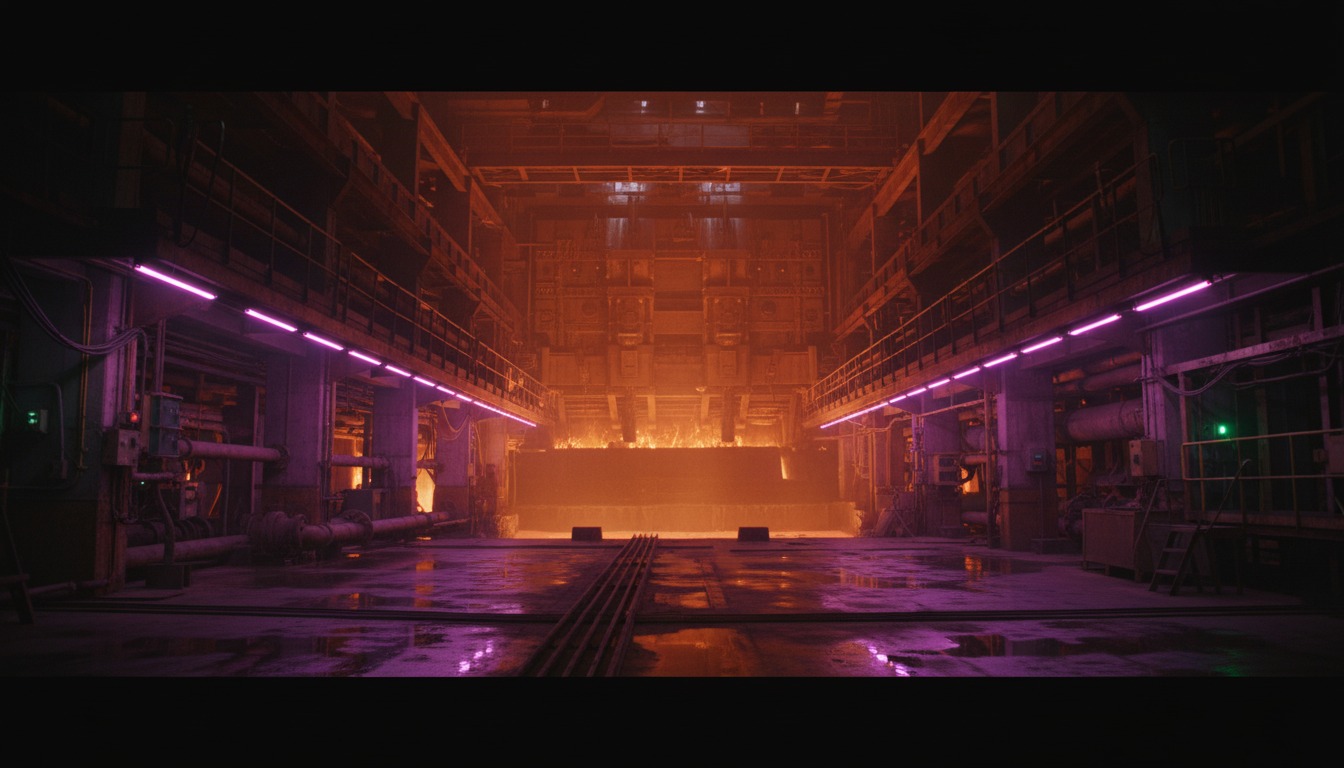
Forty-five thousand people living permanently in a sector that was dug as a foundry and never designed as a habitat — crushing plated gravity, sulphur air, and a shift rotation that was supposed to be temporary four generations ago. The Venusian Syndicate, the Great Anvil, and a population who built the exoskeletons that were meant to save them and were never told so.
Why it belongs. Every other story in this series is about people who were chosen. This one is about the ones the arithmetic put at the bottom and left there — and it sits directly on top of a thermal-siphon shaft, which means the Sinks have been living closer to the thing than anybody alive, for longer, without knowing.
It follows the posts, not the people. The spine is a handful of jobs held by different hands across four generations — the same shift, the same furnace, the same rota slot — so the reader watches a role outlive everyone who ever filled it. Nobody in the Sinks is irreplaceable and everybody is unrepeatable, which is the sector's whole condition rendered as structure.
It ends after the suits come down. The people who built four hundred thousand exoskeletons for four generations are there when they are finally handed out, and are the last to receive them.
Chapter Index
Every chapter, all parts. Each becomes a real, readable chapter the moment it is written.
Chapter 1 — Dug As a Foundry
↑ Back to ContentsFocus: the first Ladle.
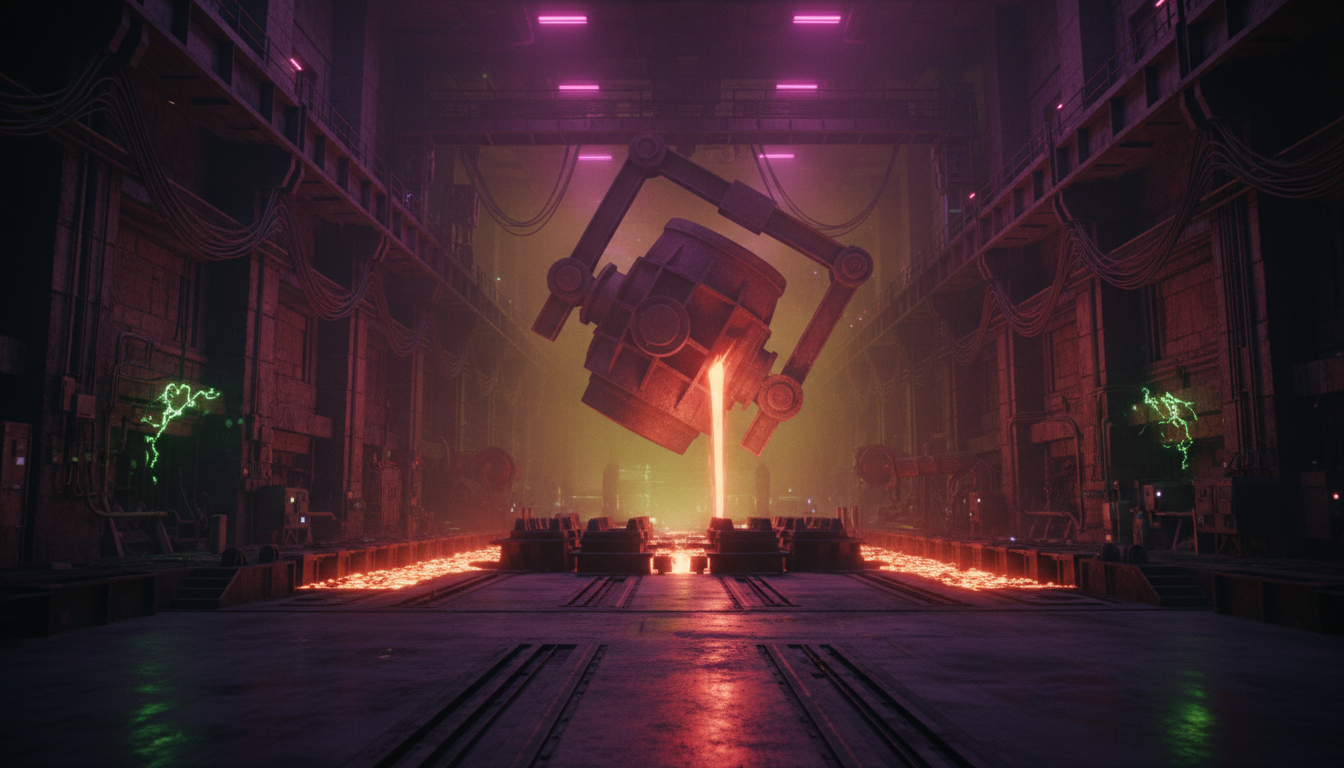
The pour was the one part of the work nobody complained about, and Costa Marsh had never worked out why that surprised people, since it was also the one part of the work that could kill you fastest.
He brought the ladle up level — the way his hands knew to do it before his head had finished thinking the word level — and for three seconds the whole floor went the colour of the inside of a furnace, which was, when you got down to it, exactly what it was.
Basalt-alloy at pour heat throws a light that makes every face in the gantry look young. He had seen the same three seconds do that to men sixty years old. He had seen it do it to Halvard, who had a face like a dropped tool, and for three seconds Halvard had looked about nineteen.
The Venus Sector had been dug for this and nothing else.
No habitation standard had ever been applied to it, because no one — on the day the first shaft went down — had planned for anyone to live here.
It was a foundry. Plated gravity to hold the melt where you wanted it. Sulphur air, because scrubbing it clean would have cost more than the ore was worth and the ore was the entire point. Basalt walls, because basalt was what was already there, and hollowing out anything softer would have taken another decade nobody had budgeted for.
Every one of those was a correct decision. Costa had looked into it, once, out of curiosity, in the way a man looks into the reasoning behind a thing he has bet his back on. He had gone through the original design case in the canteen file and found four decisions and four good reasons, and had come away oddly reassured and unable to say why.
Costa liked the pour the way some men liked weather.
There was a rightness to a good one — the ladle tipping at the exact angle, the melt going where it was told, the six moulds filling in the order they always filled in — that he had never managed to explain to his sister, who worked topside and thought the whole Sector was a hole men crawled into because nobody had offered them anything better.
He had tried to explain it to her twice. The second time she had listened properly, which was worse, because she had listened properly and then said well, I'm glad you like it, in the voice you use for somebody else's dog.
He didn't think that was quite fair to the hole.
The hole was extraordinary. He had watched, twice now, a green apprentice cry the first time they saw a pour go clean start to finish.
And not from fear.
"You'll wear the shine off it," said Aveline Rourke, coming down the gantry stair with a board under her arm — the way she always came down when there was something to say that would take longer than a shout.
She was Steward this rotation, which meant she carried the board everywhere and everyone pretended not to notice.
"Eighteen months," Costa said. "I'll wear the shine off plenty of things before I'm off it."
"Eighteen months and relief," she agreed.
And something in the way she said it — easy, certain, a fact rather than a hope, the tone of a woman reporting a date on a calendar — was the whole reason he'd signed the rotation in the first place.
The funding was approved. The relief crew's names were already on a manifest somewhere topside, waiting on a schedule nobody had reason to doubt.
He tipped the next ladle.
The floor went bright again, and the six moulds filled, in order, the way they always did.
And for the length of the pour nobody on the gantry was thinking about eighteen months at all.
Chapter 2 — Temporary
↑ Back to ContentsFocus: the first Steward.
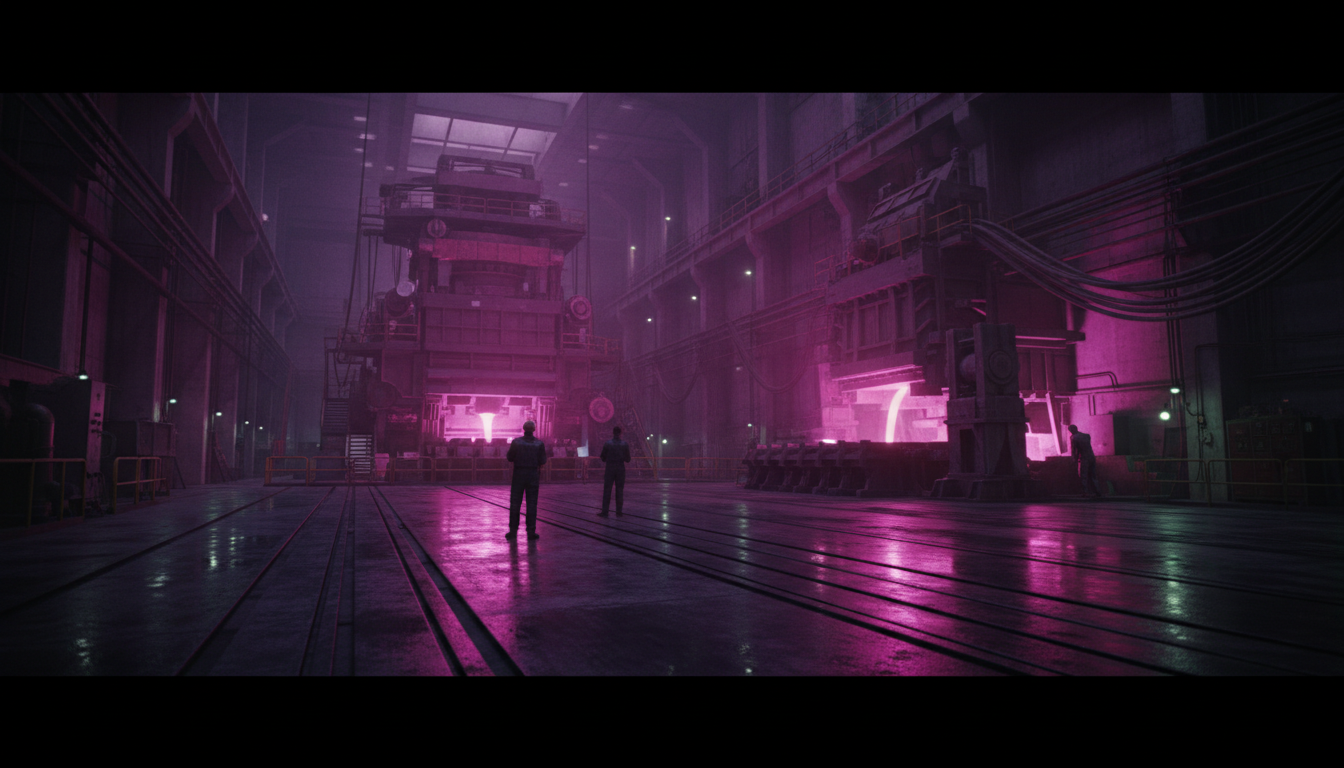
Aveline Rourke had read the rotation agreement front to back three times before she stood for Steward, which put her one reading ahead of most of the shift, and she still thought it was a fair document.
Eighteen months on, relief scheduled, funded, and named.
Hazard pay banked against the Sector's own conditions rather than a flat surface rate — which was, if anything, generous, and which she had checked against two other deep postings and found better than both.
A repatriation clause that covered family as well as crew. Nobody had had to fight for that one. It was simply in the draft when the draft arrived, because somebody topside had thought to put it there, and she had spent a while wondering who and had never found out.
She had gone looking for the trick in it.
The way you go looking for the trick in anything with a signature line — reading the definitions section twice, checking what the words meant where they were defined rather than where they were used, looking for the clause that quietly did the opposite of what the heading promised.
And had not found one.
That bothered her a little, in a way she could not have defended to anyone who asked. A document with no trick in it is either an honest document or a document whose trick you have not located yet, and there is no test that distinguishes them from the inside.
So she did not mention it, and instead told the shift what was true: the agreement was sound, the schedule was funded, and in eighteen months there would be a relief crew stepping off the same lift they'd stepped onto.
"And if it slips," said Halvard — who asked the same question every meeting, because somebody had to and it might as well be him.
"Then it slips a month, maybe two. Same as any schedule with a supply chain behind it." Aveline did not mind the question and had told him so, which he had received with visible suspicion. "It won't slip because anyone decided it should. Read the funding line yourself if you don't believe me."
"I can't read a funding line."
"Then come and I'll show you where it is and you can watch me read it."
He did, the following week, and stood there while she read it aloud, and said right, and went back to work, and asked the same question again at the next meeting.
She had made sure the funding line was posted on the board outside the canteen. In full. Because a number people can check for themselves is worth ten of her assurances, and because she had learned that in a different job from a different Steward who had learned it the hard way.
Nobody was lying to anybody.
That was the part she wanted on record — in her own head if nowhere else — because she suspected, without being able to say why, eighteen months out from a relief date that had not come due yet, that it might one day matter whether the record showed good faith at the start.
The engineers who had drafted the rotation believed in the eighteen months.
The Syndicate office topside that had signed off the funding believed in it.
She believed in it herself — enough to have moved her own name onto the roster, rather than just administering somebody else's, which is a thing a Steward is not obliged to do and which she had done in her first week without telling anybody.
She walked the board back to the office, pinned the funding figures up where the whole canteen would see them on the way to shift change, because a Steward who hides the numbers is a Steward nobody needs.
And went to find Costa Marsh, to tell him his sister's letter had come in on the supply run — three weeks late and entirely intact.
Chapter 3 — Slot Nine
↑ Back to ContentsFocus: the first Slot Nine.
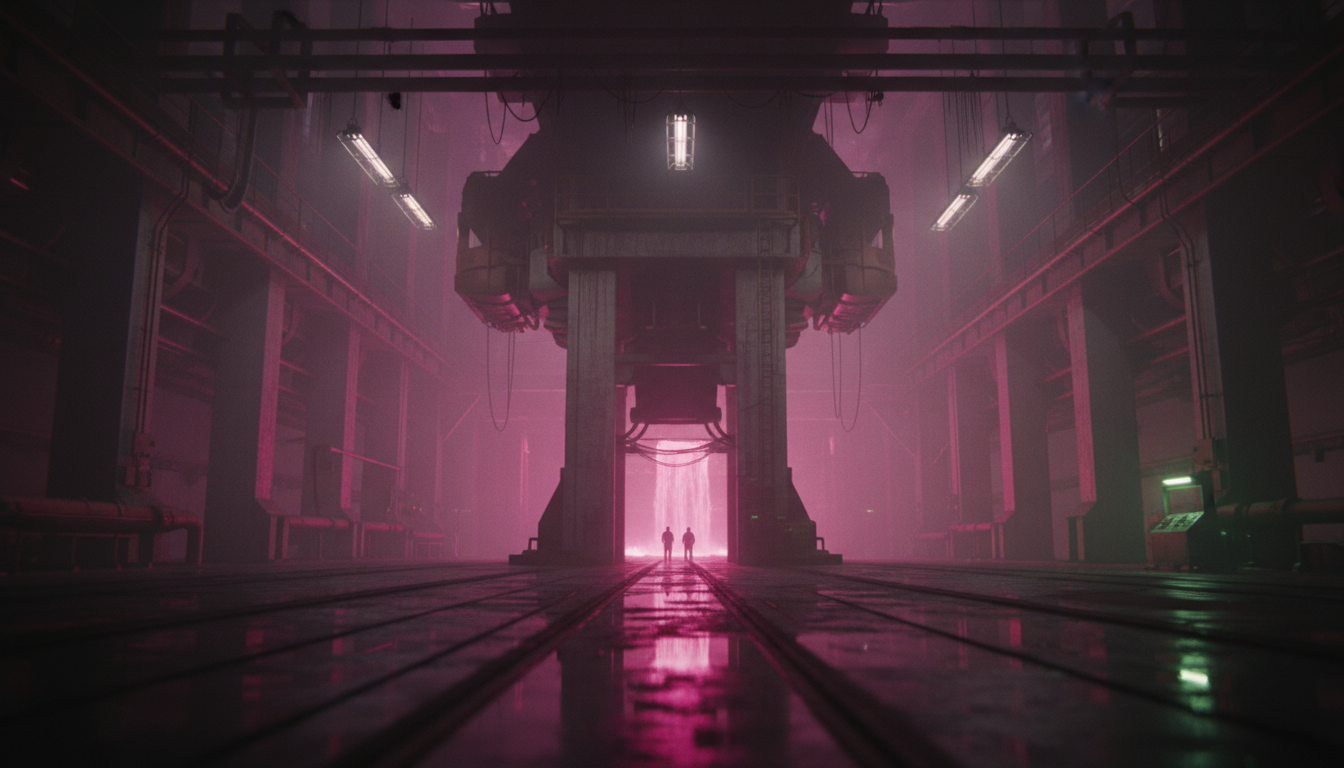
Kip Adair had held Slot Nine for four months and had stopped, somewhere around month two, trying to describe what the floor did to people who hadn't stood on it.
It wasn't a sound, exactly, though people who'd never worked the deep gallery always asked if it was a sound. That was always the first question and it was always the wrong one.
It came up through the boots before it reached the ears, if it reached the ears at all — a long, slow give in the rock underfoot, twice a shift. Near enough to regular that you could plan a task around it. Near enough to irregular that planning around it felt like superstition even while you were doing it.
He had tried, in his second month, keeping a tally. Times and durations, in the back of the rack book, the way you would log anything. He kept it eleven days and then stopped, not because the numbers came out wrong but because they came out almost right, which was worse, and because he had begun to notice himself waiting for it.
The old hands called it the Tide.
Kip had asked, back when he was new enough to still ask things, where the name came from. Nobody knew, exactly. Somebody's grandfather's shift lead had called it that, and it had stuck the way names stick down here — by nobody objecting, rather than anybody deciding.
An engineer had come through six years back. A real one, topside-trained, sent down to certify the gallery supports and staying eleven days.
He had listened to three shifts describe the Tide — patiently, taking notes, asking the sort of follow-up questions that made the men feel taken seriously — and had pronounced it thermal cycling in the deep rock. The basalt expanding and settling as the furnace above drew heat down through it on a schedule of its own.
He had written it up. Properly, with figures.
The write-up was in the Sector's own file, cited, official, and referenced twice since in unrelated documents.
And Kip had read it twice and did not believe a word of it, without being able to say what he believed instead — which he was aware is not a position a reasonable man is entitled to hold, and which he held anyway.
Slot Nine sat closer to the old thermal-siphon shaft than any other post in the Sector.
The engineer's report had mentioned this. As an interesting proximity. In a subordinate clause, in the second paragraph, and nowhere else.
Kip had never floated a theory of his own. Not seriously, not to anyone, not even in the canteen where a man can say anything and have it forgotten by the following shift.
There was something almost restful in not having one.
You felt the Tide come up through your boots. You finished counting the rack you were counting. And you went to canteen at the end of shift, the same as everyone else who had felt it and had nothing to say about it either.
Nobody swapped out of Nine early.
Kip had noticed that about himself too — the way you notice something true about a room only once you have been sitting in it a while.
He didn't want to swap out.
He couldn't have told you why, and he'd stopped trying.
Chapter 4 — Six Graded Sizes
↑ Back to ContentsFocus: the first Grader.
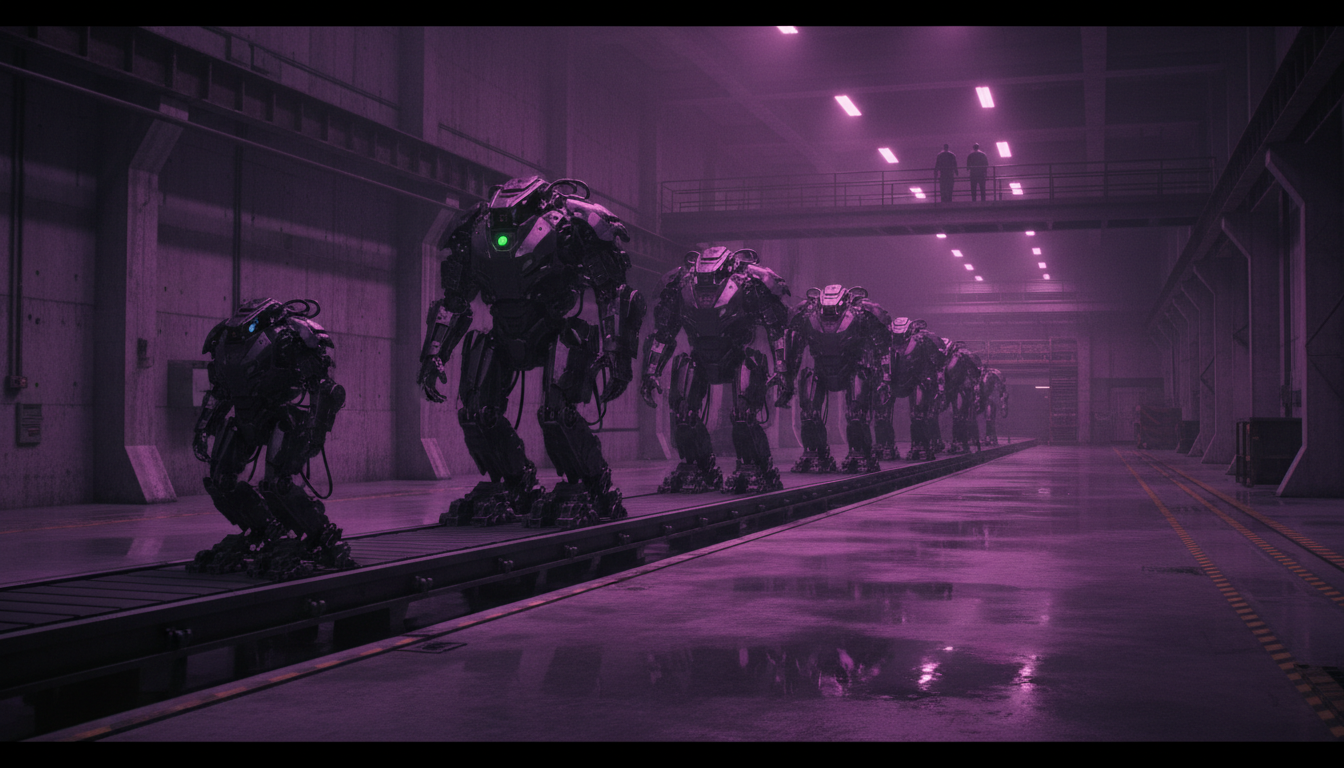
The order specification ran to four pages and Mira Solene had read every line of it twice, because reading was the whole of what the Grader's post required and she meant to be good at the one thing that was actually hers.
Basalt-alloy shell. Shielded joint assemblies. Six graded sizes, keyed to a standard skeletal chart she didn't recognise as belonging to any population she had ever heard named.
No stated customer.
No stated end use.
Quantity: continuing, against a schedule to be issued in phases — the first phase modest enough that nobody on the floor thought twice about it, and modest enough that she had checked it against the previous quarter's tonnage to make sure she had not misread a column.
"Continuing," she said out loud, to nobody, the way she sometimes read things out loud to hear whether they sounded stranger spoken than written.
They didn't, particularly.
Orders came through without customers named all the time. Most of what the Sector shipped went into a supply chain long enough that nobody at this end ever learned where the far end was, and nobody at this end had ever needed to. She had graded structural stock for two years without knowing what was built out of it, and had never once wondered.
She set up the sizing bench the way the spec described. Six cradles. Six sets of calipers. A chart pinned above each cradle showing the tolerances, which she copied out herself in a better hand than the one they came in.
It was, she had to admit, elegant work.
Whoever had drafted the shell design had done it properly. Weight distributed where a body would actually need it distributed. Joints shielded at exactly the points a joint under real load fails first — not the points a person would guess at, the actual ones, which meant somebody had either done the testing or had read somebody who had.
Not a rush job. Not a placeholder. Not the sort of specification you write to have a specification.
Somebody had thought hard about a person wearing this. A real person. Doing something that mattered enough to justify four hundred pages of tolerance specification and a shielding standard she had to look up.
She flagged the missing customer field to her shift lead out of habit rather than concern — the way you would flag a typo, at the bottom of a note about something else.
The answer came back within the day.
Routed through channels efficient enough to suggest that somebody, somewhere, had been expecting the question: customer confidential, order authorised at Syndicate level, proceed on current schedule.
Nineteen words. She counted them later, for no reason she could name.
Proceed on current schedule was, in its way, an answer.
It told her the order was real. Funded. Sanctioned by people with the authority to sanction it, which is not nothing, and which is more than a great many things on that floor could claim.
It told her nothing else.
And she found — turning the first completed shell over in her hands, checking the shielding seam by feel, the way the spec insisted a Grader learn to do rather than trusting the gauge — that nothing else was, for now, enough to stop her wanting to build it well.
Chapter 5 — The Relief Is Rescheduled
↑ Back to ContentsFocus: Aveline Rourke.
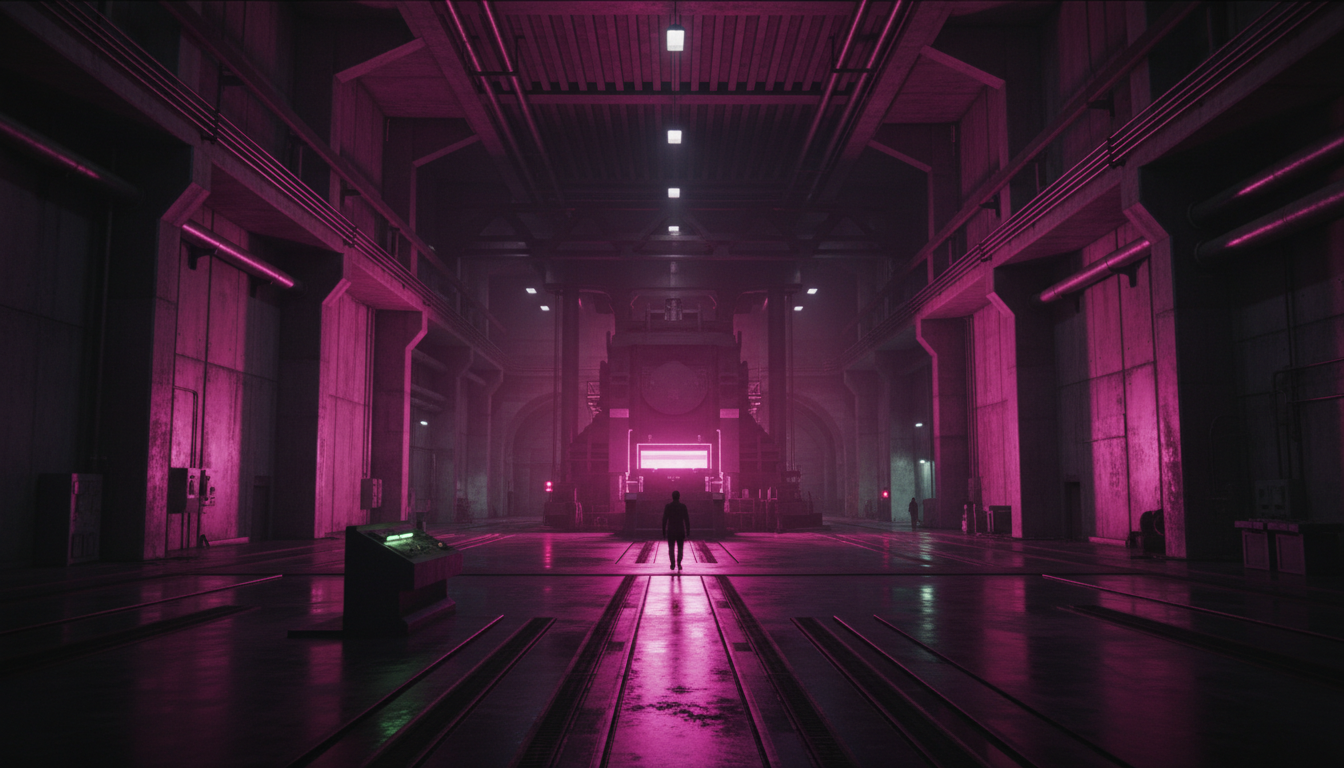
The message came through official channels, properly formatted, apologetic in exactly the register Aveline Rourke had learned to recognise as sincere rather than performed, and she read it twice before she took it to the board.
Operational constraints topside. A supply-chain bottleneck on the lift infrastructure — nothing to do with the Sector itself, nothing anyone down here had caused or could fix, nothing that named a person.
Meaning the relief crew's transit window had to move.
Not cancelled. Rescheduled.
A new date, eleven months further out than the one everybody had built their eighteen months around — with the funding for the delay explicitly confirmed in the same message, in the same paragraph, as if somebody up the chain had known exactly which number would matter most to the people reading it.
She noticed that. It was the only part of the message she could not decide about. Either somebody had thought carefully about the men in this Sector, or somebody had been given a template that had been thought carefully about by a person now long gone, and there was no way to tell the two apart from four hundred metres down.
She sat with the message a long time before she called the shift together.
Not because she doubted it. Because she wanted, when she stood up in front of them, to be certain her own voice would come out steady, and she was not certain of that at the first reading.
It did.
She read the message aloud, in full — the way she had read the original agreement aloud a year and a half before, in the same room, standing in the same place — and she watched the room take it the way rooms take things they have half expected.
Disappointed. Not betrayed.
That distinction held for eleven months and then for a hundred and forty years, and she would not live to see how long it held.
"It's rescheduled," she said, when she had finished reading. "Not cancelled. The funding line moved with it — I checked, it's the same figure it was before, just against the new date."
She had checked. That was true. Everything she told them that evening was true, and she had gone through it line by line beforehand precisely so that it would be.
Somebody near the back asked if this would happen again.
And she said she didn't know.
Because she didn't. And because not knowing was the honest answer and the only one she was willing to give them, and because she had decided on the walk over that she would rather be a Steward who said I don't know than one who was ever caught having guessed.
It was, she would think much later, the single most reasonable meeting she ever ran.
Nobody shouted. Nobody accused anybody of lying, because nobody had lied. The engineer who had signed the message had almost certainly meant every apologetic word of it. The bottleneck was almost certainly real. Eleven months was, on the scale of a project like this one, almost certainly nothing.
She pinned the new date to the board next to the old funding figures, updated, and went back to work.
And did not yet know enough to understand that she had just presided over the only meeting in the Sector's history where the word temporary would ever again be used and believed in the same sentence.
Chapter 6 — Families Arrive
↑ Back to ContentsFocus: Costa Marsh.

Costa Marsh's sister came down on the third supply run after the reschedule — which was not, strictly, permitted under the original rotation terms, and which nobody in a position to stop it seemed inclined to try.
She said she was visiting.
She brought two trunks for a visit.
Within the month she had a bunk assignment and a job on the canteen roster. Within the year she had married a gantry hand named Osei, who had come down the same way, on a manifest that listed him as a short-term contractor and had never once listed a return date.
Costa had said, at the wedding, that he had always known she would come round to the place. She said she had not come round to the place, she had come round to the wages, and everybody laughed, and about half of it was true.
Costa hadn't planned to notice the pattern until it was already impossible not to.
The crèche the Syndicate office set up in an unused equipment bay — unofficially, on nobody's budget line, staffed by two off-shift Graders who had volunteered — filled inside eighteen months. Then it needed a second bay. The second bay was also unofficial.
The canteen added a second seating rotation, and then a third for the night shift, and somebody painted the times on the wall because people kept asking.
Somebody built a proper set of stairs down to the lower gallery housing. Wood-panelled. Better than the Sector had any official reason to spend materials on — because four hundred people now lived down there and the old ladder had become a genuine hazard, and because the man who built them was a joiner by training and had not been allowed to be one for six years.
Nobody had authorised any of it.
That was the part Costa found himself turning over, on the long walks between shift and bunk that had become his habit since his sister's wedding.
There was no line item anywhere for a crèche. No requisition for the stairs. No Sector directive that said families may relocate here, and equally none that said they could not, which he had checked, in the canteen file, on an evening when he had nothing else to do.
It had simply happened. The way water finds a lower place to sit.
Because eighteen months had become an unclear number of months, and people had done — sensibly, and in every individual case correctly — the thing people do when a temporary posting stops behaving like one.
They had brought their lives down with them, rather than leave their lives waiting topside indefinitely.
He mentioned it to Aveline once. Carefully, the way you raise something you are not sure is a problem, at the end of a conversation about something else.
She looked at the crèche roster a long moment.
And said only that she would log it. For the record. In case anyone above her ever needed the actual numbers rather than an estimate.
She logged it.
Nobody above her ever asked.
Four years in, the Sector that had been dug for smelting basalt-alloy under nobody's habitation standard held six hundred people who had not, technically, been assigned to live there.
And every single one of them had somewhere to sleep.
Chapter 7 — The Air
↑ Back to ContentsFocus: Mira Solene.
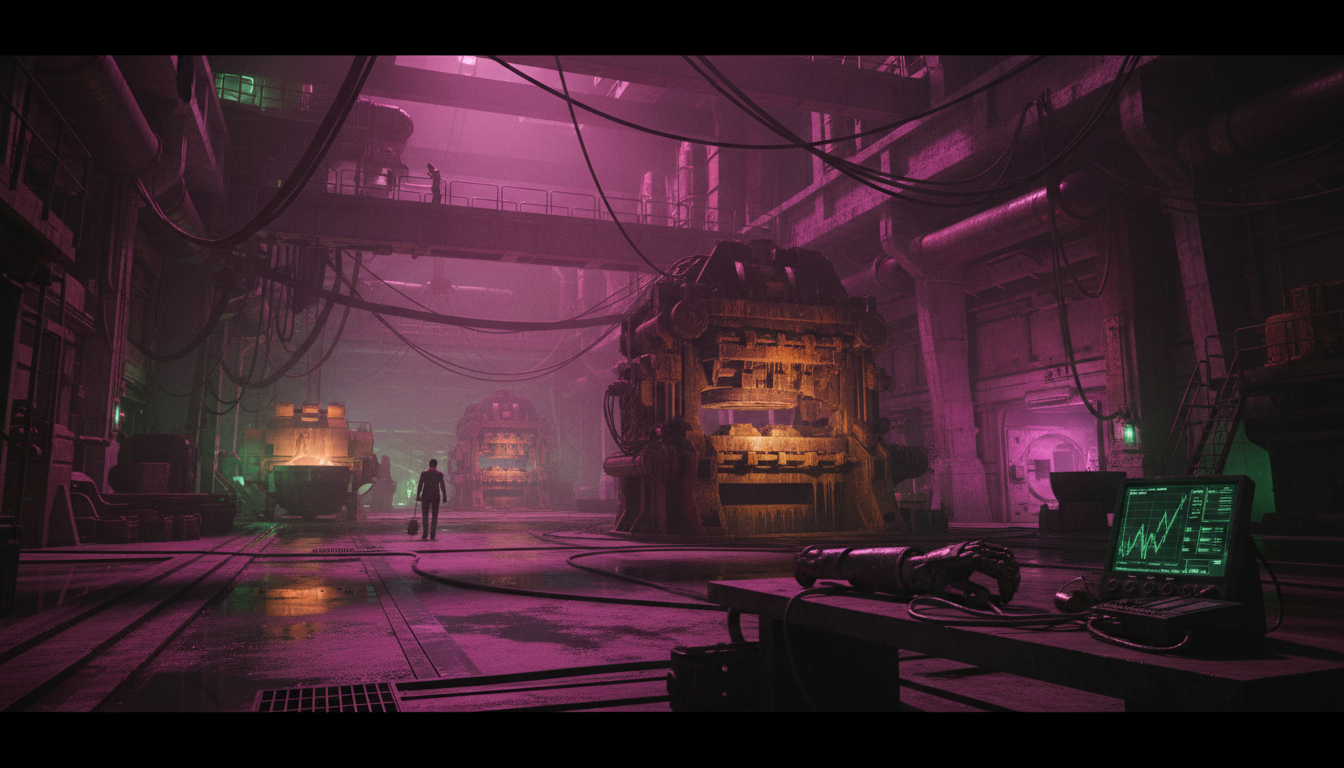
The medic who ran the quarterly physicals was thorough, kind, and entirely without illusions about what a decade in plated gravity and sulphur air did to a body — and Mira Solene appreciated all three qualities in roughly that order.
Bone density up.
Which sounded like good news until you understood the mechanism. The plating compensated for a gravity well the Sector did not naturally have, and a body built under compensated load thickened itself accordingly — the way any structure thickens under a stress it cannot escape.
Lung capacity down. Measurably. Year over year, on a curve you could have drawn with a ruler. The sulphur scrubbers doing enough to keep a person alive and nothing like enough to keep a person's lungs the shape they would have been topside.
Skin tone shifting, slowly, toward something the medic termed adapted pallor in the file and everyone else just called Sinks-pale. A description rather than a diagnosis, and used down here without any weight on it at all — people said it about their own children.
"None of it's dangerous, on its own," the medic told her, filling in the chart without looking up.
Which was somehow more reassuring than eye contact would have been. A man who looks up to tell you something has decided it is the sort of thing you look up for.
"It's just not reversible past a certain point. Ten years, maybe twelve. After that you're built for here."
Mira had asked, the first time she heard the phrase, what built for here actually meant in practice.
And the medic had answered without flinching from it, which she had respected then and respected more later, when she understood how many people asked him that question and how few of them wanted the real answer.
It meant a body that no longer handled a standard-gravity surface comfortably.
Joints that had learned one particular load and would ache under a lighter one — which is the part nobody believes until it happens to them, because a lighter load sounds like a mercy.
Lungs calibrated to an air mixture that did not exist anywhere else on the planet.
She thought about her own chart. Filed now alongside three hundred others. None of them alarming. Every single one of them pointed the same direction, at roughly the same rate, with the same three columns going the same three ways.
She had come down on an eighteen-month rotation that had become — without a single meeting where anybody decided it, without a vote or a notice or a form — a permanent physiological fact.
She did not resent the medic for the plain way he had said it.
And she found, turning it over afterward at the sizing bench with a shell in her hands, that she did not entirely resent the fact itself either.
It was simply true. Recorded without pity, because pity was not a column on the chart and the man had a hundred more physicals that quarter.
And the Sector went on being the only place in the solar system her body now properly belonged.
Chapter 8 — The Syndicate Forms
↑ Back to ContentsFocus: Aveline Rourke.
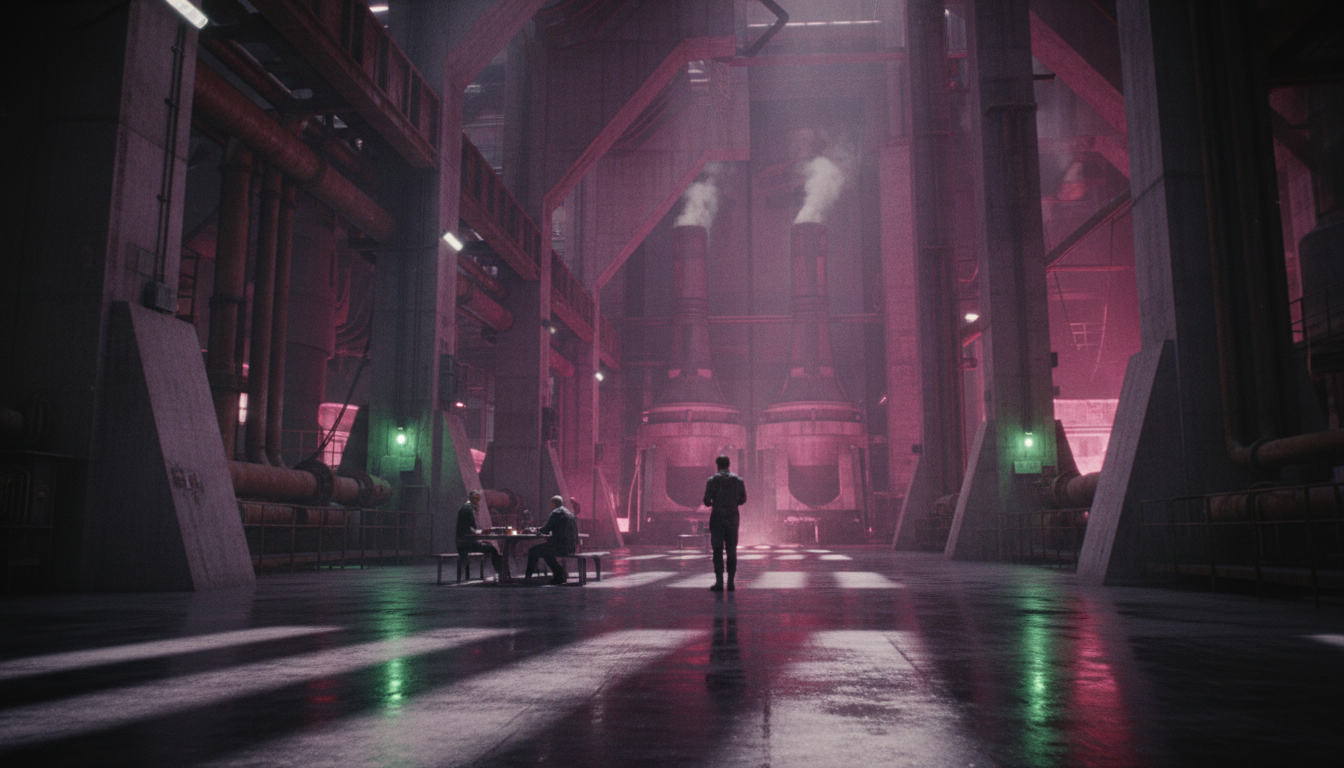
It started, as far as anyone could later agree, at a canteen table where six people were complaining about the same broken ventilation fan for the fourth week running — and Aveline Rourke had said, mostly as a joke, that somebody ought to be elected to complain about it properly.
The joke held.
That was the part nobody could explain afterward. Not why the idea occurred to her — she had been irritable and it was the fourth week — but why, when she said it, the table went quiet in the particular way a room goes quiet around something it did not know it wanted until it heard it said aloud.
Somebody said you'd win. Somebody else said she would, though. And that was the whole of the founding debate.
By the end of the week there was a vote.
Informal. Run off a sign-up sheet pinned by the canteen door, with two columns and a pencil on a string, and no rules about who was eligible to sign because nobody had thought to write any.
And Aveline had won it by a margin embarrassing enough that she assumed at first the sheet had been miscounted.
It hadn't been. She counted it twice herself, in the office, with the door shut.
She was Steward. A title nobody topside had asked for or authorised. Elected by a population with no legal standing to elect anybody to anything, for a role with no budget, no office, and no formal power whatsoever.
What she had, it turned out, was two things.
A chair at meetings she had previously had to talk her way into. And a name people used when a decision needed a face attached to it.
The fan got fixed within the month.
Not because Steward Aveline Rourke had any authority to requisition a repair crew. Because a repair request with a name and a vote count behind it moved through the queue faster than an anonymous one — and everyone on the queue's other end knew it, and not one of them could have told you which rule made it so.
She called it the Venusian Syndicate the first time mostly to make it sound more official than it was.
And the name stuck the way names stuck down here. By nobody objecting.
Six years on it had a proper ledger, a proper set of minutes, and a Steward's seat that changed hands on a schedule instead of a whim.
And it remained, structurally, exactly what it had been at that canteen table: a body with no power except the power of being listened to, by people who found it easier, in the end, to listen than not to.
Aveline kept the original sign-up sheet. The one from the ventilation fan.
Pinned inside her own locker, long after it should have been thrown out, going soft at the fold.
It was the only founding document the Syndicate would ever have.
And she thought that was, on balance, exactly right.
Chapter 9 — The Handover
↑ Back to ContentsFocus: all four posts.
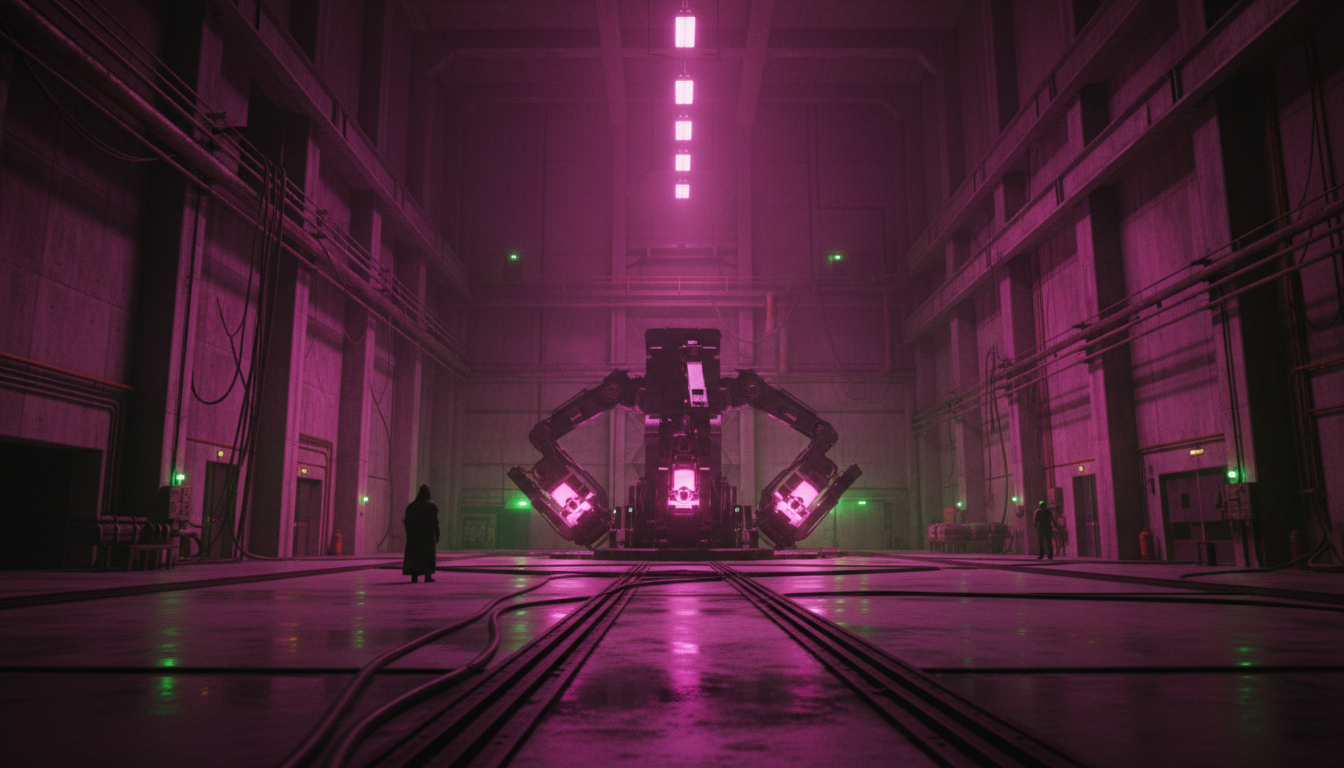
The handover happened on the same day every rotation, by a custom nobody had written down and everybody observed anyway: incoming and outgoing walked the post together for one full shift before the outgoing hand left for good.
Nobody could have told you when it started. It was not in the rotation terms. It was simply what was done, and a Sector that had been in existence for under a decade already had four or five of those.
Costa Marsh showed the new Ladle — a broad, quiet man named Bram Osei, no relation to Costa's brother-in-law despite the name, a coincidence that had already generated a week of canteen jokes and would generate a week more — the exact angle the ladle wanted tipping at.
And the one mould, third from the left, that ran a half-second slower to fill than the other five for reasons nobody had ever traced.
"Don't fight it," Costa said. "Just count the extra half-second and move on. Everyone who's tried to fix mould three has made it worse."
"Has anybody worked out why?"
"Two people have been certain they had. Both of them were wrong and both of them were good."
Aveline Rourke handed the Steward's board to a woman named Yara Bosch. Along with the ledger, and the original sign-up sheet — still pinned inside her locker, which she did not mention, so that the new Steward would find it on her own.
And a piece of advice she delivered without ceremony, at the door, already half turned away:
"Read every number they send you before you repeat it to the shift. Not because anyone's lying. Because you're the one who has to be able to say, later, that you checked."
Kip Adair walked the new Slot Nine holder around the deep gallery twice. Pointed out where the Tide came up strongest — the second bay, near the old bulkhead, where you feel it in the shins rather than the ankles.
And said almost nothing else. Because there was almost nothing else to say that would mean anything until the new hand had felt it a few dozen times for himself, and because Kip had been told the same nothing by the man before him and had eventually understood it as a kindness.
"You'll stop wanting to swap out," Kip said, at the very end.
And didn't explain that either.
Mira Solene handed the sizing bench over with the chart, the calipers, and a stack of completed shells racked and ready for the next phase of an order still marked customer confidential, proceed on current schedule.
She had, in four years, never learned who the shells were for.
She told the new Grader as much. Plainly, without apology, because it was the single most important thing about the post and she was not going to let the young woman discover it slowly.
And watched her take the calipers anyway, without hesitating — the way everyone here eventually learned to take the parts of the job that didn't add up.
By evening the four outgoing hands stood together on the lift platform for the first time in eighteen months.
Watching four new hands take up the same four posts below.
And none of them said what they were all separately thinking: that a rotation built to last eighteen months had just, for the first time, handed itself cleanly to a second generation.
And that the paperwork calling it temporary was now nine and a half years old.
Chapter 10 — The Anvil
↑ Back to ContentsFocus: the second Ladle.
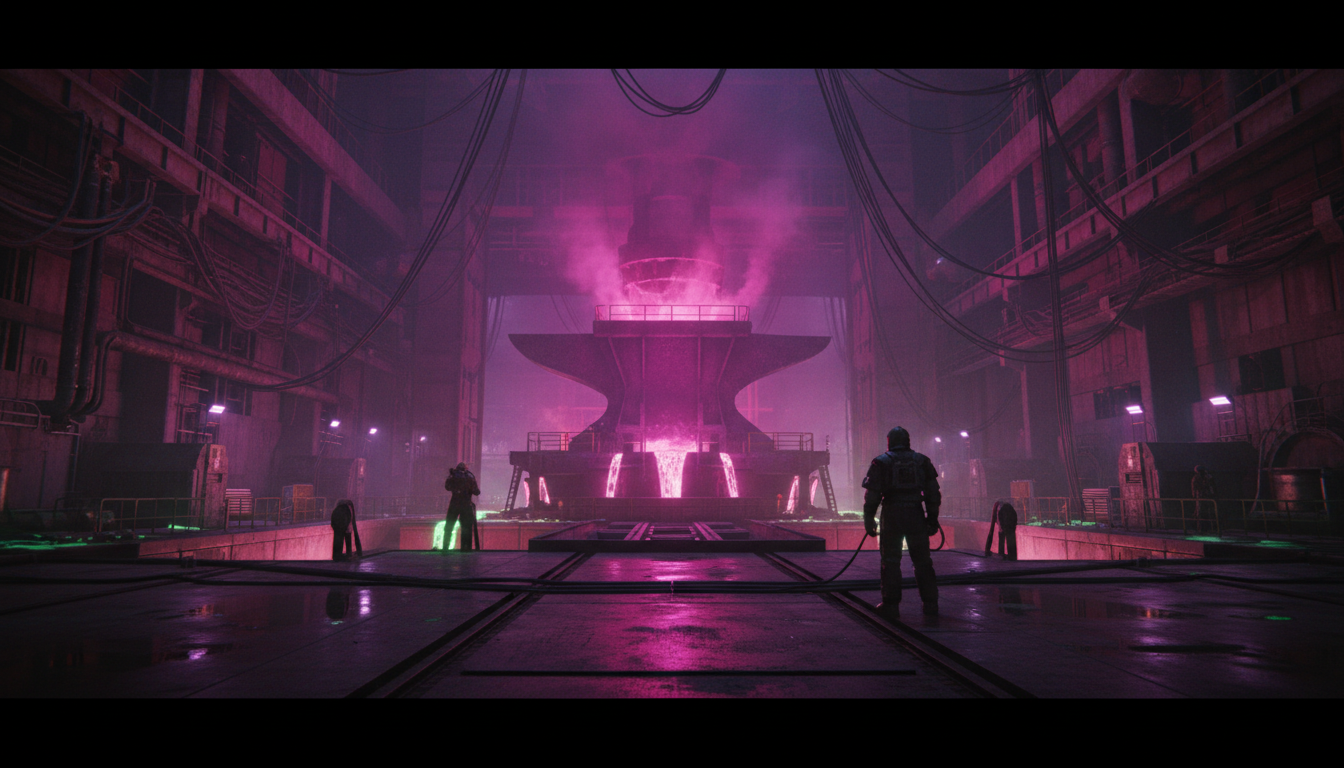
Bram Osei had thought, walking the post with Costa Marsh for that one long shift a generation back, that he understood what the Great Anvil was.
He had not understood. Not really. Not until he had held the Ladle himself for twenty years and watched the whole operation grow up around him into something Costa's generation would not have recognised.
Six furnace lines now, where there had been one.
A gantry system that moved crews between them on a schedule tight enough to keep every line at full pour for eighteen hours out of every shift day — designed by a woman in the second generation who had never been anywhere else and had never seen another foundry to compare it to.
The Great Anvil, people had started calling it. Without anyone deciding the name, the way nobody ever decided anything down here.
It had simply become obviously true — the largest single industrial operation on the planet — and the name had followed the fact by about two years.
He liked to stand at the gantry's high rail on the rare quiet minute and look down the full length of it.
Six pours going at once. Six lines of workers moving in patterns he would have called choreography, if anyone here had used that kind of word for their own work, which nobody did — though the word would have been accurate and he had thought it more than once and never said it.
Forty-five thousand people now called the Sector home. More than half of them born here.
And every one of the shells racked at the far end of the gallery came out of hands that had learned the work from someone else's hands — the whole chain running back to Mira Solene's original sizing bench without a single link broken.
He had checked that once, out of curiosity, on a slow week. Four Graders, in order, each trained by the one before. It had taken him an afternoon in the canteen file and he had told nobody, because he could not have explained why it mattered to him.
Somewhere on the surface, he understood without ever having seen it, entire cities ran their lights and their transit and their comfortable, temperate lives on the strength of what this floor produced.
Nobody up there had ever visited.
Nobody up there, as far as Bram knew, had ever asked to.
He didn't resent it, particularly.
There was a pride in the work that did not need an audience to be real. He had felt it the first time he tipped a ladle clean, at nineteen, with Costa watching and saying nothing — and he felt it now, twenty years on, watching six lines run at once under his own general direction.
Feeding an appetite nobody up top had ever once come down to say thank you for.
The Anvil didn't need thanks.
It needed the next pour on schedule, and the pour after that.
And Bram Osei, closing on two decades at the post that had made him, meant to give it exactly that for as long as his hands held out.
Chapter 11 — Born Here
↑ Back to ContentsFocus: the second Grader.
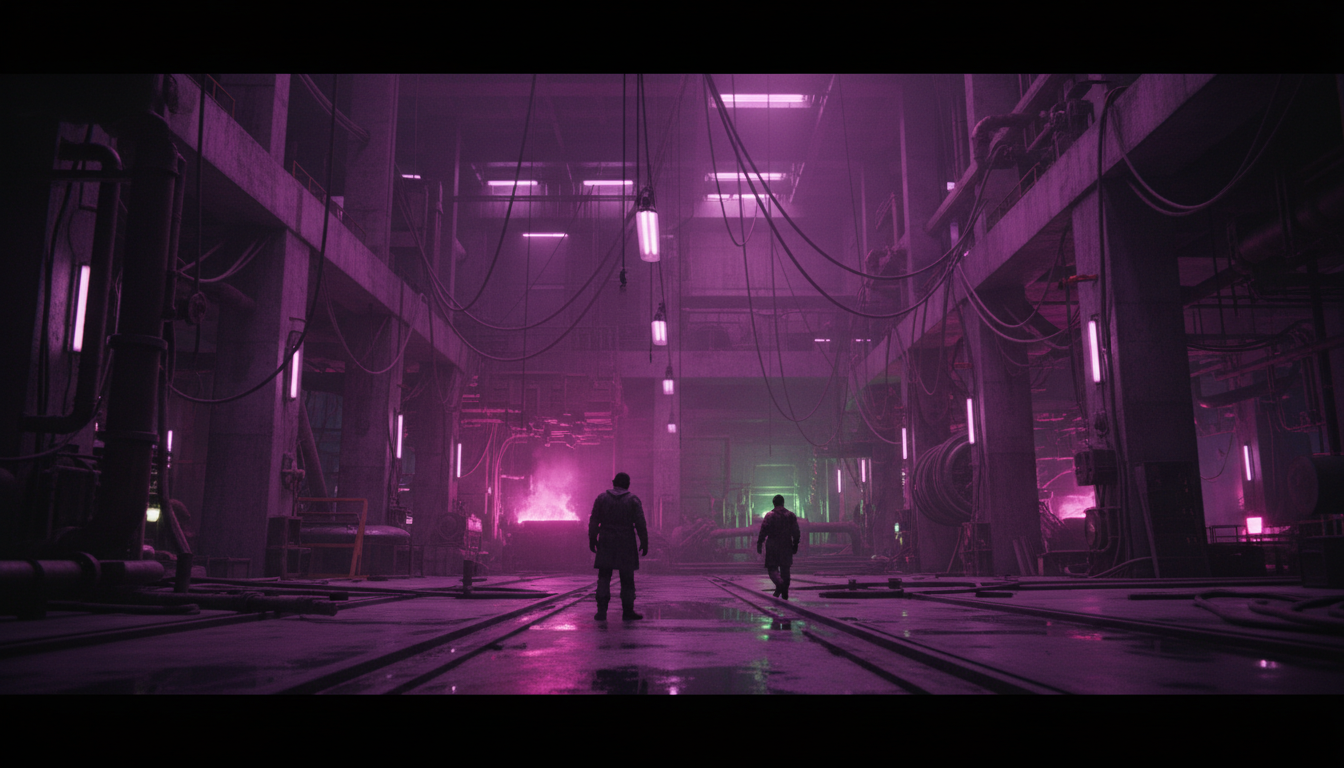
Sana Iwu had been born in the lower gallery housing — in the same crèche bay Costa Marsh's generation had built without a budget line for it — and she had never once, in twenty-six years, stood anywhere that wasn't plated for a gravity the Sector didn't naturally have.
She found out what that meant, precisely, on the one occasion she went topside for a Syndicate training course.
Three days. Standard gravity, standard air.
And came back having spent most of the second day sitting down — because her legs, built for a floor that pushed back harder than the surface did, kept telling her she was about to fall when she wasn't.
It is a specific and stupid sensation. Not dizziness. Her body reported, continuously and with total confidence, that the ground had just dropped away, and then reported it again four seconds later, and went on reporting it for three days.
"You get used to it," the training officer had said, not unkindly, watching her grip a rail she didn't need.
He meant the surface.
She understood, riding the lift back down with her hands finally still, that he had it backwards.
She wasn't going to get used to the surface. She was going to go home to the one place her body already fit, and stay there — because staying there was now the only option that did not involve retraining a skeleton that had built itself around this floor before she was old enough to have a say in it.
Nobody had done this to her on purpose.
That was the part she turned over, walking the sizing bench her mother had once run, checking calipers her mother's hands had once held and had worn a shine into on the left side of the barrel.
No directive had ever said children of Sinks workers will be raised in Sinks gravity. She had gone looking, once, in the canteen file, in the same spirit her great-grandfather's generation had gone looking for the trick in the rotation agreement.
No one had sat down and decided that a population should be produced that physically belonged nowhere else. There is no such decision anywhere in the Sector's paperwork and there never was.
It had simply happened. The way the crèche had happened. The way the stairs down to lower gallery housing had happened.
A thousand small, reasonable choices — each one somebody's kindness or somebody's convenience — compounding into a trap so total that nobody had needed to build a wall.
Because the walls were now inside the people themselves.
She wasn't unhappy about it, particularly. Which she suspected was the most Sinks thing about her.
She loved the bench. The six cradles. The calipers her mother had taught her to read before she could properly spell, sitting on a crate, aged six, being told to say the number back.
She simply understood — in a way the first generation never quite had, because the first generation had all arrived from somewhere — that she wasn't choosing to stay.
There was nowhere else her own legs would carry her comfortably.
And she had made her peace with that before she had ever been old enough to resent it.
Chapter 12 — Nobody Swaps Out Of Nine
↑ Back to ContentsFocus: the second Slot Nine.
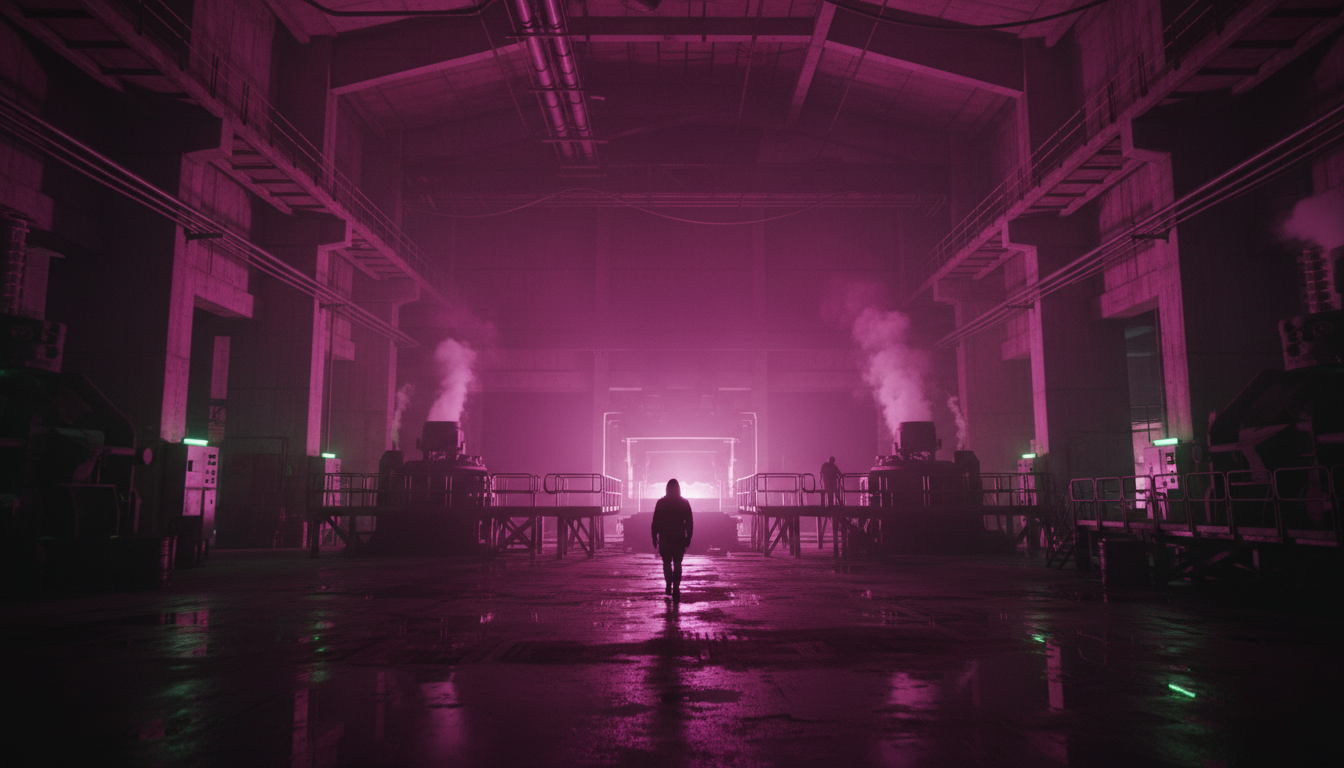
Dov Kessler had asked to be posted to Slot Nine — which surprised the roster clerk enough that she made him repeat it, because in thirty years of scheduling nobody had ever requested the deep gallery.
She wrote it down and then looked at what she had written and asked him a second time whether he was sure, and he said he was, and she shrugged and put him down for it.
He didn't have a good answer for why. Which he knew made him sound strange, so mostly he didn't offer one.
It wasn't that he liked the Tide.
Liked was the wrong word for something that came up through your boots twice a shift whether you wanted it or not — you do not like your own pulse.
It was more that he'd worked a rotation through Nine as a green hand years back, felt it the first time, and experienced something he still did not have language for.
Not fear. Not comfort.
Something closer to recognition. The way you might recognise a voice in another room before you could say whose it was — the certainty arriving well ahead of the name, and the name never arriving at all.
He mentioned this once. Carefully, at the end of a shift, to an older hand who had held the post for a decade before him — expecting to be told he was imagining things, and half hoping to be.
Instead the older hand had nodded. Slowly. And said only:
"Some of us do. Nobody explains it. You stop asking after a while."
And that had been the whole conversation. The man had gone back to his tea.
And Dov had understood — the way you understand a thing you are not given words for — that this was not a subject the deep gallery discussed with itself.
He kept working Nine for the rest of his career. Request renewed every rotation, in the same hand, on the same form, until the roster clerk stopped commenting on it.
And he noticed — the way Kip Adair had noticed a generation before him, though neither would ever compare notes and neither would ever know the other's name — that he had stopped wanting to swap out somewhere around his second year.
He also noticed, with a discomfort he never mentioned to anyone, that this preference put him in a small, quiet company.
Two, sometimes three people a generation who asked for Nine and meant it. None of whom could say why. All of whom stayed.
He could name the other two of his own generation. He had never spoken to either of them about it and never would.
That was worse, if he let himself think about it for more than a moment, than the Tide itself being unexplained.
A floor that does something strange to boots is one thing. Rock is complicated and the Sector is full of things nobody has instrumented.
A floor that some people want to stand on — without being able to say what the wanting feels like, or where it comes from, or why it selects the people it selects — is a different kind of unexplained.
And Dov Kessler, four years into a posting he had requested twice, had long since decided it was not his job to be the one who worked it out.
Chapter 13 — Who Are They For
↑ Back to ContentsFocus: Sana Iwu.

Sana Iwu filed the query the proper way, through the same channel her predecessor had used a generation back, phrased exactly as carefully:
Customer field on Order 4471 remains blank across seventeen renewal cycles, requesting confirmation this is intentional and not an administrative oversight.
She drafted it four times. The final version is deliberately the most boring of the four — no implication, no edge, nothing that could be read as a complaint by somebody having a bad morning.
The answer came back inside a day.
Which she noted. Because a query that mattered less would have sat in a queue for a week, and she had filed enough queries by then to know what the queue felt like.
Confirmed intentional. Order authorised at Syndicate level, funding verified, customer confidential per standing classification. Proceed on current schedule.
It was, technically, a complete answer.
Every question she had actually asked had been addressed. She checked that, twice, holding her own draft beside the reply, and could not identify a single thing she had asked that had not been answered.
It simply hadn't told her anything.
And she sat with that for longer than she meant to, turning the sizing chart over in her hands — six cradles, six body types, none of them matched to any population she had ever seen a manifest for.
She raised it once more, at a Syndicate meeting. Mostly to see what the room would do with it.
Priya Fenn, Steward that rotation, listened to the whole question without interrupting.
And then said, plainly, that she had asked the same thing herself two years back.
And had got the identical three lines back. Word for word.
"I kept mine," Priya said. "You can compare them if you want. I did."
She had. The two replies are in the Sector file, two years apart, indistinguishable.
"An answer that specific, that fast, twice, isn't an oversight," Priya said. "Somebody upstream has a form letter ready for exactly this question. That means people ask it. That means somebody expected us to."
Nobody in the room had a next step to propose.
Somebody suggested writing again and was talked out of it inside a minute, on the grounds that a third identical reply would tell them nothing a second one had not.
The order was legitimate. The funding was real. The work was good and well paid and the whole Sector ran on it.
Refusing to build would have meant refusing legitimate, funded, sanctioned work on the strength of a feeling — and feelings were not a line item anybody could put in front of the Syndicate's own ledger, which was the only ledger any of them actually controlled.
Sana went back to the bench afterward and finished the shell she had been sizing when the query first occurred to her.
Checking the shielding seam by feel, the way her mother had taught her, running the pad of her thumb along the join and trusting it over the gauge.
Whoever it was for, she thought, it was going to fit them.
That much, at least, she could still be sure of.
And for now it would have to be enough.
Chapter 14 — Sent Up
↑ Back to ContentsFocus: Bram Osei.
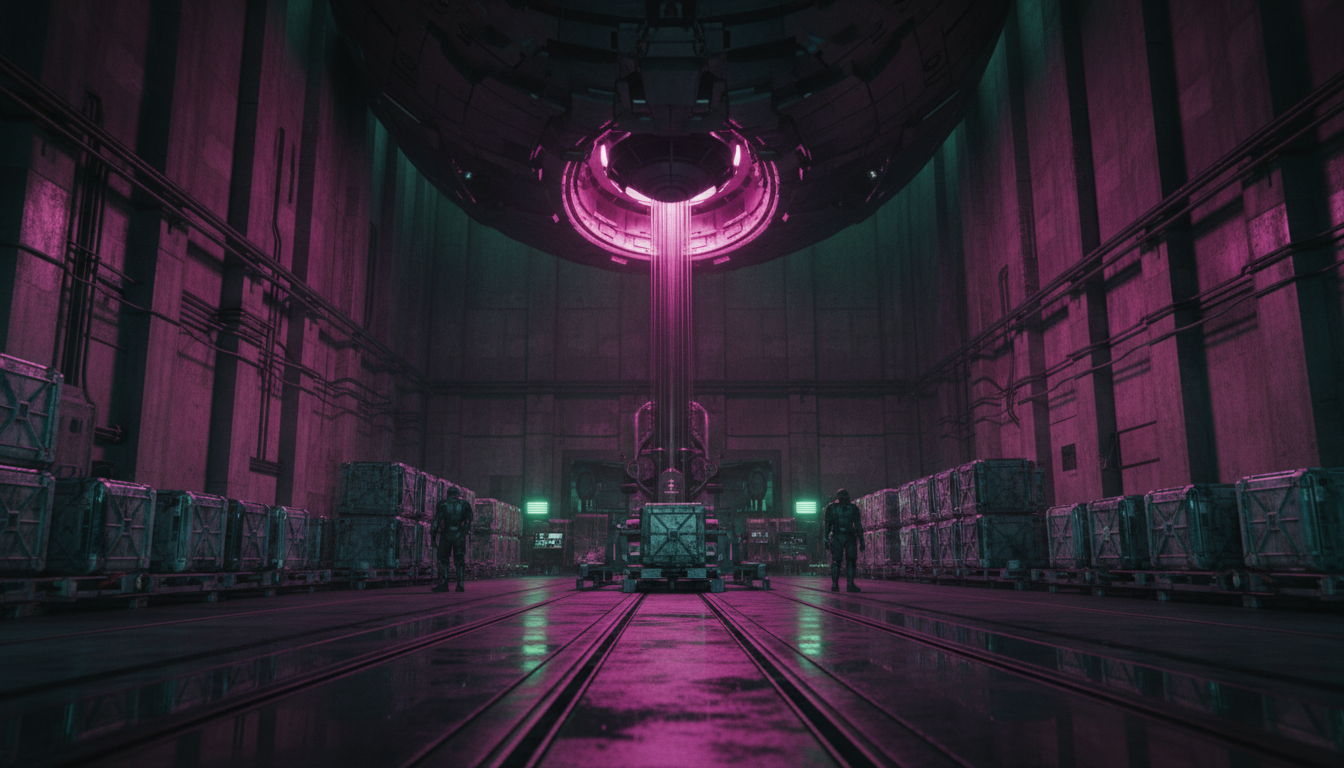
Bram Osei had never once seen where the shells went after the gantry crew racked them for transit, and it had taken him most of a career to admit that the not-knowing had started to bother him.
He asked a lift engineer about it one slow shift. More out of curiosity than anything he would have called concern, and phrased as small talk, which is how most real questions get asked on that floor.
Up the tether, she told him. Same as everything else the Sector shipped.
Into the orbital hull that had been under slow construction above them for longer than anyone at his post could remember. Into sealed volumes that got logged, catalogued, and left.
"Left where?"
"Left. That's the word on the manifest. Sealed and left."
She didn't know what happened after that either. Nobody at her end of the chain did, and she said so cheerfully, in the manner of a woman who had long ago decided which questions were hers.
He tried, one evening, to work out the arithmetic of it.
How many shells a year, at current output, times however many years the order had been running. He got a figure and did not believe it and did it again on paper.
And gave up somewhere past three hundred thousand — because he did not trust his own multiplication, and did not want to be wrong about a number that size in either direction.
Whatever the true figure was, it was large enough that the hull above them had to be substantial just to hold the output. Sealed volume after sealed volume. Each one representing a shift, a pour, a sizing bench, a query answered without being answered.
Going back four generations.
He found himself thinking, standing at the gantry rail on a rare quiet minute — the way Costa Marsh had stood there a generation before him, in the same place, for the same reason — that the Sinks were the only people anywhere who ever actually touched the things.
Whoever wore them eventually — and somebody would, someday, the spec was far too careful for the shells to be decorative and he had known that since he was nineteen — would put on something that had passed through his hands.
And Costa's. And his own two apprentices' hands after him.
And would likely never know a single one of their names, because there is no name anywhere on a shell. He had checked that too. There is a batch mark and a size band and nothing else.
That didn't trouble him the way he had expected it to, turning it over.
There was a kind of honesty in it, he decided.
The work didn't need his name on it to be real.
It only needed to be built right, sealed right, sent up right — and left to do whatever it was eventually going to do, for someone the Sinks would never meet and would go on building for anyway.
Chapter 15 — The Petition
↑ Back to ContentsFocus: the second Steward.
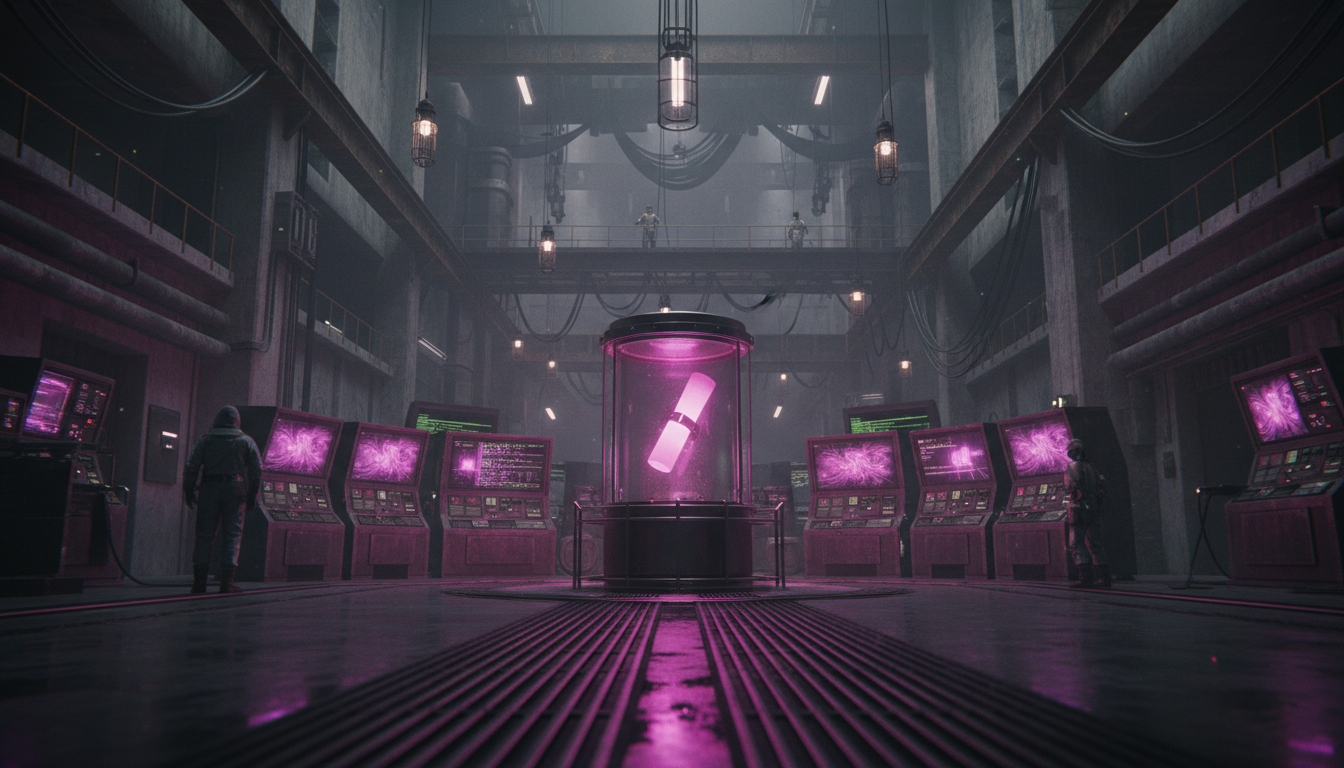
Priya Fenn drafted the petition over three weeks, in the evenings, because a document asking the Syndicate's parent authority to honour a hundred-and-forty-year-old relief schedule deserved better than a rushed first pass.
She built it the way Aveline Rourke had taught every Steward since to build anything that mattered — not directly, obviously; Aveline had been dead for a century. But the method was in the file, in the shape of every document that had worked, and a careful Steward could read it out of them.
Cite the original agreement by clause.
Attach the funding figures exactly as posted, in the original form, with nothing recalculated.
Request nothing that was not already, technically, owed.
No accusation. No suggestion that anyone had acted in bad faith — and she cut two sentences in the second week that could have been read that way by somebody looking for it.
Just the plain, well-supported request that the relief crew named in the founding rotation agreement finally be scheduled, funded, and sent.
The Syndicate voted to send it unanimously. Which had happened perhaps twice before in its history, and which she recorded in the minute with the vote count spelled out, because a unanimous vote is worth more on a page than in a room.
And Priya carried it up the tether herself on the next supply run, rather than trust it to routine transit.
Because a document this carefully built deserved a hand delivering it rather than a manifest slot — and because she wanted to be able to say, later, exactly whose hands it had passed through and on what date.
The reply took four months.
Which she noted was itself informative, though she was never able to decide what it informed her of.
And arrived exactly as reasonable as everything else this Sector had ever received from above:
Received with thanks, under active review, forwarded to the appropriate office for assessment against current operational priorities.
It was polite. It acknowledged every clause she had cited — every one, by number, which meant somebody had read it properly and that somebody had taken the trouble to show they had.
It committed to nothing. Offered no date. Closed no door.
Priya read it three times looking for the sentence that would let her tell the shift something concrete.
And did not find one.
She filed it correctly, the way the Syndicate filed everything — in a folder that already held forty years of similarly careful, similarly answered, similarly unresolved correspondence.
The folder had a label. Somebody four Stewards back had written RELIEF on it, in capitals, and had presumably expected that folder to be closed at some point.
She did not tell the shift it had failed.
Because it hadn't, technically. It remained, as far as the record showed, under active review — precisely where the very first petition, three generations back, had also once been placed and never moved from.
"Nobody's at fault," she told the Syndicate meeting afterward.
And watched the room accept that the way rooms here always accepted true, unhelpful things — with a nod, and a moment, and then the next item.
Nobody was.
That, she was beginning to understand, was the entire mechanism. And no single person in it could be blamed for a wheel that simply never stopped turning long enough to arrive anywhere.
Chapter 16 — The Sector Above
↑ Back to ContentsFocus: Priya Fenn.
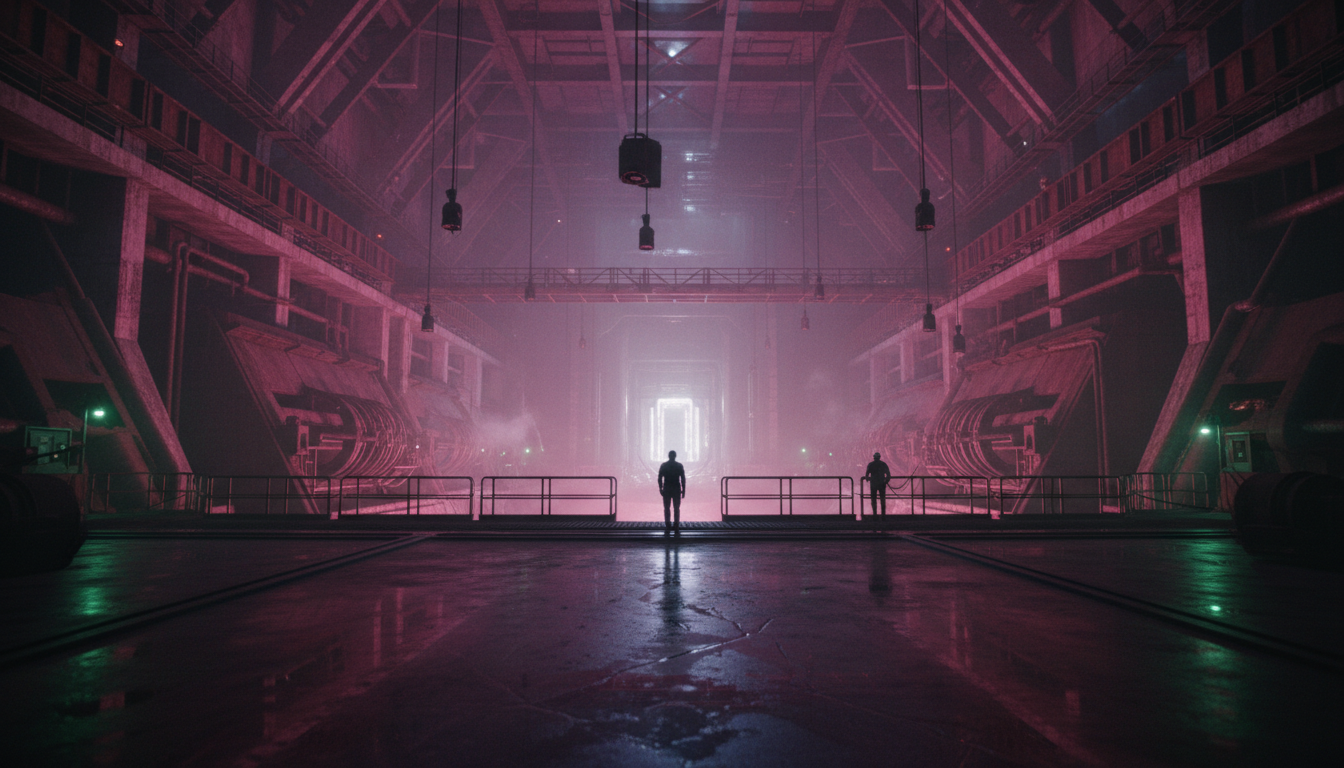
The delegation to the Earth Sector was Priya Fenn's idea — floated at a Syndicate meeting as a way of putting a face to the petition rather than another page of it — and she volunteered to lead it herself before anyone could suggest otherwise.
She had expected the surface to feel strange.
She had not expected it to hurt.
Standard gravity — 0.38g, against the plated compensation her body had spent thirty years learning to push against — felt at first like nothing at all.
A lightness. Almost pleasant, for the length of the walk from the shuttle bay, and she remembers thinking that the medics had overstated it.
By the second hour her joints had begun to ache in a register she did not have a name for. A soreness that came from muscle doing less work than it expected to, not more — which is a thing the body apparently resents as much as strain, and which nobody had thought to warn her about because everybody who could have warned her had learned it the same way.
By the end of the first day she understood, in her own body rather than in a medic's chart, exactly what Mira Solene's generation had first written down as fact a century earlier.
A body built for here does not simply adjust elsewhere.
It protests.
The Earth Sector delegation that met them was courteous, interested, entirely well-meaning — and utterly unable to picture what she was describing.
They had gardens. She had not expected the gardens to affect her and they did.
They had a sky, projected but convincing, and one of them apologised for it being projected, which Priya thought about for a long time afterward.
They asked polite questions about the petition and promised to raise it.
And Priya watched them mean it.
And understood, watching, that meaning it and moving it were two entirely different acts — and that nobody in this bright, spacious, temperate room had any authority whatsoever over the office that actually held her petition's file.
She asked, near the end, whether any of them had ever been down.
Two of them had been to the Sector's administrative levels. Neither had been to the floor. One of them said he would like to, someday, and meant that too.
She came home four days later, gratefully, her joints easing back into the load they knew somewhere around the second hour of the descent.
And told the Syndicate meeting the truth: the delegation had been well received, the petition had been sincerely acknowledged, and nothing whatsoever had moved.
She did not tell them about the ache.
Mostly because she was not sure yet how to describe a pain that came from a gravity being too gentle rather than too hard.
And she suspected, turning it over on the ride back down with her hands finally still on the rail, that a body could go its whole life down here and never once need the word for it at all.
Chapter 17 — A Death On the Floor
↑ Back to ContentsFocus: Bram Osei.
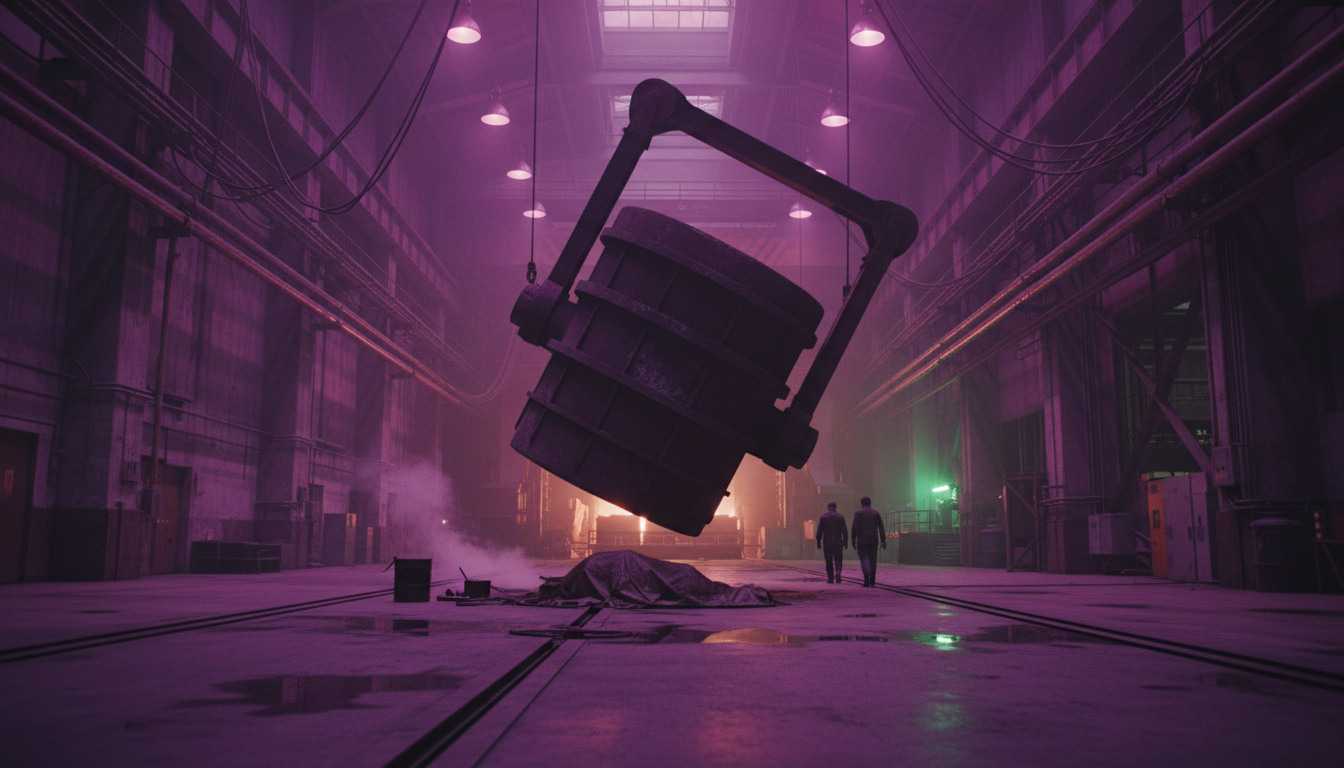
It happened on an ordinary shift, the way the old hands always said it would, and Bram Osei never afterward managed to remember the half-second before the gantry brace gave — only the half-second after.
A ladle line failure. The kind the safety briefings covered every quarter and nobody ever quite believed would reach them specifically.
A support strut fatigued past its rated life by a margin of months rather than years. A load shift at exactly the wrong angle. And a young pourer named Fen Ariti, eleven months into the post, gone before Bram had finished shouting the warning he was already too late to give.
He had been good. That is not a thing people say afterward to be kind; he had been genuinely good, eleven months in, and Bram had been intending to say so at the quarter review.
The Sector buried its own within three days, the way it always had.
In the small terraced plot cut into the gallery wall above the lower housing — the one every generation had added a row to, and nobody topside had ever visited or, as far as Bram knew, been told existed.
There is no line for it in any Sector document. It is not a facility. It has never been requisitioned or costed or inspected. It is four generations deep and holds two hundred and some names and appears in no filing anywhere on the planet.
The whole shift came.
Priya Fenn spoke, briefly, the way a Steward was expected to — naming what had happened plainly rather than softening it. Because the Sector had learned four generations back that softened language did nothing for the grief and made the safety review afterward harder to write honestly.
She used the words strut and rated life at a graveside. Nobody thought it strange. Two people nodded.
The shift resumed the next morning at the scheduled hour.
Because the furnace didn't wait for grief any more than it waited for celebration — and because banking six lines and bringing them back costs four days, which is a fact rather than a callousness, and which every person at that graveside knew.
And Bram found himself, ladle in hand, tipping the first pour of the day with his eyes stinging in a way the heat alone didn't explain.
Both things were true at once.
And he understood, working the second pour and the third, that both had to be.
The Sinks buried their dead properly, fully, without hurry.
And the Sinks did not stop — because stopping the furnace for grief was a luxury nobody topside had ever built into the schedule, and nobody down here could afford to invent one.
A strut would be re-rated. A briefing would be updated. Fen Ariti's name would go into the safety log and onto the terrace wall, in that order, which is the order the Sector does things in and has always done things in.
And the ladle would keep tipping. Level. The way his hands knew to do it before his head had finished thinking the word.
Because it was the only thing any of them actually knew how to offer the dead.
To keep doing, carefully, exactly what had killed them.
Chapter 18 — The Handover
↑ Back to ContentsFocus: all four posts.

The handover fell, by the same unwritten custom as always, on the same day of the rotation — and Bram Osei walked the new Ladle the length of the gantry the way Costa Marsh had once walked him.
"Third from the left runs a half-second slow," Bram said. "Don't fight it."
The new man asked whether anybody had worked out why. Bram said two people had been certain they had, and both of them had been wrong and both of them had been good, and did not mention that Costa Marsh had said exactly that to him, in this spot, with the same six moulds below them.
"And there was a strut failure on line two, four years back. The re-rating's in the log — but check it yourself before you trust a number somebody else checked."
He didn't say Fen Ariti's name.
He didn't need to. It was on the terrace wall, and the new Ladle would learn it soon enough — the way everyone here learned everything, by staying long enough to need to know it.
Dov Kessler took the new Slot Nine holder down to the deep gallery and said even less than Kip Adair had said a generation before him. Mostly because he had never found better words than none, and had stopped looking somewhere around his fourth year.
"You'll feel it. You'll either want to swap out or you won't. Either's fine. Nobody will ask you which."
The new holder waited for more. There was no more. They stood in the second bay for a while and then went back up.
Sana Iwu handed over the sizing bench with the calipers her mother had once held — the shine worn into the left side of the barrel by two women's thumbs now — the current query correspondence on Order 4471 filed in full, and a plain warning:
"The answer's always the same three lines. Don't waste a rotation being surprised by it."
Priya Fenn handed the new Steward the board. The ledger. The original ventilation-fan sign-up sheet, still folded inside its protective sleeve four generations on, gone soft along the crease and never once thrown out by anybody.
And, last, the petition.
Her own copy. The reply from the Earth Sector office still clipped to it. Filed under active review and never moved.
"This is the real kit," she said. "Everything else is easy by comparison."
The new Steward began to say something about taking it further and Priya let her finish, because everybody says it and everybody has to say it once.
"This one you just carry. Someone before me carried it to me. Carry it forward — and don't let anyone tell you carrying it is the same as failing to move it."
By evening the four outgoing hands stood on the lift platform together, the way every generation's outgoing four had stood, watching the new four take up the posts below.
None of them said aloud what all four were separately holding.
That the founding rotation — temporary by its own oldest paper — was now three handovers and most of a century deep.
And that the one document every Steward since Aveline Rourke had faithfully passed down the line had never once, in all that time, come back with an answer attached.
Chapter 19 — Four Generations Ago
↑ Back to ContentsFocus: the third Steward.
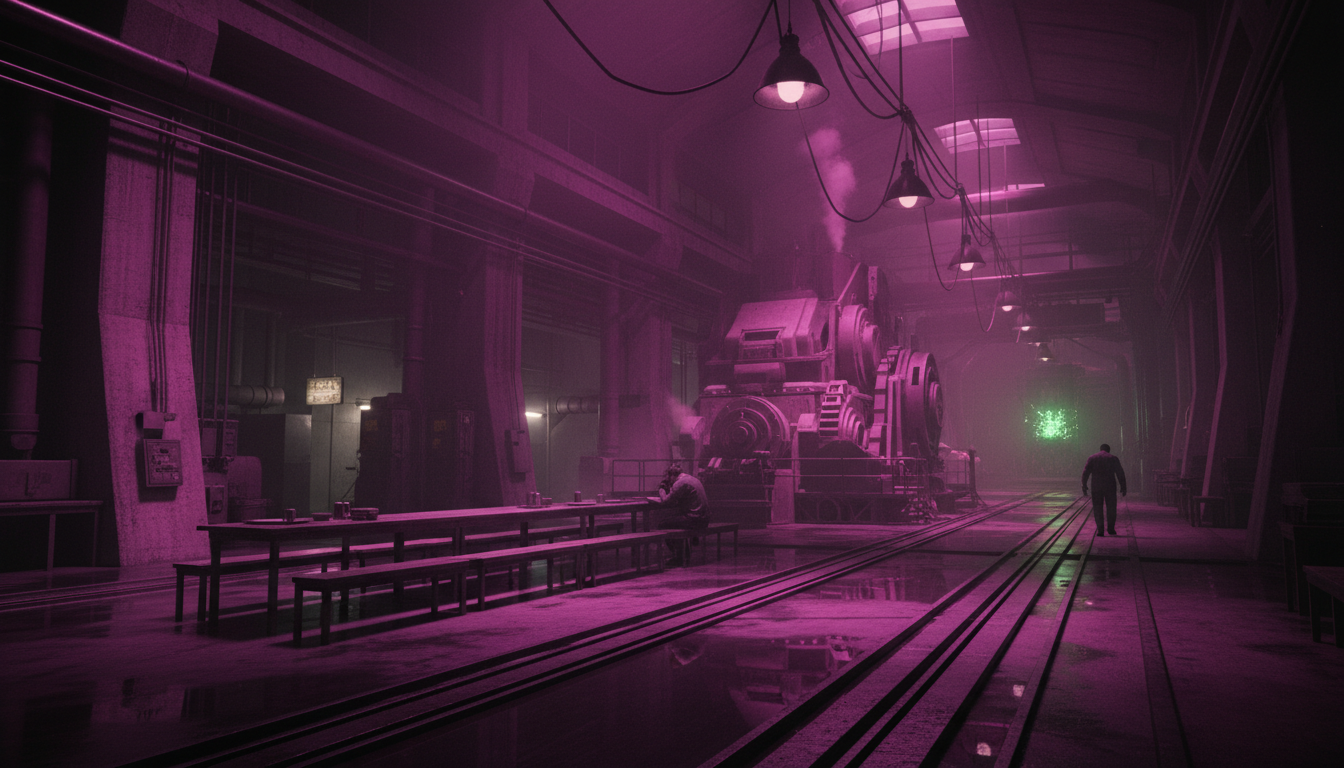
Emeka Voss found the phrase by accident, going through the founding rotation agreement for a Syndicate history display nobody had asked for and everybody, once it existed, seemed glad somebody had bothered with.
He had taken the job on himself, in the evenings, for the reason people take on jobs like that: because he had noticed nobody else was going to, and because it annoyed him.
Temporary rotation. Eighteen months.
He read the clause aloud at the canteen table where he had been transcribing it — mostly to hear how it sounded out loud after four generations.
And the table laughed.
Not unkindly. Not bitterly. The honest laugh of people encountering a joke that had simply taken a hundred years to land.
"Eighteen months," said an old hand near the end of the table, wiping her eyes. "I've been down here longer than that phrase has been wrong."
Somebody asked him to read it again. He read it again and it worked better the second time, which is not usually true of anything.
Nobody was angry about it.
Which surprised Emeka a little, turning the reaction over afterward on the walk down.
He had expected — reading it fresh, transcribing the clause word for word off a document nobody living had signed, in a hand that had been dust for a century — that the room might feel the weight of it the way he half had.
Instead the Sinks had simply absorbed it into their own running joke about themselves. The way they absorbed everything.
Eighteen months, said whenever a shift ran long. Or a shipment came in late. Or anybody made a plan more than a season out, or promised a repair, or said they would get to something.
It had become shorthand for exactly the kind of promise nobody down here believed anymore — and nobody down here particularly minded not believing.
His own daughter used it. She was eleven. She had no idea it came from a document.
He mounted the clause on the canteen wall anyway. Framed.
Next to the original ventilation-fan sign-up sheet, which had somehow migrated from Aveline Rourke's locker into a proper display case sometime in the second generation, by a process nobody had recorded and everybody assumed somebody had authorised.
It seemed right that the two founding documents of the Sector's actual, lived history should hang together.
One a joke that had become a fact. The other a fact that had become a joke.
And neither one, four generations on, requiring any explanation whatsoever from anybody who had grown up reading them both on the way to shift change.
"It's just very old paper," he told a visiting inspector who asked about the framed clause.
And found, saying it, that the sentence covered the whole of what he meant better than a longer answer would have.
Chapter 20 — A Language
↑ Back to ContentsFocus: the third Ladle.
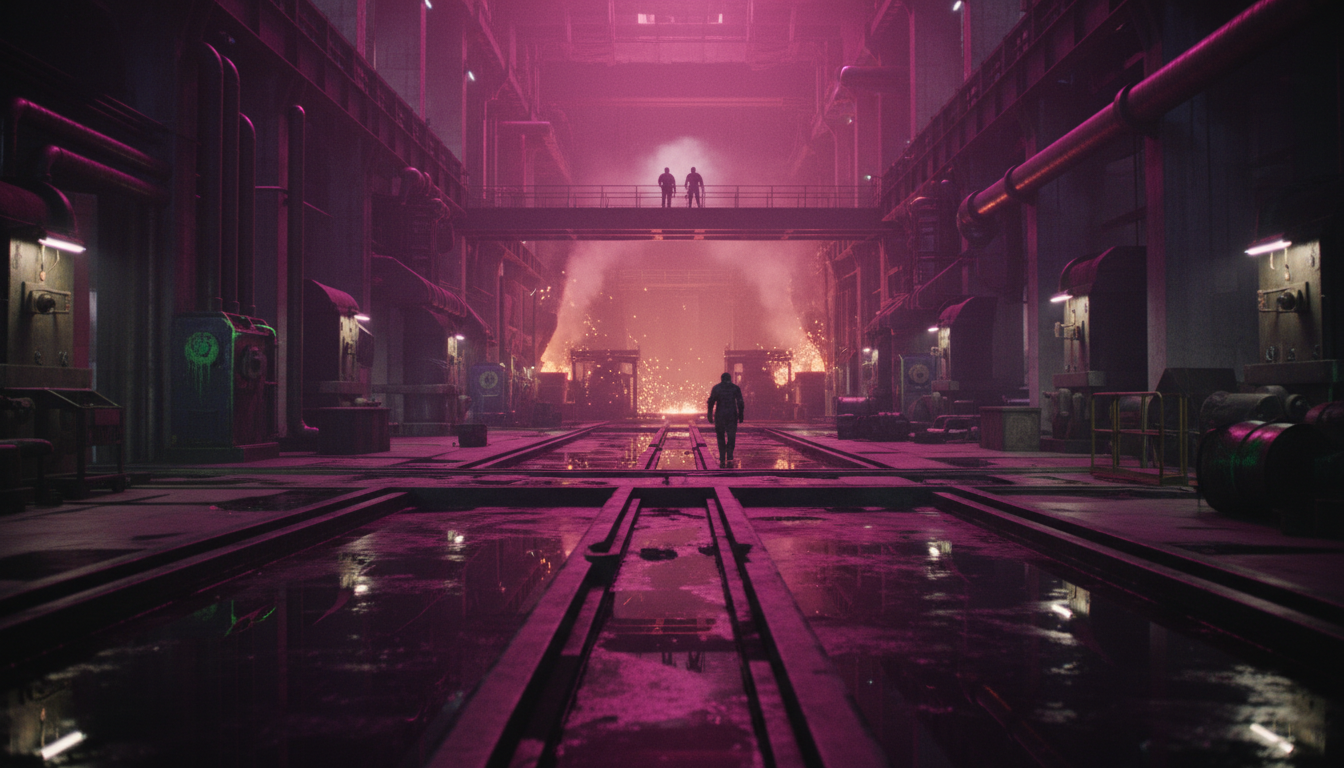
Rosa Ilunga had grown up speaking a version of Standard that a topside linguist — visiting once on a survey nobody had requested — described as remarkably stable creole formation for four generations of isolation.
Which was, Rosa thought, a very long way of saying the Sinks talked like the Sinks and always had.
The linguist had stayed nine days and recorded a great deal and had been perfectly pleasant about all of it. Nobody in the Sector had ever seen what came of it, and nobody had asked.
There was a word for the ache that set in after a double shift on the Anvil that did not exist anywhere else on the planet — a specific ache, in a specific place, which everybody who worked the floor had and nobody topside had ever needed a word for.
And a word for the particular quiet of the deep gallery between Tides, which meant something closer to held breath than silence, and which you could not use about any other quiet without sounding strange.
There were songs.
Work songs, mostly, timed to the pour — because a pour has a rhythm and a rhythm collects words. Nobody had composed them so much as accumulated them. Verse by verse, one shift at a time, over a century, until nobody alive could say which line belonged to which generation.
Rosa knew four verses of one that her grandmother had known six of. Two had simply not been passed on, by nobody's decision, and were gone.
The food had its own grammar too.
Canteen recipes built around whatever the supply runs actually brought, rather than what a surface cookbook assumed you would have — seasoned for a sulphur-adapted palate that found topside food, when anyone tried it, oddly flat.
Rosa had gone up once, for a competition nobody important attended, and come back saying the surface food tasted like it was apologising for something. That line had itself entered circulation and she had heard it repeated back to her twice by people who did not know it was hers.
She thought about this, working the Anvil on a slow afternoon, turning her grandmother's phrase for the Tide over in her head.
Old bones settling.
Which wasn't the engineer's report, and wasn't quite anybody's real belief either. Just a thing said, because it needed saying and nothing truer was on offer.
None of it was exported.
None of it was borrowed — not really, not anymore. Whatever Standard the first generation had brought down with them had been four generations reshaped into something entirely its own.
The way the crèche had. The way the stairs had. The way the Syndicate itself had — all of them things nobody upstairs had authorised and nobody down here had needed permission for.
The rest of the planet had never heard a single verse of it.
And Rosa found, humming one under her breath at the pour, that she had stopped minding that a long time before she had ever thought to ask herself whether she should.
Chapter 21 — What the Floor Does
↑ Back to ContentsFocus: the third Slot Nine.
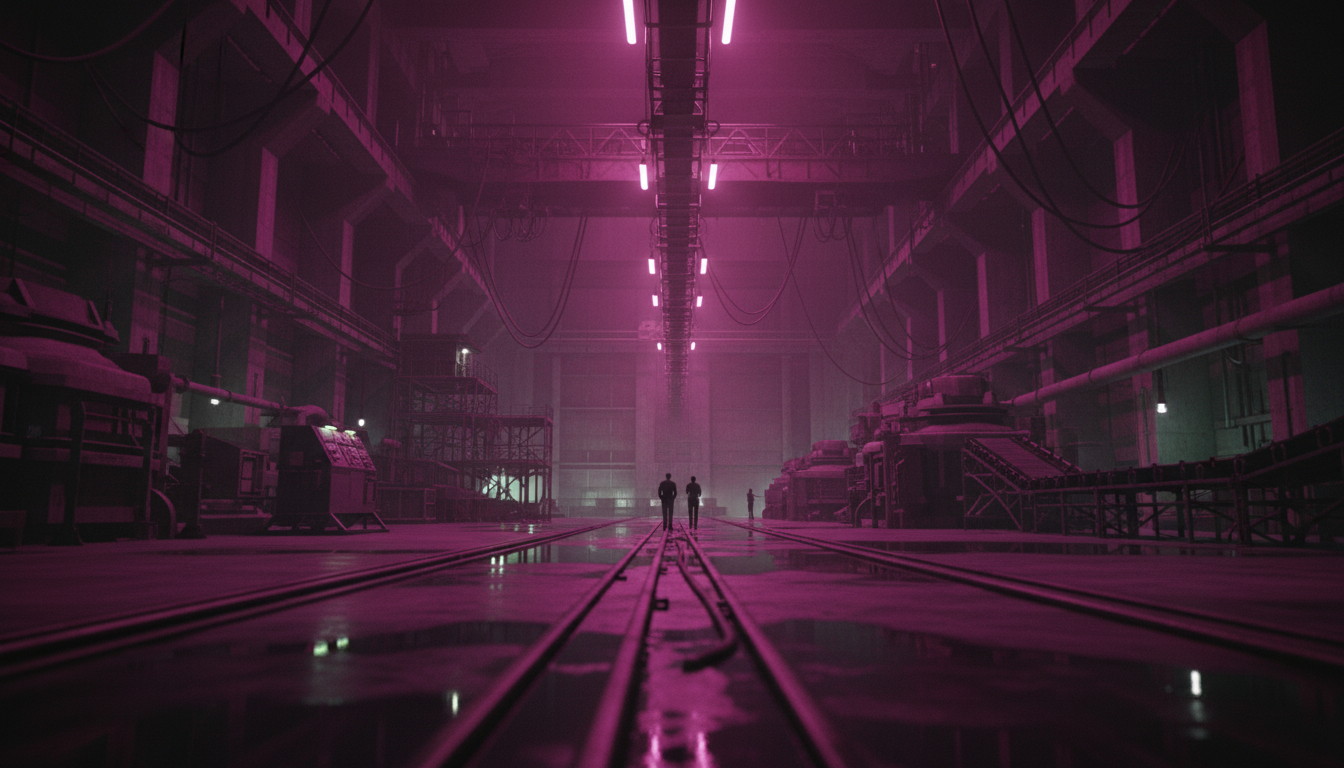
Nils Okoro had held Slot Nine for six years before he tried, seriously, for the first time, to describe the Tide to someone who hadn't felt it — and gave up somewhere in the second sentence.
It was his sister's husband, at a wedding, asking politely.
The trouble wasn't finding words.
The trouble was that every word available described something the Tide wasn't quite.
A pulse — but it had no rhythm you could set a clock to, and he had tried, and the log is in the back of a rack book somewhere.
A pressure — but nothing pressed.
A sound — but it arrived through the boots before it reached the ears, if it ever reached the ears at all, and he was no longer certain it did.
Four generations of Slot Nine holders had tried the same exercise and landed, every time, on the same honest failure.
And Nils had come to think the failure itself was the truest thing anyone down here knew about it. That the correct description of the Tide is the sentence collapsing halfway through, and that anybody who finishes the sentence cleanly has described something else.
He had read the old engineer's report. The one that called it thermal cycling in the deep rock — cited, filed, and believed by exactly nobody who had ever actually stood where he stood.
He had also read, once, an idle note from a surface researcher three generations back.
Somebody who had used a different word entirely, for a very different and very distant phenomenon deep in the planet's mantle. Undersong, the note called it. In a context that had nothing whatever to do with the Venus Sector, filed and forgotten in an archive nobody down here had ever had reason to open.
Nils had never seen that note.
Neither had anyone at Slot Nine, then or since, and neither would anyone after him.
The Sinks had their own word. The Tide. Arrived at independently, by somebody's grandfather's shift lead, for reasons nobody recorded.
And it was wrong the same way the engineer's report was wrong. And it would stay wrong — because nobody on this floor had the instruments or the reason to make it anything else, and because a man who wanted to find out would have to explain to somebody why it mattered, and it does not matter, on any measure the Sector uses.
He didn't mind the not-knowing anymore. Six years in.
He minded, a little, that some part of him no longer wanted to know.
That the not-knowing had become, without his ever choosing it, the actual shape of his relationship to the floor. Closer to it than anyone alive on the planet, and none the wiser for the proximity, and no longer troubled by that.
He counted the rack.
He felt the Tide come up through his boots, on schedule and off it, twice a shift.
And he went to canteen after — the way every Slot Nine before him had — with nothing new to report, and no particular wish to go looking for something to report.
Chapter 22 — Ledger's End in the Sinks
↑ Back to ContentsFocus: Emeka Voss.
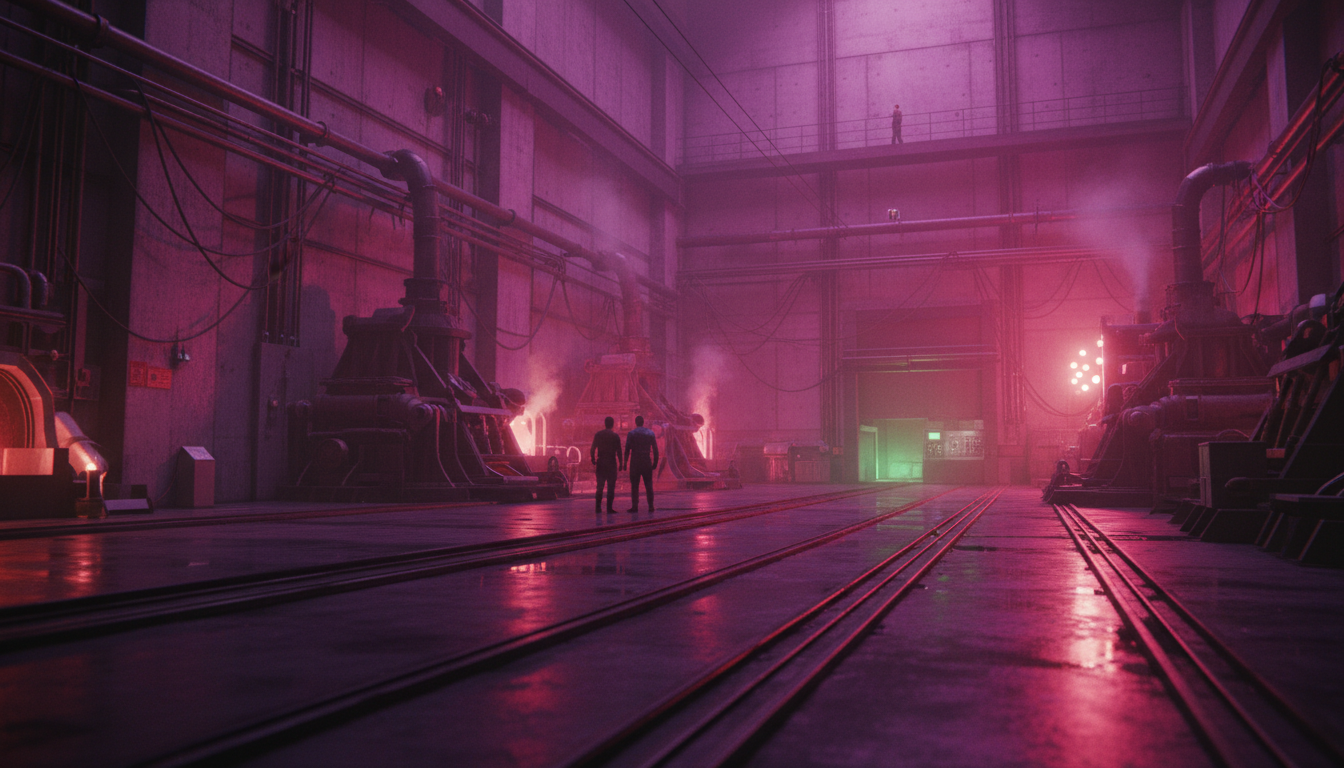
Emeka Voss had been warned, his first year as Steward, that Ledger's End in the Sinks was not to be taken lightly — and he had assumed the warning meant something administrative until he actually stood through one.
The whole Sector ran, in practice, on a shift-swap economy nobody official had ever chartered.
Favours banked and called in. A covered double shift here repaid with a covered holiday there. Somebody's crèche week taken on so a woman could sit an exam. A currency more real to most workers than the wages posted on any board — and, unlike the wages, entirely unrecorded anywhere except in people's heads.
Ledger's End was the one night a year every outstanding swap got settled. Publicly. At once.
In the widened-out canteen, with both furnace lines banked low — which costs the Sector a day's output and has never once been questioned by anybody topside, because nobody topside has ever noticed.
It took four hours.
Emeka read out debts and credits the way Aveline Rourke's first Ledger had been read a hundred years before. Name by name. Favour by favour.
And the room settled each one aloud.
Sometimes with an argument that ended in laughter — there is a whole sub-genre of Ledger's End argument about whether a favour done badly counts as a favour, and it is settled differently every year.
Sometimes with a debt forgiven outright, because everybody present already knew the story behind it and agreed the story had cost the debtor enough.
Nobody left owing.
That was the one rule that had survived four generations unchanged: everyone starts the new year even, whatever it takes to get there. Emeka had asked, his first year, what happened if somebody genuinely could not settle. He was told, by three people at once, that then the room settles it, and that this was not charity and should not be described as charity.
After the reading came the food.
A full year's saved rations spent in a single reckless night. Every recipe the Sinks had ever accumulated laid out at once — sulphur-adapted palates finally getting the version of a feast that would have tasted wrong to anyone from the surface, and tasted, to everyone in that canteen, like the one night a year the Sector allowed itself to be lavish.
Then the songs.
The accumulated work-songs, sung properly for once instead of timed to a pour. Verses from four generations layered over each other until nobody could say where any one of them started, and two people singing different fourth verses at each other, both correct.
Emeka had heard, secondhand, that surface celebrations ran bigger. Brighter. Better lit.
He didn't doubt it.
He also didn't — watching a furnace worker and a Steward's aide finish a decade-old joke debt with an embrace instead of a payment — feel that he was watching anything smaller than the real thing.
Chapter 23 — The Sizing Bench
↑ Back to ContentsFocus: the third Grader.
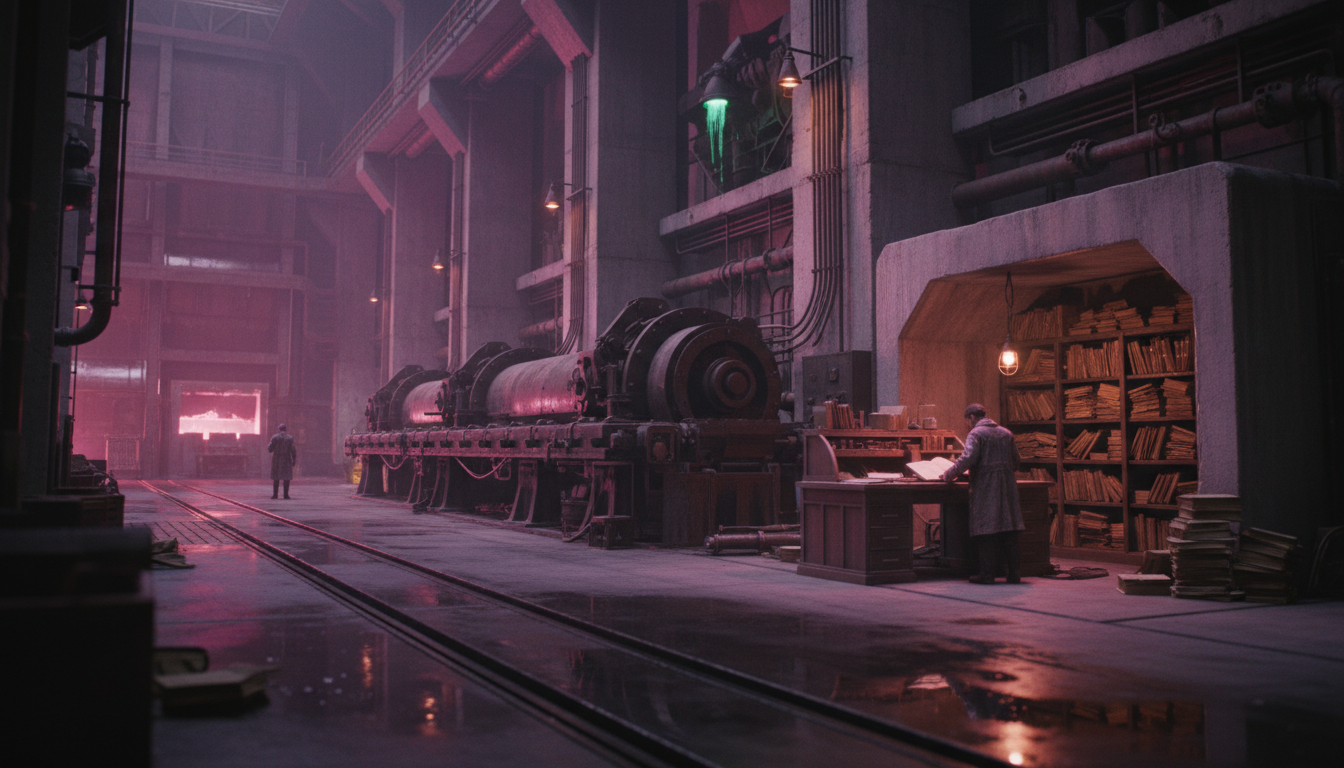
Yuki Bardo was the only person on her shift who could read fluently — which she had known since childhood without ever quite registering what it made her responsible for, until the day she went looking through the bench's back cabinet for a spare set of calipers and found a century of paper instead.
Reading is the Grader's post. That is the whole of what distinguishes it. Everybody on that floor could read enough — a gauge, a roster, a name — and about one in nine could read the way Yuki could, which is to say for four hours without getting tired.
Every Grader since Mira Solene had kept records.
Not because any directive required it. There is no directive. The sizing bench simply needed a history to function at all.
Tolerance charts that had to be checked against what had actually shipped. Seventeen renewal cycles of a query answered the same three ways, kept because the next Grader would otherwise waste a rotation asking it again. A running tally of who had trained whom, going back to a hand nobody now living had ever met.
Nobody had ever called it an archive.
It had simply accumulated — the way the crèche had, and the stairs, and the Syndicate itself. Each Grader adding what the job in front of them required, and never once stepping back to notice what the whole cabinet amounted to.
Yuki stepped back.
She spent three off-shifts reading straight through it. Start to finish, in order, with a lamp, sitting on the floor of the bench room because there was nowhere sensible to put it all.
And came out the other side understanding the Sector's own history in a way no oral account handed down at Ledger's End had ever quite given her.
Dates. Real ones, against real orders.
The exact renewal cycle when the customer field first went blank — which turned out not to be the first cycle, which surprised her, and which nobody in the Sector's spoken history had ever got right.
Her own great-grandmother's handwriting, three generations back, noting a discrepancy in a shipment count that nobody had ever resolved — and that nobody, reading the note now, could even say still mattered.
She sat with that page a long time. It was the handwriting rather than the discrepancy.
She didn't tell anyone what she'd found.
Mostly because she wasn't sure yet what there was to tell. It wasn't a secret. Anybody could have opened that cabinet at any point in a hundred years, and several people presumably had, and had been looking for calipers.
It was simply the only written memory the Sinks possessed — kept by accident, by four generations of people who had never once thought of themselves as historians, filed in a cabinet behind a caliper drawer because that was where the sizing bench had room for it.
She started keeping it properly after that.
Indexed. Dated. A spare set of pages set aside specifically for whoever held the bench after her, with a note at the front explaining what the pages were for.
Not because anyone asked her to.
But because she had read enough of it now to understand that somebody, eventually, was going to need to know exactly what this Sector had actually done, in order.
And she intended the record to be there when they did.
Chapter 24 — Somebody Gets Out
↑ Back to ContentsFocus: Yuki Bardo.
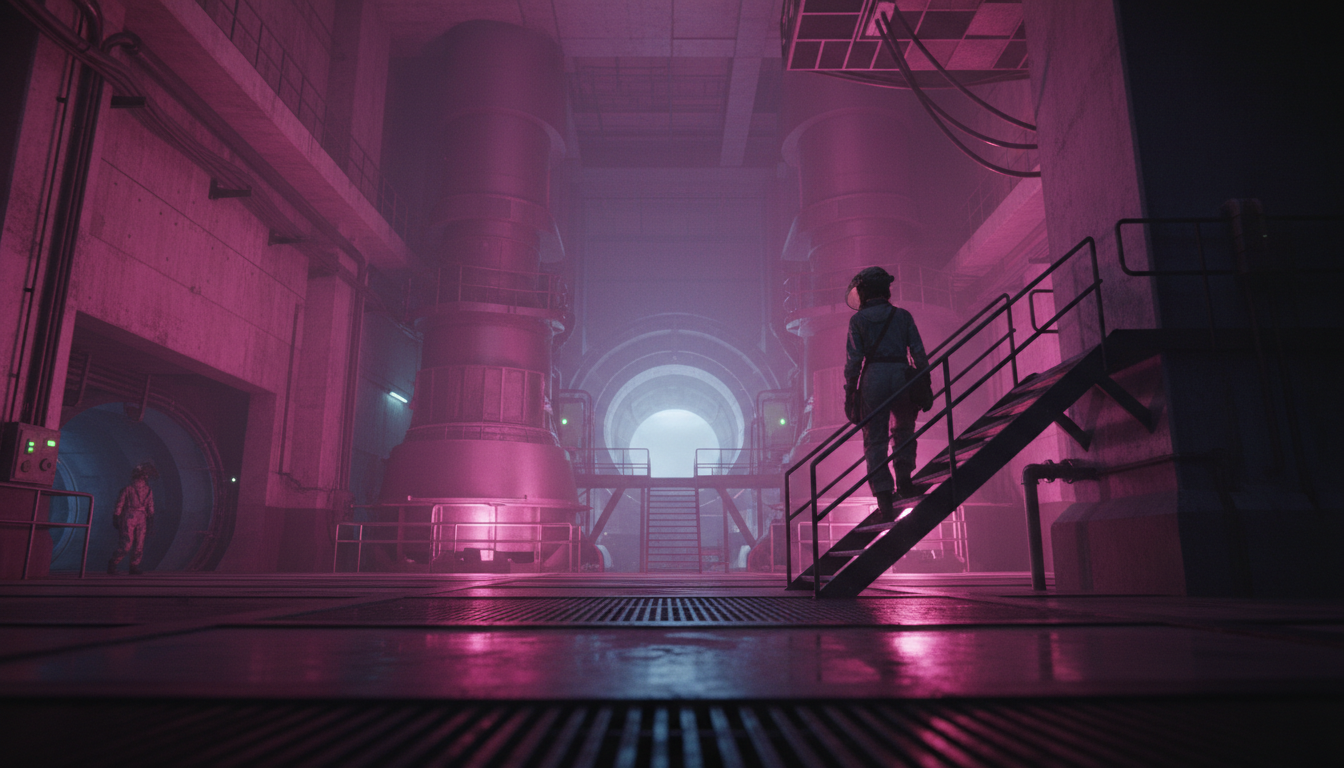
The girl's name was Dess — a canteen worker's daughter Yuki Bardo had watched grow up two bunks down — and when the surface placement notice came through with her name on it, the whole gallery treated it the way the Sinks treated everything worth celebrating: loudly, and with food.
It was, everyone agreed, entirely legitimate.
Dess had applied through the proper channel. Passed the proper assessment. Been accepted into a surface training program on her own merit — no favour called in, no exception made, nothing anybody could point at.
The Syndicate itself sponsored her transit, which it did perhaps twice a decade and which required a vote.
Half the gallery came to see her off at the lift. Somebody's grandmother made the thing with the crust that only gets made for departures and funerals.
And Yuki stood near the front, glad in the plain, uncomplicated way you are glad for somebody who has got something they worked for.
The letters came back at first regularly.
Then less so. Then in a shorter register that Yuki recognised before she let herself name it.
The same thing Priya Fenn's generation had written down as fact, and the medics a century before that. Lungs calibrated to an air mixture that did not exist anywhere else. Joints built for a load the surface did not provide.
Dess wrote that the training program was going well.
She wrote, three letters later, that she still hadn't fully adjusted. Eight months in. And that her instructor had gently suggested she might not.
The word gently was in the letter. Yuki noticed it and did not write back about it.
She didn't come back to visit for two years.
And when she finally did — on a supply run home for her mother's birthday — Yuki barely recognised the way she moved.
Lighter, somehow. In a manner that read less like ease and more like a body that had simply given up expecting to feel at home anywhere.
Dess didn't come back to stay.
Nobody expected her to by then, least of all Dess herself — who said plainly, over the birthday meal, with her mother right there, that the surface had cost her something the Sinks would have kept safe, and given her something the Sinks could never have offered.
And that she'd made her choice, and didn't regret it, and missed this table anyway.
Her mother said that was the right way round to have it. Which was generous, and true, and cost her something to say.
Both things were true.
And the gallery let them both be true, without insisting on a tidier answer, without anybody trying to talk her round or make her feel the choice again.
Which Yuki thought — watching Dess laugh too hard at an old joke she had clearly missed the beginning of — was the only honest way anybody here knew how to send a person off and still call it a blessing.
Chapter 25 — Book One, Above Them
↑ Back to ContentsFocus: Rosa Ilunga.
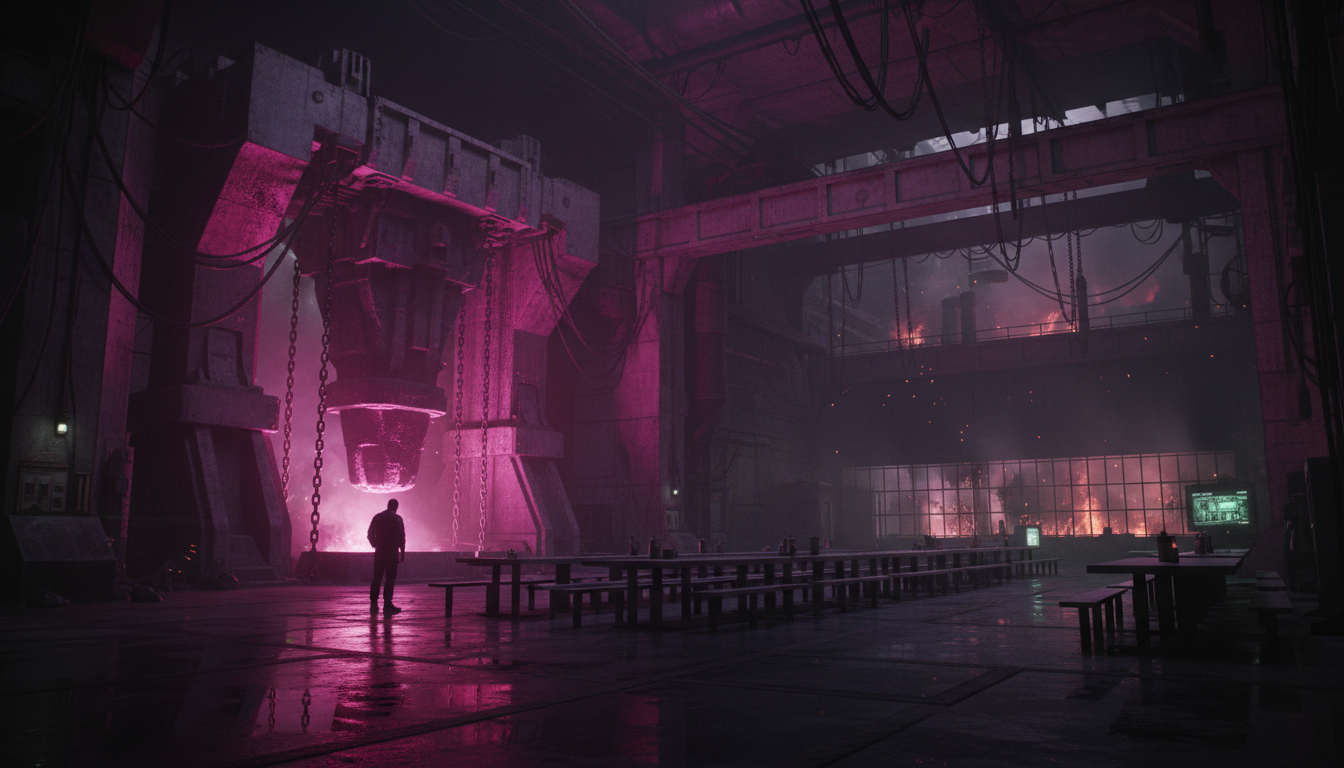
The news reached the Sinks the way most news from three sectors away reached the Sinks: secondhand, days late, over the canteen radio during a meal break, competing for attention with the clatter of trays.
Rosa Ilunga heard the word coup before she understood what it meant for a governance structure she had never lived under to be overthrown.
And she heard the word fire before anyone could tell her which fire, exactly, out of what she gathered had been several.
Blackouts.
A place called the Plaza — said with a weight that meant everyone topside already understood it and nobody down here quite did. Somebody at the next table asked what the Plaza was and got three different answers, none of them confident.
A Handoff. That word repeated more carefully than the others, as if the reader on the radio was not fully certain what it meant either.
The Great Anvil ran through all of it without missing a scheduled pour.
Rosa noted this without particular surprise. The furnace had run through deaths. Through petitions filed and buried. Through a hundred years of paperwork calling the whole Sector temporary.
It was not going to stop for a crisis three sectors away that had, as far as anyone in that canteen could tell, no bearing whatsoever on whether Order 4471 needed its next phase sized and shipped on schedule.
"Does this change anything for us," somebody asked. The obvious question, asked flatly, without much investment in the answer.
And Emeka Voss, listening from the next table, said he didn't know.
Which was the true answer and the only one available, and which he had learned from a Steward two before him who had learned it from the file.
Nobody at that table had a vote in whatever had just happened up there.
Nobody down here had ever had a vote in anything that mattered above the Syndicate's own ledger — and the Syndicate's own ledger was, by any honest measure, the only ledger in the Sector that had ever done what it said it would.
Rosa went back to the pour after the meal break, the way everyone went back, because the shift did not wait on history any more than it waited on grief.
And she found herself turning the radio report over for days afterward.
Not because it frightened her. It did not frighten her, and she was mildly irritated with herself for having expected it to.
But because it was the first time in her life the surface's business had sounded — even for an afternoon, even through a bad speaker over the clatter of trays — like it might eventually reach all the way down here.
She had no way yet of knowing how right that instinct was.
Or how long it would take.
Or what would finally come down the tether to prove it.
Chapter 26 — The Legion Recruits Here
↑ Back to ContentsFocus: Emeka Voss.
The Sentry Legion recruiter came through the Venus Sector twice a year — and Emeka Voss had stopped, by his third year as Steward, expecting the visits to feel like anything other than routine.
Which was exactly the problem he could never quite say out loud.
They took the fit, the willing, and the young.
And the Sinks, it turned out, produced an unusual number of all three.
Bodies built strong under plated gravity — genuinely strong, in a way that showed up on the Legion's own assessments and had been noticed at some point by somebody upstairs who had adjusted the visit schedule accordingly.
Hands trained from childhood on precise, dangerous work, by people who had been trained the same way.
And a population with, by any honest accounting, the clearest incentive on the planet to take a posting that came with an actual way off this floor.
The recruiter never had to work hard here. She rarely had to explain the offer twice. She was, Emeka thought, a decent woman who had probably never once had to consider why her numbers were so good in this Sector.
Emeka watched three cohorts of the Sector's own children sign in his first term alone.
And he never once discouraged a single one of them.
Because discouraging them would have meant pretending he had a better offer to make.
And he didn't.
The Legion paid real transit. Real training. A real posting somewhere that was not built on rock nobody had ever meant to house a family in.
Everybody in that canteen understood the arithmetic without anyone needing to say it aloud. Staying meant a life exactly like their parents'. Going meant a life that might, at minimum, ache less.
He signed the sponsorship forms himself. Every time.
Because the Syndicate had decided early on that a Steward's signature carried weight with the surface offices — and because a departing recruit deserved every advantage a Steward could lend them, and the signature cost him nothing but the four seconds.
He kept a private tally he never showed anyone. How many left each year, against how many stayed.
And he noticed — without drawing any conclusion from it he was willing to share, and without ever putting the two columns on the same page — that the number leaving had climbed steadily every year he had tracked it.
"You're not losing them," Rosa Ilunga told him once, watching him watch a recruit's family say goodbye at the lift.
"You're the only place on the planet honest enough to let them go without pretending it's a betrayal."
He thought that was probably true.
And he still watched every departure with the particular grief of a man glad, against his own interest, that somewhere in the system a door had finally opened.
Chapter 27 — The Handover
↑ Back to ContentsFocus: all four posts.
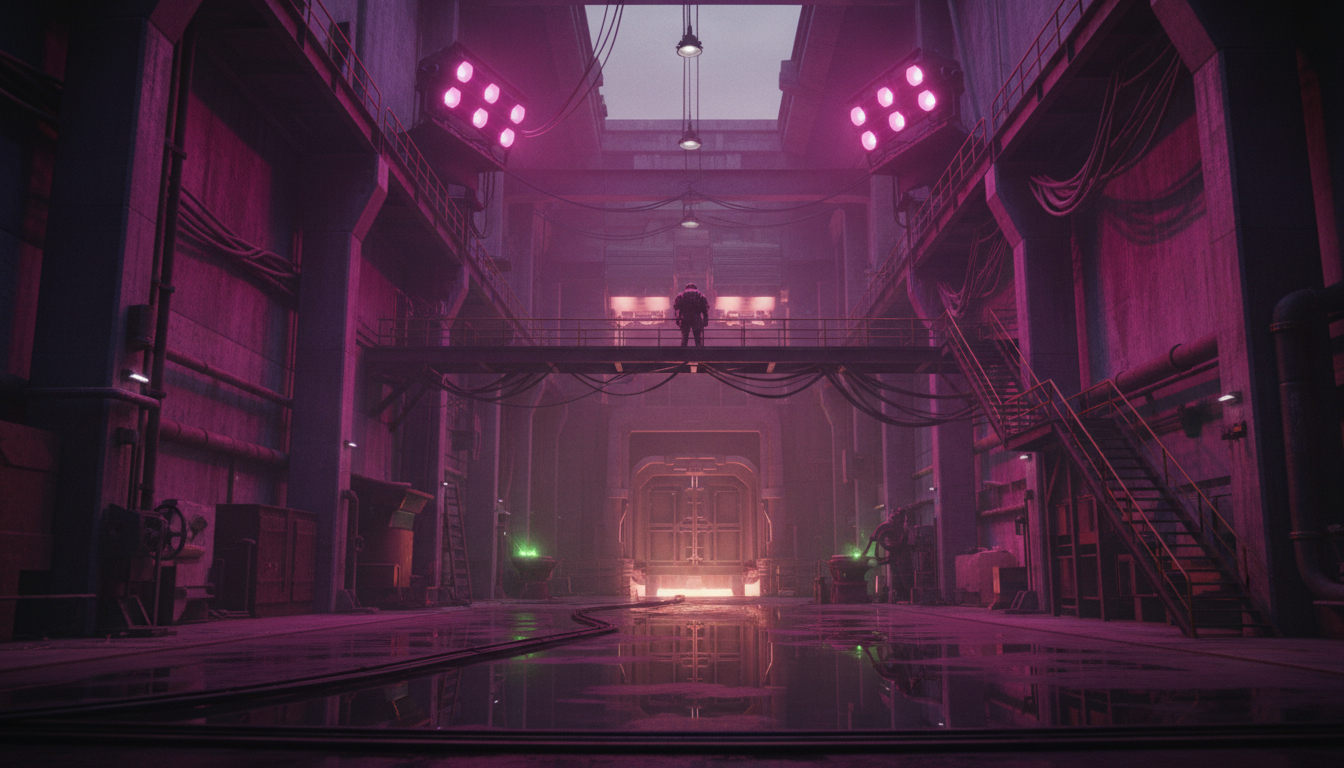
The Part 3 handover fell on the same custom-marked day it always fell on — and Rosa Ilunga walked a broad, steady young man named Joss Talvi the length of the gantry, the way Bram Osei had once walked her.
Generations of the same half-second delay on the third mould, passed down unbroken.
"Don't fight it," she said, and heard Bram in her own mouth, and did not mind.
Emeka Voss handed the new Steward the board. The ledger. The ventilation-fan sign-up sheet in its case.
And the petition. Priya Fenn's petition — still under active review, four generations old now, and no closer to an answer than the day it was filed.
"You'll want to be angry about this one," Emeka told her. "Everyone is, the first time they read the reply."
She started to say something. He waited, because he had been waited for.
"Carry it anyway."
Yuki Bardo handed the sizing bench over with the calipers, the current correspondence, and something none of her predecessors had ever handed forward before.
The archive. Indexed now. Dated. A full century of the Sector's own accidental history, in a set of pages she placed in the new Grader's hands with visibly more ceremony than the calipers themselves — which she noticed herself doing, and did not correct.
"Read all of it eventually," she said. "Not today. But eventually."
"How long does it take?"
"Three off-shifts, if you don't stop. You'll stop."
"What's in it?"
"It's the only memory we've got," Yuki said, which did not answer the question and was the only true answer available.
Nils Okoro took the new Slot Nine holder down to the deep gallery last, and stood with him through one full pass of the Tide before he said anything at all.
That is not a short time. It is most of a shift-half, standing in the second bay, saying nothing, and Nils had decided years ago that it was the only honest way to do the handover.
"You'll feel it," Nils said, finally.
"I can't tell you what it is. I can't tell you what it means that some of us want to stay near it. I can only tell you that four generations of us have stood exactly where you're standing and none of us ever worked it out."
"And that not working it out isn't a failure on your part. It's just the job."
The new holder — a wiry, watchful woman named Anders Kade — asked no follow-up question.
Which Nils took, correctly, as the first sign she was going to do the post justice.
By evening the four outgoing hands stood on the lift platform together for the fourth time in the Sector's history, watching the fourth generation take up the same four posts below.
And none of them yet knew that the shift starting the next morning would be the one that carried — unannounced, unremarked, and below a transit item on the canteen radio — the last night of an era folded quietly into an ordinary schedule change.
Chapter 28 — The Handoff
↑ Back to ContentsFocus: the fourth Steward.
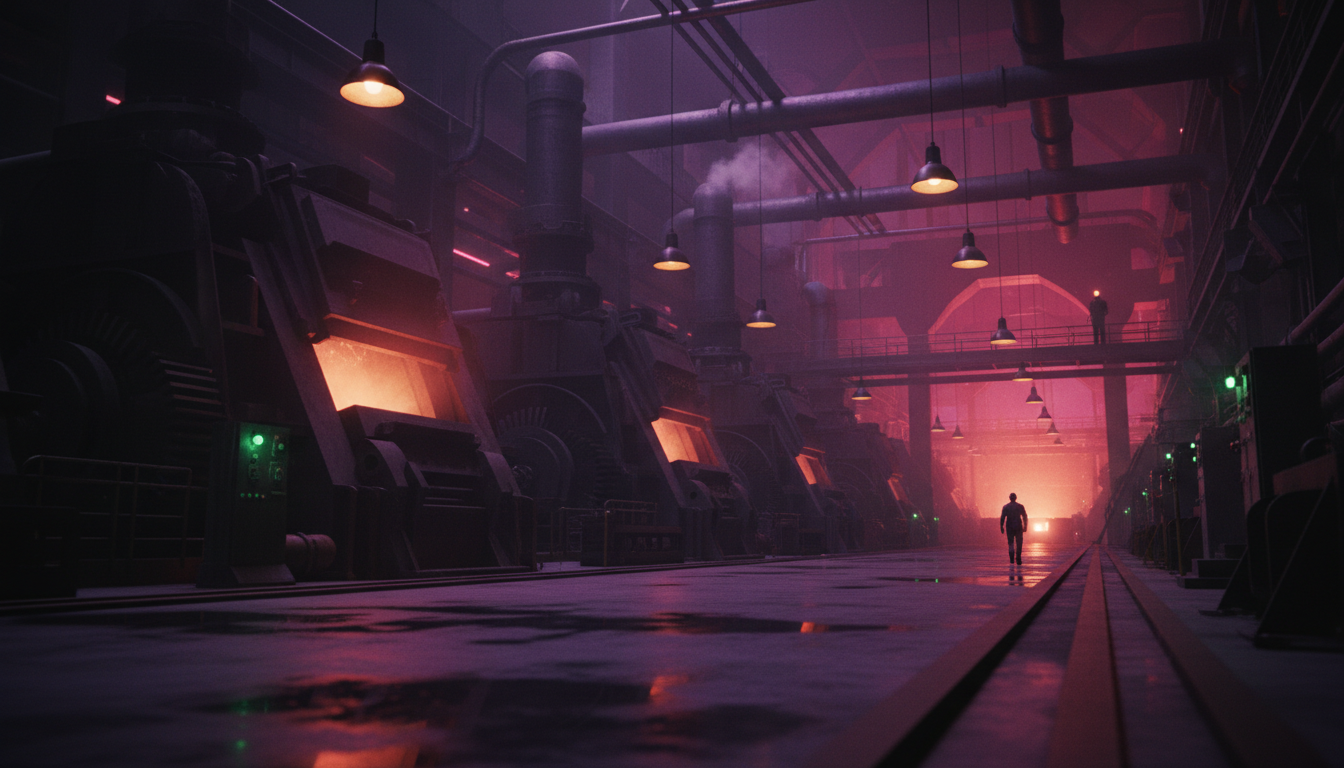
Idun Farrow heard about the Handoff the way the Sinks heard about everything from above: on the canteen radio, between shift reports, phrased by an announcer who sounded like he was reading a weather update rather than the end of a government.
Reserved powers dissolved.
A document called the Crown Sanctuary published, effective immediately — terms she only half followed on a first listen, because the words belonged to a structure she had never lived inside and had no practical stake in.
She asked, at the table, whether anybody knew what reserved powers were. Two people had a go. Neither answer was the same and neither, she suspected, was right.
Somewhere three sectors away, she gathered, an era that had organised the whole surface planet for longer than the Sinks' own rotation had existed was, as of last night, formally over.
The furnace floor did not pause to mark it.
Her own first act as Steward that morning was the one every Steward's first morning required, regardless of what had or had not happened above: post the shift roster, confirm the supply manifest, open the meeting on time.
She had rehearsed the opening on the walk in. It did not mention the Handoff, because she had written it the week before.
She mentioned it at the top of the meeting anyway, because it seemed wrong not to.
And watched the room take the news the way it took most news from three sectors away — with attention, briefly, and then with the particular Sinks patience for events that changed nothing about the pour schedule.
"Does the order change?"
Meaning Order 4471. Meaning the only thing that had ever reliably changed anyone's actual day down here.
And Idun said she would flag it upstream and let them know.
And that was, as far as the meeting was concerned, the entire substance of the Handoff's arrival in the Venus Sector. One line item. Checked, filed, carried forward to the next agenda, where it appeared as Order 4471 — status query, pending and was resolved four weeks later with the words no change.
She thought about it more than she let the room see, walking back to her own quarters after shift.
Whatever had actually happened up there — and she suspected, without evidence, that it had been larger and stranger than a single radio announcement could carry — it had reached her Sector as a schedule question.
And she found she wasn't surprised by that so much as quietly, permanently instructed by it.
The Sinks were going to learn about the shape of their own century, when they finally learned it, the same way they learned everything else.
From below. Late.
And in the middle of an ordinary shift.
Chapter 29 — The Clamps Open
↑ Back to ContentsFocus: the fourth Grader.
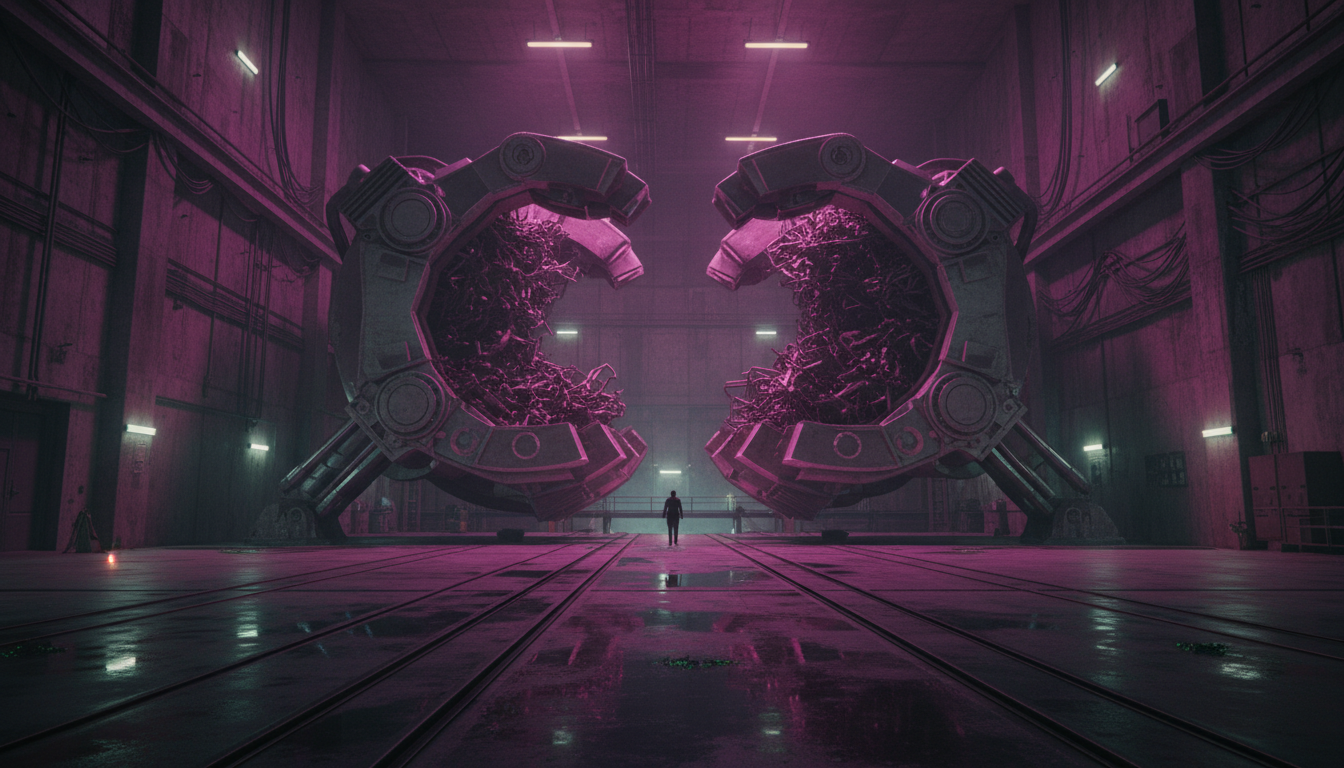
Emory Tan heard about the clamps opening from a lift engineer who'd heard it from someone topside who'd heard it from someone else — which was, by the time it reached the sizing bench, the usual quality of news about the hull above them.
The orbital structure had been under slow, silent construction over the Sector's entire recorded history.
Fed by shipments that went up the tether and never came back down. Logged into sealed volumes nobody at this end had ever been told the purpose of.
Every Grader for four generations had signed a manifest for those volumes. Every one of them had signed for a destination code rather than a destination.
Now, apparently, something had opened it.
Clamps releasing. Cargo tumbling loose in whatever passed for gravity up there. An accident or an intention — nobody down here could say which, and the lift engineer had been clear that her source had not known either.
Emory found himself doing the arithmetic Bram Osei had once tried and abandoned.
And getting further with it than Bram had. Because he had Yuki Bardo's archive to work from now — a century of shipment logs, tallied and dated, indexed by a woman who had set the pages aside precisely so that somebody one day could do a sum like this one.
A number he could actually defend rather than guess at.
Hundreds of thousands of shells, at minimum. He did it twice and got the same order of magnitude both times, which was the first time anybody in the Sector's history had been able to say that.
Racked. Sealed. Sent up by four generations of hands that had built every one of them to a spec nobody had ever explained, for a customer nobody had ever named.
He said as much to the bench's current apprentice, half to himself, the way you say a thing you have just worked out and are not yet sure of.
And the apprentice asked the obvious question. What was actually up there, then, now that it had spilled.
Emory didn't know.
Nobody at his end of the chain had ever known. And the news reaching him now — clamps opened, cargo loose — told him only that whatever had been sealed away for a century was, apparently, finally moving toward whatever it had always been for.
He didn't feel the pull toward an answer that he suspected he should have felt.
That was the part he noticed, sitting with it afterward at a bench his great-grandmother's trainer's trainer had set up.
Four generations of proceed on current schedule had trained something patient and incurious into the post itself.
And he recognised the feeling for what it was, even as he sat inside it. Not indifference, exactly.
The settled, inherited habit of a Sector that had long since stopped expecting its own questions to be answered — and had built, instead, an entire culture around building the answer anyway.
Carefully. To tolerance. Without ever being handed the question back.
Chapter 30 — The Vote
↑ Back to ContentsFocus: Idun Farrow.

The directive came down through the usual channel, formatted like every other order the Sinks had ever received — and Idun Farrow read it to the Syndicate meeting with a flatness that didn't survive past the second line.
A planetary vote had authorised the construction of six million exoskeleton units.
To be produced at every capable facility on the planet. In support of an effort to reach forty people stranded somewhere she had never heard named before that morning.
Output at the Venus Sector was to increase, effective immediately, against a schedule the message described as the most urgent the Sector had ever been asked to meet.
No further context was provided.
No explanation of who the forty were. Or why six million units were required to reach forty people, which is an arithmetic nobody in that room could make sense of and which three of them tried.
Or what any of it had to do with an order the Sinks had already been quietly building toward for four generations under a different name — a connection nobody in that room made, because nobody in that room had the two documents side by side, and would not for another year.
"Increase output by how much?"
And the number, when Idun read it aloud, made the whole room go quiet in the way a genuinely large number always does.
More than triple current capacity. Sustained. For as long as the effort required, which the message did not estimate.
She expected resistance.
She would have understood resistance — a request that size, with that little explanation, delivered in exactly the manner every other unexplained request in the Sector's history had been delivered. She had prepared for it on the walk over and had two things ready to say.
Instead the room did the thing the Sinks had always done with legitimate, funded, sanctioned work.
It asked how, not why.
Within the hour the shift leads were already redrawing rosters. The gantry crews were sketching a sixth and seventh furnace line onto a wall map nobody had authorised yet, arguing about clearances, one of them drawing over the other's line.
And Emory Tan was recalculating tolerances at a pace the bench had never been asked to sustain before, with the archive open beside him.
Idun stood at the back of the meeting.
Watching four generations of not being told why turn, without hesitation and without a vote, into the single largest production commitment the Sector had ever made.
And understood, watching it, that this was the Sinks' whole character laid bare in one afternoon.
Asked to increase output for reasons nobody would explain — they were, within the hour, already good at it.
Chapter 31 — Six Million
↑ Back to ContentsFocus: the fourth Ladle.
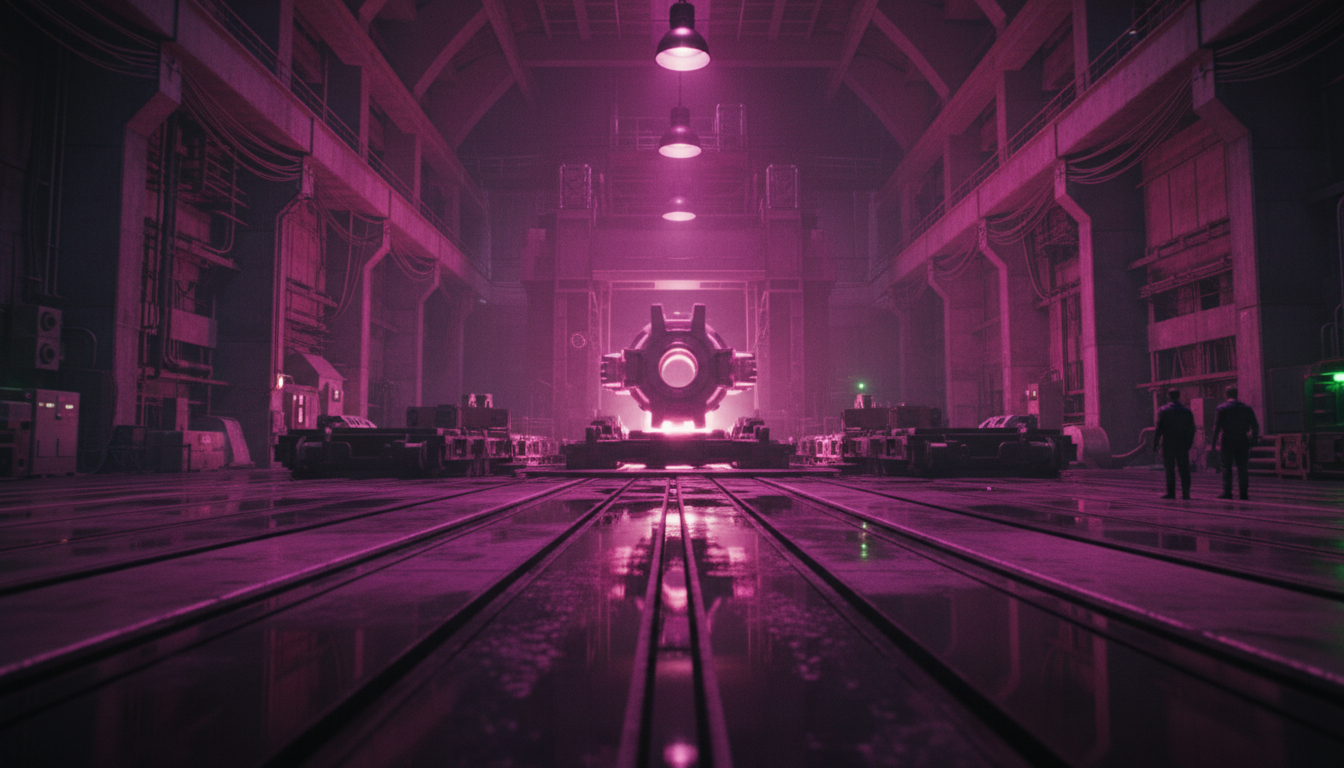
Joss Talvi had inherited a two-line furnace floor and finished his second year running seven — and he still hadn't found a spare minute to feel proud of that fact properly, which was, he supposed, the truest measure of how the run had actually gone.
Six million units, planet-wide, was the number the directive had named.
The Venus Sector's share of it was larger than any single order the Sector had ever filled. Sustained month after month, at a pace that should — by every rule Joss understood about metal fatigue and crew endurance — have broken something.
It didn't.
New hands trained faster than any generation before them. Because the old hands teaching them had four generations of accumulated shortcuts to hand down instead of one, and because a man who has been shown the third-mould delay does not have to discover it.
The sizing bench ran three full shifts instead of one.
The gantry crews worked out, on their own, a rotation efficient enough that Joss adopted it Sector-wide within a month of watching it happen — and then found out it had been invented by a nineteen-year-old, and said so publicly, twice.
Nobody up the chain had explained why six million.
Or why forty people needed that many. Or what a number that large said about the scale of whatever effort was actually underway out there, which is the question Joss would have asked if there had been anybody to ask.
The directive simply specified quantity, tolerance, and deadline.
The way every directive the Sinks had ever received had specified quantity, tolerance, and deadline, going back to a rotation agreement nobody living had signed.
And the Sector did what it had always done with a legitimate, funded, sanctioned order.
It built.
He stood at the gantry rail on the one quiet evening the whole run afforded him — the same rail Bram Osei had stood at, and Costa Marsh before him, for the same reason and at the same hour.
Watching all seven lines running at once. Racks filling faster than he had ever seen racks fill.
And felt something he had not expected to feel about work performed entirely blind.
He was proud of it. In exactly the way Costa Marsh had once been proud of a single clean pour.
And he understood, standing there, that the two prides were the same size.
Whatever the six million were actually for. Whoever the forty people actually were.
The Venus Sector had been asked for the largest thing anybody had ever asked of it, and had delivered it on schedule — without once being told what it was going to do after it left the Sector's hands.
That, Joss thought, watching the last rack of the week roll toward the lift, was probably the finest hour the Sinks would ever have.
Nobody up there would ever know to call it that.
He decided it didn't need them to.
Chapter 32 — They Were Ours
↑ Back to ContentsFocus: Emory Tan.
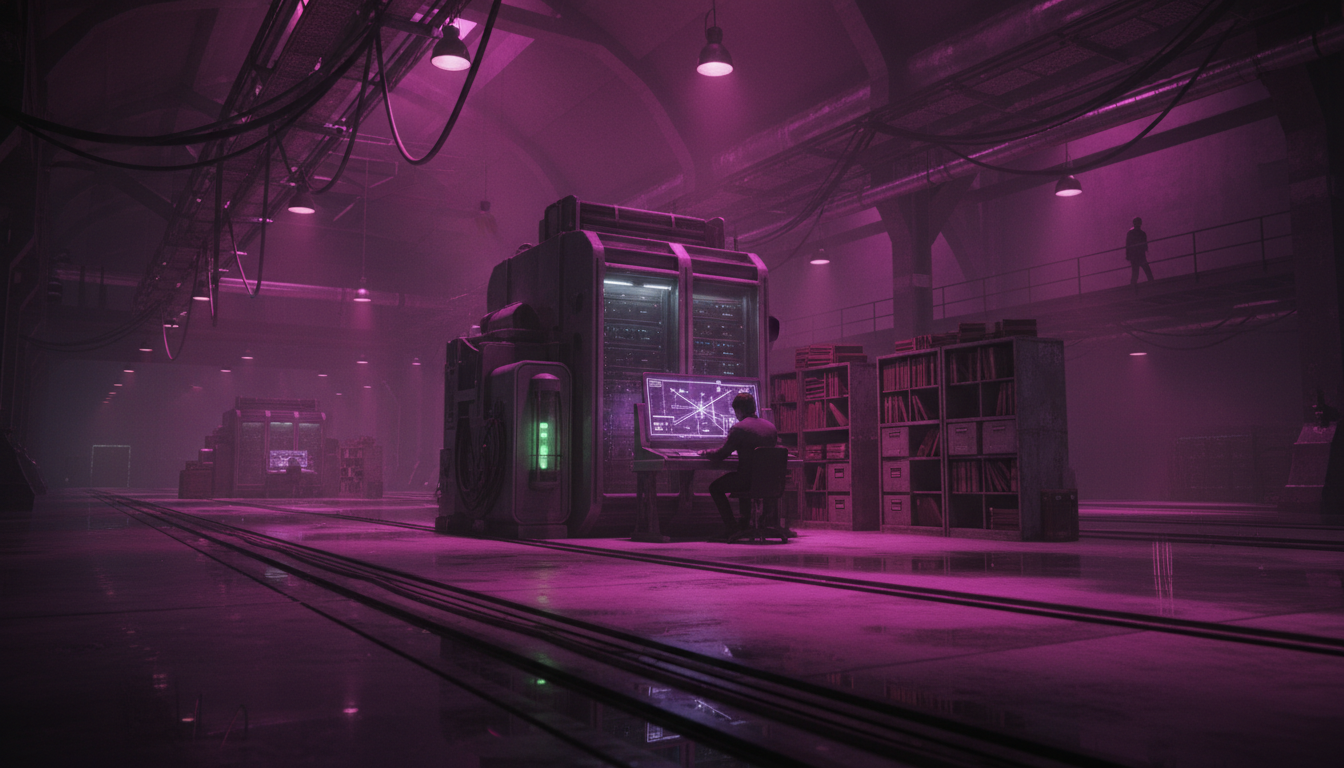
The citizen registry went up publicly for the first time in the Sector's history — part of the planet-wide effort's own transparent bookkeeping — and Emory Tan only opened it because a training manifest needed cross-checking against it for an unrelated reason entirely.
He was checking four apprentice names against a residency field. It was administrative. It was going to take nine minutes.
He noticed the classification schema before he noticed anything else.
Because classification schema was the one thing four generations of Graders had trained him to notice on sight — the way a joiner notices a joint, before and beneath any interest in the furniture.
Six bands. Keyed to body type. Identical in structure to the six cradles on his own sizing bench.
He told himself it was coincidence.
The way any two large bureaucracies might independently arrive at six reasonable size classes, because six is a reasonable number and bodies are bodies. He was not being stupid. It is a genuinely plausible coincidence and he held it for most of a minute.
And then he went and pulled Yuki Bardo's archive.
Because he had learned from her the same habit she had learned from nobody in particular: when something looks like it might matter, check the paper before you trust the feeling.
It took him a single evening.
The tolerance bands in the century-old shell specification matched the registry's classification schema. Not approximately. Exactly. Unit for unit.
Down to a joint clearance figure carried to three places — far too specific to be arrived at twice by accident, and he checked that one four times because it was the one that ended the argument.
He sat with the two documents open side by side for a long time.
Before he let himself say the sentence out loud, alone, in the empty bench room, to nobody:
These were built for people.
Not for a customer confidential. Not for an installation, or a facility, or a contract somewhere down a supply chain too long to see the end of.
For citizens. Sized the way any citizen might be sized. On a registry that now, for the first time in a hundred and forty years, listed his own name among six hundred thousand others.
He checked the query correspondence next.
Seventeen renewal cycles of the same three lines — Sana Iwu's, and Priya Fenn's, and four others, all identical, all filed, all kept by Graders who had kept them precisely so that somebody could one day do this.
And understood, reading them again with the registry open beside them, exactly what the answer had always actually meant and had never once actually said.
The shells were not being kept from an unknown customer's knowledge.
They were being kept, all along, from the knowledge of the people who would most have needed to hear it.
The ones building them.
Nobody had told him. Nobody was going to tell him.
He had found it the way Yuki had found a century of paper behind a caliper drawer — by doing his job carefully enough that the answer had nowhere left to hide.
Chapter 33 — Four Generations
↑ Back to ContentsFocus: Emory Tan.
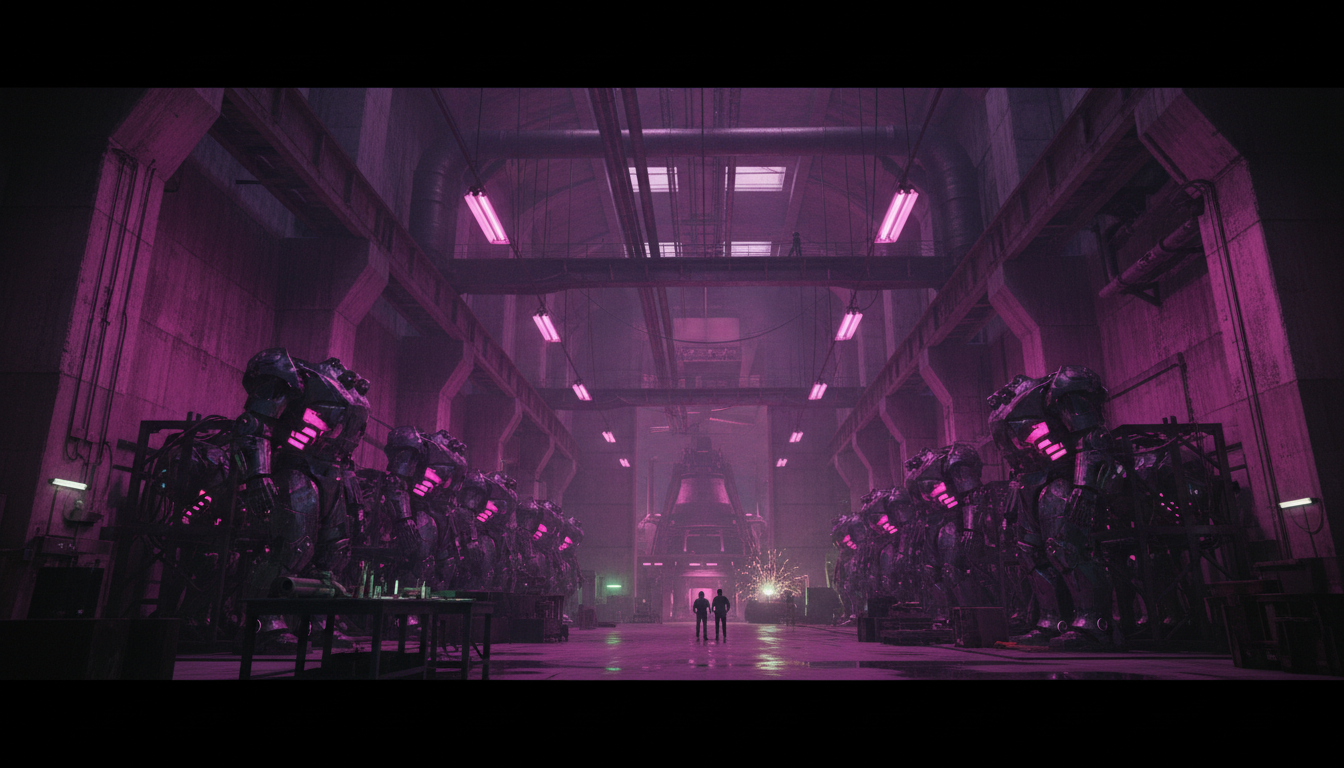
Emory didn't tell anyone for three days.
Not because he meant to keep it — but because he genuinely didn't know yet what telling anyone would accomplish, and he wanted to be certain of that before he opened his mouth.
He sat with it at the bench. At meals. On the walk back to his bunk, which is eleven minutes and which he took slowly all three evenings.
Four hundred thousand shells, at minimum, by his own conservative count of the archive.
Four generations of hands — his own included — building a thing meant to save a population from something none of them had ever been told the shape of.
And the population it was meant to save had, this whole time, included the very people building it.
Not as an afterthought. Not as a special case carved out for the workers who happened to make the equipment, which would at least have been a decision somebody took.
As citizens. Sized on the same registry as everyone else. Owed the same protection as everyone else.
And simply never informed that the protection existed, or that they were owed it.
He turned the reason over more than the fact itself.
It would have been one thing — almost bearable, in a way he could have done something with — if somebody had decided the Sinks weren't worth telling. Ugly. But a decision. Something with a person behind it and a date on it, that he could be angry at and possibly find.
What he kept arriving at instead, reading and re-reading seventeen renewal cycles of customer confidential, was worse and quieter.
Nobody had decided anything.
Nobody upstream had ever sat in a room and chosen to exclude the Venus Sector from the knowledge of its own product. There is no such meeting anywhere in any record, and he had by then read enough records to be fairly confident of it.
The Sinks simply hadn't occurred to anyone. Four generations running.
Not maliciously overlooked. Just never once considered part of the picture being protected — because the people drafting the protection lived in the part of the world the protection was obviously for.
He thought of his own grandmother. Dead eleven years now, who had worked this same bench for thirty of them and had never learned what her hands had actually been for.
He thought of Mira Solene, further back than that — a woman he knew only as the first name in a training chain — running her thumb along a shielding seam and hoping it would fit whoever it was for.
Without knowing that whoever included her.
He didn't cry.
And he didn't feel angry in any shape he could act on, which he had half hoped he would, because anger at least tells you what to do next.
He felt, mostly, the particular grief of understanding a story's actual size only after the story is nearly over.
And he went back to the bench the next morning anyway.
Because the shells still needed sizing. Whether or not anybody had ever thought to size him.
Chapter 34 — Handed Out
↑ Back to ContentsFocus: Idun Farrow.
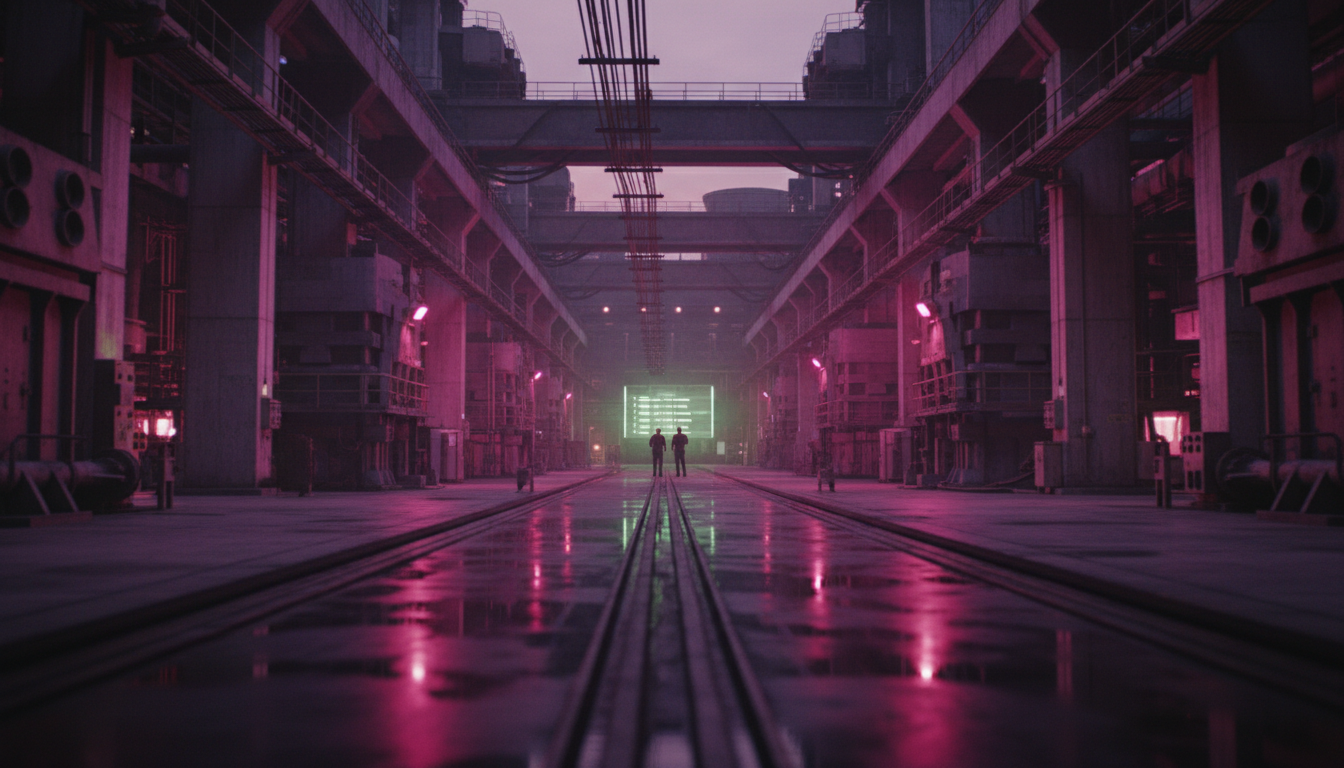
The distribution schedule went up exactly the way the effort's own charter had promised it would: in the open, sector by sector, published a full month in advance, decided by a planetary vote rather than any office's private discretion.
Idun Farrow read the whole document at the Syndicate meeting. Start to finish.
Because a hundred years of the Sinks receiving unexplained instructions had taught her that a document this consequential deserved to be heard in full rather than summarised — and because a Steward who summarises is a Steward who has decided which parts matter.
It took her most of an hour. Nobody left.
The method was, by any fair measure, a good one.
Sectors ordered by a formula weighing population, current risk exposure, and logistics capacity. With the full formula published alongside the schedule, so that anybody could check the arithmetic themselves.
Which is the same principle Aveline Rourke had built the Syndicate's own founding ledger on, four generations back, pinning funding figures to a board outside a canteen because a number people can check is worth ten assurances.
Idun noticed that. She did not say it aloud, because she was in the middle of reading, and because it would have taken a paragraph to explain and she was not certain it would have landed.
Emory Tan sat near the front — the registry and the archive still fresh in his own private reckoning, three days old and told to nobody.
And listened to Idun read out sector after sector receiving their allotments. Fair allotments. Transparently derived. Nobody's thumb visibly on the scale anywhere in it.
He had expected, in the days since his discovery, to feel something sharper than he actually felt hearing it read aloud.
What he felt instead was closer to recognition.
This was, formula for formula, the same kind of well-drafted, entirely reasonable document the Sinks had been receiving and honouring since the very first rotation agreement — the one Aveline Rourke had gone looking for the trick in and had not found.
The planet, it turned out, ran on paperwork this careful when it wanted to.
And had simply never before pointed that carefulness at the Venus Sector specifically.
The Venus Sector's own allotment was listed, plainly, in its place in the schedule.
Full population coverage, guaranteed. The number matching the registry Emory had already cross-checked twice, which he checked a third time that evening out of a habit he could not switch off.
Idun read the sector's name and its position in the queue without any particular emphasis.
Because the document gave her none to work with, and because emphasis is a thing a Steward adds and she had spent four years learning not to add things.
And the room absorbed it the way the Sinks absorbed most news from above.
With attention. And without surprise.
And without yet noticing the one detail in the schedule that would matter most to them in the weeks ahead.
Chapter 35 — Last
↑ Back to ContentsFocus: the fourth Ladle.
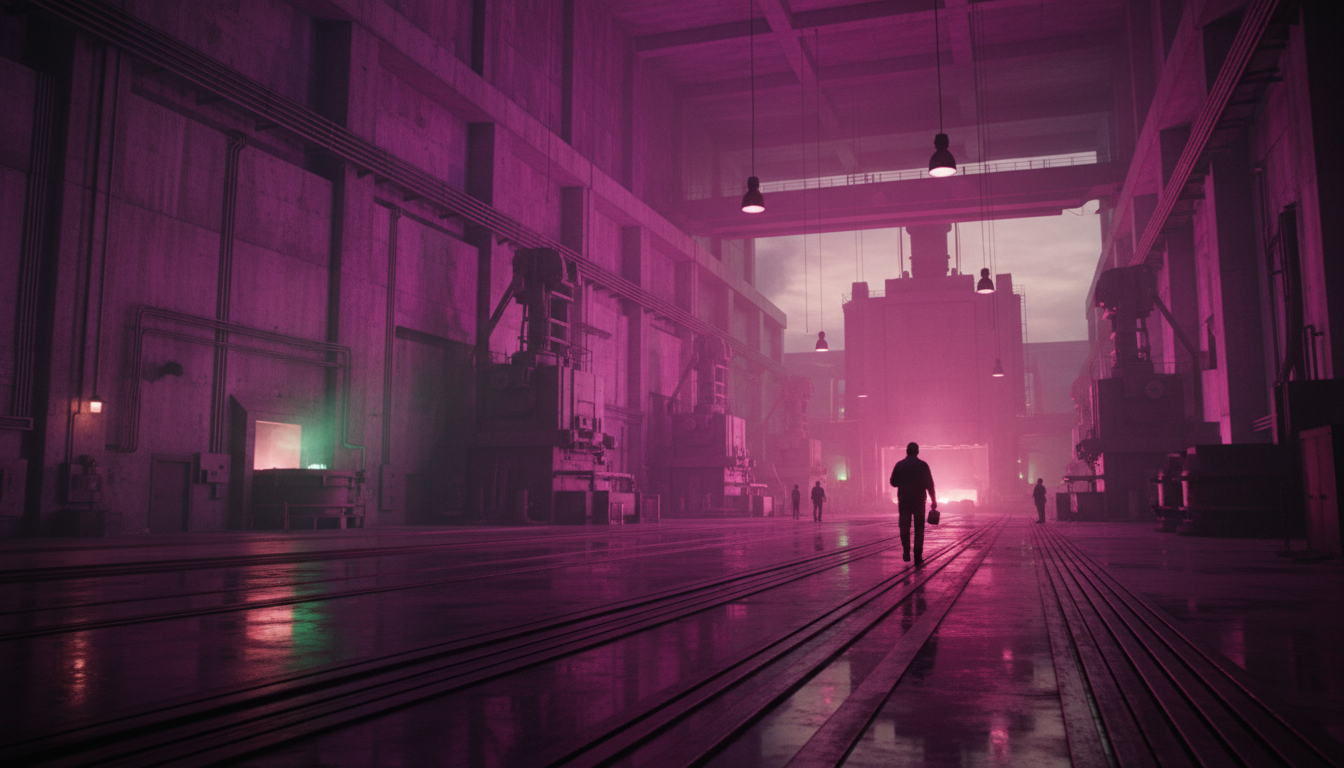
The detail was alphabetical.
And it took Joss Talvi embarrassingly long to work it out, given that he had read the schedule three times before the pattern actually surfaced.
Sectors processed in strict alphabetical order.
For the entirely defensible reason that any other ordering would have required somebody to choose a reason — and choosing a reason was exactly the kind of discretion the effort's own charter had been built to avoid. The charter says so, in the section on sequencing, in a sentence Joss went and read afterward and could not disagree with.
The Venus Sector sat near the very end of the alphabet.
Not last of all. A scattering of sectors with names starting later still trailed behind it, and Joss checked that too, and took an obscure comfort in it he was not proud of.
But late enough that by the time the schedule reached them, every other major population on the planet had already received its allotment — weeks or months earlier, in an orderly procession the Sinks had watched arrive everywhere but here.
They had watched it on the canteen radio. Sector by sector. Announced.
Nobody malicious had built this.
Joss checked, the way the Sector always checked — because four generations of Stewards and Graders had established, without ever writing it down as a rule, that you check before you feel anything.
And found exactly what he expected to find.
A formula. Applied consistently. Which happened, this one time, to put the people who had built four hundred thousand of the very units being distributed at the very back of the queue to receive their own.
No override had been proposed.
Nobody upstream had flagged the irony — because flagging it would have required somebody to notice it. And the alphabet, purely mechanical, noticed nothing at all.
When the shipment finally came down the tether — months after the first sectors, the whole planet's effort by then well underway, the forty people it was all meant to reach already, by report, most of the way found —
There was no apology attached to it.
No note acknowledging the wait. No gesture toward the fact that this delivery was arriving in the hands of the very population that had built every unit preceding it.
Just a manifest, correct and complete. Six graded sizes. And a request for signature.
Joss signed for it himself, at the base of the lift, surrounded by half the Sector come to watch the crates open.
Somebody cheered when the first one came out. Somebody else told them to shut up, and then apologised, and then both of them laughed.
He didn't feel owed an apology by the time it arrived.
And he suspected that not feeling owed one was, after everything, the most Sinks thing about how the whole shipment finally landed.
Exactly on schedule. Entirely explicable.
And utterly unaccompanied by anybody noticing there was anything here that needed saying sorry for.
Chapter 36 — The Same Shift
↑ Back to ContentsFocus: all four posts.
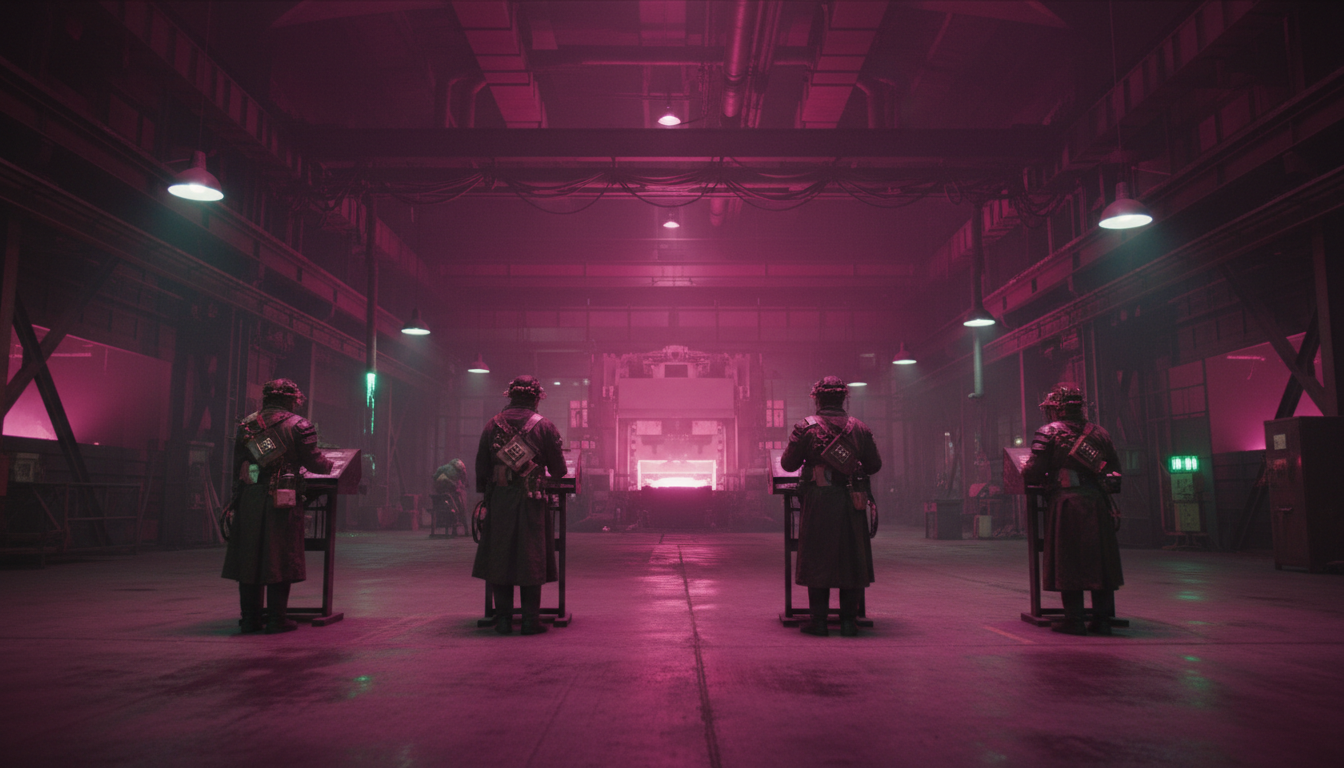
The handover fell, as it always had, on the same marked day.
And this one drew a bigger crowd than any before it — because for the first time in the Sector's history, every worker walking the gantry to watch it wore, under their coveralls, a shell their own hands or their own parents' hands had built.
Joss Talvi walked the new Ladle the length of the floor the way Rosa Ilunga had once walked him.
And pointed out the third mould. Still a half-second slow. Still not worth fighting, after five generations of hands had tried and failed to fix it.
"Don't fight it," he said. "Count the extra half-second and move on."
Idun Farrow handed over the board, the ledger, the sign-up sheet in its case — soft along the crease now, five generations from a broken ventilation fan.
And the petition.
Priya Fenn's petition. Older now than the founding rotation agreement had been when it was first filed. Still marked under active review.
And she said what every outgoing Steward had said before her, in more or less the same words, because the words had been handed to her too:
Carry it forward. And don't mistake carrying it for failing to move it.
Emory Tan handed the sizing bench over with the calipers, the query correspondence, and the archive — thicker now by a full generation's worth of pages, indexed the way Yuki Bardo had taught him to index it.
Including, on the very last leaf he had added himself, the plain fact of the registry and what it had finally told him.
He did not explain that page. He put a marker in it and said the new Grader would find it, and left it at that.
The new Slot Nine holder went down to the deep gallery and stood through one full pass of the Tide before being told — the way every holder before had been told, in the second bay, in the dark, by somebody who had run out of better words years ago —
That nobody had worked it out yet.
And that this wasn't a failure.
Nobody asked the new four's names for the record that evening.
And nobody thought that strange. Because the Sector had understood its own condition, structurally, since the very first handover on this same gantry four generations back.
Nobody in the Sinks was irreplaceable.
And every single one of them, held up against the whole of what they had carried, was unrepeatable.
The furnace ran that night the way it had run every night since before anybody living could remember.
Six lines now instead of one. Forty-five thousand people breathing sulphur air under a gravity nobody topside would have chosen.
Wearing, at last, something built to keep every one of them alive — made by the only hands on the planet who had never once been told that was what they were for.
Down on the deep gallery, the new Slot Nine holder finished counting the rack.
And the floor gave, once, the long slow way it always had.
Under boots that had no more idea what it was than the four generations before them.
And the shift went on.$