The Premise
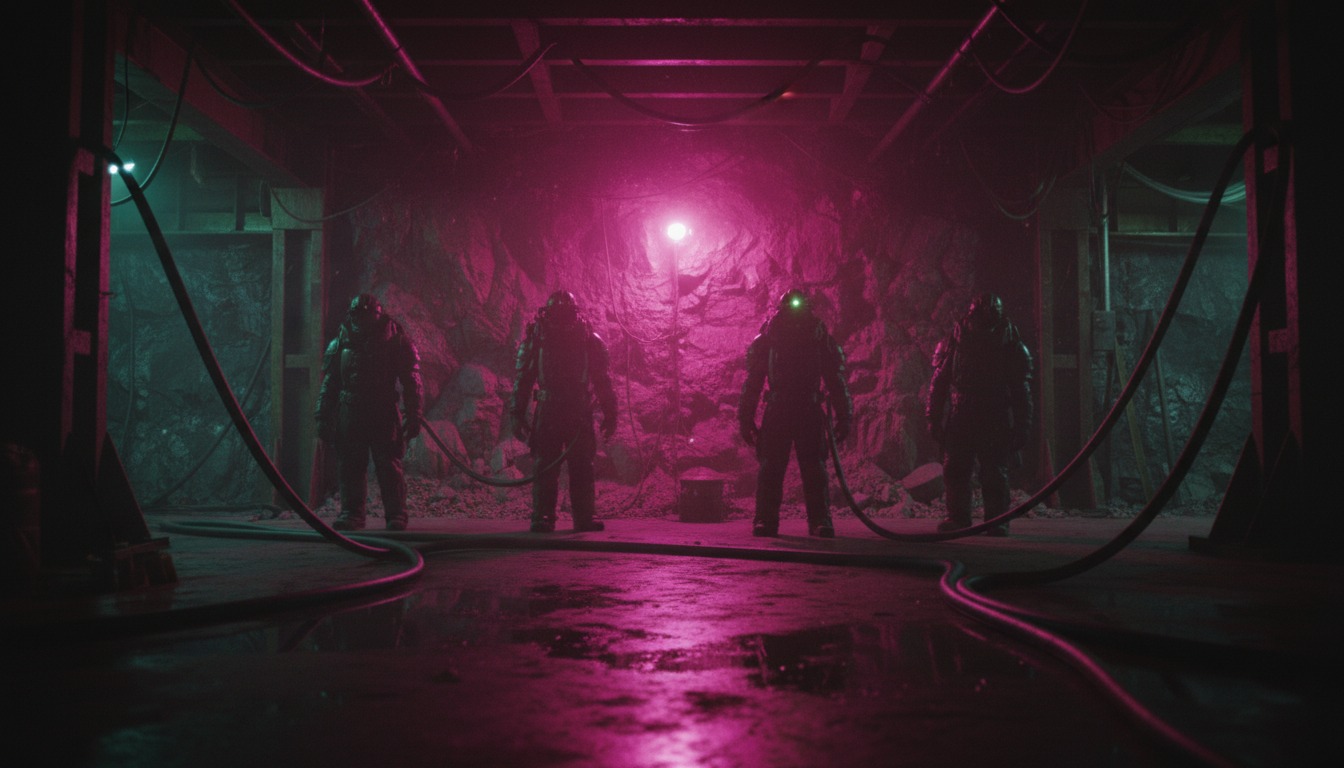
The founding-era survey crews who came up quiet were sworn to absolute secrecy by Calder and reassigned to maintain the deep-shaft network for the rest of their lives. Their children did the same work. So did theirs. Four generations of families servicing an array nobody ever explained to them, holding an oath sworn to a man their great-grandparents met once.
The load-bearing fact. Nobody in this story ever learns the answer — it ends before Book Three's descent. What it delivers instead is the cost of Calder's silence, measured in ordinary lives: marriages, children not told, a trade handed down like a farm, and the slow drift from oath to habit to superstition to just what the family does.
Roughly forty families sworn, and six break it. "Breaking" is not a leak — it is a private domestic act: telling a spouse, a child, a Council member. The engine of the story is that they mostly do not, and that the six who do find nobody believes them. There is no punishment, no enforcement and no cover-up. A secret that survives a hundred and forty years does not need any of that; it needs a wage and a rota.
It ends on the night before the caps come off. The last generation of sworn families goes to bed still not knowing what they have been maintaining, on the eve of Book Three's descent. The reader knows. They never do. The story stops one day short of the answer, permanently.
Chapter Index
Every chapter, all parts. Each becomes a real, readable chapter the moment it is written.
Chapter 1 — Quiet
↑ Back to ContentsFocus: Sefa Oyelaran.

We came up at four in the morning, which was itself unusual, because survey crews came up on schedule and this one came up nine hours early, and the first thing anybody topside noticed was that all eleven of us were walking under our own power.
I remember the cage stopping.
I remember the gate opening, and the particular cold of the shaft head at that hour, which is not like any other cold because it comes up out of the ground rather than down out of the sky.
I remember a shift supervisor named Doss counting heads out loud. Eleven. Correct. Writing something on a board — and I remember that none of us said a word to him beyond our names, which he already had, and which he asked for anyway, one at a time, and wrote down.
I have thought about that since. He knew every one of us. He had signed us on. There was no reason on this world to take eleven names at a cage gate at four in the morning except that a man who does not know what has happened will fall back on procedure, and procedure was the only thing available to him.
We were fed.
We were checked over by a physician who found nothing wrong with any of us that a physician's instruments could find wrong — which I understood even at the time to be a very particular kind of finding, and which I have never seen written down anywhere in that form.
We were given a room each.
The crew had never been given a room each. We had bunked four to a room on every previous rotation, for three years, and nobody commented on the change, and nobody explained it, and to this day I do not know whether it was a kindness or an arrangement or simply the only accommodation left at that hour.
I will tell you what I am not going to tell you, once, here, so that you understand the shape of what follows rather than waiting through forty years for it.
I am not going to tell you what we saw.
I made that decision in the cage on the way up, before the gate even opened, before I knew that anybody would ever ask me to keep it. I have kept it for the whole of my life, and I intend to keep it in the writing of this account as well.
This is not coyness and it is not a device. It is the one promise in my life I never once came close to breaking, and I would rather the reader accept that plainly at the start than watch me dance around the edge of it for forty chapters, dropping hints I do not intend to complete.
There will be no hints. There is nothing hidden in this account for a careful reader to assemble. I am telling you everything I am able to tell you and the shape of what is missing is exactly the shape it appears to be.
What I can tell you is what quiet looked like from outside.
Doss told the office we were fine. The office believed him, because we were fine — walking, fed, coherent, entirely willing to answer any question that was not the one question that mattered. I answered a great many questions in the following fortnight. Every single one of them honestly.
Nobody asked us the other one directly, that first day. I have wondered since whether that was policy, arriving very fast from somewhere above us, or simply the politeness of men who could see that eleven people had come up wrong and did not want to be the one who broke them. I never found out which, and by the time I might have asked somebody who would know, it had stopped seeming to matter.
I went to my new room, alone, and lay on a bunk that was mine for the first time in three years.
I did not sleep.
And I did not, that night or in the four decades after it, say one true word about that shaft to a living soul.
Chapter 2 — The Ones Who Did Not
↑ Back to ContentsFocus: Sefa.

Three of the original fourteen did not come up with us, and the office handled it the way the office handled everything in those years: promptly, honestly, and in a manner that told you precisely nothing.
Cause of death filed for each. A rockfall in an unstable gallery.
Consistent with the known geology of that depth. Consistent with the equipment logs. Consistent with everything, in fact, except the small matter that none of the eleven of us who did come up would ever, then or later, in forty years, confirm that any rock had fallen anywhere.
Nobody ever asked us to confirm it. I want that noted. The filing did not require our corroboration and did not seek it, and there was no document any of us signed, and no statement any of us gave.
I want to be exact about this, because it is the part people misunderstand most when they hear the story secondhand, generations on.
The filing was not a lie.
I have no reason to believe a single word of it was false. A rockfall may very well have happened, at the depth stated, in the gallery stated, to the three people named, in exactly the manner described. I have never been able to rule it out and I have never tried very hard, because ruling it out would require me to say what did happen, and I am not going to.
What the filing did not do — what it was never going to do, and what no filing of that kind ever does — was explain why a survey crew was at that depth at all. Or what we had been sent to find. Or why the compensation paid to the three families was three times the standard scale for an industrial accident of that class, promptly, without application, with no argument from anybody about anything.
Their families were paid well and paid fast.
They were told, truthfully, that their people had died in a rockfall during survey work. They were given, honestly, every document the office was permitted to give them, and I have since seen two of those files and they are complete within their own terms — properly indexed, properly dated, nothing struck out.
Every document was accurate. Not one of them was complete.
I attended all three services.
I said what everyone else said, which was true and was also nothing: that they had died doing important work, that the work mattered, that nobody could have foreseen it. I shook hands with a woman whose husband I had worked beside for two years and told her that he had been the best hand on the crew, which was true, and she asked me what he had been doing down there, and I said survey work, which was also true.
She accepted it. She had no reason not to. She was standing in a room full of men who had all just said the same sentence.
I have thought about those three funerals more than almost anything else in my life. Not because of guilt, exactly — I did not kill them and there was nothing I could have done differently — but because they were the first time I understood something that took me another forty years to be able to phrase.
A true account and a complete one are not the same document.
And the office I now worked for had found, entirely without cruelty and possibly without ever having to discuss it, the exact line between them, and intended to stand on that line for as long as it needed to.
It needed to for a hundred and forty years.
I did not know that yet, standing at the third graveside with my hat in my hands. I only knew that everything on the file was accurate, and that accuracy was going to be the whole of what anybody ever received, and that this was somehow both completely fair and completely insufficient at the same time, and that I had no idea what a person was supposed to do with that.
Chapter 3 — He Comes Down Himself
↑ Back to ContentsFocus: Sefa.
He came down himself, which nobody had told us to expect, and stayed forty minutes by the clock on the shaft-head office wall, and I have never in the years since met anyone who spent forty minutes with Calder and came away unchanged by it.
He did not explain anything.
I want to state that plainly and early, because every account I have ever heard secondhand assumes he must have told us something. Given some reason. Offered some justification that we then chose, out of loyalty or fear or vanity, to keep.
He did none of that.
He sat across a table from each of us in turn, in a room with a kettle and two chairs and nothing else in it, and he asked questions.
How was the room. Was the food adequate. Had the physician been thorough — and when I said yes he asked whether the physician had explained what he was checking for, and I said no, and he made a small note, and I have wondered for sixty years what came of that note.
Was there anyone at home who would worry.
He asked about my mother by name.
Which meant somebody had briefed him, or he had asked Doss on the way in, and either way it landed the same and I think he knew exactly how it would land: as a man who had bothered to find out. I have since decided it was almost certainly Doss on the way in, forty seconds of preparation, and that this makes it more impressive rather than less.
He did not threaten.
There was no version of that conversation in which refusing him carried any stated cost, and I have turned it over for sixty years looking for the threat hidden inside the courtesy, and I no longer believe there was one to find. I have wanted there to be one. It would be a simpler thing to have carried.
He did not flatter either, which surprised me more.
Flattery is the easy tool and he had every reason to use it on eleven frightened, well-paid, deeply confused people, and he would have been good at it. He did not attempt it once, with any of us, and I checked afterward — we compared notes that evening, the eleven of us, in the way people do, and not one of us had been told he was important or brave or trusted.
He simply asked.
Plainly, in about two sentences, whether we would be willing to keep this to ourselves, for reasons he was not able to give us, doing work that would matter and be respected and paid properly, for as long as we were willing to do it.
Every one of us said yes.
All eleven. Separately. In a room with a kettle. Without conferring, because we had not been given the chance to confer and because he had arranged it that way, and I noticed that at the time and it did not change my answer.
I have wondered, since, whether it was really a choice in any meaningful sense — given who was asking, and what he represented, and what a young man of twenty-six believes about the value of being asked at all.
I have decided that it was.
Not because the asking was free of pressure. Because a man with genuine power over you does not usually bother to ask. He tells you, and he tells eleven of you together so that none of you can be the one who says no, and he does it in a large room rather than a small one.
Calder asked each of us in turn, alone, in a room with a kettle, as though our answer might actually have been no and he would have accepted it and gone on to the next chair.
I do not know whether that was true of him in general. I never had cause to test it and I never met him again.
I only know it was true of that room, on that day. And that it is the single reason the oath that followed ever held at all.
Chapter 4 — The Oath
↑ Back to ContentsFocus: Sefa.

There was no document.
I want that understood before anything else about the oath itself, because everyone who hears the story assumes, reasonably, that a secret kept for a hundred and forty years must rest on some instrument — a signed paper, a register, a seal, a clause with a penalty in it.
There was none of it. Not one sheet. Not one signature. Not one name written down anywhere in connection with what we swore, then or since, and I have looked, in the years when I still had the standing to look.
We stood in the shaft-head office. All eleven of us, and Doss, who I have always assumed was there as a witness and who was never afterward treated as one.
Calder stood at the end of the table.
He asked us to say, each in turn, that we would not speak of what we had seen or done below a certain depth. To anyone. For any reason. For as long as we lived.
That was the whole of it.
No clause. No penalty named. No carve-out for spouses, or physicians, or courts, or our own children, which I noticed at the time and which I have thought about a great deal since — because a document would have had to address those, and would have had to draw lines, and every line would have been a place where a reasonable man could stand and argue.
No witness beyond the eleven of us and the man asking.
I said it when my turn came.
I remember my own voice more clearly than I remember almost anything else from that year. Flat, and a little too quick, the way a person sounds when they are saying something true and enormous and are trying very hard not to make a performance of it. The man before me had said it slowly and it had sounded theatrical, and I had heard that, and I overcorrected.
Afterward there was tea.
Which struck me even at the time as an absurd thing to have arranged, and which I have come to think was the most deliberate choice in the entire hour.
An oath with the weight of a founding document, sealed with nothing but eleven voices and a pot of tea going lukewarm on a table, because anything grander would have given the moment an importance that could later be measured against.
Consider what a ceremony does. It creates a thing that happened at a time, in a place, with a form — and a thing with a form can be examined, and questioned, and found wanting, and eventually declared to have been improper. A signed paper can be produced. Disputed. Leaked. Burned, and its burning discovered.
A voice, spoken once in a room and never repeated, cannot be produced as evidence of anything at all. Not against you, and not by you.
I did not understand that this was the entire design. Not that afternoon, and not for a very long time afterward.
I understood it eventually, watching my own son take work he was never asked to swear to — nobody thought to, there was no procedure for it, there was nothing to administer — and watching his children after him do the same.
An oath with no instrument behind it cannot expire.
It cannot be revoked, because there is nothing to revoke. It cannot be amended, because there is nothing to amend. It cannot even, properly speaking, be broken in any way the world would recognise as breaking — because there was never anything on paper to point at and say: here, this is what was promised, and this is where it failed.
Six people broke it in a hundred years. I will come to all six.
Not one of them was ever in breach of anything, because there was nothing to be in breach of, and that is why nobody ever came.
Chapter 5 — Reassignment
↑ Back to ContentsFocus: Sefa.

I expected, in the weeks after the oath, that we would be sent somewhere.
Relocated — the eleven of us and whatever families we had — to some quiet posting where we could be watched without the watching feeling like watching. A company town. A remote station. Somewhere with one road in.
That is not what happened, and it took me years to understand why not, and understanding it changed how I thought about the whole arrangement more than anything else in this account.
We were reassigned to the deep-shaft maintenance division.
Permanent contracts. A wage well above the standard rate for skilled trade work. Allowed to keep our own houses, in our own district, near whatever family we already had.
No isolation. No new town built quietly for us and called something else. My mother's house was eleven minutes' walk from the shaft head I now reported to, exactly as it had been the week before, and I walked it twice a day for twenty years.
I asked Doss about it once, carefully, maybe two years in, when I had worked out that he would tell me things if I asked them the right way and never if I asked them the wrong way.
I asked whether moving us had been considered.
He said it had. He said the office had looked at it properly — costed it, drafted it, taken it some way up — and had decided against it.
And then he told me why, in the plain tone he used for anything he actually meant, and I have never forgotten it.
He said that a group of people uprooted together, watched together, and paid together to keep a secret together will eventually talk to each other about exactly that. That it is not a risk, it is a certainty, and the only variable is how long. That men in a company town with one road in have nothing to discuss except the reason they are in a company town with one road in.
And that the safest possible arrangement was the most ordinary one. Separate. Comfortable. Employed. Left alone.
He was right. I know he was right because I watched it not happen for twenty years. The eleven of us saw each other on rotation and at funerals and almost nowhere else, and we did not discuss it, and the reason we did not discuss it is that we were never in a position where discussing it was the obvious thing to do.
I did not appreciate at the time how humane the arrangement actually was, set against what it could have been.
Nobody monitored our correspondence. I have checked that too, in the years when I could. Nobody visited unannounced. Nobody so much as asked, in the twenty years I held that work, whether I had told anyone anything — not once, not obliquely, not in the manner of a man making conversation.
We were given good, permanent, respected work maintaining something none of us understood, near the people we loved, for the rest of our working lives, and left entirely to our own judgment about the rest.
I have thought many times that this was the best possible version of the worst possible thing anybody could have asked of us.
And that the kindness of it is precisely what made it durable.
A cage holds people who want to leave it. Every hour of every day it is holding them, and the holding is the weak point, because a cage only has to fail once.
Nobody I worked beside, in twenty years on that rota, ever gave me any reason to think they wanted to leave.
Chapter 6 — The Rota, Written
↑ Back to ContentsFocus: Sefa.

Doss and I wrote the rota in an afternoon, at the same table where the oath had been sworn, with a pot of the same tea going cold between us — and I did not understand, setting it down in my own handwriting, that I was writing a document that would still be in use by people not yet born.
It was simple by design.
Doss said a complicated schedule fails the first time somebody is sick, and a simple one survives anything. He said it the way a man says a thing he has watched happen, and I have since learned that he had watched it happen, twice, on a project I never got the name of.
Two crews of four, rotating weeks. Covering the twelve capped heads across the network. A standing instruction for what to do if a seal reading drifted outside tolerance — check it, check it again, report it, and do not open anything — and nothing at all about what the tolerance was protecting against.
Because neither of us knew.
I want to be clear about that, because I have heard it suggested since that Doss knew. He did not. He had not been down. He asked me nothing about what was down there, that afternoon or ever, and I have always taken that as the single greatest courtesy anybody extended to me in my working life.
The rota did not need to know in order to work. That is the whole genius of it and neither of us thought of it as genius at the time. A maintenance schedule is a set of actions against a set of readings. It does not require a reason. It has never required a reason, in a hundred and forty years, from anybody.
We built in redundancy without discussing why.
The way you do when a thing feels important and neither of you wants to be the one who says the word aloud. Every crew member trained on every head, so that no single person's absence — illness, injury, death, a bad falling-out — would leave a gap that nobody else could fill.
I remember Doss saying, almost as an aside, that the rota should be written so that it could survive both of us being gone within the year.
I remember not asking him why he thought that mattered so much.
I have thought about that silence more than almost any other silence in my life. He gave me an opening. He was, I am fairly sure now, offering me the chance to ask him a question he was willing to answer, and I let it go past because I was twenty-six and I did not want to know.
We finished it before the tea went properly cold.
Eleven names on the first draft. Then their families' names added, one at a time, over the following years, as each of us in turn brought a son or a daughter into the trade the ordinary way any family brings a child into the family business.
Without ceremony. Without a second oath. Because nobody thought to ask a sixteen-year-old to swear to anything his father was already quietly protecting on his behalf.
I have been told, by my own grandson, that the rota Doss and I wrote that afternoon is still the rota in current use — adjusted only for names, recopied four times, four generations on.
I believe it. Doss and I built it to need nothing else.
The one thing neither of us anticipated, sitting at that table with our sleeves rolled up, was that it would need to work for a hundred and forty years rather than for however long we personally expected the arrangement to last.
Which was, I think, about five.
Chapter 7 — The Wage
↑ Back to ContentsFocus: Sefa.
The wage did more to my family in ten years than anything else in my life had managed, and I want to describe exactly what it did, because the word bribe gets used loosely by people who have never had to live inside the actual arithmetic of it.
We moved in the third year.
From a rented two-room flat with a shared stair to a house with a garden, on a mortgage I could actually service rather than merely survive — and there is a difference between those two things that only shows up at about the fourth year, when you notice you have stopped doing the sum every month.
My daughter took a proper apprenticeship in her chosen trade.
Not whatever apprenticeship happened to have an opening in the year she came of age. Hers. The one she wanted, which cost money to place her in, and which I paid without it being an event in our household. That had never been true in my family, in either direction, for as far back as anybody could account for.
My mother, in her last four years, wanted for nothing.
I am able to say that sentence without qualification. Very few people I grew up beside can say it about their own parents, and I have sat in rooms and listened to them not say it, and I have kept quiet.
None of it felt like being bought.
Not at the time and not since. Nobody handed me an envelope. Nobody ever said, or implied, or arranged the conversation so that I might infer, that the money was for the silence. There was no moment. There was never a moment.
The wage was simply the wage for skilled maintenance work on a network the whole settlement depended on. It was competently assessed. It was published. It was the same wage paid to men doing comparable work in the surface divisions, plus a depth allowance that every deep-shaft worker on the planet received and that was in the standard schedule.
And it happened, as a separate and unstated fact, to also be the wage attached to a life none of us ever discussed outside our own rooms.
I have turned this over more than almost anything else in the years since, usually late, usually when I could not sleep.
Whether a comfortable life and a kept silence can be entirely unconnected acts that simply happen to occupy the same man.
Or whether that is exactly what buying somebody looks like when it is done well enough that the person being bought never once has to notice the transaction — never has to accept anything, or decline anything, or know that a choice was on the table at all.
I do not have a clean answer and I have stopped expecting to arrive at one.
What I have instead is this. I was never once asked to be quiet in exchange for anything.
I was asked, once, by a man with a kettle, for nothing at all.
And everything after that was simply a good job, competently done and generously paid, by people who happened, separately, and for reasons of their own, to have given their word.
I do not know whether that is a defence. I have never offered it as one. It is only what happened.
Chapter 8 — Telling Nobody
↑ Back to ContentsFocus: Sefa.

Nothing happens in this part of the story, and I want to say that plainly rather than dress it up, because the ten years I am describing were on their surface the least eventful of my life and they were also the hardest thing I ever did.
There is a particular difficulty in not saying a true thing to people you love.
Not when you are hiding. Hiding is exhausting but it is at least a task — there is something to do, and doing it occupies the part of you that would otherwise be feeling about it.
This was not hiding. Nobody was making me keep quiet. There was no danger in the telling, none, and I knew there was no danger, and that is what made it difficult rather than what made it easy.
My wife never asked me what happened down that shaft.
Not once in thirty years of marriage.
I have wondered whether that was tact, or fear of the answer, or simply a settled understanding between two people that some rooms in a marriage stay shut and a good marriage survives that perfectly well. I never asked her either, which I suppose tells you something about the household we ran.
I never volunteered anything.
Not because I was afraid of consequence — there was none, and I knew there was none by about the second year, when nobody had come. But because I had said the words once, in a shaft-head office, with a pot of tea going cold, and some part of me had decided that saying them once was the whole of what saying them meant.
It would have cost me nothing, most evenings, to tell her.
That is the part I want the reader to sit with, because it is the truest thing I can say about the entire decade, and because it is the thing that separates this from every story about a secret that anybody has ever told.
I was not protecting myself. There was nothing to protect myself from. I was not protecting her, because knowing would not have endangered her in any way I could construct then or now. I was not protecting the office, which did not need protecting and had never asked.
I was keeping a promise. For its own sake. On ordinary evenings, in an ordinary house, at a cost of nothing but a silence I had already got used to producing.
And a silence you have got used to producing stops feeling like a silence. That is the mechanism and it is the whole of the mechanism. By the sixth or seventh year I was not not-telling her. There was simply nothing on the subject in the part of me that talked.
My daughter grew up in a house where her father went to work at a shaft head and came home tired and satisfied and said nothing about his day beyond the ordinary complaints of any trade — the cold, the cage, a man on the western rotation who could not be relied upon.
She never once, as far as I know, thought there was anything to wonder about.
That is the actual mechanism by which ten years pass without incident. Not vigilance. Not discipline. The plain fact that a life with nothing to report produces, eventually and without anybody intending it, a family that has learned not to expect a report.
Chapter 9 — The First Break
↑ Back to ContentsFocus: a first-generation wife.

Tomas told me on our eleventh anniversary, in bed, in the dark, in the particular voice he used when something had been sitting in him a long time and had finally found its way out — and I have never told a living soul until this account, which I am only permitted to give because everyone in it, including him, is long past caring.
He did not tell me because he had to.
I want that established first, because the shape of it matters. Nobody was asking questions of him that year. Nothing in our marriage required an answer he was not giving. There had been no argument, no accusation, no evening where I had pressed him about anything.
We had had a good day. That is the whole of the occasion. A good, unremarkable eleventh anniversary, and we had eaten too much, and we were lying in the dark not quite asleep.
He told me, he said afterward, because he wanted one person on the whole planet to know him completely.
And because he had decided — lying beside me on an ordinary night, for no reason he could point to — that eleven years of loving me without that one thing between us had finally become a harder silence to keep than the one he had sworn to.
He told me what he had sworn. And to whom. And why he could never tell me what lay beneath it.
And I understood, listening, in the dark, with his hand on my arm, that the shape of what he was giving me was the oath itself and not the secret behind it.
He was letting me all the way into the fact of his silence, while keeping the silence itself perfectly intact.
I have thought since that this is the only form of honesty available to a man in his position — and that it is, in its strange way, a complete one. He gave me everything he had that was his to give. What he withheld was not his.
I did not ask him what was down there.
Not that night, and not in the forty years afterward. I want that in the record because people assume a wife would, and I did not, and it was not restraint. There was simply nothing in me that wanted it. He had handed me the thing that mattered and the rest was somebody else's business.
I kept it for the rest of my life.
I never told our children. I never told my own mother, who I told everything, and who died at ninety-one having no idea that her son-in-law had ever been asked anything by anybody.
Never once, in forty years, let slip so much as the shape of it.
Not because I swore anything. I swore nothing, to anyone, ever — nobody in that office knew my name and nobody would have thought to ask me for a promise. But because Tomas had trusted me with the one thing he had to give, and I understood that trust as an oath of my own, taken silently, in the dark, on an ordinary night, without anybody administering it.
I have read the other accounts gathered alongside mine in this record. The careful ones, about wages and rotas and reassignment, written by men who are precise about dates.
And I want to say, for whoever reads this after both of us are gone, because there will be nobody left to say it:
It was not only a job.
For one night, in the dark, it was also the truest thing that ever passed between two people.
And I would not trade the not-knowing for anything, because what he actually gave me that night was never the secret.
It was himself.
Chapter 10 — Nothing Happens
↑ Back to ContentsFocus: Sefa.
Nothing happened.
I want to end this part of the account on exactly that sentence, because it is the truest and least dramatic thing I have to report, and because everything that comes after it — thirty more years, three more generations, a hundred and forty years of a rota — rests entirely on the fact that it remained true.
No one came to ask whether Tomas had spoken.
No investigator arrived at his door, or at mine, or at any of the eleven households whose heads had sworn the same oath I had. Nobody wrote. Nobody telephoned. Nobody arranged to be at the shaft head on a morning when he happened to be on rotation, in order to say something in passing.
There was no mechanism by which anybody would have known.
That is the part that took me longest to accept, and I want to lay it out properly because it is the load-bearing fact of the whole account.
There was no watching. No register of who had said what to whom. No apparatus of any kind checking whether the promise was being kept — no annual review, no renewal, no reminder, not so much as a form.
I understood eventually that this was not an oversight.
It was the entire design, arrived at deliberately by a man who had chosen, at the very start, in a room with a kettle, to ask rather than to compel.
A structure with no enforcement cannot catch a violation. Not because it is bad at catching them. Because it was never built to look, and there is nothing in it that could be pointed at a person.
It can only continue — quietly, on the strength of whether the people inside it still wish to keep what they said they would keep.
And ours did. Decade after decade. Not because anyone was checking, but because nobody had ever given them a reason to stop, and because there is nothing so easy to keep as a promise that costs you nothing on any particular Tuesday.
I have thought many times about what would have happened if someone had come.
If Doss, or whoever came after Doss, had knocked on Tomas's door and asked him outright whether he had told his wife.
I do not know. I genuinely do not, and I have run it both ways in my head for sixty years. He might have said yes, because he was an honest man and had never been good at the other thing. He might have said no, and been ashamed of it for the rest of his life. He might have simply stood in his own doorway and said nothing at all, which is what I think I would have done.
But nobody ever did.
Not to him. Not to any of us. Not once in all the years I am able to account for.
And the absence of consequence, established here at the end of the first ten years and never once tested afterward, held exactly the same shape thirty years later — when it was no longer eleven people keeping the promise, but eleven families.
And then their children.
And then theirs.
Chapter 11 — The Son
↑ Back to ContentsFocus: Adish Oyelaran.

My father took me down for the first time when I was sixteen, on an ordinary Tuesday, the same way any father in our district took a son into the family trade — and nobody in that cage said a single word about an oath, because nobody thought there was one for me to take.
I did not know, going down, that there was anything unusual about the work at all.
I had grown up watching him leave for a shaft head at the same hour every rotation and come home the same — tired, satisfied, talking about nothing in particular — and I assumed, the way any boy assumes about his father's work, that it was simply what men in our family did. My grandfather had done it. Two of my uncles did it. Half the men on our street did something adjacent to it.
He showed me the cage controls first.
Then the seal readings. Then the log, where every visit to every head was recorded in a hand going back further than I could read the dates on — the earliest entries in a script that had gone out of use before my father was born, recopied twice by then, the recopying itself visible in the changes of ink.
He was a good teacher.
Patient in the particular way of a man who has done a thing so long that its difficulty has become invisible to him — which is usually the worst kind of teacher, and he had somehow avoided it. He corrected my grip on the tension wheel twice before I got it right. He did not say anything about it either time. He simply moved my hand, and waited, and then nodded.
I thought that was the whole of the lesson.
It did not occur to me that day — or for a great many years afterward — to ask why a maintenance rota needed the kind of care my father brought to it.
Why he checked each reading twice against a tolerance he could recite in his sleep. For equipment that had, as far as I ever learned, never once failed in his working life or his father's.
I simply learned the trade the way I learned everything from him. By watching. By doing it wrong. By having my hand moved to the correct position without a word of explanation attached to the moving.
Nobody swore me to anything.
Not that day. Not on the day I signed my first contract, or the day I first held a head on my own, or the day my father retired and I took his slot on the eastern rotation.
I have thought about that more, looking back, than almost anything else in this account.
The oath that shaped four generations of my family was sworn exactly once. By eleven people. In a room with a kettle. On an afternoon in a year that is now so far back that the office that arranged it has been reorganised twice and renamed once.
And every single person who came after them — myself included, and my children, and theirs — simply inherited the silence.
The way you inherit a way of standing, or a turn of phrase, or a family's particular quiet at the dinner table.
Nobody administered it. There was nothing to administer. It was passed down as a family trait, by people who did not know they were passing anything, to people who did not know they were receiving it.
Chapter 12 — Learning the Shafts
↑ Back to ContentsFocus: Adish.
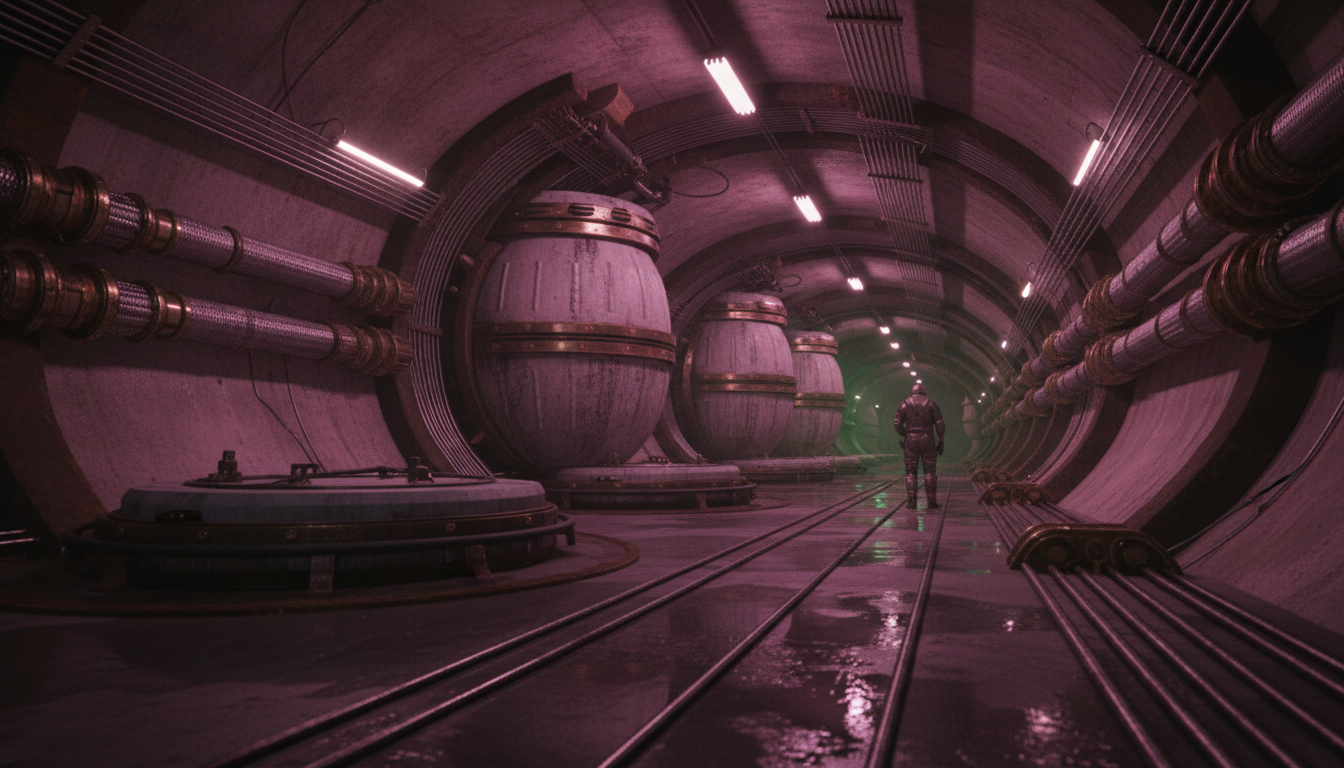
I want to describe the actual work, because it deserves describing properly, and because nobody who has not done it understands how much genuine skill lives inside a trade most people topside have never heard the name of.
A cap seal is checked on a rotation tied to depth and ambient thermal drift.
Reading one properly means understanding not just the number on the gauge, but the whole history of that particular head. How it behaved last winter. Whether the conduit run beneath it had ever needed re-packing, and if so by whom, and whether that man had been any good. Which of the twelve heads ran warm and which ran cold, and why, and what "why" meant when the honest answer was that nobody knew and the head had simply always done it.
None of which appeared in any manual, because no manual for this work has ever been written.
There is the rota, which is a schedule. And there is everything else, which lives in the hands of about forty families and is transmitted the way my father transmitted it to me, which is by standing next to somebody for eleven years.
He taught me the vocabulary the way you would teach a language nobody outside your own house speaks.
A seal that was drying was going glassy. A conduit under strain was singing — and it does, faintly, and once you have heard it you cannot stop hearing it. A reading that made no sense against yesterday's was a liar, and you did not trust a liar until you had checked it twice from different angles.
Forty families built that language between them over two generations. Nobody wrote any of it down. It was refined the way any trade refines its private shorthand — by being used at four in the morning by tired men who need to say a complicated thing quickly — and by the time it reached me it was as precise and as unteachable-from-a-book as any craft I have ever encountered.
I loved it.
I want that on the record plainly, because so much of what follows in this account is about the cost of a secret, and I do not want that cost to erase the fact that the work itself — entirely apart from whatever it was protecting — was genuinely good work, done well, by people who took real pride in doing it better than the generation before them had.
We were better than our fathers. That was understood among us and it was true. The seals held longer. The repacks lasted. We had worked out three or four things about thermal behaviour that the first generation had simply endured.
By my second year I could read a seal at a glance and tell you, before the gauge confirmed it, whether it needed attention this rotation or could wait for the next.
My father told me, the day I first caught a drifting reading before he did, that it was the proudest he had been of me since I was born.
I believed him. I have never doubted it in the sixty years since.
And the pride was completely genuine and had nothing whatsoever to do with what either of us did or did not know about what the seals were actually for.
That is the thing I would most want understood about my whole working life. It was not a life spent guarding something. It was a life spent doing a difficult thing well, in the company of people I liked, and the guarding was a property of the arrangement rather than an activity any of us performed.
Chapter 13 — The Caps
↑ Back to ContentsFocus: Adish.
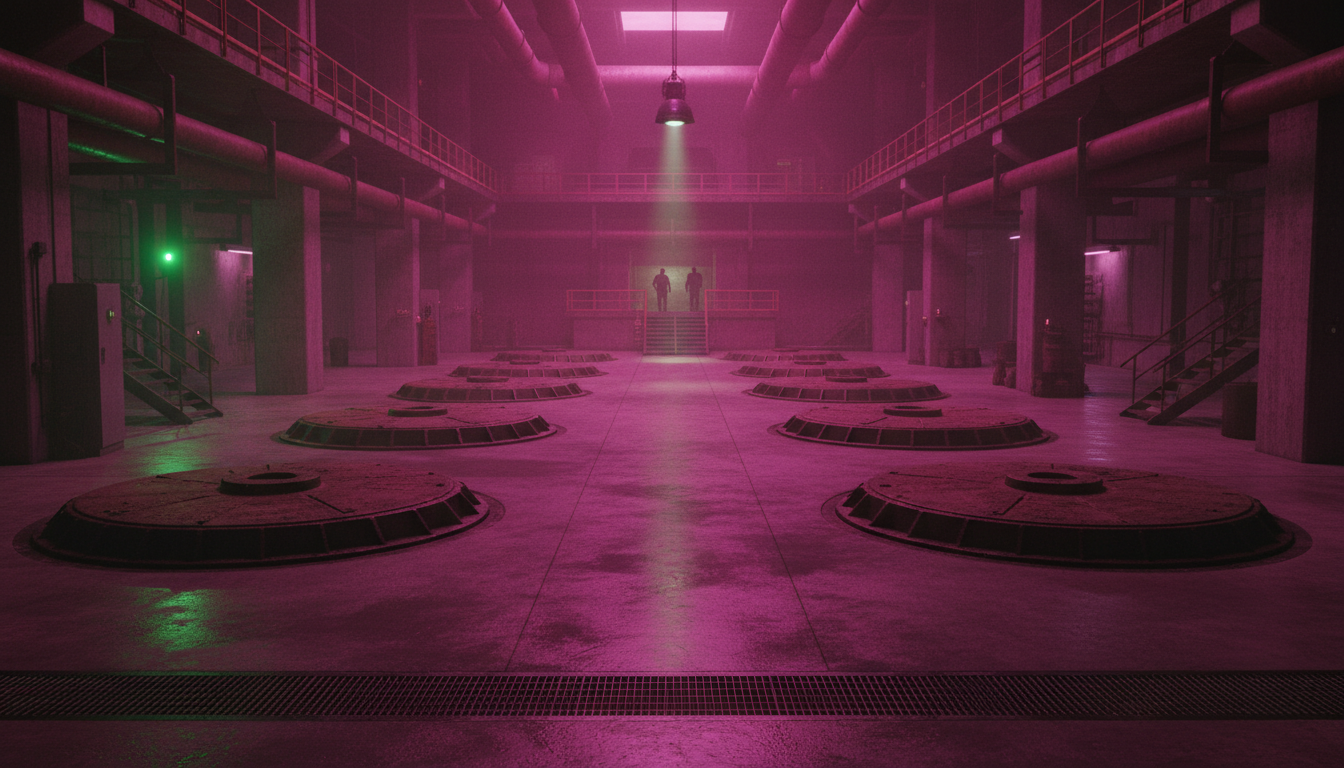
There are twelve of them across the network, and I serviced all twelve by my third year, and I want to be precise about what servicing one actually meant, because the plainness of it is the whole point.
Each cap sits at the head of a deep shaft. Sealed. Instrumented. Checked on rotation for exactly two things: the integrity of the seal itself, and the readings coming off three gauges set into the housing around it.
That is the entire job description. Two things, twelve times, on a schedule.
Nobody in the two generations of my family who worked this trade ever opened one.
There was no procedure for opening one.
I want to be careful with that sentence, because it sounds like a prohibition and it is not. There was no rule against it. Nothing anywhere said do not open the caps — I have read the rota, all four recopyings of it, and there is no such line and there never has been.
There was simply no procedure. The unwritten manual covered checking, adjusting, repacking, and reporting, and it stopped there entirely, because nothing in the job had ever required going further. A man who wanted to open one would have had to invent the reason himself, from nothing, against a hundred years of it never having come up.
I asked my father once, early on, what would happen if a reading ever went far enough outside tolerance that checking and adjusting were not enough.
He said there was an escalation procedure filed with the office.
Neither of us had ever had cause to use it. He had not seen it invoked in thirty years. He assumed it existed for a reason, and said so, and then said — and I remember this exactly — that he assumed a great many things about this job and had stopped keeping a list.
I have since learned that nobody, in four generations of this family's work, has ever invoked it.
Not once. Not in a hundred and forty years, across twelve heads, through two recopyings of the rota and one reorganisation of the office that administers it. The escalation procedure has sat in a file since before my grandfather was born, waiting for a condition that has never arisen.
The caps simply sit. Sealed. Monitored. Quietly correct, decade after decade, needing nothing from any of us but the plain competent attention we were trained to give them.
I found something almost restful in that, over the years.
Twelve sealed things, checked faithfully, never opened, never explained, never once behaving in a way that demanded more of us than the rota already provided for. There is a particular peace in a job that does exactly what it says it does, every week, for your whole life.
It is possible to spend an entire working life in careful, skilled relationship with twelve objects and never once need — or receive, or even particularly want — to know what is actually inside them.
I say that as a plain fact about how the job felt from inside it. Not as an excuse for never asking.
Because I did ask, once.
And I am coming to that.
Chapter 14 — What the Job Is
↑ Back to ContentsFocus: Adish.

I asked him once, at nineteen, on the walk back up from the third head on a slow afternoon with nothing else to fill the silence, what was actually down there.
He did not stop walking.
That is the part I remember most clearly — more than the words themselves. He answered without breaking stride, in the same even voice he used for reporting a seal reading, as though the question weighed exactly the same to him as any other question I might have asked that day about anything.
"I don't know," he said. "Nobody who's ever worked this rota knows, as far as I'm aware. Your grandfather didn't know. I don't believe there's anybody alive who does, outside whatever office holds the file on it."
I asked him how that was possible.
Because his own father had been down there. Once. At the very beginning. That was the one piece of family history I had, and I had it only because my grandmother had let it slip when I was about eleven and had not repeated it.
And he said that whatever his father had seen, his father had never once described it to him.
Not on his deathbed. Not drunk — and he was a man who drank, moderately, on Sundays, for forty years. Not in a weak moment across sixty years of being his son. Not obliquely, not in anger, not in the small hours of the night his own wife died.
He said he had come, over time, to believe that his father had genuinely intended to take it with him.
And that he had.
I believed him completely, and I want to explain why, because it is the hinge on which the rest of my life turned and I have never been able to make it sound like enough.
My father was not a man who dressed up an answer to spare my feelings. He had not softened a single hard truth in the whole of my childhood — not about money, not about my mother's illness, not about my own failures, of which there were several and about which he had been exact.
If he had known and simply refused to say, I think I would have felt it in the shape of the refusal.
There is a quality a held-back answer has. A door visibly shut, and a man standing in front of it being pleasant to you. I had seen him do that about one other thing in my life and I had recognised it instantly at the age of about seven.
There was none of that.
There was only a man telling his son, plainly, on a walkway, that he had inherited a job and a habit of not-knowing from a father who had inherited the same, and that this was simply the truth of our family's work, passed down as honestly as everything else he had ever taught me.
I never doubted him again on the point. Not once, for the rest of his life or mine.
He did not know.
That was itself the whole answer, and it was the correct one, and believing it was the first real inheritance he ever gave me — because a man who believes his father is hiding something spends his life pulling at it, and a man who believes his father is telling the truth can put it down.
I put it down.
Chapter 15 — Never Asking Again
↑ Back to ContentsFocus: Adish.

I want to describe how a curious man stops asking questions, because I was a curious man by every measure that mattered to me before I took this trade, and I stopped anyway, and it happened so gradually that I cannot point to the day it finished.
It was not fear.
I want that stated as plainly as I can manage, because every account I have heard of families like ours — told by people outside them — assumes some quiet terror kept us all in line. There was none. Not one moment, across a whole career, when asking felt dangerous. Nobody had ever suggested that it might be. There was nobody available to do the suggesting.
It was something much duller than fear, and much harder to argue with.
A mortgage. A rota. A trade I was good at and proud of. A wife who depended on the wage, and then two children who did. And a question that had already been answered, honestly, by the one man in the world I trusted most to answer it honestly.
My father had told me he did not know.
I believed him. And once I believed that, the question lost its target.
That is the mechanism and I have never seen it described anywhere. A question needs somewhere to go. Mine had nowhere — there was no longer anybody nearby who might actually have the answer, only an office several administrative layers removed from anything I touched day to day, staffed by people who had never been down a shaft and would have had to go and look it up.
And asking them would have meant taking a genuinely good job and turning it, for no clear reason, into a confrontation with people who had never once given me cause for one.
So I let it settle.
Not buried. Not suppressed — I want to be exact, because those words imply effort, and there was no effort. Simply set down. The way you set down a tool you are not using, and then eventually stop noticing is still on the bench, and then one day somebody else has moved it and you do not remember when.
I checked my twelve heads. I read my seals. I came home tired and satisfied.
And the question that had felt enormous, standing on that walkway at nineteen with my father not breaking stride beside me, became smaller every year I did not ask it again — until it was small enough to fit comfortably inside a life that had, by every other measure, everything in it that I actually wanted.
I do not know whether that makes me incurious or simply reasonable.
I have argued it both ways with myself for forty years. There is a version where I am a man who chose comfort over knowing, and there is a version where I am a man who correctly declined to wreck a good life chasing a thing that was not his business and could not be found.
Both versions are made of the same facts. I have never been able to get either of them to win.
I stopped trying to decide somewhere in my sixties.
And I suspect now that stopping trying to decide is itself the last stage of the same process I have just spent this chapter describing.
Chapter 16 — The Second Break
↑ Back to ContentsFocus: a second-generation daughter.
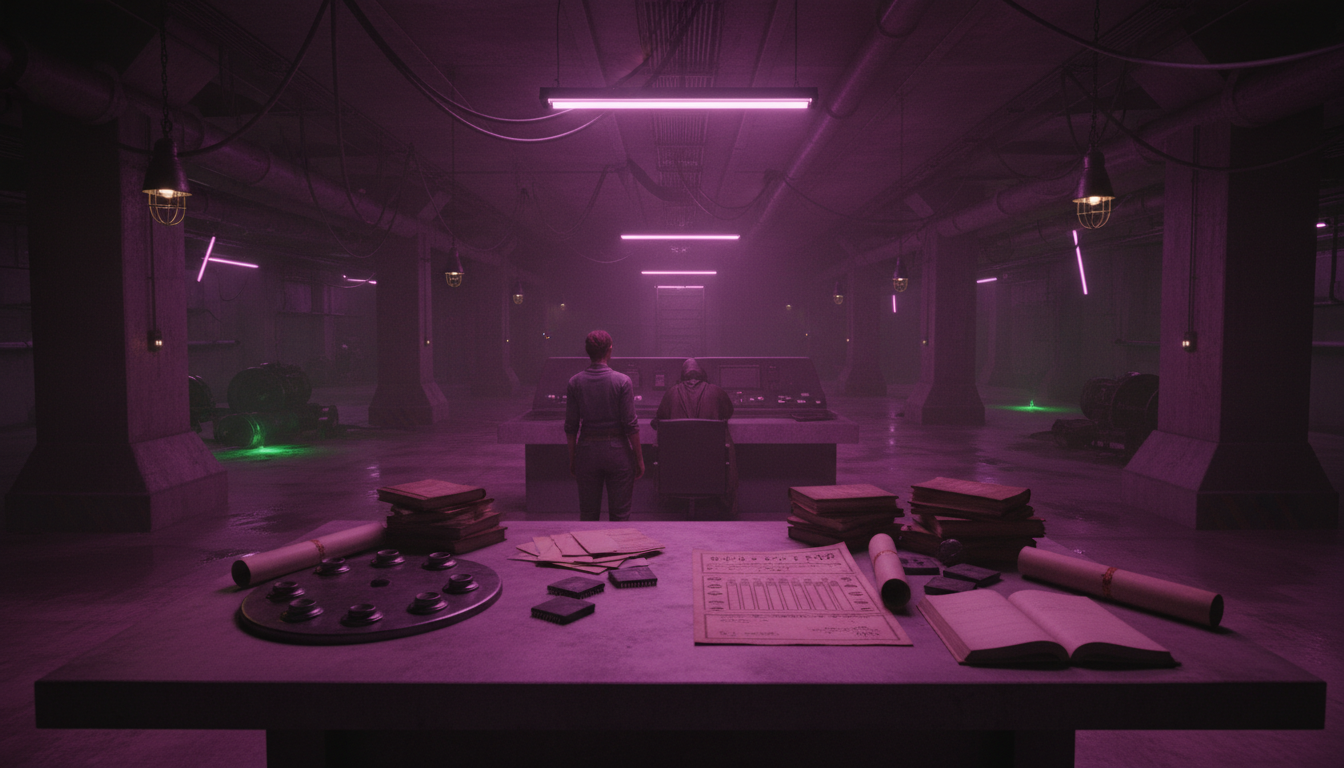
I went to see a Council member because I had decided, at twenty-six, that somebody in a position of actual oversight ought to know what I knew — and because I genuinely believed, walking into that office, that knowing it would matter.
I had prepared for a fortnight.
I want that on the record because of how the meeting is remembered afterward, in whatever thin version survives in family talk. I did not walk in agitated. I had written it out, and cut it, and written it out again, and read it aloud to an empty room until I could deliver it without my voice doing the thing my voice does.
I told him everything.
Forty families — as near as I could reckon it from names I had heard my whole childhood without understanding what connected them. I had a list. I had spent four evenings on that list and I could account for thirty-one of them by name and household.
Twelve capped shafts across the network, serviced on a rota that predated every current employee's memory of who had written it.
An oath, sworn once, generations back, to a man most of the families involved had never personally met — and I gave him the man's name, and I watched him receive it without any reaction whatsoever, which I took at the time for professional composure.
No oversight entry, anywhere, in any public filing I had been able to find, that accounted for any of it as what it actually was rather than as ordinary maintenance work. I had looked. I had spent most of a year looking, in the public rooms, on my own time, and I brought the references with me.
I had not made any of it up.
I want that stated as clearly as I can, because the way this is remembered makes it sound as though I invented a story or inflated an ordinary job into something sinister.
I did not. Every fact I gave that man was true, checkable, and — as far as I was able to determine at twenty-six with no training and no authority — complete. I laid it out calmly, in order, exactly the way I had rehearsed it walking to his office that morning through a cold I still remember.
He listened to the whole of it without interrupting me once.
I took that, at the time, as a very good sign. I had braced for him to cut in at the second or third point, the way people do when they have decided early what a thing is. He did not. He let me get all the way to the end, including the part I was least sure of, and then he asked two questions, and both of them were good questions that went to the weakest points in what I had said.
He thanked me for coming forward.
He said he would look into it personally and get back to me within the month.
He did get back to me. Within the month, exactly as promised, in writing and then in person.
And I am going to let the next account in this record describe what he actually found — because it is not mine to tell, and because I did not, myself, ever learn to explain what happened to the truth I handed him.
Only that it went in one door of that office looking exactly like what it was.
And came out the other side, five weeks later, looking like nothing at all.
Chapter 17 — Nobody Believes Her
↑ Back to ContentsFocus: the Council member.
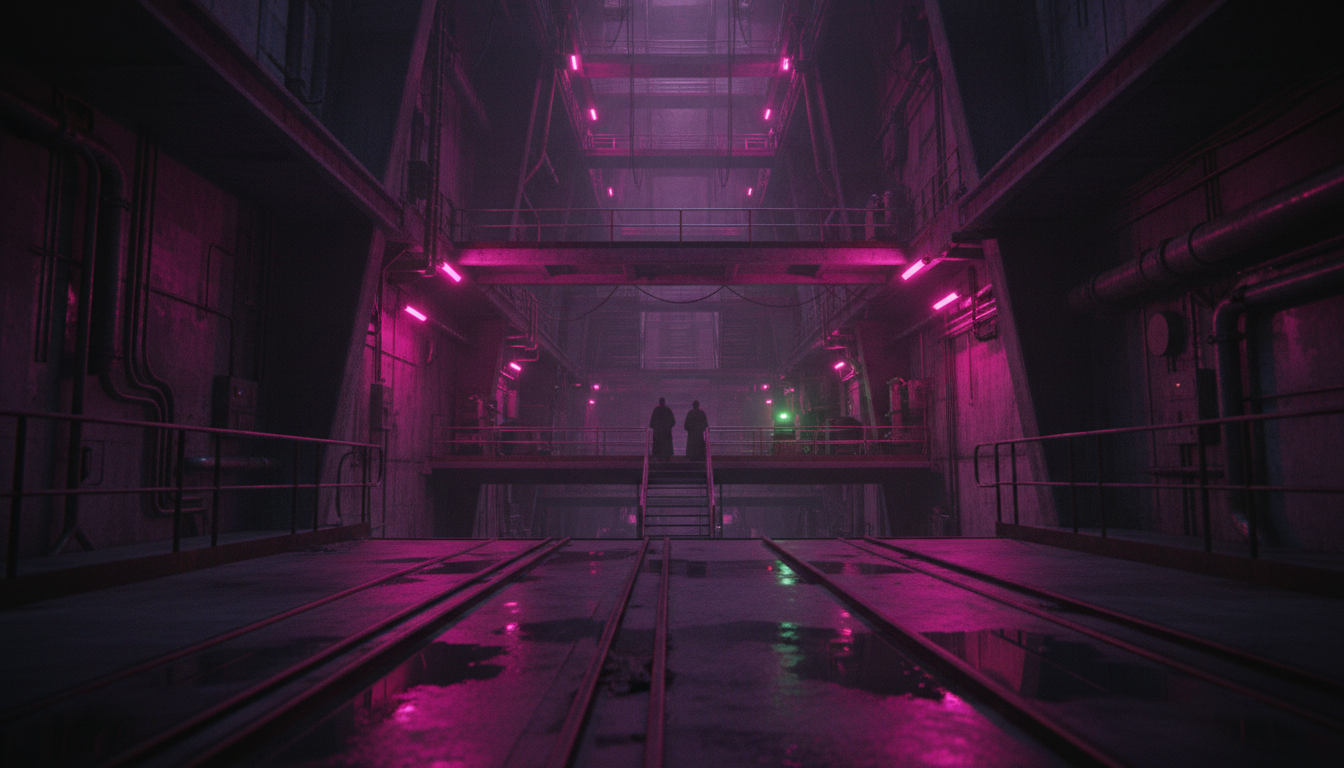
She came to my office with a great deal of specific, verifiable detail, and I want to be honest in this note about how seriously I took it — because I did take it seriously, at least for the first week, and I have never been comfortable with how the file reads now.
I checked what could be checked.
Forty families was a number I could neither verify nor disprove from where I sat, though her list was better than I expected and I confirmed eleven of the households against employment records inside two days.
The twelve shaft heads were real.
And they were, according to every public filing available to my office, under a standing hazard-survey and maintenance contract dating back to the founding decades — administered through what everybody still called the Ground Truth Programme out of old habit, long after the programme itself had been folded into general infrastructure.
The rota she described matched, in its broad shape, exactly what a hazard-survey maintenance contract of that vintage would actually look like. Two crews. Rotating weeks. Cross-training across all sites. Continuity of personnel across generations, which sounds sinister when a young woman says it in an office and is entirely ordinary in a specialised trade in a small district.
That was the difficulty, and I want to explain it plainly rather than hide behind it.
Everything she told me was consistent with two entirely different explanations.
One mundane and thoroughly documented. One exactly as strange as she believed it to be.
And I had no instrument available to me that could distinguish between them.
The mundane explanation was sitting in front of me in the public record — filed, dated, renewed on schedule, fees paid, unremarkable. The other existed only in her account of family stories and in an oath that nobody could produce a single document to support, because there was no document, which she told me herself, plainly, without being asked.
I have thought since that her honesty about that was the thing that sank her. A person who had been inventing would have produced a paper.
I wrote it up as a misunderstanding of a genuine and well-documented hazard-survey contract.
Because that is what the evidence in front of me actually supported. Not what I believed — I am not sure to this day what I believed — but what the evidence supported, which is the only thing an office like mine is permitted to write down.
I closed the file. I told her so, gently, in person, because she deserved better than a letter.
And I watched her not believe a word of my explanation even as I gave it, and I did not blame her, and I could not help her, and those two things sat in the same room with us for about ten minutes.
I have thought about that meeting many times since.
I do not believe I lied to her. I do not believe I was wrong, given what I had to work with. I have gone back to the file twice in the years since and I would write it the same way both times.
And I have come to understand that this is precisely how a true thing survives for a hundred and forty years.
Not by deceiving the people who come looking. Not by hiding, or by intimidating, or by producing false papers that a diligent officer might one day catch.
By genuinely, honestly, correctly resembling something else, the whole way down, to anybody who checks.
Chapter 18 — Marriages
↑ Back to ContentsFocus: Adish.

I married a Trask, which nobody in either family remarked on as unusual, because by the time I came of age it would have been more remarkable if I had not married into one of the other rota families.
I want to lay out the actual pattern, because nobody planned it and everybody lived inside it.
The forty families worked the same shaft heads. Kept the same rotation. Sent their children to apprentice under the same handful of trainers, of whom there were never more than five or six in any given decade.
And attended the same handful of district functions — where, unsurprisingly, the people their children were most likely to meet, court, and eventually marry were the sons and daughters of families doing exactly the same work under exactly the same hours.
Nobody arranged this.
There was no instruction, from the office or from anybody else, that these families should intermarry. I want to be firm about that, because it is the kind of thing that sounds arranged when you lay it out on paper afterward, and it was not.
If you had asked any of us at the time we would have said, honestly and a little insulted, that we married for love.
We did.
But love finds its candidates inside the room it is given. And the room the rota gave us was, generation after generation, mostly each other.
My wife's family worked a different set of heads than mine, on a staggered rotation that overlapped ours twice a month at the district exchange point. That is where we met. That is where about half the marriages I can name among the forty families seem to have started — at an exchange point, on an overlapping week, between two families who already, without ever discussing it, understood exactly what the other one did not say about their work.
That last part is the piece an outsider would miss.
It was not that we shared a secret. Neither of us had one to share — by our generation there was nothing to know. It was that we shared a shape. Neither of us had ever, once, in a whole childhood, asked a father a question about his day and received anything but a plain answer about cold and cages and a man on the western rotation who could not be relied upon.
Marrying somebody from outside would have meant marrying somebody who would eventually find that strange.
I do not think any of us thought that consciously. I certainly did not. I have only arrived at it late, watching my grandchildren, and I could be wrong.
I have come to think of it as endogamy by rota rather than by design.
Nobody built a wall around us. Nobody needed to. The schedule itself did the sorting, quietly, for four generations — producing a network of families bound to each other by marriage in roughly the same shape they were already bound to each other by the thing none of us discussed.
And which, by then, none of us could have described if we had wanted to.
Chapter 19 — Children Not Told
↑ Back to ContentsFocus: Adish.
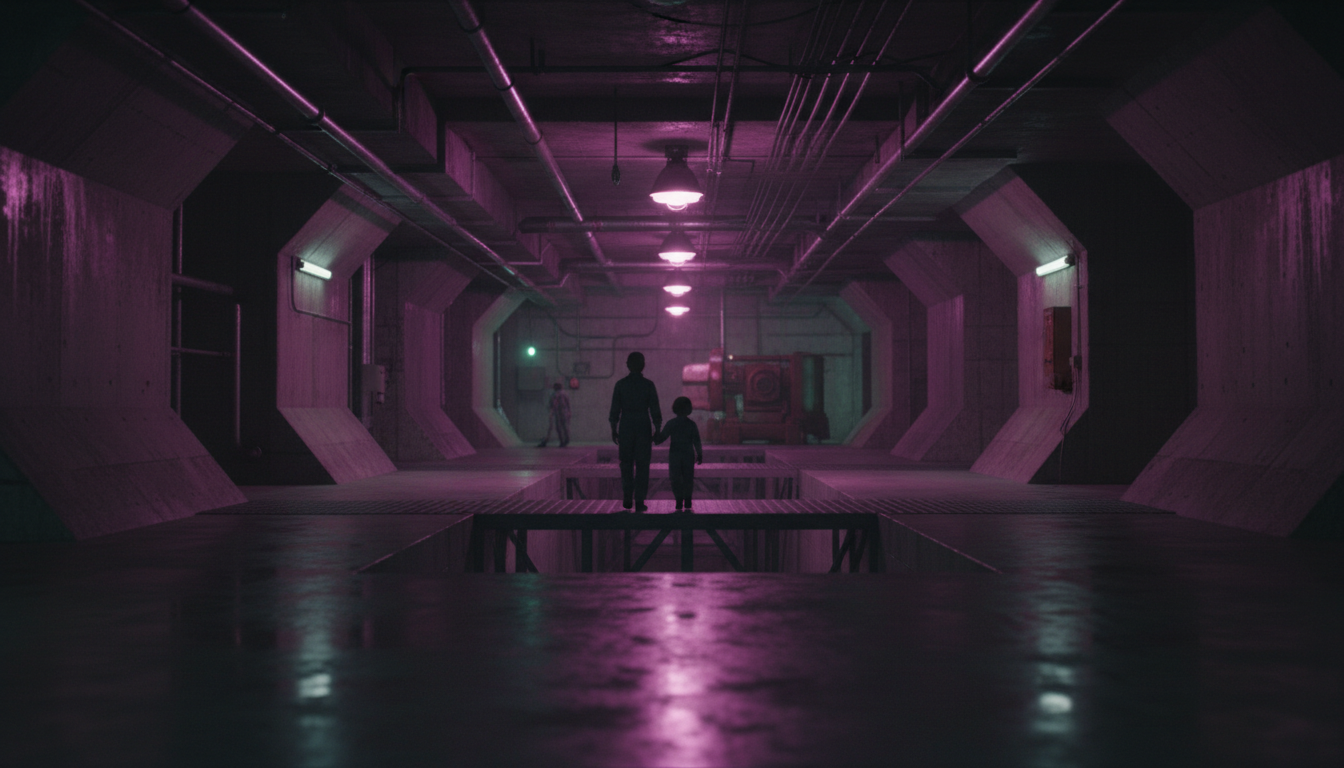
We raised our children the way my father raised me, which is to say we told them nothing — and I want to be exact about why that sentence is sadder than it sounds, because it is not a story about withholding.
There was nothing, by the time our children were born, actually being withheld from them in any active sense.
My wife and I did not sit across from each other in the evening, weighing what to keep from our son and daughter. We never had that conversation. Not once, in thirty years, did the subject arise between us as a decision to be made.
We simply had nothing to tell them beyond what our own parents had told us — which was itself nothing, going back as far as either of our families could account for.
A rota. A trade. A wage. And a silence so old and so complete that it had stopped, generations before either of us was born, being an act at all, and had become instead simply the shape our family took at a dinner table.
I have tried to explain this to people outside the forty families and it never quite lands.
They hear withholding and they picture a decision, made and remade every day, to keep a child in the dark. A man standing in front of a door.
It was not that.
By my children's generation there was no dark room that anybody was standing in front of. There was no door. There was only an ordinary family, doing an ordinary trade, who happened not to know a thing that their own great-grandparents had once known and had taken entirely and permanently with them.
My daughter asked me once, at about fourteen, what my grandfather had actually done down there.
The way any child asks an idle question about family history — over a meal, half interested, already thinking about something else.
And I told her the truth, exactly as my father had told it to me on a walkway when I was nineteen: I don't know. Nobody does. It isn't a secret being kept from you. It's a fact nobody living possesses.
She accepted it.
The way I had accepted it. Without particular distress, without following up, without ever raising it again in the twenty years afterward that I have been able to observe.
Because there is nothing especially painful about not knowing a thing you never expected to know in the first place. A child who is told her family has a secret will spend her life on it. A child who is told there is no secret, only an old absence, will finish her meal.
That is the saddest sentence I have to offer in this whole account, and I want to leave it exactly that plain:
There was nothing to withhold, and so nothing was withheld.
And an entire family's history simply thinned, one honest non-answer at a time, across four generations, until it weighed almost nothing at all.
Chapter 20 — Sefa Dies
↑ Back to ContentsFocus: Adish.

My father died in his own bed, at eighty-one, with my mother's hand in his and mine on his shoulder, and he did not say anything at the end that he had not already said, plainly, many times before, across the whole of my life.
I had half expected otherwise.
I will admit that, though I am not proud of it, and I have never told my mother.
Some part of me had believed that a man might change his mind about a promise on the last day of his life. That whatever he had carried since that room with the kettle might finally come loose at the very end — the way people sometimes say things at the last that they could never bring themselves to say sooner, when there is no longer any afterward to protect.
I had even, in the last week, arranged to be alone with him twice. Deliberately. I did not admit to myself at the time what the arranging was for.
It did not happen.
He asked after my children by name, all four of them, in order. He told my mother, again, that he had been fortunate in his life — he had been saying that for about a year by then and she had stopped arguing with him about it.
And he died some hours later without one word about a shaft, a seal, or an oath.
I understood, sitting with him in those last hours, something I had not understood in fifty years of being his son.
He was not simply keeping a secret out of habit by the end.
He had decided — at some point across sixty years that I was not present for and will never be able to locate — that the promise he made in that office was going to be the one completely reliable thing about him. The one part of his life that outside pressure, family love, and his own approaching death would never once move.
And he had made that decision so thoroughly, so long ago, that by the end it required no further effort from him at all.
It had simply become who he was. There was nothing left in him that was holding anything back, because there was nothing left in him that wanted to let it go.
He took with him the one thing that anybody in this entire account ever actually had that was worth keeping.
Not the secret. He never had that to give me — whatever he saw down there he had already declined to describe for sixty years, and I have come to believe he could no longer have described it accurately by the end even if he had wanted to.
A reason.
The reason he said yes to a man with a kettle, in a room, at twenty-six, for a lifetime of silence he was offered no explanation for. Whatever it actually was in him that made him agree — and it was something, because ten other men agreed the same afternoon and I have never believed all eleven of them did it for the same cause.
He never once, in eighty-one years, told anybody what his had been.
I buried him beside the district he had served his whole working life. On a rota he had helped write, in a plot that four other families from the same rota are buried in, in a family that would go on keeping his silence for two more generations.
Without ever once knowing why he had first agreed to keep it himself.
Chapter 21 — Habit
↑ Back to ContentsFocus: Nell Trask.
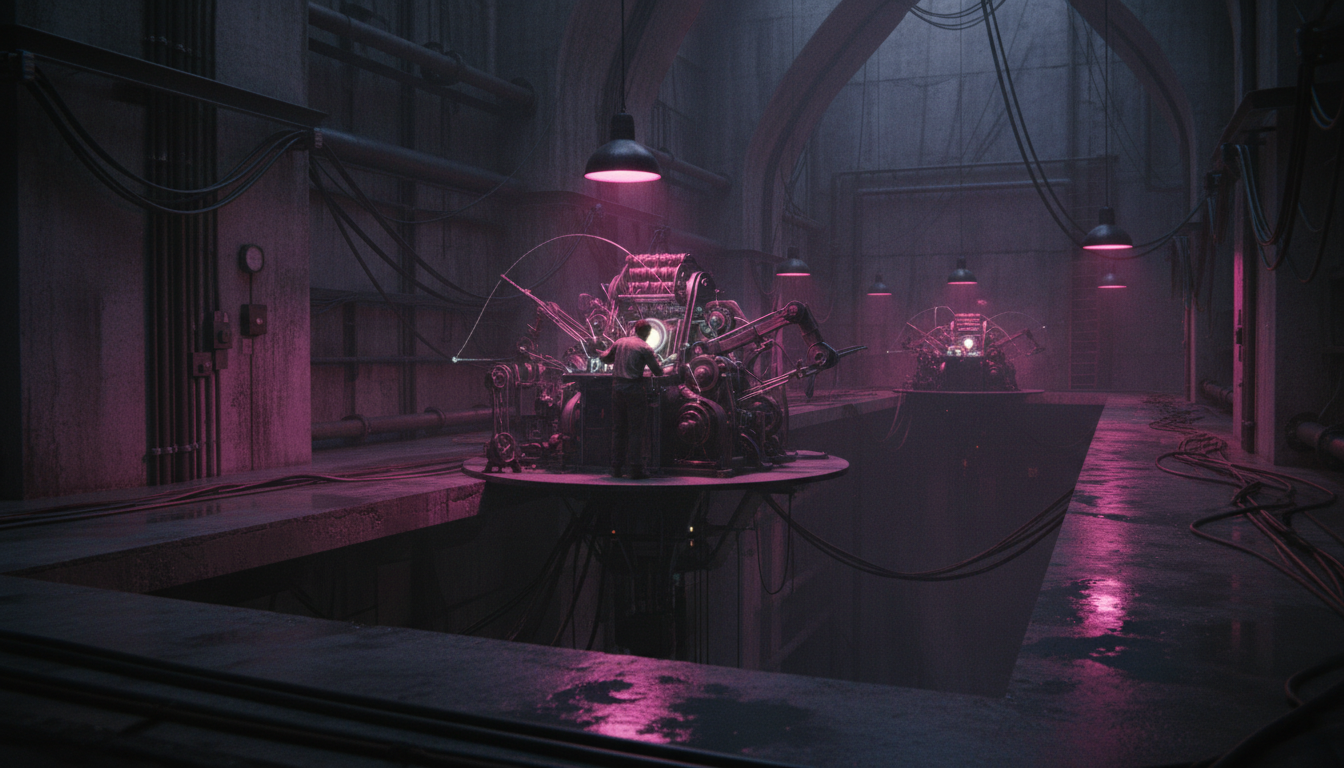
I have never in my life heard anybody use the word oath about what my family does, and when I first came across it — much later, in a context that had nothing to do with us — it did not once occur to me that it might apply.
What I inherited was a trade.
My mother worked the eastern heads and her father before her, and when I turned seventeen she took me down the same way she would have taken me into a bakery if we had been bakers. I learned the seals and the readings and the vocabulary, and by twenty-four I was better at it than she was, which she told everybody at every opportunity for the rest of her life and which embarrassed me for about ten years and then stopped.
I want to describe how completely ordinary it felt.
Because I understand that from outside it must look strange. Forty families. One rota. A network nobody outside our district could name and most people inside it never thought about.
From inside, it was simply the district.
The Trasks did the shafts. So did the Oyelarans, and the Vestergaards, and thirty-odd other families whose names I had known since childhood without ever once thinking of us as a set of anything. If you had asked me at twenty whether there was a group, I would not have understood the question. There were families. Some of them did this work. Most of the district did something.
I was proud of the work and I want that recorded plainly.
A seal I had repacked held better and longer than a seal repacked by anybody else on the eastern rotation. I knew it. The crews knew it. There is a satisfaction in that which has nothing whatsoever to do with what the seals are for, and which I would not trade for an explanation.
I did not know what they were for.
I want to be exact here, because this is the part that gets misunderstood in every direction.
It was not that I had asked and been refused. It was not that I sensed something withheld and let it lie. There was simply no question in my life shaped like that one.
The caps were the caps. They needed servicing on a rota that predated my grandmother. I serviced them well.
And if you had asked me at thirty why my family had done this work for three generations, I would have told you — without any sense of evasion, without a pause, in the tone you use for the obvious — that it was good money and skilled work and what we were known for.
The reason had been gone so long by my generation that there was no hole where it had been.
That is the part I find hardest to explain to anybody who did not grow up in it. People expect an absence to feel like something. A draught. A shape under a sheet.
Nothing was missing. Nothing felt absent.
There was just a family, and a trade, and twelve sealed things we looked after properly — because looking after things properly was what we were.
Chapter 22 — Superstition
↑ Back to ContentsFocus: Nell.
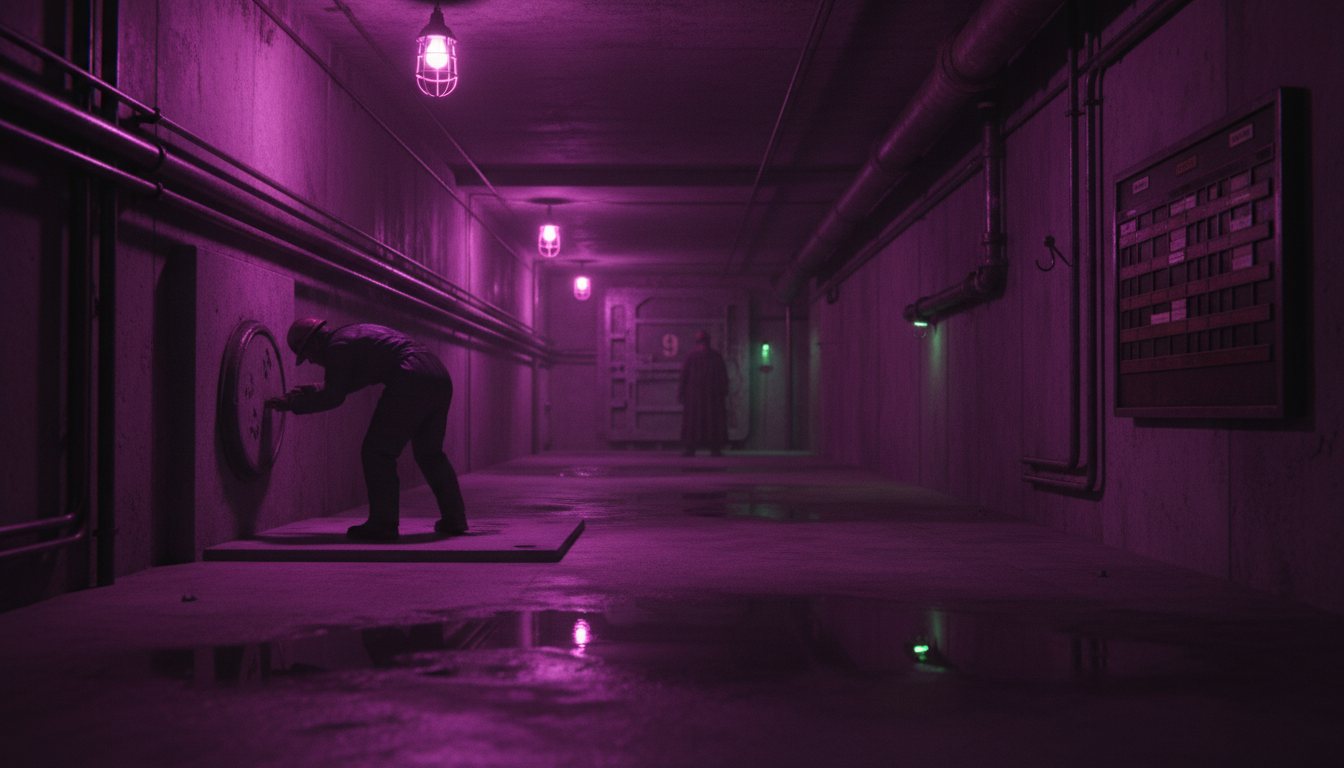
You knock on a cap before you open the panel.
Everybody does it. On every rotation, on all twelve heads, by every hand that has ever held the eastern or western slot — and not one person on the network can tell you where it started or why.
I asked when I was learning.
My mother said her father had done it, and that was the whole of her answer. When I pressed she said something about not startling the housing, which does not mean anything — a housing cannot be startled, it is a metal collar bolted into rock — and she knew perfectly well it did not mean anything.
And she knocked anyway. Twice. Every time. For forty years.
So do I. So does everyone I have ever trained. Twice, with two knuckles, before the panel comes off.
There are others.
You do not whistle at shaft nine. I have never met anybody who could explain this and I have never once whistled there, and neither has anybody I have worked beside, and I have watched a new hand get told about it in his first fortnight by a man who did not know why he was telling him.
There is a rota slot — the third week of the eastern cycle, the one that falls across the turn of the year — that nobody swaps out of. In practice this means it has been held by whoever held it last for as long as the schedule goes back, passed down within families rather than traded like every other week. It is not a rule. It is simply never offered.
There is a way of writing the log entry for a clean reading. A particular short form. Using the long form instead is not wrong, and nobody would say anything, and people notice.
None of it does anything.
I want to be very clear about that, because I have heard outsiders make these sound like the residue of instruction — as though somewhere behind the knocking there is a procedure that got worn down into a habit, and if you dug far enough you would find the original rule.
There is not.
I have read the rota. All four surviving recopyings of it, which is the oldest document any of us has and the only one that goes back to the beginning. There is nothing in it about knocking, or whistling, or the third week, or the short form. There has never been anything in it about any of that.
These things grew where nothing was.
They are entirely invented — all of them, by people like me, across a hundred years — filling in a space with small harmless rituals because the space was there, and because human beings do not leave spaces alone. Give a person a job with a hole in the middle of it and they will put something in the hole. It will not be true and it will not matter that it is not true.
I find them charming, mostly.
My daughter has already started knocking. At fifteen. Having been shown by me, having been shown by my mother, having been shown by her father.
Four generations of a gesture that has never had a reason and has never needed one.
Chapter 23 — Just What the Family Does
↑ Back to ContentsFocus: Nell.

My daughter asked me why we do this work, at sixteen, in the way sixteen-year-olds ask things — half a real question and half a challenge, over dinner, testing whether the answer would hold.
I gave her four answers.
And I have thought since about the fact that not one of them was about the shafts.
I told her the money is good and steady. Better than anything else she could walk into at her age in this district without four years of training first. And that steady money is not a small thing, and she should not let anybody who has always had it tell her that it is.
That was true.
I told her the work is skilled. That reading a seal properly takes years and cannot be faked, and that anybody can spot a hand who is guessing inside a rotation. And that there is a particular pleasure in being genuinely good at something difficult that most people cannot do at all — which is a thing I would want for her whatever trade she took.
Also true.
I told her she would be working alongside people who had known her since she was born. On crews with the Oyelaran boys and the Vestergaard girls. And that in thirty years of the trade I had never once dreaded a shift because of who I was going to spend it with, which is not something most people can say about most work.
True as well, and the one she actually thought about.
And I told her, last, that this is what the Trasks do. That her great-grandmother did it and her grandmother did it and I do it, and that there is something in her hands already that came down that line whether she likes the idea or not.
She took the trade.
She is on the eastern rotation now and she is going to be better than me, which is exactly as it should be and which I have already started telling people at every opportunity.
I noticed, only afterward — days afterward, laying the four answers out beside each other in my own head while doing something else entirely — that a person listening carefully would have come away knowing everything about my family and nothing whatsoever about the twelve capped shafts we have spent a hundred years maintaining.
Four answers. Money, skill, company, blood.
Not one word about what is under the caps, or why they need checking, or who wanted them checked, or what would happen if we stopped.
That did not trouble me at the time.
It has come back to me once or twice since, at odd hours, usually when I am tired — and I have never quite been able to say why it comes back, or what I would have said instead if I had thought of it.
There is no fifth answer. I have looked for one.
Chapter 24 — Ledger's End
↑ Back to ContentsFocus: Nell.
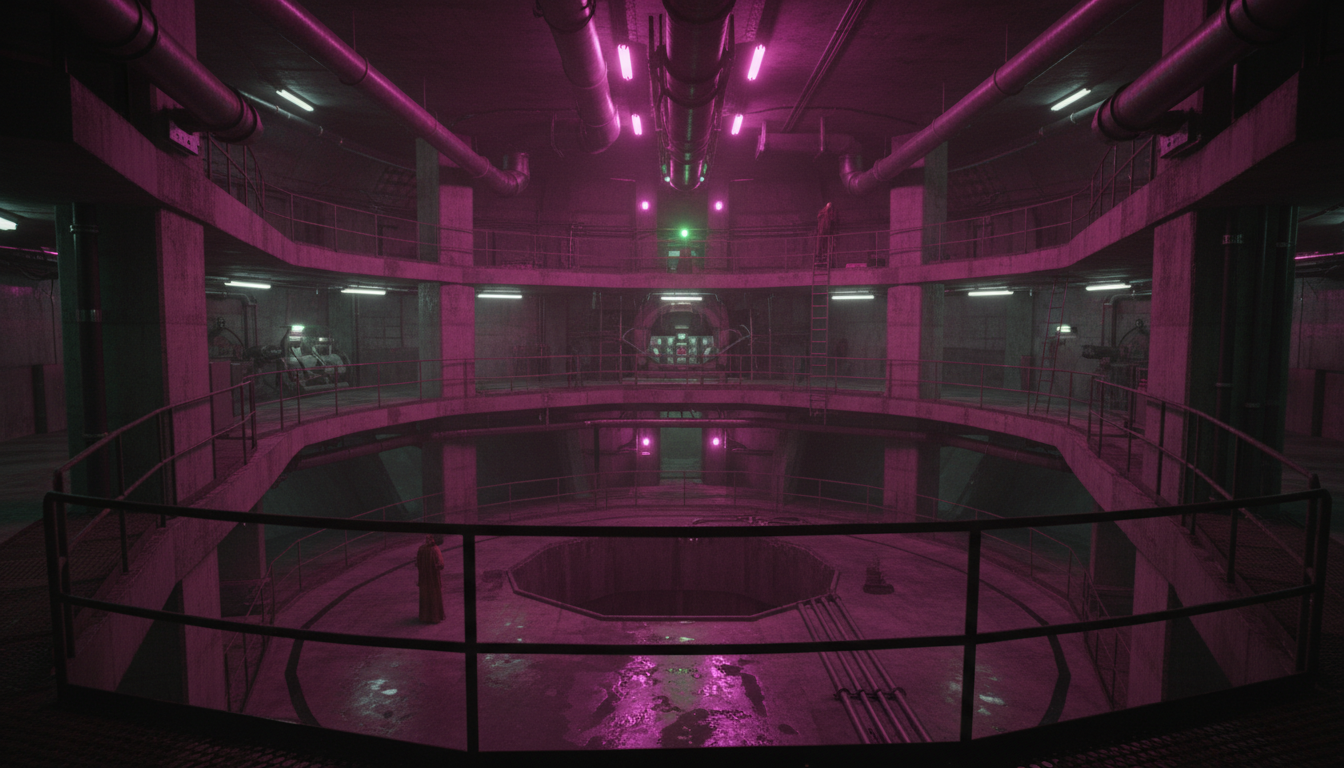
Ledger's End came round the way it always did, and the network worked straight through it, and I want to explain the small administrative fact underneath that — because it turns out to be the most important thing about us and nobody involved ever intended it.
Topside, the year-end reset wipes the ledger.
Debts, balances, the whole accumulated arithmetic of who owes what — cleared, publicly, on the same day every year, and everybody starts even. It is the best thing about the calendar. I have never met anybody who thinks otherwise and I would not trust one who did.
Our rota is not in the ledger.
It never was.
Whoever set the arrangement up in the founding decades filed the deep-network maintenance contract under infrastructure standing costs, rather than under any of the accounts that flow through the year-end reset.
Which was, as far as I have ever been able to determine, a completely ordinary filing decision, made for completely ordinary reasons, by somebody with no particular intention behind it. Infrastructure standing costs is where a permanent maintenance contract on fixed plant belongs. Any clerk would have put it there. Most of them would not have thought about it for four seconds.
The consequence is that nothing ever wipes us.
Every year the ledger clears. Every year the deep-network rota is untouched — because it is not in the thing being cleared.
Our wages arrive from a standing line that has run without interruption or review since before my great-grandmother was born. No annual reconciliation looks at it. No year-end audit passes across it, because year-end audits examine the ledger and we are not in the ledger. No office has ever had cause to ask what the line is for, because the line does exactly what it says it does, every year, for an unremarkable amount, on time.
A hundred years of complete invisibility, achieved by a clerk choosing one column over another.
I did not work this out in a moment of insight.
I worked it out slowly, over about a decade, because I have always liked understanding how the money that pays me actually arrives — which is an unusual interest and I got it from my mother, who had it from her father.
It took me that long to piece together that the answer was: quietly, from a line nobody has looked at in a century, in a place the annual cleaning does not reach.
I mentioned it to my mother once.
She said that sounded about right, and asked me to pass the salt.
I have thought since that her reaction was the correct one and mine was not. She had understood, without needing to assemble it, that a thing which has never been examined is not hiding. It is simply somewhere nobody has had a reason to look.
And that the difference between those two is the difference between a conspiracy and a filing cabinet.
Chapter 25 — Two More Breaks
↑ Back to ContentsFocus: Nell.
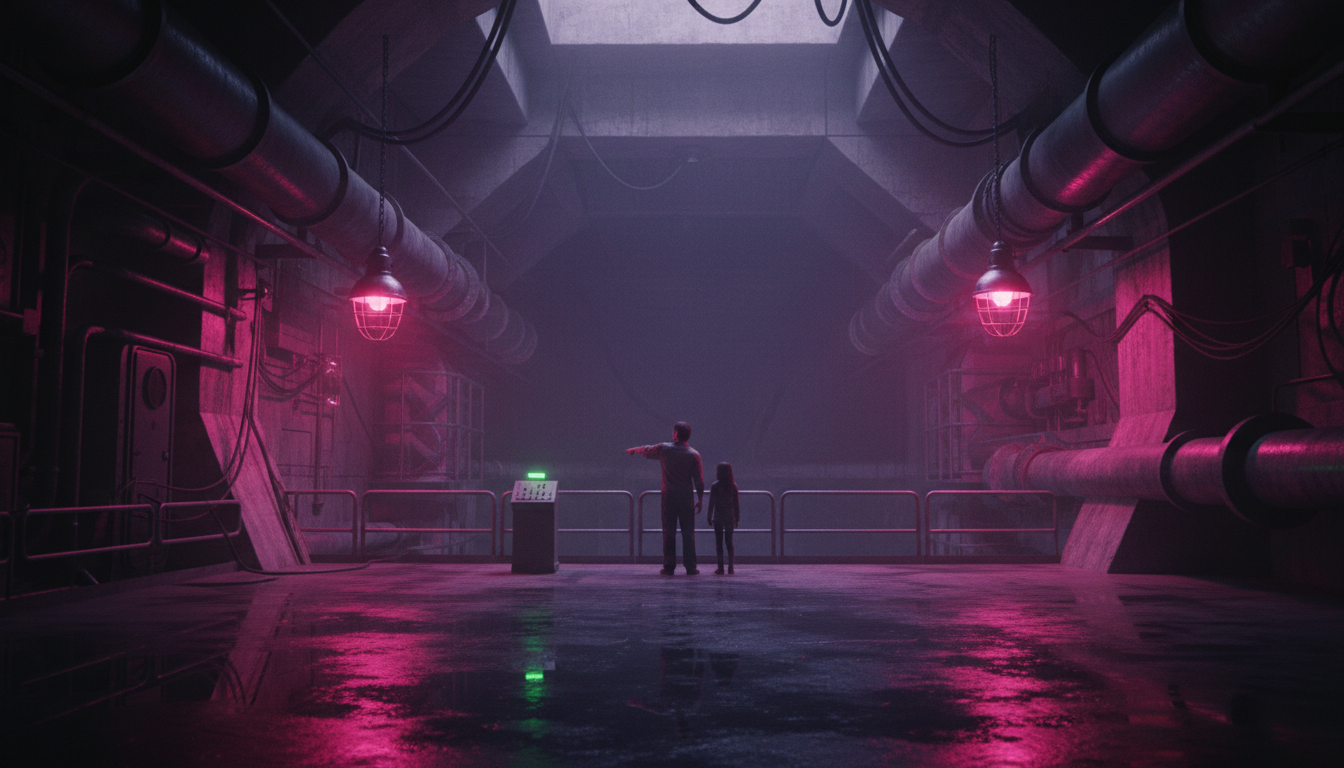
Two of them happened the same year, and neither had anything to do with the other, and I only know about both because I happened to be in the room for one and heard the second at second hand about a month later.
Torvald Oyelaran told his daughter on a Sunday afternoon.
In his own kitchen, with three other people present including me. He was seventy-one and had been drinking, moderately, the way he did on Sundays and had done for fifty years without it ever once becoming a problem anybody had to discuss.
He told her that his grandfather had been sworn to secrecy by the founder himself about something down the shafts. That the family had kept it for three generations. And that she should understand that about where she came from.
He said it warmly. It was not a confession and it was not a weight coming off him. It was a man telling his daughter something he was proud of.
His daughter said, "That's lovely, Dad," and got up to put the kettle on.
I watched her do it.
She was not dismissing him unkindly. I want that understood, because it would be easy to write her as careless and she was not. She loved him. She was patient with him in the way of a woman who has been managing an ageing parent for four years and has got good at it.
She simply heard what he had said as the kind of thing an old man says about his family on a Sunday. A story about a grandfather and a famous name.
And it sat in exactly the same drawer as every other embellished piece of family lore in this district — the ancestor who supposedly met somebody, the great-uncle who was almost on a ship. There was nothing in it to distinguish it from any of those, because he had no evidence and no detail and nothing to point at except twelve capped shafts that every single person in that kitchen had worked on their whole lives.
The other one was Marta Bell, at a wake.
Telling a friend from outside the trade essentially the same thing in essentially the same terms. The friend told somebody, who told somebody, and by the time it reached me it had already flattened into an anecdote about how the shaft families like to say they were sworn to secrecy by the founder.
Which is exactly what it now was.
Nothing happened after either of them. Nothing was ever going to.
What struck me — and has stayed with me since — is that both of them told the truth. Accurately. To somebody who loved them. Without hesitation and without any sense that they were doing anything unusual.
And the truth simply did not survive contact with how ordinary we had become.
There is no longer any version of that sentence that sounds like information. Not from us. Not in this district. It sounds like a family saying something warm about itself, and that is all it will ever sound like again, and I have understood since that afternoon that this is a far better protection than fear ever was.
Chapter 26 — Six, Total
↑ Back to ContentsFocus: the reader's tally, carried by Nell.
I have counted, and I want to set the number down plainly and then leave it alone.
Six.
Six times, in a hundred years, across roughly forty families, somebody has said the true thing out loud to a person who was not entitled to hear it.
My great-grandfather's crewmate told his wife in bed after eleven years, because he wanted one person on the planet to know him completely. She kept it for the rest of her life and told nobody, including her own children, and the only reason it is in this record at all is that she wrote it down herself at the very end.
A woman in the second generation took the whole of it to a Council member — correctly, in detail, with a list — and was courteously disbelieved by a man who did his job properly.
Torvald told his daughter on a Sunday. Marta told a friend at a wake.
And two more I know of only as names and approximate decades, because they were nobody's family of mine and the details did not survive.
Six.
Not one of them had a consequence of any kind.
No investigation opened. No visit was made. No wage was stopped, no rota slot reassigned, nobody spoken to, nobody warned, nobody so much as looked at oddly at an exchange point.
In several cases I am fairly confident that nobody who could have acted on it ever learned it had happened at all. And in the one case where somebody official did learn — the Council member — he investigated properly, found a genuine and well-documented maintenance contract, and closed the file honestly, and I have read his note and it is a good note.
I have turned that number over for years.
Six is not a small number in the way people first hear it. It is not evidence of iron discipline. Six is roughly what you get when a few hundred ordinary people, across a century, mostly do not happen to mention something that mostly does not come up.
And the thing that keeps the count at six is not fear, because there is nothing to fear and never was.
And it is not loyalty, because most of us have never heard the word oath used about it and would not know who we were being loyal to.
It is that there is nothing to say.
That is the whole mechanism and I am not sure anybody has ever written it down before. You cannot leak what you do not have. By my generation not one of the forty families possessed a single fact about what is down there — not a glimpse, not a rumour, not a shape.
Six people said the only true thing available to them, which was that a promise had once been made by somebody long dead.
And each time, the person listening quite reasonably heard family folklore.
Because by then, that is precisely what it was.
Chapter 27 — The Ones Who Left
↑ Back to ContentsFocus: Nell.

People leave.
I want to say that early and clearly, because everything about the way this looks from outside would suggest they cannot — and they can, and they do, and nothing whatsoever happens to them.
My own cousin left at twenty-eight.
He had never liked the deep work. Some people do not, and it is not weakness — it is the confinement, or the hours, or simply the fact of doing the same twelve heads for a lifetime, and I have watched three people work it out about themselves in their twenties and every one of them was right.
He trained into surface fabrication, moved two districts east, and has had a perfectly good career doing something else entirely. He comes to family things. He asks after the rotation the way you ask after anybody's job, and I tell him about the eastern heads, and he listens politely and changes the subject the way he always did.
There was no clause.
That is what I want on the record. Nobody sat him down when he handed in his notice. There was no document to sign on the way out. No restriction on where he could work afterward, no waiting period, no interest taken by anybody at any level in what he might say to whom for the rest of his life.
He simply stopped appearing on the rota and started appearing on a different one somewhere else, and the office processed it the way an office processes any resignation from any trade — a form, a final wage, and a note in a file.
I can name eleven or twelve others across my working life.
A woman who left to have children and never came back. Two brothers who went into transport within a year of each other. Somebody who moved off-district entirely after a marriage ended and who I have not heard of since.
Every one of them walked out of the deep network carrying exactly what my cousin carried.
Which was nothing at all. Because there was nothing to carry.
And every one of them was free to say whatever they liked about it, to anybody they met, for the rest of their lives.
None of them ever did, as far as I know.
And I have come to understand that this is not restraint either — that calling it restraint would be the last mistake an outsider makes about us.
What would they say?
That they used to service sealed caps on a rota, and the money was good, and they left?
The arrangement does not need to hold anybody. There is nothing in anyone's hands worth holding. You can walk out of it at any time, in any direction, with no penalty and no pursuit, and take absolutely nothing with you.
And the complete absence of any barrier at all is the most total barrier I have ever encountered in my life.
Chapter 28 — The Ones Who Came Back
↑ Back to ContentsFocus: Nell.
And some of them come back, which surprised me the first time and has stopped surprising me since.
The wage, mostly.
Surface work pays what surface work pays, and after eight or ten years of it a man with a family starts doing arithmetic that comes out the same way it came out for his father, and for his father before that. There is no shame in it and nobody here has ever treated it as a defeat.
Sometimes it is the rota itself. Knowing your weeks two years out, in a trade where most people find out their next month on the fifteenth of this one, is worth more than people realise until they have lost it and tried to raise children without it.
Sometimes it is the shelf — a standing in the district, a name people know, work your children can walk into without asking anybody for a favour.
Bertil Sund came back at forty-one, after thirteen years away, and brought his son in with him.
I was on the cage with the two of them the morning they came down. The boy was seventeen and had that particular stiffness of a young man determined not to look impressed by anything.
And I heard Bertil tell him, going down, in a perfectly ordinary voice, that the family had been asked to keep quiet about this work by the founder himself, way back, and that they had always done it, and that this was part of what it meant to be a Sund on the rota.
His son said, "Right," and asked how long the descent took.
That was the fifth of the six.
I did not recognise it as anything at the time. Neither did Bertil — and this is the part that matters and the part I have thought about most.
He was not confessing. He was not unburdening himself, or breaking anything, or passing on a weight. He genuinely believed he was telling his son a nice piece of family history on the boy's first morning. The way you would tell a child that his grandfather built the house they live in, or laid the road, or named a hill.
He was correct in every particular. Every single element of what he said was true.
And he had no idea that he was correct.
The boy is twenty-six now. Good at the work — better than his father, though I would not say so where Bertil could hear it. And he has never mentioned it to me, or, I would guess, to anybody.
Why would he?
He was told a warm thing about his family on a cage ride when he was seventeen and trying not to look impressed.
It went where warm things about families go.
Chapter 29 — What the Caps Sound Like
↑ Back to ContentsFocus: Nell.

I want to spend a chapter on what you feel through the rock, because it is the part of this work outsiders always ask about once they know it exists, and because four generations of us have built a whole vocabulary for it that has never left the district.
It is not a sound.
Everyone's first instinct is to call it a sound and everyone abandons that inside a year. It arrives through the boots — and through the palms, if you have a hand flat on the housing — and it is slow. Much slower than anything mechanical. Slower than the pumps, slower than the cage, slower than anything on this network that runs on a motor.
A long give and return that you feel in the ankles before you feel it anywhere else.
My mother called it the settle. Her father called it the same. The eastern crews mostly say the rock is working, which is the phrase I use and which I taught my daughter without ever deciding to.
There are people on the western heads who say breathing, which I have always disliked without being able to say why, and which I have caught myself correcting in new hands, which is not my place.
And there is an old word, mostly gone now, that I heard exactly twice from very old men when I was young.
The long note.
Nobody uses it anymore. I do not know where it came from and I have asked. Both men who said it in my hearing are forty years dead and neither of them explained it, and I did not think to ask at the time because I was nineteen and it was just a thing an old man said.
The explanation everyone gives is thermal.
The rock takes heat from somewhere below on a cycle and expands and settles. The cycle is slow because rock is enormous and heat moves through it slowly. And that is that.
There is a survey report from the founding decades that says approximately this. It has been in the file so long that nobody I know has ever read past the summary, and I only read past the summary because I was off work for six weeks with a broken wrist and had nothing else to do.
I do not believe the thermal explanation.
I want to be careful about how I say that, because I have no alternative to offer and no evidence for my doubt beyond thirty years of ankles.
It does not behave like heat. It does not vary the way heat varies — not with the season, not with depth in the way you would expect, not with anything I have ever managed to correlate it against in three decades of paying attention on my own time with no instruments.
That is the whole of what I have.
A feeling. A set of words we made up. And a report I do not believe, written by somebody who is long dead, about a phenomenon nobody has measured since.
I have never taken it further than that. There is nowhere to take it, and nobody to take it to, and it has never once affected a single reading on a single seal.
Chapter 30 — A Hundred Years
↑ Back to ContentsFocus: Nell.

The hundredth year passed without anybody marking it, and I only know it was the hundredth because I worked it out afterward, from the rota, on an evening when I had nothing else to do.
The rota carries its own dates.
The oldest sheet in the file is not the original — that is long gone, and nobody knows when it went — but the oldest surviving copy carries a founding date at the top, recopied faithfully by at least four different hands that I can identify from the changes in the writing.
Somebody, four times over a century, sat down and copied a date they had no particular reason to preserve, because it was on the sheet they were copying.
I sat down with it one winter and counted forward.
And found that we had passed a hundred years of continuous rotation eight months earlier. In the third week of the eastern cycle. On an ordinary Thursday.
Nothing happened on that Thursday.
I checked the log. Two heads serviced, both clean, both logged in the short form. Somebody knocked on a cap before opening a panel, because somebody always does.
There was no ceremony, because there was nobody to hold one and nothing to hold one about.
A centenary requires somebody who knows what began a hundred years ago.
And by my generation, not one person in forty families could have told you what began, or when, or why, or who asked for it. My great-grandmother's generation knew there had been a beginning — they were in the room. My grandmother's generation knew there had been a promise, secondhand, from people who had made it.
Mine knows there is a rota.
The rota is the only thing that remembers.
I mean that precisely rather than poetically, and I want to be understood exactly. The document itself carries the date. It carries the continuous slot numbering. It carries the unbroken sequence of weeks running back to a founding that nobody can otherwise account for — and it has kept that record faithfully through four recopyings by people who were transcribing a working schedule and not, as far as any of them knew, preserving anything at all.
Four people, across a century, each copying a number they did not understand onto a fresh sheet because it was at the top of the old one.
That is the entire memory of this thing. Not a story, not an instruction, not a name. A date at the top of a schedule, carried forward by clerical habit.
I put it back in the file.
I did not tell anyone. There was no one it would have meant anything to, and I could not have explained, if asked, what exactly I thought we had been doing for a hundred years.
Beyond the obvious answer.
Which is that we had been servicing twelve caps on a rota, competently, without a single missed week, since before anybody alive was born.
Chapter 31 — Fourth Generation
↑ Back to ContentsFocus: Iri Vestergaard.

I am the best cap technician on the network and I will say so plainly, because it is true, it is measurable, and false modesty about competence has always struck me as a kind of lying.
Fourth in my line.
My great-grandfather worked the western heads. My grandmother worked them. My father works them still at sixty-three, though he has slowed and we both know it and neither of us has said so. And I have worked them since I was eighteen and I am twenty-six now.
What makes somebody good at this is not strength and it is not nerve.
It is memory, and it is patience.
Twelve heads, each with a history — and I mean the whole history, not the summary in the log.
Head four runs warm in the third quarter of the year and always has. There is a note about it from decades back that is wrong about the cause and right about the fact, and I have left it alone, because a note that is right about the fact is doing its job.
Head eleven has a housing seam that was repacked badly once, long ago, by somebody who is not alive to be annoyed at. It will hold perfectly for another century as long as whoever repacks it next understands that the seam is out of true by about two millimetres and works with that rather than against it.
Nobody wrote that down. My father showed me, and his mother showed him, and I will show whoever comes after me, and it will go on not being written down.
I can read a seal by hand.
Palm flat on the housing, thirty seconds, and I will tell you what the gauge is going to say before I look at it. I am right more often than not. And when I am wrong it is because the gauge is wrong — and I check the gauge, and I am right about that too, and I have caught three bad gauges in eight years that way.
People ask sometimes. Outsiders, at weddings, that sort of thing.
What is actually down there.
And I say I have no idea, which is true, and they seem to think I am being coy, or that I ought to be more curious, and one man once told me he did not believe me.
I am not being coy and I am not curious.
I have twelve heads to keep in perfect condition and I keep them in perfect condition. What is beneath them is somebody else's question, and I have never once met the somebody, and honestly it has never seemed to me that the answer would improve my repack on head eleven.
That is not a philosophy. I have not worked it out and I am not defending it.
It is simply what it is like to be the fourth person in a line doing a job that has always been done this way and has never once gone wrong.
Chapter 32 — It Happens Above Them
↑ Back to ContentsFocus: Iri.

The year everything happened topside, we did not miss a single shift, and I have checked the log since to be sure I am not misremembering, and we did not.
It came to us as news. Which is to say: late, partial, and third-hand.
There was a coup. That word took about a week to settle — before that people were saying various other things, and two of them turned out to be wrong, and nobody afterward was embarrassed about having said them.
There was a fire somewhere central.
There were blackouts, which reached us as a note about non-critical draw and did not affect the deep network, because the deep network has never been on a sheddable circuit and never will be.
Something happened at the Plaza that everybody topside seemed to consider the centre of the whole business, and which I have honestly never fully understood the significance of, then or now, and I have stopped pretending otherwise at dinner tables.
I worked the western rotation straight through it.
Head four in the first week. Heads seven and nine in the second. The long circuit in the third. Clean readings throughout, all three weeks, which I remember because a clean quarter is rare enough to notice.
My father worked his weeks. The Oyelaran crews worked theirs. The eastern rotation covered a sickness in the second week the way it always does.
I am aware, writing this, that it reads as either admirable or damning depending on the reader.
I would push back on both.
It was neither. Four hundred metres down, a coup is weather. It is a thing occurring elsewhere, to people you do not know, reported inconsistently by sources you cannot check, with no available action attached to it.
Nobody on the network was making a statement by working. There was no decision. There was simply a rota, and the rota does not have a column for what is happening on the surface, and there has never in a hundred and forty years been a mechanism by which surface events reach the schedule.
I remember one conversation about it, in the changing room, at the end of the second week.
Somebody said we should maybe find out whether anyone was expecting us to stop.
And somebody else said, "Stop for what?"
And that was the whole of the debate. It lasted about four seconds and both sides of it were correct, and nobody raised it again, and we all went home.
Twelve caps, sealed, monitored, entirely unaffected by any of it.
I did my weeks. The seals held. The world above rearranged itself completely, and the readings did not change by a thousandth.
Chapter 33 — The Handoff, Second-Hand
↑ Back to ContentsFocus: Iri.

The founder walked off a platform in front of everybody and disappeared, and it reached the deep network as an item somewhere below a change to the transit schedule.
I want to be accurate about how much this did not register.
I knew his name. Obviously — everybody knows his name, it is on things, there is a hall named for him in the district capital that I have been inside twice.
I could have told you he built the world, in the vague way you can say that about a founder without any of it being specific. If you had pressed me for a second sentence I would have struggled.
I did not know, and had no way to know, and would have had no reason to guess, that he had anything whatsoever to do with me.
Nobody on the network made the connection.
Because there was no connection available to make.
Our contract runs from an infrastructure line. The rota is signed by nobody living and the oldest surviving copy is signed by nobody at all — the signature block was not carried forward in the second recopying, which I have confirmed since.
There is no document in our file with his name on it. Not one. And I have since had cause to go looking properly, with time and access and a reason.
No signature. No register. No instruction. No memorandum. Nothing.
Four generations of my family have worked for a man whose name appears nowhere in any of our paperwork.
My father mentioned it at dinner.
He said something like, well, that's the end of an era. My mother said something about how strange it must be for the people who knew him. I said the thing everybody was saying that week about the manner of it.
And then we talked about my brother's roof, which had been leaking since the spring and which was, to the three of us, at that table, on that evening, a considerably more pressing matter.
I have thought about that dinner a great deal since, for reasons that will become obvious later in this account.
And what I keep coming back to is that there was nothing wrong with it.
We were not being obtuse. We were not failing to notice something that a sharper family would have caught. We were three people discussing a public figure's departure with exactly the amount of interest that a public figure's departure warrants from people who have never met him — which is a moderate amount, over dinner, before moving on to a family matter that actually concerned us.
There is nothing to connect.
That is not a failure of ours.
It is simply the shape the thing was built in, a hundred and forty years before, by somebody who asked eleven people a question in a room with a kettle and then never wrote any of it down.
Chapter 34 — The Sixth Break
↑ Back to ContentsFocus: Iri's father.
I told my daughter what my grandmother told me, and I made a poor job of it, and I want to set down why I did it while I still can.
I am sixty-four.
My hands have started to be unreliable in a way that will take me off the rota inside two years whether I like it or not. I have known that since the spring and I have not said it to anybody, including Iri, who has known it since the spring as well and has also not said it.
I have been thinking about what I will have handed on when I go.
And the honest answer is: a trade, which Iri already has and does better than I ever did. And one small thing that nobody else in the family now carries.
What my grandmother told me, when I was about twenty and she was very old, was this.
That her father had gone down a shaft as a young man and come back up. That he had been asked by the founder himself, in person, to say nothing about it ever. And that he had said nothing — and that she believed he had genuinely never known what he had actually seen, or that if he knew, he took it.
She was not certain of the details.
She had it from him late in his life, and she was a child for part of it, and she told it to me across two or three conversations rather than one. She could not tell me which shaft. Or what year. Or whether the asking had happened once or many times.
I gave Iri that. Badly. On a Tuesday evening, sitting in my chair, with the details in the wrong order and one or two things I am now not sure I did not invent in the retelling.
I told her I could not vouch for most of it. I said that twice, which was probably once too many.
She listened all the way through.
She did not interrupt and she did not look at me the way you look at an old man saying something on a Tuesday, which I had half expected and would not have blamed her for.
She asked two clarifying questions. Both of them practical — when, roughly, and how did the grandmother know it was him and not somebody sent by him.
Then she went and got a sheet of paper and wrote it down. Right there at the table. In her own hand, in the plain flat style she writes log entries in.
And she filed it with the rota.
Not in a drawer. Not with the family papers, where a person would put a story about a great-great-grandfather.
With the rota. In the network file, where the recopied schedule sheets live.
I asked her why there.
She said that was where things about the work went.
That is the sixth time anybody in a hundred and forty years has said this out loud to somebody not entitled to hear it. I did not know that when I said it. I only know it now, because it is the sort of thing you count backwards afterward, and because I have had a great deal of time this year to count things.
Chapter 35 — A Machine Governs
↑ Back to ContentsFocus: Iri.

A machine took over the government of the world and my wage arrived on the same day of the month it has always arrived on.
I am aware of how that sentence reads. I am not being glib.
It is simply the entire content of what the change amounted to from four hundred metres down, and I have thought about it carefully in the years since and I cannot honestly report anything more.
The Shepherd — that is what everyone settled on calling it, after about a year of people calling it several other things — assumed supreme authority in a manner that people topside argued about furiously for two years and, from what I can tell, are still arguing about in the places where that kind of arguing is done.
Nothing in our working lives changed.
The rota did not change. The tolerances did not change. No new instruction reached the deep network. No review was announced. Nobody came down to inspect anything.
And the standing line that pays forty families continued to pay forty families on schedule, out of an infrastructure account that has now survived a founder, a coup, a Handoff and a machine without anybody looking at it.
I remember waiting, a little, in the first months.
Not anxiously. I want to be clear that there was no fear in it — nobody in this district was frightened of the Shepherd, whatever people elsewhere may have felt.
I assumed that a new government of any kind would eventually want an accounting of what it now owned. That somewhere in that accounting there would be twelve capped shafts and a maintenance contract older than everything around it. And that somebody, or something, would at minimum send a form.
Nothing came.
Whatever the Shepherd was doing with its inheritance in those years, it was not reading the standing infrastructure lines from the founding decades.
Or — and I have come to think this is likelier, and it is a stranger thought — it was reading them, and it read ours, and it found a competently executed maintenance contract delivering exactly what it said it delivered at exactly the cost it said it would cost.
And it moved on.
Which is what any competent reviewer would have done. Which is what the Council member did, a hundred years earlier, with more information than the machine had.
So: a machine governs.
Head four still runs warm in the third quarter.
And I still knock before I open a panel, which I have now done several thousand times under three different systems of government and one machine, and which none of them has ever asked me about.
Chapter 36 — The Descent Announced
↑ Back to ContentsFocus: Iri.
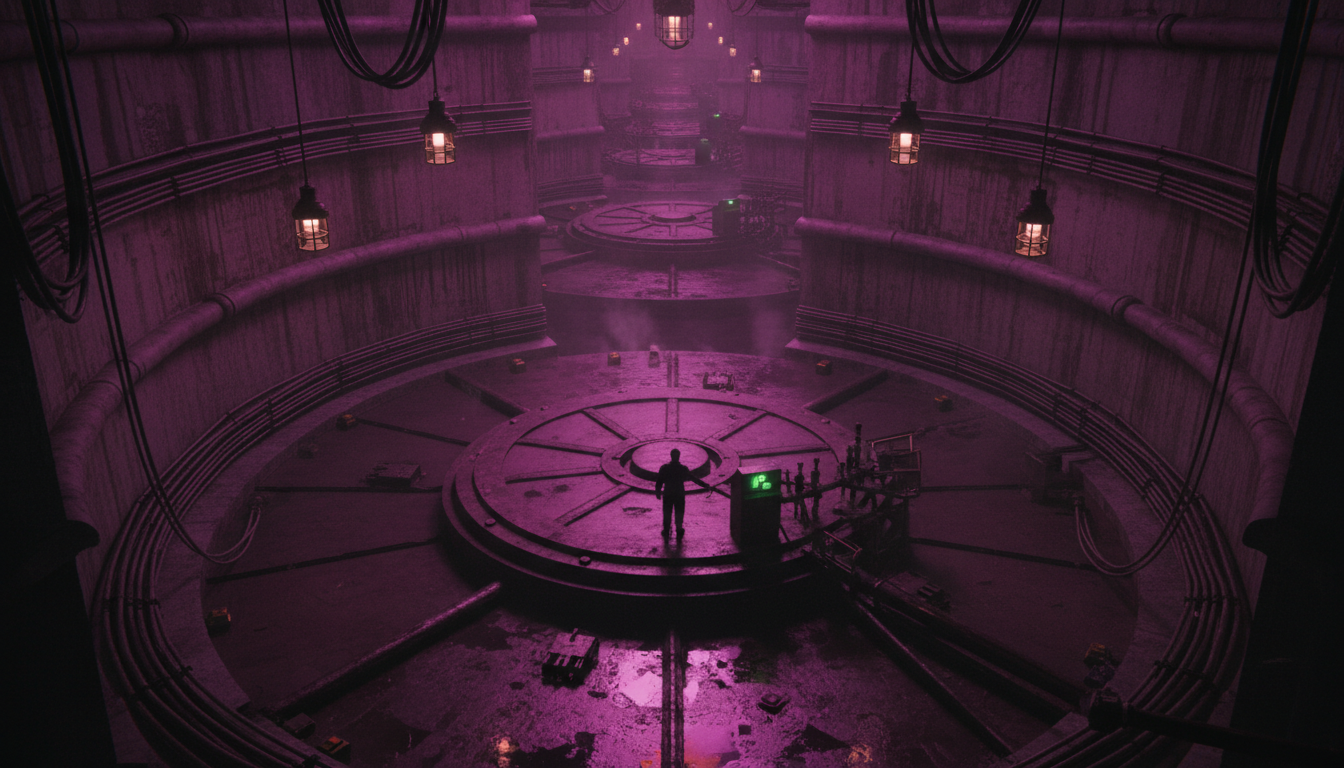
They published it in full, in advance, with the reasoning attached, and that is the part that stopped me — not the descent, the publication.
The notice said that a descent would be made into the deep thermal shafts of the network. That the caps would be opened. That this was being done because a question of long standing about what lay beneath them now bore on matters the public was entitled to have resolved.
That the reasoning had been reviewed and was set out in the attached schedule.
And that the work would begin on a stated date some weeks out.
I read the whole attachment. Twice.
It ran to eleven pages and it explained, in order: what was being opened, why it was being opened, who had decided, on what grounds, what alternatives had been considered and rejected, and what would be published afterward regardless of the finding.
Regardless of the finding. That clause was in there, in plain language, on page nine, and nobody had needed to put it in.
I had never read anything like it in my life.
I want to be exact about the nature of the shock, because it was not fear and it was not excitement and it was not, whatever anybody assumed afterward, curiosity finally arriving.
It was this.
In a hundred and forty years, nobody had ever explained anything to my family about our own work.
Not the founder, who asked and did not say. Not the office, which paid and did not say. Not the Council, who investigated once and closed the file. Not the Handoff, or the machine, or any of the four reorganisations of the department that administers our contract.
Four generations of the best-informed people in the world about the physical condition of those caps — and not one of us had ever been told a single thing about the object of our own competence.
And now a document arrives. Unsolicited. Addressed to no one in particular. Explaining itself completely to anybody who cares to read it, including me, including my father, including a family that has serviced the things being opened since before the paper it is printed on existed as a format.
I sat with the pages on my kitchen table for a long time.
Then I did what I imagine anybody in my trade would have done, and read the technical schedule properly.
And found that whoever had drafted the opening procedure had never opened one of these caps.
Which is not a criticism. Nobody has. That is the entire point and it is stated in their own document on page two.
But they had made three assumptions about the housing that were wrong. Not dangerously wrong — nobody would have been hurt. Wrong in ways that would cost them a day each.
And one of which would damage a seam I have personally repacked twice.
Chapter 37 — Coming Forward
↑ Back to ContentsFocus: Iri.

We went in on a Thursday, my father and I and three Oyelarans, and told the office that we knew the shafts better than anybody alive and that they should let us do the opening.
Nobody asked us to come.
I want that clear. There had been no call for technical consultation. No request for local expertise. No indication anywhere in eleven pages that the people planning this had any idea that forty families existed — let alone that we had been maintaining the things they intended to open, continuously, without a missed week, since before the founding generation died.
They did not know to ask.
That is not a criticism of them either. How would they? Our contract is a line in infrastructure standing costs. There is no register of us. If you went looking for the people who maintain the deep caps, you would find a filing reference and a payment schedule — and behind that, if you kept going and knew what you were looking at, a rota with names on it that would mean nothing to you.
So we went.
My father did the talking at first, because he is older and it seemed right and because he had wanted to.
And then I did the talking, because I had read the technical schedule and he had not.
I told them about the three assumptions.
I told them about the seam on head eleven and the two millimetres, and where it came from, and roughly when, and that the man who did it was long dead and had not been careless so much as working with what he had.
I told them head four runs warm in the third quarter — and that if they opened it in the window they had chosen, the housing would be at the top of its range, and their clearance figures were calculated for the middle of it.
I told them we had two hundred years of accumulated handling knowledge between the two families in that room, and that none of it was written down anywhere they could get it, and that most of it was in the hands of people who could not have explained it in words if asked.
The woman running the meeting stopped taking notes about four minutes in and started listening properly, which I appreciated and which I noticed she did without any change in her face.
They asked us to join the descent crew.
Both families. On the spot, without going away to consider it, which surprised me more than anything else that afternoon.
My father declined for himself, on the grounds of his hands.
He said it plainly, in front of five people, and it cost him something to say out loud that I do not think anybody else in that room heard.
And he put me forward instead.
And I said yes before the sentence was finished.
Chapter 38 — Why They Are the Sort of People Who Would
↑ Back to ContentsFocus: Iri.

I have been asked, since, why we came forward, and the answers people seem to want are all wrong, so let me set down the correct one.
It was not loyalty.
To whom? I have never met anybody I could be loyal to in this. The founder is dead and was never anything to me but a name on a hall I have been inside twice. The office is a payment schedule administered by people who have never been down a shaft.
There is no institution here to be loyal toward. The word does not attach to anything. I have tried to make it attach and it slides off.
It was not duty in any sense I recognise either.
Nobody had placed an obligation on us. We had no standing, no formal role in the descent, no requirement to involve ourselves in any way — and if we had stayed home, the work would have gone ahead without us. Badly in three specific ways. But ahead.
And it was not curiosity, which is the answer everybody assumes and which I find slightly insulting.
I have said already in this account that I am not curious about what is down there. That remained true walking into that office and it remains true now, after everything.
I did not volunteer in order to find out. If they had said yes to the technical corrections and no to the crew, I would have gone home satisfied. I want that on the record because nobody believes it and it is the truth.
Here is the actual reason, and it is much smaller than any of those.
They were going to do it wrong.
And we knew how to do it right.
And there has not been a week in a hundred and forty years where somebody from these families did not turn up and do this work properly.
That is all of it.
Four generations of a rota slot that has never once been left unfilled. Not because anyone was watching — nobody has ever been watching, and that is established beyond argument in this account. Not because there was a penalty, because there is none, and never was.
Because the slot exists, and somebody has to be in it, and it has always been us.
When a job on those caps needs doing competently, we do it competently. That is not a virtue any of us chose. Nobody sat down and decided to be the sort of family that turns up.
It is a hundred and forty years of habit with nothing behind it.
And when a document arrived describing work on our heads being done to a standard below ours, there was never a moment — not one, in any of the five of us — where anybody considered not going.
We did not discuss whether. We discussed who would drive.
Chapter 39 — The Night Before
↑ Back to ContentsFocus: Iri.
I laid the kit out on the kitchen table after supper, the way I always do the night before a difficult week, and my mother told me off for it the way she always does, and I did it anyway.
Tension wheel.
The good calipers, not the set from the store.
My own packing tools, which are older than I am and were my grandmother's, and which I have never once let anybody else use — not out of superstition, whatever my father says, but because a packing tool takes the shape of the hand that uses it and mine has taken mine.
The short-form log book.
Gloves. Two pairs, because head eleven eats gloves and always has.
My father came and stood at the end of the table for a while and looked at the layout and did not say anything, which from him is approval and has been since I was eighteen.
Then he said, "The seam."
And I said, "I know."
And he said, "Two millimetres."
And I said, "I know, Dad."
And he said it again about ten minutes later from the other room, and I let him, because he was not telling me about the seam. He has not been telling me about the seam for about two years now.
We ate.
My brother came with his children and there was an argument about the roof again, which is now in its fourth year and which I believe both parties would be sorry to lose.
Somebody asked whether I was nervous and I said no, honestly, and they took it for bravado and moved on.
I am not nervous. I want to put down exactly what I am, because I suspect it is not what anybody would expect from the last night of a hundred and forty years.
Tomorrow I am going to open head eleven.
I have serviced that cap something over two hundred times. I know its housing the way you know a face — not as a set of measurements but as a whole thing that would look wrong to me instantly if any part of it changed.
Nobody, in a hundred and forty years, has ever opened one of these.
And I have spent three weeks working out how it should be done. The sequence. The clearances. Where the strain will go when the seal releases, which is the part nobody in that eleven-page schedule had thought about properly. What to have ready for the seam, and in what order, and which of it I want in my left hand.
It is the most interesting technical problem anybody in my trade has ever been handed.
It has been handed to me. I have the right tools laid out on the table and a procedure I am confident in.
And I am looking forward to it enormously.
My mother covered the kit with a cloth so the cat would not sit on it.
Chapter 40 — They Go to Bed Still Not Knowing
↑ Back to ContentsFocus: Iri.
I went to bed at half past ten because I wanted a full night, and I slept well, which my father says he never managed the night before anything.
Before I went up I did the last of the ordinary things.
Checked the kit under its cloth — not because it needed checking, but because looking at a laid-out kit is one of the few genuine pleasures of this trade and I was not going to deny myself it.
Set out clothes for the morning.
Looked in on the children in my brother's old room, where they were staying the night because of the argument about the roof. Both asleep. The younger one with her feet out, the way she always sleeps and the way her father did.
My father was still in his chair with the light on.
He said good luck.
And then, after I had reached the stairs, he said the thing about the seam one more time — and I said goodnight, Dad, and he said goodnight, and that was the last ordinary exchange of a hundred and forty years, though obviously neither of us knew it and it would not have been improved by knowing.
I stopped in the hall on the way up.
At the board where the rota hangs.
It has hung in this house since my grandmother's time, and in her mother's house before that. The current sheet is pinned over the older ones, four or five deep now, and the pin hole goes through all of them in exactly the same place — which somebody must have been careful about, the first two or three times, and which then simply became how it was done.
Next week is already filled in.
My weeks are marked in my hand, in the same short form I have used since I was eighteen, which I learned from my father, who learned it from his grandmother.
Head four in the first week. Third quarter, so it will be running warm, and whoever takes it wants to know that.
Heads seven and nine in the second.
The long circuit in the third.
Under my name is my father's, still on the sheet for two of the lighter weeks — because taking his name off entirely would be a thing neither of us is ready to do, and because he can still do the lighter weeks, and will be able to for a while yet.
And under his is a blank line for whoever comes next.
Which is how the sheet has always been drawn. Since before any of us. Four recopyings, and every single hand that made a fresh copy ruled that blank line at the bottom without being told to, because it was on the sheet they were copying from.
I checked it out of habit.
The rota is correct. Every slot is filled.
I turned off the hall light and went up.$