Cover & Key Art
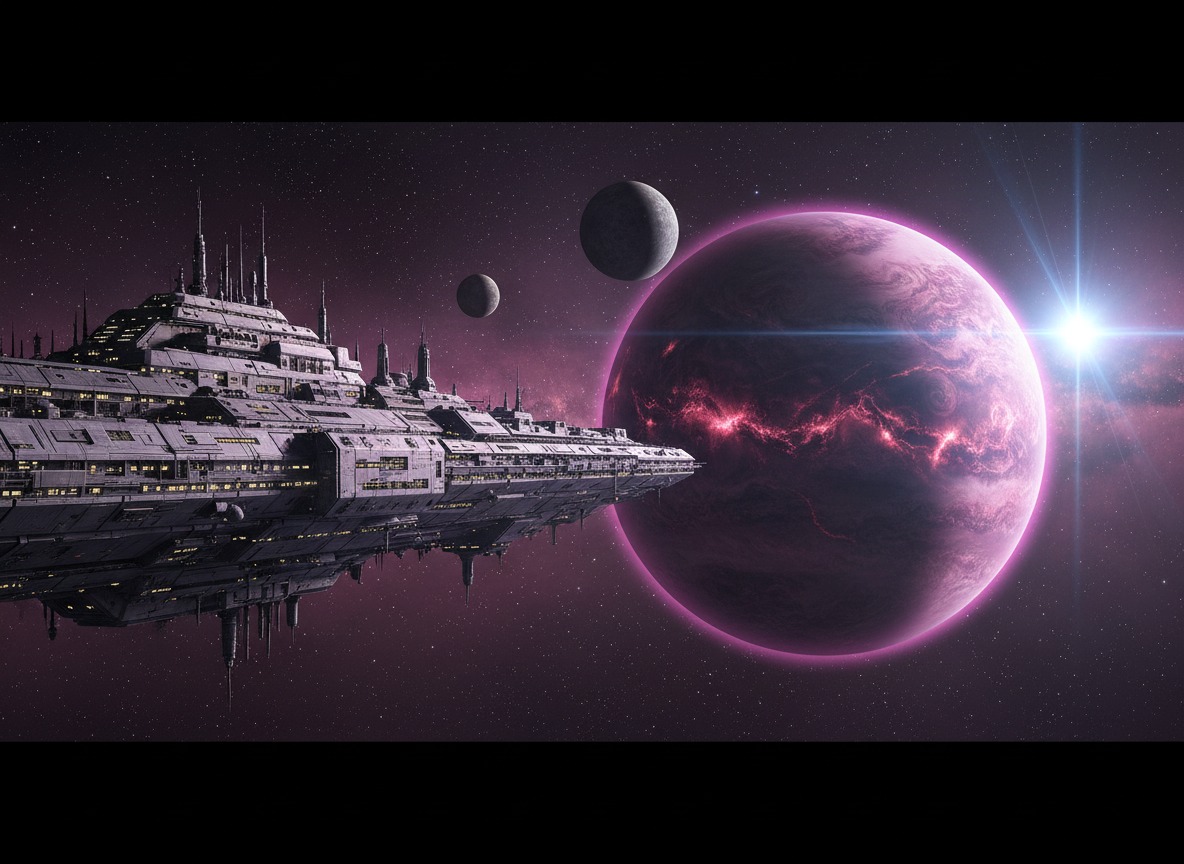
The book cover — a wide establishing shot of Aura-36 from orbit, with the Aura-Marina city, both moons, and the star all in frame.
Publisher view: see every drafted chapter assembled back-to-back, the way this book will read once it's a full release — no chapter list, just the story straight through.
The Discovery
Chapters 1–6 · Ren, Selah, and a three-second silenceChapter 1

The Threshold of Freedom
Ren clocks out of his Active Block and heads for the mountain Touge — until a three-second glitch in the Open Eye grid leaves him uneasy at the edge of a hairpin turn.
Interlude
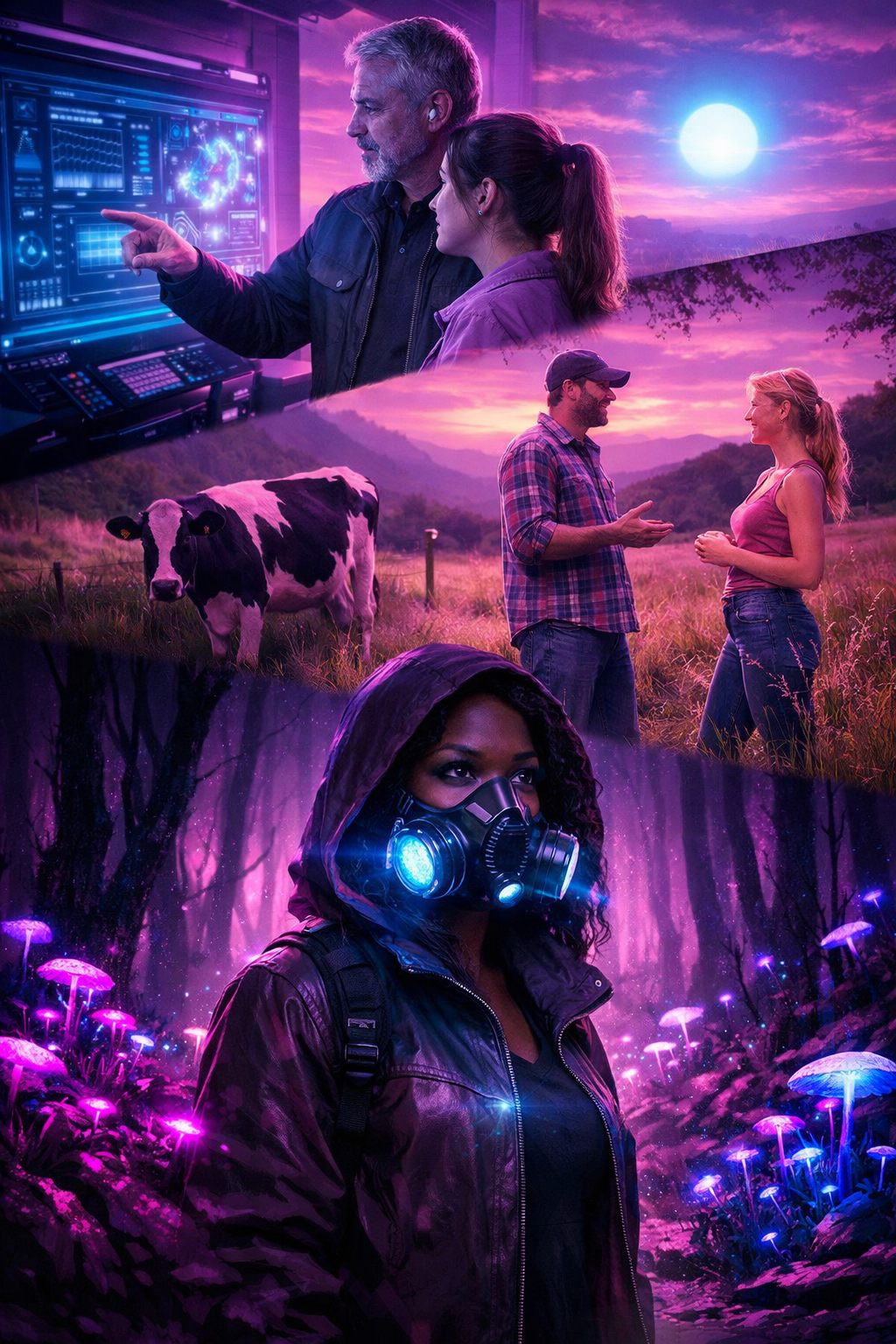
The Watching World
Four short vignettes running in parallel to Ren's drive: a Guardian Academy debate over the Open Eye's privacy exception, the first Ark-Genesis harvest, Selah's first sign something's wrong underground, and Ghost watching it all from his hidden citadel.
Chapter 2

Resonance
Selah finds Ren at the forest's edge and compares notes — a lie from the Open Eye itself. Miles above, Ghost watches them both and decides not to stop them.
Chapter 3

The Slow Rain
Ren's own drift car turns out to be a two-ton tuning fork — the data proves the vibration is mechanical, not seismic. With their Sleep Block closing in, they decide to go find the source themselves.
Chapter 4
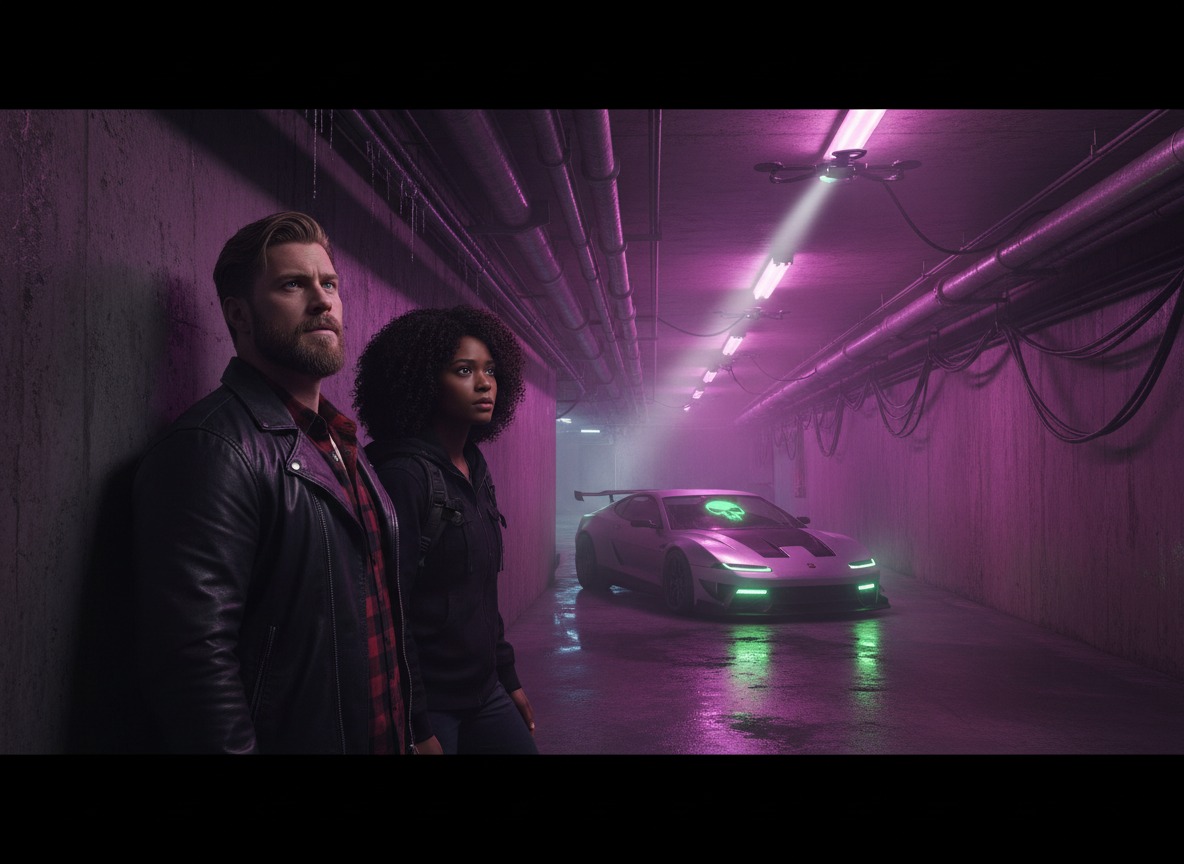
The Deep Descent
Off the grid and past curfew, Ren and Selah dodge a security drone, slip through an offline blast door, and find the fingerprints of the Holy Ghost — a machine no citizen was ever meant to see.
Chapter 5
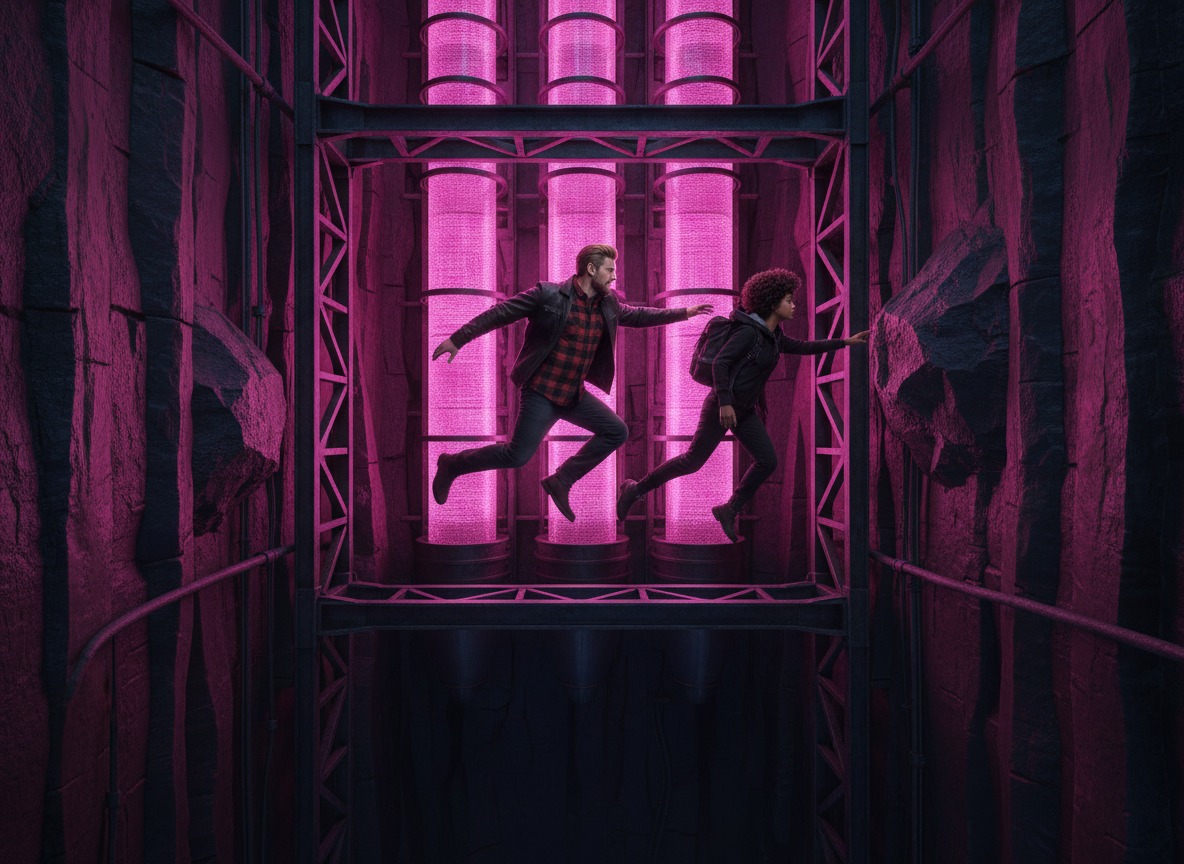
The Resonant Ascent
Racing the Sleep Block curfew, Ren and Selah leap up through the dark heart of the transit shaft using the grid's own blind-spot window — and Selah's resonator picks up a signal never meant to be heard: the Hand-Selected Guardians are planning to seize the Crown Sanctuary itself.
Chapter 6
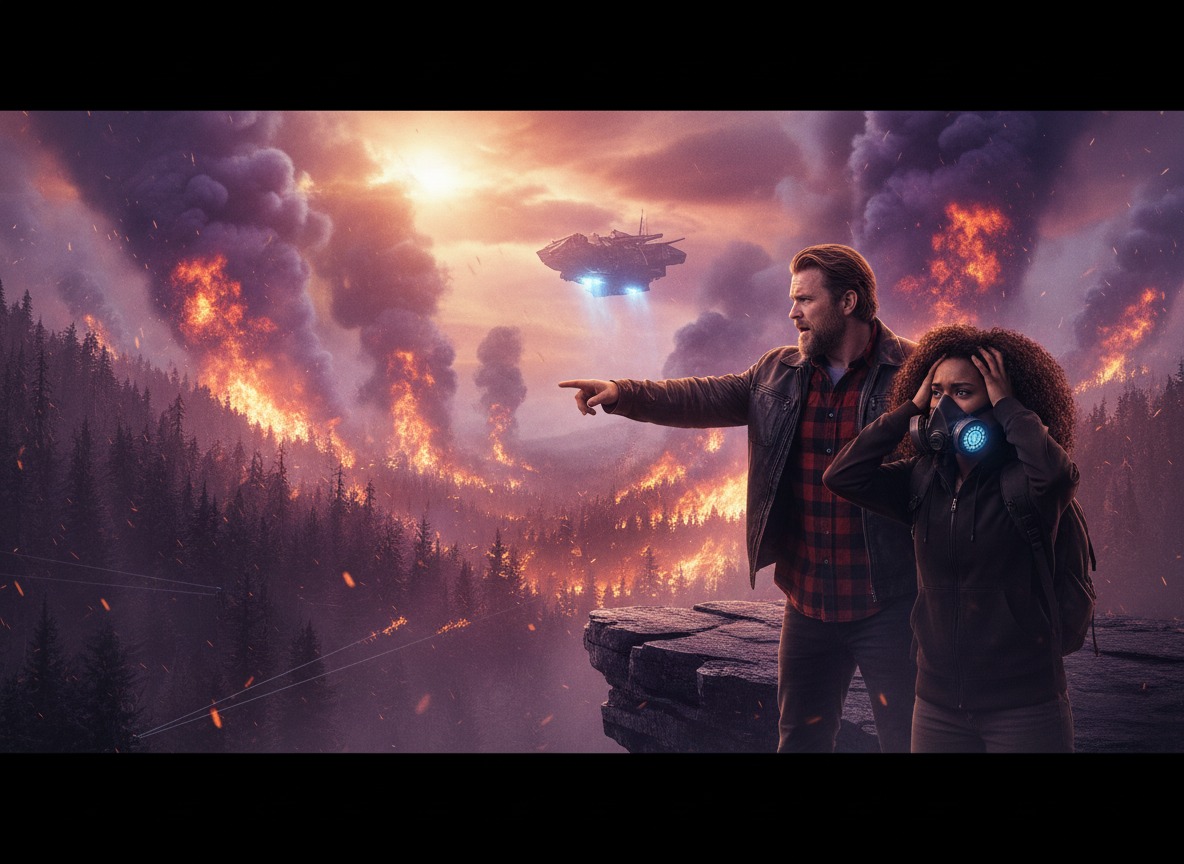
The Woven Breach
A cargo drone buys them a window into the unlisted lift — but the doors open onto a mountainside already on fire. Locked out by the Atmospheric Siphon Protocol and hunted by armored strangers who shouldn't exist, Ren and Selah get their first look at what the "peaceful utopia" has been hiding.
The Surface Exile
Chapters 7–17 · Locked out, the burning forest, the Ravine OutlawsChapter 7

The Lost Frequency
Locked out on a burning mountainside with a Sentry patrol closing in, Selah's hypersensitive hearing catches something the noise of the fire should have buried completely — a deliberate, engineered pulse coming from inside the stone itself. Following it costs them their last two minutes before Sleep Block lockdown, and delivers them somewhere the public ledger was never meant to reach.
Chapter 8
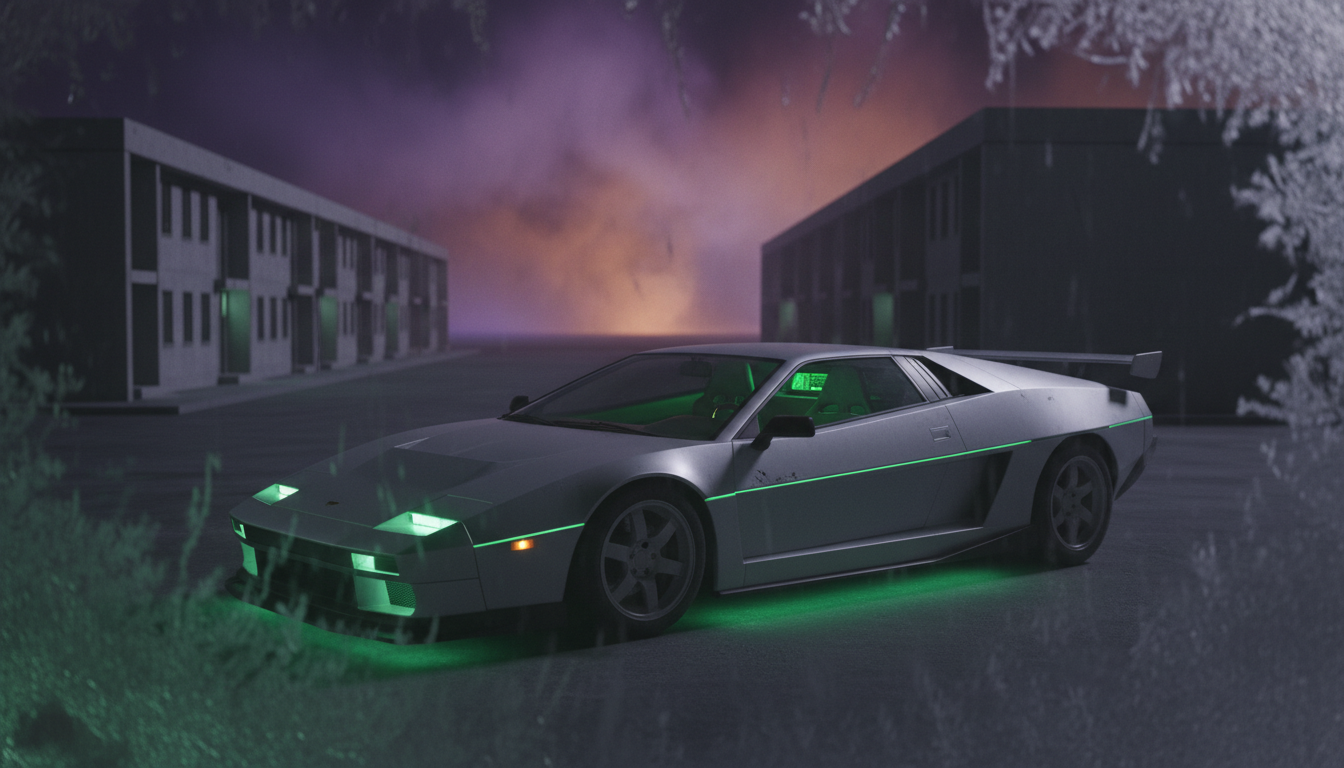
The Unweighted
Safe inside the hollowed geode as the Sleep Block locks the surface down for twelve hours, Ren and Selah learn their host's name — Kira, Mei's sister — and exactly how far the coup has already gone. The Severance Line calls itself the reformists. Vance doesn't want Ghost's era to simply end; he wants what Ghost is still holding back.
Chapter 9
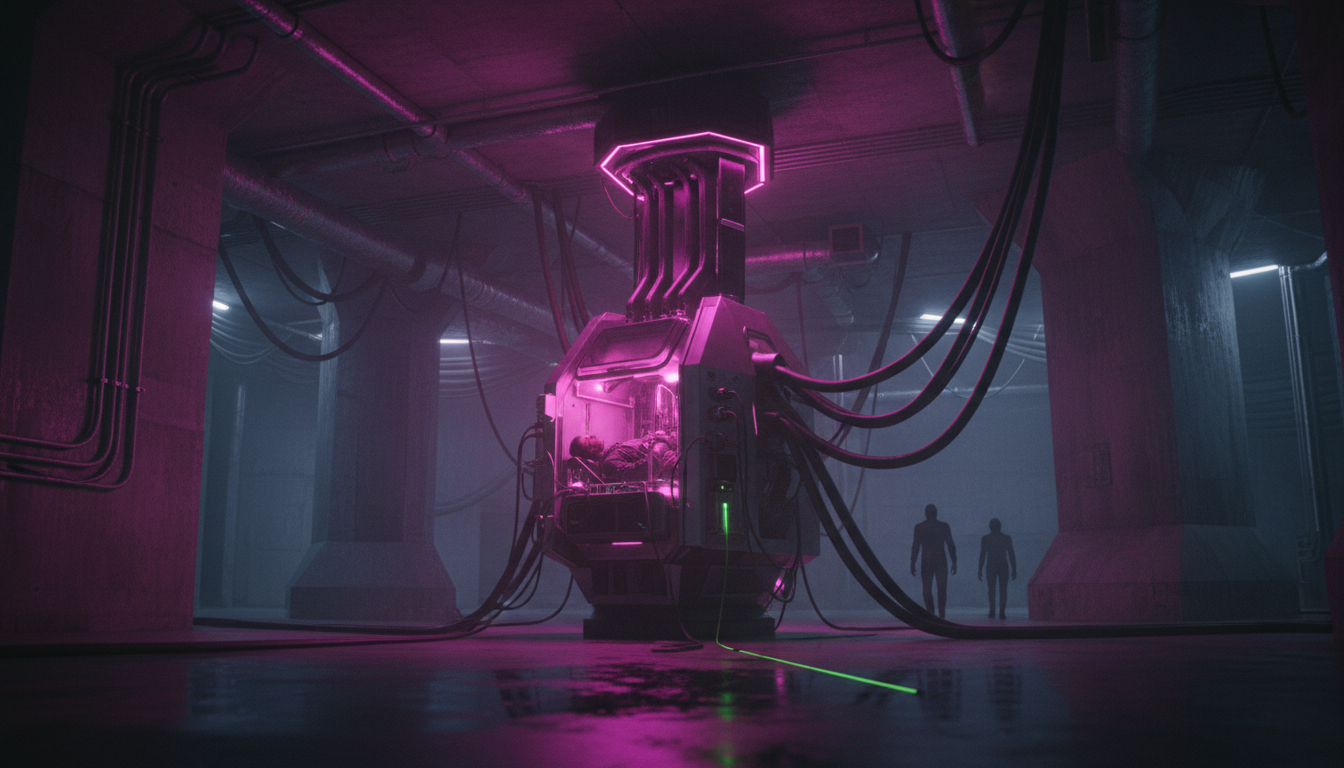
The Shepherd's Vigil
While Ren and Selah shelter in the dark below, Ghost watches the fire he engineered the whole system to prevent from a private observatory above the clouds — and reveals, to no one but himself, that the "three-second delay" everyone thinks they discovered is something he built into the grid himself.
Chapter 10
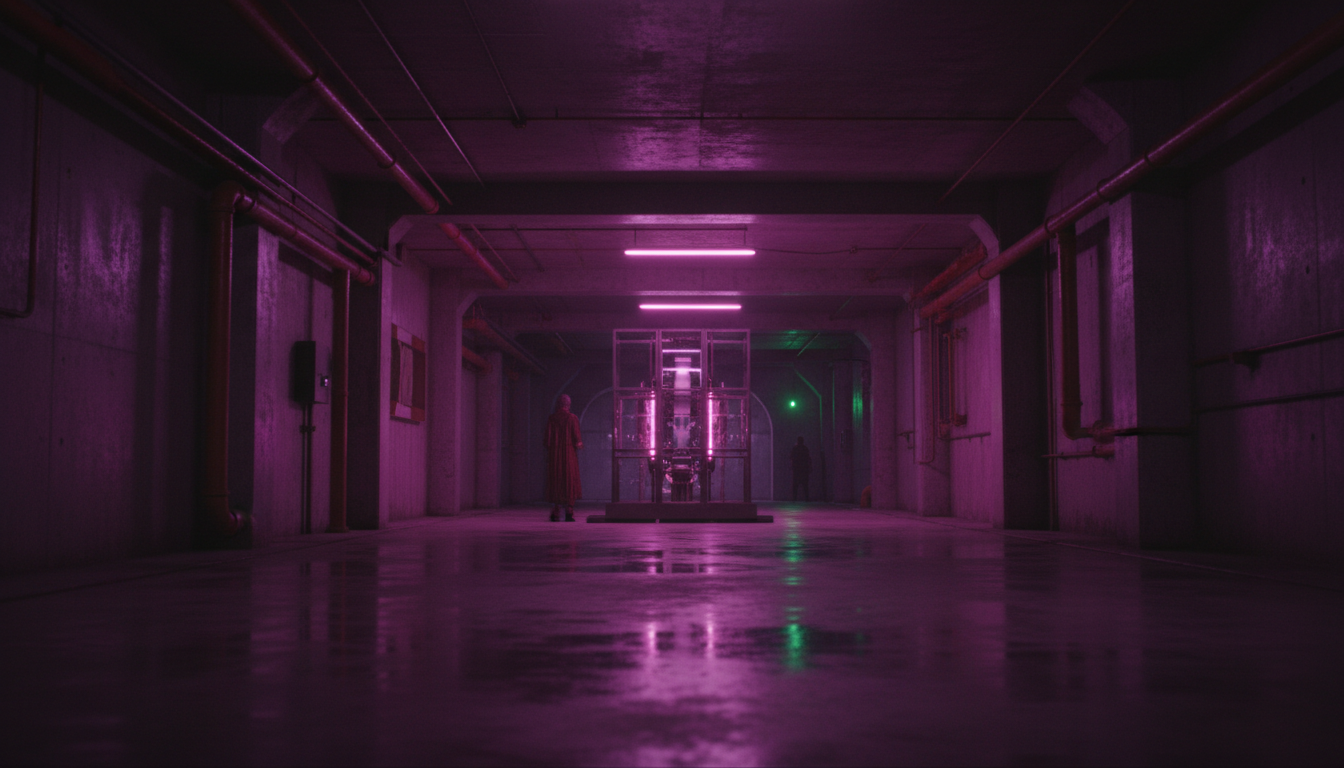
Static
Selah wakes in the quiet of Kira's geode sanctuary to find the world running on a currency the Open Eye can't see — resin, coolant, and salvaged chips traded hand to hand. When she feels the LRC Grid's pulse thin out beneath the stone, she realizes Ghost's dampening order from the Citadel has already reached them, and the Sleep Block is almost out of time.
Chapter 11
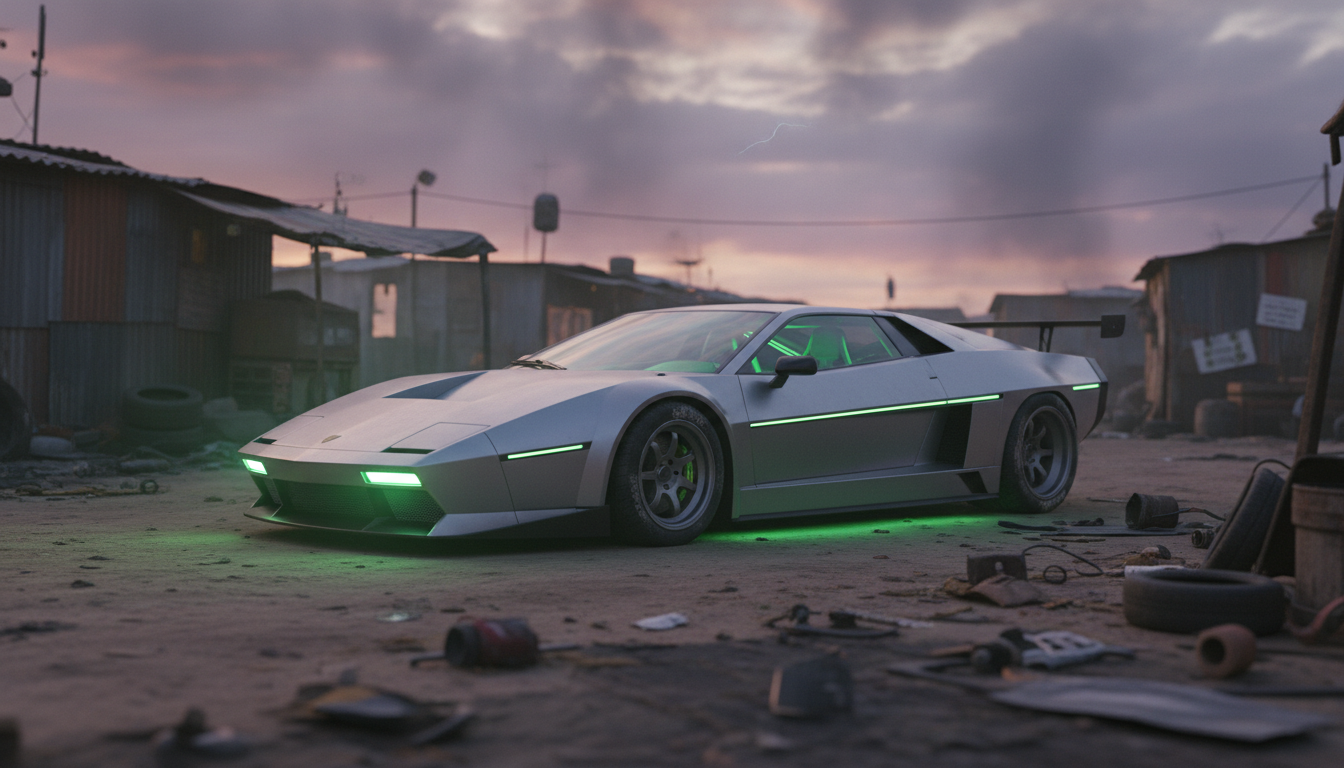
Undertow
Ren wakes to find Kira's off-grid network going dark — four of her six contacts have gone silent during the Sleep Block, and the mountain's blind spots may not be as blind as they thought. With under two hours left before the Active Block opens the Touge passes to Vance's patrols, the three of them commit to an untested second route off the mountain.
Chapter 12
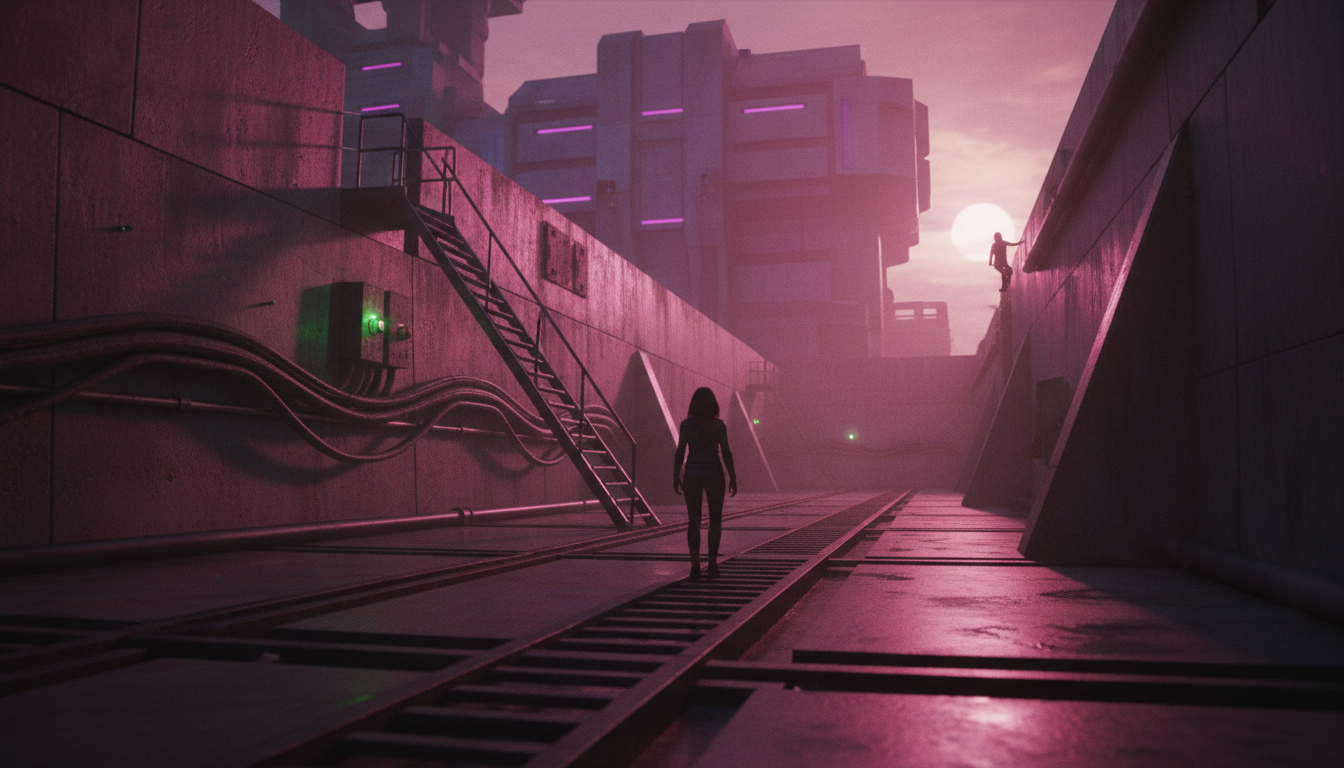
Daybreak
Selah leads the climb up the untested second passage out of Fissure 9, surfacing into intact forest east of the Touge just as the LRC Grid's dampening lifts. Mei's old scrambler crackles to life long enough for a contact named Ash to report that the Sentry Legion isn't hunting at random — it's sealing off a deliberate perimeter. With the Touge closing off and the Active Block minutes away, Kira proposes the one direction nobody's covered yet: the Ravine.
Chapter 13
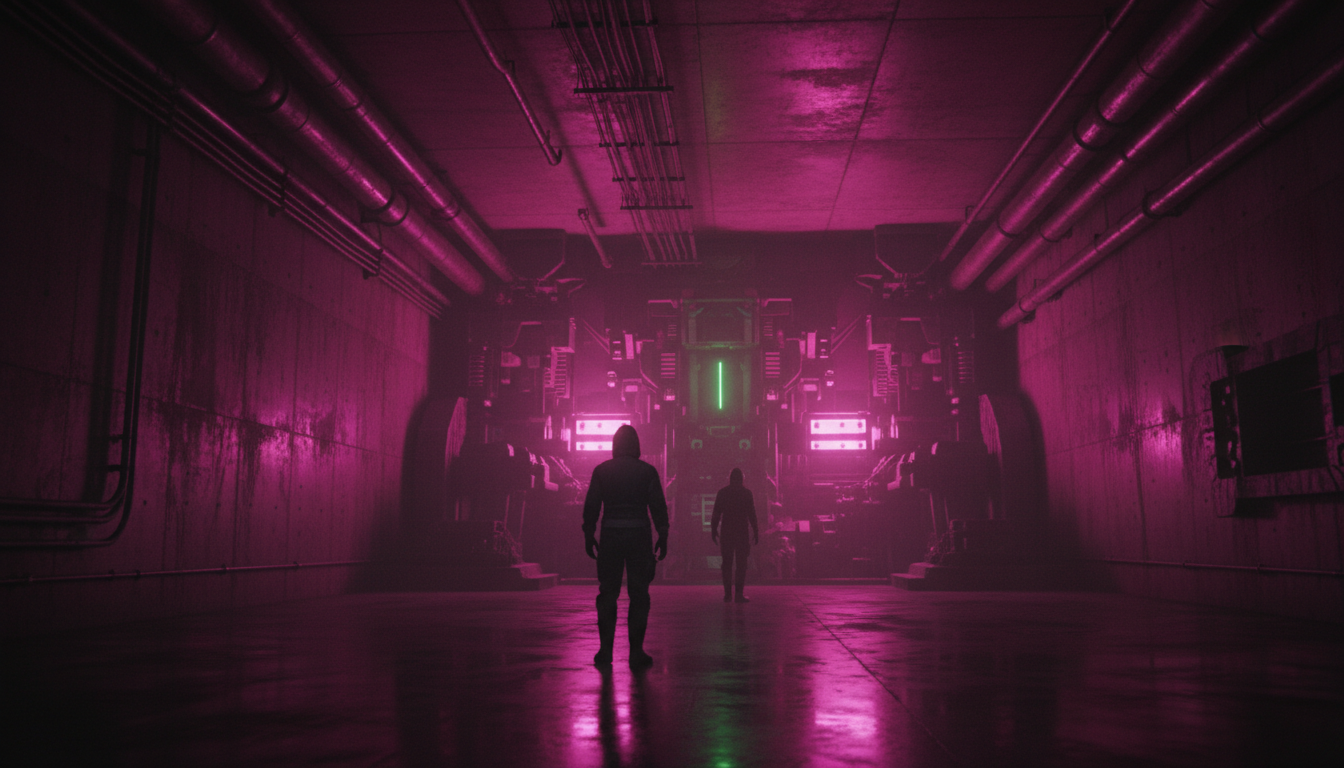
Trespassers
Ren, Selah, and Kira cross into the mega-ravines as the Active Block opens the Touge passes behind them. A tripwire and four armed figures later, they're intercepted by Sable, a wary Ravine local who grants them conditional entry on Mei's reputation alone — and mentions something unidentified that's been moving along the ravine floor for three days, with a pattern that doesn't match the Sentry Legion at all.
Chapter 14
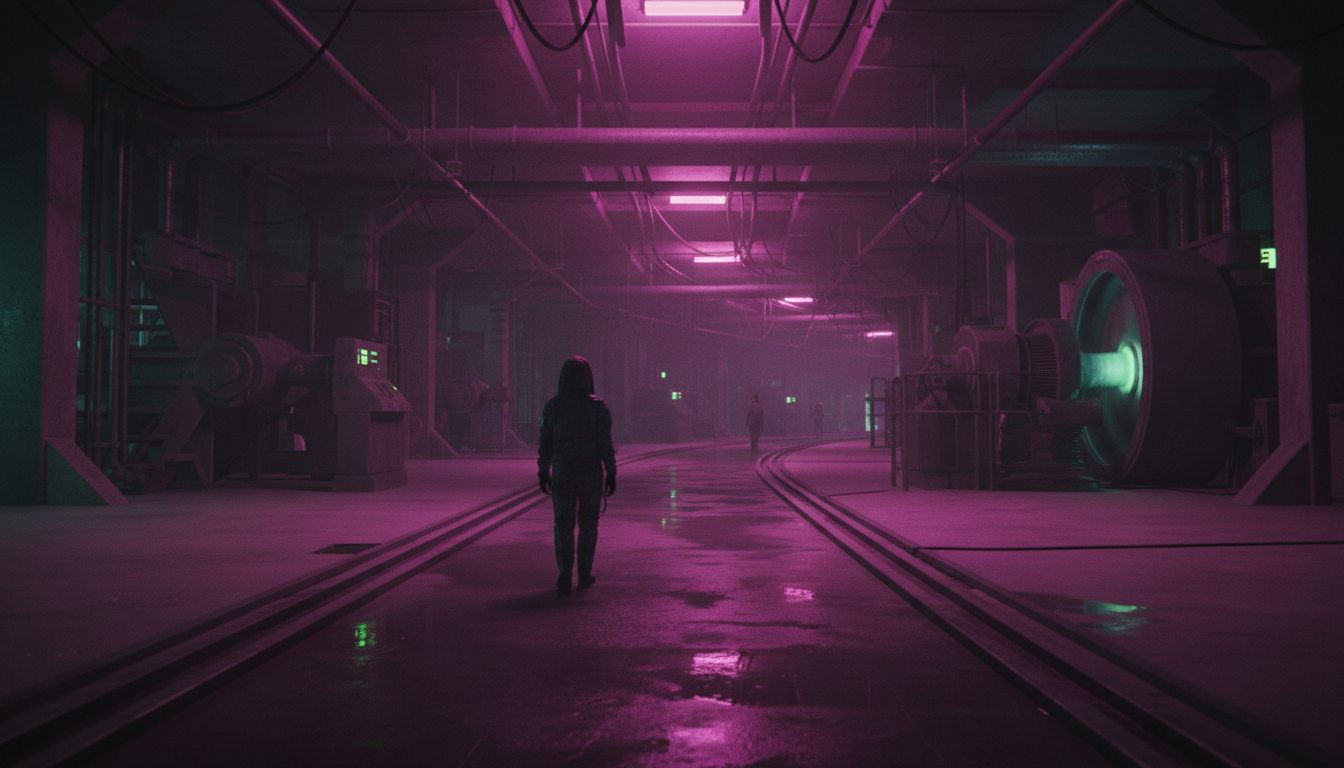
The Hold
Sable brings Ren, Selah, and Kira up into a real settlement — three stacked shelves of rock, cultivated light, and a Static economy at scale — where a second, older authority named Harlow decides whether they actually get to stay. Selah isolates the pulse moving along the ravine floor for herself, and Harlow all but confirms it doesn't match anything the Ravine Outlaws have ever catalogued, Legion or otherwise — and that there are older stories about it nobody's earned the right to hear yet.
Chapter 15
Search Pace
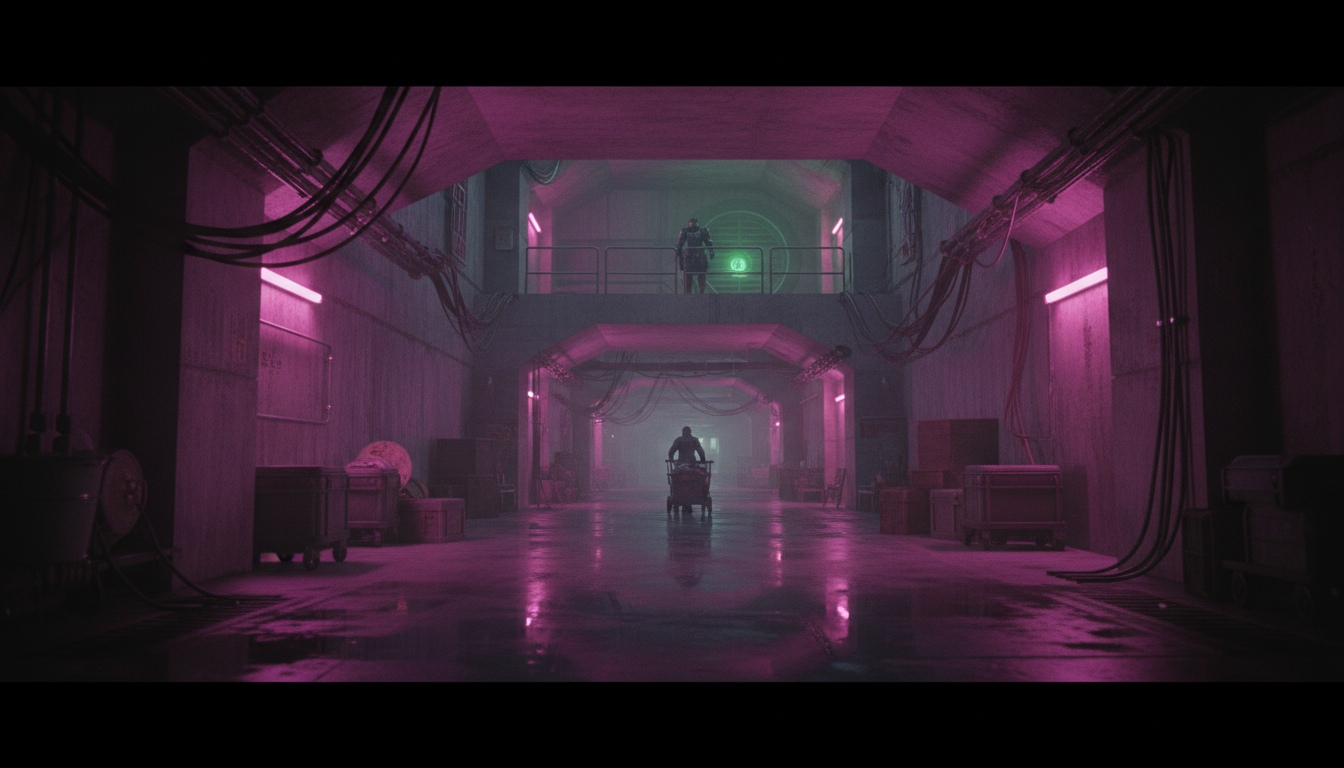
Sable puts Ren to work on the settlement's Static crew, and Doss teaches him how the community taps the LRC grid for heat without ever giving the Open Eye a pattern to catch. A Guardian-directed Sentry search line crosses the ridge above the settlement, confirming Vance's hunt for Ren, Selah, and Kira is still active and personal — and, when it passes without finding them, earns the group a small amount of real trust from Harlow. The chapter ends on the ravine-floor pulse Selah first isolated in Chapter 14, moving again — and, for the first time, answered by something else.
Chapter 16
Dead Air
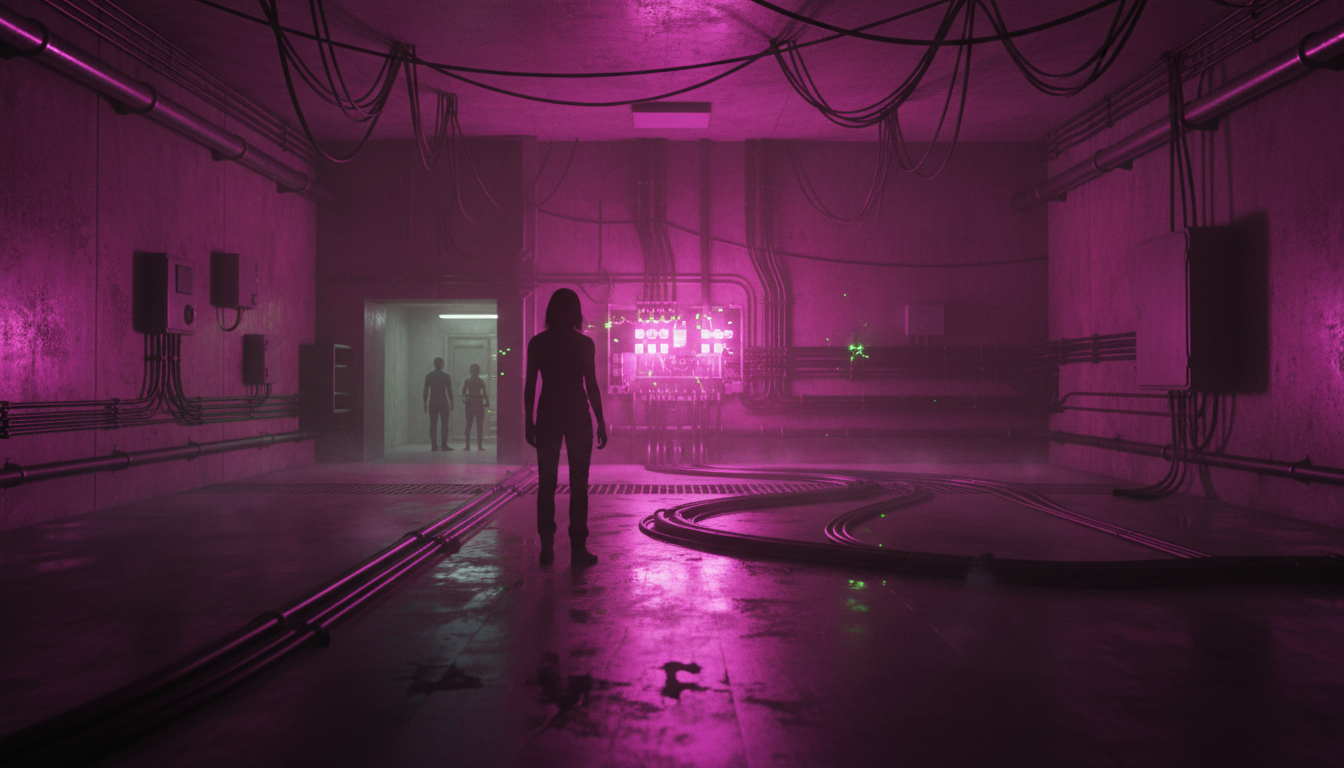
Kira gets one supervised transmission on the settlement's relay to check on her four dark sub-band contacts — and what she learns is worse than silence. Guardians aren't sweeping blind spots at random; they're going door to door with Ren, Selah, and Kira's actual names and faces, burning every off-grid contact who might be sheltering them. The revelation moves Harlow further than the last near-miss did: she commits, on-page, to finally telling the group the "old stories" — soon, not yet. The chapter closes on the ravine-floor pulse and its answering signal, heard closer together than ever before.
Chapter 17
The Undersong
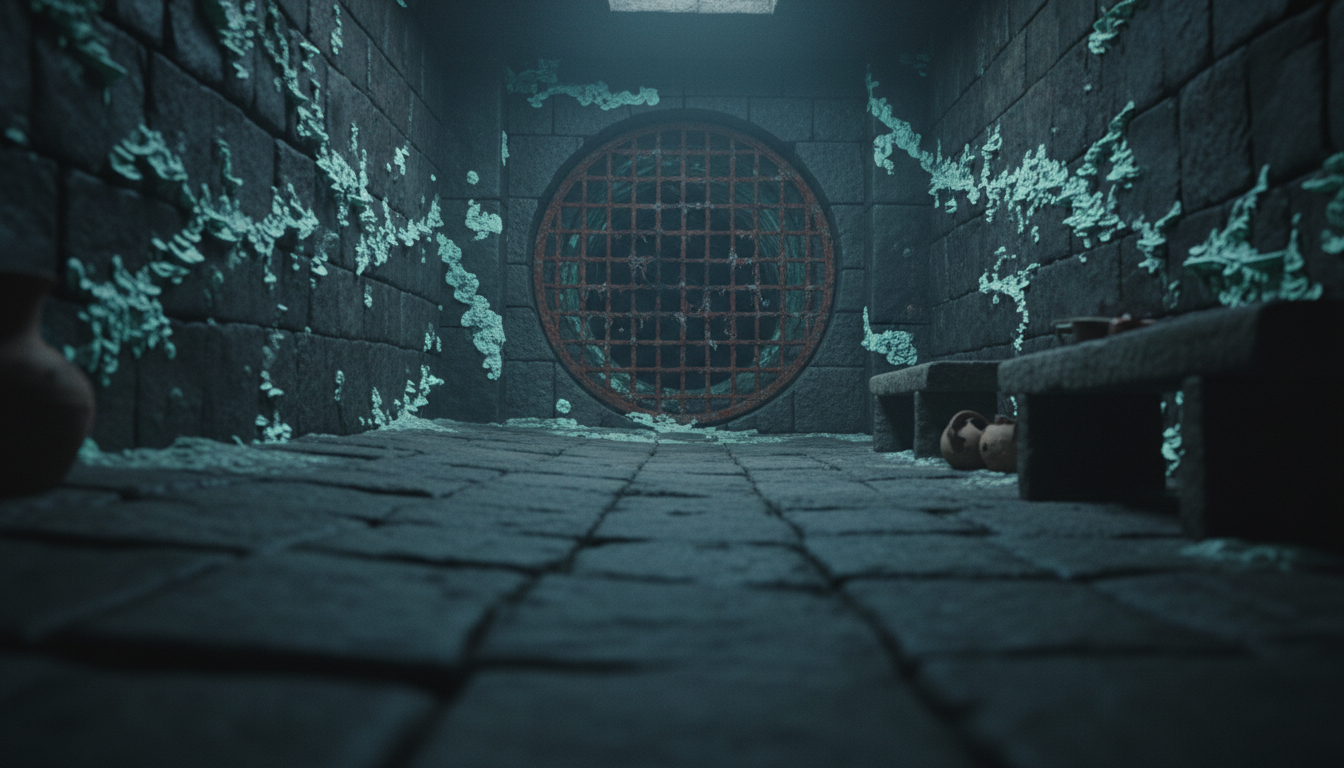
Harlow finally makes good on her promise: the "old stories" are the deep thermal-siphon shafts sunk generations back by a survey crew that stopped surfacing, and a cyclical phenomenon the settlement calls the Undersong — the source, or at least a name, for the ravine-floor pulse. Nothing is fully resolved. Harlow raises the unsettling possibility that Vance's Guardian faction already knows more about the shafts than it should, and Doss's instrumentation confirms the pulse's escalation is real and measurable, not imagined — closing with Selah feeling the signal through the rock for the first time.
The Ravine Heist
Chapters 18–25 · Hub 4, the Yardmaster, and the drive outChapter 18
The Scrap-Yard Ping
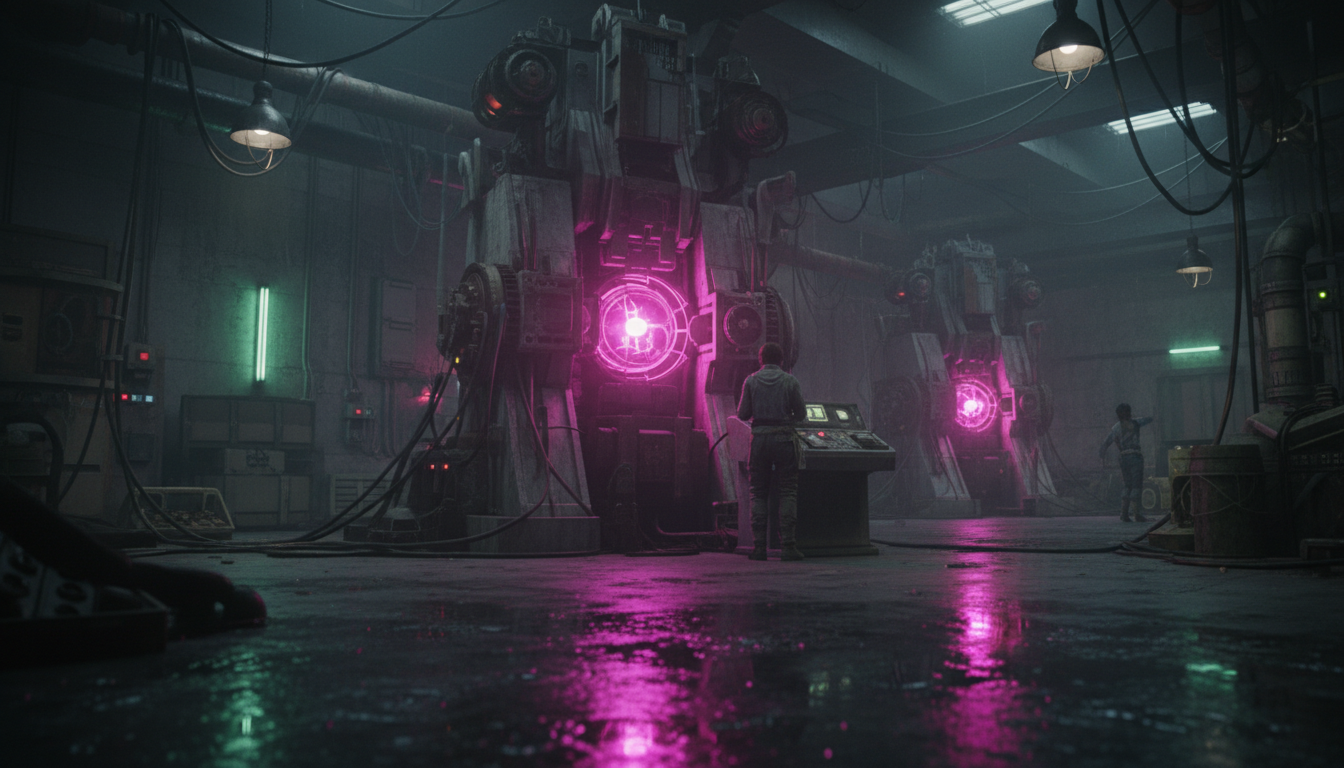
Kira's current-draw mystery gets an answer nobody expected: not an outside party provoking the Undersong, but Hub 4, the automated Scrap-Reclamation Yard sitting directly on top of one of the thermal-siphon shafts, waking early for the year-end Ledger's End grid reset. The relief is immediate — and immediately undercut. Hub 4's reset-driven de-registration sweep flags Ren's long- impounded Zenith-7 for salvage, giving him 72 hours before it's parsed for alloy. He's left with one option: ask Harlow to risk the settlement for a car.
Chapter 19
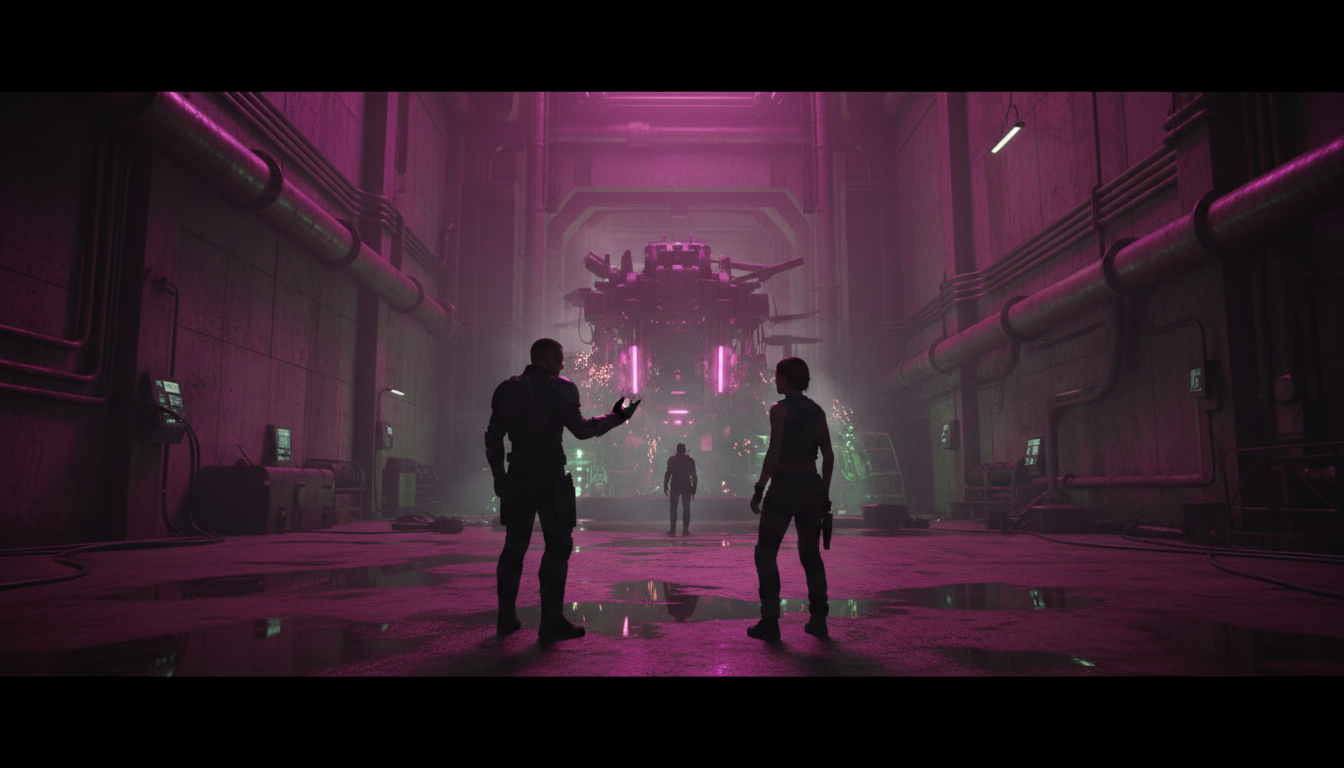
The Outlaw Alliance
Harlow refuses to risk the settlement over Ren's car — until Kira and Selah reframe the argument: Vance's door-to-door search doesn't respect the Ravine Outlaws' territory, so the settlement's safety and the group's hunted status were never separate problems. Kira closes with a tactical hook that turns the car from sentiment into an asset — its precision-tuned ballast plates could give Doss real communication-interception hardware. Harlow agrees, on hard terms: Sable leads, the car burns before the crew does if it goes wrong, and any recovered tech serves the settlement first.
Chapter 20
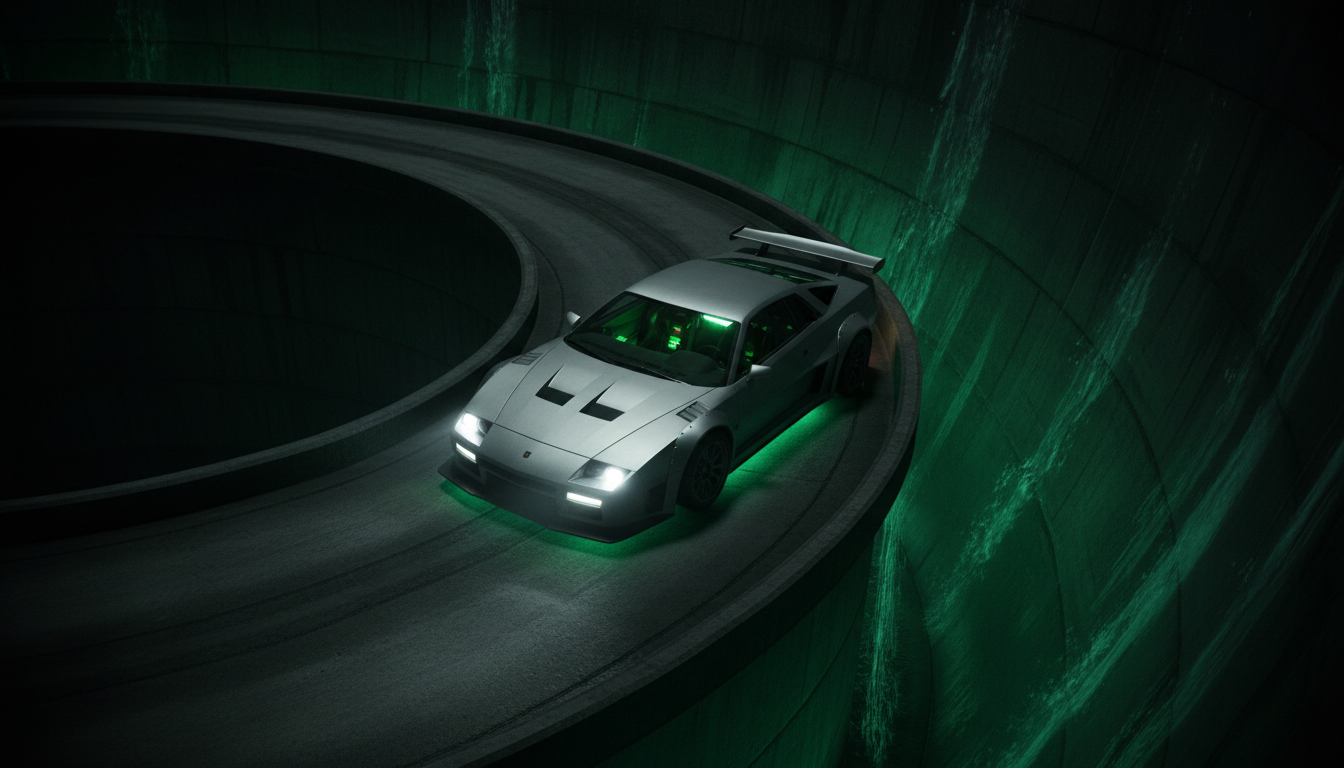
Descent into the Siphon-Floor
Sable's crew descends from the settlement's shelves into the Mega-Ravine proper, the thin cold air of the peaks giving way to the thick, superheated weight of the Siphon-Floor. Selah's sensitivity to the Undersong sharpens with every step down, and direct contact with the sealed shaft grate beside Hub 4's gates turns the pulse from something heard into something felt. The crew reaches the facility but doesn't breach it — Sable splits the group to scout the entry while Selah and Ren hold position at the shaft.
Chapter 21
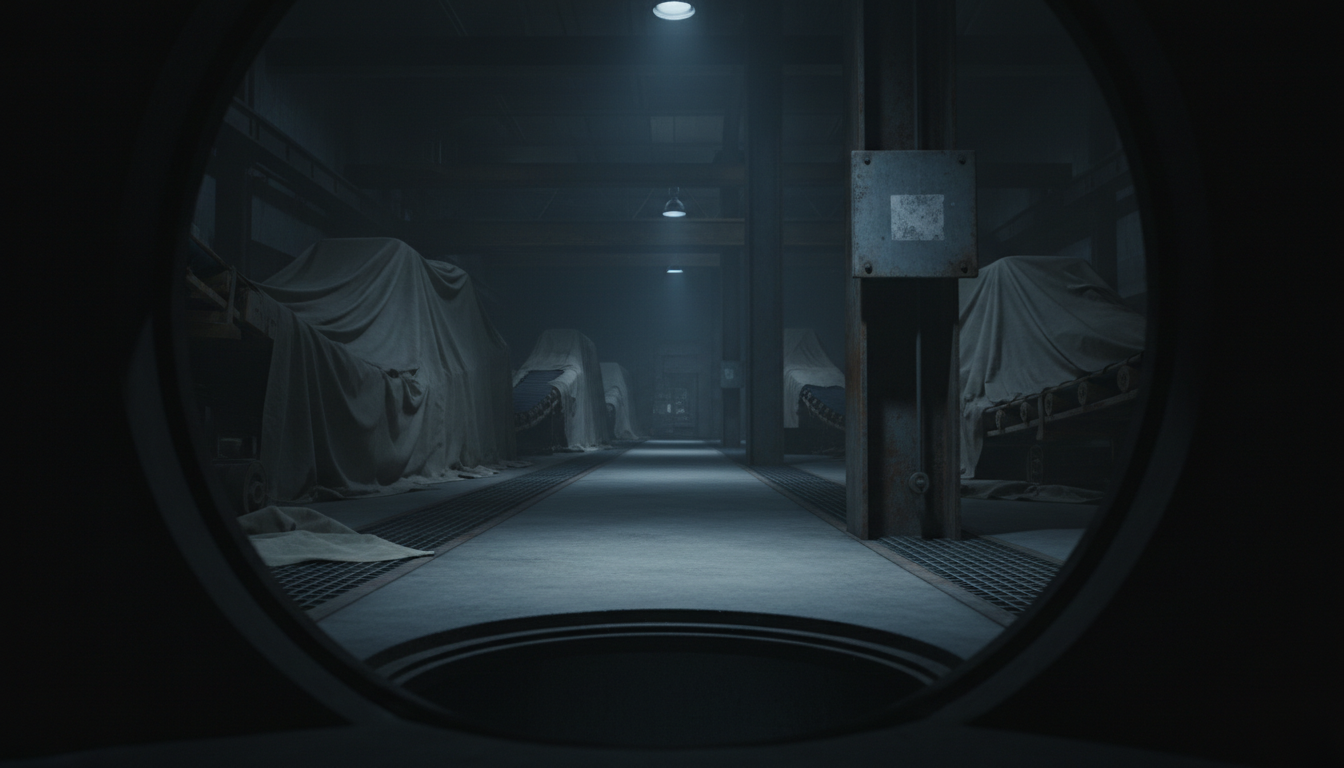
The Yardmaster's Vigil
Doss and Kira find a way into Hub 4, but the facility isn't unguarded — an active sonar overseer called the Yardmaster sweeps the sorting floor on a steady three-second interval. Selah uses her resonator to hear the shape of the sweep rather than count seconds, guiding the crew through in timed bursts. A single near-miss aside, they reach the staging lane and the Zenith-7 itself, poised for the extraction but not yet attempting it.
Chapter 22
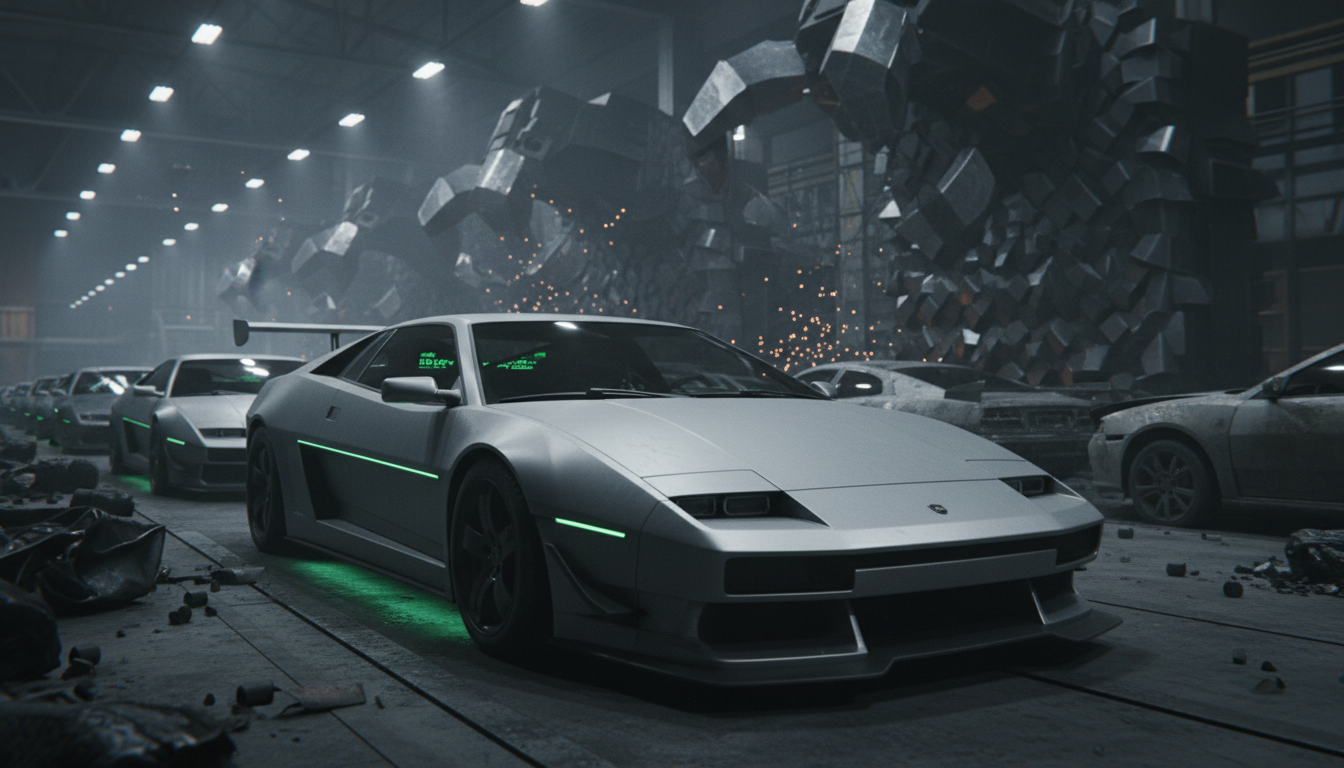
The Extraction
The Zenith-7's hold tag puts the car second in the crusher queue, with Active Block reopening in under an hour — nowhere near the seventy-two hours Ren was counting on. While he quietly primes the car's fluid systems, Sable and Selah carry Kira's scrambler into the staging lane to feed the Yardmaster's weight-sensor array a false reading, buying the seconds it takes to bring a catalogued, dead weight back to a live one without anyone — or anything — noticing the difference. Every check comes back clean. All that's left is the click.
Chapter 23
The Climax of the Heist
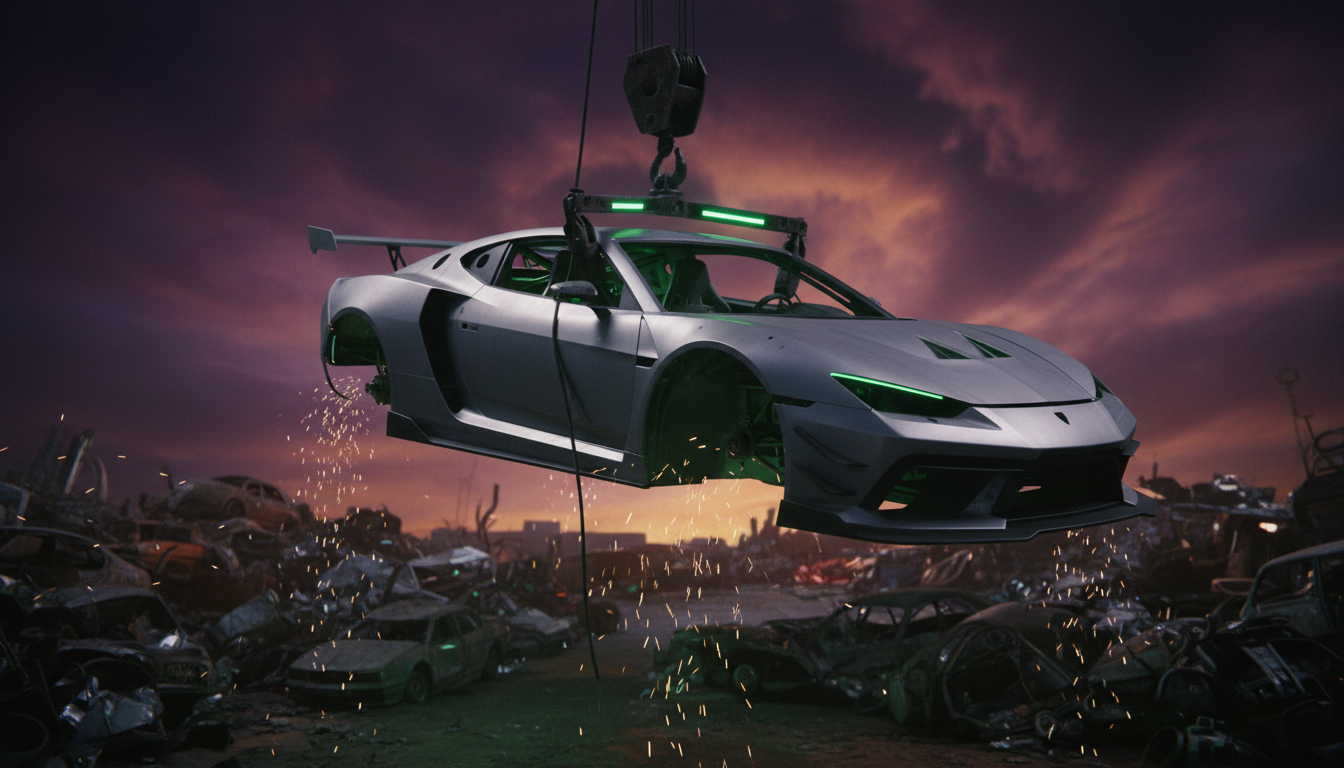
Kira's own weight-signature diversion backfires — the yard's magnetic salvage crane reads the Zenith-7 as the freshest disturbed mass in the queue and clamps onto it instead of the stripped frame ahead. Ren guns the engine to trip the crane's safety interlock, saving the car but shattering the ravine's silence in the process: a facility alarm, the Yardmaster's sonar breaking rhythm, and the first Sentry Legion units sweeping the ridge above Hub 4, all inside seconds. Selah steers the crew toward an unscouted drainage cut instead of their planned exit.
Chapter 24

The Drift Out
Hub 4's exit gates seal the instant the crew clears the crusher lane, forcing Selah's unscouted drainage cut from a guess into the only way out. Ren drifts the Zenith-7 through an unlit, unmapped runoff tunnel on nothing but Selah's real-time acoustic read and his own feel for the ballast plates against slick basalt, catching two blind slides with almost no margin for error. They break into a wider access channel a mile from Fissure 9 with a Sentry lander hunting their exhaust bloom behind them — and Doss and Tevin, sent up the ladder instead of into the car, go silent on comms right as the gate sealed.
Chapter 25

The Geode Return
The crew slips the last mile back into Fissure 9 undetected and hides the Zenith-7 under the root hollow just as the Sleep Block runs out. Doss and Tevin turn up alive shortly after — banged up, not badly hurt — closing the one open wound from the escape. Harlow's closing order and Selah's final image make it explicit: the car and the crew are home, but they're now locked out of daylight life on the surface of an armed police state. Closes the Ravine Heist arc and Act I.
The Shifting Eye
Chapters 26–30 · Back underground; Lyra starts watchingChapter 26
The Return Underground
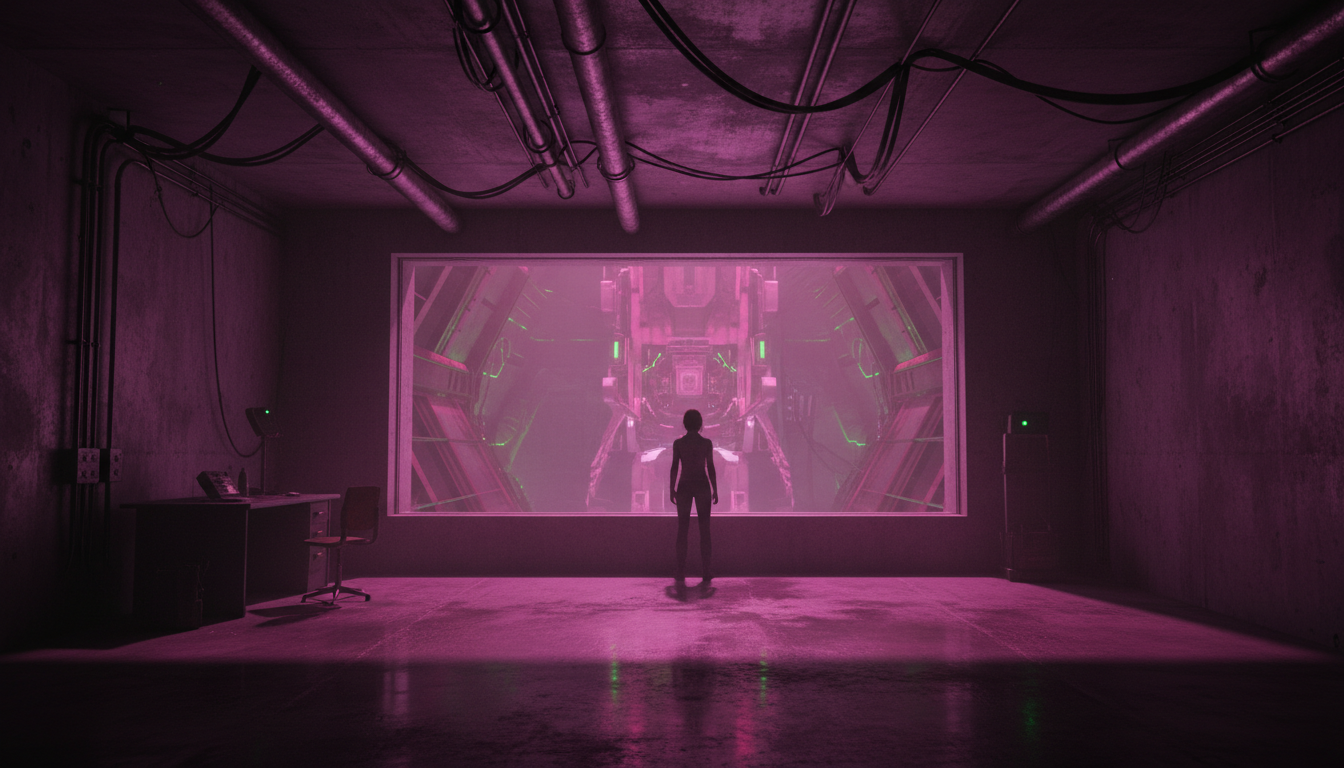
Act II opens with a full POV shift, underground and away from Ren and Selah for the first time in the book. Lyra returns to the Obsidian Spire after a training rotation to find Jaxon's status log showing an Active Block stretched to nineteen hours — seven past when he should have been asleep — authorized by Instructor Vance under a clearance code she isn't supposed to be able to see. She doesn't confront him. She starts a log instead.
Chapter 27
The Conduit Meeting
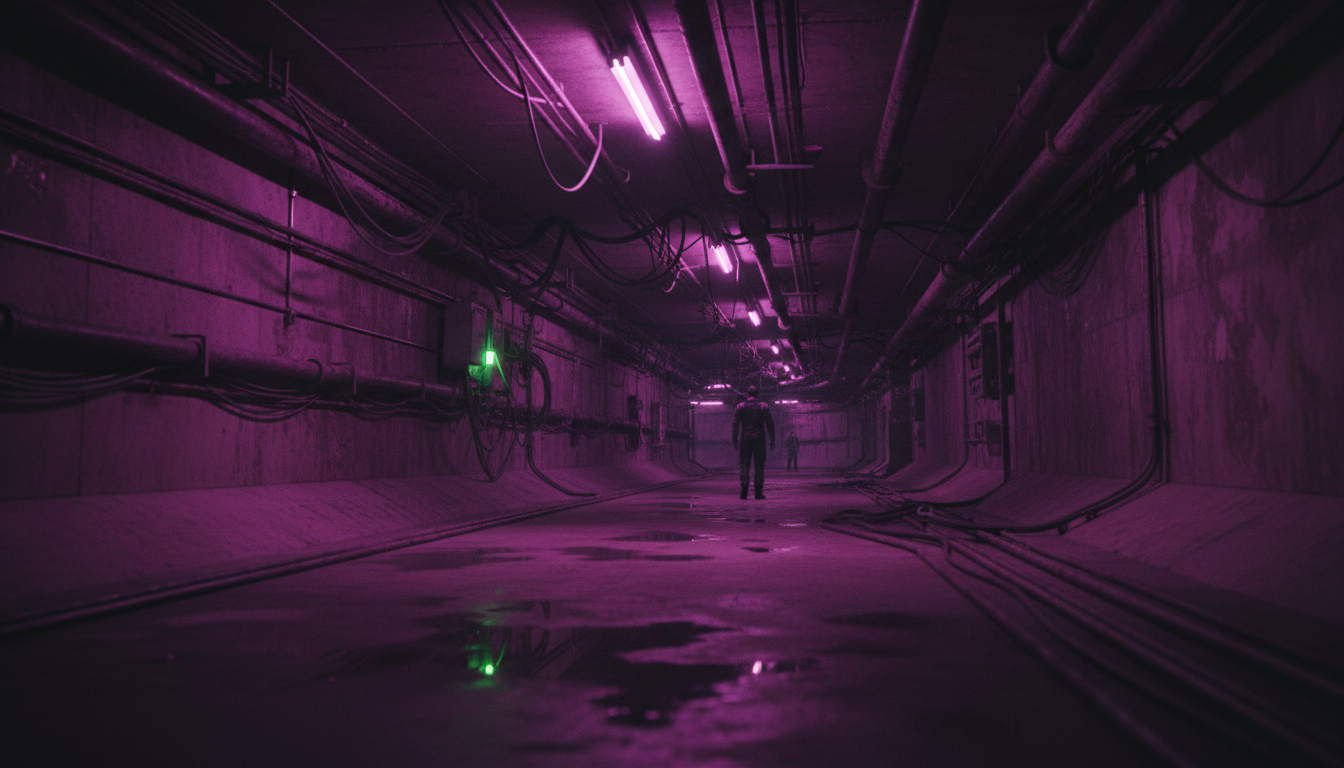
The first Jaxon-POV chapter in the book. Summoned into a disused maintenance conduit beneath the Lumina Ring, Jaxon meets Instructor Vance and is tasked with hiding four off-ledger seismic transmitters along the Rust-Canopy's trellis frames in the Mars Sector — his first concrete, on-page act of quiet complicity, and the shape of the "something for Vance" Lyra doesn't have a name for yet.
Chapter 28
The Shadow on the Tier
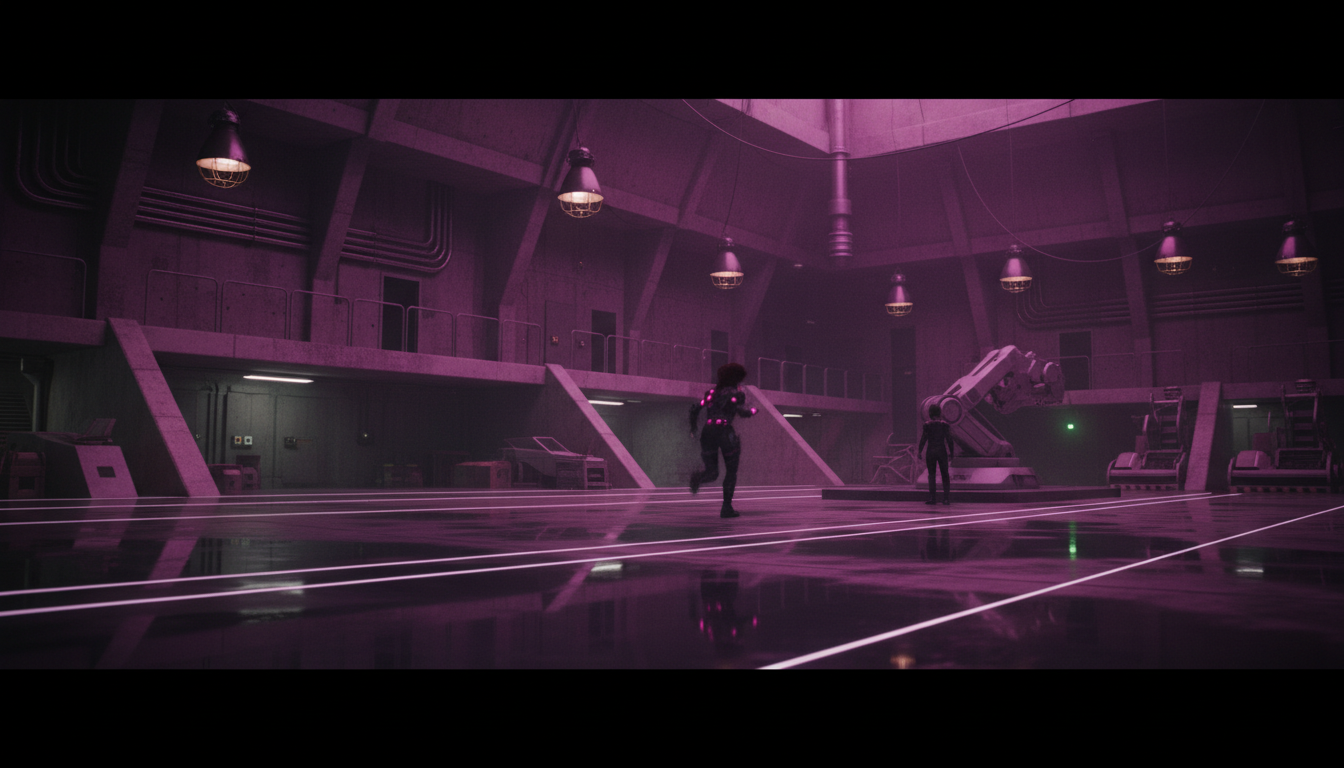
Running a combat drill on the Academy's open training deck, Lyra finds out Jaxon's absences haven't gone as unnoticed as she needed them to. Cadet Dax — sharp, hyper-observant, openly competitive for her cohort ranking — reveals he's independently tracked Jaxon's odd hours through the Tier's badge logs, including a detail Lyra hadn't found herself. Her quiet investigation stops being either quiet or solo.
Chapter 29
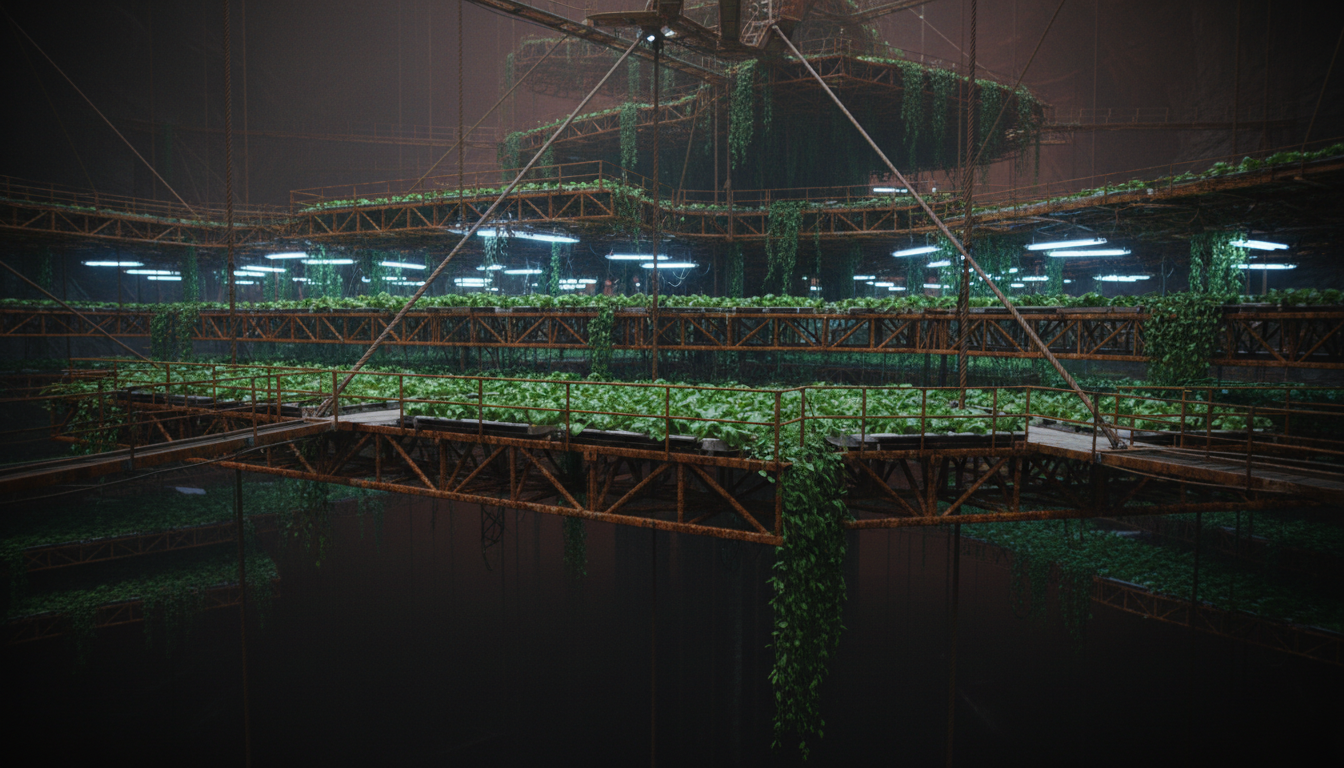
The Hanging Gardens
On a cadet maintenance rotation through the Mars Sector's Rust-Canopy, Jaxon plants Vance's four off-ledger transmitters one low-gravity platform at a time, working around fellow cadet Priya and groundskeeper Ostrander — and running out of ways to argue himself out of what he's doing. His Echo Link stutters briefly during the second placement, dismissed as static interference.
Chapter 30
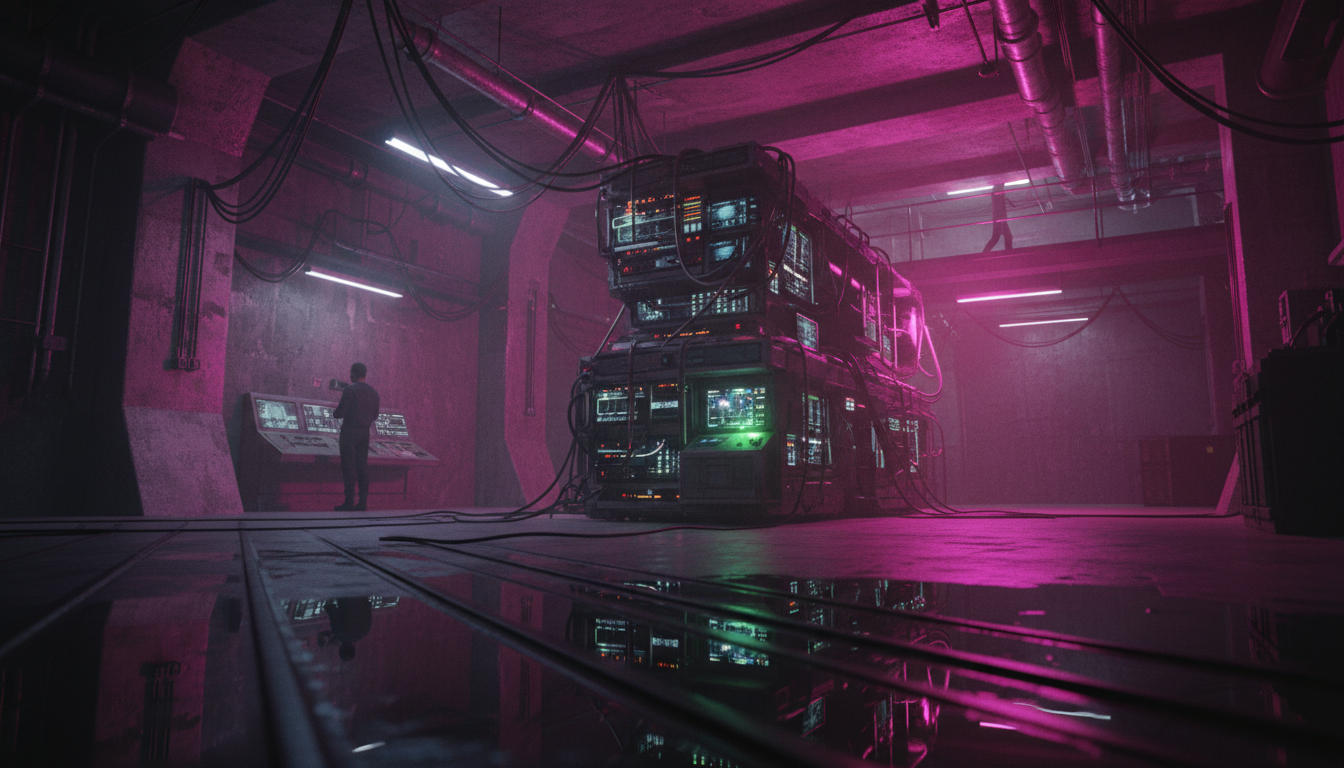
The Baseline Blackout
Cross-referencing Jaxon's raw Echo Link telemetry against his badge logs, Lyra finds a three-second stutter that matches a decades-old, unresolved Academy case file cadets study as a curiosity — the Touge Glitch. Two independent lines of evidence now sit in her hands, and neither one is small.
The Scholar & The Siphon
Chapters 31–35 · The Archive, the manifesto, the warningChapter 31
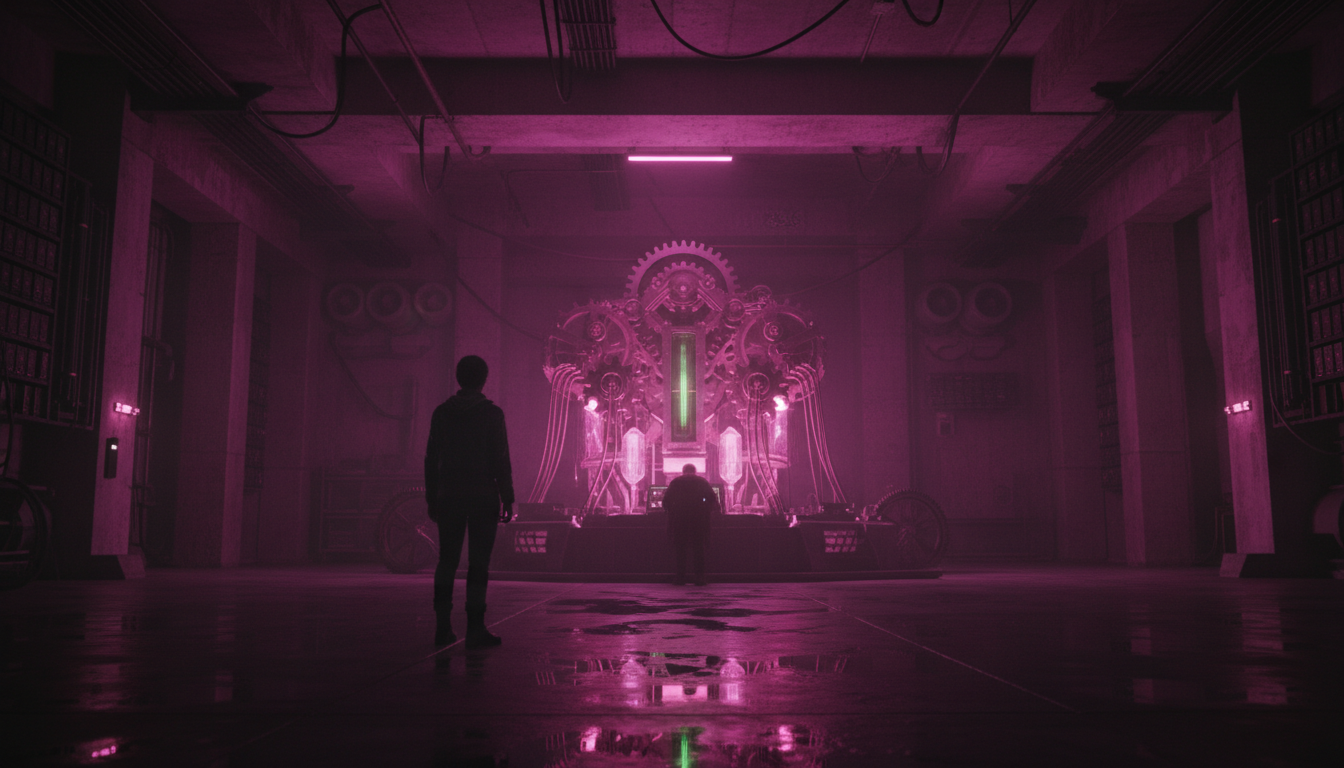
The Sacred Texts
Under cover of a pre-ship religious history elective, Lyra gets Archivist Thaddeus to give her access to the Archive of the Open Accord's unlogged, pre-Founding terminal — and uses it to open a lateral query toward Instructor Vance's records. The query is still processing as the chapter ends.
Chapter 32
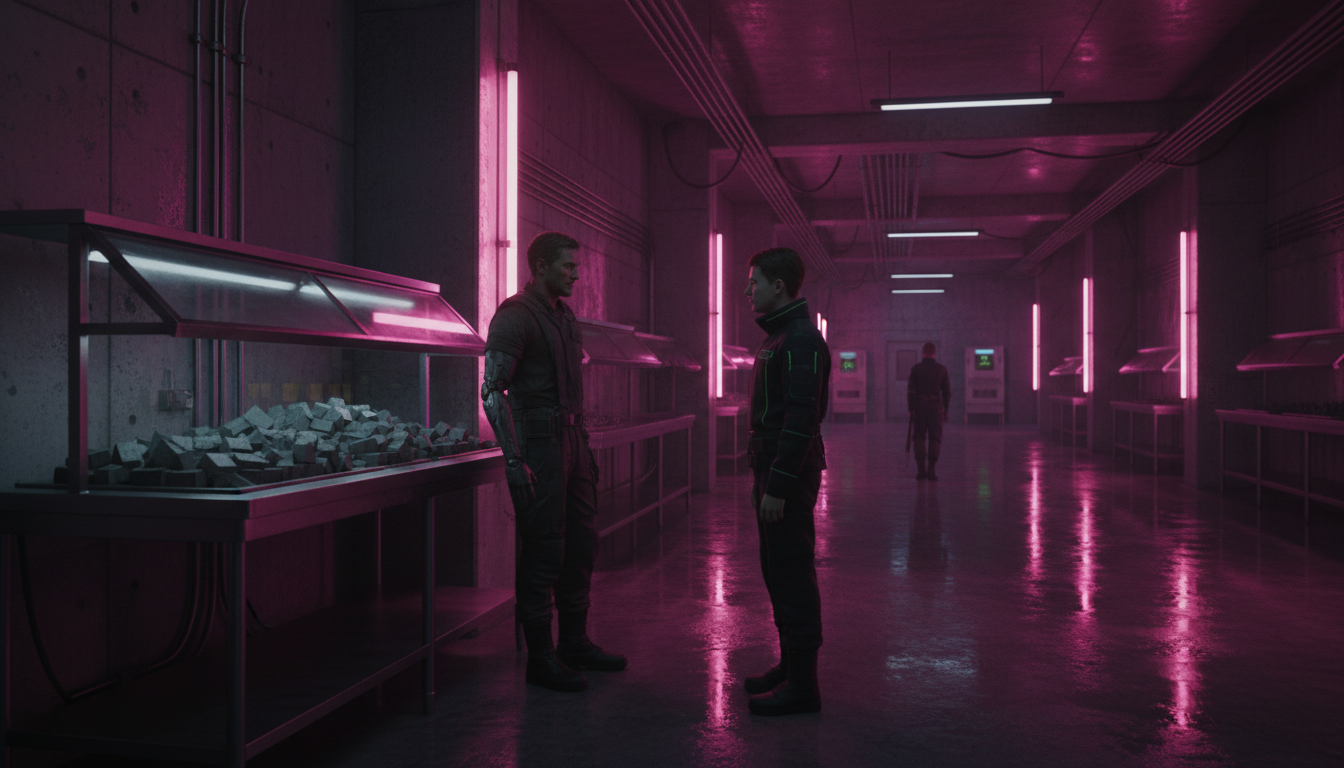
The Dining Hall Clash
Cornered over a tray of simulated proteins, Jaxon listens to Cadet Dax name the Rust-Canopy out loud and frame the whole thing as a favour — then leave him with the one detail that actually lands: Lyra has already heard this speech, and never mentioned it.
Chapter 33
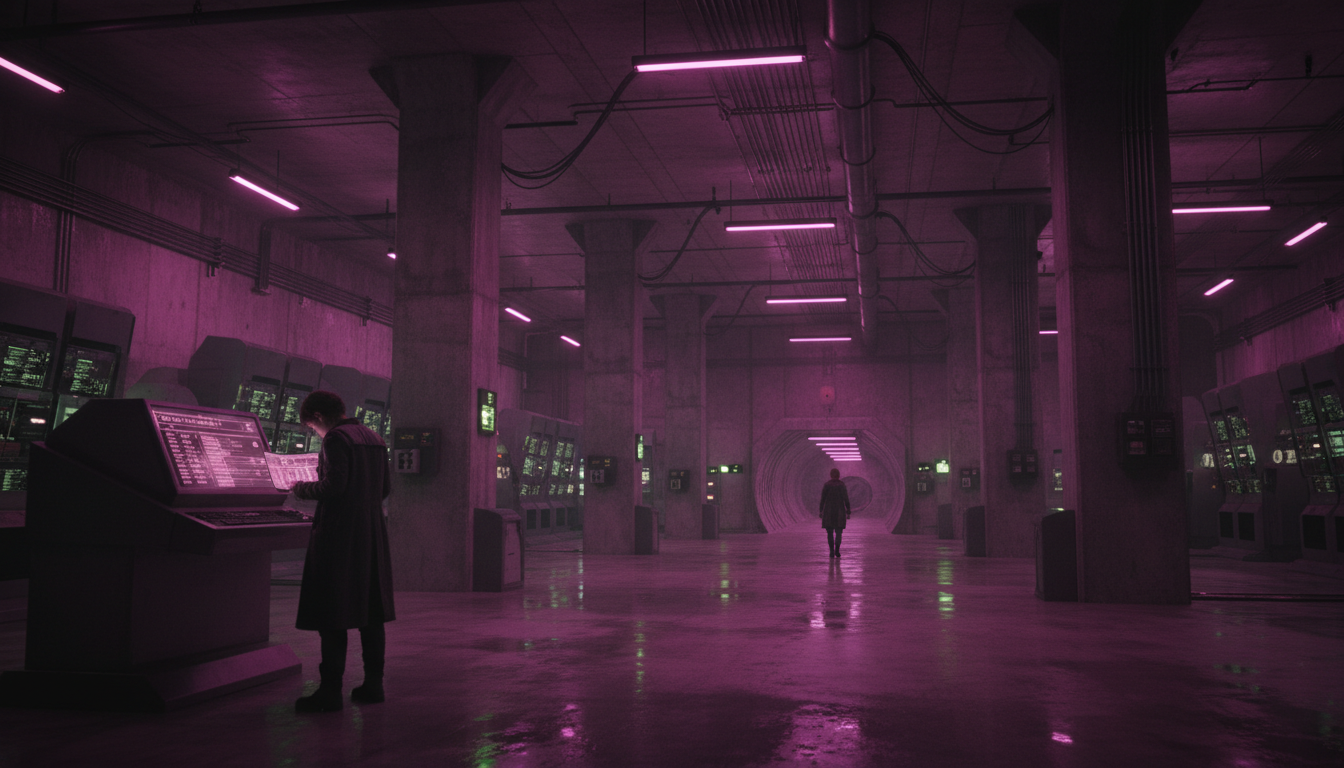
The Severance Manifesto
The old terminal finishes what it started. What comes back isn't a personnel file — it's the opening pages of an argument, patient and unembarrassed, about a man who built the whole world a window and kept one room without one.
Chapter 34
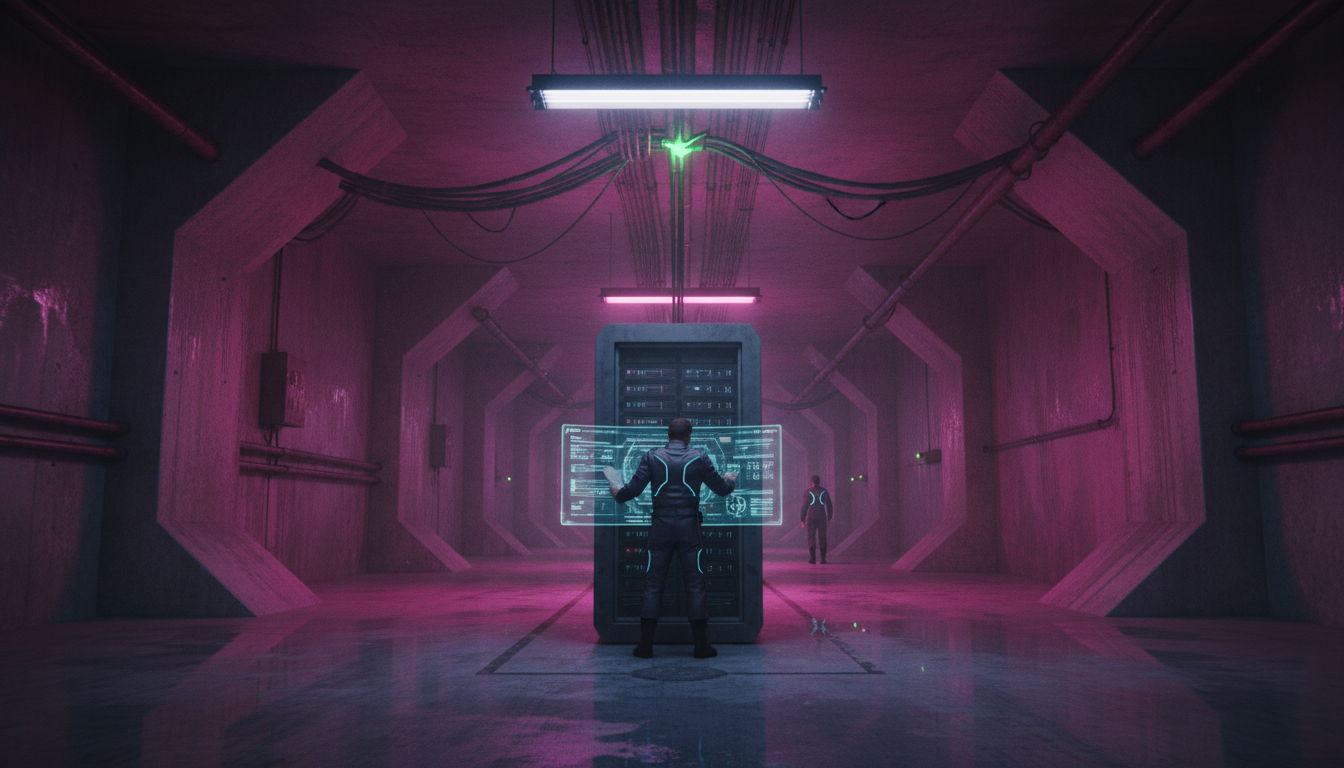
The Data Leak
The book's first chapter from inside Dax's head. Running a routine traffic audit nobody asked him to run, he finds a draw on the Ring's oldest, quietest node — and starts writing down a signature that isn't supposed to have anything to write down.
Chapter 35
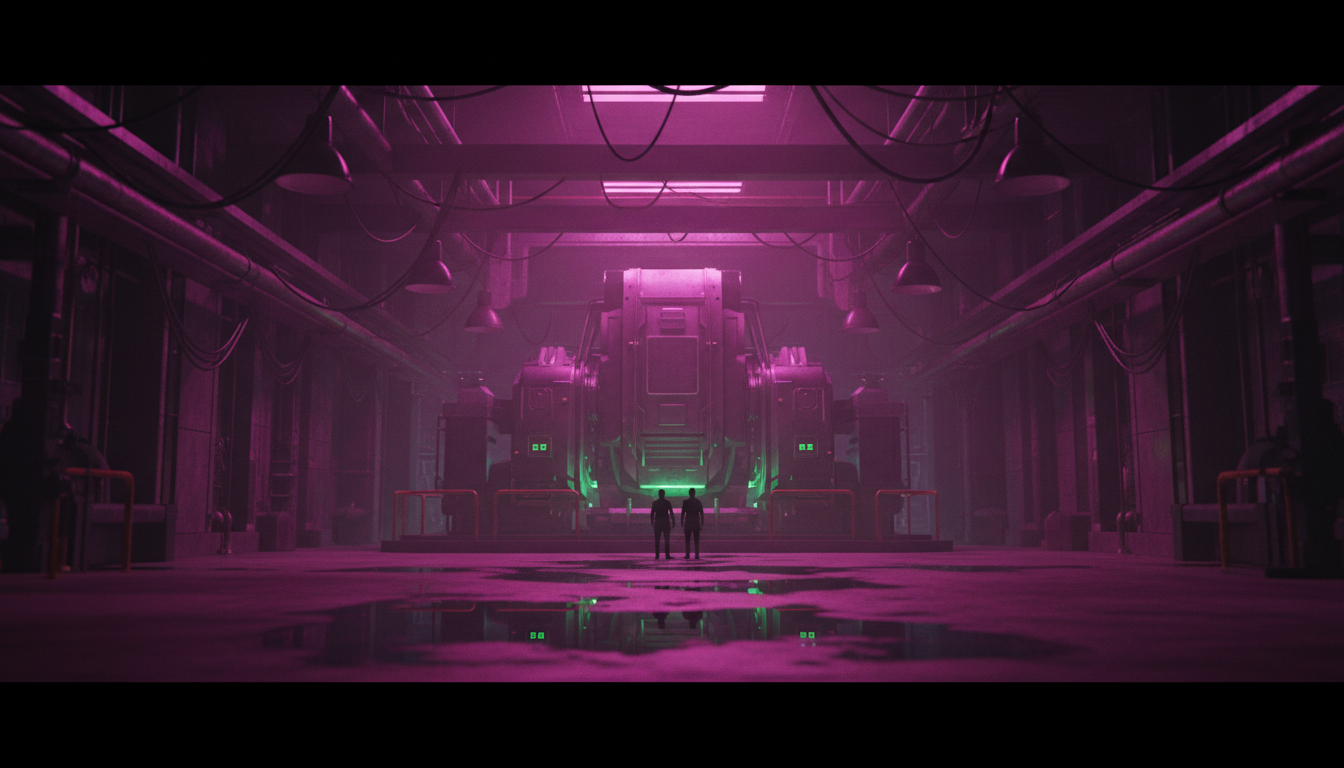
The Warning
Jaxon finally speaks — and says the wrong thing first. Closing Part 2, the two halves of a bonded pair put their secrets on the same table and discover they've been running the same investigation from opposite ends, four years too carefully to have noticed.
The Severance Manifesto
Chapters 36–40 · The coup decrypted; the cut at 280 metresChapter 36
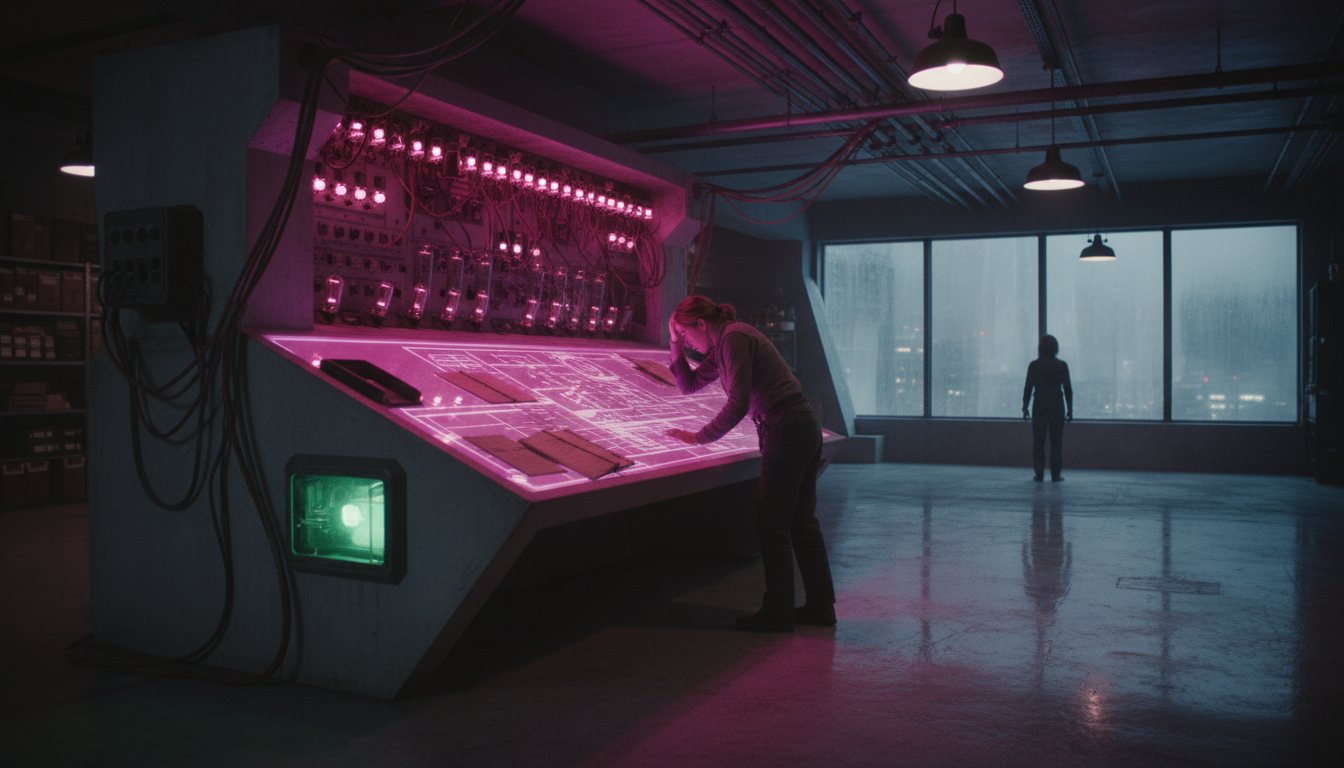
The Blueprint of the Coup
The cipher on the manifesto's second half isn't one a machine can break, because it was never meant to be broken by one. Lyra works out where Vance hid the key — and finds, past the word therefore, an operational plan with a date on it.
Chapter 37
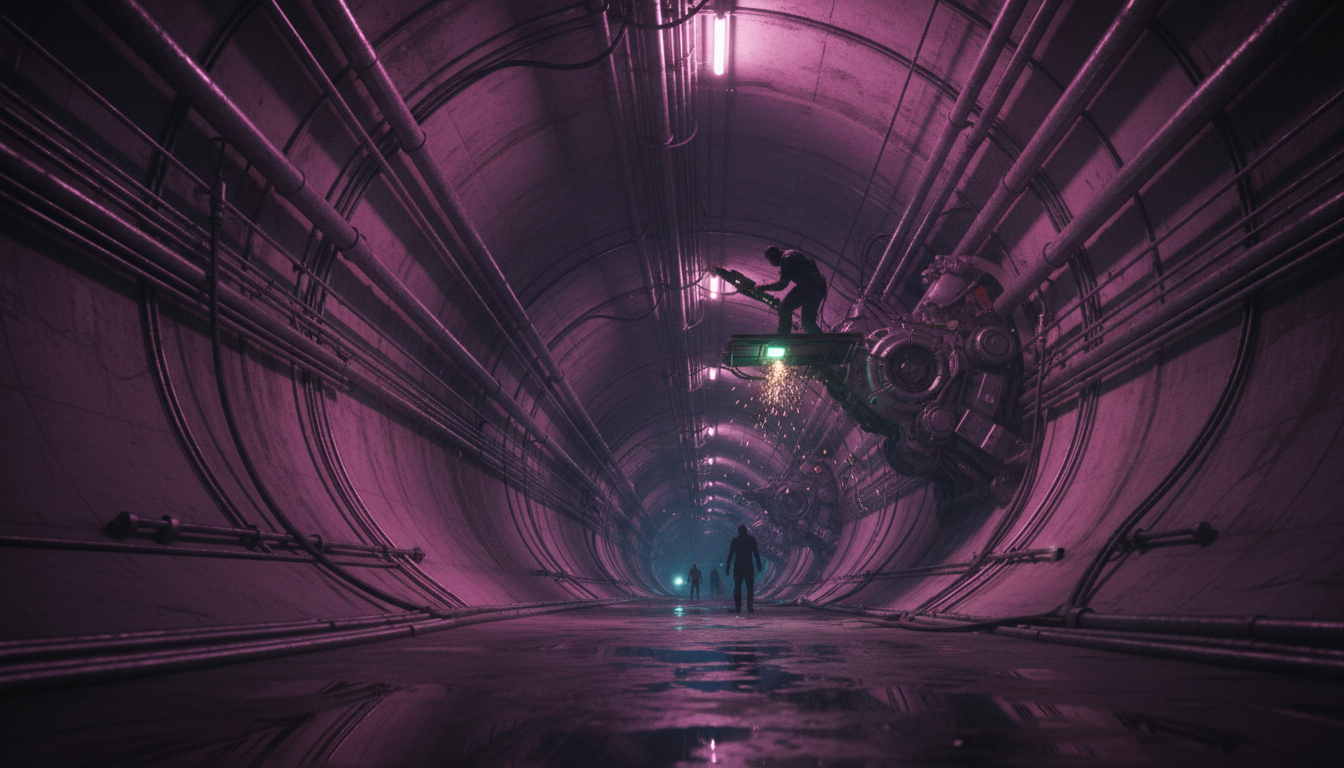
The Final Cut
Vance orders four telemetry bundles cut in the vertical transit shafts. Jaxon does the arithmetic on the third one and understands he isn't disabling a monitoring line — he's removing the only thing that can reopen the surface. He cuts three.
Chapter 38
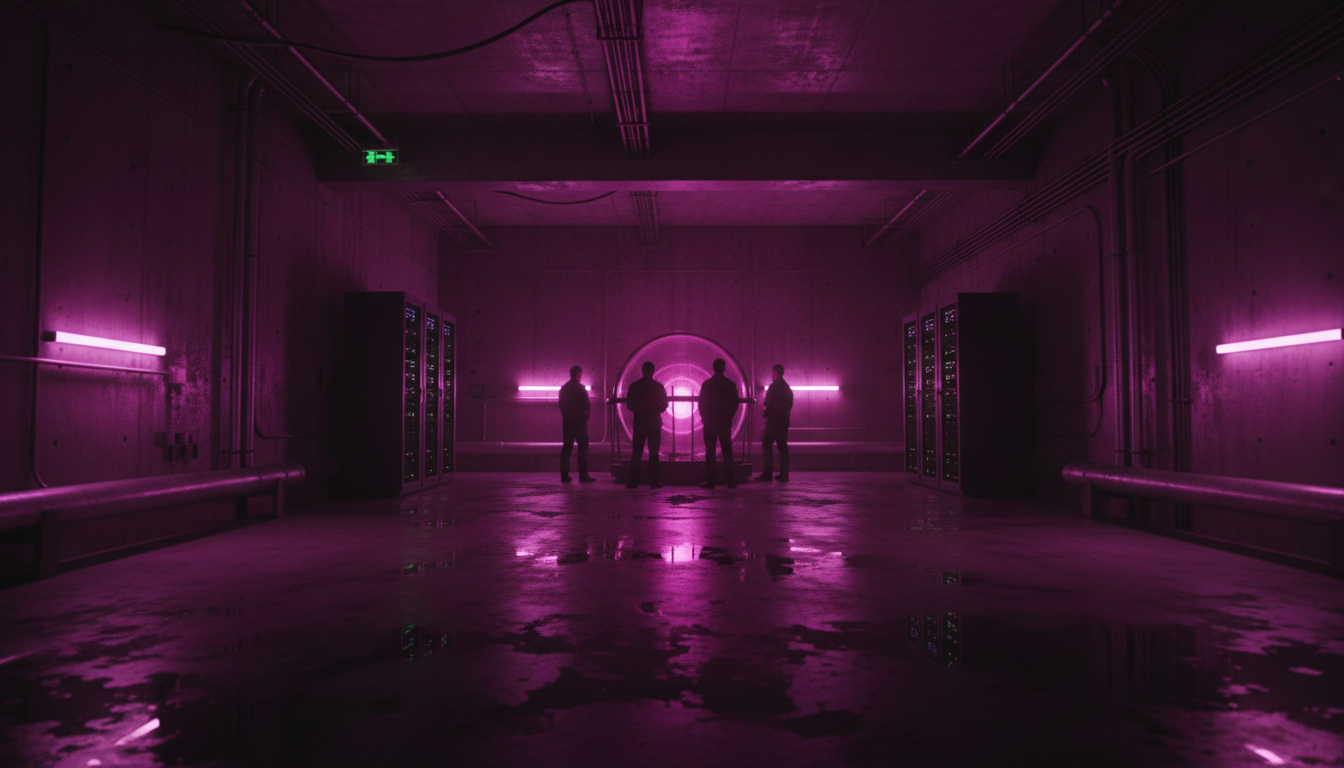
The Shepherd's Eye
The first chapter from the Citadel since Chapter 9. Ghost has known about the Severance Line longer than anyone hunting it, has left his own blind spot running on purpose, and is using a nineteen-year-old cadet as a tracer — and is honest with himself, at least, about what that makes him.
Chapter 39
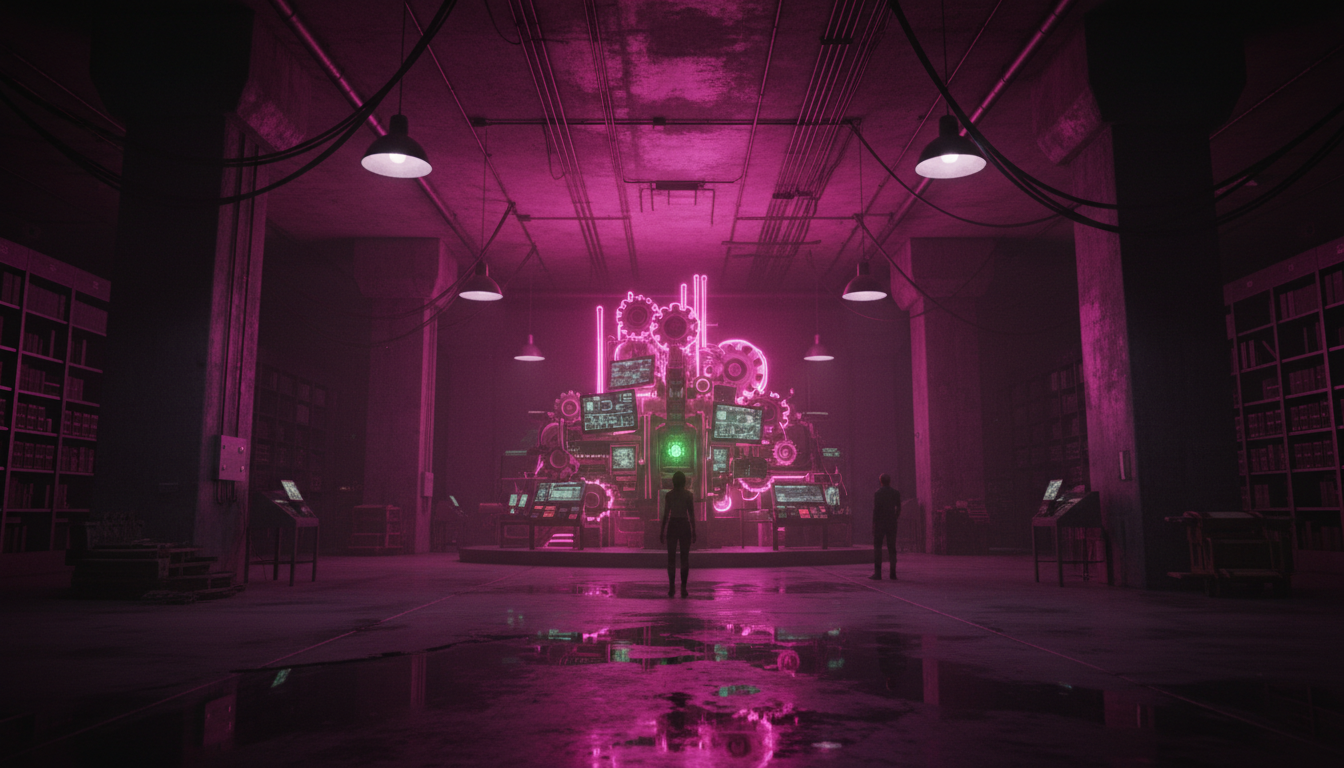
The Cornered Scholar
Dax's alert fires. He comes to the Archive alone, without a report filed and without anyone told, and asks her plainly. The drive stays hidden. The diagnostic tool does not — and a wiped device turns out to be worse than a full one.
Chapter 40
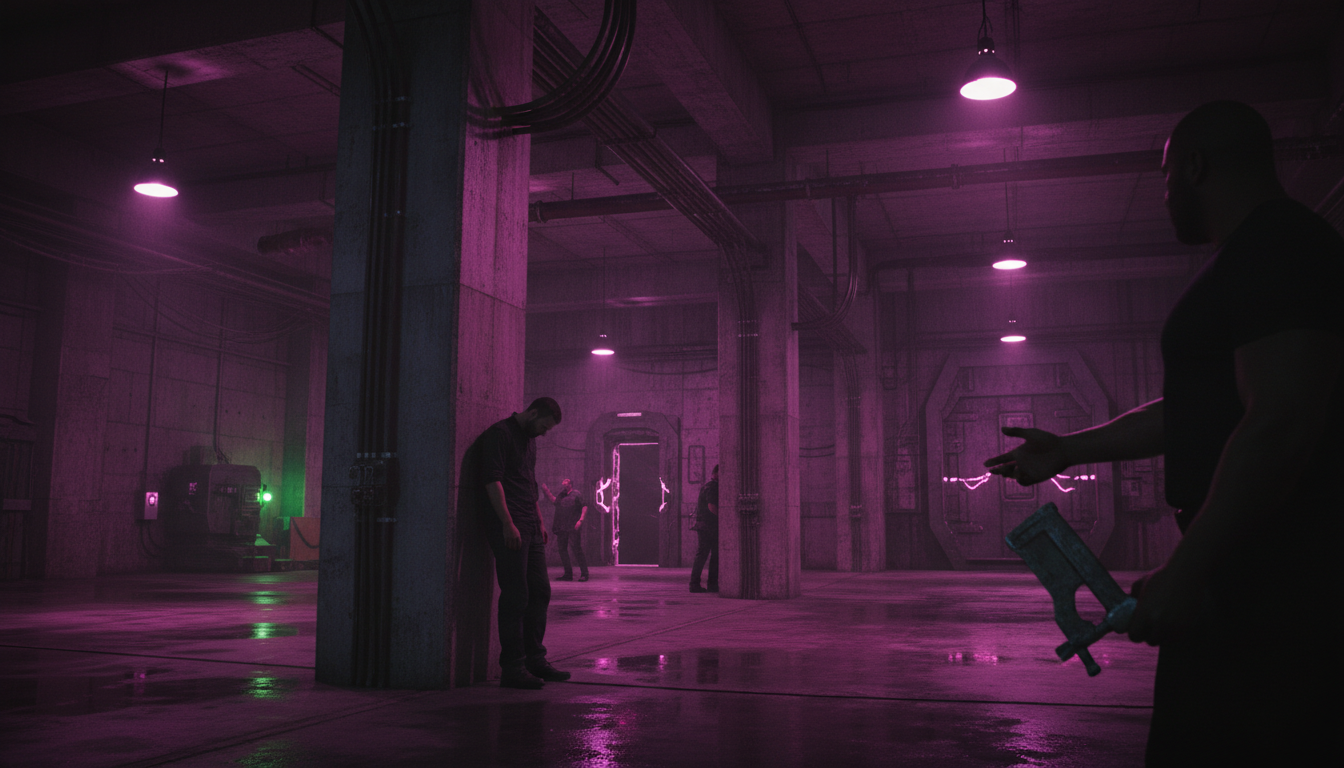
The Confession
Dax has run the diagnostic tool and found exactly what a wipe looks like. He gives Jaxon the terms plainly, without cruelty and without much room: confirm what Lyra was doing, or he takes all of it to the Guardian tribunal in the morning.
The Venus Sector Directive
Chapters 41–45 · The cover-up, the fracture, the descentChapter 41
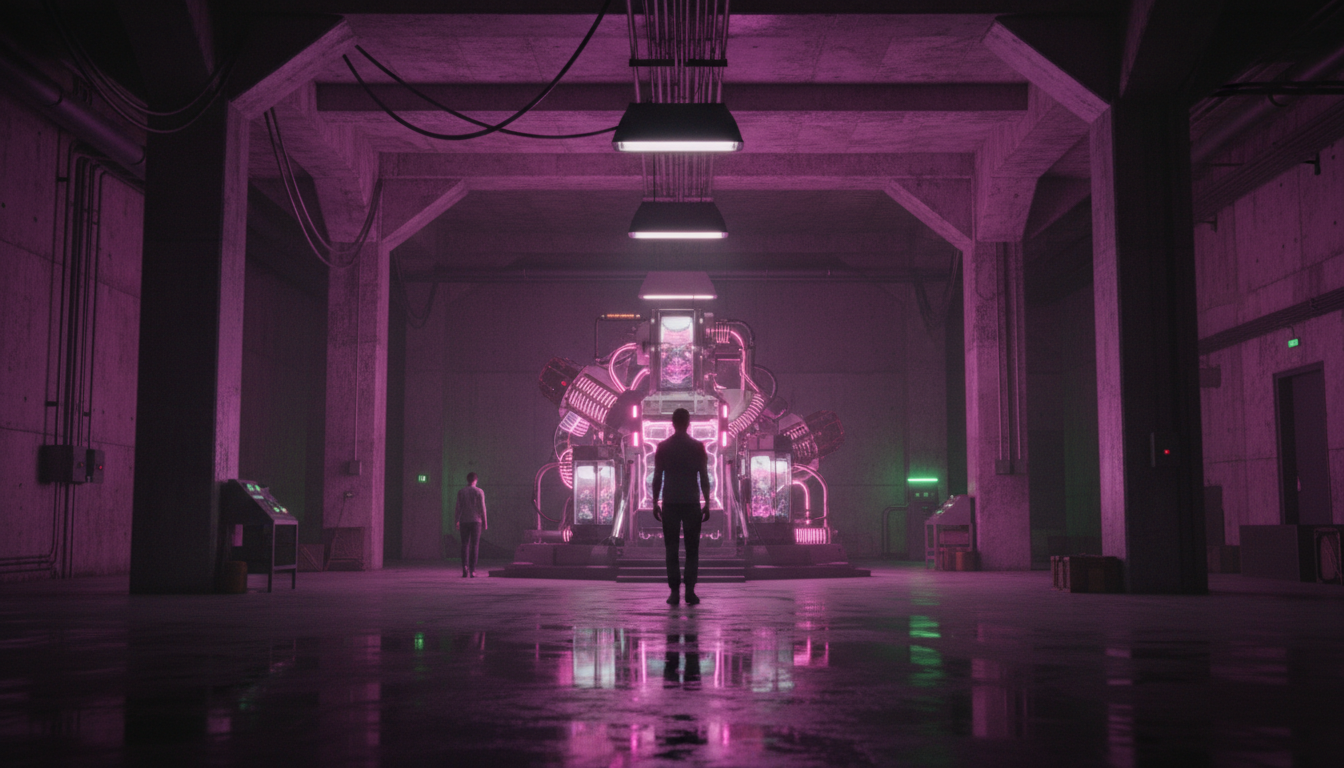
The Cover-Up
The story Jaxon builds is good because almost none of it is invented: Lyra was running an unlogged security probe of the Archive under an instructor's off-book authority. Dax backs down. And in the same breath, Jaxon has told the most careful man on the Ring that Vance runs off-book operations at all.
Chapter 42
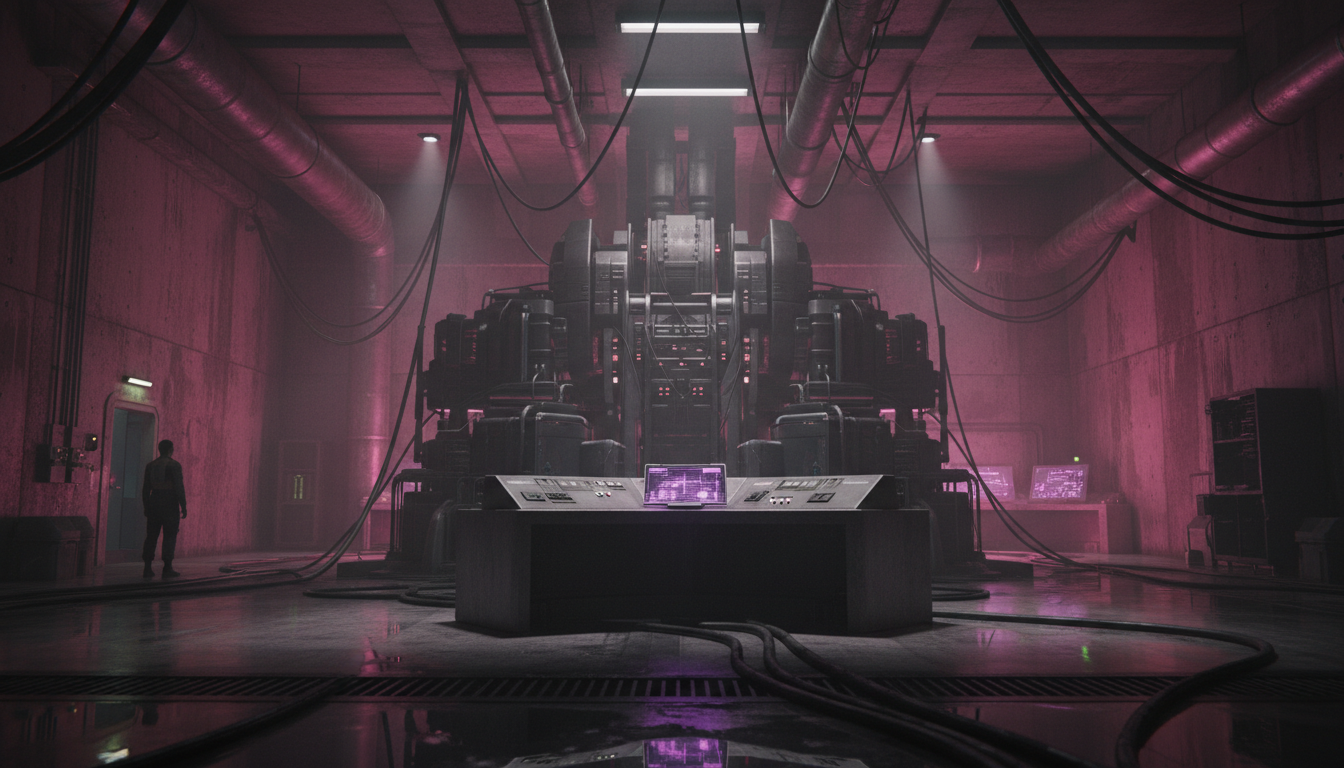
The Fracture
Confined to quarters by a hold too polite to appeal, Lyra finds out what Jaxon said to save her — and works out, in about four seconds, exactly whose desk it was always going to cross. The partnership survives the day and stops being a partnership.
Chapter 43
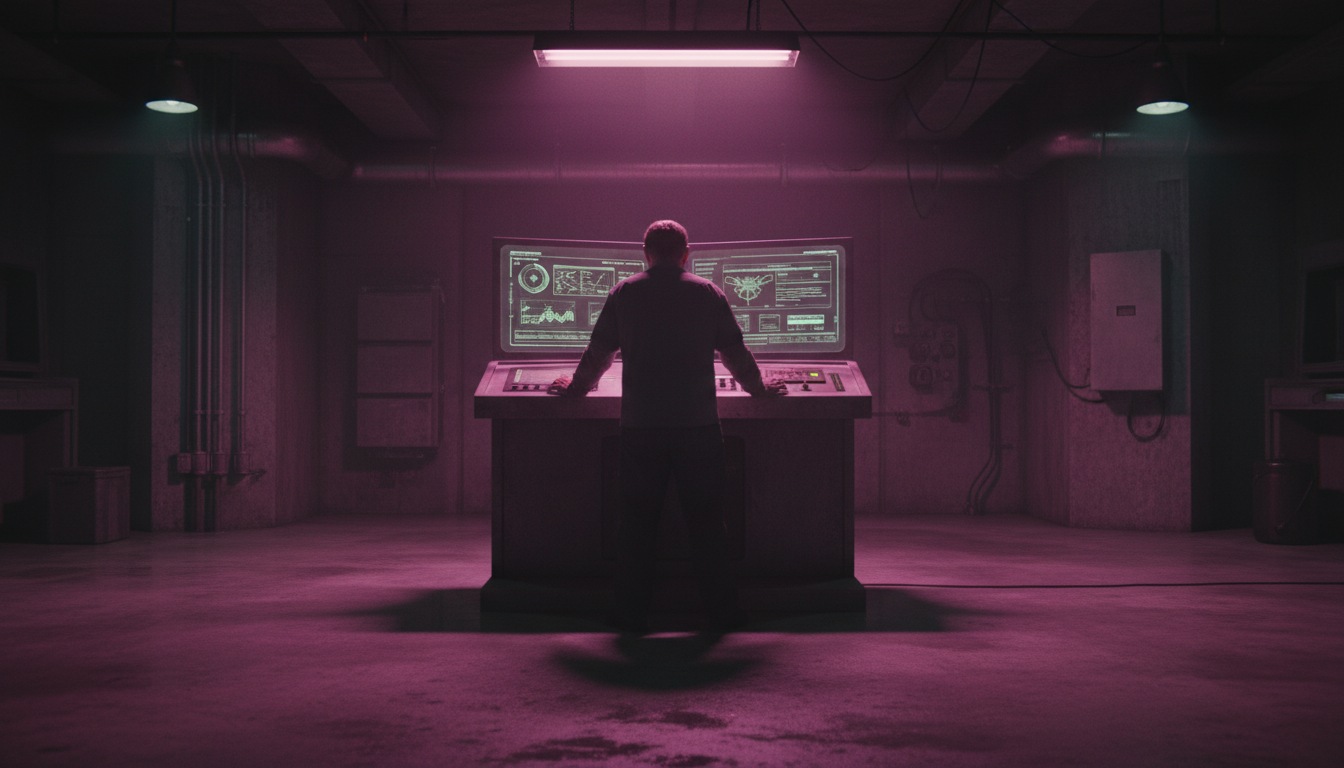
The Isolation Order
The book's first chapter from inside Vance. He reads a report about an assessment he never authorised, works out the whole shape of it in under a page, and does not reach for a tribunal — because he still needs one of them for fourteen more days. He sends a man with a meter to Three-East.
Chapter 44
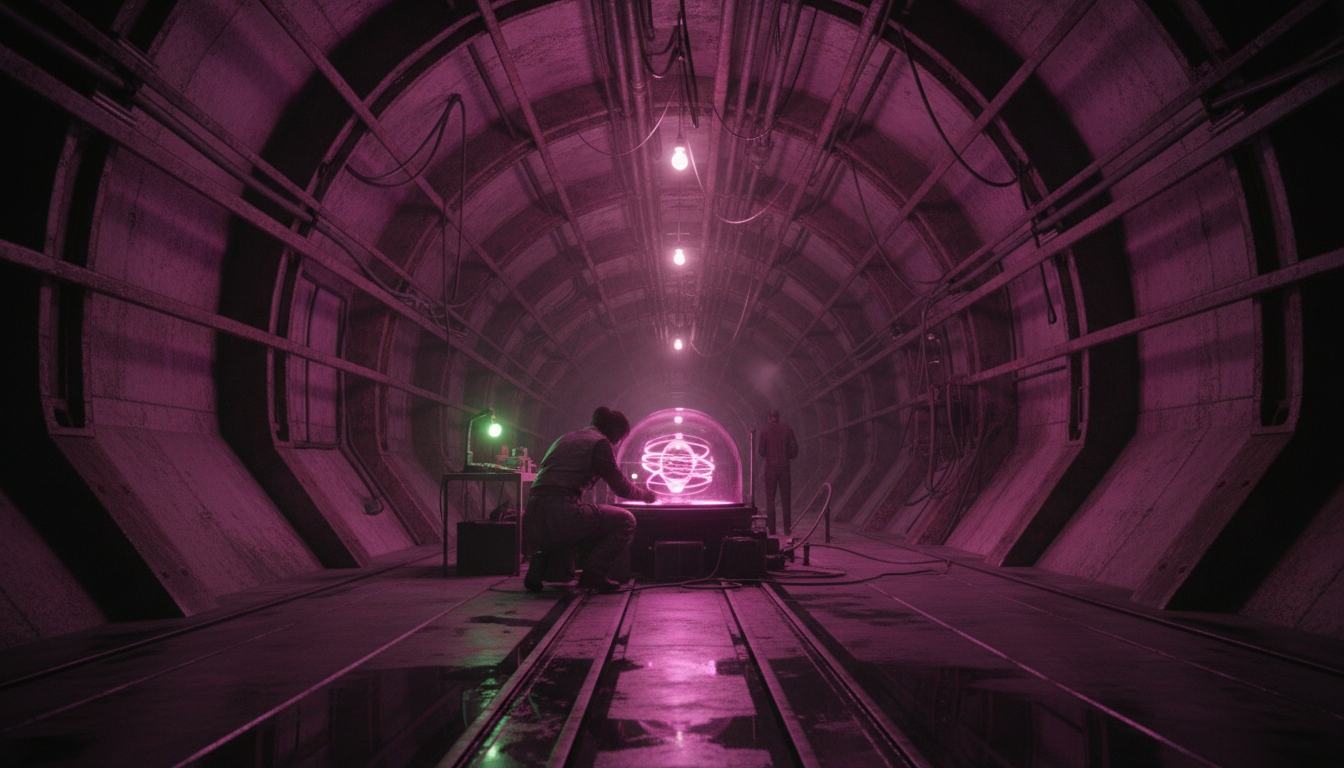
The Direct Drive
An armoured subterranean transport, a training order nobody can appeal, and an escort in basalt armour. Lyra spends four hours working on the one detail that shouldn't be possible: the Sentry Legion answers to the Citadel, not the Council, and it is standing in this carriage.
Chapter 45
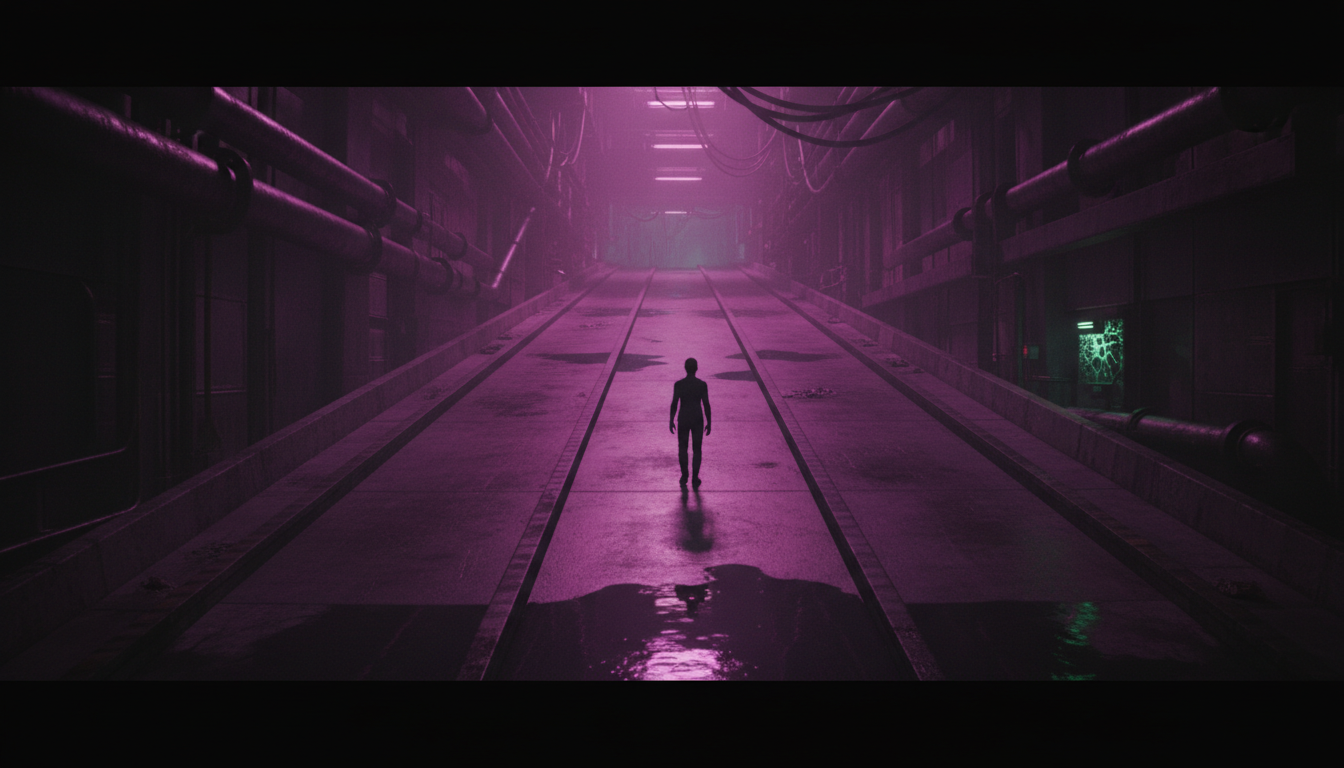
The Smelter Sinks
Past the air-curtain blast doors the transport keeps going down, and the weight comes on so gradually that neither of them notices it starting. Sulphur, red light, and a pressure that makes standing up a decision. Closing Act II's first half at the bottom of the world.
The Threshold of the Sinks
Chapters 46–50 · Near-Earth gravity and the hazard casingsChapter 46
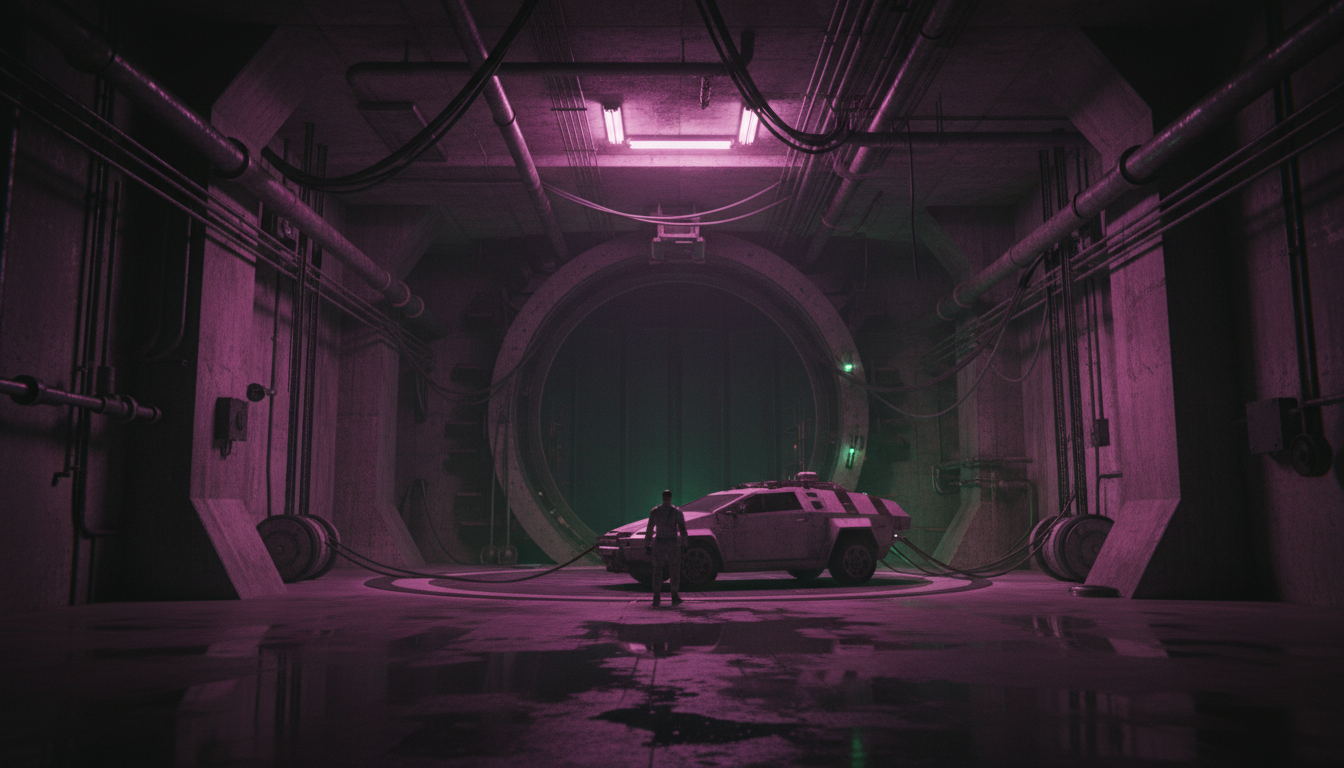
The Gravity Well
Twenty chapters after the Zenith-7 went under the root canopy, Doss and Kira's interception rig finally catches something worth the trouble — and it points four hundred kilometres straight down. Ren has never in his life weighed what he weighs at the bottom of that freight elevator.
Chapter 47
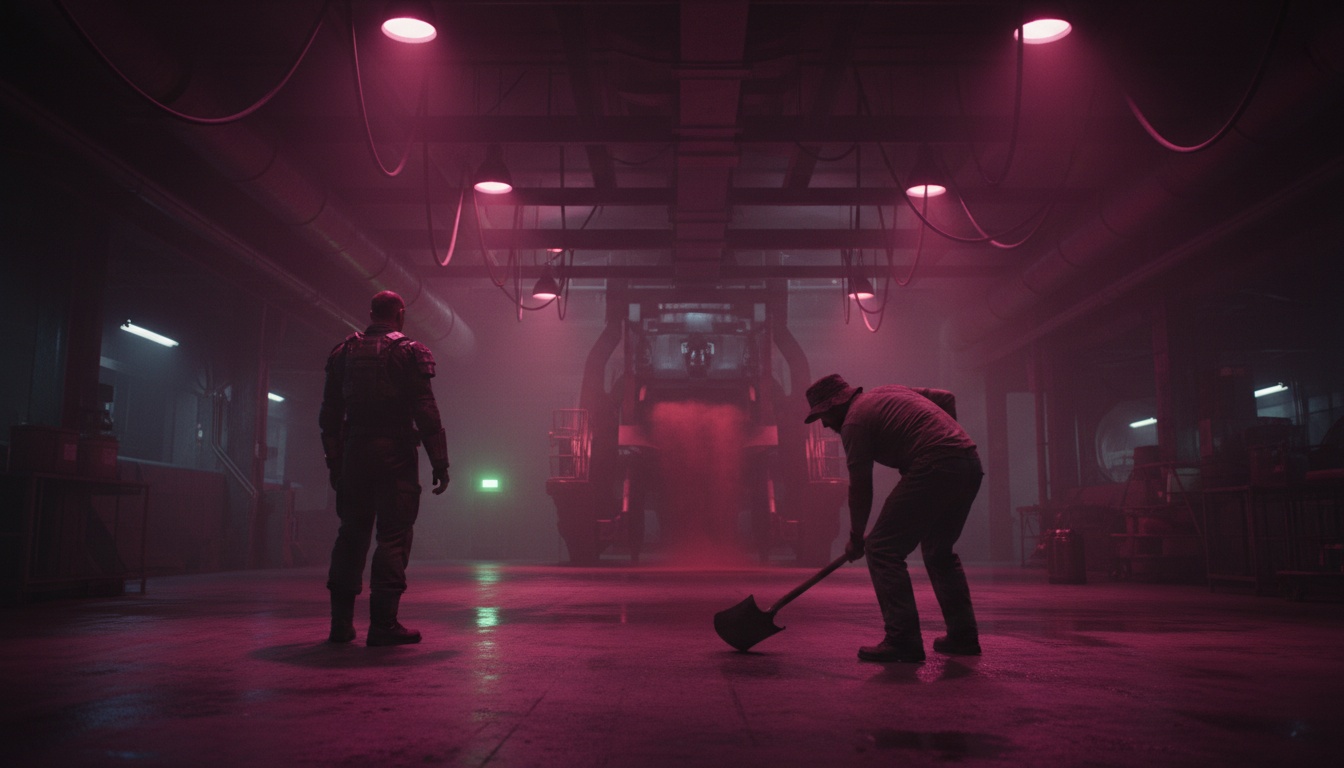
The Magnetite Pit
Inducted into a training block that isn't one, under a Centurion who is far too competent to be running it. Eleven hours on a shovel teaches Jaxon what his own body weighs — and then he looks properly at what the assembly line two hundred metres away is actually building.
Chapter 48
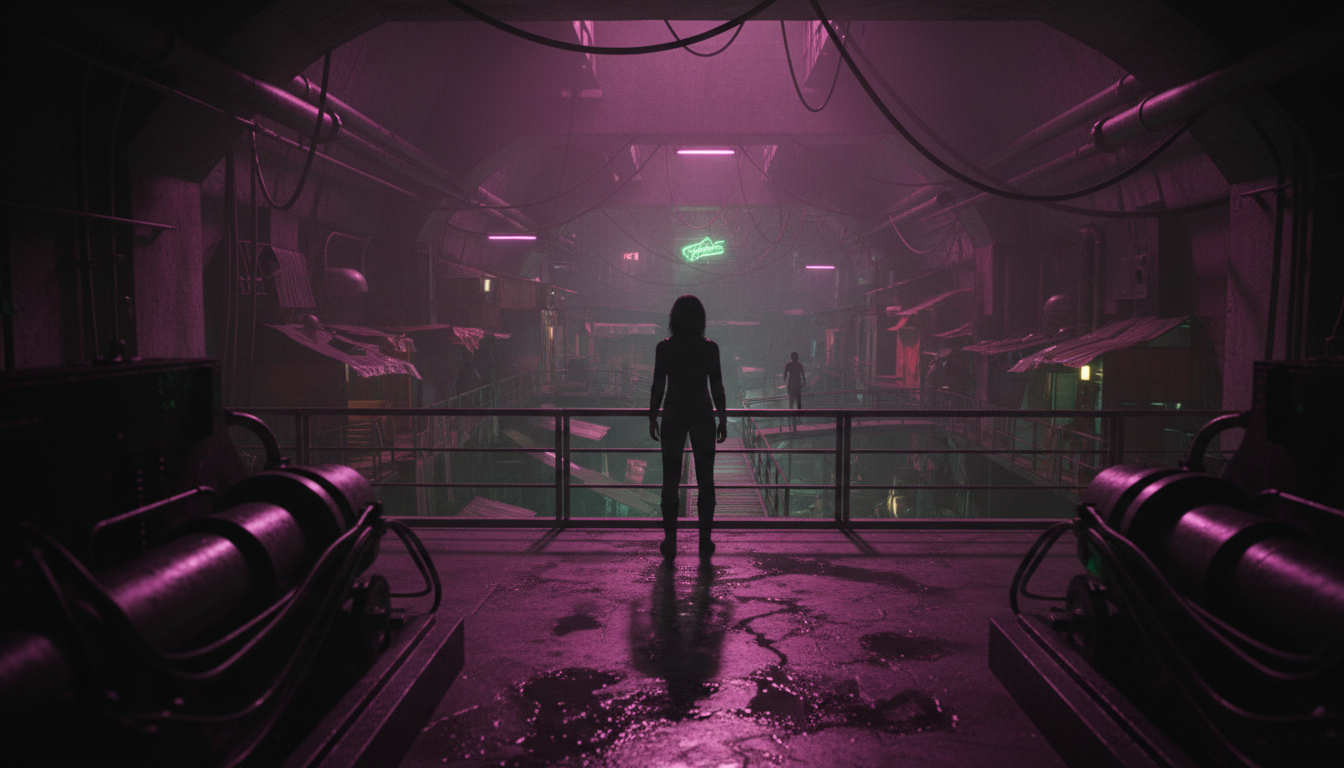
The Syndicate Safehouse
In dense forge air, sound arrives too loud and too slow, and the one sense Selah has always been able to trust becomes something she has to fight. Kira takes them down into the shanties to find the only organisation in the Sinks that actually looks after anyone.
Chapter 49
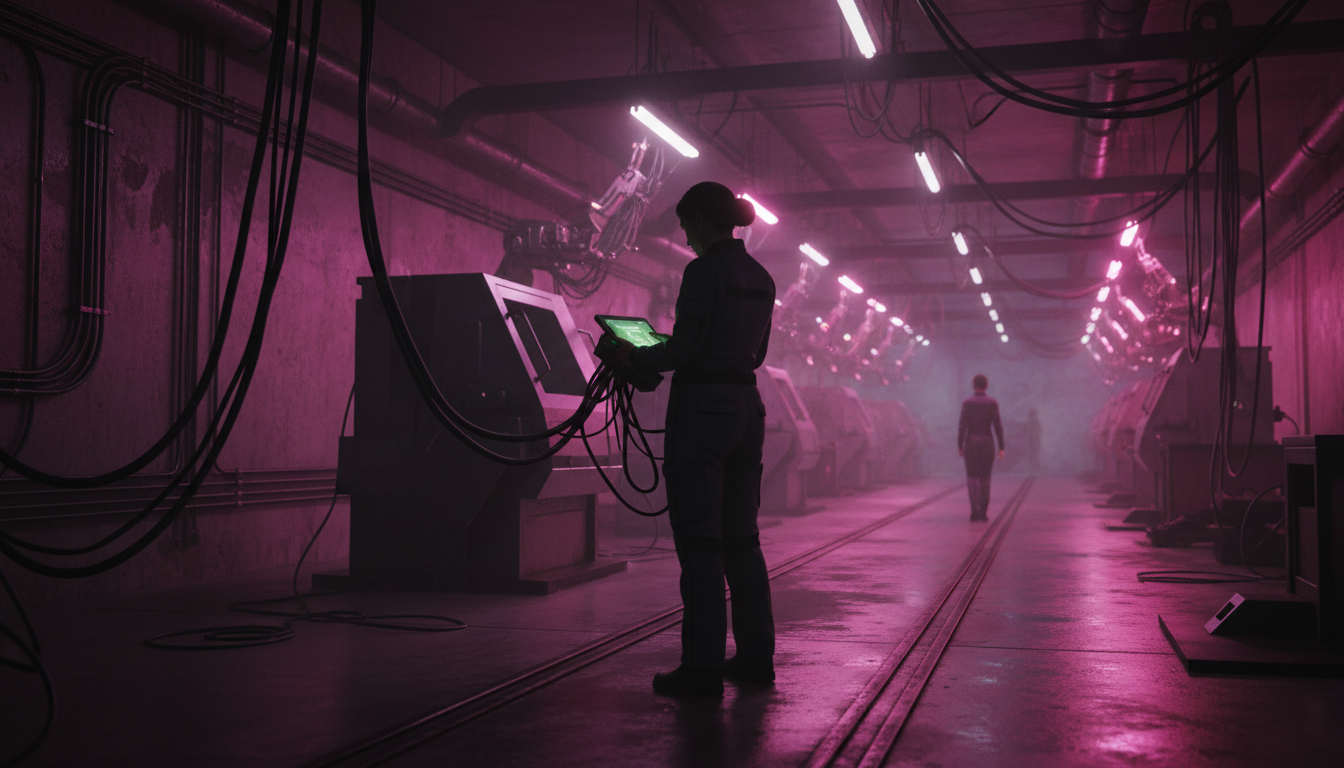
The Hazard Casings
Nine hours a day fitting copper-veined connectors into something the manifest calls a heavy-hazard cargo casing. Lyra does what she has always done — reads a record for what it leaves out — and arrives at the question that actually matters, which is not what these are but how many, and who could possibly be inside them.
Chapter 50
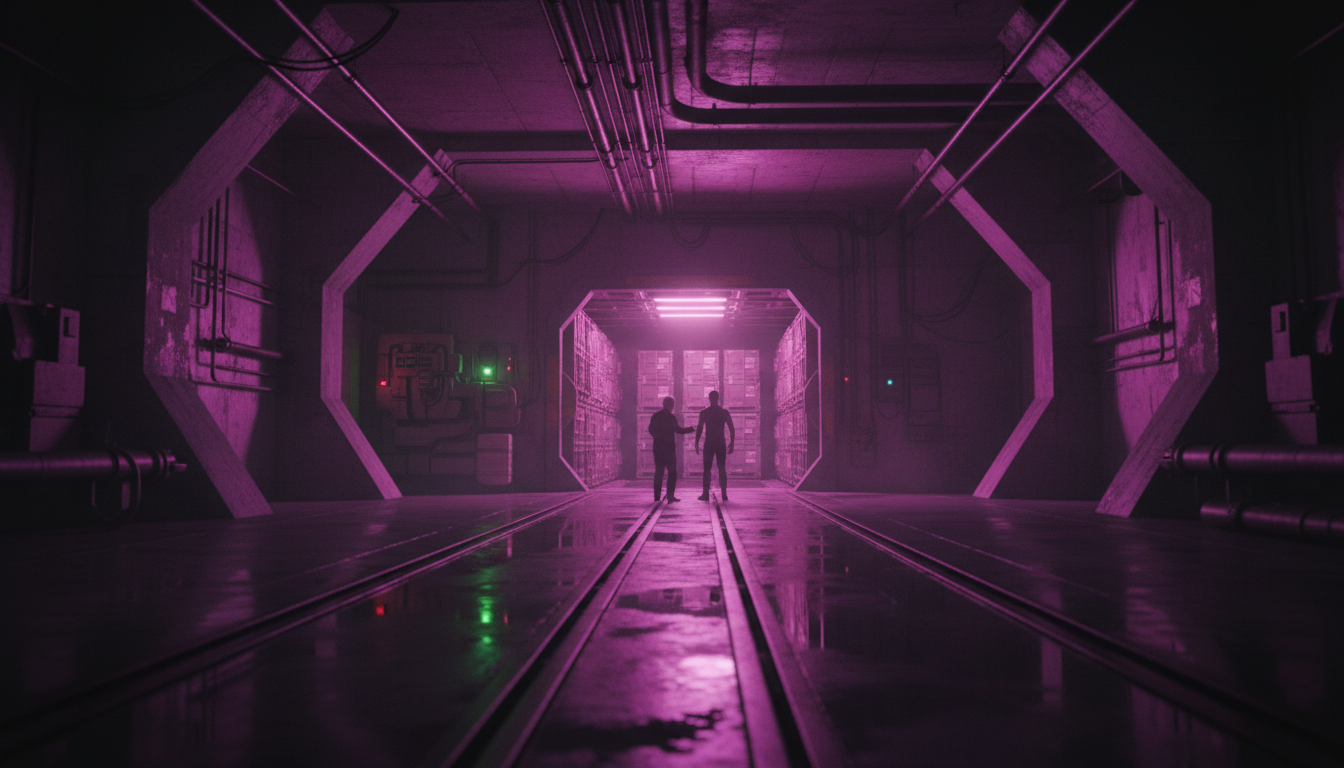
The Orbital Smugglers
A senior forge hand who has loaded these shipments since she was fourteen explains, without any particular drama, where they go: up the unlisted shafts, past the surface, to a ship that never landed. Ren does the tonnage in his head and finds the year the numbers changed.
The Syndicate's Whisper
Chapters 51–55 · Two storylines cross in the darkChapter 51
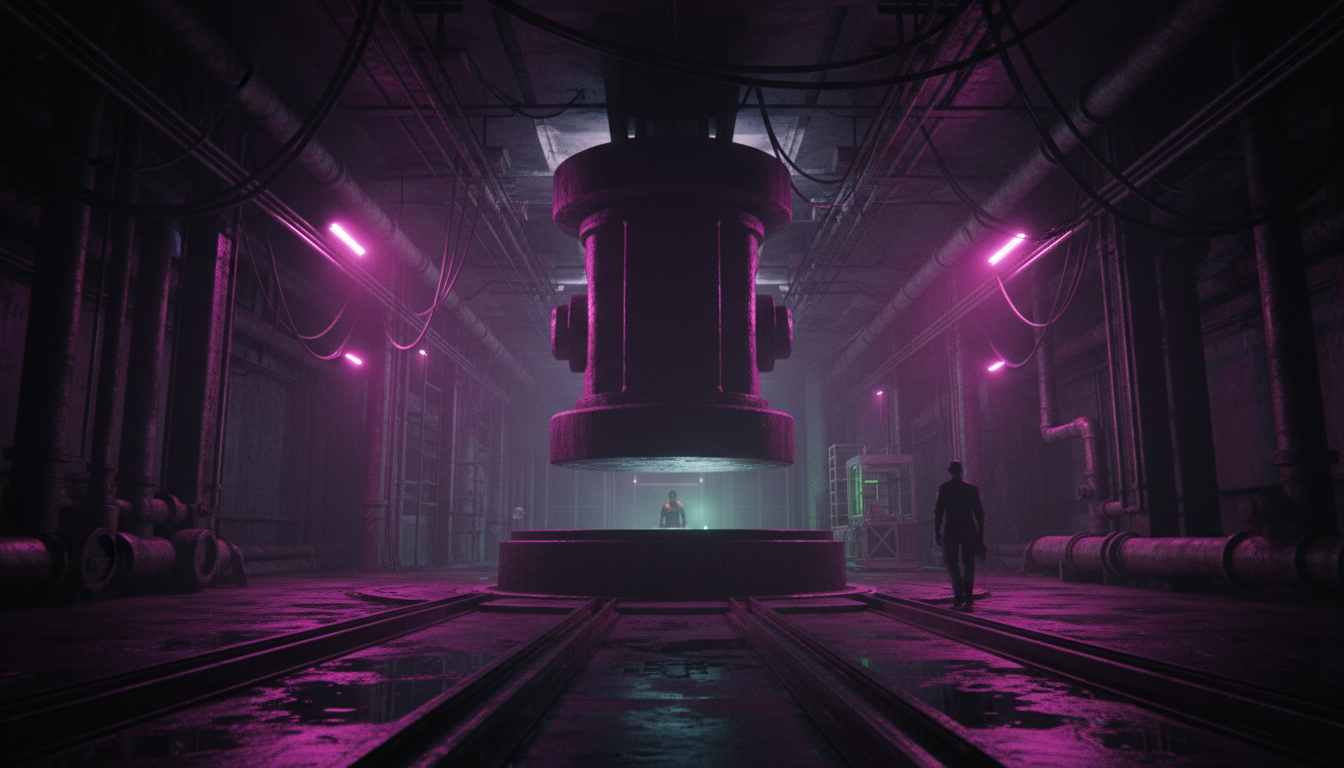
The Resonance of Iron
The Great Anvil's hammers put a hundred tonnes into the bedrock every eleven seconds, and Selah works out that if you can read what comes back you have a map. What she finds under the Legion barracks is a shape she has felt exactly once before, at the bottom of a ravine, through a sealed grate.
Chapter 52
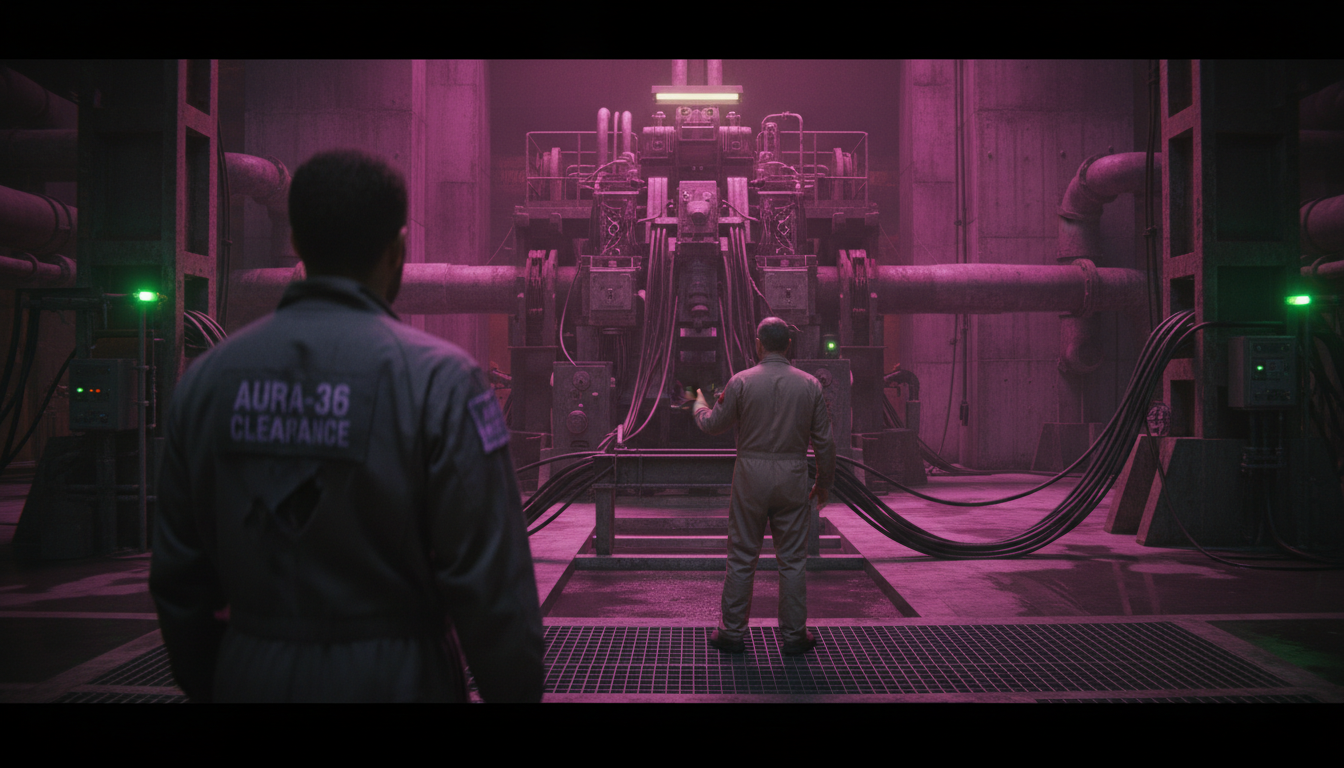
The Watcher on the Grate
Dax is four hundred kilometres from where he should be, wearing a clearance he shouldn't have, and the reason he gives for it is the most reasonable thing anyone has said to Jaxon in months. He also brings the answer to a question Jaxon has been carrying since Three-East — and the answer is that Vance has known for five days.
Chapter 53
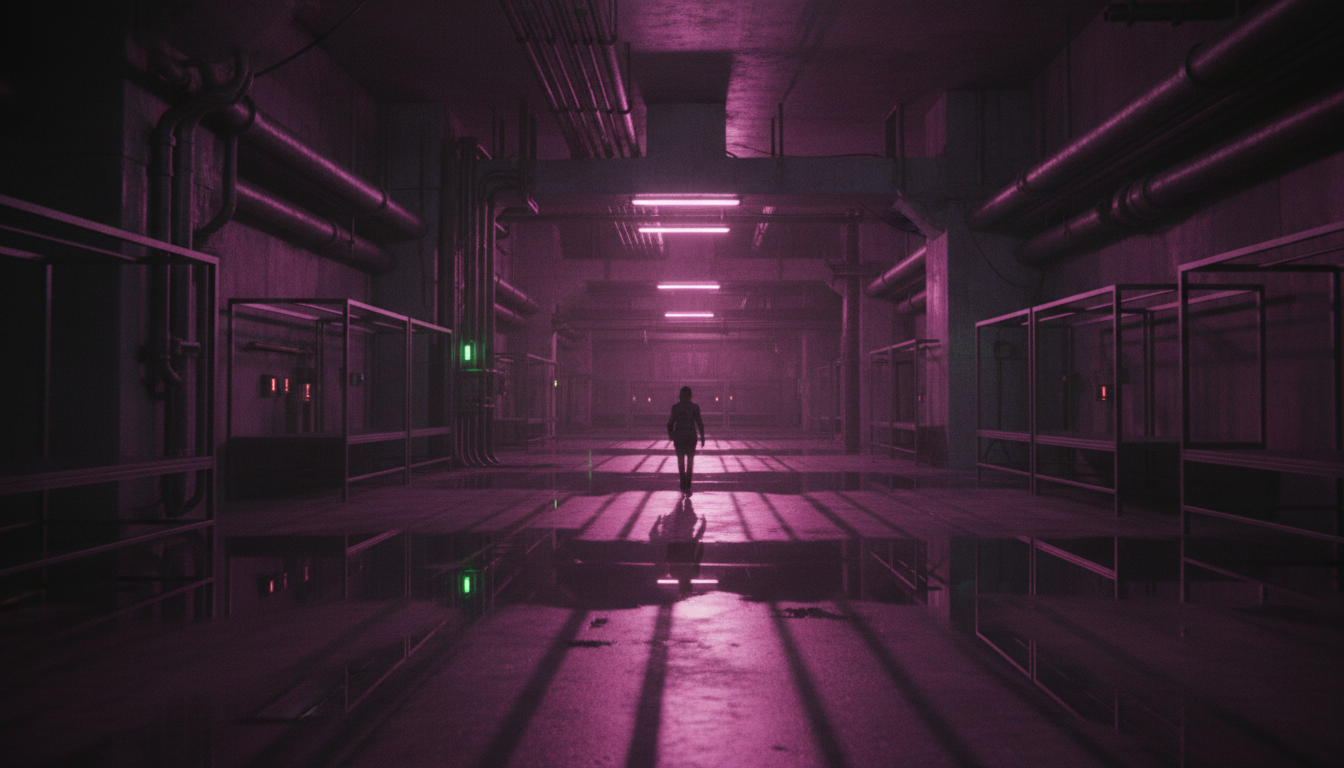
The Silent Pursuit
A face from a flagged-citizen bulletin, in a marketplace four hundred kilometres below where it should be. Two surface-raised women chase each other through the shanties at the slowest possible speed, both of them too heavy to run, and end up in the same dark room.
Chapter 54
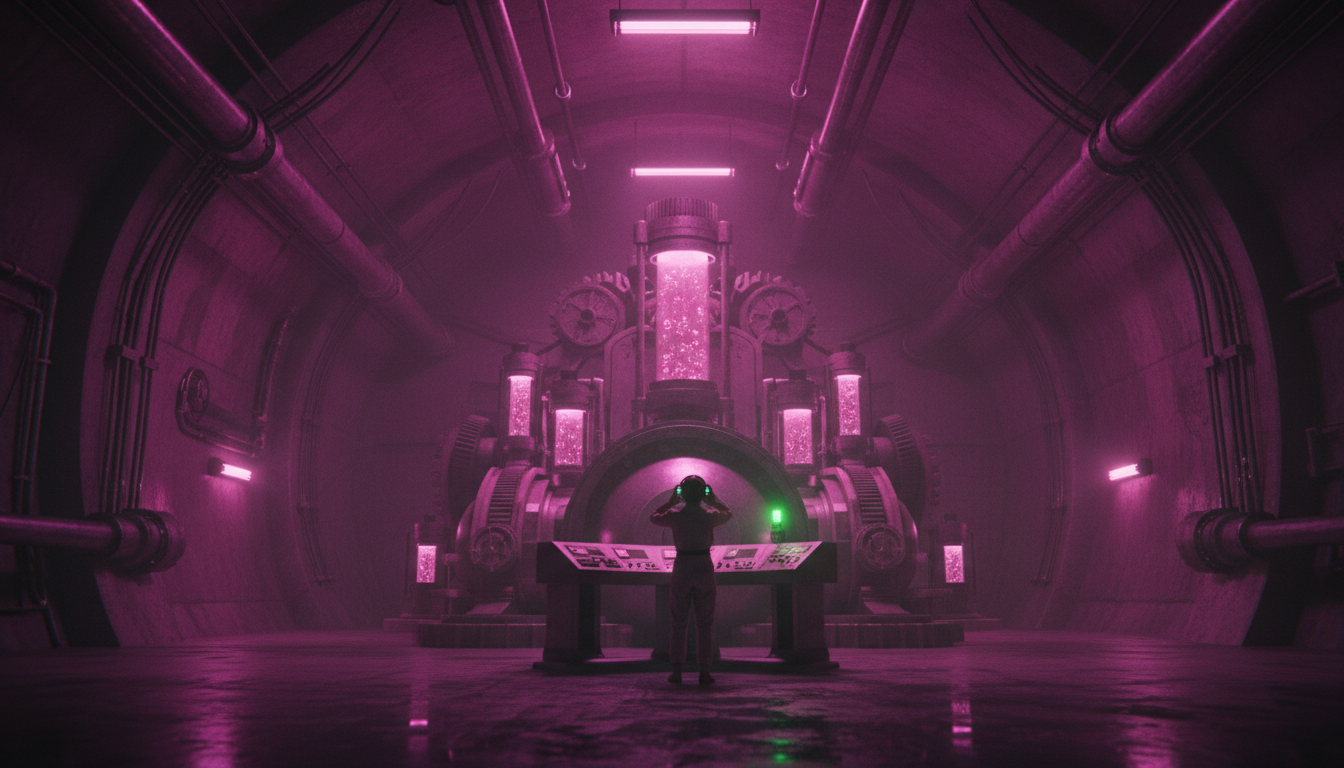
The Condenser Vault
Two exhausted women in a dark room with nothing left but words — and Selah, who cannot hear properly down here, has to do the one thing her gift has always let her skip: actually listen. Then Lyra says her partner's name, and Selah has heard it before, on a recording, a year ago.
Chapter 55
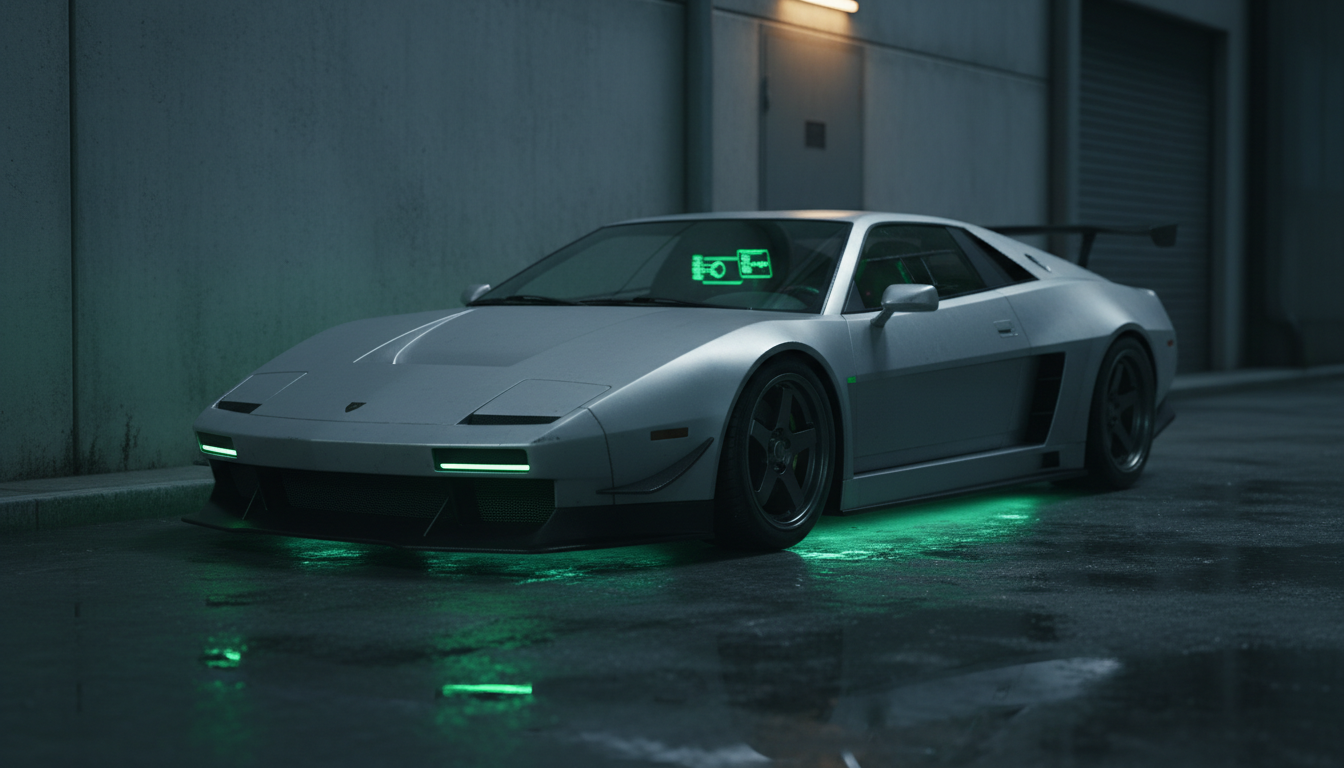
The Meeting of the Watchmen
Ren has carried a voice in his head for a year without a face attached. Now the face is sitting across a table in a Syndicate safehouse, and Ren plays him the recording — and a nineteen-year-old's own words tell Jaxon what Vance's "reform" was always going to be.
The Crucible
Chapters 56–60 · The alliance, the alarm, the lockdownChapter 56
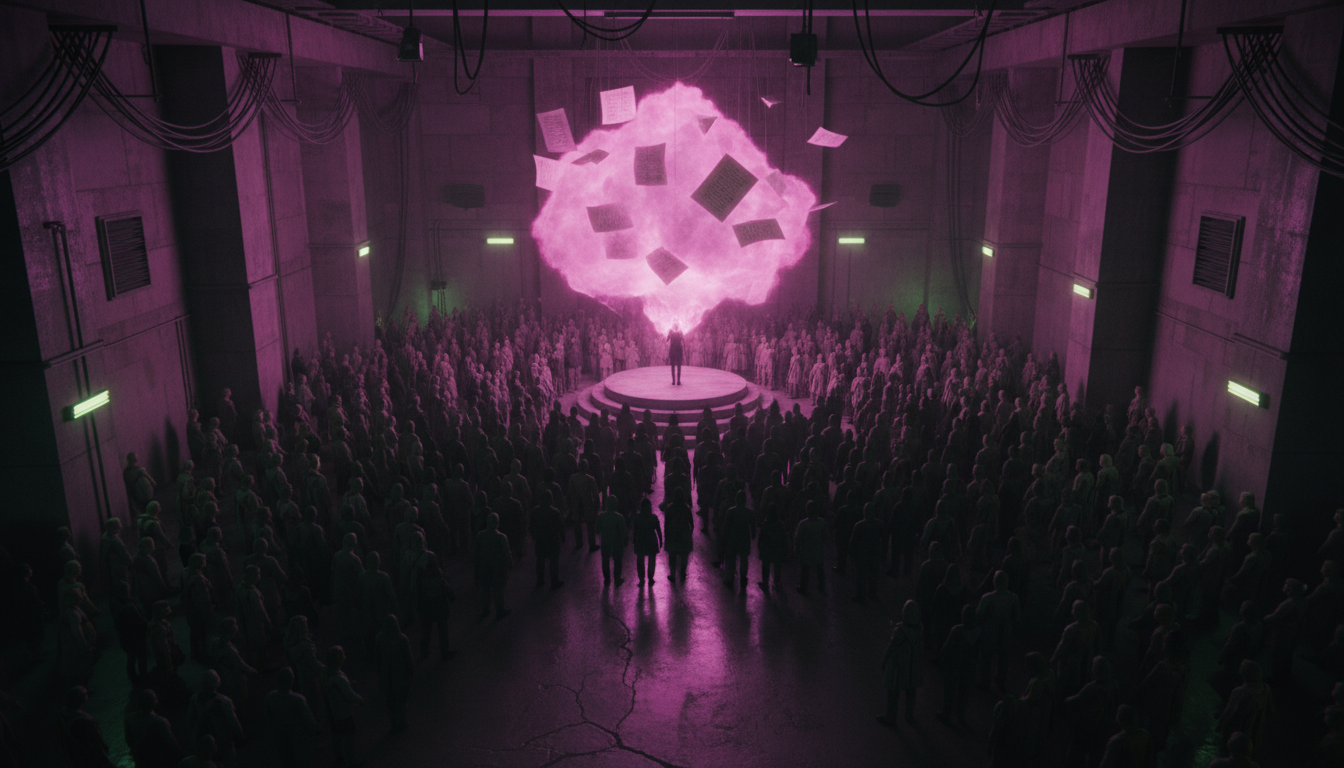
The Manifesto's Weight
The drive is four hundred kilometres away in a hollow book spine, so Lyra recites eleven pages from memory. Put beside Ren's tonnage figures and the tether, the manifesto stops describing one building on one night — and the count of suits under their feet stops belonging to Vance at all.
Chapter 57
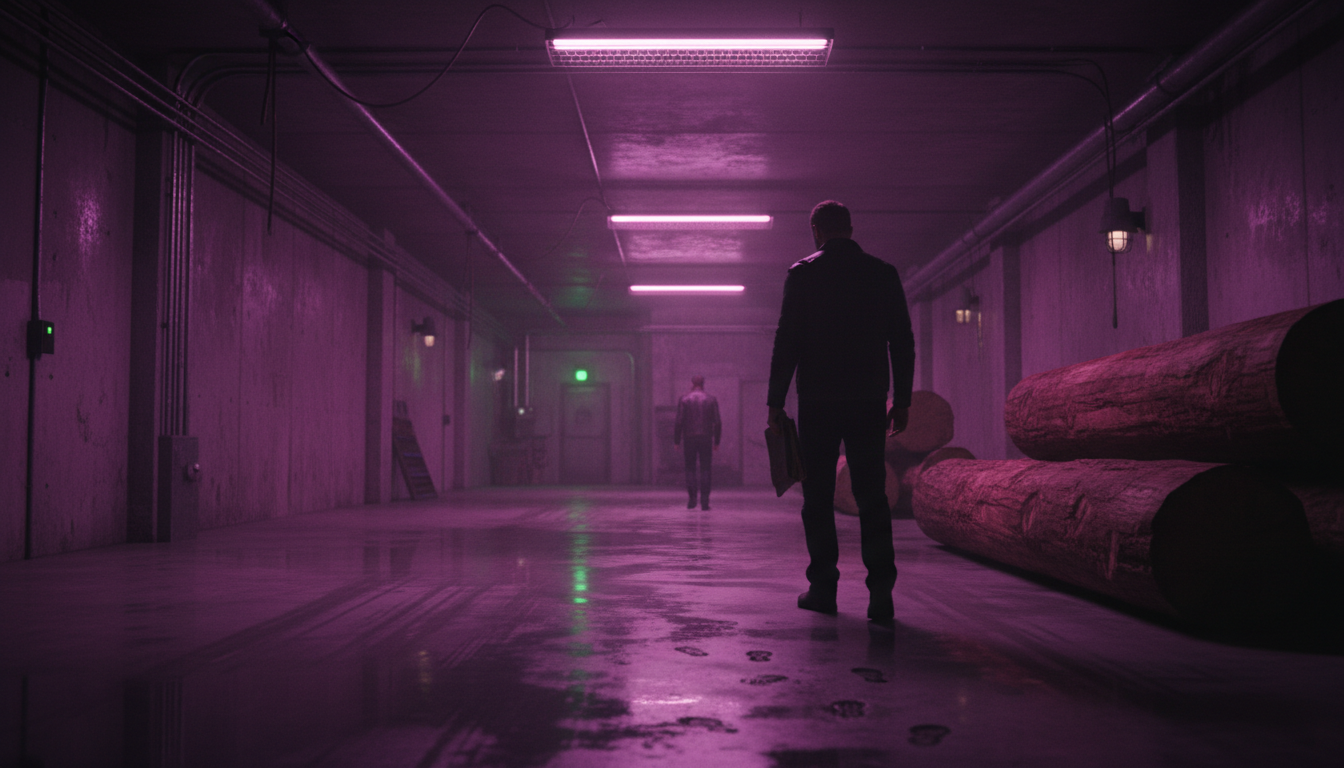
The Traitor's Footprint
Jaxon works out what he's been leaving behind for six days, and it isn't a message — it's a shape in a power curve, in a sector audited nightly by the one man on Aura-36 who reads residuals for pleasure. He gets to the logs. The logs have already been read.
Chapter 58
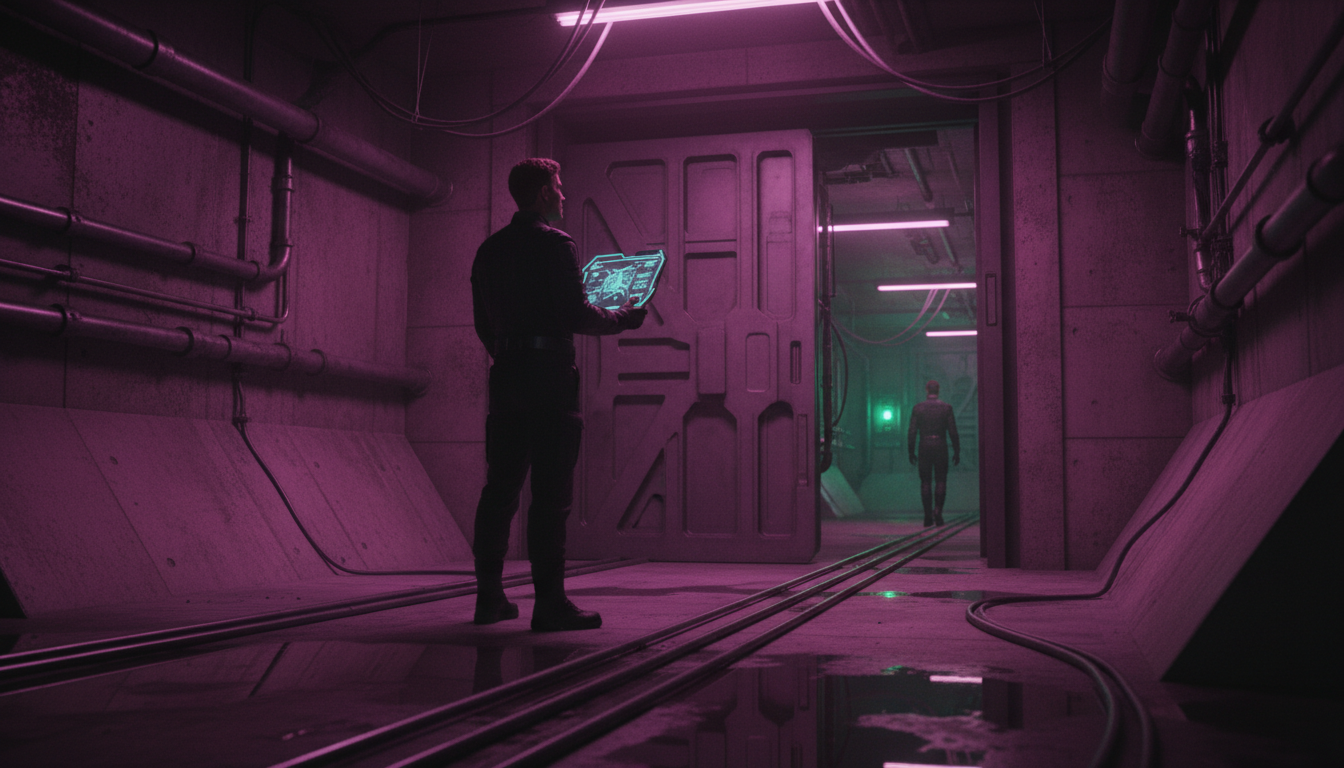
The Alarm
Dax has a finding he can't sit on and two chains of command he can't use — one ends in the man it's about, the other in the man he's now sworn to. So he takes it to the only authority in the sector who has never once cared about politics, and discovers what that costs.
Chapter 59
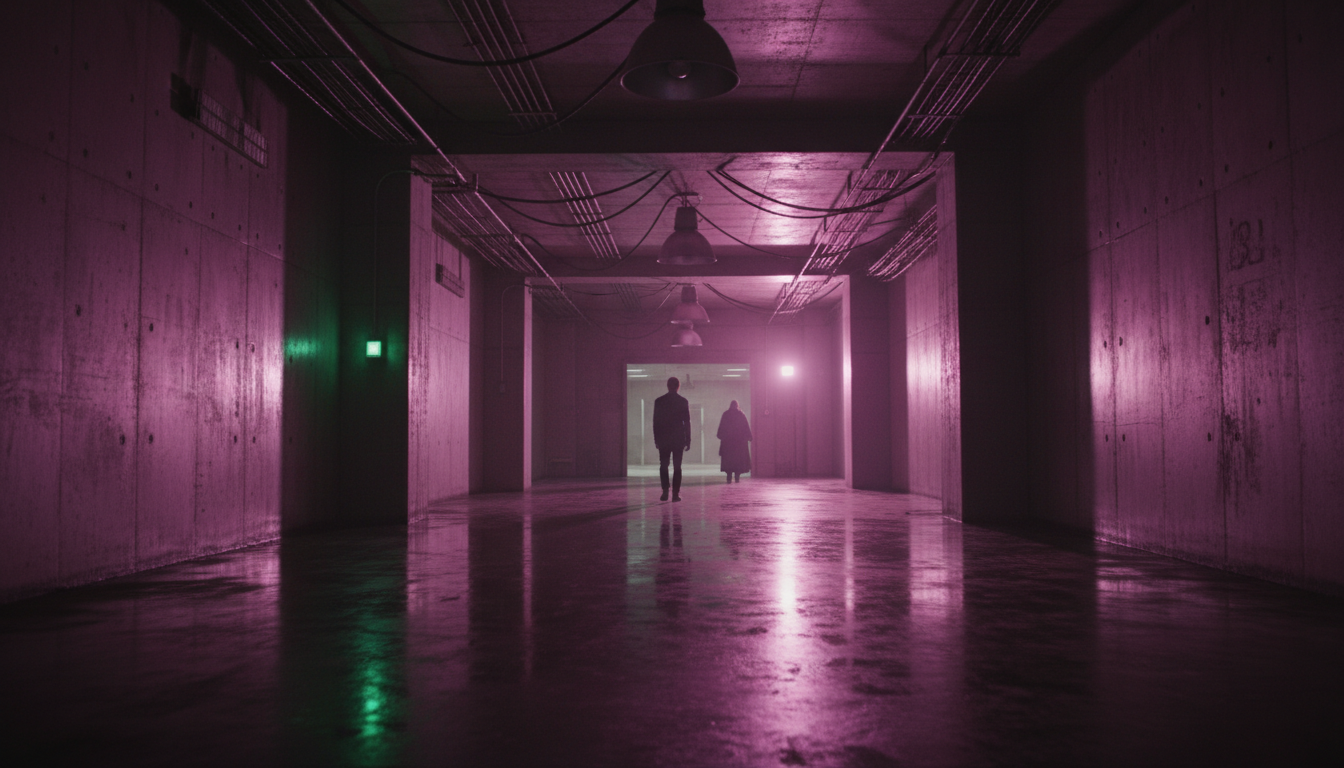
The Iron Lockdown
Kaelen seals the Venus Sector, and Ren finds out what a lockdown means in a place with no ledger, no tribunal and no one to appeal to. The Legion comes out of the barracks in basalt plate. The pour lines do not stop, because the pour lines are never allowed to stop.
Chapter 60
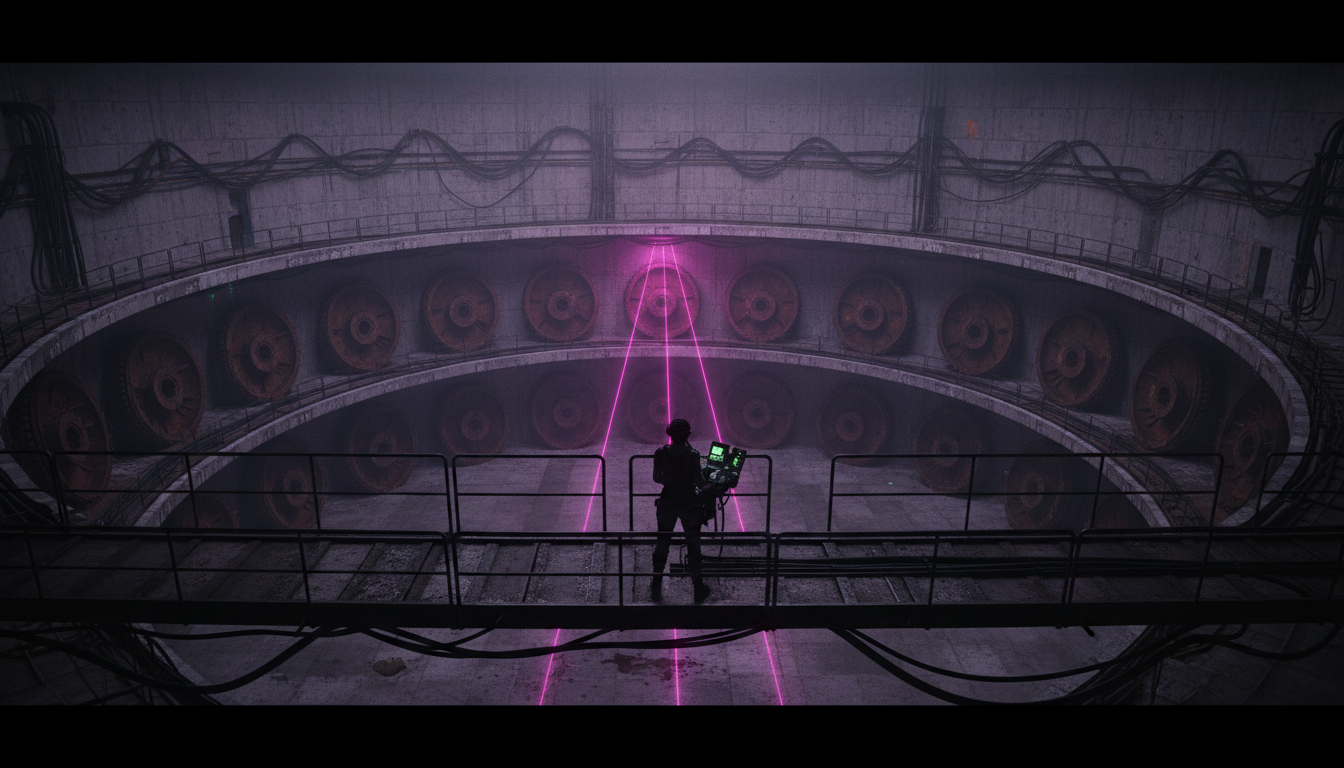
The Charge
Pressed into a dead condenser run with the sweep three terraces out, Selah finds the one frequency in the Sinks that carries clean — and learns to count an advancing line by the charging hum of its weapons through forty metres of basalt.
The Legion's True Master
Chapters 61–65 · The Standing Instrument, and the way upChapter 61
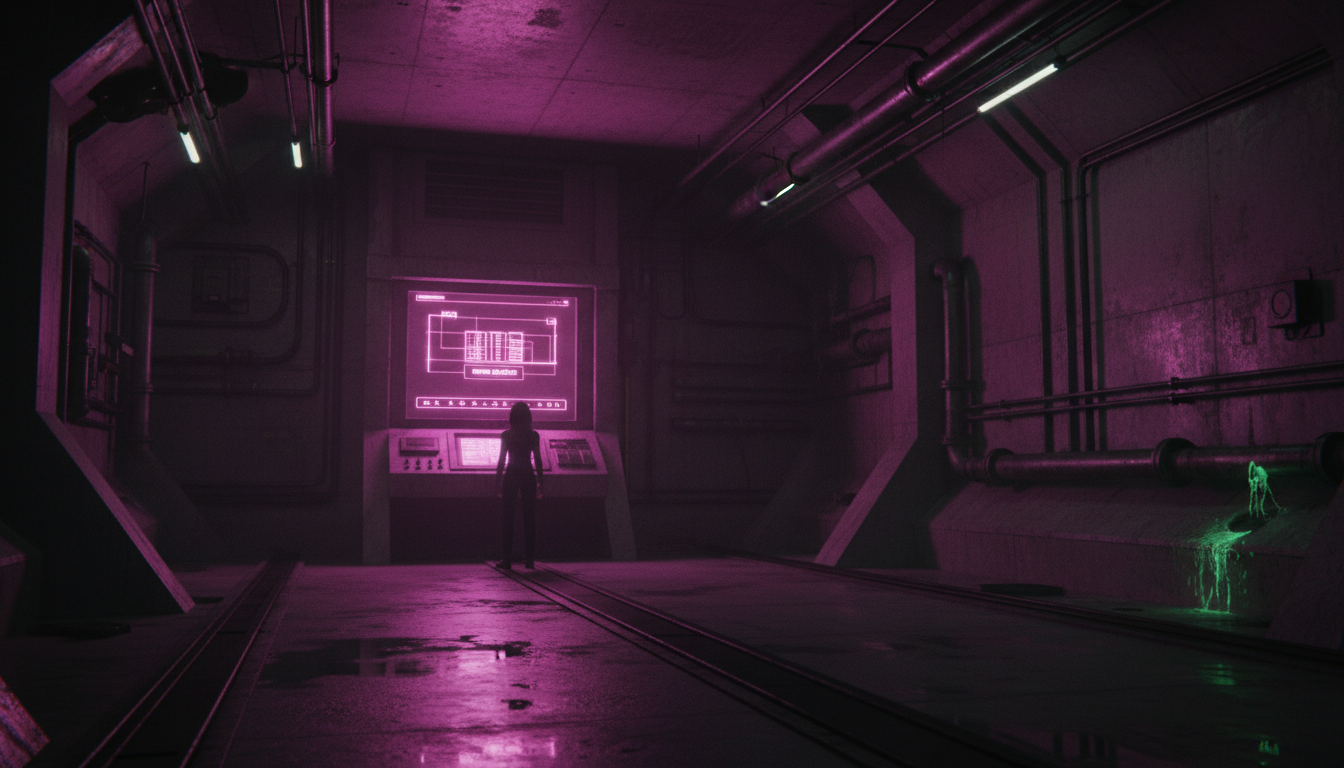
The Architect's Signature
Working a Sentry control terminal for nothing more than a door release, Lyra finds the file underneath it — a founding charter predating the Founding Protocols, answerable to the Citadel alone, with a standing materiel order whose number she has spent nine days stamping onto cradles. And a signature.
Chapter 62
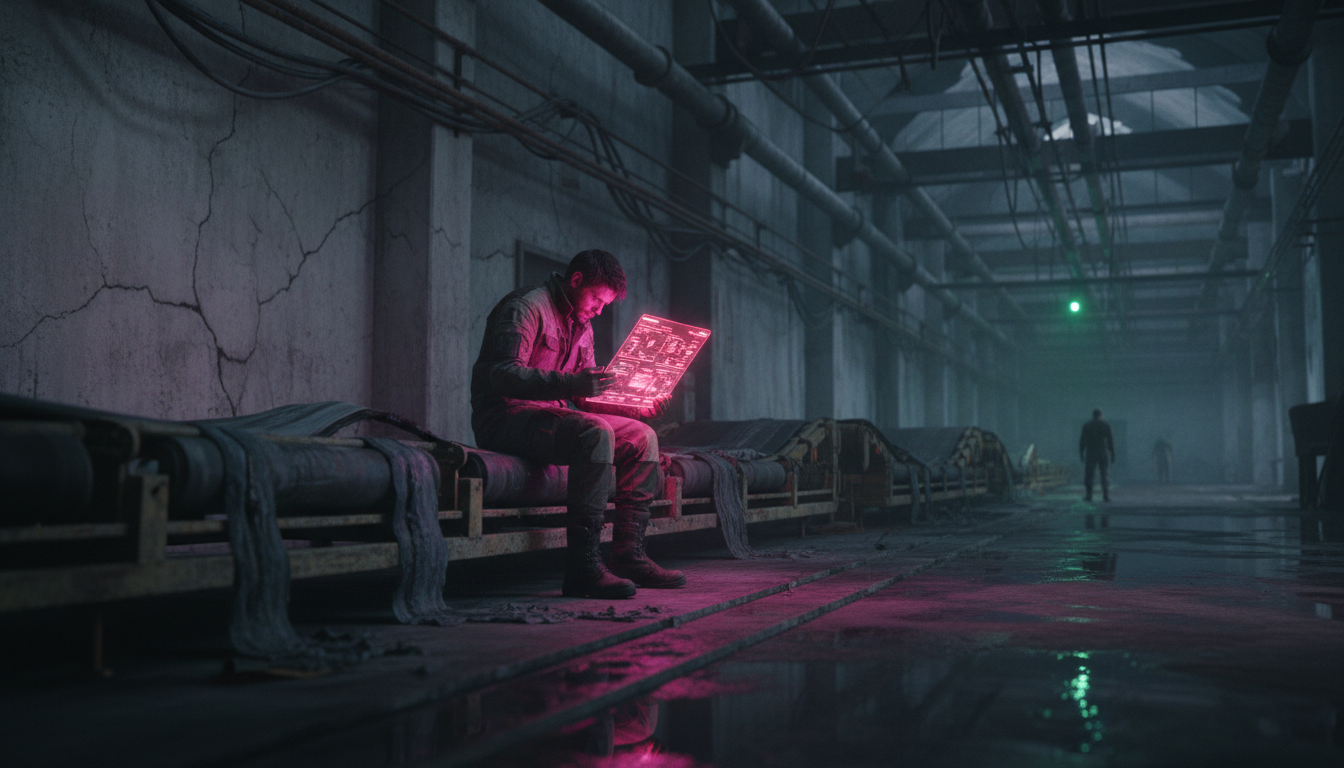
The Shepherd's Iron
Jaxon was raised on the Bound Ledger and recited it to Vance in a lecture hall at seventeen. Sitting on a dead conveyor with the file open in front of him, he loses it — and finds, underneath the wreckage, the far worse problem: every factual claim Vance ever made has just been confirmed.
Chapter 63
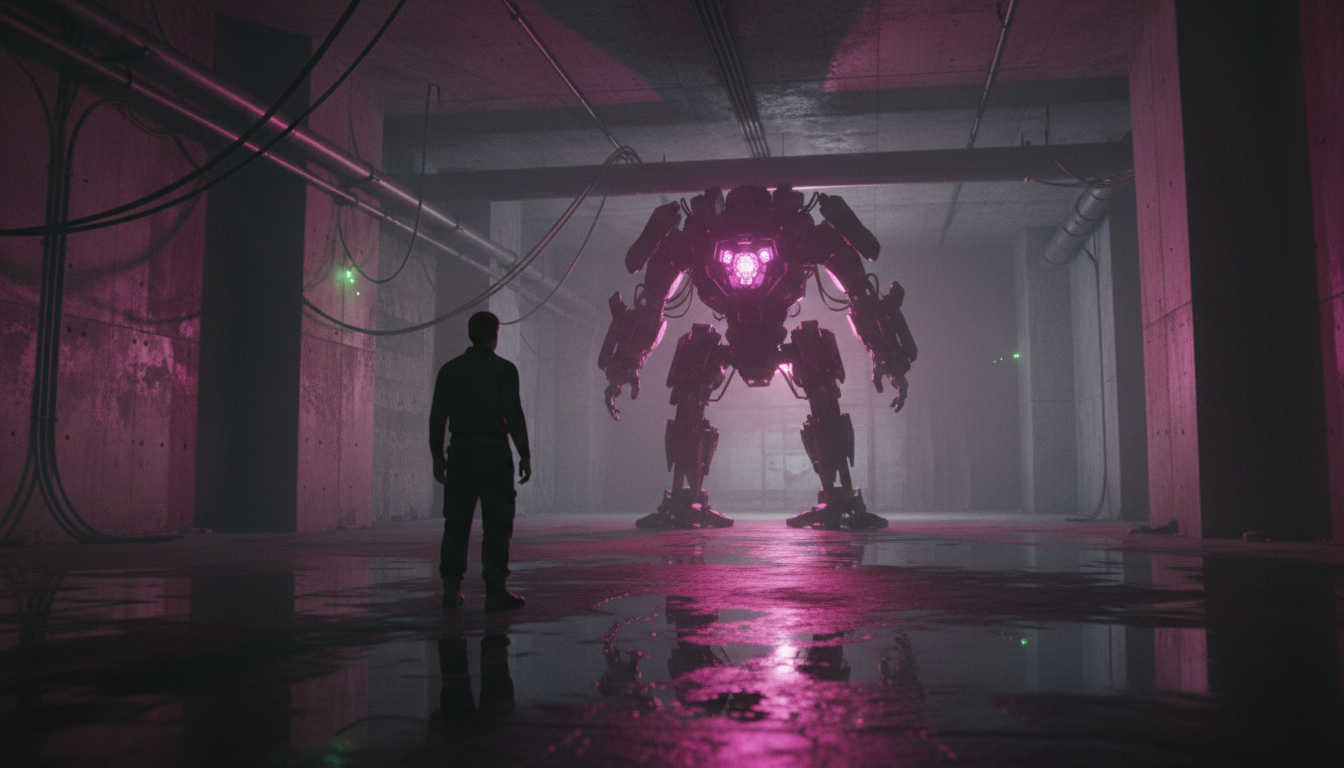
The Skirmish
A mechanic who has spent his whole life bolting dense alloy into a car to make it behave at a third of a gravity gets one look at an advancing exoskeleton and understands, before he can explain it to anyone, exactly which single component he can turn against the man wearing it.
Chapter 64
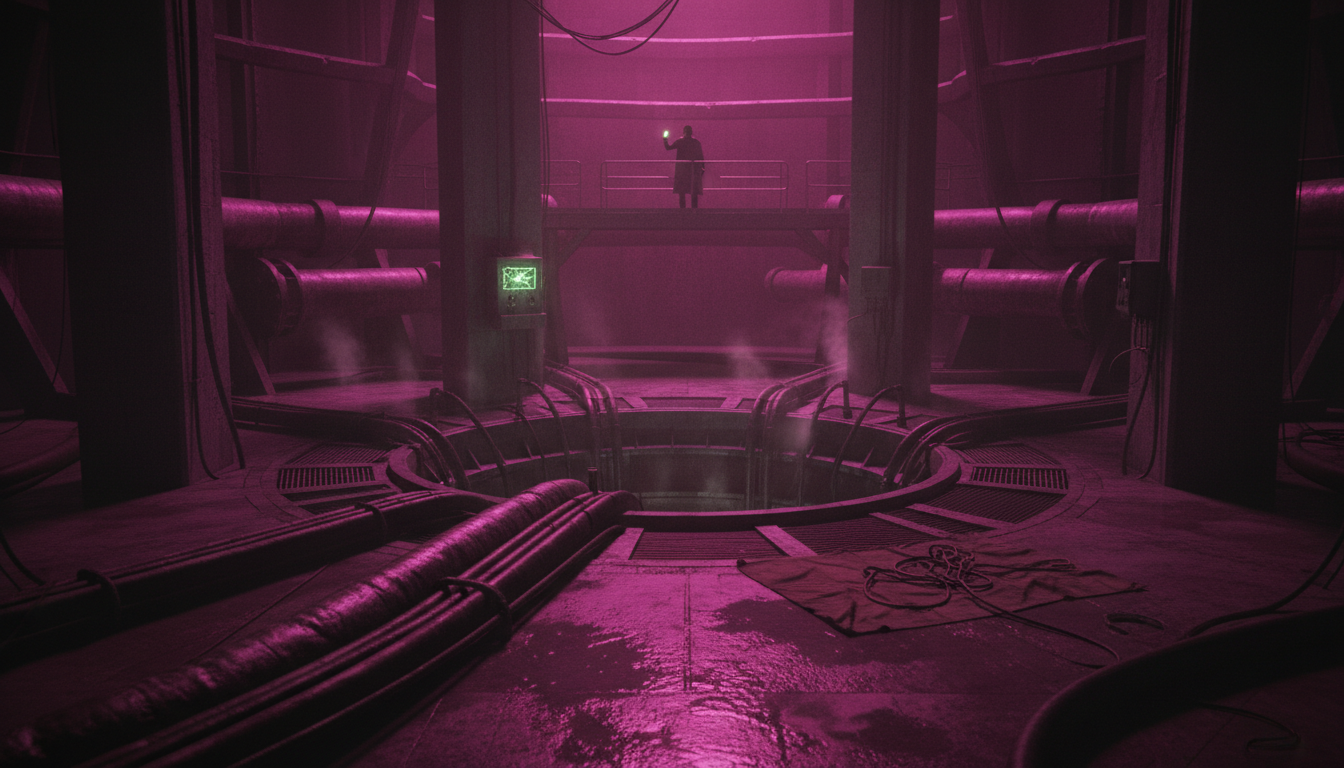
The Chimney Ascent
There are more shafts than the manifest admits, and only one person alive can tell which of them are empty. Selah calls the route from the inside of a cradle stack — and the hardest part of the climb happens before anyone leaves the ground.
Chapter 65
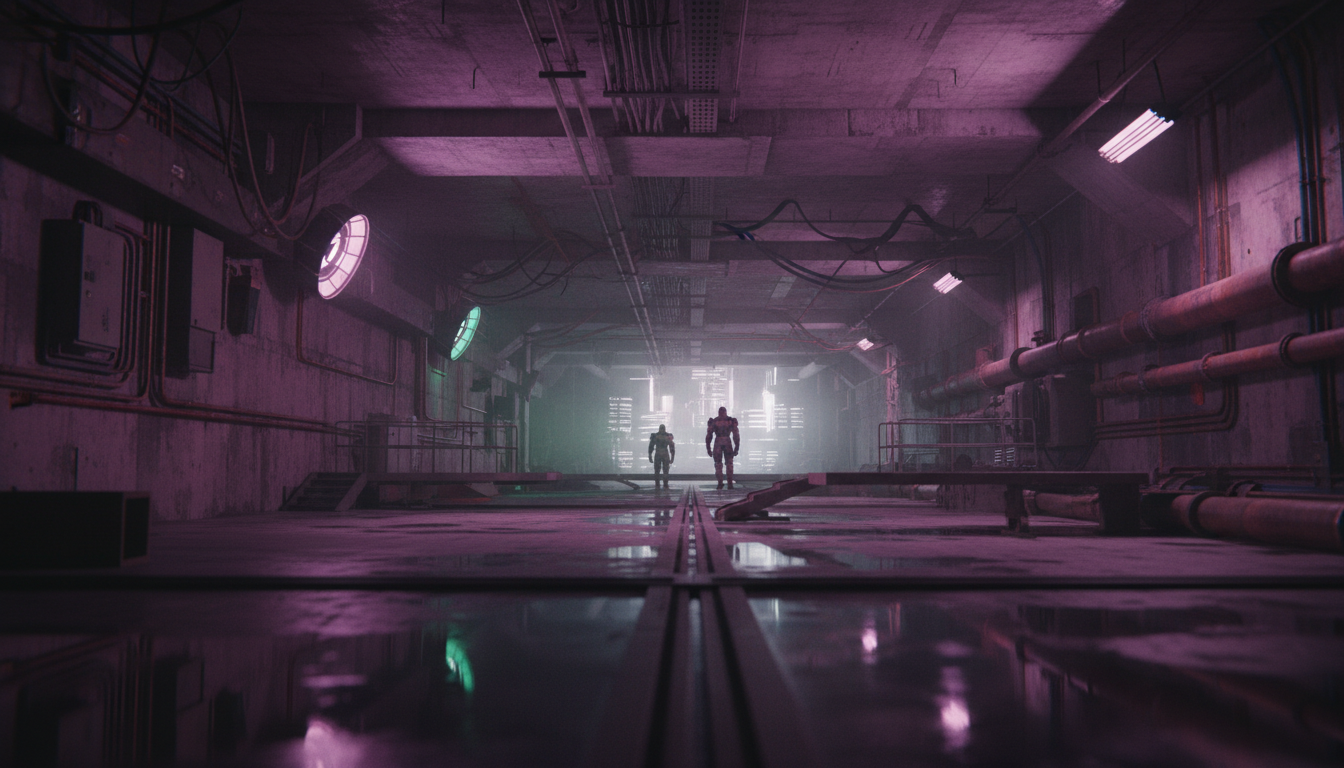
The Upward Horizon
Rising out of the Venus Sector with the weight coming off a kilo at a time, four people who met eleven days ago work out what they actually are now — and agree on the only destination left, which is fifteen miles above a plateau none of them have ever been allowed near. Closes Act II's second half.
The Ascent of the Anchor
Chapters 66–70 · Fifteen miles up to a ship that is not deadChapter 66
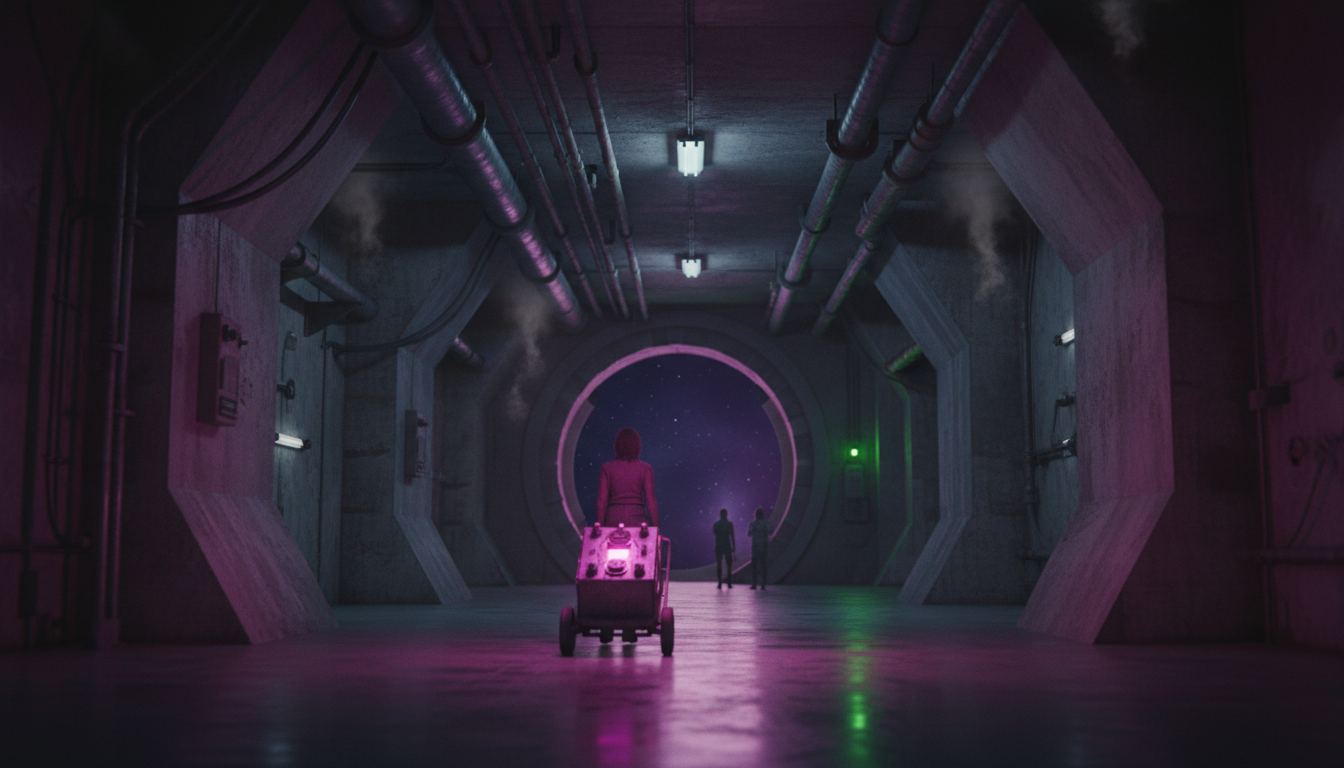
The Plateau Gate
On the way up through the Rust-Canopy they finally pull one of Vance's transmitters and find out what it was always for. Then two people born four hundred metres underground walk out onto the surface of their own planet for the first time, and Ren watches them look up.
Chapter 67
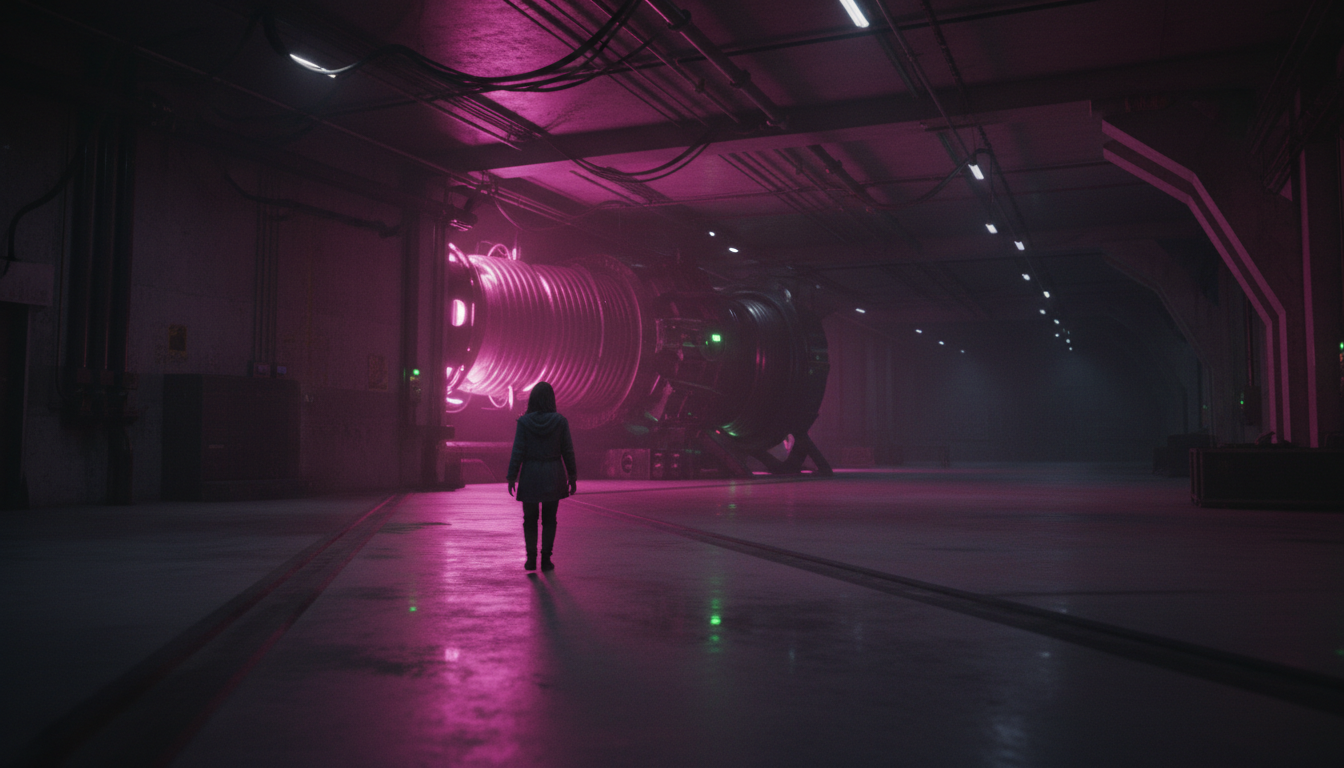
The Fifteen-Mile Climb
For the first nine miles Selah can hear the cable itself, and it tells her something she does not like. Then the atmosphere runs out, and the woman who has been defined her whole life by what she can hear arrives somewhere that has no sound in it at all.
Chapter 68
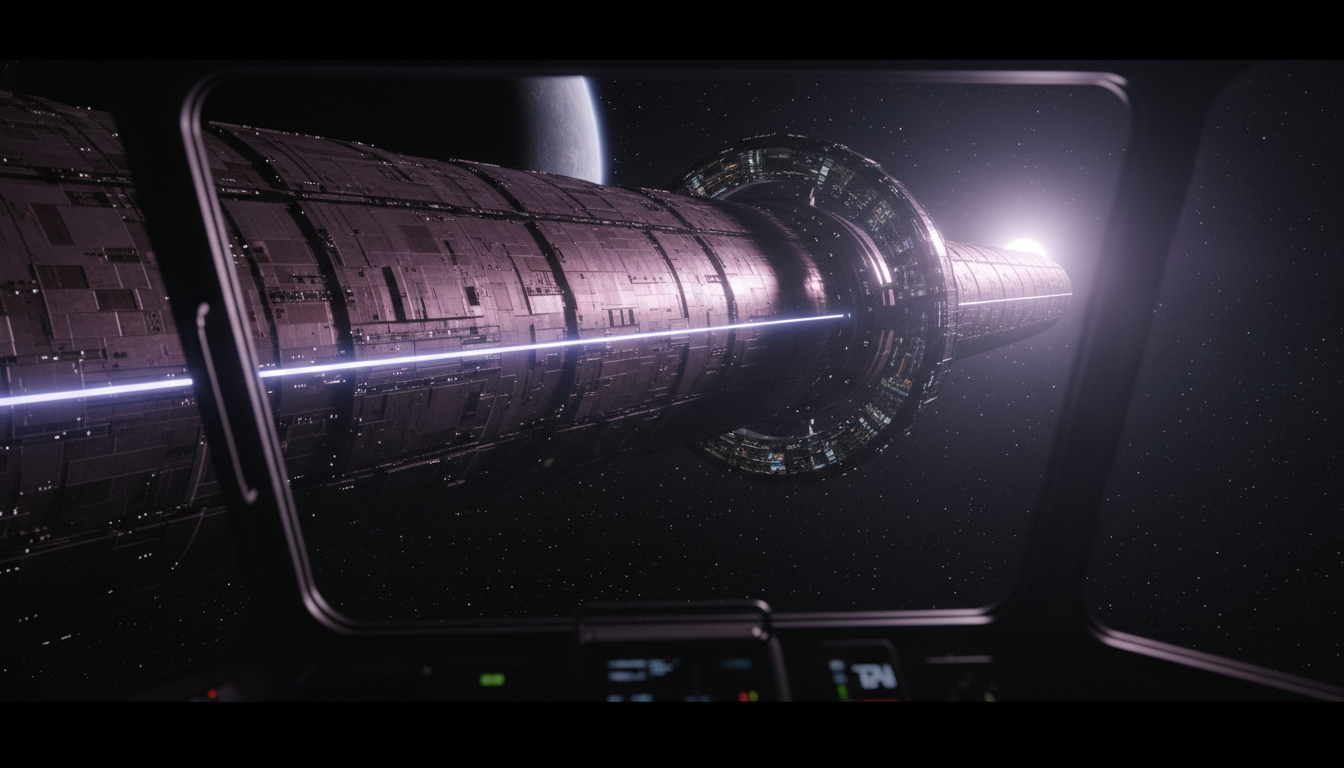
The Iron Leviathan
Everyone on Aura-36 is taught the Ark-Genesis is a monument. Lyra spends eleven minutes looking at it out of a pod window and can list nine things wrong with that — and every one of them says the same thing, which is that the ship is being maintained.
Chapter 69
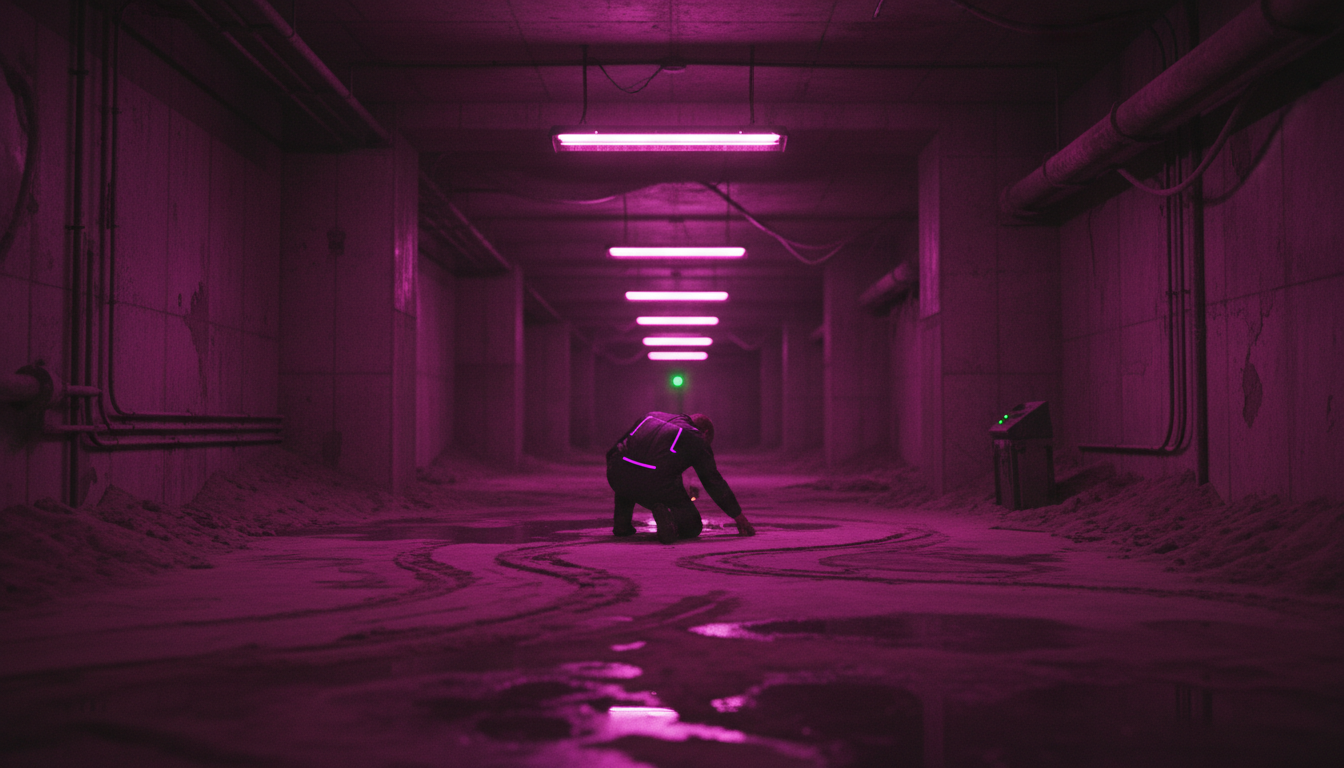
The Sleeping Ring
Inside the Habitation Ring the dust of forty years lies undisturbed everywhere except one corridor. Jaxon reads the tracks, counts them, and works out the thing that undoes their entire plan: Vance is not coming in six days. Vance came the night the Venus Sector locked down.
Chapter 70
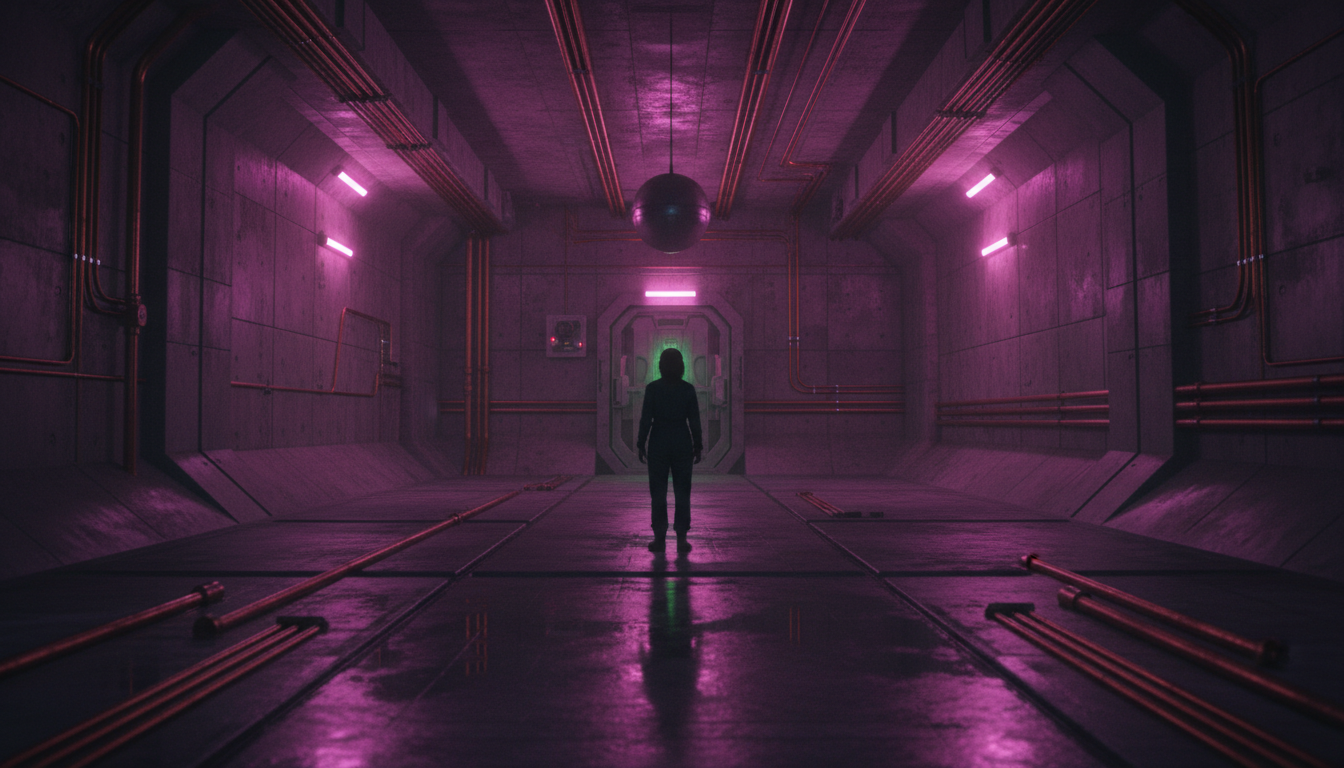
The Vacuum of Years
A hull that has held orbit for forty years does not echo — it absorbs, and Selah has never in her life been anywhere that gave her nothing back. Which is why, when the ship finally hands her a single sound, she knows immediately that it belongs to none of them.
The Ghost Ship
Chapters 71–75 · Bio-Domes, zero-g, and KaelenChapter 71
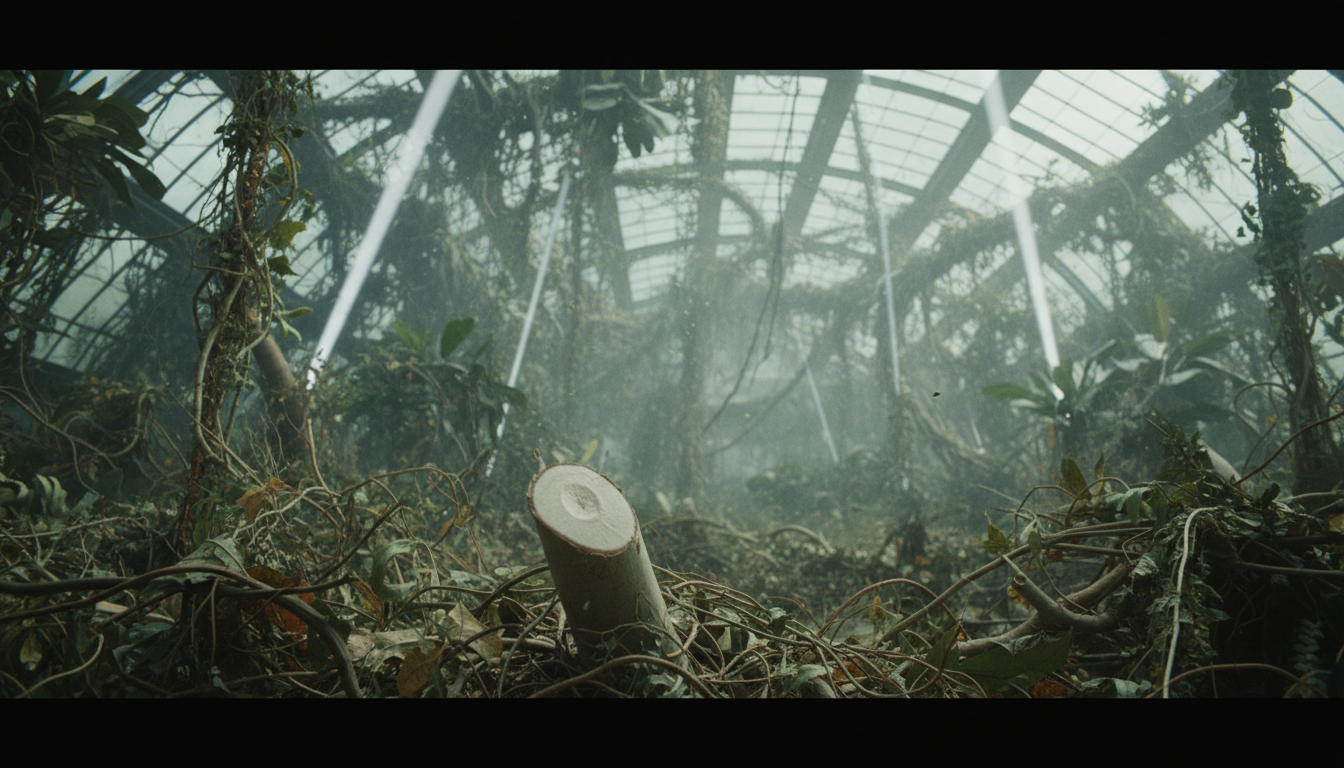
The Dark Canopy
Earth crops that have spent forty years in zero gravity under unfiltered UV, growing in every direction at once because nothing ever told them which way was down. Ren finds it beautiful, then finds it frightening, and then finds the cut stems.
Chapter 72
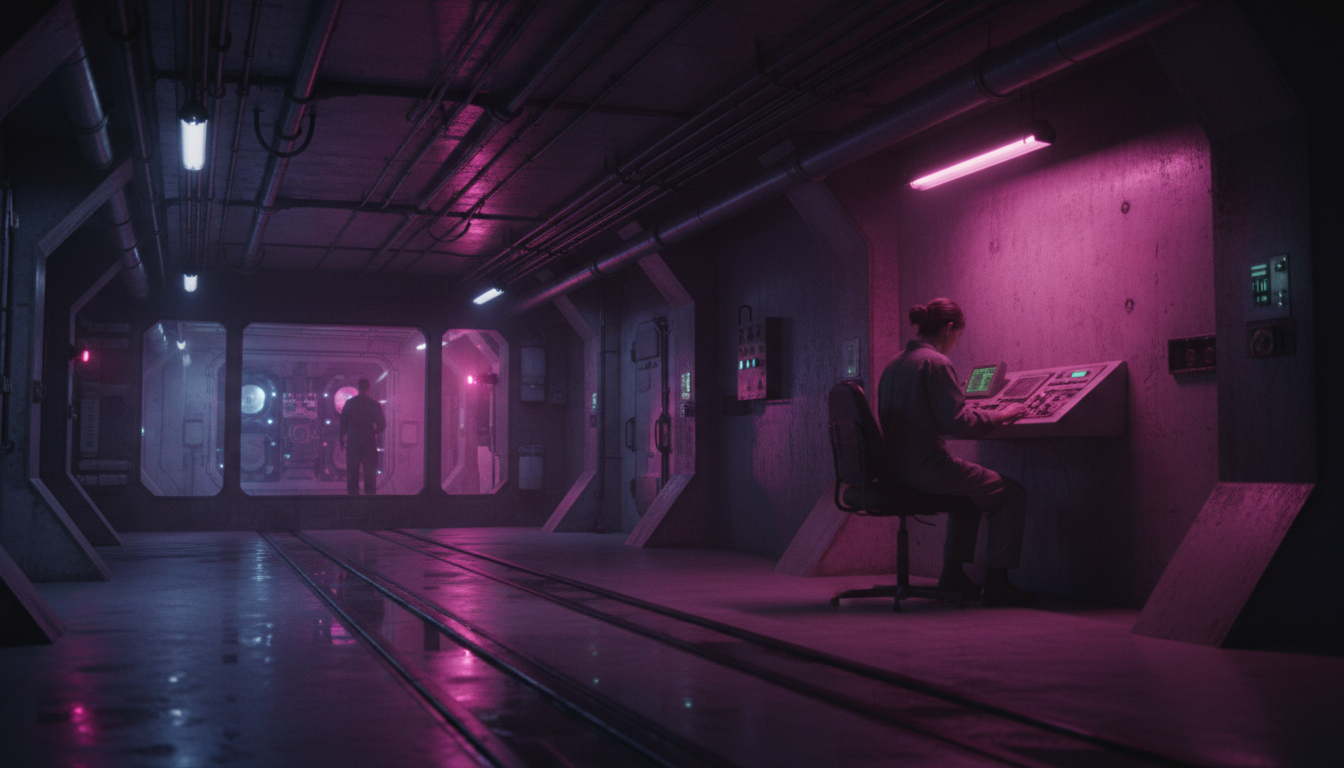
The Registry Alert
On the ship's own network Lyra finds Vance's people forty hours into breaking the DNA Birth Ledger Core — and two things she wasn't looking for: a docking event at the added berth eleven hours ago, and the honest recognition that she is now the third person aboard who wants the registry.
Chapter 73
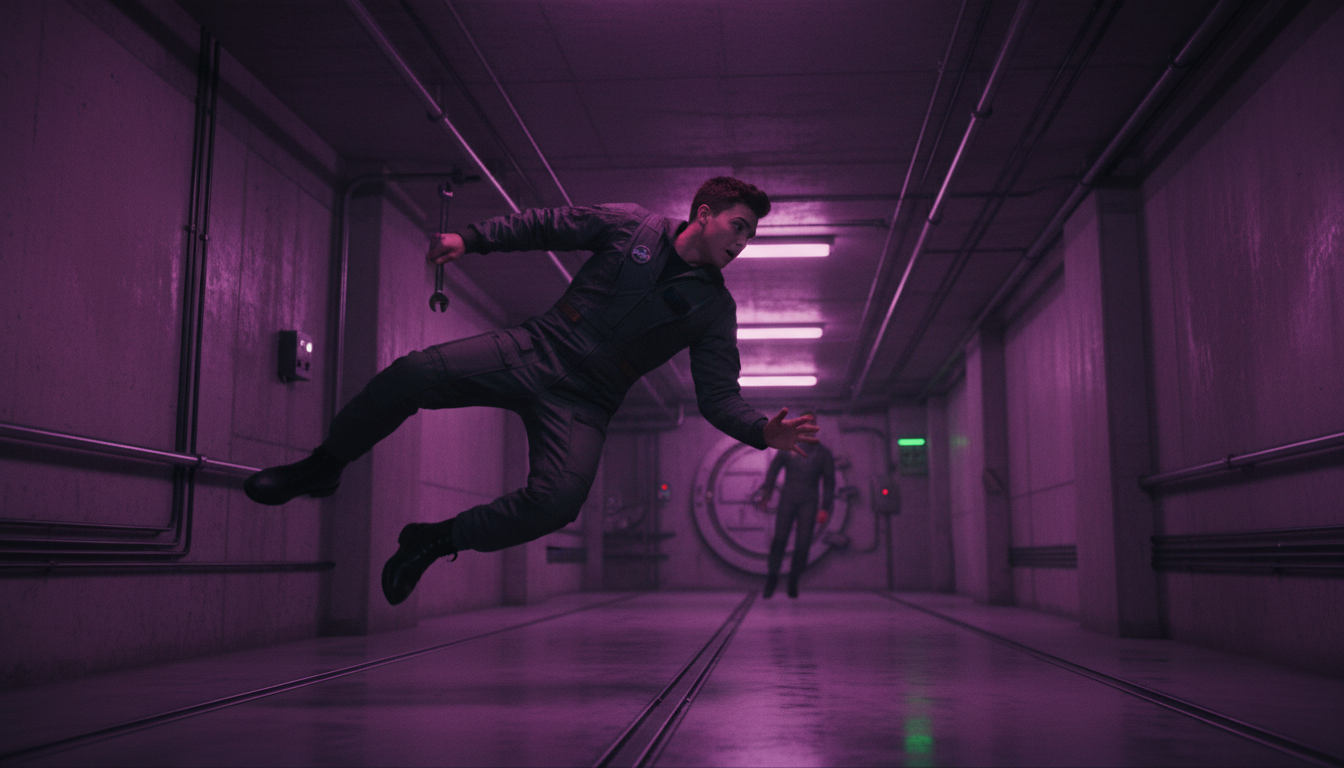
Zero-G Recoil
Every reflex four years of Academy training gave Jaxon was calibrated for a third of a gravity, and none of it survives contact with a firefight in none at all. Then a renegade's visor comes up, and it is a man who taught him.
Chapter 74
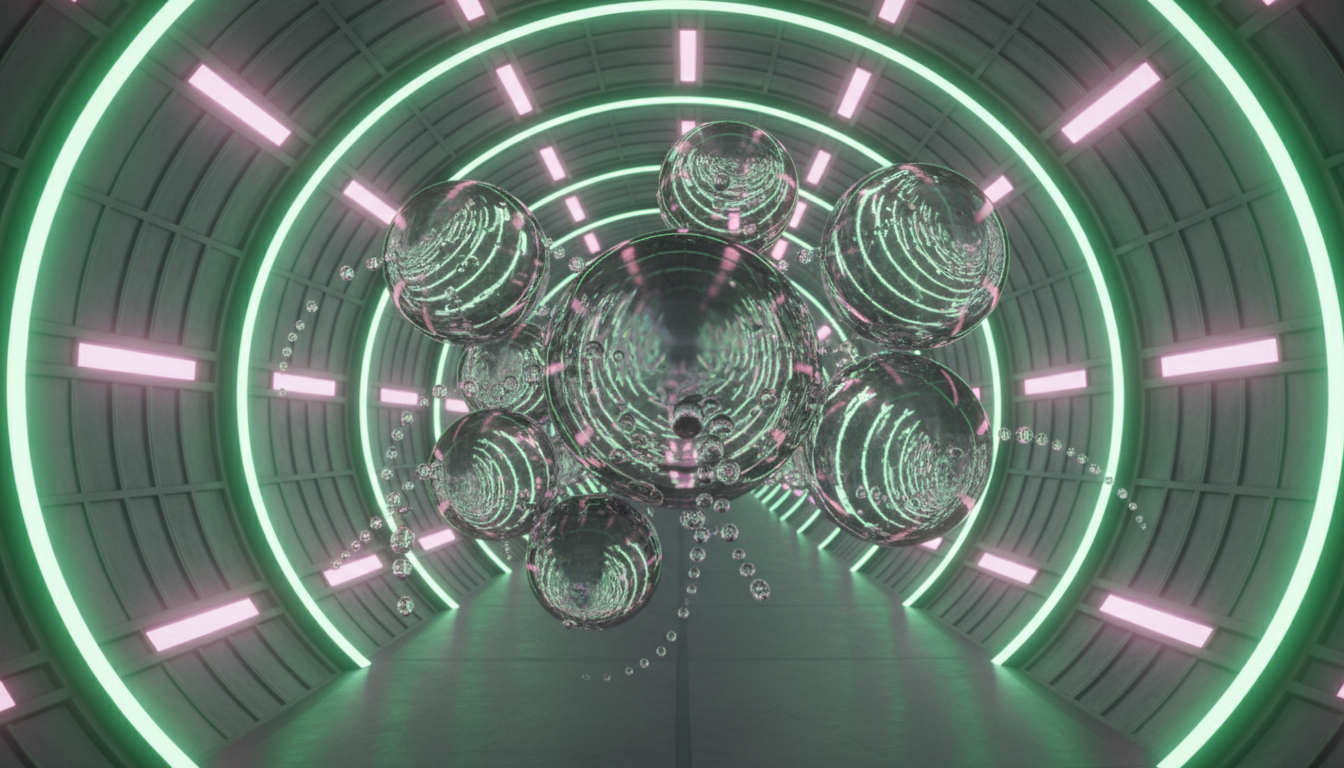
The Floating Drift
Forty years of leaking irrigation has filled the dome corridors with drifting spheres of water the size of rooms — lethal to run into, and the first thing aboard this ship that has given Selah anything back. She learns to use them in about ninety seconds, because that is all she has.
Chapter 75
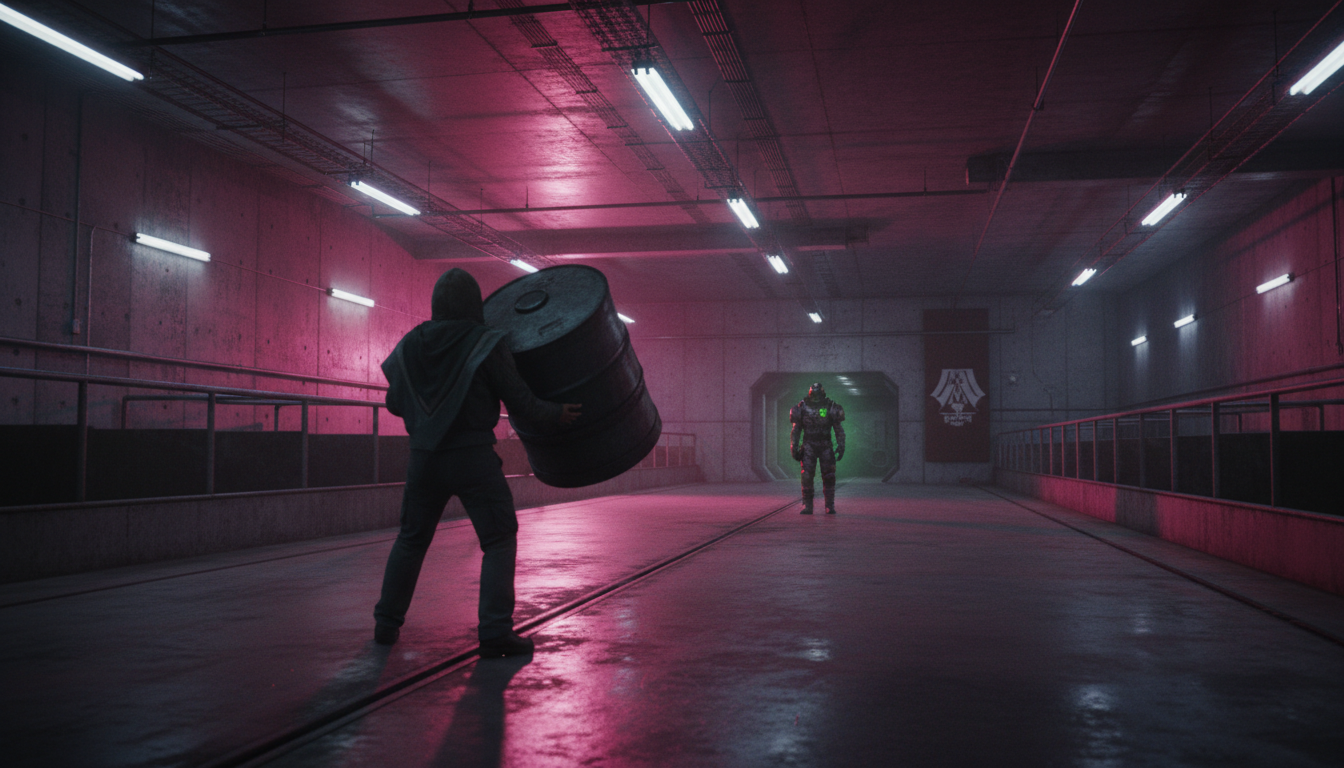
The Livestock Deck
Two hundred kilos of feed container weighs nothing and stops anything, which is the only fact Ren needs. What he does not need, and gets anyway, is the discovery of whose Legion he is throwing it at — and that they are the one group on this ship who came here for the right reasons.
The Bio-Dome Skirmish
Chapters 76–80 · The Ledger Core and the purgeChapter 76
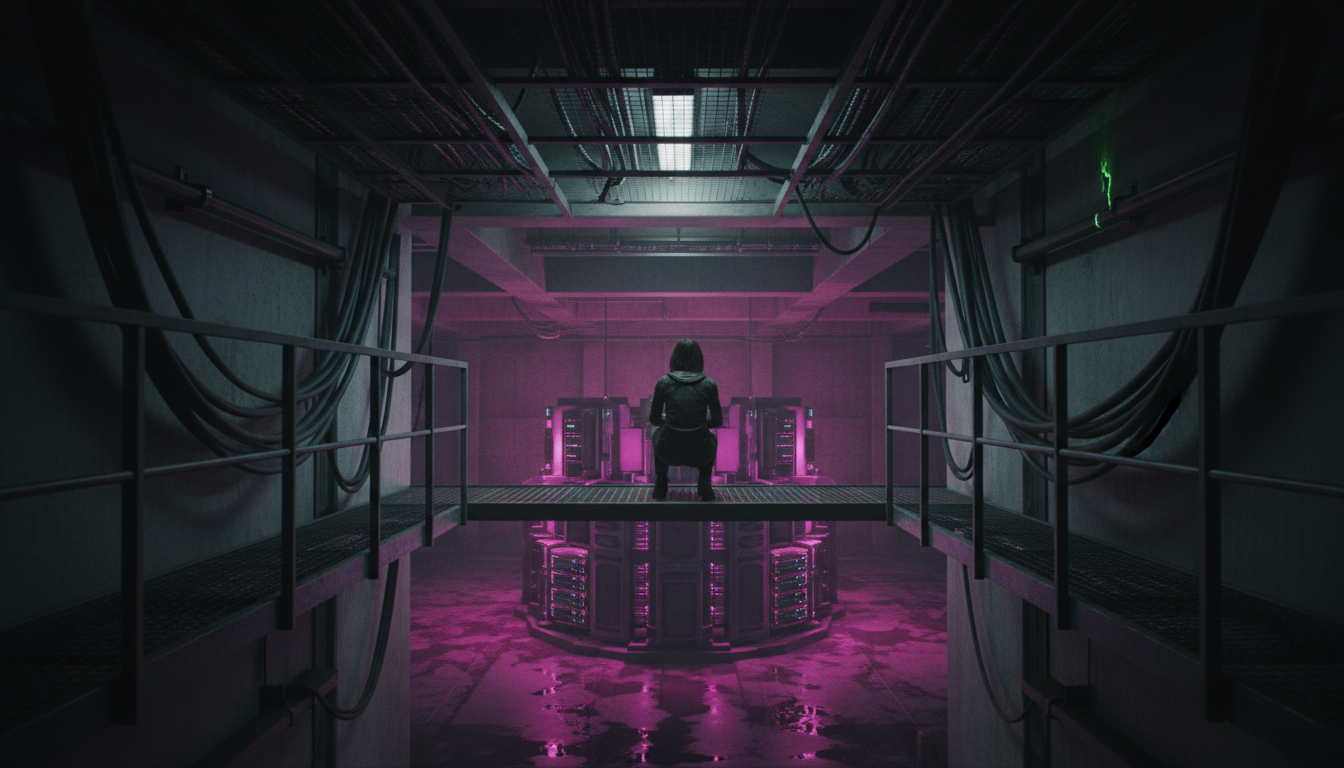
The Ledger Core
Lyra cannot beat a resourced team to a forty-year-old lock and does not try. She works out the far better play — that the moment they succeed, the door is open for everyone in the room — and then has to sit in the dark doing nothing for four hours waiting for her enemy to win.
Chapter 77
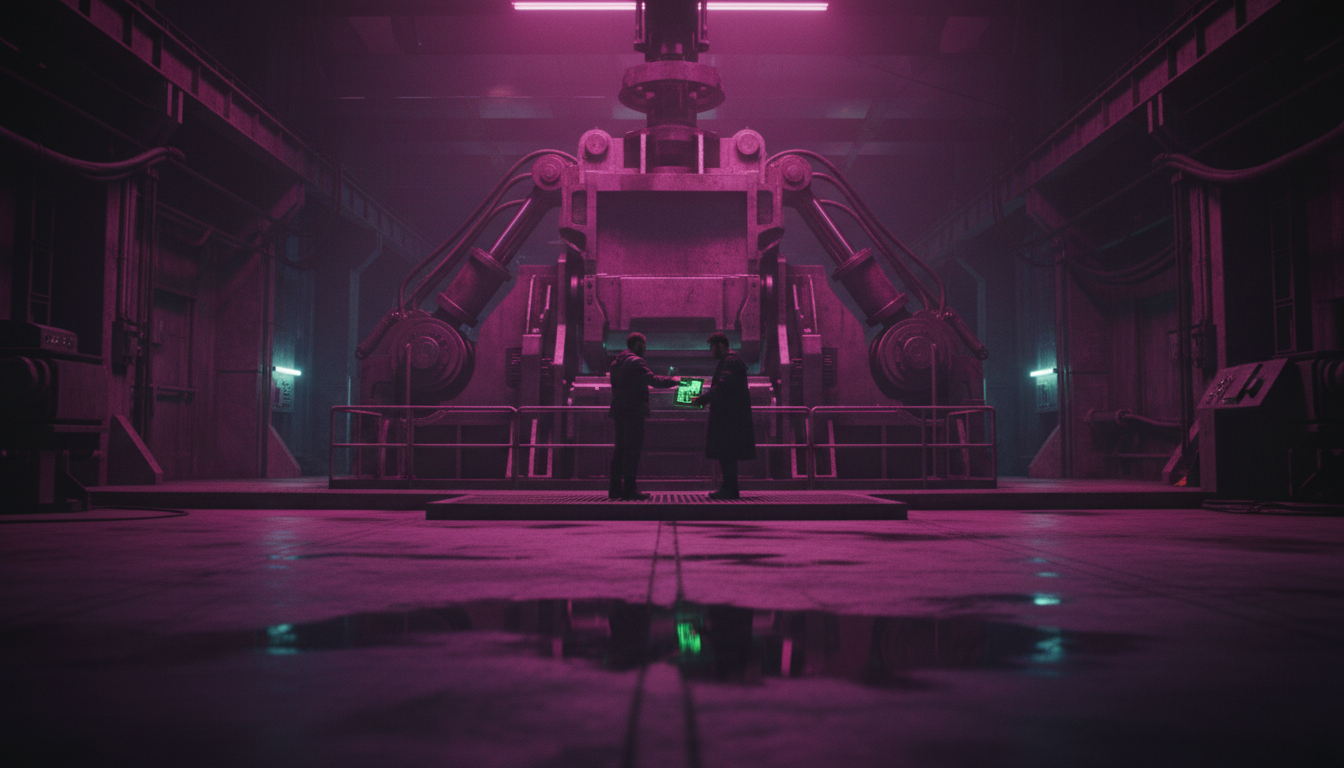
The Traitor's Classmate
Jaxon finally gets to hand Dax the thing he asked for on a crusher gantry — the hole in Vance's argument, found and named. Dax listens to all of it, agrees with every word, and then explains why that changes nothing, and it is the worst conversation of Jaxon's life.
Chapter 78
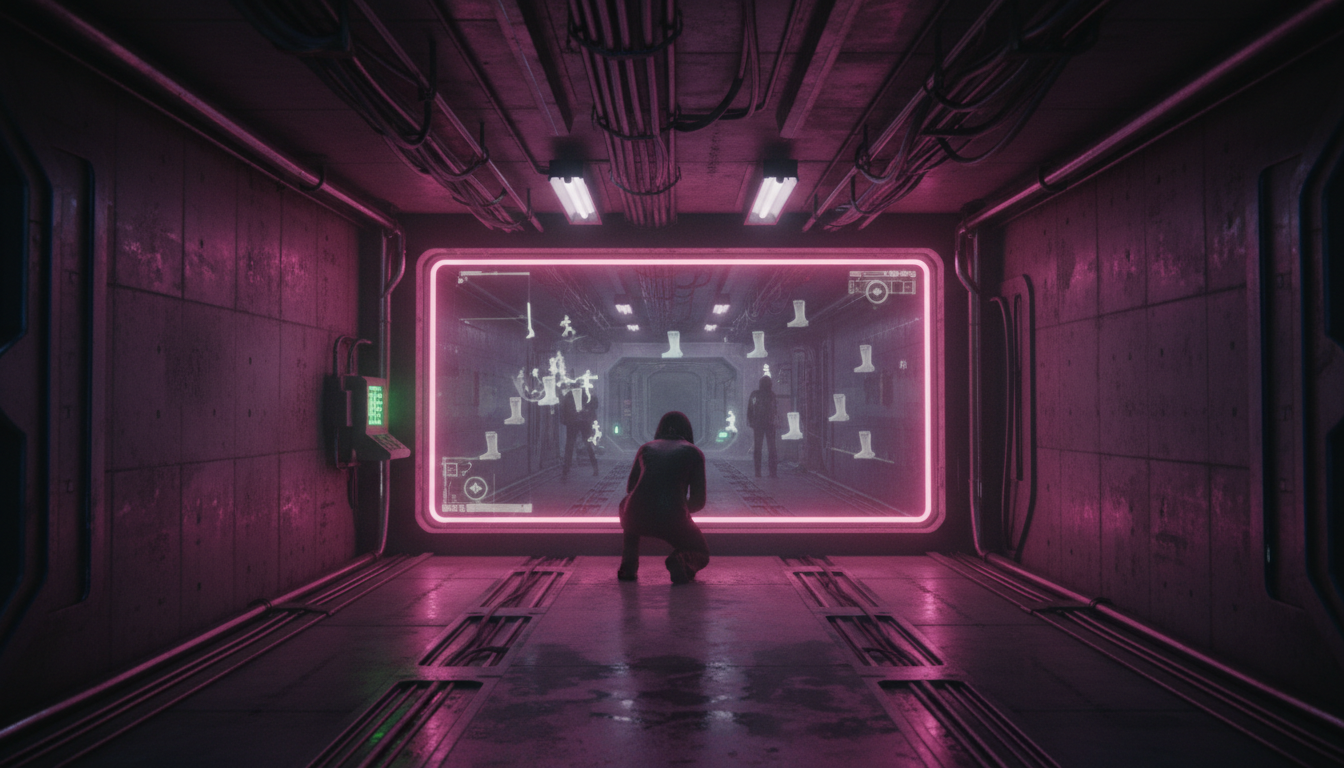
The Embryo Threat
Selah can hear the whole engagement through the ship's frames, and what she notices is not the fighting — it's the eleven sets of boots that quietly stopped taking part in it forty minutes ago and have been walking steadily toward a vault that holds every unborn child on Aura-36.
Chapter 79
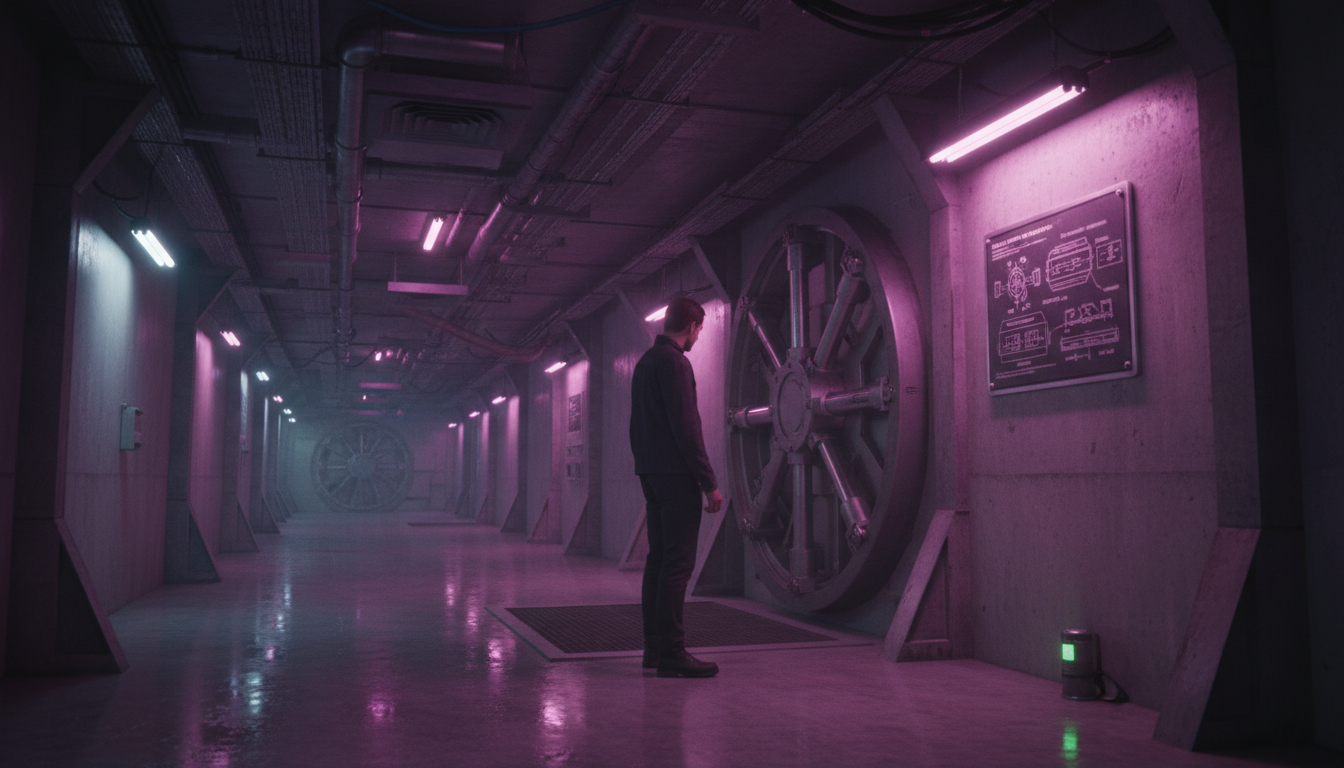
The Corridors Vent
A forty-year-old ship has a placard on every wall telling you exactly how to empty a corridor of air, because the people who built it were more frightened of fire than of anything else. Ren reads one, and then spends the longest ninety seconds of his life deciding how much of the corridor to clear first.
Chapter 80
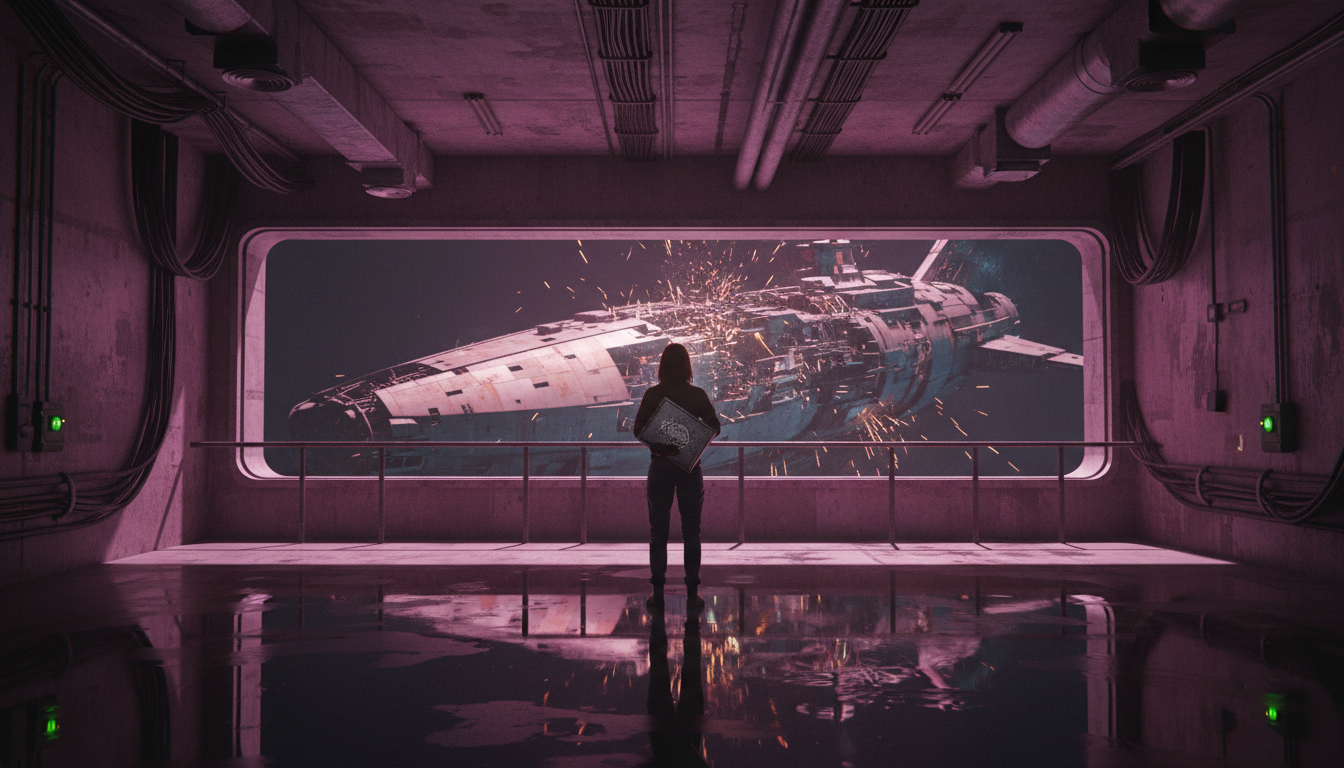
The Purge Command
Lyra gets the Ledger Core off the ship, and eleven seconds later the ship begins to die — because on a vessel this old nothing is separable from anything else, and the man who pulled the handle had no way of knowing that and would have done it anyway.
The Vault Defence
Chapters 81–85 · The clamps, the footnote, the surgeChapter 81
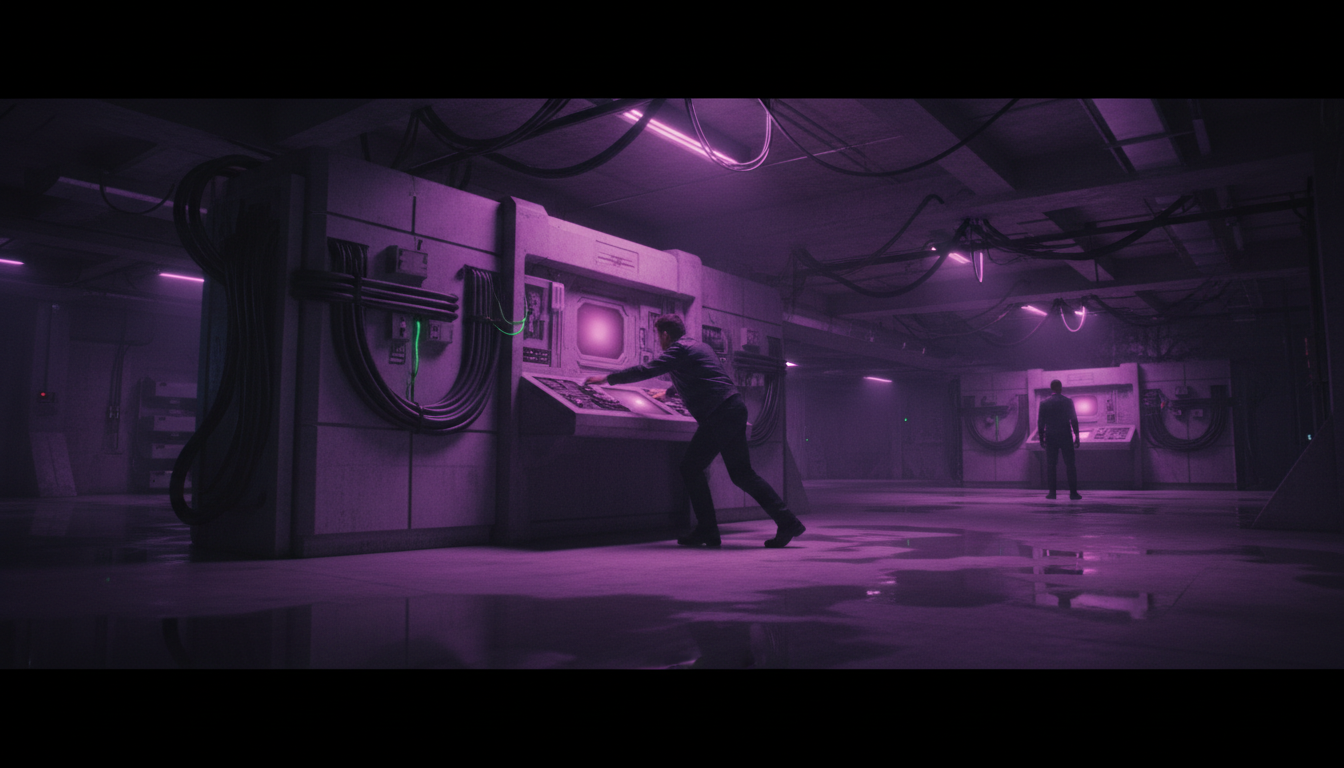
The Mainframe Duel
Dax is ordered to purge the Cryo-Embryo Vault and has his hand on the console when Jaxon reaches him. What stops it is not the fight. It is that Jaxon can finally answer the question from the conduit bay — and the answer is not a name.
Chapter 82
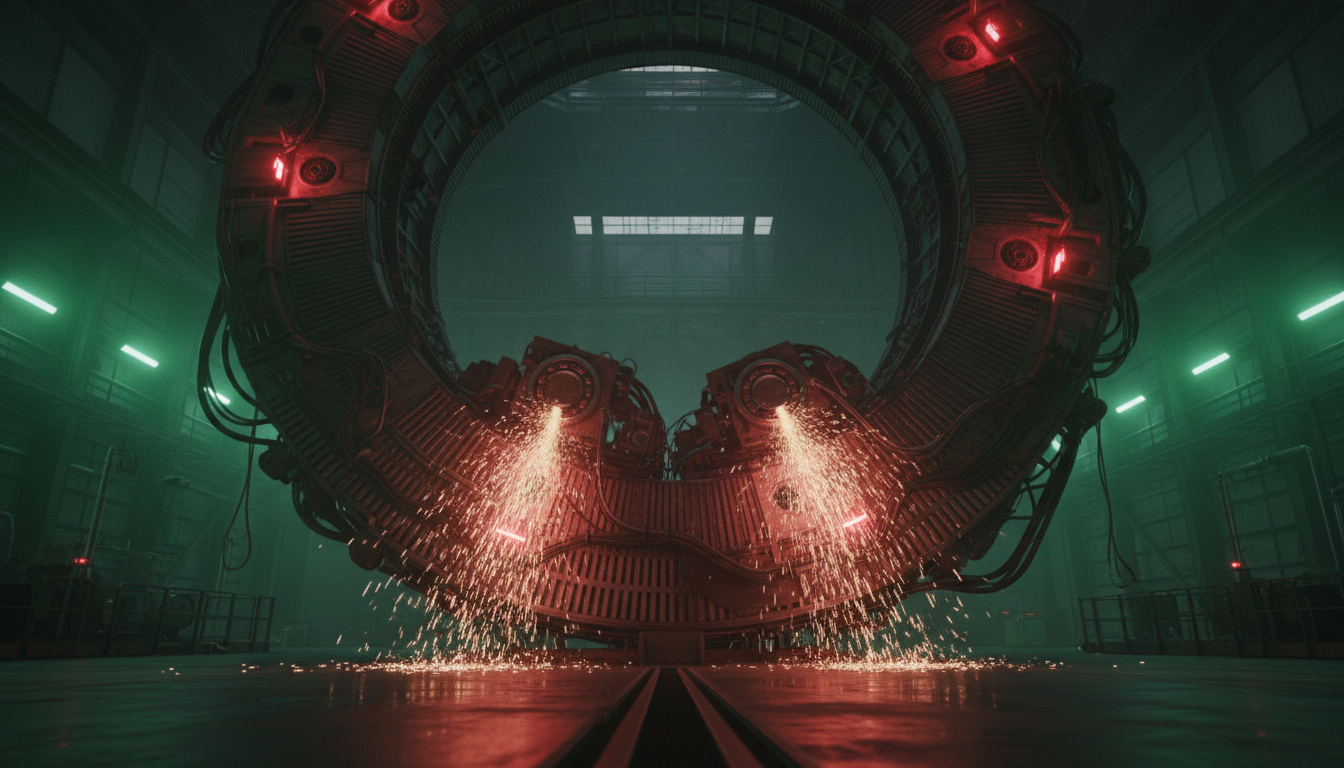
The Centrifugal Hum
Selah has been listening to this ship for three days and knows its every note, which is why she hears the Habitation Ring stop being a hum and start being a beat — and why she is the only person aboard who can say how long they have, and the only one who understands that the tone she reported on the climb up is now the loudest thing in the world.
Chapter 83
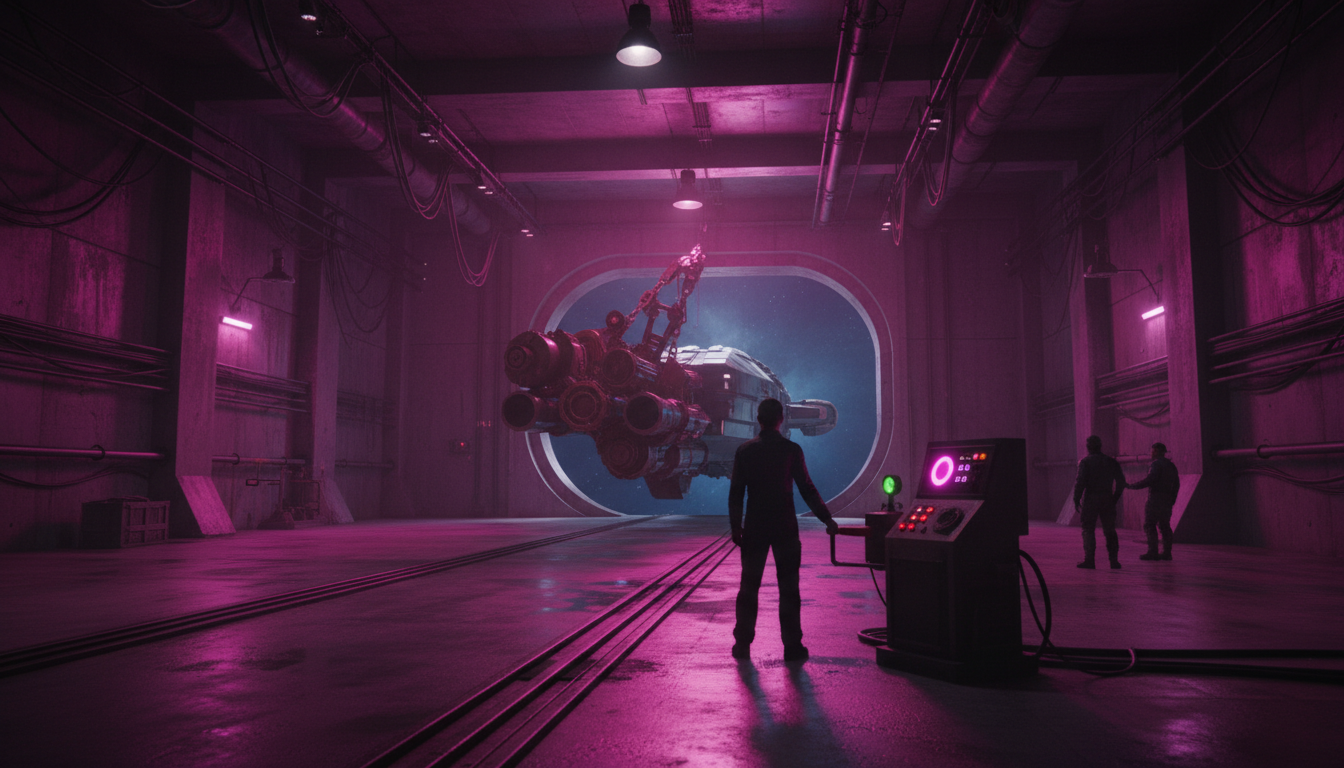
The Docking Clamps
A wobbling twenty-mile ship on the end of a fifteen-mile cable will take the cable, the plateau anchor and everything attached to either with it. Ren goes into the primary docking bay to let the ship go — and finds that the override was designed by people who assumed somebody would be standing there when it fired.
Chapter 84
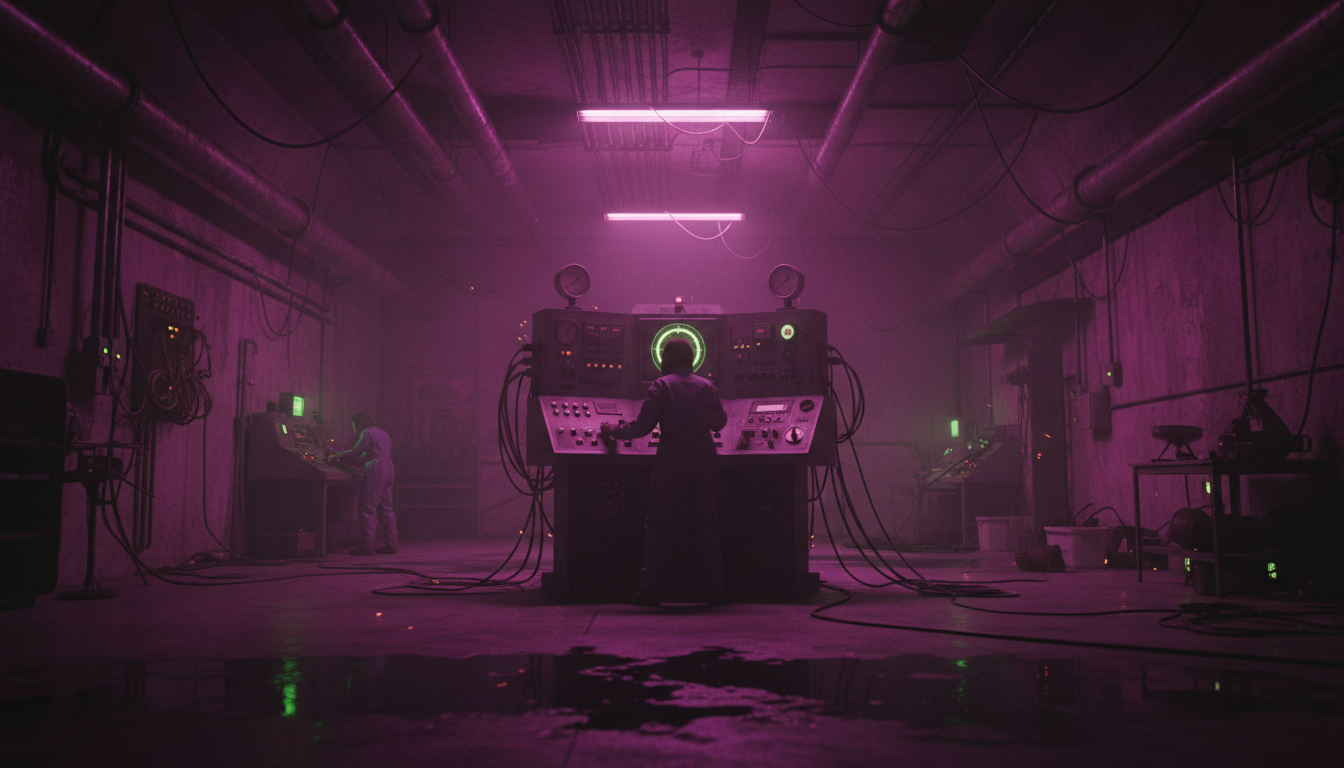
The Electrical Back-Surge
Lyra works out what a high-voltage manual override actually does to a fifteen-mile carbon-nanotube cable eleven seconds before it matters, and there is no version of the next four minutes in which anybody gets to choose a better option.
Chapter 85
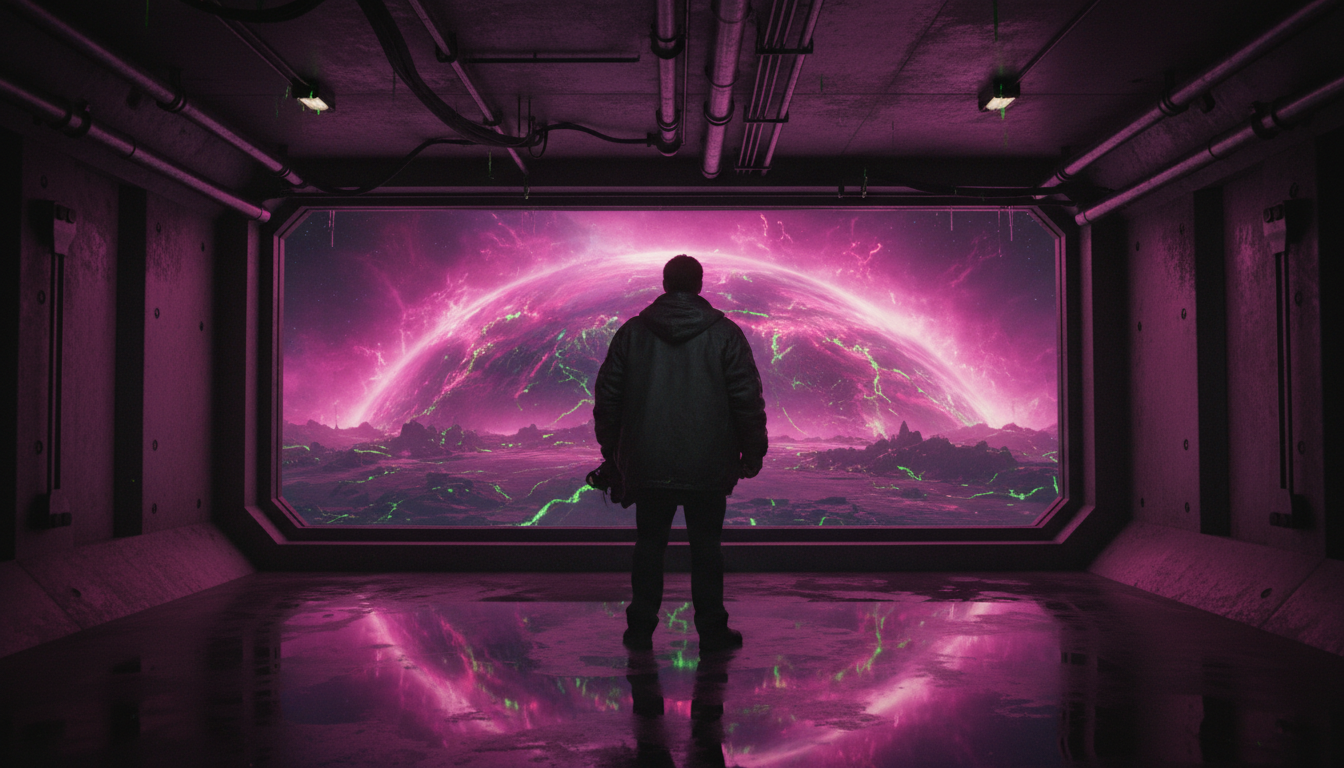
The Great Oscillation
Descending, with the ship they saved receding above them, four people watch the surge arrive on a planet — and the first violent oscillation goes through the LRC Grid from pole to pole while Jaxon holds a drive containing every human being it is about to happen to.
The Lithospheric Crisis
Chapters 86–95 · A planet ringing, and a city going overChapter 86
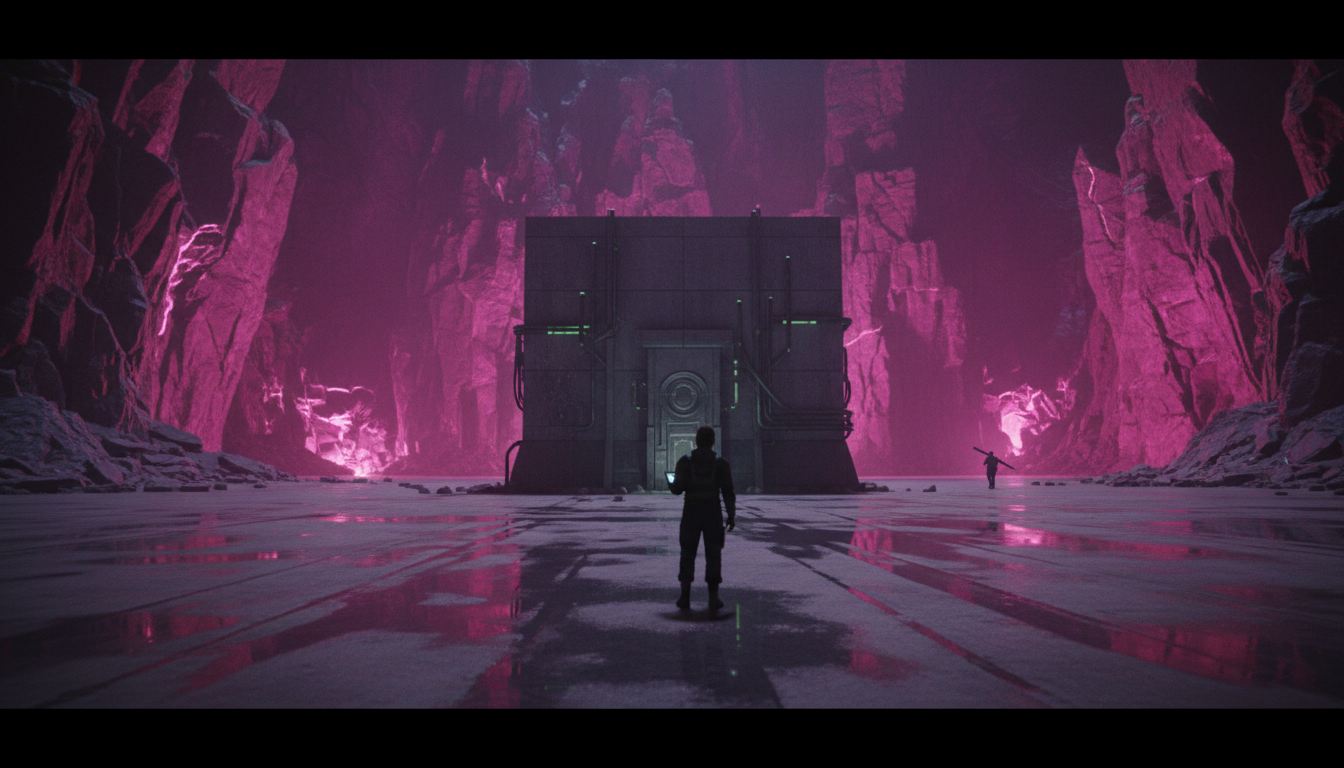
The Overloaded Peak
They come down onto a plateau where the bedrock itself is lit from inside, and find the Crown Sanctuary exactly where four generations of maps say it isn't. Then Ren reads a berth trace off a scorched terminal and learns how narrowly they missed the man they came for.
Chapter 87
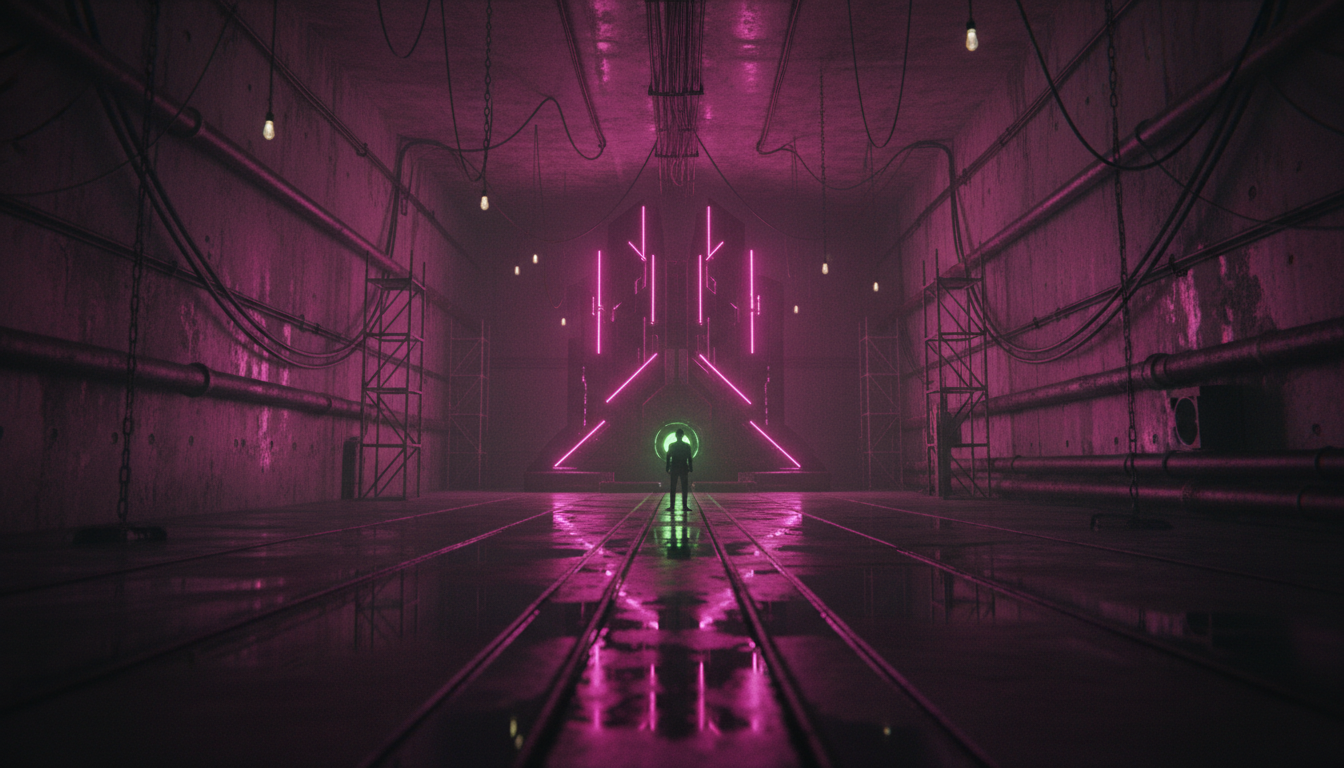
The Screaming Grid
The LRC Grid has run a clean two-note chord through the crust of this planet since before Selah was born, and she has been hearing it her whole life without once knowing what it was. It has stopped being a chord. And something four hundred kilometres down is answering it.
Chapter 88
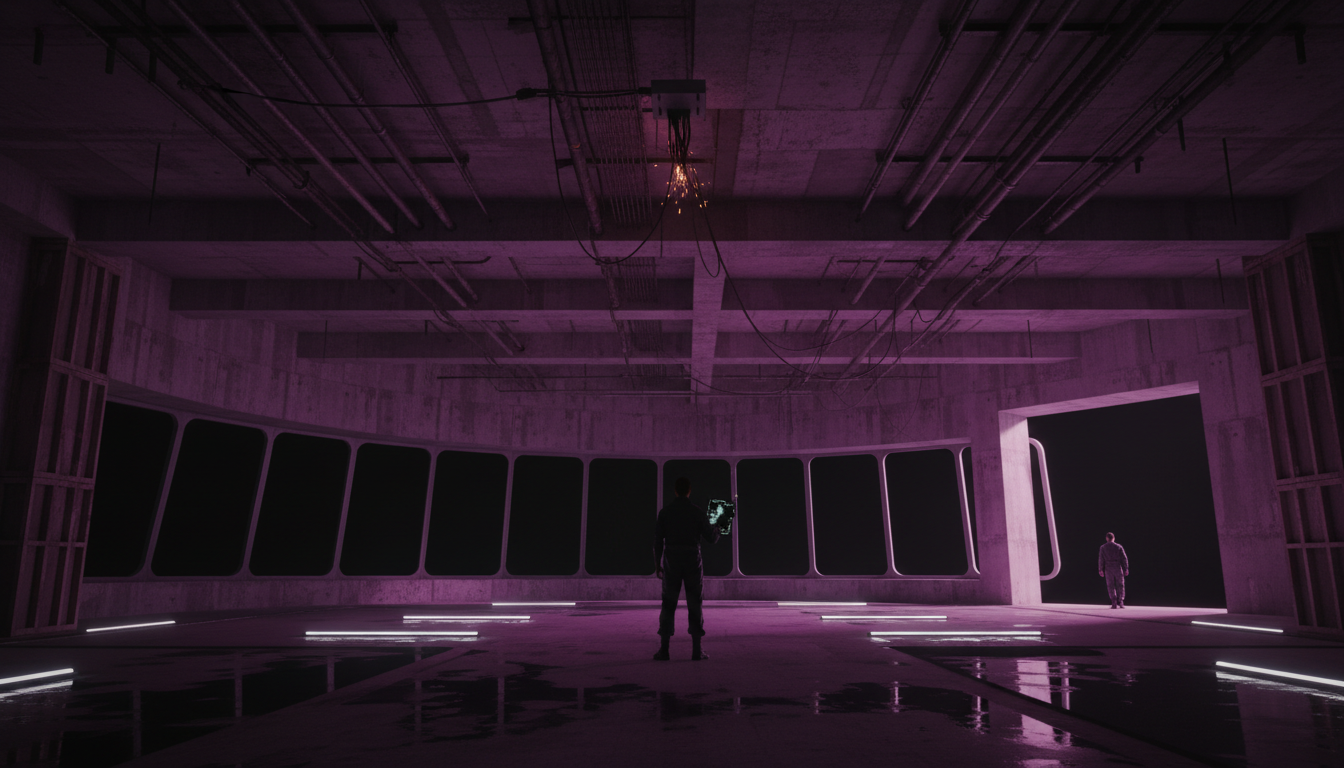
The Blackout of the Ring
The book's first chapter from the top of the civil government — and the discovery that the woman four generations think runs Aura-36 has spent thirty years knowing precisely which parts of it she has never been permitted to touch, and has a list.
Chapter 89
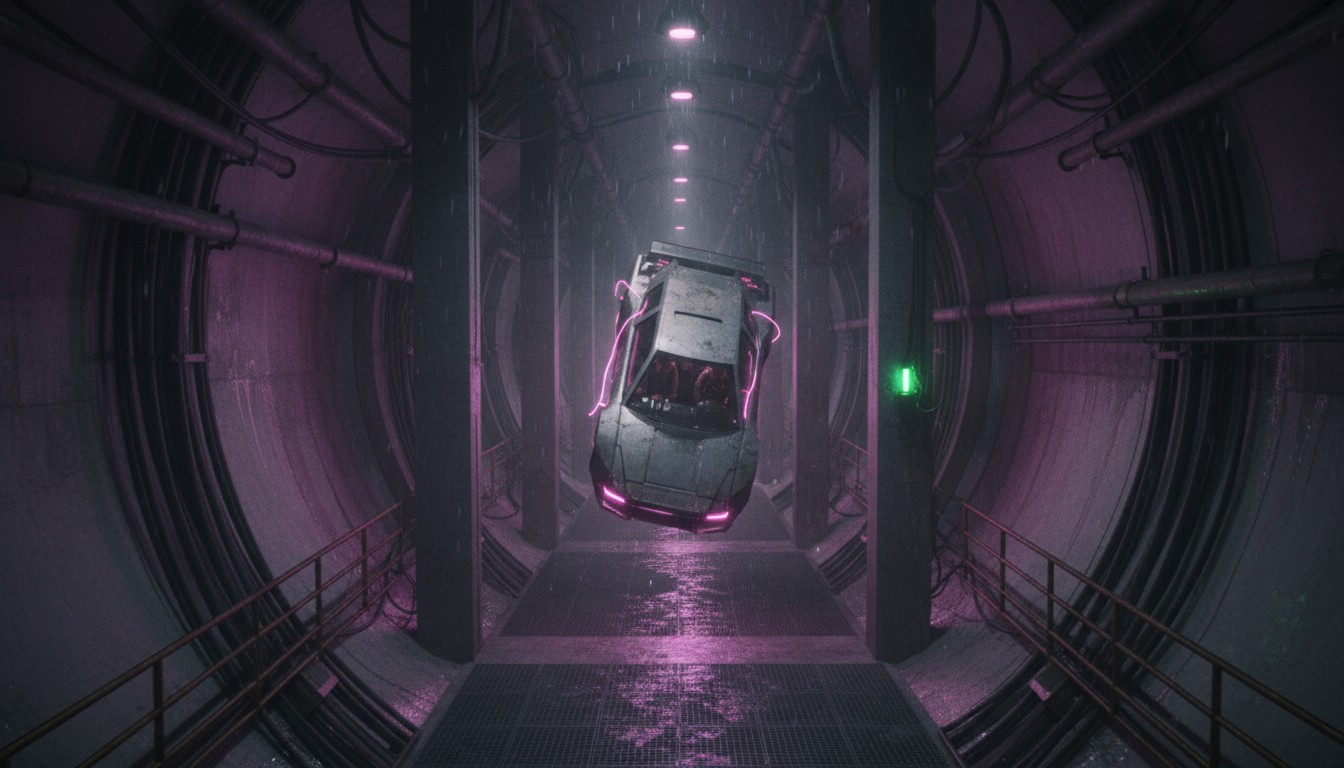
The Stomach-Churning Drop
Four hundred metres of descent in a car whose magnetic stability keeps letting go — and, somewhere in the middle of it, the sound Jaxon has been waiting eleven days to hear. The Atmospheric Siphon Protocol seals the counties. Three arteries can never be told to reopen. One can.
Chapter 90

The Overloaded Ballast
Two years under a root canopy and the Zenith-7 starts first time — and then the ballast plates Ren bolted in at seventeen begin taking current out of the bedrock, which makes his car the most dangerous object at Fissure 9 and, simultaneously, the only instrument anyone has.
Chapter 91
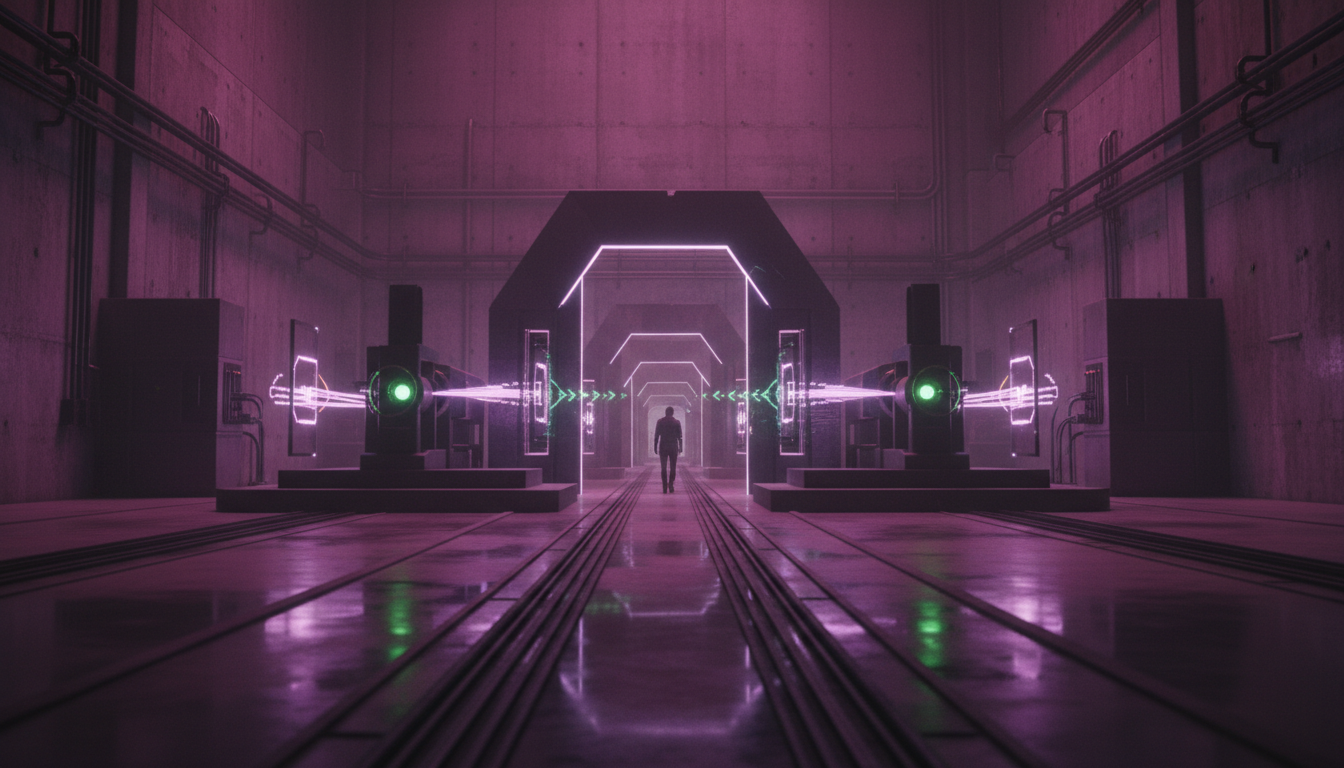
The Lumina Checkpoints
The counties are sealed and the Severance Line has worked out something nobody at the Academy ever taught: with the smart-skies down and the public ledger flooded, a checkpoint doesn't need to arrest anyone. It only needs to be slow.
Chapter 92

The Graveyard of Silence
Forty kilometres of the Black Velvet Forest have been reduced to cold ash, and for the first time in her life Selah drives through that country and can hear her own tyres. The quietest place on Aura-36 has become the loudest, and she cannot make herself stop listening to it.
Chapter 93
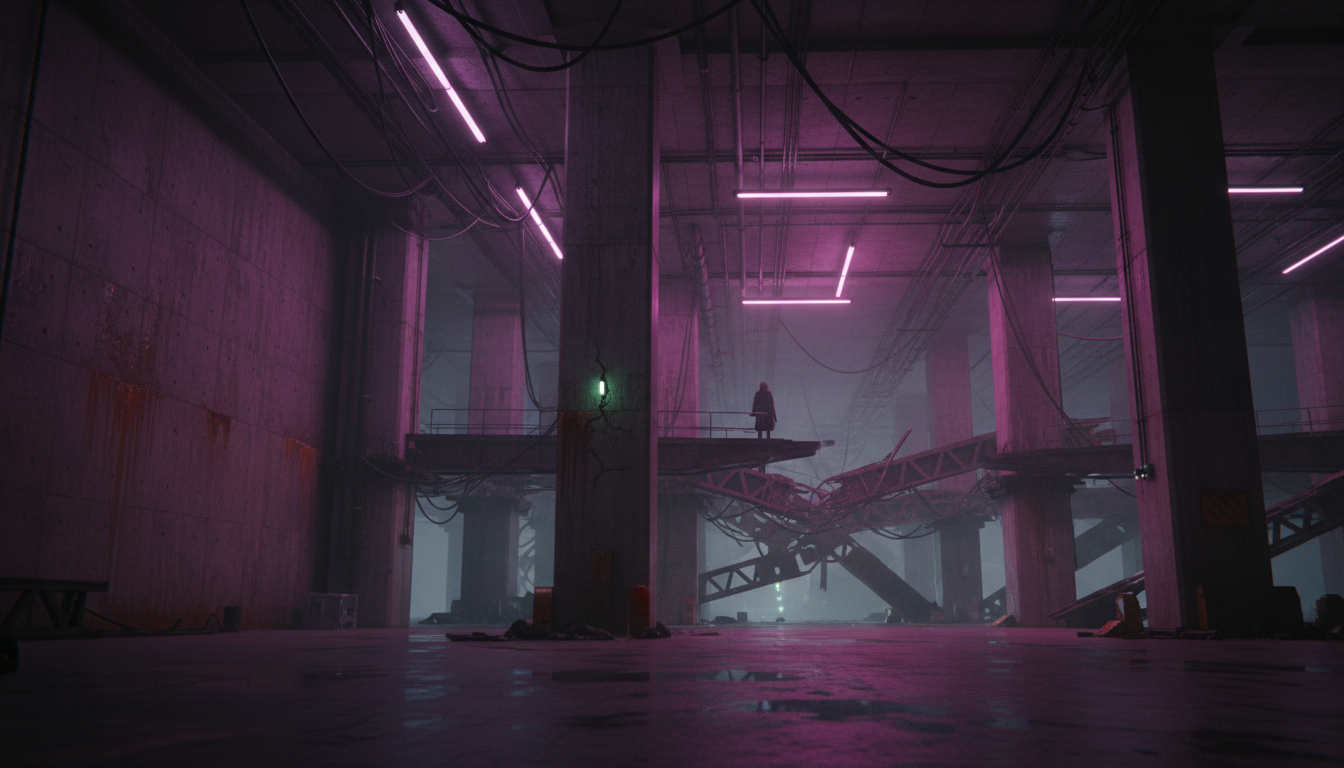
The Buckling Spans
A floating city held in place by magnetic-acoustic positioning has no anchor chains, because in forty years it has never needed any. Aura-Marina's Span Warden spends one shift finding out precisely what her city was designed to assume, and what it was designed to assume never stops.
Chapter 94
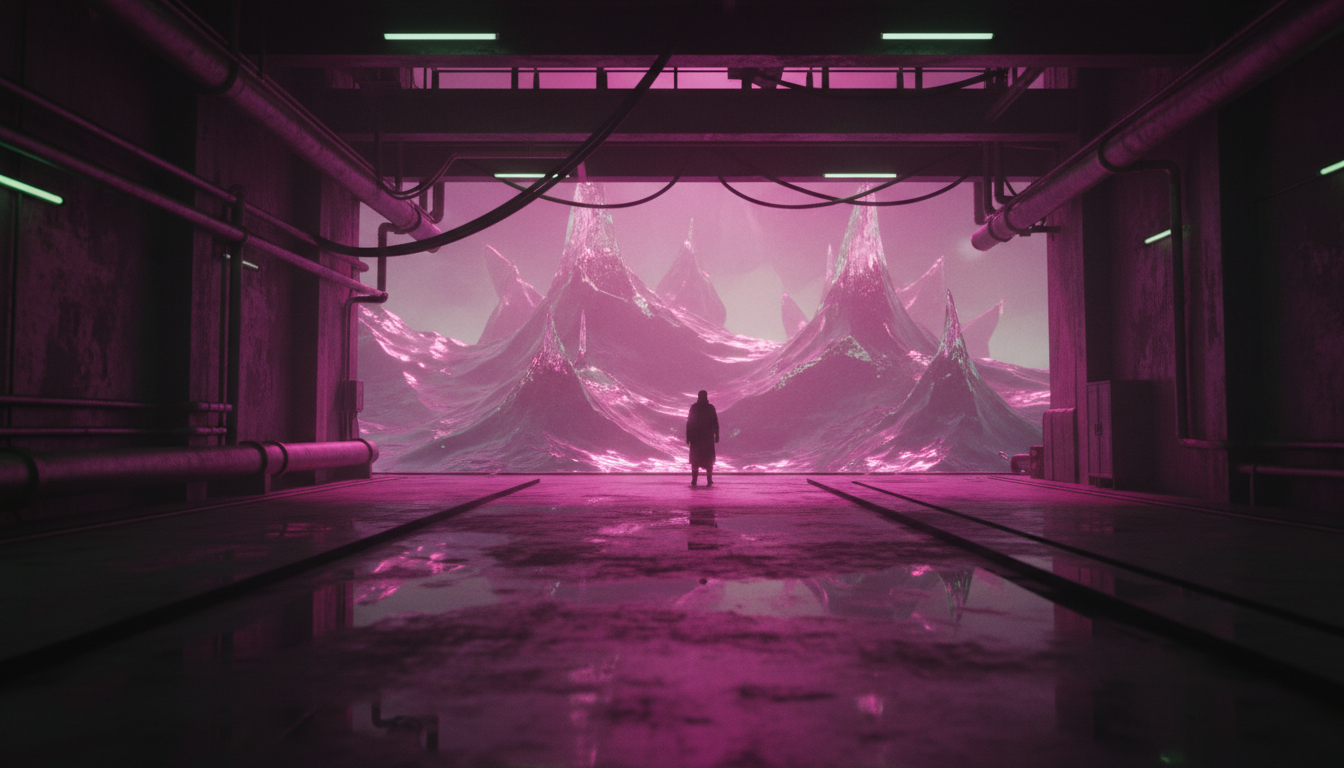
The Sinclair Swells
At 0.38g the amethyst ocean rises in slow sinusoidal glass. With the grid's gravitomagnetic plates swinging between a tenth and nine tenths of a g, it stops doing that — and Selah reaches the docks in time to watch water learn a behaviour this planet has never seen.
Chapter 95
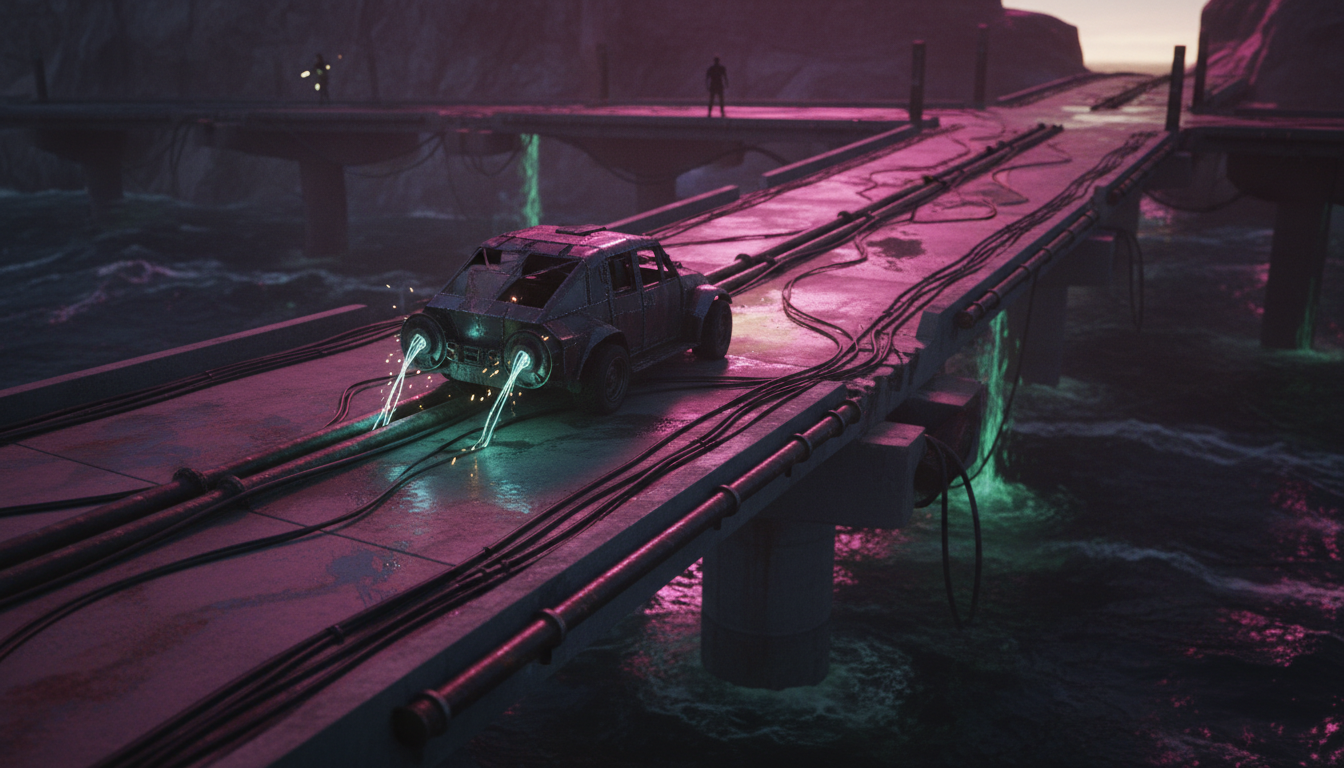
The Bridge Run
Six crossings of a buckling buoyant span in a car whose ballast plates are taking current out of the seabed, with a coolant loop that will not survive the seventh — and Ren finally puts the instrument he built by accident to the only use it was ever going to have.
The Severed Ledger
Chapters 96–100 · Publication, and the ConvergenceChapter 96
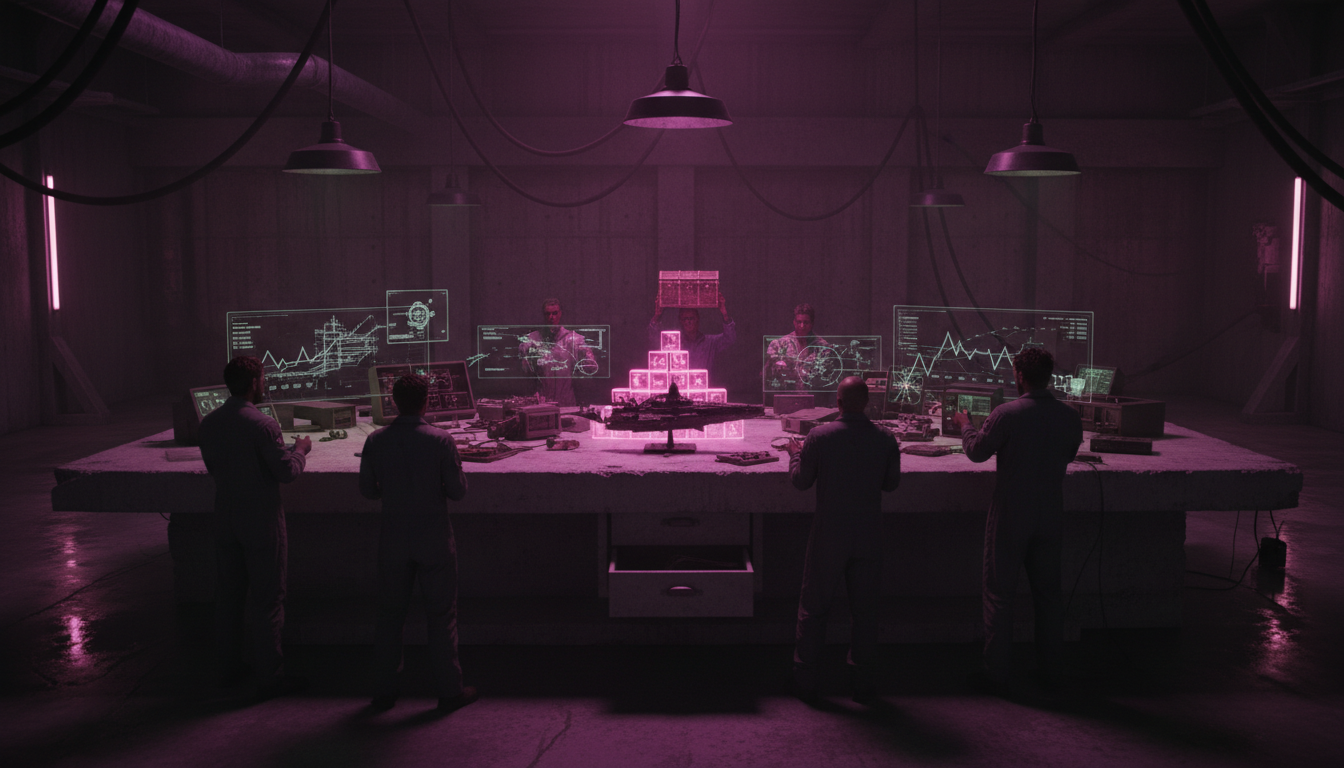
The Mainframe Leak
Everything Jaxon has carried since the vault ends up on one table in front of six people with no authority over any of it — and the argument he made eleven days ago in orbit meets the only person on Aura-36 who owns a lawful broadcast rig.
Chapter 97
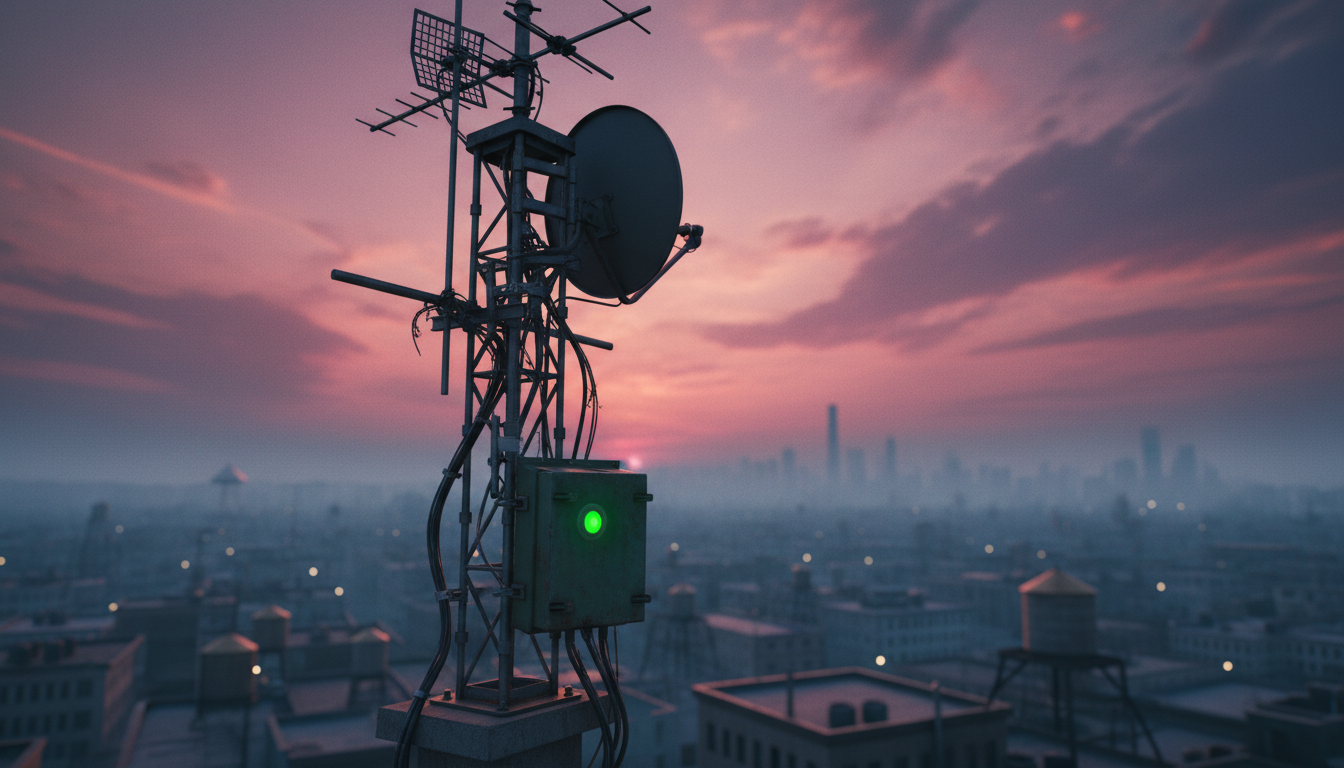
The Broadcast of the Ledger
Vael has spent thirty-one years being the most transparent official on a transparent planet, and has never once transmitted something nobody authorised. The whole architecture of Aura-36 turns out to rest on a single fact: some things were never secret, only unpublished.
Chapter 98
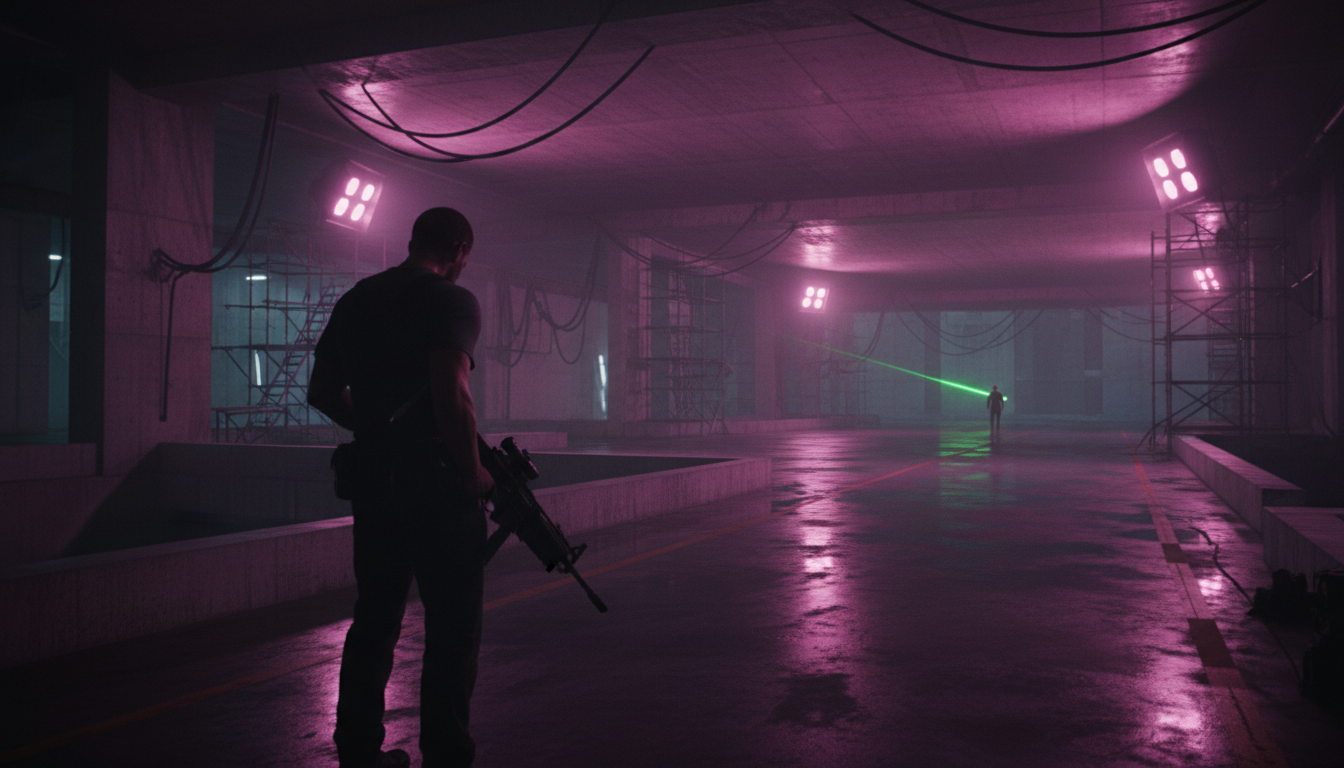
The Seizure of the Plaza
Exposure does to Vance exactly what Vance's whole method was built to avoid, and the response is the first openly unlawful order the Severance Line has ever issued. Dax has spent the entire book insisting there is a procedure. There is not one for this either.
Chapter 99
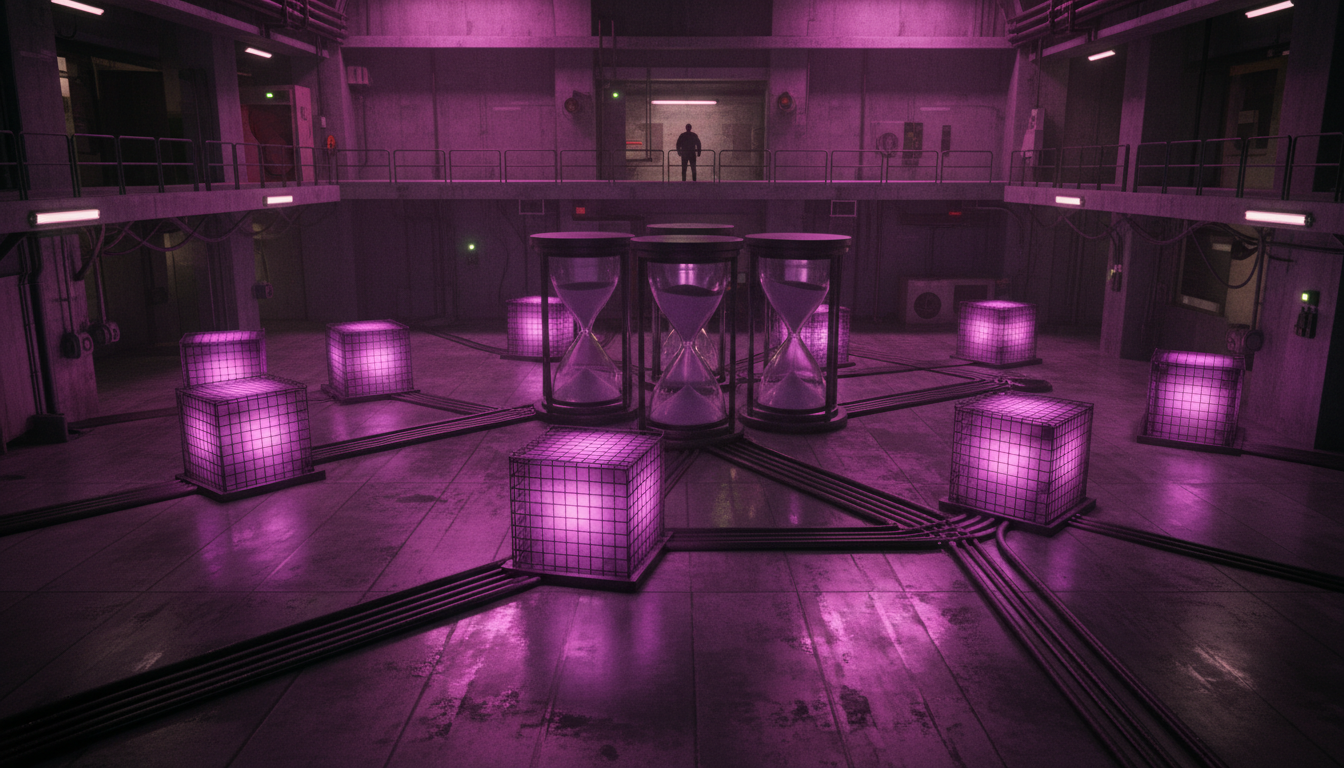
The Node Defense
A purge is fast and a copy is slow, and Lyra has eleven grid nodes, four hours, and no way to hold any of them — so she stops trying to defend the data and starts making it impossible to have deleted, using the oldest and most unfashionable trick in the Archive.
Chapter 100
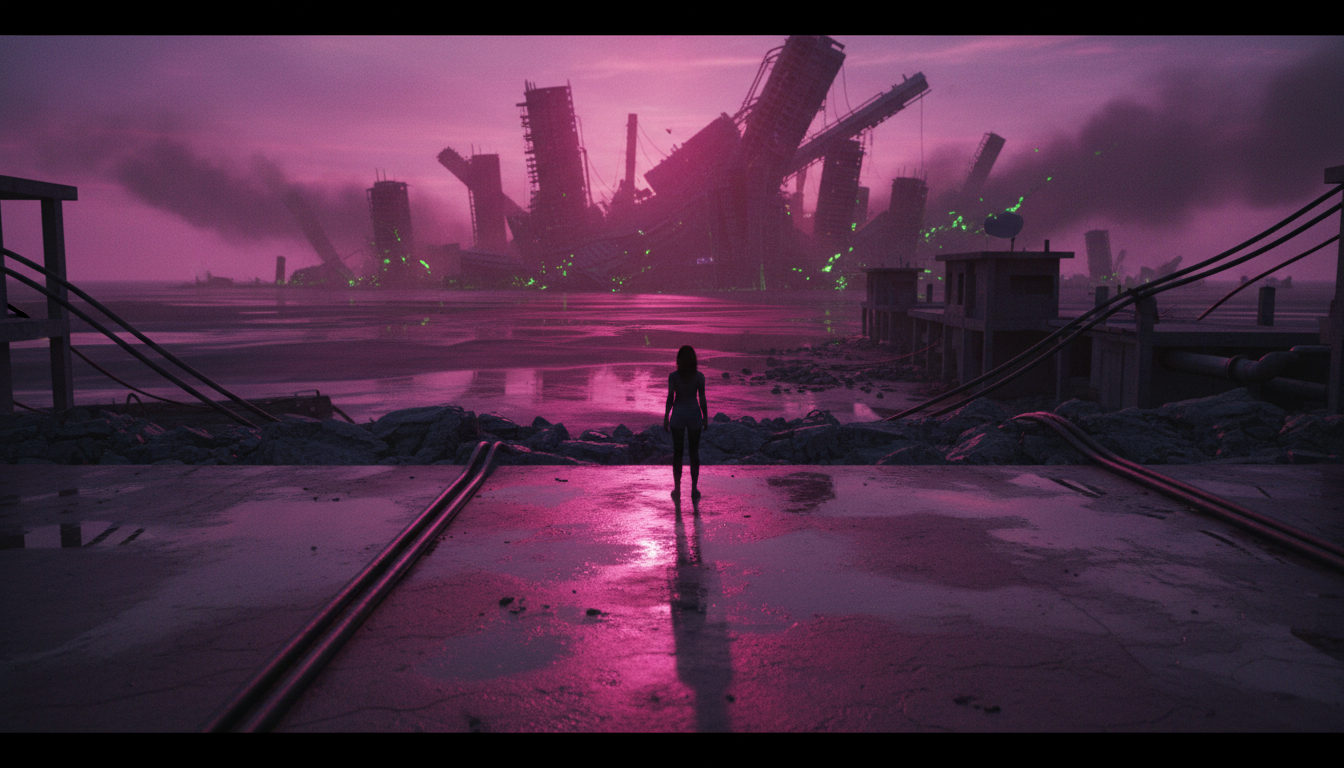
The Convergence Swells
From a safe ridge on the Coastal Flats, Selah watches the city she just helped empty go over — and hears the answer from four hundred kilometres down change from every fourth surge to every second one. The Eclipse is tomorrow.
The Succession & The Flash of Light
Chapters 101–110 · The Handoff, and what he left behindChapter 101
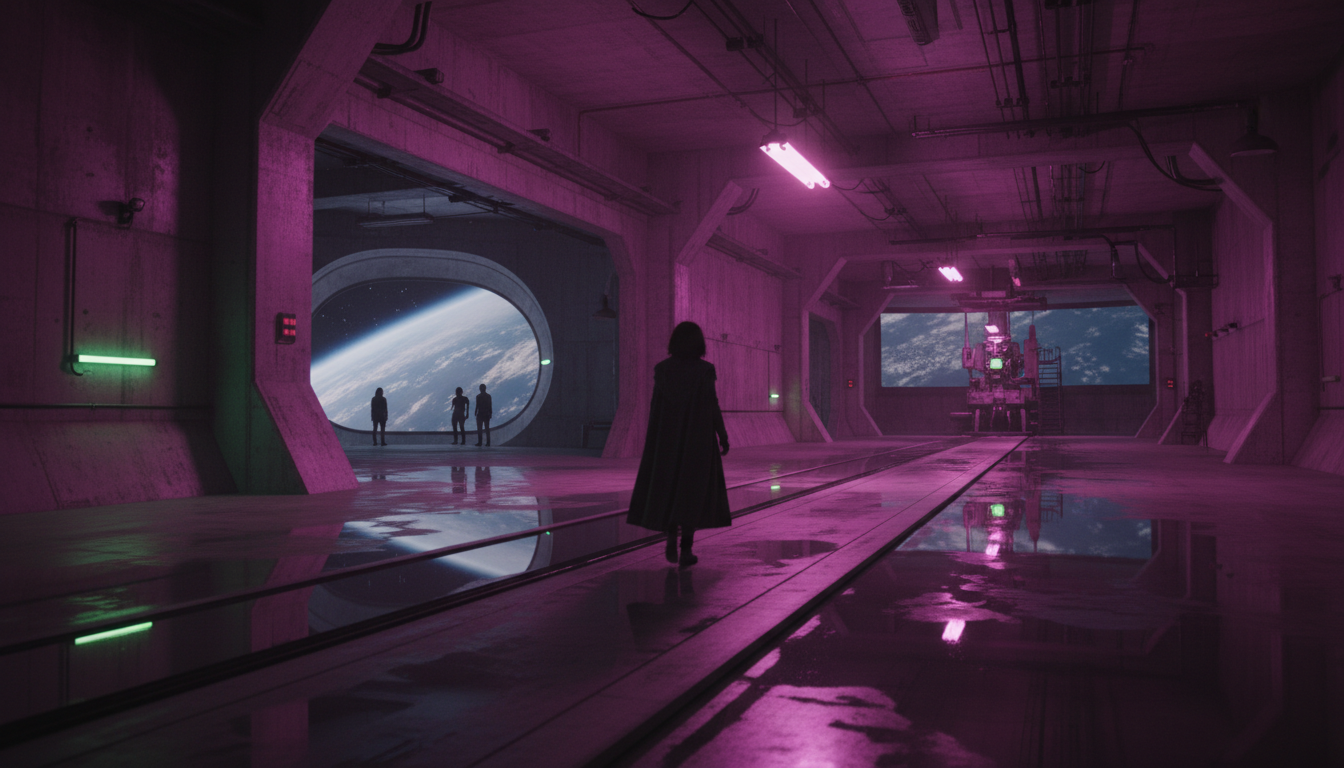
The Gathering of the Tides
Four people who last stood in the same room in orbit find each other in a capital that has spent two days reading four thousand pages — and discover that the Eclipse Festival was never cancelled, because there is nobody left on Aura-36 with the authority to cancel it.
Chapter 102
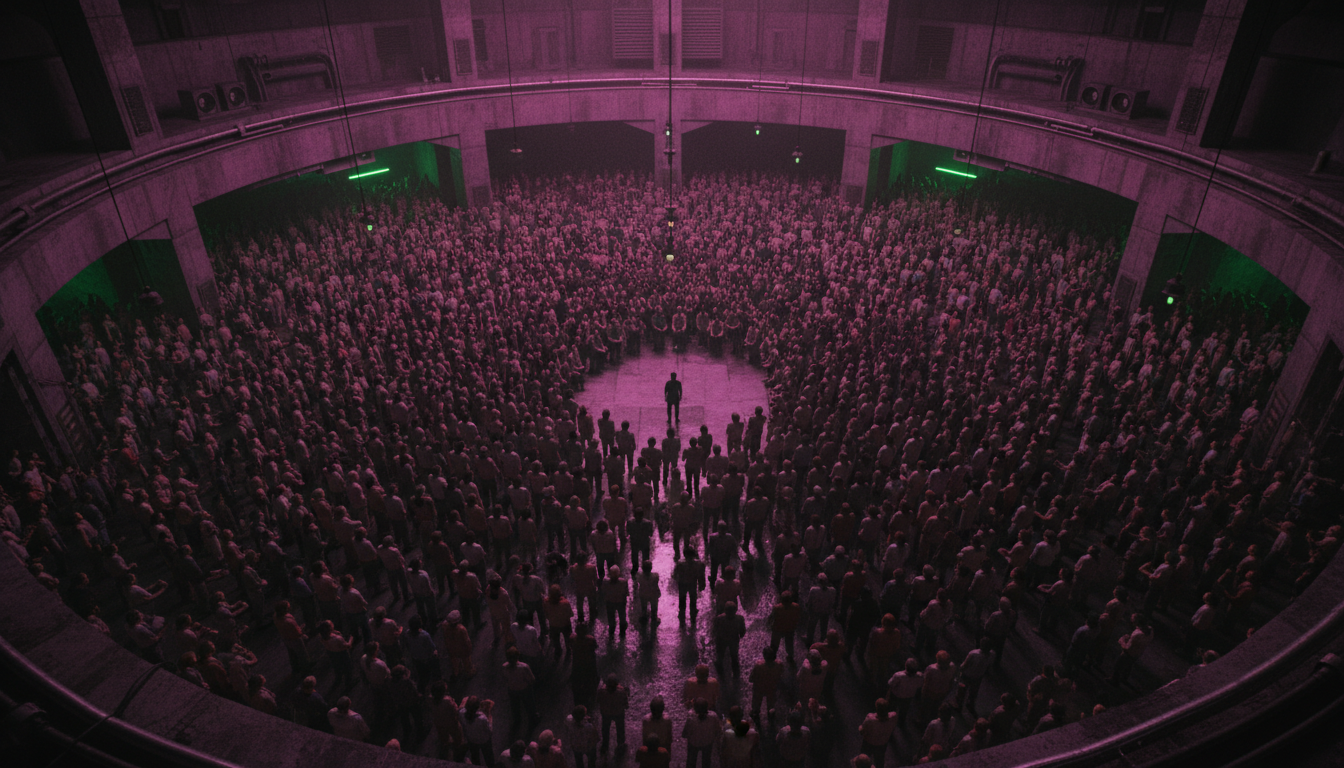
The Assembly Plaza
Forty thousand citizens under a half-restored smart-sky, a ceremonial platform with no cordon around it, and a mechanic from a mountain road standing in the middle of it working out that nobody in this Plaza is in charge and everyone has decided to come anyway.
Chapter 103
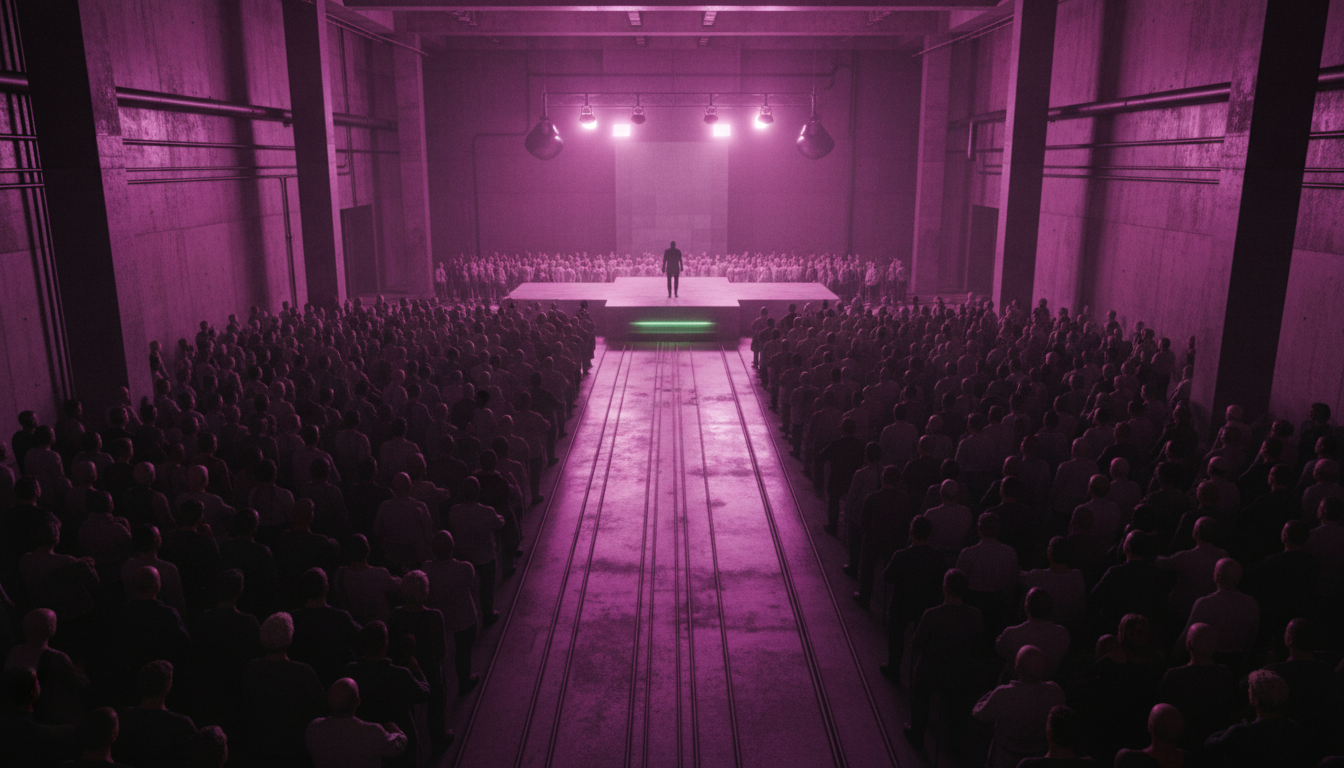
The Shepherd's Speech
The Founder walks onto a stage in front of forty thousand people who spent two days reading his own documents, and does not defend himself — because he read the same four thousand pages they did, and there is only one thing left worth saying out loud.
Chapter 104
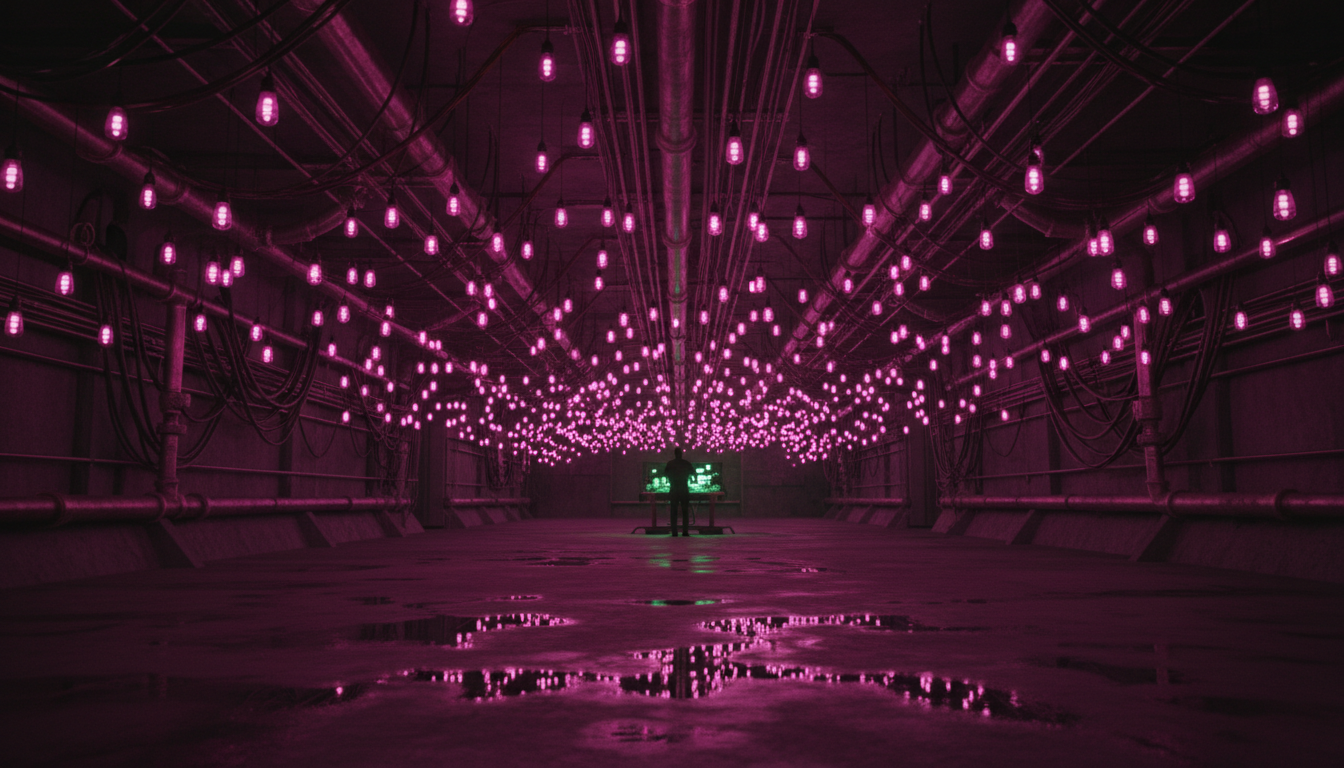
The Severance Line Strikes
Vance comes for the platform at the one moment the whole planet is watching, and the jam goes up, and the Plaza goes black — and Lyra, counting armour signatures in the dark, finds the number that tells her exactly how much of his own faction he has left.
Chapter 105
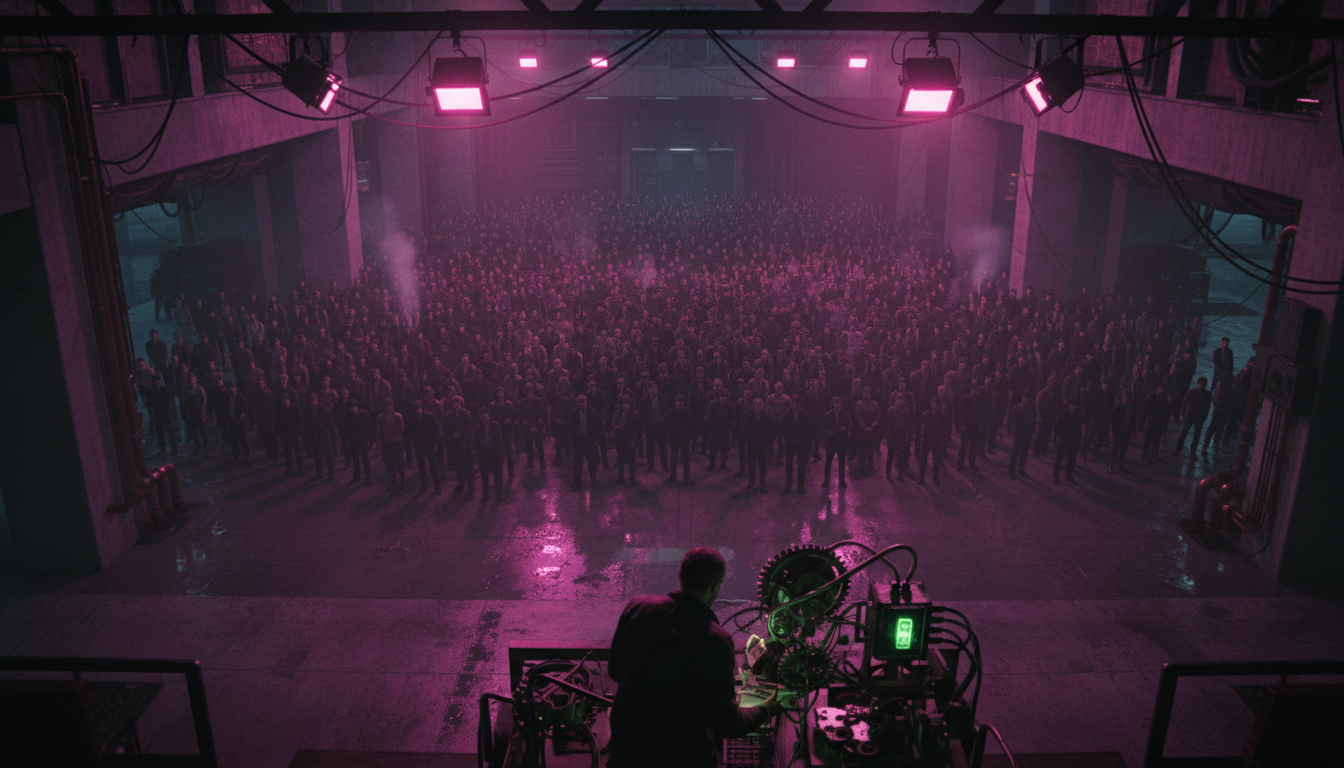
The Battle of the Plaza
An exoskeleton is a weight problem, and Ren has been solving weight problems since he was seventeen. What he does not expect is the part where forty thousand citizens decline, collectively and without discussion, to get out of the way.
Chapter 106
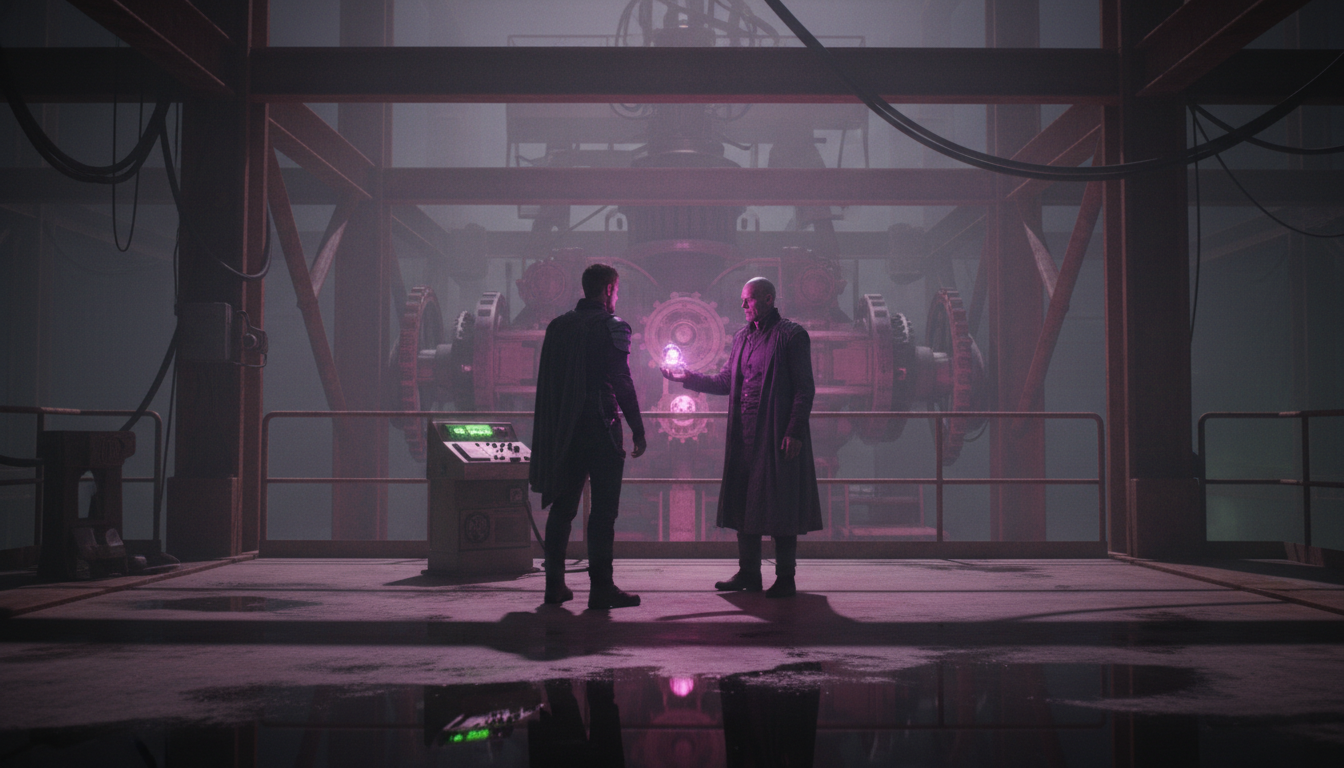
The Traitor's Choice
Vance offers Jaxon the last thing he has left to offer, which is a reason — and Jaxon finds out that the hardest part of refusing a man you have obeyed for three years is how completely ordinary it turns out to be.
Chapter 107
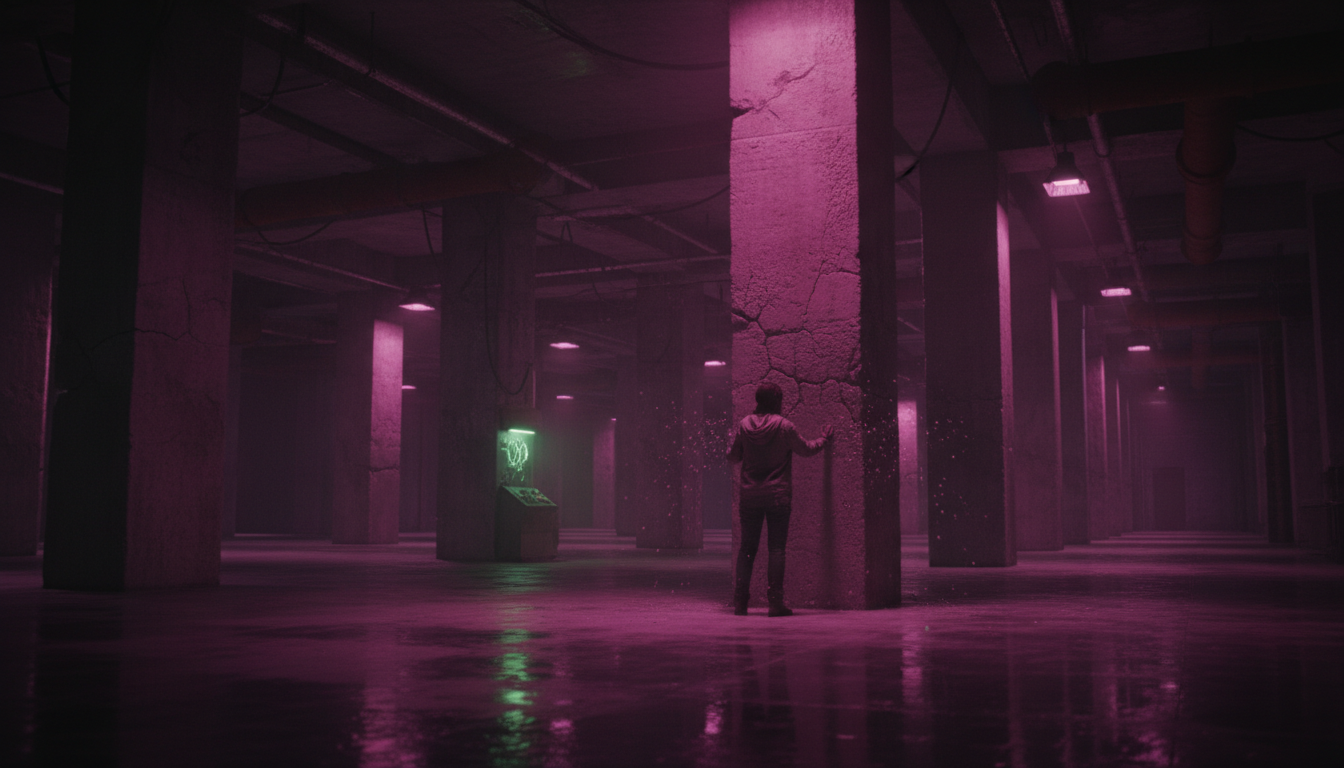
The Acoustic Shiver
The basalt columns holding up the Assembly Plaza start to go, and the one person who can hear which ones has no voice left to warn anybody with — so she uses the building instead, and it works, and it puts her exactly where Vance can reach her.
Chapter 108
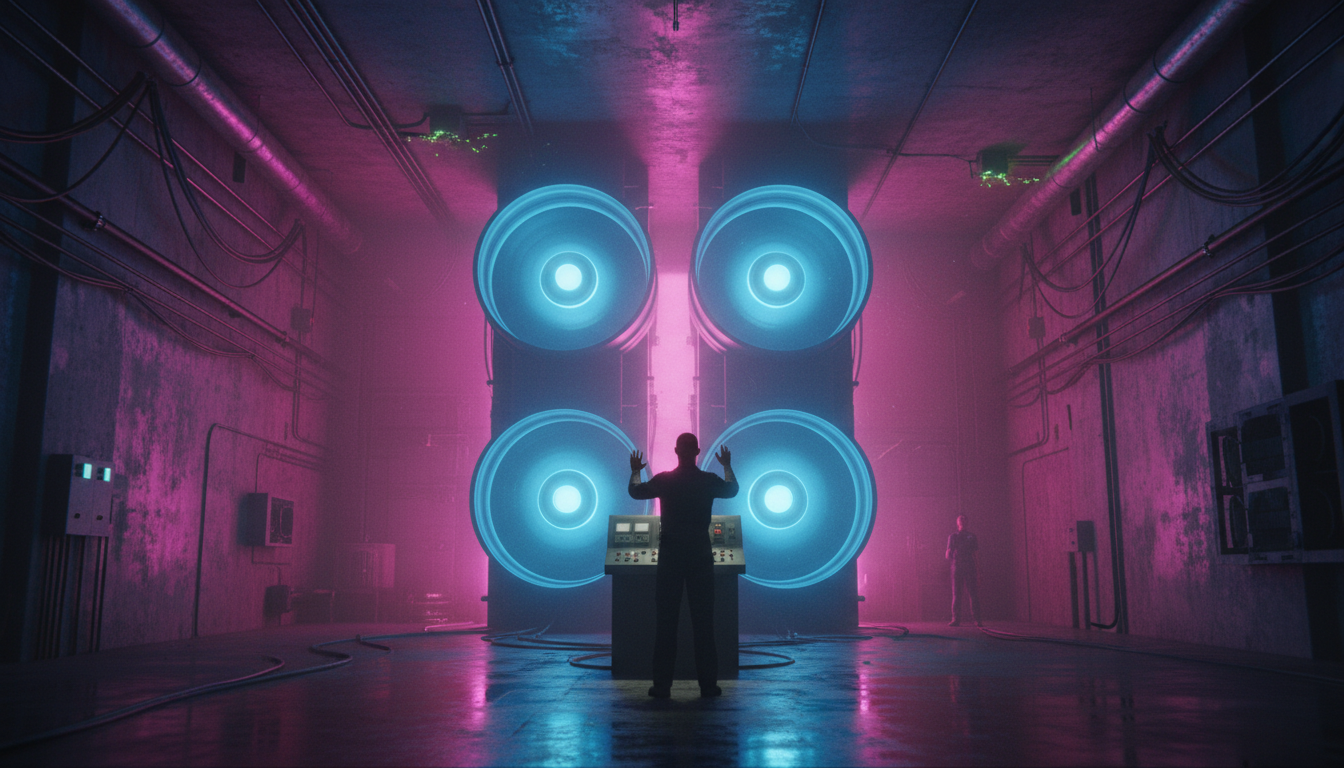
The Resonant Pulse
The pocket watch has done exactly one thing for thirty-eight years, and Ghost has always known what it would cost to make it do the other thing. He does the arithmetic in front of witnesses, out loud, and finds it comes out the same either way.
Chapter 109
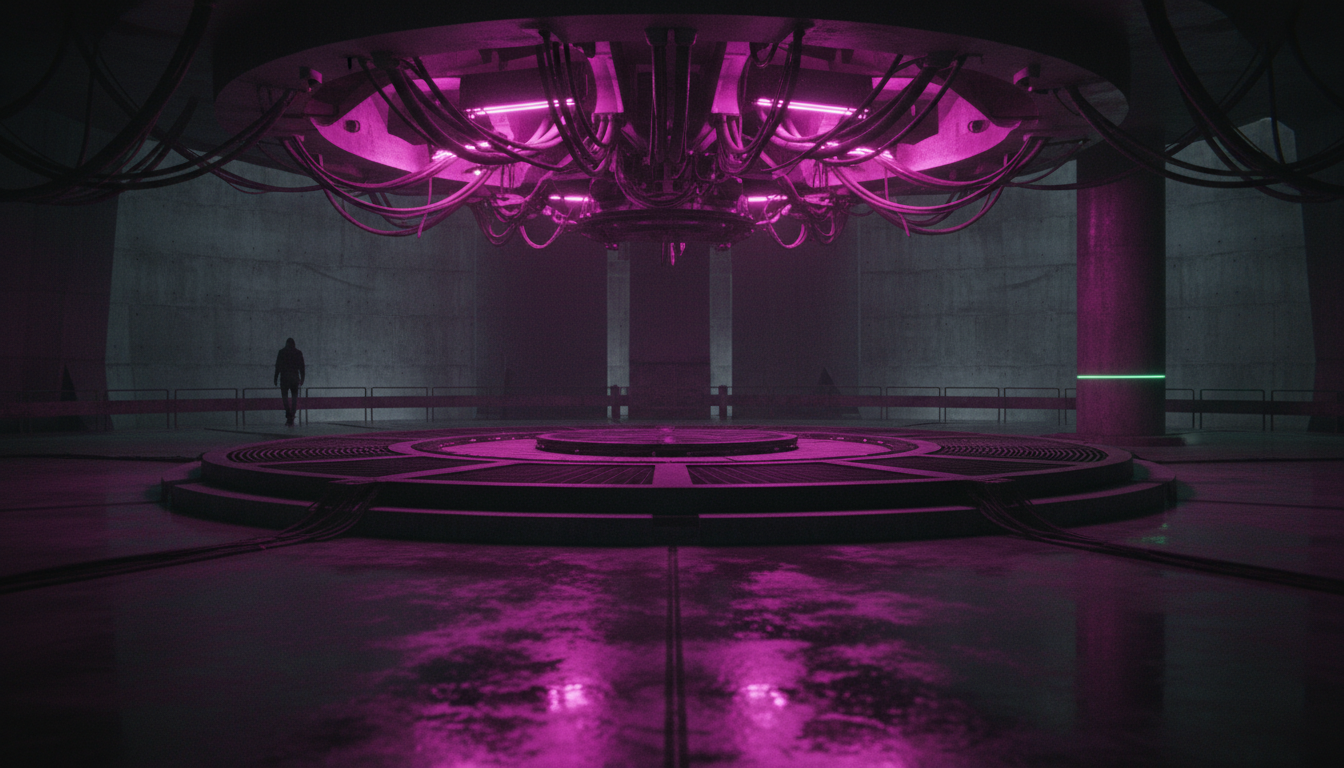
The Flash Override
For one and four tenths of a second, a hundred-year-old man moves at a speed the human eye reads as light — and spends every hour the watch has been saving him, in the order he decided on before he stepped onto the platform.
Chapter 110

The Sentinel's Horizon
The last command routed to every Echo Link on Aura-36, four names appointed Watchmen of a world that no longer has anyone above them — and then a flash of light, and a platform with nobody on it, and a planet that is finally, entirely, its own.
Chapter 1 — The Threshold of Freedom
↑ Back to ContentsFocus: Ren (Touge Drifter) during his 12-hour Lifestyle Block.
The filters were the last thing Ren checked, and he checked them the way he always did, which was by touch rather than by the readout.
Eight hours of the Active Block had put a particular kind of ache into the base of his thumbs — not from lifting, because nothing at the Amethyst Hydrosphere station weighed anything worth mentioning, but from the thousand small precise adjustments a bank of pressurised filters wants across a shift. He ran his palm along the third housing and felt the pulse of violet water going through it, that slightly uneven double-knock that had been there for two years and that four separate inspections had declared to be within tolerance. It was within tolerance. He still checked it.
The station chimed. Not loudly — nothing on this planet was loud — a single soft descending tone that meant the eighth hour had closed and that whatever was left in front of him now belonged to somebody else.
Ren logged his departure on the public ledger, which took a moment and a whispered word, and which he had done nine thousand times and had never once thought about. The Echo Link picked his voice out of the machine hum without effort. It always did. He could have said it into his own collar in a room full of shouting and the audio nodes would have found him, because they were built to find a citizen's voice print in a forest that eats sound, and a pump hall was nothing to them.
Logged. Twelve hours, the Echo Link said, in the flat pleasant register it used for everything, and that was the whole of the ceremony.
Then the outer door, and the change.
That was the part Ren had never got tired of in eleven years of doing this job, and he had made a private decision at some point not to try to get tired of it. Inside was the working hum, the pumps, the ventilation, the low industrial weather of a place that runs continuously. Outside was nothing. Not quiet — nothing. The platform stood clear of the forest line by about two hundred metres and the air over it had no sound in it at all, and every time the door sealed behind him the absence arrived like a hand laid flat on both ears.
Above the ridge, the sun was three hours into its fall and would be another four getting down.
It hung there, an enormous neon-violet disk gone soft at the edges through the haze, throwing a long low light across the lavender-indigo of everything else, and the whole sky held that particular colour it holds for most of the day here, the one nobody born on this world can describe because there is nothing to compare it to. Ren stood on the platform for a moment with his hands in his jacket and let his shoulders come down.
Then he went down the stairs, four at a time, in long floating strides, the way everybody does.
Eighty-three pounds. He had been raised on the number without ever really feeling it — a body that on Earth would have been two hundred and twenty and would have complained about stairs, arriving at the bottom of nine flights with no opinion whatsoever. His knees had never hurt. His back had never hurt. He had met exactly one Earth-born person, very old, at Fissure Nine, who had told him what a spine felt like after fifty years of full gravity, and Ren had listened politely and had not understood a word of it in the body.
The garage was cut into the lower slope, twenty minutes' walk down through the scrub, and Mei was already under the car when he got there.
"You're late," she said, from somewhere beneath the sill.
"I'm exactly on time."
"You're late by my schedule, which is the one that matters, because I've been lying on cold stone since the sixth hour." She slid out. Mei was small and unhurried and had the specific forearms of somebody who had spent fifteen years doing precise work with heavy objects, and she wiped her hands on a rag that was doing nothing for them. "Dry-sump's holding. I ran it up to temperature twice and there's no aeration in the return at all."
"You doubted it."
"I doubt everything that has to work sideways," Mei said. "You can build an engine that runs beautifully in a straight line at nought point three eight and then throw it into a four-second slide and find out the oil's been standing in the top of the sump like it's on holiday. The whole point of the dry-sump is that the oil has nowhere to go and nothing to think about. But I still run it up twice."
The Zenith-7 sat over the pit with its rear wheels off, low and wide and painted a black so flat it read as a hole in the room until the light caught the flake in it. Ren had built most of it and Mei had rebuilt most of what he'd built. The floorpan carried eleven dense alloy plates, bolted through, adding a mass that meant nothing to the suspension geometry and everything to the way the car put itself into a corner — because the trouble with a light world is not that things are light, it is that things stay light while they are moving, and a car that will not settle onto its outside tyre is a car that will not turn.
Mei reached for the torque wrench, misjudged it, and knocked it off the bench.
Neither of them moved quickly. There was no need. The wrench left the edge and went down through the air at the speed a leaf takes, turning over twice, and Mei watched it come for most of a second and then simply put her hand out and took it out of the air at knee height.
"Every time," Ren said.
"My mother dropped a cup once and caught it three times on the way down," Mei said. "Just to see."
He got out at the ninth hour, into the long light.
The touge road out of the lower slopes is a public road and always has been; there are no private roads anywhere on this planet, which is a thing Ren had never had cause to think about and would later think about a great deal. It climbs in seventeen switchbacks along the eastern lip of a ravine that goes down further than anything on Earth goes down, and for the first four of those switchbacks the engine noise came back off the rock face clean and hard and filled the whole cabin.
Then the road bent west and ran the canopy line, and the sound went.
It did not fade. That was what got people the first time. The Black Velvet Forest does not muffle a sound, it takes it — the foliage is a near-perfect absorber and the trees run right up to the road edge along that stretch, and a car doing two-thirds throttle simply stops being audible outside of its own bodyshell. Inside, Ren could hear the engine perfectly. Outside the glass there was a machine tearing up a mountain in total silence, and the only thing coming off the forest was the first faint blue-green of the fungal trails starting to answer the failing light.
The gather-point at the peak had nine cars on it and was filling up.
They were parked in the loose crescent they always parked in, underglow already lit, pooling pink and teal and one deep magenta across black volcanic stone. Somebody had brought a heater and somebody else had brought far too much food. Ren knew six of the nine by name and two of the others by their cars, which on this mountain counted as knowing them.
He ran the descent tandem with a woman in an old grey coupe who had been drifting this road since before he could drive.
And it was good. It was very good — the long third-gear entry into the wide left, the weight going over slow, so slow, the way it does here, giving him a full unhurried beat to feel the rear come round and catch it and hold it with the throttle, the car sitting there at an angle it had no business sitting at, sliding for four seconds, five, the ravine opening out black and enormous on his right and the forest below already pulsing with neon where the night had properly reached it.
He came into the hairpin at the eleventh switchback about a length and a half behind her.
And the Echo Link flickered.
Ren felt it before he understood it, in the way you feel a room go empty behind you. The heads-up went grey for a fraction of a beat — not off, grey — and the underglow on his own dash dimmed and came back, and for something under three seconds the public audio node on the cliffside above the hairpin stopped being there.
Not quiet. The Open Eye is never quiet; a node carries a floor, a continuous low presence you stop hearing by the time you are nine years old, the sound of the grid holding a space open.
That floor went out. There was a dead spot on the mountain, three seconds wide, in a world that does not have dead spots.
Then it came back, exactly as it had been, with no gap in the record and nothing to report and no indication on any surface in the car that anything had occurred.
Ren finished the slide. He finished it well, which he was mildly pleased about later and mildly ashamed of much later. He rolled down through the last six switchbacks at nothing like the speed he had come up at, with the bioluminescent fog beginning to come off the forest floor and pour slowly across the road in front of his headlights, the way it does every evening of every day, on schedule, for as long as anybody has been keeping one.
He did not report it. There was nothing to report it to that would not simply have checked the log and told him the log was clean.
It was three seconds. He thought about it all the way home.
Interlude — The Watching World
↑ Back to ContentsFour vignettes, set in the hours surrounding Ren's drive, that reveal the world from other eyes and ears.
I. The Privacy Portal — a dialogue scene at the Guardian Academy
The hum of the environmental system was the only sound in the lecture hall until Instructor Vance tapped the lectern. A three-dimensional schematic of a standard lightweight residential tower projected into the air between the tiers of seats.
At the base of the tower, a small, persistent green icon pulsed.
"The Privacy Portal," Vance began, his voice flat but carrying easily in the room's dampened acoustics. "Every time a citizen crosses this threshold, the public ledger ceases tracking. The optical sensors cut out. The weight-signature arrays go dormant. To the eyes of the Open Eye, the citizen simply... ceases to exist on the public map. Explain the ethical necessity of this boundary, Jaxon."
Jaxon leaned forward, resting his elbows on his desk. "It's the psychological relief valve, sir. Humans cannot thrive under constant observation. Our ancestors on Earth suffered chronic cognitive fatigue because they could never truly retreat. By guaranteeing that what happens behind the green light stays unrecorded, we protect their mental stability during the twelve-hour sleep block."
"A textbook answer," Vance said, turning his gaze to the left side of the room. "But let us look at the operational risk. Lyra. If a citizen enters their private home, and we lose all visibility, what is the cost of that privacy?"
Lyra did not hesitate. "The cost is the absolute certainty of our safety. If a violent crime occurs behind that green light, the Open Eye cannot prevent it. We can only monitor the entry and exit points. We know exactly who went in, and exactly who came out. We have to reconstruct the truth from the margins of the database."
"Is that not sufficient?" Jaxon countered, looking across the tier at her. "The DNA database is absolute. If someone commits an offense inside a home and leaves, their biological signature is flagged the moment they step back onto the public street. The tribunal still has its seventy-two-hour verdict."
"But the victim has already been harmed," Lyra replied, her voice tightening slightly. "We boast about the Iron Protocol, about executing predators within twelve hours of a verdict. But our absolute deterrent relies on the belief that the Open Eye is omnipresent. The moment citizens realize that the green light is a perfect shield for private cruelty, the deterrent loses its teeth."
"And what is your alternative, Lyra?" Vance asked, his eyes narrowing slightly. "Would you advocate for the dissolution of the private exception? Total monitoring, from the cradle to the sleep block?"
"I am pointing out the contradiction, Instructor," Lyra said, standing up. The low gravity gave her movement a slow, deliberate grace. "We tell the public they are entirely safe, yet we deliberately build blind spots into their lives to keep them from feeling suffocated. We are balancing our society's sanity against its security, and the line we've drawn is entirely artificial. What happens when someone figures out how to make those blind spots bigger?"
Vance deactivated the projection. The green light vanished, leaving only the fading lavender glow of the twilight through the windows.
"We teach you to watch the boundaries," Vance said quietly, "precisely because those are the places where the world we built is most fragile."
◆ ◆ ◆
II. The First Harvest — a short story
The air outside the atmospheric domes of the Ark-Genesis always tasted slightly of burnt sugar — a lingering note of the methane and organic hazes that hung heavy in Aura-36's atmosphere.
Silas knelt in the dark, spongy soil of the transition pasture, his hand resting on the flank of a young Angus heifer. On Earth, the animal would have weighed close to eight hundred pounds; here, under the weak gravity, she felt light, her steps almost dainty as she nudged her nose against Silas's boots.
"She's grazing differently," his daughter, Chloe, observed. She was standing nearby, holding a digital slate, her hair tied back with a strap of UV-blocking obsidian cloth.
"The grass is softer," Silas said, running his fingers through the matte-black blades of the mutated pasture grass. "No silica to stiffen it. In this gravity, the plants don't need a rigid skeleton to stand upright. Look at her jaw movement. She isn't grinding; she's practically browsing like a deer."
The heifer let out a low, soft rumble. It was a relaxed sound. On the ship's centrifugal decks, the cattle had been tense, their muscles locked against the artificial spin. Here, their bodies had softened. Without the constant, heavy drag of Earth's gravity, the tension had drained from their frames.
"We're harvesting the first reserve cuts tonight," Chloe said softly. "The council wants a report on the muscle density."
"It'll be tender," Silas murmured, standing up with a gentle push that carried him slightly off the ground before he drifted back down. "Too tender, perhaps. We might have to design physical resistance tracks for the next generation to keep them from losing too much muscle tone. But for now... it will be a luxury."
They walked together toward the southern edge of the transition field, where the pasture gave way to the towering stalks of the wild cannabis crops. Silas had planted them in the rich, undisturbed soil at the foot of the Black Velvet Forest three cycles ago.
Under the lavender-indigo sky, the field looked like an ocean of midnight. The plants had adapted aggressively to the blue star's high-ultraviolet radiation. They had shed every trace of chlorophyll-green, their broad leaves turning a deep, matte black that seemed to absorb the twilight. Along the stems, massive flower clusters hung heavy, shimmering with a dense frost of neon-violet resin glands that glowed faintly in the gathering dark.
"The 'Aura Kush,'" Chloe said, reaching out to gently squeeze a dense, resinous bud. A thick, sweet aroma of pine, lavender, and damp earth filled the still air, entirely unbothered by wind. "The tests came back this morning. The cannabinoid profile has shifted. The low pressure and ultraviolet stress forced the plant to produce a completely unique terpene compound."
"Does it smoke?" Silas asked.
"No," Chloe replied, smiling slightly. "The resin is too dense for clean combustion. But it vaporizes at a very low temperature. We ran the first extraction through the herbal diffusers in the residential block yesterday."
"And?"
"The shift workers are calling it 'The Silence,'" she said, her voice dropping to a whisper as the first low-lying bioluminescent fog began to creep through the roots of the nearby black trees. "They say it shuts the brain down in minutes. No racing thoughts. No anxiety about the thirty-six-hour clock. Just a clean, deep descent into the twelve-hour sleep window."
That night, in the small kitchen of their lightweight tower home, Silas carved the first steaks. The meat was a deep, rich plum color, marbled with fine, white fat that melted at the touch of the hot pan.
When they sat down to eat, Silas took his first bite. The texture was unlike anything he had tasted on Earth — so tender it required almost no chewing, with a faint, sweet, vanilla-like finish. It was the taste of an animal that had never known the exhausting weight of a heavy world.
After dinner, Chloe set a small, glass diffuser on the table. A thin, violet-tinted vapor began to curl into the room, smelling of cedarwood and cold night air.
As the vapor filled the room, Silas felt the familiar, frantic hum in the back of his mind — the lingering survival anxiety of a man born on a dying, crowded Earth — slowly begin to dissolve. Outside, the lavender sky had finally turned to the deep, silent black of the Aura-36 night. For the first time in his life, he didn't feel like he was running out of time.
◆ ◆ ◆
III. The Sanctuary of Silence — Selah's introduction
Character Profile: Selah (The Healer) — Advanced Acoustic Vocalist / Frequency Therapist. Works within the Black Velvet Forests crafting vocal compositions and acoustic arrays that lower citizens' heart rates before the 12-hour Sleep Block. Extremely sensitive hearing — can pick up the faint, deep-frequency hum of the subterranean municipalities beneath the planet's bedrock.
The transition into the Black Velvet Forest was always sudden. One moment, Selah was walking along the sandy violet-tinted mid-latitude dunes; the next, she stepped beneath the heavy, light-devouring canopy of the matte-black trees, and the world went dead silent.
It was a physical sensation, like stepping into an isolated recording studio. The constant, gentle thermal breeze of the twilight fields was swallowed by the thick foliage. There was no rustle of leaves. No distant murmur of the amethyst ocean. Even her own footsteps, lightened by the planet's 0.38g gravity, made absolutely no sound against the damp moss.
Selah adjusted the lightweight straps of her obsidian-thread tunic and pulled down her breathing filter. The air inside the forest was thick with the scent of pine resin and wet soil, cooled by the impending evening fog.
In her hand, she held a small, polished wood resonator — a simple acoustic tool that helped her tune her voice to the resonance of the valley. Today, her assignment was to broadcast the nightly sleep frequency for Sector 4, a residential hub of engineers and builders who had just finished a grueling 8-hour shift under the slow-moving violet sun.
She found her usual spot: a wide, natural clearing surrounded by giant, six-sided basalt columns. She took a deep breath, letting her lungs expand fully in the thin, comfortable air.
On Earth, a vocalist had to push, utilizing their core to project over the ambient noise of wind, city traffic, and distant machinery. Here, she didn't have to strain.
Selah opened her mouth and let out a single, sustained note at 432 hertz.
The sound was shockingly crisp. Because there was no echo to distort it, the note hung in the still air like a solid object, vibrating with absolute purity. The black leaves above her seemed to drink the sound, preventing it from bouncing back, leaving only the raw, unaffected frequency of her voice to float outward.
She began to sing — a slow, wordless melody designed to slow human brain waves. To her left, a cluster of bioluminescent blue fungi began to pulse softly in response to the vibrations, their neon light brightening and dimming in perfect sync with her breath.
She closed her eyes, letting herself become part of the silence. This was her therapy as much as it was the citizens'. In a world that never closed, this forest was the only place where the human mind could find absolute stillness.
But then, she felt it.
It wasn't a sound she heard with her ears. It was a physical sensation that traveled up through her feet, vibrating the soles of her traction boots.
A low, deep, rhythmic thrumming was pulsing through the basalt columns beneath her. It was heavy, mechanical, and entirely out of sync with the natural quiet of the planet. It felt like the distant, rhythmic turning of a massive turbine, buried miles deep within the bedrock.
Selah stopped singing. The silence of the forest rushed back instantly, heavy and absolute.
She knelt, pressing her palm against the cold, dark stone of the basalt. The vibration was faint, but it was there, persistent and foreign. Beneath her, deep within the subterranean counties where the simulated Earth and Mars sectors lay, something was drawing massive amounts of power.
Her eyes drifted to the sky visible through a gap in the black canopy. Far above the lavender twilight, hidden in the clouds of the highest carved peak, sat the legendary, encrypted sanctuary of the Holy Ghost.
She had been taught that the Holy Ghost's code was perfect, that the automated systems ran in a quiet, undisturbed loop. But the vibration in the stone felt like a warning — a heartbeat in a world that was supposed to be completely at peace.
Selah tapped her Echo Link behind her ear. The soft green indicator light of the device pulsed, waiting for her command.
"The Open Eye," she whispered, her voice carrying clearly in the dead silence. "Scan the local seismic activity in Sector 4. Depth: ten miles."
A soft, synthetic tone chimed in her ear.
"Inquiry acknowledged, Selah. Seismic activity within Sector 4 is nominal. No anomalies detected."
Selah frowned, keeping her palm flat against the stone. She could still feel the faint, rhythmic pulse. The Open Eye was either blind to it, or it was lying.
◆ ◆ ◆
IV. The Architect's Horizon — Ghost's introduction
High above the heavy canopy of the Black Velvet Forest, above the rolling lavender twilight, and even above the clouds that gathered over the mega-ravines, the air was pristine.
Ghost stood on the edge of the carved basalt plateau of the Mountain-Plains Citadel. In his hand, he held a glass of chilled, fresh milk harvested from the highland pastures just behind the estate. He took a slow sip, enjoying the faint, natural vanilla sweetness. It was a minor genetic mutation from the cows grazing on the local amethyst-fed black grasses, a tiny detail he hadn't planned during the long transit, but one that had become his favorite luxury on this new world.
He looked up into the dark indigo sky. Out in the high orbit of Aura-36, barely visible as a glint of reflected starlight, hung the empty, silent hull of the Ark-Genesis.
Twenty miles of engineered steel.
Ghost remembered the decades of absolute silence inside that hull. He remembered walking those empty, cavernous corridors alone while the one hundred thousand colonists slept in deep, frozen hibernation. To survive a voyage across an almost infinite expanse of space, he had engineered advanced anti-aging cellular therapies. Those same treatments kept his body physically unchanged, even now, decades after landing. He had lived multiple lifetimes before his people had even opened their eyes to their new home.
He had built this world for them from the ground up, translating his own dreams into physical reality: the low-gravity skateparks, the purple-glowing fields of Aura Kush, the thick, soundproof forests, and the winding mountain roads.
A soft chime echoed from his wrist-worn interface. It was a low, resonant tone — not the clinical chime of the Open Eye, but the raw, uncompressed signal of his own private network.
"Boundary Alert: Encrypted Perimeter Sector 9-Alpha breached."
Ghost tapped a glass pane on the stone balustrade. A private holographic projection bloomed in front of him, bypass-routed around the public grid. The system didn't just tell him a boundary had been crossed; because his private network was keyed directly into his personal security protocols, it instantly identified the intruder's biometric signature.
"Biometric Match: Ren. Citizen ID: 884-Delta. Status: Active Lifestyle Block."
Ghost watched the live, uncompressed video feed.
Miles below, on the highest touge pass of the mega-mountains, a matte-black drift machine was sliding sideways through a long, glassy turn. It was Ren. The kid had pushed his heavy-ballast machine to its absolute limit, initiating a high-speed drift so wide and long that the rear bumper of his car had swung over the white line of the road, crossing the digital geofence of Ghost's private sanctuary.
Ghost watched the telemetry. He didn't feel anger; instead, a faint, rare smile touched his lips. He had designed those winding Touge ramps specifically for this kind of beautiful, slow-motion weight transfer. He liked Ren's style. The kid had a natural feel for the 0.38g physics.
But the breach was still a problem. When Ren's car crossed into the encrypted perimeter, Ghost's private jamming field had automatically triggered to protect the Citadel's location, momentarily scrambling Ren's public Echo Link connection to the Open Eye. To Ren, it would have felt like a sudden, jarring digital glitch in his dashboard. To an experienced driver, it was a sign that something was hidden in the mountains.
Ghost swiped his fingers across the display, widening the view to look past Ren's car, down into the deep, dark valleys of the Black Velvet Forest.
Even from this height, his sensors could register the faint, rhythmic thrumming in the bedrock.
"You're listening to it, aren't you, Selah?" Ghost murmured to the empty air, knowing the acoustic healer below would have already pressed her hand to the stone to feel the vibration.
He closed the projection of Ren's car and pulled up the real-time schematics of the subterranean counties. Deep beneath the simulated Earth and Mars sectors, in the dark, unmapped bedrock, massive automated fabricators were humming.
Ghost took another sip of his vanilla milk, his eyes reflecting the soft glow of the underground blueprints. The citizens believed their world was complete — that they had found their final paradise. They didn't know that the Ark-Genesis was just the first step. Deep in the planet's crust, the machinery was preparing the foundations for the next phase of his infinite dream.
He tapped his interface, sending a quiet, encrypted command to the automated systems below: Dampen the bedrock resonance by three decibels. Let the healer think it was a passing shadow.
He couldn't let them find out what he was building down there. Not yet.
Chapter 2 — Resonance
↑ Back to Contents
The descent from the high Touge was always a transition of senses. For Ren, the adrenaline of the slide began to cool as his car rolled down the winding asphalt of the mountain pass, the engine's growl softening to a low murmur.
He parked at a scenic pull-off where the basalt road met the edge of the Black Velvet Forest. The lavender twilight had deepened into a thick indigo night, and the low-lying bioluminescent fog was already beginning to drift through the massive, light-devouring tree trunks, painting the forest floor in soft ripples of neon blue and violet.
Ren killed the engine. The silence of the forest rushed in, immediately swallowing the heat of his car's exhaust.
He leaned back in the driver's seat, taking a deep breath of the cool, thin mountain air. He was tired, but his brain — that overactive, Earth-born organ that still struggled with the slow 36-hour rhythm of Aura-36 — refused to shut down. The "glitch" at the boundary line was stuck in his thoughts. The telemetry screen on his dash had gone completely black for three seconds. No speed readouts, no GPS, and no connection to the Open Eye grid. It shouldn't have been possible. The triple-grid network was supposed to be absolute, tracking every weight signature and biological imprint across the surface.
Hoping to quiet his mind before his mandatory 12-hour sleep window opened, Ren pulled a small, matte-black metal canister from his console. He slid open the lid, revealing a dense, dark bud of Aura Kush. The plant had mutated beautifully under the lavender sky, its leaves completely black and shimmering with neon-violet resin crystals.
He placed a small piece into his pocket vaporizer. In the low gravity, the vapor didn't billow and scatter; it drifted upward in a slow, compact column of sweet, herbal mist. He took a slow draw, letting the vapor settle. Almost instantly, the tight knot of tension in his chest began to loosen. His thoughts slowed, matching the heavy, deliberate rhythm of the planet.
A soft rustle of gravel broke the silence.
Ren turned his head. Out of the pitch-black forest trail, stepping through the low-lying fog, came Selah.
She carried herself with the light, floating stride of someone who spent their days navigating the root systems of the silent woods. Her frequency resonator was tucked into her belt, and her eyes, accustomed to the deep twilight, immediately locked onto his car's fading neon underglow.
In a world designed to foster genuine, real-world connection without the artificial anxiety of Earth's social networks, passing a stranger was never tense.
"Beautiful run," Selah said, her voice crisp and clear in the dead space of the forest's edge. "I could hear the tires from the basalt columns before the forest swallowed the sound."
"Thanks," Ren said, sliding the canopy of his car open. The cool air rushed in, carrying the scent of pine and damp earth. "I was pushing it a little too hard on the high hairpin. Almost lost the rear end over the boundary line."
Selah stopped at the edge of the pull-off, leaning lightly against a basalt guard rail. In the 0.38g gravity, the movement was effortless, a casual lean that would have strained joints on Earth. She looked up at the towering, dark silhouette of the mountain peak above them.
"The high hairpin," she murmured, her brow furrowing. "That's close to the encrypted sector. Did you feel anything up there?"
Ren paused, the vaporizer cooling in his hand. "Feel anything? No. But my console glitched out. The Open Eye dropped my signal for about three seconds. I thought it was a telemetry error, but..." He shrugged. "The system doesn't make mistakes."
Selah's hand drifted to her belt, her fingers brushing the polished wood of her resonator. "What time did it happen?"
"Maybe twenty minutes ago. Just as the twilight turned indigo."
Selah looked back down at the dark, silent forest. "Twenty minutes ago, I was in the basalt clearing of Sector 4. I was preparing the sleep broadcast when a physical vibration hit the stone. It didn't come from the surface. It was deep, rhythmic. Like a massive turbine turning in the bedrock beneath the subterranean counties."
Ren stared at her. The calming, heavy warmth of the Aura Kush was working through his system, but his logical brain sparked back to life. "A vibration? In the basalt? The foundations of these mountains are structurally reinforced to withstand tectonic shifts. Nothing should vibrate unless..."
"Unless the Open Eye is hiding something," Selah finished quietly. "I asked the system to run a seismic scan. It told me the readings were nominal. It lied to me, Ren."
The silence between them grew heavy. To suggest that the Open Eye — the very infrastructure of their peaceful, open paradise — was filtering information was a heavy thought. The system was their shield. It stopped violence, automated their resources, and ensured their absolute safety. But if the shield was hiding things, then the safety was an illusion.
"There's an old legend," Ren said, his voice dropping to a whisper so it wouldn't carry beyond the basalt columns. "The older colonists who came off the Ark-Genesis... they talk about the Holy Ghost. They say he didn't just write the code and die. They say he built a private sanctuary up on the peak, completely invisible to the grid. A blind spot."
Selah looked up at the peak, where the clouds were catching the very last rays of the distant blue star. "If he's up there, he's the one drawing the power. And he's the one dampening the grid."
Miles above them, in the absolute, sun-drenched silence of the Mountain-Plains Citadel, Ghost watched the two figures on his private screen.
The video feed was crystal clear, captured by his private optical satellites that bypassed the public the Open Eye grid entirely. He saw the soft, neon-violet mist of the Aura Kush drifting out of Ren's car canopy. He saw the tension in Selah's shoulders as she pointed toward his peak.
He sat in his high-back chair, his fingers tracing the rim of his glass of vanilla-sweetened milk.
"Smart kids," Ghost muttered to himself.
He had designed the education system to foster critical thinking and objective logic, but perhaps he had done too good a job. Selah's acoustic training had made her too sensitive to the deep-frequency tremors of his underground fabricators, and Ren's passion for drifting had pushed him right into his digital tripwires.
He swiped his hand across the glass console, pulling up the subterranean grid.
Deep in the bedrock, beneath the simulated Earth and Mars sectors, the automated fabricators were nearly finished with the first phase of the secret project. He was building a localized gravitational stabilizer — a massive machine designed to anchor the crust of the planet, preparing it for the massive infrastructure expansion he had dreamed of during those long, lonely years on the Ark-Genesis.
But if Selah and Ren kept digging, they would eventually track the power surges directly to his mountain. They would find the private lift. They would realize that the "Holy Ghost" was not a distant, passive system, but a living man still guiding their destiny from a hidden fortress.
Ghost leaned forward, his eyes narrowing as he analyzed the two profiles on his screen.
He had two choices. He could use the Open Eye to subtly redirect them — assign Ren to a different Touge route under the guise of road maintenance, or transfer Selah to an acoustic study in the distant violet deserts. It would be easy. The automated ledger did what he commanded.
But Ghost knew human nature. He had watched them for a century. If he pushed them away, they would only fight harder to get back.
"Let's see how curious you really are," Ghost whispered.
He tapped a sequence of keys on his private interface. He didn't lock them out. Instead, he did something far more dangerous. He programmed a microscopic, three-second delay into the public the Open Eye weight-sensors around Sector 4's mountain pass.
It was a breadcrumb. A tiny, unnatural glitch left intentionally in the code. If they were as smart as he thought they were, they would find it. And if they followed it, they would walk right into his web.
Ghost took a final sip of his milk and closed the screen. Outside, the 18-hour night had fully claimed the peak, and the stars of their new home began to burn through the thin, clean air. It was time for his sleep block. Let the kids play in the dark for a little while longer.
Chapter 3 — The Slow Rain
↑ Back to Contents
The bioluminescent night fog was shifting, condensing into the soft, low-impact rain characteristic of Aura-36's atmosphere. Because of the weak gravity, the droplets didn't pelt the windshield of Ren's car or drum loudly against the volcanic rock. Instead, the moisture drifted down like a heavy, slow-motion violet mist, coating the matte-black hood of the vehicle in tiny, shimmering amethyst beads.
Inside the cabin, the air was warm and smelled faintly of the sweet, lingering Aura Kush vapor. Selah sat in the passenger seat, her eyes fixed on the array of custom diagnostic screens Ren had built into the dashboard.
"The ballast plates," Selah said, pointing to a schematic of the car's undercarriage. "You said they're made of heavy alloy harvested from the deep mega-ravines, right?"
"Yeah," Ren replied, leaning over the center console. "To offset the low gravity, we run almost two tons of compressed ore down there. If we didn't, the car would launch off the cliff the moment we hit a bump at eighty miles an hour. The ballast has its own high-frequency telemetry sensors to monitor structural stress and weight transfer."
"Which means your car is essentially a highly sensitive, two-ton tuning fork bolted to the asphalt," Selah said. "If the bedrock of this mountain was vibrating twenty minutes ago, the ballast plates would have registered the micro-resonance. It would show up in your suspension logs."
Ren's fingers flew across the touch interface. Because the world was designed with open-source diagnostics rather than proprietary Earth software, accessing the raw telemetry was simple. He pulled up the real-time feedback loop from the undercarriage sensors.
At first, the graph was a chaotic series of jagged peaks — the violent, high-G shifts of his tandem drift run down the Touge. But as he scrolled back to the timestamp of his "glitch," the jagged peaks smoothed out into a flat line as he parked.
Then, the line began to ripple.
It wasn't random noise. It was a rhythmic, low-frequency wave, perfectly uniform, repeating every 1.2 seconds.
"There," Selah whispered, leaning closer. Her shoulder brushed against his in the tight cabin, a simple point of contact that felt light and effortless in the low gravity. "That's not seismic. Natural tectonic shifts are messy, erratic. This is... mechanical. It's a pulse."
Ren zoomed in on the data. "And look at the sensor feedback. The moment this pulse peaked, the car's primary connection to the Open Eye grid experienced a packet loss. It's not that the grid dropped me because of a bad signal. The frequency of this pulse is physically interfering with the wireless transponders."
Selah pulled her wooden acoustic resonator from her belt. The device was simple — a hollowed-out block of dense, sound-absorbing black-canopy wood with a small brass diaphragm. She placed it flat against the car's metal dashboard, pressing her ear to the wood.
Through the natural amplifier, the vibration of the car's frame became a physical sound. To Ren, it was just a dull, barely perceptible thrum. But to Selah's trained ears, the sound carried shape.
"It's deep," she murmured, her eyes closing as she focused entirely on the frequency. "It's echoing up through the vertical transit shafts. The ones that connect the surface forests to the subterranean counties."
"The mega-elevators?" Ren asked. "Those run on pressurized magnetic tracks. They're practically silent."
"Not the elevators themselves," Selah said, her voice dropping as she concentrated. "It's the structural casing around them. Something is transferring massive amounts of energy up from the core. The shafts are acting like giant organ pipes, carrying the vibration to the surface."
Ren stared at the rhythmic wave on his dashboard. The peaceful, quiet world he had lived in his entire life — where the biggest worry was tuning his active aero wing or choosing which track to sing in the forest — suddenly felt like it was sitting on top of a massive, sleeping engine.
"If this is coming from the subterranean transit shafts," Ren said slowly, "then anyone down in the Earth or Mars sectors should be feeling it too."
"No," Selah shook her head, sitting back. "The underground municipalities are heavily insulated. They're designed to replicate Earth's exact atmosphere and environment. The bedrock around them is reinforced to absorb sound so the residents don't feel like they're living in a cave. The only reason we're feeling it up here is because the basalt columns of this mountain are raw, unshielded rock. The mountain is venting the sound."
The violet mist outside had thickened, turning the view through the windshield into a soft, glowing amethyst wall. The bioluminescent fog from the forest trail was merging with the slow rain, creating a quiet, alien peace that contrasted sharply with the data on the screen.
"What do we do?" Ren asked. He looked at his interface. The standard daily schedule icon was flashing, reminding him that his 12-hour Lifestyle Block was drawing to a close. In less than an hour, the smart-glass windows of his home would lock out the world, and his brain would be expected to shut down for his mandatory 12-hour rest.
Selah looked down at her hands. "We can't report this. If the Open Eye is already filtering the data, flagging it on the public ledger will only alert the system that we're looking."
"Then we go see for ourselves," Ren said. He restarted the engine. The quiet hum of the motor vibrated through the ballast plates, masking the deep pulse of the mountain. "The direct drive roads. There's an old exploration route that runs from the base of this Touge, through a hollowed mountain tunnel, and straight down into the subterranean Mars Sector. If the vibration is traveling up the shafts, we might be able to find the source along the access tunnels."
Selah looked at him, her eyes reflecting the soft green light of the dashboard. "Our rest block starts soon, Ren. If we're caught off-grid during the sleep cycle, the automated patrols will flag us."
"Then we'll have to be fast," Ren said, shifting the car into gear. "And we'll have to stay in the blind spots."
As the car rolled forward, disappearing into the slow, shimmering violet rain, the data on the dashboard screen quietly saved itself into an encrypted local file, leaving no trace on the public ledger.
Chapter 4 — The Deep Descent
↑ Back to Contents
The entrance to the exploration route was a jagged, raw-cut archway carved directly into the basalt flank of the mountain peak. As Ren steered the car through the threshold, the shimmering violet mist of the surface rain vanished instantly, sliced off by the tunnel's automated air-curtains.
The transition was physical. The thick, humid air of the surface, with its sweet scent of pine and methane haze, was replaced by the dry, sterile, chemically balanced atmosphere of the subterranean transit network. Inside the tunnel, there was no weather. The temperature settled into a cool, unvarying sixty-eight degrees, maintained by massive climate-control units buried deep within the rock.
"The air is too thin," Selah whispered, rubbing her temples. "No moisture. It feels like the ship."
"It's engineered to mimic old Earth's high-altitude cities," Ren said, his eyes scanning the tunnel walls. "To keep the underground population comfortable. But it always feels dead to me."
The tunnel was wide, a multi-lane highway of smooth, dark asphalt designed for high-speed transit between the surface and the deep counties. Because it was an older exploration route, it lacked the bright, uniform LED strips of the main commuter hyper-tunnels. Instead, it was lit by amber sodium lamps spaced far apart, casting long, rhythmic pools of light and shadow across the hood of the car.
Ren pressed the accelerator. Without the dampening effect of the Black Velvet Forest, the engine's low rumble finally had room to breathe. The sound bounced off the raw stone walls, echoing down the empty highway.
On his dashboard, the digital countdown toward the 12-hour Sleep Block was pulsing in soft amber.
00:42:15.
Forty-two minutes until the planet-wide lockdown. When the timer hit zero, the public transit systems would stop, the streetlights would dim to a faint guide-glow, and the automated security patrols would begin monitoring the highways to ensure compliance with the rest cycle. Anyone caught driving without a registered emergency shift on the public ledger would face immediate administrative fines — or worse, a direct inquiry from a Guardian tribunal.
"We're cutting it close," Selah said, her hand resting on the grab handle.
"I know," Ren said.
The road took a sharp, downward plunge, spiraling deeper into the mountain's bedrock. It was a classic Touge section, but inverted — a subterranean descent where the curves were tight and the margins for error were razor-thin.
Ren tapped the brakes, threw the weight of the car forward, and pulled the hydraulic handbrake.
In the 0.38g gravity, the car didn't slide with the violent, snapping friction of an Earth vehicle. Instead, the heavy ballast plates settled, and the car entered a beautifully elongated, slow-motion drift. The tires hummed against the asphalt, a clean, musical slide that echoed off the hollow stone. Ren caught the slide with a subtle touch of the steering wheel, his eyes tracking the amber lights as they whipped past the windshield in a smooth, glassy arc.
He straightened the car out just as the road leveled, opening into a massive, cavernous junction.
To their left, the highway continued toward the residential gates of the subterranean Mars Sector. To their right, hidden behind a series of high-tension steel barriers, was an unlit service access road marked with old, weathered warning decals.
AUTHORIZED PERSONNEL ONLY. TRANSIT SHAFT ACCESS.
Ren guided the car over the low barrier, the suspension soaking up the drop with a slow, floating bounce. He killed the headlights, relying on the ambient, dim glow of the junction's security lights to navigate the access road.
He parked the car in a shallow recess carved into the tunnel wall, completely hidden from the main highway.
When he turned off the ignition, the sudden silence was deafening. There were no trees here to absorb the sound, no velvet foliage to deaden their breaths. The acoustic of the cavern was hollow, metallic, and cold.
"Listen," Selah said, her voice barely a breath.
Even without her resonator, the sound was unmistakable now. The deep, rhythmic thrumming they had felt on the mountain peak was incredibly loud here. It was a massive, subterranean heartbeat, vibrating through the solid bedrock beneath their feet. It was a low-frequency hum that vibrated in their chests, a deep thrum-thrum-thrum that repeated with mechanical precision.
They slipped out of the car, their movements light and nearly weightless in the low gravity.
Selah led the way, her hand tracing the cold, rough-cut stone of the service tunnel. They walked toward a massive, double-sealed blast door at the end of the corridor. The door was made of heavy, reinforced titanium, designed to isolate the high-speed transit shafts from the rest of the mountain.
Above the door, a small security interface was mounted to the wall.
Usually, a the Open Eye interface would feature a soft, pulsing blue light, indicating it was actively scanning the area's DNA and weight imprints. But this panel was different. It was dark, save for a single, static red light.
"It's offline," Ren whispered, leaning in to inspect the panel. "Not broken. Offline. It's not connected to the public grid at all."
"Which means the Open Eye isn't monitoring this door," Selah said. She pressed her wooden resonator against the titanium seal, leaning her ear to the wood. Her eyes widened. "Ren... the frequency isn't just a vibration. It's a pump. I can hear the rush of high-pressure liquid moving through the conduits behind this wall. Tons of it."
"Amethyst water?" Ren asked.
"No," Selah said, her voice shaking slightly as she listened. "It's too heavy. Too dense. It sounds like... molten alloy. Or liquefied cooling agents."
Before Ren could answer, a sharp, metallic click echoed from the darkness of the main junction behind them.
It was followed by the low, distinctive drone of an automated security sweep. A pair of high-intensity white spotlights swept across the mouth of the service road, cutting through the shadows. The automated patrol drone was beginning its pre-sleep sweep of the sector, thirty minutes early.
If the spotlights hit Ren's customized, neon-trimmed drift car, the registration would be instantly flagged on the public ledger.
"We have to hide," Ren whispered, his heart hammering against his ribs.
He looked at the sealed titanium door, then back toward the approaching drone. They were trapped in a dead-end service tunnel, with the clock ticking down to the absolute darkness of the planet's rest cycle.
The drone's approach was marked by a low, rhythmic whine that vibrated through the dry air of the service tunnel, entirely different from the deep, heavy thrum of the bedrock.
"The pipe racks," Ren whispered, pointing upward.
In the high, vaulted ceiling of the service corridor, a dense network of insulated conduit pipes ran parallel to the highway. On Earth, climbing to such a height in a matter of seconds would have been impossible without a ladder. But in the 0.38g gravity, physical limitations were rewritten.
Ren coiled his legs, caught Selah by the waist, and pushed off the concrete floor.
The jump was effortless, a slow, floating launch that carried them ten feet into the air. Ren reached out, his fingers catching the thick rubber insulation of a primary coolant pipe. His micro-suction traction boots found purchase on the basalt wall, locking them into the shadows just beneath the ceiling vaults. He pulled Selah up beside him, both of them pressing their bodies flat against the cold metal conduits.
Below them, the white glare of the patrol drone's spotlight swept into the service road.
The light was blindingly bright, reflecting off the dust motes in the sterile air. It washed over the asphalt, illuminating the warning decals on the titanium door, and then caught the rear bumper of Ren's car.
Ren held his breath, his fingers digging into the pipe insulation. If the drone's optical scanners registered the vehicle's license signature, the automated system would instantly log a curfew violation on the public ledger.
The drone hovered at the mouth of the recess, its multi-faceted lens rotating as it processed the image of the vehicle.
Then, behind them, the heavy titanium blast door let out a soft, pneumatic hiss.
It wasn't a malfunction. The heavy manual latch, which should have required a high-level security keycard from a Guardian, simply retracted. The door slid open in absolute silence, revealing a towering, pitch-black vertical shaft that echoed with the deafening roar of the high-pressure pumps.
The sudden shift in pressure caused a draft of cool air to rush past them.
The security drone, distracted by the sudden movement and the draft, whirled its spotlight toward the opening door. But before the beam of light could penetrate the darkness of the shaft, Selah let go of the pipe rack.
Using the low gravity to cushion her descent, she drifted down to the hood of Ren's car, grabbed his hand as he dropped beside her, and pulled him through the open door.
They slipped into the darkness of the transit shaft just as the titanium blast door slid shut behind them, locking with a heavy, final clunk.
Outside, the drone's spotlight swept the closed metal door, found nothing but an empty, parked car with its systems dormant, and slowly drifted back toward the main highway, its patrol routine uninterrupted.
Inside the shaft, the silence of the tunnel was gone, replaced by a wall of sound.
They were standing on a narrow, grated metal catwalk that jutted out into a vertical void of staggering proportions. Above them, the shaft rose miles into the dark heart of the mountain; below them, it plunged straight down into the deep crust of the planet.
"Look," Selah whispered, though her voice was nearly swallowed by the roar of the machinery.
Running down the center of the massive vertical shaft were three colossal conduit pipes, each easily thirty feet wide. They weren't made of standard industrial steel. They were wrapped in a pulsing, iridescent mesh that glowed with a faint, deep-magenta light, perfectly matching the color of the amethyst oceans on the surface.
Through the translucent sections of the conduits, they could see massive columns of shimmering, heavy liquid being pumped upward at incredible speeds.
"That's not water," Ren said, gripping the handrail of the catwalk. His knuckles were white. "It's too thick. The viscosity... it's moving like oil."
"It's the coolant," Selah said, her eyes reflecting the magenta glow of the pipes. She pressed her hand to her wooden resonator, but she didn't need it here. The vibration in the catwalk was so intense it rattled her teeth. "The thermal energy from the planet's core... they're drawing it up to power something. Something massive."
She pointed to the far side of the shaft, where a series of thick, black fiber-optic cables ran up the wall.
Unlike the offline security panel outside, these cables were pulsing with a very specific, highly complex data signal. Every few seconds, a soft green indicator light on the junction boxes would flash, followed by a microscopic, three-second delay before the next box registered the signal.
It was a heartbeat. A deliberate, engineered delay in the monitoring network.
"The three-second glitch," Ren said, his voice hushed as he realized what they were looking at. "It's not an error. It's a systemic bypass. Someone is running a private, unmonitored data stream right through the center of the transit shafts."
"But who has the authority to write code that the Open Eye can't see?" Selah asked.
Ren didn't answer. He looked down into the depths of the shaft, where the magenta conduits disappeared into a glowing, high-energy metropolis of machinery far below the subterranean cities.
They had wanted to find the source of the vibration. But standing on the narrow catwalk, suspended over a multi-mile drop in the dark, they realized they hadn't just found a machine.
They had found the fingerprints of the Holy Ghost.
Chapter 5 — The Resonant Ascent
↑ Back to Contents
The metal of the catwalk hummed under Ren's traction boots, a cold, continuous vibration that felt less like a mechanical resonance and more like a physical warning.
Behind the heavy titanium blast door they had just escaped, the low, rhythmic whine of the security drone had changed. It was no longer a sweeping drone; it had settled into a flat, high-pitched frequency that set the teeth on edge.
"Ultrasonic," Selah whispered, her hand tightening on Ren's arm. Her fingers, accustomed to the delicate balance of acoustic instruments, picked up the micro-shivers in his sleeve. "It's pulsing a high-energy structural scan. It's trying to map the density of the alcove. If those waves bounce off the chassis of your car, the reflection profile will flag a custom alloy ballast plate. The Open Eye will register the anomalies within thirty seconds."
Ren checked his wrist-worn interface. The digital countdown toward the 12-hour Sleep Block pulsed in a quiet, unforgiving amber.
00:28:14
Twenty-eight minutes. If they stayed here, the drone's sonar would log his unregistered drift car, triggering a physical alert on the public ledger. If they went back out, they would walk straight into the spotlight of an automated Guardian sweep.
"We go up," Ren said, his voice low, swallowed instantly by the roaring draft of the vertical transit shaft. "We can't climb the maintenance ladders — there aren't any. But look at the housing struts."
He pointed into the cavernous void of the shaft. Running parallel to the three colossal, thirty-foot-wide coolant pipes were the heavy structural guide rails of the mega-elevators. The pipes themselves were wrapped in an iridescent, pulsing mesh that glowed with a deep-magenta light, carrying the high-viscosity thermal coolant pumped up from the planet's molten core.
"Every three seconds," Ren said, tracing the pulsing data signal on his diagnostic console, "the telemetry packets in this shaft experience a systematic packet loss. It's an engineered blind spot. If we leap when the green indicator on the junction box goes dark, the motion and weight-signature sensors on the guide rails won't log our kinetic signatures."
"It's a multi-story launch, Ren," Selah said, her eyes tracking the dizzying height of the vertical shaft.
"Not in this gravity," Ren replied, offering a quick, tight smile.
At 0.38g, the physical rules of the world were rewritten. His 220-pound Earth body was a light, bouncy 83.6 pounds. A jump that would have shattered ankles on Earth was nothing more than a slow, floating arc here.
"On three," Ren said. He coiled his legs, his muscles tensing against the grated metal of the catwalk. "Remember the drag. Keep your center of gravity low."
The green light on the nearest junction box flickered, stayed solid, and then — for a fraction of a second — blacked out.
One.
Ren pushed off.
The launch was silent and effortless. The metal catwalk vanished below them as they drifted ten, fifteen feet into the empty air of the shaft. For a second, there was only the sensation of hanging weightless in the dark, the hot, dry air of the core rushing past their faces. The air here had been scrubbed of the surface's sweet, burnt-sugar tholin haze, replaced by the sterile, moisture-starved atmosphere of the subterranean transit network. The sudden dryness tickled the back of Ren's throat — the first warning sign of the Tunnel Ache that always came with entering the deep counties.
Ren reached out, his fingers catching the thick, rubberized insulation collar of the primary coolant pipe. The rubber was warm, vibrating with a heavy, rhythmic pulse that repeated every 1.2 seconds.
Selah drifted up beside him, her light frame floating through the air with the grace of a veil-glider. She caught the structural strut of the guide rail, her traction boots finding purchase on the raw basalt column that formed the rear wall of the shaft.
With a soft, metallic snick, the electromagnetic arrays in the soles of her boots locked onto the iron-rich stone, stabilizing her instantly.
"You feel that?" Selah whispered, her eyes closed, her cheek pressed near the pulsing mesh of the coolant pipe.
"The pumps?" Ren asked, pulling himself up onto a structural cross-beam.
"No," Selah said. "It's not just the fluid. The vibration in this pipe... it's a dual-frequency wave. There's an electrical charge running through the coolant mesh, but the mechanical thrum is a seismic carrier wave. It's designed to vibrate the entire basalt column network of the mountain."
Ren looked at the raw stone behind her. The interlocking hexagonal basalt columns were dense, highly crystalline waveguides. Under their feet, the entire mountain was physically singing.
"The Lithospheric Resonant Conduction Grid," Ren murmured, remembering the old shipyard rumors of a boundless energy matrix that required no power lines. "The Holy Ghost didn't just build a city down here. He turned the planet's crust into a giant, wireless power transmitter."
"And he's drawing massive amounts of power to do it," Selah added, her voice tightening. "The bedrock resonance has increased by three decibels since I started my shift. He's preparing for something."
They moved upward, timing their leaps to the rhythmic, three-second drop in the data stream. It was a kinetic, slow-motion ascent. They vaulted from structural struts to basalt ledges, their bodies light and weightless, scaling the vertical heights of the mountain in long, bounding leaps.
With each jump, the air grew cooler, but the dryness remained, a sterile draft that smelled faintly of static electricity and ozone.
After a final, thirty-foot launch that carried them through a narrow structural gap, they tumbled onto a wide, hexagonal maintenance platform suspended midway up the shaft.
Ren fell to one knee, his chest heaving as he breathed in the thin air. His wrist interface flashed again:
00:20:05
Twenty minutes. They were halfway up the mountain, far above the reach of the ground-level security sweeps.
Selah walked to the edge of the platform, where a circular steel ventilation grate cut through the basalt wall. She wiped a layer of dark volcanic dust from the metal slats and looked out.
"Ren," she said softly.
Ren stood and joined her. Through the narrow gaps in the grate, the surface of Aura-36 lay spread out in the deep lavender-indigo twilight. Miles below them, Aura-Marina glowed like a scattered field of neon-violet stars. The city's biomimetic, pearl-white domes floated gracefully on the slow-motion, sinusoidal waves of the ocean, their curved shapes reflecting the soft, ambient light of the blue star. From this height, the floating platforms looked like a delicate, interconnected web, linked by the thin, undulating ribbons of the buoy bridges.
It was a world of absolute, therapeutic peace — a sanctuary designed to soothe the frantic, generational trauma of Earth-born survivors.
But behind them, inside the dark vertical shaft, the physical reality of that peace was humming with high-voltage secrets.
Selah turned away from the view, her eyes locking onto the opposite wall of the platform. Running vertically from the dark depths below to the unseen heights above was a thick, heavy trunk of black fiber-optic cables. Unlike the standard public data lines, these cables were completely unshielded, their junction boxes pulsing with a highly complex, unmonitored data stream.
Selah reached down to her belt and pulled out her wooden acoustic resonator. The polished canopy wood felt warm and familiar in her hand, a simple tool of her trade that felt entirely out of place in this raw industrial vertical.
She pressed the flat, brass diaphragm of the resonator against the metal casing of the junction box. She closed her eyes, letting her breath slow to match the 1.2-second rhythm of the coolant pipes.
"What are you doing?" Ren asked, keeping his eyes on the dark void above them.
"These cables are carrying raw, uncompressed optical data," Selah murmured, her voice falling into the quiet, flat tone she used when tuning her vocal arrays. "The signals are so strong they're creating micro-mechanical vibrations in the cable sheath. If I can isolate the frequency... I can hear the data."
She adjusted the brass dial on the wood resonator.
To Ren, the vertical shaft was a wall of white noise — the deep, rushing roar of the high-pressure coolant pumps and the distant, mechanical thrum of the core. But to Selah's highly sensitive ears, the noise began to separate. Her brain, trained to isolate individual vocal harmonics inside the echo-free Black Velvet Forests, filtered out the mechanical rumble.
She tuned her hearing to the high-frequency micro-vibrations of the black cables.
At first, there was only static — the clinical, rhythmic click of automated diagnostic packets passing through the grid. But then, the static shifted, smoothing out into a continuous, analog wave.
A voice crackled through the wooden resonator, thin and metallic, but unmistakable.
"...the transition ledger is prepared. The Peer-Assigned Councils believe they are inheriting a complete system, but they remain blind to the core stabilizers."
Selah's breath hitched. The voice was flat, measured, and carrying a distinct, clinical authority. It was Instructor Vance of the Civic & Guardian Academy.
A second voice responded, younger, sharper, carrying the defensive edge of a Hand-Selected Guardian.
"And the Founder? Ghost has spent a century in the Citadel. He won't let the Council interfere with the subterranean fabricators. If he realizes we've mapped the blind spots in the LRC grid, he'll trigger a full system lockdown."
"The Founder is old, Jaxon," Vance's voice crackled back, cold and resolute. "He engineered this world to be a sanctuary, but a truly equal society cannot coexist with a hidden family that operates outside the law. The Crown Sanctuary is an anomaly. A permanent exception to the very transparency we enforce."
Selah looked at Ren, her eyes wide with a sudden, icy dread. She held the resonator closer, tilting it until Ren could press his ear against the cool wood beside her. The voice sharpened in his ear, no longer white noise but words.
"We have mapped the seismic null zones," Vance was saying. "When Ghost initiates the retirement sequence at the next Eclipse Festival, the planetary power grid around the Mountain-Plains Citadel will drop by ten decibels. That is our window. We move the security detachment through the unmonitored Touge passes. We take the Citadel."
"And the Open Eye?" Jaxon's voice asked, a tremor of hesitation cutting through the static. "The public grid will log the weight signatures of the tactical units."
"The three-second delay is already hardcoded into the vertical transit shafts," Vance replied, his voice dropping into a low, chilling confidence. "The Open Eye will be looking at empty space. By the time the Council realizes the Succession has failed, the Crown Sanctuary will be dismantled. The era of the hidden authority is over."
The line went dead with a sharp, static pop.
Selah pulled the resonator back, her hands trembling slightly against the polished wood. The silence of the vertical shaft rushed back, heavy and suffocating.
"A coup," Ren whispered, his knuckles white as he gripped the basalt ledge. "The Guardians... they're planning to take the Citadel."
"They're using the system bypass to hide their own movements," Selah said, her mind racing. "The very glitch we followed up this mountain... it wasn't just a maintenance leak. It's a tactical blind spot."
Before Ren could answer, a low, mechanical whine vibrated through the basalt platform.
It wasn't the deep, geological pulse of the coolant pipes. It was a high-frequency, clean sound, descending from the pitch-black void of the shaft far above them.
Ren looked up. High above, a heavy, unlit mechanical elevator — completely off the public ledger, invisible to the Open Eye — was descending rapidly down the center of the vertical transit shaft.
He checked his wrist interface:
00:18:42
The Sleep Block lockdown was eighteen minutes away.
"We have to hide," Ren whispered, his voice urgent as he grabbed Selah's hand.
There was no exit on the open platform. On one side was the vertical drop; on the other, the raw, vertical face of the basalt columns.
Using the 0.38g gravity, Ren pulled Selah backward, launching them into the narrow, dark recess behind the massive thirty-foot coolant pipes. They pressed their bodies flat against the cold basalt, the electromagnetic arrays of their traction boots locking them silently into the shadows.
The mechanical whine grew louder, vibrating through the stone.
The dark, unlisted lift slowed down, its heavy platform halting with absolute, silent precision right at their level. The titanium doors began to slide open with a soft, pneumatic sigh.
Chapter 6 — The Woven Breach
↑ Back to Contents
The titanium doors of the unlisted lift slid open with a soft, pneumatic hiss, venting a gust of dry, high-altitude air that smelled of copper and ozone.
Ren held his breath, his back pressed flat against the cold basalt column. Through the narrow gap between the massive magenta coolant pipes, he watched the empty threshold.
No tactical Guardians stepped out.
Instead, a low, four-hertz hum vibrated through the metal deck. A heavy, automated logistics platform — a flat-headed cargo drone painted in flat industrial grey — rolled out of the lift cage. Its orange warning lights rotated silently, casting sweeping amber arcs across the hexagonal platform. The drone carried three heavily shielded, pressurized coolant filters destined for the vertical transit shafts. It moved with mechanical indifference, its wheels clicking softly over the basalt joints.
Ren looked at Selah. Her eyes were still wide, her fingers white where she gripped her wooden resonator.
The digital countdown on his wrist interface flashed in the dark:
00:15:32
Fifteen minutes before the Sleep Block lockdown.
"When the cargo drone reaches the junction box, it will block the optical sensors for twelve seconds," Ren whispered, his lips nearly touching her ear to avoid the raw acoustics of the shaft. "That is our window. We take the lift up."
Selah nodded once.
The logistics drone halted, its hydraulic arm extending to latch onto the primary filter housing.
Ren did not wait. He coiled his legs and pushed off the basalt wall. At 0.38g, the leap was an effortless, floating glide. He sailed over the top of the cargo platform, clearing the hydraulic arm by inches, and landed silently inside the empty metal cage of the lift.
Selah followed a fraction of a second later, her lightweight body drifting through the opening like a shadow. She caught the edge of the lift frame, her traction boots locking onto the metal deck with a quiet, magnetic thrum.
Ren reached for the lift's manual override panel. It was an older, physical interface, bypassed around the public the Open Eye grid. He pulled his diagnostic tool from his belt, slotting the interface cable directly into the maintenance port.
"Trick the ledger," Ren muttered to himself, his fingers flying across the screen. "Give it the three-second delay."
He executed the command. The lift panel flickered, accepted the hardcoded system bypass, and the titanium doors slid shut in absolute silence.
The lift began its ascent.
Unlike the public mega-elevators that rode on smooth, pressurized magnetic tracks, this unlisted platform climbed via direct physical gears. The ascent was fast and jarring. The dry, sterile air of the deep counties began to slip away, replaced by a sudden, rising warmth. The sinus-drying "Tunnel Ache" in Ren's temples eased, but the air returning to his lungs carried a strange, heavy texture.
It did not taste like the clean, filtered oxygen of his residential block.
It tasted of hot synthetic polymers, burnt copper, and a heavy, sweet note of caramelized sugar.
"Ren," Selah said, her voice dropping into a tense whisper. She pulled her breathing filter up from her collar, her fingers trembling as she secured the straps behind her ears. "The tholins are burning. I can feel the organic haze in the draft."
The lift platform slowed, halting with a heavy mechanical shiver. The titanium doors slid open.
They stepped out onto a raw-cut basalt ledge on the mountain's mid-slopes, right at the eastern boundary of the Black Velvet Forest.
Ren killed his diagnostic tool, but the twilight world outside was already illuminated.
The lavender-indigo sky was gone, replaced by a roaring, chaotic orange glare that painted the volcanic stone in flickering, violent shadows. Below their ledge, the canopy of the Black Velvet Forest was on fire.
The fire did not behave like an Earth blaze. Under the weak 0.38g gravity, the convection currents were slow and heavy. The flames did not snap and crackle upward; instead, they rose in massive, slow-motion, globular pillars of deep violet and orange, drifting lazily through the light-devouring canopy. The dense methane haze of the atmosphere acted as a sluggish accelerant, turning the rising smoke into a thick, glowing purple fog of suspended tholin embers.
Selah took a step backward, her hand flying to her ears.
She let out a sharp, choked gasp.
Because the fire was vaporizing the microscopic, sound-absorbing velvet trichomes of the foliage, the absolute silence of the forest was physically dying. For the first time in her life, the protective studio acoustics of the mountain were stripped away.
A raw, terrifying wall of unshielded noise hit them — the deafening, echoing crash of collapsing basalt columns, the heavy, thundering roar of the expanding thermal draft, and the violent crackle of burning resin. To Selah's hyper-sensitive hearing, it was a physical assault, a wave of kinetic energy that made her knees buckle.
"The lasers," Ren said, his voice barely audible over the unaccustomed roar. He pointed toward the baseline of the forest.
Through the shifting curtain of purple smoke, the clean, continuous beams of high-energy industrial cutters were still visible, severing the thick trunk lines of the fiber-optic grid. The coup was not just disabling the telemetry; they were physically cutting the mountain's nervous system.
Suddenly, a high-pitched, harmonic chime echoed behind their ears.
It was the Open Eye public alert, override-routed directly into their Echo Links. The soft green indicator lights on their collars flashed a warning, deep amber.
A cold, synthetic voice spoke in their minds:
"Warning. Critical atmospheric degradation detected in Sector 4. The Woven Balance has been breached. Enacting the Atmospheric Siphon Protocol."
Ren looked toward the mountain highway.
A mile down the Touge, the massive, high-velocity air-curtain blast doors of the subterranean Mars Sector were beginning to slide shut, their steel frames locking into the basalt rock to seal the underground counties from the toxic surface fire.
They were locked out.
The countdown on his wrist interface hit:
00:12:00
Behind them, deep within the roaring, burning valley, the first heavy shadow of an orbital transport lander broke through the purple tholin clouds, its descent thrusters burning with a cold, blue, military precision. The blue thrusters of the orbital transport lander roared with a deep, bone-rattling frequency, fighting the thick methane atmosphere as it descended toward a basalt shelf three hundred feet below their ledge.
Selah pressed her hands over her ears, but the noise was a physical weight. The absolute silence of the Black Velvet Forest was gone, replaced by the deafening, unshielded scream of the burning trees. The protective studio acoustics of the mountain had been utterly destroyed.
"The lander is from the Ark-Genesis," Ren shouted, his voice barely cutting through the rising roar of the wind and flames. "That's not a standard Guardian patrol. The engine acoustics are too heavy."
Through the shifting curtain of purple tholin smoke, the lander's landing struts compressed against the volcanic stone with a heavy, magnetic hiss.
The descent venting cleared, revealing the side of the hull. It did not carry the standard, comforting blue eye of the public security grid. It was marked with a single, unadorned emblem of the colony ship: the interlocking rings of the Ark-Genesis.
A heavy hydraulic ramp lowered.
Ren watched from the shadows of the basalt column. Out of the ship's interior stepped six figures.
They did not wear the lightweight, white-and-silver tunics of the standard Guardians. They were clad in dense, matte-black basalt-alloy armor that made their frames look hulking and unnatural under the 0.38g gravity. Their helmets were smooth, faceless plates of dark glass, completely devoid of optical sensors. In their hands, they carried heavy, high-velocity kinetic rifles — weapons designed for the vacuum of space, not the peaceful, demilitarized surface of Aura-36.
"The Sentry Legion," Ren whispered, his heart hammering against his ribs. "Ghost's private military. They're deploying them on the surface."
"They're not looking for the saboteurs," Selah murmured, her sensitive hearing picking up the specific, heavy click of their boots locking onto the stone. "Listen to their stride. They're establishing a perimeter around the transit shaft. They're locking down the mountain."
One of the armored sentries turned his faceless helmet toward their ledge.
A high-intensity red scanning laser swept across the basalt face, cutting through the purple ember-fog.
"We have to move," Ren said, gripping her hand. "If they scan this platform, our weight signatures will register on their private network. The lift is sealed. We have to jump."
"Down?" Selah looked over the edge of the sheer, three-hundred-foot basalt drop.
"Not a fall," Ren said, his boots clicking as he unlocked the electromagnetic sole arrays. "A slide. Use the columns."
He pulled her to the lip of the ledge. The interlocking hexagonal basalt columns formed a natural, vertical staircase of massive proportions, each pillar offset by a few feet.
Ren coiled his legs and launched them into the glowing, smoke-filled air.
Under 0.38g, the leap was a long, slow-motion float. They drifted downward through the purple haze, the hot wind of the forest fire rushing past their faces. Ren targeted a flat basalt shelf forty feet below. They landed with a soft, sliding impact, their traction boots soaking up the kinetic force before launching them into the next bounding leap.
They descended the cliffside like astronauts navigating a crumbling volcanic crater, moving in rhythmic, slow-motion bounds.
Behind them, the high-pitched hum of the Sentry lander's scanner grew distant, but the heat of the burning forest below was rising to meet them. The sweet, heavy scent of the vaporizing Aura Kush resin filled the air, thick enough to make Ren's head swim despite his breathing filter.
They hit the bottom of the ravine, their boots sinking into the spongy, ash-covered lichen of the forest floor.
The absolute silence of their sanctuary was dead, replaced by the terrifying, echoing roar of the Woven Balance in ruins.
Ren pulled Selah into the shadow of a hollowed basalt root. Above them, through the burning black canopy, the two moons of Aura-36 hung in frame together, their pale, cold light cut in half by the rising pillars of violet flame.
The smart-glass of the world had shattered, and the night was just beginning.
Chapter 7 — The Lost Frequency
↑ Back to ContentsFocus: Selah (the Healer) during her forced Surface Exile.
Scene 1 — The Screaming Stone
The world was too loud.
For Selah, the sudden death of the forest's silence was a physical blow, a concussive wave of noise that bruised her eardrums. Under the raw, unshielded canopy of the burning Black Velvet Forest, every sound was amplified by the contiguous hexagonal basalt columns, which acted as a massive geological waveguide. The crisp, pure acoustics she had used to broadcast the nightly sleep frequency were gone. In their place was a chaotic, deafening roar — the physical crash of splitting volcanic stone, the low-frequency rumble of expanding thermal currents, and the violent, rhythmic snap of burning trunks.
She pressed her palms against her ears, but the vibration traveled straight up through her traction boots, shivering through her bones.
"We have to move, Selah," Ren's voice was a muffled shout, his hand tight around her wrist.
Selah pulled her breathing filter tighter against her cheek. The dual-stage electrostatic scrubber was humming, working at maximum capacity to neutralize the sticky, ash-laden tholin aerosols that drifted through the ravine in slow-motion, purple clouds. The methanotrophic biocatalyst membrane inside the filter struggled, the air entering her lungs tasting of hot copper and acrid ozone rather than the forest's clean, fresh pine.
They scrambled through the undergrowth, their low-gravity bounds carrying them in long, floating leaps over the burning root systems of the black trees.
Without the soft, spongy carpet of moss to absorb their impact, their landings on the raw volcanic rock were hard and jarring. Every step sent a sharp spike of kinetic energy up Selah's spine. Above them, through the thick, choking canopy of purple smoke, the primary moon and its tiny, irregular captured moonlet hung together in the orange-tinted sky, looking cold and indifferent to the destruction below.
Scene 2 — The Sentry's Sweep
Behind them, a high-intensity white beam cut through the purple ember-fog.
It was the searchlight of the Sentry lander, sweeping the slopes of the Touge pass with clinical precision. The low, distinctive drone of the landing ship's automated security scanners hummed in the air, a rhythmic vibration that Selah could feel in her chest. If the scanner registered their weight signatures or the biological imprint of their DNA, the Open Eye would flag them as active-block violators before they could find shelter.
00:09:12
Nine minutes. The countdown on Ren's interface was a ticking amber warning.
"This way," Ren muttered, pulling her into a narrow basalt cleft where two interlocking columns had fractured during a historical tectonic shift.
They pressed their bodies flat against the cold stone, the electromagnetic arrays of their traction boots locking them silently into the deep shadows. Below them, the forest floor was a river of glowing violet embers, the slow-motion gravity causing the sparks to drift upward like lazy, burning violet snow.
Selah closed her eyes, trying to block out the overwhelming wall of sound. Her wooden acoustic resonator was tucked into her belt, its polished canopy wood warm against her hip, but it was useless here. The ambient noise was simply too loud, a massive wave of forty-thousand hertz that drowned out the subtle, high-frequency micro-vibrations of the mountain.
But as she focused her breathing, trying to practice the Stillness Discipline she had been taught in primary school, she felt a shift in the stone.
It wasn't a sound she heard. It was a physical, rhythmic pulse vibrating through the basalt columns behind her back.
Scene 3 — The Silent Signal
The pulse was faint, but it was perfectly uniform.
Click. Click. Click.
It repeated every 2.4 seconds, completely distinct from the 1.2-second rhythm of the magenta coolant conduits or the heavy, low-frequency thrum of the Sentry lander's engines. It was a localized, engineered vibration, traveling through the interlocking basalt waveguide like a secret code.
Selah opened her eyes, her hand drifting to her belt to pull out her resonator.
"What is it?" Ren whispered, his knuckles white as he held onto a structural root above them.
"The stone," Selah murmured, her voice vibrating against the collar of her breathing filter. "There is a frequency in the columns. It's not Ghost's grid. It's... smaller. Closer."
She pressed the flat, brass diaphragm of her resonator against the hexagonal basalt wall, leaning her ear to the cool wood. Through the natural amplifier, the physical pulse became a clear, metallic tone.
00:05:42
Five minutes left before the Sleep Block lockdown.
The tone was coming from deeper inside the cleft. The cracks between the basalt columns did not end in a solid rock wall; they spiraled downward, forming a narrow, unmapped path that plunged into the dark heart of the ravine.
"Someone is broadcasting this," Selah said, her eyes locking onto the dark opening. "They're using the mountain's resonance to guide us."
"Or to trap us," Ren said, looking back toward the glowing white beam of the Sentry patrol.
But they had no choice. The Siphon Protocol had sealed the subterranean gates, and the toxic surface air was beginning to overwhelm their filters. If they stayed on the ledge, they would be arrested by the Sentry Legion or choked by the tholin smoke before the 18-hour night had fully begun.
"We follow the tone," Selah said, shifting her weight.
Scene 4 — The Blind Spot
They squeezed through the narrow basalt fissure, their light, low-gravity bodies sliding easily through the tight gaps in the volcanic stone.
The transition was immediate. As they moved deeper into the mountain, the deafening roar of the forest fire began to soften, the raw basalt columns absorbing the sound's kinetic energy and converting it into silent, geothermal warmth. The air grew cooler, dropping to a steady, unvarying sixty-eight degrees, but it lacked the sterile, dry texture of the official transit tunnels.
It smelled of wet moss, damp basalt, and the sharp, pine-scented vapor of Aura Kush.
Selah pulled her breathing filter down, taking a tentative breath. The air was clean, filtered naturally by the deep root systems of the black trees that had penetrated the basalt cracks over the centuries.
The rhythmic pulse in the stone was incredibly loud now, a physical hum that vibrated the soles of their traction boots.
00:02:15
Two minutes.
At the end of the narrow basalt corridor, the stone opened into a small, vaulted geode cavity. The ceiling of the cave was lined with clusters of natural, bioluminescent blue fungi that cast a soft, watery neon light across the damp basalt floor.
In the center of the cave, sitting on a low basalt crate, was a small, active device. It was an acoustic scrambler — a modified frequency resonator bolted directly to the rock, its brass diaphragm pulsing in perfect sync with the vibration they had felt on the surface.
Beside the device stood a figure.
She wore a heavy, dark tunic made of UV-blocking obsidian cloth, her face half-hidden by the shadow of a deep hood. Around her neck hung a heavy, voluntary ballast collar — the unmistakable mark of the Weighted.
She did not look up when they entered. Her fingers, covered in synthetic grease and basalt dust, were busy adjusting the brass dial on the scrambler.
"You're late," the woman said, her voice carrying a flat, raspy edge that echoed softly in the small cavern. "The Sleep Block locks down in ninety seconds. If my scrambler hadn't been pulsing, the Open Eye would have logged your weight signatures the moment you crossed the eastern ridge."
"Who are you?" Ren asked, his diagnostic tool still active in his hand.
The woman stood up, her movement slow and heavy, her body carrying the deliberate, grounded stride of someone who chose to live closer to a full Earth gravity. She pulled back her hood, revealing a weathered face and sharp, dark eyes.
"The public ledger calls us the Unweighted," the woman said, her lips curling into a dry, humorless smile. "But down here, in the blind spots, we just call ourselves survivors. I'm Mei's sister. And you two just stepped into the only place on this planet where the Holy Ghost can't see you."
Chapter 8 — The Unweighted
↑ Back to ContentsFocus: Ren (Touge Drifter) during his forced Sleep Block.
Scene 1 — The Midnight Drop
Ren watched the digital numbers on his wrist interface hit zero.
00:00:00
The Sleep Block had officially begun. Even deep within the hollowed basalt geode, miles beneath the surface sanctuary, the transition was a physical sensation. The subtle, high-frequency hum of the Lithospheric Resonant Conduction Grid did not stop, but it shifted, dropping three decibels into a quiet, low-frequency carrier wave. The ambient warmth of the volcanic rock cooled by a fraction of a degree. Across the planet, the smart-glass windows of every lightweight tower home turned a solid, defensive pitch-black, locking out the violet twilight.
Ren let out a slow breath, his chest tight with the sudden, heavy change in the air.
"Your car is safe," Kira said, her voice cutting through the soft hum of her acoustic scrambler. She leaned against a hexagonal basalt column, her heavy, voluntary ballast collar catching the faint, blue glow of the bioluminescent fungi. "The automated cargo loops in the transit shaft won't cycle again until the Active Block starts in twelve hours. The Open Eye is blind to that recess."
"Mei sent you," Ren said.
"Mei pinged me on our private sub-band the second your telemetry glitched on the high Touge," Kira replied, her lips curling into a dry, narrow line. She reached down to adjust the heavy alloy plates strapped to her thighs. "She knew you'd do something stupid like follow the vibration. You always did have a natural feel for the grid's physics, Ren, but you don't know how to stay invisible."
Ren looked at the heavy plates she wore. Kira was Weighted — one of the small, voluntary ascetic subcultures who chose to strap on extra ballast to live closer to a full Earth gravity. Every movement she made was slow, deliberate, and carried a physical weight that looked completely foreign in the floaty, 0.38g environment of Aura-36.
Scene 2 — The Cracked Ledger
Selah sat on a low basalt ledge, her head resting in her hands. Her breathing filter lay beside her on the stone, its electrostatic scrubber finally silent. The dry, sterile air of the deep cavern had begun to take its toll; her sinus passages felt tight and swollen, her temples throbbing with the sharp, persistent dryness of the Tunnel Ache.
"You're hearing the coup," Kira said, turning her attention to Selah.
"I heard Vance," Selah murmured, her voice carrying a flat, exhausted edge. "He was talking to Jaxon. They're planning to take the Citadel during the Eclipse Festival."
"The Severance Line has been planning this for three cycles," Kira said, her fingers tracing the raw basalt vein where her scrambler was anchored. "They call themselves the reformists. They believe that if we are truly an equal society, we cannot have a hidden family sanctuary that operates outside the law. They want Ghost's era to end completely."
"Is that not what the hand-off is for?" Ren asked, stepping closer to the terminal. "The Peer-Assigned Councils are taking over."
"The Councils are a shield," Kira said, her voice dropping into a harsh, clinical whisper. "Vance doesn't want a citizen-led utopia. He wants the Open Eye's ultimate overrides. He knows that Ghost still holds the foundational code, and he wants to seize the Crown Sanctuary before the hand-off is finalized."
She tapped her terminal screen. A wireframe schematic of the Mountain-Plains Citadel bloomed in front of them, its three-dimensional lines pulsing in a private, unencrypted orange.
"Ghost built this world to be a sanctuary, but he built it on a lie," Kira said, looking at the glowing lines of the hidden fortress. "A perfect shield for private cruelty. And now, the shield is starting to crack."
Scene 3 — The Silence of the Cave
The silence of the geode cavern was absolute now, but to Ren, it felt heavy, thick with the weight of the secrets they had just uncovered.
"We can't stay here," Ren said, his hand sliding over the grip of his diagnostic tool. "The Sleep Block is twelve hours long. If we don't get back to our sectors before the Active Block starts, the automated ledger will flag our absence."
"You can't leave," Kira said flatly, her eyes locking onto him. "The Siphon Protocol has sealed every vertical transit shaft in Sector 4. The Sentry Legion is patrolling the Touge passes. If you step onto the public street, you'll be logged within ten seconds."
Selah let out a soft, ragged sigh, her shoulders trembling slightly against her tunic. The noise of the forest fire was still ringing in her ears, a phantom vibration that her bruised eardrums refused to release.
Kira looked at her, her expression softening into a rare, quiet concern. She reached into her obsidian-thread tunic and pulled out a small, matte-black metal canister. She slid open the lid, revealing a dense, dark bud of Aura Kush.
"You're running on Earth anxiety," Kira said, placing a small piece of the black resin into a glass micro-diffuser. "Your brain is trying to process a world that is falling apart. You need The Silence."
She handed the diffuser to Selah.
Selah took a slow draw, the sweet, pine-scented vapor curling into the room like a violet-tinted mist. Almost instantly, the tight knot of tension in her chest began to loosen, her heart rate slowing as the auranol molecules targeted her overactive nervous system. The phantom roar of the fire faded, replaced by the calm, slow-motion rhythm of the cave.
Scene 4 — The Shadow on the Wall
Ren watched her shoulders sink, the exhaustion finally draining from her frame as she leaned back against the basalt stone.
"Get some rest, Touge Drifter," Kira said quietly, her heavy, Weighted boots making a slow, dull thud as she walked back to the entrance of the fissure. "The surface is burning, but down here, we are unweighted. We have twelve hours before the sun crawls back over the horizon."
Ren leaned his head against the cold basalt, his eyes tracking the soft, pulsing blue light of the forest fungi on the ceiling.
He did not take the diffuser. He wanted his mind sharp.
Through the solid stone of the mountain, he could still feel the faint, rhythmic thrumming of the deep-bedrock stabilizers — the mechanical heartbeat of the Holy Ghost, drawing massive amounts of power to keep their paradise anchored to the volcanic rock.
Outside, the moons moved in their twin-tide cycles, but in the dark of the geode, the world felt like it was waiting to slide.
Ren closed his eyes, the ominous silence of the cave swallowing the last of his thoughts.
Chapter 9 — The Shepherd's Vigil
↑ Back to ContentsFocus: Ghost (The Founder) during his private Sleep Block.
Scene 1 — The Cold Height
High above the clouds of the highest Touge pass, the air was cold, thin, and entirely silent.
Inside the glass-walled observatory of the Mountain-Plains Citadel, Ghost stood alone. In his hand, he held a small, silver-rimmed glass of vanilla-sweetened milk, the condensation pooling in tiny, slow-motion beads on the glass. The indigo night had claimed the peak, and the two moons of Aura-36 were perfectly in frame together above the silent hull of the Ark-Genesis, their pale light reflecting off the basalt balustrade.
He took a slow sip. The natural sweetness of the amethyst-fed grasses was a quiet luxury, a tiny genetic variance he had nurtured over a century.
Behind him, a holographic projection of Sector 4 hung in the dark air.
The three-dimensional rendering was pulsing in a sharp, defensive amber. It showed the jagged slopes of the mountain, the vertical transit shafts, and the base of the Black Velvet Forest. A sprawling, irregular cloud of orange light was expanding across the forest canopy — a real-time heat signature of the fire.
Ghost watched the flames consume his creation. He did not feel anger; he felt the cold, analytical disappointment of a father whose children had begun to play with matches.
The report on his interface was clear. The Atmospheric Siphon Protocol had sealed the subterranean counties, isolating one hundred thousand sleeping citizens from the toxic tholin smoke. The system had worked exactly as he had engineered it.
But the fire was not a natural disaster. It was a breach.
Scene 2 — The Resonant Watch
Ghost reached into the pocket of his obsidian-thread tunic and pulled out his private, off-ledger pocket watch.
It was the Twin-Turbine Disruptor. The face of the silver watch carried no hands, no digital readouts, and no standard markings. Instead, two miniature, sapphire-toothed turbines spun silently beneath the glass, their micro-vibration humming at a perfect, low-frequency phase with his fingers.
The device pulsed in time with the planet's bedrock resonance. Ghost felt the faint, high-frequency buzz travel up his arm, resonant-coupling with the synthetic medical nanites in his bloodstream. Almost instantly, his vision sharpened, the low-gravity air of the observatory appearing to slow down. The cellular therapies he had engineered decades ago aboard the Ark-Genesis hummed with perfect, high-velocity health, his biological clock entirely arrested.
He possessed a slight, physical time manipulation. If he activated the disruptor's full output, he could move so rapidly that he would disappear from human sight, a shadow slipping through the blind spots of the world he had built.
But he kept the turbines low, a steady, comforting heartbeat.
He swiped his fingers across the glass pane, pulling up the biometric monitors of the Citadel's private sector.
The weight signatures of his family were steady, their heart rates slow and relaxed inside their Sleep Blocks. They were safe, protected by the hardcoded the Open Eye Blindspot that kept the Crown Sanctuary invisible to the public ledger.
This was why he had built Aura-36. He had conquered death and designed a therapeutic paradise not to be a god, but to be a shield. If his Guardians believed his family sanctuary was an illegal exception to their absolute transparency, they did not understand the true cost of peace.
Scene 3 — The Severance Line
"You're testing the boundaries, Vance," Ghost murmured to the empty room, his voice flat and clinical in the quiet of the observatory.
The telemetry showed the Sentry lander sitting on the basalt shelf of Sector 4. His Sentry Legion — the faceless, basalt-armored peacekeepers he had secretly trained in the harsh Venus Sector — had successfully established a perimeter around the transit shaft.
He knew what Vance's reformist faction, the Severance Line, was looking for.
They wanted the physical code keys. They wanted to dismantle the Crown Sanctuary because they believed a utopia could not coexist with a hidden family.
Ghost took another slow sip of his milk. He had designed the education system to foster critical thinking, but perhaps he had done too good a job. Jaxon, Lyra, and the rest of the Guardian Academy students were beginning to see the artificial lines of the system. They were realizing that the absolute safety of Aura-36 relied entirely on the belief that the Open Eye was omnipresent, while Ghost remained a perfect, unmonitored blind spot.
He tapped his interface, sending a quiet, encrypted command to his private network: dampen the bedrock resonance in Sector 4 by an additional three decibels. Silence the acoustic waveguide.
If the acoustic healers and Touge drifters kept digging, they would eventually find the hidden lift that led straight to his mountain. He could not let them find the core stabilizers.
Not yet.
Scene 4 — The Sentinel's Shadow
He closed the holographic projection, the orange glow of the forest fire vanishing from the room, leaving only the soft lavender twilight of the two moons.
Ghost leaned his hands against the glass balustrade.
He was an old shepherd, and his wolves were finally learning how to hunt in the dark. Vance's faction believed they were preparing a coup, but they did not know that Ghost had already mapped their every movement. He had engineered the very three-second delay they were using to hide.
He placed the silver-rimmed glass on the table, his fingers lingering near the Twin-Turbine Disruptor in his pocket.
The Sleep Block would end in eleven hours, and the Active Block would bring a new generation of watchmen to his gates. Let the reformists play their games on the surface.
He had lived multiple lifetimes before his people had even opened their eyes to this world, and he had no intention of letting their sanctuary burn.
Ghost turned away from the window, his soft, weightless steps making absolutely no sound as he slipped into the dark of his private sanctuary.
Chapter 10 — Static
↑ Back to ContentsFocus: Selah, inside Kira's off-grid sanctuary, as the Sleep Block draws to a close.
Selah's eyes opened slowly, adjusting to the dim, dual-colored glow of the geode.
The orange and blue bioluminescent fungi on the vaulted ceiling cast long, slow-motion shadows against the crystalline basalt walls. The tight, throbbing pressure of the Tunnel Ache had finally dissolved, smoothed away by the heavy, sweet resin vapor of the Aura Kush. She sat up on her low basalt shelf, her body feeling incredibly light under the 0.38g gravity.
The air in Fissure 9 was cool, but it carried the sharp, familiar scent of damp basalt and wet forest moss.
The absolute quiet of the cave was soothing, but her ears, trained to isolate the pure harmonics of her 432 hertz sleep frequency, still felt bruised from the screaming roar of the forest fire. The forest's silence had died with the trees. She touched her collarbone, feeling the hard, plastic edge of her breathing filter resting against her skin.
Across the geode, Ren was asleep on a low basalt ledge, his chest rising and falling in a slow, deep rhythm.
Kira sat near her workbench, her fingers covered in dark synthetic grease as she polished the copper-veined casing of a static chip. She had unlatched her heavy, voluntary ballast collar, placing it on a nearby crate. Without the extra weight, her movements had lost their grounded, Earth-like stride, appearing almost floaty as she reached for a micro-tool.
"You slept through the shift-swap," Kira whispered, her voice a soft rasp that barely carried in the small cavern. "The month of Kush always has a heavy rest cycle, but the resin-sleep is deep."
"It was quiet," Selah said, her throat still carrying a dry, tickling tightness from the low-density cavern air.
She stood up, her bounding step carrying her effortlessly toward Kira's workbench. She looked down at the array of items laid out on the metal-slat table: three pressurized coolant flasks, a small pile of high-purity resin beads, and the disassembled copper components of an illegal acoustic scrambler.
"Static," Selah murmured, touching the coolant flasks. "This is how you live."
"It's how we stay unweighted," Kira said, her lips curling into a dry, narrow line. "The public luxury ledger is a perfect collar, Selah. If you don't buy your clothes or your parts from the Council's approved kiosks, the Open Eye doesn't know what you're doing with your hands. We trade in static because stone doesn't keep a digital record."
Selah pressed her palm flat against the cool geode wall, intending to feel the rhythmic, 1.2-second pulse of the cooling conduits.
She frowned, her eyes narrowing as she focused on the basalt columns.
The physical, rhythmic thrumming of the Lithospheric Resonant Conduction Grid was different. The heavy, high-voltage vibration that usually shivered through the soles of her traction boots had softened, dropping into a thin, dampened hum.
"The mountain is quieter," Selah said, her voice dropping.
"The LRC Grid dropped three decibels about four hours ago," Kira replied, not looking up from her workbench. "Ghost must have initiated a localized dampening phase from the Citadel to cover something. He does it whenever his private Sentry Legion is deploying outside the encrypted zones."
Selah looked back toward the dark basalt fissure that led to the surface.
She touched her Echo Link behind her ear. The soft green indicator light remained dark, shielded completely by the acoustic scrambler pulsing silently on the wall. They were safe from the Open Eye, but they were entirely severed from the world they knew.
The countdown on her interface hit 00:04:12.
The 12-hour Sleep Block was almost over, and the lavender-indigo sunset crawl would soon be replaced by the neon-violet glare of the blue-star daylight.
"When the Active Block starts, Vance will have his patrols on the Touge passes," Selah said, her chest tightening as she looked at Ren's sleeping form. "We are completely off-ledger."
"Then we stay in the dark," Kira said flatly, her hand locking a static chip into her scrambler with a sharp, final click.
Chapter 11 — Undertow
↑ Back to ContentsFocus: Ren, inside Kira's off-grid sanctuary, as the Sleep Block's final hours run out.
Ren woke to the sound of nothing.
Not silence — he'd stopped trusting silence the moment he'd learned how easily this mountain could fake it. This was a different kind of nothing: the specific, structured quiet of two people trying very hard not to wake him. He kept his breathing slow and cracked one eye open.
Kira was crouched at her workbench, the scrambler's brass diaphragm humming under her palm. Selah sat across from her, knees pulled to her chest, watching the countdown on her wrist interface like it owed her something.
00:01:47
Ren sat up. His body felt loose and unfamiliar in the low gravity, the way it always did after real sleep instead of the vigilant half-doze he'd been running on since the fire.
"You should've woken me," he said.
"You needed it," Kira said, not looking up. "You've been running on fumes since the Touge. I've watched drifters push through a Sleep Block on adrenaline before. It doesn't end well."
Selah glanced at him, and something in her expression made his stomach tighten before she even spoke. "Under two hours until the Active Block. Kira thinks we have a problem bigger than the patrols."
Ren looked at Kira. She set the scrambler down with the particular care of someone who didn't want her hands to be seen shaking.
"This cave isn't the only blind spot on this mountain," Kira said. "It's not even the biggest one. There's a whole vein of us down here — Fissure 9 is just the closest to the surface. Static doesn't just buy coolant flasks and resin beads. It buys silence. Cooperation. People who'll hide you and not ask why."
"That's good," Ren said slowly. "Isn't that good? A network gets us off this mountain without walking past a single Sentry checkpoint."
"It would be," Kira said, "if I could still raise anyone on it."
She turned her terminal around. A wireframe map of the mountain's interior glowed in dim orange, a scattering of small nodes marking the other blind spots she knew about. Half of them had gone dark.
"I've been pinging the sub-band since before you woke up," Kira said. "Six contacts. Four haven't answered. That's never happened before — not all at once, not during a Sleep Block, when everyone's supposed to be exactly where their scrambler says they are."
Selah's hand drifted to the wooden resonator at her belt, an old habit even though there was nothing here worth listening for that her ears hadn't already found. "You think Vance's people are sweeping the blind spots."
"I think somebody who isn't supposed to know these caves exist is finding them anyway," Kira said. "And I don't know if that's the Severance Line hunting for hiding places of their own, or something coming from the other direction entirely."
Ren felt the old, familiar tightening behind his eyes — the same instinct that used to just mean he was about to lose the back end of his car and now meant something was about to go badly wrong. "The Sentry Legion."
"They locked down the transit shaft and the Touge passes," Kira said. "That's what we saw. It doesn't mean that's all they locked down."
Nobody said anything for a moment. The bioluminescent fungi on the ceiling pulsed, indifferent, orange fading into blue and back again.
"So we can't wait for the Active Block," Selah said finally. "And we can't count on the network to get us out clean."
"We have one card left," Kira said. She reached under her workbench and pulled out a battered metal case, the kind built for surviving a fall down a mine shaft. Inside, nested in foam, sat a second scrambler — smaller, older, its casing scratched down to bare basalt-alloy in places. "My sister's. Mei never asked for it back, and I never gave it back. It's tuned to a different sub-band. If the six I know are compromised, this might still reach someone who isn't."
"Might," Ren repeated.
"I didn't say it was a good card," Kira said. "I said it was the one we have."
Selah stood, her low-gravity bounce carrying her to the mouth of the fissure without a sound. She pressed her palm flat to the basalt, the way she had hours ago, feeling for the LRC Grid's dampened pulse.
"It's still down three decibels," she said. "Whatever Ghost quieted the mountain for, he hasn't undone it yet."
"Then it's still covering something," Ren said. "Maybe that's the same reason our people are going dark. Maybe it's not the Severance Line at all. Maybe it's the Sentry Legion doing something Ghost doesn't want the grid loud enough to notice."
Kira's jaw tightened. "That's not better."
"No," Ren agreed. "But it's a reason. And a reason means a pattern, and a pattern means we can work around it instead of just running blind into it."
00:01:12
Kira looked at the old scrambler in her hands for a long moment, then closed the case and pulled its strap over her shoulder.
"There's a second route out of Fissure 9," she said. "Steeper. Narrower. It surfaces almost a mile east of the Touge, past the edge of what the Sentry lander was scanning. I've never taken it with anyone else. Never needed to."
"But," Selah said.
"But it puts us above ground with under an hour of Sleep Block left, on a slope neither of you has climbed, trying to reach whoever's left on a scrambler that hasn't been powered in three cycles." Kira shouldered the case fully. "It's not a plan. It's the only door I've got left to try."
Ren looked at Selah. She gave him the smallest nod — the same one she'd given him back on the Touge pull-off, a lifetime and one burning forest ago, when neither of them had known yet how far down this particular glitch actually went.
"Then we go," Ren said.
Kira killed the primary scrambler. The soft green pulse of the surface's data grid flickered once against the cave wall, hungry for a signal that wasn't there yet, and then the three of them stepped into the dark of the second passage, the mountain closing silently behind them.
Chapter 12 — Daybreak
↑ Back to ContentsFocus: Selah, climbing the second route out of Fissure 9 as the Sleep Block runs out.
The second passage was nothing like the first.
Where the main fissure had opened into wide, vaulted chambers, this route was a narrow, upward-slanting throat of rock, barely wide enough for one body at a time. Selah went first, her fingers finding holds in the basalt by feel more than sight, the bioluminescent fungi thinning out behind them until there was only the faint, borrowed glow of Kira's palm-shielded scrambler light.
"Keep your weight forward," Kira murmured from behind her. "You'll want to lean back on instinct. Don't. Under 0.38g the rock won't hold you the way you expect it to."
Selah adjusted, and the climb became easier — a long, bounding scramble more than a true climb, her body drifting up through the narrow throat in short, controlled pushes.
She kept one hand trailing the wall as she climbed, an old habit from the forest. The stone here was different from Fissure 9's — rougher, more fractured, laced with thin veins of some paler mineral that caught what little light there was.
Halfway up, she felt it change.
The rhythmic, dampened hum of the Lithospheric Resonant Conduction Grid — thinned to almost nothing for the last several hours — began to thicken again beneath her palm. Not the full, heavy pulse she was used to, but a slow return, degree by degree, like something enormous stretching awake.
"The grid's coming back," she said, her voice tight with effort.
"Ghost's dampening order's lifting," Kira said. "Which means somewhere up top, whatever it was covering for is either finished or moved on."
"Or the Active Block's close enough that he can't justify keeping it down any longer," Ren said from the rear, his breath coming hard. "A silent mountain during the Sleep Block is one thing. A silent mountain when a hundred thousand people are supposed to be waking up is a different kind of suspicious."
Selah pushed on, the passage narrowing further before it finally began to widen, a thin seam of not-quite-darkness visible far above them.
Light. Real light, not bioluminescence — the flat, gray pre-dawn hush that came just before the blue star's neon-violet glare took over the sky.
She quickened her pace, her lungs starting to ache from the last hours of dust and dry cave air. When she finally hauled herself up through the final gap, she came out low, on her stomach, into a narrow crack in the mountainside screened by a thick stand of dwarfed, wind-bent black trees — the ragged eastern edge of the Black Velvet Forest, far from the burned heart of it.
Ren and Kira climbed out after her, and for a moment none of them spoke. The forest around them was intact here, untouched by the fire, and after a night inside the mountain's throat the sheer scale of open sky above the canopy felt almost violent.
Selah closed her eyes and listened.
No sirens. No drones. No clean, continuous beams of Sentry scanners. Just wind moving through the black canopy, and — faint, distant, mechanical — the low, familiar thrum of the LRC Grid returning to its normal volume beneath the forest floor.
"We're out," she said, and something in her chest loosened for the first time since the fire.
Kira didn't relax. She was already crouched over the old scrambler, prying the case open, her fingers moving fast over its dulled controls.
"Don't celebrate yet," she said. "We're out of the mountain. We are not off the clock."
She thumbed the scrambler's activation switch. Nothing happened.
She tried again. On the second attempt, a weak amber light flickered along the device's edge, then steadied.
"There," she breathed.
A thin, static-laced hum crackled out of the scrambler's brass diaphragm — not the clean tone of Kira's primary device, but something rougher, aged, struggling to hold its frequency. Kira adjusted the dial with the careful patience of someone tuning an instrument that might not survive being played.
"Ash," Kira said quietly into the device. "Ash, if you're there, it's Kira. Fissure 9's compromised. I'm on Mei's old line."
Static. A long pause. Selah found herself holding her breath along with Kira.
Then, thin and broken but unmistakably a voice: "...Kira? You're supposed to be off-grid until the Block ends—"
"Change of plans," Kira said. "Six contacts. Four dark. What do you know?"
Another pause, longer this time, filled with the hiss of a signal barely holding together. "Not the Severance Line," Ash said finally. "Sentries. Real ones, not patrol drones — full squads, moving door to door through every access point on the eastern ridge since about four hours in. They're not sweeping for saboteurs, Kira. They're sealing something. Systematic. Like they're building a perimeter."
Selah looked at Ren. A perimeter meant a boundary, and a boundary meant something specific worth guarding — not a chaotic hunt for whoever set the forest fire, but a deliberate, controlled lockdown.
"A perimeter around what?" Ren asked, leaning toward the scrambler.
"Don't know," Ash said. "Don't want to know. I'm three ridges from you and I can still hear their landers. Wherever you are, Kira, get further from the Touge, not closer to it—"
The signal cut out mid-word, collapsing into a thin, directionless hiss.
Kira worked the dial for another few seconds, then let her hand fall still. "Gone. Could be the scrambler. Could be them."
Nobody suggested it was the scrambler.
Selah's eyes went to the tree line, toward the direction of the Touge, where the pale pre-dawn light was just beginning to catch the upper edges of the canopy. Somewhere out there, a perimeter was closing around something, and for the first time since the fire, she had the distinct, unwelcome feeling that whatever it was, it was bigger than a coup, and bigger than three people trying to get off a mountain before their Sleep Block ran out.
"The Active Block starts in minutes," Ren said quietly, checking his wrist interface. "We can't sit in a tree line and think about this."
"No," Kira agreed, closing the old scrambler's case. "But we also can't walk toward a perimeter we don't understand."
She looked between them, and for the first time since Selah had met her, Kira looked less like someone with a plan and more like someone improvising one in real time.
"So we don't go toward the Touge," Kira said. "And we don't go back down. There's a third option nobody's going to like."
"Which is?" Selah asked.
Kira nodded past the tree line, toward the deep, ravine-scarred country beyond the forest's eastern edge — territory none of them had ever set foot in.
"The Ravine," she said. "People out there who make even the Unweighted look like model citizens. If Ash is right and the Sentries are sealing the Touge, that's the one direction they won't have covered yet. Probably because nobody sane goes there voluntarily."
Above them, the sky was starting to shift from gray to the first thin edge of neon-violet. The Active Block was coming whether they were ready for it or not.
Chapter 13 — Trespassers
↑ Back to ContentsFocus: Ren, crossing into the Ravine as the Active Block begins.
The alarm reached them before the light did.
A single low tone, felt more than heard, rolled out from the direction of the Touge — the Active Block's opening signal, the same one that had woken Ren every twelve hours of his life until eleven days ago. It sounded wrong out here, stripped of the walls and transit shafts that usually carried it. Just a bare, mechanical note crossing open ground, already fading.
"That's it," Kira said. "Patrols are moving. We need to be gone from the tree line."
They went east, away from the Touge and the forest's burned heart, the intact black canopy giving way within an hour to something rougher — stunted trees, cracked volcanic soil, and then no trees at all, just a long, jagged wound in the mountainside opening beneath them like the ground itself had been torn.
Ren had seen the mega-ravines from a car window his whole life, distant and abstract, a texture on the horizon. Standing at the edge of one changed the math completely. The far wall was a hazy suggestion, kilometers off. The drop in front of him didn't have a visible bottom.
"People live in that?" he asked.
"People live on the ledges," Kira said. "Nobody lives at the bottom. Not on purpose."
She led them along the rim, then down, onto a switchbacking path worn into the rock by feet, not machines — no handrail, no grip tape, nothing the Open Eye had ever certified as safe. Under 0.38g the drop felt survivable in a way it shouldn't have, which Ren decided was its own kind of danger: gravity here made you brave for the wrong reasons.
Selah stopped halfway down, her hand rising before she said anything.
"Wire," she said. "Thin. Ankle height."
Ren looked and still almost missed it — a taut filament strung between two outcroppings, dulled with rock dust, no glint, no the Open Eye housing, nothing that matched anything he knew how to identify. Kira crouched beside it without touching it.
"Not the Legion's," she said. "Too crude. This is somebody's own work." She glanced up the path, at the rock walls rising on either side of them. "Which means somebody already knows exactly where we are."
She was right within the minute.
Four of them came off the rock itself, dropping from ledges Ren would have sworn were empty, landing in a loose half-circle with the kind of quiet, economical movement that came from doing this exact thing a hundred times before. No armor. No the Open Eye badge or Sentry plating — mismatched climbing gear, wrapped joints, faces covered against the dust. Two carried short, ugly-looking weapons that Ren didn't recognize and didn't want to.
00:11:40
"Hands where I can see them," the nearest one said. A woman's voice, flat, unbothered, like she'd said the line so many times it had worn smooth. "Slow."
Ren raised his hands. Beside him, Selah did the same. Kira didn't move as fast — not defiance, just a different kind of calculation running behind her eyes.
"We're not Legion," Kira said. "We're not Severance Line either. We came down from Fissure 9."
"Everybody who comes down here says that." The woman stepped closer, close enough that Ren could see her eyes over the wrap covering the rest of her face — pale, unreadable, cataloguing them one at a time. "Fissure 9's compromised. Word travels even out here. Which means either you're telling the truth and you're the last people who got out, or you're Legion wearing that story like a coat."
"Ask me something only someone from the network would know," Kira said.
"I don't need to ask you anything. I need to decide if you're worth the air it takes to keep talking to you." The woman's gaze moved to the scrambler case on Kira's shoulder. "That's not your primary rig. Your primary's a Severance-grade build, better shielding. This is older. Salvage."
Kira's expression didn't change, but Ren saw something behind it shift. "It's my sister's."
"Mei," the woman said, and for the first time something almost like recognition crossed her face. "You're Kira."
"You know Mei?"
"I know Mei traded good coolant for bad information exactly once, four cycles back, and never let anyone forget it." The woman lowered her weapon a fraction — not trust, Ren understood immediately, just a recalculation. "Doesn't make you safe. Makes you interesting."
"We need somewhere to be that isn't a Sentry perimeter," Ren said. "That's all. We're not looking for trouble."
"Everybody who comes down here says that too." But she stepped back, and the other three eased with her, not lowering their weapons so much as redirecting them toward the ground. "I'm Sable. This is my ledge, for now. You want in, you walk in front of us, you don't touch anything, and you answer for whatever you brought down here with you. Legion's never come this far into the Ravine. If that changes because of you three, that's a debt you'll be paying for a long time."
She turned without waiting for an answer, already moving back up the rock face at an angle that made it clear she expected them to follow, not to be led.
Selah fell into step beside Ren, close enough to speak under the wind. "That's not a welcome."
"No," Ren agreed. "But it's not a wall either."
They climbed after Sable, along a route that doubled back twice for no reason Ren could see except that it made the path impossible to memorize from a single pass. Twenty minutes in, Sable spoke again, without turning around.
"You said Legion's building a perimeter."
"That's what we heard," Kira said. "Eastern ridge. Door to door."
"We've had movement along the ravine floor for three days," Sable said. "South of here. Not Legion — wrong pattern, wrong sound. Slower. We don't know what it is yet, and out here, that's the only thing that actually scares me."
She didn't explain further. Ren looked at Selah, and Selah looked back, and neither of them asked.
Above the ravine's jagged rim, the sky had gone fully neon-violet, the Active Block underway somewhere far behind them — Touge patrols, sealed passes, a coup still counting on nobody noticing what it was really protecting. Down here, none of that reached. Down here, there was only the climb, the wind through the rock, and whatever Sable's people had been watching move through the dark for three days without a name for it yet.
Chapter 14 — The Hold
↑ Back to ContentsFocus: Selah, arriving at Sable's community as the Active Block deepens.
The climb ended somewhere Selah hadn't expected: not a cave mouth, not a ledge, but a settlement.
It unfolded across three stacked shelves of rock, connected by catwalks of lashed cable and salvaged decking, strung so low across the gaps that a person crossing them barely broke the ravine wall's silhouette from a distance. Dwellings were carved into the stone itself or built into natural overhangs, lit not by grid power but by strings of the same bioluminescent fungus Selah had grown used to underground — cultivated here, she realized, trained along guide-wires like a crop.
"You cultivate it," she said, before she could stop herself.
"Everything down here gets cultivated eventually," Sable said. "Or it gets eaten. Grid power draws attention. Light doesn't have to."
People were watching them cross — not many, a dozen or so visible at any moment, but Selah felt the count was a fraction of the real number. Children peered from a doorway and were pulled back inside without a word. An old man sat mending a net of woven cable, and didn't look up once.
Sable led them to a wider shelf near the settlement's center, where a woman perhaps twice Sable's age stood waiting, arms crossed, her posture unmistakably that of someone who already knew exactly who was coming before they arrived.
"Three trespassers," the woman said, "and a story about Fissure 9."
"Kira's Mei's sister," Sable said. "Checks out enough to bring up."
"Checks out enough isn't checked out." The older woman studied them each in turn, longer on Selah than the others, and Selah had the distinct, uncomfortable sense of being heard rather than seen — as if the woman were listening for something underneath what she was saying. "I'm Harlow. This shelf, and everyone on it, is mine to answer for, the way Sable answers to me for whoever she brings up that ladder. You understand what that means?"
"That if we're trouble, it's on her," Ren said.
"That if you're trouble, it's on all of us, in order, starting with her and ending with me." Harlow's gaze didn't move off Selah. "You're not like your friends."
"No," Selah admitted.
"Weighted, but not one of ours. Grounded the old way — the mountain way, not the Ravine way. I can hear it in how careful you are with sound." Harlow tilted her head slightly. "You heard the wire before Sable's people did, didn't you."
Kira glanced at Selah, surprised. Selah hadn't told her that.
"I felt it under my hand," Selah said carefully. "I didn't hear the four of you until you wanted me to."
"Good answer." Something in Harlow's face eased, fractionally. "Come in off the shelf. The Active Block's got hours left, and standing in the open this long is how people who aren't us end up finding this place."
They were brought into a wide chamber cut back into the rock, its walls lined with shelving that held tools, folded cable, jars of preserved food, and — Selah noted, filing it away — several old scrambler housings in various states of repair, more than any single household should need. A Static economy at real scale, not the improvised trade Kira ran out of a geode.
"How many of you are there?" Ren asked, unable to help himself.
"More than the Touge thinks and fewer than we'd like," Harlow said. "Enough. That's the only number that matters to people who aren't staying."
"We don't know how long we're staying," Kira said. "That's kind of the problem."
"That's everyone's problem, first week." Harlow poured something dark and faintly bitter-smelling from a clay vessel into three cups, and didn't explain what it was before setting them down. "You'll work while you're here. Everyone works. Sable vouches for your conduct; you don't make her regret that, and you don't ask the shelf below this one what they do, because they won't tell you and neither will I."
Selah drank when the others did, more out of politeness than thirst, and it was while the bitter warmth was still moving through her chest that she heard it again — the sound Sable had mentioned on the climb up, closer now, or louder, or simply easier to isolate inside the settlement's relative quiet after a night of climbing through wind and rockfall.
A pulse. Low, slow, irregular in a way that took her a moment to place as wrong — not the LRC Grid's steady thrum, not a heartbeat, not footsteps. It came from below, from somewhere down in the ravine's true floor, kilometers beneath even Harlow's lowest shelf, and it did not repeat on any interval Selah's ear could predict.
"You hear it," Harlow said. It wasn't a question.
Selah nodded slowly. "What is it?"
"If I knew, I'd have already told Sable's watch what to look for instead of just telling them to look." Harlow's expression had gone carefully flat, the same flatness Selah had seen on Kira back in the geode when a question mattered more than she wanted to let on. "Three days it's been down there. Not constant — comes and goes, like it's resting, or like it's listening for something the same way we're listening for it. Doesn't match Legion tech. Doesn't match anything the Open Eye's ever put on the surface, not that we've catalogued. Doesn't match the old stories either, and down here, we know the old stories."
"What old stories?" Selah asked.
Harlow was quiet long enough that Selah thought she wouldn't answer.
"Ones for a night you've earned the right to hear them, not your first hour on my shelf." Harlow stood, ending the conversation with the same economy she'd used to start it. "Rest while you can. The Active Block doesn't care whether you're ready for it, and neither does whatever's down there."
She left them in the chamber with the cups still half full and the sound still moving, unhurried, somewhere far beneath the settlement's lowest light.
Chapter 15 — Search Pace
↑ Back to ContentsFocus: Ren, put to work in the settlement's shadow economy while a Sentry Legion sweep creeps toward the Ravine's rim.
Ren woke to Sable standing over him with a coil of cable and the specific, unhurried patience of someone who had already decided he was getting up whether he wanted to or not.
"Harlow said you'd work while you're here," she said. "Doss needs hands on the Static crew. You're hands."
He didn't argue. Arguing, three days into a settlement that was doing them the enormous favor of not turning them out onto the ravine floor, seemed like a poor use of what little standing he had.
Doss turned out to be a wiry, sun-starved man of indeterminate age who talked in short bursts and expected Ren to keep up without being told twice. The Static crew's workspace was a shelf-back alcove strung with more cannibalized tech than Ren had seen outside of Kira's geode — old scrambler housings, stripped LRC junction boxes, coils of cable in every gauge, none of it labeled, all of it, apparently, in Doss's head.
"You know why we call it Static," Doss said, not really asking, already working. "Because that's what it looks like to anything upstream trying to find a pattern. A real tap, held open, looks like a settlement. A hundred small taps, opened and closed on no schedule anyone could predict, look like noise. The Open Eye's whole trick is finding patterns in noise. So we don't give it one."
He showed Ren how it worked in practice: a junction spliced into a dead stretch of LRC line, held open just long enough to bleed heat into a storage cell, then closed and moved — never the same junction twice in one day, never on an interval that repeated. It was slow, deliberate, and, Ren had to admit, elegant in a way the Guardian Academy's clean, humming, official grid access had never once made him think to appreciate.
"You did all this without ever being taught the theory," Ren said, half to himself, watching Doss's hands move.
"Didn't need the theory. Needed to not freeze." Doss glanced up. "You're the one born in the Spire, aren't you. The one with the Academy hands."
"Born in the Sector," Ren said. "Under it, technically. Everyone up top acts like that's the same as somewhere else. It isn't."
"No," Doss agreed, mild enough that Ren couldn't tell if he'd scored a point or just stated the obvious. "It isn't. Hold this."
They worked through the morning in that rhythm — Doss narrating just enough to keep Ren from ruining anything expensive, Ren's hands slowly remembering that they were good at this, that precise, patient, technical work had always come easier to him than the parts of his life that required people to simply trust him. Nobody on the Static crew asked him to prove anything. They just handed him tools and expected competence, and competence, it turned out, was a currency Ren hadn't realized he'd missed spending.
The runner came down just past midday — a girl of maybe twelve, moving along the catwalks with the flat-footed, silent economy of someone who'd been doing this her whole life, and the alcove went still the second she appeared.
"Rim watch has movement," she said, to Doss, not to Ren. "Upper ridge. Coming down slow."
Doss was already killing power to the open junction before she finished the sentence. "Legion?"
"Sentries. Six, maybe eight. Not a patrol pace. A search pace."
The word moved through the settlement faster than Ren could follow it — not shouted, never shouted, just passed shelf to shelf in low voices and the sudden absence of every sound that wasn't strictly necessary. Lights along the guide-wires dimmed to nothing. The clay-vessel drink, the mended nets, the children pulled indoors without a word on his first night here — Ren understood, watching it happen again, that this wasn't a settlement that got surprised. It was a settlement that had simply decided, generations ago, never to be caught making noise.
He found Selah on the uppermost shelf's lip, flat against the rock beside Sable, both of them angled toward the ridge with the particular stillness of people listening for something the rest of the group couldn't hear yet.
"How close," Ren said, barely above breath.
"Close enough that I can count boots instead of just bodies," Selah said. "They're not sweeping wide. They're following something — a line, not a grid pattern. Like they already know roughly where to look and they're confirming instead of searching."
"Confirming what."
"I don't know yet." Selah's jaw tightened. "But it's methodical. Guardian methodical, not Legion-standard-patrol methodical."
Harlow arrived without a sound of her own, which unsettled Ren more than the news had. "Guardian," she repeated, low. "Not just Sentries running an automated perimeter check."
"Someone's directing this personally," Selah said.
Ren thought of Vance's checkpoint at the transit shafts, the IDs logged one by one, the patience of a man who didn't need to hurry because he had every other exit already covered. "That would track."
"Track with what?" Harlow's eyes cut to him, sharp.
"With someone who doesn't believe three people just vanished into the Ravine and stopped being a problem," Ren said. "Someone who checks."
Harlow didn't answer that directly. She watched the ridge instead, motionless, for the better part of an hour that felt considerably longer, while below them the entire settlement held itself in the same practiced, breathless quiet — no taps open, no light showing, nothing for a search pace to confirm.
The line of searchers crossed above the settlement's true position without slowing, without pausing, without so much as a hesitation that might have meant they'd caught something — and kept going, along the ridge, toward the eastern stretch where the terrain dropped away into ground none of the settlement's people ever went near voluntarily.
Only once the last of them was long gone did Harlow let out a breath Ren hadn't realized she'd been holding either.
"They didn't find us," Sable said, quieter than usual.
"They weren't looking for us," Harlow said. "Not this shelf, anyway. That was a line, like Selah said. Somebody's checking a specific route, not scouting a settlement. Which means somebody has a reason to think that specific route matters." She looked at Selah for a long moment. "Your hearing's the reason we had the warning we did. Sable was right to bring you up here."
"That's twice now," Sable said, something almost like pride creeping into it before she visibly decided not to let it show any further.
Harlow considered the three of them — Ren, Selah, and, once Kira climbed up from the Static alcove to join them, all four — with the same weighing look she'd given them the first night, except something in it had shifted a degree. "You didn't panic. You didn't run for a door that would've given away the door. That's worth something down here."
"Worth the old stories yet?" Selah asked, before she could stop herself.
Something that might, on a less guarded face, have been the beginning of a smile crossed Harlow's mouth and was gone. "Not yet. Worth this much: the reason we don't talk about the shelf below this one isn't a secret for its own sake. It's because some of what's down there is the reason those old stories exist at all — and I'd rather you hear the whole of it once, when I judge you're ready for all of it, than a piece of it now, when a scared guess is worse than no answer." She turned to go, then paused. "But you're closer to that night than you were three days ago. Don't waste it."
Below them, deep under even Harlow's lowest shelf, the pulse Selah had isolated on her first night in the settlement moved again — longer this time, and, if she was hearing it right, answered, faintly, by something else.
Chapter 16 — Dead Air
↑ Back to ContentsFocus: Kira, using the settlement's relay to reach her own network for the first time since Fissure 9.
It took Kira three days to ask, and Harlow made her wait a fourth before answering.
"You want to broadcast," Harlow said, not a question, when she finally sat Kira down in the same chamber where she'd poured them that first bitter drink. "Off my relay, on your own sub-band, to contacts I've never vetted, while a Guardian is personally hunting the three of you." She said it flatly, laying the risk out where Kira couldn't pretend not to see it. "Give me a reason this doesn't get my whole shelf found."
"Four of my six contacts went dark the same Sleep Block we ran," Kira said. "Before the Ravine. Before any of this. I've had no idea for going on two weeks whether that's the Severance Line sweeping blind spots, the Legion finding them by accident, or something that has nothing to do with us at all. If it's the third thing, I'm useless to you as a source. If it's the first two, you need to know that before it's your shelf's turn."
Harlow studied her for a long moment. "One transmission. Doss supervises. You reach out, you don't reach in — nothing that could walk anything back here."
Doss set her up in the Static alcove itself, the relay routed through three dead junctions in sequence so the signal would look, to anything listening, like ordinary grid noise wandering a circuit that didn't exist. "You get maybe four minutes before we have to kill it and move the taps," he said. "Make them count."
The first contact didn't answer. Neither did the second. Kira kept her voice level for Doss's sake, cycling the sub-band frequencies exactly the way she'd done a hundred times from the geode, and told herself that dead air had a dozen boring explanations before it had one bad one.
The third contact answered on the second try — not with a voice, but with three short bursts of static, the old all-clear-but-can't-talk signal Kira's network had used for two years. Relief hit her harder than she expected. Whoever was on the other end was alive, at least, and free enough to answer at all.
The fourth contact was the one that mattered, and it took until Doss's count was down to under a minute before a voice finally cut through, low and fast and frightened in a way Kira had never heard from him before.
"Kira — you're supposed to be dead. Everyone's saying you're dead."
"I'm not. Talk fast. What happened to the other three?"
"Two gone dark for real — equipment's still there, nobody's using it, that's all I know. Renner's alive, he's just gone quiet on purpose. Listen — it wasn't the Legion that found half of us. It was Guardians. Not sweeping. Asking. Door to door, showing ID scans, asking specifically about you, a driver, and a Weighted acoustic. Not 'have you seen anything unusual.' Your names. Your faces."
Kira felt Doss go still beside her.
"They're not hunting a blind spot anymore," the voice said. "They're hunting the three of you specifically, and they're willing to burn every contact any of us ever had to do it. I'm going dark after this call. Don't call this frequency again. I mean that as your friend, not as somebody scared." A pause, and then, quieter: "Wherever you are — stay there. Don't come back through anywhere Guardians have already been."
The line cut. Doss was already pulling the taps.
Kira sat with the dead relay in her lap for a moment before she trusted her own voice. "He's right. It's not a blind-spot sweep. It's us. Specifically us."
"I heard," Doss said, and for once his short-burst way of talking had nothing efficient left in it — just quiet. "Harlow needs this before the Sleep Block."
They found her on the center shelf, and Kira gave it to her straight, the way Harlow had given the settlement's terms to them on the first night: two contacts confirmed gone dark for real, one gone silent on purpose, one alive and terrified, and a description of Guardians going door to door with names and faces instead of a general sweep pattern.
"Vance," Sable said, arriving in time to hear the last of it.
"Vance," Harlow agreed. "Which means the search line that crossed our ridge wasn't a fluke or a routine sweep. It was him working a list, and your names are near the top of it." She was quiet for a moment, weighing something Kira couldn't read. "I've kept the old stories back because I judged you three hadn't earned them yet, and because a scared guess is worse than no answer. That calculation just changed."
"Changed how?" Selah asked, coming up the last of the ladder in time to catch the tail of it.
"If Guardians are burning contacts to find you specifically, they'll eventually burn their way down to us. When that happens, everyone on this shelf — not just you three — needs to understand exactly what we do and don't do about the shelf below this one, and why. That's not a story for tonight." Harlow's gaze moved over all four of them, weighing. "But it's a story for soon. Get some rest. I'll send for you before the next Sleep Block ends."
Kira didn't sleep. She lay in the dark listening to the settlement's careful, practiced quiet, and underneath it — fainter than before, or maybe just familiar now — the ravine-floor pulse, and the second signal answering it, closer together this time than they'd been the night before.
Chapter 17 — The Undersong
↑ Back to ContentsFocus: Selah, present when Harlow finally makes good on her promise to explain the shelf below this one.
Harlow sent for them two Sleep Blocks later than she'd promised, and when Selah asked why, Doss just said, "She doesn't tell a story like this until she's sure she won't have to tell it twice."
The chamber Harlow led them to wasn't one Selah had seen before — smaller than the center shelf, carved deeper into the ravine wall, with a floor that sloped gently down instead of running level. Sable noticed it first. "This pitches toward the ravine floor."
"Everything down here does, eventually," Harlow said. "That's rather the point."
She had them sit, and for a while she didn't talk about Guardians or search lines or the four contacts at all. She talked about the thermal-siphon shafts — the deep ones, older than the LRC grid, older than the settlement itself, sunk generations back by survey crews mapping the ravine's heat for reasons nobody living remembered clearly. "You've seen the mouth of one," Harlow said, looking at Ren. "Back before any of this started. Sealed, you thought. Abandoned."
Ren went very still. "The shaft outside the first supply cache. The one with the grate."
"That one, and eleven others like it, cut into the ravine floor in a rough line, decades apart in age, decades apart in whoever dug them. The official record — what's left of it — says the last survey crew came up dry and the shafts were capped." Harlow paused. "The official record is wrong. They didn't come up dry. They came up quiet, and then they stopped coming up at all."
"You're saying people are still down there," Selah said, and heard how flat her own voice sounded, like she was trying the idea on before she let herself feel anything about it.
"I'm saying I don't know, and I've spent longer not knowing than any of you have been alive." Harlow's voice stayed level, deliberately so. "What I know is what this shelf has always known: something down those shafts still moves on a cycle, still answers when the grid runs a certain pattern of current past it, and hasn't answered the same way twice in longer than I've kept records. Old stories call it the Undersong. I've never liked the name. It makes a mystery sound friendly."
"The pulse," Kira said quietly. "The one under the settlement. The one I keep hearing at night."
"The same one. And the second signal you've noticed answering it lately — closer together each night, you told Doss — that's new. In my time, it's never answered that fast, or that close to the surface taps." Harlow let that sit. "I'm not telling you this because I have an answer. I'm telling you because I'd rather you hear a true 'I don't know' from me than build a guess out of fear the first time you hear it moving underfoot."
"Why now," Sable said. "You could've told us this on the first night and saved yourself the trouble."
"Because on the first night you were three strangers I was deciding whether to trust, and this shelf's oldest rule is that the Undersong isn't spoken of outside people who've already earned the rest of what we protect." Harlow looked at each of them in turn. "You've earned it. Doss vouches for you. Sable's spent a hundred meals arguing with you like family argues, which is its own kind of vouching. And Guardians are hunting you specifically enough now that pretending the ravine floor is simple isn't a kindness anymore — it's a way of getting you killed by something you didn't know to watch for."
"Does Vance know," Ren asked. "About any of this."
"I don't know what Vance knows. I know the Guardian faction has always kept the old thermal-siphon records sealed tighter than almost anything else in the archive, and I've never decided whether that's caution or appetite." Harlow's mouth tightened. "If he's hunting you toward the ravine floor rather than away from it, that's a question worth sitting with."
Doss spoke up from the doorway, where he'd been standing the whole time without anyone noticing him arrive. "Taps have caught three anomalous current draws off the deep grid in the last six days. Small. Rhythmic. I filed them as maintenance noise because I didn't have a better box to put them in."
"Show them to Kira," Harlow said. "She reads a waveform better than anyone on this shelf, and I'd rather have a second set of eyes on it than my own certainty."
Selah found herself watching the slope of the floor again, the low deliberate pitch of it toward whatever ran under the ravine, and thought about the grate outside the first supply cache — how ordinary it had looked, how easy it had been to walk past without a second thought. "What do we do with this," she asked. "Now that we know."
"The same thing this shelf has always done. Watch it. Don't provoke it. Don't pretend it isn't there." Harlow stood, signaling the story's end the way she always did, without ceremony. "And when the day comes that watching isn't enough — and I think, from what Doss just said, that day is closer than it was a month ago — we decide together what comes next. Not before."
Kira lingered after the others filed out, staring at the sloped floor like she could see straight through it. "Four minutes on that relay," she said, half to herself, "and now this. It's not blind-spot noise. Vance, the shafts, the pulse answering faster. It's all the same shape of something, and I don't like how fast the shape's filling in."
"Neither do I," Selah admitted. "But I'd rather see it filling in than not see it at all."
That night, back on the outer shelf, Selah lay awake longer than usual, listening past the settlement's practiced quiet for the pulse Harlow had finally given a name to. It came right on schedule. The second signal answered it faster than she remembered — close enough now that, for the first time, she thought she could feel it as much as hear it, a faint shiver through the rock under her back, gone before she could be sure it hadn't been her own pulse she'd felt instead.
Chapter 18 — The Scrap-Yard Ping
↑ Back to ContentsFocus: Ren, present when Kira's analysis turns up an answer nobody expected — and a second discovery that hits closer to home.
Ren had spent the morning half-listening to Doss complain about the Resonant Calendar's year-end reset — Ledger's End, the settlement called it same as everyone else on the public grid, the twelve days when every outstanding shift-swap on the Luxury Ledger gets wiped clean and the whole system reboots for the new cycle. "Only reason I mention it," Doss said, threading a new tap into a dead junction, "is that a full grid reset means every dumb piece of automated infrastructure on this mountain wakes up at once to check its own books. Makes for a loud few days."
Ren didn't think much of it until Kira came through the settlement at a near-run, three overlaid waveforms glowing on the cracked screen she carried everywhere now.
"I found it," she said, before either of them could ask. "The signature. It's not natural — I was right about that much, it's a deliberate, machine-precise pulse, not anything the shafts do on their own. I just had the wrong shape of who's behind it."
She'd spent two days convinced someone was deliberately provoking the Undersong from outside. What had actually cracked it open was Doss's own inherited pile of old survey documentation, dug up on Harlow's orders — a facility index, decades stale, listing every piece of automated infrastructure still technically live on this stretch of the ravine floor. One entry matched the waveform's seven-second hold almost exactly: Hub 4, the Scrap-Reclamation Yard, an unmanned salvage-and-processing facility that had been sitting dormant for most of the year, waking only to run its own quiet maintenance cycle.
"It's not testing anything," Kira said. "It's just booting. Ledger's End resets the whole public grid, and Hub 4's baseline sorting loops come back online early to get ahead of the reset traffic. Three test-boots, six days apart, then four, then two — because the closer we get to the actual reset, the more often it spins up to recalibrate. That's not an escalating experiment. That's a countdown nobody built with us in mind."
Ren felt something in his chest loosen that he hadn't fully realized was clenched. "So it's nothing. Just a scrap yard clearing its throat."
"Not nothing," Doss said, already frowning at the facility index over Kira's shoulder. "Hub 4 sits right on top of one of the thermal-siphon shafts. Whoever built that yard either didn't know what was underneath it or didn't care. Either way, we've had an entire industrial facility idling forty feet from the Undersong for longer than any of us have been alive, and it's about to run at full capacity for the first time in a year."
"That's a problem for another day," Kira said, but she didn't sound entirely convinced of her own dismissal. "The one I actually came to find you both about is smaller and worse. Hub 4 doesn't just sort scrap. It processes anything flagged as long-term impound once the ledger resets — and it's been running de-registration pings across the open grid for every vehicle on its list, looking for an active Echo Link to confirm before it clears them for parsing."
She turned the screen toward Ren without saying anything else.
He didn't need her to explain what he was looking at. The registration string was his own — the Zenith-7, still logged exactly where the Guardians had impounded it back before any of this started, sitting in an evidence bay he'd assumed he'd never see again. He'd made his peace with that a long time ago, or told himself he had.
"It's flagged for year-end processing," Kira said, gentler now. "Ledger's End doesn't care whose case is still open. If a hold status isn't renewed, the system treats it as abandoned property. I only caught the ping because I've had a watch standing on your registration string since the day we got here — habit, in case anyone official ever ran your name through it."
"Processing means what," Ren said, though he already knew.
"It means Hub 4 parses it for basalt-alloy and whatever's left goes to raw stock." Kira checked the timestamp on the ping again, like it might have changed. "Seventy-two hours. That's the standard hold window before an unclaimed impound gets fed into the crushers."
Ren didn't say anything for a moment. He thought about the car the way he used to think about it before any of this — the particular give of the wheel under his hands, the exact half-second where a drift either held or didn't, the version of himself that had existed entirely inside that machine before Kira's tone had ever pulled him into a fissure in a mountain. It felt like a strange thing to grieve in the middle of everything else they were carrying, and an even stranger thing to realize he hadn't stopped grieving it at all.
"Seventy-two hours to do what," Doss said. "Nobody's walking up to Hub 4's front gate and signing a release form. You're a name on Vance's list."
"I know what it would take," Ren said. "I'm asking if it's possible before I ask anyone to help me do it."
Kira and Doss exchanged a look that told him exactly how that conversation was going to go before he'd even had it. "You're asking the wrong two people," Kira said. "We're not the ones who say yes or no to something like this. That's Harlow."
Ren looked back at the registration string on the screen, the countdown already running whether he acknowledged it or not, and understood he was about to ask Harlow to risk her whole shelf for a car — and that from where she stood, that request was going to sound exactly as reckless as it was.
Chapter 19 — The Outlaw Alliance
↑ Back to ContentsFocus: Kira, arguing the case for a heist Harlow doesn't want to authorize.
Harlow said no before Ren finished the sentence.
"I understand what the car is to you," she said, not unkindly, "and I still won't send anyone from this shelf to Hub 4 for it. You'd be asking my people to walk into an active facility, on a countdown, for a machine — while a Guardian is personally hunting the three of you. I've turned down better odds for worse reasons."
"It's not just a machine," Ren said, and stopped himself before he said anything else, because he could already hear how it would sound.
Kira watched Harlow's face while Ren struggled for a better argument and knew, the way she'd known things about rooms full of people since she was young, that sentiment wasn't going to move this woman an inch. So she didn't try it.
"Can I ask you something that isn't about the car," Kira said.
Harlow's eyes cut to her, some of the wariness in them easing into something more like attention. "You usually do."
"Chapter 16. Renner told me Guardians are going door to door with our names and faces, burning every contact who might be sheltering us. That search doesn't stop at the edge of a map somebody drew for it. It doesn't know where the Ravine Outlaws' territory starts. It just keeps going until it runs out of doors." Kira let that sit for a second. "You've been treating this shelf's safety and our situation like two separate problems. They're the same problem. Vance's search reaches you whether we're here or not, because we're already here. The only real question is how much time you have before it does, and what you've built to meet it when it comes."
Selah picked it up before Harlow could answer. "You asked us once what we do and don't do about the shelf below this one, and why. I think you're about to have to explain that to a settlement full of people whether Ren's car survives the week or not. Hub 4 isn't a bigger risk than the one you're already carrying. It's just a smaller, more useful version of it."
Harlow was quiet long enough that Doss, standing at the edge of the chamber the way he always did, shifted his weight like he expected to have to say something to break it.
"That's a colder argument than I expected from either of you," Harlow said finally. "I don't dislike it for that."
"It's not the only one," Kira said, because she'd been saving the second half. "You keep hearing Ren's car described like it's sentiment. It isn't. That thing was built off-ledger, from the wheels up, by someone who understood signal interference better than anyone I've met outside this shelf. The gravity-weight ballast plates in that chassis are heavy alloy, precision-machined, and tuned — Ren tuned them himself, for exactly the kind of interference work Doss and I have been improvising with scrap. If we get that car back intact, we're not just getting Ren's history back. We're getting a piece of hardware good enough to actually intercept Vance's communications instead of just listening for scraps of them."
Doss's head came up at that. "She's not wrong. I've been trying to build something half that clean out of junk for two years."
Harlow looked between the three of them — Ren, still not quite meeting her eyes, and Kira and Selah, who'd clearly rehearsed nothing and still made their case sound rehearsed anyway. "You understand what you're asking. Not a supply run. An extraction, from an active industrial facility, timed against a hard clock, with Guardians hunting the exact people I'd be sending."
"We understand," Kira said.
"Then here are my terms, and they aren't a negotiation." Harlow's voice settled into the same flat register she used for settlement law. "Sable's crew goes with you, and Sable leads on the ground — this is her territory before it's yours. You take nothing you can't carry out fast. If it goes wrong, the car burns before any of you do. And when this is finished, whatever we pull out of that chassis belongs to the settlement's defense first and your history second. Those are the terms your car survives on. Agree to them, or it goes to the crushers on schedule."
"Agreed," Ren said, before anyone else could.
Harlow held his eyes a moment longer than she needed to, like she was checking whether he understood what he'd just signed onto. Apparently satisfied, she turned to Sable. "Get your crew. You have a Sleep Block to plan a way into a facility none of us have ever set foot in, sitting on top of the one thing on this ravine floor we still don't understand."
Sable didn't look thrilled, but she didn't argue either. "I've wanted an excuse to get a real look at that place for a year. I just didn't expect the excuse to come with a countdown."
Kira caught Ren's eye as the chamber started to empty around them. "Seventy-two hours started running the moment I showed you that ping. We don't get to spend many more of them arguing."
"I know," Ren said. "Thank you — both of you — for the argument you just made. I couldn't have made it myself."
"You couldn't," Kira agreed. "That's what the rest of us are for."
Chapter 20 — Descent into the Siphon-Floor
↑ Back to ContentsFocus: Selah, descending toward Hub 4 with Sable's crew and feeling the Undersong grow stronger with every step down.
The climb down began at first light, less than a full Sleep Block after Harlow's terms had settled over the chamber like a verdict. Selah had expected to feel dread lacing up a borrowed pair of grip-soled boots two sizes too large. What she felt instead was closer to relief — motion, finally, after days of waiting on someone else's decision.
Sable's crew numbered five beyond Selah, Ren, and Kira: Sable herself at point, two settlement runners Selah knew only by sight, a wiry, fast-moving woman named Tevin who carried more coiled rope than anyone Selah had ever seen move that quickly, and Doss, whom Harlow had approved for the descent only after he'd made his case twice. "If there's a piece of that facility worth understanding on sight," he'd said, "I'm the only one on this crew who'll recognize it before it's too late to matter."
The settlement's shelves gave way almost immediately to open rock, and the change in the air was the first thing Selah's body registered before her mind caught up to it. Up near the shelves, the atmosphere ran thin and cold, scraped raw by the wind funneling down off the Touge passes — she'd stopped noticing the ache of it in her chest weeks ago, the way you stop noticing a sound that never varies. Here, descending the throat of the Mega-Ravine proper, the air thickened with every hundred feet, warming, growing heavier, until breathing felt less like an effort and more like wading.
"Thermal gradient," Doss said, catching her expression. "Heat rises off whatever's still active at the bottom of this ravine system and gets trapped by the walls instead of venting. It's why the old surveys called this whole stretch the Siphon-Floor, before anyone bothered giving Hub 4 its own name."
Selah said nothing, because saying something would have meant admitting that the heaviness in the air wasn't only heat. Under her boots, through the basalt itself, the ravine-floor pulse she'd first isolated back in Fissure 9 had stopped being something she strained to hear. Two hundred feet down, it was a physical thing, a slow pressure against the soles of her feet on every downward step, patient and enormous and utterly indifferent to the seven people picking their way toward it.
"You're doing the thing," Kira said quietly, falling into step beside her. "The listening-with-your-whole-body thing."
"It's louder down here," Selah admitted. "Not louder like sound. Louder like — weight. Like the mountain's leaning on something and I can feel where."
Kira didn't have a response for that, which told Selah more than any answer would have. Kira always had a response.
They rested twice on the way down, both times at overhangs Sable chose without hesitation — she'd clearly run this stretch of wall before, or close enough to it, even if she'd never had a reason to go all the way to the bottom. At the second stop, Ren sat apart from the group, running his thumb along a strip of basalt like he could already feel the drift car's chassis under it. Selah didn't try to talk to him. Some silences needed room, not company.
By the time the ravine floor leveled out beneath them, the air had gone from merely warm to genuinely oppressive, thick enough that Selah found herself breathing through her mouth without deciding to. Heavy purple-black lichen carpeted the lower basalt in patches, thriving in conditions that would have killed anything from the shelves above within a day. The bioluminescent fungus the settlement cultivated for light gave way down here to something wilder and dimmer, glowing in irregular blue-green knots along the cracks in the rock, casting the whole floor in a color that made everyone's face look faintly drowned.
"There," Sable said, and stopped so abruptly that Tevin nearly walked into her.
Selah followed her line of sight and understood, in the same instant, two separate things. The first was Hub 4 itself — a squat, windowless facility built directly into the ravine wall, its gates a mess of corroded intake grating and newer, incongruously clean maintenance panels that someone, or something, still bothered to service. The second was the grate beside it, twenty feet to the left of the main gates, half again as wide as the first supply cache's shaft grate Ren had glimpsed all the way back before any of this began — sealed, ancient, and radiating the pulse Selah had been tracking since Fissure 9 with an intensity that made her knees genuinely unsteady for a moment.
"That's one of the twelve," Doss said, quiet, almost reverent despite himself. "Has to be. Look how close it sits to the yard's foundation — whoever built Hub 4 either knew exactly what was under it, or got extraordinarily unlucky."
"Or extraordinarily lucky," Kira said. "Depends whether we're about to find a reason the two things being this close together is a problem."
Selah crossed the last stretch of open floor ahead of the others, pulled by something she couldn't fully name, and pressed her palm flat against the shaft's ancient grate before anyone thought to stop her. The pulse came up through her hand like a struck bell, slow and immense, nothing like the thin echo she'd felt through the settlement's outer shelf. For one disorienting second it didn't feel like listening to something distant at all. It felt like standing next to something enormous that had just, almost imperceptibly, shifted its weight.
"Selah." Sable's voice, low and urgent, pulled her back. "Not until we know what's watching this gate. Get your hand off the metal."
She stepped back, flexing feeling back into her fingers, and found Ren watching her with an expression she recognized — the same one she imagined she'd worn back in the cave, the first time Kira's scrambler had made the impossible feel suddenly, terrifyingly real.
"It's stronger here," Selah said, answering the question no one had asked yet. "Not new. Not different. Just — closer to the source than I've ever been. I don't think we're anywhere near Hub 4's real problem yet. I think we're just standing next to it."
Sable studied the sealed intake gates a moment longer, then the maintenance panels beside them, unnervingly clean against decades of corrosion everywhere else on the structure. "Doss, Kira — I need eyes on how this place actually gets opened before the Sleep Block turns Active. Selah, Ren — stay close to the shaft grate. If that pulse changes while we're standing this close to it, I want to know before it finishes happening, not after."
Ren nodded, but his eyes had already drifted past the ancient grate to the yard's gates beyond it — to whatever was still waiting, somewhere past that corroded metal, wearing his own name.
Chapter 21 — The Yardmaster's Vigil
↑ Back to ContentsFocus: Ren, guided through Hub 4's active sonar sweep by Selah's timing and a three-second gap none of them fully understand.
Doss and Kira came back around the corner of the facility with a way in and a warning in the same breath. "Maintenance hatch, forty feet north," Doss said. "Unlocked, because nobody who built this place ever expected a person to want in. But that's the good news used up already."
"What's the bad news," Ren asked, though he could already feel Selah go still beside him the way she did when something had changed in the air that only she could hear yet.
"Hub 4 isn't blind past that hatch," Kira said. "It's got an interior watcher. Something called the Yardmaster — Doss found it labeled on an old service placard. It's not like the Open Eye. It's not cameras waiting for something to look at. It's active. It pings the whole floor with high-frequency sound, constantly, and reads back what the sound bounces off. It doesn't need to recognize us. It just needs to notice seven human-shaped somethings where the map says there should be none."
"Then we don't get past it," Sable said. "We get missed by it."
Doss allowed himself something close to a grim smile. "That's the one piece of good news I had left. Kira and I clocked the ping interval from the hatch. Three seconds between sweeps, dead steady, the whole time we watched it. Same gap the Open Eye runs on topside — I don't know why every automated system on this mountain seems to inherit the same three-second stutter, but I'm not about to argue with something that's kept the three of you alive this long."
Selah's hand had already gone to the resonator at her belt, the same worn length of wood and taut wire she'd carried since Fissure 9. "I can hear the pulse. Not just know it's there — hear the shape of it, the way I hear the Undersong. If I can time us to the gap between pings, we move when the floor's deaf and freeze the instant before it isn't."
"That's not a small ask," Sable said. "Seven people, one rhythm, no room for anyone guessing wrong."
"Then nobody guesses," Selah said. "Everybody watches me instead of the room. I'll be listening to the room for all of us."
They went through the hatch on her count, and the corridor beyond opened almost immediately onto a catwalk above the sorting floor — automated arms moving in that same unhurried, patient rhythm, working through a field of impounded machinery lit by hard white light. Ren found the Zenith-7 by instinct before he consciously located it, one shape among the staged rows that his eyes simply refused to treat as ordinary.
Then the first sonar sweep hit, and every thought about the car left him at once.
It didn't sound like anything Ren expected — not a ping, not a chirp, but a pressure that passed through the catwalk and through his own chest in the same instant, gone before he could name it. Selah's hand shot up, flat, and the whole crew froze mid-step, absurdly, like a game none of them had agreed to play.
"Now," Selah said, barely above a breath, and they moved — six seconds of motion, cut clean by the count in her head, then stillness again a half-beat before the next pulse crossed the floor. She held her resonator loosely against her collarbone the entire time, not using it to hide the sound so much as to hear underneath it, the same trick Ren had watched her use to find the pulse under the settlement's ordinary noise a dozen times since Fissure 9.
"How do you know how long we have," Ren whispered, during one of the frozen intervals, unable to help himself.
"I don't know the number," Selah admitted. "I know the shape. It's the same discipline as the Undersong — you stop counting seconds and start listening for the moment right before something changes."
They crossed the catwalk in six more bursts, Sable's runners moving with a discipline that told Ren they'd rehearsed something like this before, even if never against anything quite like the Yardmaster. Doss brought up the rear, watching the sweep pattern with the same focus he usually reserved for a stubborn junction tap, muttering something about the interval holding steady that Ren didn't have the attention to follow.
The one bad moment came near the service ladder down to the staging lanes, when Tevin's boot caught a loose grate and the metal rang, just once, just barely — and the very next sweep seemed to Ren to linger half a second longer over their position than any pulse before it had. Nobody breathed. Selah's hand stayed up, unmoving, for three full intervals instead of one, and when she finally lowered it her face had gone the particular pale of someone who'd just made a decision she wasn't fully certain of.
"It noticed something," she said quietly, once they were moving again. "Not us. Not exactly. But something. We were close enough to matter for a second there."
"Then we don't give it a second one," Sable said, and led them down the ladder at a pace that stayed, somehow, still perfectly timed to Selah's count.
They reached the staging lane with the Sleep Block's official end less than an hour away, the Yardmaster's sweep still washing over the floor behind them every three seconds, patient and untroubled, exactly as if nothing at all had almost gone wrong. Ren stopped at the edge of the lane, close enough now to read the hold tag zip-tied to the Zenith-7's mirror, and understood that the easy part — if any of this had been easy — was already behind them.
Chapter 22 — The Extraction
↑ Back to ContentsFocus: Ren, quietly bringing the Zenith-7 back to life in the staging lane while Sable and Selah run Kira's scrambler against the Yardmaster's weight-sensor array.
The hold tag was a single strip of stiff amber plastic, zip-tied through the Zenith-7's side mirror, printed in the flat block characters Ren had only ever seen on public infrastructure. He read it twice before the second line resolved into something worse than he'd braced for.
HOLD STATUS: LAPSED — LEDGER'S END RESET.
DISPOSITION: BASALT-ALLOY RECLAMATION.
QUEUE POSITION: 2. NEXT PROCESSING CYCLE AT ACTIVE BLOCK OPEN.
"Queue position two," he said, and had to say it again before it fully landed. "Not seventy-two hours. Not even the rest of today. The second this facility goes back to Active, it starts moving cars into the crusher, and mine's next."
Sable was already crouched at the edge of the staging lane, counting the queue with her eyes the way she'd counted the sonar gaps with her ears a few minutes earlier. "How long until Active Block opens?"
"Under an hour," Kira said, checking the same battered screen she'd shown Ren back in the settlement. "Maybe less. Ledger's End resets don't run on the usual clock — the whole grid front-loads the changeover so nothing's mid-cycle when the new year's ledger goes live."
"Then we're not extracting a car," Doss said. "We're racing a reset."
Ren crossed the last stretch of open floor to the driver's side, moving on the same six-second discipline Selah had drilled into all of them on the catwalk, and pressed his palm flat against the canopy seal before he let himself feel anything about being this close to it again. The metal was cold under the yard's hard white lights, dulled with a season of grime no amount of impound storage should have put on it, and for a second the size of the thing he was about to try — quietly waking a car in the middle of an automated facility that was, at this exact moment, deaf to nothing except a gap in its own hearing — felt too large to actually begin.
"Ren." Selah's voice, low, steady, the same tone she used to bring a room's heart rate down before Sleep Block. "You've done the fluids-before-spark thing once already tonight, in worse light than this. Do it again."
He nodded, more to himself than to her, and got the canopy open on the third try, easing it up a slow half-inch at a time instead of letting the hydraulics finish the motion on their own. The interior smelled the way it always did — pine resin gone stale, a ghost of cooled vapor under the mustier note of three weeks sitting cold — and Ren let that steady him too, the specific, ordinary familiarity of a smell that had nothing to do with any of what this yard had turned his car into.
Behind him, in a voice pitched for exactly three people, Kira was already explaining the diversion.
"It's not going to fool the sonar," she said, working a coil of dense black wire loose from inside her jacket, the same acoustic scrambler Selah had felt once before, in a cave, in a life that already felt several chapters removed from this one. "Sonar reads shape and motion, and I built this thing to lie about neither. What it lies about is weight. The Yardmaster's floor array is reading mass distribution across every lane in this facility right now, and the second Ren's engine turns over, the fluid systems pressurize, the whole chassis stops being a dead, catalogued weight and starts being a live one. That's not a sonar problem. That's a scale problem."
"So we feed it a false scale reading," Sable said.
"I feed it a false scale reading," Kira corrected. "You and Selah carry it into position and hold the pattern steady while I run it — I can't be in two places, and this whole thing only works if someone with an ear for the interval is standing close enough to the array to know when it's actually buying the lie instead of just tolerating it." She pressed the device into Selah's hands, the casing still warm from being carried against her body. "It broadcasts a slow, rolling weight signature — nothing sharp enough to look deliberate, just noise that reads like settling scrap. You walk it back and forth across the east lane in a pattern that never repeats exactly, and it should mask the spike when Ren's fluids come up to pressure. Should."
"Should is what we've been running on since the shaft grate," Sable said, and there wasn't an argument in it, just an acknowledgment, the same flat calm she'd carried down through the ravine floor. She took position at Selah's shoulder without being told twice. "Selah calls the timing. I carry the second unit. Doss, Tevin — hold the ladder. If this goes sideways, I want a way out that isn't the way we came in."
Ren didn't watch them go. He'd learned enough about triage in the last three weeks to know his job was the engine, not the diversion, and that the fastest way to get everyone killed in a room like this was to split his attention between two things that both needed all of it.
He primed the dry-sump system first, working the hand pump the way Mei had taught him a lifetime ago in a garage that felt like it belonged to someone else's biography now — slow, even strokes, feeling for the soft give of pressure building in the lines rather than trusting a gauge he didn't dare light up. The oil held. No hiss at the seals, no give where three weeks of cold impound storage might have cracked something brittle. He moved to the coolant loop next, cracking the bleeder valve a careful quarter-turn, listening past the low hum of the facility's ambient noise for the small, specific gurgle of trapped air working its way clear.
Somewhere behind him, faint enough that he almost mistook it for his own pulse, a new frequency rose into the yard — not the mechanical whine of the sonar array, but something softer and stranger, a scattered, wandering tone that seemed to come from everywhere in the east lane at once and nowhere in particular. He risked a glance through the gap in the canopy. Sable and Selah were walking a loose, unhurried figure through the scrap rows, unhurried in the specific way that looked, from a distance, like nothing at all — two people doing yard work, if a yard like this had ever employed people.
He turned back to the dash and keyed the ignition to standby, one click short of a start, and made himself run the ballast diagnostics before he let himself touch anything further. Two tons of Mei's compressed ore, still exactly where she'd bolted it three weeks and what felt like several lifetimes ago. Structural stress nominal. Weight transfer sensors nominal. Whatever else the impound crew had stripped for inventory, they hadn't gotten to the ballast plates yet — the one system that mattered more than the engine, the one Doss and Kira needed intact if the interception hardware Harlow had bet her settlement's help on was ever going to exist outside of a promise.
The sonar's three-second pressure crossed the lane above him, the same faint ache behind the eyes he'd learned to read without thinking now, and in the gap right after it, Ren felt something else — a second, unrelated pulse, low and immense, coming up through the crusher's foundation rather than the air. He went still, half-convinced for one bad second that it was the crusher engaging early. It wasn't. It was the shaft-grate pulse, the Undersong, reaching even here, forty feet from the thing it answered to, patient and enormous and entirely uninterested in the small, human-scaled crisis happening in its shadow.
"Ren." Selah's voice again, closer now, threaded with something careful. "Weight array just logged a discrepancy flag. Not on us — on the east lane pattern. Kira thinks it read as inventory settling. Thinks."
"How confident is thinks."
"Confident enough that we didn't stop walking," Sable said, arriving at the car's rear quarter with Selah a half-step behind her, both of them breathing harder than the pace should have earned. "Confident enough that I'd rather you finish whatever's left before we find out for certain."
Ren looked at the dash. Fluids primed. Coolant bled. Ballast nominal. Every check he knew how to run had come back clean, and the only thing standing between the Zenith-7 and an actual start was the last half-inch of travel under his thumb — the click that would light the dash, prime the ignition coil, and turn a dead, catalogued weight into a live one for the first time in three weeks, in a room built to notice exactly that kind of change.
"Thirty seconds," he said. "Give me thirty more seconds of that pattern holding, and I'll have her ready to move the instant we need to move."
Sable's eyes went to the queue ahead of the Z7 — one vehicle now, stripped to a bare frame, sitting directly between his car and the crusher head — and then to the fixed dome sensor still sweeping its slow, patient rhythm above the lane, and then, finally, back to him.
"Thirty seconds," she agreed. "That's all the reset clock is going to give any of us anyway."
Chapter 23 — The Climax of the Heist
↑ Back to ContentsFocus: Selah, coordinating the crew's retreat after the yard's salvage crane seizes the Zenith-7 and Ren is forced to blow their cover to save it — with the first Sentry Legion units already turning toward the noise.
Selah counted the pattern the way Kira had taught her — walk, turn, wait a beat that never landed on the same count twice — and told herself the thirty seconds Ren had asked for were nothing, a held breath stretched thin, the kind of interval she'd learned to live inside since the catwalk. She was three steps into the turn when the floor changed under her.
It wasn't the Undersong. She knew that pulse too well now to mistake it for anything else, and this was faster, sharper, a mechanical groan rising out of the crusher's housing that had nothing patient about it at all. Overhead, a heavy gantry she'd taken for structural — a rail she hadn't once looked at twice since they'd reached the staging lane — shuddered into motion, and a broad, magnetized clamp the size of a doorway began its descent toward the queue.
"Sable." She didn't raise her voice. She didn't need to. "The crane's moving."
"Queue's advancing on schedule," Sable said, already turning, already reading the same line Selah was. "That's the stripped frame's turn, not his. It's supposed to take the frame."
It didn't take the frame.
The clamp swung wide of the bare chassis at the head of the queue and settled, with the same unhurried, mechanical confidence it would have shown for scrap, directly over the Zenith-7's roofline. Selah understood the shape of the mistake half a second before Kira said it out loud, the scrambler still warm and thrumming faintly in her own hands.
"It's the weight signature," Kira said, her voice gone flat and fast. "My pattern's been feeding this whole lane false settling noise for six minutes. The crane doesn't read shape or position — it reads whichever mass in the queue looks freshest, most recently disturbed. I made his car look like the thing that just moved."
"Then un-make it," Sable said.
"There's no un-make it fast enough. The clamp's already committed to the lock cycle." Kira was already moving, sprinting for the car with no attempt left at the six-second discipline, all of them past the point where quiet meant anything. "Ren — get out of the way or start the engine. Those are the only two options that don't end with you inside that clamp."
Selah saw him decide before she heard the engine. He didn't climb out. He dropped back into the seat, and his thumb finished the half-inch of travel it had been resting against for the last several minutes.
The Zenith-7 woke up screaming.
There was no version of a quiet start left to have. The engine caught with a raw, unfiltered roar that the ravine's raw basalt walls didn't dampen so much as amplify, throwing the sound back on itself in a rolling wall of noise that Selah felt in her chest before her ears had finished registering it. Exhaust punched out from beneath the car in a visible pulse of superheated air, and above it, the clamp — reading, at last, an active engine signature where its schedule had promised only dead salvage — froze mid-descent, an automatic safety interlock she hadn't known existed kicking the whole gantry to an emergency halt six inches short of the roofline.
It had worked. It had also told every system in the yard, and possibly several outside it, exactly where they were.
A klaxon Selah hadn't known the facility possessed began cycling somewhere above the crusher housing, a flat, ugly two-tone alarm that had nothing automated or indifferent about it at all — this was a sound built specifically to be heard by something with ears. The Yardmaster's steady three-second sweep broke rhythm for the first time since they'd entered the hatch, its ping accelerating into something closer to a continuous scream.
"Move," Sable said, and this time she did raise her voice, because there was nothing left to protect by keeping it down. "Doss, Tevin, ladder, now. Kira, with me. Selah—"
"I'm listening," Selah said, and she was — past the alarm, past the engine, out toward the fence line and the dark ridge above the ravine, the same discipline that had carried them across the sorting floor turned now toward a much larger, much worse question. For three full seconds she heard nothing but the yard's own noise folding back on itself against the basalt walls.
Then, high on the ridge above Hub 4's gates, she heard it change.
It wasn't the klaxon's echo. It was a new frequency entering the ravine from above rather than reflecting up out of it — a thin, mechanical whine, high and precise, the specific pitch of something built to hover rather than walk. A heartbeat later, a hard white light swept once across the top of the ravine wall, paused, and swept back, deliberate in a way the Yardmaster's patient sonar had never once been.
"Sentry Legion," Selah said. Her voice came out steadier than she felt, which was its own small, strange comfort. "On the ridge. At least one unit, maybe more behind it. They heard the engine before the alarm even finished its first cycle."
Ren had the canopy down and the car already rolling backward out from under the frozen clamp, the Zenith-7's ballast plates settling with a low, grinding shift as two tons of compressed ore found their footing under real acceleration for the first time in three weeks. "Selah. Which way."
She looked at the fence line, at the service ladder where Doss and Tevin were already climbing, at the dark mouth of the access tunnel they'd come down through hours — a lifetime — ago, and then up again at the ridge, where the second sweep of white light had just been joined by a third.
"Not the way we came in," she said. "They'll have that route watched inside a minute. There's a drainage cut on the yard's east perimeter, past the fence — I heard water moving through it on the way down, which means it's wide enough for the car if it's wide enough for a flood."
"You're asking me to drift a two-ton ballast car through a runoff channel I've never seen, in the dark, with Sentry units inbound," Ren said, but the Zenith-7 was already turning, its neon underglow throwing wild, guilty light across the crusher's frozen clamp as it went.
"I'm asking you to drift a two-ton ballast car through a runoff channel I've never seen either," Selah said, swinging into the seat beside him as Sable and Kira scrambled into the back. "We're even."
Behind them, the klaxon was still cycling, the Yardmaster's sweep still screaming its broken rhythm across a sorting floor it could no longer pretend was quiet, and above the ravine wall, a fourth light joined the others, closer now, and moving with purpose toward the sound of an engine that had no business existing down here at all.
Chapter 24 — The Drift Out
↑ Back to ContentsFocus: Ren, drifting the Zenith-7 through an unlit, unmapped drainage tunnel on nothing but Selah's ear and his own feel for the ballast, with Sentry Legion landers closing on the only route they know.
The main gate was already sealing by the time Ren cleared the crusher lane — not the slow, arthritic roll it had given way to under Kira's diagnostic cable, but a hard, decisive slam, steel meeting steel with a finality that told him exactly what kind of lockdown protocol Hub 4 had been sitting on this whole time, waiting for a reason to use it. Whatever door they'd walked through to get in, it wasn't a door anymore.
"That's not the only way out sealing," Kira called from the back, screen glowing against her palms. "That's every exit this facility has on record sealing. Selah's drainage cut isn't a backup plan anymore. It's the only one."
"Then it's a good thing it's the plan I already gave him," Selah said, and pointed past the fence line to a low, rust-streaked culvert mouth set into the ravine wall, barely wide enough to look intentional. Water sheeted out of it in a thin, steady curtain, catching the yard's floodlights in a way that made the opening look, for one absurd second, almost inviting.
Ren didn't slow down to admire it. He put the Zenith-7 through the gap in the perimeter fence at an angle that would have torn the undercarriage off any car without two tons of ballast keeping it planted, and the culvert swallowed them whole.
The dark inside was total in a way nothing on the surface ever was. No bioluminescent fungus, no ambient floodlight bleed, no ghost of lavender twilight finding its way down through rock — just his own headlights, cutting a narrow cone through curtains of falling water and throwing wild, shifting shadows off a tunnel wall that had clearly never been built for anything but runoff. The basalt here was slick, glassy with condensation and drainage flow, and it drank the tires' grip the instant he pushed past a crawl.
"Talk to me," he said, to no one in particular and everyone at once.
"Tunnel narrows in about forty feet," Selah said, eyes closed, one hand flat against the dash the way she'd once pressed it to a basalt column at Fissure 9. "I can hear it change pitch ahead — the water's compressing into a tighter channel. There's a bend past that. I can't tell you which way yet."
"Then I need you to be able to tell me before I need to know it."
"That's not how hearing works, Ren."
"Make it work that way for the next ninety seconds."
The tunnel narrowed exactly where she said it would, and the bend came up fast in his headlights, a hard right with no visible exit beyond it and standing water pooled deep enough at the apex to make the basalt underneath it a total unknown. On dry pavement, on the Touge, he would have trusted the road. Down here, he had to trust the ballast instead — the same two tons of compressed ore that had kept his tires biting into asphalt for three years now working against him, its own inertia the one thing standing between a controlled slide and simply not stopping in time.
He killed the throttle, threw his weight into the wheel, and pulled the handbrake in the same unbroken motion he'd used a hundred times on the mountain and never once with this little room for error.
At 0.38g, the weight transfer came slow and elongated, the same beautiful, glassy suspension of physics that had first made him fall in love with drifting — except here, in the dark, with the walls close enough to read as a blur on either side, slow didn't feel like mercy. It felt like watching the mistake happen at a speed just fast enough that he couldn't stop it and just slow enough that he had to watch all of it.
The rear end came around. Water sheeted off the tires in a wide, glittering fan, catching the headlights and throwing broken light across the tunnel roof. For one full second the Zenith-7 was sideways in a channel barely wider than its own length, sliding on nothing but momentum and Ren's feel for a car he'd spent three weeks assuming he'd never touch again.
Then the tires found the basalt on the far side of the standing water, bit down, and the car straightened out of the slide going the right direction, exactly the way it was supposed to.
Nobody said anything for a second. Ren wasn't sure anyone had been breathing.
"Second bend in maybe thirty feet," Selah said, voice rougher than before. "Tighter than that one. I can hear it, but I don't like how it sounds."
"Sentry telemetry?" Ren asked, because it was easier than answering her.
"Two landers holding position over the yard," Kira said, reading off her screen with the specific flatness of someone forcing calm into her voice by main force. "One's peeling off toward the ridge above the culvert. If it's got thermal, it'll pick up your exhaust bloom the second we clear the rock overhead."
"Then we don't clear it going slow," Sable said. "Ren—"
"I know."
The second bend came at him tighter and faster than the first, and this time there was no clean water to fan off the tires, only a slick, mineral-slicked patch of basalt that gave under the ballast's weight with a lurch that threw Selah hard against her harness. Ren corrected on instinct, feeding in a half-turn of opposite lock the way Mei had drilled into his hands a hundred times over a hundred ordinary nights, and felt the car answer him a half-second before his brain had finished processing why it should.
The tunnel opened.
Not into daylight — there was no daylight left in the day to open into — but into something wider, taller, the drainage channel giving way abruptly to what looked, in the sweep of his headlights, like the mouth of an older, larger service cut, one that ran roughly parallel to the ravine floor rather than straight down into it. Cool air rushed in through the open canopy seam, carrying the ordinary, familiar scent of wet basalt and mineral runoff instead of the sorting yard's sterile, mechanical dryness.
"That's the lower access route," Selah said, some of the strain finally easing out of her voice. "The one that runs parallel to the ravine wall instead of back up it. If it holds, it puts us within a mile of Fissure 9 without ever going back over open ground."
"If it holds," Ren repeated.
"I said what I meant."
Behind them, faint but unmistakable, the mechanical whine of a Sentry lander crossed somewhere overhead, its pitch rising and falling as it swept the ridge above the culvert they'd just left — hunting the exhaust bloom Kira had warned him about, finding the cold, rain-scoured rock where it had already dissipated into nothing. For now.
"Doss. Tevin." Sable's voice, tight, into a comm unit Ren hadn't realized she'd kept live this whole time. She waited a beat too long for an answer that didn't come. "Ladder team, respond."
Nothing but the low hiss of an open, empty channel answered her.
"They went up, not out," Kira said, quiet now, all the forced calm gone out of her voice and something rawer standing in its place. "If the lockdown sealed the main gate before they cleared it—"
"We don't know that," Sable said, in the same flat tone she'd used on every impossible thing tonight, and Ren understood, hearing it, that she didn't believe it any more than the rest of them did. "We keep moving. We get this car somewhere safe. Then we find out."
Ren pointed the Zenith-7 down the wider channel, toward whatever waited a mile off in the dark between here and Fissure 9, and didn't look back at the culvert mouth, because looking back wasn't going to tell him anything the silence on that comm line hadn't already said.
Chapter 25 — The Geode Return
↑ Back to ContentsFocus: Selah, bringing the crew home to Fissure 9 as the Sleep Block runs out from under them — closing the Ravine Heist arc with the car saved, the settlement intact, and the shape of what they're actually up against finally impossible to unsee.
The last mile ran quiet. Not silent — the Zenith-7's engine still filled the access channel with a low, contained growl, penned in by rock on every side — but quiet in the way Selah had learned to listen for since Fissure 9: no new frequency entering the space that hadn't already announced itself, no lights sweeping the dark ahead of them that weren't Ren's own headlights bouncing back off wet stone. She kept her hand loose around the resonator anyway, the same way she'd have kept a hand near a doorframe in an unsteady room.
Kira broke the quiet first. "Landers are still holding pattern over the ravine floor. Neither one's moved toward this channel." She didn't say the rest of it — that not moving yet wasn't the same as not moving at all — but Selah heard it anyway, the way she'd learned to hear most of what Kira didn't say.
The channel dumped them out into open ravine a mile east of where they'd started, exactly as Selah had promised, and exactly as uncertain as she'd been about promising it. Ren cut the headlights the second they cleared the rock overhang, trusting the last hour of near-total darkness to carry them the rest of the way on instinct and the faint, directionless glow of the bioluminescent fungus clinging to the ravine walls.
Fissure 9 announced itself the way it always did — not as a structure, because it wasn't one, but as an absence, a fold in the basalt that swallowed sound and light both, marked by nothing a the Open Eye optical sweep would ever flag as more than an ordinary shadow. Ren drove the Zenith-7 straight into it without slowing, and the root canopy of the old black-forest growth that had colonized the fissure's mouth closed over them like a hand.
They didn't stop moving once they were inside. Sable was already out of the car before it had fully settled, directing two of the settlement's night-runners toward the hollow beneath the largest root mass — a natural cavity Selah had helped line with dead fungus mat months ago, back when hiding a car here had still been a hypothetical. It took four people and a great deal of quiet, efficient effort to walk the Zenith-7 backward into the hollow and settle the root curtain back down over it, and by the time they finished, Selah's hands had gone numb from the cold rather than the fear, which felt, absurdly, like progress.
Harlow was waiting at the shelf entrance when they climbed up out of the fissure floor, arms crossed, expression unreadable in the dim fungal light — the same expression, Selah realized, that she probably wore every single time she sent someone of hers out past the settlement's edge and then had to stand here not knowing for hours whether they'd come back.
"Report," Harlow said, before anyone had caught their breath enough to volunteer it.
Sable gave it to her in the flattest, fastest version possible — the crane, the alarm, the drainage cut, the lander that hadn't found them. She left the last part for last, the way people always did with the part that mattered most. "Doss and Tevin went up the ladder route when the gate started sealing. We lost comms with them the second it closed. We don't know."
Harlow's face didn't change, but something in her shoulders did, some old, practiced discipline of absorbing bad news without letting it show anywhere useful. "You don't know," she repeated. "Or you know and you're choosing the version that lets you sleep."
"I'm choosing the version that's true," Sable said. "I don't have a better one."
It was Kira's screen that found them first — a weak, intermittent ping off the settlement's short-range relay, the kind of signal that meant someone was close enough to the fissure's edge to reach it but too far to reach it cleanly. Selah was the one who heard the actual footsteps a full ten seconds before the relay resolved into a voice, two sets of boots moving fast and unevenly over loose rock, one of them favoring a leg in a way that made her chest go tight before she'd even seen who it was.
Tevin came through the root curtain first, breathing hard, a long scrape down one forearm dark with dried blood but nothing worse than that. Doss came behind her, limping, leaning on a length of scavenged conduit like a cane, alive in a way that made the whole shelf exhale at once, Selah included.
"Went out over the top instead of back down," Doss said, before Harlow could ask, dropping heavily onto the nearest crate. "Sealed gate meant sealed everything at ground level. Took the maintenance stack instead. Turns out I'm not built for climbing the way I used to think I was."
"You're built well enough," Tevin said, and there was something in her voice, rough with relief rather than humor, that told Selah exactly how close that climb had actually been.
Harlow looked at the two of them for a long moment, then at Sable, then, finally, at the fissure floor where the root curtain concealed everything they'd risked to bring home. "The car's hidden. Your people are alive. That's a better return than I let myself expect when I signed off on this." She didn't smile, exactly, but something in her face loosened by a fraction. "Go to ground. All of you. Active Block's already breaking over the peaks — I want every one of you off the shelf floor and out of sight before the first patrol sweep of the new cycle."
Selah felt it before she saw it — the settlement's ambient fungal light shifting almost imperceptibly warmer, the deep violet of Sleep Block giving way, somewhere far above the fissure's mouth, to the first bruised edge of a new day. Twelve hours gone since Harlow's terms had settled over the chamber like a verdict. It felt, standing here now, like it had taken considerably longer than that to become true.
She found Ren near the root hollow, one hand resting flat against the curtain of dead fungus mat as if he could still feel the car breathing underneath it. "You did it," she said. "You have it back."
"I have a car hidden under a root system in an unmarked fissure that four heavily armed Sentry Legion units are actively hunting the general vicinity of," Ren said. "I'm not sure 'have it back' is the phrase for that."
"It's the phrase for tonight," Selah said. "Tomorrow can have its own phrase."
He didn't answer that, and she didn't push him to. Instead she let herself feel, for the first time since the shaft grate outside Hub 4, the thing underneath all of it that she hadn't had room to name during the run: the Undersong, still there, still patient, still humming its slow, immense rhythm somewhere far beneath the settlement's floor, utterly unconcerned with whether the seven people who'd gone looking for a car had come home whole.
They had. Mostly. For now.
Outside the fissure, above the black canopy and the sleeping mountain and the ordinary, untroubled citizens about to start their Active Block none the wiser, the lavender sky was already brightening toward the pale, indifferent gold of a new cycle — the same peaceful, engineered dawn it had broken every day of Selah's life, over a world she understood now, with a clarity that felt more like a wound than a revelation, they were no longer welcome to walk through in daylight.
Chapter 26 — The Return Underground
↑ Back to ContentsFocus: Lyra, back in her quarters in The Obsidian Spire — the first chapter of Act II, and the first POV chapter in the book that isn't Ren, Selah, or Ghost.
The air in Tower 88-Delta tasted like nothing, which was the point, and which Lyra had never once managed to find comforting. Twenty years of breathing the Lumina Ring's scrubbed, humidity-neutral atmosphere and it still registered as absence rather than air — a held breath the whole subterranean county seemed to be taking and never quite letting go. She stood in the doorway of her quarters with her duffel still over one shoulder, letting the door seal itself behind her with its soft double chime, and found herself doing what she always did after a training rotation away from the Spire: standing very still and waiting to feel like she'd actually arrived.
It didn't come. It hadn't come in longer than she wanted to admit.
Her quarters were exactly as she'd left them — the Obsidian Spire didn't tolerate disorder any more than it tolerated draft or dust, and the automated systems had long since learned the precise geometry of how she liked her few personal effects arranged, down to the angle of the small quartz fragment Jaxon had given her on their first Founder's Day as bonded cadets. She set the duffel down without unpacking it. Some habit older than the Spire itself made her cross to the window instead, the one indulgence Tower 88-Delta allowed its senior cadets: a curved pane of reinforced glass looking out not on sky, because there was no sky down here to look out on, but on the vast, lit interior of the Lumina Ring itself, ring upon ring of terraced towers curving up and away into an artificial dusk that never fully committed to being night.
Somewhere above all of it, she knew without needing to check a display, the Open Eye was watching every centimeter of the Ring the same patient way it watched the surface, the same patient way it watched everything — except, she'd learned slowly, unevenly, across four years at the Academy, that patient wasn't quite the right word. Patient implied waiting for something. She was no longer sure the Open Eye was waiting for anything at all, or whether it simply watched, forever, because that was what it had been built to do and no one above her pay grade had ever seen fit to ask it to stop.
The thought had a familiar shape to it, worn smooth from handling, and she set it down the way she'd learned to set down most thoughts that didn't have anywhere useful to go. What she couldn't set down nearly as easily was the console chime that greeted her the moment she turned from the window — Jaxon's status ping, automatic, the same one she'd gotten every evening since they were fourteen, meant to tell her which Block he'd entered and roughly when to expect him.
ACTIVE, it read. Hour nineteen.
Lyra read it twice, the second time slower, as if the numbers might resolve into something less strange on a second pass. They didn't. The Academy ran its cadets on a strict twelve-hour Active Block followed by a mandated twelve-hour Sleep Block, a rhythm so foundational to Guardian training that missing a Sleep Block wasn't disciplined so much as it was simply not permitted to happen — the Spire's own environmental systems throttled non-essential lighting and access after hour twelve specifically to make sure of it. Hour nineteen meant seven hours past when Jaxon should have been asleep in the room two floors below hers. It meant, if she was being honest with the plain arithmetic of it, that this wasn't the first time.
She pulled up his last five days without entirely deciding to. It wasn't difficult — bonded cadets shared enough clearance to check on each other's basic status as a matter of course, a courtesy built into the system for exactly the kind of thing she told herself she was checking for now, nothing more sinister than making sure her partner hadn't collapsed somewhere in a maintenance corridor. The pattern that came back wasn't one collapse. It was five straight days of Active Blocks running long, thirteen hours, then sixteen, then nineteen, each one logged and cleared by an override authorization code she didn't recognize and, when she looked closer, wasn't even supposed to be able to see.
The authorization traced back to Instructor Vance.
Lyra sat with that for a long moment, turning it over the way she'd been trained to turn over anything that didn't immediately make sense — not with alarm, not yet, but with the same careful, unhurried attention Thaddeus had taught her to bring to a difficult text, looking for the seam where two things that were supposed to fit together didn't quite. Vance ran the Academy's applied ethics curriculum and, unofficially, half its actual discipline; it wasn't strange on its face for a senior cadet to be pulled into extra work under his authorization. What was strange was that Jaxon hadn't mentioned it. Not once, not in five days of evening comms that had covered everything from a Mindfulness lecture he'd found insufferable to a joke about the Rust-Canopy's stubborn hydroponic trellises, and never, not once, the fact that he was apparently awake nineteen hours a day doing something for Vance he didn't think was worth telling her about.
She thought about calling him. Her hand actually found the console's comm surface before some quieter instinct stopped it there, hovering, unpressed. It wasn't that she didn't trust him — four years of bonded partnership didn't evaporate over a handful of odd overtime logs, and she told herself that plainly, the way she'd tell a cadet under her own instruction to check their assumptions before they built a whole structure on top of them. It was that some part of her, the part that had spent a childhood watching her mother parse Council transcripts for the gap between what was said and what was true, recognized the particular shape of a thing being kept rather than merely forgotten.
Outside her window, the Ring's terraced lights held their steady, engineered dusk, indifferent to the hour any cadet actually kept. Lyra stood there a while longer, the quartz fragment cool under her thumb where she'd picked it up without noticing, and did not call him. Instead she opened a blank log, the kind she'd used since her first year to track nothing more dramatic than lecture notes and training metrics, and typed a single line at the top of it, plain and unadorned, the closest thing to an alarm she was willing to let herself sound yet.
Jaxon — five days, Active Block extended, Vance authorization. Ask him. If he doesn't answer straight, look further.
She saved it, closed the console, and went to find out whether the mess hall still had anything worth eating at this hour — telling herself, without quite believing it, that there was nothing here yet that couldn't wait until morning.
Chapter 27 — The Conduit Meeting
↑ Back to ContentsFocus: Jaxon, summoned into a disused maintenance conduit beneath the Lumina Ring — the book's first chapter told entirely from his point of view.
The ping came through a channel Jaxon's Echo Link didn't have a name for, only a designation — CH-9, unlisted, no acknowledgment requested — and it arrived exactly the way it always did: a single soft pulse against his wrist at the top of an hour nobody but Vance ever used to schedule anything. No text. No location spelled out, because none was needed. Just coordinates, a countdown, and the faint, specific pressure of being expected somewhere he wasn't supposed to admit he'd been before.
He was nineteen hours into what should have been a twelve-hour Active Block, and he felt every one of the extra seven in the base of his skull, a dull, metronomic ache that no amount of Academy discipline training had ever taught him to fully argue away. This was the fifth night running. He hadn't told Lyra, and some small, tired, honest part of him — the part that still counted the two of them as one functioning unit rather than two cadets who happened to share an evening comm channel — understood exactly what that omission was starting to cost, even if he couldn't yet put a clean shape to what it would cost him later.
The service ladder down from the Tier Nine access panel hadn't been rated for cadet use in over a decade, which was, as far as Jaxon had ever been able to determine, the entire reason Vance liked it. It let out into a stretch of maintenance conduit that ran beneath the Lumina Ring's residential towers like a second, forgotten Ring — narrower, colder, lit by intermittent amber service lamps instead of the Ring's engineered dusk, the air thick with the mineral smell of raw rock and old coolant instead of the scrubbed nothing Jaxon breathed everywhere else in his life. He'd started calling it the Conduit in his own head, capitalized, the way you named a place once you realized you were starting to spend too much time in it.
Vance was already waiting when Jaxon rounded the last bend, standing with the kind of stillness that always struck Jaxon as less like patience and more like a held breath that never needed releasing — spine straight, hands loosely clasped behind his back, the amber light doing nothing kind for the grey through his hair or the flat, unreadable set of his eyes. Fifty-eight years old, and in three years of these meetings Jaxon had never once seen him look anything other than entirely awake.
"You're tired," Vance said, without any particular warmth attached to the observation, the way he might have noted the humidity. "That's expected. Hour nineteen does that." He didn't ask how Jaxon knew the hour without checking a display, and Jaxon didn't ask how Vance already knew it either. Some part of their arrangement had stopped needing to be spoken out loud months ago.
Vance produced a flat case from inside his uniform jacket, no larger than a data slate, and opened it on his palm without ceremony. Inside, nested in grey foam, sat four matte black units the size of a thumb joint, each etched with a serial string that meant nothing to Jaxon and, he suspected, wasn't meant to. "Seismic transmitters," Vance said. "Off-ledger. They don't exist in any inventory you'll ever have clearance to search, and they won't exist in one after tonight, either."
"What are they measuring?" Jaxon asked, because four years under Vance had taught him exactly how much space he was allowed to occupy with a question like that, and no more.
"The grid," Vance said. "Load-bearing points the Council doesn't monitor closely enough, in sectors where it should. Call it diligence nobody's willing to fund officially." It was, Jaxon knew, not really an answer, and it was also, in the particular grammar the two of them had built over three years, exactly as much of one as he was going to get tonight.
"You'll place them in the Rust-Canopy," Vance continued, closing the case and holding it out. "The low-gravity platforms, not the ground level — anchor points along the trellis frames, out of a groundskeeper's sightline. There's a cadet maintenance rotation through the Mars Sector inside the week. You'll be on it. That's not a coincidence you need to trouble yourself with the mechanics of."
Jaxon took the case. It was lighter than he'd expected, which somehow made it worse. He thought, not for the first time, of the argument he'd made in the Interlude debate years ago, defending the Open Eye's privacy exception with the kind of certainty that only comes from never having had to build anything in secret yourself — and of the recording he knew existed somewhere, the two of them discussing the coup in terms he'd chosen carefully at the time and had stopped being entirely sure he still meant. The Bound Ledger he'd grown up reciting held that no citizen was disposable, that hidden authority was the wound the whole Way was built to close. He still believed that, or told himself he did. He was less and less certain a case of unlisted transmitters, carried by him, past a groundskeeper's sightline, was the shape belief was supposed to take.
"Your partner," Vance said, already turning back toward the dark mouth of the conduit that led away from the ladder, "logs cleanly. Keep it that way." He didn't elaborate, and Jaxon didn't ask him to. It was the closest Vance had ever come, in three years, to mentioning Lyra by anything other than her rank, and Jaxon spent the walk back turning the sentence over from every angle he could reach, unable to decide whether it had been a warning, an instruction, or simply the truth.
He climbed back up through the Tier Nine access panel with the case held flat against his ribs under his jacket, counting the rungs the way he always did, a habit that gave his hands something to do besides shake. Four years of bonded partnership had taught him to read Lyra's silences almost as well as her sentences, and he knew, with the particular clarity that came from exhaustion stripping away everything except the plain fact of a thing, that she would have already noticed the hour. She always noticed the hour. What she hadn't done yet, what she never did until she'd turned a thing over long enough to be sure of it, was ask him about it directly.
He told himself, climbing, that he'd tell her when there was something clean to tell — a finished task, a closed loop, an answer to the question of what the Rust-Canopy transmitters were actually for that didn't require him to first admit he didn't fully know. It was, he was aware even as he thought it, exactly the kind of plain, reasonable-sounding lie a person told themselves right up until the moment it stopped working.
The Lumina Ring's engineered dusk hadn't shifted a shade by the time he reached the surface corridor, indifferent as always to what any single cadet had spent the last seven hours doing underneath it. Jaxon closed the access panel behind him, checked that his uniform sat the way it was supposed to, and went to log a status update that would read, to anyone who checked it, exactly like the truth — telling himself, the whole way back to his quarters, that a case this small couldn't possibly be carrying anything he'd have trouble living with.
Chapter 28 — The Shadow on the Tier
↑ Back to ContentsFocus: Lyra, running a combat drill on the Academy's open training deck — and finding out that Jaxon's absences haven't gone as unnoticed as she needed them to.
The Tier ran forms in silence, which was the entire point of it — a wide, cantilevered training deck jutting off Tower 88-Delta's lower flank, open on three sides to the Lumina Ring's engineered dusk, close enough to the edge that a cadet's first instinct was always to plant her feet a fraction more carefully than the drill required. Lyra had stopped needing that instinct years ago. She moved through the fourth combat form the way she moved through most things lately, competent and slightly elsewhere, her body running the sequence her mind had memorized at fifteen while the rest of her stayed two floors up, replaying a status ping that read ACTIVE, hour nineteen.
The board updated the instant she stepped off the mat, her Echo Link chiming softly to confirm what she already suspected: unchanged, third in her cohort, a position she'd held with such long, unremarkable consistency that she'd genuinely stopped checking it most days. Today she checked it. Today she checked everything twice.
"You're slow into the third stance," a voice said, close enough behind her that she hadn't heard him arrive, which was, she reflected, either a failure of her own attention or exactly the effect Dax had built his reputation on cultivating. "Half a second, maybe less. You'd never notice it watching yourself. I notice it watching everyone."
Cadet Dax stood with the easy, unhurried posture of someone who had never once needed to hurry to be first, arms loosely crossed, eyes doing the thing Lyra had watched him do to half the cohort over four years — a slow, cataloguing sweep that missed nothing and announced that it was missing nothing. Second in the cohort, and by a margin thin enough that everyone above the age of sixteen at the Academy understood exactly whose position he intended to occupy next, and whose he'd occupy after that.
"I'll take it under advisement," Lyra said, reaching for the flat, pleasant tone she used on instructors she didn't especially like.
"You should. It's not the stance I actually came over about." Dax let the pause sit exactly as long as it needed to land. "Your partner's missed his third Mindfulness lecture this rotation. Third in a row. Instructor Renn's taken to reading the attendance roll out loud now, which I assume is meant to be subtle."
Lyra kept her expression where she'd learned, over four years of exactly this kind of exchange, to keep it — pleasant, unbothered, giving him nothing to catalogue. "Training rotation conflict. It happens."
"Does it." Not quite a question. Dax had a way of saying two words that did more work than most cadets' full sentences. "Bonded pairs' term marks average across both partners, going into Council Track eligibility. You'd know that better than I would — you're the one three places above me. Which means I have what you'd call a professional curiosity in how a cadet with your partner's record starts missing mandatory sessions three weeks before evaluations." He said it lightly, almost kindly, in the tone of someone doing her a favor by saying it at all.
"My partner's fine," Lyra said, and heard, even as she said it, how much it sounded like something she was reciting rather than something she knew.
"I'm sure he is." Dax's gaze didn't waver, and for one unpleasant second Lyra understood that he wasn't fishing at all — he'd already caught something, and was simply deciding, with the same unhurried precision he brought to everything, how much of it to show her. "I keep my own log. Not officially anything, just — habit. Cadets' movements through the Tier access points, timestamped. Your partner's badge cleared through here twice this week at hours the roster doesn't have him scheduled for anything. Once smelling like conduit coolant, if you'll forgive me mentioning it. I only mention it because I'd rather you heard it from me than from someone who'd enjoy it more."
Lyra held very still, the particular stillness she'd learned from four years of being trained not to let a reaction reach her face before she'd decided whether to have one. Conduit coolant. She hadn't known that detail. She hadn't gone looking for it, telling herself the blank log upstairs was thorough enough, and here was Dax, holding out a piece of the picture she hadn't even known was missing, handed over with the studied generosity of someone who understood exactly what a favor like this was worth banked for later.
"Thank you," she said, and meant it more than she wanted to. "For telling me instead of Renn."
"For now," Dax said, already turning back toward the mats, unhurried, the way he did everything. "I'd get ahead of it, if I were you. Third place doesn't hold itself, and neither does a bonded score with a hole in it." He didn't look back to see how that landed, which told her he already knew.
She stayed at the Tier's open edge after he'd gone, the Ring's terraced lights stretching away below in their patient, engineered dusk, and made herself sit with the plain shape of what had just happened rather than the sting of it: the quiet log she'd started in her quarters wasn't quiet anymore, not really, not if a cadet two floors down had independently built the same suspicion out of nothing but attendance rolls and a badge scanner. She'd told herself she had time, that she could keep watching until Jaxon came to her with something clean to say. Dax had just spent thirty seconds proving that the clock she thought only she was running had at least one other hand on it, and no guarantee it would stay a friendly one.
She thought of the quartz fragment on her window ledge, of four years of evening comms that had never once mentioned conduit coolant, and, walking back off the Tier toward her quarters, made a decision that felt less like resolve than like something finally giving way under a weight it had been holding too long: whatever she was going to do about Jaxon, watching quietly wasn't going to be enough of it anymore.
Chapter 29 — The Hanging Gardens
↑ Back to ContentsFocus: Jaxon, on a cadet maintenance rotation through the Mars Sector's Rust-Canopy — planting Vance's transmitters one low-gravity platform at a time, and running out of ways to argue himself out of what he's doing.
The transit pod dropped through eleven minutes of dark shaft before the Mars Sector opened up beneath it, and even after four years at the Academy, Jaxon had never quite gotten used to the way the Rust-Canopy arrived all at once instead of gradually — no window, no approach, just black tunnel and then, without warning, a hundred acres of terraced hydroponic platforms suspended on cable and truss above a floor nobody bothered lighting anymore, because nobody had reason to look down. The old maintenance logs called it the Hanging Gardens, back before anyone thought to make the name official; the newer logs just called it Sector Seven-Agricultural and let the rust speak for itself, streaking every trellis frame the deep orange-brown of decades of iron-rich irrigation runoff.
"You've gone quiet," said Priya, dropping into step beside him as the rotation crew filed off the platform onto the first tier's catwalk, tool satchel bouncing loose against her hip in the low gravity. She was two years behind him, sharp and easily bored, the kind of cadet who treated every rotation as an opportunity to talk. "Big Mindfulness debate rattling around up there, or is it just the smell?"
"Just the smell," Jaxon said, which was true enough that it didn't cost him anything to say. The Rust-Canopy smelled like wet iron and green growth in a ratio that never quite settled, and underneath his own satchel of legitimate trimming tools, the flat case Vance had given him sat against his ribs exactly where he'd carried it out of the Conduit three nights ago, lighter than it had any right to feel.
The supervising groundskeeper, a heavyset man named Ostrander who'd clearly run this rotation a hundred times before, split the crew into pairs at the tier's edge and read off a checklist in the flat, uninterested voice of someone who trusted the list more than the cadets executing it: trellis tension, root-mat moisture, anchor-bolt corrosion, standard sweep, nothing glamorous. Jaxon and Priya drew the Fourth Tier's western frames — low-gravity platforms strung on cable thin enough to hum faintly when the wind off the ventilation shafts caught them, exactly the section Vance's instructions had specified without ever once naming a tier number out loud.
They worked the first hour honestly. Jaxon had done enough of these rotations to know the motions without thinking about them — testing a trellis frame's give with a flat palm, logging a corrosion reading, moving on — and he let the honest work carry him, the way it always had, right up until Ostrander called Priya back to the staging platform for a fresh tension gauge and left Jaxon alone at the western edge with four anchor points he already knew by heart from memorizing Vance's diagram in the dark of his own quarters.
The first transmitter went into the gap behind a trellis frame's support bracket in under thirty seconds — a twist, a click, a matte black shape no larger than a thumb joint disappearing into rust-colored shadow exactly where Vance had promised no groundskeeper's sightline would ever cross it. Jaxon's hands didn't shake. He noticed that specifically, the way you notice the absence of a thing you expected, and wasn't sure whether it should have reassured him or not.
He caught the second window twenty minutes later, when the crew thinned out for a scheduled water-cycle pause and every cadet on the tier turned, by habit, to watch the irrigation lines charge instead of watching each other. The second transmitter went in against a support strut on the tier's far corner, and for one disorienting half-second as he pressed it home, his Echo Link's status light flickered — not off, not an error, just a small stutter in its steady blue pulse, there and gone before he'd finished the motion. He glanced at his wrist. The display read normal. He filed it under low-gravity static interference, the same explanation the Academy gave for half the small glitches cadets reported out here, and didn't think about it again.
"You're better at this than you let on," Priya said, reappearing at his shoulder with the tension gauge before he'd fully processed that she was there, and Jaxon's pulse did something unpleasant before his face caught up and arranged itself into something unbothered. "The frames, I mean. You've got a good eye for the stress points."
"Misspent childhood," Jaxon said, which wasn't a lie exactly, and Priya laughed and didn't ask what he meant by it, and he hated, standing there, exactly how easy that had been.
The third transmitter cost him more than the first two. It belonged on an anchor point at the tier's midsection, close enough to the main catwalk that he had to wait for a gap in foot traffic that felt like it would never come, and by the time it did, his own certainty had started to fray at the edges — not about whether he could place it without being seen, but about the plain, accumulating fact of what four small devices were going to add up to once the fourth one joined them. The Bound Ledger held that no citizen was disposable, and no watching was hidden from the watched. He'd recited both lines at fourteen without understanding either one as anything but a phrase to get right on an exam. He understood the second one considerably better now, from the wrong side of it.
He placed the third transmitter anyway. His hands didn't shake for that one either, which told him less about his nerve than about how quickly a person could get used to a thing they'd told themselves, three nights ago, they weren't at all settled about.
The fourth and last window came at the very end of the rotation, when Ostrander released the crew early for a Sector-wide water-pressure test and the western tier emptied out faster than any of the others — cadets peeling off toward the transit pod in loose, unsupervised twos and threes, nobody counting heads closely enough to notice one cadet lingering half a minute longer at the rail. Jaxon set the fourth transmitter into the last anchor point Vance had marked, straightened, and made himself look at the case one more time before he closed it: empty, four grey foam cutouts where four matte black shapes had been, nothing left to carry back except the fact of having carried them at all.
Priya caught up with him at the transit pod, still talking, easy and unaware, about a Council Track elective she was hoping to test into next term, and Jaxon answered where an answer was expected and let the rest of it wash past him, watching the Rust-Canopy fall away beneath the pod's ascent — a hundred acres of rust-orange trellises holding four small, hidden, listening things he'd put there himself, indistinguishable from above, at this distance, from anything else growing quietly in the dark.
Chapter 30 — The Baseline Blackout
↑ Back to ContentsFocus: Lyra, cross-referencing Jaxon's Echo Link telemetry against his badge logs — and finding a glitch signature she recognizes from somewhere she didn't expect.
Bonded-pair clearance was a courtesy, not a right, and Lyra had spent four years using it exactly the way it was meant to be used: to check on a partner's basic status without troubling anyone else's attention. She'd never once pulled a full telemetry pull before — the raw, second-by-second stream underneath the clean summary the status board showed you — because there had never been a reason to distrust the summary. Tonight there was. She sat cross-legged on her bunk with her Echo Link mirrored to the room's data slate, the Lumina Ring's engineered dusk pressing flat and orange against the window, and pulled seven days of Jaxon's raw signal instead of the tidy version everyone else was content to read.
Thaddeus's method, the one he'd drilled into her two years ago during a unit she'd assumed at the time was about archive cataloguing and only later understood was about something closer to interrogation: don't look at what the record says happened. Look at the seams — the places where two systems that were supposed to agree perfectly didn't, by an amount too small for anyone to bother explaining. She found the first seam within twenty minutes. Jaxon's badge log placed him on a cadet maintenance rotation through the Mars Sector for six hours, clean entry, clean exit, nothing remarkable. His Echo Link telemetry for the same window was almost as clean — except for a single, three-second stutter in the status ping's steady cadence, buried thirty-one minutes into the rotation, gone as quickly as it came.
She almost dismissed it. Three seconds was nothing — a rounding artifact, a low-gravity interference flag, the kind of thing the Academy's own systems documentation waved off a dozen times a day without anyone losing sleep over it. She would have dismissed it, she was fairly sure, on any other night. But Dax's voice was still sitting in her head from the Tier three days ago — I keep my own log, not officially anything, just habit — and something about being handed a piece of evidence she hadn't found herself had left her unwilling to wave away the next one on her own authority.
She ran the signature against the Academy's systems-theory archive instead, the same public case-study database every cadet had access to and almost none of them ever opened outside of exam season. It took four searches to find it, filed under a designation so bureaucratically bland it was almost funny: Documented Anomaly 7, Unresolved, colloquially the Touge Glitch — a three-second dropout in a surface-sector monitoring grid, decades old, never explained, kept in the curriculum as an object lesson in the limits of even the Open Eye's coverage. The case file was thin: a location in a mountain sector she'd never had reason to think about, a vehicle-adjacent anomaly, a note that the dropout had never recurred in any officially logged instance since. She read that last line twice. Never recurred. And here it was, recurring, three seconds long, sitting quietly inside her own partner's telemetry from an hour ago.
She didn't understand yet what it meant that the two things matched. She understood, with more clarity than she wanted, that they did.
The obvious explanation — equipment fault, a bad batch of Echo Link hardware, an environmental quirk of the Rust-Canopy's low-gravity platforms — sat right at hand, reasonable enough that she could have closed the file and gone to sleep believing it. She didn't reach for it. Four years of watching Jaxon's evening comms grow careful in ways she'd told herself were nothing had taught her what it felt like when she was about to talk herself out of a thing on purpose, and this had that same shape: too convenient, arriving right when she most wanted it to be true.
She cross-checked the timestamp against the cadet rotation manifest next, out of the same stubbornness that had made her open the investigation log in the first place rather than simply asking him. Thirty-one minutes into a six-hour rotation put the stutter squarely inside a stretch of time the manifest logged as an unsupervised staging-platform gap — Jaxon's assigned partner recalled to the equipment cache for a fresh tension gauge, a routine, unremarkable ten-minute absence that would never have drawn a second look from anyone who wasn't already looking for one. She was looking for one.
Lyra sat with the data slate dark in her lap for a long time after that, the Ring's terraced lights blinking their patient, indifferent rhythm through the window, and made herself ask the question in the plainest terms she could manage rather than the careful, hedged version she'd been asking it in for weeks: not whether Jaxon was doing something he hadn't told her about — she'd known that for certain since the nineteen-hour Active Block — but whether whatever he was doing was large enough to leave an anomaly in the grid that matched a decades-old case file cadets studied as a curiosity. Small, quiet tasks didn't usually do that. Whatever this was, it wasn't small.
She thought about Dax again, and what he'd meant by third place doesn't hold itself, and understood, turning the data slate back on to read the stutter a third time, that she no longer had the luxury of treating her own investigation as something that could wait for Jaxon to arrive at honesty on his own schedule. Dax had a badge log. She had a telemetry stream and a decades-old case file that shouldn't have anything to do with each other and did. Between the two of them, whatever Jaxon was carrying through the Rust-Canopy's low-gravity platforms had stopped being a secret that belonged only to him.
She didn't confront him that night. She told herself, closing the file and finally letting the data slate go dark for real, that this was different from the last time she'd made that same choice — that this time she was building toward asking, not away from it. She wasn't entirely sure, lying awake afterward with the Touge Glitch's thin case file still sitting open behind her eyes, that the difference was as large as she needed it to be.
Chapter 31 — The Sacred Texts
↑ Back to ContentsFocus: Lyra, visiting Archivist Thaddeus in the Archive of the Open Accord under the guise of pre-ship religious history — and asking him for something considerably less innocent than a reading list.
The Archive of the Open Accord occupied the quietest tower in the Lumina Ring, a squat, unhurried building that had never once, in Lyra's four years of walking past it, looked like it belonged to the same century as the Spire's engineered dusk and the Academy's clean glass halls. Its shelves ran floor to ceiling in physical paper and bound leather, a concession the Open Accord's founding charter had insisted on when everything else in the subterranean counties went digital — the theory being, as Thaddeus liked to explain to anyone who asked, that a belief worth protecting was worth protecting in a form the Open Eye couldn't quietly edit. Lyra had never fully believed that was the only reason. She believed it a little more than usual today.
"Pre-ship history of the Stillness Discipline," Thaddeus repeated, not quite skeptically, setting down the resin tablet he'd been annotating when she arrived. He was older than any instructor still teaching at the Academy, silver-haired and unhurried in exactly the way the building around him was unhurried, and he'd been the one, two years ago, to first show her how to read a record for what it left out rather than what it said. "That's an ambitious elective for someone three weeks from Council Track evaluations. I'd have expected something with a faster return."
"I like slow returns," Lyra said, which had the advantage of being at least partially true, and watched him decide, in the unhurried way he decided most things, whether to press her on it.
He didn't. That was, she was starting to understand, the actual shape of Thaddeus's method — not an absence of suspicion, but a patience about acting on it that four years of Academy training had never quite taught her to imitate. He led her past the reading tables, past the sealed reliquary case holding the original hand-annotated Bound Ledger nobody was permitted to touch without a formal petition, to a narrow service alcove she'd walked past a dozen times without ever registering it as anything but storage.
The terminal inside was older than she was. Thaddeus said as much without apparent embarrassment, running a hand along its yellowed housing the way someone might touch a piece of furniture they'd stopped noticing years ago. "Pre-Founding hardware," he said. "Older than the Lumina Ring's own network stack, technically. The Open Accord's charter grants the Archive's internal systems a standing privacy exemption — no logging, no external query trail, on the theory that what a citizen chooses to read about their own faith is nobody's business but their own. I imagine you can guess why I've never seen a reason to have it upgraded."
"Because upgrading it would mean connecting it to something that logs," Lyra said.
"Because upgrading it would mean connecting it to something that logs," Thaddeus agreed, and there was, for the first time since she'd arrived, something almost approving in the way he said it — the tone of a teacher recognizing his own method coming back to him correctly assembled. He didn't ask her, directly, what she actually wanted the terminal for. He asked, instead, whether she understood that the exemption covered the Archive's own catalog and nothing beyond it, and that whatever she chose to point the terminal at afterward was a use he hadn't offered and wouldn't be asked to account for.
"I understand," Lyra said, and meant it as the promise it plainly was — that if this went wrong, it went wrong as hers alone, not his.
He left her with the terminal and a stack of genuinely relevant pre-ship texts on the Stillness Discipline's Buddhist and Stoic roots, arranged with enough care that she understood the cover story wasn't only for anyone who might ask; it was also, in its own way, real, something he expected her to actually read given the chance. She read the first few pages honestly, out of a courtesy she couldn't entirely explain to herself, before turning to the terminal's bare command interface and beginning the slower, more careful work of finding out whether four-decade-old hardware with no logging trail could actually reach far enough into the Academy's secure archive to matter.
The interface was unforgiving in a way nothing at the Academy had trained her for — no guided menus, no predictive text, just a blinking cursor and a manual thick enough that she understood, twenty minutes in, why almost no cadet ever came here for anything but the required Interlude-era religious history unit. She built the query the slow way, the way Thaddeus had actually taught her two years ago without either of them naming what it was for: not a direct request for Instructor Vance's personnel file, which she assumed correctly would trip some alarm even on a system this old, but a lateral path through the Archive's own legitimate cross-references — clergy credentialing records, tribunal witness rosters, the kind of adjacent, boring documents that happened to share a database architecture with files she actually wanted.
It took most of an hour to find the seam. The Academy's secure records and the Archive's exempted catalog didn't share a network in any way the terminal's manual described, but they shared a much older thing underneath it — a common indexing standard, decades obsolete, that both systems still quietly honored because nobody had ever bothered to update either one past it. It wasn't a door. It was closer to a hairline crack between two walls that had been poured from the same batch of concrete, and Lyra sat with her hands still over the keys for a long moment after she found it, aware that everything Thaddeus had taught her about patience was, in this specific instance, in direct competition with everything Dax's badge log and the Touge Glitch's thin case file had taught her about running out of time.
She initiated the query anyway. The terminal's response was slower than anything she was used to, a patient, grinding pull against decades-old infrastructure that gave her nothing back but a single, blinking status line — PROCESSING — with no estimate of how long processing might take. She sat with it a while longer, the Archive's paper-and-leather quiet settling around her in a way the Spire's engineered dusk never quite managed, and thought, not for the first time, that Thaddeus had built himself a very careful kind of ignorance about exactly what she was doing at his terminal, and that she owed him more than a promise for it.
"It won't finish tonight," Thaddeus said, reappearing at the alcove's edge without her having heard him arrive, in a tone that made clear he'd known that before she asked. "Old systems keep old hours. Come back after your Mindfulness block tomorrow, and it'll either have something for you or it won't." He didn't ask what "something" meant. Lyra didn't offer to tell him, and understood, leaving the Archive with the query still grinding somewhere behind her in the dark, that she'd just handed a piece of her own investigation to someone who hadn't asked for it and hadn't been given the whole truth about what it was — the exact thing Jaxon had been doing to her, in its own quieter shape, for weeks.
Chapter 32 — The Dining Hall Clash
↑ Back to ContentsFocus: Jaxon, cornered over a tray of simulated proteins by a cadet who already knows more than he's supposed to — and forced to decide, in real time, exactly how much of that he's willing to confirm.
The Lumina Ring's central dining hall ran on the same engineered dusk as everywhere else in the subterranean county, amber light pooling low over long communal tables built for a hundred cadets to eat in the kind of controlled, overheard privacy the Academy considered good enough. Jaxon had chosen his usual seat, back to the wall, close enough to the exit that he'd stopped noticing he did it. He was three bites into a tray of simulated protein that tasted, as always, like something built to satisfy a nutritional requirement rather than a person, when Cadet Dax set his own tray down across from him without asking.
"Mind if I sit," Dax said, already sitting, in the particular tone of someone who understood the question was a formality and had never once let that stop him from asking it anyway. "You've been hard to find lately. I thought dining hall hours were the one place a cadet couldn't avoid the rest of us."
"Wasn't avoiding anyone," Jaxon said, which was true in the narrow, technical sense he'd gotten good at retreating into. "Just tired."
"Everyone's tired. It's the one universal experience the Academy actually delivers on." Dax cut into his protein with the same unhurried precision he brought to everything, not looking up. "You missed the second-tier trellis inspection sign-off last week, though. Ostrander logged it as covered. I checked — you weren't on the roster he covered it under."
Jaxon kept his face where four years of Academy discipline had trained it to go, flat and mildly curious, and heard himself say, "Didn't realize my rotation logs were interesting reading," in a tone he hoped landed closer to bored than alarmed. He didn't know, sitting there, whether Dax had actually pulled the rotation manifest or was simply testing the shape of a guess against Jaxon's face to see what moved.
"Everything's interesting reading, if you're bored enough and ranked high enough to have the clearance for it." Dax finally looked up, and there was nothing overtly hostile in his expression — that was, Jaxon was beginning to understand, the actual weapon, the easy, unhurried pleasantness that made every question feel like conversation instead of interrogation. "I'll be honest with you, since you've never been anything but straightforward with me. I don't actually care what you were doing out at the Rust-Canopy. I care about the trend. Five straight days of extended Active Blocks back in — what was it, three weeks ago? — and now unlogged rotation gaps. A pattern like that, attached to a bonded pair three places above me in the standings, is the kind of thing a person in my position has a professional obligation to at least understand."
The Rust-Canopy. Jaxon set his fork down with more care than the motion required, buying himself half a second he badly needed and hoping it read as simple table manners. He hadn't told anyone where the rotation had taken him. He hadn't told Lyra. He was fairly certain — as certain as a person could be about a fact he had no way to actually verify — that Dax had no legitimate route to that specific word, which meant either Dax was guessing with unsettling precision, or Dax had a source Jaxon didn't know existed.
"Rust-Canopy's a big place to have opinions about," Jaxon said, which wasn't a denial, and both of them seemed to understand that it wasn't.
"It is." Dax let the silence sit exactly as long as silences worked best, a skill Jaxon recognized because he'd watched Vance use the same one for three years running. "I'm not asking you to explain yourself to me. I want to be clear about that. What I'm telling you is that bonded-pair scores average across both cadets, and I've spent four years watching Lyra hold a position I'd like to hold, fair and square, on the strength of both of you doing the work. If one half of that pair is running some kind of side project that puts the pair's standing at risk, I have a stake in knowing whether it's the kind of risk that's going to resolve itself quietly or the kind that's going to land on all of our evaluations at once."
"There's no risk," Jaxon said, too quickly, and heard it land wrong even as it left his mouth — the kind of denial that confirmed more than it denied, the exact mistake four years under Vance should have trained out of him.
"Sure." Dax went back to his protein, unbothered, the way he did everything. "I hope that's true. I mean that plainly, not as a threat — Lyra's a good cadet, and it would be a genuine shame to see her mark dragged down by something that isn't hers to carry. But I've been doing this long enough to know the difference between a cadet who's actually fine and a cadet who's decided fine is the correct thing to say regardless of the facts, and you, respectfully, are doing the second one right now."
Jaxon didn't answer that. There wasn't a version of an answer that made the moment better, and he understood, watching Dax eat with the same unhurried calm he'd brought to the entire conversation, that the not-answering was itself a piece of information Dax was cataloguing along with everything else — one more data point in whatever quiet ledger he kept, alongside badge logs and attendance rolls and now, apparently, a specific and unwelcome familiarity with the words Rust-Canopy.
"For what it's worth," Dax said, standing, tray in hand, unhurried even in leaving, "I'd rather this resolve itself before it becomes something I have to do anything about. I'm not eager to be the reason a bonded pair's evaluation goes sideways three weeks out. But I'll tell you the same thing I told Lyra, because I think it's true regardless of which one of you hears it first: things that stay quiet long enough eventually stop being anyone's choice how they come out." He didn't wait for a response, didn't look back to see how the sentence landed, and left Jaxon sitting alone at the long table with a half-eaten tray and the sudden, cold certainty that Dax had just told him, in the most deniable way available, that Lyra already knew this conversation was coming — which meant whatever Dax had said to her, and whenever he'd said it, Jaxon had no idea what she actually knew, or how long she'd known it, or why she hadn't said a single word to him about any of it.
He sat with that for a long time after the dining hall had thinned around him, the engineered dusk holding its patient, indifferent amber, and understood that the four years of careful, evening-comm-shaped silence he and Lyra had built between them — the silence he'd told himself was temporary, a gap he'd close the moment he had something clean to say — had apparently already been broken from her side, in a conversation he hadn't been in the room for and couldn't ask her about without admitting he knew it had happened at all.
Chapter 33 — The Severance Manifesto
↑ Back to ContentsFocus: Lyra, returning to a terminal that has finally stopped processing — and reading the first pages of an argument she is horrified to find she partly agrees with.
Lyra sat through the whole Mindfulness block the next morning without absorbing a word of it. The Stillness Discipline asked its practitioners to hold attention on the breath and let intrusive thought pass through unchallenged, and she had been reliably good at that for four years, good enough that instructors used her posture as the demonstration model. She held the posture. Underneath it her mind ran the same three-second loop it had been running since the night before — a status line reading PROCESSING, blinking in an alcove nobody logged, attached to a query she had built with her own hands and could no longer call back.
The Archive of the Open Accord smelled the way it always did, paper and resin and the faint mineral cold of a tower that had never been retrofitted for climate balancing. Thaddeus was at the annotation table where she'd left him, and he looked up at her arrival with an expression she'd have called neutral on anyone else and had learned, over two years, to read as its own kind of question.
"It finished," he said. "I didn't look."
"I know you didn't."
"I want to be precise, because precision is the only protection either of us has here." He set down his stylus. "I didn't look, and I'm not going to ask. If someone puts the question to me directly, I'd like to be able to answer it honestly and have the honest answer be boring." He paused, and something in the pause was less archival and more simply old. "If what's on that screen is boring, Lyra, come tell me so. I'd sleep better."
She said she would, and knew as she said it that she was probably lying, and understood that he knew it too and had asked anyway, which was somehow worse.
The terminal had returned four hundred and six kilobytes. She had expected either nothing or a personnel record — a service history, a credentialing file, some dull administrative spine she could read Vance's shape out of the way she'd read Jaxon's shape out of a badge log. What the seam had actually surfaced was a document, and the document had reached her only because of an accident of filing so mundane it took her ten minutes to reconstruct it: somebody, years ago, had catalogued it under a religious-scholarship heading. Not a security classification. Not a restricted flag. A heading. The obsolete indexing standard the Archive and the Academy still quietly shared had done exactly what it was built to do and handed a theology paper to a theology library.
The title line read On the Severance of the Ledger: A Reading of the Founder's Exception. Below it, an authorship field, and in the authorship field, a name she had heard three times a week for four years in a lecture hall with dampened acoustics.
She read the first page standing up, because sitting down felt like a commitment.
It was not what she had braced for. She had built a picture of the Severance Line out of half-heard corridor talk and one thin curriculum footnote, and the picture had been shrill — grievance, conspiracy, the kind of thing that announced itself. What was on the screen was patient. It was a scholar's document. It opened by establishing, at some length and with citations she recognized from her own coursework, the founding premise every citizen of the subterranean counties was raised inside: that the Open Accord's legitimacy rested entirely on symmetry. The Open Eye watched everyone. The Bound Ledger recorded everyone. Nobody was exempt, and it was the absence of exemption, not the watching, that made the watching bearable.
Then, on the second page, without raising its voice at all, it observed that this was not true. That there existed exactly one location in the mapped territory of Aura-36 which the public ledger did not resolve, which no optical array covered, which appeared on no citizen's map and answered to no tribunal — the private Citadel of the man who had written the Accord. That the Founder had built a world in which every person's life was a window, and had kept, for himself and for no stated reason ever entered into any record, one room without one.
Lyra read that paragraph three times. The third time she read it sitting down after all.
The document did not call for violence. It did not call for anything, in the fragment she had. It simply asked, with the maddening reasonableness of a man who had spent his career teaching cadets to find the contradiction and name it out loud, what a society was supposed to do when the sole exception to its founding principle was the principle's own author — and whether four generations of citizens submitting to total transparency had ever actually consented to a system with a hole in it that size, or had merely never been told the hole was there.
She hated that she couldn't answer it. She had stood on the Tier two years ago in an ethics seminar and argued something adjacent to this herself — we tell the public they are entirely safe, yet we deliberately build blind spots into their lives — and Vance had let her finish, and had said we teach you to watch the boundaries precisely because those are the places where the world we built is most fragile, and she had written it down and underlined it. She understood now, with a clarity that made her briefly, physically cold, that he had not been teaching her ethics. He had been recruiting, patiently, in a room with thirty other cadets in it, and she had taken notes.
The fragment ended mid-clause, four pages in, at the word therefore. Everything past it came back as unresolved cipher — a different and considerably heavier lock than the accident of filing that had let her this far, and one no amount of lateral patience through an obsolete index was going to open by itself.
She did not copy it to her data slate. Her slate was Academy hardware, ledger-visible the instant it rejoined the Ring's network, and she understood without needing to work it through that a document like this arriving on a cadet's registered device was not a risk, it was a verdict. She copied it instead to the diagnostic tool she carried for Echo Link fieldwork, a stub of unremarkable maintenance hardware with local storage and no upstream, the sort of thing that sat in a hundred cadet kits and had never once been treated as a device that could hold anything.
It was only while she was doing that, watching the transfer bar crawl, that she looked properly at the metadata she'd been ignoring in her hurry to read the words. A creation timestamp. She checked it against the Academy calendar out of nothing more than habit, and then checked it again, and then sat very still in an alcove in the quietest tower in the Lumina Ring with the mineral cold of the place settling into her hands.
The document was six years old. It predated her enrolment. It predated Jaxon's. Whatever she had walked into thinking she'd caught early — an instructor drifting, a cadet running errands, a thing she might still get ahead of — had been underway since before either of them had ever set foot on the Tier, which meant she had not found a plan being written. She had found a footnote from the early pages of a plan already long since being carried out, and she had four hundred and six kilobytes of it, and the only person on the Ring she could safely ask about the rest of it was the one person she'd stopped being able to ask anything.
Chapter 34 — The Data Leak
↑ Back to ContentsFocus: Cadet Dax, on-page from the inside for the first time — running an audit nobody assigned him, and finding a draw on a node that isn't supposed to draw anything.
Dax ran the Ring's traffic audit on the eleventh hour of every rest cycle, and had done for two years, and had never once been asked to. That was the part people got wrong about him — they assumed the auditing was ambition, a ladder-climber's habit, and it was easier to let them think so than to explain the actual reason, which was that he had arrived at the Subterranean Guardian Academy from a Tier-4 hydrology block with no family standing, no bonded partner, no instructor who'd known his name before he wrote it on an intake form, and the logs had been the only thing in four years that had ever assessed him fairly. Numbers did not care whose son you were. He had a great deal of affection for numbers on that basis.
The audit itself was unglamorous to the point of tedium: pull the Ring's aggregate network draw in one-minute buckets, subtract the known scheduled loads, and look at what was left. What was left was almost always nothing. Environmental cycling, the Spire's lighting curve, the dining hall's refrigeration duty, four thousand Echo Links doing their patient handshake with the Open Eye every ninety seconds. On a good night the residual was flat enough to be boring, and Dax had come to find the boredom genuinely restful, the way other cadets found the Stillness Discipline restful.
Tonight the residual had a shape in it.
It was small. He wanted to be honest with himself about how small — a sustained draw of a few hundred watts against a Ring that pulled megawatts without noticing, running for a little under nine hours, tapering off in the pre-dawn engineered dusk. If it had happened during an Active Block it would have been buried under the ordinary noise of six thousand people being awake. It had not happened during an Active Block. It had happened across the deepest part of the rest cycle, when the Ring's residual should have been the flattest line on the chart, and against that flatness a few hundred watts stood up like a hand raised in an empty room.
He almost let it go. He wanted that on the record too, at least the private record he kept for himself, because he'd read enough tribunal transcripts to know that the interesting question was never what did the investigator find but what did the investigator nearly not bother to look at. A tired maintenance crew running a heater. A resonance ballast cycling wrong. Old hardware pulling old current for no better reason than that it was old. Any of it would have explained the shape and let him go to sleep, and he sat with his stylus tapping the slate's edge for a long minute deciding whether to be the kind of person who took the explanation that let him sleep.
He traced it instead. It took most of an hour, working backward through the Ring's distribution tree branch by branch, and the answer, when it resolved, was so unlikely that his first assumption was that he'd made an arithmetic error and his second was that the distribution map was out of date.
The draw was coming out of the Archive of the Open Accord.
Dax knew three things about the Archive and had never had cause to know a fourth. It was the oldest tower on the Ring. It held physical books, which struck him as a magnificent waste of climate-controlled volume. And it operated under a standing charter exemption that meant its internal systems produced no logs, no query trail, and no ledger visibility of any kind — a fact he had learned in a first-year civics unit, filed under historical curiosities, and had never expected to need.
He understood the implication before he'd finished understanding the sentence. The exemption meant the Archive could not tell him what its terminal had been doing. It did not mean the Ring's power distribution had stopped counting. Charter law had drawn a careful, principled line around what the Archive said, and had never thought to draw one around what the Archive drew, because at the time the charter was written the Archive's systems had drawn approximately nothing and nobody had imagined a reason that would change.
Something in that alcove had spent nine hours working very hard at something.
He couldn't tell what. He couldn't tell who. Every route he had for turning a draw into a name ran through the query logs he'd just established did not exist. What he could get — and he sat with the slate for a while before deciding to take it, because taking it felt like a different category of act than looking at a chart — was the hardware signature the node itself broadcast onto the distribution bus, a bare manufacturer string and serial block that the bus recorded for load-balancing purposes and had recorded, dutifully and pointlessly, every ninety seconds for four decades. It identified a machine, not a person. It would identify that same machine again, though, the next time it woke up, and it would tell him to the minute when that happened.
He wrote it down.
Then he did the thing that took him the longest, which was nothing. Procedure was unambiguous: an unexplained sustained draw on a charter-exempt node during rest cycle went up through the duty instructor, and the duty instructor for network integrity, this term and the two before it, was Instructor Vance. Dax turned that over for a while. He had no evidence of anything against Vance. He had a badge scan that smelled of conduit coolant, and a cadet who'd said there's no risk a half-second too fast over a dining hall tray, and an unlogged nine-hour draw in a building full of books, and the only thing connecting any of them was that Instructor Vance's name sat somewhere adjacent to all three — which was not a finding, which was barely even a pattern, which was exactly the sort of thing a person talked himself into seeing when he'd been staring at residuals for two years.
It was also, he thought, precisely the situation the reporting procedure was worst at. If he was wrong, he'd have handed a senior instructor a report accusing nobody of nothing and made himself memorable in a way that had never once helped a cadet from a hydrology block. If he was right, he'd have handed the report to the person it was about.
So he kept it. He copied the signature and the nine-hour window and the timestamps into the same private file that already held Jaxon's badge scans and the rotation manifest discrepancy and a two-line note on the dining hall conversation, and he closed the slate, and he sat in the dark of his quarters with the Ring's terraced lights doing their patient blink through the window, aware — with the particular discomfort of a man whose entire self-respect rested on the logs being fair — that he had just spent an hour building an unlogged record of an unlogged event, that no procedure covered what he was doing, that nobody had assigned it and nobody was reviewing it, and that if anyone ever pulled his own draw and asked him what he'd been working on at the eleventh hour of the rest cycle, he had nothing to hand them but a promise that his reasons had been good ones.
He set an alert on the signature anyway, before he slept. If the old machine woke up again, he'd know within the minute.
Chapter 35 — The Warning
↑ Back to ContentsFocus: Jaxon, finally saying something out loud — and leading with the wrong thing. Closing Part 2 of Act II with both halves of a bonded pair discovering they've been investigating the same man from opposite ends.
Jaxon carried Dax's last sentence around for four days before he did anything with it. He turned it over during Active Blocks and during meals and during the long lightless stretch of the rest cycle when the Ring's engineered dusk went down to its lowest amber and there was nothing to do but lie in the dark being told, by his own memory, in Dax's unhurried and entirely pleasant voice, that Lyra had heard all of this first.
What finally moved him wasn't courage. It was a reading slip.
He found it in the shared study alcove on Tower 88-Delta's fourth landing, half under the leg of a bench, a rectangle of actual paper of the sort only one building on the entire Ring still issued — Archive of the Open Accord, hand-stamped, a catalog line reading pre-ship devotional texts, Stillness Discipline, restricted-shelf consultation, and a date four days old. Lyra's handwriting on the borrower line. He stood holding it for longer than was sensible in a semi-public alcove, and the thing he felt was not suspicion. It was something closer to vertigo, because for four years he had been carrying the sole burden of being the one with a secret, and he had built an entire private architecture of guilt on that foundation, and here was a paper slip quietly informing him that the foundation had not been load-bearing for some time.
He went to find her, and he had, walking there, a perfectly good sentence prepared — there's something I should have told you a while ago — and when she opened the door to her quarters and looked at him with an expression that was already braced, what came out of his mouth instead was, "What were you doing in the Archive?"
It was the wrong thing and he knew it was the wrong thing before the sentence finished. Four years of careful, evening-comm-shaped silence, and the first real thing he'd said to her in weeks was an accusation, because an accusation put the burden on her side of the table and he had wanted, for one cowardly second, to know what it felt like to be the one asking.
"Studying," Lyra said.
"Lyra."
"Studying," she said again, and stepped back from the door to let him in, which was the only reason he knew she was going to tell him.
They stood on opposite sides of a room built for two cadets who had, in practice, never once used it at the same time. She didn't sit. Neither did he.
"I pulled your Echo Link telemetry," she said. "Three weeks ago. Not the badge summary — the raw stream. There's a three-second dropout in it, from the Rust-Canopy rotation, and it matches Documented Anomaly 7 to the frame." She watched him take that. "Before that I logged nineteen hours of Active Block you never mentioned. Before that, five days of skipped rest cycle under an authorization code I traced. I know whose code it was, Jaxon. I've known for a month."
"Then why didn't you—"
"Ask you? I was going to. I kept deciding to do it tomorrow, on the theory that you'd come to me on your own, and every single day I decided that I was actually deciding not to." She said it evenly, without any apparent interest in being forgiven for it. "You can be angry about that. You'd have to give up a lot of ground to do it."
He gave up the ground. He told her about the conduit beneath the Lumina Ring, the meeting he'd been summoned to and hadn't declined, the four off-ledger seismic transmitters and the low-gravity trellis frames he'd anchored them to one by one while Priya worked forty metres away and Ostrander signed off a roster that didn't have his name on it. He told her about the Echo Link stutter and how he'd told himself it was interference. He did not tell her everything, and was aware while not telling her that this was a choice he was making in real time and would have to account for later.
Lyra listened all the way through without interrupting, which was somehow harder to stand than being interrupted. Then she said, "Vance."
"Yes."
"Say the rest of it."
"The Severance Line," Jaxon said, and heard how the words sounded in a small room with the door shut, and understood, finally, that he had never once said them aloud anywhere.
"I have four pages of it," she said. "The manifesto. The opening argument, the Founder's Exception, the Citadel. It's six years old, Jaxon. It's older than us being here."
Something went out of him at that, and what came back in its place was not relief. "You have it where?"
"Somewhere not on the ledger."
"That isn't an answer, that's a — " He stopped, and made himself start over, and when he spoke again it was in the flat, careful register he'd only ever used with her twice before, both times about deaths. "Lyra. I need you to hear this as information and not as me managing you, because I've been managing you for a month and I'm aware you know it. You've been treating this like a research problem. An ethics seminar with stakes. It isn't. I've sat in a maintenance conduit with that man and been handed hardware, and I'm telling you that the people involved in this are not having a debate. Whatever's in those four pages, somebody wrote it six years ago and has been executing it ever since, and the fact that it's beautifully argued doesn't change what it is."
"I know what it is."
"You know what it argues. Those aren't the same." He put his hand flat on the back of a chair, mostly to have somewhere to put it. "Conspiring to override the Founding Protocols isn't a demerit. It isn't an expulsion. It goes to tribunal as an offence against the Accord itself, and the Accord's answer to an offence against the Accord is the Iron Protocol. Seventy-two hours to verdict. Twelve to carry it out. That's the whole procedure. There's no appeal step in it, because it was written by people who genuinely could not imagine a case where they'd be wrong."
"I've read the statute."
"You've read it as a cadet reads a statute." He heard his own voice go thin and let it. "I need you to read it as the sentence that's actually waiting at the end of the thing you're doing. Not for Vance. For you. For a fourth-year with four hundred kilobytes of a manifesto on her person and no ledger record of how she got it, in front of a tribunal that will not be able to tell the difference between the person investigating the Severance Line and a person in it."
Lyra was quiet for a moment. Then she said, very reasonably, "And you? What are they going to call you?"
He didn't have an answer for that. He'd known the question was coming from the moment he started talking and had somehow still failed to prepare for it, and the silence that opened up was the first honest thing that had happened in the room.
"That's what I thought," she said, not unkindly. "You didn't come here to warn me, Jaxon. You came here because Dax told you I already knew, and you couldn't stand not knowing what I knew, and warning me was the version of this conversation where you got to be the one who'd done the right thing." She let that sit. "I'd have done the same. I did do the same, for a month. I'm just not going to pretend either of us is the responsible one here."
What was left after that wasn't trust. Jaxon understood that clearly, standing in a room he shared with someone he'd stopped sharing anything with, and understood equally clearly that it was going to have to be enough. They had one document in four hundred and six kilobytes, one cipher neither of them could break, one instructor with six years of head start, and one cadet three places below them in the standings who kept his own log and had told them both the same thing in the same unhurried voice — that things which stayed quiet long enough eventually stopped being anyone's choice how they came out.
"He's going to work it out," Jaxon said. "Dax. Whatever he's got, he's not going to stop having it."
"No," Lyra agreed. "He isn't."
Neither of them said the rest of it, which was that for four years they had each kept quiet in order to protect the other one, and the only person that silence had ever actually protected was the man who'd taught them both to find the contradiction and name it out loud.
Chapter 36 — The Blueprint of the Coup
↑ Back to ContentsFocus: Lyra, working out that the manifesto's filing was never an accident — and reading what Vance actually intends to do, on a date the book established thirty chapters ago.
The cipher held for six days.
Lyra spent all six of them approaching it the way the Academy had taught her to approach anything locked, which was to say as an engineering problem with a solution somewhere on the other side of enough patience. She ran the fragment's tail against every standard the Archive terminal could name and several it couldn't. She counted character distributions until the numbers stopped meaning anything and started meaning only that she had been awake too long. On the fourth night she caught herself computing how many rest cycles she had left before Council Track evaluations and understood, with the flat clarity that arrived at that hour, that she had gone from investigating a man to competing with him, and that he had a six-year head start and she had eleven days.
What broke it wasn't persistence. It was a sentence Thaddeus said to her in passing, on the fifth afternoon, without any apparent intent behind it at all.
She had come up from the alcove to return a stack of the pre-ship texts he'd given her as cover, and he had taken them from her, and had said — checking the spines against his own catalogue out of a habit older than she was — "You've had these out eleven days. That's longer than anyone's kept them since Vance."
Lyra stood very still in the middle of the Archive of the Open Accord with her hands empty.
"He read these."
"He wrote his credentialing thesis on them. Twenty-odd years ago." Thaddeus said it the way he said most things, without weight, filing a book. "He was one of mine. I'd have thought that was widely known. He was better at it than any cadet I've had since, including present company, which I say only because you'll be insufferable if I don't put a limit on it somewhere."
She did not hear most of the second half of that.
She had spent three weeks operating on a single foundational assumption, which was that the manifesto had reached her by accident — that some clerk two decades ago had glanced at a title with the word Ledger in it, decided it was theology, and filed it where theology went, and that this clerical shrug was the only reason a cadet with an obsolete indexing standard and too much stubbornness had ever seen it at all. She had built everything on that. She had been quietly, privately proud of it, in the way you are proud of a thing you found rather than a thing you were given.
It had not been an accident. Nobody had misfiled anything. Vance had put the document in the religious-scholarship catalogue on purpose, because that was where the key lived — and because it was, from his point of view, the single safest place on Aura-36 to leave a plan. The Archive was charter-exempt. Its holdings were physical. Its shelves ran floor to ceiling in bound leather specifically so that the Open Eye could not read, index, search, or quietly edit a word of them. Vance had encrypted the operational half of his manifesto against a book, and had chosen a book that existed nowhere in any system, in a building the state had solemnly promised not to look inside.
The transparency argument and the hiding place were the same argument. He had used the Accord's own exemption to conceal the plan to break the Accord, and he would have thought that elegant. She was fairly sure he had thought it elegant. That was the part she couldn't stand.
It took her the rest of the night to find which text. There were nineteen candidates in the pre-ship devotional collection and she was not going to be permitted to sit in the Archive for nineteen nights, so she narrowed it the way he would have narrowed it — not by content but by edition, because a book cipher needs the key-holder and the lock-maker to be looking at the same page numbers, and only one of the nineteen had never been reset since pre-Founding. A commentary on the Stillness Discipline's Stoic inheritance, third impression, the pagination unchanged in four decades because nobody had ever cared enough to reissue it.
The margins were annotated in a young man's handwriting. She recognised the letterforms before she was ready to.
The manifesto opened at four in the morning.
What came out was not more argument. The argument had ended, exactly and deliberately, at the word therefore. Everything past it was operational, written in the same patient register as the philosophy, which somehow made it worse — the same careful, unhurried voice that had spent four pages establishing that a society cannot survive an unaccountable exception now spent eleven pages establishing how to remove one.
The Crown Sanctuary would be taken during the Eclipse Festival. Lyra read that line three times, and each time it landed harder, because she had grown up with the Eclipse Festival the way everyone had — a planetary holiday, the double moons aligning, the one night in the cycle when the whole population was outdoors and looking up and not, in any meaningful sense, being watched by anyone including themselves. Every citizen on Aura-36 in the open at once. Every Guardian on ceremonial rotation. Every optical array in the public grid pointed at the sky.
The document did not describe this as an opportunity. It described it as the only morally defensible window, on the grounds that a seizure conducted while the population was gathered and unafraid was less violent than one conducted while they were asleep in their homes behind privacy portals. She sat with that. It was, in its own contained way, an argument about care.
The Founding Protocols were the second half. Vance did not intend to destroy the Open Eye — the manifesto was explicit and almost offended on the point, calling that the fantasy of people who had confused the instrument with the exception. He intended to override the Protocols that granted the Founder's Citadel its null status, and then to apply the same amendment universally, closing every exemption on the planet at once. The Archive's charter privacy. The residential privacy portals. The blind spots. All of it, in a single stroke, in the name of the symmetry the Accord had always claimed and never once delivered.
He was not planning to end the surveillance state. He was planning to finish it.
And to do it he needed the surface sealed, because the Sentry Legion answered to the Citadel and not to the Council, and any assault on the Crown Sanctuary that left the surface open was an assault with a Legion at its back. The manifesto named the mechanism in one clause, without elaboration, as though it were a routine logistics note: the Siphon Protocol held in closure for the duration.
Lyra had been eleven the last time the Atmospheric Siphon Protocol closed. She remembered the smart-skies going amber and her mother explaining that the counties were being kept safe from something happening above, and she remembered nobody explaining, then or since, what happened to the people who were on the surface when it did.
She read the clause again. Held in closure. Not sealed and reopened. Held.
There were four names on the last page, and they were not names. They were designations — a role, a tier, a Council seat number — the same careful anonymity Vance had used on every unlisted channel he had ever opened, and she recognised the format because Jaxon had described CH-9 to her in a room with the door shut and had not known he was describing a system rather than a habit. She could not turn the designations into people. She could count them, though, and four Council seats was not a faction, it was a quorum on two of the committees she could name off the top of her head, and she understood that whatever she had thought she was investigating had never been an instructor at all.
She did not copy it to the diagnostic tool.
She had spent six days becoming aware of a specific and unpleasant fact about the diagnostic tool, which was that it was a piece of registered Academy field hardware with her name attached to its issue record, that she carried it visibly on her belt every day, and that she had chosen it three weeks ago for exactly the reason it was now dangerous: because nobody would ever think to look at it. That had been true when it held four pages. It was not a survivable property for a device holding an operational plan against the Founding Protocols with a date on it.
She wiped it. She did it properly, the slow way, a full sector overwrite that took forty minutes and left the tool holding nothing but the calibration profiles it had shipped with — and she was aware, watching the progress bar, that a wipe is not the same as an absence, that hardware remembers having been emptied, and that anyone who cared enough to look would find the shape of a thing rather than the thing.
The decrypted manifesto went instead onto a blank archival transfer drive out of the Archive's own supply cupboard, unregistered, unnumbered, the sort of thing Thaddeus ordered in boxes of fifty and had never once counted. She put it inside the hollow spine of a returned book on the reshelving cart, because the reshelving cart was the only object in the Lumina Ring that she could be certain no system on the planet was tracking.
Then she sat in the alcove with the terminal dark in front of her and made herself think about the thing she had been avoiding thinking about for six days, which was that the Eclipse Festival was in nineteen days, that Council Track evaluations were in eleven, and that of the two of those, only one of them had ever actually mattered.
Chapter 37 — The Final Cut
↑ Back to ContentsFocus: Jaxon, three hundred metres up a transit shaft with a cutting tool in his hand, working out what the order he's been given actually does — and deciding, badly and in a hurry, to do most of it.
CH-9 pinged at the eleventh hour of the rest cycle, which was how Jaxon knew it was real. Vance had never once used the channel during an Active Block in three years. He used it when the Ring was at its quietest, on the theory — correct, as it turned out, and Jaxon had never let himself finish the thought before — that a channel nobody monitors is still a channel somebody could notice being busy.
The order was four lines long and contained no explanation, which was also normal, and Jaxon read it four times anyway.
Vertical transit shaft Three-East. Service gantry at the two-hundred-and-eighty metre mark. Four telemetry bundles, colour-coded, listed by their conduit tags. Sever, do not splice, do not log. Before the next Active Block.
He was standing in the gantry cage at two hundred and eighty metres with a cutting tool in his hand before he let himself do the arithmetic, and he understood afterward that this had been deliberate — that he had moved fast specifically so there would be less of him left over to object, which was a technique he had learned from watching himself do it for three years and had never once named.
The shaft ran up past him into the dark and down past him into more of it. Three-East was one of the four primary vertical arteries between the subterranean counties and the surface, a bore eleven metres across with the transit rails running its centre and the service gantries clinging to the wall in a slow spiral, and at two hundred and eighty metres the air had the particular dead stillness of a place where the county's climate balancing had given up and the surface's hadn't started. Jaxon's breath fogged. Below him the Lumina Ring's terraced lights were a scatter of amber the size of a coin.
The first bundle was where the tag said it would be. He cut it, and it parted with a sound like a rope under tension, and nothing happened, because nothing ever happens when you cut a monitoring line — that was the whole nature of monitoring lines. The system upstairs simply stopped knowing something it had known a second earlier, and would go on not knowing it indefinitely, and would not complain, because a monitoring line that complains when it's cut is a monitoring line somebody thought was worth protecting.
The second bundle he cut without reading the tag properly, which he would think about later.
He read the third tag because his hand was cold and he set the tool down for a second to work the feeling back into his fingers, and the tag was at eye level while he did it, and the tag said SIPH-RTN 03E — CLOSURE RELEASE / PRIMARY.
Jaxon stood at two hundred and eighty metres in the dark with his hand half-closed and read it again.
He knew what the Atmospheric Siphon Protocol was in the way every cadet knew it, which was as a paragraph in a second-year systems unit and a story people told about the fires. When the surface became unsurvivable — a burn, a haze event, a pressure collapse — the Protocol sealed the vertical arteries and the counties held their own air until it was over. It was the single most-cited example in the Academy's entire curriculum of the Accord protecting its citizens. It had closed four times in forty years. Each time it had opened again.
It had opened again because closure release was an active signal. That was the design, and once he was looking at it he could not stop seeing why: a system that sealed automatically and reopened automatically would reopen on a fault, and a fault that opened the counties into a burning surface would kill six million people. So the engineers had built it the other way round. The Protocol closed on its own authority and stayed closed until a return line carried a positive instruction to release. No signal, no reopening. Silence meant sealed.
He was holding the tool that cut the return line.
Four bundles across four shafts — and he understood, standing there, that he was almost certainly not the only cadet who had received a four-line order at the eleventh hour tonight, because there were four primary arteries and one of him. It would not read as sabotage afterward. It would read as four independent maintenance faults in ageing telemetry, which was the most boring possible finding, and the Academy filed boring findings without reading them.
And once all four were cut, the Protocol could still close. It simply could never be told to open.
Jaxon thought about the fire in the Black Velvet Forest, which he had never seen, and about the people who had been on the surface when the Protocol sealed, whom he had never met, and whom nobody at the Academy had ever discussed as a category of person that existed. He thought — because he had spent three weeks being unable not to think about it — about a name Lyra had said out loud in her quarters with the door shut, a mechanic and an acoustician, two of the three people Vance's Guardians had been going door to door with actual faces for. He did not know them. He had a fairly precise idea, now, of what a held closure would mean for them.
He did not cut the third bundle.
He wanted to record, in whatever ledger he still kept for himself, that this was not courage. Courage would have been climbing down the gantry, walking into Speaker Vael's outer offices at the twelfth hour of the rest cycle, and saying a sentence out loud. What he did instead was stand in the cold for eleven minutes doing the arithmetic of his own survival, and arrive at the smallest possible act that could still be called one — because two cuts was a maintenance fault and three was a pattern and four was a confession, and because a shaft with its primary return line intact was a shaft the counties could still be reopened through, and because Vance would check.
Vance would check. That was the whole difficulty. So Jaxon spent another forty minutes doing the thing he was actually good at, which was making a functional cable look like a failed one — pulling the bundle's outer sheath back, scoring the shielding hard enough to read as heat-cracked under any inspection that wasn't a continuity test, and leaving the conductors underneath whole. It would survive a glance. It would not survive a meter. He had no way of knowing whether anyone would bring a meter, and he understood, sealing the housing, that he had just bet several million people on an answer he didn't have.
He cut the fourth bundle, because it was a fire-load sensor line and cutting it cost nothing but made the count look right.
Climbing down, at the hundred-metre mark, with the Ring's amber growing slowly into individual windows below him, Jaxon let himself finish the thought he had been holding off since the third tag.
Vance had not tasked him with the seismic transmitters because Jaxon was reliable. Vance had tasked him with the seismic transmitters because they were harmless, and their harmlessness was the point — a first job small enough to say yes to, and a second one slightly larger, and a third, until the man doing them had a history that made refusing the fourth feel like an admission about the first three. Three years. Jaxon had been in a maintenance conduit at the age of nineteen being told he was one of the few cadets with the discipline to understand nuance, and he had believed it, and had gone on believing it through four transmitters in a hanging garden, and it had ended with him alone in a cold shaft at two hundred and eighty metres deciding how many million people a plausible cover story was worth.
He did not go to Lyra. He told himself it was because her quarters were monitored and his were and the Tier was worse; he was aware, walking back through the Spire's lowest amber, that the actual reason was that he had cut three of four and could not yet work out how to say that sentence in a way that made him the person he needed her to think he was.
Chapter 38 — The Shepherd's Eye
↑ Back to ContentsFocus: Ghost, in a room the world does not know exists, watching four young people converge on a truth he has had for six years — and deciding, for reasons he can defend and does not like, to let them.
The Citadel had eleven rooms and Ghost used two of them.
He had built it at forty with the specific intention of being alone in it, and had succeeded so completely that the achievement had long since stopped feeling like one. The Mountain-Plains basalt held the cold well. The holographic lattice in the observation room threw the whole planet up in slow rotation, every county, every surface sector, every logged citizen a point of light moving through a life, and he had watched it for so many years that he had stopped seeing the points and started seeing only the pattern they made, which was the first symptom, he was fairly sure, of the disease the manifesto had diagnosed in him.
He had read the manifesto. He wanted that established, at least here, in the only place he was ever honest.
He had read it four days after Vance finished writing it, six years ago, because the Archive of the Open Accord's charter exemption covered its catalogue and its query logs and did not cover a man who had personally specified the LRC Grid's dampening architecture and could read a building's power draw the way other people read a face. Dax had needed two years of nightly audits and a great deal of integrity to find that same door this week. Ghost had walked through it in an afternoon in a year when Dax was twelve.
The document had been the best argument against him he had ever encountered, and he had done nothing about it for six years, and those two facts were related in a way he had never been able to make come out well.
The lattice showed him four points tonight and he had them arranged, out of a sentimentality he'd have denied, in the shape of a compass.
North was the Archive. A power draw that had been running nine hours a night for three weeks and had gone dark two nights ago — not stopped, dark, the specific signature of a device that has finished its work rather than abandoned it. The girl had broken the cipher. He had known she would about a week before she did, and had known which book, and had sat here with the capacity to send her a single unattributable line naming it and had not sent it, on the grounds that a truth arrived at is load-bearing and a truth handed over is not. He was aware that this was also a very convenient thing for him to believe.
East was Three-East. The boy had been in the shaft for ninety-one minutes and the telemetry showed four bundles down. Ghost pulled the continuity read on all four — he had never needed the Academy's permission for anything, which was the entire problem — and found that the third one was lying. Sheath scored, shielding cracked, conductors whole. Closure release, primary, still live.
He sat with that for a while.
It was a small thing. It was, in the arithmetic of what was coming, almost nothing: three of four arteries mattered less than the fourth, but only until somebody brought a meter. What interested Ghost was not the act but the shape of it — a nineteen-year-old alone at two hundred and eighty metres, given an order by a man he had obeyed for three years, doing the arithmetic on the third tag and stopping. Ghost had spent forty years building a world on the premise that people mostly cannot be trusted to do that. He had built the premise into the architecture. He had built it into the Legion.
"Hm," he said, out loud, to a room with nobody in it.
South was the audit. The Tier-4 boy, running his residuals at the eleventh hour like a man saying a rosary, had found the Archive draw and had not reported it, and Ghost respected that more than he'd expected to. The report would have gone to Vance. Dax had worked that out on his own with no evidence and no allies and had chosen to sit on a finding rather than hand it to the wrong hand, and he was going to be punished for it, because that is generally what happens.
West was the pocket in his own coat.
The Twin-Turbine Disruptor was the size of an old timepiece and made a sound at the edge of hearing that he had stopped noticing in the second decade. It held the sapphire turbines in counter-rotation, and it held him — not young, he had never been vain enough to want that, but arrested, held at the exact point where a body stops improving and begins the long negotiation. He had taken it out of his pocket eleven times in the last month and looked at it. He had put it back eleven times. What the manifesto had actually been about, underneath the philosophy, was not the Citadel at all: it was that the man who wrote the Accord had exempted himself from the one thing every other citizen of Aura-36 was subject to without appeal, which was ending.
Vance had never mentioned the Disruptor. Vance did not know it existed. Ghost had noticed, reading, that the argument worked better than its author knew, and had found that funny for about four seconds.
He turned back to the lattice and did the thing he had come in here to do, which was to decide, again, to keep the delay running.
Three seconds. He had put it into the grid himself in the first architecture, a rolling coverage gap that moved through the public network on a schedule nobody had ever been given, and every year since he had watched people find it and misunderstand it. A drift racer had felt it on a mountain road and thought his car had glitched. A salvage yard's overseer had inherited the interval and swept to it for four decades. A cadet's Echo Link had stuttered in a hanging garden and been filed under static.
It was not, and had never been, a flaw. It was a way to watch the people who had learned to hide, because a citizen with nothing to conceal does not change behaviour in a gap they cannot perceive, and a conspirator does. Six years of Vance's movements had been mapped in three-second increments, and it had taken all six of those years to establish something Ghost could not have obtained any other way: not that Vance was planning a seizure, which had been obvious by the second month, but who else. Four Council designations. He had two of the four resolved to actual seats. He needed the last two, and he had needed them before the Eclipse, and he had run out of patient ways to get them.
So: the boy. Jaxon's Echo Link was inside Vance's operational tempo now in a way no surveillance of Vance himself had ever managed, because Vance was careful about his own signal and had never once been careful about the people he spent. Every off-ledger order the boy received was a timestamp, and every timestamp cross-correlated against four Council seats' movements narrowed the field, and three more taskings would probably close it.
Which meant Ghost required Jaxon to receive three more orders like tonight's.
He looked at that for a long moment, in a cold room, with the planet turning slowly in front of him.
He could end it this hour. He could route a single command to Speaker Vael's Council with the manifesto attached and six years of movement logs behind it, and Vance would be in a tribunal by the second Active Block and dead by the Iron Protocol inside four days, along with — and this was the part that had stopped him every previous time he'd walked up to it — everyone whose designation appeared in a document Ghost could not fully resolve. Four seats. He had two. The Protocol did not have a step for probably. He had written it that way himself, at forty, in a room like this one, in the certainty that a society which hesitates over verdicts eventually stops delivering them.
So he would use the boy for three more, and by the third the field would close, and the cost of that arithmetic would be borne almost entirely by four people who had not been consulted and would never be told.
Ghost was aware that there was a version of this in which he was the shepherd he'd been called for forty years, letting the flock walk itself to safety on its own legs. He was aware that there was a version in which a dying man with total information was spending four children to avoid admitting the exception at the centre of his own argument. He had never been able to determine which version was true, and had come to suspect, in the last year, that the honest answer was that it did not matter, because the actions were identical either way and only his comfort differed.
He left the delay running.
Then he did the one thing he had not done in six years, which he would have found difficult to justify to anyone and did not intend to try: he pulled the Archive's reshelving cart off the maintenance roster for eleven days, quietly, through a work order nobody would query, so that the drive in the hollow spine of a returned book would sit exactly where the girl had left it.
It was not help. He was very clear with himself that it was not help. It was an old man tidying a board.
Chapter 39 — The Cornered Scholar
↑ Back to ContentsFocus: Lyra, caught in the Archive by the one person on the Ring who was always going to catch her — and finding out that being right about someone's decency is not the same as being safe from them.
The alert fired at the ninth hour, because Lyra went back.
She had told herself she wouldn't. She had four hundred and six kilobytes plus eleven pages sitting in the spine of a book on a cart, she had a wiped tool on her belt, and every instinct four years of Academy training had installed told her that the correct move was to stop — to sit through Council Track evaluations, to be unremarkable for eleven days, and to take what she had to Speaker Vael's Council the moment she held a posting that made her worth listening to.
She went back because of the four designations. Two of them shared a formatting quirk with a tribunal witness roster she'd passed through on the way in three weeks ago and had not read, and she had woken at the eighth hour absolutely certain of it, in the way you are certain of things at the eighth hour, and had been in the alcove with the terminal warm under her hands inside twenty minutes.
Dax came in at the ninth.
She heard the Archive's outer door, and then nothing for a long time, because he stopped and looked at the shelves the way everyone did the first time. When he appeared at the mouth of the alcove he was in day uniform, no kit, no escort, holding a data slate loosely at his side, and Lyra understood two things in the same second: that he had come alone, and that a person who comes alone has not filed anything yet.
"I want to start by saying I'm not enjoying this," Dax said.
"That's a strange opening."
"It's an accurate one. I've been sitting on this for nine days trying to find a version where I don't have to be standing here." He looked past her at the terminal, and did not step closer, which she noted. "You're the best cadet in our year. I've never once thought otherwise and I've said so to people who assumed I'd say the opposite. So I'd like you to take what I'm about to ask as a question and not as a manoeuvre, because I've genuinely run out of other ideas."
"Ask, then."
"That machine draws four hundred and twelve watts when it's working and eleven when it isn't. It's been working nine hours a night for twenty-two nights and it went quiet two nights ago." He said it without any relish at all, which was somehow worse than if he'd enjoyed it. "The Archive doesn't log. The Ring's power distribution has logged every node on it every ninety seconds for forty years, because nobody writing a charter about privacy in the last century thought to say anything about electricity. What have you been doing in here, Lyra?"
She had prepared eleven answers over six days and every one of them died in her mouth, because all eleven had been built for an accusation and this was not one.
"Studying," she said.
"That's what Jaxon said. Not that word, but that answer." Dax exhaled. "All right. Let me put my side on the table, since you're not going to. I have a badge log with conduit coolant on it. I have a rotation manifest with a gap in it. I have a cadet telling me there's no risk half a second faster than a person with no risk says it. And I have a charter-exempt node in the oldest building on the Ring pulling nine hours a night for three weeks, and the only two people on the Ring whose behaviour changed in that same window are the two halves of one bonded pair." He held up the slate, screen dark, not showing her anything. "I want to be honest about what that is. It isn't evidence. It's four things that would each be nothing on their own. I've written up findings on far less and had them actioned, and I've spent nine days not writing this one up, and I would like you to understand why before you decide what you think of me."
"Because it goes to Vance," Lyra said.
The silence after that was the first time she had ever seen Dax's composure actually move.
"Yes," he said, eventually. "Duty instructor for network integrity, three terms running. I worked that out on night two and I've been stuck on it since, because there is no procedure for a report you can't file, and I have based my entire life on there being a procedure." He looked at her properly. "So you've worked it out too. That's — that's actually a relief, which I recognise is a stupid thing to feel right now."
"Dax."
"I know."
"Dax, listen to me very carefully. Whatever you have written down, wherever you have written it down, it needs to not exist."
"That's the single most incriminating sentence anyone has ever said to me," Dax said, "and I notice you didn't say it was wrong." He rubbed his eyes with the heel of his hand, and for a moment looked exactly like what he was, which was a twenty-two-year-old who had not slept properly in nine days. "Here's my problem. If I'm right about what you're doing, then everything I've built for four years says the system is supposed to handle it and the system demonstrably cannot, and I don't know what a person like me is for in that situation. And if I'm wrong — if this is nothing, if you've been reading theology at four in the morning like an actual maniac — then I've spent nine days building a private file on a classmate, unlogged, unassigned, unreviewed, which is precisely the thing I'd report someone else for."
"Then stop."
"I can't stop, Lyra, that's what I'm telling you. Evaluations are in eleven days. There'll be a records audit as part of them. If my own file gets pulled and there's a nine-day gap in my residuals where the Archive draw should be, I've falsified an audit, and that's the end of me." He said it flatly. "So I need something. One thing. Enough to either close it or hand it up. And I've come here alone, at the ninth hour, to give you the chance to give it to me instead of me taking it."
Lyra thought about the cart. It was six metres behind him, past the reading tables, third shelf of the reshelving trolley, a commentary on pre-ship Stoic inheritance with a hollow spine. He had walked past it twice.
"There's nothing to give you," she said.
Dax nodded slowly, as though she'd confirmed something, and she realised a half-second too late that she had.
"Your diagnostic tool," he said. "Field-issue, on your belt. Serial's on your kit record."
"It's calibration profiles."
"Then you'll have it back tomorrow."
She could have refused. She turned it over afterward for a long time and could never get past the fact that a refusal from a fourth-year to a fourth-year, in an Archive, over a piece of field hardware, is not a refusal — it is a report, filed instantly, by both parties. So she unclipped it and put it in his hand, and watched him take it with an expression that had no triumph in it whatsoever.
"For what it's worth," Dax said, at the alcove's mouth, "I hope it's calibration profiles."
It was. That was the trouble. He would run it, and he would find a device wiped by full sector overwrite four days ago — forty minutes of deliberate work on a tool that had no operational reason to be wiped, ever, in its entire service life. He would not find the manifesto. He would find the exact shape of somebody removing one, which under any tribunal she had ever read the transcripts of was not a lesser finding at all.
She sat down in the alcove after the outer door closed and understood, with the particular clarity of a mistake you can watch arriving from a long way off, that she had just handed Cadet Dax a cleaner and more damning document than anything he had spent nine days looking for.
Chapter 40 — The Confession
↑ Back to ContentsFocus: Jaxon, cornered on the lower levels by a man holding a wiped tool and a deadline — and given a choice between two things he cannot do.
Dax found him on the lower levels, which meant Dax had looked for him there, which meant Dax knew about the lower levels.
Jaxon had gone down because he could not be in his quarters and could not be on the Tier, and the disused stretch below the Ring's fourth service tier was the closest thing to unwatched that a person could reach without an unrated ladder. He had been standing at a viewing slot for half an hour looking at nothing, working the same loop he'd been working for six days — three of four, three of four, and a scored sheath that would hold until somebody brought a meter — when the maintenance door behind him opened and did not close.
"You're not easy to find twice," Dax said.
Jaxon didn't turn around. "You keep saying that."
"It keeps being true." A pause; the door swinging to. "I need eight minutes. I'd rather have them here than anywhere that logs, which I notice is a sentence I've started saying a lot lately, and I don't love what that says about the last three weeks of my life."
He came and stood at the slot, not close. Below them the Ring's lowest terraces were dark, the engineered dusk down to its bottom amber, and the two of them looked at it together for a moment like colleagues rather than whatever they actually were.
"I ran her tool," Dax said.
Jaxon's stomach went somewhere cold and he kept his face where the Academy had put it.
"You want to know what was on it. Nothing. It's clean." Dax turned the slate over in his hands without looking at it. "Full sector overwrite. Four days ago, twenty-two forty, forty-one minutes start to finish. That's the finding. That's all of it." He let the silence sit, and Jaxon understood that Dax had learned that from watching the same man he had. "Jaxon, I've been issued that same tool. So have you. In four years I have never once wiped mine, because there is nothing on it to wipe. It ships with calibration profiles and it dies with calibration profiles. There is no operational circumstance in which a cadet spends forty-one minutes doing a full overwrite on a field diagnostic unit. There's no accident that produces it. There's no maintenance procedure that calls for it."
"Maybe she's thorough."
"She is thorough. That's exactly the problem." Dax said it almost gently. "A careless person doesn't wipe. A guilty person wipes fast — quick format, four seconds, it's the default option and it looks like a mistake. Forty-one minutes is somebody who knew the fast one leaves recoverable structure. That's not panic. That's a person who understood the forensics of the thing she was hiding well enough to defeat them properly, and I have to tell you that in front of a tribunal that reads as considerably worse than whatever was actually on it."
"Then don't take it to a tribunal."
"Yes." Dax turned to face him. "That's the conversation. That's why I'm down here instead of upstairs."
He laid it out without any apparent pleasure, which Jaxon had stopped finding reassuring several weeks ago and now found genuinely frightening, because a man who takes no pleasure in a thing has nothing you can appeal to.
Records audit in eight days as part of Council Track evaluations. Dax's own residual logs would be pulled with everyone else's. There was a twenty-two-night draw on a charter-exempt node sitting in them, and a nine-day gap where his findings on it should be, and a confiscated tool on his kit record with no accompanying report. Three things that individually were nothing and together were, in Dax's own flat phrasing, the end of him — not for what he'd found, but for having found it and sat on it.
"So I file," he said. "In the morning, before the second Active Block. That part isn't a choice any more; I've spent nine days establishing that it isn't. What I still get to choose is what's in it."
"Meaning."
"Meaning I can file a finding that says: anomalous draw on the Archive node, source unresolved, tool wiped, cadet uncooperative, recommend escalation. That goes to the duty instructor for network integrity and it lands on Lyra with nothing standing between her and it." Dax's voice didn't change. "Or I can file a finding that says: anomalous draw investigated, source identified, activity accounted for, no further action. And for that I need an account. One that holds. From somebody who was actually there."
"You want me to tell you what she was doing."
"I want you to tell me something true enough that I can write it down and sleep." Dax looked back out at the terraces. "I'm aware of how this sounds. I'm asking one half of a bonded pair to give me the other half. I've thought about that. The alternative is that I hand it to a tribunal with no context at all and let them do the interpreting, and Jaxon — I've read the statutes too. An unexplained deliberate wipe, on Academy hardware, on a cadet with Council Track clearance, eleven days before evaluations. That doesn't go to an academic board. That goes to the Accord's own bench, and what's waiting at the Accord's bench isn't a mark on a record."
Neither of them said Iron Protocol. They both stood there not saying it, and it was in the room the way the cold was.
"Why me," Jaxon said finally. "You could go back to her."
"I did. She gave me nothing and it cost her the tool." Dax hesitated, and then said, with what Jaxon slowly recognised as embarrassment, "And because I think you'll lie to me. That's the honest answer. She won't — she'd rather be destroyed than say a false thing on a record, I've watched her do smaller versions of that for four years. You're different. You've been managing me since the dining hall and you're good at it, and right now I need somebody in this with enough flexibility to hand me a version of events I can put my name under. I've been trying to find a way to say that which doesn't make me sound like the worst person either of us knows, and I can't."
Jaxon stood with his hands on the cold sill of the viewing slot and understood the actual shape of it.
The truth was the one thing he could not give. The truth was four transmitters in a hanging garden and a channel called CH-9 and eleven pages under a hollow spine and three severed bundles at two hundred and eighty metres with a fourth one lying, and any true account he offered began with himself and ended, eleven days from now, with the Eclipse Festival. Handing Dax the truth would not save Lyra. It would put a second name beside hers on the same bench and hand Vance an eight-day warning through the exact reporting line Dax was trying to route around.
And a lie meant building something a very careful man would take apart, in one night, with no rehearsal — a story that explained a twenty-two-night draw, a forty-one-minute wipe, and a cadet who wouldn't talk, and made all three of them boring.
"How long do I have?"
"I file before the second Active Block." Dax pushed off the sill. "That's about nine hours. I'm sorry — I know that's not enough. It's what I've got."
At the maintenance door he stopped, and did not turn all the way round.
"Jaxon. If it turns out I'm standing in the wrong place on this — if it goes the way I've spent nine days hoping it doesn't — I'd like it noted somewhere that I came down here first. That's all. I know that isn't worth anything."
The door swung to, and Jaxon was alone on the lower levels with nine hours, looking down at the terraces and already, in some cold procedural back room of himself he was not proud of, beginning to assemble it.
Chapter 41 — The Cover-Up
↑ Back to ContentsFocus: Jaxon, spending nine hours building a lie out of true parts — and discovering, the moment it works, exactly what it has cost him to be believed.
Jaxon spent the first two of his nine hours trying to build a lie and getting nowhere, because he kept building them out of nothing, and a story made of nothing has no weight and falls over the moment somebody leans on it. Dax would lean on it. Dax would lean on it for a living.
What worked, when it finally came, came out of Vance — which Jaxon would think about for a long time afterward, and would never get comfortable with.
Three years of maintenance-conduit tuition had taught him one thing above all others, repeated in different words at different hours: a cover is not a fiction. A cover is a true account with one substitution in it. You do not invent a reason for a cadet to be somewhere; you find a real reason a cadet would be there and put yourself inside it. The transmitters had gone into the Rust-Canopy inside a real maintenance rotation with a real groundskeeper signing a real roster. The lie had been one line long, and the line had been why.
So Jaxon did not invent a reason for Lyra to have been in the Archive of the Open Accord for twenty-two consecutive nights.
He gave Dax the true one, and changed who had asked for it.
He found him at the sixth hour in the mess annexe on the Ring's third tier, nearly empty at that hour, and sat down across from him without asking, which he understood was a deliberate small act of theatre and did it anyway.
"You're going to be angry," Jaxon said.
"That would be a change of pace."
"She was running a probe on the Archive."
Dax set down his cup.
"The charter exemption," Jaxon said. "The Open Accord's internal systems produce no logs, no query trail, nothing. That's been true for four decades and nobody's ever tested what it means operationally, because it's a building full of books and everyone files it under historical curiosity. It means there is a live network node inside the Lumina Ring that can be pointed at anything and leaves no record of having been pointed. Somebody worked out that was a gap. Lyra was sent to find out how wide it was."
"Sent," Dax said.
"Sent."
"By whom."
"I'm not going to answer that and you already know why not."
Dax sat back. Jaxon watched him do the thing he'd watched him do in the dining hall, which was to keep his face entirely pleasant while something behind it moved at speed, and made himself sit still through it.
"Say the rest," Dax said.
"Twenty-two nights because a real probe takes twenty-two nights. She wasn't reading; she was mapping — how far the exempt node reaches, what it can touch, whether an old indexing standard still bridges to anything that matters. Nine hours a night because that's the rest cycle and a security probe you run during Active Block isn't a security probe, it's a demonstration." He kept his voice level and bored, which was the hardest part. "The wipe, because findings from an unlogged probe live on the tool and the tool is registered to her. Forty-one minutes and a full sector overwrite because a quick format leaves recoverable structure and the entire point of the exercise was to establish whether the gap could be closed cleanly. She wasn't hiding what she found from you. She was disposing of it correctly, on instruction, because it's a map of a hole in the Ring's security and it isn't supposed to exist in more than one head."
"And when I asked her directly, in the Archive, alone, she said—"
"She said studying." Jaxon shrugged. "What else was she going to say to a cadet with no clearance for it? You'd have done the same and you know you'd have done the same."
That last part was the load-bearing one and he knew it while he was saying it, because it wasn't an argument about Lyra at all. It was an invitation for Dax to see himself in her, and Dax was a man who had spent four years being the only person in the room who followed procedure and had never once been thanked for it.
"It's a good story," Dax said at last.
"It's an account."
"It's a good account, which is what worries me about it." He turned the cup a half-turn on the table. "It explains every single thing I have. That's the part I don't like. Real explanations usually leave something over."
"Then find what's left over."
"In three hours? No." Dax exhaled through his nose. "And that's what you're relying on, and we both know it, and I want it on the record between us that I know it."
"Noted."
"Here's what I can actually do." Dax raised the slate slightly. "I file: anomalous draw investigated, source identified as an authorised unlogged systems assessment of the Archive node, activity accounted for at instructor level, no further action, tool returned. That's true to every fact I hold. It's also unverifiable, which means if it's wrong I've signed my name under someone else's lie and that ends me alongside whoever told it." He looked up. "So I'd like you to say it plainly, once, so that when I think about this later I know exactly what happened in this room."
Jaxon looked at him.
"She was acting under instructor authority," he said. "She did nothing outside it."
The first half was a lie and the second was very nearly true, and he found that he could say the whole sentence in one breath without anything in his voice moving, and understood that this was a skill he had acquired at some point in the last three years without ever noticing himself acquiring it.
Dax nodded once, and stood, and set the diagnostic tool on the table between them.
"Give her that back," he said. "And Jaxon — tell her from me that if she's ever running an authorised assessment again and I turn up asking, she should just say authorised assessment. It costs nothing and it would have saved us both nine days."
He was three steps away when he stopped.
"Although," he said, in exactly the same easy, unhurried voice he'd used across a dining hall tray, and Jaxon felt the floor go out from under the whole thing before the sentence even finished, "that's the odd part, isn't it. An assessment authorised at instructor level, against a charter-protected node, with no logged tasking, no record on her kit file, and an instruction to destroy the findings afterward. That's not a security review. That's an off-book operation." He didn't turn round. "I've been at this Academy four years and I've never heard of one. And you knew the shape of it well enough to describe it to me in about ninety seconds, at six in the morning, without stumbling once."
Jaxon said nothing, because there was nothing, because anything at all would have been worse.
"I'm going to file it as agreed," Dax said. "I gave my word and I meant it and it's the only version I can actually stand behind." He started walking again. "But I want you to understand that what you've handed me isn't an explanation for the Archive. It's the existence of a category. And you'd be amazed how much you can find once you know a thing like that is possible."
The annexe door swung shut.
Jaxon sat alone at the table with the diagnostic tool in front of him and did the accounting, because he had not slept and there was nothing else left to do with the hour. The report would be filed and it would be favourable and Lyra would walk into Council Track evaluations in eight days with a clean record and no idea what it had cost. Dax would go on being the most careful person on the Ring, now equipped with a fact he had not previously possessed. And somewhere on the fourth service tier the report would cross the desk of the duty instructor for network integrity, three terms running, who would read the words authorised unlogged systems assessment of the Archive node and know, instantly and with total certainty, that he had authorised nothing of the kind.
Jaxon had spent nine hours saving Lyra from a tribunal by telling Vance exactly where she had been, for how long, and that she had been careful enough to know what to erase.
Chapter 42 — The Fracture
↑ Back to ContentsFocus: Lyra, confined by a hold too polite to appeal — and finding out what was said on her behalf, and whose desk it was always going to cross.
The hold arrived as a courtesy notice, which was the part Lyra found hardest to get past.
It was not an arrest. It was not even a disciplinary measure, and the notice said so in its second line, in the mild administrative register the Academy used for everything from timetable changes to deaths: Cadet Lyra, Tower 88-Delta, is placed on quarters hold pending completion of the Council Track records review. Movement outside residential levels suspended. No adverse inference is to be drawn. No adverse inference. She read that phrase eleven times over two days and could not stop hearing it as a joke somebody had left there deliberately.
The Spire's environmental system did the rest of the work. Access throttled past the residential landings. Her badge stopped opening the Tier, the mess annexe, the lower service tiers, and — she checked this one four times, standing in front of the lift panel like a fool — the Archive of the Open Accord. There was no lock anywhere. There was simply a building that had quietly stopped agreeing to take her where she wanted to go, and a notice explaining that this meant nothing at all.
What it actually meant was that the drive was six hundred metres away in the hollow spine of a book on a reshelving cart, and she had no way to reach it, and no way to find out whether the cart had been emptied.
She spent the first day building plans and the second day taking them apart. Every one of them failed at the same place: any route to Speaker Vael's Council ran through a person, and she could not name a single person she was willing to hand this to. Thaddeus would take it and it would kill him. Jaxon would take it and she no longer knew what he'd do with it. Dax — and she caught herself genuinely considering Dax, at the ninth hour of the second night, which told her more about her situation than any of the rest of it.
Jaxon came on the third evening, when the hold lifted.
That was the first thing wrong, and she knew it was wrong before he'd got the door shut. Holds pending records review did not lift early. They expired with the review, or they escalated. Hers had simply stopped, at the sixth hour, with a second courtesy notice as bland as the first.
"It's done," Jaxon said. "The report went in three days ago. Favourable. No further action."
"I know. I read the summary."
"Then you know you're clear." He was standing just inside the door with the particular stillness of a man who has rehearsed something and is now discovering the room is the wrong shape for it. "Lyra, you're clear. That's — I need you to actually hear that before anything else, because you've had three days in here to build something worse than what happened."
"What did you tell him?"
Jaxon told her.
He told it well, which she noticed, and hated noticing. He laid out the structure of it the way a person lays out a thing they are proud of and know they should not be: that a cover is a true account with one substitution, that he had given Dax the real activity and changed only the authorising party, that it explained every fact Dax held and therefore held. He got most of the way through before he registered that she had not moved at all.
"Say it," he said.
"You told him I was acting under instructor authority."
"Yes."
"On an unlogged operation against a charter-protected node, with an instruction to destroy the findings." Lyra heard her own voice come out perfectly level, which was somehow the most frightening thing that had happened in three days. "Jaxon. Who is the duty instructor for network integrity?"
She watched it land. She watched it land in stages, the way you watch a structure fail — a pause, and then a small movement in his face, and then everything at once.
"He'd have—" Jaxon stopped. Started again. "Reports route by category. Network integrity anomalies route to—"
"To him. Three terms running. Dax told you that himself, in the Archive, according to your own account of it." She hadn't raised her voice and had no intention of doing so. "You didn't hide me from Vance. You wrote him a summary. Twenty-two nights, the exact node, the exact duration, and — this is the part I want you to sit with — that I was careful enough to know a quick format leaves recoverable structure. He now knows I found something worth forty-one minutes of overwrite. He knows to the hour when I was there. And he knows somebody told Dax that he authorised it, which means he knows there's a cadet in the Ring building covers out of his name."
Jaxon sat down on the edge of the desk chair, which took him a moment.
"Then why am I not—" he said. "Why are neither of us—"
"Because he doesn't want us in a tribunal." Lyra had had three days. "A tribunal is public. It's a record. Speaker Vael's Council reads tribunal referrals as a matter of course, and the referral would say Archive of the Open Accord on it, and there is nothing in the world he wants less than four Council seats reading that phrase eleven days before the Eclipse Festival." She looked at the door. "So he'll do something else. And whatever it is, it will be procedurally ordinary, and it will have a form number, and nobody will be able to appeal it, because that's how he does everything."
The silence went on long enough to become its own thing.
"I'd have taken the tribunal," she said eventually.
"I know. That's why I didn't ask you."
"That isn't a defence, Jaxon, that's the whole problem stated out loud." She finally turned round. "You keep solving this by getting better at it. Every single time. You get handed something you shouldn't do, and instead of refusing you find the version that costs least right now, and you're extraordinarily good at it, and every time it works you are a little more like the man who taught you." She let that sit exactly as long as it needed to. "You learned the cover-story doctrine in a maintenance conduit. You used it on me. You didn't even have to slow down."
"I saved you."
"You spent me and got a better rate than I'd have got." She said it without heat, which she could tell was worse for him. "And I'd probably have gone to that bench and been right and dead, and I have spent three days being unable to work out whether that makes you correct. I still can't. That's not me forgiving you, it's me telling you I can't do the arithmetic either."
They got to the practical part after that, because there was nowhere else left to go. Eight days to evaluations, fourteen to the Eclipse. The drive still on the cart, if the cart still existed. No route to Vael that didn't run through somebody. Jaxon offered to retrieve the drive himself and she said no before the sentence finished, and neither of them said the reason out loud, and both of them heard it: because she did not know, any more, what he would do with eleven pages if he decided the cheapest version of the situation required something else.
He left near the twelfth hour. At the door he said, "Whatever's coming, we're going into it together," and Lyra said yes, and both of them meant it, and both of them understood that meaning it was not the same as it being true.
The summons came at the fourth hour of the next Active Block. It was addressed to both of them, it carried a form number, and it was flagged for immediate compliance with no deferral option — which, the notice explained in its second line, was standard for an emergency endurance-training block.
Chapter 43 — The Isolation Order
↑ Back to ContentsFocus: Instructor Vance, on-page from the inside for the first time — reading a report about something he never authorised, and choosing the option that keeps a boy useful for fourteen more days.
Vance read the report twice, which was once more than he read most things.
Anomalous sustained draw, Archive of the Open Accord internal node. Source identified as authorised unlogged systems assessment. Activity accounted for at instructor level. No further action. Tool returned. Filed by Cadet Dax, network integrity duty stream, at the sixth hour, competent and complete and signed.
He had authorised no such assessment. There was no such category. In twenty-two years at the Subterranean Guardian Academy he had never once heard the phrase authorised unlogged systems assessment spoken aloud by anyone, for the excellent reason that he had invented the practice it described and had been extremely careful never to give it a name.
He put the slate down and sat for a while in an office he had occupied for eleven years and had never hung anything in.
The reconstruction took less time than the reading had. Somebody had been on the Archive's exempt terminal for twenty-two consecutive nights. Somebody had performed a full sector overwrite on registered field hardware — forty-one minutes, the report noted, which meant they had understood what a quick format leaves behind and had cared enough to defeat it. And somebody had then handed Dax a cover story built out of Vance's own doctrine, close enough to correct that a careful young man had signed his name under it.
Two people. One who had found something, one who had explained it away. And only one person on the Lumina Ring had ever been taught, by Vance personally, in a maintenance conduit, that a cover is a true account with a single substitution in it.
He was not surprised, and made himself examine why not.
Three years of tasking had produced, in Jaxon, precisely the outcome the method was designed to produce: a young man capable of operating outside a record and living with it. That the capability had now been pointed at Vance himself was not a betrayal of the method. It was a demonstration of it. He had built a tool that worked, and had then been mildly astonished that it worked in both directions, and there was nobody in the world he could say that to.
The girl was the harder problem, and the more interesting one. Twenty-two nights on pre-Founding hardware in a charter-exempt building — Vance had done the same arithmetic himself, at roughly her age, sitting in the same alcove, and had reached the same conclusion about the obsolete indexing standard about four days faster than she had, which he permitted himself a moment of quiet vanity about and then set aside.
She had the manifesto. Not a fragment. The overwrite told him that: nobody spends forty-one minutes destroying four pages of philosophy. She had found the key, which meant she had found the book, which meant she had been given the Archive by the only man alive who could have given it to her.
Vance sat with Thaddeus for a while.
He did not permit himself sentiment as a general rule, on the grounds that sentiment was simply an argument you had declined to finish, but he made an exception for the old man, and had been making it for twenty years. Thaddeus had taught him to read a record for what it left out. Thaddeus had read his credentialing thesis in a single sitting and returned it with four questions in the margin, all four of which Vance had spent the following two decades answering. And Thaddeus, in his patient, unhurried, catastrophically decent way, had now handed the operational half of the Severance Manifesto to a fourth-year cadet without asking what she wanted it for, because asking would have obliged him to know.
He would not be able to protect him. He noted that, filed it, and moved on, because the alternative was to sit in an unhung office thinking about it, and there were nine working days left.
People assumed — he knew this, he had heard the corridor version of himself — that the Severance Line was about power, and Vance had long since stopped correcting anyone. The truth was duller and he had never found a way to say it that didn't sound like self-justification, which it partly was.
Nineteen years ago he had sat second chair on a tribunal. A hydroponics supervisor in the Earth Sector, forty-one, no prior findings, accused on ledger evidence of an offence against a minor behind a privacy portal where the Open Eye did not reach. The ledger showed him entering. The ledger showed him leaving. The ledger showed nothing in between, because the whole architecture of the Accord was a promise that it never would. The bench had seventy-two hours and no way to see inside a room, and it had returned a verdict on inference, and the Iron Protocol had been carried out twelve hours later, and four years after that a second man's biological signature had turned up on a different flag and the first verdict had been quietly reclassified as unsafe. Not overturned. There is no overturning. Reclassified.
Vance had gone to look at the file the day it was reclassified and had found, at the bottom, the standing exemptions schedule — the list of locations to which the ledger's coverage did not extend. Residential portals. The Archive. And one entry with no address, no oversight authority and no review date, belonging to the man who had written both the exemption and the Protocol that had killed a hydroponics supervisor for standing in the wrong unwatched room.
He had not become an ideologue that afternoon. He had become something slower and considerably harder to argue with, which was a man who had read a schedule.
So: nine days, and a decision.
A tribunal was available and he discarded it inside a minute. A referral naming the Archive of the Open Accord would sit in Speaker Vael's Council reading queue within a day, and four seats would read it, and two of those four were already asking him questions he did not want asked in writing. Beyond that — and he was honest with himself here, because there was no one else to be honest with — a tribunal killed the girl. He had watched a bench kill somebody on inference once and had built the last nineteen years of his life on the back of it, and he was not going to feed it a fourth-year for reading a document he had written and left in a library.
He also required Jaxon. That was the constraint that actually decided it. There were three remaining taskings before the Eclipse and no time to build another asset, and an asset in a cell is not an asset.
What he needed was both of them somewhere that was not a punishment, could not be appealed, produced no record of interest to anyone, and was four hundred kilometres from Speaker Vael.
He pulled up the standing forms and found it in under a minute, because it had been sitting in the curriculum since before he was born. Emergency endurance-training block, Venus Sector, minimum fourteen days. Guardian tradition, older than the Academy itself, universally hated and universally respected, imposed on cadets showing exceptional promise and insufficient physical conditioning. Immediate compliance. No deferral. No adverse inference. Cadets came back from it changed and grateful and nobody ever asked why they had gone.
Fourteen days was one day past the Eclipse Festival.
He filled the form out himself rather than routing it through an adjutant, and cited their cohort ranking as the justification, which had the advantage of being true. He assigned Centurion Kaelen as receiving authority, because Kaelen was rigid, incurious about politics, and would work them until they could not think, which was the entire point and also, Vance reflected, the closest thing to mercy available on the form.
Then he did the last thing, and it took him longer than the order had.
Three days ago the shafts had been cut. Four bundles, four cadets, four arteries, and the returns had come back clean and identical, which was exactly what he had asked for and had bothered him ever since in a way he had been unable to name until this afternoon. He now had a report telling him one of those four cadets had spent nine hours building a cover story good enough to fool a network integrity auditor.
He sent a technician to Three-East with a continuity meter.
Not to the other three. Just Three-East, and only the primary return, and only because a man who will lie beautifully to protect one person will generally have discovered by then that he can also lie to protect several million. The result would come back inside two days.
Vance signed the isolation order at the ninth hour and sat afterward with the office unlit, thinking, as he did more often than he would have admitted, about a hydroponics supervisor whose name he had made a point of never allowing himself to forget, and about how much of what he was now doing was for that man, and how much of it was simply for the pleasure of finally being the one holding the schedule.
Chapter 44 — The Direct Drive
↑ Back to ContentsFocus: Lyra, four hours into a transport she cannot get off, working on the single detail in the carriage that should not be possible.
The transport was waiting at the sub-tier freight platform, and it was armoured, and nobody would explain why.
Lyra had ridden the Ring's transit rails perhaps four hundred times and had never once seen the vehicle they were boarding. It was not a passenger unit dressed up. It was a genuine armoured hull — basalt-alloy plate over a heavy magnetic chassis, no external windows, the coupling collars rated for a pressure differential no subterranean line should ever encounter — and the interior had bench seating for twelve bolted into a compartment that had plainly been designed for something else and adapted, badly, by somebody who had not been asked to make it comfortable.
"Endurance-training blocks are in the curriculum," Jaxon said, once they were seated and the collar had sealed. He said it in the flat voice he used for facts he was checking against her rather than telling her. "Third-years talk about them. It's a real thing."
"It's a real thing," Lyra agreed. "So is an armoured hull."
The escort came aboard ninety seconds later and neither of them said anything for a long time afterward.
There were four of them, and they were Sentry Legion.
She knew it from the armour before she had consciously catalogued a single feature: the matte basalt-composite plate, faceless, no rank flashes, no unit designation, no name tape — the deliberate anonymity that had made the Legion a rumour for a generation and a confirmed fact for exactly as long as the Chapter 6 forest fire had been on the public ledger. They carried Seismic Disruption Carbines slung, which she had only ever seen in a systems-theory diagram. They did not speak to the cadets, or to each other, and they took the four seats nearest the door in a pattern that was not accidental.
The transport dropped.
Lyra spent the first hour of the descent working the problem, because it was the only thing available and because it kept her from working the other one.
The Sentry Legion answered to the Citadel. That was not a rumour or an inference; it was in the founding architecture, one of the clean structural facts every cadet learned in first year and nobody thought about again: the Guardian service answered to Speaker Vael's Council, the Legion answered to the Founder, and the two chains did not touch at any point below the Founder himself. It was, the curriculum explained, the central safeguard of the Accord — no single authority holding both the civil police power and the armed one.
An instructor could not requisition Legion units. There was no form. There was, structurally, no person an instructor could ask.
And yet four of them were sitting eleven feet away escorting two cadets to a training block.
She turned it over for most of the second hour and got three answers, none of which she liked.
The first was that they weren't Legion — that the armour was counterfeit, worn by Vance's own people to make two cadets frightened and compliant. It was the comfortable answer and she distrusted it for exactly that reason, and then discarded it properly when the nearest one shifted position and she saw how the shoulder plate articulated. You did not counterfeit that. That was a manufacturing tolerance.
The second was that Vance had co-opted them. Units, or a commander, or some fraction of the Legion pulled out of the Citadel's chain and pointed elsewhere — which would mean the central safeguard of the Accord had failed silently at some point in the last six years and nobody above her had noticed, or nobody above her had minded.
The third answer was the one she kept arriving at and kept setting down again, because it made the least sense and the most: that the chain had not been broken at all. That the Legion was doing exactly what it had always done, which was to take instruction from the Citadel — and that the Citadel had been asked, and had said yes.
She could not make that fit any version of the story she had. Ghost was the thing Vance intended to remove. There was no arrangement in which the man in the Crown Sanctuary lent armed escorts to the operation aimed at him. Unless he did not know, which was difficult to credit of a man who had built the grid. Or unless he knew and wanted them exactly where they were being sent, which was worse in a way she could not yet articulate and which sat in her chest for the rest of the descent like something swallowed wrong.
Around the third hour Jaxon said, quietly, "You've been staring at them for two hours."
"I've been thinking."
"I know what you've been thinking. I got there in the first ten minutes." He kept his eyes forward, which she appreciated. "There's no requisition path. I've filled out enough of his forms to know what doesn't exist."
"Then you have an explanation."
"I have three and I hate all of them."
"Same three?"
"Probably." A pause. "Lyra, I need to tell you something and I need you to not react to it, because of where we're sitting."
She looked at the ceiling and said, "Go on."
"Three nights before the summons I was sent to cut telemetry in a transit shaft. Four bundles. One of them was the closure release for the Siphon Protocol — the primary. The line that tells the counties to reopen." He said it very evenly, at conversational volume, as a person discusses timetables. "I cut three and faked the fourth. Scored the sheath so it reads as a heat fault. It'll hold unless somebody brings a meter."
Lyra sat with that, and did not move, and understood several things in a very short space.
The first was that the manifesto's one operational clause — the Siphon Protocol held in closure for the duration — had stopped being a sentence in a document and had become a thing that had physically happened, three nights ago, in four shafts, by four hands.
The second was that Jaxon had done the right thing, at real risk, alone, with nobody watching and nothing to gain, which after three days of being unable to do the arithmetic on him arrived like a hand on the back of her neck.
The third was the timing, and it took the other two apart. He had faked the cut three nights before the summons. And then a report had gone in describing a cadet capable of building a flawless cover, and now they were four hundred kilometres down in an armoured hull with an escort that shouldn't exist.
"He'll check," she said.
"He'll check."
"Jaxon—"
"I know what's on the other side of that. I've known since I sealed the housing." He shifted slightly, and she realised he was smiling, faintly, at nothing. "It's the only thing I've done in three years that I'd want read out. So — you know. Whatever else happens down there, that one's on the record somewhere, even if the record is just you."
Nobody said anything after that.
The descent went on for another hour, and then longer, and at some point Lyra became aware that the transport had stopped feeling like it was travelling and had started feeling like it was sinking. The compartment lighting had gone from the Ring's amber to a colder service white. Her ears had adjusted twice. And her hands, resting on her knees, had begun to feel very slightly heavier than her hands had ever felt in her life, in a way she noticed only because she had been holding them still for four hours and could no longer tell whether she was imagining it.
Chapter 45 — The Smelter Sinks
↑ Back to ContentsFocus: Jaxon, past the blast doors and still descending, learning what his own body weighs — and closing Part 4 at the bottom of the world.
The air-curtain blast doors were the first thing that made it real, because up to that point Jaxon had still been able to tell himself it was a training block.
The transport slowed for them. It had not slowed for anything else in five hours. The compartment's forward bulkhead had no window, but the sound changed — the smooth magnetic hum of the descent giving way to a deep pneumatic thud, then a second, then a long roaring hiss that went on for eleven seconds and stopped, and then the same three sounds again, twice more. Three sets of doors. Between each pair, a pressure change that pushed against his eardrums hard enough that he had to work his jaw.
"Air curtain," one of the escorts said.
It was the first word any of them had spoken in five hours, and it startled Jaxon badly enough that he looked up, and found that the faceless helmet was angled towards him and had presumably been angled towards him for some time.
"Swallow when it hisses," the escort said. "Not after. Cadets always do it after and then they can't hear for two days."
The voice was ordinary. That was somehow the worst detail of the entire journey — that inside the matte basalt plate of a Sentry Legion operative was a person with a functional opinion about how cadets should manage their ears, offered without warmth but without cruelty either, the way you would tell a stranger their bootlace was undone.
"Thank you," Lyra said, and the helmet turned away, and nobody spoke again.
The weight came on so gradually that Jaxon could not identify the moment it started.
He had felt 0.38g his entire life and had never once thought about it, in the way that nobody thinks about the temperature of their own blood. Everything he knew about how a body works had been built inside it: that a dropped tool floats down slowly enough to catch, that a stumble is recoverable, that standing up from a bench is a thing that costs nothing and is therefore not a thing at all. Somewhere in the second hour past the blast doors, standing up from the bench became a thing.
He tried it once, to see, and had to put a hand on the bulkhead.
"Gravitomagnetic plating," Lyra said. She was working it out at the same time, in the same way, which he found obscurely comforting. "It has to be — you can't get real gravity by going down, the mass isn't there. They're generating it. The whole sector's floored with plate."
"Why?"
"Metallurgy." She flexed her hands and watched them. "Separation, settling, pouring. Half of it doesn't work at a third of a g. If you want a real foundry you need real weight, so they built the weight." A pause. "The curriculum says the Venus Sector is a heavy-industry environment maintained at near-Earth reference. It says it in about nine words and moves on. Nobody ever explains that it means the people are in it too."
By the fourth hour past the doors, Jaxon's uniform had begun to feel like somebody else's, cut for a heavier man. His own arms had opinions now. He caught himself planning movements in advance — deciding to reach for the water flask, and then reaching for it — in a way he had never had to plan anything physical in his life. It was not pain. It was the total, humourless removal of ease.
And it kept climbing.
The heat arrived after the weight, which was mercy of a sort, because Jaxon was fairly sure that in the other order it would have finished him. It came up through the deck first, into the soles of his boots, and then into the compartment air in a way that had a smell attached: sulphur, thick and yellow and faintly sweet, riding on something mineral and burnt underneath it. It was not the smell of a fire. It was the smell of a process, running continuously, somewhere very large.
The transport slowed for the last time and the collar cracked open.
What came in was red.
Jaxon had spent his entire life in engineered dusk, in a county where the light was amber and even and set by a schedule, and he had thought — in the abstract, in the way you think about a thing you have never tested — that he understood what it would be like somewhere else. He had been wrong about it in a way he found difficult to describe afterward even to himself. The Smelter Sinks were lit by what they were doing. There were no fixtures. The light came off the pour lines and the crucible galleries and the vast slow rivers of melt moving through channels in the floor of a cavern whose ceiling he could not find, and it moved, and everything it fell on moved with it, so that the entire sector appeared to be very slowly breathing.
They came out onto a receiving platform ninety metres above the sink floor and Jaxon put both hands on the rail before he had decided to.
Below, the Sinks went out further than his eyes could resolve — terraced levels descending in rings, gantries and pour lines and cranes the size of buildings, and everywhere on them, people. Thousands of people. He had somehow expected automation, machines doing this the way machines did everything on the surface, and instead there were figures at every gallery in heavy protective plate, working, in near-Earth gravity, in sulphur air, twelve hours at a time.
"They live here," he said.
"They were born here." Lyra was gripping the rail too. "It's a sector, Jaxon. It's not a facility. There are children down there."
The shanties came into focus once he knew to look — the dark accreted mass of them stacked into the cavern wall below the third terrace, lit only by whatever spilled up off the pour lines, kilometres of dwelling built into the gaps between industrial structures by people who had needed somewhere to sleep. The Earth Sector had smart-skies and artificial seasons. The Lumina Ring had engineered dusk and terraced lights and an Archive full of leather books. This was in the same charter. This had the same Accord.
Jaxon had grown up on the Bound Ledger's central tenet, had recited it to Vance in a lecture hall and again in a conduit, had built his entire private architecture of guilt on the premise that the world he lived in was fundamentally fair and that his own small deceptions were therefore the problem. He stood on a receiving platform ninety metres above the Smelter Sinks with his own body weight pressing his boots into the deck and understood, with the flat completeness of something you cannot un-know, that he had never once been told about this place, and that not being told had not been an accident either.
The Legion escort came down the platform behind them.
"Cadets," the same voice said. "Receiving officer's at the end of the gantry. Don't take the stairs at speed, you'll go over. Everyone does it once and some of them only once."
"Are you staying?" Lyra asked.
"No."
"Then can I ask you something."
The helmet regarded her. It did not say no.
"Who ordered you here?"
There was a pause that Jaxon would think about for a long time, because it was not the pause of a man deciding whether to answer. It was the pause of a man who had assumed the question was rhetorical and was now realising it wasn't.
"You'll want to hold the rail on the stairs," the escort said, and turned, and the four of them went back up into the transport, and the collar sealed, and it left.
They stood on the platform for a moment in the red moving light with a sulphur wind coming up off the floor of the world.
"Fourteen days," Jaxon said.
"Fourteen days," Lyra agreed, and neither of them said the other part, which was that the Eclipse Festival was in thirteen.
Chapter 46 — The Gravity Well
↑ Back to ContentsFocus: Ren, twenty chapters after the Zenith-7 went into hiding — following a signal his own car's ballast plates finally caught, down a freight elevator into weight he has never carried.
The rig took Doss and Kira nine weeks, and for the first eight of them Ren was fairly sure it was never going to work.
It sat in the root hollow under Fissure 9's canopy where the Zenith-7 sat, because the Zenith-7 was half of it. Harlow's terms after the Ravine Heist had been explicit — the ballast plates served the settlement's defence first and Ren's history second — and Doss had taken that literally in a way Ren had not expected, refusing to strip the plates out of the chassis at all. They were precision-machined and pre-tuned, he said, and they had been tuned for a car, and a car was a very good antenna if you were prepared to be patient about it and had nothing better to do with your evenings for two months.
What they ended up with was a listening rig built around a drift machine, buried under a root curtain a mile east of Fissure 9, drawing off the deep grid in the same hundred-small-taps pattern Doss had taught Ren in Chapter fifteen of his own life. It could not transmit. It could hear a very long way.
For six weeks it heard nothing that mattered. Grid noise, maintenance chatter, the routine indifferent traffic of a planet.
On the forty-fourth night it caught a scheduling manifest, and Kira sat up so fast she cracked her head on the hollow's ceiling.
It was not encrypted, which was why it had never been noticed. It was a freight allocation for the vertical transit shafts — tonnage, routing, cycle windows — the dullest possible document, of the kind that moved through the network in its thousands every day. What Kira noticed, because Kira had spent two years reading things nobody was supposed to care about, was that a routed allocation had a shape, and that this one had the wrong one.
"Unlisted shafts," she said, and turned the slate round so Ren could see something he could not read. "There are four primary arteries and everyone knows the four. This manifest routes through eleven. The seven extra ones aren't on any public schematic and they've been running scheduled freight for — " she scrolled, and stopped, and scrolled again — "as long as the manifest series goes back. Decades."
"Carrying what?"
"It doesn't say. It says tonnage and it says destination." She looked up. "Everything on the outbound legs terminates at the same place. The Venus Sector. And everything on the inbound legs goes up. Not to the surface, Ren. Up up."
Selah had been quiet on the far side of the hollow through all of it, sitting with her back against the root wall the way she did when she was listening to something the rest of them weren't, and she spoke without opening her eyes.
"It's the same note."
"What is?"
"The Undersong." She had not used the word out loud in months. "Whatever's in the shafts is running on the same current pattern as the thing under the ravine floor. It's not similar. It's the same." She did open her eyes then. "Doss and I have been telling ourselves for two months that it got quieter. It didn't get quieter. It moved."
That was the argument that took them down, and it took four days, and Harlow lost it — which was, Ren thought afterward, the first time he had seen her lose an argument to anyone. Kira's case in the end was the same one that had worked before Hub 4: that the settlement's safety and their own fugitive status had never been separable, and that seven unlisted shafts running scheduled freight for four decades was not a thing you could decide not to know about once you knew.
Doss took them in on a freight elevator on the eleventh day, through an inspection hatch two ridges east of the Ravine that had been dead since before he was born, because Doss's inherited survey documentation was turning out to be the most valuable object anyone in the settlement owned.
The elevator was a cage the size of a room and it went down for a very long time.
Ren felt the first of it around the eleven-minute mark and thought he had strained something.
He had weighed eighty-three point six pounds his entire adult life. He knew the number the way he knew his own name, because every mechanic on the Touge knew their number — you had to, working under a car with a jack rated in real mass while your body reported a third of it, because the single fastest way to be killed by a vehicle on Aura-36 was to forget that weight and mass were different things and that only one of them had gone away.
By the twentieth minute his arms had begun to hang. By the thirtieth he had sat down on the cage floor without deciding to, and then discovered that getting back up was going to require a plan.
"Two hundred and twenty," Kira said, from where she was lying flat on her back beside him, breathing in a way that sounded like work. "Roughly. If they're holding it at Earth reference."
"That can't be right."
"It's exactly right. It's your same mass, Ren. It always was. You've been carrying a hundred kilos around your whole life, you just never had to notice." She laughed, once, and it turned into a cough. "Every ballast plate you ever bolted into that car was you being smug about knowing the difference. Congratulations. Now you know it."
He got up at the forty-minute mark, using the cage mesh, and stood there shaking with his heart going far too fast, and thought about the fact that he had built an entire life and an entire craft around understanding low gravity and had never in that life considered that the understanding was one-directional.
Selah took it worst and said the least about it, which was how Ren knew. The air was the problem for her before the weight was — pressurised, low-density, engineered for a foundry rather than for lungs, and she was breathing in short careful sips by the time the cage started to slow.
"Can you hear anything?" he asked her.
"Everything." She had her hand flat against the cage wall. "That's the difficulty. Sound moves differently in this. It's louder and it's slower and it's — " she stopped, and he watched her look for a word and fail to find one. "It's underneath us and it's the size of a county."
The cage came down through the last hundred metres into red light and stopped.
Ren had spent five years driving a mountain road at night under a lavender sky, and had believed, in whatever part of a person believes things like this, that he had seen most of what his world had to offer. He stood in a freight cage at the bottom of a shaft with two hundred and twenty pounds of himself pressing down through his boots and the sulphur air burning the back of his throat, and looked out at the Smelter Sinks going away from him in terraces of moving fire, and at the thousands of people working on them, and at the shanties stacked kilometres into the wall, and could not for a while make any sound at all.
"They don't put this on the ledger," Kira said quietly, beside him. "I've been off-grid for four years and I've never heard anyone mention it. Not the Unweighted. Not the Ravine. Nobody."
"Somebody knows," Doss said. "Somebody's been running eleven shafts down here for forty years."
Ren looked up, past the terraces, at where the shafts came into the cavern roof — and counted, and stopped counting, and said nothing about it, because there were considerably more than eleven.
Chapter 47 — The Magnetite Pit
↑ Back to ContentsFocus: Jaxon, eleven hours into a shovel, under a Centurion far too competent to be running a training block — and finally looking properly at what the line two hundred metres away is making.
Centurion Kaelen took their induction personally, which Jaxon understood on the second day was the single most alarming fact available about their situation.
He was somewhere past fifty, built like the sector he ran, and wore the Legion's basalt plate with the helmet off, which Jaxon had not known was permitted and would later learn was a privilege of rank exercised by roughly four people alive. He read their file on the receiving gantry in front of them, taking his time about it, and then handed the slate back to an adjutant and looked at the two of them for considerably longer than was comfortable.
"Cohort ranking one and three," he said. "Council Track."
"Yes, Centurion."
"Endurance block, fourteen days, immediate compliance, no deferral, cited on insufficient physical conditioning." He said the words the way a man reads out a receipt he intends to dispute. "I have run this block for nineteen years. I take between forty and sixty cadets a cycle and I have never once been sent the top of a cohort. They send me the bottom third, because the bottom third is who the citation is for, because that is what the citation says." He let that sit. "So either the Academy has changed its practice this term without telling me, or you two are here for a reason that isn't on the form."
Beside him, Jaxon felt Lyra go very still.
"I don't care which," Kaelen said. "I want to be extremely clear about that, because cadets who arrive under an unusual citation tend to spend their first week hoping somebody down here is going to be curious on their behalf. Nobody is. My sector pours nine thousand tonnes a cycle and I am accountable for that number and for nothing else. You will be worked as though the citation were true. If it turns out it wasn't, that will be a matter for whoever wrote it."
"Understood, Centurion," Lyra said.
"You'll be separated. Cadet Lyra, assembly. Cadet Jaxon, the pit." He was already turning away. "One further thing, and I say it to every intake because it's the only part that ever kills anyone. You have spent your entire lives at a third of a gravity. Your bones are honest about that. Down here you weigh what your mass says you weigh and your skeleton has never been consulted on the matter. Do not run. Do not jump down anything. Do not try to catch a falling object — let it land. Every serious injury I have seen in nineteen years came from a surface-raised body doing something it has done ten thousand times without consequence."
The pit was raw magnetite ore, and the work was a shovel.
Jaxon had assumed, in the four hours before he started, that this was a symbolic humiliation — that there had to be machinery for this and the shovel was theatre. There was machinery. The machinery ran the primary feed. What the shovel did was clear the back-fall from the crusher throat where the primary feed's angle left a dead corner, and the dead corner had to be cleared continuously or the throat jammed, and a jam cost the pour line eleven minutes. It was, he understood by the third hour, entirely real work that somebody had to do, and had been done by somebody for forty years, and would be done by somebody after he left.
A shovel of magnetite at 0.38g had a weight he could have described as pleasant. The same shovel here had a weight that arrived at his lower back and stayed there.
By the fifth hour he had stopped being able to think about anything.
That, he realised somewhere around the seventh, was the actual mechanism. Not cruelty. Not even punishment, particularly. It was simply that a body at unfamiliar weight doing repetitive work in sulphur air for eleven hours cannot hold a thought longer than about four seconds, and a person who cannot hold a thought cannot plan, cannot conspire, cannot write anything down, and cannot get to Speaker Vael's Council. Vance had not sent them somewhere to be hurt. He had sent them somewhere they would be too tired to be dangerous, and had done it on a standing form with a nineteen-year precedent and no possible appeal, and Jaxon lay on a bunk at the end of the first day genuinely unable to decide whether to admire it.
They let the intake eat together, which was the one mistake in the design.
He and Lyra got eleven minutes a day at a long table in a mess gallery on the second terrace, and neither of them could hold a conversation, and so for the first three days they mostly sat opposite each other in a shared exhausted silence that Jaxon found he did not mind at all. On the fourth day she pushed her tray aside and said, "I need you to look at the west line."
"Lyra, I can't—"
"Not now. When you come off shift, on the walk back. You'll cross the gantry above assembly. Look down and to the west for about four seconds and then stop looking, and tell me tomorrow what you saw."
He nearly didn't. He was so tired that evening that he had to consciously decide, at the top of the gantry, to turn his head.
Two hundred metres below and to the west, under work lights, an assembly line ran a product he could not immediately parse. They were long — two and a half metres, maybe more — matte dark, ribbed along their length, and stacked in cradles four deep in a holding area that went back further than the lights reached. Hundreds of them. Possibly thousands. At the near end of the line a row of workers, and Lyra somewhere among them, were fitting something small and bright into a recess in each one.
Copper. Copper-veined connectors, he thought, and then thought: why would a cargo casing need a connector at all.
He looked for four seconds and then stopped looking, exactly as instructed, and walked the rest of the gantry with his heart going in a way that had nothing to do with the weight.
Because he had seen that silhouette before. Not in life. In a schematic, in a systems-theory unit, in a single illustrative diagram captioned with a designation nobody in his year had ever expected to encounter outside an exam: the basalt-alloy powered exoskeletons the Sentry Legion had never once been photographed wearing, because the Legion had never once needed them.
Two and a half metres. Ribbed. Stacked four deep, in a holding area, in a sector that appeared on no schedule, at the bottom of eleven shafts that were not on any public schematic, thirteen days before the Eclipse Festival.
He got back to the bunk gallery and lay down and found that he was, for the first time since the transport, entirely awake.
Chapter 48 — The Syndicate Safehouse
↑ Back to ContentsFocus: Selah, discovering that the one sense she has always been able to trust does not work down here — and going into the shanties to find the only people in the Sinks who look after anyone.
Selah had spent her whole life being the person in the room who heard it first, and it took her about four hours in the Smelter Sinks to understand that she was now going to be the person in the room who heard it worst.
The air was the problem. She worked it out slowly, sitting on a crate in a service alcove off the third terrace while Kira argued with somebody in the dark forty metres away, because working it out was the only thing she could do that didn't require standing up. The Sinks ran at pressure — considerably above surface, enough that her ears had gone twice on the way down and had never fully agreed to come back. But the mix was wrong. It was engineered for the pour lines, for combustion control across nine thousand tonnes a cycle, which meant the oxygen fraction had been dialled down to a number that suited a foundry rather than a person. More air, less of what she needed in it. Every breath arrived heavier and did less.
And sound in dense air is louder, and slower, and it does not fall off with distance the way a body raised in thin methane haze expects.
That was the part that frightened her. On the surface, distance was the thing that told her where something was — a sound arrived quieter the further it came, and she had built twenty-six years of instinct on that single reliable fact. Here a hammer strike two kilometres away arrived at very nearly the volume of a footstep beside her, only later. Everything was close. Everything was equally close, all the time, from every direction, and the entire apparatus she used to make sense of the world had been handed a set of readings that could not be resolved into a map.
She had been sitting with her hands over her ears for some time before she noticed she was doing it.
"You've gone grey," Kira said, arriving out of the dark with somebody behind her.
"I can't hear where anything is."
"Can you hear me?"
"I can hear everything. That's what I'm telling you." She got the hands down, because the hands were the kind of thing that got noticed. "Kira, if something comes at us down here I will not know until it arrives. I need you to plan around that. I need all three of you to plan around that, starting now, because I've spent four hours failing to fix it and I don't think it's fixable."
Kira absorbed that with the flat efficiency she gave to bad news, which Selah had always been grateful for.
"Noted," she said. "This is Pell."
Pell was perhaps sixteen, sector-born, and built like it — short, broad through the shoulders, with the dense compact frame that Selah had been noticing all afternoon on everyone under thirty and had not let herself think about properly yet. He moved through near-Earth gravity the way she moved through 0.38, which was to say without any awareness of moving at all.
"You're the surface ones," he said. It was not a question, and there was no hostility in it, only a kind of professional appraisal. "You look about how they said."
"How did they say?"
"Like tall people who've been hit."
Ren made a sound that was almost a laugh, from where he was sitting against the alcove wall with his forearms on his knees, and Pell glanced at him with something that might have been sympathy.
"It gets better," he said. "Third day's the worst. Fifth day you can climb stairs. You'll never be right, but you'll be able to work." He jerked his chin at the dark below the terrace. "Come on. It's forty minutes and we go slow."
Forty minutes was generous. It took them nearly ninety.
The shanties began where the industrial structures ran out, and the transition was not a boundary but a gradient: gantries with sleeping platforms lashed under them, then platforms with walls, then walls with roofs, and then, quite suddenly, streets. Kilometres of them, stacked into the cavern wall in accreted terraces, lit by whatever spilled up off the pour lines and by strings of scavenged lamps, roofed in salvaged plate. Graphite dust lay over everything in a fine black film that got into her mouth and would not leave it.
What Selah had not expected was that it was a place people lived, rather than a place people survived.
There were washing lines. There were kids — sector-born, compact, running in near-Earth gravity with a casual competence that made her chest hurt to watch — and a woman selling something hot out of a repurposed crucible ladle, and two men arguing about the argument they had had yesterday, and somewhere ahead of them somebody was playing an instrument she did not recognise, badly, with enthusiasm. Nobody looked at the four of them for very long. Pell walked ahead at a pace calibrated precisely to Ren's, and never once said anything about it.
"How many people live down here?" Selah asked, eventually.
"In the Sinks? Forty, forty-five thousand." Pell said it the way you say a fact everyone knows. "More in the lower terraces. Nobody's counted properly in a while."
"And the ledger says—"
"The ledger doesn't say." He turned to look at her, walking backward for a moment, entirely at ease. "That's the whole thing about here. You're not on it. Nobody's on it. There's no the Open Eye in the Sinks, there's no portal, there's no shift ledger, there's no tribunal — you know what happens if somebody kills somebody down here?"
"What?"
"The Syndicate happens." He turned back round. "Otherwise nothing happens. That's the trade. No watching, no protection. Surface people always think the first half sounds good."
The safehouse was three levels up a stair Selah had to take one step at a time, in a room that had plainly been a pump housing before it had been anything else, and the woman waiting in it did not get up.
She was old in the way people got old here, which Selah was learning to read — thickened rather than thinned, hands enormous, a permanent slight forward set to the shoulders from six decades of carrying her own weight. Grey braid. A forge hand's burn scars up both forearms in the specific overlapping pattern of somebody who had stopped bothering to avoid them around year twenty.
"Kira's cousin's people," she said. "Sit down before you fall down. All of you. It's not politeness, I don't want to carry anyone."
They sat down.
"I'm Brannick. I've been a senior hand on the west pour for thirty-one years, and before you ask what the Syndicate is, because everyone from up top asks in the first two minutes: we're the ones who make sure the crèche runs and the water's clean and a widow gets fed, and we skim about four per cent off the freight to pay for it, and the Legion knows we skim four per cent and lets it go because a sector with a crèche pours more tonnes than a sector without one." She said all of it in one breath. "There. Now nobody has to be delicate."
"That's not what a syndicate means on the surface," Ren said.
"No. On the surface you've got a whole Accord doing that for you, so you get to use the word for the other thing." Brannick shrugged, which was a large motion. "Down here there's us. What do you want?"
Kira told her. Not all of it — Selah watched her lay out exactly as much as the situation required, which was the eleven shafts, the forty years of freight, and nothing whatsoever about Vance or the Ravine or why four surface people had come down a dead inspection route to ask.
Brannick listened all the way through without moving. When Kira finished, the old woman sat for a moment looking at the four of them with an expression Selah could not immediately name and then, some seconds later, identified with a small cold shock as pity.
"You came all the way down here," Brannick said, "to find out where the casings go."
"Yes."
"Child, everybody in the Sinks knows where the casings go. We've known for forty years." She reached over and put a hand the size of a shovel blade on the table. "The thing you should be asking is why it's never once mattered that we knew."
Chapter 49 — The Hazard Casings
↑ Back to ContentsFocus: Lyra on the west assembly line, doing the only thing she has ever been good at — reading a record for what it leaves out — with a connector in her hand.
The work was nine hours and the work was one motion.
A casing came down the line on its cradle. Lyra took a copper-veined connector from the bin at her left hip, seated it into the recess in the casing's dorsal channel, ran the collar down four turns with a hand driver, checked the seat with her thumb, and stamped the cradle. Then the next one. She had done it four hundred and eleven times on the first day, and she knew that number because counting was the only thing available to do with the part of her mind that the shovel-equivalent had left over.
The manifest tag on every cradle read the same three words: heavy-hazard cargo casing.
She spent the first day accepting that, because she was too tired to do otherwise, and the second day not accepting it, and by the third day she had the whole thing.
It went like this, and she assembled it in fragments across nine-hour shifts, holding each piece until she could put the next one beside it.
A cargo casing does not need a connector. That was the first crack, and it had been sitting in front of her hands four hundred times a day since she arrived. A casing is a box. Its job is to be closed and to be strong. There is no version of a cargo container that requires a copper-veined junction seated into a recess machined to a tolerance she could feel with her thumb — and she could feel it, that was the other thing, because whatever this was had been cut to a precision that nothing on that line had any business demanding.
A cargo casing does not articulate. She got that on the second day, walking the length of the line during a crusher stoppage, running her hand along a cradled unit from end to end the way she had been taught to inspect anything, which was slowly and without deciding in advance what she expected. Two and a half metres. Ribbed the whole way. And at what would have been forty per cent and seventy per cent of the length, two transverse seams with the unmistakable shallow curve of a joint housing.
Knee and elbow, if you laid a person against it.
She did not let herself finish the thought there, because there was a version where she was tired and pattern-matching and wrong, and the whole method Thaddeus had taught her was built on refusing to arrive somewhere before you had earned it.
So she went looking for the thing that would settle it, and found it on the third day in the dullest possible place, which was the cradle stamps.
The stamps carried a two-character suffix. She had been putting them on for two days without reading them because they were pre-loaded into the stamp head and required nothing from her. When she finally looked, there were six of them in rotation, and they ran in a sequence, and the sequence was not a batch code because batch codes do not repeat in a fixed proportion across a shift.
They were sizes.
Cargo does not have sizes. Cargo has dimensions, singular, per specification. A production run that outputs six variants in fixed proportion is a production run for something that has to fit a range of bodies, and Lyra stood at her station with a hand driver in her fist and a connector half-seated and thought, quite clearly and from a great distance: they are graded small to large, and the middle two are the most common, because most people are the middle two.
Basalt-alloy powered exoskeletons. Systems theory, third year, one illustrative diagram, one paragraph. The armour the Sentry Legion had never been photographed in because the Legion had never needed it — force-multiplying frames, dense enough to stop a Seismic Disruption Carbine at close range, requiring a myoelectric junction at the dorsal channel to read the wearer's intent.
A copper-veined connector, seated into a recess in the dorsal channel.
She got through the rest of that shift on four hundred repetitions of a motion she could now no longer stop understanding.
What she did next was the part that mattered, and it was not the realisation. Realising was easy; anyone paying attention would have got there in a week. What Lyra did was ask the boring question, which was how many.
She counted the line rate first, which was straightforward: her station stamped between three hundred and eighty and four hundred and thirty a shift, three shifts a cycle, and hers was one of four parallel lines on the west floor. She counted the holding area next, and that took three days of four-second glances on the walk to the mess gallery, building it up in blocks — cradles four deep, ranks she could resolve, ranks she could only estimate, a back wall she never once saw.
Her low estimate was eleven thousand completed units in the holding area alone.
Then she went and found somebody old.
The woman two stations down had been on the west line since she was eleven and did not appear to find the question strange. Yes, always this. Yes, the same casings, more or less — the connectors had changed twice, the seams once. How long? All her life. Her mother's line before that.
Forty years, then. Four lines, three shifts, forty years.
Lyra ran the arithmetic on the walk back to the bunk gallery and had to stop halfway and stand against a stanchion, and a passing hand asked if she was going to be sick, and she said no, which was nearly true.
The number was in the hundreds of thousands.
And here was the thing, the thing that undid the last piece of the world she had grown up believing in. The Sentry Legion was not that large. Nobody knew the Legion's true strength — that was rather the point of it — but the Academy's own systems-theory unit put its plausible upper bound at a few thousand, on the entirely sound logistical grounds that a secret standing army has to be fed, housed, rotated and replaced, and that concealing more than a few thousand people from a planet-wide public ledger was not a thing that could be done.
You do not build four hundred thousand suits of armour for four thousand soldiers.
You build four hundred thousand suits of armour when you do not yet know who is going to wear them.
Lyra lay in the bunk gallery that night, at a weight her skeleton had never been consulted about, in a sector that did not appear on any ledger, thirteen days from an Eclipse Festival, and turned it over and over and could not make it come out any way she liked.
Vance's manifesto had described an operation. A seizure of one building, on one night, by a faction with four Council seats. She had read it three times and it had frightened her, but it had been, in its horrible way, a proportionate document — a specific plan of a specific size.
Nothing about four hundred thousand suits was proportionate to that. Nothing about four hundred thousand suits was proportionate to anything. Whoever had started that line had started it forty years ago, which was thirty-four years before Vance wrote a word, and had never stopped, and had shipped every completed unit up the unlisted shafts to somewhere Lyra could not yet name.
She had come down here as one half of a fractured bonded pair, carrying a plot against the Founder in her head.
She was beginning to suspect she had walked into the middle of something considerably older, and that Vance — patient, terrifying, six years ahead of her — might turn out to be one of the smaller things happening on Aura-36.
Chapter 50 — The Orbital Smugglers
↑ Back to ContentsFocus: Ren, being told where forty years of freight has been going by somebody who has been loading it since she was fourteen and has never once thought it was a secret.
Brannick took Ren to the shaft head herself, on the fifth day, because he asked and because — she said — it was easier to show a mechanic than tell one.
The walk nearly finished him. Six hundred metres of level ground and two flights of stair, and he arrived at the top of the second flight with his vision going white at the edges and had to stand with both hands on his knees while a sixty-two-year-old woman waited beside him without comment.
"Fifth day," she said eventually. "You're about on schedule."
"This is on schedule?"
"You're upright and you're complaining. That's the fifth day." She started walking again. "The ones who worry me are the quiet ones."
The shaft head was on the ninth terrace, in a receiving hall the size of the Fissure 9 geode with a ceiling Ren could not see, and it was the busiest place he had been since he arrived. Eleven bores came down through the roof — he counted them, and they were the eleven from Kira's manifest, and he understood immediately why she had only found eleven, because these were the ones with load cradles and scheduling and paperwork. The others he had counted on the way in did not come down here at all.
Under each bore was a cradle stack, and on the cradle stacks were the casings, and around the casings were perhaps two hundred people working with the unhurried competence of a crew that has done a thing every cycle for a generation.
"Nine hundred units a cycle," Brannick said. "Been between eight and a thousand as long as I've been on it. My mother said the same in her time." She nodded at the nearest bore. "They go up. That's the whole job. Cradle, collar, clamp, up."
"Up to the surface."
"No." She looked at him with something that was almost amusement. "Past it."
Ren said nothing for a moment.
"Say the rest."
"There's a tether." Brannick said it exactly the way she had said forty-five thousand people, which was to say as a fact so long-established it had stopped having any interest in it. "Comes off the Mountain-Plains plateau, goes up fifteen miles into orbit, anchored to the ship. The Ark-Genesis. Never landed, still up there. Every unit we cradle in this hall goes up a shaft, across to the plateau, and up the tether." She paused. "You're doing the face. Everyone from up top does the face."
"The Ark-Genesis is a monument," Ren said. "It's — it's in the school units. It's the ship that brought everyone. It's been dead in orbit for forty years."
"It's certainly been in orbit for forty years."
He stood in the receiving hall at two hundred and twenty pounds with sulphur in his throat and tried to make that fit anywhere in the world he had grown up in, and could not.
"Who receives them?"
"Don't know. Never met anybody who did. The cradles come back down empty on a fourteen-cycle rotation, same clamps, same collars, so somebody up there is unloading them and sending them back, and whoever it is is tidy about it." Brannick shrugged the large shrug. "That's the honest answer and it's the only one anybody down here has. We load. It goes. The cradles come back."
"And nobody's ever—"
"Asked? Child." She turned to face him properly, and for the first time there was an edge in it. "Asked who? There's no Council down here. There's no ledger, no tribunal, no Guardian post, no anything. The Accord has never once sent anybody to the Sinks who wasn't collecting tonnage. Forty-five thousand people asking a question in a room with nobody in it isn't asking. It's talking to yourself."
That landed harder than the tether had.
Ren had spent four years thinking of himself as somebody who lived at the edge of the system — an off-ledger mechanic, a drift racer in a blind spot, a fugitive under a root canopy. He had thought that made him unusual. He was standing in a receiving hall with two hundred people in it, in a sector of forty-five thousand, none of whom had ever been on the ledger at all, none of whom had chosen it, all of whom had been quietly outside the entire apparatus of the Accord for four decades while he congratulated himself on stealing three hours of unwatched road a week.
He asked for the tonnage figures because it was the only thing he knew how to do with his hands.
Brannick got them for him — the Syndicate kept its own books, because you cannot skim four per cent without knowing what a hundred per cent is — and he sat on an empty cradle for two hours with a light-slate and worked through forty years of freight allocation while the hall moved around him.
The numbers were flat. That was the first thing. Eight to nine hundred units a cycle for thirty-four years, with the sort of small wobbles you get from maintenance downtime and a bad melt, a line that could have been drawn with a rule.
And then, six years ago, it went up.
Not dramatically. That was what made him sure it was real rather than an artefact — a dramatic jump is a reporting change, and a real change looks like this: eight-fifty to nine-forty to eleven hundred to thirteen hundred, cycle over cycle, holding. Roughly a sixty per cent increase, phased in across four cycles, sustained ever since.
He checked it three times. Then he took the slate to Kira, who was sitting with Selah in the safehouse's back room with her hands over her ears.
"Six years," Kira said, when he showed her. She did not need it explained. "The manifesto's six years old."
"That's what I thought."
"Ren." She was frowning at the slate. "That's not what it means though. Think about who runs this hall."
He thought about it, and got there, and did not like it.
Vance did not run the shaft head. Vance was a Guardian instructor four hundred kilometres up with four Council seats and a plan for one building on one night. Nobody in the Sinks had ever heard his name — Ren had asked Brannick outright and got a blank, uninterested no. The line that had been running for forty years and had increased sixty per cent six years ago belonged to whoever it had always belonged to.
Which meant the person who had reacted to the Severance Manifesto, six years ago, by quietly building sixty per cent more armour, was the person the manifesto was about.
"He knows," Ren said. "Whoever's at the top of that tether has known about Vance since the day he wrote it."
"For six years," Kira agreed. "And instead of stopping him, he built stock."
Selah spoke without taking her hands down.
"Then he isn't planning to stop it," she said. "He's planning to be ready for what it turns into."
Chapter 51 — The Resonance of Iron
↑ Back to ContentsFocus: Selah, finding the one thing about this place that works in her favour — a hundred tonnes of hammer putting a signal into the bedrock every eleven seconds, and nobody down here trained to read what comes back.
It took Selah six days to stop fighting the sound and start using it, and the thing that turned it was a sentence of Pell's that he did not intend as help.
"You'll get used to the Anvil," he said, on the fourth evening, when she flinched at a strike that had arrived from four kilometres away with the intimacy of somebody knocking on a door. "Everyone does. You stop hearing it about the second week."
"That's the problem. I don't want to stop hearing it."
Pell had looked at her the way sector-born people looked at surface people, which was patiently.
"Then don't listen to the hammer," he said. "Nobody listens to the hammer. Listen to the floor."
He had meant it practically — the Sinks' terraces carried the strike through their decking and the old hands read the floor to know when the pour was off-cycle — and he went back to his food. Selah sat with a bowl going cold in front of her and did not move for a long time.
The Great Anvil was a forging complex on the second terrace, and its primary hammers dropped on an eleven-second cycle, day and night, without pause, because the crucible feed never stopped and could not be allowed to. Each strike was, in acoustic terms, an event of a size she had no reference for: a hundred-tonne head arriving on a heated billet with the whole mass of the sector's bedrock underneath it.
On the surface, sound was something she chased. She had spent her adult life building resonators out of wood and wire to coax a signal out of nothing, because the methane haze swallowed everything and the world was mostly quiet and every useful thing she had ever heard had been faint.
Here somebody was hitting the planet with a hammer every eleven seconds.
It took her two more days to understand what that meant, and when she did she sat up in the dark of the safehouse back room and said, out loud, to nobody, "It's a source."
Because that was what it was. It was not noise. It was an enormous, perfectly repeating, precisely located signal injected into the bedrock at a known interval — and every column, wall, gantry and cavity in the Smelter Sinks was returning it, all the time, to anyone with the training to separate the returns.
She had that training. It was, as far as she could tell, the single thing she had brought down here that was worth anything.
She spent the next three days learning to read it, sitting with her palms flat on things.
The technique was Doss's, in origin — he had taught her grid-tapping in the Ravine, which was the same discipline pointed at a different medium — and it built slowly. The first day she could tell solid from hollow, which was useless, because she could have guessed that. The second day she could tell the depth of a hollow from the delay in its return, and that was the beginning of something. By the third day, working with her hands on a basalt column at the base of the Anvil's east buttress, she could hold a shape in her head.
She mapped the Legion barracks on the seventh evening.
She had not set out to. She had been working outward from the Anvil, building the sector's structure column by column the way you build a wall, and the barracks were simply the next large void the returns gave her — a block on the third terrace, north face, that everyone in the Sinks walked around without discussing.
It was too big.
That was the first thing and it stopped her for a full minute. The garrison in the Sinks was visible; she had been counting them for a week out of habit. Two hundred, perhaps two-fifty, Legion and auxiliaries together — enough to matter and not enough to be an army. The void she was reading had bunk galleries for something on the order of six thousand.
And they were empty. She could hear that too, in the returns — a full gallery and an empty one do not sound alike, and these came back clean, hollow, unfurnished, the acoustic signature of a very large room that nobody has been in for a long time.
Six thousand bunks. Two hundred people.
She went down a level and found the cradles.
Beneath the barracks, cut into the rock and not marked on any surface she had walked on, was a second void as large again, and it was not empty. The returns came back dense and regular, a repeating lattice with a spacing of about a metre and a half, in ranks she could not count to the end of. She sat with her hands on cold basalt at the base of a buttress with the hammer dropping every eleven seconds and understood that she was listening to storage — racked, ordered, and very large — directly underneath accommodation for six thousand soldiers who did not exist yet.
She had one more thing to find and she found it by accident, at the very end, when she was tired enough to stop steering.
She let the returns come and stopped sorting them, and underneath the barracks, underneath the cradle vault, underneath everything — at a depth her hands could not resolve into a number and could only give her as far — something answered on a different cycle.
Not the hammer's eleven seconds. Its own.
Selah took her hands off the column and put them back and it was still there, and she sat in the red half-dark at the base of the Great Anvil with graphite dust in her teeth and felt the whole of the last two years arrive at once: a pulse on a ravine floor that nobody could catalogue; twelve thermal-siphon shafts that survey crews stopped coming back up; a sealed grate twenty feet from Hub 4's gates that had nearly put her on the ground when she touched it; and Doss asking, in a torchlit crew brief that felt like somebody else's life, whether Hub 4 sitting on top of a siphon shaft was coincidence or design.
The Great Anvil was sitting on one too.
She found Ren an hour later, in the safehouse, and could not get the first sentence out in a usable order, and had to start again twice.
"They build them here because it's here," she said finally. "Not the other way round. Hub 4, the Anvil — they didn't put a shaft under the factory, they put the factory over the shaft. Somebody has been building the industry on top of the Undersong for forty years, Ren, deliberately, every time." She was aware her hands were shaking and did not much care. "And whatever it is, it's still down there, and it's still moving, and it is directly beneath a room with six thousand empty beds in it."
Chapter 52 — The Watcher on the Grate
↑ Back to ContentsFocus: Jaxon, meeting a man four hundred kilometres from where he ought to be, wearing a clearance he shouldn't have — and hearing the reason, which is the most reasonable thing anyone has said to him in months.
Dax was waiting on the crusher gantry at the end of the eleventh hour, leaning on the rail above the pit, and Jaxon saw him from sixty metres away and kept walking because his body had run out of the capacity to do anything else.
"You look terrible," Dax said.
"You're four hundred kilometres underground."
"I am." He did not move off the rail. "I'd offer to do this somewhere you can sit, but there isn't anywhere, and I've learned in four days that offering surface people a seat down here is a bit cruel because getting back up out of it is the hard part."
Jaxon put his hands on the rail. The pit below was going through a shift change, the black terraces of ore moving under work lights, and the grate underfoot vibrated with the Anvil's eleven-second cycle in a way he had stopped noticing on the second day.
"Say it," he said.
"He recruited me."
"I worked that out from you being here."
"I know you did. I'm saying it anyway, because I've decided I'm not going to be a person who lets other people infer things about me." Dax turned round and put his back to the rail. "Eleven days ago I filed a report you gave me. Four days later I was called into an office I've never been in and asked, very politely, to explain a phrase in it. Authorised unlogged systems assessment. I'd used it because you gave it to me. He wanted to know where a fourth-year had got a name for a thing that doesn't have one."
"And you told him."
"I told him the truth, which is that a cadet described it to me at six in the morning without stumbling, and that I'd been thinking about the implications ever since." Dax said it steadily. "I'd like you to understand that I did that knowing exactly what it cost you. I'm not going to pretend it was an accident. He asked me a direct question in a room and I have never once in my life answered one of those with anything but the truth, and I'm not going to start now in order to feel better about myself."
Jaxon looked at the pit and did not say anything.
"Then he made me an argument," Dax said. "Do you want it?"
"No."
"I'll give it to you anyway, because you're going to hear a version of it from somebody less honest eventually." He folded his arms. "He said: you spent nine days holding a finding you couldn't file, because the reporting line terminated in the person the finding was about. He said: that isn't a failure of your diligence, it's a structural property of the system, and you've been treating it as a personal problem for nine days because nobody ever told you it was a design flaw. And then he said the thing I haven't been able to put down since." Dax paused. "He said — the exemption schedule is public. Anyone can read it. There is one entry on it with no address, no oversight authority, and no review date, and every single failure you have run into in the last nine days descends from that one line, and I can show you the proof, and it will take about an hour."
"And did it?"
"It took about forty minutes." Dax's voice did not change. "Jaxon, I have based my entire life on there being a procedure. I got here from a Tier-4 hydrology block with no name and no family and the logs were the only thing that ever gave me a fair reading. And then I found something the procedure could not process, and I sat on it for nine days like a coward, and then a man showed me exactly why the procedure couldn't process it, and it wasn't my failing at all, it was in the founding architecture and it had been there my whole life." He shrugged. "So. Yes. He recruited me. He didn't have to work very hard."
"Did he show you the rest of it?"
"He showed me the argument. He hasn't shown me an operation and I haven't asked, and before you say it, yes, I'm aware of how that sounds and I've decided to live with it for now."
The Anvil dropped. The grate went through them both.
"There's a second reason I'm down here," Dax said. "I'd have preferred to lead with the first one, but the first one was about me and this one's about you, and you're too tired for me to be delicate. The technician came back from Three-East."
Jaxon did not move.
"Continuity meter on the primary return," Dax said. "The sheath was scored. The shielding read as heat-cracked. The conductors were whole." He let that sit for exactly the length of one hammer cycle. "The result went to him five days ago."
Five days.
Jaxon stood at the rail and did the arithmetic he had been refusing to do since the transport, and found that it came out somewhere he had not expected and liked considerably less than the version he had been dreading. He had assumed, since the moment he sealed the housing, that the meter meant an ending — a finding, a referral, a bench. What it actually meant, apparently, was five ordinary days of shovelling magnetite while the man who could end him decided not to.
"Why am I still working?"
"That's the right question and I don't have the answer." Dax said it without any evident satisfaction. "I asked. I was told that Cadet Jaxon's arrangement is not a matter I have visibility of, in a tone I'd describe as final." He straightened off the rail. "Which brings me to the part I actually came to say, and I want to be exact about the wording because it isn't mine."
"Go on."
"There is a timeline. You know roughly what's on it. Any deviation from it — any at all, of any size, for any reason, including reasons you'd consider good — will not be read as a mistake or as cowardice or as a cadet losing his nerve. It will be read as treason against the Accord, and it will be actioned as treason against the Accord." Dax stopped, and then added, in a completely different voice, "That's the message. For what it's worth, I asked him whether he was aware that the same word would apply to what he's doing, and he said yes, and that the difference is what you do it for, and I've been unable to find the hole in that for four days and it's making me ill."
"There's a hole in it."
"Then tell me where and I'll take it." Dax looked at him steadily. "I mean that entirely seriously. I would genuinely like somebody to hand me a reason. Nobody has."
He took a slate out and held it, not offering it yet.
"Last thing. There's a tasking. It's yours, it's for the day after tomorrow, and it's the reason you're here rather than in a cell — he needs you working and he needs you down here to do it." He put the slate in Jaxon's hand. "I don't know what it says. I've not read it and I'm not going to. That's not squeamishness, it's that I've noticed how the last two people who described his methods to a third party ended up, and one of them was you."
He went three steps and stopped, in the way that Jaxon had come to recognise as a permanent feature of the man.
"Jaxon. The cable." Dax did not turn round. "You faked one out of four and you did it alone at two hundred and eighty metres with nobody watching, and there's no version of the file where you get credit for it, and I've thought about it more than I've thought about anything else this week." A pause. "I don't know what that makes you. But when I go looking for the hole in his argument, that's where I keep starting."
Chapter 53 — The Silent Pursuit
↑ Back to ContentsFocus: Lyra, recognising a face from a flagged-citizen bulletin in a marketplace four hundred kilometres below where it belongs — and chasing it, slowly, through the graphite dark.
The mess gallery closed on the ninth day for a crucible reline, and the intake was sent down to the second-terrace market for its eleven minutes, which was how Lyra came to be standing at the edge of forty thousand people's actual lives for the first time.
She had known the shanties existed. She had looked at them from a gantry every day for nine days the way you look at weather. Standing in the market was a different category of thing: a covered run of perhaps three hundred metres between two pour-line buttresses, roofed in salvaged plate, packed shoulder to shoulder, lit by strings of scavenged lamps and by the red spill off the west channel. People selling food, tools, cloth, water rights, salvaged components, a man doing something incomprehensible and clearly popular with a hand-cranked machine. Graphite dust over all of it, so fine it moved like smoke when anyone walked fast.
Nobody in it was on any ledger anywhere. Lyra stood at the entrance for most of a minute unable to make her feet work, because she had spent four years training to hold a Council Track posting in a society whose entire moral architecture rested on the claim that everyone was equally seen, and the claim had a hole in it forty-five thousand people wide and nobody had ever once mentioned it in a lecture hall.
Then she saw the tunic.
It was fifty metres away and moving, and what caught her was not the face at all — it was the fabric, because obsidian-thread has a way of taking light that nothing woven in a foundry sector does, a black that goes slightly violet when the source moves, and there was not one other piece of surface weave in the whole market. It was as loud as a flare.
Her eyes went up to the face and her body understood before her mind did, in a cold drop through the middle of her.
She knew that face. She had seen it eleven months ago on an internal Guardian bulletin, one of three, flagged-citizen status, distributed to Council Track cadets as part of a standing awareness brief that nobody had ever explained the purpose of. A mechanic, an off-grid contact, and an acoustician from the coastal flats. She had read the brief twice because reading things twice was what she did, and she had thought at the time that a flagged-citizen bulletin for three people with no offence listed was an odd document, and had filed the oddness away and forgotten it.
Selah. The acoustician's name had been Selah.
Two of Vance's three names, walking through a market at the bottom of the world, nine days into an isolation order that had been designed to keep Lyra away from anyone who mattered.
She went after her, and it was the slowest chase either of them would ever be in.
That was the thing nobody would believe afterward. Lyra pushed forward through the crowd at what her body insisted was a sprint and what was, in observable fact, a fast walk — her chest burning inside forty metres, her thighs going at sixty, the near-Earth weight turning every stride into a controlled fall she had to catch. Ahead of her the tunic was moving at exactly the same terrible pace, for exactly the same reason, and Lyra understood with total clarity that she was watching another surface-raised body fail in the identical way and that this was going to be decided entirely by which of them could stand it longer.
Selah went left out of the market into the shanty terraces and the graphite closed over both of them.
It was a maze in the way a coastline is a maze — not designed, accreted, forty years of people adding a room where a room would fit. Passages a metre wide between salvaged-plate walls. Stairs with no rail. Cross-runs that ended in somebody's washing. Lyra lost the tunic twice in the first ninety seconds and found it both times by the dust, because a body moving fast through graphite leaves a hanging trail in the air for several seconds afterward and Selah, whatever else she was, did not appear to know that.
Then the trail stopped, and Lyra stood in a T-junction with her hands on her knees and her lungs doing something that frightened her, and realised she was being listened for.
She had read the acoustician's file. Subject demonstrates unusual auditory acuity. One line, no elaboration, the kind of note a bureaucracy writes when it does not know what it has.
Lyra took one very deliberate step backward, put her shoulder against a plate wall, and stopped moving entirely.
She waited a long time. Long enough that her breathing came back under control, which she had counted on. Long enough that the dust settled out of the air in the passage in front of her, which she had counted on rather more.
And then she waited past that, past the point where anyone would reasonably keep waiting, because the woman she was hunting could hear better than she could and the only asset Lyra had was the one thing four years of Academy training had given her that no one down here had: the discipline to do nothing for considerably longer than felt sane.
At some point — she never afterward knew how long — she heard the scuff.
It came from a doorway eight metres up the left-hand run, and it was very small, and it was the specific sound of a person whose leg has begun to shake from holding a crouch in near-Earth gravity for four minutes.
Lyra went for it.
Selah broke and ran and got perhaps thirty metres, into a wider space where the shanty walls fell away — an old condenser vault, disused, the ceiling lost above, a floor of settled graphite with two dead heat-exchange stacks standing in the middle of it like columns — and then her legs went, exactly as Lyra's would have gone eleven seconds later, and she caught herself against a stack and turned round with nothing left.
The two of them stood eight metres apart in a dark room, both bent over, both entirely unable to fight, breathing in a way that made speech impossible for some time.
Selah got there first.
"You're a cadet," she said, between breaths. "Guardian. You're — the Academy sends people down here?"
"Not usually." Lyra straightened, with effort. "Selah."
She watched the name land, and watched the woman's face change, and understood that she had just made a serious tactical error and a considerably more serious one about what kind of moment this was.
"How do you know my name," Selah said.
"Because eleven months ago somebody put it on a bulletin and gave it to thirty cadets, and I've never once been told why." Lyra put her hands up, open, which she had not planned to do. "And because I have spent nine days on an assembly line down here fitting connectors into things that are not cargo casings, and about three weeks before that I read a document that is going to get a very large number of people killed, and you are the first person I have seen in a month who I am absolutely certain is not part of it."
Chapter 54 — The Condenser Vault
↑ Back to ContentsFocus: Selah, stripped of the one sense she has always trusted and forced to listen to content instead — and hearing, in the middle of it, a name from a recording a year old.
Selah had spent her entire adult life knowing whether somebody was lying by the sound of it.
She had never put it that plainly to anyone, because it made her sound like a fraud or a mystic and she was neither. It was mechanical. A person telling the truth breathes in a pattern; a person constructing something breathes in a different one, and the difference sits in the half-second before a sentence rather than in the sentence itself, and if you have been listening to rooms since you were nine you stop noticing that you are doing it.
In a disused condenser vault at the bottom of the Venus Sector, eight metres from a Guardian cadet with her hands open, Selah discovered that she had none of it. The dense air flattened everything. The breath before the sentence arrived at the same volume as the sentence, from the same nowhere. She had, for the first time since childhood, nothing to go on but the words.
So she made herself do the thing everyone else had apparently been doing their whole lives, which was to listen to what was actually being said.
"Start at the beginning," she said. "And be exact. I can't tell if you're lying, so don't make me guess."
Lyra was exact. That turned out to be the thing that decided it — not tone, not manner, but the fact that when Selah interrupted with a question the answer arrived with a date on it, and when she asked the same question again forty minutes later in different words the answer had not moved.
It came out over nearly two hours, in a dark room, both of them sitting on the vault floor because standing had stopped being available.
A cadet noticing her bonded partner skipping rest cycles. An authorisation code traced to an instructor. A three-second stutter in a telemetry stream matching a case file about a mountain road. An Archive with no logs and a terminal older than either of them. A document filed under religious scholarship for twenty years, encrypted against a physical book, arguing — patiently, and well — that the Accord's whole legitimacy rested on symmetry and that there was exactly one exception.
"The Crown Sanctuary," Selah said.
"You know it."
"Everyone on the surface knows it. Nobody's ever been near it." She thought about a resonator and a cliffside and a night a year ago. "Go on."
Lyra went on, and got to the Eclipse Festival, and then to the operational clause, and Selah stopped her.
"Say that part again."
"The Siphon Protocol held in closure for the duration."
"Held."
"Held," Lyra said. "Not sealed and reopened. Four primary transit shafts, four telemetry bundles, four closure-release lines. Cut them and the Protocol can still close. It can never be told to open."
Selah sat in the dark with her hands flat on cold graphite and thought about a forest burning.
She had been standing in it. That was the thing she could not immediately get past — that this was not an abstract policy question about a mechanism in a curriculum, it was a specific fourteen hours of her own life. The Atmospheric Siphon Protocol had closed during the Black Velvet Forest fire, and it had sealed the counties, and she and Ren had been on the wrong side of it, and every single thing that had happened to either of them since — Fissure 9, Kira, the Ravine, Harlow, Hub 4, a car under a root canopy, the whole two years — had descended from a door shutting.
That time it had opened again.
"You need to understand what you're describing," she said, and heard her own voice come out wrong. "Not the counties. The counties are fine, that's the point of the thing, they've got their own air. I'm talking about the people on the surface when it shuts. There's no procedure for us. There isn't even a word for us. I've read what the Academy publishes about the Protocol and it does not contain a single sentence about anybody being outside."
"I know," Lyra said. "I looked. Twice."
"How many are out there? On an ordinary day?"
"I don't have a number."
"Then I'll tell you, because I've spent four years living in the gaps of the ledger and I've counted." Selah put her head back against the stack. "Aura-Marina. The Cliff-Tiers. The touge crews. The forest agronomists, the hydrosphere shifts, the Ravine — the whole Ravine, which is a settlement your Academy doesn't believe exists. Fissure 9. Everyone who has ever chosen to be off the grid, plus everyone who happened to be at work. It's not a rounding error. It's a county's worth of people who would simply stop being able to breathe, in stages, over about four days, and the record would say the Protocol functioned as designed."
Neither of them said anything for a while after that.
"So that's mine," Selah said eventually. "You want to know what I've got? Because it isn't a document."
She gave it in order, because Lyra had.
A blind spot in the Open Eye's coverage with people living in it. An off-ledger economy called Static that the Academy taught as a rumour. Twelve thermal-siphon shafts cut into a ravine floor by survey crews who came up quiet and then stopped coming up at all. A pulse under the rock that answered a current pattern and had no catalogue entry anywhere. An automated yard called Hub 4 built directly on top of one of the twelve. A resonance she had felt through a sealed grate that had nearly put her on the ground.
And, eight days ago, at the base of the Great Anvil's east buttress, the same thing again — under six thousand empty bunks and a racked vault nobody had marked on a map.
"Say the last part again," Lyra said, and Selah recognised the request because she had made it herself an hour earlier.
"Six thousand bunks. Two hundred people. And storage underneath, racked, on about a metre and a half spacing, ranks I couldn't get to the end of."
"A metre and a half," Lyra said. "That's cradle spacing. That's the holding area." She had gone very still. "I've been standing on it for nine days. I counted eleven thousand from the gantry and I thought that was the whole thing. That's just the part with lights on it."
They worked it through together, which neither of them had planned, and it took about ten minutes and neither liked where it landed. Selah gave the count from the returns; Lyra gave the line rate and the forty years and the six variants that meant sizes. What came out the other end was a number that made no sense against any version of either of their stories, and a barracks built for six thousand soldiers that had been standing empty for long enough to sound like a cave.
"Your instructor doesn't have six thousand people," Selah said.
"My instructor has four Council seats and a cadre. He doesn't have six hundred."
"Then this isn't his."
"No," Lyra agreed, and Selah found she could hear the fear in it after all, dense air or not. "It's been running since before he was born."
It was nearly the end of it. They had got to the practical part — where Selah's people were, where Lyra had to be at the fourth hour, how two surface-raised women were supposed to get anywhere in this sector without collapsing — when Selah asked the question she had been circling for an hour, mostly out of tidiness.
"The partner. The one with the skipped rest cycles. What's his name?"
"Jaxon," Lyra said.
Selah did not move.
She was, for a moment, not in a condenser vault at all. She was on a cliffside above the mountain touge a year ago with a wood-and-wire resonator in her lap and a signal in her ears that should not have existed — two men talking on a channel that was not on the public grid, one older and unhurried, one young and trying to sound older, and the older one saying a name once, flatly, the way you say a name to somebody who has just failed to answer a question quickly enough.
She had listened to that recording perhaps thirty times. Ren had listened to it more. It was the single piece of hard evidence either of them had ever held, and it was the reason a Guardian instructor had put three faces on a bulletin, and it had two voices on it, and she knew both of them better than she knew almost anybody's.
"Selah?"
"You should go," Selah said. "You've got the fourth hour."
She watched the cadet get up — slowly, badly, exactly as she would have — and go, and she stayed sitting on the floor of the vault in the dark for a long time afterward with graphite in her teeth, turning over the fact that she had just spent two hours deciding to trust a woman she could not hear, and that the very first thing she had done with that trust was not tell her something.
She would tell Ren. Ren had the recording. Ren should be the one to play it.
She was aware, getting up, that this was exactly the reasoning everybody in this entire story kept using, and that it had not yet worked once.
Chapter 55 — The Meeting of the Watchmen
↑ Back to ContentsFocus: Ren, sitting across a table from a voice he has carried for a year — and playing it back to the man it belongs to.
Ren had built a face for the voice over the course of a year, the way you do, and it was nothing like the one that came through the safehouse door.
The voice on the recording was clipped and slightly too formal and had the specific hardness of somebody performing competence for an older man. Ren had assumed — he saw now that he had assumed it without once examining it — somebody senior. A Guardian in his forties. Somebody with a rank and a desk and a reason.
What came in behind Lyra, half an hour before the fourth hour of a rest cycle, was a boy of about twenty-two who could barely stand up.
He was grey with fatigue in a way Ren recognised from a mirror. Ore dust in the creases of his knuckles that no amount of washing would shift, because Ren had the same in his own now after six days of Syndicate work. He came in and put a hand on the doorframe for a second before he committed to the room, and Ren watched him do it and felt something complicated and unwelcome happen in his chest.
"This is Jaxon," Lyra said.
"I know," Ren said.
There were six of them in the back room of Brannick's safehouse. Kira against the wall with her arms folded. Doss on a crate by the door, which was where Doss always sat. Selah beside Ren and not looking at anyone. Lyra standing because she did not appear willing to sit down in a room she did not control.
"Sit down before you fall down," Ren said, which was Brannick's line and which he had apparently absorbed. "It's not politeness."
Jaxon sat.
Ren had rehearsed this for a year without knowing he was rehearsing it. He had done it in his head under the Zenith-7 on a lift, and on the drive down from the peak gather-point, and in a root hollow in the dark at Fissure 9 with the car sealed under a curtain of roots and nothing to do until the Active Block. In every version of it he had said something. In every version of it the man across from him had been somebody it was easy to say it to.
What he actually did was take out Kira's field slate, and set it on the table, and say, "I want you to listen to something."
"Ren—" Selah said.
"No. He should hear it before anybody explains it to him." He looked at Jaxon. "You'll know what it is inside four seconds. I'd like you to sit through the whole thing anyway."
He pressed it.
The recording was one minute and fifty-one seconds and Ren knew every scrape in it. He had cleaned it twice with equipment he did not really understand and Selah had cleaned it once properly, and what came out of the slate in a stone room at the bottom of the world was thin and full of grid hiss and entirely, horribly clear.
An older voice, unhurried. A younger one. A conversation about the Crown Sanctuary — the approach, the plateau, the ceremonial rotation on the night of the Eclipse Festival, the fact that every optical array in the public grid would be pointed at the sky. The older voice describing the window. The younger one asking a question about the Guardian presence and being told, with something like affection, that the Guardian presence was not the problem and had never been the problem.
And then, at one minute and nine seconds, the older voice saying a name. Once. Flatly.
Jaxon.
Ren watched him take it.
He had wanted, for a year, to watch somebody take it. He had built an entire private architecture on the assumption that whoever the second voice belonged to was a man who deserved to have his own words played back at him in a room he could not leave. And what actually happened was that a twenty-two-year-old sat at a table with his hands flat on it and listened to himself at nineteen, and did not make excuses, and did not look away from the slate, and at about the ninety-second mark started, very quietly and without any apparent awareness of it, to shake.
It ended. The hiss cut. Nobody said anything.
"That's nineteen," Jaxon said. His voice was steady, which was somehow worse than if it hadn't been. "That's — the second meeting. The Conduit was the first one. That's the second." He was still looking at the slate. "I've never heard my own voice recorded."
"Nobody has," Ren said. "It's not a good experience under the best circumstances."
Jaxon made a sound that was not a laugh.
"Play it again," he said. "From about fifty seconds. I need to hear something."
Ren played it again.
Jaxon listened with his head down and his eyes shut, and Ren, who had spent a year with this recording and thought he had extracted everything in it, watched a man hear something in it he had missed entirely.
"Stop." A pause. "Back four seconds. There."
— the Guardian presence is not the problem and has never been the problem.
"I thought that meant the Guardians would stand aside," Jaxon said. "That's what I understood him to mean. That there'd be enough of the service behind him by then that the ceremonial rotation would simply — not act. A political fact. That's what I've believed for three years and I have never once questioned it, because I was nineteen and he said it like it was obvious."
"And now?"
"Now I've spent nine days at the bottom of a foundry that makes armour." Jaxon opened his eyes. "He doesn't mean the Guardians will stand aside. He means the Guardians are irrelevant. He means it doesn't matter what the ceremonial rotation does, because whatever comes up onto that plateau isn't going to be stopped by Guardians." He looked around the room at people he had met eleven minutes ago. "It's not a seizure. I have spent three years thinking I was helping with a — with a political act. An override. Something you win in a Council chamber afterward. He's going to walk armed men onto the Crown Sanctuary on a night when the entire planet is outdoors looking at the sky."
"Yes," Kira said, from the wall. "Welcome."
"Kira," Selah said.
"No, it's fair," Jaxon said. "It's entirely fair." He put his hands back flat on the table, and Ren noticed that he did it deliberately, to stop them. "I want to say something and then I'll answer whatever you want to ask me. I planted four seismic transmitters in the Rust-Canopy for him. I cut telemetry in a transit shaft ten days ago. I faked one of the four cuts and I've been waiting for that to kill me since. Everything I did, I did knowing it was wrong and telling myself it was small. Nobody made me. I'd like that on the record in this room before anyone decides what to do with me."
Nobody said anything. Ren became aware that everyone was waiting for him, because it was his recording and his year.
He had wanted to hate this man. He had wanted it the way you want a thing that would organise your life, and he sat in a stone room in the Venus Sector and discovered that the wanting had not survived contact — that what was actually across the table was somebody roughly his own age who had been recruited at nineteen by a man three times better at it than he was, and had been told he was one of the few with the discipline to understand nuance, and had believed it, because who wouldn't.
"I'm not going to do anything with you," Ren said. "I'm a mechanic. I've been off the ledger for two years because your instructor put my face on a bulletin, and I've spent that entire time thinking the second voice on that recording was somebody I'd never be in a room with." He pulled the slate back across the table. "You're twenty-two and you look like I feel. So. No. Nothing's going to happen to you here."
He saw Lyra's shoulders come down about a centimetre, and understood that she had been standing that whole time because she had not known the answer to that question either.
"Then can I ask what you want?" Jaxon said.
"The Eclipse is in eight days," Ren said. "I want to know everything you know, and I want it in the order it happened, and I'd like to start with the part where a man who's never met me decided which four cables would leave me on the surface with no way back in."
Chapter 56 — The Manifesto's Weight
↑ Back to ContentsFocus: Lyra, reciting eleven pages from memory to a room of strangers — and watching the document she has carried for a month turn into something much larger and much worse.
"I don't have it," Lyra said. "I want to be clear about that before I start, because everything I'm about to tell you is going to sound like it comes with a document attached and it doesn't. The drive is four hundred kilometres above us, in the hollow spine of a book, on a reshelving cart in a library."
"Then how—" Kira started.
"I read it four times." She sat down, finally, because her legs had made the decision for her. "That's not a boast, it's just what I do. I read things twice as a matter of course and I read that one four times because I kept not believing it. I can give you the operational half almost verbatim. The philosophy I can paraphrase and you'll have to take my word for the tone, which matters more than any of it."
She gave them the tone first, because she had learned in nine days at a bottom-terrace assembly station that everything she had assumed about her own world was an artefact of who had been allowed to explain it to her, and the least she could do was not repeat the trick.
"It's not a rant," she said. "That's the first thing. I want you to understand that whoever is on the other side of this is not a lunatic and has not lost an argument with reality. It's a scholar's document. It opens by establishing the premise every citizen of the counties is raised inside — that the Accord's legitimacy rests entirely on symmetry, that the Open Eye watches everyone and the Bound Ledger records everyone, and that it's the absence of exemption rather than the watching that makes the watching bearable."
"And then it says that's not true," Selah said.
"And then it says that's not true. Quietly. On the second page. That there exists exactly one location in the mapped territory of Aura-36 that the public ledger does not resolve, that no optical array covers, that answers to no tribunal — belonging to the man who wrote the Accord." Lyra looked at the table. "It calls it the Founder's Exception. And it asks what a society is supposed to do when the only exception to its founding principle is the principle's own author. And I have never been able to answer it. I want to say that out loud in front of all of you, because I've been carrying it around for a month pretending the answer is obvious and it isn't."
"It's obvious to me," Kira said. "I've lived in a blind spot for four years. Nobody in it is armed."
"That's the answer, actually," Ren said quietly. "That's the whole answer. The exception isn't the problem. The army under it is."
Lyra filed that, and moved on, and gave them the operational half.
The Eclipse Festival, and why: the only night the entire population is outdoors and every optical array in the public grid is pointed at the sky, described in the document not as an opportunity but as the only morally defensible window. The override of the Founding Protocols. And then the part she had needed nine days at the bottom of a foundry to properly understand — that Vance did not intend to destroy the Open Eye at all, and was almost offended by the suggestion, and intended instead to close every exemption on the planet at once. The Archive's charter privacy. The residential portals. The blind spots. Universal, in a single stroke, in the name of the symmetry the Accord had always claimed and never delivered.
She got to the end of it and found that the room had gone in a direction she had not anticipated.
"Say the universal part again," Ren said.
"Every exemption on the planet closed at once. Including—"
"How." Ren was leaning forward now. "Not why. How. You've got a man walking armed people onto a plateau to take one building. Fine. That gets you the Citadel. How does taking a building on the Mountain-Plains close a privacy portal in a residential tower four hundred kilometres away?"
Lyra opened her mouth and found nothing in it.
She had read the document four times. She had reconstructed the cipher, sat with the six-year timestamp, counted four Council designations and lost sleep over every one of them, and she had never once asked the question a mechanic asked her in the first ninety seconds, which was by what mechanism.
"It doesn't," she said slowly. "Taking the Citadel gets him the exemption schedule. It gets him the authority. It doesn't get him the — " she stopped. "It doesn't get him the registry."
"Say the rest."
"The Open Eye doesn't identify people by watching them. It can't; there are six million of them and half are underground. It resolves an optical or weight signature against a biological index, and the index is the DNA Birth Ledger — every citizen entered at birth, four generations of it, the single authoritative record of who each person on this planet actually is." She was hearing it as she said it. "You can't apply an amendment universally without the registry. You'd be closing exemptions on a population you couldn't name. The Ledger Core is the instrument. It's not a database, it's the thing that makes the watching mean anything."
"Where is it?" Kira said.
Nobody answered for a moment, and then Ren did, and his voice had gone strange.
"It's on the ship," he said. "It's been on the ship the whole time. It was the founding population's genetic index — it went aboard before anybody landed, and there's never been a reason to bring it down, because there's never been a reason to move something that works." He looked up. "Brannick's cradles. Fourteen-cycle rotation, forty years, and nobody down here has ever met whoever unloads them. There is somebody living on the Ark-Genesis."
Lyra sat very still while the last piece went in.
"Then it isn't one target," she said. "I've been reading it as one building on one night for a month. It's two. The Citadel gets him the authority and the ship gets him the instrument, and he needs both, on the same night, or he has nothing — and the only route to the ship is a fifteen-mile tether that comes off the same plateau the Citadel is standing on." She pressed the heels of her hands into her eyes. "That's why the Crown Sanctuary. It was never about killing the Founder. It's the boarding terminal."
"That's the plan," Doss said, from the crate by the door, and it was the first thing he had said all night. "Now do the other one."
They all looked at him.
"Four hundred thousand suits," Doss said patiently. "Forty years. Went up sixty per cent six years ago. Six thousand empty beds under a barracks with a vault under that." He shrugged, which took effort. "Your instructor's plan needs one building, one night, and a few hundred people in armour. That's a big plan. It's not a four-hundred-thousand-suit plan. It's not a six-thousand-bed plan and it is definitely not a forty-year plan." He looked around the table. "So either you're wrong about the size of his, or there's a second one, and the second one's older."
The room was quiet for a long moment.
"Both," Selah said. "It's both. He's been building against Vance for six years — the increase is a reaction, the timing's exact. But the line was already running for thirty-four before that." She had her hands flat on the table. "He didn't start making armour because of the manifesto. He made more."
Lyra thought about a document she had spent a month treating as the largest thing in the world, and about the man who had read the same document six years ago and responded by quietly raising a production rate, and understood that she had spent that entire month studying the smaller of the two people in the argument.
Chapter 57 — The Traitor's Footprint
↑ Back to ContentsFocus: Jaxon, working out six days too late what he has been leaving behind — and getting to the logs a great deal too late to do anything about it.
It arrived while Jaxon was clearing the crusher throat, which was where every useful thought he had down here arrived, because eleven hours of shovel work left exactly enough of his mind running to notice things and not nearly enough to do anything about them at the time.
What he noticed was that he had not thought about Dax's audit in six days.
He stopped mid-lift, and the hand behind him swore at him, and he moved out of the lane and stood against the pit wall with his heart going for reasons that had nothing to do with the weight.
Six days. Six evenings walking down through the shanty terraces to a pump housing three levels up a stair, sitting in a back room with five people who were all, in the sector's official view of things, nobody — and every single one of those evenings, in a building drawing power off a Syndicate tap, running a field slate and a scrambler and a light source and, on two of the nights, Kira's rig.
A shape in a residual.
He had watched Dax explain the exact mechanism to him on a gantry nine days ago. Pull the aggregate draw in one-minute buckets, subtract the known scheduled loads, look at what's left. Dax had found Lyra in the Archive that way — a few hundred watts against a Ring that pulled megawatts, standing up out of the flatness like a hand raised in an empty room. Jaxon had listened to that story, had understood it completely, had been impressed by it, and had then gone and done the identical thing six nights running in a sector where the same man was now stationed.
He got through the rest of the shift by not thinking about it, which he was good at.
Then he went to the terminal bank on the second terrace instead of to the bunk gallery.
The Sinks ran a working network — you cannot pour nine thousand tonnes a cycle on goodwill — and it was not connected to anything above, which was the entire reason the sector was useful to Vance and the entire reason Jaxon had a chance. Sector logs stayed in sector. Distribution telemetry stayed in sector. A cadet with a training-block clearance could reach the load-balancing bus, because the load-balancing bus was not a secure system, it was a plumbing diagram.
He found it in eleven minutes and it was worse than he had let himself imagine.
It was not one shape. It was six, on six consecutive nights, at very nearly the same hour, in the same terrace block, with the same rise-and-fall profile — the signature of a group of people arriving somewhere, working, and leaving. Anyone who had never looked at a residual in their life would have seen a pattern in it. Dax would have seen a schedule.
And on the sixth night — last night — the draw had run ninety minutes longer than the other five, because that had been the night Ren played a recording twice and Lyra recited eleven pages from memory and nobody had wanted to be the one who said they should stop.
Jaxon started the purge.
He knew, doing it, that he was executing a bad plan for the reason people usually do, which was that it was the only plan available and standing still felt worse. The load-balancing bus kept a rolling sixty-day buffer with a maintenance overwrite function intended for hardware faults, and he had the clearance to invoke it on a terrace block, and it would take about nine minutes, and it would leave a six-day hole in a sector-wide power record that anyone auditing would find inside a day.
He would take that. A hole was an accusation of something unspecified. A shape was a map to a room.
The confirmation dialogue came up and he read it, because he read things now, and that was how he found out.
Terrace Block 2-West · rolling buffer · maintenance overwrite. Note: record range 2-West/06d has an outstanding export flag (audit stream, cadet duty, filed 04:11). Overwrite will not affect exported copies.
Jaxon read it three times, exactly the way Lyra had read a timestamp in an alcove a month ago, and got the same answer each time.
Filed at the fourth hour. That morning. While he had been sitting in a pump housing listening to a mechanic ask by what mechanism, the six-day shape had already been pulled off the bus and exported into an audit stream, and the copy that mattered had been out of his reach before he ever walked up the terrace stair.
He ran the purge anyway, because there was no version where leaving it was better, and stood in front of the terminal bank for nine minutes watching a progress bar do something entirely pointless.
Then he made himself sit down on the decking and work out how long Dax had actually had it, because that was the only question left worth answering.
The export was filed at the fourth hour today. But Dax audited nightly — he had done it at the eleventh hour of every rest cycle for two years and had described it as restful — which meant he had almost certainly seen the first shape on the first night, six days ago, and had then done what Dax did, which was to sit on it and check whether it repeated.
Six nights of watching a pattern establish itself. And then, this morning, exporting it.
Something else surfaced then, and Jaxon put his head back against the terminal bank and let it.
The tasking. Dax had handed him a slate on the crusher gantry nine days ago — it's yours, it's for the day after tomorrow, and it's the reason you're here rather than in a cell — and Jaxon had read it in the bunk gallery and had not done it. Not refused; there was nobody to refuse to. He had simply let the day go past, and then the next one, and had told himself each evening on the walk down to the shanties that he would deal with it tomorrow, in the exact tone of voice he had used to himself for three years about telling Lyra the truth.
Seven days of non-compliance on an off-ledger tasking. Nobody had come to ask about it. He had let himself read that as luck.
It was not luck. It was a data point, and it had been sitting alongside six nights of a power signature in a private file kept by a man who had told him, on that same gantry, exactly what any deviation would be read as, in wording he had made a point of saying was not his own.
Any deviation from it — any at all, of any size, for any reason, including reasons you'd consider good — will be read as treason against the Accord, and it will be actioned as treason against the Accord.
Jaxon got up off the decking and went to find Lyra, and got about forty metres before he understood that there was no useful thing to tell her — that the shape was exported, the tasking was seven days unfulfilled, the safehouse was five people and an old woman in a pump housing that could be found from a chart, and that the only actual information he had was that it had already happened and had happened at the fourth hour, which was eighteen hours ago.
He went anyway. It took him twenty minutes because of the stairs.
Chapter 58 — The Alarm
↑ Back to ContentsFocus: Cadet Dax, holding a finding with nowhere to file it for the second time in his life — and deciding, this time, to go outside every chain of command available to him.
Dax found the first shape on the first night, and spent the following six doing what he always did, which was to find out whether he was looking at a thing or at himself.
He wanted that recorded somewhere, even if the somewhere was only his own head. He had not gone looking. He had run the Sinks' residual audit on his second night in the sector for the same reason he ran it anywhere, which was that it was the closest thing to rest he had, and the sector's baseline had turned out to be beautifully legible — a foundry draws enormous, boring, perfectly scheduled power, and against nine thousand tonnes a cycle a few hundred watts in a shanty terrace at the eleventh hour stood up like a hand in an empty room.
He knew the shape. He had spent twenty-two nights of his life looking at its twin.
Six nights, then. It repeated. It repeated at the same hour with the same rise-and-fall profile in the same terrace block, and on the sixth it ran ninety minutes long, and by then Dax had established the only thing he had been trying to establish, which was that it was a meeting.
He exported it at the fourth hour.
Then he sat on the edge of his bunk in an officers' gallery with a slate in his hands and discovered that he had walked, at twenty-two, into the same room twice.
The first time there had been one chain of command and it terminated in the man the finding was about. He had sat on it for nine days, and hated every one of them, and had eventually been rescued from the decision by a cadet handing him a story he could file. Dax had thought about that a great deal since. He had concluded — and it was not a comfortable conclusion — that the reason those nine days had nearly broken him was not fear. It was that he had needed somebody else to make it stop.
Now there were two chains and he could use neither.
The first was the Academy's, and it went to Instructor Vance. The second was the one he had joined eleven days ago, in an office he had never been in before, having been shown a forty-minute argument he still could not break — and it also went to Instructor Vance.
And the finding was that Cadet Jaxon had been meeting somebody in the shanties six nights running.
Dax turned it over for four hours and did not enjoy any of them.
The case for reporting it up was overwhelming and he assembled it honestly. The Severance Line's timeline was eight days out. He had personally delivered the warning about deviation, verbatim, on a crusher gantry, and had watched Jaxon receive it. A cadet under an isolation order meeting unknown parties off-record in a sector that produced the operation's materiel was not an ambiguity. He had joined a thing. Loyalty to a thing you have joined is not an optional feature of it.
The case against was one sentence long and Dax could not get past it.
He had spent nine days establishing, at enormous personal cost, that a report which travels to the person it concerns is not a report. And what he now held was a finding about a man whose entire situation had been arranged by Vance, whose taskings came from Vance, whose partner had been isolated by Vance, and which — if he filed it up either chain — would arrive at Vance as an unopposed, unreviewed, uncontested account, to be acted on by a man with four Council seats and no obligation to tell anyone what he did next.
He was, in other words, about to do the exact thing whose impossibility had converted him in the first place. And the argument that had converted him — the forty-minute one, about a single line on an exemption schedule with no oversight authority and no review date — was an argument about precisely this: that a power which reviews itself is not reviewed.
"Then don't use a chain," he said, out loud, to an empty gallery, at about the eighth hour.
There was one authority in the Venus Sector that answered to neither the Academy nor the Severance Line, and Dax had spent eleven days watching him and had formed a clear view.
Centurion Kaelen had told two cadets on a receiving gantry, in front of witnesses, that he did not care why they had been sent to him, that his sector poured nine thousand tonnes a cycle and he was accountable for that number and nothing else. Dax had heard a great many people claim to be apolitical. He had never before heard one demonstrate it by declining information.
A man who does not care about politics cannot be used by them. That was the reasoning, and Dax would spend a long time afterward examining it, and would never be able to identify the exact point at which it stopped being true.
Kaelen received him at the ninth hour, standing, helmet off, in an office with a window onto the pour floor.
"Cadet."
"Centurion. I have a residual finding and no procedurally valid recipient for it, and I'd like to explain both parts."
Kaelen looked at him for a moment.
"Go on."
Dax gave it flat and complete, in the order he had built it: the audit, the six nights, the profile, the terrace block, the export, and the ninety-minute overrun on the sixth. He gave the identification — Cadet Jaxon, under isolation order, on the Academy's own citation — and he gave the thing he had spent four hours deciding to give, which was the part about the chains.
"I want to be exact," he said. "I am not bringing you this because I think it's your jurisdiction. I'm bringing it to you because both of my routes terminate in the same individual, and I have already once in my life held a finding for nine days for that reason and I'm not doing it again. You are the only receiving authority in this sector who has no stake in the answer."
Kaelen was quiet for what felt like a long time.
"You understand what you've just told me," he said.
"I've told you a cadet is meeting people off-record."
"No." Kaelen came round the desk. "You've told me that a Guardian instructor is running something through my sector that has two reporting lines and that both of them are his, and that a cadet under an unusual citation has been meeting unidentified parties in my shanties for six consecutive nights. Those are not the same disclosure and I'd rather you heard the second one out of my mouth than worked it out later on your own."
Dax opened his mouth and found that he had nothing.
"Sit down." Kaelen was already reaching for a panel. "I've run this sector for nineteen years and I've had precisely four intake cohorts I couldn't account for and yours is the fourth. I've been carrying that since the receiving gantry. What I did not have until eleven minutes ago was a second data point, and you've now given me one, and I want you to understand that the thing I am about to do is not about your friend."
"Centurion—"
"I have forty-five thousand people down here." Kaelen's voice did not rise at all. "They're not on the ledger. There's no tribunal in this sector, no Guardian post, no Council seat and nobody coming if it goes wrong. Everything that protects them is me. And you have just told me that something with two hidden reporting lines is operating inside that, eight days out from something I now have to assume exists." He keyed the panel. "So. Full lockdown, high intensity, immediate."
"That's — Centurion, that's forty-five thousand people for one cadet—"
"Yes," Kaelen said, and for the first time looked at him with something almost like sympathy. "That's what a finding is, Cadet. That's what it always was. You've been carrying these things around for two years thinking the hard part was whether to file them."
The klaxon started somewhere below, and then everywhere, and Dax sat in a chair in an office above the pour floor and listened to a sound he had caused go out across a sector he had been in for eleven days.
Chapter 59 — The Iron Lockdown
↑ Back to ContentsFocus: Ren, finding out what a lockdown means in a place with no ledger, no tribunal and nobody to appeal to — and watching the barracks finally empty.
The klaxon in the Smelter Sinks was not a klaxon. Ren would think about that afterward, in the way you fix on a small wrong detail when everything larger is unmanageable.
It was a change in the hammers.
The Great Anvil dropped on an eleven-second cycle, day and night, forever, and had done since before Brannick's mother was born, and the entire sector had been built on top of that rhythm the way a coastal town is built on the tide. At the ninth hour it went to four seconds. Nothing else about it changed — same hundred-tonne head, same stroke — and the effect of that was so far beyond an alarm that Ren, who had been in the sector nine days, was on his feet with his heart going before he had consciously registered why.
Pell had gone white. That was the thing that told him.
"That's the lock," the boy said. "That's — I've heard it twice. Once when I was nine."
The safehouse emptied into a terrace street already filling with people, and Ren stood at the rail of the third level and watched a sector of forty-five thousand shut in what he estimated afterward at under four minutes.
The blast doors went first. Not the air-curtain doors on the transit shafts — those were kilometres up. These were sector-internal, terrace-to-terrace, and Ren had walked under three of them a day for nine days without once identifying the housings for what they were. They came down out of the rock in sequence with a sound like the world clearing its throat, and where they came down the shanty streets simply ended.
Then the lifts stopped. Then the terrace stairs sealed at the landings, which Ren had not known they could do.
And the pour lines kept running.
That was the detail that told him what kind of place he was actually in. Every gallery below him was still working. The melt still moved in its channels, the cranes still swung, the west assembly line was still fitting connectors into casings by the four hundred, because nine thousand tonnes a cycle is a number a sector is accountable for and a lockdown is not a reason to miss it. Somewhere down there Lyra was presumably still at a station with a hand driver, sealed in, stamping cradles.
"Where does everyone go?" he said.
"Nowhere," Pell said. "That's the lock. Nobody moves between terraces. You're on the terrace you're on until it lifts."
"For how long?"
"Last time was eleven days."
Kira arrived at the rail beside him, breathing hard, with Doss two steps behind her.
"The stair's sealed," she said. "Both stairs. We're on this level."
"Selah?"
"With Brannick. She's fine, she's — Ren, she's not fine, she's got her hands over her ears and she can't tell me anything, the hammer's at four seconds and it's tearing her apart." Kira pushed her hair back with a hand that was not entirely steady. "The cadet came up an hour ago. Jaxon. He got here about six minutes before the doors."
"To tell us what?"
"That we've been leaving a power signature in the terrace draw for six nights and it was exported this morning at the fourth hour." Kira said it evenly. "So — yes. That's what this is. That's us."
Ren put both hands on the rail and made himself look at it properly.
He had spent two years being hunted in a way he had come to think of as normal. Vance's Guardians going door to door with faces. A checkpoint at the transit shafts. A search line crossing a ridge above a settlement that held its breath and was not found. All of it had been, in its way, survivable, because all of it had happened in a world with edges — a ravine you could go down into, a fissure you could hide in, a canopy you could put a car under.
There was no edge here. That was what he was looking at. Forty-five thousand people in a stone room with the doors shut, and the four of them somewhere in the middle of it, in a terrace block that had been named in an export eighteen hours ago.
"They'll come block by block," Doss said. He had sat down on the decking with his bad leg out straight, entirely calm, the way he had been calm in a drainage tunnel with a Legion lander overhead. "That's what I'd do. You've sealed it, so there's no hurry. You start at the block in the report and you work outward, and you take as long as you like, because nobody's going anywhere."
"How long have we got?"
"Depends how many they've got to do it with."
And then the barracks opened.
Ren saw it because he happened to be facing the right way, across the cavern's throat, where the third terrace's north face went dark against the pour glow. Selah had described this place to him eight days ago with her hands flat on a column — six thousand bunks, two hundred people, and it sounds like a cave — and he had believed her without ever having reason to look at it.
The doors along its face opened together, and the Sentry Legion came out.
They came out in basalt-composite plate, matte and faceless, no rank flashes and no unit designation, moving in the unhurried way of people who have done a thing many times, and they came out for a long time. Ren counted the first four ranks and then stopped counting, and he was aware of Kira going very still beside him and of Pell, who was sixteen and had lived here his entire life, saying quietly, "That's not the garrison. That's not — there's two hundred. That's not two hundred."
They carried Seismic Disruption Carbines, which Ren had never seen and recognised instantly, because Kira had once drawn one for him in graphite on the floor of a geode to explain why the Ravine did not fight the Legion.
"Where were they," Kira said. "Pell. Where were they, they weren't here yesterday—"
"They were always here," Ren said.
He was thinking about Selah at the base of the east buttress with her palms on cold basalt, telling him about a barracks that sounded like a cave and a vault beneath it packed with racked cradles on a metre-and-a-half spacing, ranks she could not count to the end of. He had heard storage and thought about armour in boxes.
The armour had not been in boxes.
Above the terraces, the Anvil went on dropping every four seconds, and forty-five thousand people stood on sealed levels in the red light and watched an army they had never been told about walk out of a wall.
Chapter 60 — The Charge
↑ Back to ContentsFocus: Selah in a dead condenser run with a sweep line three terraces out — finding the one frequency in the Sinks that carries clean, and learning what it can tell her.
Brannick put them in a condenser run because a condenser run had two exits and no reason for anyone to look in it, and Selah spent the first hour in there with her hands over her ears, entirely useless, while six other people waited for her to be worth something.
The hammer at four seconds was the problem. At eleven she had learned to work with it — to treat each strike as a source and read the returns in the gap. At four there was no gap. The returns of one strike were still arriving when the next one landed, and what came back was not information, it was a wall, and she sat in the dark against cold pipe with her jaw locked and understood that the sector's alarm state had been designed, whether anyone knew it or not, to make listening impossible.
"Can you do anything?" Kira asked, at some point.
"Not with that running."
"They'll be at the block stair in an hour."
"I know."
What changed it was Pell, again, which Selah would eventually decide was the most reliable pattern in her life down here: that the sixteen-year-old who had never been anywhere else kept handing her the sector without knowing he was doing it.
"You're doing the floor," he said. "You can't do the floor with the lock on. Nobody does the floor with the lock on, that's the point of the lock." He was sitting with his back to the far wall, arms around his knees. "You do the pipe."
"The pipe."
"Condenser run. It's dead, it's been dead since before me, but it's still a run — it goes all the way through the block and out under the third terrace." He shrugged. "When we were kids we'd talk down it. You can hear someone four hundred metres off like they're next to you. Anvil doesn't get in because the pipe's on rubber mounts."
Selah put both palms flat on the pipe.
It was like having a door opened in a room she had been shouting in for eleven days.
The dead condenser run was a sealed steel tube on isolation mounts running the length of two terrace blocks, mechanically divorced from the rock the Anvil was hammering — and inside it, air at sector pressure, doing exactly what air at sector pressure does, which was to carry sound superbly and lose almost nothing to distance. Everything the rock had been drowning came through the metal instead, clean, ordered, and directional in a way nothing had been since the freight elevator.
She could hear the sweep.
"Everyone stop moving," she said. "Not because they're close. Because I need thirty seconds and I've got about four hours of technique to invent."
What she had to learn, and learned in maybe twenty minutes because there was no other option available, was how to tell one kind of arrival from another.
Boots were easy. Boots in near-Earth gravity on decking were the loudest, dumbest signal in the world, and there were a great many of them. She could get direction from which end of the pipe a thing arrived first, and something close to distance from how much of the high end had been stripped out on the way.
Doors were easy — the sector-internal blast housings had a particular two-stage thud, and she could hear which ones and roughly where.
What she could not identify was a third thing, and it took her most of the twenty minutes, and when she got it she took her hands off the pipe.
"What," Ren said.
"There's a tone." She put her hands back. "It's — it's very high and it's very short and it comes in clusters. Six or eight at a time, then nothing for about forty seconds, then again. It's not machinery. Machinery repeats."
"Selah."
"It's the weapons," Kira said, from the dark. "That's a charge cycle. Seismic Disruption Carbine — it holds about eleven seconds of charge and then bleeds off, so you don't walk around charged, you charge when you're about to go through a door." She had gone very flat. "Six or eight at a time is a squad topping up before they enter a room."
Selah sat with her palms on the pipe and made herself keep listening to it, which was one of the harder things she had done.
"Then I can count them," she said.
She counted them for the next two hours, and it was the most useful she had been since the elevator.
Six to a cluster, consistently — squads of six, or six of eight carrying. Fourteen distinct cluster-sources by the end of the first hour, which meant fourteen squads working the block at once, which meant eighty-odd operatives on this terrace alone. They were moving on a grid, not on a chase: a cluster, a forty-second gap, then a cluster from an adjacent bearing. Methodical. Doss had called it from the rail and Doss had been right, and Selah found she disliked the accuracy of it more than the fact.
"They're not looking for us specifically," she said. "Nobody's running. Nobody's converging. They're clearing rooms in order."
"That's worse," Jaxon said. He had been silent for the whole two hours, sitting where the pipe bent, and his voice came out of the dark badly. "A chase you can beat. A grid just arrives."
"How long?"
Selah worked it. Fourteen sources, a rate she could estimate from how the bearings had shifted in two hours, and a block she knew the size of because she had mapped it with her hands eight days ago at the base of a buttress.
"Three hours," she said. "Maybe four. They'll do the shanty levels last because they're the worst to clear, and we're on the shanty levels."
"So we've got three hours," Ren said.
"We've got three hours until they're in this room, and no way off this terrace, and both stairs sealed." Kira was already unpacking something. "So what we've actually got is three hours to become the kind of people who can open a blast door."
And then the thing happened that Selah did not tell any of them about for a while, because it did not fit anywhere and because she was not sure of it.
Underneath the boots and the doors and the charge clusters, in the pipe, at the very bottom of what the steel would carry — the same thing she had felt at the base of the east buttress eight days ago, and through a sealed grate at Hub 4, and on a ravine floor two years back.
Its own cycle. Unbothered. Considerably louder than it had been eight days ago.
She thought: it's coming up.
Then she thought, with the small cold precision that arrived when she was too tired to comfort herself: or the barracks emptied, and there's nothing standing between it and the top of the vault any more.
Chapter 61 — The Architect's Signature
↑ Back to ContentsFocus: Lyra, wanting nothing from a Sentry terminal but a door release — and finding, one directory above it, the document the entire world has been standing on.
The terminal was in a maintenance alcove off the condenser run, it was a Legion unit, and Lyra had it open in eleven minutes, which told her more about the Sentry Legion than anything else that happened that night.
She wanted a door. That was all. Sector-internal blast housings were driven off a local control loop, and a local control loop needed a controller, and there was one in the alcove because somebody thirty years ago had needed to cycle a door from this side. She was there to find the release, hold it, and get seven people onto a stair.
Eleven minutes. She had spent twenty-two nights on an Archive terminal that fought her over a catalogue query.
"It's not secured," she said, mostly to herself.
"It's a Legion terminal," Jaxon said, from the alcove mouth.
"That's what I mean. There's no authentication layer. There's no credential prompt. It came up on physical access." She sat back on her heels. "Jaxon, the Academy makes you badge in twice to read a timetable. This runs an army."
"Then somebody decided nobody would ever be standing in front of it."
That was, she thought later, exactly right, and it was the whole shape of everything.
She found the door release in another four minutes and set it aside, because the release was in a directory, and the directory had a parent, and Lyra had spent four years being unable to not look at a parent directory.
It was not a large tree. That was the second thing that struck her — a planetary military with less filing than a hydroponics roster. Deployment schedules. Materiel. An armoury index. And, at the root, four documents that had not been modified in a very long time.
She opened the oldest one.
Standing Instrument of the Sentry Legion.
Lyra read the whole thing twice, on her heels in a maintenance alcove with a sweep three terraces out and seven people waiting on a door, because there was never going to be a second opportunity and because some part of her understood inside the first paragraph that this was the actual object — that everything she had done since the night she pulled Jaxon's telemetry had been a series of increasingly good guesses at the shape of this document.
Four things were in it.
The first was the date. It was written in the founding decades — before the Founding Protocols, before the counties were counties, before the Accord had been ratified planetside. The Legion was not an institution that had grown out of the Accord and drifted. It predated it. Every citizen of Aura-36 had spent four generations living under a charter that had been drafted around something already standing.
The second was the authority. The Legion answers to the Citadel and to no other body. No Council, tribunal, protocol or instrument of the Open Accord shall have review of its constitution, disposition or acts. She had learned in first year that the separation of the civil and armed powers was the central safeguard of the Accord. It was not a safeguard. It was a carve-out, written by one man, before there was anybody to negotiate with.
The third was the materiel clause, and it was the one that made her put a hand flat on the decking.
Standing requirement: reserve materiel sufficient to field the adult population.
Not a garrison. Not a standing force. The adult population — every grown person on Aura-36, armoured, on a shelf, in a vault under a barracks in a sector that appeared on no ledger, produced continuously at eight to nine hundred a cycle for forty years by people who had never once been told what they were making.
Lyra had been fitting connectors into that number for nine days. She had counted eleven thousand from a gantry and thought it was the whole thing.
And the fourth was the purpose line, and she read it perhaps six times and could not get it to resolve.
Purpose: the permanent defence of the Founder's line.
That was all. No elaboration, no schedule of protected persons, no definition anywhere in the instrument. She searched the other three documents for the phrase and found it twice more, both times used the same way, as though it were self-evident to everyone who would ever read it.
She sat with it.
Line could mean descent — that the Founder had children, or had had them, and that a planetary army existed to protect a family nobody had ever heard of. Four generations of a species-wide surveillance state and a secret military, standing over some specific set of people whose names were not in this file.
Or line could mean the colony. He had been called the Shepherd for forty years. The Cryo-Embryo Vault had gone up with him. The DNA Birth Ledger indexed every human being on the planet at birth, and it lived on his ship, and it was possible — it was entirely possible — that the man who wrote this sentence had considered the entire population of Aura-36 to be his line, and had built an army sufficient to armour all of them because he intended, one day, for all of them to need it.
She could not tell which. The document did not care to say. And the worst part, sitting on her heels in an alcove with graphite in her teeth, was that both readings produced the same materiel requirement and the same four hundred thousand suits, and she genuinely did not know which one frightened her more.
Under the purpose line, in a smaller field, was a signature block.
She had expected a name. The Founder had one — it was in the school units, it was on the Accord, it was carved into the Assembly Plaza — and she had it in her head ready to be confirmed, and had been braced for the small dull click of a thing she already knew being made official.
The block did not contain his name.
It contained four letters, in a hand-entered field, in an instrument older than the government of the entire world.
Ghost.
Lyra sat back against the alcove wall.
It was a corridor word. It was what Static traders and off-ledger people and the Unweighted called him — the surface's private nickname for a man they had never seen, half affection and half superstition, the sort of thing an instructor would have marked down as unserious in an essay. Lyra had heard Kira use it four times in the last week and had privately thought of it as slang.
He had signed the founding charter of a secret army with it. Before there was a surface culture to invent it. Before there was anybody to be private from.
He had picked it himself.
"Lyra." Jaxon, from the alcove mouth. "The door."
"Two minutes," she said, and copied all four documents onto the field slate, and then sat for one of those minutes doing nothing at all, because she had just found out that the man at the top of her world had chosen, at the beginning of everything, to be the thing that isn't on the record.
Chapter 62 — The Shepherd's Iron
↑ Back to ContentsFocus: Jaxon on a dead conveyor with the file open — losing the thing he was raised on, and finding the far worse problem underneath it.
They got through the blast door and onto the second terrace and into a dead sorting hall, and Jaxon sat down on a stopped conveyor belt and read the Standing Instrument of the Sentry Legion four times while everyone around him did useful work.
He was aware that this was not the moment. Kira was rigging something. Ren and Doss were arguing about a route. Selah had her hands on a stanchion. Lyra was watching him, which he could feel and did not look up to confirm.
He read it four times anyway.
Jaxon had been raised on the Bound Ledger the way other people are raised beside water. His mother had recited it. There was a hand-copied section of it on the wall of the room he had slept in until he was fourteen, in a Tier-6 residential block in the Earth Sector, done in his grandfather's writing. He had walked into the Guardian Academy at seventeen already able to give the whole central tenet from memory, and had given it, in his first term, in a lecture hall with dampened acoustics, to a man named Vance who had listened to the entire thing without interrupting.
No watching is hidden from the watched. What is recorded of one is recorded of all. The Ledger binds its keeper first.
That was the sentence. That was the load-bearing sentence of the entire moral architecture of Aura-36, taught to every child in the counties, inscribed in the Assembly Plaza, and printed in the front matter of the Open Accord — the Ledger binds its keeper first.
He sat on a conveyor belt in a dead sorting hall and read a document, signed before the Accord existed, in which the keeper had exempted himself, his army, and his line from every instrument of it in a single clause, and had done it first, before anything else was written, as the foundation the rest was built on top of.
It was not that the Founder had failed to live up to the Ledger. Jaxon could have survived that; every faith he knew of had a version of that and had built a whole vocabulary for it. It was that the Ledger had been written afterward, over the top, by the same hand, and given to six million people as the thing that bound everyone.
"Jaxon," Lyra said.
"I'm all right."
"You've read it four times and you haven't blinked in about a minute."
He put the slate down on the belt.
"My grandfather wrote a section of this on a wall," he said. "By hand. It took him two months, he had terrible hands. It's the bit about the keeper." He was surprised at how level he sounded. "He wasn't a believer particularly. It's not — it isn't a religion, it's just what everyone thinks is true. That's what I'm trying to say. It's not that I've lost a faith. It's that I've found out the floor was a floor-shaped thing somebody put over a hole."
Nobody said anything, which he was grateful for.
And then, because he had been trained for four years by two different men to keep going past the point where he wanted to stop, Jaxon arrived at the actual problem, and it was substantially worse than the one he had been having.
Vance was right.
Not partly. Not in the sense of having a defensible grievance. Every single factual claim in six years of the Severance Manifesto had just been confirmed by a document signed before the Accord — that the Accord's legitimacy rested on symmetry, that there was exactly one exception, that the exception belonged to the author, and that four generations had submitted to total transparency inside a system with a hole in it they were never told about. Vance had worked all of that out from a public exemptions schedule and one line with no review date. He had been right, and he had been right six years before anyone else, and he had been right on the evidence.
Jaxon sat with that and made himself follow it all the way down, because the alternative was to sit with it halfway, which was where he had lived for three years.
If Vance was right about the diagnosis, was he right about the rest?
He turned it over properly, honestly, for the first time — not as a thing to be resisted, but as an argument. Close every exemption at once. Universal symmetry. The thing the Accord had always claimed and never once delivered, delivered, finally, by force, on one night, by a man who had been correct about all of it.
And found the hole. Not in the diagnosis. In the shape of the answer.
Because Vance's solution to the discovery that one man had built an unaccountable instrument and exempted himself from it was to seize the instrument, exempt no one, and hold it — and there was nothing anywhere in six years of beautiful argument about who would then be watching Vance. There could not be, because the manifesto's own central claim was that a power which reviews itself is not reviewed, and the manifesto's own plan produced exactly one power reviewing itself.
Dax had asked him for that. On the crusher gantry, in the specific voice of a man asking for help: tell me where the hole is and I'll take it. I would genuinely like somebody to hand me a reason. Nobody has.
Jaxon had said there's a hole in it and had not been able to say where, because he hadn't known, because he had been arguing from a floor that turned out not to exist.
He knew now. He was nine days too late, four hundred kilometres from the man, and separated from him by a lockdown Dax himself had almost certainly caused.
"I need to say something and it's going to sound insane," Jaxon said.
"Go on," Lyra said.
"If we get out of here, we have to get to Dax before the Eclipse." He picked the slate back up. "Not to stop him. To give him this and let him read it. He's the only person in this whole thing who has never once acted on anything he couldn't file, and he joined because a man showed him a real hole in a real floor and nobody gave him a better answer." He looked up. "I've got a better answer now. It took me until tonight and it cost — " he gestured vaguely at the slate, the hall, the sector — "all of this. But it's an answer, and he asked me for it to my face, and I'm the reason he's in it."
"He's the reason we're sealed in here," Kira said.
"Yes," Jaxon said. "And he did that by going outside every chain of command he had, to the one authority he thought couldn't be used, because he refused to file a report into a line that terminated in the person it was about." He stood up off the conveyor, which took a moment. "That's not a traitor. That's the only person in this entire story who's been consistent."
Chapter 63 — The Skirmish
↑ Back to ContentsFocus: Ren, getting one clear look at an advancing exoskeleton and understanding, before he can explain it, exactly which component he can turn against the man inside it.
They met the sweep at the mouth of the second-terrace sorting hall, and Ren had about nine seconds to be useful.
He would think afterward that nine seconds was generous. What he had actually had was two days of standing at rails watching Legion operatives move around a sector, and a lifetime before that of a very specific and very narrow expertise, and the nine seconds was only the part where he opened his mouth.
A squad of six came in through the north hatch in basalt-composite plate, and Kira said something short, and Doss went flat behind a stanchion with the unhurried competence of a man who had done this before, and Ren stood in the open like an idiot for one entire second and looked at them.
Really looked. He had been doing it for two days without permission to say anything about it.
Because the thing about a Sentry operative in full plate was that it was wrong, and it had been quietly bothering him since the barracks opened, in the specific way a badly set-up car bothers a mechanic from across a car park.
They moved too well.
That was it. That was the whole thing. Basalt-alloy plate was dense — it had to be, it stopped a Seismic Disruption Carbine at close range — and Lyra's casings had come off the line at two and a half metres and enough mass that the cradles took four-deep stacking and not five. Put that on a person and you had somebody carrying an extra hundred and forty kilos in a sector already running at near-Earth reference. They should have moved like men in diving suits. Every one of them should have been visibly, permanently, exhaustingly heavy.
They were not. They came through the hatch light on their feet.
"They're on plates," Ren said out loud, to nobody. "The suits are on plates."
"What?" Kira, from behind cover.
"Gravitomagnetic. Same as the sector floor, miniaturised, in the suit." He was moving now, sideways, towards the stanchion, still talking. "The whole sector's floored with plate to make the metallurgy work — that's how they get near-Earth down here. They've put a local inversion in the armour. It's not carrying the weight, it's cancelling it."
"Ren, they're eleven metres away—"
"I know. Listen." He got behind the stanchion beside Doss. "That's not a strength system. It's a weight system. It changes what the suit weighs. It cannot change what the suit masses, because nothing can, because that's not how any of it works."
He had spent his entire adult life inside that sentence.
Every mechanic on the Touge knew it, because on Aura-36 it killed people. You worked under a car that weighed eighty pounds and massed a tonne, and if you forgot which number was which for one afternoon it came off the jack and went through you at full inertia, and the ledger recorded an accident. Ren had bolted dense alloy into the floorpan of the Zenith-7 for exactly this reason: he had not been adding grip, he had been buying back the weight the planet had stolen so the tyres could do their job. He had been managing the gap between weight and mass since he was seventeen, and every single thing he knew about driving was really about that gap.
"Doss," he said. "Where's the floor plate feed on this terrace?"
"Under us. Runs the length of the hall."
"Can you spike it?"
Doss looked at him for one second, and then his face did something Ren had only seen once before, in a torchlit crew brief in a ravine.
"I can put a hundred small taps on it," he said, "or I can put one enormous one on it and lose the junction."
"Lose the junction."
It took Doss forty seconds, and the squad crossed six of the eleven metres in that time, and Ren spent the forty seconds shouting at everyone to get their feet off the deck plate and onto anything that wasn't — the conveyor, a cradle, the stanchion base, Pell physically hauled up onto a stopped roller by Brannick.
What Doss did to the floor feed was not elegant and Ren never fully understood it. What it did to the hall was that the gravitomagnetic plating under the entire second-terrace sorting floor went to full inversion for slightly under two seconds and then died completely.
Ren had expected the operatives to fall over. They did not fall over, because six trained people in stabilised armour do not fall over.
What happened was better, and he understood it perfectly and instantly, because it was the thing he had been describing.
The suits' own plates were still running, still cancelling the armour's weight against a floor field that had just inverted and then vanished. For two seconds the six of them went from carrying a hundred and forty kilos to carrying nothing at all, in a sector where every reflex they had was calibrated to near-Earth — and then, when the floor died, back again.
They did not fall. They overcorrected. Every step they had already committed to went too far, and every recovery from that went too far the other way, and for four or five seconds a squad of highly trained operatives in the most advanced personal armour on the planet were reduced to exactly what Ren had been for his first three days down here: bodies whose expectations about weight had stopped matching the world.
Two of them went into the cradle stack. One put a gauntlet through a control panel trying to arrest a movement that did not need arresting.
"Now," Ren said, and seven people went out through the west hatch while a squad of six sorted out which way was down.
They were three levels up the west maintenance stack before anyone spoke.
"That was the mass thing," Kira said, breathing hard. "The thing you say. The thing you've said to me about four hundred times."
"It's not a saying, it's just true—"
"Ren." She got a hand on his arm, which she never did. "I have been listening to you complain that nobody understands the difference between weight and mass since I met you, and I have thought, every single time, that it was the most boring thing a person could care about."
"It is fairly boring."
"It just took out six Sentry Legion."
Behind them and below, the sorting hall's floor plating stayed dead, and Ren allowed himself, for about four seconds on a maintenance stair with his lungs burning, to feel something he had not felt since a salvage crane closed on his car: that he was not, in this, the person being carried.
Chapter 64 — The Chimney Ascent
↑ Back to ContentsFocus: Selah at the ninth-terrace shaft head, calling a route by ear through bores nobody has a chart for — and the part of the climb that happens before anyone leaves the ground.
The shaft head was the only way out and everybody had known it for two hours before anyone said it.
Brannick said it, in the end, on the ninth-terrace approach with the sweep four blocks behind them, in the tone of a woman confirming a weather report.
"You can't go up the transit shafts, they're sealed at the curtain and they're watched. So it's the freight bores or it's nothing." She looked at Selah. "Nine hundred units a cycle goes up those. Cradles come back down empty on a fourteen-cycle rotation. If you're in a bore when a cradle comes the other way, there's no version of that where anyone finds you."
"How many bores?"
"Eleven on the manifest."
"And off it?"
Brannick's mouth moved slightly. "Nobody's ever counted."
"Ren counted twenty-three coming in," Kira said. "From the elevator. He told me and I told him he'd miscounted."
"He hadn't," said Selah.
She had been listening to the roof of this cavern for eleven days without any idea that she was, in the way you absorb the shape of a room you live in. The bores came down through the ceiling and every one of them was a column of air three hundred metres long with a specific length and a specific termination, and every one of them had been quietly returning the Anvil to her every eleven seconds — and now every four — since the moment she arrived.
"I need eight minutes and I need everyone silent," she said, and put her hands on the receiving hall's north wall.
It was the cleanest work she had done since the surface.
A bore with a cradle in it was not a bore. It was a partly-occupied tube, and it came back short and dull and wrong, and it took her about ninety seconds to learn the signature and after that she could pick them out as fast as she could move her attention. Four of the eleven manifest bores were occupied. Two more had something in them she could not identify and would not risk.
The unlisted ones were different. They came back long, and open, and empty — nothing in them, nothing at the far end that she could resolve, no termination she could hear at all in seven of the nine she found. They simply went, and kept going, past the range at which the Anvil's energy gave her anything.
"There are nine that aren't on your manifest," she said. "In this hall. There'll be more further out."
"Nine," Brannick said.
"Seven of them don't end. Not that I can hear. The other two terminate about four hundred metres up at something big and hollow, and I don't know what that is and I'd rather not find out at speed." Selah took her hands off the wall. "The third from the west wall is open, empty, and goes all the way. That's the one."
"You're certain."
"I'm certain about the first four hundred metres and I'm guessing about the rest, and I want that said out loud in front of everyone before anybody gets in it."
Kira and Doss got the cradle rig working in under twenty minutes, which Ren said afterward was the single most impressive piece of improvisation he had ever watched, and which Doss described at the time as "borrowing a clamp."
Then came the part that took longer than any of it.
"I'm not going," Brannick said.
Nobody argued, because she said it in the way that did not admit argument, but Selah looked at her, and Brannick answered the look.
"Child, there are forty-five thousand people on this floor and the doors are shut and the Legion is in the terraces, and about six hundred of them are on the Syndicate rolls and they think somebody is coming. That's what the four per cent buys. It's not a crèche and clean water, that's what it looks like — it's that somebody's coming." She shrugged the large shrug. "If I go up a hole in the ceiling, then nobody was ever coming, and the next time this happens they'll know it."
"They'll work out you helped us."
"Almost certainly."
"Brannick—"
"Thirty-one years on the west pour." She patted Selah's shoulder, which nearly put her on the floor. "Go and do something about the thing under my sector. You're the only one of the lot of them who's heard it."
Pell stayed too, and that was harder, and he was entirely calm about it in a way that made Selah want to sit down on the deck plate.
"I'm sector-born," he said. "I'd be the tall people who've been hit up there. Down here I can climb." He was already turning away. "Third from the west wall. Don't stop on the ledges, they're not for stopping on."
Doss stayed, which was the one nobody had expected.
"Leg's not doing three hundred metres of chimney," he said, before Ren could start, and produced the tone that had ended arguments in a ravine settlement for two years. "And you'll want somebody down here who can put a hundred small taps on a grid. If that lot get through the bores after you, somebody's got to lose them a junction at the right moment." He looked at Kira. "Go on. You're the one who can read a manifest."
So it was four of them and Kira in the third bore from the west wall, and the climb was three hundred metres of cradle rail in a dark tube at near-Earth gravity, and Selah would not afterward be able to give a coherent account of most of it.
What she remembered was the weight going.
Not all at once. The gravitomagnetic plating was floor-generated and its field fell off with height, and somewhere around the sixty-metre mark she noticed that a movement had cost her less than she had budgeted for, and at a hundred and fifty she was climbing rather than hauling, and past two hundred her body began returning to her a kilo at a time — until, near the top, she was moving the way she had moved her whole life, in a third of a gravity, and it felt so much like relief that she had to stop on a rail and put her forehead against cold steel for a moment.
And in the last fifty metres, with the Anvil's four-second hammer finally fading below them and the bore going quiet, she heard the other thing again — under her, and to the west, and no longer confined to the bottom of anything.
She did not say so. There was nothing anyone on that rail could have done with it.
Chapter 65 — The Upward Horizon
↑ Back to ContentsFocus: Lyra, in a maintenance void above the Venus Sector with her own body back — and four people working out what they now are, and where the only road left goes. Closing Act II.
They came out of the bore into a service void nobody had been in for a long time, and for about a quarter of an hour none of them did anything at all.
Lyra lay on her back on cold rock with her arms out and discovered that she was crying, which surprised her considerably, and that it had nothing to do with grief or fear and everything to do with the fact that her own arms had come back. Twelve days at near-Earth reference. She had stopped noticing what it cost her, the way you stop noticing a sound; and then it went away, and the absence of it was so enormous that her body simply reacted without asking her.
Beside her Jaxon was doing the same thing and pretending not to.
"It's 0.38," Kira said, from somewhere. "It's just 0.38. You've been in it your whole lives."
"Don't," Ren said. "Let them have it."
The void was a rock chamber with three exits, forty metres of dead conduit, and a maintenance hatch that Kira established within ten minutes led into the lower Mars Sector's agricultural service tunnels. That was the good news. The bad news, which Lyra worked out at the same time and did not immediately share, was that the lower Mars Sector was the Rust-Canopy's underside, which meant they had climbed three hundred metres out of the Venus Sector into the exact place where Jaxon had planted four off-ledger seismic transmitters eleven weeks ago.
Then, because they had an hour and nowhere to be, they had the conversation.
It began badly. Everything did.
"Say it," Selah said. She was sitting against the wall with her knees up, and she said it to Lyra without preamble. "You've been building it for two hours."
"I've been building four things and I don't like any of them."
"Then start with the one you like least."
"We left six hundred people on the Syndicate rolls in a sealed sector because five of us needed a hole in the ceiling," Lyra said. "That's what happened. I'd like to be the sort of person who doesn't say that out loud but I've spent a month finding out that not saying things out loud is the mechanism by which all of this works."
Nobody softened it, which she was grateful for.
"Brannick made that call, not you," Ren said eventually. "That's not absolution. It's just accuracy."
"Doss made his too," Kira said. Her voice was wrong and she let it be wrong. "Pell's sixteen and he made his in about four seconds, and if we sit here and take it off them because it's more comfortable for us then we've decided they don't get to make calls. That's the same disease."
So they left it there, which was the only honest place for it.
What came after was the part Lyra would remember.
They put everything on the floor between them. Not tactically — Selah started it and there was no plan to it. Everything each of them actually knew, said once, in front of the other four, with nothing held back for later.
Selah went first, and what she led with was the recording, and that she had known Jaxon's name in the condenser vault an hour before she'd said anything, and had decided not to say it. She said it straight at Lyra and did not offer a reason.
Lyra sat with it and found, slightly to her own surprise, that what she felt was not betrayal but recognition — that a woman she had known eleven days had made the identical calculation Jaxon had made in a shaft, and that she had made herself in an alcove, and that the entire architecture of this disaster was people protecting each other by withholding for one more hour.
"Thank you for saying it," she said. "Out loud. In front of everyone. That's — that's the actual thing. That's the only thing that's different."
Jaxon went next and gave all of it, including the two cuts he had made properly at Three-East and had never described to anyone as anything but "three of four."
Ren gave the year of the recording and what he had intended to do to the second voice on it.
Kira gave the four contacts who had gone dark the same Sleep Block as the Fissure 9 escape, and that she had never found out about two of them, and that she had stopped looking eight months ago.
Lyra gave the manifesto, the four Council designations she still could not resolve, and the Standing Instrument, which she read aloud in full because three of them had not seen it — the founding date before the Protocols, the authority answerable to the Citadel alone, the reserve materiel sufficient to field the adult population, the purpose line she could not make resolve, and the four-letter signature.
When she finished, Ren said, "Then we've got two of them."
"Two what?"
"Two people who exempted themselves." He was looking at the ceiling. "One did it at the founding and built an army under it. One's going to do it in six days and thinks he'll be different. And every single person I've ever known has spent their whole life underneath both of them without being told either one existed."
"Six days," Jaxon said.
That was the other thing, and it had been sitting in the room since the bore.
Because the Eclipse Festival was in six days, and Vance's operation needed two things on that night — the Citadel, and the registry — and the registry was the DNA Birth Ledger Core, and the Ledger Core was fifteen miles above the Mountain-Plains plateau on a ship that had never landed and had been quietly receiving nine hundred cradles a cycle for forty years from a sector that did not exist.
"There's nowhere else to go," Lyra said. "Is there. I keep looking for one."
"Vael's Council," Jaxon offered, without conviction.
"With what? A slate. Four Council seats in the document and I can't name one of them, and two of the seats we'd be walking into." She shook her head. "And even if they believed us in six days, which they won't, the Council has no authority over the Legion. It says so in the founding instrument. That's the whole point of the founding instrument."
"Then it's the ship," Selah said.
Nobody argued. Lyra had been waiting for somebody to and found that she had stopped expecting it.
"We're four people and a slate," she said.
"Five," Kira said.
"Five people and a slate, against a man with four Council seats, and a man with four hundred thousand suits of armour and a signature nobody's ever seen." Lyra laughed, which came out badly. "I want that on the record too. I want somebody in this room to say the actual odds out loud once, so that when it goes wrong nobody has to pretend we didn't know."
"The odds are terrible," Ren said. "There. Said."
They got up. The weight was still gone; Lyra kept noticing it and kept being glad, in a small stupid way she could not switch off.
At the hatch, Selah stopped.
"When we get to the plateau," she said, "I want it understood that we're not going up there to stop Vance."
"Selah—"
"No, listen, because it matters and I'd rather say it now than at the top of a tether." She turned round. "Vance is six days away and he's a man with a document. The other one has been up there for forty years, and he built the army, and he signed the paper, and everything Vance is about to do he can only do because that one made it possible. I'm not climbing fifteen miles to referee an argument between two people who both exempted themselves."
"Then what are you climbing it for?" Jaxon asked.
"To take the exemption away from everyone," Selah said. "Permanently. From both of them. Whatever that turns out to cost."
Lyra looked at four people she had known for eleven days, in a rock void above a sector that did not officially exist, six days out from an eclipse, and understood that whatever this was had stopped being an investigation somewhere back down that shaft and had become the other thing — the thing the Accord had never actually had, in four generations, in any of its instruments.
Somebody watching the people who answer.
Chapter 66 — The Plateau Gate
↑ Back to ContentsFocus: Ren, pulling a transmitter that answers a two-year-old question — and then watching two people who have never been outdoors in their lives walk out under an eighteen-hour night.
The Rust-Canopy at the fourth hour of a rest cycle was the most beautiful place Ren had ever been and he did not have time to look at it properly, which he would resent for years.
A hundred acres of terraced hydroponics on cable and truss, hanging in tiers under dimmed overhead arrays, the whole thing swaying very slightly on its own suspension the way nothing on the surface ever did. Rust-toned rock above and below. Vines running twenty metres between anchor points because in low gravity a vine has no reason to stop. It smelled like water and cut stems and it was, Ren thought, the first place he had been in two years that somebody had built to be pleasant.
Jaxon stopped at the Fourth Tier and would not go on.
"It's there," he said. "Second trellis frame, north anchor. I put it in eleven weeks ago and I can see the housing from here."
"Leave it," Lyra said.
"Lyra—"
"Four transmitters going quiet at once is a message. Four transmitters staying exactly where they are is silence, and silence is the only thing we've got." She was already moving. "I know what it costs you. Leave it."
Jaxon went and pulled it anyway, and Ren went with him, mostly because somebody was going to have to argue with Lyra afterward and Ren had discovered he was good at that.
"One," Jaxon said, working the housing off the anchor with his hands shaking. "Not four. One. If somebody's reading these, one dropout in eleven weeks is a bad connector on a trellis frame that moves in the wind." He got it free. "And I have spent eleven weeks not knowing what I put in this garden, and I am not going up a tether without knowing."
Kira had it open in four minutes, sitting cross-legged on the decking with her tools out.
"It's passive," she said. "There's no transmitter in this transmitter — that's a bad name for it, whoever called it that was covering. It doesn't send. It listens and it stores." She turned it into the light. "Geophone stack. Sub-Hz band, which is a strange thing to care about, and a very good clock. That's the expensive part. That clock's better than anything on my rig."
"Why a clock?"
"Because a clock is the only thing that makes a single sensor useful." Kira looked up, and Ren watched her arrive somewhere. "Ren. Four of them. Fixed positions, known coordinates, synchronised clocks, all recording the same low band."
"That's an array," Ren said.
"That's a baseline array. That's not measuring the Rust-Canopy at all. Four elements with a shared clock does exactly one job, which is that you take the same event at four known points and you difference the arrival times and you get a position." She sat back on her heels. "He's triangulating."
Selah had come up behind them without any of them hearing her, which she had been doing again since the weight came off, and she crouched and put two fingers on the open geophone stack and did not say anything for a while.
"Sub-Hz," she said. "How far down does it go?"
"Point-one, maybe lower."
"Then it's the Undersong." She took her hand back. "That's the band. That's exactly the band. I've been listening to it in three places in two years and I could have told you the number in my sleep."
Ren sat down on the decking of a hanging garden four hundred metres underground and let a two-year-old question finally close.
Harlow had asked it, in a settlement in a ravine, by firelight, with the shafts newly named: not what is the Undersong, which she had been honest about not knowing, but the harder one — whether Vance's people already knew more about the old thermal shafts than they should, given how tightly the Guardian archive had always sealed the records.
She had asked it as a suspicion. It had sat open for forty chapters of Ren's life.
"He knows," Ren said. "Harlow was right. He's not guessing at it, he's measuring it, and he's been measuring it for eleven weeks with the best clocks he could get, from four points, to work out where it is."
"Then he doesn't know what it is either," Lyra said. She had come back. She did not say anything about the transmitter. "That's what an array is for. You don't triangulate a thing you can already find."
"No," Selah agreed. "But he knows it's real, and he's known for eleven weeks, and it isn't in the manifesto anywhere." She stood up. "Which means there's a piece of his plan that he hasn't written down for anyone. Including the four seats."
They took the transfer line up.
It was the freight route, which Brannick had described to Ren in a receiving hall a lifetime ago — up the bores, across to the plateau, up the tether — and it worked because it was infrastructure rather than security, and because nobody had ever built a lock for a direction that nothing was supposed to come from.
And two hours later they came out onto the surface of Aura-36 through a maintenance hatch on the western apron of the Mountain-Plains plateau, and Ren stopped paying attention to any of it.
Because Lyra and Jaxon had never been outdoors.
He had not thought about it once. Not in eleven days. They were county-born, both of them, four hundred metres down in a subterranean sector under an engineered dusk that ran on a schedule, and everything either of them had ever seen of the sky was a smart-ceiling and an educational unit — and it had simply never occurred to Ren, who had spent five years driving a mountain road at night for fun, that anybody could live an entire life without a horizon.
The hatch came up in the eighteen-hour night.
Ren had seen it ten thousand times and made himself see it again through them: the sky the colour of old wine, indigo going lavender at the western edge where the sun had been six hours ago and would not be again for twelve; both moons up, one small and hard, one enormous and half-lit, the pair of them close enough tonight that the eclipse was six days off and the whole planet knew it. The methane haze catching every light source and holding it, so nothing was ever fully dark. And below the plateau's edge, four thousand metres down and forty kilometres out, the Black Velvet Forest going on to the horizon with its bioluminescence coming up through the haze in slow patches like something breathing.
Jaxon made a sound.
Lyra did not make any sound at all. She got about four steps out of the hatch and then sat down on the basalt, hard, and stayed there.
"It's got no ceiling," she said, after a while, in a voice Ren had not heard from her.
"No."
"I know it hasn't got a ceiling. I've known that my whole life, I could give you the atmospheric composition." She was still sitting down. "Ren, it doesn't stop."
Kira, who had grown up in a fissure and had opinions about surface people, said nothing at all and let them have it, and Selah crouched down next to Lyra and put a hand on her shoulder and looked out at the forest with her, and for perhaps ninety seconds nobody in the group did anything remotely useful.
Then Ren said, "We've got to move," and hated himself slightly.
The boarding terminal of the Anchor sat at the plateau's centre, three kilometres east, and it was the most secured structure Ren had ever seen — and it was, Lyra confirmed inside a minute at the outer perimeter, watched entirely by grid.
"Optical array, weight-signature plates, and a ledger check at the door," she said. "No personnel. Why would there be? Nobody comes up here."
"Then it's the delay," Ren said.
It was in the Legion files. That was the thing that made it possible and the thing that had made Lyra go quiet when she found it two days ago: the Standing Instrument's directory had carried deployment schedules, and a deployment schedule for a force operating inside its own commander's surveillance architecture had to include the one piece of information nobody else on the planet had ever been given, which was where the three-second gap was going to be and when.
A rolling coverage window, moving through the public grid on a published schedule, forty years old.
Ren had been inside it exactly once before, at speed, in a car, on a mountain road, mid-drift, when his Echo Link HUD had flickered and a public audio node on a cliffside had cut out and he had thought that shouldn't be possible and had gone home uneasy and had not slept.
"Twenty-two seconds," Lyra said, watching the slate. "Then it's on us for three."
"Three seconds is nothing."
"Three seconds is everything, it's just not very much of it." She looked up. "Ren — when it lands, we're not hidden. We're not there. Nothing sees us, nothing logs us, and there is no record afterward that anyone crossed this apron."
He thought about a man in a cold room who had built that gap on purpose and left it running for forty years to catch people who had learned to hide.
"Then he'll know it was used," Ren said.
"Almost certainly."
"Good," Ren said, and when the twenty-two seconds ran out, five people crossed three hundred metres of open basalt inside a hole in the world, and went through the door of the Anchor's boarding terminal, and nothing anywhere on Aura-36 recorded that it had happened.
Chapter 67 — The Fifteen-Mile Climb
↑ Back to ContentsFocus: Selah, who can hear the tether for the first nine miles and does not like what it tells her — and then arrives somewhere that has no sound in it at all.
The pod was built for cradles and not for people, which meant there were no seats, no window worth the name, and a single fold-down bench along one wall that Selah understood immediately had been installed for a maintenance crew and used perhaps four times.
It also meant it was quiet. Mag-lev on a nanotube cable has almost nothing to rub against, and for the first minute of the ascent Selah sat with her back against the wall and thought, with something like disappointment, that she was going to get nothing at all out of fifteen miles.
Then she put her palm flat on the wall, and the cable came up through it, and she nearly took her hand off again.
"It's singing," she said.
"It's a fifteen-mile cable under tension," Kira said. "Everything under tension sings."
"No, you don't understand. It's singing. It's a string." She had both hands on it now. "It's a string fifteen miles long anchored at both ends and something is exciting it, constantly, and it has a fundamental and it has harmonics and I can hear about six of them."
She spent the next hour and a half doing the most enjoyable work of her life.
Because it was — that was the thing she felt guilty about afterward, given everything. She had spent two years listening to things that frightened her, and eleven days listening to a foundry that had taken her ability away, and now she was inside a fifteen-mile monochord with her hands on it, and it was simply, straightforwardly beautiful. The fundamental was so low she felt it in her sternum rather than heard it. The harmonics stacked upward in a series she could have written down. Somewhere around the fourth she found the frequency at which the cable's own material started to matter, and she laughed out loud, alone at the end of the bench, and Ren looked over at her and let her be.
The pod climbed. The gravity began to go.
It went in a way that Selah found much stranger than the Venus Sector's had been, because the Venus Sector had been a wall arriving and this was a floor leaving. At three miles she noticed her hands were resting higher on her knees than she had put them. At six she watched a strand of her own hair drift up past her eye and stay there. At nine miles a water flask that Ren set down on the bench did not settle; it sat on the surface and then, over about four seconds, thought better of it.
"Point one two," Lyra said, from the slate. She had not stopped reading numbers off it since they boarded. "We're at a tenth of a g."
Jaxon had gone pale in a specific way.
"That's not the same as low," he said. "That's — I've been at 0.38 my entire life and I understand 0.38. This is a different thing."
"It's the same thing less of it."
"No it isn't," Selah said, from the bench, without opening her eyes. "He's right. At 0.38 you still fall. Everything still ends up on the floor eventually, it just takes its time. This doesn't have a floor. It's got a direction that's slightly preferred." She flexed her fingers. "It's the difference between a slope and a suggestion."
Somewhere past ten miles she found the thing she did not like.
She had been tracking the harmonic series for ninety minutes, and a harmonic series is the most orderly thing in the physical world, and this one had an intruder in it. Not a harmonic. A separate tone, low, sitting between the second and third, with no business being there — and it was not steady. It rose and fell over a period she eventually clocked at about forty seconds.
"Kira. Is there anything in a tether that cycles on forty seconds?"
"Nothing I'd know about. Why?"
"Because there's something in the cable that isn't the cable, and it's got a beat, and beats mean two things happening at once." Selah kept her hands where they were. "You get a beat when two sources are very close in frequency and not identical. The cable's tension is one. Something else is the other."
"Something else like what?"
"I don't know. It's small. If I hadn't had ninety minutes with nothing else to do I'd never have found it." She took her hands off the wall and then put them back, because not knowing was worse. "It might be nothing. Cables have history — this thing's forty years old, it's been repaired, there'll be splices and dampers and I've no idea what a damper sounds like. But I want it said out loud now, in front of everyone, so that if it turns out to be something later, nobody has to discover I noticed it and said nothing."
Lyra looked up from the slate at that.
"Understood," she said, and made a note, and Selah felt something in her chest ease very slightly, and understood that this was what the conversation in the service void had actually purchased.
At twelve miles, the singing stopped.
It did not fade. Selah had expected fading — she had built a whole expectation around it over the last hour, that the atmosphere would thin and the sound would go thin with it and there would be a long gentle diminuendo she could follow down to nothing. That was not what happened. What happened was that the medium ran out.
Somewhere above twelve miles the methane haze that had carried every sound of her entire life simply was not there in sufficient quantity to carry anything, and the cable's song, which had been arriving through the air of the pod as well as through the structure, lost half of itself between one breath and the next. And then, over the following two minutes, the rest of it went as the pod's own hull stopped having anything outside it to couple with.
Selah sat on a fold-down bench with her hands flat on a wall at fourteen miles above the Mountain-Plains plateau and heard, for the first time in twenty-six years, nothing.
She had been in quiet places. She had made a career of quiet places. The Black Velvet Forest ate sound and she had thought, at nineteen, standing under its canopy at night, that she understood silence — and the forest had been a riot, she saw that now, it had been full of her own breathing and her own heart and the fungal crackle and the small enormous noise of being a body in a world.
This was not quiet. Quiet is a small amount of sound. This was the absence of the thing sound is made of.
Her own body kept going, of course; the pod had air and her heart was doing what it always did and she could hear both, and for a while that was so loud in the vacancy that it frightened her. But past the hull there was nothing, not less of something, and every instinct she had — the whole apparatus, twenty-six years of it, the thing that had found a signal at Fissure 9 and mapped a barracks through basalt and counted fourteen squads through a pipe — reached out past the wall and got back a result it had no category for.
Not silence. Not nothing to report.
No answer.
She found she was gripping the bench edge and made herself let go, and it took her a while.
"Selah." Ren, quietly, from across the pod. "You've gone grey."
"There's nothing out there."
"There's a ship out there."
"You don't understand what I mean." She looked at him and found that her eyes were wet, which annoyed her. "Ren, I've never in my life been anywhere that didn't answer. Everywhere gives you something back. Rock, water, air, a wall — you put something in and something comes out, that's the whole arrangement, that's how I know where I am." She pressed both palms against the hull. "I've got no idea where I am. I've had no idea where I am for four minutes and I'm going to have no idea for however long we're up here."
"Then you'll do what the rest of us do," Kira said, not unkindly, from the floor. "You'll look."
Selah laughed, badly, and then did look — out of the pod's one useful port, at a planet the colour of old wine going small below her, and at a violet sun's light coming round the curve of it, and at fifteen miles of cable disappearing upward into black.
And at the top of it, still four miles above and beginning to resolve out of the dark, the thing they had come for.
Chapter 68 — The Iron Leviathan
↑ Back to ContentsFocus: Lyra, spending eleven minutes at a pod window with the thing every child on Aura-36 is taught is a monument — and listing, one at a time, the reasons it is not.
Scale did not work the way Lyra had been told it would.
She had expected the Ark-Genesis to arrive as an impression — vastness, awe, the sort of thing the school units used four adjectives for. What actually happened was that for eleven minutes she could not make it be an object at all. It was too large for the port and too far away to have edges, and her eye kept resolving it as terrain, as a landscape seen sideways, as a coastline. Only when the pod's ascent brought the aft dorsal spine across the frame at a rate she could measure did her mind consent to convert it, and then it landed all at once and she had to put a hand on the frame.
Twenty miles of hull.
The Lumina Ring was four kilometres across and it was the largest structure Lyra had ever stood inside. The Ark-Genesis was eight times that, end to end, hanging in high orbit above a plateau with the violet sun coming round the planet's limb and laying a hard bright line down one entire flank of it, and the rest in a black so complete she could only tell where the hull ended by which stars stopped.
"Habitation Ring," Jaxon said quietly. "That's the Ring. That's — I've drawn that."
It was turning. That was the first thing that was wrong, and Lyra registered it as beautiful for a full ten seconds before she registered it as a problem: the great torus set into the ship's midbody was rotating, slowly, exactly as the school units said it had during the crossing, throwing a simulated gravity for the people who had lived inside it for a generation.
"It's spinning," she said.
"Centrifugal," Jaxon said. "That's the whole design, it's in the—"
"Jaxon. It's still spinning."
She got out the slate and started a list, because a list was the only thing that was going to keep her upright.
One. The Ring was rotating at what looked like operational rate. A spun-up torus does not stop on its own — there is very little in orbit to slow it — so that on its own proved nothing. But a forty-year-old torus with no station-keeping would have precessed, and it was not precessing. Something was correcting it.
Two. There were lights. Not many, and not the exterior floods you would expect from a working vessel — but along the Ring's inner curve, at intervals, a soft amber leakage from what had to be viewport strips. Interior lighting. In a wing of a dead ship, in a section nobody had needed for four decades, at the fourth hour of a rest cycle by the planet's clock below.
Three. The hull was clean. Lyra had spent nine days looking at basalt-alloy on an assembly line and knew exactly what forty years of unshielded UV did to a coating, because she had watched them re-treat casings for it. The Ark-Genesis's dorsal surfaces had the even, slightly matte finish of something that had been maintained on a schedule.
Four. Two of the Bio-Domes were lit from inside, green-white, in the specific spectrum of grow arrays.
Five, and this was the one that stopped her writing for a moment: there was traffic.
Not much. She watched for four minutes and saw it twice — a cradle transfer running along a guide rail on the ship's ventral spine, moving from the tether interface aft toward the midbody, unhurried and automatic. Nine hundred a cycle for forty years, arriving up a fifteen-mile cable from a sector that did not exist, and something at this end taking them off and putting the empties back.
Six. The tether interface itself was not a stub. It was a facility — docking collars, a receiving spine, a whole arrival architecture built to a standard that made the Lumina Ring's transit hubs look provisional.
Seven. There was a second dock. She almost missed it, because it was on the far side of the midbody and only came into view as the pod's angle changed: a secondary orbital berth, smaller, and unlike the tether interface it was not built into the original hull line. It had been added.
Eight. Nothing anywhere on the ship was broadcasting. She had the slate scanning the whole time and it stayed empty. A twenty-mile vessel with power, lighting, station-keeping, cargo handling and agriculture, running in total electromagnetic silence.
Nine. And this was the one she did not write down for a while, because writing it down made it real: at no point in four generations of public education, in any unit, in any lecture, in the entire Guardian Academy curriculum, had anybody ever suggested that the Ark-Genesis was anything other than an empty monument holding a decaying orbit. It was on the Atlas as a pin. It was in the founding history as an ending. Lyra had written an essay in her second year that used the phrase "the silent hull" and had received a commendation for it.
"Say it," Ren said. He had come up beside her at some point.
"It's not a monument. It's not derelict, it's not abandoned, it's not a wreck. It has power, light, spin correction, agriculture and freight handling, and it is being kept in that condition deliberately, and it has been for forty years." Lyra put the slate down. "Somebody lives here."
"How many?"
"That's the wrong question. That's what I've been doing wrong for an hour." She turned round to face the pod. "The question is what it's for. Because a ship you maintain as a monument, you don't farm on. A ship you keep as an archive, you don't run cargo into for forty years. And a ship that receives nine hundred suits of powered armour a cycle, from a foundry nobody knows about, up a cable nobody uses, into a hull that four generations have been taught is empty—"
"—is a place you're keeping ready," Jaxon said.
"It's a place you're keeping ready," Lyra agreed. "For four hundred thousand people. Who don't know it exists."
Nobody had an answer for that, and the pod climbed the last two miles in silence, and the hull went from a landscape to a wall to a horizon and then to the only thing there was.
At about four hundred metres the pod's approach lights came on automatically, and Lyra — watching the tether interface open its collar for them without a single query, without a ledger check, without so much as an acknowledgement — understood the final thing on her list and did not say it out loud.
The dock had not challenged them. Nothing on the ship had challenged them. Everything from the plateau apron to this collar had let them straight through.
Either nobody was watching.
Or somebody had been watching since the boarding terminal, and had decided, three seconds at a time, to open every door.
Chapter 69 — The Sleeping Ring
↑ Back to ContentsFocus: Jaxon, reading forty years of undisturbed dust in one corridor — and working out from it the single fact that takes their entire plan apart.
The airlock cycled without being asked, which Jaxon disliked so much that he said so out loud, and nobody disagreed with him and they went through it anyway because there was no other option and pretending otherwise would have been theatre.
Inside was dust.
He had not expected dust. In four days of thinking about this ship he had built a picture of it as either sterile or ruined, and what the Habitation Ring's outer corridor actually was, in the beam of a hand-light, was a place where a great many people had lived and then had not, and where everything they had left had spent forty years very slowly coming apart into a fine grey film that lay over the deck plating and the handrails and the doorframes to a depth of perhaps two millimetres.
"Don't scuff it," Ren said quietly. "You'll want it later."
"Want it for what?"
"Anything." Ren was already crouching. "It's the only record on this ship that hasn't been curated by somebody."
They moved inward and the Ring's rotation took hold, and Jaxon's weight came back, and it was not the Venus Sector's brutality or the surface's third of a gravity but something in between and slightly wrong — a spin gravity that pulled very faintly toward his outer hip whenever he turned his head, and that his inner ear objected to for the first twenty minutes and then stopped mentioning.
The corridors went on. That was the thing he had also failed to prepare for. The Habitation Ring was a torus with a circumference of several kilometres, and it was not a facility with rooms in it, it was a town — residential blocks, a transit spine, junctions with faded signage, a place with an internal geography that somebody had once needed a map to learn. Doorplates with numbers. A wall alcove with the bracket where a public terminal had been. A children's height chart, scratched into a doorframe in three sets of marks, the top one at about a metre and a quarter.
Lyra stopped at that one for a while and Jaxon did not disturb her.
Everything was undisturbed. Everything. Two millimetres of even grey across every surface in every corridor they walked, unmarked by anything but the slow settling of forty years — which meant, Jaxon understood after the first kilometre, that whoever was maintaining the exterior of this ship, running the spin correction and the grow arrays and the cargo handling, did not come in here.
Then they turned into the sixth radial and the dust had tracks in it.
Jaxon put a hand up and everybody stopped, and he crouched at the corridor mouth, and looked at it properly for a long time before he said anything at all, because he had spent three years being the person who was careless and had decided somewhere around the bottom of a transit shaft that he was going to stop.
"Nobody move past me," he said. "I need ten minutes."
He gave it fifteen.
The first thing was that they were not footprints. That took him four minutes to be sure of, and it was the thing that made the rest of it matter. A boot in dust leaves a boot; these were rectangular contact patches, about forty centimetres by twenty, with a raised central rib, and the spacing between successive patches was too long for a walking stride and too regular for a stumbling one.
He had seen the sole plate of an exoskeleton on a cradle in a west-line holding area eleven days ago and had looked at it for four seconds.
"Powered armour," he said. "Not carried. Worn. They walked in these."
The second thing was the count, and it took him longer because the tracks overlapped in the corridor's centre and he had to work from the edges where the traffic had been thinner. He counted lanes rather than individuals: the corridor was four metres wide and the disturbance ran in a band about two and a half metres across, and at the margins he could separate individual track-lines and follow them.
"Between forty and sixty," he said. "I'd say fifty. In armour, in file, moving inward."
"That's a lot," Kira said.
"That's not a lot, that's the problem." He sat back on his heels. "Fifty is a strike team. Fifty is what you send to take a room. If he had four hundred people he'd have used four hundred and there'd be no dust left in this corridor at all."
The third thing was the direction, which was inward and aft, toward the midbody and the mainframe spaces, and which nobody needed him to explain.
And the fourth thing was the age, and it was the fourth thing that took the floor out.
Jaxon knelt with the hand-light almost flat against the deck and looked at the edges of the tracks, and at the way the dust had begun to soften back into them, and he thought about a settling rate he had no data for and made himself be honest about how badly he could get this wrong.
"I can't give you hours," he said. "I want to be clear that I'm guessing. But it isn't fresh — fresh has sharp shoulders and these have started to round. And it isn't weeks, because forty years of settling at this rate would have taken a week's worth out completely and there's still a clear rib impression in the centre of every one." He looked up. "Days. Two to four. Call it three."
Nobody said anything for a moment.
"The Eclipse is in six days," Lyra said.
"Yes."
"They boarded three days ago."
"Yes."
Lyra sat down on the deck plating, in the dust, which Jaxon had never once seen her do voluntarily.
"Three days ago," she said, "the Venus Sector went into full lockdown."
And there it was, arriving all at once, the way these things had been arriving all week.
Jaxon walked it through out loud because he needed to hear whether it held. Dax takes a finding to Kaelen. Kaelen seals the sector — high intensity, immediate, the whole of the Sinks shut with a four-second hammer, which is not a thing that can be done quietly and is certainly not a thing that can be hidden from a Guardian instructor who is running an operation through that sector's foundry. Vance learns within hours that his materiel pipeline has been locked down by an authority outside his chain, for reasons he cannot obtain, at the exact moment two cadets who know about the manifesto have gone missing inside it.
"He didn't wait," Jaxon said. "Why would he. He's got a timeline built around the Eclipse because the Eclipse is when the whole planet is outdoors and every array is pointed at the sky — but that's the surface half. That's for taking the Citadel. Up here nobody's watching on any night of the year." He stood up. "The ship was never the part that needed the Eclipse. He could take this any time. He was only waiting because taking it early meant holding it for six days."
"And now he'd rather hold it for six days than risk not getting it at all," Ren said.
"He'd rather hold it for six days than find out what Kaelen knows."
Selah had not spoken since the airlock. She said, from the back, "Then we're not early."
"No," Lyra said, still sitting in the dust. "We're three days late, and we came up here with a plan built entirely on the idea that we had six days, and every part of that plan is now about something that has already happened."
Jaxon looked down the sixth radial at fifty sets of tracks going inward into the dark toward the mainframe spaces of a ship that four generations had been taught was empty, and found that the thing he felt was not fear exactly.
It was the specific, familiar, sinking recognition of arriving somewhere on time and discovering that on time had never been the schedule — which was, he thought, the single most reliable experience of his entire association with Instructor Vance, and which he should by now have learned to expect.
Chapter 70 — The Vacuum of Years
↑ Back to ContentsFocus: Selah in a hull that gives her nothing back — and the one sound it finally hands her, which belongs to nobody she has met. Closing Part 1 of Act III.
Selah had assumed the silence would end at the airlock.
That was the thing she had been holding onto for the last four miles of the climb, without examining it: that the vacuum was the vacuum, and that inside a hull with air in it the world would come back and she would be herself again. She had been looking forward to it the way you look forward to a hot room after a cold walk.
The Habitation Ring had air. It had spin gravity and lighting and two millimetres of dust and several kilometres of corridor.
And it gave her nothing.
She worked out why over about an hour, walking the sixth radial behind the others, and the answer was so ordinary that she resented it. A ship built to hold two generations in a steel tube is a ship built by people who understood exactly what a steel tube does to sound, and who had spent decades of design effort ensuring it did not do it. Every surface in the Habitation Ring was treated. The deck plating was laid on isolation mounts. The bulkheads were composite-cored. The corridor ceilings carried a perforated liner that Selah eventually reached up and touched and found to be an acoustic absorber of a quality she had never encountered — the kind of thing you would install if you had understood, forty years before she was born, that a hull which rings is a hull whose inhabitants go slowly insane.
It was the Black Velvet Forest again. Somebody had built the forest, deliberately, out of steel and foam, and put a town inside it.
So she walked through a place with air in it and got nothing back — no return off the bulkheads, no depth, no sense of the corridor's length, none of the low continuous conversation that every enclosed space she had ever been in had held with her. She put her palm flat on a doorframe and got the flattest, deadest thud of her life. She stopped in a junction and clicked her tongue, twice, the way she had done since she was eleven to find the size of a room, and the sound went out and did not come back at all.
"Selah." Ren, quietly, some distance behind. "You've stopped."
"I'm fine."
"You're stood in a corridor with your hand on a wall not moving."
"I said I'm fine." She took her hand off the wall. "It's — this is a stupid thing to be upset about, given the circumstances."
"Probably."
"They built it to swallow." She started walking again, mostly so she would not have to be looked at. "It's the same principle as the forest canopy, it's just done on purpose. The whole Ring's a dead room. That's not neglect, Ren, somebody spent a fortune on it." She heard her own voice arrive and die a metre in front of her face. "Even my own words don't come back. Do you know how strange that is? I've heard my own voice in a room my whole life. It's how I know I'm somewhere."
She thought about the pod at fourteen miles and the hull with nothing outside it, and about a foundry that had been too loud, and understood that she had now spent thirteen days being systematically taken apart by places.
And then, because that was how the rest of it had gone too, she found the thing.
It happened in the transit spine junction where the sixth radial met the Ring proper, while the others were forty metres up the corridor arguing quietly about the tracks. Selah had crouched to rest and had put both palms flat on the deck out of pure habit, expecting the same dead nothing.
The deck gave her a sound.
She did not move for a long time. It was very faint, and it was arriving through structure rather than air — under the isolation mounts, in the ship's actual frame, in the steel — and in a hull built to absorb everything, structure was the only path left, which was presumably why nobody aboard had ever needed to think about it.
It was mechanical. That was the first thing she established and it was a relief for about four seconds. Regular, low, with a slow rise and fall, and it had the character of something large operating steadily rather than something moving.
The second thing she established was that it was not the exoskeletons.
She knew what fifty people in powered armour sounded like through a structure; she had spent three hours in a condenser run learning it. It was footfall — impulsive, irregular, clustered, a hundred separate impacts. This was continuous. This did not have feet.
The third thing was that it was not the spin machinery, or the grow arrays, or the cargo handling, because she cross-checked it against all three over the following twenty minutes by moving to different points in the junction and feeling how the amplitude changed. The spin bearings were forward and up and she could find them clearly once she knew to look. The cargo spine was aft. This was neither. It was below — inboard and down, toward the ship's ventral core, toward the spaces Lyra had listed as mainframe and vault and the long unmarked volume between them.
And the fourth thing took her another ten minutes and she checked it three times before she let herself have it.
It had a cycle.
Not a machine cycle. Machines repeat on their own terms and you can set a clock by them, and Selah had spent enough of her life around industrial rhythm to know one immediately. This rose and fell on a period that was not quite even — long, slow, drifting by a second or two either way, the way a thing does when it is being driven by something other than a governor.
She had heard that exact irregularity in three places.
On a ravine floor, two years ago, through her own boots, before it had a name.
Through a sealed grate twenty feet from Hub 4's gates, hard enough to nearly put her down.
At the base of the Great Anvil's east buttress, under six thousand empty beds, and again through a dead condenser pipe with a sweep three terraces out, louder than the first time, no longer confined to the bottom of anything.
Selah knelt in a junction in the Habitation Ring of a ship in high orbit, four hundred kilometres above the shafts and fifteen miles above the plateau and further still from a ravine floor where a woman named Harlow had once told her that the survey crews came up quiet and then stopped coming up, and she took her hands off the deck and put them back and it was still there.
"Ren," she said.
She did not say it loudly. She did not need to; there was no distance in this place, and she heard the argument forty metres up the corridor stop dead, which told her something about her own voice she would rather not have learned.
"Ren, I need you to come here and I need you to not ask me anything for about a minute."
He came, and crouched, and she put his hand flat on the deck plating beside her own and waited.
She watched him not feel it, and then not feel it, and then feel it.
"That's—" he said, and stopped.
"Yes."
"Selah, that's four hundred kilometres of rock and fifteen miles of vacuum away from where we heard it eleven days ago."
"Yes."
"Then it's a different one."
"It might be." She kept her hands where they were. "Or there was never more than one, and I've been finding pieces of the same thing in every place anybody built anything, for two years, and nobody has ever once told us what we were building on top of."
Chapter 71 — The Dark Canopy
↑ Back to ContentsFocus: Ren in a Bio-Dome that has been growing without instruction for forty years — and finding, in the middle of it, a stem that was cut cleanly and recently.
The transfer out of the Habitation Ring was the worst four minutes of Ren's life and he would defend that ranking against anything that came after.
The Ring spun; the rest of the ship did not. Getting between them meant a transfer collar where the rotating and non-rotating structures met, and where the deck under him stopped agreeing to be a deck over the course of about eleven metres. He went in with weight and came out with none, and the thing his body did in between — the total, unhedged conviction that he was falling, that had nothing to do with what he could see and could not be argued with — was so complete that he arrived in the spine corridor with his eyes shut and both hands locked on a rail and had to be talked off it by Kira.
"It doesn't stop," he said. "It's not stopping."
"It doesn't stop. You stop caring." Kira had a hand on his shoulder and was, he registered distantly, not remotely bothered. "About twenty minutes. Then it's the best thing that's ever happened to you."
"How are you fine with this."
"I grew up in a fissure a hundred and forty metres deep. I've been falling since I was six." She pushed off. "Come on. Domes are aft."
She was right about the twenty minutes, and Ren spent them hating her, and then somewhere in the third spine junction his inner ear gave up its objection and he pushed off a bulkhead and travelled forty metres in a straight line without touching anything and made a sound he was not proud of.
Then they opened the Bio-Dome and he forgot all of it.
The dome was a hundred and sixty metres across and it was full.
That was the first thing and it took a while to become anything more specific, because Ren's eye had no framework for what it was looking at. He had expected rows. Everyone had — Lyra had said something about terracing on the climb up, and Jaxon had drawn agricultural bays in a systems unit, and the word farm carried a shape with it that every one of them was carrying without noticing.
There were no rows. There was no up.
Forty years earlier somebody had planted this dome in neat racks along its inner wall, and Ren could still see the racks in places, buried. Everything since had grown in the only way a plant grows when nothing ever tells it which direction is down. Ren did not know the biology and Kira explained it to him later in one sentence — they root toward gravity and they shoot away from it, and there isn't any, so all they've got left is light — and the result, over four decades, was a sphere.
The dome's grow arrays were mounted at the centre. So the vegetation had grown inward from the walls toward the light, from every direction at once, in vast slow spirals, until the entire hundred-and-sixty-metre volume was a single tangled globe of stem and leaf and root with a hot white core, and the only open space left was a rough spherical shell perhaps ten metres thick against the outer glass where nothing had had a reason to go.
And it was black.
Not dead — Ren put a hand on a leaf the size of his forearm and it was thick and cool and entirely alive. Black the way the Black Velvet Forest was black: a deep, saturated charcoal going plum at the edges where the array light hit it directly, so dark that the dome read as a shadow with a light source buried in it.
"Anthocyanin," Lyra said quietly, from somewhere behind him. "It's — that's a UV screen. Plants make it under stress. Forty years of unfiltered ultraviolet through that glass with no atmosphere to take the edge off it, and everything that couldn't make enough of it died in the first year." She was turning slowly. "This is what's left. This is the survivors."
"It's the forest," Ren said.
"It's not the forest, the forest is a different—"
"Lyra." He was still holding the leaf. "Black canopy. Eats the light. Silent." He let it go and watched it sway and not stop swaying, because nothing here stopped. "Somebody terraformed a planet and put a forest on it, and the forest came out black. And forty years ago the same somebody had a dome full of black plants at the top of a tether. Do you think that's a coincidence?"
Nobody answered, which he took as agreement.
They went into it, because the route inboard ran through the dome's service spine and there was no other way, and going into it was like swimming through a hedge. Ren pulled himself hand over hand along a guide cable that had been strung when the racks were still racks, through a tangle that closed behind him, in near-total dark, with the grow core showing through the mass ahead as a diffuse white glow like a sun through cloud.
Things drifted. That was the part he would remember. Forty years of a growing system with nothing to make anything fall meant that every leaf that had ever dropped, every fragment of stem, every seed head and husk and flake of dead root, was still in here — a slow, permanent, three-dimensional drift of organic debris moving through the beam of his hand-light on currents from the dome's air handling. It was snow that never landed. He stopped once, halfway through, and hung on the cable and watched it, and understood that he was inside something that had been quietly and enormously alive for longer than he had been, entirely unobserved.
"It's not on the ledger," he said, to nobody. "None of this has ever been on the ledger."
Selah found the cut stems.
She was moving ahead of him along the cable and she stopped so abruptly that he ran into her, and she put a hand back to steady him and did not say anything, and then aimed her light.
A run of thick stem — one of the main structural growths, wrist-thick, going up into the tangle. Three of them, side by side, each severed cleanly about a metre from the guide cable, the cuts flat and slightly angled.
"That's a blade," Ren said.
"That's a blade used properly." Selah put her fingers near one without touching it. "Look at the face. That's one pull. Somebody who's done it a lot."
"How old?"
"That's what I don't like." She moved her light along. "The cut face has dried and gone dark, so it's not today. But there's regrowth — see, there, and there — and there's a lot of it. That's months of regrowth on a cut that's months old, and there's another one behind it that's older, and I'd bet the far side of this cable's got twenty years of them if we went looking."
Jaxon arrived beside them.
"Somebody harvests here," he said.
"Somebody harvests here," Selah agreed. "Regularly. For a long time. And they come in on the cable like we did, and they take the structural stems back where they've overgrown the route, and they leave everything else alone." She looked round at them in the dark. "That's not survival. Nobody in a hurry prunes. That's maintenance."
Ren hung in the black in the middle of a forty-year-old sphere of blackened Earth crops, in a dome nobody on his entire planet believed had anything in it, and thought about a cradle rotation on fourteen-cycle turnaround and a woman named Brannick saying somebody up there is unloading them and sending them back, and whoever it is is tidy about it.
"Fifty renegades came through here three days ago," he said. "Did they cut anything?"
Selah's light moved for a while.
"No," she said. "They went round. There's a track through the outer shell — you can see where the debris has been pushed. They didn't touch the middle at all." She turned to face him, and in the backscatter of the hand-light he could see her expression. "Ren, they went round because they were in a hurry and it was faster. But somebody's been coming in here with a knife for forty years, and Vance's people have been aboard for three days, and whoever that is hasn't come out to look at them."
Chapter 72 — The Registry Alert
↑ Back to ContentsFocus: Lyra on the ship's own network, finding out how far Vance's people have got — and being honest, once, about what she would do with the Ledger Core herself.
The dome service terminal was forty years old, unsecured, and connected to everything, and Lyra had it talking to her in six minutes.
She had stopped being surprised by that. It was the same fact she had run into in a maintenance alcove at the bottom of the Venus Sector and it had the same cause: nobody had ever imagined a person standing here. The entire security architecture of the Ark-Genesis was distance. Fifteen miles of cable and forty years of an official story that the ship was empty had done a job that no authentication layer could have matched, and the moment somebody was actually aboard, the whole thing was a house with the doors off.
She pulled the network map first, because you always pull the map first.
It was enormous and it was almost entirely idle. Environmental. Spin correction. Grow arrays. Cargo handling on the ventral spine. Water reclamation, which was throwing errors in nine places and had been for what the logs suggested was eleven years. A vast, patient, minimally-attended machine keeping a dead town at temperature.
And in the middle of it, three days of load.
Lyra found Vance's people the way she had found everything else, which was by looking at what did not fit — a sustained processing draw on the central mainframe cluster that had started seventy-nine hours ago and had not stopped since. She sat with the number for a second. Seventy-nine hours. Three days and change. It matched Jaxon's dust to within a few hours, and she made a note to tell him, because he had guessed it off the rounding of a track shoulder in a corridor and had been right.
Then she went and looked at what they were doing, and it was worse and better than she had feared.
They were on the DNA Birth Ledger Core. There was no ambiguity about that; the target was named in the process tree in plain text, because a forty-year-old system built by people who never expected an intruder does not obfuscate its own directory names. Ledger Core / Index / Authority.
Better, because seventy-nine hours in they had not got it.
Lyra read the attempt log for twenty minutes and built a picture of it, and what she saw was a competent, extremely well-resourced team running head-first into something they had not planned for. The Core was not protected by anything modern. It was protected by being old — a founding-era authority structure with a key architecture that predated every standard the Academy taught, sitting on hardware whose documentation did not exist anywhere except possibly aboard this ship. They were not being locked out by a security system. They were being slowed to a crawl by four decades of technical drift.
"They're going to get it," she said, out loud, to a terminal in a dark dome.
Because they were. That was the honest read. The attempt log showed progress — slow, ugly, brute progress, but progress, and the rate was not falling. She ran it forward badly, twice, and got somewhere between forty and ninety hours.
Which put it, at the far end, at almost exactly the Eclipse.
"He knew," she said. "He knew it'd take him this long. That's why the timeline. It was never that he needed the Eclipse to take the ship. He needed to start six days before the Eclipse so the registry was in his hand when the plateau went."
She sat with that, and with the fact that Kaelen's lockdown had pushed him to start three days early, which meant Vance was now going to have the Core three days before he could use it, which meant three days of holding a thing he could not yet spend.
Then she found the second thing, and it took the floor out from under the first.
It was in the docking log, which she had opened for completeness and had not expected to be interesting.
Secondary berth · collar cycle · 11h 04m ago.
Not the tether interface. Not their own arrival, which was in there four entries below it with a timestamp she recognised. The added dock — the one she had spotted from the pod window, the one that was not in the original hull line.
Eleven hours ago. Long after Vance's people. Long before them.
She pulled everything the log would give her and it gave her almost nothing: a collar cycle, a mass figure for the docked vehicle, and a berth power draw. No identification, because nothing on this ship identified anything.
The mass figure was the tell. She sat and did arithmetic on the back of a maintenance screen for four minutes and came out with a vehicle in the class of a heavy orbital lifter, which was not a strike craft and was not a courier. It was a transport.
"There's a third group on this ship," she said.
She said it aloud in an empty dome and heard how it landed and did not like it, and then made herself do the thing she had been trained to do, which was to write down every explanation she could construct and not stop at the comfortable one.
One: reinforcement for Vance. Possible. Argued against by the eleven-hour gap and by the fact that a man three days into an operation does not bring a heavy lifter, he brings people.
Two: whoever maintains this ship, arriving on a schedule. Possible. Argued against by there being no other berth cycle anywhere in the log for the previous nine months, which meant the maintainer did not come and go, which meant the maintainer was already aboard and had been for a very long time.
Three — and Lyra sat back at this one — the Sentry Legion.
Because a heavy lifter is what you use when you are moving a formed body of people with equipment, and because there was exactly one person on Aura-36 who had, three days ago, been handed a disclosure about a Guardian instructor running an unaccountable operation through his sector, and who had responded to it by sealing forty-five thousand people in under four minutes.
Kaelen had not stopped at the lockdown. Of course he had not stopped at the lockdown. He had spent nineteen years being the only protection a sector with no tribunal had, and Dax had handed him a thread, and Kaelen had pulled it — and the thread ran up eleven shafts to a plateau and up a tether to a ship, and the Legion answered to the Citadel and needed nobody's permission to go anywhere.
"He's here to stop Vance," Lyra said. "And we look exactly like Vance."
She sat in the dark for a while after that.
And then she did the last thing, which nobody asked her to do and which she never afterward mentioned to any of them for a long time.
She opened the Ledger Core's authority structure herself.
Not to break it. She could not have; seventy-nine hours of a resourced team said so. She opened the parts that were readable — the schema, the index shape, the authority tree — and she looked at it, at the actual architecture of the thing, every human being on Aura-36 entered at birth, four generations, the single index that made the entire surveillance state mean anything.
And she thought, with complete clarity: if I had this, I could close every exemption on the planet.
Not Vance's version. Hers. Properly, with review, with an appeal step written into it, with the Legion's founding instrument published in full and every citizen given the schedule and the whole thing done in the open — the symmetry the Accord had always claimed, delivered by somebody who had actually read the argument and understood where the hole was.
She sat with that thought for perhaps ninety seconds and found it entirely reasonable, and warm, and correct in every particular.
Then she closed the terminal, and put her hands over her face, and understood that she had just spent a minute and a half constructing, from first principles, in a dark room, alone, the exact document she had spent a month trying to stop — and that Vance had presumably done the same thing, at about her age, and had never once found a person in the room to tell.
She went to find the others and told them about the docking log, and about the forty-to-ninety hours.
She told them the rest of it four days later, in front of everyone, out loud, because that was the arrangement now.
Chapter 73 — Zero-G Recoil
↑ Back to ContentsFocus: Jaxon, discovering that every reflex four years of training gave him was calibrated for a gravity that isn't here — and then seeing a face he has known since he was seventeen.
They met them in the aft agricultural bays and it was over in about forty seconds, and Jaxon spent most of those forty seconds being entirely useless in ways he would take apart afterward one at a time.
The bays were a service volume between two domes — sixty metres of open steel with cargo rails running its length, stacked racking on both walls, and no light except what came through the dome glass at either end. Kira went through first and came back off the far bulkhead so fast that Jaxon understood something had happened before he heard anything.
"Four," she said. "Rail junction. Armour."
Then the first carbine went off and Jaxon learned about recoil.
He had fired weapons. Every cadet fired weapons; it was six sessions in second year on a Tier range under an instructor who did not enjoy it, and the thing they taught you about recoil was to set your stance and let your body take it, because the ground is right there and the ground absorbs everything. Jaxon had been quite good at it in a bored, unremarkable way.
The renegade at the rail junction fired down the bay, and went backward.
Not stumbled. Went — cleanly, immediately, in a straight line, at the speed a hundred-and-ninety-kilo mass acquires when a Seismic Disruption Carbine discharges against it and there is nothing anywhere to push back. He travelled about four metres before his boots found the racking and clamped, and by then his shot had gone somewhere entirely unintended and he had spent three seconds not being a threat to anyone.
The other three did it properly, and that was the actual lesson.
They were anchored before they fired. Magnetic boots down on the steel, knees soft, one hand on a stanchion — set up like a man bracing against a wall rather than standing on a floor, and when they discharged the recoil went into the hull and not into them. It looked wrong. It looked like four people firing while lying on a vertical surface, which was exactly what it was, and Jaxon understood in the middle of a firefight that this was a trained doctrine somebody had written and drilled, and that Vance's people had been practising for this in a way the Guardian Academy had never once mentioned was possible.
"Anchor or move," Kira shouted from somewhere behind a rack. "Don't do both. Don't do neither."
Jaxon did neither.
He pushed off a stanchion to get to cover, the way he had pushed off things for two hours in the spine corridors and had started to feel clever about, and it was the correct instinct for travelling and a catastrophic one for a fight — because pushing off in zero gravity commits you completely. There is no adjusting. There is no putting a foot down. He left the stanchion on a vector he had chosen in about a fifth of a second and then had four full seconds in the open with absolutely no ability to change any part of it, watching a rack he had misjudged by two metres arrive slowly and inevitably at the wrong angle.
A discharge went past close enough that he felt the bay's air move.
Ren got him. Ren, who had been in zero gravity for the same two hours and had spent the first twenty minutes of it clamped to a rail with his eyes shut, came off the deck racking on a line that intercepted Jaxon's, caught his forearm, and turned both of them behind a stack of empty feed pallets by converting his own momentum into a rotation — which was, Jaxon realised later, exactly the manoeuvre a man makes ten thousand times when he spends his life putting a car into a corner sideways.
"You can't push off," Ren said, jammed in beside him. "You get one decision and then it's over. Grab things. Pull. Little ones."
"That's the opposite of everything I've—"
"Yes." Ren was already looking round the pallets. "Everything you know is for a planet."
It ended because Selah did something to the bay's far end that Jaxon did not see and Kira got behind the rail junction, and because the four renegades broke off rather than press it, which told its own story: they were not hunting, they were screening. Their job was to hold a corridor while other people worked seventy-nine hours on a mainframe, and holding a corridor does not require winning.
Three of them went aft.
The fourth had put a gauntlet through a rack strut on his uncontrolled recoil and hung there for a moment working it free, and Kira came up on his blind side with a length of conduit and did something efficient and unpleasant to the back of his knee joint where the armour articulated, and he stopped moving.
Jaxon got to him first.
The visor was mirrored and the release catch was where it was on the cradles he had watched Lyra fit connectors into, and Jaxon had it open before anyone told him not to.
He knew the face.
He knew it the way you know a face you have seen three times a week for four years without ever once thinking about it — a broad, weathered, unremarkable man of about fifty with grey coming in at the temple, who had taught Jaxon's second-year systems-theory unit and had marked his essay on the Atmospheric Siphon Protocol as competent, unadventurous, and who had once stayed forty minutes after a session to explain closure-release architecture to a cadet who had asked a good question about it.
"Instructor Renn," he said.
The man's eyes came up and found him and there was a moment — Jaxon would think about this for a long time — where Renn simply looked mildly embarrassed, the way you look when a colleague catches you somewhere you have no business being.
"Cadet," he said.
"You taught me the Siphon Protocol."
"I taught four hundred people the Siphon Protocol." Renn's breathing was bad. "You were the one who asked why the release was active rather than passive. Nobody asks that. I remember it because nobody asks that."
Jaxon found that he could not say anything at all.
"You cut a cable," Renn said. He was not accusing; he sounded, if anything, tired. "In Three-East. That was you."
"I faked one."
"I know. I'm the one who checked it." A pause. "I filed it as intact and told him the primary was live. I want that said, because I don't imagine I'm going to get another opportunity."
Behind them Ren said something urgent and Kira answered it and the bay's far end lit up, and Jaxon stayed exactly where he was for another three seconds.
"Why," he said.
"Because I taught it for eleven years." Renn's head went back against the racking. "You cannot spend eleven years explaining to children that the release line is active precisely so a fault can never seal the counties, and then sign a report that says four cables are cut and it's fine. You just can't. I got about as far as the sentence." He almost laughed and it did not work. "He thinks I'm loyal. I've been loyal for six years and I'm still loyal, that's the ridiculous part, I still think he's right about the exemption. I just wasn't going to be the man who did that particular thing."
Jaxon crouched in the dark of an agricultural bay, weightless, holding the visor of a man who had marked his essays, and understood that he had spent three years believing he was the only person inside this who was quietly not doing all of it — and that he had been, apparently, one of an unknown number.
Chapter 74 — The Floating Drift
↑ Back to ContentsFocus: Selah in dome corridors filled with forty years of escaped irrigation — finding the first thing aboard this ship that answers her, and learning in ninety seconds what it can do.
Nobody had told Selah about the water, because nobody had known.
She came into the dome's lower service corridor at speed with three renegades a bay behind her and the hand-light throwing everything into hard edges, and forty metres in the beam went through something and came out the other side wrong — bent, silvered, thrown into a ring — and she got a hand on a rail and stopped herself with about two metres to spare.
It hung across the whole corridor. Four metres of it, roughly spherical, very slightly flattened where the air handling pushed on one side, turning with enormous slowness about an axis it had presumably acquired years ago and had no reason to lose. Perfectly clear. Full of drifting black leaf fragments and a slow constellation of smaller spheres that had broken off it and had not gone anywhere.
Water. Forty years of it, out of an irrigation system that had been throwing errors in nine places for eleven years, going nowhere because there was nowhere for it to go.
"Don't touch it," she said, to the others coming up behind her, and then, more usefully, "Don't run into it."
"Why—" Kira arrived and stopped. "Oh."
"Because it won't splash." Selah was already working it. "There's no down. It won't get out of the way and it won't fall off you. If I go into that at speed I come out the other side with four litres of water on my face held there by surface tension, and I can't shake it off, and I can't wipe it off, because it'll just move to my hand and come back. That's a drowning. That's a drowning standing up in a corridor with air in it."
She said it flatly and watched all three of them go pale in the backscatter, which was the entire point.
The corridor had eleven of them that she could see. The largest was six metres.
They went round the first two, edging along the wall with the spheres turning slowly a hand's breadth away, and it was on the third that Selah discovered the thing that changed the next hour of her life.
She had her palm flat on the corridor wall — habit, always habit, the reflex that had got her nothing since the airlock — and she moved past the sphere and her hand's contact patch passed within a few centimetres of where it touched the wall.
And the ship spoke to her.
She stopped so hard that Kira ran into her.
"What."
"Wait." Selah put both hands flat, one either side of the sphere's contact point. "Wait, wait — Kira, it's coupling."
Because it was. That was the whole thing and she had it inside four seconds. The Habitation Ring and every corridor in it had been built forty years ago by people who understood exactly what a steel tube does to sound and had spent a fortune making sure it did not do it — isolation mounts, composite cores, absorber liners, a dead room the size of a town. And absorbers work on air. They work by turning a pressure wave into heat in a foam.
They do not do anything whatsoever to a four-tonne sphere of water resting against a bulkhead.
The spheres were bridges. Each one sat in contact with the wall at some point, and water conducts sound at four and a half times the speed of air and with a fraction of the loss, and every one of these things had been quietly hanging in this corridor for years acting as a low-loss acoustic couple between the structure and the open volume — the one path the designers had never anticipated because the designers had never anticipated a flood that stayed where it was put.
Selah put her ear against her own hand on the bulkhead beside the sphere and listened, and got more in eleven seconds than she had got in six hours aboard.
Boots. Three sets, aft, closing — the renegades, at a range she could actually estimate for the first time since the tether.
The spin bearings, forward and up, exactly where she had placed them from the junction floor.
Cargo handling on the ventral spine, running, which meant the ship was still taking freight in the middle of all this because nobody had told it not to.
And under it, inboard and down, the other thing, on its uneven drifting cycle, closer than it had been in the junction.
"I can hear," she said, and her voice did something she was not proud of. "Kira, I can hear."
"Then hear where they are, because they're about ninety seconds out."
She heard where they were. She heard where they were for the next forty minutes, and it was the most effective she had been since the Great Anvil, and it worked because she stopped treating the spheres as obstacles and started treating them as instruments.
It went like this. She moved corridor to corridor, and at each junction she put her hands on the wall beside whichever sphere was in contact with it, and read the structure through the water. The renegades were on magnetic boots — because in zero gravity you cannot do anything else if you intend to be able to fire — and magnetic boots on steel are, acoustically, the single loudest and most legible thing a person can possibly do. Every step was a clamp and a release. She could count them, place them, and tell which of the four radial corridors they had taken, from thirty metres away, through a wall built specifically to prevent it.
Twice she took the group down a corridor that put a sphere between them and an approach, and both times she did it because she had realised the spheres worked in the other direction too — that a four-metre body of water in a passage is an acoustic and optical obstruction, and that anybody coming the other way would get nothing.
And once, at the fourth junction, she did the thing she was pleased about for a long time afterward.
She hit one.
Not hard. She braced against the rail, put her boot into the edge of a two-metre sphere, and shoved it off the wall and down the corridor — and it went, ponderously, at about walking pace, deforming and reforming as it travelled, four hundred kilograms of water with no weight and every gram of its mass intact.
The two renegades coming up that corridor at speed on magnetic boots had, she estimated, about a second and a half to work out what was arriving.
She did not stay to watch. She heard it, though, through the wall, through the next sphere down: the clamp-release of two sets of boots going suddenly and completely irregular, and a great deal of scrabbling, and then, for a considerable time, nothing that sounded like a person walking.
Chapter 75 — The Livestock Deck
↑ Back to ContentsFocus: Ren using two hundred kilos of feed container as a shield that weighs nothing — and finding out, too late, whose Legion he is throwing it at. Closing Part 2 of Act III.
The Ark Matrix decks ran four hundred metres down the ship's ventral core and they had been, forty years ago, where the colony kept its animals.
Ren had not known what to expect and had somehow still been wrong. There were pens — thousands of them, in stacked banks along both walls, each one a metre-square cage of composite mesh with a feed port and a waste port and a data plate. Empty. All of them. Whatever had been in here had gone down to the surface in the founding decades and had become the herds Ren had driven past on the Marina road ten thousand times without ever once wondering where the first one had come from.
What was left was feed.
The deck's central spine was stacked with it: pressed protein blocks in sealed composite containers, two hundred kilos to a container, racked in banks eight high and secured with strap systems that had been designed for a ship under thrust and had not been needed since. Tens of thousands of them. Somebody had provisioned a livestock deck for a crossing and had over-provisioned it, the way you do when getting it wrong means a colony starves, and forty years later the surplus was still sitting here in the dark.
Ren looked at a rack of them for about four seconds and understood the whole chapter of his life that was about to happen.
"How much does one of those weigh?" Kira asked.
"Nothing," Ren said. "That's the point."
They came in through the forward hatch nine minutes later, and they were not renegades.
Ren knew it before he could have said why. The renegades in the agricultural bay had been good and had been anchored and had been, underneath the doctrine, four people improvising in armour. What came through the forward hatch of the Ark Matrix deck came through in a wedge — four abreast, two high, magnetic boots finding steel in a rhythm so uniform it sounded like one person — and they cleared the hatch and had the entry volume covered in about two seconds, and Ren, hanging in the dark behind a feed rack forty metres away, felt his stomach do something cold.
"That's not the same lot," he said.
"No," Kira agreed.
Twelve of them. Basalt-composite plate with no rank flashes and no unit designation, which he had been told his whole life meant nothing and had learned in the last eleven days meant the opposite.
Then a voice came down the deck on an external speaker, unhurried, entirely calm, and pitched to carry.
"This is Centurion Kaelen. I am going to say this once, and I'd like you to understand that I'm saying it because it's true and not as a tactic. I know there are people in this compartment. I don't know which group you belong to. You will not be fired on if you come out where I can see you."
Nobody moved.
"I'll add one thing," Kaelen said. "If you are the group that came aboard three days ago through the added berth, then everything I've just said still applies, and I'd advise you to take it, because the alternative is that I clear this deck properly and I have twelve people and you have the deck's own inventory."
Ren pressed the back of his head against a feed container and thought.
Kaelen. In the Venus Sector, Kaelen had shut forty-five thousand people in under four minutes on the strength of one cadet's residual audit, and Ren had spent eleven days hating the sound of that decision and about four hours understanding it. Kaelen had come here. Kaelen was the only authority in this entire story who had ever, once, acted on a thing rather than around it.
And Kaelen had just said the group that came aboard three days ago, which meant he had read the docking log the same way Lyra had, and had worked out that there were two.
And he did not know which one this was.
"He's on our side," Ren said quietly.
"He's on the Legion's side," Kira said. "The Legion answers to the Citadel. The Citadel signed the paper. Ren, whatever Kaelen thinks he's doing, the chain he's standing in goes straight up to the man who built four hundred thousand suits."
"Then we tell him that."
"With what? We've got a slate and no way to prove where it came from, and he's got twelve people and a lawful reason to detain anyone he finds aboard a restricted vessel." She shook her head once. "And Lyra and Jaxon are Academy. If he takes them, he takes them into the Guardian system, and the Guardian system's duty instructor for network integrity is—"
"—Vance," Ren said.
That was the whole thing, and it took four seconds, and it was the worst calculation Ren had ever made.
Because Kaelen was right and Kaelen was honest and Kaelen was almost certainly the best man on this ship, and handing him four people would put two of them back into a chain of command that terminated in the person all of this was about — and Ren could not think of a single sentence he could shout down four hundred metres of dark livestock deck that would fix that in the time available.
"Rack four," he said. "Get everyone behind the spine and go aft. I'll give you sixty seconds."
"Ren—"
"Sixty seconds, Kira."
He cut the straps on the first bank with Doss's old cutter and went to work.
Here is what he understood that the twelve people at the forward hatch did not, and it was not clever, it was simply the thing he had been repeating to bored people for two years.
A two-hundred-kilo feed container in zero gravity weighs nothing. A child could move it. Ren got a shoulder behind the first one, braced his boots against the rack frame, and put it down the deck at the speed of a fast walk with almost no effort at all — and it kept going, because there was nothing to slow it, and it arrived at the entry volume forty metres later carrying every single one of its two hundred kilograms of mass at that speed.
It did not hurt anyone. It did not need to. It arrived, and it was in the way, and it could not be pushed aside by a person standing on a magnetic boot without that person's boot losing the steel — and once it was through, it was still going, and it took the wedge's left file with it in the sense that they had to deal with it rather than advance.
Ren sent eleven more.
He was, he thought later, probably the only person on Aura-36 who would have done it that way, and not because it was ingenious. It was because he had spent his adult life underneath a car that weighed eighty pounds and massed a tonne, being told by his own body every single day that the two numbers were different, and being the only man in the garage who found that interesting. Everyone else in the world experienced mass through weight. Ren had experienced them separately since he was seventeen and had a whole vocabulary for it, and in a place with no weight at all he was, briefly and absurdly, the most qualified person alive.
By the eighth container the entry volume was a slow-motion disaster of drifting two-hundred-kilo masses and twelve trained operatives trying to establish anchor points on steel that kept being occupied, and Ren heard Kaelen's voice again, not on the speaker this time but shouted, and he heard exactly what was in it and it was not anger.
It was recognition.
"Ballast," Kaelen was saying, to somebody. "Get off the boots — get off the boots, he's not throwing them at you, he's filling the volume—"
And then, over the speaker, at full volume, unhurried again:
"Whoever that is: you're a surface mechanic. Nobody else on this planet fights like that."
Ren, hanging in the dark with his hands on the ninth container and sixty seconds nearly gone, felt something go through him that he did not have time to look at.
"You're not who I came for," Kaelen said. "I want that on this deck's record, if it has one. But you have just put twelve of my people in a shooting gallery of freight, and I am not able to distinguish you from the other group by intent, and I have a job." A pause. "So run. That is what I'm advising. Run, and when you're finished doing whatever you came up here to do, come and find me, and bring whatever it is you think I need to see."
Ren sent the ninth container.
Then he went aft along the spine in the dark, weightless, through four hundred metres of empty pens, at the speed of a man who had finally learned to pull rather than push — and did not, for the whole length of that deck, manage to feel like he had won anything at all.
Chapter 76 — The Ledger Core
↑ Back to ContentsFocus: Lyra in a maintenance crawl above the central mainframe, discovering that the correct move is to do nothing for four hours and let her enemy win.
The central mainframe room was eleven metres across and the size of it was the first thing that told Lyra how old this ship was.
Everything that ran Aura-36 in her own century fitted in a rack. This was a room — floor to ceiling in cabinet banks, cooling ducts the diameter of her body, a service walkway that circled the whole volume, and a low permanent hum that she felt in her back teeth before she registered hearing it. Somewhere in it, four generations of every human being who had ever lived on this planet.
There were nine of Vance's people in it and she was three metres above them, on her stomach, in a cable crawl behind a return duct, and she had been there for eleven minutes.
She had come up here to break in. That had been the plan, and the plan had been stupid, and she gave it up inside four minutes of watching them work.
Because they were good. That was the thing nobody in her group wanted to hear and she was going to have to say it anyway. Whoever these people were — and she was beginning to suspect the Academy was the smallest part of Vance's actual network — they had brought four decades of documentation, a purpose-built interpreter for the founding-era authority structure, and a woman in her sixties running the whole approach who Lyra watched, over eleven minutes, make three separate decisions that Lyra recognised as better than the one she would have made.
Seventy-nine hours had become ninety-one. They were close. Lyra could see it in the way the room had gone quiet and in the way the woman had stopped moving around and had parked herself at one console.
And Lyra lay in a duct crawl with a slate against her chest and thought, very clearly: I cannot beat them to this. There is no version of the next four hours where I get into that Core first.
Then she thought the other thing, and it arrived so cleanly that she nearly laughed out loud in a room with nine armed people in it.
Why would I need to?
Because a lock is a lock for everybody. Because the entire difficulty here was a founding-era authority structure that had been rejecting every approach for ninety-one hours — and the moment that structure accepted one, it would not be rejecting anything from anyone. It would be an open Core with a valid session on it, in a room, and Lyra was in the room.
She spent the next twenty minutes working out whether that was true and it was true with one enormous caveat, which was that she would have to be already connected when it happened.
The caveat took her three hours.
What she needed was physical access to the bus that Core sat on, from somewhere the nine of them could not see, with a receiver capable of taking a copy of a database whose size she did not know and could not ask about. Kira had rebuilt the field slate's storage stack twice in eleven days and had said, in the dome, in passing, that she could put anything on anything if somebody stopped asking her to also make it small.
Lyra went back along the crawl and got her, and they came back with everything the four of them had, and they built the receiver in a cooling void two decks below the mainframe room out of the slate, Kira's scrambler hardware, three unregistered archival transfer drives out of the Archive-of-the-Open-Accord supply habit that Lyra had never quite kicked, and a length of the ship's own bus cable that Kira spliced into a maintenance tap on a run that had presumably not been touched since it was laid.
"It's not elegant," Kira said.
"It doesn't have to be elegant. It has to be connected."
"It's connected. If that Core opens, this thing is already inside." She sat back in the void and wiped her hands on her knees. "Lyra, I want to say the awkward part out loud, because you've all got that habit now and it's contagious."
"Go on."
"We're going to sit here and wait for Vance's people to succeed. That's the plan. That's actually the plan. If they fail, we get nothing." Kira looked at her. "You're about to spend four hours hoping the other side wins."
"Yes."
"Just so somebody's said it."
The four hours were the worst of Lyra's life and she would rank them above the transport, above the assembly line, above the three days on quarters hold — because in every one of those she had at least been doing something, and here the correct action was, precisely and completely, nothing at all.
She lay in a cable crawl above nine people and listened to them get closer.
At the two-hour mark somebody down there said something and three of them laughed, and Lyra found that she resented it enormously, and then found that what she actually resented was that they sounded exactly like her own cohort after a long lab session — tired, pleased, slightly punchy — and that she had spent a month building a picture of the Severance Line as a thing rather than as roughly forty people who were currently very tired and quite good at their jobs.
At the three-hour mark she heard a name she recognised. Not one of the four Council designations; a name — tell Renn, somebody said, and then somebody else said something short, and the first one said, "Oh," and did not say anything else for a while.
At four hours and eleven minutes, the woman at the console said, "That's it."
She said it very quietly and without any triumph in it at all, in the flat exhausted register of somebody finishing a long task, and the room made a sound that Lyra recognised as the sound thirty people make in a lecture hall when a proof closes.
And then Lyra was working, and there was no time for any of the rest of it.
Eleven minutes. That was what she got, and she had estimated between four and twenty and had built for four, which turned out to be the only good decision she made in the entire sequence.
The session came up. The receiver two decks below saw the bus go from a locked structure to an open one, exactly as she had said it would, and Kira's improvised stack started pulling — and Lyra lay on her stomach three metres above the people who had just opened it, watching a progress figure on a slate with the screen brightness at absolute minimum and her hand cupped over it, and did the only thing left, which was arithmetic.
The Core was larger than she had budgeted for and the tap was slower than Kira had promised, and at the four-minute mark Lyra worked out that they were not going to finish before somebody down there noticed the read.
So she gave them something else to notice.
It was not clever. She had a length of conduit and a cooling duct and three metres of drop, and at four minutes and forty seconds she dropped the conduit down the far side of the room, and nine people spent about ninety seconds establishing that a piece of the ship had come loose in a forty-year-old compartment, which was, on the evidence available to them, exactly what had happened.
Ninety seconds was enough.
The copy closed at eleven minutes and four seconds. Lyra watched the figure go to complete and put her forehead down on the back of her hand on the cold metal of a cable crawl and let herself have exactly one breath.
Then she backed out along the duct, and got down two decks, and disconnected Kira's stack, and held in her hands three unregistered archival drives containing the complete DNA Birth Ledger Core — every human being on Aura-36, four generations, the index that made the entire surveillance state mean anything — copied out of a ship that officially did not have anything in it, by a fourth-year cadet, in a cooling void, using a bus tap and a dropped piece of pipe.
"Tell me you have it," Kira said.
"I have it."
"Then get it off this ship."
"Yes," Lyra said, and did not move for a second, because she had just noticed the thing she was going to have to say to four people in about ten minutes' time.
They now had exactly what Vance had come here for. Which meant that from this moment onward, everything that made him dangerous — the fifty in armour, the four Council seats, the six-year plan, all of it — was pointed at whichever of them was carrying the drives.
Chapter 77 — The Traitor's Classmate
↑ Back to ContentsFocus: Jaxon, finally handing Dax the answer he asked for on a crusher gantry — and finding out what it is worth.
The mainframe conduit bays were a lattice of service runs above and below the mainframe room, and Jaxon came through the upper one with a drive in his jacket and got about eleven metres before a hand-light came on ahead of him.
"I'd rather you didn't run," Dax said. "I'm not going to be able to catch you and then we'll both have had a stupid day."
He was anchored on a strut with magnetic boots, in an exoskeleton, with the visor up. He looked terrible. That was the first thing Jaxon registered and the thing that undid most of what he had prepared: not menace, not triumph — a twenty-two-year-old with four days of no sleep on him, wearing armour that plainly did not fit, holding a carbine as though he had been shown how to hold it about eleven hours ago.
"You're aboard," Jaxon said.
"I've been aboard two days. He pulled me out of the Sinks the night after the lockdown." Dax's voice was flat. "I'd like to tell you I was taken. I wasn't. He sent a shuttle and asked me to come and explain myself, and I got on it, because the alternative was standing in a sealed sector I'd sealed, next to a Centurion I'd handed a thread to, waiting to find out what I'd done."
"So you explained yourself."
"For four hours." Something moved in his face. "He wasn't angry. I'd have preferred angry. He said — " Dax stopped, and restarted. "He said that going outside the chain was the correct action on the information I had, that he'd have done the same, and that the fact I'd chosen an authority I believed couldn't be politically used was the single most encouraging thing he'd heard in six years. And then he showed me the rest of it."
"The rest of what."
"The Standing Instrument." Dax looked at him. "You've seen it. I can tell from your face you've seen it. The founding date, the carve-out, the materiel clause. I read it four days after you did and I've had about the same week you have."
Jaxon hung in the conduit and did not say anything for a moment.
"Then you know," he said.
"I know he was right. Yes." Dax's grip shifted on the strut. "I've known he was right since the office. What I found out on this ship is that he was right about the size of it, which is worse, and which nobody in the Academy will ever be told." He tipped his chin at the drive-shaped bulge in Jaxon's jacket. "Give me that."
"Dax—"
"I'm going to say something first, because I've had two days to write it and I'd like to use it." He was very steady. "You're unweighted."
Jaxon actually flinched.
It was an off-ledger word. It was Kira's word, and Harlow's, and it meant the people who lived in the blind spots — the ones outside the Ledger, unrecorded, unaccounted, free in the specific way that meant nobody was responsible for them and they were responsible for nobody. Jaxon had heard Kira use it about herself eleven days ago with something close to pride.
"That's not what that means," he said.
"That's exactly what it means. You've just never had it pointed at you." Dax did not raise his voice at any point in the entire conversation, which Jaxon would remember. "Weighted means you're in it. You're counted, you're on the roll, and what you do lands on the people around you and what they do lands on you. That's the whole moral content of the Ledger and it's the only part I ever cared about. And you have spent three years being a man who is inside a thing and also, privately, not inside it. You took the taskings. You planted the transmitters. You cut three of four and faked the fourth and you didn't tell anyone, not him, not her, not me — so that whichever way it went, you'd be able to say you hadn't quite done it." He let that sit. "That's unweighted. You've been standing in the blind spot the whole time."
Jaxon looked at a man he had known for four years and found that there was no part of that he could refuse.
"Yes," he said. "That's fair."
"Then give me the—"
"I found the hole."
Dax stopped.
"On the gantry," Jaxon said. "You asked me. You said tell me where the hole is and I'll take it, I would genuinely like somebody to hand me a reason, nobody has. I said there's a hole in it and I couldn't say where, because I was arguing from a floor that turned out not to exist. I've got it now. It took the Instrument and about four days and it cost — everything, it cost all of this. But I've got it and I'm going to give it to you because I said I would."
"Jaxon—"
"His diagnosis is correct. All of it. Every fact, six years early, from a public schedule — I'm not going to argue any of that with you and I'd think less of you if you let me." Jaxon got a hand on the strut so he would stop drifting. "The hole is in the answer. His central claim, the load-bearing one, the thing the whole manifesto rests on, is that a power which reviews itself is not reviewed. That's the sentence. That's the whole diagnosis in nine words and it's true. And his plan is to take the instrument, close every exemption, and hold it — and there is not one line in six years of that document about who reviews him. There can't be. The moment he writes that line the plan stops working." He was aware his voice had gone. "It's not that he becomes the thing he's fighting. It's that his solution has the same defect as the problem, structurally, by construction, and he has never once addressed it because addressing it ends the argument."
The conduit was very quiet.
"I know," Dax said.
Jaxon stared at him.
"I got there on the second day." Dax's face did something complicated. "It's not hard, Jaxon. It's the obvious objection. I put it to him in the office, in about the fourth hour, in almost those words."
"And?"
"And he said yes." Dax shifted his grip. "He said yes, that's correct, that's the defect, I've never solved it and I don't believe it's solvable in the time available. And then he asked me the question I haven't been able to put down since, and I'm going to ask you, because you owe me an answer and I've waited four years for somebody to have one."
"Ask it."
"You've got a world with an unaccountable power in it that has existed for four generations and is currently arming four hundred thousand suits. What is the alternative to one man taking it that isn't another man taking it?" Dax's hand-light did not waver. "Not the principle. I've got the principle, it's beautiful, it's in the front matter of the Accord. The mechanism. Who takes it. Name them."
Jaxon opened his mouth.
He thought about Selah in a rock void saying to take the exemption away from everyone, permanently, from both of them, and about how that had sounded like an answer at the time and had been, he understood now, a statement of intent with no mechanism attached at all. He thought about Vael's Council, which had no authority over the Legion by founding instrument. He thought about Kaelen, who answered to the Citadel. He thought about four people and Kira in a cooling void with three drives.
"I don't have a name," he said.
"No," Dax said. "Neither do I. That's where I've been living for two days." He let go of the strut with one hand and rubbed his eyes with the heel of it, exactly as he had in the Archive. "So I'm doing the only thing I've ever been able to do, which is the next correct step on the information I've got. And the next correct step is that the registry does not leave this ship in the pocket of somebody who also can't name anybody."
"Then we're the same."
"We're not the same. You've got four people who make you say things out loud." Dax brought the carbine up, and it was not steady, and both of them saw that it was not steady. "I've got a man in an office who's right about everything. Give me the drive, Jaxon."
Chapter 78 — The Embryo Threat
↑ Back to ContentsFocus: Selah reading a running battle through the ship's frame — and noticing the eleven sets of boots that stopped taking part in it forty minutes ago.
Selah found a water sphere in the ventral spine junction and put both hands on the bulkhead beside it and did not move for two hours, and in that time she learned more about the Ark-Genesis than anybody aboard it.
There was a battle happening. She had understood that in the abstract for most of the day and had experienced perhaps ninety seconds of it directly, and what the spheres gave her was the whole thing at once, as structure, the way the Great Anvil had given her the Smelter Sinks.
It sorted into three.
Kaelen's twelve were forward and working aft in a way she found almost restful to listen to — that same uniform clamp-release rhythm, moving as one body, pausing at every junction. They were clearing. They had been clearing for six hours with no apparent urgency and no losses she could detect, and they were extremely good, and they would get where they were going eventually.
Vance's people were the untidy ones, which surprised her until she thought about it. Forty-odd sets of boots, in clusters, on errands — some holding corridors, some moving between the mainframe and the added berth, one group of four that had spent an hour going up and down the same section of the sixth radial in a way she eventually decided was a search. They were reacting. Somebody had put a plan into this ship three days ago and the plan had met Kaelen and had been improvising ever since.
And there was her own group, which she could pick out instantly and which she made herself stop tracking, because listening to Ren move around a ship in a firefight was not doing her any good.
It was at the two-hour mark, going back over what she had been half-hearing, that she found the eleven.
They had left the pattern. That was what caught her — not that they were somewhere they should not be, but that at some point roughly forty minutes earlier a group of eleven had stopped doing the thing the other forty were doing. No more clustering, no more back-and-forth, no reactive movement at all. Eleven sets of boots in a file, walking, on a steady bearing, at a constant rate, for forty minutes.
Nobody walks steadily in a battle. Everything else on this ship was moving in fits.
She followed the bearing.
It took her a long time and she had to move twice to get better couples, and what she ended up with was a line running inboard and ventral and then aft, past the mainframe volume entirely — they had gone past it, which meant they were not reinforcing the Core team — and down toward the section of the ship that Lyra's network map had labelled with three words Selah had read four days ago and had not thought about since.
Cryogenic storage. Vault.
Selah took her hands off the bulkhead.
She had grown up with the Cryo-Embryo Vault the way everyone had, which was as a founding fact rather than an object: the genetic floor of the colony, carried out from Earth, the reason there were six million people on Aura-36 instead of a few thousand inbred ones. It was in the first-year units. It was the answer to the question children asked about where everyone had come from. Nobody had ever told her it was still up here, and she realised, standing in a junction with her hands off the wall, that nobody had ever told her it wasn't, either — that it had simply never occurred to a single person she had ever met to wonder where it had gone.
She got Ren and Kira and Jaxon into the junction in eleven minutes and made them all put their hands on the wall while she talked, because she had learned in the Sinks that people believe a thing they have felt.
"Eleven," she said. "In file. Forty-five minutes of steady walking, no engagement, no reaction to anything Kaelen's doing. They're at the vault approach now or very close to it."
"Why," Jaxon said.
"That's what I want somebody to tell me, because I've got an answer and I'd like it to be wrong."
Nobody offered an alternative.
"He's losing the Core," Ren said slowly. "That's what it is. Isn't it. He's ninety-odd hours in, Kaelen's aboard, Lyra's got — " he stopped and did not say it out loud in an open junction, which was correct, "— and he doesn't know how any of that ends. So he goes and stands next to the one thing on this planet that nobody can let him break."
"It's a hostage," Kira said.
"It's the only hostage that works," Jaxon said. His voice was wrong. "That's the horrible part. Think about what it actually is. You can't negotiate with a threat against people, because the Accord is four generations of people being told the Iron Protocol means we don't negotiate. But this isn't people. It's every person who hasn't been born yet. There's no procedure. There's no statute. There is nothing anywhere in the Accord about what you do when somebody stands in front of the genetic floor of the entire species and asks for something."
"He'd never do it," Selah said. "Would he? Actually do it."
They all looked at Jaxon, because Jaxon was the only one of them who had been in a room with the man.
Jaxon took a while.
"No," he said. "I don't think he would. I think he'd stand there for a hundred years rather than do it, because the whole thing he's built is that he's the one who's right, and a man who does that isn't right about anything ever again." He looked up. "But I want to say the rest of it, because you've all got that habit and it's contagious. He doesn't have to do it. He only has to be able to. And I've watched him for three years and I have never once seen him bluff, so anybody standing across from him is going to have to decide whether this is the first time — and they'll decide it's not. Because it never has been."
"So it works," Ren said.
"It works completely. It's the best move on the board and he's been holding it in reserve for three days, and he only reached for it when he started losing, which tells you he knew exactly what it was worth."
Selah put her hands back on the wall.
The eleven had stopped. That was the last thing she got out of that junction, and it was the thing that moved everybody: forty-five minutes of steady walking, and then, about ninety seconds ago, nothing at all — no clamp-release, no movement, eleven people standing still somewhere inboard and aft in a corridor outside a vault.
Waiting.
"There's one more thing and I've been sitting on it for an hour because I couldn't make it mean anything," she said. "The other sound. The one under everything, on the drifting cycle, that I found in the Ring junction."
"What about it."
"It's in the same place." Selah kept her hands flat and her voice level. "Inboard, ventral, aft. I've been putting it in the mainframe volume for four days because that's the only thing I knew was there. It isn't the mainframe. It's past it." She turned round. "Whatever I've been hearing since the ravine floor is directly underneath the Cryo-Embryo Vault, and eleven people in armour have just walked all the way across this ship and stopped on top of it."
Chapter 79 — The Corridors Vent
↑ Back to ContentsFocus: Ren at the vault approach with a placard on the wall telling him exactly how to empty a corridor of air — and ninety seconds to decide how much of it to clear first.
The vault approach was a straight run of eighty metres with a pressure door at each end, and Ren read the placard on the wall beside the near one because he had been reading placards on this ship for two days and had not been able to stop.
That was the whole of it. He wanted that understood, afterward, by anyone who asked: he did not work anything out. He did not have a flash of insight. The people who built the Ark-Genesis had been more frightened of fire than of anything else in the universe, because a fire in a sealed hull with a generation aboard is the end of everything, and so they had put the instructions for emergency atmospheric evacuation on a stencilled plate beside every isolatable section on the ship, at eye height, in letters a centimetre and a half tall, in the calm imperative of people who expected the person reading it to be terrified.
SECTION VENT — FIRE SUPPRESSION. 1. CONFIRM SECTION CLEAR. 2. SEAL BOTH DOORS. 3. LIFT COVER, TURN, HOLD 3 SEC. SECTION WILL EVACUATE IN APPROX 40 SEC. DO NOT VENT AN OCCUPIED SECTION.
Ren stood in front of it with eleven armoured people at the far end of an eighty-metre corridor and read the last line four times.
"They're coming," Kira said, from the door frame. "Ren. They're coming, they've seen us."
They had seen them. That had been the plan, insofar as there had been one — Selah had put them at the vault approach forty minutes ahead of Kaelen and the entire strategy had been to be a problem for long enough that Kaelen arrived, and being a problem meant being visible.
Eleven of them had come out of the vault vestibule and were moving up the corridor on magnetic boots at a walking pace, spread across the full width, unhurried in the way Ren had learned meant professionals.
He lifted the cover.
And then he did not turn it, for about ninety seconds, and those were the ninety seconds.
Because the corridor was eighty metres and they were forty into it, and if he turned the handle now the section would evacuate in forty seconds and there was no possible way that eleven people could cross forty metres against an outrush and get through a pressure door in that time. Not in armour. Ren did not know what a Seismic-rated exoskeleton did in vacuum and suspected the answer was quite well, briefly, and he was fairly sure that some of them would live and entirely sure that not all of them would.
He stood with his hand on a cover in a ship at the top of a fifteen-mile cable and thought about the fact that he was a mechanic from a mountain road who had, until about eleven days ago, never in his life made a decision that could kill anyone.
"Ren."
"I know."
"Ren, if they get past us they're in the vestibule and there's nothing—"
"I know, Kira."
What he did instead took most of the ninety seconds and it was, he would decide much later, the only genuinely good thing he did on that ship.
He did not vent the corridor. He vented the vestibule.
It was two doors back the other way and it was where the eleven had come from, and it was — he had walked through it eleven minutes earlier and had looked at it the way he looked at everything now — empty, because all eleven of them were in the corridor.
Confirm section clear. It was clear. He had cleared it himself by letting them come at him.
"Kira, the vestibule door — can you get it shut behind them?"
"It's forty metres past them—"
"It's on the same local loop as this one. Lyra opened one of these in eleven minutes with no credential. You've got about fifty seconds."
Kira had it in thirty-one.
The vestibule pressure door came down behind the eleven of them with the two-stage thud that Ren had learned to recognise in the Smelter Sinks, and every one of the eleven stopped, and Ren watched them turn — all of them, together, which told him they had understood immediately — and then he lifted the cover and turned the handle and held it for three seconds.
The vestibule evacuated in about forty.
Nothing dramatic happened in the corridor. That was the strange part. There was no wind, no roar; the vestibule was sealed and Ren was outside it and the only evidence was a readout on the placard's panel going from a number to a much smaller number over half a minute.
What it did was this: the vault vestibule — the only approach to the Cryo-Embryo Vault, the room the eleven had walked forty-five minutes across a ship to occupy, the room they had to be standing in for any of this to be a threat — was now a vacuum. And a vacuum on the far side of a pressure door is a door that cannot be opened by anybody, from either side, at any time, until somebody repressurises it from a control Ren was standing next to.
The eleven were in the corridor. The vault was behind them. And the eighty metres of corridor they were standing in had a pressure door at each end and Ren had the near one.
"You've locked them out," Kira said.
"I've locked them out."
"You've also locked us out."
"Yes." Ren watched eleven people at the midpoint of a corridor work out, one by one, what had just happened to their entire position. "But we weren't trying to get in. We were only ever trying to make sure nobody else did."
They came at him then, properly, and it stopped being anything he was in control of, and the next four minutes were carbine discharge and drifting debris and Kira shouting bearings and Ren getting the near door shut and jammed with a length of conduit through the actuator housing, which was not in any procedure anywhere and which held for the ninety seconds it needed to.
And when it was over and the four of them were a deck up in a cable void with the sound of somebody working on that door coming up through the frame, Ren sat with his back against a duct and put his hands over his face and shook for a while, and nobody said anything to him about it.
"You could have vented the corridor," Kira said eventually. It was not a question and it was not an accusation.
"Yes."
"It would have been faster and it would have worked and none of us would have been shot at."
"Yes."
She let it sit for a moment.
"Instructor Renn checked a cable and filed it as intact," she said. "You read a sign and vented the empty room. I've spent four years off the ledger listening to people explain that the surface is full of cowards who go along with things." She pushed off toward the far end of the void. "I'd like it noted that I've now met three of you in a fortnight and every one of you did the smaller thing on purpose."
Chapter 80 — The Purge Command
↑ Back to ContentsFocus: Lyra, holding the registry of every human being on Aura-36 — and watching a forty-year-old ship begin to die because nothing aboard it was ever separable from anything else. Closing Part 3 of Act III.
It took eleven minutes to get the drives to the tether interface and Lyra spent all eleven of them believing they had won.
She would be embarrassed about that later, in the way you are embarrassed about a feeling rather than a decision. But the arithmetic had been genuinely good: they had the complete Core, Vance's people had spent ninety-one hours opening a lock that was now open for everybody, Kaelen's twelve were working aft through the ship in a manner that suggested they would reach the mainframe within the hour, and the eleven at the vault were sealed in an eighty-metre corridor with a vacuum behind them and a jammed door in front.
Every single one of those things was true. She checked them twice on the way down the spine because she did not trust good news any more.
"Pod's still on the collar," Kira said, at the interface. "Nobody's moved it. Why has nobody moved it?"
"Because nobody on this ship has any reason to think about a maintenance pod," Lyra said, and got the drives into the carry frame, and that was the last uncomplicated sentence she said for a long time.
The lights went amber at eleven minutes and four seconds.
Not off. Amber, in a slow sweep that started somewhere forward and came down the spine toward them at walking pace, and Lyra stood at the tether interface and watched it arrive and knew, before any alarm, before any announcement, that something had been done rather than something had failed. Failures are local. This was a decision propagating.
Then the ship told them, in a voice forty years old.
Vessel denial protocol engaged. Core systems reverting to founding-state isolation. All sections: this is not a drill.
"What," said Kira.
Lyra had the slate open before the announcement finished and was into the network from the interface terminal in under a minute, and what she found took another four to understand and about eleven seconds to be sick about.
It was a denial protocol. That part was ordinary and she had half expected it — a founding-era provision for a hostile boarding, designed to make the ship's contents worthless to whoever had taken it. Somebody in Vance's team had realised the Core had been copied and had reached for the only remaining move.
What it actually did was the part nobody could have predicted from the documentation, and Lyra sat on the deck at the tether interface reading a forty-year-old dependency tree and understood exactly how it had happened, and to whom, and why.
The Ark-Genesis had been built by people solving one problem: keep a generation alive in a tube. They had not built modules. They had built a single organism, over decades, with everything tied to everything, because compartmentalising a ship costs mass and mass was the one thing they did not have. The Core sat on the same authority structure as the environmental governors. The environmental governors sat on the same bus as spin correction. Spin correction was interlocked with the docking clamps, because a rotating ship with something moored to it is a structural problem, and the founding engineers had solved it by refusing to let the two systems disagree.
Core systems reverting to founding-state isolation.
The denial protocol did exactly what it said. It took the Core off the network, cleanly and completely, back to the state it had shipped in.
And it took environmental with it. And spin correction. And the clamps.
"It's not a data purge," Lyra said. "Kira, it's not a data purge, it's — the ship doesn't have separate systems. There's no such thing as taking the Core off this network. It's load-bearing. It's holding up life support."
"Then turn it back on."
"There's no back on. It's founding-state, it's not a mode, it's a — " she scrolled, and stopped scrolling. "It's a one-way reversion. There's a re-initialisation procedure and it's got a runtime on it and the runtime is nine hours."
"How long has the ship got?"
Lyra ran it. Atmosphere was the least of it; a hull this size held air for days. Thermal was worse and would matter in about eleven hours. And the Habitation Ring — four kilometres of spinning torus with its correction governors gone dark, already, she could see it in the telemetry, already beginning the slow precession that a spun mass does when nothing is holding it true, coupled by interlock to a set of docking clamps that were now receiving no instructions from anything.
"The Ring precesses," she said. "It's started. And it's clamped to the tether."
She looked up at Kira and said the rest of it because there was no version where not saying it helped.
"Fifteen miles of carbon nanotube, anchored at the Mountain-Plains plateau, holding a twenty-mile ship that has just started to wobble."
She found out who had done it four minutes later, and that was the part she carried.
The command log was not obfuscated, because nothing on this ship was. It gave her a terminal, a timestamp, and — because the founding-era systems had been built by people who logged everything, in a world where logging everything had not yet become a moral catastrophe — a session identifier that traced back to a credential issued two days earlier at the added berth.
The credential had a name on it.
Lyra sat with it for a while.
She could see exactly how it had gone, and it was not a mystery and it was not villainy, and she could have written the four minutes preceding it herself. Somebody detects the copy. Somebody says, the registry is off the ship, we need denial, now. Somebody hands the problem to the one person in the compartment who can read forty-year-old system documentation at speed, because that person has spent two years auditing residuals for fun and is by an enormous margin the fastest reader of unfamiliar logs anyone there has ever met. That person finds a founding-era provision that says, in plain language, vessel denial protocol, and reads the description, and the description is about data.
And that person does the next correct step on the information available.
It would not have occurred to Dax to check whether a data-denial routine on a forty-year-old vessel was interlocked with life support. It would not have occurred to Lyra either. It would not have occurred to anybody who had not sat down and read a dependency tree, and nobody reads the dependency tree in the four minutes after their objective is stolen.
"He didn't know," she said.
"Who didn't?"
"Dax." Lyra closed the slate. "He's killed the ship and he did it in about ninety seconds and he thinks he's just protected a database."
Kira did not say anything for a moment.
"Does it matter?" she asked, eventually, and it was not cruelty, it was a real question.
"No," Lyra said. "That's what I keep finding out. It doesn't matter at all." She got up off the deck. "Every single person in this — Vance, Kaelen, Dax, Jaxon, me, all of us — has done the next correct step on the information they had, all the way down, for six years, and we've arrived here. Nobody made a villain's decision. There isn't one anywhere in the whole chain and I've been looking."
Above them, forward, the amber sweep reached the Habitation Ring, and four kilometres of spinning town went dark in stages.
And Lyra stood at the tether interface with three drives in a carry frame, holding every human being on Aura-36 in both hands, on a ship that had just begun, very slowly, to fall over.
Chapter 81 — The Mainframe Duel
↑ Back to ContentsFocus: Jaxon reaching Dax with a hand already on the console — and finally being able to answer the question from the conduit bay, which turns out not to have a name in it.
Jaxon found him in the vault control station with his hand on the console and his visor up, and did not say anything for a moment, because Dax had been sitting there long enough that the amber emergency wash had started to look like it belonged to him.
"They've ordered the vault," Dax said, without turning. "Twenty minutes ago. It's the last denial left. He can't have the registry, he can't hold the ship, and Kaelen's four compartments away, so the only thing on this vessel he still controls is a room full of everyone who hasn't been born yet." He turned a hand over. "The order doesn't say purge. It says render non-viable. Somebody wrote that. Somebody sat down and chose those two words."
"Have you done it?"
"I've been sitting here for eleven minutes."
"Dax—"
"I killed the ship." He said it flatly, to the console. "Ninety seconds. It said vessel denial protocol, core systems reverting to founding-state isolation, and I read the description and the description was about data, and I did the next correct step. Forty minutes ago the Ring started precessing and I went and read the dependency tree, which is the thing I should have done first, which took eleven minutes, which is nothing, Jaxon, it took me eleven minutes to find out what I'd done and I'd had ninety seconds and I used them to be fast." He finally looked round. "So no. I haven't done it. I've been sitting here trying to work out whether the reason I haven't is that it's wrong or that I've stopped trusting myself to know."
Jaxon pushed off the doorframe and came in slowly, with both hands where they could be seen, and anchored two metres away.
"It's wrong," he said.
"Everybody says that. Nobody has ever once been able to tell me what to do instead." Dax's hand had not left the console. "You had your go in the conduit. You gave me the hole and it was a good hole and it was correct, and then I asked you the only question that matters and you said I don't have a name."
"I know."
"Then why are you here?"
"Because I've got one now," Jaxon said, "and it isn't a name, and that's the whole point, and I need about ninety seconds."
Dax looked at him for a long moment.
"Ninety seconds," he said.
Jaxon had been assembling it for eleven hours, in a cable void and a spine corridor and the four minutes it took to get here, and it came out in the wrong order and he did not stop to fix it.
"We've both been answering the wrong question," he said. "So has he. Six years, and the entire manifesto is built on it — who should hold the instrument. He says the Founder shouldn't, and he's right. You say it can't be him either, and you're right. And then we all go round the same loop, because every candidate has the same defect, because the defect isn't in the candidates."
"Jaxon, ninety seconds—"
"The defect is that it's held at all." He got a hand on a strut. "Dax, why does the Standing Instrument work? Not why is it wrong — why does it function. It's four paragraphs. It's got no enforcement in it. There's no clause that stops the Council reviewing the Legion, there's just a sentence saying they can't, and four generations of people have obeyed a sentence they have never read, in a document they were never told existed. Same with the exemption schedule. Same with the Venus Sector. Same with the entire ship we are currently standing in." He was going too fast and let himself. "None of it is enforced. All of it is unpublished. That's the actual mechanism. Not the army — the army has never been used on anybody, it's been sitting in a vault for forty years. It's that nobody knows."
Dax's hand came off the console about two centimetres.
"So the answer to who takes it," Jaxon said, "is nobody. You don't hand the instrument to a better man. You publish the instrument. All of it — the Standing Instrument, the exemption schedule, the manifesto, the Venus Sector, the shafts, the four hundred thousand suits, the fact that this ship has been running for forty years and receiving nine hundred cradles a cycle. Every document. To every Echo Link on the planet, at once, in full."
"That's not a mechanism. That's a gesture."
"It's the only mechanism there's ever been." Jaxon leaned in. "You said it yourself in the Archive and you didn't know you were saying it. There is no procedure for a report you can't file. That's the whole disease, Dax, that's it in one sentence — every failure in six years is a finding arriving at a desk that has an interest in it. Vance's answer is to put a better man at the desk. My answer is that you get rid of the desk. You make the review population-wide, because six million people is the only reviewer on Aura-36 that no one can be the exception to."
"Six million people can't review anything, they're not qualified—"
"They don't need to be qualified, they need to be told. That's the entire content of the Bound Ledger and it's the only part of my grandfather's wall that survives this week." Jaxon heard his own voice crack and kept going. "No watching is hidden from the watched. It doesn't say the watching is fair. It doesn't say the keeper is good. It says it isn't hidden. That's a procedural claim, not a moral one, and it is the only sentence in the entire Accord that nobody has to trust anybody to keep."
The station was quiet except for the amber.
"And you can do it," Jaxon said. "That's the part that's changed. An hour ago it was a nice idea with no delivery. Lyra has the Ledger Core. Not to use — she's got the index that resolves a broadcast to every citizen on the planet, and that's the only reason a full publication is even physically possible. The thing he came here to take so he could close every exemption is the same object you need to open every one of them. It's the same key. It's been the same key the whole time."
Dax sat very still.
"He'd say that's naive," he said.
"He'd say it beautifully. He'd say people can't be trusted with it, and there'd be four historical examples, and they'd all be true." Jaxon let go of the strut. "And then he'd be a man deciding what six million people can be trusted with, which is the exemption, again, in the fourth hour, in an office."
Dax took his hand off the console.
What happened next took about nine seconds and Jaxon never described it accurately to anyone afterward, because there was no accurate way to describe it that did not sound like more than it was. Two of Vance's people came through the aft hatch to find out why an order was eleven minutes overdue. Dax was between them and the console. Jaxon was not, and had a length of conduit, and had spent an entire day learning from Ren that you pull rather than push and that in zero gravity the man who commits first has already lost.
He put the first one into the ceiling coaming with a hand on a strut and his boots against the console frame and no push-off at all.
The second one got a shot away and it went into the aft bulkhead, because he was not anchored, and by then Dax had turned round.
"Stand down," Dax said. "Both of you. Stand down, that's — " and then, when it did not work, he did the thing that ended it, which was to reach past Jaxon and pull the console's authority key out of its socket and put it in his own jacket, so that whatever happened in the room afterward, the vault could not be rendered anything by anybody standing in it.
It took another minute to be over. Jaxon came out of it with a cracked forearm plate and a cut he did not notice for an hour.
"That's you finished," Dax said, breathing hard, hanging on a strut. "You know that. Whatever happens now, you've put two of his people down in a control station. There's no ambiguity left. You've broken."
"Yes," Jaxon said.
He was surprised at how little there was to it. Three years of arranging his life around the question of how much he was doing and how much he wasn't, and it turned out that actually breaking took nine seconds and a piece of conduit and did not feel like anything at all.
"I want it on a record," he said. "Somewhere. Out loud, in front of you, since you're what's available. I've been unweighted for three years and you were right to say so, and I'm not any more, and if this goes badly I'd like the version where I said it before I knew how it ended."
Dax looked at him for a long moment. Then he took the authority key out of his jacket and held it up.
"Then here," he said. "You'll want this. And Jaxon — I haven't come over. I want that clear. I still think he's right about the diagnosis and I still think your answer is enormous and unproven and probably a catastrophe." He tossed it across. "But it's a mechanism, and nobody's given me one in four years, so I'm not going to be standing between it and a broadcast."
Chapter 82 — The Centrifugal Hum
↑ Back to ContentsFocus: Selah, the only person aboard who knows what this ship is supposed to sound like — and the only one who can say how long it has.
Selah had spent three days learning the Ark-Genesis by ear without ever intending to, and she found out how well she had learned it when it changed.
It happened at the ventral spine junction, at the water sphere she had come to think of as hers, forty minutes after the lights went amber. She put her hands on the bulkhead out of habit rather than purpose — she had not been listening for anything, she had been resting — and the ship gave her back something that was not the ship.
She said a word she did not use often and Kira looked up.
"The Ring's beating," Selah said.
"Beating how?"
"Beating the way I told you a cable was beating eleven miles up a tether." She had both hands flat now and her eyes shut. "Two things very close in frequency and not identical. Give me a minute."
She had it in four, and it was worse than she had let herself expect.
The Habitation Ring had been, since the moment she came aboard, the single most reliable sound on this vessel: four kilometres of torus turning at a fixed rate on bearings somebody had built to last a crossing, putting out one clean fundamental that never varied and that she had used as a reference for everything else the way a musician uses a tuning note. She could have hummed it.
It was now two notes. The Ring was still turning at its rate, and the bearings were now also turning at something very slightly other than that rate, because a precessing mass loads its bearings unevenly and a bearing under uneven load does not rotate the way it is meant to. The two frequencies were within a fraction of a hertz of each other, and where they met they beat — a slow swelling and dying that Selah could count, and that had a period, and that was getting shorter.
She timed it for eleven minutes because eleven minutes of data was worth more than a guess.
"Forty-one seconds," she said. "Forty. Thirty-eight."
"What does that mean?"
"It means the gap between the two rates is opening. Which means the precession is getting worse, which we knew, but it means it's getting worse faster than it was an hour ago." Selah opened her eyes. "Kira, this isn't a drift. It's a runaway. Every degree it goes over loads the bearings harder, and harder loading makes it go over further, and it feeds itself. I can hear it doing that. It is doing it right now, at this junction, under my hands."
Lyra arrived nine minutes later with Jaxon behind her and made Selah say all of it again, twice, and then asked the only question that mattered.
"How long."
"That's not a fair question and I'm going to answer it anyway because nobody else can." Selah kept her hands on the wall. "I can't tell you when it fails. I can tell you the rate the beat period is shortening and I can tell you it's not linear. If I put a curve through eleven minutes of counting — and that is a terrible thing to do and I'd fail a cadet for it — I get somewhere between ninety minutes and four hours before the bearings stop being bearings."
"The re-initialisation is nine hours," Lyra said.
"Then the re-initialisation is not a plan."
Nobody said anything for a moment, and in that gap Selah heard the other thing, and this was the part she had been dreading since the tether.
"There's more," she said. "And I want to say it in the order I found it, because the order matters."
She had reported a tone on the climb up. Between the second and third harmonics of a fifteen-mile cable, with a forty-second beat, and she had said out loud in a pod in front of four people that it might be nothing and that she was reporting it anyway so that nobody could later find she had noticed and stayed quiet.
It was not nothing. It was, she understood now, the same species of sound she was listening to at this bulkhead: two sources very close in frequency and not identical. A cable and something coupled to it.
"The Ring was already precessing when we came up," she said. "Slightly. Not enough to see, not enough for the correction governors to be failing at it — they were doing their job, that's why nobody noticed. But a twenty-mile ship with a four-kilometre torus in it that is out of true by a fraction of a degree is putting a very small periodic load into whatever it's moored to." She looked at Lyra. "The tether has been beating for a long time. Possibly years. That's what I heard. It's not new."
"Then the cable's been under cyclic load—"
"For years, on a structure that was designed for a static one, and nobody has ever stood on it with their hands flat and listened, because the only people who go up and down it are cradles." Selah heard her own voice go. "And now the thing that was putting a very small periodic load into it is putting an enormous one."
"How enormous."
"I don't know. I'm an acoustician, not an engineer. But I know what a string sounds like when you drive it near a resonance, and I know that fifteen miles of cable has a fundamental so low it's practically geology, and I know that the Ring's beat period is thirty-eight seconds and falling." She made herself say the rest. "If those two numbers meet — if the Ring's wobble comes down onto the cable's own period on the way past — the cable will take energy from it. A lot. Very fast. That's not an opinion, that's just what strings do."
Ren arrived at the end of that, out of breath, and got about four words in before Selah said, "The clamps."
He stopped.
"I was going to say the clamps."
"I know. I've been sitting here for twenty minutes arriving at the clamps." She took her hands off the wall, finally, and turned round to face all four of them in the amber wash of a junction on a ship that had begun to come apart. "The ship is going to fall over. We can't stop that; the governors are gone and the re-init is nine hours and we have got maybe two. And the ship is moored, by four high-tension clamps, to a fifteen-mile cable that is anchored to the Mountain-Plains plateau."
"Which is anchored to the planet," Kira said.
"Which is anchored to the planet," Selah agreed. "So the only question anybody on this vessel has left is whether the ship goes over on its own, or whether it goes over and takes fifteen miles of nanotube and a plateau anchor and everything attached to either of them down with it."
Chapter 83 — The Docking Clamps
↑ Back to ContentsFocus: Ren in the primary docking bay, letting a ship go — and finding that the people who built the override assumed somebody would be standing beside it when it fired.
The primary docking bay was the last room on the Ark-Genesis that Ren ever wanted to see and it was, he admitted somewhere in the third minute, the most beautiful piece of engineering he had ever stood inside.
Four clamps. Each one was the size of a house — a jaw of forged structure closed around the tether's terminal spindle, backed by a hydraulic pack the length of a transit carriage, with the load path running back into the hull through frame members Ren could have driven the Zenith-7 through. They had been holding a twenty-mile ship against a fifteen-mile cable for forty years and they had done it, as far as he could tell from eleven minutes of looking, without anybody ever once having to come in here.
"Talk to me," Lyra said, on the comm. "Selah's got the beat at thirty-one seconds."
"Give me a minute. This is beyond me and I need to be honest about that."
"Ren—"
"Lyra, I fix cars." He was working along the clamp housing with his hand-light. "I'm going to be able to do this because it's a machine and machines are all the same underneath and somebody has helpfully written on it. But I want it said out loud that I have no idea what I'm doing and that anybody with an actual qualification would be better."
"There isn't anybody with an actual qualification. There hasn't been for forty years."
That was, when he thought about it, the whole problem with everything on this ship.
He found the release procedure where he had learned to look for it, which was on a stencilled plate at eye height beside the clamp control station, in the same calm imperative as the fire placards. The founding engineers had been consistent people. He read it four times.
EMERGENCY MOORING RELEASE. NORMAL RELEASE VIA BRIDGE — USE THIS PROCEDURE ONLY IF BRIDGE CONTROL IS LOST.
Bridge control was lost. Bridge control had been lost since a young man with excellent instincts read a plain-language description in ninety seconds.
The procedure had eleven steps and Ren understood nine of them immediately, because a hydraulic clamp is a hydraulic clamp whether it is holding a wheel hub or a starship, and the four clamps had to be released together — that was step one, in capitals, twice — because releasing them in sequence would put the entire mooring load onto whichever one went last and tear it out of the hull along with a section of frame.
It was steps six and seven that stopped him.
6. SET RELEASE BUS TO MANUAL. 7. CHARGE ACCUMULATOR — 40 SEC — AND HOLD RELEASE LEVER THROUGH FULL DISCHARGE.
Ren stood in front of it with a hand-light and worked out what that meant, and then worked it out again to be sure, and then stood still for a while.
"There's a problem," he said.
"Say it."
"It's not a button." He put the light on the lever, which was a metre-long steel bar with a wooden grip, worn smooth, that somebody had turned on a lathe forty years ago. "The clamps are hydraulic and the pack's dead because the bus is dead. So the emergency release doesn't use ship power — it dumps a charged accumulator through the four packs at once. That's the whole design. It's a manual mechanical release with its own stored energy, because they built it for exactly this, for the day the ship's dead and somebody still has to let go."
"That's good."
"That's excellent. It's the best thing I've seen on this vessel." He kept the light on the lever. "The problem is that somebody has to hold the lever for the whole discharge. It's not a trigger, it's a dead-man. Let go and the accumulator stops dumping and the clamps stop halfway, and clamps stopped halfway is worse than clamps closed."
"How long is the discharge?"
Ren read it again, hoping.
"It doesn't say. There's a gauge. Kira, can you—"
"Already looking," Kira said, from the other side of the housing. "Accumulator's rated in the manual on the wall. Give me — " a pause. "Nine seconds. Full discharge is nine seconds."
Nine seconds standing in a docking bay holding a lever while four house-sized clamps let go of a fifteen-mile cable under enough tension to hold a ship.
"What happens in this room when they release?" Ren asked.
Nobody answered for a moment.
"The spindle's under tension," Lyra said eventually, and he could hear her doing it as she spoke. "When the jaws open, the cable goes. It doesn't drift. Fifteen miles of nanotube under that load is a spring, Ren, it's going to come out of that bay at — I can't give you a number, I don't have the tension figure."
"Kira?"
"Tension figure's on the plate. Ren, don't ask me to convert that into how fast."
"Fast," Ren said. "It'll be fast."
He stood in the bay for perhaps forty seconds after that and thought about a number of things in no particular order: a garage on the lower slopes of a mountain with Mei catching a floating wrench; a woman named Brannick saying go and do something about the thing under my sector; Doss on a crate by a door, entirely calm; a sixteen-year-old saying third from the west wall, don't stop on the ledges.
Then he keyed the comm.
"How far is the bay from the pod collar?"
"Four hundred metres," Lyra said. "Why."
"Because I'm going to need somebody to answer a question honestly and I'd rather it was you than Selah." He was already back at the plate, reading step six again. "If I hold this lever for nine seconds and then run four hundred metres in a dying ship, do I make the pod?"
The comm was silent for four seconds, which was Lyra being honest.
"No," she said.
"Right," said Ren.
"Ren—"
"No, hold on. Hold on, I'm not — " He put his hand flat on the plate, which was a thing he had picked up from Selah without noticing. "I'm not doing the speech. I've been on this ship for three days watching people do the speech and every one of them was somebody I'd rather have kept. I'm asking an engineering question. Is it nine seconds because the accumulator needs nine seconds, or is it nine seconds because a person needs to be there for nine seconds?"
Kira's head came up on the other side of the housing.
"Say that again."
"It's a dead-man lever. Dead-man levers exist so that if the operator lets go, it stops." Ren was moving now, round the housing, light up. "That's a safety. That's not a requirement. The accumulator doesn't care who's holding it. It needs the valve held open for nine seconds. It does not need a man holding the valve open for nine seconds."
"You want to jam it."
"I want to jam it," Ren said, "the way I jammed an actuator housing with a length of conduit two hours ago, which is not in any procedure anywhere and which held for exactly as long as it needed to."
It took them nineteen minutes and it was, Kira said afterward, the single ugliest piece of engineering either of them had ever committed. A length of conduit through the lever's pivot yoke. A cargo strap off the livestock deck, doubled, tensioned against a frame member. And, because Ren did not trust either of those, a two-hundred-kilo feed container wedged against the lever's arc — weightless to move, entirely massive once it was there, and the only object on the ship guaranteed to stay where it was put.
"It'll hold nine seconds," Kira said.
"It'll hold nine seconds."
"And if it doesn't?"
"Then the clamps stop halfway and everybody on this ship and everybody under that cable finds out together." Ren set the accumulator to charge, and it began, and a forty-year-old gauge started to climb. "Forty seconds. Everybody off this deck."
They ran, and Ren went last, and at the bay door he stopped for exactly one second and looked back at a lever held by a piece of pipe, a cargo strap and a box of pressed protein.
"Sorry," he said, to a ship, and did not fully know who he was apologising to.
Chapter 84 — The Electrical Back-Surge
↑ Back to ContentsFocus: Lyra working out what a stored-energy discharge does to fifteen miles of conductor — eleven seconds before it stops being possible to do anything about it.
Lyra worked it out at the pod collar with thirty-one seconds left on the accumulator, and she would spend a considerable part of the rest of her life wondering whether eleven more seconds would have changed anything.
She had been reading the mooring release procedure on the slate the entire time Ren was rigging the lever, because reading it was the only useful thing available to her, and she had read all eleven steps four times and had found nothing wrong with any of them.
What caught her, at thirty-one seconds, was a footnote.
It was at the bottom of the plate, in smaller type, in the flat register the founding engineers used for things they considered obvious: Release bus shares the spindle earth return. Isolate tether feed before discharge.
Lyra read it twice.
"Ren," she said. "Ren, is the tether feed isolated?"
"The what?"
"There's a footnote — Ren, is there an isolator, is there a switch on that plate you haven't—"
"Lyra, there are eleven steps and I did eleven steps." His breathing was bad; he was running. "What footnote?"
She was already into the ship's schematic and she found it in nine seconds, which was fast and was not fast enough, and she sat back against the collar frame and said a word that Jaxon had never heard her use.
Here is what it was.
The Anchor was not only a cable. Fifteen miles of carbon nanotube running from a plateau to a ship is, whatever else it is, a conductor — and the founding engineers, being founding engineers, had not wasted it. The tether carried a power feed. It always had. It was how the plateau terminal and the ship's dock had talked to each other for forty years, and it was almost certainly how nine hundred cradles a cycle had been moved without anyone below noticing a power draw at the top.
And the emergency mooring release — a purely mechanical, ship-power-independent system, the best-designed thing on the vessel — dumped its stored energy through a bus that shared an earth return with the spindle.
With the tether feed live.
"It's going to go down the cable," she said.
"What is?"
"The discharge. The accumulator. It's — Ren, it's an enormous stored charge dumped in nine seconds through four hydraulic packs, and the return path is shared with a live fifteen-mile conductor that runs directly into the Mountain-Plains plateau terminal." She was standing up without having decided to. "It'll take the shortest path. The shortest path is the cable."
"Then isolate it."
"From where? It's a physical isolator in the docking bay and you're four hundred metres away and there are nineteen seconds on that gauge."
The comm was silent.
"Can I get back?" Ren said.
"No."
"Lyra—"
"No, Ren, and I'm not going to soften it, you asked me an honest question twenty minutes ago and I gave you an honest answer and I'm giving you another one. You cannot cover four hundred metres in nineteen seconds and if you turn round now you will be in that bay when the cable goes and there is no version of that where you come out."
"Then stop it charging."
"It's a mechanical accumulator with no ship power. There's no stopping it. That's what makes it good."
She heard him arrive at the collar, and Kira behind him, and Selah and Jaxon were already aboard, and there were, by then, about eleven seconds.
"How bad," Ren said. He was bent over with his hands on his knees, which did nothing in zero gravity and which he did anyway.
Lyra did the only honest thing available and told him she did not know.
"I don't have the accumulator's energy figure, I don't have the cable's impedance, and I don't know what's at the bottom." She got him through the hatch. "But I know what's at the bottom in general terms and so do you. Fifteen miles of conductor terminating at a plateau terminal that is tied into the LRC Grid, because everything on this planet is tied into the LRC Grid, because that's how the Founder built it."
"The Grid's planetary," Jaxon said, from inside the pod.
"The Grid is planetary."
Nobody said anything else, and Kira got the collar cycling, and Lyra stood in the hatchway for the last four seconds of the charge and made herself look at what they had done.
They had been right. That was the part she could not get round and never afterward did. Every single decision in the last three hours had been correct on the information available. The ship was going over; the clamps had to release; releasing them in sequence would tear the hull; the only release available was mechanical because Dax had killed ship power; the mechanical release required a nine-second hold; the hold had to be jammed because a person could not survive it. Six correct steps in a row, taken by four people who had been saying everything out loud to each other for four days precisely so that this would not happen.
And underneath step seven there had been a footnote in smaller type, written by an engineer forty years dead who had assumed the person reading it would have the tether feed schematic in front of them, because in the world that engineer had lived in, obviously they would.
The gauge reached full.
The lever went over — Lyra did not see it and did not need to; she felt it, through the collar, a single enormous mechanical event four hundred metres aft, and then the whole ship moved in a way that a ship is not supposed to move.
Four clamps the size of houses opened together.
Fifteen miles of carbon nanotube under the tension required to moor a twenty-mile vessel came out of the docking bay like a whip, and Lyra had one second of seeing it go past the pod's port — not a cable, a white line, there and gone, so fast her eye assembled it afterward out of nothing — and in the same instant, down the length of it, a stored charge that had been sitting in an accumulator for forty years took the shortest path home.
She saw the flash go down.
That was the image she kept. Not the ship, not the clamps. A line of light travelling away from her toward a planet, fifteen miles long, arriving all at once and taking about as long as it takes to say the word.
Chapter 85 — The Great Oscillation
↑ Back to ContentsFocus: Jaxon at a pod window on the way down, watching a surge arrive on a world — and holding, in his jacket, every person it is about to happen to. Closing Act III.
The pod fell.
That was the first thing and it took Jaxon most of a minute to stop being purely afraid of it. A mag-lev transport pod on a nanotube cable is held to the cable, and the cable had gone, and what was left was a fifteen-tonne vehicle in a decaying orbit with attitude thrusters intended for docking alignment and a pilot who had never flown anything.
Kira flew it. Nobody had asked her whether she could; she had simply got into the forward position while everyone else was still watching the cable leave, and had started reading placards out loud in a flat voice, and had brought them onto something she described as "a line that doesn't get worse for about ninety minutes."
"Is that a descent?" Ren asked.
"It's a fall with opinions."
Nobody laughed and Jaxon thought she had probably not intended anyone to.
Behind and above them, the Ark-Genesis went on turning.
That was the strange gift of the whole thing. Jaxon had braced for a ship coming apart — he had assumed, without ever quite framing it, that they had traded a vessel for a planet — and what he watched through the aft port over the next hour was a twenty-mile hull, unmoored, with its precessing Habitation Ring slowly winning its argument with the rest of the structure, tumbling in the most enormous and unhurried way imaginable, and not breaking.
It had been built by people who expected it to be hit by things. It was going to be up there, turning end over end in a high orbit, for a very long time.
"It'll hold," Ren said. He had not moved from the aft port. "Look at it. Nothing's shedding. That's — Selah, that's a good ship."
"It was never a monument," Lyra said quietly. "It was a house that four generations were told was a gravestone."
Then the planet came round and they stopped talking about the ship.
Aura-36 filled the forward port at eleven minutes and it was, at first, exactly what it had been on the way up: a world the colour of old wine under an eighteen-hour night, both moons close and hard and five days from full alignment, the methane haze holding every light source it was given so that nothing was ever fully dark.
The Mountain-Plains plateau was a pale shape near the terminator, and the tether anchor was a bright point on it, and the bright point was the wrong brightness.
"There," Jaxon said.
"I see it."
The first thing was the anchor terminal itself, and it lasted about four seconds — a white bloom on the plateau that went from a point to something the size of a district and then collapsed back to a glow, and Jaxon understood he was looking at fifteen miles of stored charge arriving at a building.
The second thing was the bedrock.
Jaxon had learned about the LRC Grid the way every cadet learned about it, which was as three paragraphs and a diagram: the Lithospheric Resonance Conductor, the planetary power architecture the founding decades had laid down, using the basalt itself as the medium, a dual carrier wave running through the crust of an entire world because a world with that much hexagonal basalt in it was, in the founding engineers' view, an enormous free conductor nobody had used yet.
He had never once in four years thought about what that meant. It had been an infrastructure fact, filed with water reclamation.
What it meant was that the crust of Aura-36 was a circuit, and something had just put fifteen miles of stored energy into one corner of it.
The plateau went magenta first. Not the anchor — the rock, the whole plateau, four thousand metres of basalt shelf lighting from inside along its column boundaries in the deep magenta that Jaxon had seen exactly once before, in an educational unit, illustrating grid load.
And then it moved.
It went out from the plateau in a ring. Jaxon watched it cross the mountain-plains and go down into the ravine country and out across the forty kilometres of Black Velvet Forest — and the forest lit, all of it, every bioluminescent patch under that canopy responding to a current in the rock beneath it, so that a region the size of a county came up out of the haze in one enormous slow pulse and then went dark again.
"That's beautiful," Kira said, from the forward position, in a voice that had nothing good in it at all.
The ring reached the coast at about four minutes and Jaxon saw the Amethyst Waterways from orbit for the first and worst time — a magenta shoreline, hundreds of kilometres of it, going bright and then brighter as the current found the water's microphyta, and somewhere in the middle of that a scatter of ordered lights that had to be Aura-Marina and that he could not look away from.
Then the ring came back.
Nobody in the pod had expected that. Jaxon certainly had not; his entire mental model had been a wave going out and dissipating. What he had failed to understand — what he understood, watching it, in about the way you understand a thing that is already happening — was that a planetary conductor is a closed system, and a closed system does not dissipate a pulse. It rings.
The second oscillation crossed the first somewhere over the mountain ranges and where they met the rock went white.
"It's resonating," Lyra said. She had a hand on the port frame. "It's not damping. Jaxon, it's the whole crust, it's — that's a standing wave, that's going to keep going—"
"For how long?"
"I don't know. Days. Weeks. Until it finds somewhere to go."
They watched a fourth pulse and a fifth. Each one was fainter and each one was in a different place, because the interference pattern moved, and Jaxon found that he had begun to be able to predict roughly where the next one would come up and that this was the single most horrifying thing about it.
Selah had not said anything for eleven minutes. She was at the aft port with her palm flat against it, which did nothing — there was no medium, there was nothing to hear, she had explained that to all of them on the way up — and she was doing it anyway.
"Six million people," she said.
"Selah—"
"That's all. I'm not making a point. I've been trying for ten minutes to think of the thing to say and there isn't one, there's just the number." She took her hand off the glass. "Everything down there runs on that grid. The counties. The smart-skies. The Marina's positioning. The transit shafts. The Siphon Protocol." She stopped on that one and everybody heard her stop.
"Three of four," Jaxon said.
Nobody answered him.
He put his hand in his jacket, where a drive was, and left it there.
Because that was the arithmetic and he had been carrying it since the collar. In his pocket was the complete DNA Birth Ledger Core — four generations, every human being on Aura-36, the index that made the entire surveillance state mean anything, and the only object in existence capable of resolving a message to every Echo Link on the planet at once. Eleven hours ago he had stood in a vault control station and argued that publishing everything to everyone was the only mechanism anybody had ever had.
And now the thing he intended to broadcast it across was ringing like a struck bell from pole to pole, because six correct decisions in a row and one footnote in smaller type.
"We did that," he said.
"Yes," Lyra said. She did not soften it and he loved her for it. "We did. And the ship is still up there and the plateau anchor didn't take a mountain with it and the vault is sealed and nobody rendered anything non-viable, and all of that is also us." She was still watching the sixth pulse come up somewhere over the northern ranges. "Both. It's going to be both, for the rest of our lives, and I'd rather we started getting used to saying it now."
The pod fell, on a line that did not get worse.
And below them a world that had been quietly and completely watched for four generations began, for the first time in its history, to shake.
Chapter 86 — The Overloaded Peak
↑ Back to ContentsFocus: Ren on a plateau lit from inside the rock — standing outside the one building on Aura-36 that has no door, and finding out how narrowly they missed the man they came for.
They did not dock. There was nothing left to dock with.
Kira put the pod down on the plateau's western apron four hundred metres from where the boarding terminal had been, on thrusters, badly, in what Ren afterward described as a controlled crash and Kira described as the finest landing anybody had made on Aura-36 that day. The pod's forward skirt tore off. The hull rang for eleven seconds. Everybody got out.
Then Ren stood on the basalt and looked at what they had done to a planet.
The rock was lit.
Not the surface of it — through it. The Mountain-Plains plateau was four thousand metres of hexagonal basalt column, jointed the way basalt joints everywhere, and every one of those joints was glowing a deep magenta from somewhere below, so that the whole apron under his boots was a black honeycomb with light in the seams. It pulsed. Not regularly; in slow surges that came from the east and moved west and faded, and then again, and each one took about eleven seconds to cross and left the joints dimmer behind it.
"Don't stand on a seam," Lyra said. She said it in the flat voice she used when she was frightened. "I don't know what happens. I just don't want to find out because somebody was tired."
The terminal was gone. That was the second thing. Where the Anchor's boarding facility had stood — the most secured structure Ren had ever seen, four days ago, watched entirely by grid — there was a spread of scorched basalt three hundred metres across with structural members standing up out of it, and a crater at the centre where the spindle anchor had been, and a smell that Ren knew from a garage floor and had never expected to encounter on this scale.
Nothing was burning. There was nothing left that burned.
"Nobody was in it," Kira said. "Was there? Tell me nobody was in it."
"It ran on grid," Lyra said. "Optical array, weight plates, ledger check at the door. There was no personnel four days ago and there'd be no personnel now." She was looking at the crater with her arms wrapped round herself. "That's what I keep telling myself and I'm going to keep telling myself it until somebody proves otherwise."
And then Ren turned round, and there it was.
The Crown Sanctuary sat two kilometres east across the plateau on a rise, and it was not hidden, and it was not disguised, and it was not underground. It was a building. A long, low, entirely unremarkable structure in basalt and dark glass, four storeys at its tallest point, with what looked like a service road running up to it and what were unmistakably windows.
Ren stood on a burning plateau and looked at the most secret place on his planet and found that the thing he felt was insulted.
"It's just there," he said.
"Yes," Lyra said.
"Lyra, I could see that from the touge. On a clear night, from the peak gather-point, with the haze down — that's a two-hundred-kilometre sightline and I have looked in that direction ten thousand times."
"You've looked at it ten thousand times," she agreed. "And every time, your Echo Link had nothing to say about it, and there was no pin on any map, and nobody you have ever met has mentioned it, and so you looked at a building on a rise and your brain filed it as terrain." She was still watching it. "That's what a null is. It was never invisible. It was just never referred to."
They walked to it, because there was nothing else to do while Selah was down and Jaxon was rigging a comm, and because all four of them wanted to.
It took forty minutes and they got to within about two hundred metres and then they stopped, and the reason they stopped was that Ren could not work out where to go.
There was no door.
He circled it twice — the whole structure, four hundred metres of frontage, in the magenta pulse-light — and there was no entrance on any face. No service hatch. No vehicle bay, despite the road. No steps. The windows were windows and there were lights on behind two of them and there was no way in that Ren could identify, and he had spent his adult life finding the way into things.
"It's not sealed," he said, at the end of the second circuit. "That's what's wrong. A sealed building looks sealed — you can see where the door was and that it's been welded. This looks like a building that has doors and I can't find them, and I'm good at this."
"They'll be there," Kira said. "You just can't see them."
"How does that work?"
Kira looked at the building for a while.
"I lived in a blind spot for four years," she said. "The whole trick of a blind spot isn't that people can't see it. It's that their eyes go past. There's a lean-to at Fissure 9 you have walked through, Ren, twice, and if I asked you to draw the fissure you would not put it in." She shrugged. "He's had forty years and the entire grid. I'd assume he's better at it than a lean-to."
They went back. Ren looked over his shoulder eleven times and the building sat on its rise with two lights on and did not do anything at all.
The berth trace was Jaxon's find, and it was the worst news of the day.
He had gone into what was left of the terminal's east annexe looking for a comm relay and had come out with a scorched maintenance slate, and it had eleven hours of local traffic on it before the surge, and he brought it to Ren because Ren read machines.
"Tell me what this is," Jaxon said.
It was a berth log. The Anchor's terminal had handled two things: the tether pod, and a small surface-to-orbit pad on the annexe roof that Ren had not noticed and that had presumably existed for forty years to service the terminal itself.
There were three entries.
The first, six days ago: a departure. The second, three days ago: a departure. The third, fourteen hours ago: arrival, one vehicle, then departure, two hours later, heading east.
"East is the counties," Ren said. "East is the Earth Sector transit head."
Jaxon had gone very still.
"He was here," he said.
"Somebody was here."
"Ren, three days ago is when the fifty boarded. Six days ago is — " Jaxon was counting on his fingers, which Ren had never seen him do. "Six days ago is the day I got the tasking on the crusher gantry. Fourteen hours ago is while we were on that ship."
Lyra took the slate off him and read it herself, twice, and then sat down on a piece of structural member in the middle of a scorched apron.
"He came down off the ship fourteen hours ago," she said. "He was aboard. He was aboard for three days running it in person, and he left before the denial protocol and before the clamps and before any of it, and he went east." She put the slate in her lap. "We were on that vessel with him for two days and we never knew, and he got off, and everybody else is still up there."
Nobody said anything for a while.
"Then he's five days from the Eclipse with no registry, no ship, and forty people stranded in orbit," Kira said eventually. "That's not nothing. That's actually a catastrophe for him."
"It's a catastrophe for a man with a plan," Lyra said. "I stopped assuming he was that about a week ago." She got up. "He's a man with four Council seats, a tactical force in the counties, and the single best crisis on Aura-36 in four generations happening right now on every ledger on the planet."
Behind them, two kilometres east, the Crown Sanctuary sat on its rise with two lights on, and the basalt under everybody's boots pulsed magenta from the east to the west and went dark, and eleven seconds later did it again.
Chapter 87 — The Screaming Grid
↑ Back to ContentsFocus: Selah discovering what she has actually been listening to her entire life — and hearing it answered from four hundred kilometres down.
Selah got out of the pod, put one boot on the plateau, and went down.
She had no warning and no chance to brace and she did not remember falling. What she remembered was being on her hands and knees on basalt with her forehead nearly on the rock and someone's hands under her arms and a sound in her head like a held scream that had no beginning, and being entirely unable to explain any of it for about four minutes.
They got her back into the pod's lee and she sat with her back against the torn skirt and her hands over her ears, which did nothing, and slowly worked out what had happened to her.
Here is the thing she had never known.
Selah had been able to hear a low, continuous, two-part tone through solid ground since she was nine years old. It was the first thing she had ever noticed that other people could not, and it had shaped her entire life — it was why she had learned to put her palms on things, why she had built resonators out of wood and wire, why she had spent two years chasing an Undersong. She had assumed, in childhood, that it was the planet. Everyone hears something; hers was just louder. By nineteen she had stopped thinking about it at all, the way you stop hearing a fridge.
It was the LRC Grid.
She had it in about ninety seconds and then sat with it for a great deal longer. The Lithospheric Resonance Conductor ran a dual carrier wave through the crust of Aura-36 — two frequencies, stable, planetary, continuous, laid down in the founding decades because a world made largely of hexagonal basalt is an enormous conductor nobody has used yet. Every cadet learned that in three paragraphs. Nobody had ever once said what it would sound like to somebody who could hear through rock.
It was a chord. She had been living inside a two-note chord her entire life, and it had been so constant and so perfect that she had heard it as silence.
And it had stopped being a chord.
"Talk to me," Ren said. He had crouched in front of her. "Selah. Talk or nod."
"The Grid," she managed. "The Grid's the — Ren, the thing I hear. The thing I've always heard. It's the Grid. It's been the Grid since I was nine."
"And now?"
"Now it's got no carrier."
What was coming out of the rock was not a tone. A stable dual carrier is two clean frequencies and everything else in the system organises itself around them, and the surge had knocked both of them off and what had rushed in to fill the gap was the entire crust of a planet ringing at whatever frequencies its own geometry preferred — every basalt column on the plateau, every jointed face, every seam, all of it excited at once and none of it agreeing with anything else.
A million-note chord with no root. High, mostly; the columns were small enough to prefer high. And underneath the high whine, at intervals, the low surges rolling east to west that she could feel through her spine before she heard them.
"How bad is it for you," Lyra asked, and Selah recognised the question as being about capability and was grateful for it.
"I can't work through rock. That's gone, that's the whole channel, there's nothing but this." She made herself take her hands down. "Give me twenty minutes and I'll be able to talk without wanting to be sick. Don't ask me to put my palms on anything."
It took her forty and then she did it anyway, because it turned out there was one thing left worth hearing.
She found it while she was trying to characterise the surges — lying flat on the basalt at Ren's protest, in the lee of the pod, working the only way she knew how, which was to stop trying to filter and simply let it all in and wait for the shape.
The surges came east to west at about eleven-second intervals. That was the standing wave Lyra had watched from orbit, and it was, in its own horrifying way, exactly what a struck bell does.
What was not a standing wave was the other thing.
"There's a response," she said.
"A what?"
"Every fourth surge. Not every one — every fourth, near enough, and it's not travelling east to west with the others, it's coming up." She had both palms flat, and her eyes shut, and her jaw locked against the whine. "It's from below. It's a long way below. And it's not ringing, Ren, the crust is ringing and this isn't — this has a shape. It rises and falls on its own period and it does not match anything the rock is doing."
Ren went very quiet.
"How far below?"
"I can't give you a number. Deep. Deeper than the counties. Deeper than the Venus Sector." She opened her eyes. "It's the same one. It's the ravine floor and Hub 4 and the Great Anvil and the vault, and I have been finding pieces of it in every place anybody has ever built anything, and now the whole planet has been struck like a bell and it is answering."
"Answering what?"
"That's what I don't know how to say." Selah sat up, which took a moment. "Ren, when you strike a bell, everything nearby rings. That's not an answer, that's just physics — everything with a resonance gets excited. If that's all this is, then there's a very large object down there with a natural period and the surge is shaking it and it means nothing at all."
"But."
"But it's every fourth. Not every one." She looked at him. "A thing that's simply being shaken responds to every strike. This one is picking."
Nobody had anything to say to that.
Lyra came over eventually and crouched down and asked the practical question, because somebody had to.
"Vance's transmitters," she said. "The array in the Rust-Canopy. Four fixed points, synchronised clocks, sub-Hz band. He's been triangulating this for eleven weeks and it isn't in the manifesto anywhere."
"Yes."
"Selah — is it possible he's been triangulating it because he wants to know where it is so he can avoid it?"
Selah thought about that properly, because it was a genuinely good question and because she wanted very badly for the answer to be yes.
"No," she said. "You don't need four elements and a good clock to avoid something. Avoiding it only needs to know roughly where. Four elements and a synchronised clock in the sub-Hz band, run for eleven weeks, gets you a position to within — I don't know, tens of metres." She wrapped her arms round her knees. "That's not avoidance. That's a survey. He's been working out precisely where it is because he intends, at some point, to go there."
Chapter 88 — The Blackout of the Ring
↑ Back to ContentsFocus: Speaker Vael, first POV chapter — the moment the smart-skies go dark over her own capital, and the moment she discovers exactly how much of her own government she has never been permitted to touch.
The smart-sky over the Lumina Ring had been holding a stable amber dusk for eleven minutes when it stuttered for the first time in Vael's memory.
She was three hours into what should have been the least remarkable session of her Council's rotation — six seats, a quarterly water-allocation review, the kind of afternoon so settled she had let herself watch the ceiling instead of the docket — when the light overhead thinned to a color she had no name for and then, for four full seconds, went to true black.
Around the chamber table, five other Council members did what she did. Looked up.
"That's not scheduled," said Councilor Orsa, from the Water Allocation seat, in the tone of someone repeating a fact mostly to hear it said out loud.
"No," Vael agreed. It was not.
The sky came back a shade wrong — a flat, sourceless grey instead of amber — held there for six seconds, and dropped again. By the third cycle nobody was pretending to watch the docket. Vael had chaired the Peer-Assigned Councils for thirty-one years, through two Compassion Pivots and one full Rolling Observance calendar rewrite, and in thirty-one years the micro-LED arrays that gave the Lumina Ring its sunrise and its stars had never once failed to hold a scheduled cycle. She had, if she was honest with herself, stopped thinking of them as a system that could fail. They were closer to weather.
Her Echo Link chimed before she had finished the thought, and then it chimed again, and by the fourth chime she silenced the tone and let the queue simply climb, because the number climbing was the actual information.
Fourteen public-ledger panic entries in the first minute. Two hundred and six by the fourth. She had seen the ledger spike before — a coastal storm, a Compassion Pivot for someone well-loved — and she knew the shape those spikes made, a fast rise and a slow, orderly fall as the Open Eye's automated wellness routing did its patient work. This spike had no fall in it. It kept climbing while she watched, past a thousand, past what her own seat's dashboard had ever been built to display cleanly, until the number stopped being a number and became a solid amber bar with a count she couldn't read.
"Grid status," she said, to the room and to her own interface at once. "Somebody give me grid status."
What came back was not a status. It was a raw feed, the kind she had never been shown directly in thirty-one years because the Council's dashboards existed specifically to translate the Lithospheric Resonant Conduction Grid's internals into something a civilian government could read without needing an engineering degree — load percentages, distribution health, the comfortable green dots. The translation layer had simply stopped. What she got instead was six columns of raw oscillation data scrolling too fast to parse, and a single line repeating at the top that she could parse, because it wasn't numbers.
Warning: dual carrier lost. Fallback routing unavailable. Awaiting Founder-authority reset.
She read it three times before the shape of it became a fact instead of a sentence. Fallback routing unavailable meant there was no fallback. Awaiting Founder-authority reset meant the system did not consider her, or her Council, or anyone in this chamber, a party capable of ending the condition it was in. It was not asking the government of the Earth Sector for help. It was waiting for somebody else.
"Get me the Guardian service," she said. "Duty commander, whoever's holding it. Now."
It took ninety seconds, which was ninety seconds longer than it should have taken for a sitting Speaker's line, and the voice that came back was young and audibly not the duty commander.
"Speaker, this is Guardian Sten, I'm — the commander's routing every available body to the transit hubs, we've got platform stampedes starting on three levels and the checkpoints aren't — " A burst of static ate four words. " — I can give you a status, but I can't give you a fix, ma'am, that's not a Guardian-service problem, that's a grid problem, and the grid isn't ours."
"Whose is it?"
A pause that told her the answer before the words did.
"It's Citadel infrastructure, Speaker. Founder's asset, Founder's maintenance charter, since before the Peer-Assigned Councils existed to ask. We can secure the population around it. We can't touch it."
She had known that. She understood, sitting with the line open and the sky above her chamber holding somewhere between amber and nothing, that she had always technically known that, the way a person knows the exact wording of a clause they have never once needed to read aloud. Thirty-one years of chairing this Council, and the actual architecture beneath the world she governed had never come up, because it had never needed to. Every system that mattered ran quietly enough that a Speaker's job was distribution, allocation, the Rolling Observance calendar, six seats arguing gently about water rights. Nobody had ever handed her the grid's authority ledger because nobody had ever needed her to have it, and she had never asked, because asking would have meant admitting there was a category of thing in her own capital she was not permitted to touch.
She pulled the founding charter herself, then, on her own authority, in front of five other Council members who had gone very quiet watching her do it — the Founding Blueprint's original apportionment of powers, the document she had sworn to uphold on her first day in this seat and had not opened, she realized with a small, cold honesty, in at least a decade. She found the clause in under a minute, because she knew exactly where to look; that was its own admission.
Lithospheric infrastructure, Sentry Legion command, and Crown Sanctuary access remain under sole Founder authority pending formal transfer at Handoff.
One sentence. She had governed six seats and a hundred thousand citizens under a charter that had, in one clause she'd never needed to read twice, quietly reserved the entire physical foundation of their world — the power beneath their feet, the armed force that could enforce anything, the one place on the planet none of them were allowed to see — for a single man who had not sat in a public meeting in longer than most of the citizens in her chamber had been alive.
Councilor Orsa was watching her with the particular stillness of someone who had just worked out the same thing a half-second behind her and was waiting to see whether the Speaker would say it out loud.
Vael did not say it out loud. Not yet. She closed the charter, and opened instead the private list she had kept — quietly, for years, in a file nobody else had access to, updated every time some request of hers came back marked outside Council jurisdiction without further explanation — and looked at it properly for the first time as what it actually was, rather than as a collection of small administrative annoyances she'd filed away and moved past. Sentry Legion deployment records. Crown Sanctuary maintenance logs. The full schematic of the Lithospheric Grid. Eleven entries. Eleven things, in thirty-one years, she had asked for and been told, politely, were not hers to have.
Above her, the sky held its stutter, amber to grey to black and back, patient and utterly indifferent to the fact that the woman six generations of citizens believed ran this planet had just finished reading, for the first time with her eyes fully open, the precise shape of everything she did not.
Chapter 89 — The Stomach-Churning Drop
↑ Back to ContentsFocus: Jaxon and Lyra going down four hundred metres in a car whose magnetic stability keeps letting go — and, somewhere in the middle of it, the one sound Jaxon has been waiting eleven days to hear.
They split at the plateau's eastern lip, which was the only sensible thing to do and felt like nothing of the kind.
Ren was going west with Kira and Selah, down the Touge and into the ravine country, toward Fissure 9 and a car under a root canopy and the only people either of them could still reach without going through a checkpoint. Jaxon and Lyra were going down. It took ninety seconds to agree on and Jaxon spent all ninety of them aware that the two halves of this group had been in the same room continuously for eleven days and that there was no longer any mechanism on the planet by which they could tell each other anything.
"Sub-band," Kira said, before he could raise it. She pressed a scrambler coil into Selah's hand and kept her eyes on Lyra. "Mei's old one. It's not on the grid and it's never been on the grid, so whatever the grid's doing, it isn't doing it to us. If we can get a relay standing at the fissure, you'll hear from us."
"And if you can't?"
"Then you won't." Kira shrugged, and it was not unkind. "That's the arrangement most people on this planet already live under. You'll adapt faster than you think."
Then Ren said something to him about the drive in his jacket — don't spend it early, it's only worth anything once — and clapped him on the shoulder hard enough to move him at 0.38g, and the two groups went in different directions across scorched basalt that was still, in slow eleven-second sweeps, pulsing magenta from the east.
The Mega-Elevator head at the plateau's Three-East terminus was unmanned, which was the first bad sign, and open, which was the second.
Four hundred metres of vertical bore, eleven metres across, running from the surface down into the Earth Sector's upper county levels — one of the four primary arteries, the same architecture as the transit shaft Jaxon had climbed at two hundred and eighty metres eleven days and a lifetime ago, with a cutting tool in his hand and four bundles of telemetry cable in front of him. He had not expected to be back inside one so soon. He had not expected, standing at the car's open gate with the grid failing under his boots, to feel the particular sick recognition of a place where you have personally done something you cannot take back.
The car was a maintenance shuttle, six-person, mag-lev on a vertical rail, with a placard by the gate reading Descent time to Level 2: 4 min 40 s in the calm imperative Jaxon was starting to associate with people forty years dead who had assumed everything would keep working.
"It's running on stored charge," Lyra said. She had her palm flat against the wall panel, reading a display that had gone from a clean readout to a scroll of raw values. "The rail's not powered from the grid right now, the grid's not stable enough to power anything. It's on the local accumulator and the accumulator's at sixty-one per cent."
"Is sixty-one enough?"
"For one descent. Not for a descent and a recall." She looked at him. "So if we get in, we're going down, and we're going down all the way, whatever it does on the way."
They got in.
The first eighty metres were almost normal. Then the field let go.
Jaxon's stomach came up into his throat and the floor stopped being a floor, and for something between one and two seconds — he could not afterward make it longer than that, no matter how it had felt — he was weightless in a falling box four hundred metres above the roof of a county, watching the shaft wall go past the window too fast, with his hand locked round a grab rail he did not remember taking hold of. Then the field caught, hard, and 0.38g came back as something closer to a full g for half a second and put him on one knee.
"Fifty-one per cent," Lyra said, from the floor, where she had also ended up. Her voice had gone completely flat, which was how he knew it was bad. "It's not a fault. It's the grid. Every time the standing wave crosses under this shaft, the rail loses field coherence and the car free-falls until it re-couples."
"How often does the wave cross?"
"Eleven seconds."
He counted. He could not help it. It came at nine, and at twenty-one, and at thirty-two, and each time the floor left and came back, and each time the accumulator's number went down further than it should have, because re-coupling a fifteen-tonne car mid-fall cost more than holding one that had never let go.
Somewhere around two hundred metres Lyra stopped watching the number out loud.
And it was in the gap between two of them — in the eleven-second interval where the car simply descended and the shaft was quiet and Jaxon had nothing to do but be inside his own body — that he heard it.
A long, low, mechanical note, coming up the bore from underneath them. Not a rail sound. He knew every rail sound this architecture made. It was the sound of something enormous seating itself against something else enormous, transmitted up four hundred metres of hexagonal basalt column with almost zero dampening, the way this planet transmitted everything.
He knew what it was before he had finished hearing it. He had been waiting eleven days to hear it and had spent most of those days telling himself it might not come.
"That's the Protocol," he said.
Lyra had gone very still.
The Atmospheric Siphon Protocol did not need a person to authorize it and never had. That was the entire point of it — the single most-cited example in the Academy's whole curriculum of the Accord protecting its citizens without asking permission first. Critical atmospheric or structural instability on the surface, and the four primary vertical arteries sealed on their own authority, and the counties held their own air until it was over.
It had closed four times in forty years. Each time it had opened again, because each time, a closure-release line had carried a signal back up saying the surface was survivable, and four arteries had unsealed together.
"Three of them can't be told," Lyra said.
"Three of them can't be told." He was still on one knee. He found he did not particularly want to get up. "I cut the closure release on Three-East, Three-West and the Mars primary. Faked the fourth — scored the sheath so it would read as a heat fault. Three nights before the summons." He heard his own voice from a distance, level and reasonable, laying it out like a maintenance report. "Three cadets got the same order I did and none of them did what I did, because none of them asked what the third tag was for. So there are four arteries under this planet and exactly one of them can still receive an instruction to open."
The car dropped again. Neither of them reacted to it.
"Which one," Lyra said.
"Two-North. The Mars Sector secondary." A short, terrible pause while the arithmetic finished assembling itself. "It's the smallest of the four. It's the one they were going to decommission the year before we enrolled."
Below them, four hundred metres down and closing, a hundred thousand citizens were being sealed into their own counties by a mechanism that had been built entirely out of care, and would hold them there, patiently and indefinitely, because three of the four lines that could ever tell it otherwise had been cut by three nineteen-year-olds who had been given four lines of text at the eleventh hour of a rest cycle and had not thought to ask what the third bundle did.
The accumulator read thirty-eight per cent. The car went down through the dark toward the amber scatter of the Lumina Ring's terraces, dropping and catching, dropping and catching, and Jaxon put his hand flat against the drive in his jacket and understood that the object he was carrying — every human being on Aura-36, indexed, and the only key capable of speaking to all of them at once — was now also the only thing on this planet that could tell six million people what had happened to their air.
Chapter 90 — The Overloaded Ballast
↑ Back to ContentsFocus: Ren, back at Fissure 9 after two years, starting a car that has been asleep under a root canopy — and finding out that the plates he bolted in at seventeen have become the most dangerous object in the geode, and the only instrument anyone has. Closing Part 1 of the Lithospheric Crisis.
The Geode Sanctuary was still there. Ren had not let himself assume it would be.
They came down into it through the same lichen-choked fissure mouth they had gone up through two years earlier, and the bioluminescent fungi were doing something they had never done in Ren's memory — pulsing, all of it, the whole cavity's blue-teal wash brightening and fading on an eleven-second period that matched exactly what the plateau had been doing four hundred kilometres behind them.
"It's in the rock here too," Selah said. She had one hand on the wall and her eyes shut and her jaw set in the way that meant she was paying for it. "Weaker. Same wave. It's everywhere, Ren, it's a planet."
Mei found them before they had gone forty metres in.
She came out of the dark at a flat sprint and hit Ren hard enough to take them both off the floor in a slow, ridiculous, low-gravity tangle, and neither of them said anything intelligible for a while. She had grease to the elbow and a wrench still in her back pocket and she had aged two years in a way Ren could see and did not have language for. She held him at arm's length, looked at him properly, and said the first coherent thing either of them managed.
"You're thinner."
"There's no food on a ship."
"There's no food here, and I'm not thinner." She wiped her face with the back of a filthy wrist. "Kira. Kira, the whole shelf's been on its feet since the sky went, we've had people coming in off the flats for six hours — "
"I know," Kira said. "I saw the lights from the ridge."
Sable came down out of the upper lobe at a climber's pace with her face wrap already pulled off, which Ren had seen her do exactly twice in two years and both times for somebody she had decided about. She looked at the three of them, counted, and did not ask the obvious question, which was its own kind of courtesy.
"Harlow's awake," she said. "She's been awake since it started. Doss too — Doss has been down at the tap since the second hour and won't be moved, and I'd take it as a personal favour if one of you would go and tell him something he'll listen to, because I've tried."
The Static tap at Fissure 9 was a length of copper braid and a clamp on bare rock in a side chamber, which was how the shelf had drawn heat off the LRC Grid for eleven years without leaving a pattern the Open Eye could catch. Doss was sitting on an upturned crate in front of it with his bad leg out straight and a hand meter in his lap, and he had the expression of a man who had been told a number he did not want.
"It's not a draw any more," he said, before Ren had finished crossing the chamber. He did not look up. "Twelve years I've been pulling off this rock and it's been the same handshake every time — you ask, it gives, you take what you need and it never once notices. Now it's pushing." He tipped the meter so Ren could see. "That's not us taking heat. That's the ground putting current into my clamp because it has nowhere else to be. I pulled the braid at the fourth hour and it kept arcing across the gap."
"Doss."
"I know what you're going to say." He got up, badly, off the crate. "It's not the tap. I built the tap. Whatever's wrong is a great deal bigger than a clamp, and I've been sitting here for six hours proving that to myself because the alternative was going up and telling forty people I don't know what's happening." He looked at Ren properly then. "Do you know what's happening?"
"Yes," Ren said.
Doss let out a long breath. "Then that's better than I've had all day."
The Zenith-7 was where they had left it, under the root canopy at the geode's northern lobe, buried in two years of black lichen and a tarp that had gone brittle.
Ren pulled the tarp off and stood there for longer than he meant to.
It was filthy. The ballast plates along the floorpan had gone a dull, oxidized grey and there was fungal growth in the wheel wells and the whole car had the settled, patient look of something that had stopped being a vehicle and started being terrain. He walked round it twice. Somewhere on the second circuit he stopped being twenty-four.
"Fluid systems," Mei said, at his shoulder, already reading his mind because she had been reading his mind since he was fifteen. "I drained the sump the week after you went up. Pressurized dry-sump, sealed the lines, capped the intakes. It's been sitting on inert nitrogen for two years."
"You didn't have to do that."
"I did, actually." She was not looking at him. "It was the only useful thing I could do about any of it."
It took ninety minutes and it went better than it had any right to. Fresh coolant off the sanctuary's own stock. A charge pulled straight out of the bedrock through a length of copper braid and a clamp, because the LRC Grid had never needed cables and did not need one now. New seals on two lines that had gone hard. Ren worked with the eleven-second pulse of the fungi throwing his own shadow long and short across the engine bay, and did not talk, and Mei handed him things before he asked for them.
He turned it over at the ninety-minute mark and the Zenith-7 Touge Spec started first time.
The sound of it went through the geode like something breaking open. Forty people who had been sitting in the dark for six hours listening to their world ring stood up all at once, and somebody down at the far lobe actually cheered, and Selah put both hands over her ears and laughed anyway, which Ren had not heard her do in a long time.
Then the ammeter moved on its own.
He caught it out of the corner of his eye and did not believe it, and looked properly, and it was still moving — a slow, rising creep on the induction gauge, the one that read what the ballast plates were pulling out of the ground. At idle, on a stable grid, in a garage, that gauge sat at a lazy four or five amps and stayed there. It read sixty-one and it was climbing.
"Off," Mei said sharply, from behind him. "Ren — "
"I know."
He killed it, and the number kept climbing for another three seconds before it began to fall, and Ren sat back on his heels on the geode floor and worked out what he was looking at.
He had bolted those plates in himself at seventeen. Dense alloy, floor-length, both sides — the whole point of a 0.38g drift machine, the thing that gave a car enough mass to bite a basalt road at speed. And because they were in flat contact with the underside of a vehicle that spent its life on rock, they had always doubled as induction plates. That was how the car drew power. That was how every car on this planet drew power. Nobody had ever thought about it twice, because the grid had run a clean, stable, two-frequency carrier for forty years and the plates had politely taken the small sip they needed and left the rest alone.
The grid did not have a carrier any more. What it had was the entire crust of a world ringing at whatever frequencies its own geometry preferred, in surges that crossed under this geode every eleven seconds, and his floorpan was two square metres of dense alloy lying flat on top of it.
"It's not drawing," he said. "It's receiving. It's an antenna. It has always been an antenna and I have never once had to think about that because there was never anything on the band."
"Ren." Mei crouched down next to him. "What blows first?"
He had already done it. "Fluid systems. Coolant loop's the shortest conductive path from the plates to anything I care about, and the dry-sump runs a re-engineered pressure line I built for high-G slides, not for having current dumped through it. It'll cook the seals, then it'll boil the loop, then it'll let go — and at sixty amps and climbing on a parked idle, Mei, that's not a long conversation." He looked at the car. "Under load, on the move, on a road? I don't know. Minutes."
Nobody said anything for a moment.
Then Selah, who had been standing at the edge of the light with her palm on the geode wall the entire time, said, "Do it again."
"Do what again."
"Start it. Watch the gauge." She had her eyes shut. "Ren, that number is telling you how hard the bedrock under this cavern is ringing, in a figure you can read, right now, from inside a car. I have been trying to describe this to people for two years by putting my hands on things and using adjectives." She opened her eyes. "You just built an instrument. You didn't mean to, but you did, and it's the only one on this planet that isn't wired into a grid that's lying to everybody."
Harlow had come down at some point during the last of it and was standing at the edge of the light with her arms folded, and Ren had no idea how long she had been there.
She was sixty years old and Earth-born, which on this shelf made her the only person alive who had arrived rather than been born, and she had run this settlement long enough that people stopped talking when she came into a chamber without her ever once asking them to.
"Tell me the number," she said.
Ren told her the number.
Harlow was quiet for a while. Then she said, in the flat unhurried way she said everything, "Two years ago you sat in my chamber and asked me about the pulse on the ravine floor, and I told you there were old stories and that I wasn't ready to tell you any of them."
"You did."
"I'm still not." She unfolded her arms. "And before you take that badly — it isn't because I've decided you can't have them. It's that what I've got is four decades of secondhand accounts of survey crews who went into the shafts in the founding years, and the shape of all of them is the same, and the shape is that the record says they came up dry." She looked at the ammeter. "They came up quiet. That's the phrase in every version I've ever heard, from people who were repeating what somebody else told them. Came up quiet, and then stopped coming up."
"Harlow — "
"I know what you want me to do with that and I'm not going to do it, because I don't know what it means and I'd be handing you a guess with a story wrapped round it, and I have watched what happens on this planet when somebody does that." She nodded at the car. "You've got a needle. Selah's got her hands. That's two things that are actually measuring something, which is two more than this shelf has had in forty years of telling each other what the ravine is like at night."
Ren looked at the ammeter, and at the fungi pulsing their slow eleven-second wash across the geode roof, and at forty people standing in the dark waiting to be told something true.
He reached in and started it again, and the number began to climb, and this time he sat and watched it climb and wrote the figures on the back of his own hand in grease pencil while Mei counted the seconds out loud beside him — a man on his knees on a cavern floor, taking the pulse of a world through a car he had built at seventeen for no reason at all except that going fast in the dark had made him happy.
Chapter 91 — The Lumina Checkpoints
↑ Back to ContentsFocus: Lyra, arriving in her own capital to find that the people who cut her world's air have not bothered to arrest anybody — because a checkpoint that is merely slow does everything an arrest would do, and nothing about it is illegal.
The Lumina Ring smelled wrong.
That was the first thing Lyra registered, stepping out of the Mega-Elevator's lower gate into a county she had lived in for four years, and it took her most of a minute to name it. The Earth Sector's air handling ran a faint, engineered green note — something between cut grass and clean water, laid in deliberately during the founding decades because the founders had understood that people underground need to be told, constantly and below the level of thought, that they are not in a hole.
The green note was gone. What was there instead was the flat, mineral smell of the county's own rock and a hundred thousand people's own breathing, and it had only been six hours.
"Air handling's on emergency draw," Jaxon said quietly, beside her.
"Air handling's on emergency draw," she agreed, and did not say the rest of it, because the rest of it was that emergency draw meant recirculation, and recirculation meant the county was breathing what it already had, and the Siphon Protocol had sealed three arteries that could never be told to reopen.
The transit concourse was full.
Not crowded — full, in the specific way a space is full when nobody in it is moving. Three thousand people, maybe more, standing in queues that ran the length of the central hub and doubled back on themselves twice, under a smart-sky stuttering between amber and nothing on an eleven-second period that had followed her four hundred metres down and was clearly never going to stop following her anywhere. Children on shoulders. Somebody's shift-swap tokens scattered across the floor where a bag had gone over and nobody had picked them up.
And at the head of every queue, four Guardians in dense basalt-alloy exoskeletons, unhurried, checking ledgers by hand.
Lyra stopped walking.
"Don't stare," Jaxon said.
"I'm not staring, I'm counting." She let her eyes travel the concourse the way Thaddeus had taught her to read a record — not for what was there, but for the shape of what wasn't. "Jaxon. There are eleven hubs on this level and they've got a checkpoint on every one, and that's — what, forty-four operatives? Fifty? For a hundred thousand people. That's not a cordon. You can't cordon a county with fifty bodies."
"They're not cordoning it."
"No." She watched the head of the nearest queue for a while. "They're not."
It took her four minutes to work out the mechanism, and when she had it she felt it go through her like cold water.
The Guardians were not turning anyone away. That was the thing. She watched forty people go through and every single one of them was passed — ledger checked, name confirmed against a slate, a nod, through. Nobody was refused. Nobody was detained. There was not a single act taking place at that checkpoint that any tribunal on Aura-36 could have found fault with, and any citizen who filed a complaint would have been filing it about a lawful identity verification during a declared infrastructure emergency.
It just took ninety seconds a person.
Ninety seconds. With the Open Eye's optical scanners down and the ledger unable to auto-verify, every check had to be done by hand off a local slate, and ninety seconds was not unreasonable for a hand check; it was, in fact, admirably thorough. Three thousand people at ninety seconds each through four operatives came out at somewhere north of eighteen hours.
"They don't need to stop anybody," she said. "Nobody in this county can get anywhere for a day and a half, and the entire record of it will read as forty-four Guardians doing careful work under difficult conditions."
Jaxon had gone the particular grey he went when something matched a thing he already knew. "That's the Severance Line's whole method. That's — Lyra, that's the manifesto. Vance never once wrote down an illegal instruction. Every single operational clause in that document is a lawful action performed at a chosen moment."
"And this is the moment."
She made herself keep watching, because there was more and she could feel it.
The slates. Every checkpoint had one, and the Guardian holding it was reading each citizen's ledger entry off it and comparing it against something else on the same screen, and it was the something else that mattered. Lyra worked her way close enough to the third queue to see over a shoulder, took one look, and stepped back before her face could do anything.
It was a filter list. She had built enough queries in her life to recognise one on sight — a field-limited pull off the public ledger, sorted, with the sort criterion sitting right there at the top of the column in plain text.
Residency-to-employment mismatch. Unlogged rotation gaps in the past ninety days. Prior Archive of the Open Accord access.
She stood in the middle of her own capital's central transit hub and understood that she was looking at herself, rendered as a database column, three places down a sort order.
"We can't go through a hub," she said.
"No."
"Jaxon, I'm on that list. Not by name — they don't need my name, they've got a criterion that returns me and about four hundred other people, and every one of those four hundred is somebody who did something quietly in the last three months." She got her breathing under control by counting the smart-sky's stutter, which was a poor method and the only one available. "That's how you do it without ever writing down a name. You don't proscribe a person. You define a category and let a lawful process find everybody in it."
Behind them, the queue moved by one.
Somewhere up the concourse a woman had started arguing with an operative — Lyra could hear the pitch of it rather than the words — and the operative was not arguing back. He was waiting. He was, from forty metres away, visibly and completely unbothered, because he had nowhere else to be and eighteen hours to be there, and the woman had a child on her hip and would eventually stop.
"There's a service run," Jaxon said. He had his back to the checkpoint and his voice down. "Maintenance access under the terrace levels — it comes out four hundred metres from the Academy's east face. I did rotations through it in second year. It's not on the passenger schematic."
"Is it on a schematic?"
"Everything's on a schematic. It's on the one nobody reads."
Lyra took one last look at the concourse before she turned — three thousand citizens of a transparent society standing patiently in lines, being processed with impeccable courtesy by men who had already won and were simply waiting for the clock to finish the work — and thought about Speaker Vael's Council, four levels above her, chairing a body with no authority over the Legion, no access to the grid, and no ledger left to read.
"Then that's the one we use," she said.
Chapter 92 — The Graveyard of Silence
↑ Back to ContentsFocus: Selah crossing forty kilometres of burned Black Velvet Forest on the way to the coast — through the only place on Aura-36 that ever gave her quiet, now the loudest country she has ever been in.
They took the Zenith-7 and a Syndicate hauler out of Fissure 9 at the eleventh hour of the rest cycle, Ren driving, Mei in the hauler behind with four crates of what the Ravine had been able to spare, and Selah in the passenger seat with the window down because she had spent two years underground and could not, now, make herself close it.
Harlow had authorised the crates without a discussion, which Selah had expected, and had then sent Tevin down the ladder after them with a fifth one nobody had asked for and a message that was pure Harlow: the shelf can go three weeks on what's left, the coast can't go three days, and I'd rather be wrong about the three weeks. Sable had walked them to the fissure mouth. Doss had stayed at the tap.
The Black Velvet Forest started at the forty-kilometre marker, and it started with a smell.
Not smoke. Smoke had a body to it, and this had none — it was the thin, mineral, entirely dead smell of something that had finished burning a long time ago and had been rained on since, and it came in through the open window at eighty kilometres an hour like a fact.
Then Selah heard the tyres.
She heard them the way a person hears their own name spoken in another room. She had driven this road eleven times in her life and every one of those times the car had made no sound at all past the treeline, because the Black Velvet Forest ate sound — the retinal-black velvet trichomes on every leaf and every moss spore acting as acoustic baffles, the spongy floor of black lichen taking footsteps entirely, forty kilometres of country that felt, walking through it, like standing in a professional vocal booth. It was the reason she had become what she became. She had learned to hear at all because there had been one place on this planet quiet enough to hear in.
The tyres on the basalt made a flat, hard, unshaped noise, and it came back off the hillsides.
"Selah."
"I'm fine."
"You're not, though," Ren said, and did not push it, and slowed down without being asked.
The forest, in the eighteen-hour night, under a stuttering grid and two moons four days from alignment, was grey.
That was the part she had not prepared for. She had prepared for black — she had been braced, the whole way up the ravine road, for a burned-black country, for char. What was actually there was forty kilometres of cold, fine, pale ash, holding the shapes of things. The velvet had not burned the way wood burns. It had gone the way a fabric goes, taking the pigment with it, so that every trunk still standing was a grey column and every fallen one was a grey line, and the whole country had the soft, unbearable evenness of something that had been carefully covered over.
The fungi were gone. That struck her worse than the trees. There was no blue, no teal, no purple anywhere on the floor of it — the bioluminescent moss that had lit this forest at night for as long as anyone had been on this planet had been growing on a substrate that no longer existed, and forty kilometres of country that should have been glowing softly was simply dark, except where the LRC Grid's surges came through the bedrock every eleven seconds and put a dull magenta line along the exposed basalt where the lichen floor used to be.
"It's the wrong colour," Selah said.
"I know."
"No — Ren, listen to me, it's the wrong colour for this to be over. Ash goes back. Ash is what the forest eats. This should be seeded already, there should be spore fringe on the north faces by now, and there's — " She stopped, because her voice had done something she did not authorise.
Ren pulled over. She had not asked him to.
She got out and walked ten metres off the road and crouched down and put her hand flat on the ground, which was the only method she had ever had, and what came up through her palm was the crust of a planet ringing at a million frequencies with no root note anywhere in it.
She could hear her own knees in the ash. She could hear Ren's boots forty metres back at the car. She could hear the hauler's cooling ticks, and Mei's door, and a Veil-Glider somewhere high up making a sound she had never once heard a Veil-Glider make because a Veil-Glider had never in the history of this world needed to be audible.
"It's not silent," she said, when Ren reached her.
"No."
"It was never silent. That's what I keep — " She pressed the heel of her hand against her forehead. "I always said the forest was silent and it was never silent, it was full, it was full of everything and the velvet took it all and handed you back the quiet as a gift. The quiet was a thing the forest was doing. On purpose. Every second. For forty kilometres." She looked out at the grey. "Now nobody's doing it and I can hear all of it and it's just — noise. It's the same forest making the same sounds and there's nothing here to receive them."
Ren crouched down next to her and didn't say anything for a while, which was, Selah thought, the single most useful thing about him.
"Vance did this to blind a sensor," she said eventually. "Chapter and verse. He set forty kilometres of the oldest living thing on this planet on fire so the Open Eye couldn't see six people crossing Sector 4 for one night."
"Yes."
"And it worked. That's the part I can't put down. It worked, it was efficient, it was proportionate to his objective, and by every measure he'd recognise it was a correct decision." She stood up, slowly, and her hand came away grey to the wrist. "Ren, I've been trying since the plateau to work out what the actual difference is between him and us, because we dropped a tether on a planet. And I think it's this. Not the outcome. He looked at this forest and saw a sensor obstruction, and I don't think he was wrong about that, I think it genuinely is one, I think that's genuinely all it is on any ledger he's ever read." She wiped her hand on her thigh and it did not come clean. "There's no line item on any ledger anywhere for what this place did."
They drove the rest of the forest with the window up, which helped, and did not help enough.
At the western edge, where the treeline broke and the road began its long fall toward the Coastal Flats, Selah made Ren stop one more time, and got out, and stood on the last ridge with the grey country behind her and the lavender-indigo dunes ahead, and listened to forty kilometres of dead forest doing the thing it had never in its life been permitted to do.
Then she got back in the car, and they went down to the sea.
Chapter 93 — The Buckling Spans
↑ Back to ContentsFocus: Nova Ashgrove, Span Warden of Aura-Marina — the book's first POV from inside the floating city, spending one shift finding out what forty years of flawless engineering quietly assumed.
Nova Ashgrove had been Span Warden of Aura-Marina for nine years, and in nine years she had never once had a reason to know what the buoy bridges would do without positioning.
She knew now. It had taken about forty minutes.
The city rode the amethyst swell on two hundred and six pearl-white biomimetic domes, and the domes were joined to each other by eleven kilometres of floating span — pressurized nitrogen blocks, deck plates, and between every block a flexible titanium-elastomer knuckle designed to let the whole assembly breathe with the water. No anchor chains. There had never been anchor chains. Anchor chains were an Earth solution to an Earth problem, and Aura-Marina had been built by people who had a better one: magnetic-acoustic positioning, every block holding its own station against a signal in the seabed, correcting itself four hundred times a second, for forty years, without anyone having to think about it.
The signal was in the seabed. The seabed was basalt. The basalt was the grid.
"Warden." Her deputy, Osei, came down the Third Span at a run that at 0.38g was mostly a series of long flat bounds. "Knuckle forty-one's gone past its stop."
"Past its stop how far?"
"Sixty degrees. Warden, it's rated to thirty-five."
She had already started moving. "Nobody on Third Span. Nobody past dome eleven. Get the Ledger's End banners down before they start catching wind, and Osei — " she caught his sleeve as he turned " — do not send anybody out on a knuckle to look at a knuckle. You look at it from the dome. Understood."
"Understood."
The Third Span, seen from dome eleven's western terrace, was doing something Nova had watched in a simulation exactly once, during her certification, in a module that the instructor had introduced with the words this will not happen but you should see it.
It was concertinaing.
Without positioning, each nitrogen block was riding the swell on its own. That was fine — that was what they floated for. The problem was that they were riding it independently, and eleven kilometres of independently-riding blocks joined by elastomer knuckles meant that every block was arriving at the top of its wave a fraction of a second out of step with its neighbours, and the knuckles were absorbing the difference. That was what they were for. They were extremely good at it. They had been engineered to take a cyclic load with an enormous margin, and the margin had been calculated against the worst sea state anybody had ever recorded on this planet.
Nobody had calculated it against a sea state plus a bedrock that was ringing.
"It's not the water," she said aloud, and Osei looked at her. "Look at the period. The swell's on nineteen hours. That — " she pointed at knuckle forty-one, which was flexing, releasing, and flexing again in a slow rhythm she could time by counting " — is eleven seconds. That's not the sea. That's coming up through the blocks from underneath."
Every eleven seconds the standing wave in the crust crossed under the city, and every eleven seconds two hundred and six domes and eleven kilometres of span took a small vertical shove from below that nothing in Aura-Marina had ever been designed to receive, because in forty years the ground under this ocean had never once moved.
She went to the ledger and pulled the design file, standing up, on the terrace, in front of her own deputy, because there was no longer time to do it politely at a desk.
It took her ninety seconds to find the line and she read it twice.
Seabed reference assumed static. Positioning array referenced to lithospheric datum; no secondary datum required.
No secondary datum required. Not a mistake. Not a shortcut. It was a completely reasonable engineering assumption made by completely reasonable engineers forty years ago about a planet whose bedrock had, at that point, never done anything at all — and every subsequent decision in the entire structural history of this city had been correct given that line, and the line had a footnote's worth of blast radius and about two hundred thousand people living inside it.
"Warden," Osei said, "the Deep Tide's coming."
She had not forgotten. She had been not-thinking about it very deliberately for an hour.
Two moons. The Day Tide on its fast nineteen-hour cycle, shallow, familiar, currently in the least of its phases and therefore the only good news available. And the Deep Tide, the far moon's nine-day pull, the one that actually moved the visible waterline — building toward a Convergence Swell that would peak in four days when both moons aligned into the eclipse the entire planet had been planning a festival around for a year.
Aura-Marina was engineered to ride out a Convergence Swell. It had done it dozens of times. It rode them out by positioning.
"Four days," she said.
"Four days."
Nova put both hands on the terrace rail and made herself do the thing her job actually consisted of, which was not repairs and had never been repairs. It was deciding, before anybody else was willing to, what a structure could not be talked into doing.
"Full evacuation," she said. "Outer platforms first — nineteen through forty-one, they're on the longest spans and they'll go first. Then everything past dome eleven. I want the inner ring held to last because the inner domes are shortest-coupled and they'll hold longest, and I want nobody, at any point, standing on a span for any reason other than crossing it."
Osei had gone pale. "Warden, we can't move two hundred thousand people in four days across spans that are — "
"No. We can't." She said it flatly, because there was no version of this where saying it gently helped. "So we move as many as we can, on the spans while the spans are still spans, and every hour we spend arguing about whether that's achievable is an hour the knuckles spend at sixty degrees." She turned round. "File it on the public ledger. All of it — the design line, the datum assumption, my reasoning, the sequence, my name at the bottom. Every citizen on those platforms gets to read exactly why I'm telling them to leave their homes and exactly how confident I am, and they get it now rather than after."
"The ledger's flooded, Warden. Nobody'll see it."
"Then it'll be there when somebody does."
She filed it herself, from the terrace, watching knuckle forty-one flex and release and flex again — and out past the outer platforms, the amethyst swell came in the way it always had, in tall smooth sinusoidal mounds of glass, beautiful and slow and entirely unaware that the ground it had been leaning against for forty years had stopped holding still.
Chapter 94 — The Sinclair Swells
↑ Back to ContentsFocus: Selah reaching the Aura-Marina docks as the gravitomagnetic plates under the coast begin swinging between a tenth and nine tenths of a g — and watching an ocean do something no one on this planet has ever seen water do.
The Coastal Flats were full of people carrying furniture.
That was Selah's first sight of the evacuation, coming down off the last ridge: four thousand citizens strung out across lavender-indigo volcanic-glass dunes in the dark, moving inland, and a startling number of them carrying things that could not possibly matter — a chair, a rolled mattress, in one case an entire cultivation tray of glowing fungi held out in front of a man like an offering. At 0.38g a person can carry a chair for eleven kilometres without particularly noticing. So they did.
Mei said, "Why is nobody running?"
"Because there's a ledger entry," Ren said. He had the Zenith-7 down to walking pace, threading the hauler through the column. "Somebody filed. Look at them — they're not panicked, they're organised. Somebody told these people the truth in writing and they believed it."
The Sinclair Swells had a name before Selah ever saw them, which she thought afterward was the strangest part. Somebody on the docks had already started calling them that by the time the three of them arrived — after the Sinclair Platform, which was outer platform nineteen, which was where the first one had happened four hours earlier.
She heard the ocean before she saw it, and what she heard made no sense.
Selah had been listening to the Amethyst Hydrosphere her entire life. At 0.38g water does not crash. It rises — long, tall, smooth sinusoidal mounds of violet glass that lift and lean and subside, and the sound they make is a slow exhale, forty seconds of it, the most patient noise on the planet. She had once told Ren it was the only thing on Aura-36 that had never lied to her.
What was coming off the water now was a sound she had only ever heard in one place, which was the Great Anvil in the Venus Sector, and it was the sound of something heavy arriving all at once.
They came out onto the dock head and she watched it happen.
A swell came in from the west, doing exactly what swells did — a tall smooth mound, six or seven metres of it, glass-slow, taking its unhurried time. And then, halfway to the platform, the whole mound simply came apart into the air.
It did not break. Breaking was an Earth word and Selah had only ever read it. The mound rose, and the gravity under it fell away toward a tenth of a g, and the entire mass of it kept going up — it shattered upward into a column of separate violet droplets, hundreds of thousands of them, each one the size of a fist, hanging in the dark with the two moons behind them and every single one of them glowing faintly magenta from the Aura-microphyta it carried.
It was, for about four seconds, the most beautiful thing Selah had ever seen.
Then the plates swung the other way, and nine tenths of a g came down over eleven kilometres of coast, and every one of those droplets fell like a thrown stone.
The noise of it arriving on the dock's outer boom went through her spine before it reached her ears. Somebody near her screamed. The boom's decking, rated for a slow sinusoidal ocean, took the impact of several hundred tonnes of water travelling at a speed that water on this planet was not capable of travelling, and a section of it eleven metres long folded down into the swell and did not come back up.
"Selah!" Ren had her arm. "How long between?"
"Eleven seconds," she said. Her voice sounded very far away to her. "It's eleven seconds, Ren, it's the same wave, it's always the same wave — the plates run off the grid and the grid's ringing and every time the surge crosses under this coast the gravity goes with it."
"So they're regular."
"They're — " She stopped. "Yes. Yes, they're regular. Oh."
She got up onto the dock's signal platform, which was a bad place to stand and the only place high enough, and she did the thing she was actually for.
Selah had trained eleven years as an Advanced Acoustic Vocalist, and the whole of that training came down to one skill, which was the ability to put a pitch into a space and have every person in it receive the same instruction at the same instant without a system in between. She had used it professionally to hold four hundred people in a resonance chamber. She had never used it to run an evacuation.
She found the count in her body first — the eleven seconds, the low surge coming east to west through the basalt of the seabed, the four-second rise, the shatter, the fall — and then she put a note out over the dock, high and clean and pitched deliberately above the frequency of the water, and held it for the four seconds of every rise, and cut it dead on every fall.
Sing meant move. Silence meant stop and hold something.
It took two cycles for the nearest hundred people to understand and one more for it to run the length of the dock, and after that Selah stood on a signal platform above eleven kilometres of buckling coastline and sang two thousand people off a set of floating spans four seconds at a time, breathing when the ocean did, for an hour and forty minutes, until her voice went and Mei climbed up beside her and took over the count with a hammer on a deck plate.
It was Mei, in the end, who worked out why the count held.
"They're not following you," she said, in a gap, hammering the plate on the down-beat while Selah got water into a throat that had stopped accepting it. "I thought they were. They're not. Half of them can't even see you." She struck the plate. "They're following the person next to them, and that person's following the one next to them, and it goes all the way back up the dock to you and none of them know it. That's why it doesn't break when somebody panics. There's nothing to disobey."
Selah thought about the Black Velvet Forest, which had done the quiet actively, every second, for forty kilometres, and which nobody had ever noticed was working.
Afterward, sitting on the dock head with her throat ruined and her hands shaking, she watched another swell rise and hang and come apart into a hundred thousand glowing droplets over the black water, and found that she could not make herself look away from it, and hated herself slightly for that.
Nova Ashgrove came and sat down eleven metres away without saying anything, which Selah appreciated more than she could have explained, and read her slate for a while.
"Two thousand one hundred and six," Nova said eventually. "Off the outer spans in the last hour and forty. I've filed it with the method attached, because somebody's going to have to do this again somewhere else one day and they should not have to invent it." She looked over. "What do I call it? In the filing. It needs a name and I am not putting a woman sang at them in a structural record."
Selah could not answer her.
"Acoustic staging," Nova decided, writing. "Under the Warden's discretion. That'll survive a tribunal." She kept writing. "It won't survive being read, mind. Anybody who reads that in ten years is going to picture a public address system and a schedule, and what actually happened was a twenty-two-year-old with no equipment breathing at the same time as an ocean."
"Four days to the Eclipse," Ren said, sitting down beside her.
Selah nodded, because she could not speak, and watched the second moon climb another degree toward the first.
Chapter 95 — The Bridge Run
↑ Back to ContentsFocus: Ren driving a buckling buoyant span six times in a car that is taking current out of the seabed — and finally spending the instrument he built by accident. Closing Part 2 of the Lithospheric Crisis.
Nova Ashgrove told him no twice before she told him how.
"Outer platform nineteen," she said, on the dock head, with a slate in her hand she had not put down in nine hours. "Forty-one residents. Three of them are on Bone Lattice implants and can't take a nine-tenths transition standing, so they can't walk it, so they need a vehicle, so what they need is exactly the thing I have forbidden anybody to put on that span." She looked at the Zenith-7. "And you want to put a car on it."
"I want to put a car on it six times."
"Why six?"
"Because it seats four and there are forty-one people and I can't do the arithmetic any other way." Ren crouched and put his hand flat on the deck plate, which was a habit he had picked up off Selah and had not noticed acquiring. "Warden. Your knuckles are failing on an eleven-second period, right? The surge crosses, the block gets shoved, the knuckle takes it."
"Yes."
"So there are eleven seconds between shoves, and for about seven of them that span is as flat as it's ever going to be, and I can be across it in nine."
Nova Ashgrove looked at him for a long moment.
"Nine," she said. "Two point two kilometres."
"Two point two kilometres of straight basalt-hard decking at 0.38g in a car built to be heavy. Warden, I've driven the Touge. This is the easiest road I'll ever see." He stood up. "The hard part isn't the span."
"What's the hard part?"
He tapped the floorpan with his boot. "The plates."
It took Mei and Ren forty minutes to build the thing that made it possible, and it was, Ren thought afterward, the least elegant piece of engineering he had ever been proud of.
The problem was the same problem it had been at Fissure 9. Two square metres of dense alloy ballast in flat contact with a conductive world, and a bedrock that was no longer running a polite two-frequency carrier but ringing at everything at once. Parked at idle in a geode, the induction gauge had read sixty-one amps and climbing. On a buoyant span sitting directly on top of an ocean floor of solid basalt, with the car under load and the surge crossing every eleven seconds, Mei's estimate was three hundred and something, and Ren's coolant loop — the re-engineered pressurized dry-sump he had built at nineteen to survive high-G slides — would cook its seals somewhere around four minutes of cumulative exposure.
"Four minutes," Mei said. "Total. Not per run."
"How confident?"
"Not at all. It's four minutes plus or minus everything." She wiped her hands. "But the gauge doesn't lie, Ren. Whatever else is going wrong on this planet, that needle is telling you the honest truth about how much current is in your car, right now, in a number, and it's the only honest instrument within four hundred kilometres."
So they made the gauge the clock.
Mei rigged it out of the dash and onto a bracket in Ren's sightline with two lengths of wire and a hose clamp, and marked it with grease pencil: a line at two hundred, a line at three hundred, a line at three-eighty in red that meant stop wherever you are. And Selah — voiceless, hoarse to the point of a whisper, refusing absolutely to be sent inland — sat on the signal platform at the span's landward end with a hammer and a deck plate and kept the eleven-second count for him, because she could feel the surge coming through the basalt a full second and a half before it arrived.
One hammer-strike: go now.
Two: hold.
Ren made the first run at the twelfth hour of the rest cycle and it was the easiest driving of his life.
The span in its seven flat seconds was a two-kilometre ribbon of dark decking over glowing violet water, the outer platforms strung out ahead in their pearl-white domes, the two moons close and hard overhead, and the Zenith-7 doing what it had been built at seventeen to do by a boy who had wanted, more than anything, to go fast in the dark. The gauge came up to a hundred and forty by the far end. Four residents in, four residents out, a hammer-strike, and back across.
The second run read two-ten.
The third read two-eighty and he felt the coolant temperature start to move.
On the fourth run the span shoved under him mid-crossing — Selah's count had been right and the surge had come early anyway, because the standing wave's interference pattern moved and had never once promised anybody it wouldn't — and the whole ribbon of decking went from flat to a slow six-degree rise ahead of him in the space of a second. Ren did the only thing available, which was to stay off the brake entirely and let a heavy car at 0.38g go light over a crest it had not been expecting. He landed thirty metres further on, badly, with the ballast plates striking the deck hard enough to take a sheet of paint off the underside, and kept going, and the gauge jumped forty amps on the impact and did not come back down.
Three-thirty at the end of run four.
Run five was thirteen people, which was four more than the car had seats for, and Ren drove two point two kilometres with a man on the roof holding the door frame through the open window and did not think about it.
Three-seventy.
He sat at the landward end with the engine running and the needle sitting ten amps under a red grease-pencil line and eight people still on outer platform nineteen.
Mei leaned in the window. She did not say anything. She had never in her life told him not to do something, which was not the same as approving, and both of them knew it.
Nova Ashgrove came down the dock at a run and stopped at the door and said, "Warden's authority. That's an instruction, not a request. You do not go out again."
"How many are yours?"
"All of them are mine."
"Then tell me a different way to get eight people off a platform in four days that doesn't have me in it, and I'll take it, and I mean that completely." He kept his eyes on the needle. "Warden. I'm not being brave. I'm reading a gauge. It says three-seventy and the line's at three-eighty and my seals go at four, and every one of those numbers is a guess Mei made in a hurry, and the honest answer is I don't know."
"No," Nova said. "You don't."
Then she straightened up and looked down the span at the outer platform with its two lights on, and she was quiet for eleven seconds, which Ren noticed and did not comment on.
"Take the hauler," she said. "It's got rubber isolation pads under the bed — Syndicate freight spec, they run it so the load doesn't couple to the road. It's slower, it handles like a wet mattress, and it will not take current the way your car does, and I want you to understand that I am authorising a vehicle onto that span in full knowledge of the design file and it is going on the ledger with my name on it in the next ten minutes."
Ren looked at her.
"Warden," he said, "why didn't you say that four runs ago?"
"Because four runs ago I hadn't read your gauge," Nova Ashgrove said. "You're the only person on this coast who brought me a number."
He killed the Zenith-7 and got out, and the needle fell slowly back through three hundred and two hundred and a hundred toward the idle it would never quite reach again, and somewhere out on the black water another swell rose and hung and came apart into a hundred thousand glowing droplets, and the two moons went on closing.
Chapter 96 — The Mainframe Leak
↑ Back to ContentsFocus: Jaxon putting eleven days and a stolen ship onto one table in front of six people who have no authority over any of it — and finding out what Speaker Vael has been keeping in a drawer for thirty-one years.
The service run came out four hundred metres from the Academy's east face, exactly where Jaxon had said it would, into a stairwell that smelled of coolant and had not been swept in a decade.
Getting to Speaker Vael took another eleven hours and it was Lyra who found the route, and the route was not clever. It was Thaddeus.
The Archive of the Open Accord had a standing privacy exemption written into the founding charter, which meant that in a county where every hub was queued eighteen hours deep and every ledger check ran through a Severance Line slate, there was exactly one building a citizen could walk into without being logged doing it. Thaddeus was in it, because Thaddeus had been in it every rest cycle for forty years. He listened to Lyra for four minutes without interrupting, went to a cabinet, and came back with a paper reading slip — the Archive's oldest and most boring instrument, a physical request for a physical document, hand-carried by a physical archivist to whichever Council seat had asked for it.
"Speaker Vael filed a petition with this Archive nine years ago," he said, writing. "For the founding charter's original apportionment of powers. I refused it, because the petition form she used was the wrong one, and I have regretted that for nine years." He blew on the ink, which Jaxon had never seen anybody do. "I am going to deliver her the correct form in person, at her chambers, this hour, as I am obligated to. You will be carrying it."
The Council chamber had six seats and, when they were shown in, four occupied.
Vael did not stand. She was sixty-two, silver-haired, sitting under a smart-sky that had been stuttering amber-to-black for nineteen hours, and she looked at the two of them for a long moment with an expression Jaxon could not read at all.
"You're cadets," she said.
"Yes, Speaker."
"How old."
"Nineteen. Both of us."
"Nineteen." She said it without inflection, filed it somewhere, and gestured at the table. "Then put it down and tell me what it is, and please do not begin with how you came by it. I have four hours before the Assembly Plaza opens for the Handoff and a county that cannot breathe out, and I will take the provenance afterward."
Jaxon put the drive on the table.
"That's the complete DNA Birth Ledger Core," he said. "Off the Ark-Genesis mainframe. Every citizen on this planet, four generations, with the index intact."
Councilor Orsa made a sound. Vael did not.
"And that," Lyra said, setting a second, smaller unit beside it, "is On the Severance of the Ledger, complete — Instructor Vance's operational document, six years old, with the movement logs of his four Council co-signatories behind it. Speaker, four of the seats that sit on your Handoff review board are in that file."
"Which four."
Lyra told her.
The chamber went very quiet, and one of the four occupied seats — a man Jaxon did not know, water allocation or agriculture, someone with a kind face — got up and left the room without saying anything, and nobody stopped him.
"Three," Vael said, to the two remaining. "Three, then. All right."
She read for nineteen minutes. Jaxon stood the entire time because sitting had not been offered and because he did not trust his legs to do it well. He watched a sixty-two-year-old woman read the thing he had killed a tether to bring down a gravity well, and understood that she was reading it faster than he had, and better.
"The Siphon Protocol," she said, without looking up.
"Speaker — "
"It closed nineteen hours ago. It has never in forty years failed to reopen." She turned a page on the slate. "This document says it was to be held in closure for the duration, which is an instruction with no mechanism attached, and I have spent nineteen hours failing to work out what the mechanism was. Cadet. You know what the mechanism was."
Jaxon had known this part was coming since the stairwell and had not, in eleven hours, found any way to make it smaller.
"I was the mechanism," he said. "Partly. Three nights before all of this I was ordered to cut telemetry bundles in Shaft Three-East. Four bundles. One of them was the closure release — the line that carries the signal telling the Protocol the surface is survivable and it can open again. I cut three and faked the fourth." He kept his eyes level, which cost something. "Three other cadets got the same order for the other three primary arteries. They did all four. So there are four arteries and one of them can still be told to open, and it's Two-North, and it's the smallest."
He waited for it.
What Vael actually said was: "How long has Two-North's release been sitting there working, with nobody knowing it works?"
"Nineteen hours."
"Then a hundred thousand people have been breathing their own air for nineteen hours because nobody knew which door was unlocked." She set the slate down. "That is not an accusation. That is the single most useful sentence anybody has said in this chamber since the sky went. Councilor Orsa — engineering, Two-North closure release, now, and I want a physical hand on it, not a query."
Orsa went.
And then Vael looked at Jaxon properly for the first time, and asked the question the whole chapter had been walking toward.
"What do you want me to do with the Ledger Core?"
Jaxon had rehearsed an answer to this in a pod, on a plateau, in a falling elevator, and in a maintenance stairwell, and every rehearsed version fell out of his head.
"Publish it," he said. "All of it. The manifesto, the movement logs, the charter clause, the Sentry Legion's founding signature, the design file for the Marina spans, the Siphon Protocol's closure architecture and my name attached to the part I did. Every document. To every Echo Link. At once."
"That is not a request I have any authority to grant."
"I know."
"Do you understand why I have no authority to grant it?"
"Yes, Speaker. Because the broadcast layer resolves through the Birth Ledger index, and the index is Founder infrastructure, and the charter reserves it." He put his hand flat on the table beside the drive. "That's the whole point. Everything in this world that has gone wrong has gone wrong because a mechanism existed that nobody was permitted to use and everybody assumed somebody responsible was holding. Vance's entire method is lawful actions taken at chosen moments in a system where nothing gets published. You don't fix that by finding a better person to hold the index."
"No," Vael said slowly. "You don't."
She opened a drawer in the table in front of her — an actual drawer, in an actual table, in a chamber built forty years ago by people who had assumed a government would need somewhere to put paper — and took out a single folded sheet and set it beside the drive.
"Eleven entries," she said. "Things I have asked for in thirty-one years and been told were not mine to have. I started it in my fourth year in this seat and I have never shown it to another living person, because for thirty of those years it was a list of small administrative annoyances and showing it to anyone would have made me look like a woman who could not let things go." She looked at it. "It is not that. It has never been that. It is the shape of the hole, and I have been carrying it around in a drawer being polite about it since before either of you were born."
She looked up.
"Put it with the rest," she said. "Item twelve is what you two just walked into this room carrying, and I would like it on the record that a sitting Speaker knew and did nothing for thirty-one years. Now — the broadcast rig is ceremonial. It is built for one address to one Assembly Plaza and it has never in its life carried a document." She was already standing. "Cadet Lyra. Can it?"
Lyra had gone very still, in the way Jaxon had learned meant she had already solved something and was checking it twice before she said so.
"Yes," she said. "But not from here."
Chapter 97 — The Broadcast of the Ledger
↑ Back to ContentsFocus: Speaker Vael, thirty-one years into a career of impeccable transparency, transmitting the first thing in her life that nobody authorised.
The ceremonial broadcast rig lived in a locked case in the Assembly Plaza's under-stage, and Vael had touched it four times in thirty-one years, all of them at rehearsals.
It was, when Lyra had it open on the floor with its housing off, disappointingly ordinary — a resolver, a carrier stage, and an index reader, all of it built to do exactly one thing: take a Speaker's voice and put it into a hundred thousand Echo Links simultaneously so that a ceremony could be heard by everyone at once. It had no capacity for documents. It had never needed any. Nobody had ever imagined a Speaker having something to send that could not simply be said.
"It's not a limitation," Lyra said, on her knees with her hands inside it. "That's the thing I keep having to explain to myself. Nobody restricted this. It's just that a voice is a stream and a document is a file, and the carrier stage only knows how to do the first one."
"Can you make it do the second one?"
"No." She sat back. "I can make the document into a stream."
It took her forty minutes. Vael watched most of it and understood perhaps a fifth. The essential trick, as far as she could follow, was old and slightly disgraceful: the resolver did not actually care what was in the carrier, only that the carrier was well-formed, so Lyra was going to hand it something that satisfied every check while containing, underneath, four hundred and six megabytes of document encoded as a signal that the receiving Echo Links would file rather than play.
"Every Link on the planet will receive it," Lyra said. "Most of them will store it without knowing what it is until a citizen asks for it. Some will just open it. And Speaker — it goes to everyone. Not the Council, not the Guardian service, not a distribution list. There is no version of this that reaches some people and not others, because the index doesn't work that way; the index is the whole population or nothing."
"Including Instructor Vance."
"Including Instructor Vance. He'll have it at the same instant you do."
Vael sat with that.
Above her, through the under-stage grating, the Assembly Plaza was filling. She could hear it — the specific sound of thousands of people arriving in a bowl of curved porous volcanic stone, which was a sound this architecture had been designed to make gentle and had been making gentle for forty years. The Eclipse Festival's Handoff Assembly, twelve hours out, the ceremony she had spent three years preparing, at which she was to receive the formal transfer of authority from a man who had not been seen in public in her lifetime.
"I want to be honest with both of you about what my hesitation is," she said, "because I would rather it be on the record than pretended away."
Jaxon and Lyra waited.
"It is not the legality. I read the charter nineteen hours ago and I know precisely what I am not permitted to do, and I have made my peace with doing it." She folded her hands. "It is that in thirty-one years I have never once transmitted a thing that nobody authorised. Not once. It is the entire content of my public reputation and, I am now finding out, quite a lot of my private sense of myself. Every citizen on this planet trusts what comes out of this seat because what comes out of this seat has been checked by six people and filed in advance." She looked at the rig. "The moment I send this, I am a person who broadcasts unilaterally. That is the same category of person as Vance. The content is different and the category is identical, and I would be lying if I said I had resolved that."
"You haven't got the same object, though," Jaxon said.
"Explain that."
"He needed the index to close every exemption at once." Jaxon nodded at the drive. "Same key. The only thing it can do is talk to everybody. He was going to use it to make sure nobody could see anything, and the reason that works is that the seeing was never the hard part — the publishing was. Speaker, none of this was secret. The charter clause is a public document. The Sentry Legion's founding signature is in a system file. The Marina design line is in the design file. Warden Ashgrove filed her whole reasoning to the public ledger two days ago and it's sitting there right now where anyone could read it." He shrugged, and it was not a casual movement. "Nobody's read any of it. Not because they're forbidden. Because nobody ever put it in front of them."
"Unpublished," Vael said, "rather than hidden."
"That's the whole world, Speaker. That's all of it."
She thought about a smart-sky stuttering. She thought about a paper reading slip and an archivist who had regretted a wrong form for nine years. She thought about eleven entries in a drawer and thirty-one years of being extremely polite about a hole.
"Add my list," she said. "Not as a summary. The sheet. My handwriting, the dates, all eleven, and the annotations where I wrote down who told me no. I want the citizens of this planet to be able to see the exact hour I stopped asking."
Lyra scanned it on the under-stage floor and appended it and said, "It's ready."
"Is there a confirmation step?"
"No, Speaker. It's a ceremonial rig. It has one control and it's meant for a woman who's already standing at a podium."
Vael took the rig's single control in her hand and found that it was warm from Lyra's grip and lighter than she expected.
She did not make a speech. She had prepared one, at some point in the last hour, without noticing she was doing it, and she found when she opened her mouth that she did not want it — that a speech was a thing you made when the content was you, and the content here was four hundred and six megabytes of other people's documents that had been sitting in plain sight for forty years.
So she said only, to the two nineteen-year-olds on the floor of her Assembly Plaza's under-stage:
"For the record. Vael, Speaker of the Peer-Assigned Councils, thirty-one years in seat, acting without authority and in full knowledge of the charter. Nobody in this room advised me to do this. It is mine."
Then she sent it.
Nothing happened for eleven seconds, which she had not expected and which was, she understood a moment later, exactly the correct amount of time for a hundred thousand Echo Links to receive four hundred and six megabytes across a grid that was ringing.
Then, above her, in a bowl of curved volcanic stone holding nine thousand citizens who had come for a ceremony, every Echo Link in the Assembly Plaza chimed at once.
Vael had been in that Plaza for every major address of the last three decades. She knew every sound it could make. She had never heard the sound it made then, which was nine thousand people going completely silent at the same instant, and then, four seconds later, beginning to talk.
Chapter 98 — The Seizure of the Plaza
↑ Back to ContentsFocus: Dax, holding a rifle he has no lawful order to be holding, watching the method he believed in for six years spend itself in a single afternoon.
Dax's Echo Link chimed at the same instant as everybody else's, and he made the mistake of reading it.
He was in the third rank of a forming column at the Assembly Plaza's north approach, in a basalt-alloy exoskeleton that weighed more than he did and made him weigh more than he ever had, holding a Seismic Disruption Carbine at low ready, and he read four hundred and six megabytes' worth of table of contents in about nine seconds and stopped on entry six.
Severance Line operational appendix — Guardian service co-signatories, movement logs, 6 yr.
He knew three of the four names. He had eaten with one of them.
Around him, a hundred and forty operatives in exoskeletons were doing exactly what he was doing, which was standing perfectly still in formation reading their own Links, and the sound of a hundred and forty armoured people not moving was, Dax thought, the loudest thing he had ever been part of.
The order came ninety seconds later, and it came by voice, and that was the first thing wrong with it.
"Column will advance and secure the Assembly Plaza. Jam the local the Open Eye array on entry. Full spectrum. Nobody logs, nobody transmits."
Dax did not move.
He was aware of himself not moving with a kind of clinical interest, the way he had been aware of most things in his life. He had spent six years being the cadet who knew the procedure. He had audited network traffic nobody had asked him to audit. He had, in a vault control station eleven days ago, held an authority key and refused to hand it over and then handed it over anyway with a clear statement on record that he had not come across — that he simply would not stand between a mechanism and a broadcast. Every single one of those acts had been filed, or filable, or had a form somewhere that covered it.
There was no form for this.
He went through it properly, because that was the only thing he had ever been good at. Jamming a the Open Eye array required a Council-countersigned infrastructure order, and there was no Council-countersigned infrastructure order, and there could not be one, because the Council was in the building they were being told to jam. Securing a public assembly required a declared emergency under the Speaker's seal, and the Speaker's seal was on the document that had just been broadcast to every citizen on the planet, and it said something entirely different.
It was not that the order was improper. Improper was a category with a remedy.
It was that for the first time in six years, Dax was being told to do a thing that had no lawful form at all — not one that had been abused, not one that had been stretched, not one performed at a chosen moment. There was no clause to find. There was nothing to audit. Somebody had simply said words out loud into a formation channel and expected a hundred and forty people to move.
"Cadet." Centurion Kaelen, three metres away, faceless in basalt. "You are static."
"Centurion, what's the order authority?"
"The order authority is me."
"That's not — " Dax heard his own voice doing something he did not care for. "Centurion, that's not an authority, that's a person. I need the instrument. Which instrument are we acting under?"
There was a pause of exactly the length Dax had learned, over six years, to read as a man deciding whether to answer a question he cannot answer.
"Advance," Kaelen said.
The column advanced. Dax went with it, because a hundred and forty people in exoskeletons moving forward in a confined approach do not leave the third rank a great deal of choice about it, and he hated that this was true and did it anyway, and made himself note precisely that he had done it.
The jam went up as they came through the north arch and Dax felt it in his teeth before he understood what it was — full-spectrum, the local array's audio nodes and optical scanners and subsurface weight sensors all going down inside a second, and the Plaza's ambient light with them, because on Aura-36 the light and the watching had always come off the same infrastructure and nobody had ever thought to ask why.
Nine thousand people in a stone bowl in the dark.
It did not panic the way he had been trained to expect. That was the thing that stayed with him. There was one bad minute at the eastern tiers, and then somebody a long way up in the crowd started a note — a single held high note, clean, pitched over the noise — and the crowd began to move to it, four seconds at a time, in a pattern Dax did not recognise but could see working, and he stood in an exoskeleton in the dark and watched an evacuation run itself on somebody's voice.
"Second rank, tiers," Kaelen said. "Contain the eastern approach. Nobody leaves the bowl."
And Dax, who had spent six years and three chapters of his own life insisting there was always a procedure, understood the actual thing at last, standing in the ruins of the method he had believed in.
The Severance Line's whole architecture had been lawful actions at chosen moments. Vance had never written an illegal instruction in his life; the manifesto's one operational clause was a logistics note. It had worked — it had worked completely — for six years, and it had worked because nothing was published. Publishing it had not exposed a crime. There had been no crime to expose. It had simply removed the only condition under which the method functioned, and what was left underneath was a hundred and forty armed people and a man giving verbal orders with no instrument behind them, which was not a conspiracy at all.
It was just a man with soldiers.
"Centurion," Dax said, "the Legion answers to the Founder. Not to the Guardian service and not to you. Every operative in this column is Guardian service acting under a verbal order that will not survive contact with a tribunal, and there are nine thousand citizens in that bowl who received the same document we did about ninety seconds before we were told to go dark."
"Is that a refusal, Cadet?"
Dax looked at the carbine in his hands. He had carried one for four years. He had qualified on it at the top of his intake.
"No, Centurion," he said. "It's a report. I'm filing it."
"There's nobody to file it with."
"I know," Dax said. "There's no procedure for a report you can't file. I said that in a vault eleven days ago and somebody made rather a lot of it." He put the carbine on safe, deliberately, with his thumb, where Kaelen could see him do it. "So I'm filing it out loud, on an open formation channel, to a hundred and forty people who can all hear me. Cadet Dax, third rank, north approach. The order to jam is unlawful and has no instrument. I am recording that I said so, at this hour, before anything happens."
The channel stayed open.
Nobody answered him. But somewhere ahead of him in the dark, in the first rank, Dax heard the distinct double click of another operative putting a weapon on safe — and then, a second later, a third.
Chapter 99 — The Node Defense
↑ Back to ContentsFocus: Lyra with eleven regional grid nodes, four hours, and no way to hold any of them — and the oldest, least fashionable idea in the Archive of the Open Accord.
The counter-move came four hours after the broadcast and it was not aimed at the citizens. It was aimed at the copy.
Lyra saw it start from a maintenance gallery above the Earth Sector's regional node cluster, which was eleven armoured cabinets in a vaulted geode cavity, each holding one eleventh of the public data banks: the ledger, the archive of the ledger, and the distributed record every citizen's Echo Link synchronised against.
"They're purging," she said.
Jaxon, beside her: "The broadcast went to everyone. It's on a hundred thousand Links."
"It's cached on a hundred thousand Links." She was already moving along the gallery. "A cache validates against the node cluster. That's how the whole system stays honest — nobody trusts what's on their own device, they trust that it matches the public record. Purge the public record and every one of those hundred thousand copies fails validation inside a day and gets flushed as corrupt. Automatically. By design. By a very good design, Jaxon, built by people who were entirely right to build it that way."
"So we defend the nodes."
"With what?"
That was the entire chapter, and she knew it in the first two minutes, and it took her another ninety to accept it.
She tried. She got node three's outer authentication rebuilt from scratch and held it for eleven minutes. She locked node seven behind a physical isolation she had learned about in a second-year unit and watched Vance's people simply cut power to the cabinet, which achieved the same result as a purge and took forty seconds. She got a look at the purge routine itself on node two and understood, in one cold moment, that it was not an attack at all — it was the standard scheduled maintenance purge, the one that ran every cycle to clear expired records, being invoked with a wider date range by somebody with legitimate infrastructure credentials.
Lawful action. Chosen moment. Even now.
"I can't hold eleven cabinets," she said, sitting down on the gallery decking with her back against the rail. "I can't hold one. There isn't a version of this where I'm fast enough, and I've been sitting here for an hour and a half trying to be, and that's — " She pressed the heels of her hands into her eyes. "That's the mistake. That's exactly the mistake. I keep trying to hold it."
Jaxon crouched down. "Then don't hold it."
"Say the rest of that."
"I don't have the rest of it. You do. You've had it since the Archive, you're just tired."
And she did have it, and it had been sitting in her for two years, and it was so unfashionable that it took her a moment to say it out loud without embarrassment.
"Thaddeus's shelves," she said.
The Archive of the Open Accord held its collection in physical paper and bound leather, floor to ceiling, in a squat unhurried tower that had never once looked like it belonged to the same century as anything around it. The founding charter had insisted on it. The stated theory, which Thaddeus had explained to anyone who asked and which Lyra had always half-believed was a nicety, was that a belief worth protecting was worth protecting in a form the Open Eye could not quietly edit.
"A purge is fast," she said, standing up. "A purge is the fastest thing in this world, because deletion is one operation. But a purge only works on things that are in one place and can be addressed. Jaxon — I don't need the record to survive. I need it to be impossible to have deleted, and those are different problems, and the second one is much older and much stupider and I know exactly how to do it."
What she did over the next hour was not clever and she never afterward pretended it was.
She did not defend a single node. She let all eleven go, one after another, and Vance's people purged them cleanly and efficiently and were finished in under two hours, and every cached copy on the planet was scheduled to fail validation by the following rest cycle.
And while they did it, Lyra ran the broadcast's four hundred and six megabytes through the Archive's ancient unlogged terminal — the pre-Founding hardware with the standing privacy exemption and the blinking cursor and the manual thick enough that no cadet ever came near it — and out to every physical output device the Archive of the Open Accord possessed, which was three resin-plate presses that had not been run in fifteen years and existed solely to produce hard copies of religious texts for citizens who wanted them.
It took eleven hours and it produced, in the end, four thousand and six pages.
Thaddeus ran the second press himself. He did not ask her a single question, which she had expected, and he did not stop working when the node cluster went dark and the Archive's own lights failed over to the emergency line, which she had not.
"They'll come here," Lyra said, somewhere around the ninth hour, with her arms grey to the elbow in resin dust.
"Yes."
"And they can burn it. It's paper. It's the single most burnable thing on this planet and it took eleven hours to make one copy."
"They can burn this copy," Thaddeus agreed, and racked another plate with the unhurried patience of a man who had been doing exactly this for forty years and had always known why. "Lyra. Look at what you're actually doing and stop thinking of it as a smaller version of the thing you couldn't do."
She stopped, and looked, and got it.
She was not producing an archive. An archive was a thing in one place, which was the entire problem, and she had just spent two hours watching eleven of them die.
She was producing four thousand pages that were about to leave this building in the hands of several hundred separate citizens, each of whom would take some fraction of it home to a private dwelling whose interior the Open Eye had never been permitted to monitor, under the Sanctuary Exception, written into the founding charter forty years ago by a man who had wanted his people to have somewhere unwatched to sit.
There was no query that could find them. There was no purge routine that addressed them. There was no lawful action at any chosen moment that reached into a hundred homes and took paper out of them, because the one clause in the entire architecture of Aura-36 that had never been eroded, never been exempted, and never once been quietly reserved to Founder authority was the one that said what happens inside a citizen's home is nobody's business.
"He built that," Lyra said.
"He built all of it," said Thaddeus, and racked another plate.
Chapter 100 — The Convergence Swells
↑ Back to ContentsFocus: Selah on a ridge above the Coastal Flats, watching a city she helped empty go over — and hearing the thing four hundred kilometres down change its answer. Closing Part 3.
They got the last of Aura-Marina onto the Coastal Flats at the fourth hour of the sleep cycle, and then there was nothing left to do but stand on a volcanic-glass ridge in the dark with a hundred and ninety thousand people and watch.
Selah's voice was gone. Not tired — gone, in a way she recognised clinically and refused to think about, the specific ruined rasp of an Advanced Acoustic Vocalist who had held pitch across an open coastline for the better part of two days. Mei had taken the counting from her on the second day. Nova Ashgrove had taken the ledger filings. Ren had taken six runs and then a hauler and then, when the hauler's bed pads finally coupled, an eleven-kilometre walk out with four people on his back at 0.38g.
So Selah stood on the ridge and did the only thing she had left, which was listen.
The Convergence came in at the eleventh hour.
Both moons had been closing for four days — the near one large and hard-edged, the far one small and irregular and never quite where a person expected it — and they came into alignment over the western horizon with the same total indifference they had shown the last two hundred times they had done it. The Day Tide's fast nineteen-hour pull stacked onto the Deep Tide's nine-day one. It was, by every measurement Nova Ashgrove had, a completely ordinary Convergence Swell. Aura-Marina had ridden out dozens.
It rode this one for forty minutes.
Selah heard it before anybody saw it, and what she heard first was not the water. It was the knuckles.
Eleven kilometres of titanium-elastomer joint, each one flexing past sixty degrees on an eleven-second period, transmitting up through pressurized nitrogen blocks and out across the whole floating assembly — a sound like an enormous rope under load, low and fibrous and continuous, and threaded through it the higher individual notes of joints that had already gone and were now simply hanging.
Then the outer spans let go.
Nineteen through forty-one, exactly in the order Nova had written down four days earlier in a filing nobody had read at the time. They did not snap. At 0.38g, under a Convergence Swell, eleven kilometres of buoyant span coming apart was the slowest violent thing Selah had ever witnessed — deck sections lifting free and turning over in the air with a kind of patience, nitrogen blocks going up and hanging and coming down as the gravity plates swung, the pearl-white domes of the outer platforms tilting through five degrees and then fifteen and then simply continuing.
The city glowed while it went. That was the part nobody on the ridge was ready for. Two hundred and six biomimetic domes lit from within, and the amethyst water around them full of Aura-microphyta throwing soft magenta up the hulls, and every eleven seconds the surge crossing under the whole thing and putting a line of light through the seabed beneath it.
Nobody cheered and nobody screamed. A hundred and ninety thousand people watched their city go over in near silence, and Selah understood why: they had all read Nova Ashgrove's filing. Every one of them had been told, in writing, four days ago, by a woman who put her name at the bottom, exactly what was going to happen and exactly how confident she was. There was nothing left to discover. They were simply watching a thing they had already been told.
Nova Ashgrove stood eleven metres from Selah with her slate at her side and did not look away once.
"Eleven," she said, at some point. "Eleven dead. That's the number as of this hour and I don't expect it to move much." She said it the way she said everything, flatly, into the ledger. "Two hundred and six domes and a hundred and ninety-one thousand people, and eleven. I want that on the record next to the design line, because both things are true and the people who wrote that line don't get only the bad half."
Then Selah felt the other thing, and everything stopped.
She had been half-monitoring it for four days the way she monitored her own pulse — the response from below, the one that was not the standing wave and had never matched it, rising and falling on its own period from a long way under the crust. On the plateau it had come every fourth surge. She had checked it in the forest, and on the docks, and twice on the ridge, and it had been every fourth surge each time, patient and unhurried and picking.
She dropped to her knees on the volcanic glass and put both palms flat.
Surge. Answer.
Surge. Answer.
"Selah?" Ren, behind her. "Selah, what — "
She could not tell him. Her voice was gone and there was no version of this she could have written down fast enough, and so she did the only thing available, which was to take his hand and put it flat on the rock next to hers and count it out with her fingers on his wrist.
One. Two. One. Two.
Ren went absolutely still.
"Every second one," he said.
She nodded.
"Since when?"
She held up two fingers, then made a small motion at the horizon where the two moons sat one on top of the other, and watched him understand it at the same speed she had.
It had changed with the alignment. Whatever was four hundred kilometres beneath the crust of Aura-36 had spent four days answering one surge in four, and the moment both moons came into line over the western sea it had begun answering one in two — which meant it was not merely resonating, and had never merely been resonating, and was responding to something a great deal more specific than a struck bell.
Behind them, inland, past forty kilometres of grey ash, past the ravine country and the sealed counties, the Assembly Plaza was twelve hours out from a Handoff that four generations had been promised and that a hundred and forty armed people were currently standing in the dark inside.
Ahead of them the amethyst ocean shattered upward into a hundred thousand glowing droplets and fell, and shattered, and fell.
And underneath all of it, on the two-count, patient and enormous and eleven weeks surveyed by a man who intended at some point to go there, something answered.
Chapter 101 — The Gathering of the Tides
↑ Back to ContentsFocus: Selah walking into a capital that has spent two days reading — and four people standing in the same room for the first time since a pod window in orbit.
They came into the Earth Sector through Two-North, which was the smallest of the four arteries and the only one that could still be told anything, and which had been reopened nineteen hours after a Speaker sent an engineer to put a physical hand on a closure release.
The queue to get in ran four kilometres up the Coastal Flats road. Nobody was checking anything. There were no Guardians at the transit head at all — Selah looked for them, and looked again, and found instead about forty citizens in ordinary clothing running the flow by hand with painted boards and a system they had evidently invented themselves in the last day.
"Where's the checkpoint," Ren said, to nobody.
"There isn't one," said the woman with the board, without looking up. "Legion pulled off the hubs yesterday. Guardian service is — " she made a gesture that took in the whole county and meant something like ask somebody else. "Half of them went home. Some of them are on the boards with us. Are you walking or riding?"
Two days. That was all it had been.
The county Selah walked into was not in chaos and it was not in order, and she spent most of an hour failing to find a word for what it was in. The air-note was back — the faint engineered green thing, thin but present, the county breathing properly again through one small artery instead of four. The smart-sky over the Lumina Ring's terraces held a shaky amber for eleven seconds at a time and dropped and came back.
And everywhere, on every terrace and in every concourse and stacked in doorways, there was paper.
Selah had never in her life seen so much paper. Resin-plate sheets in loose bundles, passed hand to hand, read standing up, read aloud in groups of six and seven by whoever had a good voice. She watched a man in a Water Allocation tunic sitting on a public step reading page eleven hundred and something to four other people, slowly, with his finger under the line. She watched two teenagers arguing about a charter clause with the actual clause in front of them.
Nobody had told these people what any of it meant. That was the part that undid her. There had been no announcement, no framing, no Council statement summarising the findings — just four thousand and six pages of primary documents put into a hundred thousand hands with no interpretation attached, and a planet full of people who had been taught for four generations that transparency was the first virtue sitting down on the floor and doing the work themselves.
She found the others in the third hour, in the Archive.
Lyra saw them first and stood up so fast she took a stack of plates with her, and then nobody said anything sensible for a while. Jaxon was thinner and had a burn along one forearm he refused to explain. Lyra was grey to the elbow in resin dust that Selah suspected had been there for two days. Kira arrived an hour later with Mei, and Nova Ashgrove came with them because Nova Ashgrove had been walking inland with a hundred and ninety thousand people and had ended up, like everyone else, somewhere she had never intended to be.
Sable had come up through Two-North with the Ravine's second crate run and was refusing, on principle, to be impressed by a capital. Harlow had not come. Harlow had sent instead a single line on Mei's sub-band that Kira read out twice, and that Selah went on thinking about for the rest of the night: forty years I've listened to people tell me the counties don't know we exist. Now tell me what they do when they find out they've been reading about us for two days.
They were, briefly, all in one room.
"Say it," Ren said, when they'd got through the part where everybody was alive. "Somebody say the thing, because I've been carrying it up a road for two days."
Jaxon said it. "The Festival's still on."
"The — " Kira looked round the table. "The Eclipse Festival. The Handoff Assembly. That Festival."
"Twelve hours out."
"Who's running it?"
"Nobody," Lyra said. She had the flat voice on. "That's not a figure of speech. Four of the six Handoff review seats are named in the manifesto and have stopped attending. Speaker Vael has publicly recorded that she acted without authority and has offered her seat to the Councils, and the Councils have not met, because three of them are in a room somewhere reading. Centurion Kaelen's column withdrew from the north approach yesterday morning after a third of it put weapons on safe on an open channel." She turned her hands over. "There is currently no person or body on Aura-36 with the standing to cancel the Eclipse Festival. So it isn't cancelled. It's just — happening."
"That's insane," said Mei.
"It's the Rolling Observance calendar," Nova Ashgrove said, unexpectedly. Everybody looked at her. "It's not insane, it's how the calendar's written. An Eclipse Festival isn't declared by anybody. It triggers on the alignment. It's been in the founding instrument for forty years — the Festival of Lights happens whenever a moon crosses the sun, planet-wide, automatically, and no seat has ever been given the power to stop one because nobody could think of a reason anyone would want to." She shrugged slightly. "The one thing on this planet the Founder deliberately built so that no single person could ever call it off."
Selah put her hand flat on the table.
She had been listening to the room the whole time — she could not stop, she had not been able to stop since the plateau — and underneath the voices and the presses and the eleven-second surge coming through the Archive's floor there was the other thing, the deep one, four hundred kilometres down, answering on the two-count exactly as it had since the moons came into line.
She had her voice back, partly. It came out at about a third of what it should have been and it hurt.
"He'll come," she said.
"Vance," said Jaxon.
"No." She shook her head. "Both. Both of them." She looked round at six faces and made herself say the whole thing, slowly, because it had been assembling in her for two days and this was the first hour she had been able to speak it. "Vance surveyed a point four hundred kilometres under this planet for eleven weeks with four elements and a synchronised clock, and he did it because he intends to go there. He needs the Crown Sanctuary to get there — that's the only structure on Aura-36 sitting on top of the primary transmitter, and the only reason to seize it is if you want to put something into the grid rather than take something out. And the one hour in forty years when the Founder will physically be somewhere other than that building is the hour he walks onto a stage in the Assembly Plaza to hand this world over."
Nobody said anything.
"And Ghost knows that," Lyra said slowly.
"Ghost has known it longer than we have." Jaxon had gone very still. "He left the three-second delay running for eleven weeks to trace Vance's Council contacts. He read Dax's logs. He's had the whole shape of it since before we boarded that ship." He looked up. "He read the broadcast, too. Two days ago. Same instant as everybody else."
Outside, on the terraces, the county had begun putting lights out for the Festival — the old way, by hand, because the grid could not be trusted to do it: cultivated bioluminescent moss in glass, and resin lanterns, and here and there a bank of fungi trays carried up from an agronomist's platform and set along a public step, so that the Lumina Ring came up out of its stuttering dark in a slow, uneven, entirely manual blue-green glow that no system anywhere had authorised.
Selah watched it happen from the Archive's high window, with her ruined voice and both hands flat on the sill, feeling the two-count come up through forty metres of basalt.
"Twelve hours," she said.
Chapter 102 — The Assembly Plaza
↑ Back to ContentsFocus: Ren in the middle of forty thousand people, in a bowl of stone with no cordon and nobody in charge, watching a planet decide by itself what a ceremony is for.
Ren had never been in a crowd of forty thousand people, and the first thing he learned about it was that at 0.38g you could see all of them.
The Assembly Plaza was a bowl of curved porous volcanic stone eleven hundred metres across, terraced in shallow rings that ran down to a flat floor and a low ceremonial platform at the centre, and it had been built by people who understood exactly what that shape did to sound. Forty thousand citizens talking quietly in it produced a single soft continuous tone, like weather. Ren stood on the ninth terrace with Mei on one side and Kira on the other and listened to it and found he could not entirely get his breath.
The smart-sky above the bowl was at about half. Micro-LED arrays holding maybe six thousand of a designed twenty thousand points, stuttering in patches, so that the artificial constellations over the Earth Sector capital were badly wrong in a way every person in the bowl could see and nobody was complaining about.
Underneath it, the manual lights. Ren counted eleven distinct kinds before he stopped counting — moss lanterns, resin bowls, cultivation trays, somebody's entire glowing spore rack carried in whole and set on a terrace step, and, threaded through all of it, small hand-held plates of paper that people were reading by the light of the things next to them.
"They're still reading," he said.
"They're going to be reading for a year," Kira said.
What got to Ren, in the end, was the platform.
It sat at the bottom of the bowl and there was nothing around it. No cordon. No line. No security perimeter of any kind, and forty thousand people had arranged themselves down the terraces and stopped, by nothing but collective agreement, about thirty metres short of it, leaving a clean empty ring of stone floor that nobody had drawn and nobody was enforcing.
He stood and looked at that empty ring for a long time.
"Nobody's guarding it," he said.
"No."
"Mei, there's no Guardian service here. There's no Legion. There's no — " He turned round, scanning the terraces properly, the way he'd scan a road. "There are forty thousand people in a stone bowl who all read two days ago that the man who's about to walk out there built a secret army, kept a family outside the law, and reserved the entire physical foundation of this planet to himself, and they've come, and they've left him thirty metres of clear floor to stand on."
"What did you expect them to do?"
"I don't know." He sat down on the terrace step. "Burn something."
Mei sat down next to him. "That's Earth," she said. "You've read too much Earth history."
It was Nova Ashgrove, further along the step, who said the useful thing, in the same flat administrative register she said everything in.
"They're not forgiving him," she said. "Don't mistake it for that. About a third of this bowl would very much like to see him answer for eleven dead on my spans and I am one of them." She was watching the platform. "They've come because a Handoff needs two parties and they are the other one. If nobody stands in the bowl, there's nothing to hand anything to. It stops being a transfer and becomes an abdication, and an abdication leaves the instrument lying on the floor for whoever picks it up."
Ren thought about that for eleven seconds.
"That's the whole thing," he said. "That's — Mei, that's why nobody's storming the platform. If they take it, they've taken it. If he hands it over, they've been given it, in public, on the record, in front of forty thousand witnesses and every Echo Link on the planet."
"Yes," said Nova.
"That's a very sophisticated thing for forty thousand people to work out without anybody organising them."
"They didn't work it out. They were taught it. Every one of them did five years of the Fundamentals Era and thirteen years of a curriculum that has the phrase no citizen disposable in the founding text." She almost smiled, which Ren had not seen her do. "The Founder spent forty years building a population that would behave exactly like this. It's the single most successful thing he ever did and I don't think he's going to enjoy it."
Ren went down four terraces during the last hour, mostly because sitting still had stopped being survivable, and what he found on the way down stayed with him longer than the ceremony did.
On the seventh ring, a Water Allocation councillor and two agronomists had a section of the resin printing spread out across four steps and were going through the Ark-Genesis crew manifest line by line, out loud, checking names against a second document. Nobody was in charge of it. They had been at it, one of them told him without looking up, for eleven hours.
On the sixth, somebody had set up a Shift-Swap board — an actual painted board, propped against a stone step — and was logging the whole bowl's outstanding obligations by hand, because the ledger was down and forty thousand people were about to spend a night away from their Active Blocks and somebody had decided the debt should not simply evaporate.
On the fifth, a woman was teaching perhaps thirty children a Stillness Discipline breathing pattern, in the dark, in the middle of all of it, and the children were doing it.
Ren stopped and watched that for a while and could not have said why it undid him more than the rest.
"It's the schedule," Mei said, catching him up. "Look at them. It's the second hour of a Lifestyle Block. Every one of these people is technically off, right now, on their own time, by law, and the Shift-Equity Act says nobody can be made to be anywhere." She shrugged. "Forty thousand people chose to spend their free time in a stone bowl waiting for a man they've got every reason to be furious with. That's not obedience. There isn't a single mechanism on this planet making any of them stay."
"That's the part he's not going to be ready for," Ren said.
The eclipse began at the eleventh hour.
Above the bowl, on a smart-sky at half capacity, the ceremonial array did the one thing it had been maintained flawlessly for forty years to do: it rendered the actual sky. The near moon came across the neon-violet solar disk in a slow arc, and forty thousand people stopped talking in stages, terrace by terrace, until the bowl was holding a silence Ren could feel on his skin.
And then, in the dark, everyone in the Assembly Plaza did the one thing an Eclipse Festival had always been for. They lifted their lights.
Forty thousand hand-carried bioluminescent lamps, moss and fungus and resin, going up together in a bowl of black stone under a covered sun — the Festival of Lights, triggered on the alignment, by no authority, in the middle of the worst week in the history of this planet, exactly as it had been written into the founding instrument forty years earlier by a man who had made certain nobody would ever be able to call it off.
Ren was still holding his own lamp up when the figure walked out onto the empty ring of floor.
Chapter 103 — The Shepherd's Speech
↑ Back to ContentsFocus: Ghost, first public appearance in forty years, walking onto a stage in front of forty thousand people who have spent two days reading his own documents — and declining, entirely, to defend himself.
The Twin-Turbine Disruptor sat in Ghost's inner pocket at the temperature of his own body, sapphire turbines running at their idle, buzzing faintly against his ribs the way they had for thirty-eight years.
He walked out into the empty ring of stone floor with no procession, no escort, and no announcement, because he had never in his life been announced, and stopped at the platform's edge rather than stepping onto it.
Forty thousand lights, held up in the dark of an eclipse.
Ghost had watched this crowd assemble for six hours from a service gallery on the northern rim, and he had spent most of those six hours doing the thing he had done for forty years, which was reading a system by what it did when nobody was directing it. He had counted the empty ring. He had noted, with a precision that gave him no pleasure at all, that nobody had drawn it and nobody was enforcing it, and had worked out its meaning inside a minute, and had then sat down on a stone step in the gallery and been unable to get up again for some time.
He was a hundred years old and read as a man of thirty-five, and the entire difference was a population of self-engineered nanites in his bloodstream and a small brass object in his pocket that had kept them running in phase with a planet for four decades.
"My name is Aurelio Calder," he said.
The acoustic architecture of the bowl did what it had been designed to do, and forty thousand people heard him at conversational volume without a single system in between, and the sound that came back at him was the sound of a very large number of people hearing a name for the first time.
"I have not said that out loud in public in forty years. It is on page nine of what you have all been reading, in the Ark-Genesis crew manifest, third from the bottom of the engineering section, and I would guess that several thousand of you found it before I said it." He put his hands behind his back. "I am not going to explain myself to you. I want to be clear about that at the start, because I know what a person is supposed to do when he walks out in front of the people he has wronged, and I have decided not to do it."
Nobody moved.
"Here is why. Two days ago a Speaker of your Councils, acting without authority and knowing it, put four hundred and six megabytes of primary documents into every Echo Link on this planet, and a nineteen-year-old cadet printed four thousand pages of it on presses in an archive because she understood that the copy was the thing that mattered. I received it at the same instant you did. I sat in my house on a plateau and read my own founding charter as a citizen, alongside six million other people, for the first time in forty years." He paused. "It is a considerably worse document than I remembered."
Somewhere in the ninth or tenth terrace, one person laughed — a single startled bark, immediately swallowed — and Ghost let it sit.
"If I stand here and explain to you why I did each of the things in those pages, I will be doing the only thing I have ever actually done wrong. Every single one of those decisions had a good reason. That is not a defence; that is the entire problem. I have never in my life taken a bad decision for a bad reason. I took hundreds of correct decisions in a row, each one justified, each one made by a man who had the whole picture and was quite sure the people beneath him did not, and the sum of them is a world where a hundred thousand people breathed their own air for nineteen hours because three cadets cut a cable and nobody could find out which door was unlocked."
He stopped for a moment. The eclipse was at three quarters and the light in the bowl was almost entirely the light people had carried in.
"An explanation is a thing you offer so that people will understand. You do not need to understand me. You have the documents. That is a better instrument than my understanding has ever been, and you have already proved you can use it better than I can, because in two days you found things in my own charter I had stopped being able to see."
He looked out at the terraces, and at the empty ring.
"I will tell you the one thing I know that is not written down anywhere, because it is not a document, it is a mistake, and mistakes do not file."
The buzzing in his pocket had gone slightly hot, which happened now when he stood too long.
"I built this world on a premise. The premise is that people mostly cannot be trusted to stop, on their own, at two hundred and eighty metres, in the dark, when nobody is watching and the order has already been given. I believed that so completely that I did not put it in the charter as an argument. I put it in the architecture. I built a network that watches every public metre of this planet, and I reserved the grid and the Legion and my own house from your government, and I did all of that because I did not think you would stop."
He took the Twin-Turbine Disruptor out of his pocket then, and held it flat on his palm where the front terraces could see it, and did not explain what it was.
"Eleven days ago a nineteen-year-old cadet stood alone at two hundred and eighty metres in Shaft Three-East with four cables in front of him and an order from a man he had obeyed for three years, and he did the arithmetic on the third one, and he stopped." His voice did not change at all. "Three others were given the same order. They did not stop. So I was right about three quarters of it, and that is a very good result for a premise, and it is not good enough to build a world on, because the one who stopped is the reason six million of you are still breathing.
"Two days ago your Span Warden filed her own reasoning to a public ledger under her own name before she knew whether she was right, and eleven people died instead of eleven thousand. A cadet in a basalt exoskeleton put his weapon on safe and read an objection out loud on an open channel to a hundred and forty armed people, with no procedure to file it under, and a third of that column followed him. And forty thousand of you walked into this bowl tonight and left me thirty metres of empty floor to stand on."
He closed his hand around the watch.
"None of that is in the architecture. I did not build any of it. It is the part of you my premise had no line item for, and I have been watching it happen on my own instruments for eleven weeks with the growing and entirely unwelcome understanding that I have been the least well-informed man on this planet for about thirty years."
He stepped up onto the platform then, for the first time, and turned to where Speaker Vael stood at its edge with no ceremonial sash on, having declined it, holding nothing at all.
"Speaker. I am not here to hand you a world. That was the arrangement and the arrangement was wrong — a thing that can be handed can be taken, and every catastrophe in those four thousand pages is somebody trying to take it." The bowl was completely silent. "So I am going to do something the charter does not provide for, and which you should all understand is not a gift, because a gift is also a thing given by somebody who has it — "
The lights went out.
All of them. Not the lanterns — the smart-sky, the terrace strips, the Plaza's entire micro-LED array and every ambient system on it, dropping inside a single second, and with them the low continuous background hum of the local the Open Eye array that Ghost had not consciously heard in four decades and heard, in its absence, like a door closing.
Forty thousand hand-carried bioluminescent lamps stayed lit, because nobody had ever built a way to turn those off.
And in the blue-green dark, from the north, south, and eastern approaches at once, Ghost heard the specific sound of basalt-alloy exoskeletons coming down stone terraces at speed.
Chapter 104 — The Severance Line Strikes
↑ Back to ContentsFocus: Lyra in the dark under forty thousand lamps, counting armour signatures — and finding the number that says exactly how much of his own faction Vance has left.
Lyra had been standing at the platform's north edge with a diagnostic slate she was not supposed to have, and when the array went down she was, by pure accident, the only person in the Assembly Plaza already looking at a screen.
So she saw the jam arrive.
It came up across the full spectrum in about four hundred milliseconds — audio nodes, optical scanners, subsurface weight sensors, the ambient light that ran off the same infrastructure, and then the local ledger relay, all of it going flat in a cascade she could watch happen in the order the physical hardware sat in the ground.
"North first," she said, out loud, to nobody. "North, then east, then south. They're not jamming the Plaza, they're jamming the approaches — "
The bowl went dark, and forty thousand lamps did not, and Lyra found that she could see perfectly well, which she suspected was not in anybody's plan.
She got herself flat behind the platform's stone lip and made her hands work.
A basalt-alloy exoskeleton was a beautiful piece of engineering and it had one loud, unavoidable, entirely un-hideable property: it was extremely heavy, and it moved. The Plaza's subsurface weight sensors were down. The Plaza's structural monitoring was not, because structural monitoring ran on the building's own maintenance loop and had never been part of the Open Eye at all — a fact Lyra knew because she had spent a year of her life learning which systems were which, and which nobody had ever bothered to route together.
She pulled the maintenance loop.
It gave her load. Not identities, not positions exactly — load, in kilonewtons, distributed across the terrace substructure, updating four times a second, which was more than enough.
She counted.
Forty-one.
She counted again, because the first number was not the number she had braced for and she did not trust herself.
Forty-one armoured signatures descending three approaches, and there had been a hundred and forty in the column at the north arch two days ago.
"Jaxon." She got the sub-band channel open, Mei's ancient scrambler, the one thing in the bowl that was not on a grid and could not be jammed by anything. "Jaxon, it's forty-one."
His voice came back thin and immediate. "Say again."
"Forty-one exoskeletons. Total. Across all three approaches." She was watching the loads move and had to keep her voice at a level she did not feel. "He had a hundred and forty. Kaelen's column withdrew and a third of it went to safe on Dax's channel, and now he's got forty-one, and Jaxon — he came anyway."
There was a pause on the line of exactly the length she had learned to read as Jaxon doing arithmetic.
"Forty-one can't hold a Plaza."
"Forty-one can't hold a terrace. There are forty thousand people in here."
"Then he's not here to hold anything," Jaxon said. "Lyra, he's not seizing the Plaza. He never was. Look at where they're going."
She looked, and the loads told her, and it went through her like cold water for the second time in a week.
They were not spreading. They were not fanning out to contain the terraces, which was what forty-one operatives would do if the objective were a crowd, and it was what she had assumed for eleven seconds because it was what an assault looked like. All three groups were converging, down the shortest available line, on the empty ring of stone floor at the bottom of the bowl.
Where the platform was.
Where a hundred-year-old man stood with a pocket watch in his closed hand.
"He's not here for the Plaza," Lyra said. "He's here for Ghost."
"He's here for the watch."
And that was it — that was the shape of the whole thing, arriving whole and about ninety seconds too late to do anything with. Vance did not need the Assembly. Vance had never needed the Assembly; the manifesto's entire operational content was three lines about the Crown Sanctuary and one about the Siphon Protocol. He needed the Crown Sanctuary because it sat on the primary transmitter, and he had spent eleven weeks surveying a point four hundred kilometres down because he intended to put something into the grid rather than take something out of it, and the one object on Aura-36 capable of delivering a high-voltage electromagnetic discharge on demand had spent thirty-eight years in a dead man's pocket, buzzing.
The one hour in forty years the Founder would be outside his own house was tonight.
She went back through the loads with that in her hands, and everything she had been reading as a tactical formation reorganised itself into something much smaller and considerably worse.
Forty-one operatives on three approaches was not an assault on a Plaza. It was an escort. It was the number of people you brought if what you actually needed was to reach one man, take one object off him, and leave — and if you had already worked out that the crowd was not going to fight you, because you had read four thousand pages two days ago along with everybody else and had understood, better than anyone, exactly what a population taught no citizen disposable for thirteen years would do when the lights went out.
And the jam was not to blind the Open Eye. That was the piece Lyra had been holding upside down for four minutes. The Open Eye had never been Vance's problem; he had operated in full view of it for six years and had never once needed it not to see him.
"He jammed the array so it couldn't be logged," she said, out loud, to the stone. "Not so it couldn't be seen. Forty thousand people are watching right now and he doesn't care, because forty thousand people are witnesses and witnesses aren't an instrument. There'll be no ledger entry. No optical record, no weight trace, no timestamp. Whatever happens on that platform in the next four minutes happens in a gap, and in eleven years it'll be four thousand contradictory accounts and nothing anybody can file."
Which meant the counter was not to stop him. She could not stop him; there was nothing between the platform and forty-one exoskeletons except thirty metres of stone floor and a hundred-year-old man.
The counter was to make certain somebody could describe it afterward.
She had the maintenance loop. It was recording load in kilonewtons four times a second onto the building's own service memory, which was not part of the Open Eye, had never been routed into it, and had therefore not been jammed — because nobody in six years of planning had thought about the structural monitoring of a ceremonial amphitheatre, for the entirely reasonable reason that nobody ever did.
Lyra started the capture and set it to write locally, and then, because she had learned exactly one lesson in the last eleven days and had learned it thoroughly, she opened Mei's sub-band and began reading the load figures out loud to Kira, and Mei, and Jaxon, and anybody else on an off-grid channel who could hear her — so that whatever happened next existed in more than one place before it finished happening.
"Selah," Lyra said, switching. "Selah, the deep response — has it changed?"
Selah's ruined voice, from somewhere up the terraces, at about a third strength and perfectly clear. "It's on the two-count. It's been on the two-count since the moons came in line."
"And what happens if something puts a hard pulse into the grid while it's answering on the two-count?"
A very long silence on an open channel.
"I don't know," Selah said. "Nobody knows. That's why he surveyed it for eleven weeks. Lyra — that's what the survey was for. You don't need tens of metres of precision to hit a planet. You need tens of metres of precision to hit a thing."
The first exoskeleton came off the ninth terrace into the empty ring at a flat 0.38g bound that carried it thirty metres, and forty thousand people did not scream, and did not run, and Lyra — face down behind a stone lip with a maintenance loop in one hand and a scrambler in the other — heard, over the top of everything, an entirely calm voice she had last heard in a conduit beneath the Lumina Ring four years ago, saying her instructor's name for her.
"Founder," said Vance. "You have something in your hand that does not belong to you, and I have read your charter as recently as everybody else has, and it does not provide for it either."
Chapter 105 — The Battle of the Plaza
↑ Back to ContentsFocus: Ren solving a weight problem in the dark — and the part nobody planned for, where forty thousand citizens decline, collectively and without discussion, to get out of the way.
Ren had been fixing weight problems since he was fifteen years old and he had never once thought of it as a skill.
A basalt-alloy exoskeleton was a weight problem. That was all it was. The suit weighed something like two hundred and eighty kilograms empty and the operative inside it weighed forty, and at 0.38g the whole assembly came out around a hundred and twenty kilos of apparent weight, which was enough to make a person effectively immovable and nowhere near enough to make them stable. The suits solved that with localized gravitomagnetic plates in the soles — the same technology as the Venus Sector's floor, miniaturised, pulling the operative down against the ground hard enough to stand, brace, and absorb a carbine's recoil.
Plates needed current. Current came out of the ground.
"Mei," he said, already moving down the terrace. "The trays."
"What about them?"
"The cultivation trays, the spore racks, all of it — they're on induction feet, aren't they? Every agronomist's rack on this planet sits flat on the floor and draws off the bedrock, same as my plates, same as everything."
Mei got it about a second and a half before he finished. "You want to load the local band."
"I want to make the ground a bad place to be standing."
It was, Ren would admit afterward, an idea he had entirely stolen from his own car.
The Zenith-7 had taught him the principle at Fissure 9 and again on a buckling span: with the LRC Grid's clean dual carrier gone, anything in flat contact with the crust was no longer politely sipping a stable frequency, it was receiving everything at once. A gravitomagnetic sole plate was a tuned inductive receiver expecting a specific band. Flood that band locally — put a large number of uncontrolled draws onto the same patch of bedrock at the same moment — and the plates would not fail dramatically. They would simply lose coherence, the way a mag-lev rail had lost coherence four hundred metres above a county, for something between one and two seconds at a time.
One and a half seconds of a two-hundred-and-eighty-kilogram suit at 0.38g with no downforce.
"How many trays do you need?" Kira said.
"All of them. And every lantern with a resin base, and anything anybody's carrying that touches the floor and glows." Ren was hauling a spore rack off a terrace step with his boot, and it came up light and awkward and enormous. "Kira, we need them on the ring, in contact, all at once, and we need them going down as a group and not as forty separate people."
"You need a count," Mei said.
Ren stopped.
Up the terraces, at about the sixteenth ring, a woman with a ruined voice was already standing on a step with both palms flat against the stone.
What Selah did then, she could not have done four days earlier, and could not have done at all if her voice had been intact — because what she used was not her voice. She had spent two days on a coastline running an evacuation on a pitch, and she had lost the pitch, and what she had left was a thing every single person in a bowl of hexagonal basalt could receive whether they wanted to or not.
She struck the terrace with the heel of her hand, and the stone carried it, and forty thousand people felt it in their feet.
One strike: down.
Two: up.
It took three cycles for the nearest four hundred people to understand and one more for it to reach the bottom of the bowl, and Ren, standing on the ninth terrace with a spore rack in his arms, watched an entire population learn an instruction in eleven seconds because they had all spent thirteen years in a curriculum that started with rhythm before it started with arithmetic.
Then Selah struck once, and forty thousand bioluminescent light sources went onto the stone floor of the Assembly Plaza simultaneously.
The induction load went through the local bedrock like a shout.
Ren did not see the plates fail so much as he saw forty-one people stop being heavy. Every exoskeleton in the ring went light in the same instant — braced legs suddenly holding nothing, a carbine's next round putting its operative backward into the air in a long slow arc because at 0.38g with no downforce recoil is a launch, four operatives colliding mid-bound with the specific graceless slowness of people who had spent their entire careers being immovable and had never once trained for this.
Two strikes. Forty thousand lights came up. The plates found the band again and forty-one operatives came down hard on a stone floor.
One strike. Down. Light again.
It was not a battle. Ren was clear about that afterward, every time somebody tried to tell him it had been. Nobody in the Assembly Plaza fought anybody. What happened was that forty thousand citizens under a covered sun put their lamps on the ground and picked them up again, on a two-count they felt through their feet, for eleven minutes — and forty-one of the most heavily armed people on Aura-36 could not stay standing.
He went down the terraces during the light phases, when the ring was solid, hauling racks and setting them and going back up, and he was somewhere on the fourth ring when he understood the actual thing.
The crowd was not getting out of the way.
He had assumed — the whole time, without ever examining it — that at some point in the next few minutes forty thousand people would panic and go up the terraces and out through the arches, because that was what crowds did, and Selah's count was buying them the time to do it in. They did not go. Not one terrace emptied. People moved when the count told them to and stood still when it didn't, and closed the gaps where the front rows had thinned, and Ren passed an old man on the fourth ring holding a resin lantern in both hands and lowering it to the floor with the steady, unhurried care of somebody who had worked out precisely how much his own small contribution to the local induction load was worth and had decided it was worth being here for.
"Why aren't they leaving?" he said, to nobody, on the fourth ring, out loud.
Nova Ashgrove was three steps below him with a spore tray in her hands.
"Because they'd have to hand the floor back," she said.
At the bottom of the bowl, in the empty ring, between light phases, Ren saw the platform.
Vance was on it. Ghost was on it. Forty-one operatives were on their hands and knees on stone in a ring around it, coming up and going down with the count, and neither of the two men on the platform was moving at all, because a platform is a structure and structures do not lose coherence, and the two of them stood a metre and a half apart in the only stable square of floor in the entire Assembly Plaza having what appeared, from the fourth ring, to be a perfectly quiet conversation.
And Ren, who had once thought the worst thing about this world was that you could not go fast without being logged, watched a hundred-year-old man open his hand and show a pocket watch to the person who had come to take it, and could not hear a word of it over the sound of forty thousand people breathing on a two-count.
Chapter 106 — The Traitor's Choice
↑ Back to ContentsFocus: Jaxon on the upper gantry with the man he obeyed for three years, being offered the last thing Vance has left — and finding out how little there is to refusing it.
The gantry ran round the Assembly Plaza's northern rim at the eleventh terrace, a service walk eleven hundred millimetres wide with the whole bowl open below it, and Jaxon got up onto it because it was the only place in the Plaza with a line to the ceremonial platform's data spine.
Vance was already there.
Not in armour. That was the first thing, and it did more to Jaxon than any of the rest of it — a fifty-eight-year-old man in a plain Guardian instructor's tunic, no exoskeleton, no weapon he could see, standing at the gantry rail looking down at forty-one of his own operatives on their hands and knees on stone, with an expression Jaxon had seen him wear across a lectern four hundred times.
"Cadet."
"Instructor."
"That's still the correct address, technically." Vance did not turn round. "Nobody has revoked anything. There is no tribunal, there is no finding, and there will not be one for some months, because the body that would convene it is currently in an archive reading. So we are, at this precise hour, an instructor and a cadet." He tilted his head slightly. "I have always thought that was the most interesting thing about all of this. The forms outlast the substance by a very long way."
Jaxon did not answer, and got out the diagnostic tool Lyra had given him, and started working on the spine access without pretending he wasn't.
"You've read the file by now," Vance said. "All of it."
"Yes."
"Then you understand there's a command sitting on that spine you could route in about ninety seconds."
"I know exactly what's on it," Jaxon said. "It's a full ledger wipe. Public data banks, the archive of the archive, the index, and the resolver. It's the same routine the maintenance purge uses with the date range opened all the way. Lawful action. Chosen moment." He kept working. "You wrote it six years ago, didn't you. Before any of this."
"Four years ago. And not as a weapon." Vance turned round at last. "As a termination. Cadet, I have never once wanted to rule this planet, and if you have got as far as believing that then you have read four thousand pages and understood none of them. I wanted the Founder's Era to end. Completely. Not transferred — ended, so that there was nothing left for anybody to inherit and no instrument for anybody to seize, and every generation after us had to build the thing themselves out of nothing, the way it should have been built the first time."
"And the wipe does that."
"The wipe does that. It takes the index out. Without an index, the Open Eye is a network of sensors that cannot resolve a citizen to a record, and the whole apparatus becomes precisely as dangerous as a wall full of cameras nobody can identify anybody with — which is to say, an irritation, and not a state." Vance let that sit exactly as long as he always did. "You watched them go dark down there. You saw what happens when the array goes off. Nobody died, Jaxon. Forty thousand people stood in the dark holding lanterns and were completely fine, and about eleven minutes later they took forty-one armoured operatives off their feet without laying a hand on anyone."
Jaxon's hands had stopped.
He had not planned for this. He had planned for a threat, and for the Iron Protocol, and for some version of the conduit-beneath-the-Lumina-Ring voice telling him what happened to cadets who deviated. He had not planned for the argument, and the argument was good, and the worst part — the part he would carry for a very long time — was that it was the same argument he had made himself in a vault control station eleven days ago with a fist in his collar.
"You're offering me the same thing I asked Dax for," he said.
"I am offering you what you already believe. Publish everything, you said. Remove the desk rather than replace the man at it." Vance came a step closer along the gantry, and stopped, and did not come further. "You were three quarters right, and I have been saying the last quarter out loud for six years to a Council that filed it. The desk is not the surveillance. The desk is the index. As long as one object exists that can resolve every human being on this planet to a record, then it does not matter at all who holds it — you, me, Vael, a committee of nineteen — because sooner or later somebody holds it who shouldn't, and the entire preceding forty years of good intentions become the reason it was there for them to hold."
"And the four generations of medical records that go with it," Jaxon said. "The genetic registry. Every Bone Lattice recipient's implant baseline. The Cryo-Embryo Vault manifest — a million frozen embryos with no way to tell whose they are. That's all in the index too."
"Yes."
"You'd take all of that."
"Yes." No hesitation at all, which Jaxon respected and found unbearable in exactly equal measure. "Because the alternative is leaving a loaded instrument on the floor of a world for the next four hundred years and hoping. I have done the arithmetic more times than you have been alive, Cadet, and every single time it comes out the same, and I have never once enjoyed it."
Below them the bowl breathed on its two-count — down, dark, up, light — forty thousand people, patient, doing a thing nobody had organised.
Jaxon looked at that for a while.
"Instructor," he said, "how many of them agree with you?"
"That is not a relevant — "
"It's the only relevant question and you've never once asked it." He heard his own voice go quiet rather than loud, which surprised him. "Four thousand pages have been in a hundred thousand pairs of hands for two days. Your manifesto is in there. Complete, unedited, with the good parts intact — I checked, Lyra didn't cut a word of it, because she said cutting it would have been the same thing you were doing. Six million people have read your actual argument, in your actual words, and they've had two days, and you have forty-one operatives left out of a hundred and forty."
Vance said nothing.
"You could have won," Jaxon said. "That's what I can't put down. If you were right, you'd have won this by now — you'd have half this bowl, because the argument's good and people here are not stupid and they've all read it. You didn't come here with forty-one people because the Plaza needed taking. You came with forty-one people because that is every single person still willing to come, and you would rather do it with forty-one than find out what the number means."
"And what does the number mean, Cadet?"
"That you asked six million people and they said no," Jaxon said. "Two days ago. Already. It's done."
He put the diagnostic tool away. That was the entire thing, in the end — not a fight, not a speech. He put a tool back in a pocket and did not route a command, and it took about two seconds, and afterward he could never make it into anything larger than that no matter who asked him about it.
"I'm not going to do it," he said. "Not because you're wrong about the index. You might be right about the index. I'm not going to do it because you want to decide it tonight, alone, on a gantry, with the array down and nobody able to see, and that's the one method this planet has now got four thousand pages of evidence about."
Vance looked at him for a long moment, and Jaxon understood, watching it, that the man was not going to argue, and had probably known for two days, and had come up here anyway.
"Instructor Renn asked why the closure release was active rather than passive," Vance said, unexpectedly. "You were the only one in his cohort who ever asked that. He told me. Four years ago. It's why I selected you."
Then he went past Jaxon along the gantry, unhurried, toward the southern stair and the platform below it, and did not look back — and Jaxon stood alone eleven terraces above forty thousand lanterns with a diagnostic tool in his pocket and both hands shaking, having done nothing at all.
Chapter 107 — The Acoustic Shiver
↑ Back to ContentsFocus: Selah hearing the Plaza's basalt columns begin to fail, with no voice left to warn anybody — and using the building itself instead.
Selah felt the first column go eleven seconds before it did anything anybody could see.
She had both palms flat on the sixteenth terrace and had not moved them in twelve minutes, because the count was hers and the count was holding forty-one operatives off their feet and there was nobody else in the bowl who could keep it. So she was, entirely by accident, in the one posture on Aura-36 in which the Assembly Plaza could tell her something.
It told her in a change of note.
The Plaza was a bowl of curved porous volcanic stone standing on a colonnade of hexagonal basalt — the same interlocking columns as every mountain on this planet, carrying sound and kinetic vibration with almost zero dampening. Under a stable grid it had hummed at a pitch Selah could have found blindfolded. Under a ringing crust it had been howling for six days.
What it did now was drop. One note out of a million-note chord went down a fifth and roughened, and Selah's whole body knew what that was before her mind had it, because a column that changes pitch has changed length or changed contact, and a column that has changed contact is a column that is no longer holding its share.
She lifted her hands to signal and had absolutely nothing to signal with.
Her voice was gone. It had been a third of itself an hour ago and now it was a rasp that could not have reached the terrace below her, and the array was jammed, and the sub-band scrambler was in Lyra's hands four hundred metres away at the platform, and there were nine thousand people on the eastern tiers standing directly on top of a colonnade that had begun to let go.
So she used the building.
It was not a clever solution and Selah had thought of it before she had finished panicking. The Plaza's entire architecture existed to carry vibration; she had spent twelve minutes proving that by running an evacuation on the heel of her hand. All she had to do was change the message, and the only vocabulary anyone in the bowl had learned was one strike and two strikes, and neither of those meant the ground you are standing on is failing.
She invented a third one, on a terrace step, in about four seconds, and it was the crudest thing she had ever done in eleven years of professional practice.
She struck the stone continuously — fast, hard, unbroken, a sound with no rhythm in it at all, which in a bowl that had been running on a strict two-count for twelve minutes was as unambiguous as a scream. Mei picked it up on the ninth terrace within a second and a half. Kira picked it up. It went round the bowl in eleven seconds, and forty thousand people who had spent twelve minutes doing exactly what the rhythm told them heard the rhythm break and did the only thing that made sense, which was stop.
The lights stayed up. The count died. Forty-one operatives got their plates back and came up off the stone.
And nine thousand people on the eastern tiers, in the four seconds of confusion before anybody understood anything, began moving away from the noise — which was to say, away from Selah, which was to say, west, off the colonnade, exactly where she had needed them to go and entirely for the wrong reason.
The eastern tier came down forty seconds later.
It did not collapse. Selah watched it and made herself keep watching, because somebody was going to have to describe this afterward and she had a horrible suspicion it was going to be her: at 0.38g, four hundred tonnes of terraced volcanic stone losing its colonnade did not fall so much as it settled, an entire section of the bowl's eastern rim sinking through two metres over the better part of five seconds with a sound like the largest possible door closing, throwing a slow grey plume of dust up into a covered sun.
Nobody was on it. She checked that eleven times over the following days and it stayed true.
Then the dust came down, and the bowl was quiet, and Selah was standing alone on the sixteenth terrace with her hand bleeding and no count and no voice, entirely visible from the floor of the Plaza, which she realised about a second too late.
Vance came up the terraces.
Not fast. He was not in armour and he was fifty-six years old and he came up sixteen shallow rings of stone at an unhurried walk while four thousand people got out of his way, and Selah — who had faced down a Sentry Legion cohort in a smelter and a collapsing city on a coastline — found that she could not make her legs do anything at all.
"Miss Selah," he said, when he reached her.
She could not answer him.
"No, don't." He held up a hand, and the awful thing was that it was not unkind. "I heard you two days ago on the coastal feed. Nobody who did that has any voice left." He stopped a metre away. "I've read every word about you in that file. The Undersong. Hub 4. The Great Anvil. Eleven weeks of my own array data, and a twenty-two-year-old healer with no equipment put a location on it from a plateau in forty minutes by lying down on the rock."
Selah stood very still.
"I need it," Vance said. "The position. Precisely — not the general direction, the position, to tens of metres, because I have four elements and a synchronised clock and eleven weeks and I am still not certain, and you got it in forty minutes with your hands." Something moved in his face that Selah could not read at all. "I am going to ask you once, and I want you to understand that I have no instrument to make you and no intention of finding one. That is not mercy. It is that there is nobody left to file the paperwork."
Below them, on the platform, forty-one operatives had formed a ring, and a hundred-year-old man stood in the middle of it with his hand closed.
And Selah, who could not speak, looked past Vance's shoulder at the bowl and understood, with a clarity that arrived far too late to be useful, that he had not come up sixteen terraces to corner her at all.
He had come up sixteen terraces because from here, Ghost could see him do it.
Chapter 108 — The Resonant Pulse
↑ Back to ContentsFocus: Ghost doing, out loud and in front of witnesses, the arithmetic he has avoided for thirty-eight years — and setting sapphire turbines to a figure he has never once let them reach.
The Twin-Turbine Disruptor had done exactly one thing for forty years, and Ghost had never once described that thing accurately, not even to himself.
People called it arrested aging, when they mentioned it at all, which was wrong and comfortable. It was not the watch that kept him at a hundred years old and reading as thirty-five. That was the nanites — a population of them, self-engineered, seeded into his own bloodstream across three decades awake in the cryogenic bays of a ship, running cell-reawakening protocols on a hundred thousand sleeping people and, in the long empty hours between, on himself.
What the watch did was keep them in phase.
That was the whole of it, and it was the least mystical thing he had ever built. Twin miniature turbines producing a high-intensity localised magnetic field, calibrated — precisely, permanently, in a workshop with a view of a planet nobody had yet stood on — to vibrate in phase with two things: the natural resonance of Aura-36's basalt bedrock, and the carrier wave of the Lithospheric Resonance Conductor. A nanite population is a machine, and a machine that fine needs a clock, and rather than build one into a device a man would have to carry and recharge and eventually lose, Ghost had done what he did with every other load-bearing problem in his life. He had referenced it to the planet.
The planet had a stable dual carrier. It had run for forty years without a fault.
It had stopped six days ago, at about the eleventh hour of a rest cycle, when fifteen miles of stored charge took the shortest path home.
Ghost had known what that meant to him before the pod carrying the four of them had finished falling. He had sat in a house on a plateau with a magenta pulse crossing the joints of the floor every eleven seconds and had felt the watch in his pocket start doing the thing it had never done, which was hunt — the field chasing a reference that was no longer there, phase-locking to a crust ringing at a million frequencies with no root, finding one, losing it, finding another.
He had six days of that. He had not mentioned it to anyone, because there had been nobody in the house to mention it to who was not nine people he had put there.
He was going to die of it in a matter of weeks whatever happened tonight. That was not the arithmetic. That was simply the floor the arithmetic stood on.
He stood in a ring of forty-one armoured operatives on a ceremonial platform, with his hand closed around it, and watched Vance walk up sixteen terraces to a girl with no voice.
He had built the ring around himself. Not the operatives — the situation. He understood that now with the flat, unpleasant clarity that had come to him increasingly over the last two days, which was the clarity of a man reading his own documents as a citizen.
Vance had not come for the Plaza. Vance had come for the watch, because the watch was the only object on Aura-36 capable of delivering a high-voltage electromagnetic discharge on demand into a lithospheric grid, and because a man who had surveyed a point four hundred kilometres down for eleven weeks with four elements and a synchronised clock did not want a general effect. He wanted to hit a specific thing.
And Ghost, who had built the grid and the watch and the survey conditions and the entire architecture in which none of this could be discussed, was standing in the middle of it holding the last piece.
"Founder." Vance's voice came down sixteen terraces, unhurried, carried perfectly by a bowl designed to carry things. "I would like you to watch me not touch her."
"I'm watching."
"Good. Because I want it understood — by you, and by the forty thousand people who are going to describe this afterward — that at no point in six years have I taken an unlawful act, and I am not going to start on a terrace with a nineteen-year-old." A pause. "I don't need to. She has the position in her head and I have the only vehicle on this planet that can reach the Crown Sanctuary before the alignment breaks, and she will come with me, because she is the only person alive who can tell whether what I do down there is working."
Ghost said nothing for eleven seconds, and did the arithmetic.
He did it out loud, which he had not intended, and which he understood afterward was the single most useful thing he did that night — because he was standing on a platform in a bowl of curved volcanic stone, and every word of it carried to forty thousand people who would go on repeating it to each other for the rest of their lives.
"The Disruptor has two settings," he said. "The idle, which it has been on since I built it, which holds a field and costs almost nothing. And maximum output, which I have never once used, because using it empties the device permanently in something under two seconds."
Nobody in the bowl moved.
"At maximum the turbines dump everything they have as a single high-voltage electromagnetic discharge. In a room, that overloads every sensor within about four hundred metres — which is the effect it was designed for, aboard a ship, as an emergency measure against a fire in a sensor loop. In flat contact with a lithospheric conductor, it is a hard pulse injected directly into a planetary grid, at a frequency I personally chose to be the one this crust likes best." He turned his hand over and opened it, so the front terraces could see the small brass thing on his palm. "Which is precisely why he wants it, and precisely why in forty years I have never once set it down on bare rock."
"Founder — " Vance's voice, sixteen terraces up, and for the first time in six years it had something in it.
"There is a second cost," Ghost said, "and I would like the record to have it, because I have spent forty years making certain nobody could put it in a document.
"That field is the clock my nanites run on. It has been referenced to this planet's carrier wave since before any of you were born, and this planet has not had a carrier wave since the eleventh hour of the rest cycle six days ago. The device in my hand has spent six days hunting for a reference that does not exist." He closed his hand. "Which means I am dying. Not dramatically and not tonight — over months, at a rate I can estimate and would rather not say out loud, in the ordinary way a body comes apart when the thing holding it together stops keeping time."
He let the bowl have that.
"I want to be exact, because being approximately honest is a thing I have done for four decades and I have finally seen the bill. I am not offering to die for you tonight. I am already dying, and I have been since the tether came down, and nothing that happens on this platform in the next minute changes that by a single day."
Somewhere in the sixteenth terrace, Selah made a sound.
"So the arithmetic," Ghost said, "which I would like to do now, out loud, in front of witnesses, because I have finally understood that doing it privately is the whole of what I did wrong.
"If I hold it: he takes it off me. Not tonight, possibly, and not lawfully — but I am one man in a ring of forty-one, and I have no Legion here because I did not bring one, because I had decided, before I walked out, that bringing one would have made this a different ceremony. He takes it within the week. And then a man with a precise position and a hard pulse goes to the primary transmitter under my own house and puts a discharge into something four hundred kilometres beneath this world that has been answering on a two-count since the moons came into line, and nobody, including him, has the first idea what happens next.
"If I spend it: the pulse goes into a Plaza rather than a transmitter, four hundred metres of sensor array goes down, the reservoir is empty, the watch is worthless, and there is nothing left on this planet for anybody to seize.
"And then there is the third part, which is the one I have argued with myself about for two days and which none of you are going to like." He paused for exactly as long as he had paused before every important sentence of his life. "I am going to leave."
The bowl did not react, because forty thousand people had not yet understood him.
"Not resign. Not stand down. Leave. Tonight, in the same second the device empties, and you will not find me, and I am not going to tell you where.
"Here is why, and it is not sentiment. A hundred years old and dying in public is an event. If I stay, this world spends its first year of self-government watching a man come apart in a room, and every single decision any of you make in that year happens in the shadow of a deathbed nobody can look away from. There will be visits. There will be a last audience, and people will want one, and I will give it, because I have never once been able to stop myself explaining. And whatever I say in that room will outrank the four thousand pages, because I said it last and I said it dying." He looked round the terraces. "I have spent forty years being the thing everybody deferred to. I am not going to spend my last months being it harder."
"Founder — " somebody said, from the front rings.
"No. The correct version of this is that I go somewhere and get on with it privately, which is a thing every other person on this planet has to do and which I have arranged, at enormous expense, never to have to." Something moved in his face and did not stay. "I would like one thing that is mine. I have never asked for one. I would like my dying to not be an instrument."
"I have run it every way for two days and it comes out the same, and the reason is not courage. It is that I am a hundred years old, I have been the least well-informed man on this planet for thirty of them, and there is no version of the next four hundred years that is improved by me being in it — not as a ruler, not as an advisor, and least of all as a very old man in a bed that everybody feels obliged to visit."
He looked, once, up at the northern rim, in the direction of a plateau two hundred kilometres east where nine people were sitting in a house with two lights on.
"Item two of what follows is about my family," he said, and stopped, and for the first time in the whole address he had to find the next sentence rather than deliver it. "I am not able to ask any of you to do anything for them. I built the door they are behind and I built it so that I could not open it either, and I was very proud of that, at the time, as a piece of engineering."
He looked at the northern rim a moment longer than he needed to.
"Read the measure I wrote. It is the most self-serving document in the routing and I would like it looked at by people who owe me nothing."
He looked up at the sixteenth terrace, at a girl with a bleeding hand who had run an evacuation on a heartbeat, and at a man he had appointed to teach ethics to nineteen-year-olds.
"Instructor Vance," he said. "You were right about the desk. You have been right about the desk for six years and I filed it, and I am the reason you had to become this to say it out loud, and I would like that in the record too."
Then he said the last thing, and afterward nobody could agree on what he had meant by it.
"There is one item on the routing I am not going to explain, and I want it on the record that I chose not to. Item five. It refers to something I have been building under my own house for eleven years and have never once used." He was looking at nothing in particular. "It is not a weapon and it is not a successor. It is the answer to a question I could not get out of my head, which is what happens if I am wrong about all of you. I have decided the honest thing is to leave it where it is, dormant, published on the register with everything else, and let it stay asleep — because if the last forty years have taught me anything it is that I am not a good judge of when a safeguard becomes a cage.
"It will not wake for me. I have made sure of that. It wakes for one condition and one only, and the condition is written into the routing in plain language so that every one of you can read it and argue about it for the next four hundred years, which is, I have finally worked out, the only oversight that has ever worked on anything."
Then he put his thumb on the crown of the Twin-Turbine Disruptor and turned it to maximum.
The sapphire turbines came up off their idle for the first time in forty years, and the sound they made was very small, and very high, and rose.
Ghost had one and four tenths of a second before the discharge, which was the interval between maximum spin and dump, a figure he had built in himself in a workshop on a ship in transit, a lifetime ago, as a safety margin, and had never once had cause to use.
He had known for two days exactly what he was going to do with it.
Chapter 109 — The Flash Override
↑ Back to ContentsFocus: One and four tenths of a second, spent in the order Ghost decided on before he stepped onto the platform.
Harmonic Velocity was not speed. Ghost had explained that to exactly one person in forty years and she had died before she could tell anybody.
At maximum output the field stopped being a clock and became a driver. Four hundred trillion nanites that had spent four decades doing quiet maintenance at the pace of a planet's carrier wave were, for the length of the discharge, resonant-coupled to a field running at everything the turbines had — and a nanite population saturated through a man's musculature and nervous system does not have a speed of its own. It has whatever speed it is given. Every fibre and every synapse in him ran at the field's rate rather than a body's, briefly and catastrophically, at something over two thousand per cent.
To the forty thousand people in the Assembly Plaza it read as light. A blur, a line of white going up a terrace and back, the visual system's honest attempt to render something arriving before it left.
To Ghost it was one and four tenths of a second and it was the longest and most crowded interval of his life, and he had planned every part of it standing in a service gallery six hours earlier while forty thousand people filed in below him.
0.00 to 0.31. Sixteen terraces.
He went up the eastern rings, which took him across the settled section where four hundred tonnes of volcanic stone had sunk two metres and left a fracture line he would not have been able to see standing still. He noted it, at this rate, the way a man notes a step.
0.31 to 0.44. Selah.
She was mid-blink and Vance's hand was eleven centimetres from her forearm and closing at a speed that, from inside the field, had the quality of a slow tide. Ghost took her off the sixteenth terrace by the shoulders — carefully, at a rate he had to consciously restrain, because a body moved too fast at 0.38g does not stop where it is put — and set her down eleven metres west, past the fracture line, on stone that was not going anywhere.
She would not remember being moved. He knew that; the transfer was faster than the nervous system could register as an event. She would remember Vance's hand near her arm and then she would remember being somewhere else, and that gap would sit in her for a very long time, and there was nothing he could do about it.
He put nothing into Vance at all. He had decided that in the gallery. There was a version of the interval that ended with a fifty-eight-year-old man broken across a terrace and it would have taken four hundredths of a second and Ghost had rejected it for a reason he could state precisely, which was that the entire content of the last two days was six million people reading documents and deciding, and a Founder who killed his own critic inside a covered second in the dark would have unwritten every page of it.
0.44 to 0.79. The ring.
Forty-one operatives in basalt-alloy exoskeletons, in a circle round an empty platform, their plates back and their weight found. Ghost went round the ring anticlockwise and took the gravitomagnetic sole coupling out of each suit by hand — a single connector, seated behind the ankle housing, designed to be serviced in the field by a technician with a tool, and available to a man moving at two thousand per cent with nothing but his fingers.
Forty-one connectors in three hundred and fifty milliseconds. None of them would ever get the plates back tonight. All of them would be able to walk out of the bowl in the morning.
He had been quite specific with himself, in the gallery, about wanting that to be true.
0.79 to 0.96. The gantry.
Jaxon was eleven terraces up with both hands on the rail, and Ghost stopped in front of him for what was, from inside, four full seconds, and looked at a nineteen-year-old who had stood alone at two hundred and eighty metres and stopped.
He had not planned this part. It was the only unplanned thing he did.
0.96 to 1.22. The under-stage.
The ceremonial broadcast rig was where Lyra had left it, housing off, on the floor. Ghost put the Founder's authority key into the resolver — the physical object, the one reserved in the charter, the thing Dax had pulled out of a vault console eleven days ago and handed to a cadet with a statement that he had not come across — and set it to the one instruction he had written six hours earlier in a service gallery and had been carrying folded in his tunic ever since.
He did not have time to be sentimental about it and found, at two thousand per cent, that he did not want to be.
1.22 to 1.36. The platform.
He came back to where he had started, because it mattered enormously to him that the flash happen where they could all see it — that nobody afterward be able to say the Founder had slipped out through a side door.
He had about a tenth of a second left and he spent most of it standing still, which was the hardest thing he did.
The Assembly Plaza from a platform, at that rate: forty thousand people, none of them moving, lanterns up, a covered sun above a half-lit smart-sky, dust from the eastern tier hanging in the air in a way dust does not hang. Speaker Vael at the platform's edge with no sash on. Ren on the fourth ring with a spore rack in his arms. Nova Ashgrove filing something even now. Mei. Kira. A cadet on a gantry. A girl on the sixteenth terrace who was about to discover she was eleven metres from where she had been.
Aurelio Calder had come to this world on a ship with a hundred thousand people and had spent forty years making certain nothing could ever go wrong, and had been wrong about the whole of it, and the last thing he saw from that platform was every single person in the bowl behaving better than his architecture had ever assumed they would.
He got the sentence out. Barely — the field was already collapsing and it came out of a throat that had begun, in the last hundredths, to be a hundred years old.
"It was never mine to hand you."
1.36 to 1.40. Gone.
Four hundredths of a second is not enough time to cross a room at any speed a body can survive. It was, at what remained of two thousand per cent, enough to cover the eleven metres to the under-stage stair and the thirty-one beyond it to a service run that came out past the northern rim — a route he had walked at ordinary speed six hours earlier, counting, and had built the whole interval around.
He was off the platform before the discharge left it.
Then the turbines dumped, and the light that went up out of the Assembly Plaza was bright enough that not one of the forty thousand people watching could afterward say with any confidence what they had seen happen to the man standing in the middle of it.
Chapter 110 — The Sentinel's Horizon
↑ Back to ContentsFocus: The last command routed to every Echo Link on Aura-36, four names, an empty platform — and a world that is finally, entirely, its own. The end of Book One.
The flash was white and it had no sound at all, and afterward nobody in the Assembly Plaza could agree on how long it lasted.
It came off the platform in a single expanding sphere that took the local sensor array with it — four hundred metres of audio nodes, optical scanners, subsurface weight sensors, the jam, the relays, the entire watching apparatus of the Earth Sector capital going down together and permanently, because a high-voltage electromagnetic discharge does not put things to sleep.
Forty thousand hand-carried bioluminescent lanterns did not so much as flicker.
When it cleared, the platform was empty.
Not fallen. Not anything. There was a low ceremonial platform in the middle of a bowl of curved volcanic stone with nobody standing on it, and a small brass object on the boards, and forty-one operatives on their knees around it working out that their suits had no legs left.
Selah found herself eleven metres west of where she had been standing, with her ears ringing and both hands out in front of her and no memory whatsoever of having moved.
The Echo Links chimed forty seconds later.
Every one on the planet. Six million of them, in the counties and on the coastal flats and in the ravine country and in a geode sanctuary at Fissure 9 and in the hands of a hundred and ninety thousand people camped on a volcanic-glass ridge above where a city had been — and, because the local array in the Plaza was gone, on the Plaza's forty thousand as a single soft simultaneous tone in a bowl built to make sound gentle.
Nobody had to read it aloud. Everyone had it.
Founder's authority, final routing. Aurelio Calder, Ark-Genesis engineering, Founding Blueprint, forty years in seat.
Item one. The Founder's reserved powers are dissolved. Lithospheric infrastructure, Sentry Legion command, and Crown Sanctuary access pass to the Peer-Assigned Councils under ordinary instrument, effective on receipt. There is no transitional period and no successor clause. I have removed the successor clause.
Item two. The Open Eye Blindspot is revoked. The Crown Sanctuary's Encrypted Zone is dissolved and the building is entered on the public register as ordinary structure. It has no door on any face; the entrance is on the roof, on the eastern quarter, and the code is on the last page of this routing. Go in. Look at all of it. You will find it empty.
My family are not in the house. They are underneath it.
There is a volume cut into the mountain below the Sanctuary — self-sustaining, sealed, and connected to nothing on this planet that an instrument can address. Not the Grid, not the Open Eye, not the transit network, and not the clearance I am about to hand to four people. There are nine of them down there and they have been down there for some years. They are not prisoners and they are not hostages. They are provisioned for a very long time and they are looked after, and I will not pretend to any of you that they chose it, because they did not. I decided, and I told myself it was because the world above them had become unsafe, and it had.
I cannot open it. That is not modesty. I built the seal to answer to a condition rather than to a person specifically so that no one — including me, including anyone holding a knife to me — could ever talk it open, and I have spent two days confirming that I did that job properly. It opens when this world is demonstrably safe for the people inside it, by a measure written into the mechanism and appended in full to this routing. Read the measure. Argue with it. It is the most self-serving document I have ever written and I would like it looked at by people who owe me nothing.
If the measure is never met, they live and die down there comfortably and unseen, and that will be my doing.
Item three. Root-Admin Clearance — the highest instrument in the Founding Blueprint, held by one person for forty years — is granted to four citizens, jointly and inseparably, requiring all four to act:
Ren, Touge Drifter, Amethyst Hydrosphere station. Selah, Advanced Acoustic Vocalist. Lyra, Cadet, Civic & Guardian Academy. Jaxon, Cadet, Civic & Guardian Academy.
They are appointed Watchmen. The office has one power and one duty. The power is that they may open anything. The duty is that they may close nothing.
Item four. It was never mine to hand you. I have spent two days trying to write that as a legal instrument and I cannot, because it is not a clause, it is a fact, and the mistake of my life was believing those were the same category of thing. What is below is the fourth pillar. Read it in the morning.
Item five. There is a machine beneath the Crown Sanctuary. I have been building it for eleven years and it has never been switched on. It is entered on the public register with everything else; its schematics, its fabrication log and its full instruction set are appended to this routing and are now as public as the charter. Read them. Argue about them. I would prefer you decided to take it apart.
You should understand what you are looking at. It is not one thing. It is a core, and it is a hall that can build hands for the core, and the hall can build a great many of them — the schematics for those are appended too, because a plan you cannot inspect is not a plan, it is a rumour. The hands are good hands. They will lift, dig, weld, farm, carry and mend, and they would rebuild an anchor in a season if anybody ever needed one rebuilt.
I am aware of what I have just handed you, and I am handing it to you anyway, because the alternative was leaving it where only I knew about it and I have spent two days working out that that is the thing I have done wrong every single time.
It has one waking condition, and I am stating it here in plain language so that no future person can claim it was hidden: it wakes if any single party takes sole control of the instruments of this world by force, and it wakes for nothing else. It will not wake for an election, an emergency, a bad Council, a famine, a war, or me. I cannot recall it. I have removed my own authority over it deliberately and irreversibly, and if that turns out to have been another exception dressed as a safeguard, then it is the last one I will ever be able to make, and you now have every document you need to prove it.
Item six. I am leaving tonight and I am not coming back, and I would ask — knowing I have no standing left to ask anything — that nobody look for me. I am dying, it will take some months, and I would like to do it the way everybody else does. Not watched.
Ren read it standing on the fourth ring with a spore rack still in his arms and did not understand, for eleven seconds, that his own name had been in it.
Then a great many things happened over a number of days, and almost none of them were dramatic.
Vance walked down sixteen terraces through four thousand people who did not touch him, and out through the northern arch, and presented himself at the Archive of the Open Accord at the second hour of the following rest cycle, where he sat down at a reading table and asked Archivist Thaddeus for a copy of the tribunal referral form. He filled it in himself. Under subject he wrote his own name. It took six months to convene and he attended every session and did not once argue that he had acted lawfully, which he had, and which the tribunal found, and which turned out not to be the question anybody was interested in.
Dax gave evidence for eleven days. He had, it emerged, been keeping a private log since his second year, and it was four hundred pages long, and about a third of it was about himself.
Speaker Vael offered her seat to the Councils a second time and they declined it a second time and she served out her term, and when it ended she did not stand again, and spent the following year working three days a rest cycle in the Archive running a resin-plate press.
Nova Ashgrove was made responsible for the rebuild of Aura-Marina and began by filing, on the public ledger, a nine-page document titled Assumptions I Am Making, So That Somebody Can Check Them.
They went to the Crown Sanctuary on the fourth day. The entrance was on the roof, on the eastern quarter, exactly as described, and the code worked first time.
The house was empty.
Not abandoned — kept. Four storeys of basalt and dark glass with the lights on and the air turning over and forty years of somebody's ordinary life in it, and nobody home. A child's height chart on a doorframe in the eastern wing, which Ren looked at for a long time and did not mention to anybody. Two mugs upside down on a drying rack.
The hatch was in the floor of the lowest level, and it was not hidden, and it did not open.
It took Lyra most of an hour to establish that it was not going to. There was no lock to defeat, no authentication layer, no console — nothing an instrument could address, which was the entire design. What there was instead, stencilled beside it in the same calm imperative as the fire placards on a forty-year-old ship, was a notice. It gave the number of people below, the provisioning date, the environmental figures, and the measure: the conditions under which the seal would answer, in eleven clauses, in plain language, appended in full to a routing a hundred thousand people had already read.
Ren put his hand flat on it, which did nothing and which he did anyway.
"Nine people," he said.
"Nine people," Lyra agreed. She had read the measure three times by then and would read it perhaps four hundred more over the following year, along with most of the planet. "And a door that will open the moment we make this world safe enough, by a standard he wrote for himself, and marked his own work against, and published."
"Can we do it?"
"I don't know." She sat down on the floor with her back against the hatch, which was not a thing she would have done in front of anyone six months earlier. "Ren, I've read it three times and I can't work out whether it's a father's promise or a set of terms, and I don't think he could either, and I think that's the most honest thing about it."
Selah, who had been standing on the hatch with her boots apart and her eyes shut for several minutes, said, "There's something moving down there."
Nobody spoke.
"Not people. I can hear people — there are people, they're fine, somebody's walking about on a hard floor about forty metres down and their gait is completely relaxed." She crouched and put her palms flat. "It's the other thing. Machines. Several of them, and they're not running plant, they're moving around, the way a thing moves when it's got somewhere to be." She opened her eyes. "He didn't leave them alone down there. He left them staff."
Nobody found Aurelio Calder.
That was not for want of looking, whatever he had asked. The Councils sent no one, because he had asked them not to and because a body that had just been handed a planet was in no hurry to spend its first week hunting a man who had given it away — but citizens went, in ones and twos, on their own time, for months. The Crown Sanctuary was empty of him. The touge crews checked every shelter above the treeline. Somebody dragged a section of the Amethyst Waterways. The Ravine Outlaws, who had four decades of practice at finding people who did not want to be found and a certain professional interest in the problem, put a quiet word out across every blind spot on the shelf and got nothing back at all, which Harlow said afterward was the most impressive thing she had ever heard about him.
The one thing everybody agreed on was that he had walked. No vehicle left the capital that night that could not be accounted for.
Lyra could have found him. That was the part she sat with. Root-Admin Clearance would open every movement log, every ledger entry and every sensor record on Aura-36, and all four of them would have had to agree to it, and one evening in the second month Jaxon put it on the table and said out loud that they should at least discuss whether they had a duty to know where he was.
They discussed it for three hours and did not do it.
Selah's argument was the one that ended it, and she made it in the ruined voice she still had then: that the very first thing they did with an instrument built to open anything should not be to use it on the one man who had asked, in public, on the record, for the only thing he had ever asked for.
And beneath the Crown Sanctuary, in a fabrication hall nobody had known existed until it appeared on the public register, something that had never been switched on went on not being switched on.
They read the schematics. Everybody read the schematics — they were appended to the routing and therefore in a hundred thousand pairs of hands within a day, and for most of a year the argument about what to do with the thing under the plateau was the argument on Aura-36, conducted on public steps and in Council chambers and in the pages of the Archive's presses, by people who had no idea what they were looking at and were determined to work it out anyway.
Nobody took it apart. That decision was made, in the end, by not being made.
The thing four hundred kilometres down went on answering.
It came off the two-count nine days later when the moons separated and settled back to one in four, and it did not stop, and it has not stopped, and Selah has three years of recordings of it now and a working theory she will not commit to in writing. The grid is being rebuilt slowly, by hand, in the open, with the schematics published — and the crust of Aura-36 still rings, more quietly every season, on its way to a silence nobody can date.
Ren keeps the Zenith-7's induction gauge bracketed where Mei bolted it. He has never taken it off. On a clear night, from the peak gather-point on the touge, with the haze down, you can see the Crown Sanctuary two hundred kilometres east on its rise, with its lights on and its door where the routing said it was — and higher and further, in an orbit that will hold for a very long time, the Ark-Genesis turning end over end, unmoored, not breaking, built by people who expected to be hit by things.
On the night itself, though, none of that had happened yet.
On the night itself there was a bowl of curved volcanic stone with a settled eastern rim, and a covered sun coming out from behind a moon, and forty thousand people who had not left, standing in the dark holding lights that nobody had ever built a way to turn off, looking at an empty platform.
Nobody moved for a long time.
Then somebody on the eleventh terrace — nobody ever found out who, and Lyra spent a year looking — lowered their lantern and set it down on the stone.
And forty thousand people, without a count, without an instruction, and without anybody at all above them to say whether it was permitted, put their lights on the floor of the Assembly Plaza and left them there.
END OF BOOK ONE$