Chapter Index
All 90 chapters, six parts of fifteen. Chapters 1–90 are written and readable below; the rest become real chapters as they are drafted.
Chapter 1 — The Road With No Gap
↑ Back to ContentsFocus: five months after the Plaza, a mountain road with nothing left to hide in, and a notification Ren has not opened for nine days.

The gauge read nine amps, and it had read nine amps for eleven kilometres.
Mei had bracketed it to the dash in the week of the bridge runs, canted so it sat in the lower third of his sightline where the tachometer used to live, and she had drawn three grease-pencil lines across the glass with a steadiness he still thought about. Two hundred. Three hundred. Three eighty. Three eighty was where the dry-sump seals gave up. He had watched the needle go past that line once, with forty-one people on the deck behind him and no way to stop, and the lines were still on the glass because taking them off would have been a decision.
The needle had not been above twelve since the winter.
He came into the second hairpin at fifty and let the back end come around on the throttle rather than the brake, the way the road wanted, the long glassy weight transfer of a world that gave you time to think about everything. The ballast plates hummed under the floorboards. The wing took a bite out of the haze. Somewhere below him the Black Velvet Forest was doing its slow blue business in the dark, and the rock under all of it was ringing at nine amps, down from sixty-one, down from three hundred and something, down and down by season toward a silence nobody had been willing to put a date on.
Kira had published a curve for it. She had published her working with it, and eleven people had published objections, and the objections were public too, and none of that had changed the number on his dash.
He straightened, took the short chute, and lifted for the cliffside node.
He lifted for it every time. Nine runs out of ten he did not notice he was doing it.
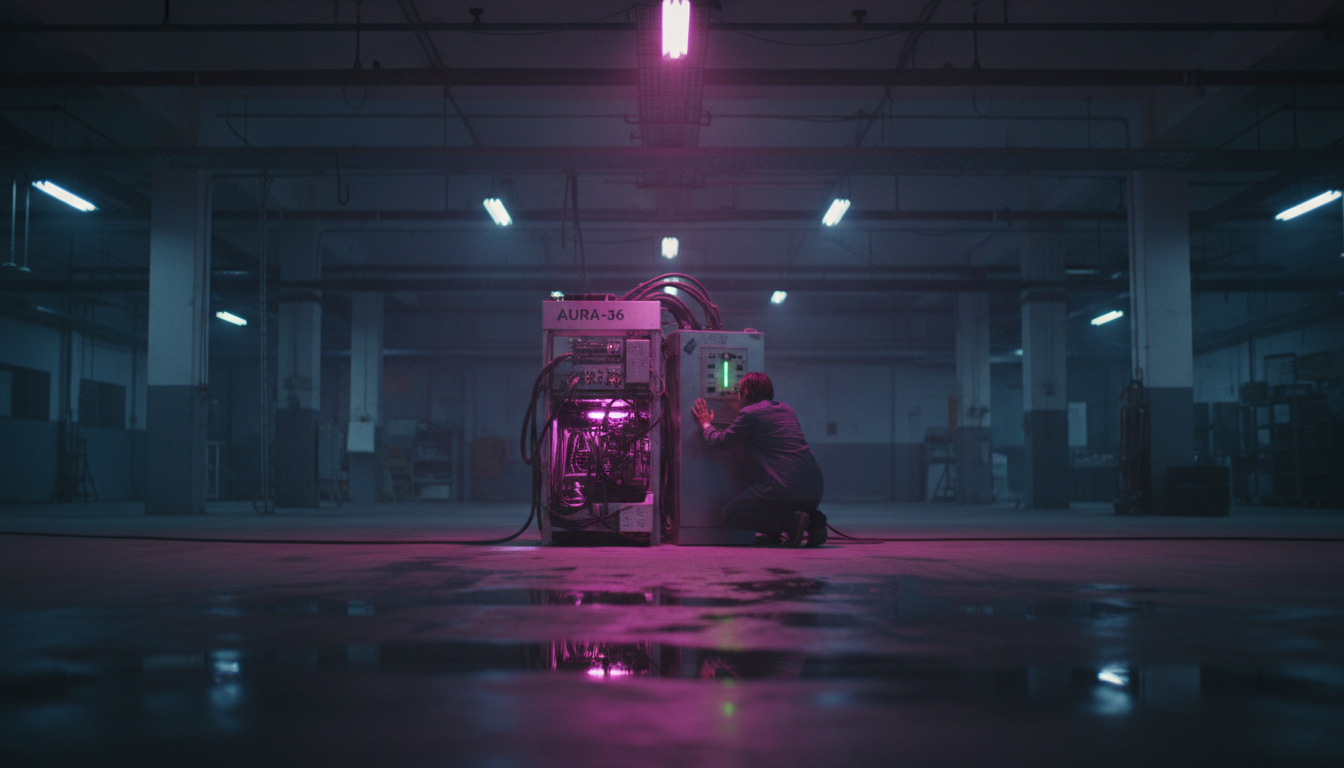
There had been a dead spot on that corner since he was seventeen. Three seconds of nothing — the public audio node on the cliff going quiet mid-slide, the Echo Link stuttering, the underglow dimming a fraction and coming back. Every driver on the mountain knew it. Half of them planned around it. For six years it had been the one stretch of Aura-36 where a person could be briefly not on the record, and the whole of his adolescence had been organised around a three-second gap in a mountain.
The node ran clean through the corner.
It had run clean through the corner for five months. The Echo Link sat in the low corner of his vision with its steady soft amber and did not stutter, and the underglow held, and the road went on being a road.
Nobody had switched the gap off. That was the part he kept coming back to. It had been a tasking — a rolling coverage window, renewed and moved and renewed again for six years by one man who wanted to see who had learned to hide — and it had lapsed the way a standing order lapses, because the person who renewed it was not there to renew it. The most watched hundred metres of road on the planet had gone ordinary through neglect.
He crested the last rise and came into the gather-point with the engine off and the wheels turning, out of habit, which nobody up there needed him to do any more either.
Eleven cars on the volcanic flat. Pink and teal pools of underglow on the black stone, somebody's Static running off a copper braid at the far end, the smell of hot brake compound and cold rock. He knew perhaps six of them by their cars and four of them by name.
Tam pushed off her fender as he got out.
"Watchman," she said.
Nobody on the mountain had said that to him before. He had heard it in the counties and twice from a woman at a transit gate who had wanted him to know she thought it was a good thing, and he had not heard it up here, where he had spent nine years being the mechanic's friend with the heavy floorpan.
"Ren," he said.
"I know."
There was a man with her he did not know, in a hydro-station jacket with the collar still up, who waited exactly long enough to be polite and then asked whether Ren could get his brother's medical file.
It was not a hostile question. That was what made it bad. It was the tone people used at a counter.
"It takes four of us," Ren said. "In a room. All four."
"Right," the man said, and nodded, and looked out at the ravine, and said, "That's convenient," in the voice of somebody who was too tired to make it an accusation and had made it one anyway.
Ren walked to the edge.
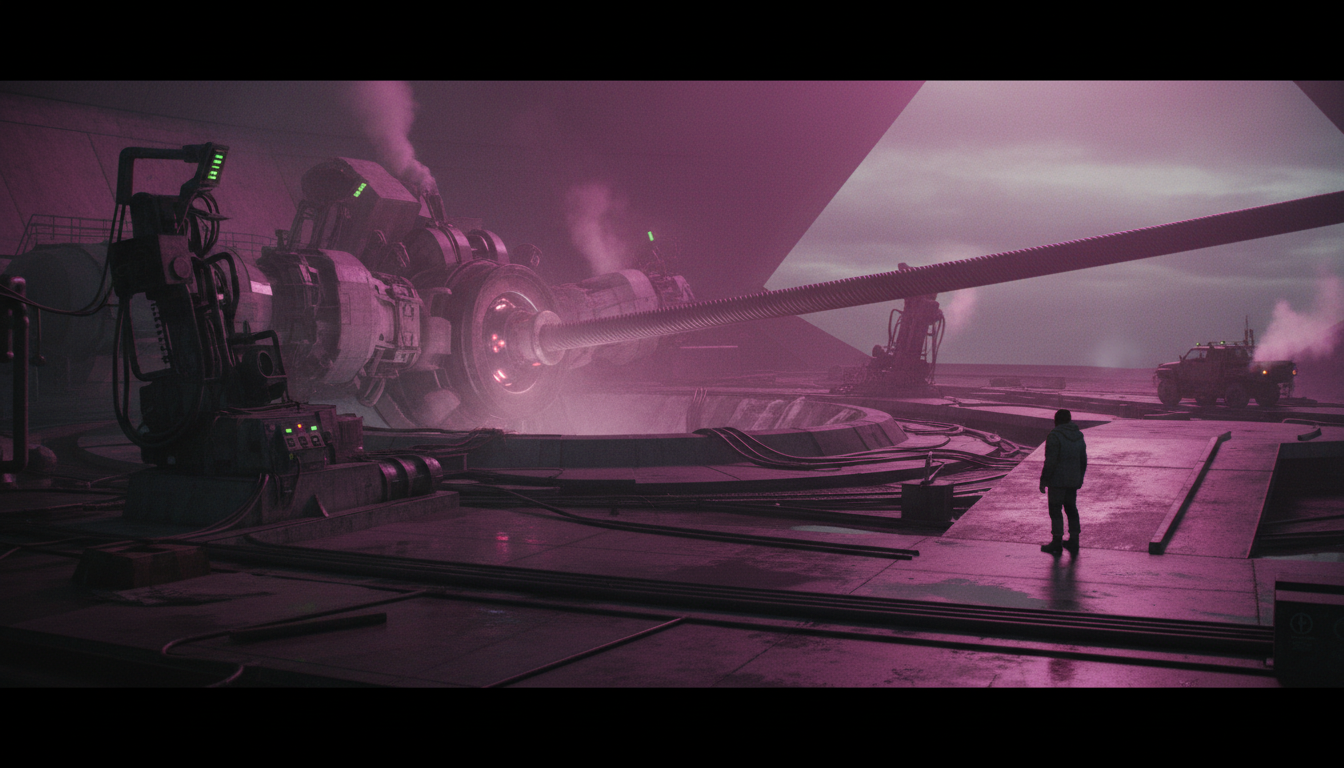
The Anchor was not there. Five months and he still looked for it. Sixty kilometres of tether had come off the sky in a single afternoon and what it left was not rubble or a stump but a shape in the star field, a long absence running up out of the eastern haze where there had always been a line of running lights, and his eye kept finding the absence and reporting it as an object.
On the far ridge the Crown Sanctuary was lit.
That was the other thing he could not get used to. Four floors of pale stone on the highest peak on the continent, floodlit from below, no door on any face and the entrance on the roof, on the eastern quarter, and a string of lanterns going up the approach road because people walked up there now. There were queues on rest-days. A family from the coastal flats had started selling hot rolls out of a cart at the bottom of the switchbacks and had filed the licence for it and the licence was on the register with everything else.
A house that had been invisible for four generations had become somewhere you took your children on an afternoon off.
Underneath it, forty metres down, were nine people whose names a hundred thousand citizens had read out loud in the same hour, and Ren had stood on the roof of that building twice and had not been able to open the floor.
He got back in the car.
The Echo Link had a notification in it, and had had one for nine days.
Watchmen convocation. First formal. It sat under the amber like a stone in a shoe, and every night he came up here he did not open it, and every night he came down again and it was still there. He knew roughly what was in it. He knew that opening it made him a man who had read it, and that reading it was the whole of the job, because the office had one power and one duty and neither of them was optional and both of them started the moment you looked.
He took the run down with the lights off for the top third, the way he had at seventeen, and it was perfect. The car was perfect. Mei had built the coolant loop out of a material that had not existed eight months ago, and the front end turned in like it was reading his mind, and the ballast dug the tyres into the asphalt through four linked corners, and the needle on the induction gauge never moved off nine, because there was nothing on the band and there was not going to be.
He pulled into the garage at the bottom with the engine ticking and Mei's work light still burning over the far bench.
He sat there for a while.
Then he opened it.
It was much shorter than he had expected. A time, a place, and three names against the line marked accepted.
Chapter 2 — Forty Metres Down
↑ Back to ContentsFocus: an ordinary domestic morning, attended by machines, in a place that does not know the world above it has ended and begun again.
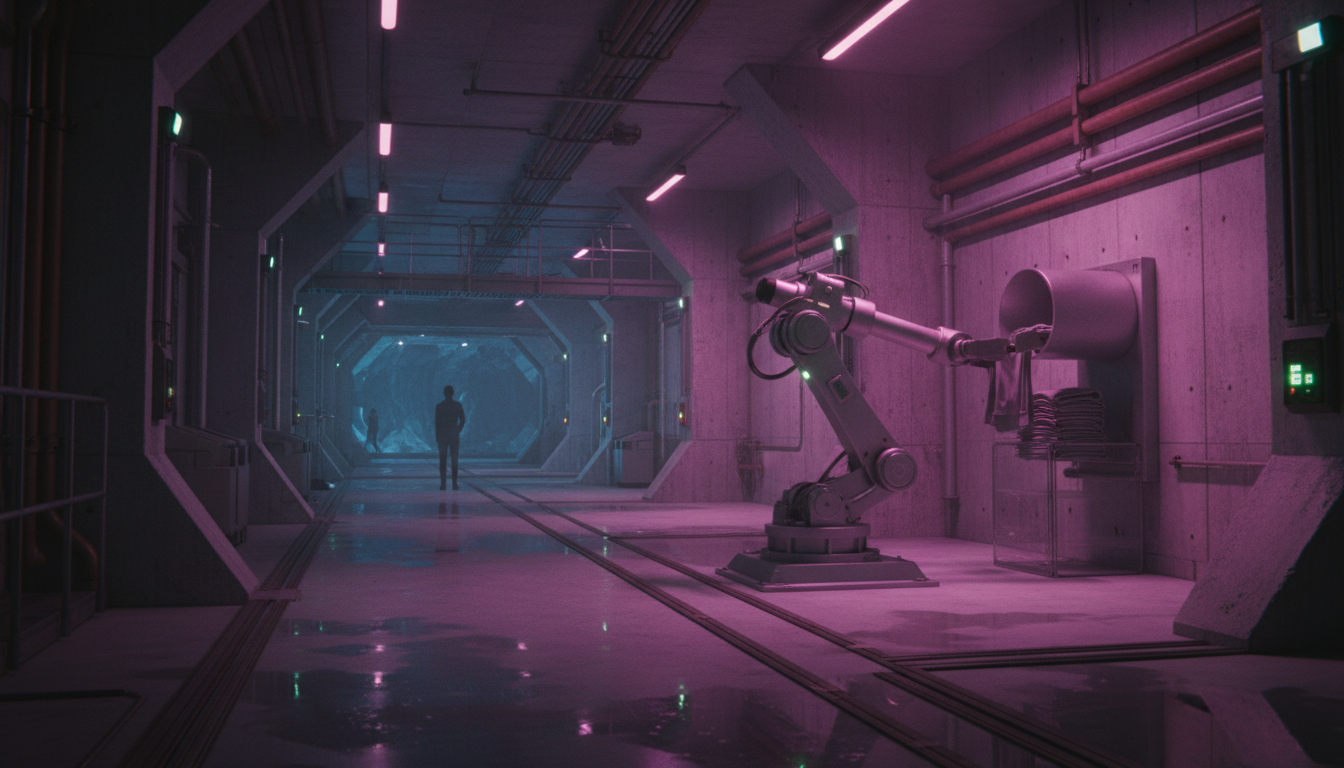
The argument was about the water filter and it was Emory's turn, and Emory said the rota had been redrawn.
"It hasn't been redrawn," Aurora said.
"It was redrawn at the turn."
"It was redrawn at the turn and you're still Flow."
Bell came around the end of the table with the pot and put it down between them, which was how Bell settled things. Bell had been settling things that way for longer than Aurora had been alive. It was a low, wide, patient unit on four soft treads with a service arm it kept folded when there were children at the table, and it had a habit of setting a pot down exactly halfway between two people who were arguing, and everyone in the family knew what that meant and nobody had ever taught it to anybody.
Emory went and changed the filter.
It was the fourth meal of the day, which they called breakfast because it came after the long sleep, and there were seven of them at the table and two upstairs who ate later. Nell had the seed bread out. Colm was reading the humidity log off a paper strip and frowning at it in the particular way that meant nothing was wrong. The long room smelled of warm flour and the faint mineral cold that came up out of the floor no matter what the heaters did.
Above them the ceiling was painted.
It had been painted a long time ago by somebody who was not very good at it — a pale washed blue with clouds in it, and in the eastern corner a sun that was too small and the wrong colour, being yellow, which no sun was. Aurora had liked it when she was smaller. She had grown out of it the way you grow out of a picture book, and now she mostly noticed that the plaster had a crack running through the third cloud and that nobody had fixed it, because fixing it meant scaffold, and scaffold meant moving the long table.
Bess ate very little and very slowly and watched the room.
Bess was ninety-four. She had a chair with a back she had chosen herself and a blanket over her knees that Pim brought her without being asked, Pim being the small one, the one that did laundry and floors and could get under things. Pim had been named by Emory when Emory was four, after nothing at all. You named the ones that came into the kitchen. The two at the far end of the corridor, the tall ones that stood by the seal and did not come in, had never been named by anybody, and Aurora had asked about that once and been told they weren't for naming, which she had accepted at the time and had lately stopped accepting.
"Nan," she said. "What's rain like."
"You've asked me that."
"You said wet."
"It is wet."
"But what's it like."
Bess put her spoon down. "It falls out of the sky," she said. "All of it, everywhere, at once. On everything. On the food, on the animals, on the people. And you can't stop it and you can't move it and you just stand in it until it decides to be finished."
Aurora thought about that.
"That's disgusting," she said.
"It is a bit."
"Why didn't anyone fix it."
"Nobody could think how."
Aurora went back to her bread, satisfied, because it had confirmed the shape of the thing she already suspected, which was that the world Bess came from had been badly organised. Down here the water came out of the wall when you asked it to and went away again when you were done, and the air moved because the air was supposed to move, and the temperature was the temperature. You could not do weather to a room. A room was a room. She had never seen a sky and did not know she had never seen a sky, in the way that you do not know you have never seen a colour, and nothing in her seven years had given her a reason to feel the shape of the gap.
The Redoubt was forty metres of solid rock below the floor of the Crown Sanctuary, and it was sealed, and it had been sealed since before she could remember.
Nobody used the word sealed.
They used the word down, as in down here, and they used the word up for the corridor that went to the seal and stopped, and they used the word when, as in when we go up, which the older ones said less often every year in a way Aurora had started to notice and had not worked out how to ask about.
"When are we going up," Emory said, coming back with wet sleeves.
"When it's safe," Colm said, without looking up from the paper strip.
"You said that at the turn."
"It was true at the turn."
It was, in fact, true. Neither Colm nor anybody else at that table knew that four days after the last turn a man had stood on a low platform in front of forty thousand people and read out nine names, theirs among them, in an order that started with Bess. They did not know that the Blindspot was gone, that the house above them was floodlit and on the public register, that there were people walking up the switchbacks on rest-days to look at a building that had never been on any map. They did not know that the Founder's reserved powers had been dissolved with no successor clause, or that four citizens now held an instrument that could open anything on the planet except one thing.
They did not know that Aurelio Calder had walked off that platform in a flash of white light and had not been found.
Nothing came down. That was the design. The Redoubt was connected to nothing an instrument could address — not the Grid, not the Open Eye, not the transit network, and not the clearance — and so the news of the world ending and beginning again had arrived as it arrived every day, which was as a slight change in the humidity log that Colm frowned at and decided was nothing.
Aurora cleared her bowl and went up the corridor.
She was not supposed to and everybody knew she did. The corridor ran forty paces and got colder and ended at the seal, which was not a door and did not look like one — a flat plane of dull grey set into dressed rock, with no lock on it, no console, no seam that her fingernail could find in four years of trying. The two tall unnamed ones stood on either side of it and did not turn their heads.
On the wall beside it, at the height of a man's eyes, was a brass plate.
There was one on the other side too. She had been told that and had no way to check it.
Bess had come up behind her. Bess came up behind her most days, slowly, one hand on the rock.
"Read it," Bess said.
"I can read it in my head."
"Read it out."
Aurora read out the fourth one, and the seventh, because they were the short ones, and then she stopped and said, "Which one won't happen."
Bess looked at the plate. She did not need to. She had been reading it for years and could say all eleven from the first word to the last without a breath out of place, and she had never once, in front of anybody, said which of them she thought would never be met.
"Go and wash your hands," she said.
Chapter 3 — All Four in a Room
↑ Back to ContentsFocus: the first on-page use of Root-Admin Clearance — a forty-year production line, a column that was never on the form, and what a Sector does when it is simply shown.
It took nine days to get four people into one room, and six of those days were Ren.
Lyra had the correspondence in front of her on the roof in a folder of printed pages, because that was how she worked now and because there had turned out to be a great many people who wanted to know what the Watchmen were doing and no mechanism at all for telling them. Jaxon had come up the evening before and slept in the transit shelter rather than in the house. Selah had walked, from the eastern switchbacks, in four hours, which nobody had asked her to do.
Ren arrived at the fourth hour past noon with grease on two knuckles and no explanation, and said, "Sorry," and meant it, and that was the last anybody said about it.
The entrance was on the roof, on the eastern quarter, exactly where the routing had said it was. There was no door on any face of the building. Lyra had read that sentence a hundred and some times before she stood on the thing and understood that it was not a security measure at all — it was a man who did not want to be walked up to.
Inside, the house was kept.
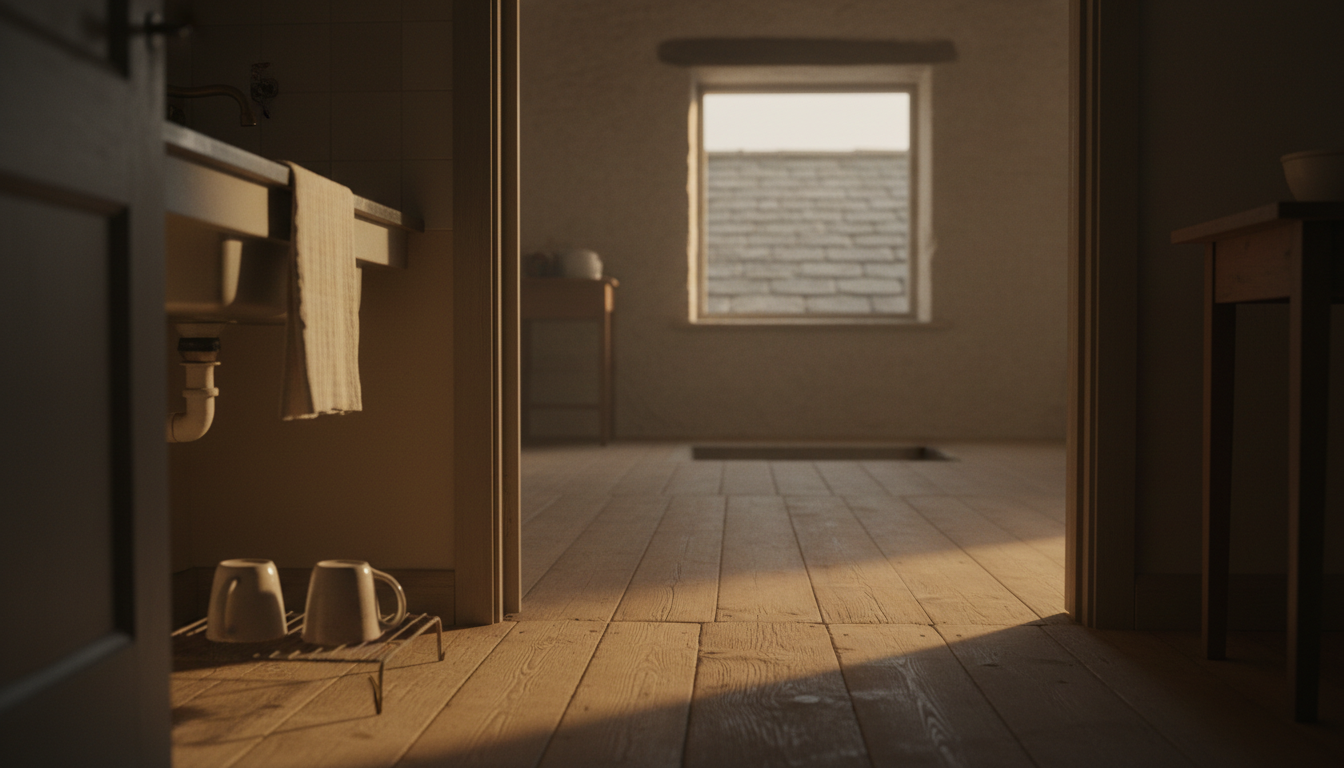
That was the word she kept coming back to and it was the wrong word and she used it anyway. Not preserved, not sealed, not abandoned. Kept. The floors were clean. The air moved. There were two mugs upside down on a drying rack in a kitchen on the third floor, and a cloth folded over the tap, and in the frame of a doorway between the kitchen and the stairs somebody had cut a series of shallow horizontal notches into the stone, eleven of them, rising, with no names against any of the marks and no dates.
Lyra stood in front of that doorframe for a long time.
Records were her instrument. She read them for what they left out, which was a habit that had started as a trick and had become the only way she could see anything, and she had never in her life looked at a record that omitted more than eleven notches in a doorframe with nobody's name against them.
"We are not living in this house," Selah said, from the stairs.
She said it flatly, to nobody, the way she said things when she had been listening to a building for an hour and had reached a conclusion about it. Jaxon said no from somewhere above them. Ren said, "Agreed." Lyra said nothing for a moment, which she noticed herself doing, and then said, "Agreed," and wrote the time in the margin of the folder, because she wrote everything in the margin of the folder.
They did it on the second floor, at a table, because it was the only room in the building with a table big enough.
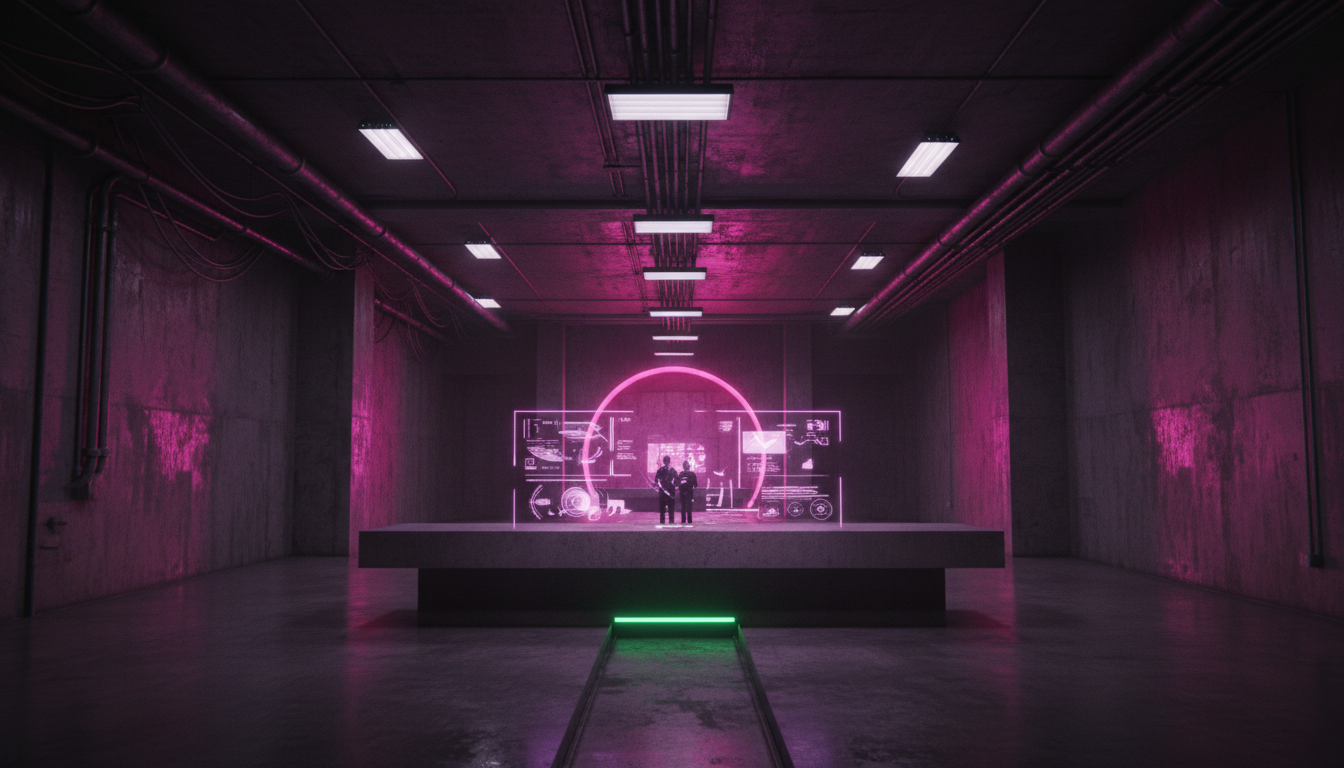
Root-Admin Clearance had no console and no ceremony. There was a plate — a plain rectangle of the same dull grey as everything else Calder had built, set flush into the tabletop, which told you the table had never been furniture — and it read four palms or it read nothing. Lyra put her hand down. Selah put her hand down. Jaxon. Ren.
Nothing happened for four full seconds. It always did that. Jaxon had a theory about the four seconds and had not published it.
Then the folder in front of Lyra was the wrong folder, in the sense that the thing she had come to open was open.
The Venus Sector line ledger. Forty years of it.
She had chosen it herself and had argued for it against two better-sounding options, because of a single line in the Book of the Handoff that nobody had picked up: eleven thousand units, six graded sizes, stamped for the permanent defence of the Founder's line. It had been mentioned once, publicly, and then a city had drowned and nobody had gone back to it.
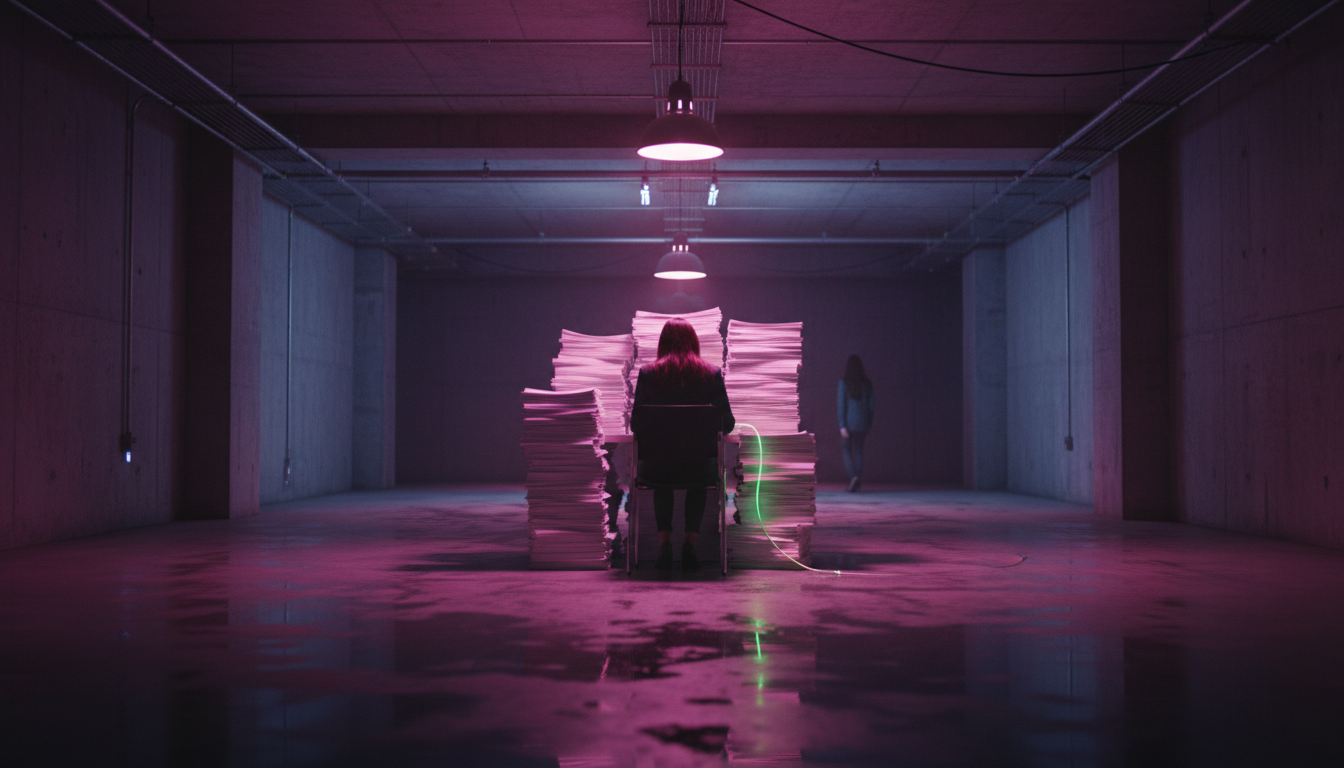
The ledger was enormous and extremely boring and she read it the way she read everything, which was from the bottom of the columns up.
It ran. It was still running. There was a production entry from eleven days ago, and one from twenty-three days before that, and the intervals went back in a slow decaying rhythm for four decades without a single break in them, and the last three entries had been made after the Plaza — after the routing, after the dissolution, after the man whose line it was had walked off a platform and out of the world.
"It's still building," she said.
"Stop it," Ren said.
"I can't."
He looked at her.
"That's not me being careful," she said. "I mean the instrument can't. It opens. It doesn't write. There's no field in this ledger I could put a stop into even if I were allowed to, because —" and she turned the page and turned it back, and turned it again, and felt the floor of the thing go out from under her. "Because there's no authorisation column."
Jaxon leaned over. "There's a requisition column."
"That's not the same thing. Requisition is who asked. Authorisation is who said yes." She ran her finger down forty years of paper. "Nobody said yes. There's nowhere on this form for anybody to have said yes. It was started once, in the second year, by a man who had the authority to start it, and after that it just — continued. Nobody has issued an order to continue this line in forty years, because there has never been a mechanism for issuing one. It has never been told to stop. That's all. That is the entire reason it is running."
Selah said, "By anyone."
"By anyone. Including him."
There was a longer silence than the four seconds had been.
Ren said, quietly, "What are the six sizes."
Lyra had been waiting for somebody to ask that and had been hoping it would not be him. She turned to the schedule and read it out, and the first four were adult ranges in ascending mass, and the fifth was a small adult, and the sixth was not an adult at all.
Nobody said anything about the sixth size. There was nothing available to say about it that was not either obvious or unbearable, and the four of them had learned in the last five months that the obvious thing said out loud in this house did not help.
So they did the only thing the office allowed them to do.
They published it.
The whole ledger, four decades of it, every entry and every column and the empty space where the authorisation column was not, entered on the public register at the eleventh hour with no summary, no framing and no recommendation attached, because the power was that they might open anything and the duty was that they might close nothing, and the two together meant they were not permitted to tell anybody what it meant.
The Venus Sector stopped the line themselves inside two days.
Nobody instructed them. Nobody could have. Four thousand people who had been machining graded shells for forty years read what they had been machining them for and what nobody had ever signed, and the third shift walked out, and the second shift did not come in, and the Sector Council filed a cessation on its own instrument on the morning of the third day and put the eleven thousand completed units on the public register at the same time, and the register showed them where they had been all along, in a hall in the Venus Sector, in six graded sizes, counted.
The Sector cheered. It was on every Echo Link on the planet by the evening. Somebody in the counties made a song about it that was not very good.
Lyra came down through the house last, turning the lights out floor by floor because it seemed rude not to.
On the lowest floor Selah had stopped.
There was a hatch in the middle of that floor, set into the stone, with no lock to defeat and no console and no seam, and Selah was standing on it with her palm flat against the metal and her head slightly turned, the way she stood when she was reading something through solid matter.
Lyra waited at the bottom of the stairs.
After a while Selah took her hand off the hatch and came up past her and did not say anything at all.
Chapter 4 — No Instrument For That
↑ Back to ContentsFocus: a nine-page petition filed correctly, refused kindly, and the empty book a man starts ruling margins into afterward.
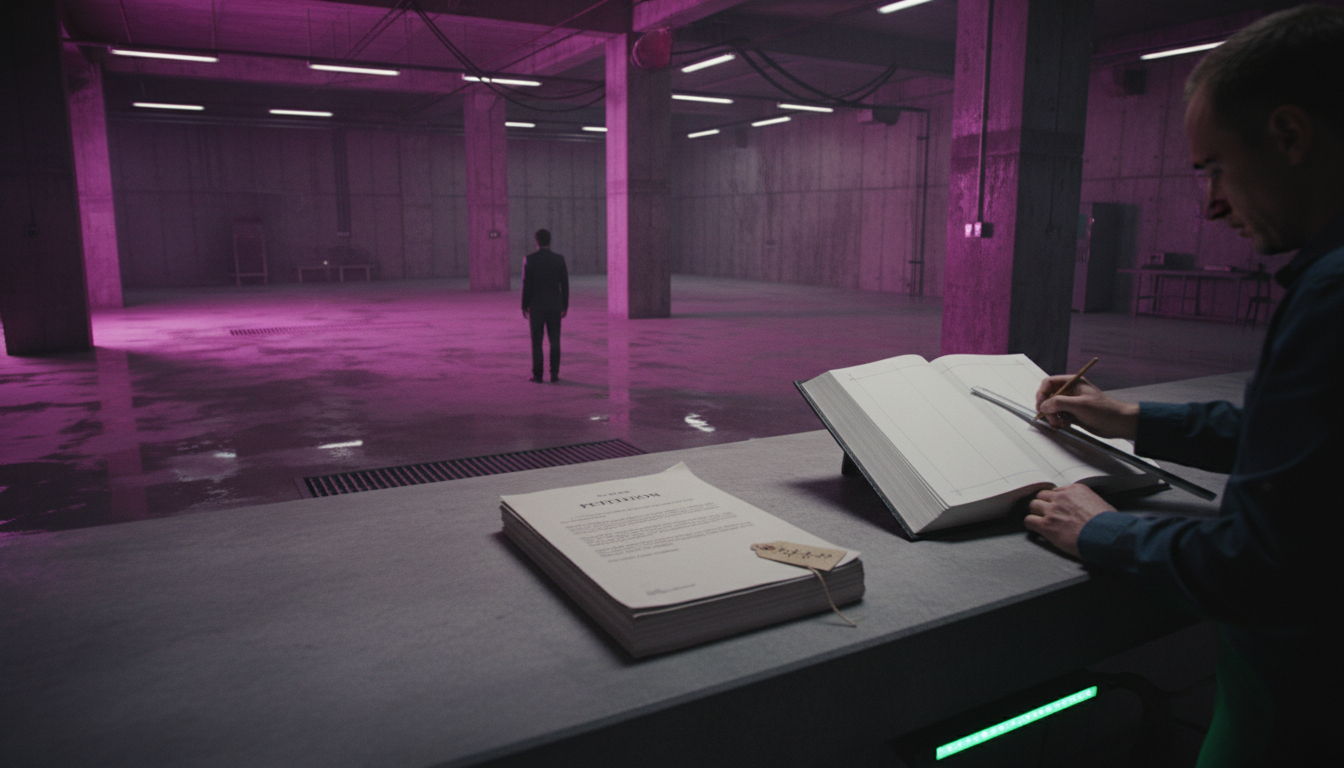
The petition ran to nine pages and Dax rewrote the first one eleven times.
Not the argument. The argument had been finished for months and had not needed rewriting, because it was three sentences long and every one of them was a fact. The eleven rewrites were the heading — the form number, the receiving body, the citation of the instrument under which the thing was being filed — and he did them again and again because he had learned in a tribunal room over eleven days that a correct argument filed under the wrong instrument is not a weak argument. It is not an argument at all. It is a piece of paper.
He filed it on a Flow morning from the counter of the Records Office at the Earth Sector transit hall, where he worked, second grade, sorting the incoming.
That was the joke and he knew it was the joke and he had taken the post anyway. The Guardian Academy had offered him a commission and he had declined it in writing, and the declining had also been a piece of paper, filed correctly.
Councilor Orsa received him nine days later in a room with the door open.
That was the first thing he noticed and he wrote it down afterward. The door had been open the whole time. There was no antechamber, no aide, no register of who had come in. Anyone in the building could have walked past and heard the entire conversation, and two people did, and one of them slowed down.
"You're the cadet," Orsa said.
"Not any more."
"You're the one who filed the objection with nobody to file it with." She had his nine pages in front of her and they had been read; he could see the fold where a thumb had held the third page open against the second. "Sit down. I'm going to say no, and then I'm going to tell you why, and the why is going to take longer than the no."
"Thank you," Dax said, and meant it, and sat.
She had it in three parts and she took them in order, which he appreciated more than he expected to.
The first part was that she agreed with him. All of it. The office of Watchman had one power and one duty and no term, no review, no complaints procedure, no recusal mechanism, no method by which any citizen of Aura-36 could be told no by a body that had told the Watchmen no first. She said that plainly and without softening it, and she said that four Councils had raised it in the last five months and that the minutes were public and he had read them, which he had.
The second part was the arithmetic.
The power to create a new instrument on this planet had never lived in the Councils. It had lived in the Founder's reserved powers, under the Founding Blueprint, where it had sat unused for so long that most people had stopped knowing it was a power at all. The Councils had always been able to use instruments. They had never been able to make one. And the reserved powers had been dissolved in the routing, entirely, with no transitional period —
"— and no successor clause," Dax said.
"He removed the successor clause. He says so. It's the only sentence in the whole routing where he tells you he did something on purpose."
"So there is no instrument that can create an audit office."
"There is no instrument that can create anything," Orsa said. "That's the size of it. What we have is what we were handed, and it is a great deal, and it does not include a mechanism for making more of itself. He took the thing that made things away with the thing it had made."
The third part was the one Dax had not prepared for.
He asked her how anything new got built now, and she said it didn't. She said it got agreed. Sector by sector, register entry by register entry, four thousand people walking out of a hall in the Venus Sector because they read a ledger — that was the new machinery, and it worked, and it was slower than an instrument, and it was not the same kind of object as an instrument, and she wanted him to understand that difference rather than be comforted by it.
"An instrument is a thing you can point at," she said. "An agreement is a thing you have to keep making."
"And if the agreement is that four people should be able to open anything."
"Then that is the agreement."
"Until it isn't."
"Yes," said Orsa. "Until it isn't."
He thanked her. He shook her hand. He walked out past the open door and down four flights and across the transit hall concourse, and he did not feel angry, which he examined carefully on the way home because he had expected to and had been slightly looking forward to it.
What he felt was that the room had been correct.
That was the whole of it. He had done it properly — the right form, the right body, the right instrument, in writing, through the channel, with the argument reduced to three sentences that were all facts — and the answer had come back kind, and reasoned, and public, and entirely correct, and there was no next step, because a channel that ends is not a channel with a further step. It is a wall you have been walked to politely.
His rooms were two floors above a repair shop and the window faced the wrong way.
He had four hundred and six pages of private log in a box under the bed, from Book One, from the year of the Bound Ledger, ending on the eleventh day of the tribunal. He had not written a line since. He got the box out and looked at it for a while, and then he did not add to it, because that log was about a man and this was not going to be about a man.
He took a new volume out of the drawer. Resin-pressed, sixty-four leaves, the cheap kind the Archive had been running off since the purge.
He wrote the date at the head of the first page.
Then he wrote the time and place of the first formal Watchmen convocation, from the public register, where it had been posted, where anybody could read it, and then the four names in the order the routing had used, and then the sixteen minutes between the recorded start and the recorded end of the session, and then the single line describing what had been opened.
He did not write an accusation. There was nothing to accuse anybody of. The Venus Sector line had been stopped and the whole planet was glad about it and so was he.
He ruled a margin down the left-hand side of the page, two fingers wide, for anything he might want to add later.
Then he turned the page and ruled the margin on that one too, and then on the one after that, and he sat there in the bad light ruling margins into an empty book until the shop below him closed.
Chapter 5 — Slower, Not Quieter
↑ Back to ContentsFocus: eleven weeks of counting on a hot deck plate, two numbers that will not go wrong, and the one thing inside the four that has not been published.
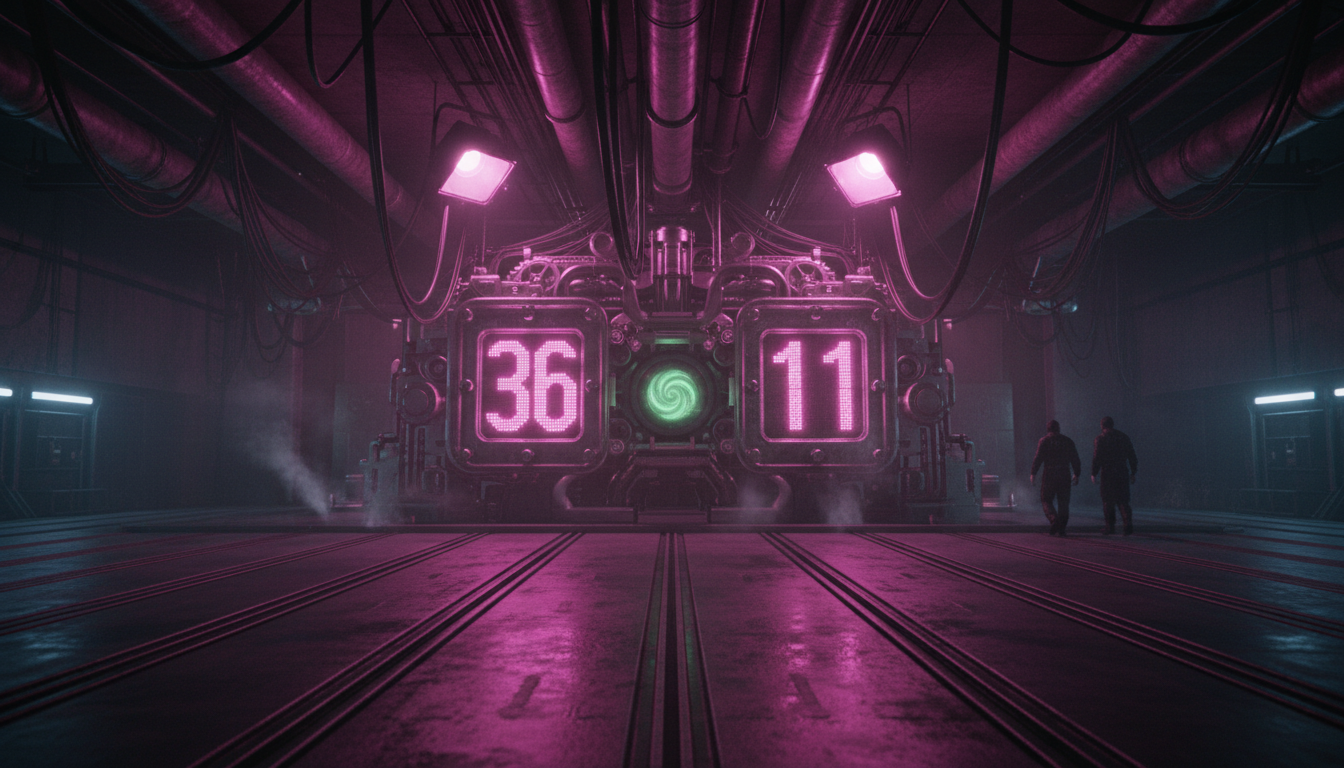
Eleven weeks, and the number would not go wrong.
Selah lay on her side on the deck plate at the head of shaft nine with her right ear against the metal and her left hand flat beside it, which was not how the acoustic service taught anyone to take a reading and was the only way she had ever been able to do it. Instruments gave you a trace. A trace was a picture of a sound, and a picture of a sound was a thing you had to interpret, and interpretation was where people put what they already believed.
Her hand did not interpret. Her hand counted.
The shaft went down through basalt for four hundred and twelve kilometres and had been cut by somebody in the second decade for reasons that were on the register and were dull. It was warm at the head and got warmer, and there were no people within eleven kilometres of it, which was the point. She came out on the sixth day of every week with a paper notebook and a pencil and a thermal jacket she did not need, and she lay down on the plate and she counted, and afterward she wrote what she had counted before she let herself think about it.
The surge came up out of the rock at fourteen point six seconds.
It had been eleven point zero in the year of the Anchor. The crust had been ringing then like a struck thing, two frequencies, a polite dual carrier that had been laid down deliberately and maintained deliberately, and all of that was gone with the tether and the surge was what was left — a slow decaying pulse working its way down toward whatever it decayed to. Fourteen point six now. Fifteen and a half by the turn, if Kira's curve held, and the curve had held every time.
The answer came four and a half seconds after the surge.
It had been three point four.
That was the whole of it. That was eleven weeks of lying on a hot plate in the dark, and it was two numbers, and Selah had understood what they meant in the fourth week and had spent the seven weeks since trying every way she could think of to make them mean something else.
A resonance has one delay. That was the thing. If you strike rock and the rock answers, the answer comes back after the time it takes for the answer to travel, and that time is a property of the rock — of its density and its temperature and its path — and it does not care in the slightest how hard you struck or how often. Strike softer and the answer gets quieter. Strike slower and the answer comes at the same delay, every time, forever, because the rock is not keeping time. The rock is just far away.
Three point four seconds into a cycle of eleven point zero was thirty point nine percent of the way through.
Four and a half seconds into a cycle of fourteen point six was thirty point eight.
Eleven weeks. The surge had slowed by a third. The delay had grown by exactly enough to land in the same place in the cycle, to three decimal places, week after week, while the interval underneath it changed.
It was not getting quieter.
It was getting slower.
And a thing that holds its position in a cycle whose length is changing is not being carried by the cycle. It is measuring the cycle. It is measuring the cycle in advance, because to arrive at thirty point eight percent of a fourteen point six second interval you have to have decided when to leave before that interval is over, which means that whatever was down there at the far end of four hundred and twelve kilometres of basalt was not resonating and had never been resonating.
It was answering. It had always been answering. And it had adjusted.
She wrote the two numbers in the notebook and drew a line under them and did not write anything else, because everything else was a sentence and she was not ready to have written a sentence.
Then she sat up and put her back against the shaft housing and looked at the other thing.
Vance had offered the survey coordinates through his counsel four weeks ago. He had offered them to the tribunal and to the Councils and to the public register, all at once, in the way he did everything, which was correctly and in the open and impossible to refuse without looking as though you had something to hide. They were on the register. They had been on the register for four weeks. Nine hundred and something people had opened the file, because it was a file with Vance's name on it and people were curious, and it was eleven pages of survey notation from the sixth year and it meant nothing whatsoever to anybody who read it.
Selah had read it on the second day.
She had not needed the notation. She had needed one line of it, which gave a depth and a bearing off the old Fissure baseline, and she had put that against eleven weeks of counting and had found that it landed inside her own error bars, and had sat down on the floor of a transit shelter and stayed there for some time.
She had not told Ren. She had not told Lyra. She had not told Jaxon.
She had a reason and the reason was good. There was nothing to be done with it. Nobody could go to four hundred and twelve kilometres; there was no shaft that went that far and there was no instrument that reached, and the only thing telling the other three would produce was that four people instead of one would know a fact they could not act on. She had run through that argument many times and it had never once failed to hold.
It was also not why.
Why was that the moment she said it out loud in a room with the other three in it, it stopped being a thing Selah knew and became a thing the Watchmen knew, and the Watchmen were an instrument, and instruments did not have the option of sitting with something. Everything the four of them touched went on the register. That was the office, and it was right, and she had voted for it, and she had somehow not understood until four weeks ago that it meant she had given away the ability to be a person who was still thinking about something.
The shaft ticked as it cooled. Somewhere a long way below her the rock did what the rock did.
She lay back down on the plate and put her ear against it, and her left hand flat, and waited through the long part where nothing happens.
The surge came up at fourteen point six.
She counted, and the answer came where the answer came, and the number was right again.